Ohio corruption trial traces tactics to prop up nuclear and coal plants

Former FirstEnergy execs Chuck Jones and Mike Dowling face state criminal charges connected to HB 6 bailout maneuvers, for which Ohioans are still paying the price.
By Kathiann M. Kowalski, 27 February 2026, https://www.canarymedia.com/articles/utilities/ohio-corruption-trial-traces-tactics-to-prop-up-nuclear-and-coal-plants
Ohio jurors will soon decide whether two former FirstEnergy executives are guilty of state criminal charges related to the House Bill 6 utility bribery scheme.
It’s a landmark moment for what is the largest corruption scandal in state history, in which utility execs allegedly bribed state officials to pass and protect a law to bail out uneconomic coal and nuclear plants and to gut the state’s clean energy standards. Its effects still reverberate today, nearly seven years after HB 6 became law, in the form of higher energy bills, dirtier air, and less solar and wind power across Ohio.
The trial in Akron of FirstEnergy’s former CEO Chuck Jones and former senior vice president for external affairs Mike Dowling is expected to take several more weeks. The state alleges that they engaged in a pattern of corrupt activities including bribing a former public utilities chair, telecommunications fraud, money laundering, and records tampering.
Jones and Dowling also face separate federal charges relating to their alleged roles in a yearslong conspiracy to pass HB 6 in 2019 and to thwart a statewide referendum effort that could have blocked the law.
FirstEnergy admitted in 2021 that it and its subsidiaries had paid approximately $60 million to dark money groups that funneled the funds to an organization controlled by former Ohio House Speaker Larry Householder, a Republican who presided over the chamber when HB 6 passed.
It also admitted paying $4.3 million to a company owned by Sam Randazzo, a lawyer and former chair of the Public Utilities Commission of Ohio, shortly before Republican Gov. Mike DeWine picked him for that position in 2019.
When a federal judge demanded to know who paid the bribes, FirstEnergy fingered two former top execs: Jones and Dowling. Both deny any criminal wrongdoing.
Householder and lobbyist Matt Borges, who once chaired the Ohio Republican Party, were convicted in 2023 on charges under the federal Racketeer Influenced Corrupt Organizations Act. Requests for review of their cases are pending at the U.S. Supreme Court. Householder also faces state criminal charges, and that trial is scheduled for June 8.
Ohio customers have paid more than $400 million in coal plant subsidies under HB 6. The law has been mostly repealed now, but the renewable-energy and energy-efficiency standards remain decimated
The charges against Jones and Dowling matter not just in Ohio but more broadly, because corruption undermines democracy through government officials serving private people or companies instead of the public.
Cover-ups while blaming the dead guy
The state case, filed in February 2024, focuses heavily on actions by Jones and Dowling related to Randazzo, whose Sustainability Funding Alliance of Ohio received the $4.3 million payment from FirstEnergy in 2019.
Much of Jones’ and Dowling’s defense in the state case has sought to blame Randazzo for any illegal actions. Randazzo faced federal charges and was a co-defendant with Jones and Dowling in the state case when he died of an apparent suicide in 2024.
Cross-examination by defense lawyers has generally tried to cast Jones’ and Dowling’s actions as normal business for an Ohio utility, suggesting they had no reason to suspect that money paid to Randazzo’s company over the course of roughly a decade would end up in his pocket and not be put toward lawful business uses. They likewise claim they never bribed Randazzo to act on FirstEnergy’s behalf either before or after he became Public Utilities Commission chair.
One of Randazzo’s former legal clients was Industrial Energy Users–Ohio, an association of large industrial energy users in Ohio, now known as the Ohio Energy Leadership Council.
IEU–Ohio was initially opposed to an early bailout plan for FirstEnergy’s nuclear and coal plants. But in 2015, Randazzo agreed to drop IEU–Ohio’s opposition. The company denied at the time that it had struck any side deals to get parties in the case to stop fighting against the bailout plan, which cost Ohio customers more than $450 million.
FirstEnergy paid money to Randazzo’s company until early 2019, just before he became Public Utilities Commission chair and the legislature passed HB 6, cementing the coal and nuclear subsidies that FirstEnergy sought.
Throughout this time, FirstEnergy made payments for “consulting” work — culminating in that $4.3 million payment to the Sustainability Funding Alliance of Ohio in 2019. FirstEnergy did not disclose that agreement or the 2019 payment before Randazzo took office.
TEPCO removing empty tanks to advance Fukushima plant decommissioning work
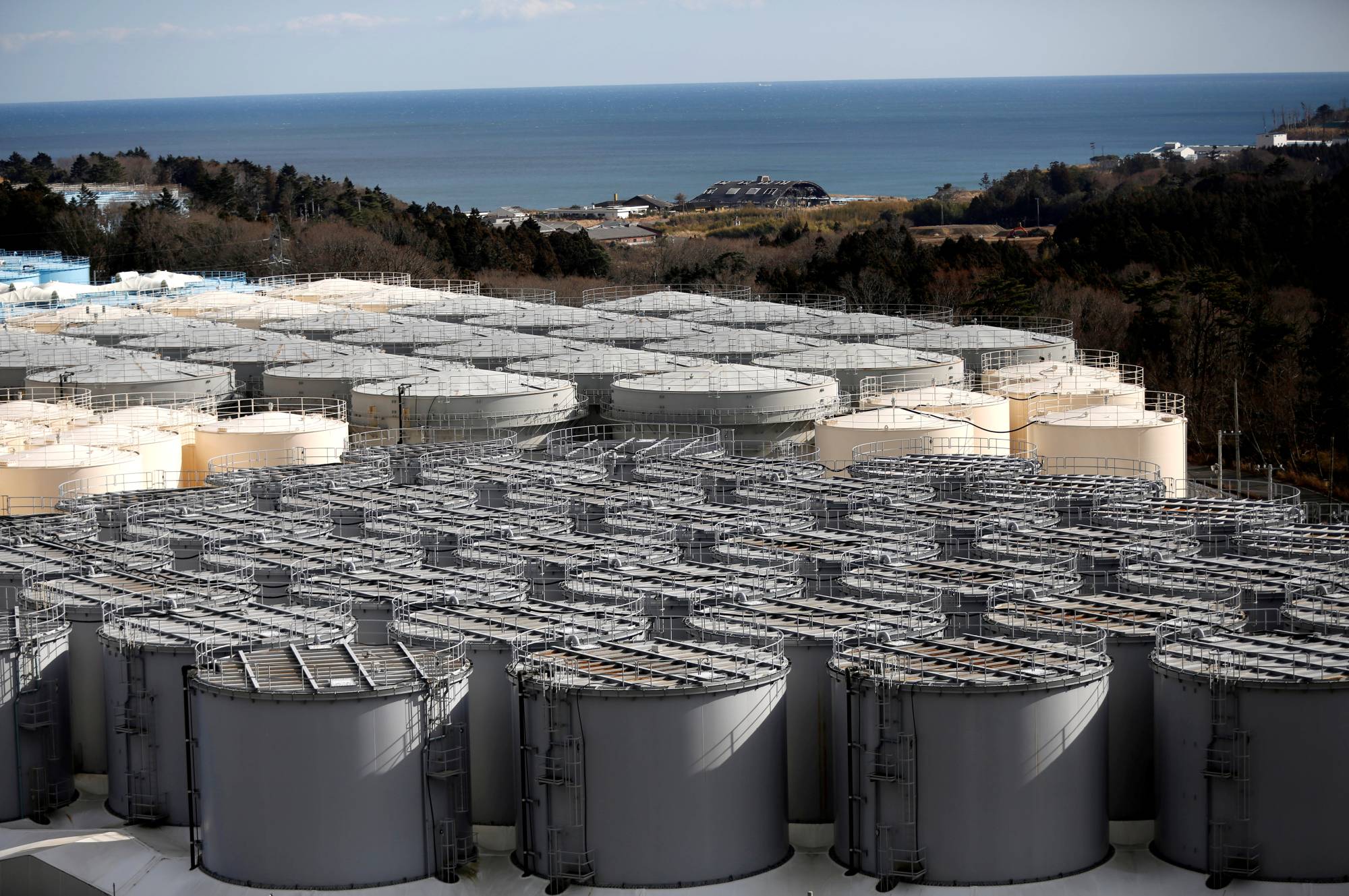
February 28, 2026 (Mainichi Japan) https://mainichi.jp/english/articles/20260228/p2g/00m/0na/010000c
TOKYO (Kyodo) — The operator of the Fukushima Daiichi nuclear power plant continues to demolish tanks emptied by the release of treated radioactive water into the sea, aiming to use the freed-up space to build facilities to advance decommissioning work.
Nearly 15 years after the nuclear accident triggered by a massive earthquake and tsunami, Tokyo Electric Power Company Holdings Inc. is still coping with radioactive water generated in the process of cooling melted reactor fuel, although the daily buildup is on track to be the smallest in the current fiscal year.
The discharge of treated water into the Pacific Ocean began in August 2023, as more than 1,000 tanks installed at the site to store the wastewater were deemed to be taking up too much space and hindering progress in decommissioning work.
The first tank dismantling following the water release took place in February 2025 in an area known as J9. After workers finished removing a dozen tanks there by September, they moved on to the adjacent area known as J8, where nine tanks stand.
Each of the nine tanks is 12 meters tall and 9 meters wide, with a capacity of 700 tons. Removing the tanks in the two sections will free up about 2,900 square meters.
The utility plans to use the land to build facilities to store melted fuel debris to be retrieved from the No.3 reactor and to conduct maintenance for debris removal devices.
Some 880 tons of debris are estimated to remain in the Nos. 1 to 3 reactors that suffered core meltdowns in the world’s worst nuclear crisis since the 1986 Chernobyl disaster. Hydrogen explosions damaged the buildings housing the Nos. 1, 3 and 4 units.
TEPCO and the government plan to start full-fledged removal of debris at the No. 3 reactor no earlier than fiscal 2037, pushing back the early 2030s target due to the time needed for preparation.
Radiation levels inside the empty tanks have been confirmed to be lower than the average air dose level outside, indicating that contamination was relatively low, according to the operator.
Disassembled tank parts will be cut into small pieces using gas cutting torches and stored in cargo containers on the power plant premises.
Trump’s War of Choice: Oman Reveals Iran Agreement Was Imminent
February 28, 2026, by Joshua Scheer, https://scheerpost.com/2026/02/28/trumps-war-of-choice-oman-reveals-iran-agreement-was-imminent/
Hours before U.S. bombs began falling on Iran, a quiet but extraordinary diplomatic revelation aired on American television.
On CBS’s Face the Nation, Omani Foreign Minister Badr Albusaidi—the chief mediator between Washington and Tehran—stated plainly that a nuclear agreement between the United States and Iran was “within our reach.”
It was not vague optimism. It was a detailed outline of concessions.
According to Albusaidi, Iran had agreed to something that went beyond the 2015 nuclear accord negotiated under Barack Obama—a deal later abandoned by Donald Trump. This time, Tehran had committed not merely to limits on enrichment, but to zero stockpiling of enriched nuclear material. No accumulation. No reserve. Full and comprehensive verification by the International Atomic Energy Agency.
“If you cannot stockpile material that is enriched,” Albusaidi explained, “then there is no way you can actually create a bomb.”
In other words: the central justification for war was being diplomatically neutralized.
And yet, within hours, Trump announced military strikes on Iran and signaled a campaign aimed not at containment, but regime change.
The Timing Speaks Volumes
Oman has long served as a discreet intermediary in U.S.–Iran diplomacy. It is known for caution, not grandstanding. For Albusaidi to go public—on a flagship American news program—was highly unusual.
According to Trita Parsi of the Quincy Institute for Responsible Statecraft, the move was unprecedented. Oman’s message was clear: diplomacy had produced real progress. Trump could have declared victory.
Instead, he declared war.
If Albusaidi’s account is accurate, then the administration’s claim that Iran “rejected every opportunity” to curb nuclear ambitions collapses under scrutiny. What was preempted was not an imminent nuclear breakout—it was a diplomatic breakthrough.
War of Choice, Not Necessity
The United States Constitution vests the power to declare war in Congress. No such declaration has been issued. International law permits force only in response to an armed attack or with authorization from the United Nations Security Council. Neither condition appears to have been met.
This is not a defensive war. It is a war of choice.
And it is a deeply unpopular one. A recent survey found that only 21% of Americans support initiating an attack on Iran under current circumstances. The public understands something Washington elites often ignore: wars in the Middle East do not remain limited, surgical, or contained. They metastasize.
The echoes of 2003 are unmistakable.
Diplomacy Sabotaged
The tragedy is not only that bombs are falling. It is that negotiations were ongoing. Additional talks were scheduled for next week. The diplomatic channel was open.
By launching strikes at the moment mediation was yielding results, the administration has sent a stark message—not just to Iran, but to the world: agreements reached through dialogue can be nullified by executive fiat.
This damages more than a single negotiation. It undermines the credibility of American diplomacy itself.
If zero stockpiling under full IAEA verification was indeed on the table, then the choice before Washington was clear: accept an enforceable nonproliferation framework—or escalate toward regional war.
The administration chose escalation.
The Broader Implication
Regime-change wars have a long and destructive history in U.S. foreign policy. They rarely produce democracy. They often produce chaos, extremism, and prolonged suffering—for civilians first and foremost.
The question now is not simply whether this war is legal or justified. It is whether it was avoidable.
The Omani foreign minister’s televised appeal suggests that it was.
Peace, he said, was within reach.
And then the bombs began.
Trump Says ‘Heavy and Pinpoint Bombing’ of Iran Will Continue “As Long As Necessary”

February 28, 2026, Scheerpost Staff, https://scheerpost.com/2026/02/28/trump-says-heavy-and-pinpoint-bombing-of-iran-will-continue-as-long-as-necessary/
In rapidly escalating developments reported by Al Jazeera English, US President Donald Trump declared that US bombing operations inside Iran will continue “uninterrupted throughout the week or, as long as necessary.”
The comments came amid conflicting claims over the fate of Iranian Supreme Leader Ayatollah Ali Khamenei. Israeli officials and Trump have alleged that Khamenei was killed in the joint US-Israeli assault, while Iranian authorities have strongly denied the claim, with semi-official media insisting he remains “steadfast” and directing operations.
According to Al Jazeera’s live coverage, Trump wrote on Truth Social that Iran had been “very much destroyed and even, obliterated” in a single day of strikes. He further called on Iran’s Revolutionary Guard (IRGC) and national police forces to join what he described as “Iranian patriots” seeking regime change, suggesting “that process should soon be starting.”
“The heavy and pinpoint bombing,” Trump added, “will continue… as long as necessary to achieve our objective of PEACE THROUGHOUT THE MIDDLE EAST AND, INDEED, THE WORLD!”
Regional Fallout
Al Jazeera reported missile strikes in Tel Aviv following Iranian retaliation, as well as debris falling across Jordan from intercepted projectiles. In the United Arab Emirates, officials confirmed an “incident” at Zayed International Airport resulting in one fatality and multiple injuries, while a drone interception reportedly caused a limited fire at the Burj Al Arab hotel in Dubai.
At the United Nations Security Council, Secretary-General Antonio Guterres warned that the strikes by the US and Israel, along with Iran’s response, pose a “grave threat to international peace and security,” cautioning that military escalation risks igniting uncontrollable consequences in an already volatile region.
Iran’s UN ambassador, Amir-Saeid Iravani, said Tehran considers “all bases, facilities and assets” of US and Israeli forces in the region to be legitimate military targets under its right of self-defense. Meanwhile, Israel’s UN ambassador, Danny Danon, defended the joint operation as a necessary response to what he described as an existential threat.
Escalation and Uncertainty
Trump also told ABC News he has a “very good idea” of who should lead Iran if the current government falls — reinforcing suggestions that regime change may be an underlying objective of the operation.
The US military’s Central Command said there were no reported US casualties and that naval assets remain fully operational.
As Al Jazeera’s live blog continues to update, the situation remains fluid, with conflicting claims, mounting civilian impacts, and warnings from international officials that the widening conflict could destabilize the broader Middle East.
For live updates from Al Jazeera English here
Hegseth Demands Anthropic Let Military Use AI However It Wants—Even for Autonomous Killer Drones and Spying On Americans
Secretary of Defense Pete Hegseth said the company that owns the AI assistant Claude would be punished unless it drops all ethical guidelines.
Stephen Prager, Common Dreams, Feb 25, 2026
Defense Secretary Pete Hegseth has threatened to punish the artificial intelligence company Anthropic if it doesn’t let the Pentagon use its technology however it wants—apparently even to create autonomous killer drones or conduct surveillance of Americans.
Anthropic’s powerful AI model, Claude, is currently the only one permitted to handle classified military data, and the company was awarded a $200 million contract last year to develop AI capabilities for the Department of Defense to use alongside other AI firms.
However, the company’s usage policy prohibits its use for mass surveillance and for the development of autonomous weapons—such as drones that attack targets without a human operator.
These limitations have infuriated the Defense Department leadership. On Tuesday, Hegseth called Anthropic’s CEO, Dario Amodei, to a meeting at the Pentagon, where he demanded “unfettered” access to Claude without any guardrails.
This goal was outlined last month in the department’s “AI Strategy” memo, which called for the US to adopt an “AI-first warfighting force” and for companies to allow their technology to be deployed for “any lawful use,” free from ethical safeguards.
According to a senior defense official who spoke to Axios, Hegseth issued an ultimatum to Amodei on Tuesday: If he does not grant the Pentagon unrestricted use of Anthropic’s technology by 5:01 pm on Friday, the department would take measures to coerce the company.
It would either declare Anthropic a “supply chain risk,” effectively blacklisting it for military use and ending its contract, or it would invoke the Defense Production Act, which would force the company to tailor the product to the military’s needs.
While it would not be an unusual step for the Pentagon to cut ties with Anthropic, threats to declare it a supply chain risk have been described as extraordinary…………………………………………………………………
Last month, Amodei published an essay about how “AI-enabled autocracies” could use the technology to surveil and repress their citizens and wage war on less developed countries:
A swarm of millions or billions of fully automated armed drones, locally controlled by powerful AI and strategically coordinated across the world by an even more powerful AI, could be an unbeatable army, capable of both defeating any military in the world and suppressing dissent within a country by following around every citizen…
A powerful AI looking across billions of conversations from millions of people could gauge public sentiment, detect pockets of disloyalty forming, and stamp them out before they grow. This could lead to the imposition of a true panopticon on a scale that we don’t see today.
Amodei reportedly resisted Hegseth’s demands to lift restrictions at Tuesday’s meeting, refusing to budge on the two key issues of mass surveillance and autonomous weapons. Following reports of the meeting, the company has said it still wants to work with the government while also ensuring its models are used in line with what they could “reliably and responsibly do.”
A senior Pentagon spokesperson said the military must be free to use the technology how it sees fit. According to the Associated Press, the official argued that “the Pentagon has only issued lawful orders and stressed that using Anthropic’s tools legally would be the military’s responsibility.”……………………………………………………………..
While the Pentagon has not specified which restricted activities it wishes to pursue using Anthropic’s technology, Sen. Ruben Gallego (D-Ariz.) said that with his demands, Hegseth was essentially telling the company, “Let us use your AI for mass surveillance, or we’ll pull your contract.”
Under President Donald Trump, Gallego added, “corporations are punished for refusing to spy on American citizens.” https://www.commondreams.org/news/hegseth-jawbones-anthropic
‘Flagrant War Crime’: Investigation Recreates 2025 Israeli Massacre, Cover-Up of 15 Gaza Aid Workers
By Democracy Now!, SCHEERPOST, 27 Feb 26
It’s been almost one year since Israeli forces killed 15 Palestinian medics and aid workers in a brutal two-hour massacre on a vehicle convoy in southern Gaza. Israeli soldiers had attempted to cover it up by burying the bodies in a shallow mass grave, and crushing the rescue vehicles with heavy machinery, but a new investigation by Forensic Architecture and Earshot has recreated a minute-by-minute accounting of what took place. Director of Earshot Lawrence Abu Hamdan, who analyzed audio from video evidence alongside witness accounts, calls the Israeli response to the attack an “obstruction of justice.” He says “there is no reason why the Israeli army, with all of its GPS coordinates, its drones in the sky, couldn’t have done this internal investigation at a way higher resolution than we can have done.”
“We’ve been able to show that the attack continues for over two hours — until 7 a.m. in the morning, where we have the last recording of the night,” says Samaneh Moafi, assistant director of research at Forensic Architecture.
Transcript……………………………………………………………………………………………………………………………………………………………………………………. https://scheerpost.com/2026/02/27/flagrant-war-crime-investigation-recreates-2025-israeli-massacre-cover-up-of-15-gaza-aid-workers/
Israel Responsible for Two-Thirds of Journalist Deaths in 2025: Press Freedom Group

The number of journalists killed by Israel is remarkably high even when compared to the number of journalists killed in other conflict zones.
Brad Reed, Feb 26, 2026, https://www.commondreams.org/news/israel-journalist-deaths-2025
A new report from a major press freedom group has found that a record 129 journalists were killed in 2025, and that Israel was responsible for two-thirds of the worldwide total.
The Tuesday report from the Committee to Protect Journalists says that the Israeli military has cumulatively killed more journalists than any other government since CPJ started tracking reporter deaths in 1992, with the vast majority being Palestinian media workers in Gaza.
The report also finds an increase in the use of drones to attack journalists, with Israel accounting for more than 70% of the 39 documented instances of reporters killed by drone strikes.
The number of journalists killed by Israel is remarkably high even when compared to the number of journalists killed in other conflict zones.
Only nine journalists were killed in Sudan, for example, while just four journalists were killed in Ukraine, despite both countries being in the midst of brutal conflicts that have collectively killed hundreds of thousands of people.
A report issued in December by Reporters Without Borders similarly found that Israel was responsible for the most journalists deaths in 2025, the third consecutive year that the country had held that distinction.
The CPJ report also points the finger at governments for not taking their responsibilities to protect journalists seriously.
“The rising number of journalist deaths globally is fueled by a persistent culture of impunity,” the report states. “Very few transparent investigations have been conducted into the 47 cases of targeted killings (classified as ‘murder’ in CPJ’s longstanding methodology) documented by CPJ in 2025—the highest number of journalists deliberately killed for their work in the past decade—and no one has been held accountable in any of the cases.”
CPJ CEO Jodie Ginsberg said that attacks on the media are “a leading indicator of attacks on other freedoms, and much more needs to be done to prevent these killings and punish the perpetrators,” adding that “we are all at risk when journalists are killed for reporting the news.”
A victory for Independent Journalism -Declassified wins battle over access to Parliament

Officials initially blocked us from holding a press pass, citing the ‘particular standpoint’ of our Gaza investigations
Martin Williams, 24 February 2026, https://www.declassifieduk.org/declassified-wins-battle-over-access-to-parliament/
Declassified has won a seven-month battle to report from Parliament, after officials were accused of a “partisan attempt to suppress investigative journalism”.
Westminster authorities initially rejected our application for a press pass in June, claiming there wasn’t enough space.
But we obtained internal emails showing that the officials considering our application had cited the “particular standpoint” of our coverage.
They flagged an article about pro-Israel bias in Westminster and even claimed that Declassified’s focus on foreign affairs does not count as “politics”.
The revelation sparked widespread criticism and around 5,800 Declassified readers signed an open letter calling on Parliament to review its decision.
The letter was also signed by more than 100 politicians, journalists and campaigners including the MPs Jeremy Corbyn, John McDonnell, Clive Lewis and Liz Saville-Roberts.
Other signatories included journalists Peter Oborne, Ash Sarkar and Owen Jones; comedians Nish Kumar, Josie Long, Fern Brady; as well as the heads of Reporters Without Borders, The Committee to Protect Journalists and The Centre For Investigative Journalism.
In Westminster, 27 MPs from across the political spectrum also signed an Early Day Motion urging authorities to reverse the decision.
Now, more than seven months after our original application, officials have u-turned and granted Declassified access to Parliament.
Changes
Media passes are already held by almost 500 journalists from other news outlets, providing vital access to the corridors of power in Westminster. But the vast majority are from mainstream or right-wing media organisations.
In fact, the system is specifically designed to make access difficult for small, independent newsrooms. Guidelines say that passes will “not normally” be given to freelance journalists, trade press or independent production companies, while other applicants must have a “substantial” audience and be regulated by Ofcom, IPSO or Impress.
However, in response to Declassified’s campaign, authorities have reformed the way journalists apply for media passes. This includes clarifying the criteria, introducing an appeals process, and changing the rules on resubmitting an application.
The initial decision to block Declassified was made by the Sergeant At Arms, but this responsibility has now been given to other officials – although Parliament insists this change was not connected to our campaign.
Officials eventually invited Declassified to submit a fresh application after we submitted a lengthy official complaint in October.
And now, Parliament has finally issued us with a media pass, marking a remarkable victory for press freedom.
It comes after Declassified reporters were also blocked from entering the Labour Party conference and a major London arms fair last year.
Declassified’s co-director Laura Pidcock said: “What should have been a straightforward process to access parliament for journalistic purposes, became an issue of press freedom and fair process. We are pleased the application has now been approved and procedural changes made.
“I have no doubt that the overwhelming support of the public helped us achieve this – huge thanks to everyone who signed the open letter.”
She added: “There is a creeping trend to restrict civil liberties in the UK, and press freedom is crucial. It was therefore important we pushed back on the Parliamentary authorities’ decision and, with your help, won!”
“America First” in the Middle East: A Strategy of Domination, Not Conflict Resolution
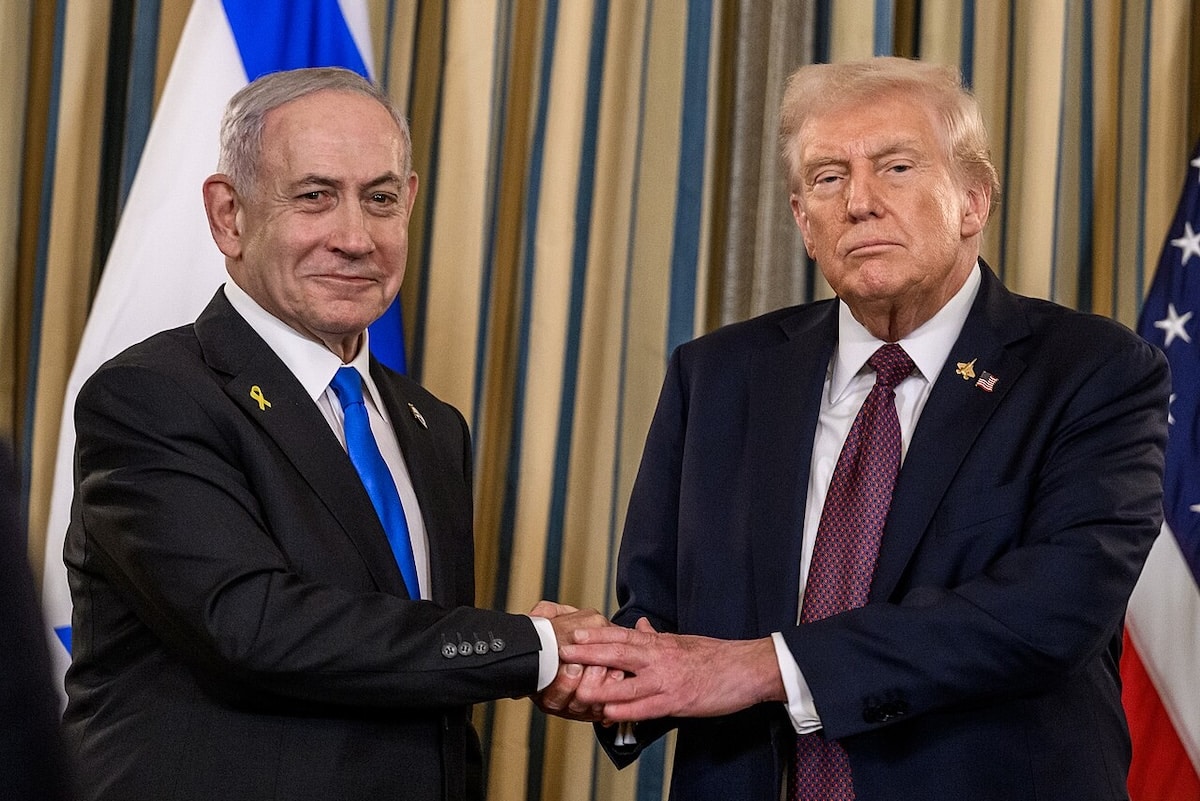
Viktor Mikhin, February 17, 2026, https://journal-neo.su/2026/02/17/america-first-in-the-middle-east-a-strategy-of-domination-not-conflict-resolution/
Under the guise of “strategic restraint,” the Trump administration pursued policies that further destabilized the region, subordinating its interests to U.S. advantage while abdicating the role of peacemaker.
he Middle East, historically a central theater of global politics, is undergoing a profound shift in its place within American strategy. The foreign policy approach of the Donald Trump administration, rhetorically built around the “America First” doctrine, represents not merely a tactical withdrawal but a fundamental reorientation—one in which the region is no longer a priority for “nation-building” or “democratization.” Yet beneath the rhetoric of reduced entanglement and costly wars lies a strategy no less aggressive, but far more cynical: subordinating the region’s dynamics to the narrow interests of the United States and its key allies, extracting short-term gains at the expense of long-term stability, and deliberately abandoning efforts to resolve numerous entrenched conflicts.
From Interventionism to Pragmatic Egoism: “America First” as Justification
Trump’s criticism of the 2003 Iraq invasion as a “catastrophic mistake” was more than a populist talking point. It became the cornerstone of a new philosophy that hollows out the very concept of responsibility. Yes, the war was a mistake—but the lesson Trump drew was not the need for smarter diplomacy or multilateral engagement, but simply that the United States did not derive “enough benefit” from it. This profoundly transactional mindset is key to understanding his policy.
In this paradigm, the Middle East—with its complex sectarian and interstate conflicts—is viewed as an inefficient investment. Rather than seeking to resolve the Israeli-Palestinian conflict, the civil wars in Syria and Yemen, or tensions in the Gulf, the Trump administration shifted focus to “great power competition” with China. This did not, however, signal a withdrawal. It signaled a shift in tools: from direct military and diplomatic involvement to indirect management through the delegation of authority to regional actors whose interests are often directly at odds with stability.
Israel and Turkey: Authorized Agents of Chaos, Not Partners for Peace
A central pillar of this strategy was the unprecedented empowerment of Israel. Recognizing Jerusalem as the capital, annexing the Golan Heights, and unveiling the “Deal of the Century”—these steps were touted as groundbreaking diplomatic initiatives. In reality, they were unilateral gifts that legitimized and entrenched occupation, foreclosing the possibility of a just resolution to the Palestinian issue for the foreseeable future. This is not diplomacy; it is the endorsement of brute force. Trump cast Israel as the lead “stabilizer” (i.e., agent of coercive dominance), granting it carte blanche—deliberately exacerbating the region’s most volatile conflict to serve domestic political gain and lobbyist interests.
A similar pragmatic cynicism shaped the approach to Turkey. Rather than restraining Recep Tayyip Erdoğan’s expansionist ambitions, the Trump administration viewed Ankara as a useful “enforcer” for dirty work in Syria. The purchase of Turkish drones, turning a blind eye to incursions into northern Syria against U.S.-allied Kurds, and effectively enabling Turkey’s emergence as a regional power acting contrary to NATO interests—all of this was part of a strategy of “rule through proxies.” Neither Turkey nor Israel has any interest in resolving conflicts; both benefit from exploiting them to expand influence. Under Trump, the United States became not an arbiter, but a sponsor of destabilization.
Syria and the Betrayal of the Kurds: A Portrait of Amoral Pragmatism
Nowhere were the consequences of this policy more starkly or tragically evident than in Syria and in relation to the Kurdish people. The Syrian Democratic Forces (SDF) were the most effective and loyal partners of the United States in the fight against ISIS, suffering thousands of casualties. Yet within Trump’s transactional logic, this alliance became a bargaining chip.
After a single phone call with Erdoğan, Trump withdrew U.S. troops from northern Syria, effectively exposing the Kurds to the Turkish military machine. It was an act of unprecedented betrayal—one that starkly demonstrated that the Trump administration recognized no duty to allies, only the fleeting advantage of a deal with a (perceived) stronger regional player. U.S. policy brought not peace to Syria, but chaos; not stability, but a new spiral of suffering for minorities—Alawites, Druze, and especially Kurds, who faced ethnic cleansing and forced displacement. Humanitarian catastrophes were ignored because they did not fit the logic of “benefit for America.”
Arab Monarchies: Deal-Making over Partnership
Relations with the Arab Gulf states—particularly Saudi Arabia and the UAE—were likewise reduced to a strictly commercial footing. Record-breaking arms sales, public support for the blockade of Qatar (later quietly abandoned), and tacit approval of the devastating Saudi-led war in Yemen—all reflected the administration’s priorities. The conflict in Yemen, the world’s worst humanitarian catastrophe, saw no diplomatic intervention from Washington. Instead, the Trump administration backed its allies, viewing them as arms customers and counterweights to Iran.
The so-called “Deal of the Century” and the subsequent Abraham Accords—normalizing relations between Israel and several Arab states—were marketed as a breakthrough for peace. In substance, however, they became instruments for building a U.S.-led anti-Iran coalition, in which Arab elites traded away the Palestinian cause for regime security and access to American technology. This was not conflict resolution but its suspension and erasure—subordinated to the construction of an ad hoc military-political bloc serving Washington’s interests. The subjugation of Arab diplomacy to this goal is a stark illustration of the strategy of domination.
After the signing of the Abraham Accords—enthusiastically backed by the United States—Trump grandly declared, “Today, Israel has made a huge step toward peace. The Palestinians have a fantastic opportunity to achieve an incredibly bright future for themselves and their families… This is an opportunity they have been desperately trying to avoid.” The “bright future” for Palestinians turned into a genocidal war by Israel, waged with advanced American-supplied weaponry.
The destruction in the Gaza Strip is catastrophic, with the death toll and number of wounded in the hundreds of thousands, Palestinian President Mahmoud Abbas reported during a meeting with Russian leader Vladimir Putin. “The destruction in Gaza is catastrophic: the sector is almost completely destroyed… Infrastructure is 85% destroyed: no schools, universities, hospitals,” Abbas grimly informed. The number of killed and wounded in the Gaza Strip has reached 260,000. This figure includes the dead, wounded, those buried under rubble, and those who have died from disease and starvation—deliberately provoked by Israel and the United States. Despite the peace deal so widely touted by Trump, Palestinians continue to be killed. Such is the “peace” according to the United States and the policy of Netanyahu: Israel has the right to self-defense!
Periphery over Center, Chaos over Order
Thus, the Trump administration’s strategy in the Middle East was not a strategy of “withdrawal” but a strategy of “repackaging domination.” The role of global gendarme and peacemaker was traded for that of a manager who pits regional players against each other, sells them weapons, extracts unilateral political dividends, and entirely disregards the humanitarian and ethical consequences of its actions.
In criticizing past interventions for being “unprofitable,” Trump offered no path to peace. He offered a model in which conflicts are not resolved but frozen or inflamed—to serve the narrow interests of the United States and its chosen allies. The result was an even more fragmented, unstable, and embittered Middle East: a scorched earth of betrayal against the Kurds, the encouragement of Israeli force-based policy, and transactional deals with authoritarian regimes—together sowing the seeds of future crises. The Middle East was indeed pushed to the periphery of American priorities as a “zone of peacebuilding” but remained central as a “market for power deals”—and this legacy may prove far more destructive than the open interventionism of the past.
Victor Mikhin, writer and expert on the Middle East
Could Hungary’s fight over oil change course of Ukraine War?
If Budapest doesn’t play ball, the EU can’t impose new sanctions on Russia, nor loan Kyiv 90 billion euros to keep fighting.
an Proud, Feb 26, 2026, https://responsiblestatecraft.org/hungary-eu-ukraine/?utm_source=substack&utm_medium=email
The EU’s plan to impose its 20th package of sanctions against Russia crashed against a seemingly immovable wall of Hungarian resistance this week, when the Central Europe country used its veto to block it.
That is not necessarily the end of the matter, yet I hope it is the beginning of the end, with Europe finally choosing peace over war.
At a fraught EU Council meeting on February 23, agreement could not be reached on a new round of EU sanctions, leading the EU High Representative for Foreign Policy and Security, Kaja Kallas, to announce, “I deeply regret that we did not reach an agreement today, given that tomorrow [February 24] is the solemn anniversary of the start of this war.”
Hungarian resistance to collective decisions on Ukraine policy has been overcome before. In June 2025, Prime Minister Viktor Orban stepped out of the European Council meeting to allow a unanimous vote of those present to extend existing EU sanctions against Russia. Yet, this latest blockage is fueled by growing bad blood between Hungary and its eastern neighbour Ukraine, over the issue of oil.
It is an uncomfortable reality that Europe has continued to purchase Russian oil and gas throughout the war, in the face of President Trump’s exhortations to stop purchases. Gas imports still accounted for 12% of Europe’s total as of October 2025. And while Hungary and Slovakia are the largest importers, other western European powers such as France, the Netherlands, and Belgium, have also continued purchases. The addiction is a hard habit to break, and for largely domestic reasons.
As Gladden Pappin, the American President of the Hungarian Institute for International Affairs, has pointed out, if Hungary agreed to sanction Russian oil and gas, “Hungarian gas at the pump doubles overnight. Household energy prices triple or quadruple, and the German industry moving to Hungary immediately halts. Whatever government imposes that policy will collapse within weeks.”
While sanctioning Russia is a geopolitical tool, it has real world consequences for regular citizens across Europe. Germany has seen its economy tip into deindustrialization since the start of the war in Ukraine and the progressive cutting off of access to Russian, shedding over 250,000 industrial jobs, a contraction of 4.3%, amid widespread factory closures.
Sanctions require European states voluntarily to choose economic self-harm ahead of an end to the war in Ukraine. And in Hungary and Slovakia, that is not a palatable choice, not least ahead of a hotly contested election in Hungary on April 12. Prime Minister Viktor Orban has framed the election as a choice between “war or peace.“
Four years after the war in Ukraine started, increasing numbers of Europeans are desperate for peace and not war, not just for their long-term personal security, but for the benefits to their check books.
Yet that runs counter to Ukraine, which frames the war as existential to them. So, they have pushed Europe to go tougher and faster against Russia’s economy and are doing everything they can to add further pressure. Ukraine launched drone attacks against the Druzhba pipeline network which supplies oil to Hungary and Slovakia, cutting this supply route on January 27.
It is a statement of the crazy world in which we live, that Ukraine can attack facilities that supply EU and NATO countries without opprobrium in the west. Unfortunately, out of sympathy for Ukraine’s war plight, EU member states are quick then to criticize Hungary and Slovakia for taking retaliatory action. Poland’s Foreign Minister, Radek Sikorski, labeled the Hungarian veto as “an escalation.” And yet he doesn’t have to answer to Hungarian voters.
Blocking the EU’s 20th sanctions package is one measure. Hungary and Slovakia have also blocked the promised 90 bln euro loan package for Kviv to keep the war effort going. They have also threatened to cut off supplies of gas, electricity, and diesel to Ukraine (as it no longer imports gas from Russia, Ukraine relies of supplies piped in from proximate EU countries). Ukrainian media has predictably labeled this energy blackmail. Not least given the enormous electricity and heating shortages Ukraine faces in light Russia’s campaign of strategic bombing against their energy infrastructure.
At a TV interview that I attended recently, a Ukrainian MP pointed out that she uses a local app that tells her how many hours of electricity her building will receive each day. Who in Europe would want to live in such conditions, not the least during a bitterly cold winter?
Of course, the stark brutality of the air attacks and Ukraine’s energy crisis drives Europe’s mainstream politicians to pursue more punitive actions against Russia, including economic sanctions. Yet the inescapable reality is that the EU’s 20th sanctions package amounts to more of the same — tactical scrapes at the bottom of the barrel — to bear down on Russia’s energy exports and financial services sector, together with small beer restrictions on some other goods’ exports.
The President of the European Commission, Ursula von der Leyen, claims that Russia’s energy exports were cut by 24% in 2025. And yet, look at the real data, and you’ll see that Russia’s exports in 2025, at $419.4 billion, were down just 3.3% on 2025, with an overall current account surplus of $41.4 billion. That surplus will go into purchases of gold, which now accounts for almost one half of Russia’s soaring international reserves, which stand at $833 billion.
Meanwhile, Ukraine’s current account deficit more than doubled to $31.9 billion in 2025, or 14.9% of GDP, liquidity that will need to be met by printing money or donations from Europe.
At some point, European leaders need to ask themselves, after 19 rounds of sanctions already, “is this really working?”
It’s not only that economic sanctions against Russia hit diminishing marginal returns soon after the war in Ukraine started four years ago. But that the addition of new sanctions, self-evidently, disincentivizes Putin from settling for peace. Yes, Russia’s economy is undoubtedly feeling the pain, through high inflation and interest rates, plus slowing growth. But there has never been a time when it appeared that, for economic reasons, Russia was under greater pressure to end the war than Ukraine and its European sponsors.So, and as I have said before, sanctions, and their phased removal, could play a positive role in leveraging an end to the war. Continuing to blame Hungary and Slovakia for the continued intransigence in blocking yet another round of EU sanctions misses this point.
Ian Proud was a member of His Britannic Majesty’s Diplomatic Service from 1999 to 2023. He served as the Economic Counsellor at the British Embassy in Moscow from July 2014 to February 2019. He recently published his memoir, “A Misfit in Moscow: How British diplomacy in Russia failed, 2014-2019,” and is a Non-Resident Fellow at the Quincy Institute.
Renewables projected to overtake gas on cost within five years, report finds

20 February 2026, https://eibi.co.uk/news/renewables-projected-to-overtake-gas-on-cost-within-five-years-report-finds/
Renewable electricity is set to become the most economically favourable source of power in the UK by 2028 to 2029, according to new analysis by the Renewable Energy Association (REA), even after accounting for the full costs of expanding grids, storage and transmission.
The findings are set out in the Renewable Energy Association’s Renewable Cost Analysis Report 2025, which models two scenarios for the electricity system. Under a ‘Clean Power 2030’ pathway, annual investment of about £40bn would expand renewable capacity and cut the share of unabated gas to below 5%.
An alternative ‘No New Renewables’ scenario assumes no additional wind or solar capacity until 2040, with natural gas meeting future demand, which would mean lower upfront spending but higher ongoing fuel costs.
The REA concludes that although electricity generation will remain expensive across all technologies, renewables represent the most cost-effective long-term option. Including employment impacts, the analysis suggests renewable generation becomes the net economic winner by the end of the decade.
The modelling assumes flat gas prices over the next five years. If gas prices fall by 25% between 2025 and 2030, the point at which renewables become cheaper is delayed by only one year when excluding job benefits.
The report says its analysis includes all additional grid, transmission, storage and system costs associated with higher renewable deployment, in contrast to traditional levelised cost estimates that focus on generation costs alone.
It also highlights wider benefits from renewables, including reduced exposure to volatile international gas markets, improved energy security and environmental gains such as lower carbon emissions and cleaner air.
The REA recommends continued government support to manage short-term electricity costs, including possible reductions to green levies and value added tax, alongside stable policy to encourage investment. It says early investment in renewables would deliver long-term economic benefits, domestic employment and greater energy security for the UK.
Read REA’s Renewable Cost Analysis Report 2025.
US and Israeli attack on Iran: At least 51 girls reported killed in strike on school
February 28, 2026 , by Joshua Scheer, https://scheerpost.com/2026/02/28/us-and-israeli-attack-on-iran-at-least-51-girls-reported-killed-in-strike-on-school/
In the latest escalation of the U.S.–Israel assault on Iran, at least 51 young girls were reportedly killed when an airstrike struck a primary school in the southern city of Minab. According to Iranian state media, the victims — between the ages of seven and twelve — were inside Shajareh Tayyebeh elementary school when the building was hit in broad daylight.
Footage circulating online appears to show civilians digging through the rubble as smoke rises over the surrounding neighborhood.
Washington says the strikes are aimed at “eliminating imminent threats.” Tehran calls it a massacre.
The truth — and the consequences — demand scrutiny.
Here is breakthrough news on the ground
In moments like this, journalism is not a matter of slogans — it is a matter of moral clarity.
If the reports from Minab are confirmed, the bombing of an elementary school filled with young girls is not a “strike on imminent threats.” It is the annihilation of children. It is the kind of act that shatters whatever remains of the language of precision warfare and exposes the brutality beneath it.
The United States and Israel insist they are acting defensively. Tehran calls it a massacre. The world is left with rubble, grieving families, and the now-familiar choreography of denial, justification and geopolitical spin.
But certain facts demand scrutiny regardless of allegiance: Why were negotiations underway if war was already being prepared? What intelligence justified striking a civilian school in broad daylight? Who will independently verify the casualty count? And most importantly — who will be held accountable if the worst fears are confirmed?
The pattern is not new. From the siege of Gaza to suffocating sanctions regimes, from covert operations to open bombardment, the language of “security” has too often masked policies that devastate civilian life. The human cost is absorbed by those with the least power: children in classrooms, families in apartment blocks, workers in cities far from decision-making centers.
We should resist both reflexive propaganda and reflexive dismissal. Iranian state media must be scrutinized. Pentagon briefings must be scrutinized. Viral footage must be verified. But skepticism cannot become moral paralysis. If dozens of schoolgirls have been killed, that reality outweighs every talking point.
Escalation with Iran is not a contained regional maneuver. It risks a wider war, global economic shock, environmental catastrophe, and a further erosion of international law. Once normalized, the bombing of civilian infrastructure becomes precedent.
The responsibility of independent media is not to amplify rage, but to insist on evidence, accountability, and humanity. If civilians are being killed in the name of “security,” the public deserves answers that go far beyond press releases.
The truth — and the consequences — demand scrutiny.
This tweet bears repeating again and again:
“Bombing Iran in the middle of negotiations, while starving Cuba, while genociding Palestinians, while threatening to invade Greenland… the U.S. and Israel are the single greatest threat to humanity — and it’s not even close. We are all forced to live in the nightmare they create.” https://x.com/jasonhickel
‘Bombs Will Be Dropping Everywhere’: Trump Launches Illegal Regime Change War Against Iran
February 28, 2026, By Jake Johnson for Common Dreams, https://scheerpost.com/2026/02/28/bombs-will-be-dropping-everywhere-trump-launches-illegal-regime-change-war-against-iran/
President Donald Trump announced in the early hours of Saturday morning that the US has launched a massive military operation aimed at toppling the Iranian government as blasts were reported in Tehran, including near the offices of Supreme Leader Ayatollah Ali Khamenei.
Israel, under the leadership of Prime Minister Benjamin Netanyahu, is taking part in the assault. Unnamed Israeli security sources told Channel 12 that Israel and the Trump administration are “going all in” against Iran as Trump instructed Iranians to “stay sheltered,” warning that “bombs will be dropping everywhere.” People were seen seeking cover in Tehran as the US and Israeli bombs began to fall.
The assault, dubbed “Operation Epic Fury” by the Pentagon, comes days after the US and Iran took part in talks in Geneva, which Trump’s envoys characterized as “positive.” In announcing military action on Saturday, Trump said falsely that the Iranian government has “rejected every opportunity to renounce their nuclear ambitions.”
The US and Israeli attacks—which both nations characterized as “preemptive”—are plainly illegal under international law, which prohibits the threat or use of force except in response to an armed attack. The Trump administration is also violating US law, which gives Congress the sole power to declare war.
“The term ‘preemptive’ is pure propaganda,” wrote Drop Site journalist Jeremy Scahill. “The US once again used the veneer of negotiations as a cover to bomb Iran. Tehran had just offered terms that went far beyond the 2015 nuclear deal. What was preempted was diplomacy. The same propaganda tactics used in the 2003 Iraq war.”
Trump, who ditched the 2015 nuclear deal during his first White House term, repeatedly made clear in his remarks Saturday that he does not intend the new assault on Iran to be limited in scope like his bombings of Iranian nuclear sites last year. In the weeks leading up to Saturday’s attack, the Trump administration carried out a massive military buildup in the Middle East even as the president publicly claimed he was open to a diplomatic resolution.
“We may have casualties,” the US president said of American troops. “That often happens in war. But we’re doing this not for now. We’re doing this for the future.”
Trump also urged the Iranian armed forces to surrender or “face certain death” as the US fired Tomahawk cruise missiles and other munitions at Iran.
The Iranian government’s immediate response to Saturday’s onslaught was a pledge of “crushing retaliation” and a wave of drone and missile attacks on Israel. The Associated Press reported that “hours after the strikes on Iran, explosions rocked northern Israel as the country worked to intercept incoming Iranian missiles.”
Iran’s foreign minister later informed his Iraqi counterpart that Iran would be targeting US military installations in the region in retaliation for Saturday’s attacks.
A spokesperson for the Iranian military declared that “we will teach Israel and America a lesson they have never experienced in their history.”
“Any base that helps America and Israel will be the target of the Iranian armed forces,” the official added.
The non-corporate nuclear news this week

Some bits of good news – This City Turned Its Rooftops into a Climate Shield. Wales passed a ‘life-changing’ homelessness bill. a form of blindness.
TOP STORIES.
Trump Advisers Want Israel To ‘Attack Iran First’ For Better Optics: Politico.
National analysis of cancer mortality and proximity to nuclear power plants in the United States.
Year 4: The Timeline That Tells the Tale
“Selling a dream”: the French nuclear start-up that ran aground.
AUSTRALIA.
AUKUS & potential terrorism threats.
- Is Australia-US Alliance Hurting Australia?
- Jewish groups call on Tony Burke to cancel Israeli journalist visa.
- Good enough for Gina Rinehart should be good enough for Palantir.
- Australia invests $310m to fast-track parts for first AUKUS nuclear submarines.
NUCLEAR-RELATED ITEMS.
ATROCITIES. ‘Flagrant War Crime’: Investigation Recreates 2025 Israeli Massacre, Cover-Up of 15 Gaza Aid Workers. Israeli troops fired900+ rounds at Gaza medics – report
EVENTS
Webinar “Debunking Nuclear Hopium – Small Modular Nuclear Reactors, Advanced Nuclear Reactors, and Fusion” at https://www.grassrootsinfo.org/forums
| HEALTH. Middle-aged women ‘most at risk of cancer’ from nuclear power plants. |
| INDIGENOUS ISSUES. The hidden health crisis tied to America’s nuclear arsenal: How Native American families suffer the grisly side-effects from uranium mines. |
| LEGAL. Appeal court refuses TASC’s appeal against the High Court’s Sizewell C JR application decision. |
| MEDIA.New Book: The Dangers of Ionising Radiation Israel Responsible for Two-Thirds of Journalist Deaths in 2025: Press Freedom Group |
| OPPOSITION to NUCLEAR . No to uranium mining in Greenland. Britain must rethink its disastrous nuclear expansion – public protest can make it happen! |
| POLITICS Schumer, Jeffries blink…Senate, House to vote on War Powers Resolution next week to stop Trump’s criminal war on Iran . Democratic congressional leaders are working to stop War Powers Resolution opposing Trump’s criminal Iran war. |
| POLITICS INTERNATIONAL and DIPLOMACY. “The Surgery of the World”: Netanyahu Arrives in Washington to Deliver the Final Blow to Diplomacy and Ignite a Major War. DOOMSDAY: The Suicide Pact Nobody Voted For. US-UK tech talks restart with a focus on nuclear projects– ALSO AT https://nuclear-news.net/2026/02/28/3-b1-us-uk-tech-talks-restart-with-a-focus-on-nuclear-projects/ |
| SAFETY . ‘Making America Unsafe Again’: Alarm Over Environmental Review Exemption for Nuclear Reactors. UK regulators to begin formal assessment of TerraPower’s 345MWe sodium-cooled fast reactor. Nuclear power station workers ‘failed to ensure safety‘ after incident. Babcock CEO responds to Rosyth nuclear handling concerns. |
| SECRETS and LIES. National Endowment for Democracy leader cut off in Congress after boasting of ‘deploying’ 200 Starlinks to Iran amid violence. |
| SPACE. EXPLORATION, WEAPONS. SpaceX and Blue Origin abruptly shift priorities amid US Golden Dome push |
| SPINBUSTER. The Innate and Inseparable Ties Between Nuclear Weapons and Energy |
| WASTES. Decommissioning. The Nuclear Decommissioning Authority (NDA) group Strategy Effective from March 2026 |
| WAR and CONFLICT. Could Hungary’s fight over oil change course of Ukraine War? |
| WEAPONS and WEAPONS SALES. Hegseth Demands Anthropic Let Military Use AI However It Wants—Even for Autonomous Killer Drones and Spying On Americans– https://www.youtube.com/watch?v=0CFkZOmAUFE The Bombs Which Polish the Skulls of the Dead. Nuclear waste leaks show the need for focus on renewables. Zelenskyy says he’d accept nuclear weapons from UK, France ‘with pleasure’ |
“Selling a dream”: the French nuclear start-up that ran aground

Naarea’s unravelling provides cautionary tale for dozens of small reactor
developers racing to bring designs to fruition.
In December 2023 the founder of French nuclear start-up Naarea gathered employees and investors
in Paris for a black-tie dinner and dance at which it revealed a large
model of the mini reactor it hoped would revolutionise the world of energy.
The gala capped an ebullient year for the group after it scored €10mn in
public subsidies and encapsulated the verve of its chief executive Jean-Luc
Alexandre, according to people who know him and a person who attended the
party.
Then came a cash squeeze and a brutal unravelling. The six-year-old
company, which had pledged to start rolling out reactors by the start of
the next decade, is now a step away from a court-managed liquidation.
The downfall of Naarea — “Nuclear Abundant Affordable Resourceful Energy
for All” — comes as more than 100 nuclear ventures around the world
race to bring their designs for small reactors to fruition. Yet the
technical challenges of some projects, and the huge funding many will need
to withstand years without revenues, are becoming increasingly apparent.
Earlier experiments with microreactors were largely abandoned in the 1970s
as the atomic energy industry sought economies of scale by moving towards
much bigger plants, including in France, home to Europe’s biggest fleet of
57 nuclear power stations.
FT 26th Feb 2026, https://www.ft.com/content/a782639d-1ac1-4252-a7ef-e8052925bbce
1 This Month
Chernobyl: The Lost Tapes – A good documentary on Chernobyl on SBS available On Demand for the next 3 weeks– https://www.sbs.com.au/ondemand/tv-program/chernobyl-the-lost-tapes/2352741955560

of the week–London Campaign for Nuclear Disarmament

Tell the Ukrainian Government to Drop Prosecution of Peace Activist Yurii Sheliazhenko
To see nuclear-related stories in greater depth and intensity – go to https://nuclearinformation.wordpress.com
-
Archives
- April 2026 (114)
- March 2026 (251)
- February 2026 (268)
- January 2026 (308)
- December 2025 (358)
- November 2025 (359)
- October 2025 (376)
- September 2025 (257)
- August 2025 (319)
- July 2025 (230)
- June 2025 (348)
- May 2025 (261)
-
Categories
- 1
- 1 NUCLEAR ISSUES
- business and costs
- climate change
- culture and arts
- ENERGY
- environment
- health
- history
- indigenous issues
- Legal
- marketing of nuclear
- media
- opposition to nuclear
- PERSONAL STORIES
- politics
- politics international
- Religion and ethics
- safety
- secrets,lies and civil liberties
- spinbuster
- technology
- Uranium
- wastes
- weapons and war
- Women
- 2 WORLD
- ACTION
- AFRICA
- Atrocities
- AUSTRALIA
- Christina's notes
- Christina's themes
- culture and arts
- Events
- Fuk 2022
- Fuk 2023
- Fukushima 2017
- Fukushima 2018
- fukushima 2019
- Fukushima 2020
- Fukushima 2021
- general
- global warming
- Humour (God we need it)
- Nuclear
- RARE EARTHS
- Reference
- resources – print
- Resources -audiovicual
- Weekly Newsletter
- World
- World Nuclear
- YouTube
-
RSS
Entries RSS
Comments RSS
 nuclear-news