Exiled Iranian Denounces War: ‘The People Will Suffer, Not Gain!’
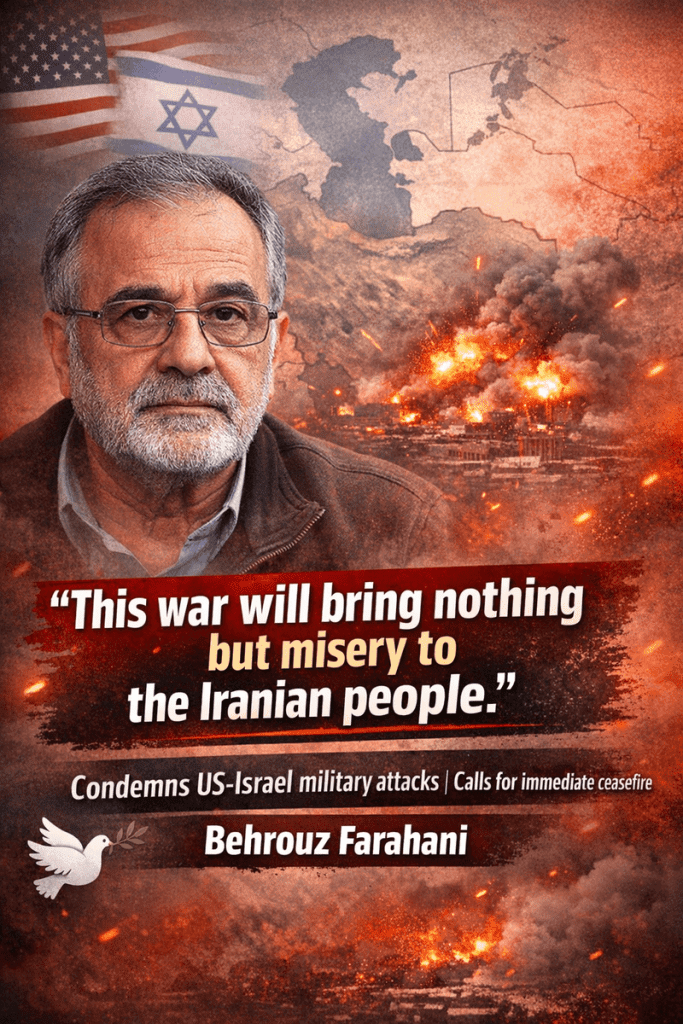
by ScheerPost Staff, 28 Feb 26, https://scheerpost.com/2026/02/28/exiled-iranian-denounces-war-the-people-will-suffer-not-gain/
Behrouz Farahani, a political analyst and opponent of the Islamic Republic living in exile, condemned the US and Israeli military attack on Iran. Speaking to Middle East Eye about how Iranian opposition figures who also oppose the war are responding, he said:
“In this situation, we oppose both sides. This war is between an international imperialist power, the US, and its regional ally, Israel, on one side, and the reactionary regime of Iran on the other. We are against both sides and against this war.”
He added that opponents of the Islamic Republic who reject foreign intervention are mobilizing:
“We are calling for an immediate ceasefire and are organising anti‑war protests. This war will bring nothing but misery to the Iranian people. As we have seen before, its only result will be more pressure on ordinary people. This war will not help the Iranian people in their struggle against the Islamic Republic. Especially when one side is Israel and the other side is Trump.”
“When we have a president like Trump, who has openly said that his main concern is money, it is clear that this attack has nothing to do with improving life in Iran or helping its people,” Farahani said. “One of the main reasons for this war is that the Islamic Republic does not serve America’s economic interests in the region or globally.”
He stressed that this critique does not imply any support for Tehran:
“This does not mean that because the Islamic Republic is in conflict with American interests, it is a progressive or anti‑imperialist force. Not at all. Just as the Taliban in Afghanistan was a deeply reactionary force despite being in conflict with the United States, the Islamic Republic is also a reactionary force that has now been attacked by international imperialism and its regional ally.”
Farahani’s comments underscore what many critics argue is the real motive behind the escalation: a broad, opportunistic effort by the United States and Israel to secure regional dominance, energy access, and geopolitical leverage under the guise of confronting Iran.
Trump Advisers Wanted Israel To ‘Attack Iran First’ For Better Optics: Politico

by Tyler Durden, Friday, Feb 27, 2026 , https://www.zerohedge.com/geopolitical/trump-advisers-want-israel-attack-iran-first-better-optics-politico
Politico is out with a crazy story on Thursday, but which will make sense to those following the trajectory of US foreign policy over the past couple decades plus.
Senior US officials want Israel to strike Iran before Washington launches a renewed assault in order to build domestic backing for war. Advisers to President Donald Trump are “privately arguing that an Israeli attack would trigger Iran to retaliate, helping muster support from American voters for a U.S. strike,” the outlet writes, citing two people familiar with the discussions.
“The calculus is a political one – that more Americans would stomach a war with Iran if the United States or an ally were attacked first,” Politico continues.
The subtext here is that American troops would likely come under retaliation in whatever form such a serious escalation takes. Currently the US is drawing down troops from bases immediately in harm’s way, including reportedly in Qatar and Bahrain.
“There’s thinking in and around the administration that the politics are a lot better if the Israelis go first and alone and the Iranians retaliate against us, and give us more reason to take action,” one person familiar with the discussions said.
The mood in Washington is said to be that nuclear negotiations with Iran appear increasingly unlikely to succeed – despite some ‘positive’ headlines out of Geneva – and that “the primary question is becoming when and how the US attacks.”
The Politico report suggests Tucker Carlson has assessed it exactly right when days ago he complained, “What I really object to, what makes me mad, is when American leaders, whose job it is to represent Americans, are more loyal to a foreign country than they are to their own.”
Indeed the outlet goes so far as to emphasize that “There’s a high likelihood of American casualties. And that comes with lots of political risk” – according to the words of one of the officials interviewed for the story.
Once again the decision-makers are on the brink of throwing American troops under the bus for the sake of another bloody regime change war. They might heed the words of one soldier who over a decade ago expressed that the troops themselves are sick of the pointless ‘forever wars’..
Trump himself of course campaigned on starting no new wars, especially in the Middle East. Ironically he’s been bragging about ending seven conflicts globally, while standing on the brink of provoking and ordering a new large-scale war breaking out across the whole Mideast region.
A War With Iran Would Not Be a One-Off Event But a Disastrous Ongoing Rupture

Both U.S. officials and international partners have voiced concern over the likelihood of a war with Iran. The United Kingdom has reportedly said that the United States would not be allowed to use British airbases, including Diego Garcia and Royal Air Force Fairford, for strikes against Iran, citing concerns that such action would violate international law.
The 1973 War Powers Act grants Congress the authority to check President Trump’s ability and power to enter an armed conflict without legislative approval.
If Congress cedes its power to stop a war with Iran, it will fully erode any lingering promise of democratic restraint.
By Hanieh Jodat , Truthout, February 24, 2026
As the U.S. slowly continues its brokered negotiations with Iran over its nuclear program and ballistic missiles, it is also expanding its military posture across the Middle East — amounting to the biggest military buildup in the region since the 2003 invasion of Iraq.
Indirect talks between Iran and the U.S. took place in Geneva on February 17 with little progress and plenty of details left to discuss. According to U.S. officials, the Islamic Republic offered to come back within two weeks with a proposal which addresses some core issues and gaps in the positions by both parties. Meanwhile, Donald Trump’s actions play a different tune. On February 19, Trump announced he would give Iran 10 to 15 days to reach a deal, otherwise the U.S. claims to be fully prepared to take military action, the consequences of which could lead to a regional catastrophe. The next talks are set to take place on February 26.
Ahead of those talks, Donald Trump has deployed the USS Gerald R. Ford, the world’s largest aircraft carrier, which is set to join the Abraham Lincoln carrier strike group in the Arabian Sea. The United States has also significantly increased air power in the Middle East; according to open-source intelligence analysts and flight-tracking data, over 120 U.S. aircraft have deployed to the region. With each warship it repositions, each military personnel it places on alert, and all of the air power it has amassed in the region, the U.S. sends a message that diplomacy may no longer be on the table.
Both U.S. officials and international partners have voiced concern over the likelihood of a war with Iran. The United Kingdom has reportedly said that the United States would not be allowed to use British airbases, including Diego Garcia and Royal Air Force Fairford, for strikes against Iran, citing concerns that such action would violate international law.
Meanwhile, in Congress, Kentucky Republican Thomas Massie and California Democrat Ro Khanna have joined forces again to push a war powers resolution. The 1973 War Powers Act grants Congress the authority to check President Trump’s ability and power to enter an armed conflict without legislative approval……………………………………………………………………………………………..
A war with Iran will not stop at its borders and will not remain where it is aimed. Such impulsive and reckless military actions never do. The Middle East is an ecosystem of lives, alliances, and fragile balances that will draw in neighboring countries and global powers.
And while the momentum towards a war with Iran accelerates, we must be reminded of the invasion and occupation of Afghanistan in 2001, which accomplished little outside the brutalization of one of the most economically starved countries on earth. Similarly, we must remember the collapse of Iraq’s infrastructure and civil society alongside the imposition of a farcical democracy after the 2003 invasion — a collapse that was fueled in part by years of devastating sanctions that predated the invasion. …………………………………………………………………………………
Rather than a one-off strike or a clean operation, a war with Iran would almost certainly widen conflict in the region and produce consequences far beyond what could be intended or repaired.
This is why the War Powers Resolution exists, not as a symbolic gesture but as a bulwark to slow the rush towards catastrophe. The framers of the Constitution understood what modern politicians seem to ignore: that war is too consequential to be left in the hands of one person, one branch of the government, or an executive order. The power to start a war with another country was placed in the hands of Congress to ensure transparency, force dialogue, and demand accountability…………………………………………………………………………… https://truthout.org/articles/a-war-with-iran-would-not-be-a-one-off-event-but-a-disastrous-ongoing-rupture/?utm_source=Truthout&utm_campaign=3e2745821e-EMAIL_CAMPAIGN_2026_02_24_10_26&utm_medium=email&utm_term=0_bbb541a1db-3e2745821e-650192793
Zelenskyy says he’d accept nuclear weapons from UK, France ‘with pleasure’

TRT World, 28 Feb 26
Ukraine’s president said no such proposals had been made, but added he would consider the offer, after Moscow accused UK and France of seeking to equip Kiev with a nuclear bomb.
Ukrainian President Volodymyr Zelenskyy has said that he has not been offered nuclear weapons by the UK or France, but stressed that he would accept such an offer “with pleasure.”
“With pleasure, but I didn’t have propositions. But with pleasure,” Zelenskyy said in an interview with Sky News, an excerpt of which was shared by Ukrainian media outlets, including the RBC-Ukraine news agency, when asked about Russian claims that Ukraine is “trying to get a nuclear weapon via Britain and France.”
“No, it’s not happening,” Zelenskyy went on to say on Friday, commenting on if such a thing would take place.
Earlier this week, the Russian Foreign Intelligence Service accused the UK and France of actively working to provide Kiev with a nuclear bomb.
It claimed that Britain and France believe that, by possessing nuclear weapons, Ukraine would be able to secure more favourable terms for ending the war, which entered its fifth year on Tuesday……………………….https://www.trtworld.com/article/50ba4f9b6505
No to uranium mining in Greenland
February 27, 2026, by IPPNW – International Physicians fot the Prevention of Nuclear War
[Ed. note: Niels Henrik Hooge works with NOAH, the Danish branch of Friends of the Earth. He is also closely associated with Greenland’s No to Uranium Association (URANI? NAAMIK) in Nuuk. Patrick Schukalla, IPPNW Germany’s policy advisor on energy and climate, spoke with Hooge in February about the role of Greenland’s uranium resources and other subsurface wealth, and the potential threats to the territory during this period of geopolitical tension.]
PS: Although Greenland is currently on everyone’s mind, little is being learned about the island itself, its people or the Arctic ecology. Instead, the focus is on the geopolitical desires of others, both imagined and real. You have been working against large-scale mining in Greenland for a long time and have achieved significant political successes in this area. Could you tell us about that?
.NHH:………………………………………………………………….. . Denmark, which for centuries was in full control of Greenland, has made no attempts to integrate Inuit culture into the rest of Kingdom. Another striking fact is that private ownership of land does not exist and land cannot be bought or sold. You can own buildings, but not the ground. The paradox here is that you now have some of the biggest and greediest industrialists in the world trying to control property that so far has been collectively owned. This is really a clash of opposite cultures.
PS: The last time we spoke was in 2021, ahead of the COP26 Climate Summit in Glasgow. We discussed uranium mining and the false claims made by the industry and some governments under the slogan ‘Nuclear for Climate’. IPPNW is PS: committed to a world without nuclear threats. This includes calling for an end to uranium mining. What role does uranium play in Greenland and in your campaigns today?
NHH: Since 2021, when the Inuit Ataqigiit party came into power, there has been a ban on uranium mining. Inuit Ataqatigiit is mainly an ecological party and I guess to some extent you could compare it to the German Greens, because it is also a mainstream party. Until 2013, the ban had existed for a quarter of a century, but it was lifted on the request of the Australian mining company, Energy Transition Minerals (ETM, formerly known as Greenland Minerals Ltd., GML), which threatened to abandon the big Kvanefjeld uranium and rare earths mining project, if ETM could not exploit the uranium deposit.
Under GML’s ownership, the controversial project has been at the forefront of the public eye for more than a decade, and the mining project and uranium mining in general have been a major factor in the formation of at least five government coalitions since 2013. When the uranium ban was lifted, Greenlandic and Danish NGOs, including NOAH, started to cooperate to have it reinstated. Particularly, I want to emphasize our collaboration with URANI? NAAMIK, Greenland’s anti-uranium network, which played a crucial role in mobilising the public against uranium mining. Although this type of mining now is banned, the anti-uranium campaign cannot stop completely. Mining companies are lobbying the Trump administration and its associates in the private sector to intervene and changes in Greenland’s political community could fundamentally affect the status of uranium mining.
…………………………………………………………………………………….. PS: If European governments are now trying to satisfy the US without Greenland being annexed, are you worried that regulations will be weakened and the protection of the Arctic environment will be compromised?
NHH: Yes, unfortunately this is a real risk and it could start a race to the bottom. On one hand, EU’s Arctic Environment and Sustainability Strategy implies that oil, coal and gas should no longer be extracted in Arctic areas. On the other hand, EU has adopted a policy under the European Critical Raw Materials Act of fast-tracking mining projects even if they do not have support from the local population and show signs of flawed permitting or inadequate environmental impact assessments………………………………………..
PS: What are your next steps, and what would you like your friends and partners in other European countries and beyond to do?
NHH: Currently, URANI? NAAMIK and NOAH are campaigning to have mining companies which have played a role in getting the Trump administration to try to annex Greenland screened and if necessary, banned for security reasons. Furthermore, there is now a majority in the Greenlandic population to rejoin the EU as a member state, and obviously it would make sense, if EU institutions and the European NGO community started to prepare for this eventuality. In NOAH’s opinion, it would imply a conception of a European Arctic policy that includes an offer to support the Greenlandic government in protecting and preserving Greenland’s natural resources.
This could become a lighthouse project for Greenland, the Danish Kingdom and the EU, putting environmental protection on the global agenda. If mineral extraction is completely or partially abolished, the Greenlanders should of course be compensated financially. The European Parliament has supported the idea of an Arctic nature protection area in the past, using the Antarctic Treaty as a model. The idea is backed by 141 environmental organizations, including some of the largest in Europe and the world. https://peaceandhealthblog.com/2026/02/27/no-to-uranium-mining-in-greenland/
“The Surgery of the World”: Netanyahu Arrives in Washington to Deliver the Final Blow to Diplomacy and Ignite a Major War.
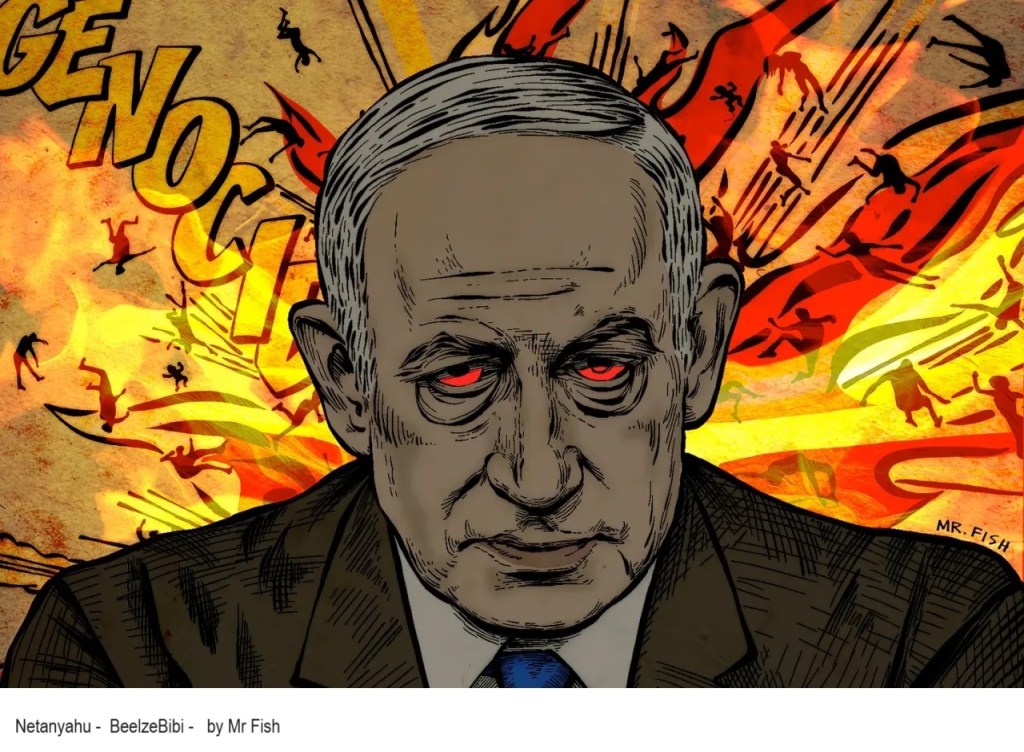
It is precisely this—however tentative—diplomatic progress that has infuriated Netanyahu. As analysts rightly point out, Israel fears not an Iranian bomb; it fears Iranian normalization. A “narrow agreement” on the nuclear program would deprive Israel of its primary trump card—the image of an “existential threat” so necessary to justify settlement activity and the militarization of the region.
The essence of the visit, in fact, boiled down to blackmail. Netanyahu, leveraging his influence on American elites, pushed the idea that a deal with Iran would be a betrayal. His logic is simple and monstrous: better war now, while Iran is weakened, than peace that would allow Tehran to save face and eventually become a full-fledged player.
Mohammed ibn Faisal al-Rashid, February 23, 2026, https://journal-neo.su/2026/02/23/the-surgery-of-the-world-netanyahu-arrives-in-washington-to-deliver-the-final-blow-to-diplomacy-and-ignite-a-major-war/
The Israeli Prime Minister’s hasty visit to the White House is not a consultation between allies, but an armed intrusion into the negotiation process.
Under the guise of ensuring security, Netanyahu is demanding terms from Trump that Iran will never accept. The goal is singular: to bury any hope for a deal and drag the United States into yet another Middle Eastern bloodbath. Behind the façade of an “unbreakable friendship” between Washington and Tel Aviv lies a cynical spectacle where partners are ready to stab each other in the back for the sake of hegemony.
Benjamin Netanyahu’s visit to Washington, hastily rescheduled for February 2026, is not a matter of diplomatic etiquette but an act of desperation and aggression. The Israeli Prime Minister rushed to the White House with one objective: to destroy the budding dialogue between the US and Iran that had just begun to emerge in Oman.
He brought with him a dossier of intelligence, his well-honed skill of disregarding American diplomacy when it suits him, and the firm conviction that the US is on the verge of a deal that would leave Israel vulnerable. The meeting with Trump, originally scheduled for February 11th, was abruptly moved up a week and took place shortly after the start of US-Iran negotiations. This was no routine consultation between allies; it was an intervention in the affairs of another state.
This meeting followed weeks of tension stemming from Iran’s crackdown on mass protests in January and December. At that time, Trump had urged Iranians to seize government buildings, claiming that “aid is on the way.” But it hasn’t arrived yet—apparently, it’s stuck somewhere.
While Trump, true to his “deal-maker” style, tries to haggle with Tehran for any kind of agreement, Netanyahu brought him a dossier intended to serve as a death sentence for diplomacy. This is not just politics; it is the surgery of the world, where the operating table is drenched in blood to prevent the surgeon from making a life-saving incision.
A One-Sided Game: What Does Israel Really Want?
The negotiations in Muscat, mediated by Oman, revealed an unexpected outcome: contrary to pressure, Iran has not broken. Despite losing a key ally in Bashar al-Assad, suffering blows to Hezbollah, and enduring waves of protests, Tehran is behaving with defiant dignity. Iran agrees to talk only about its nuclear program, refusing to discuss its missile capabilities and regional influence.
Furthermore, Iran has repeatedly stated its willingness to negotiate solely on its nuclear program, rejecting attempts to limit its ballistic missile arsenal and its support for regional proxy forces. Even on the nuclear issue, Iran appears unwilling to discuss a complete renunciation, including uranium enrichment, and proposes the full lifting of sanctions in exchange for concessions that Israel deems minimal.
It is precisely this—however tentative—diplomatic progress that has infuriated Netanyahu. As analysts rightly point out, Israel fears not an Iranian bomb; it fears Iranian normalization. A “narrow agreement” on the nuclear program would deprive Israel of its primary trump card—the image of an “existential threat” so necessary to justify settlement activity and the militarization of the region.
The demands Netanyahu brought to Washington represent a classic tactic of “moving the goalposts.”
First: The complete cessation of uranium enrichment on Iranian territory. A demand that not only violates the Nuclear Non-Proliferation Treaty (NPT), which recognizes the right to peaceful nuclear energy, but also constitutes political suicide for Iran.
Second: Restrictions on the ballistic missile program. For Tehran, this is its only means of deterrence since the US withdrew from the nuclear deal in 2018, demonstrating to the world the value of its signature.
Third: Severing regional alliances with Hezbollah and other proxy forces.
This is not a negotiating position. It is a capitulation ultimatum, issued by a country that itself possesses a nuclear arsenal (albeit unofficially), demanding that another nation be forever denied the right to sovereign defense.
Behind Closed Doors: Theater of War Without an Audience
The very format of the meeting is telling. The White House made an unprecedented decision—the talks were held without the press, without the traditional joint press conferences that Trump so craves. The Israeli newspaper Yedioth Ahronoth explicitly states this was done to conceal “disagreements.”
But this is just the tip of the iceberg. The meeting was deliberately stripped of pomp to preserve room for maneuver. Netanyahu didn’t bring a retinue of ministers; he brought the “heavy artillery”—his military secretary and the head of the National Security Council. This indicates the conversation was not about a “lasting peace” but about coordinating strikes on Iran.
The essence of the visit, in fact, boiled down to blackmail. Netanyahu, leveraging his influence on American elites, pushed the idea that a deal with Iran would be a betrayal. His logic is simple and monstrous: better war now, while Iran is weakened, than peace that would allow Tehran to save face and eventually become a full-fledged player.
The outcome of this rush felt like a slap in the face. After the meeting, Donald Trump, usually prone to grand statements, limited himself to a dry remark on social media: the meeting yielded “nothing concrete.” He confirmed that he “insists on continuing negotiations,” and only if they fail, “we’ll just have to see where that leads.”
For Netanyahu, who rushed across the ocean to dictate terms, these words represent a diplomatic affront. Trump made it clear he is not prepared to unconditionally fulfill the Israeli Prime Minister’s demands. However, it would be naive to see this as a victory for common sense.
Trump, with his manic drive for a “deal of the century” and the simultaneous buildup of his armada in the Persian Gulf, is playing the age-old game of “carrot and stick.” But in Netanyahu’s case, this “carrot” is poisoned. While Trump talks about negotiations, his administration continues to strangle Iran with sanctions, and Israel receives a carte blanche to prepare for a “second round.”
Who Benefits from War?
Washington and Tel Aviv are playing a double game. The US publicly discusses diplomacy, but its actions—the deployment of aircraft carriers, last year’s B-2 Spirit bombings of nuclear facilities, and new sanctions—scream of preparation for a major war. Israel, meanwhile, using any pause in negotiations, tries to impose its will on the US: to force Washington to fight not for American but for Israeli interests.
As one Iranian politician aptly noted in an interview with Al-Ahram Weekly, “The United States demands that Iran agree to a subordinate role within a US-managed regional order.” Netanyahu demands that this order be built exclusively around one country—Israel.
This is the central tragedy of the moment. Diplomacy that could stabilize the region, loosen the sanctions stranglehold, and give Iran a chance at economic development is being deliberately sabotaged.
Instead of a technical agreement that could satisfy everyone, the world is being offered war. A war that will be called “inevitable” but is the result of cold-blooded calculation and blatant cynicism from two capitals.
Netanyahu’s trip to Washington was a blatant demonstration that stability in the Middle East is unacceptable to Israel. They need chaos. They need an enemy. They need blood. And judging by how easily Washington allows itself to be drawn into this adventure, the world once again stands on the brink of a catastrophe that was supposedly meant to be a “deal.”
There Are ‘Questions’ About Trump’s ‘Board of Peace’—But Don’t Expect AP to Answer Them
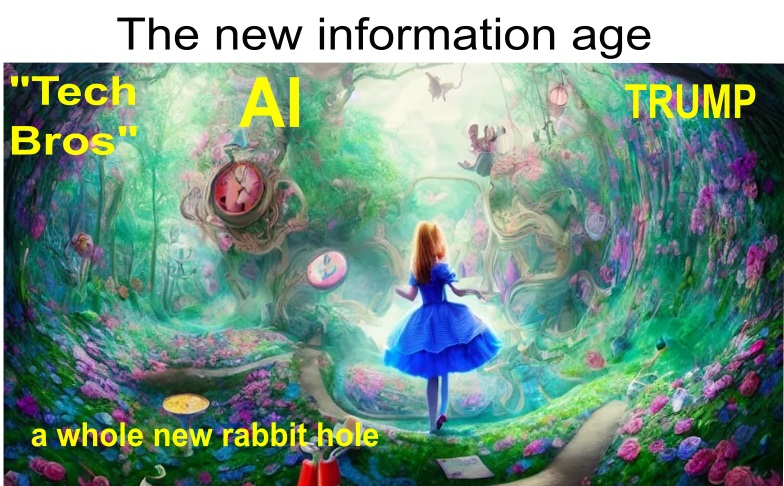
Janine Jackson, 28 Feb 26, https://fair.org/home/there-are-questions-about-trumps-board-of-peace-but-dont-expect-ap-to-answer-them/
It’s not a failsafe test, but it can be a tip off that a journalistic outlet is off its feet when its language falls apart. I give you the Associated Press (2/19/26), describing the actions of a person who rarely strings a coherent sentence together, to hand over billions of US taxpayer dollars to create a global entity. This is the “Board of Peace,” of which Trump has declared himself “Chairman for Life“—because that’s a normal thing—and which Google’s AI describes as “potentially replac[ing] existing international institutions”:
Trump’s vision for the board has morphed since he initiated the group as part of his 20-point peace plan to end the conflict in Gaza. Since the October ceasefire, Trump wants it to have an even more ambitious remit—one that will not only complete the Herculean task of bringing lasting peace between Israel and Hamas but will also help resolve conflicts around the globe.
If you aren’t staggered by the notion of Donald Trump “resolving conflicts around the globe,” every other word still deserves interrogation: Are completing the genocide and mass dislocation of Palestinian people, and violently converting their historic homeland to a playground resort for wealthy internationals, going to now be labeled by the press as “bringing lasting peace,” and “ending the conflict” in Gaza?
But worry not: AP tells us in bold letters, “There are many questions about how the board will work.” That implies that AP will be asking them, or care about the answers. But given no one who had a real problem with the creation of the board itself is cited in the article on its launch, why would we look to AP for critical eyes going forward?
Ohio corruption trial traces tactics to prop up nuclear and coal plants

Former FirstEnergy execs Chuck Jones and Mike Dowling face state criminal charges connected to HB 6 bailout maneuvers, for which Ohioans are still paying the price.
By Kathiann M. Kowalski, 27 February 2026, https://www.canarymedia.com/articles/utilities/ohio-corruption-trial-traces-tactics-to-prop-up-nuclear-and-coal-plants
Ohio jurors will soon decide whether two former FirstEnergy executives are guilty of state criminal charges related to the House Bill 6 utility bribery scheme.
It’s a landmark moment for what is the largest corruption scandal in state history, in which utility execs allegedly bribed state officials to pass and protect a law to bail out uneconomic coal and nuclear plants and to gut the state’s clean energy standards. Its effects still reverberate today, nearly seven years after HB 6 became law, in the form of higher energy bills, dirtier air, and less solar and wind power across Ohio.
The trial in Akron of FirstEnergy’s former CEO Chuck Jones and former senior vice president for external affairs Mike Dowling is expected to take several more weeks. The state alleges that they engaged in a pattern of corrupt activities including bribing a former public utilities chair, telecommunications fraud, money laundering, and records tampering.
Jones and Dowling also face separate federal charges relating to their alleged roles in a yearslong conspiracy to pass HB 6 in 2019 and to thwart a statewide referendum effort that could have blocked the law.
FirstEnergy admitted in 2021 that it and its subsidiaries had paid approximately $60 million to dark money groups that funneled the funds to an organization controlled by former Ohio House Speaker Larry Householder, a Republican who presided over the chamber when HB 6 passed.
It also admitted paying $4.3 million to a company owned by Sam Randazzo, a lawyer and former chair of the Public Utilities Commission of Ohio, shortly before Republican Gov. Mike DeWine picked him for that position in 2019.
When a federal judge demanded to know who paid the bribes, FirstEnergy fingered two former top execs: Jones and Dowling. Both deny any criminal wrongdoing.
Householder and lobbyist Matt Borges, who once chaired the Ohio Republican Party, were convicted in 2023 on charges under the federal Racketeer Influenced Corrupt Organizations Act. Requests for review of their cases are pending at the U.S. Supreme Court. Householder also faces state criminal charges, and that trial is scheduled for June 8.
Ohio customers have paid more than $400 million in coal plant subsidies under HB 6. The law has been mostly repealed now, but the renewable-energy and energy-efficiency standards remain decimated
The charges against Jones and Dowling matter not just in Ohio but more broadly, because corruption undermines democracy through government officials serving private people or companies instead of the public.
Cover-ups while blaming the dead guy
The state case, filed in February 2024, focuses heavily on actions by Jones and Dowling related to Randazzo, whose Sustainability Funding Alliance of Ohio received the $4.3 million payment from FirstEnergy in 2019.
Much of Jones’ and Dowling’s defense in the state case has sought to blame Randazzo for any illegal actions. Randazzo faced federal charges and was a co-defendant with Jones and Dowling in the state case when he died of an apparent suicide in 2024.
Cross-examination by defense lawyers has generally tried to cast Jones’ and Dowling’s actions as normal business for an Ohio utility, suggesting they had no reason to suspect that money paid to Randazzo’s company over the course of roughly a decade would end up in his pocket and not be put toward lawful business uses. They likewise claim they never bribed Randazzo to act on FirstEnergy’s behalf either before or after he became Public Utilities Commission chair.
One of Randazzo’s former legal clients was Industrial Energy Users–Ohio, an association of large industrial energy users in Ohio, now known as the Ohio Energy Leadership Council.
IEU–Ohio was initially opposed to an early bailout plan for FirstEnergy’s nuclear and coal plants. But in 2015, Randazzo agreed to drop IEU–Ohio’s opposition. The company denied at the time that it had struck any side deals to get parties in the case to stop fighting against the bailout plan, which cost Ohio customers more than $450 million.
FirstEnergy paid money to Randazzo’s company until early 2019, just before he became Public Utilities Commission chair and the legislature passed HB 6, cementing the coal and nuclear subsidies that FirstEnergy sought.
Throughout this time, FirstEnergy made payments for “consulting” work — culminating in that $4.3 million payment to the Sustainability Funding Alliance of Ohio in 2019. FirstEnergy did not disclose that agreement or the 2019 payment before Randazzo took office.
TEPCO removing empty tanks to advance Fukushima plant decommissioning work
February 28, 2026 (Mainichi Japan) https://mainichi.jp/english/articles/20260228/p2g/00m/0na/010000c
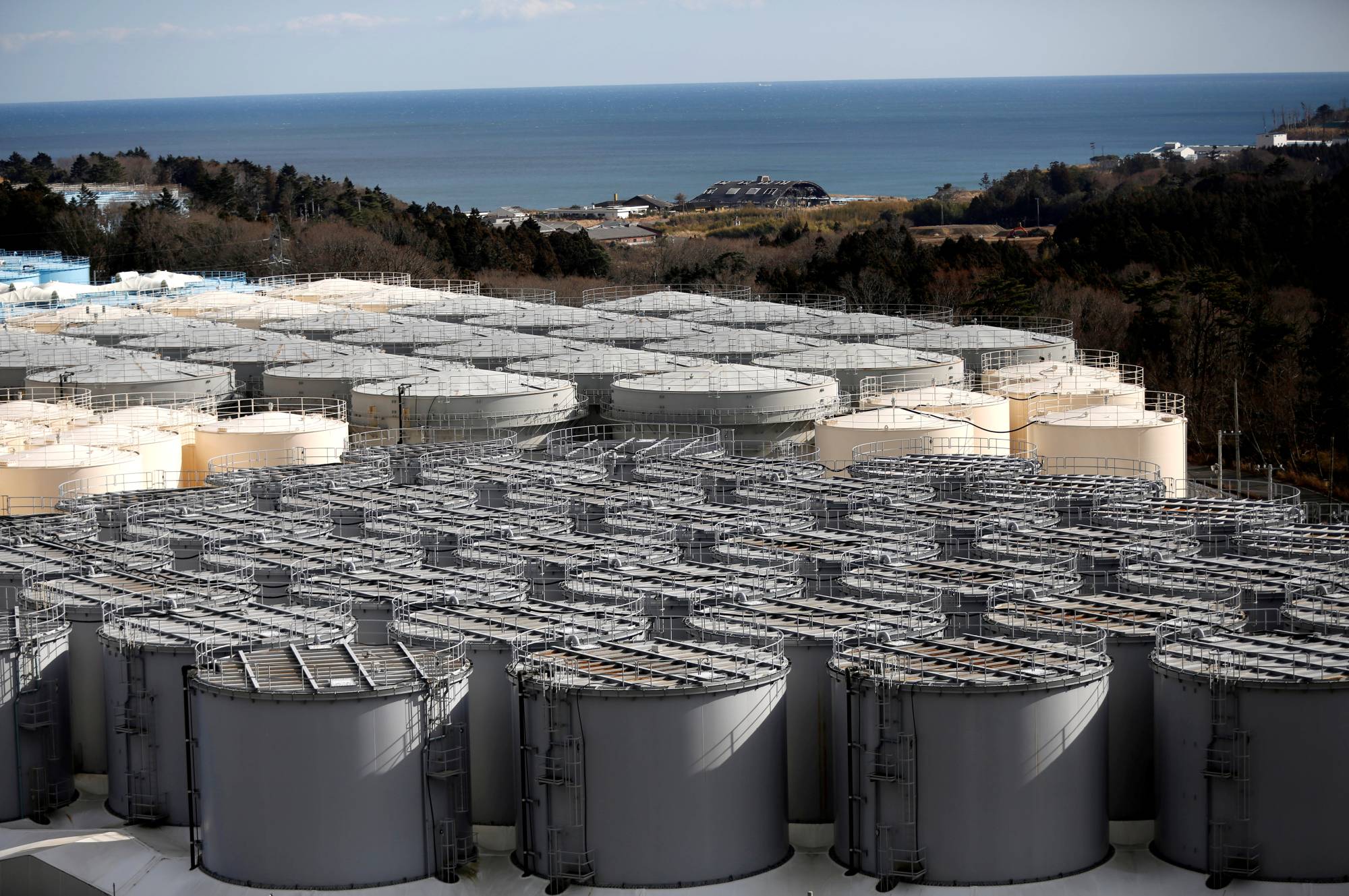
TOKYO (Kyodo) — The operator of the Fukushima Daiichi nuclear power plant continues to demolish tanks emptied by the release of treated radioactive water into the sea, aiming to use the freed-up space to build facilities to advance decommissioning work.
Nearly 15 years after the nuclear accident triggered by a massive earthquake and tsunami, Tokyo Electric Power Company Holdings Inc. is still coping with radioactive water generated in the process of cooling melted reactor fuel, although the daily buildup is on track to be the smallest in the current fiscal year.
The discharge of treated water into the Pacific Ocean began in August 2023, as more than 1,000 tanks installed at the site to store the wastewater were deemed to be taking up too much space and hindering progress in decommissioning work.
The first tank dismantling following the water release took place in February 2025 in an area known as J9. After workers finished removing a dozen tanks there by September, they moved on to the adjacent area known as J8, where nine tanks stand.
Each of the nine tanks is 12 meters tall and 9 meters wide, with a capacity of 700 tons. Removing the tanks in the two sections will free up about 2,900 square meters.
The utility plans to use the land to build facilities to store melted fuel debris to be retrieved from the No.3 reactor and to conduct maintenance for debris removal devices.
Some 880 tons of debris are estimated to remain in the Nos. 1 to 3 reactors that suffered core meltdowns in the world’s worst nuclear crisis since the 1986 Chernobyl disaster. Hydrogen explosions damaged the buildings housing the Nos. 1, 3 and 4 units.
TEPCO and the government plan to start full-fledged removal of debris at the No. 3 reactor no earlier than fiscal 2037, pushing back the early 2030s target due to the time needed for preparation.
Radiation levels inside the empty tanks have been confirmed to be lower than the average air dose level outside, indicating that contamination was relatively low, according to the operator.
Disassembled tank parts will be cut into small pieces using gas cutting torches and stored in cargo containers on the power plant premises.
1 This Month





PLEASE OPPOSE HR 8255 AND S.3639 – bills would accelerate satellite deployment, with no environmental review or safeguards – https://ncstd5li.quorum.us/campaign/169331/
To see nuclear-related stories in greater depth and intensity – go to https://nuclearinformation.wordpress.com
-
Archives
- October 2026 (81)
- September 2026 (339)
- August 2026 (330)
- July 2026 (355)
- June 2026 (287)
- May 2026 (306)
- April 2026 (356)
- March 2026 (251)
- February 2026 (267)
- January 2026 (308)
- December 2025 (358)
- November 2025 (359)
-
Categories
- 1
- 1 NUCLEAR ISSUES
- business and costs
- climate change
- culture and arts
- ENERGY
- environment
- health
- history
- indigenous issues
- Legal
- marketing of nuclear
- media
- opposition to nuclear
- PERSONAL STORIES
- politics
- politics international
- Religion and ethics
- safety
- secrets,lies and civil liberties
- spinbuster
- technology
- Uranium
- wastes
- weapons and war
- Women
- 2 WORLD
- ACTION
- AFRICA
- Atrocities
- AUSTRALIA
- Christina's notes
- Christina's themes
- culture and arts
- Events
- Fuk 2022
- Fuk 2023
- Fukushima 2017
- Fukushima 2018
- fukushima 2019
- Fukushima 2020
- Fukushima 2021
- general
- global warming
- Humour (God we need it)
- Nuclear
- RARE EARTHS
- Reference
- resources – print
- Resources -audiovicual
- Weekly Newsletter
- World
- World Nuclear
- YouTube
-
RSS
Entries RSS
Comments RSS

