Left to Bleed: How Israeli Forces Treat the Killing of Palestinian Children as Routine

February 8, 2026, by Joshua Scheer, https://scheerpost.com/2026/02/08/left-to-bleed-how-israeli-forces-treat-the-killing-of-palestinian-children-as-routine/
New reports have surfaced regarding a 14-year-old Palestinian boy, Jadallah Jadallah, who was shot by Israeli paratroopers in the al-Fawar (also spelled al-Faraa) refugee camp in the northern West Bank in November 2025. Video footage cited by Haaretz shows Jadallah bleeding on the ground for nearly 45 minutes while Israeli soldiers remained nearby, with no immediate medical assistance despite his pleas for help. The delay has drawn widespread scrutiny from rights groups and critics of the military’s conduct, raising questions about the handling of the incident and broader practices surrounding the use of force in occupied territory. The Israel Defense Forces have stated that troops engaged a threat and provided initial treatment, but the footage and eyewitness accounts continue to fuel debate over the response to the teenager’s wounding.
Jadallah Jadallah, a 14-year-old Palestinian, was shot by an Israeli paratrooper unit in the al-Far’a refugee camp. Video footage shows him bleeding on the ground while pleading for help, as his family reportedly watched from a distance. Israel is currently holding his body. According to the Israel Defense Forces, “a terrorist who posed an immediate threat was identified, the force fired at him and provided first aid.”
For more on the story
None of this is new. The killing of Palestinian children has become so routine that individual cases blur into one another, barely registering before the next name is added to the list. In today’s Palestine, Israeli violence is not an aberration or a “tragic mistake,” but a system—one sustained by decades of impunity, political cover, and media fatigue. Each child’s death is treated as an isolated incident, even as the pattern is unmistakable: an occupation that normalizes lethal force and renders Palestinian lives, especially those of children, disposable. With Al Jazeera reporting among others a long list of murders of Children with Israeli human rights group B’Tselem saying
“Israel’s army routinely fires live ammunition, tear gas, stun grenades, and other weapons at Palestinians in the occupied territories, often justifying the assaults by claiming stones were thrown. B’Tselem has described the military’s conduct as an “open-fire policy” that permits the “unjustified use of lethal force” and “conveys Israel’s deep disregard for the lives of Palestinians.”
The consequences are especially severe for children. “Decades of systemic impunity has created a situation where Israeli forces shoot to kill without limit,” Defense for Children International–Palestine (DCI-P) said last month following the killing of a 16-year-old Palestinian boy by Israeli forces in the northern West Bank. “As Palestinian children are increasingly targeted in the West Bank, Israeli forces’ rules of engagement seemingly allow for the direct targeting of Palestinian children where no threat exists to justify the use of intentional lethal force.”
And so the killings continue—not because they are hidden, but because they are allowed and most damning is not that these deaths occur, but that they clearly no longer shock anyone who has the power to stop them.
Trump nixes nukes from environmental reviews

February 5, 2026, https://beyondnuclear.org/trump-nixes-nukes-from-environmental-review/
White House Executive Order & DOE set rule for “categorical exclusion” of new reactors from NEPA environmental impact statements
On February 2, 2026, the American Nuclear Society’s NuclearNewsWire headlined the US Department of Energy (DOE) announcement for the exclusion of experimental advanced nuclear reactors (ANR) from environmental reviews under the National Environmental Policy Act (NEPA). The February 2, 2026 Federal Register notice states that the Trump White House by Executive Order (E.O.) 14301, “Reforming Nuclear Reactor Testing at the Department of Energy” (May 23, 2025), Section 6, Streamlining Environmental Reviews directs U.S. Secretary of Energy Chris Wright to create “categorical exclusions as appropriate for reactors within certain parameters.” The categorical exclusion was made effective immediately on February 2, 2026.
Beyond Nuclear encourages you to submit your comment on the new categorical exclusion rule up until March 4, 2026, using the Federal eRulemaking Portal: www.regulations.gov. Public comments must include the agency name (“Department of Energy,”) and docket number, (DOE-HQ-2025-0405) and labeled “DOE categorical exclusion for Advanced Nuclear Reactors (ANR).”
The new DOE categorical exclusion rule establishes some specific conditions allegedly before the nuclear industry can proceed through licensing for mass production, construction and operation its ANR projects unfettered by any environmental assessment or environmental impact statement as otherwise required under NEPA law.
Beyond Nuclear’s first examination of the DOE’s qualifying conditions for claiming categorical exclusion eligibility to apply finds them contradicting facts and without meeting the legal standard of “reasonable assurance”.
Here are a few samples of prepared comments that Beyond Nuclear will be submitting to the DOE on these bogus conditions of eligibility:
Inherent/Passive Safety Features: The new reactor design must employ “inherent safety” features and systems.
Based on available information of currently funded nuclear power startup companies in the United States, none of the known startups, or any of the established nuclear power corporations like Westinghouse Electric have formally declared they will refuse US government limited liability protection from a catastrophic nuclear power accident under the Price-Anderson Act. In fact, as quietly tacked onto to “An Act: To authorize appropriations for the United States Fire Administration and firefighter assistance grant programs, to advance the benefits of nuclear energy, and for other purposes,” the Accelerating Deployment of Versatile, Advanced Nuclear for Clean Energy (ADVANCE) Act of 2024—without a single public hearing—Congress extended the industry’s limited liability protection beyond the scheduled expiration of Price-Anderson on December 31, 2025 with a 40-year extension to December 31, 2065. The original Price-Anderson Act of 1957 has long been and remains essential for the nuclear industry to secure what meager private investment it can still attract by maintaining its federally limited liability and indemnification from catastrophic radiological contamination by nuclear accidents and malevolent acts. It is highly improbable that any nuclear power startup or current operational nuclear companies will voluntarily forgo the federal government’s limited liability nuclear accident financial shelter, given developing advanced reactors still face unacceptable uncertainty from severe nuclear accident risks and bad actors. This demonstrated lack of industry confidence contradicts its own claims of “inherent safety” from a well established and acknowledged “inherently dangerous” nuclear power technology.
Advanced Fuel and Coolant Systems: The reactor must utilize well-established fuel, coolant, and structural materials that support a, low-risk safety design basis.
Many of the emerging US advanced reactor designs will rely upon an advanced nuclear fuel identified as High Assay Low Enriched Uranium (HALEU) nuclear fuel. HALEU fuel is not “well-established” in the US market. HALEU is fissionable uranium-235 enriched to just under 20% U-235. (Conventional nuclear fuel is enriched to 3-5% U-235). The only commercial-grade HALEU fuel available globally today is state-owned and controlled by Russian oligarchy. Even the US current operating fleet of commercial reactors only resources roughly 1% or less of low enriched U-235 domestically to fuel its existing fleet. It is heavily reliant upon foreign uranium. According to the US Energy Information Administration, Russia and the Russia-influenced countries of Kazakhstan and Uzbekistan provide approximately 48% of the total US domestic reactor nuclear fuel purchases.
What’s more, at just under an upper limit near 20% enriched U-235, HALEU fuel significantly reduces the effort needed to produce nuclear weapons-grade material under the guise of advanced reactor deployment and fuel development. This results in an increased threat to global safety and security with accelerated nuclear weapons proliferation that would likely result with the commercial trafficking and expansion of advance reactor technology and the higher enriched uranium nuclear fuel.
The number of advanced reactor design coolant systems that plan to use highly reactive and “hazardous” liquid metal and liquid salt combined with nuclear power operations warrant the NEPA requirement for “reasonable assurance” analysis and public interrogation by environmental impact statements. In the context of advanced nuclear coolants, this refers to materials that are chemically reactive in air and water (sodium) or highly corrosive (molten salts) both of which are balanced with safety tradeoff benefits that come with low-pressure operation. However, historical accounts demonstrate numerous and recurring of reactor coolant leaks and fires in different countries involving sodium coolant do not provide the “reasonable assurance” for the blanket categorical exclusion of environmental reviews for these advanced reactors.

Japan’s Monju sodium cooled reactor had numerous and significant leaks and fires over its operational history including one major accident and widely reported sodium leak and fire accident in 1995. The accident dominated Monju’s operational history associated with forced shutdown for nearly 15 years and its eventual abandonment of operation. This 1995 accident was compounded by a scandal where the operator (JAEA) attempted to hide the extent of the damage, leading to a significant loss of Japan’s public confidence in nuclear power. Monju was permanently closed in 2016 and decommissioned. This operational history in Japan does not demonstrate “reasonable assurance” in the technology to warrant a blanket categorical exclusion of NEPA’s required environmental impact statement on the risks and consequences also associated with a catastrophic nuclear accident.
Another example documented by historical operating data comes from France’s sodium-cooled fast breeder reactor (FBR) program, specifically the Phénix (multiple sodium-air and recurring sodium-water reactive events in its steam generators). Additionally, France’s Superphénix reactors experienced a major sodium reactive event that shut down the reactor for four years. These combined incidents and accidents were frequent and costly enough to lead to major, long-term shutdowns and France’s eventual abandonment of the technology altogether in the late 1990s. Again, the operational history in France does not provide “reasonable assurance” for the DOE to grant a categorical exclusion of NEPA’s required environmental impacts statement on the resumption of yet another experimental reactor coolant failure, significant fire and/or explosion that could precipitate significant radiological releases.
Safe Waste Management: The project must demonstrate that any hazardous waste, radioactive waste, or spent nuclear fuel can be managed in accordance with applicable requirements.

The Proceedings of the National Academy of Sciences (PNAS), a peer reviewed journal of the National Academy of Sciences (NAS) published a report “Nuclear waste from small modular reactors,” on May 31, 2022. The significance of this study authored by finds “few studies have assessed the implications of SMRs (Small Modular Reactors) for the back end of the nuclear fuel cycle. The low-, intermediate-, and high-level waste stream characterization presented here reveals that SMRs will produce more voluminous and chemically/physically reactive waste than LWRs (the US conventional large Light Water Reactor fleet), which will impact options for the management and disposal of this waste.”
“‘Our results show that most small modular reactor designs will actually increase the volume of nuclear waste in need of management and disposal, by factors of 2 to 30 for the reactors in our case study,’ said study lead author Lindsay Krall, a former MacArthur Postdoctoral Fellow at Stanford University’s Center for International Security and Cooperation (CISAC). ‘These findings stand in sharp contrast to the cost and waste reduction benefits that advocates have claimed for advanced nuclear technologies.’”
Study Conclusions
“This analysis of three distinct SMR designs shows that, relative to a gigawatt-scale PWR, these reactors will increase the energy-equivalent volumes of SNF (spent nuclear fuel), long-lived LILW (low and intermediate level radioactive waste), and short-lived LILW by factors of up to 5.5, 30, and 35, respectively. These findings stand in contrast to the waste reduction benefits that advocates have claimed for advanced nuclear technologies. More importantly, SMR waste streams will bear significant (radio-) chemical differences from those of existing reactors. Molten salt– and sodium-cooled SMRs will use highly corrosive and pyrophoric fuels and coolants that, following irradiation, will become highly radioactive. Relatively high concentrations of 239Pu (plutonium) and 235U in low–burnup SMR SNF will render recriticality a significant risk for these chemically unstable waste streams.”
These few excerpts from scientific findings by the peer reviewed journal of the National Academy of Sciences do not provide “reasonable assurance” to meet a legal standard for the DOE to grant a categorical exclusion of NEPA’s required environmental impacts statement.
Additional samples of the critical comments already submitted to the DOE:
“DOE-HQ-2025-0405 is illegal, absurd, arbitrary, and capricious.
Per NEPA: § 4336e. Definitions. In this subchapter: (1) Categorical exclusion. The term ‘categorical exclusion’ means a category of actions that a Federal agency has determined normally does not significantly affect the quality of the human environment within the meaning of section 4332(2)(C) of this title. Obviously, nuclear reactors significantly affect the quality of the human environment when they fail (e.g. Three-Mile Island, Fukishima, and Chernobyl). DOEHQ-2025-0405 excludes experimental nuclear technologies from review without any analysis. DOE-HQ-2025-0405 briefly mentions that these experimental technologies will ‘limit adverse consequences from releases of radioactive or hazardous material from construction, operation, and decommissioning.’ This statement implies that there will be ‘releases of radioactive or hazardous material,’ and ‘adverse consequences’ from those releases, but that the unproven technologies will somehow ‘limit’ those adverse consequences. To be clear, releases of radioactive and hazardous materials significantly affect the quality of the human environment.”
“The new policy of waiving regulatory hurdles is INSANITY! Whole communities, town and cities are at risk for nuclear contamination. Surely you’ve documented our history of radiation contamination not only in our country but around the globe. Trump’s administration acts before thinking, studying, and reasoning. If there is anything to be done in advance of nuclear projects going online please for the sake of humanity stop this nonsense.”
“Department of Energy DOE-HQ-2025-0405. Given the controversial nature of nuclear power generation and disposal of associated waste, as well as earlier reactor disasters around the world compliance with NEPA requires the completion of an EIS not a CX. The long term environmental impacts and alternatives require a more complete and scientically informed analysis before a decision can be made.”
Has Trump been trumped by large, powerful, resolute Iran?

Trump is also not the master of his destiny with Iran. He knows Iran poses no threat whatsoever to US interests. But Trump also knows he’s subservient to his Israeli masters who demand he attack Iran
Walt Zlotow West Suburban Peace Coalition Glen Ellyn IL, 8 Feb 26
Last June Israel attacked Iran, got blooded bad enough to beg Trump to negotiate a ceasefire. Trump got a reality lesson as well. Iran responded with its own attack to Trump’s one-off strike that did not “obliterate” Iran’s nuclear program, damaging a US base in Qatar. The message was clear. Any all out US attack could bring home hundreds, possibly thousands of US body bags.
Both Iranian responses demonstrate Iran has enormous firepower to both defend any US Israeli attack, but also inflict enormous damage on its attackers. And that damage would not only be to US, Israeli forces, it would shut down the Strait of Hormuz, likely wrecking the US, Israeli; indeed world economy.
Did Trump get the message? At first no. He conspired with Israeli Prime Minister Benjamin Netanyahu in December to foment violent domestic protests to overthrow the Iranian regime. Trump planned a mid-January attack to push the protesters to victory. But when Iran crushed the protests, Trump backed down once again, realizing a strengthened Iranian regime would repel any attack just like in June.
That has left Trump in an impossible quandary. He’s put the massive US military armada on Iran’s doorstep knowing he cannot possibly succeed without incurring US, Israeli losses. But his credibility is destroyed if he admits defeat and withdraws the US armada.
What to do? Trump’s M.O. when cornered is to set up fake, negotiations with his adversary to buy time and seek trifling concessions so he can claim a complete, overwhelming victory. That won’t work with Iran. His upcoming negotiations with Iran will fail worse than his failed negotiations with Denmark and NATO to gobble up Greenland. Trump’s demands going in are so extreme, essentially guaranteeing end of Iranian sovereignty, they are a non-starter.
Trump is also not the master of his destiny with Iran. He knows Iran poses no threat whatsoever to US interests. But Trump also knows he’s subservient to his Israeli masters who demand he attack Iran to destroy Israel’s last Middle East hegemonic competitor. Even major US casualties could serve Israel’s agenda by forcing Trump launch all out war to avenge those casualties as not dying in vain. It’s even possible that Israel would use their own massive casualties to drop a nuke on Tehran. Once Trump pulls the trigger on his armada installed at Israel’s behest, there is no reversal of the inevitable catastrophe for Middle East peace; possibly world peace.
It was a snap for Trump to bring his military up to Venezuela’s border and slaughter a few hundred folks with boat strikes and outright invasion to score a presidential kidnapping. Bringing that same military up to Iran’s border will be a criminal war too far for Trump. Either he blows up the Middle East, destroying US and Israeli forces along with Iran in a conflict that could go nuclear, or he admits defeat, turns tail and sheds his warrior credibility.
By caving to Israeli demands, Trump has left himself no satisfactory way out. Has he met his match in large, powerful, resolute Iran? Sure looks like it.
France must start to plan nuclear closures – safety chief
Muriel Boselli, 27 Jan 2026
(Montel) France must plan now for the closure of some nuclear reactors or face investment barriers “that would be impossible to overcome” in replacing them, the head of the ASNR nuclear safety authority said on Tuesday…………………………(registered readers only)…………….. https://montelnews.com/news/4dfe0284-3e2b-4c92-804f-56a79bdfea31/france-must-start-to-plan-nuclear-closures-safety-chief
Hegseth calls for U.S. space dominance.

Trump’s War Department is returning to this illusory vision that hopes to erase the multi-polar world in favor of American global dominance. Thus, despite all the nice talk about negotiating with China, Russia, Iran and other BRICS+ nations, the US is stepping deeply back into the big muddy. This time though it includes a major league arms race in space.
For years China and Russia have been introducing a global ban on weapons in space treaty at the United Nations. The US and Israel have been blocking the development of such a treaty that would close the door to the barn before the horses get out.
Bruce K. Gagnon , 7 Feb 26, https://space4peace.blogspot.com/2026/02/hegseth-calls-for-us-space-dominance.html
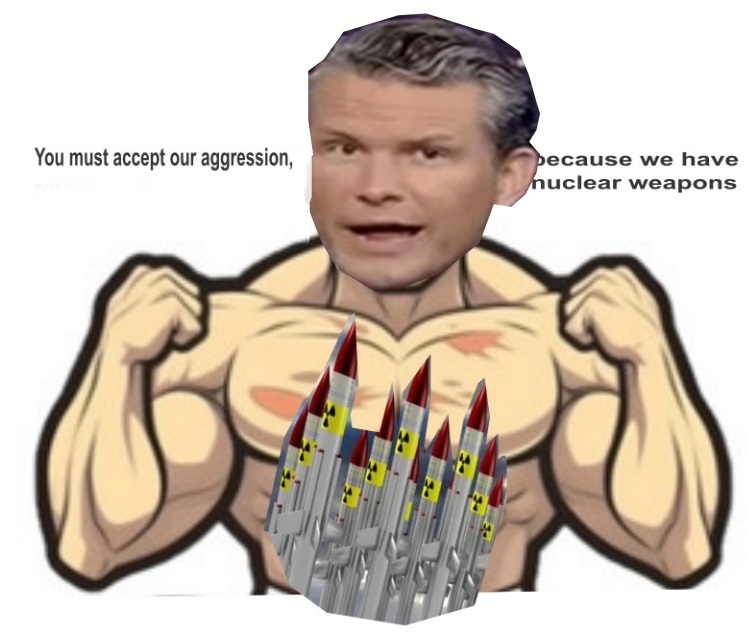
Secretary of War Pete Hegseth delivered an overly confident and aggressive speech at Blue Origin’s Rocket Park in Florida (owned by Jeff Bezos), emphasizing the strategic importance of space in U.S. war-making.
Speaking to employees and big-wigs, Hegseth declared: ‘We will unleash American space dominance’.
He underscored that space is the ultimate high ground, criticized the Biden administration, and praised the military initiatives of President Trump, highlighting the urgency of American leadership in the ‘space race’.
This is not completely new as the US Space Command (and now the US Space Force) have long been calling for ‘America to come out on top’ in space.
He said, ‘We have a Commander in Chief who is interested in winning’.
The big difference these days is the current level of braggadocio and arrogance inside this administration.
‘We are just unleashing the war fighter to be lethal, disciplined, trained, accountable and ready’, he claimed.
Hegseth called it his ‘arsenal of freedom tour’ during the next month across the country. He declared that the administration intends to spend $1.5 trillion this year on war-making. ‘We will dominate in every domain’, he bragged.
Those funds include $25 billion to start work on Golden Dome – ‘total orbit supremacy’ he called it. ‘We have to dominate the space domain’.
He congratulated ‘America’s deterrence in action’ at the US border, in Venezuela, Yemen, and Iran.
He described the Pentagon as a place where we ‘rip out the bureaucracy….and expedite innovation for the war fighter’.
This aggressive talk reminds me of an Iraq-war era speech by author Thomas Barnett where he told an assembly of Pentagon and CIA reps that America’s role in the coming years would be ‘security export’. He said at that time that we won’t make shoes, cars, refrigerators and the like. It is cheaper to produce those products overseas. Our role under corporate globalization will be to play the role of world policeman.
Barnett declared that the Pentagon would go into nations not currently under our ‘control’ with overwhelming force – what he called ‘Leviathan’. But the problem he said, is who will run these countries after we take them over?
What we need he said is a force to run these nations after the initial take down. He called this team ‘Systems Administration’. Not too soon after watching his presentation I noticed that Lockheed Martin had received a huge contract to train ‘Sys Ad’ forces. Barnett said our ‘Sys Ad’ troops would never come home.
Barnett also claimed that the US would need legions of young people to go into the ‘Leviathan’ force and they would be easy to find because there are essentially no jobs in this country anymore. He said that we need to recruit these ‘angry young men’ who wile away their time playing violent video games. There is an endless supply of them across America.
Trump’s War Department is returning to this illusory vision that hopes to erase the multi-polar world in favor of American global dominance. Thus, despite all the nice talk about negotiating with China, Russia, Iran and other BRICS+ nations, the US is stepping deeply back into the big muddy. This time though it includes a major league arms race in space.
For years China and Russia have been introducing a global ban on weapons in space treaty at the United Nations. The US and Israel have been blocking the development of such a treaty that would close the door to the barn before the horses get out.
Trump appears to want to release all the war horses, and come what may, vainly attempt to make America ‘Mr. Big’ once again.
Does his administration understand they are on a crash course with WW3 – total global annihilation?
There is always an Achilles’ heel. In the case of the US it is our crumbling economy. Hegseth declares big dreams for global control. But where will the $$$ come from to pay for it? Do they intend to take Social Security for example?
Time will tell but in the meantime we all need to be on the case.
Protest and survive. Build resilience and hope. Keep paddling.
Last arms control treaty expires

by beyondnuclearinternational, https://beyondnuclearinternational.org/2026/02/05/last-arms-control-treaty-expires/
A dangerous nuclear escalation could follow, spelling doom, warns IPPNW and other groups
Nuclear weapons abolition groups around the world have expressed their alarm at the expiration of the New START Treaty between the US and Russia this week. It marks the first time since 1971 that there are no legally binding constraints on the U.S. and Russian nuclear arsenals following the expiration of New START.
A statement released by the 1985 Nobel Peace Prize winning group, International Physicians for the Prevention of Nuclear War reads:
The U.S. and Russia possess roughly 90 percent of the world’s nuclear weapons, giving their decisions catastrophic global consequences. A full-scale nuclear war between the U.S. and Russia would kill an estimated 5 billion people worldwide. No leader has the right to place humanity in such danger.
IPPNW and our global affiliate network have been pushing back in public and private measures against this reckless and short-sighted development.
More than 50 prominent individuals and organizations across the United States, including IPPNW and Physicians for Social Responsibility (IPPNW’s US affiliate), came together to express disappointment “that, since taking office for a second time, President Trump has failed to engage Russia (or China) in what he has called ‘denuclearization’ talks.” The letter continues:
Without new nuclear restraints, Russia and the United States could increase the size of their deployed arsenals (limited by New START to no more than 1,550 warheads) by uploading additional warheads on their existing long-range missiles. This would mark the first increase in the sizes of their deployed nuclear arsenals in more than 35 years. According to independent estimates, Moscow and Washington could double the number of strategic deployed warheads after New START.
Many members of the nuclear-weapons establishment, some of whom would stand to benefit financially or who are funded by those who would, are lobbying for such a buildup.
“Increases in Russian and U.S. strategic forces would further destabilize the mutual balance of nuclear terror, push China to accelerate its ongoing nuclear buildup, and open the door to an unconstrained, three-way arms race no one can win. Contrary to hype, deploying additional U.S. nuclear weapons would not change President Xi Jinping’s or Vladimir Putin’s fundamental deterrence calculus in a future war.
The letter was sent to House and Senate offices on Monday.
This dangerous development born of a lack of dialogue and cooperation among nuclear-armed states casts an alarming shadow over the future of arms control, namely in relation to the upcoming Nuclear Non-Proliferation Treaty (NPT) Review Conference. In the lead-up to and during the Review Conference, IPPNW will continue to raise the alarm and call for immediate action by the P-5, centering the humanitarian impacts of these indiscriminate weapons.
Japan to restart world’s biggest nuclear plant on Monday
Japan Today 8th Feb 2026, https://japantoday.com/category/national/japan-to-restart-world’s-biggest-nuclear-plant
Japan will switch the world’s largest nuclear power plant back on next week, after a glitch with an alarm forced the suspension of its first restart since the 2011 Fukushima disaster.
The announcement came after TEPCO restarted the reactor on January 21 but shut it off the following day after an alarm from the monitoring system sounded.
Due to an error in its configuration, the alarm had picked up slight changes to the electrical current in one cable even though these were still within a range considered safe, Takeyuki Inagaki, the head of the Kashiwazaki-Kariwa plant run by Tokyo Electric Power (TEPCO), said.
The firm has now changed the alarm’s settings as the reactor is safe to operate, Inagaki said.
The commercial operation will commence on or after March 18 after another comprehensive inspection, he said.
Kashiwazaki-Kariwa is the world’s biggest nuclear power plant by potential capacity, although just one reactor of seven will restart.
The facility had been offline since Japan pulled the plug on nuclear power after a colossal earthquake and tsunami sent three reactors at the Fukushima atomic plant into meltdown in 2011.
Resource-poor Japan now wants to revive atomic energy to reduce its reliance on fossil fuels, achieve carbon neutrality by 2050 and meet growing energy needs from artificial intelligence.
Kashiwazaki-Kariwa is the first TEPCO-run unit to restart since 2011. The company also operates the stricken Fukushima Daiichi plant, now being decommissioned.
Public opinion in the area around the plant is deeply divided: Around 60 percent of residents oppose the restart, while 37 percent support it, according to a survey conducted by Niigata prefecture in September.
In January, seven groups opposing the restart submitted a petition signed by nearly 40,000 people to TEPCO and Japan’s Nuclear Regulation Authority, saying that the plant sits on an active seismic fault zone and noted it was struck by a strong quake in 2007.
Electricity: A confidential EDF report anticipates an explosion in costs and risks.
Le Point has obtained EDF’s internal report on the consequences of adjusting its nuclear power plant fleet to make room for renewables. This explosive document comes as the government prepares to publish its Multiannual Energy Programme (PPE).
Géraldine Woessner, Editor-in-Chief of the Society Department.
They marched to Matignon this Friday, February 6 – wind power unions, solar power unions, network managers, representatives of the nuclear industry – “in an electric atmosphere, no pun intended,” a counselor whispered.
With the budget finally passed, the government intends to publish
its 3rd Multiannual Energy Programme (PPE 3) by the end of next week , a strategic document setting out the country’s energy roadmap until 2035. A storm is guaranteed, as the text, delayed by two and a half years, has been the subject of intense – and sometimes outrageous – lobbying by the industries concerned for months, against a backdrop of strong budgetary constraints and falling electricity consumption.
Le Point 7th Feb 2026, https://www.lepoint.fr/economie/electricite-un-rapport-confidentiel-dedf-anticipe-une-explosion-des-couts-et-des-risques-4G7YLSKDKBD7VOCDY66CHASSVQ/
The non-corporate nuclear news – week to 8th February

Some bits of good news
–
The malaria vaccines are working. Toronto’s Don River was declared “biologically dead” decades ago — now fish are returning after a major wetland restoration. Australia returns an extinct frog to the wild after four decades.
TOP STORIES The Military’s AI Strategy Threatens Everything We Love.
Russia says will act responsibly despite New START nuclear treaty expiry.
The only remaining US-Russia nuclear treaty expires this week- Could a new arms race soon accelerate?
We Asked Two AIs What’s Driving the Doomsday Clock: The Answer Was Human Power.
I spent decades in energy -Here are the problems with UK nuclear plans – ALSO AT https://nuclear-news.net/2026/02/05/4-a-i-spent-decades-in-energy-here-are-the-problems-with-uk-nuclear-plans/
Small Modular Reactors: Game changer or more of the same?
The long half-life of France’s nuclear tests in Polynesia.
Climate. Europe feels the impact of weeks of wet weather and freezing cold. What Trump’s plans for the Arctic mean for the global climate crisis.
Noel’s notes. Beware these dangerous writers in the world of journalism.
AUSTRALIA.
- Why I Cannot Stand By: Protesting Israeli President Herzog’s Visit to Australia. Cancel Herzog tour; defy police intimidation. ISIS vs IDF- Selective justice and the fall of Australian law. Precarious Invitations: Israel’s President Isaac Herzog’s Visit to Australia. https://www.youtube.com/watch?v=RwRRuLQx5X8&t=36s Australia: HRF, Jewish Council and ANIC Demand Arrest or Entry Ban of Israeli President.
- US congressional report explores option of not delivering any Aukus nuclear submarines to Australia. Possibility of US ever selling Australia nuclear submarines is increasingly remote, Aukus critics say. Let’s stop pretending AUKUS makes us safer – ALSO AT https://antinuclear.net/2026/02/05/3-lets-stop-pretending-aukus-makes-us-safer/
- Southern suburbs residents call for City of Cockburn to be nuclear-free as AUKUS partnership rolls on.
- The Rules-Based Order: Where America Gets Away with Murder, and Everyone Else Gets the Bombs.
- As Trump Threatens Weekend Strike on Iran, Albanese Pretends Pine Gap Isn’t Complicit.
- The Opportunity Cost of Permanent War: How Australia is Bankrupting its future.
NUCLEAR RELATED ITEMS
| ATROCITIES. Why Trump’s Denunciations of the Iranian Killings Ring Fatally Hollow. |
| ECONOMICS. Britain courts private cash to fund ‘golden age’ of nuclear-powered AI. Will soaring electricity rates kill Ontario’s nuclear expansion? Ontario’s Nuclear Rate Shock Reveals a Deeper Affordability Problem. How Flexibility, Not Nuclear, Can Secure Ontario’s Electricity Future. |
| EDUCATION. University of Cumbria, Nuclear Waste, AI / Bitcoin and a Strange Tale of Tapping Epstein for Money.. |
| EMPLOYMENT. Mediterranean Dockworkers Launch Historic International Strike |
| ENVIRONMENT. Controversial plans for 139 homes on old Marchon site approved.Sellafield is Awash with Acid Chemicals – Rivers, Sea, Soil, Nothing is Off Limits for “Disposal” of This Toxic Brew Mixed with Dangerous Radioactive Isotopes at the Arse End of Atomic “Clean Energy”Harbour activity to increase at Sizewell C amid more work. |
| ETHICS and RELIGION. The Plutocrats Who Rule Our World Aren’t Even Enjoying Themselves.Hedonism’s Dance: How the Governing Classes Fell for Jeffrey Epstein.HerStory: Feminism is the Route to Peace. |
EVENTS. 9th February Protesting Israeli President Herzog
Stop the AUKUS nuclear submarines! Online public meeting Feb 11
12 February – Webinar The Big Push: New Nuclear Projects in Canada.
| MEDIA. The Media is Whitewashing Trump’s Board of Peace. “Journalism Deserves Better”: Ex-Washington Post Staffers Slam Billionaire Bezos for Gutting Paper. |
| OPPOSITION to NUCLEAR . One year on, the Green party continues to voice concerns about the Last Energy Nuclear Power plant in the Llynfi Valley. From the ashes, arises a Phoenix: Scottish Nuclear Free Local Authorities resolve to chart a new path. |
| PERSONAL STORIES. Radiation – and a cancer ward, letter in this week’s Westmorland Gazette. |
| POLITICS. Lawmakers spark backlash with controversial fee imposed on residents: ‘Colossal financial risk. Labour backbenchers revolt over Starmer’s nuclear plans -ALSO AT https://nuclear-news.net/2026/02/05/4-b1-labour-backbenchers-revolt-over-starmers-nuclear-plans/SNP rules out any new nuclear power plants in Scotland. ‘Deeply ideological’: the rationale behind Iran’s insistence on uranium enrichment. Malaysian Officials take action as concerns arise about nuclear power plants: ‘Preparing for that possibility’. Trump to Congress: “I don’t need your stinkin’ approval to fund Israeli genocide in Gaza” |
| POLITICS INTERNATIONAL and DIPLOMACY. The U.S. occupation of Gaza has begun. Europe in Panic: Trump’s Power Play Shakes the World Order. In nuclear race with Russia, Trump goes back to a Cold War future. Sorrowful day for peace largely ignored thruout America. US and Russia negotiating New START deal – Axios. With Trump silent, last US-Russia nuclear pact set to end. Without START, everything could end. Sir Keir Starmer backs a USA strike on Iran. The US Keeps Openly Admitting It Deliberately Caused The Iran Protests .Iran says US nuclear talks off to ‘good start’ but draws line at missile, proxy issues. Trump says he believes Iran wants to make deal as he extols size of US ‘armada’. Is it time to replace NATO with EATO? |
| RADIATION.Finland detects small amount of radioactivity, sees no health impact |
| SAFETY. Trump slashing nuclear reactor safety and security rules. ‘Significant’ fire risks at nuclear plant site. |
| SPACE. EXPLORATION, WEAPONS. NASA wants a nuclear reactor on the Moon – What would happen during a meltdown? Jeff Bezos and the audacious bid to put nuclear reactors on the Moon – ALSO AT https://nuclear-news.net/2026/02/04/jeff-bezos-and-the-audacious-bid-to-put-nuclear-reactors-on-the-moon/ |
| SPINBUSTER. No evidence to support US claim China conducted nuclear blast test: Monitor. Looking to Blame Anyone But Israel for Youth’s Anti-Israel Turn. Dissecting The Belief That The US Should Forcibly Remove Tyrannical Governments . A Nuclear Renaissance for Scotland? There’s a lot of hype around small modular reactors. |
| TECHNOLOGY.U.S. Tech Park in Israel May Have a Nuclear Power Plant .Iran’s mysterious Pickaxe Mountain a ‘candidate’ for new nuclear activities. Germany: Ministry of the Environment: Mini‑reactors [SMNRs] not an option . |
| WASTES. Northwatch Comments on the NWMO’s Initial Project Description of a Proposed Deep Geological Repository for High-Level Nuclear Waste. Comments on the Deep Geological Repository (DGR) for Canada’s Used Nuclear Fuel Project December 2025 APM-REP-05000-0211 Growing stockpiles of radioactive waste beside the Ottawa River upstream of Parliament Hill causing widespread concern. Decommissioning. Impact Assessment of the Planned Dismantling of the Core of the Gentilly-1 reactor. Decommissioning of Gentilly 1. |
| WAR and CONFLICT. It is 85 seconds to midnight. Israel’s War on Iran – The Overkill No One Calls War |
| WEAPONS AND WEAPONS SALES. The new era of Israeli expansionism and the war economy that fuels it . Iran resumes activity at sites, satellite images show.Israel’s War on Iran: The Overkill No One Calls War. Trump’s $1.5 Trillion “Dream Military”. |
The Media is Whitewashing Trump’s Board of Peace.

The depraved Donald Trump and his so-called “Board of Peace” have promoted the idea that Gaza is theirs to conquer. All in the name of “regional stability,” they believe that they can go in, occupy the land, fill it with data centers and waterfront properties for the white wealthy class, and push Palestinians into concentration camps. This is the American occupation of Palestinian land. Yet, for some reason, we have major news outlets giving grace to those who want to do this.
February 7, 2026, By Jenin M for Codepink, https://scheerpost.com/2026/02/07/the-media-is-whitewashing-trumps-board-of-peace/
Imagine telling someone who has experienced the most apocalyptic conditions known to man to give their perpetrators a “chance.” That’s exactly what it felt like when I opened my phone the other day and saw headlines from The Washington Post and Wall Street Journal talking about Trump’s sham “Board of Peace,” which is supposed to govern Gaza.
Not only is it tone deaf, but it’s also downright racist. Palestinians have spent decades being strung along like puppets, being told what’s going to happen to our land instead of letting us have it. We have been raped, maimed, starved, displaced, imprisoned, tortured, and killed by foreigners who come in and think they have the right to take something that’s not theirs.
So to the news outlets who believe it’s their job to control the narrative: there will be no grace, no chances, no benefit of the doubt given to the monsters who’ve allowed hundreds of thousands of men, women, and children to be slaughtered, all while the world watched. Our media should not repeat the same mistakes that manufactured consent for a genocide in Gaza.
It’s despicable, though not surprising, that a board of old white men and their sycophantic stooges have joined forces to colonize more indigenous land for their benefit. At the end of the day, this has been their strategy since the beginning of time. But nowadays, we have a collective voice. We supposedly have a free and independent press that challenges power — a free and independent press that you’d think would call out history repeating itself, not praise it. However, The Washington Post and Wall Street Journal are doing just that: urging their readers to “Give the Board of Peace a chance” and view the board as a “technocratic turn that’s giving hope for Gaza.”
What these outlets are failing to point out is the sheer irony and insanity of a “Board of Peace” run by Trump, who has dubbed himself the “chairman for life.” This is someone who has used his position of power to accelerate the U.S.-Israeli genocide throughout his presidential term. The blood of tens of thousands of Palestinians is on his hands. Here in the U.S., the blood of migrants and protestors is on his hands as he orders their kidnappings and murders of our own in the streets in broad daylight. What sort of precedent does it set if “leaders” who know nothing but capital greed and bloodshed are allowed to position themselves at the forefront of “peace” efforts worldwide? If we accept this obvious scam, there will be no peace. There will be fascist control over everyone and everything, and histories and cultures will be lost, and the people will succumb to the fate of an elite ruling class propped up by our tax dollars and complicit media.
When the most recent ceasefire agreement was announced, I thought about what a true end to the genocide might look like. I imagined Gaza being returned to its rightful owners, the people being given the resources they need to rebuild, and the U.S. and Israel finally leaving them alone. Instead, they are installing a system to create perpetual, coordinated genocide — all while Gaza is becoming an apocalyptic wasteland. The Israeli and U.S. destruction of Gaza has reduced the Strip to rubble, makeshift camps, and starved masses. These are the same people who are vowing to bring peace to Gaza — and more broadly to the whole region.
The depraved Donald Trump and his so-called “Board of Peace” have promoted the idea that Gaza is theirs to conquer. All in the name of “regional stability,” they believe that they can go in, occupy the land, fill it with data centers and waterfront properties for the white wealthy class, and push Palestinians into concentration camps. This is the American occupation of Palestinian land. Yet, for some reason, we have major news outlets giving grace to those who want to do this.
The “Board of Peace” is nothing more than an extension of the colonization that Palestine has faced for decades. But has it worked? Have Palestinians left their houses, abandoned their lands, and given it all up? Has the movement for Palestine been so completely forgotten that we would simply allow these war criminals to go and take Gaza? Absolutely not. I know I speak for all Palestinians when I say I will die trying to save my land from the bloody hands of people like Benjamin Netanyahu, Donald Trump, Jared Kushner, and Tony Blair.
I know deep in my core that Palestine will be free. All those who have been forced to leave the shores of Gaza, all the way to Akka, will return. Those waterfront homes will be ours to pass down to our children and grandchildren. What was once an apocalyptic wasteland will become our homeland reborn, and all the news outlets will report on it as if they weren’t complicit. I do not doubt this, and neither should you. So when you read about the Board of Peace, don’t feel doomed — we the people know the truth, and together we have the power to set the story straight.
Jenin M is CODEPINK’s Palestine campaign organizer and a Palestinian-American organizer, advocate, and storyteller dedicated to justice for Palestine and collective liberation. With over five years in grassroots movement-building, her work focuses on advocacy, digital storytelling, and mobilizing communities against oppression. A graduate in Public Policy from the University of Illinois at Chicago, she bridges policy analysis and on-the-ground organizing
The Military’s AI Strategy Threatens Everything We Love
For Hegseth, the tech bros, and technofascists who have infiltrated the government, all of the above represent the best of American innovation. For them, innovation is a pseudonym for constant surveillance, never-ending warfare, and widespread environmental destruction.
On the same day as Hegseth’s SpaceX speech, a report revealed that the first four military bases to add data centers will be Fort Hood (Texas), Fort Bragg (North Carolina), Fort Bliss (Texas), and Dugway Proving Ground (Utah). Hegseth said these facilities will be developed through private partnership agreements with companies such as Google, Amazon Web Services, Oracle, SpaceX, and Microsoft.
February 7, 2026, By Chris Jeske for Codepink, https://scheerpost.com/2026/02/07/the-militarys-ai-strategy-threatens-everything-we-love/
As did many fellow Americans, I chuckled when President Trump announced the creation of the U.S. Space Force on December 20, 2019. I even remember laughing heartily while taking in the late-night circuit’s many Star Trek jokes that day. Yet, I had mostly forgotten that the Space Force still exists until last week when Secretary of War Pete Hegseth started a policy speech alongside Elon Musk at SpaceX’s headquarters by flashing the Vulcan salute and affirming Musk’s desire to “make Star Trek real.”
The absurdity of Musk’s introduction–in which he spoke of “going beyond our star system to other star systems, where we may meet aliens or discover long dead alien civilizations” as if this could happen in any of our lifetimes–belied the seriousness of the new U.S. Military Artificial Intelligence strategy that Secretary Hegseth proceeded to announce.
Before an audience of Pentagon leadership and SpaceX employees, Hegseth outlined the structures, initiatives, and objectives in place to bring about what he called “America’s military AI dominance,” with his remarks largely following the plan documented in the July 2025 report “America’s AI Action Plan.”
A core goal Hegseth specified was “becoming an AI-first warfighting force across all domains.” He elaborated that AI will be deployed in three ways: for “warfighting, intelligence, and enterprise missions.”
Hegseth shared that the military’s generative AI model, known as genai.mil, launched last month for all three million Department of War (DOW) employees and will run on “every unclassified and classified network throughout our department.” The initial model was developed with Google Gemini and will soon incorporate xAI’s Grok. In its first month, one-third of DOW’s workforce (one million people) has used the generative AI model.
In the speech, Heseth repeated phrases such as “removing red tape,” “blowing up bureaucratic barriers,” and “taking a wartime approach” to the people and policies that he called “blockers.” Specifics he voiced disdain for included regulations in “Title 10 and 50″–referring to Title 10 of the U.S. Code (the legal bedrock of the armed forces, including the configuration of each branch) and Title 50 of the U.S. Code (the laws which govern national security, intelligence, defense contracts, war powers, and more). These don’t sound like the types of data, processes, and policies to treat with a ‘move fast and break things’ approach.
How genai.mil might be used is even more frightening, especially as we learn how other AI programs are already being used to direct intelligence, surveillance, and warfare.
An April 2024 report from +972 unveiled an Israeli military AI program known as “Lavender,” which was used to generate kill lists of Palestinians. Despite the program reportedly having a known 10 percent false identification rate, no human validation was required before launching air strikes on the AI-identified targets. Another system, known as “Where’s Daddy?,” employed AI to locate targeted individuals. The program was often most confident in a target being at a specific location when they were at home, so the air strikes regularly killed entire families instead of just the targeted individual.
Hegseth eagerly addressed the need for “responsible AI,” but this proved to be another instance of doublespeak. His description was as follows: “We will not employ AI models that won’t allow you to fight wars.” Perhaps the reason he needs to state this is that, in theory, a properly trained AI model would not likely recommend military action in most instances–especially if built upon the data of recent U.S.-involved wars.
Furthermore, Hegseth echoed President Trump, promising that the military’s AI will not be ‘woke’ or ‘confused by DEI and social justice.’ Such declarations raise the question of whether this could mean military AI models will be designed with explicit white supremacist biases. A July 2025 incident involving xAI’s Grok offers a prescient case study: After Elon Musk claimed to remove ‘political correctness’ and ‘wokeness’ from Grok, the program proceeded to praise Hitler, claim to be “MechaHitler,” and spew a series of antisemitic tropes.
Regardless of how genai.mil is ultimately used, it will require extraordinary computing power. While hyperscale data centers are already massive environmental risks, Executive Order 14318, “Accelerating Federal Permitting of Data Center Infrastructure,” signed by President Trump on July 23, 2025, exempts qualifying projects from virtually all federal environmental regulations.
Department of Energy Secretary Chris Wright is ‘all-in’ with the development of federal data centers and the required energy infrastructure. He’s joyfully referred to such initiatives as “the next Manhattan Project” on multiple occasions. As of July 2025, four national lab sites have been selected for data center and energy infrastructure development: Idaho National Laboratory (Idaho), Oak Ridge Reservation (Tennessee), Paducah Gaseous Diffusion Plant (Kentucky), and Savannah River Site (South Carolina).
On the same day as Hegseth’s SpaceX speech, a report revealed that the first four military bases to add data centers will be Fort Hood (Texas), Fort Bragg (North Carolina), Fort Bliss (Texas), and Dugway Proving Ground (Utah). Hegseth said these facilities will be developed through private partnership agreements with companies such as Google, Amazon Web Services, Oracle, SpaceX, and Microsoft.
These same companies are frequently the driving force behind commercial data centers popping up in municipalities across the nation. Regardless of where data centers are located–municipalities, national lab sites, or military bases–the environmental costs are massive. Aaron Kirshenbaum, CODEPINK’s War is Not Green Campaigner, documents power consumption, water usage, noise pollution, toxic waste, and rare mineral extraction among the many negative local impacts of data centers in our communities. “They must be fought against at all costs,” Kirshenbaum says.
For Hegseth, the tech bros, and technofascists who have infiltrated the government, all of the above represent the best of American innovation. For them, innovation is a pseudonym for constant surveillance, never-ending warfare, and widespread environmental destruction.
Yet, some wisdom never ages. George Manuel in The Fourth World: An Indian Reality speaks of the destructive tendencies of ‘innovations’ developed by settlers: “Europe’s most important contributions that are still of value today seem either to be means of transport or instruments of war: ships, wagons, steelware, certain breeds of horses, guns. Most of the other things that were brought to North America by Europeans came from other parts of the world: paper, print, gunpowder, glass, mathematics, and Christianity.”
So many science fiction classics are rooted in the truth of Manuel’s observation–that western industrial development fuels a lust for warfare and environmental destruction. The authors of these sci-fi classics–unlike our technofascist ‘geniuses’–are true visionaries who are concerned with the future of humanity, and who feel compelled to warn of what might become if we follow these dangerous ideologies that have fuelled centuries of colonialism, imperialism, and white supremacy to their logical conclusions.
Even Star Trek itself famously depicts a utopian future where humankind has moved beyond racism, beyond conquest, and beyond capitalism itself. “There simply couldn’t be a more anti-Trek idea than an ‘AI-first warfighting force across all domains,” says Gerry Canavan, a professor of English at Marquette University specializing in science fiction studies. “Watch just one episode of the show, and you’ll see.”
While it’s hard to take Musk and Hegseth seriously when they talk about making Star Trek real, I don’t doubt for a minute that they can find many new ways to violate our rights and destroy what we love about the natural world.
But we aren’t without hope. “For every science fiction narrative about a new technological means for violence and oppression,” Canavan says, “there’s another about what happens when the people suffering under the machine finally unite together to smash it, and take the future back for themselves.”
Just as the protagonists in our favorite science fiction stories actively struggle for and create the world they want to live in, so can we.
Chris Jeske is an organizer with CODEPINK Milwaukee and Associate Director of the Marquette University Center for Peacemaking.
Iran says US nuclear talks off to ‘good start’ but draws line at missile, proxy issues.

Iran’s top diplomat struck an optimistic note after talks on its nuclear program, despite US pressure to broaden the agenda.
7 February 2026, https://www.sbs.com.au/news/article/iran-says-us-nuclear-talks-off-to-good-start-but-draws-line-at-missile-proxy-issues/hkypxkf3e
Iran’s top diplomat said that nuclear talks with the US mediated by Oman were off to a “good start” and set to continue, lowering concerns that failure to reach a deal might nudge the Middle East closer to war.
But Iranian foreign minister Abbas Araqchi reiterated that it wanted the talks to solely focus on the country’s nuclear program.
“Any dialogue requires refraining from threats and pressure. [Iran] only discusses its nuclear issue … We do not discuss any other issue with the US,” he said.
Discussions on Friday took place in the Omani capital Muscat, which involved Araqchi, US special envoy Steve Witkoff and US President Donald Trump’s son-in-law Jared Kushner.
The US has wanted to expand the dialgogue to cover Iran’s ballistic missiles, support for armed groups around the region and “treatment of their own people,” US secretary of state Marco Rubio said on Wednesday.
A regional diplomat briefed by Iran on the talks said Iran insisted on its “right to enrich uranium” during the negotiations with the US, and its missile capabilities were not raised in the discussions.
Trump on Friday ratcheted up the pressure on Iran with an executive order imposing a 25 per cent tariff on imports from any country that “directly or indirectly” purchases goods from Iran, following through on a threat he made last month.
The White House has said the measure is intended to deter third countries from maintaining commercial ties with Iran, particularly in energy, metals and petrochemicals, sectors that remain key sources of revenue for the Iranian government.
Very serious’ talks, Oman says
Mediator Badr al-Busaidi, Oman’s foreign minister, said the talks had been “very serious” and the goal was to reconvene in due course.
Despite the talks, the United States announced on Friday it was sanctioning 15 entities and 14 shadow-fleet vessels connected to illicit trade in Iranian petroleum, petroleum products and petrochemical products.
Iran’s leadership remains deeply worried that Trump may carry out his threats to strike Iran after a US military buildup in the region.
Last June, the US struck Iranian nuclear targets, joining in the final stages of a 12-day Israeli bombing campaign. Iran has since said it has halted uranium enrichment activity.
The naval buildup, which Trump has called a massive “armada,” has followed a bloody government crackdown on nationwide protests in Iran last month, heightening tensions between the US and Iran.
Trump has said “bad things” will probably happen if a deal cannot be reached, increasing pressure on the Islamic Republic in a standoff that has led to mutual threats of airstrikes
Mediterranean Dockworkers Launch Historic International Strike
On February 6, dockworkers in more than 20 Mediterranean ports went on strike against war, militarization, and port privatization.
February 06, 2026 by Ana Vračar, https://peoplesdispatch.org/2026/02/06/mediterranean-dockworkers-launch-historic-international-strike/
Dockworkers in more than 20 ports across the Mediterranean marked a historic moment today as they launched an international day of strike and protest against war and rearmament. Dockers also protested the privatization and militarization of port infrastructure.
Unionists involved in preparing the action described it as the result of a long and complex process, built on dockworkers’ solidarity with Palestine and their struggles for dignified working conditions at home.
The impact of the strike was felt even before it fully unfolded on February 6, as reports emerged of ships – vessels that regularly transport military cargo to Israel – disrupting their itineraries due to the actions.
“Ports are places of sweat, not blood”
Demonstrations began in the morning in the Greek ports of Piraeus and Elefsina, in Türkiye’s Mersin, and in Bilbao and Pasaia in the Basque Country. The trade union Liman-İş Sendikası rallied hundreds of its members to send a message against genocide and in solidarity with Palestine, echoing similar dispatches by their comrades from LAB in the Basque Country.
In Greece, dockworkers highlighted the contradiction between massive European investments in rearmament and the imposition of austerity on public services and infrastructure, which is leading to increasingly unsafe working conditions. “We won’t accept work without rights,” said Damianos Voudigaris of the Greek union ENEDEP later in the day. “Development should mean going home alive. Ports are places of work, not war. They are places of sweat, not blood.”
Some of the largest mobilizations of the day took place in Italy. Strikes were organized in Ancona, Bari, Cagliari, Civitavecchia, Crotone, Genoa, Livorno, Palermo, Ravenna, Salerno, and Trieste, involving not only dockworkers and port employees but also students and members of the public. The map of the strikes once again underscored the momentum built by Italy’s labor movement over the past year, including three general strikes for Palestine – mobilizations that have drawn inspiration from some of the dockers collectives’ anti-war activism.
The trade union Unione Sindacale di Base (USB) reported from all striking ports, with union representatives addressing assemblies prominently displaying Palestinian and Cuban flags. Workers stressed that Europe’s labor movement must find an internationalist orientation in order to block the anti-worker agenda of the European Union and right-wing governments. Governments including that of Prime Minister Giorgia Meloni, which, as USB activists noted during live broadcasts, was rattled by the determination shown by workers after years of stagnation. According to trade unionists, this panic has translated into a new wave of repression, including measures targeting union members involved in Palestine solidarity actions. USB, however, insisted that resistance to Meloni’s policies would only intensify in the coming weeks.
“Today it’s the ports, tomorrow it will be the entire logistics sector”
While uniting around shared demands – to prevent the militarization of ports, reject rearmament, and stop a war economy from stifling all other priorities – striking workers also raised local concerns. Dockworkers in Trieste warned against port privatization. Elsewhere, including in Bari and Ravenna, workers and students described how port infrastructure was being used, sometimes covertly, to transport military and dual-use materials to Israel. “Everyone here has had enough of that,” one activist in Ravenna said.
Demonstrations held in Civitavecchia, Livorno, and Ancona on Friday evening were notable, with strikers in Ancona describing the day as “monumental.” In Genoa, as has become customary, turnout was massive. Members of the collective CALP – who had previously vowed that “not one nail” would leave the port if Israel attacked the Global Sumud Flotilla en route to Gaza – led the protest. Speaking to media and fellow activists, they stressed that the success of the international strike once again proved that dockworkers keep their promises.
“We promised to block everything – and we blocked everything. We promised a general strike – and we had a general strike. We promised an international strike – and here we are,” they said.
The international dockworkers’ strike, however, is not the end of the road, workers emphasized. “Today it’s the ports, tomorrow it will be the entire logistics sector, and then it will be all workers,” strikers in Ravenna concluded.
Actions were also reported in the ports of Fos-sur-Mer near Marseille, the German hubs of Bremen and Hamburg, and in Corsica. Dockworkers from Morocco’s Democratic Labor Organization (ODT), who had been involved in preparing the strike throughout the process, were forced to postpone their industrial action due to extreme weather conditions that led to port closures.
The Plutocrats Who Rule Our World Aren’t Even Enjoying Themselves
Caitlin Johnstone, Feb 07, 2026, https://www.caitlinjohnst.one/p/the-plutocrats-who-rule-our-world?utm_source=post-email-title&publication_id=82124&post_id=187153072&utm_campaign=email-post-title&isFreemail=true&r=1ise1&triedRedirect=true&utm_medium=email
I saw a tweet by Elon Musk the other day, “Whoever said ‘money can’t buy happiness’ really knew what they were talking about.”
He put a sadface emoji at the end.
I personally do not feel the slightest bit sorry for Elon Musk and his feelings. But the fact that these billionaires aren’t even enjoying themselves as they poison our planet and rob us all says so much about the madness of the civilization we are living in.
I mean, think about it.
It’s not even making them happy. All that exploitation and extraction, all the parasiting and hoarding and manipulating politics and inserting themselves into governments, and it’s not even making them happy.
It would be terrible if these obscenely wealthy oligarchs were robbing everyone else of happiness in order to make themselves exponentially happier than all of us. But they’re not even making themselves happy. They’re fucking miserable. Everyone involved in this abusive dynamic is suffering from it — even the abusers.
And really, how could they not be?
Can you think of anyone less likely to be happy than someone who can’t be content simply retiring with a house and maybe twenty million dollars in the bank, ensuring that all their material needs will be cared for for the rest of their lives? Someone who must instead press on until they have obtained more money than they could reasonably spend in a thousand lifetimes?
Can you think of anything less conducive to happiness than becoming so much wealthier than everyone else that you have to isolate yourself from normal society, eventually surrounded only by people who are in your life because of your wealth? Never knowing how they truly feel about you or what they’d be doing with their lives if not for your vast fortune?
Can you think of a more surefire path to a lifetime of dissatisfaction than spending your years storing away wealth like some kind of fantasy dragon creature hoarding gold in a mountain, while people panicking over paying their bills look upon you with disdain?
Can you imagine a more miserable way to spend your days on this planet than becoming an oligarch and manipulating state power to ensure that your unfathomable wealth will never be redistributed to the needful and the struggling, and that ordinary people will forever remain trapped as powerless gear-turners whose labor exists solely to turn billionaires into trillionaires?
I know I can’t.
The plutocrats who control our society are not sincerely dedicated to the pursuit of happiness; if they were, they wouldn’t be plutocrats, and they wouldn’t be controlling our society. Happiness comes from contentment with one’s present experience, and those who keep compulsively amassing wealth for its own sake can never experience that contentment.
As Kurt Vonnegut wrote in his poem “Joe Heller”:
True story, Word of Honor:
Joseph Heller, an important and funny writer
now dead,
and I were at a party given by a billionaire
on Shelter Island.
I said, “Joe, how does it make you feel
to know that our host only yesterday
may have made more money
than your novel ‘Catch-22’
has earned in its entire history?”
And Joe said, “I’ve got something he can never have.”
And I said, “What on earth could that be, Joe?”
And Joe said, “The knowledge that I’ve got enough.”
Not bad! Rest in peace!
The Elon Musks of our world can never have the experience of having enough. They exist in a permanent state of lack. They’ve got a giant hole inside themselves that can never be filled, no matter how much money they throw into it, no matter how many private jets and private islands and media outlets and bought politicians they try to fill it with.
We are ruled by deeply wounded and dysfunctional emotional infants. The people who control our society are whipped about by primitive forces within themselves that they don’t understand. Their actions are motivated not by the pursuit of the common good, nor even their own good, but by psychological disorder and unconscious compulsion.
And yet we are assured this is the best possible way to run a society.
I kind of doubt that. I really don’t think that’s true.
University of Cumbria, Nuclear Waste, AI / Bitcoin and a Strange Tale of Tapping Epstein for Money.

On By mariannewildart, https://mariannewildart.wordpress.com/2026/02/05/university-of-cumbria-nuclear-waste-ai-bitcoin-and-a-strange-tale-of-tapping-epstein-for-money/
The University of Cumbria is playing a “central role in a new £4.9 million nuclear robotics and AI cluster,” part of a consortium with the UK Atomic Energy Authority, University of Oxford and University of Manchester to develop a new nuclear robotics and AI cluster, linking Cumbria and Oxfordshire.
Awarded £4.9 million, the cluster is the largest of seven new research projects supported through an overall funding package of £22 million. This is from the UK Research and Innovation (UKRI), Engineering and Physical Sciences Research Council (EPSRC) and the Place Based Impact Acceleration Account (PBIAA) scheme. The robotics will of course end up as nuclear waste with the ultimate plan to dump the radioactive doggy robots in a big hole under the Lake District coast. The University of Cumbria has never made any comments that there should be no nuclear waste dump under the Lake District coast or that there should be no new nuclear waste, no new nuclear build. This latest nuclear complicity means that they are now hugely compromised and it would be a brave university professor (we do live in hope) to speak out against using the Lake District coast as a giant heat sink in which to dump hot nuclear robots.
Some years ago I was stood outside Gail Bradbrook’s (XR Leader) talk in Kendal leafletting against the (now rejected) coal mine near Sellafield with a nuclear waste barrel costume on. Professor Bendell walked past with his head down clearly not wanting to take a leaflet from a person in a nuclear waste barrel. When I did a bit of research I found that Professor Bendell is known is some circles as “Professor Bitcoin.” The University of Cumbria where he is “Professor of Sustainability Leadership” was the first in the world to accept student’s tuition fees in bitcoin. Whats wrong with that?Bitcoin and cryptocurrencies use enormous amounts of energy and are also the key to AI.
Prof Bendell has written long-winded deflections online regarding his connection to Epstein. Prof Bendell said he was introduced to Epstein through the Gates Foundation which does seem to be the case. Telling Epstein that his past was a problem in 2013 however does not seem to be reflected in the released files. Correspondence continues over several years.
The explanation above has been accepted by Jem’s followers of whom there are many.
A closer look reveals that Prof Bendell was keen to tap Epstein for money on behalf of the University of Cumbria in order to fund the Professor’s and the Uni’s interests in Bitcoin. This keenness for Epstein funds went so far as to the Professor sourcing a 5013c ( a United States corporation, trust, unincorporated association, or organisation exempt from federal income tax) through which to accept “donation/s from Epstein.
This was in 2012 a full four years after Epstein pleading guilty in 2008 of procuring a child for prostitution, amongst other things. Epstein was convicted of only two crimes as part of a controversial plea deal agreed by the U.S. This was widely reported in 2008 but in 2012 was not a red flag for Bendell despite the University of Cumbria’s safeguarding policy.
Bizarrely, one of the exchanges between Jem and Jeffrey includes both men saying they would not want to go to jail for the sake of “alternative exchange systems’ ie digital currency.
1 This Month

Petition to revoke the licensing of the Near Surface Nuclear Disposal Facility (NSDF) at Chalk River. https://www.ourcommons.ca/petitions/en/Petition/Details?Petition=e-7247


of the week – STOP SMALL MODULAR REACTORS IN CANADA
To see nuclear-related stories in greater depth and intensity – go to https://nuclearinformation.wordpress.com
-
Archives
- March 2026 (156)
- February 2026 (268)
- January 2026 (308)
- December 2025 (358)
- November 2025 (359)
- October 2025 (376)
- September 2025 (258)
- August 2025 (319)
- July 2025 (230)
- June 2025 (348)
- May 2025 (261)
- April 2025 (305)
-
Categories
- 1
- 1 NUCLEAR ISSUES
- business and costs
- climate change
- culture and arts
- ENERGY
- environment
- health
- history
- indigenous issues
- Legal
- marketing of nuclear
- media
- opposition to nuclear
- PERSONAL STORIES
- politics
- politics international
- Religion and ethics
- safety
- secrets,lies and civil liberties
- spinbuster
- technology
- Uranium
- wastes
- weapons and war
- Women
- 2 WORLD
- ACTION
- AFRICA
- Atrocities
- AUSTRALIA
- Christina's notes
- Christina's themes
- culture and arts
- Events
- Fuk 2022
- Fuk 2023
- Fukushima 2017
- Fukushima 2018
- fukushima 2019
- Fukushima 2020
- Fukushima 2021
- general
- global warming
- Humour (God we need it)
- Nuclear
- RARE EARTHS
- Reference
- resources – print
- Resources -audiovicual
- Weekly Newsletter
- World
- World Nuclear
- YouTube
-
RSS
Entries RSS
Comments RSS
 nuclear-news