Safety fears as Japan prepares to restart nuclear plant ‘built on tofu’
the greatest risk remains the region’s susceptibility to seismic activity.
the will of the majority of residents today is opposition to a restart and that opposition is f
While Fukushima operator Tepco says it is ‘committed to safety’ at Kashiwazaki-Kariwa, critics believe it is a disaster waiting to happen.
Julian Ryall, 27 Dec 2025
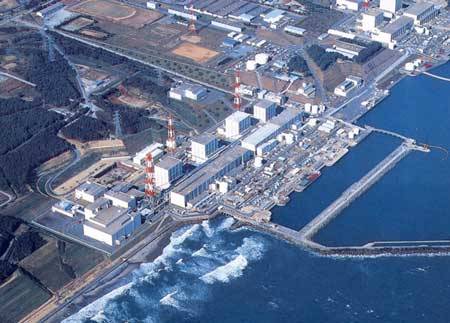
Campaigners against nuclear energy have condemned Japan’s decision to resume operations at the Kashiwazaki-Kariwa power plant, claiming that the facility will be unable to withstand a major earthquake as it was “built on tofu”.
Tokyo Electric Power Co (Tepco), the operator of the Niigata prefecture plant, on Wednesday applied for a final examination of the facility to the Nuclear Regulation Authority (NRA). Approval is likely to be a formality as the prefectural assembly already gave the nod on Tuesday.
Tepco, which has been fiercely criticised for its handling of the Fukushima Daiichi nuclear power plant disaster in March 2011, intends to restart one reactor at Kashiwazaki-Kariwa on January 20.
It would be the first of Tepco’s nuclear reactors to resume since three of Fukushima’s six reactors melted down after a magnitude 9 offshore earthquake unleashed devastating tsunamis.
Tepco has been working hard in recent years to convince the local government and residents of Niigata prefecture that it has made upgrades to secure the site from natural disasters.
Its president, Tomoaki Kobayakawa, told the media that as the operator “responsible” for the Fukushima accident, the company was now “committed to prioritising safety” at Kashiwazaki-Kariwa.
Many people remain unconvinced.
“The plant was famous for having been built on tofu – the bedrock is 30 metres (100 feet) below the surface – with many fault lines running through the site as well as offshore,” said Shaun Burnie, senior nuclear energy specialist for Greenpeace.
“Kashiwazaki-Kariwa is one of the world’s largest nuclear plants and the only one in theory capable of operating for Tepco. So restarting operations has been a priority for both the company and the government for more than a decade,” Burnie told This Week in Asia.
“But resistance from Niigata residents, the scale of safety issues and the incompetence of Tepco have undermined all efforts until now.”
History repeating itself?
Nearly 15 years after the Fukushima plant was the site of the second-worst nuclear accident in global history, Burnie warns that serious problems are being overlooked again.
Even during the preliminary planning stages, in the mid-1970s, it was apparent that ground conditions at the site by the Sea of Japan were not suitable, he said.
That was shown in July 2007, when the Chuetsu-oki earthquake struck. The magnitude 6.6 quake occurred on a previously unknown offshore fault line about 11km (7 miles) off the coast, followed 13 hours later by a 6.8 tremor around 330km (205 miles) to the west.
The nuclear plant, 19km (12 miles) due south from the epicentre of the initial quake, registered a peak ground acceleration – essentially how much the ground shook – of 6.8 metres (22 feet) per second squared in reactor No 1. The design specification for achieving a safe shutdown is 4.5m/s², while the restart level for key equipment in the plant is 2.73m/s².
Burnie said the original design specifications at the site “turned out to be gross underestimates”, with the quakes causing damage of varying degrees at 3,000 places within the plant.
A fire in an electric transformer caused the most serious damage. It left a pall of black smoke over the plant and alarmed local residents. There were also a number of leaks of mildly radioactive water and spills of radioactive cobalt-60, iodine and chromium-51 from overturned storage drums.
Given the events of 2007 and 2011, Burnie said local residents’ concerns were justified, particularly as new issues have come to light.
“We should have no confidence in Tepco assurances on safety at Kashiwazaki-Kariwa,” he said. “For example, two months after the NRA had approved the reactors’ basic safety assessment in late 2017, Tepco revealed that … the site under the emergency hydrogen ventilation buildings at units five, six and seven was vulnerable to liquefaction.”
Tepco “immediately came under pressure to explain the scale of liquefaction at the site, prove that it does not extend to the reactor buildings and how it was that the NRA was not informed prior to granting approval”, Burnie said.
Equally, he said, the NRA had to explain how it failed to identify liquefaction as a problem for a site before it granted basic safety approval.
A series of security incidents have also been cause for concern. There have been accusations of poor handling of sensitive documents, malfunctioning intruder detection systems and an employee borrowing a colleague’s pass to enter the restricted main control room in 2020.
Shaken by fears
But the greatest risk remains the region’s susceptibility to seismic activity.
“There are multiple seismic fault lines in the area of the Kashiwazaki-Kariwa site, including large-scale submarine active faults,” Burnie said. “The enormous seismic risks at the site remain unresolved and are certain to dominate the debate about the safety of any reactor restart, including in ongoing legal challenges.”
In a statement issued on Tuesday, Tepco said it would “carefully cooperate with all inspections performed by the NRA while also continuing to prioritise safety and steadily making each and every preparation for a restart”.
Takeshi Sakagami, a member of the Citizens’ Association for Monitoring Nuclear Regulation, said that a recent survey conducted by Niigata prefecture determined that 60 per cent of local residents believed that “conditions are not right” to resume operations at the plant.
“The governor explained that support should increase as understanding deepens,” Sakagami said. But “opponents counter that the will of the majority of residents today is opposition to a restart and that opposition is firm”.
Sakagami believed the government was hastening to restart the reactors “because they fear that Japan’s nuclear technology will fall behind the rest of the world”.
For him, the direction that Japan should take is simple.
“I believe Japan should abandon nuclear power and boldly shift towards renewable energy sources and energy conservation,” he said.
No comments yet.
1 This Month



Shut down the radiation-damaged Heysham nuclear reactors now
To see nuclear-related stories in greater depth and intensity – go to https://nuclearinformation.wordpress.com

Say No to NASA’s Reckless Nuclear Reactor on the Moon
Say No to NASA’s Reckless Nuclear Reactor on the Moon
-
Archives
- October 2026 (256)
- September 2026 (339)
- August 2026 (330)
- July 2026 (355)
- June 2026 (287)
- May 2026 (306)
- April 2026 (356)
- March 2026 (251)
- February 2026 (267)
- January 2026 (308)
- December 2025 (358)
- November 2025 (359)
-
Categories
- 1
- 1 NUCLEAR ISSUES
- business and costs
- climate change
- culture and arts
- ENERGY
- environment
- health
- history
- indigenous issues
- Legal
- marketing of nuclear
- media
- opposition to nuclear
- PERSONAL STORIES
- politics
- politics international
- Religion and ethics
- safety
- secrets,lies and civil liberties
- spinbuster
- technology
- Uranium
- wastes
- weapons and war
- Women
- 2 WORLD
- ACTION
- AFRICA
- Atrocities
- AUSTRALIA
- Christina's notes
- Christina's themes
- culture and arts
- Events
- Fuk 2022
- Fuk 2023
- Fukushima 2017
- Fukushima 2018
- fukushima 2019
- Fukushima 2020
- Fukushima 2021
- general
- global warming
- Humour (God we need it)
- Nuclear
- RARE EARTHS
- Reference
- resources – print
- Resources -audiovicual
- Weekly Newsletter
- World
- World Nuclear
- YouTube
-
RSS
Entries RSS
Comments RSS


Leave a Reply