Ballooning by $billions – UK’s costs for its nuclear weapons
 The Ferret 2nd Aug 2020 The cost of UK programmes to replace Trident and nuclear submarines on the
Clyde increased by over £1 billion in a year, according to data released
by the Ministry of Defence (MoD).
The construction of new reactor cores,
replacement submarines and major new facilities at the Faslane and Coulport
bases in Argyll are also facing prolonged delays, with growing doubts over
whether some projects can be successfully delivered.
Most of the delays are
unrelated to the coronavirus pandemic. Four major nuclear projects have
been officially rated as “amber” or worse, meaning that they have
“significant issues”. Two have been “rebaselined” by the MoD,
meaning that costs have risen significantly and timescales lengthened.
https://theferret.scot/trident-nuclear-submarine-costs-1bn-delays/
Australia gets anti-China propaganda, funded by USA, in cahoots with Falun Gong

Before becoming Australia’s Defence Minister, Linda Reynolds worked as a project director at Raytheon (weapons manufacturer).
Propaganda Wars: US state department funds anti-China news outlet in Australia https://www.michaelwest.com.au/propaganda-wars-us-state-department-funds-anti-china-news-outlet-in-australia/
by Marcus Reubenstein | Aug 4, 2020 Office bearers of US-backed Chinese language news service Decode China are linked with Falun Gong, the spiritual group that has spent millions backing Donald Trump through fake social media accounts. The same people are on the board of the National Foundation for Australia China Relations, raising scepticism about its ability to repair fractured relationships. Marcus Reubenstein investigates US state funding of anti-China media in Australia and links to global arms dealers via ASPI.
The US State Department is quietly funding a Chinese-language news service in Australia, a move more typically associated with China’s state media propagandists.
And two of the three office bearers of the news service, Decode China, are members of a taxpayer-funded independent board advising the Australian government on engagement with China.
Corporate records show Dr Wai Ling Yeung and Maree Ma became secretary and director, respectively, of Decode China Pty Ltd just eight weeks before Foreign Minister Marise Payne appointed them to the board of the National Foundation for Australia China Relations. The NFACR replaced the Australia China Council (ACC), which was set up by the Fraser government in 1978 and later chaired by former prime minister Gough Whitlam.
The retired Curtin University academic Dr Yeung is a vocal critic of the Chinese government, while Ma is the general manager of the Falun Gong-aligned, largely anti-Chinese government Vision Times newspaper. According to journalist and former Australian Falun Gong practitioner Ben Hurley, Vision Times is part of the apparatus of Falun Gong media in Australia, led by The Epoch Times and New Tang Dynasty Television.
The spiritual group Falun Gong is banned in China and there is substantial evidence that its mainland Chinese followers are harshly persecuted by the Chinese government.
However, former practitioners say it’s a dangerous cult, whose leaders claim to have the power of levitation and tell followers that aliens from other planets are responsible for interracial marriage and mixed-race children.
Falun Gong-aligned media affiliates in the US have been accused of pouring millions of dollars into fake social media accounts and Facebook advertising, since banned, supporting Donald Trump. A recent investigation by the ABC’s Foreign Correspondent and Background Briefing programs revealed Falun Gong-affiliated media in the US have spent more than US$11.5 million in social media advertising to promote Trump.
ASPI lurking in the background Continue reading
The continuing and ever more expensive saga of Britain’s Hinkley Point C nuclear project

Times 3rd Aug 2020, The first thing you notice as you approach Hinkley Point C is the sea of
cranes. There are dozens of them, jutting into the Somerset sky from the
site where EDF, of France, and CGN, the Chinese state nuclear group, are
building Britain’s first new nuclear plant in a generation. One stands
out: a 250 metre-tall yellow beast known as “Big Carl”. It is the
world’s largest crane and is central to the companies’ battle to
deliver the project successfully.
£18 billion, the plant was slated to generate its first power before the
end of 2025. Four years on, the budget has risen to between £21.5 billion
and £22.5 billion and EDF says that there is a risk that first power may
be delayed until 2027, adding £700 million in costs; thanks to disruption
from Covid-19, that risk is now “high”.
another big risk, with EDF warning last week that productivity at the site
and in supply chain factories were still being affected. The company said
that it had done what it could to minimise delays, from bringing in extra
buses to transport workers to sending contractors to France to bring back
parts from a factory laid low by the pandemic. EDF believes that it can
catch up on Covid-19 delays by the end of next year, so long as operations
and its supply chain are back to normal by the end of 2020. How confident
was Mr Crooks that the plant would start up in 2025 as planned?
“There’s a long way to go yet. It is a big, complex project.”
https://www.thetimes.co.uk/article/no-let-up-in-heavy-lifting-at-hinkley-point-plant-3s02wmscp
The longlasting impact of Fukushima nuclear disaster, and nuclear activities world-wide
emeritus at the University of Chicago, published one of the best overviews
any of us at Fairewinds has read about the impact of the meltdowns at the
Fukushima Dai-ichi atomic power reactors upon the people and culture of
Japan.
Focus, the article entitled – This Will Still Be True Tomorrow:
“Fukushima Ain’t Got the Time for Olympic Games”: Two Texts on
Nuclear Disaster and Pandemic is a must-read worldwide. Atomic power plants
and nuclear power waste dumps are located all over the world.
in the burden of nuclear test labs, uranium mining, and the manufacturing
of atomic power fuel and nuclear weapons, the ecological weight of the
radioactive legacy we all live with is overwhelming.
Fukushima Dai-ichi, Dr. Field has written a well-researched and documented
analysis of what is happening today to its victims.
(TEPCO), the owner of the Fukushima Dai-ichi reactors, and the government
of Japan have forged ahead with decisions that have compromised the health,
livelihood, and futures of victims and their families and their subsequent
children – for generations.
nuclear power and the international military/industrial complex, has failed
miserably in its commitment to its citizens and severely impacted the
health and welfare of generations to come with its contaminated land, air,
water, and food.
https://www.fairewinds.org/demystify/fukushima-aint-got-time-for-olympic-games?s=09
Nuclear radiation – potential danger in East Ukraine
Coal mines and the metallurgical plants associated with them are the backbone of the economy in the self-proclaimed republics of Donetsk and Luhansk in eastern Ukraine, where the conflict between the central government and the Russian-backed separatists rages on. Closing them deprives the local population of their livelihoods and threatens these and the neighboring regions in Ukraine with ecological disaster.
Pumps cut off
In 2017, the “Donetsk People’s Republic” (“DPR”) developed a plan, according to which only 17 of the profitable mines in the region were kept in operation.
But reality decided to throw a wrench in the works, primarily because Russia did not invest in the Donetsk industry.
The mines were closed by a simple method: the pumps that pump out the water were turned off. The equipment was cut and handed over for scrap.
And it will inevitably affect the situation on the territory controlled by Ukraine – the mines on Ukrainian territory and the Donbass mines form a single water pumping system.
No radioactive contamination…yet
Of particular concern is the Yunkom mine, which in 1979 carried out an experimental nuclear explosion with a yield of 0.3 kilotons.
After the explosion, a glassy capsule with liquid radioactive waste was formed at a depth of 903 meters. It was flooded just after the pumps were turned off in April 2018.
None of the experts really know how the radioactive capsule will react with water, when it will naturally collapse, or where its contents will end up. Neither the authorities of the self-proclaimed republics nor the government of Ukraine are monitoring the radioactive contamination. Nor are they in the Rostov region, where the waters of the Seversky Donets River flow……… https://jam-news.net/ukraine-conflict-miness-ecology/
Portuguese party PAN lodges complaint to U.N. about Spain’s ageing Almarez nuclear power station
The risks associated with Almaraz have been making headlines for years (click here).
So has the perceived ‘inertia’ of the Portuguese government in tackling them (click here).
As PAN’s leading MP André Silva stresses, what’s crucial at this point is a ‘transfrontier evaluation of the environmental impact” of the decision to prolong the life of the 41-year-old power station running two very old fashioned reactors beyond the 2023/ 2o24 limit previously established.
The latest approval by Spain extends the reactors’ lives to 2027 and 2028 respectively.
Says Silva: ‘We have on the one hand’ Spain that is violating two conventions, and on the other a Portuguese government and a Portuguese environment minister that does nothing about it.
Spain’s unilateral decision to further extend the lifespan of a plant that sits so close to Portuguese territory – not to mention on the banks of the river Tejo – is “an affront to Portuguese people” who, according to a study conducted by the Portuguese army, would be severely impacted in the event of any kind of serious incident (click here).
The two conventions André Silva refers to are the Espoo Convention, which requires environmental impacts in situations like these, and the Arhus Convention, which obliges Madrid to ‘inform and consult’ Portuguese counterparts before making any decisions.
Says Silva, “it is fundamental that the international community is alerted to this problem, which is not simply environmental but social and political as well”.
‘Ideally’ Almaraz should have been mothballed 10 years ago “but Spanish authorities have successively renewed its continuation”, despite the increasing risks of a nuclear accident, which as Silva stresses, would have a “disastrous impact” on Portugal.
This is in fact the second time a formal complaint has been lodged against Spain over activity at Almaraz. A bid to stop a warehouse for nuclear waste being constructed in 2017 resulted in the creation of a commission, but this has never presented any ‘material’ / findings or reports to speak of.
Underground rockfall at Waste Isolation Pilot Plant
A pair of rock falls were reported at the Waste Isolation Pilot Plant’s underground repository for nuclear waste, as salt in the underground gradually collapses to bury nuclear waste.
The falls were reported to have occurred between July 20 and 27 in an area closed off to workers, and were discovered on Wednesday after a geotechnical device showed a reading the suggested an increased closure rate.
Closure in WIPP’s underground occurs when the salt its built into slowly collapses. The creeping process is used to permanently bury drums of low-level transuranic (TRU) nuclear waste, and rock falls occur routinely in areas that are closed off to workers and ground control efforts are cease.
To control the creep and allow for safe operations such as waste emplacement, bolts are installed into the walls of the underground to temporarily slow the creep.
WIPP spokesman Donavan Mager said the recent rock falls were in an area that had been closed off to workers and had not had recent ground control measures. ……
The discovery of the falls was made during a routine weekly review of the geotechnical data, and WIPP personnel investigated the reading as a precautionary measure, Mager said.
“It was a prohibited area, but they thought they would check it out,” he said. “Depending on how an instrument is operating, we can see if salt is creeping or closing.” https://www.currentargus.com/story/news/local/2020/07/30/waste-isolation-pilot-plant-reports-rock-fall-underground-nuclear-waste/5550662002/
The week in coronavirus, climate, and nuclear news

As the anniversary of the Hiroshima atomic bombing approaches, there is “Psychic numbing” about the world’s suicidal nuclear weapons race.
This week there’s a striking example of how interconnected everything is. It’s Florida. Florida is struck with two, – possibly three – awful calamities threatening this state all at once. There is Hurricane Isaias, threatening Florida with flooding and destruction, at the same time as the state is overwhelmed with a record toll of coronavirus illnesses and deaths.
Possibly in the path of the hurricane are FPL’s two nuclear reactors 1,600-MW Turkey Point Nuclear Generating Station located two miles east of Homestead, Florida, and about 25 miles south of Miami. There’s also FPL’s FPL’s 1,880-MW St. Lucie Nuclear facility located further up the Florida coast on Hutchinson Island. Their output could be cut, or in a worse scenario, radioactive pollution could result, in the case of flooding.
California also suffers from record coronavirus deaths. At the same time, California is afflicted with wildfires, again raising the possibility of radioactive pollution at The Santa Susana site – America’s Secret Chernobyl.
So here, in two USA States, we have the conjunction of global heating effects, with increased extreme weather events, with the global pandemic’s effects, and the third, – very real radiation risks from the nuclear industry.
A bit of good news – Renewables output outpacing coal and nuclear in USA.
The WHO says coronavirus is a once-in-a century crisis that will impact lives for decades. Next type of coronavirus may be on its way.
International Red Cross and Red Crescent Movement urges all nations to end the nuclear era. Never mind about Hiroshima – a nuclear arms race is on – in space!. BOOKS on The New Nuclear Threat. Hiroshima survivor, Setsuko Thurlow, 88, continues her fight for a nuclear weapons-free world. US-Russia launch talks in Vienna on nuclear arms control.
Global heating – “best case” scenario is a scary rise of two and a half degrees. As sea levels rise globally, we need to start planning now. Need for Prediction of Marine Heatwaves.
Environmental injustice is rampant around the world.
Julian Assange: Denied Lawyer Access and Failure of Transparency International –Assange appears in court, as lawyers warn case may be delayed by new US indictment.
JAPAN. Hiroshima court recognises Hiroshima “black rain” victims outside designated area as hibakusha after 75 years. Local approval still needed, as Japan’s nuclear regulators OK fuel reprocessing plant, despite safety concerns. Rokkasho plant should be shut down in energy policy shift. Tohoku disaster funds spent for wining, dining company execs. Experts propose two methods to scrap Daiichi plant. Activist Professor Unveils English-language Video Warning of Tokyo Radiation Risk.
BANGLADESH. Bangladesh flooding – a victim of global heating, though not a contributor to it
UK. UK is lobbying USA for a controversial new warhead for Trident missiles. Chinese minority owner of Hinkley nuclear project appoints CEO from China’s military area. Does UK nuclear energy have any future? The industry has big doubts.
USA.
- Donald Trump on nuclear proliferation and global heating – he’s incompetent about both. USA’s budget for nuclear weapons goes up and up.
- Nuclear Energy Leadership Act (NELA), sneaked into National Defense Bill: it will go back to U.S. Congress.
- South Carolina’s $9 billion nuclear fiasco – another legal saga develops, criminal investigation coming.
- USA’s Nuclear Regulatory Commission plans to weaken safety standards for smaller nuclear reactors. Examining NuScam’s deceptive claims about Small Nuclear Reactors. Looks as if 20 municipalities in Utah have been NuScammed for those not so small nuclear reactors.
- Karl Grossman on the Ohio Nuclear Scandal 2020. Should aging nuclear reactors get propped up with subsidies? Ohio scandal highlights this question. Following the nuclear scandal An Ohio resident has filed a class action lawsuit against FirstEnergy.
- Costs of Vogtle nuclear expansion just keep going up, Coronavirus making this worse. Legal case settled over nuclear plant Vogtle.
- U.S. Nuclear Agency Workers Say Cost-Cutting Is Hurting Safety.
- New Mexico Governor opposes nuclear waste dump in that state.
- Mystery over drone swarm above America’s largest nuclear power station. Drones could be a real danger to nuclear facilities.
- Bill in USA Senate to help nuclear workers made ill by radiation exposure.
- Problems in USA’s rush to put a nuclear reactor on the moon. As Dept of Energy officials enthuse over nuclear in space, they show their disdain for health and safety in pandemic. USA Department of Energy enthuses about Highly Enriched Uranium in space. Not everyone agrees.
- Coast Guard To Deliver Nuclear Icebreaker Plan to White House.
INDONESIA. Thorium nuclear plan with USA firm – a dubious deal for Indonesia.
MARSHALL ISLANDS. U.S. Rep. Tulsi Gabbard refutes the claim that Marshall Islands nuclear waste site is safe. Marshall Islands leaders hope for better help over radioactively polluted weapons tests sites.
RUSSIA. For the nuclear industry, coronavirus is helpful, as nuclear wastes go quietly from Germany to Russia. Gorbachev renews call to oppose nuclear weapons.
UNITED ARAB EMIRATES. United Arabs Emirate’s nuclear power station cut corners on safety. United Arab Emirates new nuclear power risks further destabilising the Gulf region. Experts wonder why Oil-rich UAE is opening the Arab world’s first nuclear power plant..
INDIA. India’s nuclear power industry – unsafe and shrouded in secrecy.
FRANCE. French company EDF fined – it spread false information on cost of Hinkley nuclear power project. Huge, costly, enormous effort, ITER nuclear fusion far from ready.
NORTH KOREA. Kim Jong Un says that North Korea’s nuclear weapons guarantee its freedom from attack, and war
IRAN. Iran’s Khamenei refuses talks with U.S., says Trump wants them only for election propaganda.
CZECH REPUBLIC. Czech Republic and CEZ sign nuclear power plant expansion agreement: require EU approval.
AUSTRALIA. Black lives DO matter, but not apparently, to ANSTO and Australia’s nuclear lobby. Nuclear waste dump site selection process has made the Barngarla people “aliens in their own country”.
“Psychic numbing” about the world’s suicidal nuclear weapons race


|
Jane H. Kavaloski: We must confront our ‘psychic numbing,’ stop nuclear proliferation, https://madison.com/ct/opinion/mailbag/jane-h-kavaloski-we-must-confront-our-psychic-numbing-stop-nuclear-proliferation/article_e8736883-4eb4-55f8-b0d8-3ede2efd6e53.html August 6, 1945, begins as any other day in Hiroshima. Despite a premonition that something is about to happen, people go about their lives as usual. At 8 a.m. the smells of breakfast hang fragrant in the air. Children laugh and play in their courtyards. As they leave for work, husbands bid their wives goodbye. Grandmothers rock infants to sleep, while grandfathers tend their bonsai trees.
Fifteen minutes later, an atomic bomb detonates over Hiroshima. The fortunate ones, who live in the epicenter, are immediately vaporized and spared the agonizing suffering of the aftermath. The people who live a little further from Ground Zero are transformed into haunted figures, who walk and crawl the streets looking for water to cool their burned, melting skin and broken bodies. For the most part, they move like robots, non-responsive to the cries for help from the suffering humanity around them. Jay Lifton, the renowned psychiatrist, named this lack of compassion in the midst of so much horror as “psychic numbing.” At this 75th anniversary of that day, we must ask ourselves if we too are victims of “psychic numbing.”
Since August 1945, U.S. citizens have been primarily silent about the proliferation of nuclear weapons. Currently the U.S. has approximately 6,500 nuclear weapons. There are almost 14,000 world-wide.
As U.S. citizens, we must confront our own “psychic numbing” and insist that our elected officials stop this madness. In commemoration of this 75th anniversary, demand that our elected officials work toward global nuclear disarmament! |
|
|
Never mind about Hiroshima – a nuclear arms race is on – in space!

|
A nuclear arms race in space? It seems we’ve learned nothing from Hiroshima https://www.theguardian.com/commentisfree/2020/aug/02/a-nuclear-arms-race-in-space-it-seems-weve-learned-nothing-from-hiroshima
Simon Tisdall As the world marks the 75th anniversary of the dropping of the atom bomb on Japan, it must wake up to the new rearmament.Russia’s apparent test-firing of an anti-satellite weapon in outer space on 15 July, as alleged by the US and Britain, could be dismissed as another of Vladimir Putin’s annoying provocations. That would be a mistake. The alleged new space weapon should be seen in the broader context of a rapidly evolving, hi-tech, high-risk international arms race involving all the major nuclear powers that, largely undiscussed, is spinning out of control. This week sees the 75th anniversary of the atomic bomb attacks on Hiroshima and Nagasaki that killed over 200,000 people, but the absence of public debate or a sense of alarm about the grim advent of sophisticated new nuclear, hypersonic, cyber and space weapons is striking. In the decades after Hiroshima, noisy anti-nuclear “ban the bomb” protests by CND and others spanned the globe. Today, by comparison, an eerie silence reigns. The battle for outer space is only getting going – yet deserves immediate attention. Russia’s alleged development of anti-satellite weapons is almost certainly matched by the US and China, and undermines past undertakings about the peaceful use of space. Christopher Ford, US assistant secretary of state for international security and non-proliferation, warned last week that Russia and China had already turned space into a “war-fighting domain”. “What [the Russians] are doing is signalling to the world that they’re able to destroy satellites in orbit with other satellites,” Ford said. “This is the sort of thing that could get out of hand and go very badly rather quickly.” The UK called the alleged test “a threat to space systems on which the world depends” – meaning use of such weapons could, in theory, produce an instant global security and communications blackout. Yet in relaunching US space command last year, Donald Trump also pointed to space as the next great-power battlefield. Nato secretary-general Jens Stoltenberg says the alliance will not deploy weapons in space but is obliged to defend its interests, which include 2,000 orbiting satellites. For Nato, too, space is now an “operational domain”. New and “improved” nuclear weapons are proliferating in parallel with the race for space. According to the Stockholm International Peace Research Institute (Sipri), nine states – the US, Russia, China, Israel, the UK, France, India, Pakistan and North Korea – together possess about 13,400 weapons. While the overall total is falling, “retired” warheads and bombs are being replaced by more powerful, versatile devices, such as smaller, “use-able” US battlefield nukes. “All these states are either developing or deploying new weapon systems or have announced their intention to do so,” Sipri’s annual report said. The US and Russia each possessed about 1,550 deployed, long-range weapons, while China had about 300. Both the US and Russia were spending more and placing greater reliance on nuclear weapons in future military planning, it said, while China was rushing to catch up. “China is in the middle of a significant modernisation of its nuclear arsenal. It is developing a so-called nuclear triad for the first time, made up of new land- and sea-based missiles and nuclear-capable aircraft. India and Pakistan are slowly increasing the size and diversity of their nuclear forces,” Sipri reported. Meanwhile, North Korea continued to prioritise its military nuclear programme, while conducting “multiple” ballistic missile tests. “Instead of planning for nuclear disarmament, the nuclear-armed states appear to plan to retain large arsenals for the indefinite future, are adding new nuclear weapons, and are increasing the role such weapons play in their national strategies,” a Federation of American Scientists survey said. It estimated about 1,800 warheads were kept on high alert, ready for use at short notice. Russia claims to lead the world in developing hi-tech weaponry. Speaking in July, Putin boasted that Russia’s navy was being equipped with nuclear-powered hypersonic cruise missiles, which supposedly have unlimited range, and submarine-launched underwater nuclear drones. Despite celebrated speeches supporting a nuclear-free world, Barack Obama authorised a $1.2tn plan to upgrade America’s nuclear triad while pursuing strategic arms reductions via the 2010 New Start treaty with Russia. Trump has doubled down, at the same time abandoning arms control pacts. His 2018 nuclear posture review proposed an extra $500bn in spending, including $17bn for low-yield, battlefield weapons. Trump looks set to scupper New Start, which expires in February, on the spurious ground that it does not reduce China’s much smaller arsenal (which it was never intended to do). He has previously reneged on the 2015 Iran nuclear treaty, the 1987 Intermediate-range Nuclear Forces treaty, and is said to favour resumed nuclear testing in Nevada in defiance of the 1996 Comprehensive Nuclear-Test-Ban treaty. Like Britain and other signatories, the US continues to fail to fulfil its obligation under the 1970 Nuclear Non-Proliferation treaty “to pursue nuclear disarmament aimed at the ultimate elimination of nuclear arsenals”. Despite its acute financial situation, Britain remains committed to replacing its Trident missile system at an estimated cost of £205bn over 30 years. While nuclear weapons have not been used since 1945, great-power military flashpoints are increasing the risk that they might be. These potential triggers include the South China Sea, Taiwan, the India-Pakistan and India-China borders, the US-Israel-Iran conflict, North Korea and Ukraine. Heightened international tensions and collapsing arms-control regimes only partly explain the accelerating pace of nuclear rearmament. Resurgent nationalism, authoritarian rightwing populism, revived or new territorial rivalries (as in space), the bypassing of the UN and multilateral institutions, and a shifting economic and geopolitical power balance are all aggravating factors. But so, too, is amnesia. Seventy-five years after Armageddon was visited upon the people of Japan, the world seems to have forgotten the truly existential horror of that moment. A history lesson, and a renewed debate, are urgently needed.
|
|
|
UK is lobbying USA for a controversial new warhead for Trident missiles
UK lobbies US to support controversial new nuclear warheads
Letter from defence secretary seen by Guardian draws Britain into debate pitting Trump administration against many Democrats, Guardian, Julian Borger in Washington, 2 Aug 20,
The UK has been lobbying the US Congress in support of a controversial new warhead for Trident missiles, claiming it is critical for “the future of Nato as a nuclear alliance”.
A letter from Britain’s defence secretary, Ben Wallace, seen by the Guardian, urged Congress to support initial spending on the warhead, the W93.
The letter, sent in April but not previously reported, draws the UK into a US political debate, pitting the Trump administration against many Democrats and arms control groups over whether the the $14bn W93 programme is necessary. The US navy already has two warheads to choose from for its submarine-launched Trident missiles.
The close cooperation on the W93 casts further doubt on the genuine independence of the UK deterrent – parliament first heard about it when US officials accidentally disclosed Britain’s involvement in February – and the commitment of both countries to disarmament.
The UK is also supporting the administration’s efforts to speed up work on the warhead and its surprise $53m request for initial weapon design work in the 2021 budget, two years ahead of the previous schedule.
Sceptics believe the rush is intended to lock in funding before the election. A Biden administration would be likely to review or even cancel the W93 programme……..
The demand for funding for the W93 is particularly controversial in the US as the W76 and a higher-yield submarine-launched ballistic missile (SLBM) warhead, the W88, have already been subject to multibillion-dollar upgrades.
“This is excess on top of excess,” Kingston Reif, director for disarmament and threat reduction policy at the Arms Control Association, said. “We already have two SBLM warheads. The W76 just went through a major life extension programme and is slated to be good into the early 2040s, and the W88 is going through a major alteration.
“The US can continue to assist the UK’s arsenal without rushing the development of an unnecessary, at least $14bn new-design, third SLBM warhead,” Reif added.
The total cost of the US nuclear weapons modernisation programme is expected to be far in excess of $1tn.
The US and Russia, which is also upgrading its arsenal and developing new weapons, together account for more than 90% of all the nuclear warheads on the planet, and both countries are putting increasing emphasis on them in their rhetoric and defence postures.
Under Donald Trump, the US has now left three nuclear agreements and his administration is reluctant to extend the last major arms control deal with Russia, the 2010 New Start treaty, which is due to expire in February.
The bonfire of nuclear accords, combined with the huge amounts spent on weapons like the W93, are a threat to the 1968 nuclear non-proliferation treaty, the fundamental bargain by which countries without nuclear arms pledged not to acquire them on condition the recognised nuclear powers (the US, UK, France, Russia and China) took steps to disarm, under article six of the treaty………
Alexandra Bell, a former state department official and now senior policy director at the Center for Arms Control and Non-Proliferation, said the US-UK special relationship had shown greater solidarity in promoting new weapons than in arms control. ………. https://www.theguardian.com/world/2020/aug/01/uk-trident-missile-warhead-w93-us-lobbySun
World is in coronavirus for the long haul

The World Health Organization has warned the coronavirus pandemic is likely to be “lengthy” after its emergency committee met to evaluate the crisis six months after sounding the international alarm.
The committee “highlighted the anticipated lengthy duration of this COVID-19 pandemic”, the WHO said in a statement, and warned of the risk of “response fatigue” given the socio-economic pressures on countries.
The panel gathered Friday for the fourth time over the coronavirus crisis, half a year on from its January 30 declaration of a public health emergency of international concern (PHEIC) – the WHO’s highest level of alarm………
Warning over crisis fatigue
Several countries around the world have imposed strict lockdowns in a bid to control the spread of the respiratory disease, plunging economies into sharp contraction.
The committee urged the WHO to provide nuanced, pragmatic guidance on COVID-19 management “to reduce the risk of response fatigue in the context of socio-economic pressures”.
The panel urged the WHO to support countries in preparing for the rollout of proven therapeutics and vaccines.
It called for improved understanding of the epidemiology and severity of COVID-19, including its long-term health effects.
And the committee wanted more light shed on the dynamics of the virus, such as “modes of transmission, shedding, potential mutations; immunity and correlates of protection”.
The near six-hour gathering was hosted at the WHO’s headquarters in Geneva, with some participants joining via video-link.
The committee will reconvene within the next three months……..https://www.sbs.com.au/news/the-who-says-coronavirus-is-a-once-in-a-century-crisis-that-will-impact-lives-for-decades
Next type of coronavirus may be on its way
|
The next coronavirus may already be circulating in bats, study suggests, Philadelphia Inquirer, by Tom Avril, July 29, 2020 While the exact origin of the coronavirus remains murky, scientists have been racing to determine how it jumped from animals to humans so they can prevent another pandemic. The next one could just be a matter of time, a study published this week suggests. The authors said a virus with similar ability to infect humans may already be out there, carried by a type of bats known for having horseshoe-shaped “leafs” on their noses. Scientists made that prediction after constructing a family tree of the coronavirus — tracing its ancestry by comparing its genetic code with that of other coronaviruses found in bats, humans, and a scaly animal called the pangolin. The lineage of the virus that causes COVID-19 appears to have branched off from its closest viral relatives about 40 to 70 years ago, the authors wrote in Nature Microbiology. And other viruses in the same branch of the family likely share a similar ability to latch onto cells in human airways, said Maciej F. Boni, a Pennsylvania State University biologist and lead study author. “It’s very likely there are lots of other lineages that nobody knows about, because nobody has sampled, that are circulating quietly in bats,” he said. “Potentially all of them could have this ability to infect human cells.”…… by using a battery of statistical techniques, the scientists identified three genetic regions in the coronavirus that appeared to have remained intact for decades. They identified the same three regions in another coronavirus that came from a bat found in Yunnan, a province in southern China near Laos. That virus cannot infect humans but is otherwise highly similar to the one causing the pandemic, which was first identified in human patients in the city of Wuhan. The two viruses seem to have branched apart in the family tree sometime in the 1960s, and almost certainly have undiscovered cousins with the potential to infect humans, said Boni, who collaborated with scientists in Europe and China……. By itself, the presence of similar coronaviruses in bats would not mean another pandemic is imminent, said Kevin Olival, vice president for research at EcoHealth Alliance, a nonprofit that works with scientists worldwide to protect people and animals from infectious disease……. What is not in dispute is that viruses have been jumping from animals to humans for centuries, and that it will happen again. And coronaviruses carried by bats are a prime suspect. Similar predictions have been made before — such as in 2013, when a Science magazine article was headlined “Bats May Be Carrying the Next SARS Pandemic.”
Sure enough, as the world now knows too well, that came true. https://www.inquirer.com/health/coronavirus/covd19-bats-china-virus-origin-penn-state-rna-genetics-20200729.html |
|
Bangladesh flooding – a victim of global heating, though not a contributer to it
 A Quarter of Bangladesh Is Flooded. Millions Have Lost Everything.
The country’s latest calamity illustrates a striking inequity of our time: The people least responsible for climate change are among those most hurt by its consequences. NYT, By Somini Sengupta and Julfikar Ali Manik 30 July 20,
Torrential rains have submerged at least a quarter of Bangladesh, washing away the few things that count as assets for some of the world’s poorest people — their goats and chickens, houses of mud and tin, sacks of rice stored for the lean season.
It is the latest calamity to strike the delta nation of 165 million people. Only two months ago, a cyclone pummeled the country’s southwest. Along the coast, a rising sea has swallowed entire villages. And while it’s too soon to ascertain what role climate change has played in these latest floods, Bangladesh is already witnessing a pattern of more severe and more frequent river flooding than in the past along the mighty Brahmaputra River, scientists say, and that is projected to worsen in the years ahead as climate change intensifies the rains.
“The suffering will go up,” said Sajedul Hasan, the humanitarian director of BRAC, an international development organization based in Bangladesh that is distributing food, cash and liquid soap to displaced people.
This is one of the most striking inequities of the modern era. Those who are least responsible for polluting Earth’s atmosphere are among those most hurt by its consequences. The average American is responsible for 33 times more planet-warming carbon dioxide than the average Bangladeshi.
This chasm has bedeviled diplomacy for a generation, and it is once again in stark relief as the coronavirus pandemic upends the global economy and threatens to push the world’s most vulnerable people deeper into ruin.
An estimated 24 to 37 percent of the country’s landmass is submerged, according to government estimates and satellite data By Tuesday, according to the most recent figures available, nearly a million homes were inundated and 4.7 million people were affected. At least 54 have died, most of them children. ……. https://www.nytimes.com/2020/07/30/climate/bangladesh-floods.html
USA’s Nuclear Regulatory Commission plans to weaken safety standards for smaller nuclear reactors
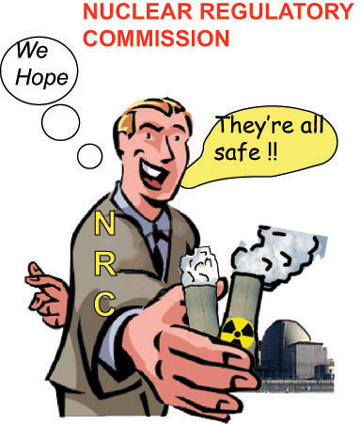 Smaller Nuclear Plants May Come With Less Stringent Safety Rules, npr, August 1, 2020
The NRC is considering whether to shrink emergency planning and evacuation zones around these newer reactors — from a 10-mile radius to, in some cases, the boundary of the plant site.
Nuclear energy critics say that would be a mistake.
“When you’re talking about a reactor that’s never been built or operated, you have to take with a big grain of salt the claims that it’s actually safer or more secure,” says Edwin Lyman at Union of Concerned Scientists.
He says the industry also wants to use weaker reactor containment shells, and in some cases they don’t want to have to keep an operator at the site.
Lyman thinks companies should build plants under current rules first. “You have to work out the kinks of these new plants,” he says. “And then over time you might be able to adjust your requirements accordingly. But you don’t do that at the get-go.”
A National Nuclear Security Administration (NNSA) official recently echoed some of Lyman’s concerns in comments sent to the NRC. The NNSA is a semi-autonomous agency within the Department of Energy.
Deputy Under Secretary Jay Tilden called the proposed rule a major departure from “the successful 42-year-old practice of using a 10-mile plume exposure emergency planning zone.” That existing regulation, he wrote, provides “the last layer of a defense-in-depth for low-probability, high-consequence accidents.” ………
1 This Month

Tell Congress: Prevent Nuclear Catastrophe in Iran

Tell Congress: Prevent Nuclear Catastrophe in Iran

Read the Public Inquiry Report, the Commissioners’ report, Surrendering Australia: The AUKUS Deception is available to download for free at aukuspublicinquiry.com. Or just watch the replay of the National Press Club Luncheon.
To see nuclear-related stories in greater depth and intensity – go to https://nuclearinformation.wordpress.com
Say No to NASA’s Reckless Nuclear Reactor on the Moon
-
Archives
- November 2026 (284)
- October 2026 (302)
- September 2026 (339)
- August 2026 (330)
- July 2026 (355)
- June 2026 (287)
- May 2026 (306)
- April 2026 (356)
- March 2026 (251)
- February 2026 (267)
- January 2026 (308)
- December 2025 (358)
-
Categories
- 1
- 1 NUCLEAR ISSUES
- business and costs
- climate change
- culture and arts
- ENERGY
- environment
- health
- history
- indigenous issues
- Legal
- marketing of nuclear
- media
- opposition to nuclear
- PERSONAL STORIES
- politics
- politics international
- Religion and ethics
- safety
- secrets,lies and civil liberties
- spinbuster
- technology
- Uranium
- wastes
- weapons and war
- Women
- 2 WORLD
- ACTION
- AFRICA
- Atrocities
- AUSTRALIA
- Christina's notes
- Christina's themes
- culture and arts
- Events
- Fuk 2022
- Fuk 2023
- Fukushima 2017
- Fukushima 2018
- fukushima 2019
- Fukushima 2020
- Fukushima 2021
- general
- global warming
- Humour (God we need it)
- Nuclear
- RARE EARTHS
- Reference
- resources – print
- Resources -audiovicual
- Weekly Newsletter
- World
- World Nuclear
- YouTube
-
RSS
Entries RSS
Comments RSS

