Nagasaki urges world ban on nuclear weapons 75 years after US atomic bomb blast
 Nagasaki urges world ban on nuclear weapons 75 years after US atomic bomb blast https://www.sbs.com.au/news/nagasaki-urges-world-ban-on-nuclear-weapons-75-years-after-us-atomic-bomb-blast 9 Aug 20, Survivors of the atomic bombing of Nagasaki have urged world leaders to do more for a nuclear weapons ban on the 75th anniversary of the US attack.
The Japanese city of Nagasaki has marked its 75th anniversary of the US atomic bombing, with the mayor and dwindling survivors urging world leaders including their own to do more for a nuclear weapons ban.
At 11.02am, the moment the B-29 bomber Bockscar dropped a 4.5-ton plutonium bomb dubbed “Fat Man”, Nagasaki survivors and other participants stood in a minute of silence to honour more than 70,000 dead.
The 9 August 1945 bombing came three days after the United States dropped its first atomic bomb on Hiroshima, the world’s first ever nuclear attack that killed 140,000.
Purpose of nuclear bombing of Nagasaki? to test a new weapon – an immoral purpose
 Harry Truman and the nuclear bombs dropped on Hiroshima and Nagasaki, Frank Jackson, 9 Aug 20 Whether the bombing of Hiroshima or the entry of the Soviet Union into the war was the crucial event in causing the Japanese surrender can never be conclusively settled (Hiroshima at 75: bitter row persists over US decision to drop the bomb, 5 August). However, very little is said about the motives for the second bomb, on Nagasaki three days later. Few argued that it was necessary to reinforce the message of Hiroshima. Rather, the military and scientific imperative was to test a different bomb design – “Fat Man”, an implosion type using plutonium, as opposed to the uranium of Hiroshima’s “Little Boy”. To my mind that, destroying a mainly civilian city for such reasons, makes it even more of a war crime, if that is possible, than the bombing of Hiroshim.a
Former co-chair, World Disarmament Campaign https://www.theguardian.com/world/2020/aug/07/harry-truman-and-the-nuclear-bombs-dropped-on-hiroshima-and-nagasaki
Nuclear scandals in Ohio and Illinois raise serious issues about the role of government in the electricity sector.
  Twin nuclear scandals in Ohio and Illinois show why politicians shouldn’t be picking energy winners and losers: Josiah Neeley and Michael Haugh https://www.cleveland.com/opinion/2020/08/twin-nuclear-scandals-in-ohio-and-illinois-show-why-politicians-shouldnt-be-picking-energy-winners-and-losers-josiah-neeley-and-michael-haugh.html Aug 09, 2020 “……… two very similar political scandals involving the nuclear industry are playing out in Ohio and Illinois. In both cases, the operators of nuclear power plants are alleged to have bribed the state’s speaker of the house in exchange for enactment of favorable treatment and government bailouts.
These twin scandals raise serious issues about the role of government in the electricity sector.
Take Illinois first. On July 17, electric utility Commonwealth Edison (ComEd) admitted in court documents that it had directed jobs and contracts to associates of Illinois speaker Michael Madigan in exchange for favorable treatment by the legislature, such as approval of rate increases. ComEd is paying a $200 million fine to avoid prosecution. Madigan has denied the charges.
The situation in Ohio is even wilder. The 82-page criminal complaint for federal racketeering, money laundering and bribery alleges that the speaker of the Ohio House essentially set up a “dark money” account into which eventually was poured over $61 million by a power company and others that stood to benefit from legislation. The money was used partly to finance primary candidates over an election cycle to secure the vote for the top leadership position in the Ohio House of Representatives. Perhaps even more disgusting, the bulk of it, $38 million, was allegedly used for ads to defeat a referendum attempt and to harass and buy off signature gathers who were trying to keep the legislation from going into effect via a vote of the people.
The major alleged funder of this effort was FirstEnergy Corp., identified as Company A Corp. in the complaint, then-owner through a subsidiary of the only two nuclear plants in Ohio. In return, the speaker allegedly delivered a $1 billion bailout of FirstEnergy’s failing nuclear plants in House Bill 6 and set up his own little fiefdom of representatives.
Corruption is as old as human history. But it’s worth considering whether there is something about the way that power plants are operated and regulated that makes scandals like those in Ohio and Illinois more likely. In Ohio, a person identified as Company A Corp.‘s CEO provided an answer in comments detailed in the complaint about a provision added to HB 6 in the Ohio Senate to “decouple” the company’s revenue from the amount of energy sales. Under this provision, if the utility made less money in a year than it had in 2018, it could add a surcharge to customers’ bills to make up the difference. As the CEO bragged to investors, the provision would help make them “somewhat recession-proof.” Revenue guarantees may be a great deal for electric providers, but they aren’t necessarily for consumers. Nevertheless, they are actually the norm throughout much of the United States. This is because electric providers were once all government-sanctioned monopolies, the rates of which were set to cover their costs plus a set percentage of profit. In recent decades, some states have moved away from this model, introducing more competition into the system, but there are still too many avenues open for government intervention. One of the main arguments used in favor of HB 6 was that the state had already intervened to support alternative energy, and so it was only fair to bail out nuclear plants, too.
Ultimately, there are two ways for a business to make money. One is through the market. The other is through politics. The more space we give to the latter, the more likely we are to see corruption. And the one who will definitely pay for this corruption is the customer. Josiah Neeley is a resident senior fellow in energy with the R Street Institute. Michael Haugh is a senior fellow with the R Street Institute. The libertarian-leaning institute favors free-market solutions.
|
|
Trump administration keen for nuclear power, – so is Joe Biden
 Trump Administration Pivots To Nuclear Energy, Finds Lever Against China, Russia, Forbes, Dipka Bhambhani, 9 Aug 20, Expanding U.S. commercial nuclear power abroad could become the Trump administration’s strongest lever against Chinese hegemony and Russian expansion in the global market. The U.S. Department of Energy, which is leading the national initiative, is on an aggressive timeline—five to seven years—to bring new advanced nuclear reactors for electric power to the international market. A senior Energy Department official told Forbes it’s a matter of national security……. a year ago, President Trump asked his Energy Secretary, Dan Brouillette, to assemble a nuclear energy working group to find ways to expand the U.S. nuclear energy industry in an effort to compete globally. ……
This May, DOE released Restoring America’s Competitive Nuclear Energy Advantage, a blueprint to transform a U.S. nuclear industry notorious for massive facilities, long construction timelines, cost overruns and a sour public opinion.
Baranwal has launched the $230 million Advanced Reactor Demonstration Program (ARDP) currently calling on the U.S. private sector to apply to demonstrate they can construct smaller, more efficient, more affordable advanced reactors that can be commercially available within five to seven years. Applications are due August 12.
…..the issue is bipartisan, giving it breath to continue regardless of who wins in the presidential election in November.
For about a dozen years, the U.S. government poured money into nuclear energy research and development (R&D) at DOE’s national laboratories. Now, the U.S. government will use those existing platforms, resources, materials and expertise to help commercialize private sector innovation and bring new nuclear reactors to the world market. ……. Government Financing for Nuclear is Lining Up DOE’s blueprint tacitly instructed the U.S. Development Finance Corporation (DFC), formerly the Overseas Private Investment Corporation, to remove legacy policies that prevented it from investing in nuclear power projects overseas. A few weeks ago, DFC did just that. It said it would “prioritize support of advanced nuclear technology in emerging and frontier markets that adheres to the highest safety standards.” DOE also cited a role for the U.S. Export-Import Bank (EXIM Bank). Last November, Republican and Democratic lawmakers agreed to President Trump’s request to reauthorize the country’s export credit agency. EXIM Bank is chartered to finance and facilitate the sale of U.S.-made products for export. Forbes reported extensively on the long-term value of the reauthorization, proving useful for global nuclear energy. …… Chinese officials told Forbes the country would be willing to sign new 123 agreements with the U.S. and welcomes continued cooperation, not an adversarial relationship. China and the U.S. established a 123 agreement about two decades ago led by the DOE’s assistant secretary of international affairs in the Clinton administration, Robert Gee, now president of Gee Strategies Group in Washington. Zheng Dongdong, director of China’s Department of Energy Research, said, “Nuclear energy expansion is a global issue that should be considered with global perspective.” Zheng is also China’s assistant secretary-general of the Energy Investment Professional Committee under the Investment Association of China, an administrative arm of China’s Ministry of Civil Affairs, which promotes global investment in China. Zheng said the energy relationship with the U.S. has not always been strained. In 2007, China, the United States, France, Japan, and Russia jointly established the Global Nuclear Energy Partnership, a multilateral effort to share R&D of advanced nuclear energy technologies, adopt safe, reliable global nuclear energy power systems and promote nonproliferation. “This is a good platform and a very effective means to strengthen global nuclear energy cooperation,” Zheng said…… https://www.forbes.com/sites/dipkabhambhani/2020/08/07/trump-administration-pivots-to-nuclear-energy-finds-lever-against-china-russia/#70baa6f547b1 |
|

Nuclear bomb devastation killed ove 90% of the doctors and nurses in Hiroshima
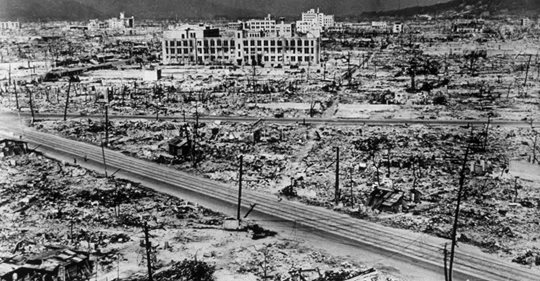
The horrific impact of the bomb was exacerbated by the fact that more than 90 percent of Hiroshima’s doctors and nurses were killed or injured by the bomb, while the blast left 42 out of 45 of the city’s civilian hospitals and two large army hospitals non-functional, according to the The International Campaign to Abolish Nuclear Weapons (ICAN).
This meant it was nearly impossible for the scores of injured to access aid, and most died without any care to ease their suffering from severe burns and radiation poisoning.
Before the attack Hiroshima had around 200 doctors, but the vast majority perished leaving only about 30 physicians who were able to perform their normal duties, according to a report created by the United States Strategic Bombing Survey.
Furthermore, more than 1,600 nurses out of nearly 1,800 were also killed, while medical stocks and supplies were also mostly destroyed.
Any hospitals within around 3,000 feet of ground zero were completely destroyed with almost everyone in them dying.
Two other large hospitals made from reinforced concrete that were located nearly 5,000 feet from the blast’s epicenter remained standing. However, the interiors suffered severe damage and around 90 percent of the occupants died, with many killed due to falling plaster, flying glass and fire.
Several medical centers that were located more than 7,000 feet away from ground zero also remained standing, although many were so badly damaged that they were not able to function.
The lack of medical facilities and staff only served to exacerbate the situation, as one eyewitness to the aftermath, Father Siemes, a German-born Jesuit professor who was in Hiroshima when the bomb fell, described, recounting the scene at an improvised first aid station.
“Iodine is applied to the wounds but they are left uncleansed. Neither ointment nor therapeutic agents are available. Those that have been brought in are laid on the floor and no one can give them any further care. What could one do when all means are lacking? Among the passersby, there are many who are uninjured,” he wrote.
“In the official aid stations and hospitals, a good third or half of those that had been brought in died. Everything was lacking, doctors, assistants, dressings, drugs, etcetera.”
Medical help had to be sent into the city from the outside, however, this took some time to arrive and several individuals who came to assist also ended up dying due to the high levels of lingering radiation.
On the 75th anniversary of the bombing, the International Physicians for the Prevention of Nuclear War (IPPNW), the only international medical organization dedicated to the abolition of nuclear weapons, told Newsweek that there can be “no useful medical response” to even a single nuclear attack on one city in their view.
“The infrastructure necessary would be destroyed and the personnel needed would be killed or badly wounded,” Chuck Johnson, IPPNW Director of Nuclear Programs, said. “Even a relatively small nuclear war would have atmospheric effects beyond the immediate blast, fire, and radiation, which could threaten billions of people with starvation due to crop failure. An all out nuclear war between the U.S. and Russia would end civilization and threaten to extinguish all human life.”
“We agree with President Reagan’s statement that ‘nuclear war can never be won and must never be fought,’ and are greatly concerned by the growing development of a new nuclear arms race among the nine nuclear weapons states.”
However, Johnson said the organization was “greatly encouraged” on the 75th anniversary of the first nuclear weapons attack on a human population, that three more nations—Nigeria, Ireland, and Niue—have become states parties to the UN Treaty on the Prohibition of Nuclear Weapons. This leaves only seven more states to submit ratification papers for the nuclear ban treaty to enter into force.”
“We look forward to the day when the UN declares that rogue nations which persist in developing and possessing nuclear weapons must listen to the world community and cease their activities which threaten all of us.”
Ways to get rid of nuclear weapons – ideas from Africa

Lessons from two pan-African giants on how to achieve genuine nuclear disarmament, The Conversation August 6, 2020 Joelien Pretorius, Associate Professor in Political Studies, University of the Western Cape “…………There are at least two traditions of African thought on nuclear weapons, traceable to their most vocal exponents: Kwame Nkrumah, the scholarly first president of independent Ghana, and Ali Mazrui, the renowned Kenyan scholar.
Both Nkrumah and Mazrui associated nuclear weapons with imperialism and racism, but proposed different approaches to address the problem they present. Nkrumah’s was an abolitionist non-violent approach. He argued for nuclear non-proliferation and disarmament and saw nuclear imperialism as the exploitation of smaller states and indigenous people and territory for nuclear tests and uranium mining.
Mazrui, on the other hand, argued for nuclear proliferation before nuclear disarmament could take place. His view was that the dominant policy towards nuclear weapons afforded some states the political privilege of having them, while denying this right to others. What he called nuclear imperialism.
Nkrumah’s approach arguably became the African approach to nuclear weapons. As a leading member of the Non Aligned Movement, Africa’s participation in the global nuclear order was directed through the organisation in the pursuit of nuclear disarmament. Closer to home, the achievement of an Africa Nuclear Free Zone treaty in 2009 was a direct outflow of Nkrumah’s approach.
Mazrui’s approach never had much official traction.
I argue that to end nuclear imperialism, African states have to reconcile Nkrumah’s and Mazrui’s approaches to nuclear weapons.
Reconciling the two approaches
Tackling nuclear imperialism would require African countries to sign up to the Treaty on the Prohibition of Nuclear Weapons, or the Ban Treaty, of 2017. This treaty is a first step toward eliminating the weapons themselves and the systems of control and exploitation they make possible. African states participated in the treaty process. More than 20 have signed the treaty and five have so far ratified it.
It would also require African states to withdraw from the Nuclear Non Proliferation Treaty. All African states are currently members of this treaty. But, after 50 years in existence, there is little hope that it will deliver genuine nuclear disarmament.
Reconciling Nkrumah’s idealism and Mazrui’s realism helps us see these treaties for what they are: the Ban Treaty is based on humanitarian concerns and the equality of states; the Non Proliferation Treaty legalises a few states’ nuclear hegemony indefinitely.
It is time for African states to lead in creating a new non-nuclear order.
Where both of them stood
An internationalist and pan-Africanist, Nkrumah saw abolition as the answer to nuclear weapons. He saw them as the “sword of Damocles” hanging over humanity. Embedded in the global peace movement of the time, he advocated for “positive action” – an outflow of Gandhiist non-violence. He attended and hosted several conferences with an anti-nuclear agenda, including an assembly in 1962 on the theme “A world without the bomb”.
Although many Africans lost faith in the value of non-violence and preferred a military solution to imperialism, Nkrumah’s approach to nuclear weapons did not fade. It was enmeshed with the position espoused by the Non Aligned Movement, and was the position adopted by the African National Congress in South Africa in 1994.
For his part, Mazrui believed African states should not pursue a nuclear weapon free zone and should leave the 1970 Nuclear Non Proliferation Treaty……
Mazrui saw the Non Proliferation Treaty as a trap that smacked of racism, where major powers got to say “such and such a weapon is not for Africans and children under 16”.
Mazrui was thus “advocating nuclear proliferation as the only realistic path to nuclear disarmament. This was a total inversion of the Western consensus.”
Wasted opportunities
The five nuclear powers have wasted many opportunities to negotiate the nuclear disarmament that the 50-year-old Non Proliferation Treaty binds them to. Instead, key nuclear arms control treaties have been discarded and all the nuclear weapon states are modernising their arsenals.
The treaty has also not stopped proliferation: four other states have since acquired nuclear weapons – Israel, India, Pakistan and North Korea.
Mazrui was right. In practice, the treaty is at most a status quo treaty that has come to legalise a small club being able to wield nuclear weapons – what India calls nuclear apartheid.
The treaty is not just about separating states into haves and have nots; it is also a stick to beat the have nots into submission.
In the Iraq War of 2003 the US used stopping nuclear proliferation as a false premise to justify making war on that country and is today doing the same to sanction Iran. States without nuclear weapons accepted the Non Proliferation Treaty in the hope that it would deliver a world without nuclear weapons, but that hasn’t happened and their patience is running out.
The efforts of the majority of states that went outside the Non Proliferation Treaty forum to negotiate the Treaty on the Prohibition of Nuclear Weapons three years ago, to make nuclear weapons illegal for all, without exception, need to succeed. The Ban Treaty will enter into force when 50 states have ratified it. The number currently stands at 40.
The Ban Treaty was only possible because of a broad international coalition emphasising the unacceptable humanitarian consequences of nuclear weapons.
To end nuclear imperialism, African states have to reconcile Nkrumah and Mazrui’s approaches by not only joining the Ban Treaty, but also withdrawing from the Non Proliferation Treaty. This will signal that African states will only take part as equals in global nuclear governance where these weapons are illegal for all. https://theconversation.com/lessons-from-two-pan-african-giants-on-how-to-achieve-genuine-nuclear-disarmament-144009
Australia’s ICAN and Conservation Council of Western Australia commemorate Hiroshima Day


On August 5th, people from across Australia gathered, via Zoom, to commemorate the nuclear bombing of Hiroshima, and to hear speakers from ICAN Autralia (International Campaign to Abolish Nucleat Weapons).
Medlissa Clarke spoke of the human effects of this catastrophe, and of the efforts over time, towards disarmament. The biggest leap forward in this has been, in 2017, the U.N. Treaty on the Prohibition of Nuclear Weapons. The Treaty now has over 200 nations signed up, with 40 ratifications – not far from the 50 required to make it international law.
Most Australians want a nuclear weapons free world.But Australia’s policy does endorse nuclear weapons. A future Labor government might change that.
Dimity Hawkins described the misery experienced by the Japanese, the agonising stories of the survivors. Since Hiroshima, the nuclear bombs developed are greatly stronger, and have been tested over many years, on the Marshall Islands, on Maralinga, South Australia, and on other Pacific Islands, in nuclear colonialism that has never properly been cleaned up. Australia is part of that nuclear chain. But now,the survivors are speaking out. Red Cross and Red Crescent, the world’s greatest non government emergency service is strongly behind the Treaty movement, and the indigenous people, particularly Australia’s Aboriginals .
Former Senator Scott Ludlam commemorated the Hibakusha, and the impact of the nuclear weapons industry on indigenous people world-wide. He drew attention to the ?proud statement of U.S. Strategic Command – that their nuclear weapons are to be used in a “safe, secure and lethal way”.
The Treaty was an Australian initiative, brought about by the work of, at first, a few, who by-passed official systems, and went out getting signatures, setting up ICAN, which became an international movement.-, – showing that people can do this, have an effect and an influence. As cities will be the places to bear the catastrophe of nuclear annihilation, many Mayors of many have City Councils have signed up to the Treaty. The Treaty shows that no-one can now claim that nuclear weapons are acceptable, in the same way as biological and chemical warfare are unacceptable.
For information on the continuing CCWA webinar series go to http://www.ccwa.org.au/yellowcake_country_webinar_series
Russia will regard any incoming missile as a nuclear attack
|
Russia warns it will see any incoming missile as nuclear VLADIMIR ISACHENKOV
MOSCOW (AP) 7 Aug 20, — Russia will perceive any ballistic missile launched at its territory as a nuclear attack that warrants a nuclear retaliation, the military warned in an article published Friday. The harsh warning in the official military newspaper Krasnaya Zvezda (Red Star) is directed at the United States, which has worked to develop long-range non-nuclear weapons. The article follows the publication in June of Russia’s nuclear deterrent policy that envisages the use of atomic weapons in response to what could be a conventional strike targeting the nation’s critical government and military infrastructure. In the Krasnaya Zvezda article, senior officers of the Russian military’s General Staff, Maj.-Gen. Andrei Sterlin and Col. Alexander Khryapin, noted that there will be no way to determine if an incoming ballistic missile is fitted with a nuclear or a conventional warhead, and so the military will see it as a nuclear attack. “Any attacking missile will be perceived as carrying a nuclear warhead,” the article said. “The information about the missile launch will be automatically relayed to the Russian military-political leadership, which will determine the scope of retaliatory action by nuclear forces depending on the evolving situation.”……….https://apnews.com/888e0816c6fa7f58b9ad4f1e97993643 |
|
|
It’s Up to us to stop the building of nuclear weapons
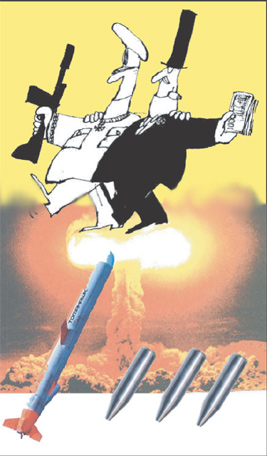 Up to us to stop the building of nuclear weapons, Greenfield Recorder, Sherrill Hogen , Charlemont. 6 Aug 20 https://www.recorder.com/my-turn-hogen-Hiroshima-35463074 Change! Finally, after 400 years, White America may be ready to start addressing the wrongs that brought our country into being. Racism and genocide are life-threatening poisons to our very soul. Yet there are other poisons that have not yet consumed us, but might still do so. For one, our planet might burn up from climate disasters before we can stop it. For another, human folly might unleash nuclear war — a more instantaneous incineration of all that we hold dear.
You might think that we are smarter than that. But we humans have not proven that we are so smart when it comes to settling our differences.
You might believe that war is inevitable and just hope that no one pushes the nuclear button. But hoping doesn’t keep it from happening. So, just as we are awaking to what it might take to address the legacies of slavery and the extermination of Native Americans, we must address the real possibility of nuclear annihilation. It is hard to do when the warnings are not in the news.
And isn’t that interesting…. Why isn’t such an enormous threat to our very existence in the media and in our daily conversations? I wonder if our arms industry and military superstructure would rather keep such knowledge buried.
If we do wake up to this danger, we might raise up another voice along with Black Lives Matter, Water is Life, Me Too, and Save our Planet: NO MORE WAR, NO NUCLEAR WEAPONS.
It has been 75 years since the U.S. dropped atomic bombs on Hiroshima and Nagasaki, Japan. For 75 years we humans have managed to ignore the reasons and results of that horrific act. I hope we can change course on this issue as we are doing on others.
One step in that direction is to recognize the dates the bombs fell, Aug. 6 and 9, 1945.
One event was already held Aug. 6 in Turners Falls. Join us Aug. 8, 11 a.m. to noon on the Greenfield Town Common; and Aug. 9 at the library in Easthampton at 7 p.m.
As we strive to recognize the value of every human being and every living thing, our government and arms industry are building nuclear weapons every day, and it is up to us to stop them.
Conservative politicians in UK gathering opposition to China’s involvement in nuclear projects
|
China tensions raise doubts over UK nuclear projects
After Huawei’s ban, rebel Tory MPs turn their sights on CGN and its plans to build a new plant Ft.com
Jonathan Ford and Jim Pickard in London and Nathalie Thomas in Edinburgh AUGUST 6 2020 Flushed with their success at changing UK government policy towards Huawei, rebel Conservative MPs are now turning their attention to a proposed Chinese project to build a nuclear power station at Bradwell-on-Sea in the south-east of England.
In their sights is an agreement forged by the government of David Cameron, that would allow the Chinese nuclear group CGN to build its own nuclear plant in return for backing two giant French-led nuclear projects in Britain. The first of those French projects — a plant at Hinkley Point in the south west of England that could cost £22.5bn — is well under way and CGN has already pumped billions into the scheme.
“There are an awful lot of Tory MPs who will use their summer break to get their heads around the CGN situation,” said one person close to the rebel MPs. “Bradwell will be the focus of attention.” Just as with the decision to remove telecoms company Huawei from Britain’s 5G mobile phone networks by 2027, they are being encouraged by a US administration vocal in its opposition to China’s involvement in Britain’s nuclear programme.
In 2018, the US assistant secretary for international security and non-proliferation, Christopher Ashley Ford, warned the UK against partnering with the company, saying Washington had evidence it was taking civilian technology and converting it to military uses. CGN declined to comment.
At a private meeting with MPs last month, the subject of CGN’s activities was raised by US secretary of state Mike Pompeo, according to one person in the room. The senior Tory MP, Iain Duncan Smith has called for a review of nuclear contracts on the grounds that China is not a “trusted vendor”, and has likened Britain’s commercial dealings with Beijing to 1930s appeasement.
The closer scrutiny of China’s role in Britain’s nuclear programme comes at a crucial moment. The UK’s Committee on Climate Change has said that the country might need 38 per cent of its power from non-weather-dependent sources to help achieve “net zero” carbon emissions by 2050. Supporters of nuclear say it is the only proven technology capable of delivering that target. Yet despite this, plans to build a fleet of new reactors using private sector funding have stalled. ……..
Some MPs believe that Britain no longer needs CGN’s money because Boris Johnson’s government may be willing to contemplate public subsidies. The government last year launched a consultation on an alternative funding model, Regulated Asset Base (RAB), which is used for other infrastructure such as the Thames Tideway “super sewer” and would see consumers pay for nuclear plants upfront via their energy bills. Some experts have also floated the idea of the state taking direct stakes in schemes. …….
So far CGN has invested £3.8bn in the UK, the majority in Hinkley. CGN is funding a third of the construction costs for Hinkley and 20 per cent of the development costs of Sizewell C in Suffolk. ………
Ministers are yet to deliver their verdict on the RAB funding model and have continuously delayed a white paper on energy, originally expected last year, and which nuclear industry executives hope will emerge in October.
Last week the managing director of Hinkley Point C, Stuart Crooks, said the UK government “needs to decide if it wants nuclear or not.” ……..
environment groups such as Greenpeace insist there are far cheaper, greener ways of meeting the future country’s energy needs, such as offshore wind power. …… https://www.ft.com/content/9d0d3a75-d3f4-4cab-9176-be582140987c
|
|
Opening the floodgates at Fukushima
- Ken O. Buesseler
See all authors and affiliations
Vol. 369, Issue 6504, pp. 621-622
DOI: 10.1126/science.abc1507
Summary
Summary
In the time since Japan’s triple earthquake, tsunami, and nuclear disaster in 2011, much has improved in the ocean offshore from the Fukushima Daiichi Nuclear Power Plant (FDNPP). Concentrations of cesium isotopes, some of the most abundant and long-lived contaminants released, are hundreds of thousands of times lower than at their peak in April 2011. Since mid-2015, none of the fish caught nearby exceed Japan’s strict limit for cesium of 100 Bq/kg (1, 2). Yet, enormous challenges remain in decommissioning the reactors and clean-up on land. Small, and sometimes unexpected, sources of contaminants still continue to enter the ocean to this day (3). Two of the biggest unresolved issues are what to do with the more than 1000 tanks at the site that contain contaminated water and the impact of releasing more than 1 million tons of this water into the ocean.
http://www.sciencemag.org/about/science-licenses-journal-article-reuse
This is an article distributed under the terms of the Science Journals Default License. View Full Text
Nuclear testing: ‘Why do we need to start a new arms race?’
|
Nuclear testing: ‘Why do we need to start a new arms race?’
Provision in National Defense Authorization Act to ban testing, Big Country, by: Alexandra Limon Aug 7, 2020 WASHINGTON (Nexstar) — The United States has not conducted live nuclear weapons tests for 28 years. But reports indicate the Trump Administration has discussed re-starting the nuclear testing program.
That has Democrats from the areas impacted by past testing — in Nevada and Utah — pushing a provision in this year’s National Defense Authorization Act to ban new nuclear tests. “It would prevent this administration or any in the future from using funds to restart nuclear weapons testing,” said Nevada Rep Dina Titus, who introduced the bill with support from Utah’s Ben McAdams. “Thousands and thousands of Utahns have developed cancer and died from those tests. And I think it’s important that we don’t see that testing resume,” he said. The ban on live nuclear testing was included in the House version of the NDAA, but it’s unclear if it will make it into the final version. “We can test our stockpile without doing tests with yield and our scientists have been doing it for over 20 years,” Titus said. “Why do we need to start a new arms race?”……. The National Defense Authorization Act likely won’t be finalized until after the November election. https://www.bigcountryhomepage.com/news/politics/nuclear-testing-why-do-we-need-to-start-a-new-arms-race/ |
|
Particles from Fukushima meltdown contained plutonium
 Local residents who live around the 20km exclusion zone around the Fukushima Dai-Ichi Nuclear Power Plant undergo a screening test for possible radiation at screening center on September 13, 2011 in Minamisoma, Fukushima Prefecture, Japan.
August 6th, 2020 Posted by Stanford
Microscopic particles emitted during the Fukushima nuclear disaster contained plutonium, according to a new study.
The microscopic radioactive particles formed inside the Fukushima reactors when the melting nuclear fuel interacted with the reactor’s structural concrete.
Nearly ten years after meltdown at the Fukushima Daiichi Nuclear Power Plant caused a nuclear disaster, the new information about the extent and severity of the meltdown and the distribution patterns of the plutonium have broad implications for understanding the mobility of plutonium during a nuclear accident.
“The study used an extraordinary array of analytical techniques in order to complete the description of the particles at the atomic-scale,” says coauthor Rod Ewing, co-director of the Center for International Security and Cooperation (CISAC) at Stanford University.
The researchers found that, due to loss of containment in the reactors, the particles were released into the atmosphere and many were then deposited many miles from the reactor sites.
Studies have shown that the cesium-rich microparticles, or CsMPs, are highly radioactive and primarily composed of glass (with silica from concrete) and radio-cesium (a volatile fission product formed in the reactors). But the environmental impact and their distribution is still an active subject of research and debate. The new work offers a much-needed insight into the Fukushima Daiichi Nuclear Power Plant (FDNPP) meltdowns.
The study used an extraordinary array of analytical techniques in order to complete the description of the particles at the atomic-scale.
The researchers used a combination of advanced analytical techniques, including synchrotron-based micro-X-ray analysis, secondary ion mass spectrometry, and high-resolution transmission electron microscopy, to find and characterize the plutonium that was present in the CsMP samples. They initially discovered incredibly small uranium-dioxide inclusions, of less than 10 nanometers in diameter, inside the CsMPs; this indicated possible inclusion of nuclear fuel inside the particles.
Detailed analysis revealed, for the first-time, that plutonium-oxide concentrates were associated with the uranium, and that the isotopic composition of the uranium and plutonium matched that calculated for the FDNPP irradiated fuel inventory.
“These results strongly suggest that the nano-scale heterogeneity that is common in normal nuclear fuels is still present in the fuel debris that remains inside the site’s damaged reactors,” says geochemist Satoshi Utsunomiya of Kyushu University, who led the team.
“This is important information as it tells us about the extent [and] severity of the meltdown. Further, this is important information for the eventual decommissioning of the damaged reactors and the long-term management of their wastes.”
With regards to environmental impact, Utsunomiya says, “as we already know that the CsMPs were distributed over a wide region in Japan, small amounts of plutonium were likely dispersed in the same way.”
This is important information for the eventual decommissioning of the damaged reactors and the long-term management of their wastes.
The team “will continue to experiment with the CsMPs, in an effort to better understand their long-term behavior and environmental impact,” says Gareth T. W. Law, a coauthor on the paper from the University of Helsinki. It is now clear that CsMPs are an important vector of radioactive contamination from nuclear accidents.”
“While the plutonium released from the damaged reactors is low compared to that of cesium; the investigation provides crucial information for studying the associated health impact,” says coauthor Bernd Grambow of Nantes/France.
Utsunomiya emphasizes that this is a great achievement of international collaboration. “It’s been almost ten years since the nuclear disaster at Fukushima,” he says, “but research on Fukushima’s environmental impact and its decommissioning are a long way from being over.”
The paper appears in Science of the Total Environment.
Additional researchers from Kyushu University, University of Tsukuba, Tokyo Institute of Technology, National Institute of Polar Research, University of Helsinki, Paul Scherrer Institute, Diamond Light Source, and SUBATECH (IMT Atlantique, CNRS, University of Nantes) contributed to the work.
Source: Stanford University via Kyushu University
Original Study DOI: 10.1016/j.scitotenv.2020.140539
https://www.futurity.org/fukushima-nuclear-disaster-plutonium-2417332-2/
Billing Olympics as ‘pandemic recovery games’ unfeasible: ex-Fukushima mayor
 Former Minamisoma Mayor Katsunobu Sakurai is seen talking to the Mainichi Shimbun in Minamisoma, Fukushima Prefecture, on July 3, 2020
August 5, 2020
MINAMISOMA, Fukushima — Katsunobu Sakurai, former mayor of Minamisoma, Fukushima Prefecture, who was in office during the March 2011 earthquake and tsunami disaster, firmly stated during a recent interview with the Mainichi Shimbun that it is unfeasible to dub the Tokyo Olympics a “sign of humanity’s triumph over the novel coronavirus,” as suggested by Prime Minister Shinzo Abe.
Sakurai, who was born in the city of Minamisoma himself, served two terms as mayor for his hometown between 2010 and 2018. Sakurai was picked as one of Time magazine’s 100 most influential people in 2011 following the disaster at Tokyo Electric Power Co.’s Fukushima Daiichi Nuclear Power Station.
The following is an excerpt of Sakurai’s remarks to the Mainichi Shimbun on July 3.
* * * * *
Following the postponement of the Tokyo Olympic and Paralympic Games, Prime Minister Shinzo Abe spoke of holding next year’s Olympics as a “sign of humanity’s triumph over the novel coronavirus.” Up until now, the prime minister may have thought that presenting the event with the title “disaster recovery” from the Great East Japan Earthquake would gather worldwide attention, but now he is trying to replace this slogan amid the global spread of the novel coronavirus. However, the concept of a “recovery Olympics,” let alone a “coronavirus Olympics” has no chance of success.
 Former Minamisoma Mayor Katsunobu Sakurai is seen talking to the Mainichi Shimbun in Minamisoma, Fukushima Prefecture, on July 3, 2020.
The torch relay for the 2020 Tokyo Olympics, which was eventually canceled due to the coronavirus outbreak, was just a performance put on for show. The relay was set to start at the J-Village national soccer training center in Fukushima Prefecture, which was used as a base to handle the Fukushima Daiichi nuclear disaster (after the Great East Japan Earthquake). However, the relay route was limited to areas that have been tidied up, and did not show the real nature of the disaster-hit areas. “Recovery” means restoring an environment to a state where people can return. At the very least, if residents have returned and can once again live in a state similar to before the disaster, this may be called a recovery. But the government is trying to show how far the recovery has progressed, when in fact there is much left to be achieved.
There is also talk that flowers grown in the disaster-stricken areas will be used for victory bouquets awarded to Olympic medalists, but would this actually help boost the recovery overall? In Fukushima Prefecture, baseball and softball matches for the Olympic Games are to be held in the prefectural Azuma ballpark in the suburbs of the city of Fukushima, but this site has almost no connection to the coastal areas of the prefecture (that were damaged in the tsunami following the magnitude-9.0 temblor). It appears that it is nothing more than a performance (by the Japanese government).
No matter how much you tout the games as a sign of recovery, the overall picture of only Tokyo prospering while the recovery of the disaster-hit areas in the Tohoku region remains undone will not change. I’ve been to Tokyo many times, and saw that there were more crane trucks at the construction site of the athletes’ village than in the disaster-hit areas. It was obvious at a glance where the national government was placing its resources.
It’s not that I am disapproving of the Olympics itself. It is a festivity celebrating peace, and I am aware that Japan had been long active in its bid to host the games. However, it doesn’t make sense when you start calling it a “recovery Olympics.” The inconsistency becomes clear when labeling the games an event “contributing to the recovery of the disaster-hit areas.”
During the Japan’s bid to host the 2020 Olympics, Prime Minister Abe described the polluted water generated by the nuclear disaster as being “under control,” and then Tokyo Games bid committee chairman Tsunekazu Takeda called Tokyo “safe,” as it is 250 kilometers away from Fukushima. Don’t these very statements run counter to a “recovery Olympics”?
At the time, I was confronted by an elderly resident of my city who asked, “It’s a dangerous place here, isn’t it? Why don’t you let us live in Tokyo?” A “recovery Olympics” should by nature be something that residents of the disaster-stricken areas can feel good about holding, but the authorities’ perceptions are inconsistent with those in such areas.
If a “recovery Olympics” in the true sense of the term is to be held, it will by restoring the coastal regions of disaster-hit areas to a state capable of hosting the events, such as marathons.
During the 2019 Rugby World Cup, matches were held in the city of Kamaishi, Iwate Prefecture, in northeastern Japan, (an area also hit hard by the tsunami) as a way to underscore the recovery. This must have been a large source of emotional strength for local residents. However, Fukushima Prefecture still has zones that people cannot even enter. It just doesn’t seem like it is in any condition to hold the Olympics. I can only presume that the large impact of the nuclear disaster is still being underestimated.
The Japanese government has prepared for the Olympics while upholding the “disaster recovery” label, even though a recovery is far from reality. It is superficial to declare a recovery with no actual progress. The government is now talking of an Olympics that could be a sign of humanity’s triumph over the pandemic, but vaccines have not yet been put into practical use, and the world has not yet been freed from the risk of infection. There is no chance of success by trying to box in reality to meet the labels the government upholds. The idea of a “coronavirus Olympics” may also likely end as a mere fantasy.
(Original Japanese interview by Jun Kaneko, City News Department)
https://mainichi.jp/english/articles/20200805/p2a/00m/0na/003000c
Fallout over Fukushima fallout papers continues as two are retracted
August 4, 2020
A radiology journal has retracted two papers about the fallout from the 2011 Fukushima nuclear disaster in Japan over concerns that the researchers used “ethically inappropriate data” from the people they studied.
The articles, which appeared in the Journal of Radiological Protection in 2017, were written by Makoto Miyazaki, of the Department of Radiation Health Management at Fukushima Medical University, and Ryugo Hayano, a professor of physics emeritus at the University of Tokyo. As we reported, both papers were initially subject to expressions of concern last year.
The papers have been cited a total of 26 times, according to Clarivate Analytics’ Web of Science.
The retraction notice for “Individual external dose monitoring of all citizens of Date City by passive dosimeter 5 to 51 months after the Fukushima NPP accident (series): 1. Comparison of individual dose with ambient dose rate monitored by aircraft surveys” reads:
Following the Expression of Concern issued on this article on 11 January 2019, IOP Publishing is now retracting this article. On 4 June 2020, IOP Publishing received confirmation from the authors of 2017 J. Radiol. Prot. 37 1 (the first in a series of two research articles) that ethically inappropriate data were used in the study reported in this article. This confirmation follows an investigation into the matter by Date City Citizen’s Exposure Data Provision Investigation Committee, which finds that some subjects within the study did not consent to their data being used for research, and it is unclear whether the unconsented data was provided to the author. IOP Publishing believes that the authors were unaware of the ethical problems with this data, which was supplied by a third party. The results of this investigation are available (in Japanese) at https://www.city.fukushima-date.lg.jp/soshiki/3/41833.html (IOP Publishing and the Society for Radiological Protection take no responsibility for the content at this link).
The readers are asked to note that, as part of the article submission process, the authors of the above referenced article confirmed that the research reported in the article adhered to the Ethical Policy of IOP Publishing and the Society for Radiological Protection.
As a member of the Committee on Publication Ethics (COPE), this matter has been investigated by IOP Publishing in accordance with COPE guidelines and it was decided that the article should be retracted. The authors agree with this retraction and have fully complied with all investigations.
More details are expected to be forthcoming. However, in line with COPE guidelines, we are retracting this article promptly and will update this retraction notice with more information, as necessary and as it is released.
Based on the investigation report it has also been found that there is an error in table 1 of this article. The figure relating to glass badge holders in 2014 3Q is incorrect and should be close to N = 12 011. These data were also provided to the authors by the same third party and the authors were not aware of this mistake in advance of publication of the article.
The second paper, “Individual external dose monitoring of all citizens of Date City by passive dosimeter 5 to 51 months after the Fukushima NPP accident (series): II. Prediction of lifetime additional effective dose and evaluating the effect of decontamination on individual dose,” carries an identical notice (minus the error).
Miyazaki, the corresponding author of the papers, has not responded to a request for comment.
Fallout over Fukushima fallout papers continues as two are retracted
A pair of radiation exposure studies on the people of Date City have been retracted. Authors Hayano and Miyazaki retracted the 2017 papers this week after years of dispute.
By early 2019 this issue had become too big to ignore. Hayano and Miyazaki attempted to claim unintentional mistakes and later tried to blame the city. An investigation into scientific misconduct at the University of Tokyo went nowhere as the statues required intent. Both researchers continued to claim the data manipulation that took months worth of data and applied it over years, making radiation exposures look less severe, was merely a spreadsheet accident.
Some of Hayano’s other Fukushima related studies raised questions about the methodology and potential biases. A 2014 study used a whole body counter scanning machine in small children but used an unusually short scan duration that may have grossly under counted their radiation exposures.
1 This Month

Tell Congress: Prevent Nuclear Catastrophe in Iran

Tell Congress: Prevent Nuclear Catastrophe in Iran

Read the Public Inquiry Report, the Commissioners’ report, Surrendering Australia: The AUKUS Deception is available to download for free at aukuspublicinquiry.com. Or just watch the replay of the National Press Club Luncheon.
To see nuclear-related stories in greater depth and intensity – go to https://nuclearinformation.wordpress.com
Say No to NASA’s Reckless Nuclear Reactor on the Moon
-
Archives
- November 2026 (284)
- October 2026 (302)
- September 2026 (339)
- August 2026 (330)
- July 2026 (355)
- June 2026 (287)
- May 2026 (306)
- April 2026 (356)
- March 2026 (251)
- February 2026 (267)
- January 2026 (308)
- December 2025 (358)
-
Categories
- 1
- 1 NUCLEAR ISSUES
- business and costs
- climate change
- culture and arts
- ENERGY
- environment
- health
- history
- indigenous issues
- Legal
- marketing of nuclear
- media
- opposition to nuclear
- PERSONAL STORIES
- politics
- politics international
- Religion and ethics
- safety
- secrets,lies and civil liberties
- spinbuster
- technology
- Uranium
- wastes
- weapons and war
- Women
- 2 WORLD
- ACTION
- AFRICA
- Atrocities
- AUSTRALIA
- Christina's notes
- Christina's themes
- culture and arts
- Events
- Fuk 2022
- Fuk 2023
- Fukushima 2017
- Fukushima 2018
- fukushima 2019
- Fukushima 2020
- Fukushima 2021
- general
- global warming
- Humour (God we need it)
- Nuclear
- RARE EARTHS
- Reference
- resources – print
- Resources -audiovicual
- Weekly Newsletter
- World
- World Nuclear
- YouTube
-
RSS
Entries RSS
Comments RSS

