Water shortage, drought, necessitate shutdown of France’s Chooz Nuclear Plant

 Nuclear reactor in France shut down over drought, Chooz Nuclear Plant on Belgian border turned off after dry summer evaporates water needed to cool reactors, AA, Cindi Cook |25.08.2020 A nuclear power plant in northern France has been temporarily shuttered due to a drought in the area, said the company that runs the plant Tuesday.
The second reactor of the Chooz Nuclear Power Plant, in Ardennes, on the Belgian border, was shut down late Monday night, after the first reactor ceased operations Friday evening.
The actions were taken due to low water levels in the Meuse River, the main artery that runs through the area used to cool the two reactors.
The plant is named after Chooz, the commune where it is located in the Ardennes. The region is on level three of four drought alert levels…….
Water is a crucial ingredient for nuclear plant safety to cool the reactor core. ……
Water restrictions have been imposed this summer in 79 out of the 96 mainland departments in France due to drought conditions. https://www.aa.com.tr/en/europe/nuclear-reactor-in-france-shut-down-over-drought/1952943
A series of safety problems bring EDF’s decision on early shut down of Scotland’s Hunterston nuclear station
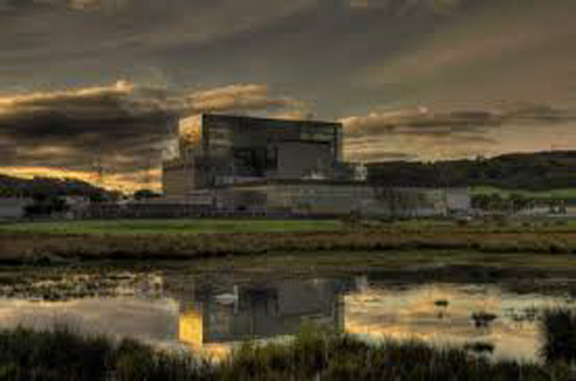
Scottish nuclear power station to shut down early after reactor problems
EDF Energy to close Hunterston next year after spending £200m on repairs, Guardian, Severin Carrell and Jillian Ambrose, Fri 28 Aug 2020 Hunterston nuclear power station, one of the UK’s oldest remaining nuclear plants, is to close down next year, earlier than expected, after encountering a series of safety-critical problems in its reactors.
Industry sources told the Guardian that EDF Energy, the state-owned French operator of Hunterston, decided at a board meeting on Thursday afternoon that the plant would stop generating electricity in late 2021, at least two years earlier than planned.
The energy company had hoped to keep generating electricity from the 44-year-old nuclear plant on the Firth of Clyde until 2023, after ploughing more than £200m into repairing the reactor.
Hunterston, which first began generating electricity in 1976, has been offline since 2018 after inspectors discovered 350 microscopic cracks in the reactor’s graphite core.
In October last year the Ferret, an investigative website, reported that at least 58 fragments and pieces of debris had fallen off the graphite blocks as the cracks worsened. It quoted the Office for Nuclear Regulation (ONR) as saying this had created “significant uncertainty” about the risks of debris blocking channels for cooling the reactor and causing fuel cladding to melt.
After a two-year investigation, the ONR said on Thursday that reactor 3 at Hunterston would be allowed to restart as planned, but it would only be allowed to generate electricity for approximately six months.
EDF then plans to apply next spring to extend its life for one final six-month run. EDF said it would begin the process of decommissioning Hunterston no later than the first week of 2022…….
Richard Dixon, the director of Friends of the Earth Scotland, said: “In terms of energy security, clearly there’s no problem. Its reactors haven’t been running and the lights haven’t gone out. What’s more urgent now is to build up renewables and energy efficiency, to make sure the gap left by Hunterston is filled by zero-carbon electricity or energy saving.” ……… https://www.theguardian.com/uk-news/2020/aug/27/hunterston-scottish-nuclear-power-station-to-shut-down-early-after-reactor-problems
Kazakhstan’s moves toward a world free of nuclear weapons
 Leading the way to a world free of nuclear weapons, Today more than ever, the world needs leadership in the field of nuclear non-proliferation and disarmament. Kazakhstan keeps providing this leadership, writes Jonathan Granoff. https://www.euractiv.com/section/central-asia/opinion/leading-the-way-to-a-world-free-of-nuclear-weapons/ 28 Aug 20, Jonathan Granoff is the president of the Global Security Institute.In 1949, the first of over 450 nuclear explosive tests, surprised the residents in towns and villages in the northeast corner of Kazakhstan. The sky lit up with a blinding flash of light followed by an enormous mushroom cloud. In houses books falling from shelves and the crashing of dishes could be heard. They had not been forewarned.
For the next forty years, silently, in the bodies of at least one and half million citizens the consequence of the radioactive fall-out of those hundreds of explosions inflicted numerous diseases such as cancer and horrible birth defects. Not only did the explosions cause cracks in houses and roads.
It caused the crack of tragedy in the hearts of millions. The people of Kazakhstan, because of those nuclear tests in the windswept steppe test site at Semipalatinsk, know all too well the reality of nuclear weapons
Millions of activists worldwide in the late 1980s protested nuclear testing, prominent amongst those protests was the Nevada-Semipalatinsk Movement, bringing together the voices of citizens of the USA and the then Soviet Union.
The protesters in Kazakhstan demonstrated enormous courage for they were still living in a system where political repression posed serious dangers.
But times changed and that became very clear when Kazakhstan’s First President, Nursultan Nazarbayev, came into office. He did not ignore or avoid addressing these dreadful devices and their national and global impact.
He set out to bring his sense of responsibility as a witness to the reality of nuclear weapons into meaningful action, not only for his nation but also for the world.
First and foremost, he supported the brave activists who protested the testing in Kazakhstan and he signed the historic Decree shutting down the Semipalatinsk test site on 29 August 1991.
It should be noted Kazakhstan was then still part of the Soviet Union. In his speeches, Nazarbayev has always emphasized that the closure expressed the will of the people.
This bold gesture helped stimulate a moratorium on testing which has to this day restrained the five permanent members of the Security Council and holders of more than 97% of the world’s nuclear arsenals (the P5) – United States, Russia, China, United Kingdom, and France from further testing.
It also gave momentum to the global movement to create a treaty to end all nuclear testing, the Comprehensive Test Ban Treaty (CTBT). 29 August is now the International Day against Nuclear Tests. It was established on December 2, 2009 at the 64th session of the United Nations General
Soon after the Soviet Union collapsed, Kazakhstan, under the leadership of Nazarbayev, set a precedent in world history by abandoning the world’s 4th largest nuclear arsenal and the status of a de facto nuclear power.
This decision was crucial not only for the formation and further development of Kazakhstan but also had far-reaching global consequences. Kazakhstan had inherited more than 100 stationary-based missiles with about 1,400 nuclear warheads.
In addition, 40 strategic Tu-95 MS bombers with 240 cruise nuclear missiles were deployed in Kazakhstan. Giving up this powerful arsenal gained the nation enormous international good will and recognition, and the moral credibility to demand progress on legal duties of all nuclear weapons states to negotiate the universal elimination of nuclear weapons.
Nazarbayev’s strategic decision was instrumental in stimulating confidence in the maturity of independent Kazakhstan. It remains an action of national pride and international respect.
Kazakhstan also set out to address the nuclear non-proliferation problem. In 2017, under the leadership of Nazarbayev, it created the world’s first bank for low enriched uranium under the auspices of the International Atomic Energy Agency.
This unique mechanism provides countries around the world with the opportunity to develop peaceful nuclear energy without the need to create their own uranium enrichment programs, which represents a proliferation danger.
Kazakhstan has also become an active participant in absolutely all basic international treaties and institutions in the field of non-proliferation of nuclear weapons and a strong contributor to stability in the world.
For example, under Nazarbayev’s leadership, it was a leading contributor in the creation of the Central Asian Nuclear-Weapon-Free Zone (CANWFZ) signed into force by Kyrgyzstan, Tajikistan, Turkmenistan and Uzbekistan on 8 September 2006.
Current President Kassym-Jomart Tokayev is continuing the country’s nuclear non-proliferation and disarmament commitments. The world needs leadership today in this field more than ever.
The Nursultan Nazarbayev Foundation has established the “Nazarbayev Prize for Nuclear Weapon Free World and Global Security”, which is awarded every 2 years on 29 August for outstanding contributions to non-proliferation and disarmament.
It was first presented in 2017 to King of Jordan Abdullah II. In 2019, the laureates were the Executive Secretary of the CTBTO Preparatory Commission, Lassina Zerbo and former IAEA Director-General Yukio Amano (posthumously).
In 2012, Nazarbayev announced the launch of the ATOM Project (Abolish Testing – Our Mission). ATOM is an online petition to world governments to forever abandon nuclear testing and to bring the Comprehensive Nuclear-Test-Ban Treaty into force as soon as possible.
Speaking at the 70th session of the UN General Assembly in September 2015, Kazakhstan’s First President called for making the construction of a world without nuclear weapons the main goal of mankind in the 21st century and the adoption of the UN Universal Declaration on a Nuclear-Weapon-Free World.
In 2016, in his Manifesto: The World, The 21st Century”, Nazarbayev sets forth a comprehensive vision to move toward a world without reliance on militarism and war, but based on a cooperative human-centred approach to security. Now, a recognized official UN document, it contains realistic policy proposals worthy of serious debate today.
The solution of many problems in the field of global security, conflict prevention and resolution, and especially nuclear disarmament depend on the availability of environments and platforms for honest debate and dialogue.
President Nazarbayev thus established the Astana Club – a forum where annually more than 50 world renown politicians and experts discuss current security issues in Eurasia and beyond.
In November 2019, as part of the fifth meeting of the Club, Nazarbayev initiated the creation of an authoritative political platform, the Global Alliance of Leaders for a Nuclear-Free World.
GAL is an alliance of leaders that will allow for an open dialogue with members of the “nuclear club” and make a feasible contribution to strengthening global security.
Kazakhstan, within the framework of the GAL, will act as a neutral dialogue platform for both nuclear and non-nuclear states.
Those who have already supported the project and expressed their readiness to contribute to the implementation of this initiative include former heads of state, heads of international organizations and famous experts: Heinz Fischer (Austrian Federal President 2004-2016), Mohammed El-Baradei, IAEA Director General 1997-2009, Nobel Peace Prize Laureate), Lassina Zerbo (CTBTO Executive Secretary), and others of similar stature.
Nazarbayev, stimulated by perestroika and President Mikhail Gorbachev’s new thinking, developed a vision of a peace loving, open minded, dynamic nation respectful of the rule of law that could be a responsible actor in world affairs.
A bold perspective given the turbulence of these times, it requires diligent and courageous perseverance and a people of enormous dynamism to help advance it, including finding a path to ensuring that the ethnic and religious diversity of their nation can remain harmonious and not lead to conflict as it has been the case so many times in other places. Again, Kazakhstan is providing a good example.
U.S. Air Force pursues ‘dual-use’ conventional nuclear weapons. “conventional nuclear”???
 Air Force pursues ‘dual-use’ conventional nuclear weapons This contradiction forms the conceptual basis for the Pentagon’s current nuclear-weapons strategy, Fox News, By Kris Osborn | Warrior Maven 28 Aug 20, It might seem like a paradox: be ready to fight a limited “tactical” nuclear war and maintain an ability to ensure catastrophic annihilation of an enemy with nuclear weapons to keep the peace.
This contradiction forms the conceptual basis for the Pentagon’s current nuclear-weapons strategy, which not only calls for a new generation of intercontinental ballistic missiles (ICBMs), but also directs the development and deployment of several low-yield, tactical nuclear weapons options.
This includes nuclear-armed cruise missiles, submarine-launched nuclear weapons with low-yield warheads, scalable air-launched nuclear missiles and glide bombs………..
Some have raised a concern that developing nuclear and conventional variants of the same weapon might lead an adversary to mistake a conventional attack for a nuclear one, therefore causing major unwanted escalation and starting a nuclear exchange.
Others also maintain that there should not, in any fashion, be room for the concept of a “tactical” or “limited” nuclear war. Any use of nuclear weapons, the thinking goes, should result in the complete and total nuclear destruction of the attacker…….. https://www.foxnews.com/tech/air-force-pursues-dual-use-conventional-nuclear-weapons
EDF’s Hunterston ageing nuclear power station kept going in effort to prolong all EDF’s old reactors
The Ferret 27th Aug 2020, The energy company, EDF, is planning to operate a cracked and ageingnuclear power station at Hunterston in North Ayrshire for another year before closing it down for good. The company is hoping to restart the two 44-year-old reactors at the site for two last six-month periods and then
begin decommissioning them “no later than 7 January 2022”.
being put at risk. They are calling for the plant to be permanently closed down now. The 50-strong group of Nuclear-Free Local Authorities in the UK demanded that both reactors never re-open. “The safest thing to do is to
close Hunterston B and start accelerated decommissioning of its reactors,” said the group’s Scottish convener, Glasgow SNP councillor Feargal Dalton. “We totally disagree with EDF that decommissioning should start in 2022. It should happen now for the sake of public safety.” He added: “The fact it has taken two years and much resource from EDF to provide sufficient information to the ONR to allow a restart to take place is indicative of the level of risk over the structural integrity of these reactors.”
been in such a financial pickle long before the virus hit,” he added.https://theferret.scot/hunterston-cracked-nuclear-reactors-another-year/
You can have four more years of Trump, or you can have a habitable planet. But you can’t have both.
 Climate Apocalypse Now, Maybe it’s just a failure of human imagination to understand what is coming, Rolling Stone, By JEFF GOODELL 28 Aug 20
And, of course, we are fucking it up. We are heating up the planet so fast that large parts of it will be uninhabitable by the end of the century. We are amping up storms like Hurricane Laura — it is the strongest storm to hit the Louisiana coast since 1856 — and turning the Gulf Coast into a shooting gallery — which city is going to get hit next? New Orleans? Houston? Tampa? Miami? They are all living on borrowed time. And it’s not just the hurricanes: As Greenland melts and Antarctica falls into the Southern Ocean, they will be swamped by rising seas, as will virtually every other low-lying city in the world. The rich will huddle behind sea walls; the poor will flee or drown.
We are mowing down rainforests, destroying the lungs of the planet, and pushing animals — and the viruses they carry — into new places, increasing the risks of spillover into humans. You think Covid-19, with a fatality rate of about one percent (depending on risk group), is bad? Wait until a Nipah virus, with a fatality rate of 50 percent or higher, morphs in a way that allows asymptomatic transmission. ………..
Maybe it’s a failure of human imagination to understand what is coming. Maybe it’s a failure of democracy and the media (including writers like myself). After all, at this vital turning point in the climate crisis, at a moment when most scientists agree is the last chance to save a stable climate, America elected a president who sees science as a church for losers, and who believes the climate crisis is a hoax perpetuated by the Chinese. ……
Maybe the real message that Mother Nature is sending with these storms and fires in the midst of the Republican National Convention is not to Trump, but to us. And it says this: You can have four more years of Trump, or you can have a habitable planet. But you can’t have both. https://www.rollingstone.com/politics/political-commentary/hurricane-laura-california-wildfire-climate-crisis-jeff-goodell-1050746/
Trump administration sends mixed signals on nuclear weapons budgeting
Trump administration sends mixed signals on nuclear weapons budgeting, Defense News, By: Joe Gould and Aaron Mehta 28 Aug 20, WASHINGTON ― Defense hawks in Congress are pushing a contentious plan to give the Pentagon a stronger hand in crafting nuclear weapons budgets, but the Trump administration has been sending mixed messaging over recent weeks about whether the change is needed.
The Senate-passed version of the annual defense policy bill would give the Pentagon-led Nuclear Weapons Council a say in the budget development of the National Nuclear Security Administration, a semi-autonomous agency within the Department of Energy that’s responsible for the stockpile’s safety, security, and effectiveness.
However, Assistant Secretary of Defense for Strategy, Plans, and Capabilities Vic Mercado told reporters that change is unneeded; the status quo between the Defense Department’s nuclear modernization efforts and NNSA is appropriate.
“I think right now we have it about right,” Mercado said in an interview this month. Nuclear deterrence falls under Mercado’s portfolio as an adviser to the defense secretary and undersecretary for policy.
The remarks could be read as neutral as the House and Senate debate competing proposals as part of their deliberations on the 2021 National Defense Authorization Act…….. https://www.defensenews.com/congress/2020/08/25/trump-administration-sends-mixed-signals-on-nuclear-weapons-budgeting/
UK’s Dounreay nuclear power site, opened in 1955, closed 1994, cleaned up in 2333, if they’re lucky

Dounreay on Scottish north coast has been site of considerable radioactive leaks https://www.independent.co.uk/environment/nuclear-power-dounreay-scotland-thurso-decommissioning-radiation-a9680611.html Harry Cockburn, Thursday 20 August 2020 In 313 years’ time, 378 years after it first opened in 1955, and 339 years after it ceased operations in 1994, the 178-acre nuclear power facility site at Dounreay will be safe for other uses, a new report has stated.
Though the site on the north coast of Scotland was only home to functioning nuclear reactors for 39 years, the clean-up will take roughly ten times as long, with efforts already underway to clean up hazardous radioactive material.
The facility, near Thurso, was used by the government for research and testing of various types of nuclear reactors, including a “fast reactor” and those intended for use on nuclear submarines.
The first reactor at the site to provide power to the National Grid was the Dounreay Fast Reactor, which provided power between 1962 and 1977. A second reactor also pumped power into the grid between 1975 and 1994.
A draft report from the government’s nuclear decommissioning authority states the site will only be ready for other uses after the year 2333.
Over the next two years, Dounreay Site Restoration Limited has said it will undertake assessments of “installations, current and future disposals, areas of land contamination, sub-surface structures and other discrete site conditions” to determine “credible options for the site end state”.
A process of demolition of buildings and waste removal is already underway at the site, which has previously been used to store dangerous radioactive material.
Part of the demolition process has involved the use of a remote controlled robot nicknamed the “Reactosaurus”, a 75-tonne device with radiation-proof cameras, and robotic arms which are able to reach 12 metres into the reactors where they can operate an array of size-reduction and handling tools, including diamond wire and disks and hydraulic shears.
One of the areas targeted for waste removal is a highly contaminated area called the Shaft.
The water reacted violently with the sodium and potassium, throwing off the massive steel and concrete lids of the shaft, and littered the area with radioactive particles.
The dangerous pollution affected local beaches, the coastline and the seabed. Fishing has been banned within a two-kilometre radius of the plant since 1997.
Milled shards from the processing of irradiated plutonium and uranium, are roughly the size of grains of grains of sand. The most radioactive of the particles are believed to be potentially lethal if ingested. These small fragments are known to contain caesium-137, which has a half-life of 30 years, but they can also incorporate traces of plutonium-239, which has a half-life of over 24,000 years.
FirstEnergy heavily involved in the corruption-filled Ohio nuclear stations bailout
 FirstEnergy had big stake in tainted nuclear plant bailout,
 Chattanooga Times Free Press, August 28th, 2020 | by MARK GILLISPIE and JOHN SEEWER / The Associated Press CLEVELAND (AP) — FirstEnergy Corp. was once blamed for its part in triggering North America’s largest blackout nearly 20 years ago. Now, the multistate power company is again facing intense scrutiny — this time for its role in an alleged $60 million bribery scheme that has ensnared one of Ohio’s most powerful politicians.While FirstEnergy and its executives have denied wrongdoing and have not been criminally charged, federal investigators say the company secretly funneled millions to secure a $1 billion legislative bailout for two unprofitable Ohio nuclear plants then operated by an independently controlled subsidiary called FirstEnergy Solutions.
Officials from the Akron-based corporation, including CEO Chuck Jones, have long insisted FirstEnergy Corp. had no financial stake in rescuing the plants because they were operated by FirstEnergy Solutions. Yet nearly all of the money used to fund the scheme, authorities said, came from the corporation itself.
Critics say the bailout bill, known as HB6, helped smooth the way for FirstEnergy to officially shift ownership of the nuclear plants and two coal-burning power plants to its creditors in federal bankruptcy court in February. Shedding the plants allowed the corporation to focus on its profitable business of powering 6 million customers in Ohio and other states.
Ashley Brown, executive director of the Harvard Electricity Policy Group at Harvard University’s John F. Kennedy School of Government and a member of the Public Utilities Commission of Ohio from 1983 to 1993, said the bailout legislation clearly benefited FirstEnergy Corp.
“I think there’s no question that FirstEnergy was acting in its own self-interest,” Brown said. “Ordinarily, there’s nothing particularly wrong with that. But HB6 skewed everything.”
‘Company A’
After its bailout-driven success, FirstEnergy’s fortunes took an unwelcome turn July 21.
That’s when federal authorities released a criminal complaint detailing how “Company A” — a clear reference to FirstEnergy — spent $60 million to get a well-known Republican named Larry Householder selected as Ohio’s House speaker, finance his bailout passage efforts and prevent Ohioans from having their say about the legislation at the polls.
FirstEnergy’s stock price plummeted nearly 35% within two days and has yet to rebound. Independent board members have called for an internal investigation and shareholders have filed at least four potential class-action lawsuits alleging FirstEnergy’s executives committed fraud and concealed an “illicit campaign” to secure the bailout.
“The company’s most senior executives, including its CEO defendant Jones, were directly involved in and oversaw these efforts, placing the company and its shareholders at extreme risk of legal, reputational and financial harm,” one lawsuit said………
The corporation funneled $38 million to a dark money group to finance a dirty tricks campaign that prevented bailout opponents from gathering enough signatures to place a referendum on the ballot, federal authorities alleged.
FirstEnergy also benefited from a last-minute change to the bailout legislation that essentially allowed the utility to charge retail customers more for lost revenue, a sweetener that Jones said made roughly one-third of the company’s business “recession proof.”
While the utility said the add-on would stabilize rates for customers, an analysis released by the Ohio Manufacturers Association estimated FirstEnergy could reap $355 million in unearned revenue through 2024.
Federal investigators said the add-on “likely came as a result of the successful influence campaign” waged by Householder and his four associates, all of whom were indicted on federal racketeering charges last month. The associates have pleaded not guilty, while Householder has been given more time to find a new attorney. ………
with state and federal officials reluctant to help, the FirstEnergy Solutions subsidiary announced in March 2018 that it would close the plants in 2021. The subsidiary filed for bankruptcy three days later, saying it had $7.2 billion in assets and $3.1 billion in debt as of Dec. 31, 2016.
By that time, according to federal authorities, the bribery scheme had already been set in motion.
Two months after Householder flew on a company plane to President Donald Trump’s inauguration in January 2017, FirstEnergy wired $250,000 into the bank account of Generation Now — a dark money group created to promote “social welfare” under a provision of federal tax law that shields its funding sources or spending. Authorities say Householder controlled Generation Now as part of the alleged scheme.
Of the $60 million eventually funneled by FirstEnergy to Generation Now through the end of 2019, $42 million came from an entity called FirstEnergy Services that is overseen by Jones and his corporate team, the criminal complaint said.
……….Jonathan Entin, a law professor emeritus at Case Western Reserve University in Cleveland, said there is no way for FirstEnergy “to spin this.”
“They cannot credibly say they’re completely innocent bystanders even if they did not break the law,” Entin said. “It’s really hard to believe they were completely ignorant of what was happening.”
……….The bailout legislation became law last October, the day after the anti-bailout referendum effort failed. By February of this year, FirstEnergy appeared to have gotten what it wanted: FirstEnergy Solutions had emerged from bankruptcy as a new privately held company called Energy Harbor. FirstEnergy Corp. was out of the power generation business and was now a regulated electric transmission company, feeding power to 6 million customers in six states.
And it was good, at least initially, for FirstEnergy’s bottom line, its shareholders, and the FirstEnergy leadership team.
The company, in a Securities and Exchange Commission filing early this year, said Jones’ total compensation in 2019 was nearly $21 million, including a $1.6 million performance-based salary bonus for that year and $18 million in performance-based stock units for a three-year period ending in 2019.
Now, 17 summers after a tree branch touched a high-voltage line and a computer malfunction at FirstEnergy unraveled into a massive blackout in the U.S. northeast and Canada, the company again finds itself on the defensive.
“If it turns out what FirstEnergy went over the line, the question is who will be held responsible,” Entin said. “Will it be individuals? Or will it be the company?” https://www.timesfreepress.com/news/business/aroundregion/story/2020/aug/28/firstenergy-stake-tainted-nuclear-plant-bailout/530974/
Kenya cannot afford the costs of nuclear electricity, and the attendant human cost
The building of the nuclear electric power plant appears to be driven by factors other than the national interest. A cursory examination of economic, environmental and safety issues militates against the nuclear electricity option.
Kenya plans to build a 1,000 MWe nuclear power plant at a cost of US$5 billion. The National Environment Management Authority has requested for comments on a Strategic Environmental and Social Assessment Report for the Nuclear Power Programme for Kenya.
Operational costs for solar plants will be cheaper in terms of fuel, personnel and plant maintenance costs.
The amount of money spent so far in budgetary allocations to the Kenya Nuclear Electricity Board, and its successor, the Nuclear Power Energy Agency for salaries, training, and operations, is money that could have been used to build solar or wind energy plants in Kenya, or to further develop the abundant geothermal resources in the country.
Aside from economic arguments, there are numerous environmental and safety concerns. Radioactive waste that is generated at a nuclear power plant will be around for more than 300,000 years, and some of the radionuclides will be around for millions of years. The problem of radioactive waste disposal has not been conclusively resolved anywhere in the world. …….
Many countries around the world are shutting down their nuclear power plants. It is not inconceivable that Kenya will be sold second hand components of the power plants being dismantled around the world.
Ohio’s Republican Ohio Attorney General David Yost Considers Blocking Nuclear Power Plant Bailout
 Ohio AG Considers Blocking Nuclear Power Plant Bailout, https://www.wcbe.org/post/ohio-ag-considers-blocking-nuclear-power-plant-bailout, By OHIO PUBLIC RADIO 28 Aug 20, Republican Ohio Attorney General David Yost says he’s considering taking legal action to stall the billion dollar nuclear power plant bailout law.The subsidies are at the center of one of the largest alleged bribery scandals in Ohio history. Ohio Public Radio’s Andy Chow reports.
An injunction could halt increased charges on nearly every Ohioan’s electric bills if the legislature fails to repeal House Bill 6.
The announcement from Yost is the latest action from leaders, advocates, and interest groups fighting to repeal HB6, which is said to be the catalyst for a 60 million dollar racketeering scheme.
Michael Hartley with the Coalition to Restore Public Trust says legislators must toss out the law.
“Every single word of it is corrupt, and every single word of it is tainted.”
Federal investigators say a utility believed to be FirstEnergy and its subsidiaries funneled millions of dollars to Republican former House Speaker Larry Householder in exchange for the bailout.
Exelon demanding Illinois state subsidies for 2 nuclear power stations
 Exelon Threatens to Close 2 Nuclear Plants as Battle Over State Subsidies Looms
Illinois governor nixes the utility’s preferred legislative fix, leaving the future of its ZECs in doubt. Greentech Media JEFF ST. JOHN AUGUST 28, 2020 Exelon is following through with a threat to close two of its Illinois nuclear power plants by next year unless it receives state support to boost their financial viability……..
Exelon subsidiary Exelon Generation’s announcement that it plans to close its Byron and Dresden power plants in 2021, decades ahead of schedule, cited long-standing economic pressures on a fleet that supplies the vast majority of the state’s carbon-free generation.
Hurdles for Exelon at the state and federal levels
Exelon worked with legislators and environmental groups to include a version of the Fixed Resource Requirement in the Clean Energy Jobs Act legislation introduced last year. However, the bill stalled in 2019 after the federal bribery investigation involving ComEd was announced. CEJA and a rival clean energy bill, dubbed Path to 100, were also unable to advance during this year’s legislative session, which was constrained by the COVID-19 pandemic.
Ohio’s laws hamper renewable energy, even if the pro nuclear HB6 law is repealed
 HB 6 Repeal Would Address Only Part Of Lawmakers’ Actions To Slow Renewables, Cincinnati Public Radio, By KATHIANN M. KOWALSKI & EYE ON OHIO • JUL 24, 2020 Both Republican and Democratic Ohio lawmakers are pushing to repeal the state’s nuclear bailout bill after this week’s release of a federal criminal complaint against House Speaker Larry Householder and others. Clean energy advocates say that would be a start, but more is needed to address eight years of lawmakers’ actions to slow the growth of renewables in the state.
The complaint alleges a $60 million bribery and conspiracy scheme that led to the passage of House Bill 6 last summer, followed by the defeat of a referendum effort to give voters a say on the bill. Amounts involved are about 20 times more than amounts that could be tracked through public documents.
HB 6 is primarily known as a “nuclear bailout” for providing six years of subsidies for the FirstEnergy Solutions/Energy Harbor nuclear power plants in Ohio totaling roughly a billion dollars, but it also gutted the state’s renewable energy and energy efficiency standards, and provided bailouts for two 1950s-era coal plants in Ohio and Indiana.
And while Gov. Mike DeWine has recently shifted his position from defending HB 6 to saying he wants to “repeal and replace” it, legislators from both parties say the whole thing should be thrown out. DeWine has said his office had no involvement in the alleged scheme. Yet he signed the law within hours after Householder secured its passage last summer.
Whether due to actual or perceived corruption, HB 6 “is a corrupt piece of legislation. All of it — not just part of it,” said Rep. Mike Skindell, D-Lakewood. “Therefore, the entire thing needs to be repealed. … That is one step in restoring the confidence of the citizens which was broken because of this corrupt process.”
“Those of us who are free-market conservatives are against the bill. Those of us who care about consumers and predatory pricing are against the bill. And it’s why those of us who want more renewable energy, not less, are against the bill,” said Rep. Laura Lanese, R-Grove City.
“Ohioans deserve an immediate and full
repeal of House Bill 6 in order to restore the public’s trust in the legislative process, and also to get Ohio’s clean energy future restarted,” said Miranda Leppla, vice president of energy policy for the Ohio Environmental Council Action Fund. “There is simply no room to consider anything less than a full repeal of this bill, as it is corrupt to the very core. Ohio lawmakers should consider what policies are best for Ohioans, without the corrupt influence of pay-to-play politicians and lobbyists working to influence their decisions.”
“I think this fiasco of HB 6 is just symbolic of the pay-to-play culture that has been in operation for a decade or more,” said Steve Melink, founder and CEO of Melink Corporation in Cincinnati. An analysis of lawful, reported campaign contributions from the utility, nuclear and coal industries in Ohio shows substantial increases in election years after a competitive generation market finally began developing in the state.
Efforts to give preferences to FirstEnergy and utility and fossil fuel interests didn’t start with HB 6. Bailout proposals have been on the table since at least 2014. And efforts to limit or repeal Ohio’s clean energy standards have been underway since at least 2012. A 2014 law imposed a two-year “freeze,” and then former Gov. John Kasich vetoed another bill to erode the standards. Other bills for nuclear and fossil subsidies and for weakening the standards were proposed in 2017 and 2018. And then Householder was elected.
HB 6 “was much more than a bailout for uneconomic nuclear and coal plants. It was an attack on renewable energy and energy efficiency that FirstEnergy, and its allies in the legislature, had been pushing for years,” said J.R. Tolbert, managing director for Advanced Energy Economy’s national business group.
What More Is Needed?
“Ohio has some fundamental changes that need to be made to get back on track in our fight against climate change,” Leppla said. “These include fixing our wind setbacks, prioritizing efficiency as a money- and energy-saving resource, and fixing our power siting board process to ensure renewables have an even playing field.”
Removing a 2014 provision that tripled property line setbacks for wind turbines “is the very first change that has to happen” after a full repeal of HB 6, said Sandy Buchanan, executive director of the Institute for Energy Economics and Financial Analysis.
“When the rules changed, it essentially froze the number of wind projects,” said IEEFA data analyst Seth Feaster. That caused communities to miss out on revenues, more financial stability, better credit ratings and indirect job benefits, he and Buchanan noted. Meanwhile, a lot of wind projects moved to other states that were more welcoming.
The constant push to limit or repeal the state’s renewable energy and energy efficiency portfolio standards has also hurt, Melink noted. The portfolio standards act as incentives to attract and develop clean energy and other businesses that want renewable energy by setting enforceable targets, which the market then moves to meet, he said………. https://www.wvxu.org/post/hb-6-repeal-would-address-only-part-lawmakers-actions-slow-renewables
Expansion of nuclear power in the troubled Middle East – not a good idea
Will the UAE’s Barakah project launch new era of peaceful nuclear power in the Middle East? Al-Monitor
Ali Ahmad @Ali_Ahmad_Not 28 Aug 20, “……. Despite the UAE’s commitment and thorough planning, arguably supported by the best experts and consultants, Barakah’s first unit took more than eight years in construction and testing. It is, therefore, safe to assume that other countries in the region will need at least that much time to bring their own projects to completion. Considering such a long time frame, and the emerging energy revolution in the region that is powered by cheap renewables and natural gas, it would be very hard to sell a nuclear project anywhere in the region based on economic rationales………….
Of course, financing was never an issue for the UAE. One of the most daunting challenges for Middle Eastern countries — or indeed any country — with nuclear aspirations has been the substantial financing needed for nuclear power projects. In contrast to the UAE, an oil-rich country with readily available financial resources and a high credit rating of AA2, based on latest data by Moody’s, many other countries in the region are struggling with strained economies and mounting public debt.
The coronavirus pandemic further weakened regional economies, including oil-rich states such as Saudi Arabia, which also suffered from the collapse of oil prices. Meanwhile, the majority of the UAE’s nuclear investments were made well before the pandemic as the project started in 2012……
…..the expansion of nuclear power in the Middle East introduces more challenges than opportunities in a region swept by conflicts, fragility and economic hardship. https://www.al-monitor.com/pulse/originals/2020/08/uae-power-plant-middle-east-nuclear-race.html#ixzz6WSB4zMqe
Army dismantling long dead nuclear power plant at Fort Belvoir
Army dismantling deactivated nuclear power plant at Fort Belvoir, INSIDE NOVA, Aug 28, 2020
1 This Month


Tell Congress: Prevent Nuclear Catastrophe in Iran

Tell Congress: Prevent Nuclear Catastrophe in Iran

Read the Public Inquiry Report, the Commissioners’ report, Surrendering Australia: The AUKUS Deception is available to download for free at aukuspublicinquiry.com. Or just watch the replay of the National Press Club Luncheon.
To see nuclear-related stories in greater depth and intensity – go to https://nuclearinformation.wordpress.com
Say No to NASA’s Reckless Nuclear Reactor on the Moon
-
Archives
- November 2026 (281)
- October 2026 (302)
- September 2026 (339)
- August 2026 (330)
- July 2026 (355)
- June 2026 (287)
- May 2026 (306)
- April 2026 (356)
- March 2026 (251)
- February 2026 (267)
- January 2026 (308)
- December 2025 (358)
-
Categories
- 1
- 1 NUCLEAR ISSUES
- business and costs
- climate change
- culture and arts
- ENERGY
- environment
- health
- history
- indigenous issues
- Legal
- marketing of nuclear
- media
- opposition to nuclear
- PERSONAL STORIES
- politics
- politics international
- Religion and ethics
- safety
- secrets,lies and civil liberties
- spinbuster
- technology
- Uranium
- wastes
- weapons and war
- Women
- 2 WORLD
- ACTION
- AFRICA
- Atrocities
- AUSTRALIA
- Christina's notes
- Christina's themes
- culture and arts
- Events
- Fuk 2022
- Fuk 2023
- Fukushima 2017
- Fukushima 2018
- fukushima 2019
- Fukushima 2020
- Fukushima 2021
- general
- global warming
- Humour (God we need it)
- Nuclear
- RARE EARTHS
- Reference
- resources – print
- Resources -audiovicual
- Weekly Newsletter
- World
- World Nuclear
- YouTube
-
RSS
Entries RSS
Comments RSS

