Illinois governor’s energy plan shakes up debate over nuclear and renewables
Illinois governor’s energy plan shakes up debate over nuclear and renewables, Energy News, Kari Lydersen, August 27, 2020 ” ………..Illinois Gov. J.B. Pritzker ‘s Aug. 20 announcement came in the wake of revelations about alleged widespread bribery and corruption by utility ComEd, and the first point of Pritzker’s eight-point plan demands ethics reform and strengthening utility company transparency. The governor’s plan would likely take a proposal for a state-run capacity market off the table. That concept, part of the Clean Energy Jobs Act and backed by both the Clean Jobs Coalition and ComEd’s parent company Exelon, would prioritize zero emissions sources in capacity, essentially creating new subsidies for nuclear plants while limiting payments to fossil fuel plants. Theoretically renewables could also benefit from capacity payments, but renewable company leaders said the proposal as drafted would not help them.
The coalition says that a fixed resource requirement, or FRR, that changes how capacity is procured in northern Illinois is key to funding increased residential and community solar and clean energy equity programs, since — they say — it would mean savings on unnecessary capacity payments that could be funneled into the state’s incentive program for solar. …….
Critics say the fixed resource requirement as drafted would not really save money, and that Exelon’s nuclear plants don’t really need more support in order to keep operating. And solar and wind companies say the proposed requirement would not help them, in part because it would only apply to PJM territory in northern Illinois, not the MISO market downstate. While renewables could technically participate in a state-run capacity market, just as they can in PJM’s capacity market, they say the proposed terms are unworkable. …..…
Freedom from influence?
While the corruption scandal seemingly chills the political power that ComEd and Exelon might have had to help pass clean energy legislation, some clean energy advocates described it as a refreshing chance to push legislation without major corporate backing. ………
“It’s always been a reluctant partnership to get this work done. … We’ve been told whenever we need to pass an energy bill that the only route to passage was working with utilities and certain energy companies,” said Jen Walling, executive director of the Illinois Environmental Council, a Clean Jobs Coalition member. “That was the reality we had to work under, but there was never any group that relished or wanted to do so. [Now] we are excited about getting the chance to pass a bill that’s not written by utilities, that has the best policy for consumers and equity.”
Walling added that “political corruption has plagued the energy sector for decades in Illinois.”……… https://energynews.us/2020/08/27/midwest/illinois-governors-energy-plan-shakes-up-debate-over-nuclear-and-renewables/
Householder and HB 6: A Nuclear ‘Environmental Nightmare’ Fueled By ‘Corruption’,
Householder & HB 6: An ‘Environmental Nightmare’ Fueled By ‘Corruption’, Cincinnati Public Radio , By MICHAEL MONKS • JUL 28, 2020 The arrest of Ohio House Speaker Larry Householder and others charged in an alleged $60 million bribery scheme has led to calls for the Republican lawmaker’s resignation and a repeal of the legislation at the center of it all.
Titled House Bill 6 when it was adopted, the bill was described as a bailout for the operator of power plants.
State Rep. David Leland (D-Columbus) is among the many lawmakers now calling for a repeal of the bill, which he had criticized after its 2019 passage as “an environmental nightmare,” according to reports at the time.
State Rep. Leland joins Cincinnati Edition to talk about his position and feelings on the matter.
Meanwhile, author and educator Leah Stokes, an assistant professor in the Department of Political Science at the University of California, Santa Barbara, penned an article for Vox that called House Bill 6 and the current legal controversy “an abysmal energy law … fueled by corruption.”
Leah Stokes joins Cincinnati Edition, too.
Cincinnati Edition reached out to FirstEnergy Corp. to invite CEO Charles Jones on our program. He was unable to participate but FirstEnergy Corp released to us a transcript of an earnings call from Friday during which CEO Charles Jones comments about the Department of Justice investigation. You can read that full statement below.
Statement From Charles Jones by WVXU News on Scribd …….. https://www.wvxu.org/post/householder-hb-6-environmental-nightmare-fueled-corruption
Evacuation orders for Fukushima radioactive areas to be lifted without decontamination
Evacuation orders for Fukushima radioactive areas to be lifted without decontamination, August 27, 2020 (Mainichi Japan) TOKYO — The Japanese government is set to allow the lifting of evacuation orders for highly radioactive areas near the disaster-stricken Fukushima Daiichi Nuclear Power Station without decontamination work on condition that residents will not resettle there.
The government on Aug. 26 disclosed the policy to the Nuclear Regulation Authority (NRA) for the so-called “difficult-to-return” zones where residents have remained evacuated since the onset of the Fukushima nuclear disaster in 2011 due to high radiation doses in those areas in northeastern Japan. The NRA gave its consent to the government policy, paving the way for residents to enter areas outside the specified disaster reconstruction and revitalization base zones.
The government has heretofore made it a condition for lifting the evacuation orders that: the radiation exposure doses will not exceed 20 millisieverts per year; infrastructure necessary for daily lives is developed and sufficient decontamination work is performed; and consultations are held with local bodies and residents. The government previously designated parts of the difficult-to-return zones as disaster recovery bases, which mainly lie in areas where local residents lived, and planned to lift the evacuation orders by 2023 after decontamination work and infrastructure development.
Meanwhile, upon receiving a request from the village of Iitate in Fukushima Prefecture, the government has also been examining under which situations the evacuation directives can be lifted in areas outside the disaster recovery base areas……….. (Japanese original by Hisashi Tsukamoto and Yuka Saito, Science & Environment News Department) https://mainichi.jp/english/articles/20200827/p2a/00m/0na/005000c
Safety of Belarus nuclear power station in question after IAEA report
Deficiencies discovered during IAEA INIR mission in Belarus may cause negative impact on safety of Belarusian NPP, Vates, 08/27/2020 International Atomic Energy Agency (IAEA) conducted the Integrated Nuclear Infrastructure Review (INIR) Phase 3 mission from 24 February to 4 March 2020 in the Republic of Belarus and recently published the report with 7 recommendations and 6 suggestions.
The mission evaluated the development status in the areas linked to Belarus nuclear infrastructure such as regulatory framework, nuclear safety, radioactive waste management, financial and human resources, nuclear security in order to commission and operate the first nuclear power plant (hereinafter – NPP).
The report emphasizes, that Belarus needs to further develop its legal and regulatory framework of nuclear energy, to assure regulatory body independence in cooperation with technical support organizations, to ensure sufficient funds for decommissioning and radioactive waste management, to allocate responsibility for establishing the radioactive waste management organization, to ensure reliable restart of the grid system in the event of total collapse once the NPP is in operation, to finalize all necessary programmes for starting operation, to ensure long term arrangements for maintenance of Belarusian NPP and to ensure capacity and competence of operating organisation.
Recommendations and suggestions concerning improvement of nuclear energy infrastructure are related to:
– deficiencies in legal and regulatory framework of nuclear safety;
– assurance of independence of regulatory body;
– deficiencies in implementing Integrated Management Systems of regulatory body and operating organization;
– ensuring readiness to restart of the grid system in the event of total collapse once the NPP is in operation;
– assurance of Belarussian NPP maintenance after the warranty period;
– deficiencies in the readiness of the physical security system in the operating organization;
– deficiencies in establishing responsibilities in the area of the radioactive waste management;
– international obligations (Belarus has not yet joined the Amendment to the Convention of Physical Protection of Nuclear Material and not ratified Protocol Additional to IAEA for the Application of Safeguards).
In VATESI experts’ opinion, not implementation of recommendations and suggestions, indicated in the report, may cause negative impact on safety of the Belarusian NPP during its commissioning and consequent operation…… http://www.vatesi.lt/index.php?id=551&L=1&tx_news_pi1[news]=882&tx_news_pi1[controller]=News&tx_news_pi1[action]=detail&cHash=e3cdcce90fb55e6650c0eb887e2cce12
If the arms treaty with Russia ends USA will spend even more than the planned $1.2 trillion on nuclear weapons
 US nuclear weapons budget could skyrocket if Russia treaty ends, Defense  News, 27 Aug 20 By: Joe Gould WASHINGTON ― The New START nuclear pact’s demise could cost the Department of Defense as much as $439 billion for modernization, plus $28 billion in annual maintenance costs, the Congressional Budget Office said in a report published Tuesday.
That price estimate, as the United States and Russia remain at odds over the treaty, reflects a threefold increase in weapons production costs. With Washington and Moscow’s responses to the expiration of New START unclear, CBO explored several possible paths, including other less expensive options. “If the New START treaty expired, the United States could choose to make no changes to its current plans for nuclear forces, in which case it would incur no additional costs,” the CBO study found. “If the United States chose to increase its forces in response to the expiration of the treaty, modest expansions could be relatively inexpensive and could be done quickly. Larger expansions could be quite costly, however, and could take several decades to accomplish.” The New START treaty limits each country to no more than 1,550 deployed nuclear warheads and 700 deployed missiles and bombers. Signed in 2010 by then-U.S. President Barack Obama and then-Russian President Dmitry Medvedev, the pact would expire Feb. 5, but includes an option to extend it for another five years without needing the approval of either country’s legislature. The analysis comes amid predictions of flattening defense budgets and as the United States and Russia concluded two days of arms control talks in Vienna last week with some signs of a possible willingness to extend the existing New START deal. A key sticking point is the U.S. demand to include China in any new treaty, even as China has repeatedly refused…….. Russia has offered an extension without any conditions. U.S. negotiator Marshall Billingslea indicated the U.S. was willing to talk about an extension but only if there were a politically binding framework for making changes to New START, which he called “deeply flawed.” House Armed Services Committee Chairman Adam Smith, D-Wash., and Senate Foreign Relations Committee ranking member Sen. Bob Menendez, D-N.J., said a failure to renew would drive the U.S. toward a dangerous and unaffordable arms race, as Russia would use a U.S. exit to “quickly expand its arsenal.” “Extending the New START Treaty for a full five years is clearly the right financial and national security choice,” they said in a joint statement. “America cannot afford a costly and dangerous nuclear arms race, particularly in the middle of our current financial, political, and health crises. We again call on the Trump Administration to extend the New START Treaty today.” Arms control advocates have likewise warned against the U.S. allowing the treaty to lapse with no limits on their nuclear arsenals, after both Moscow and Washington withdrew from the 1987 Intermediate-range Nuclear Forces Treaty last year. “Ever-increasing spending on nuclear weapons without an arms control framework that bounds U.S. and Russian nuclear forces is a recipe for budget chaos, undermining strategic stability, and damaging the health of the global nonproliferation regime,” said the Arms Control Association’s director for disarmament and threat reduction policy, Kingston Reif. “Such an approach also flies in the face of longstanding bipartisan Congressional support for the pursuit of modernization and arms control in tandem.” An expansion in nuclear weapons spending would likely place pressure on other parts of the national defense budget. CBO previously concluded the U.S. will spend $1.2 trillion over the next three decades on nuclear-weapons. Meanwhile, the Pentagon is not budgeting for New START’s expiration, according to a recent GAO report. U.S. lawmakers of both parties are pressuring the White House to extend the pact. ………. https://www.defensenews.com/congress/2020/08/25/cbo-us-nuclear-weapons-budget-could-skyrocket-if-russia-treaty-ends/ |
|
Not all scientists are objective, especially nuclear scientists running for election

 system that only rewards those who can afford to contribute to political campaigns.” Foster “has
 taken millions of dollars from big banks, hedge fund managers, insurance companies, big Pharma and even money from fossil fuel companies.”
With a denier of science in The White House—whether it has to do with the climate crisis or Covid-19 and so on—there is a major push, including by Democratic officials, for making science the basis for governmental decision-making.
That’s completely understandable.
But what about the push by some scientists to politically further areas of science and technology which they favor? Science might be objective—but that doesn’t mean all scientists are.
Take Congressman Bill Foster.
Foster in a Democratic primary this year was challenged by Rachel Ventura, a member of the Will County Board in Illinois, who describes herself as a “progressive.” She is also an environmentalist who earlier worked as a naturalist for Georgia State Parks.
“Will County is effectively the ‘dumping grounds’ for Chicago’s dirty energy industry and garbage,” she declared in campaign literature. “Will County is home to two coal plants, two refineries and one nuclear power plant,” the twin-reactor Braidwood nuclear power plant.
She told patch.com/Illinois that the “Green New Deal is a centerpiece of my campaign” for both environmental and economic reasons. “I believe we can replace warehouse jobs with jobs building windmills and installing solar panels. I believe that we can replace the sweatshops in Aurora [a city, the second in population in Illinois after Chicago and in the Congressional district]…with better-paying jobs building energy efficient window and doors.”
She supports the Future Energy Jobs Act, pending before the Illinois General Assembly, which emphasizes solar and wind power and energy efficiency and commits the state to 100 percent renewable energy by 2050.
Ventura noted that Foster “argues that his Ph.D. somehow makes him a better lawmaker, yet he has become part of the broken pay-to-play system that only rewards those who can afford to contribute to political campaigns.” Foster “has taken millions of dollars from big banks, hedge fund managers, insurance companies, big Pharma and even money from fossil fuel companies.”
She wants to see nuclear power replaced by energy from solar, wind and hydropower.
Despite a modest budget—$80,000—she received 41.3 percent of the primary vote, 32,411 votes—to 58.7 percent, 46,116 votes, for Foster.
As to the Republican whom Foster will face on Election Day, it is Rick Laib, a Trumpster and sergeant in the Will County Sheriff’s Office, who stresses his opposition to abortion and the right for people to carry guns………..
In his farewell address as president in 1961, Dwight Eisenhower warned of the rise of a “military-industrial complex” in the U.S. In fact, according to Douglas Brinkley, formerly director of the Eisenhower Center for American Studies at the University of New Orleans, the original draft of the speech warned not only of a “military-industrial complex” but of a “military-industrial-scientific complex.” Because of the “urging” of Eisenhower’s science advisor, James Killian, said Brinkley, the word “scientific” was eliminated. (Brinkley is now Katherine Tsanoff Brown Chair in Humanities and professor of history at Rice University.)
Remaining in Eisenhower’s address were other words on the issue. Eisenhower said, “in holding scientific research and discovery in respect, as we should, we must also be alert to the equal and opposing danger that public policy could itself become the captive of a scientific technological elite.”
Eisenhower also said: “Akin to, and largely responsible for the sweeping changes in our industrial-military posture, has been the technological revolution during recent decades. In this revolution, research has become central; it also becomes more formalized, complex, and costly. A steadily increasing share is conducted for, by, or at the direction of, the federal government. Today, the solitary inventor, tinkering in his shop, has been overshadowed by task forces of scientists and laboratories.”
The chain of U.S. national laboratories which grew out of the crash program of World War II to build atomic bombs, the Manhattan Project, was—and is—the base for much of the scientific establishment about which Eisenhower was concerned.
In 1999, three-term U.S. Representative Michael Forbes, concerned about leaks of tritium from nuclear reactors at BNL, spoke out in connection to the radioactive pollution caused by the facility, located in his district. Its two reactors were leaking tritium directly into the underground water table below on which Long Island depends as its sole source of potable water.
As a result of Forbes’ criticism of the federal laboratory, he was opposed in a primary for the Democratic nomination by Regina Seltzer whose husband had been a BNL scientist. BNL personnel manned phone banks to campaign for Seltzer. She won the Democratic nomination over Forbes by 45 votes, but lost to the Republican candidate in the general election. Meanwhile, Forbes, a highly capable representative was driven out of Congress.
One need not be a scientist at a federal facility involved in atomic science to develop an affinity for nuclear technology. Involvement in the U.S. nuclear Navy can also be a springboard.
Take Congresswoman Elaine Luria.
Her online biography notes “Rep. Luria was one of the first women in the Navy’s nuclear power program.” She “served two decades in the Navy, retiring at the rank of Commander. Rep. Luria served at sea on six ships as a nuclear-trained Surface Warfare Officer, deployed to the Middle East and Western Pacific.”
In the online biography, Luria, of Virginia, states: “As a nuclear engineer in the Navy, I saw firsthand that nuclear power, when deployed safely and responsibly, can play a key role in our future as a zero-carbon energy source. That is why I introduced the bipartisan Nuclear Energy Leadership Act, which will encourage innovation in the design and deployment of advanced nuclear reactor technologies.”
Her Nuclear Energy Leadership Act, introduced in 2019, declares its purpose is to “direct the Secretary of Energy to establish advanced nuclear goals, provide for a versatile, reactor-based fast neutron source, make available high-assay, low-enriched uranium for research, development, and demonstration of advanced nuclear reactor concepts, and for other purposes.”
Luria is a Democrat and will face Republican Scott Taylor, a former Navy SEAL endorsed by Trump who had lost to her two years ago…… This past December “Congress voted to approve appropriations for fiscal year 2020 that includes $1.5 billion for nuclear energy programs, a 12.5 increase from the previous year,” the leading PR entity for the nuclear industry, the Nuclear Energy Institute, trumpeted. It quoted its president and CEO Maria Korsnick saying: “Today’s historic 2020 funding of $1.5 billion for nuclear energy programs reaffirms that nuclear energy is an essential driver in lowering carbon emissions. With Congress’ action, our government is signaling that nuclear energy is a vital part of our country’s commitment to a reliable and resilient energy system.” https://www.nationofchange.org/2020/08/25/science-is-objective-but-are-all-scientists-objective/?fbclid=IwAR32pATHxLwEv5-3jnrQTNCHcuavdl6zT0T1W1Bmm5O4UlCpMcu33L_E1dw
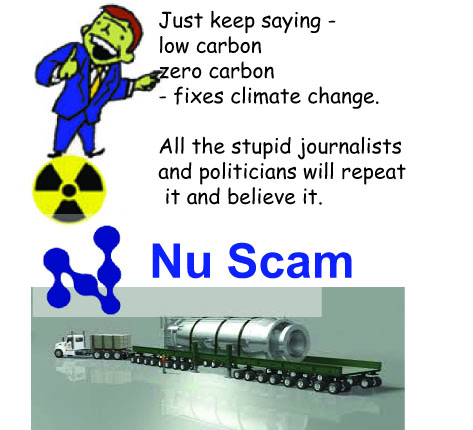
Lehi City Council backs out of NuScam ‘small’ nuclear reactor project
 Daily Herald 26 Aug 20,
The Lehi City Council voted unanimously Tuesday to withdraw the city from a multiagency nuclear power project that would provide nuclear power to cities across Utah, citing concerns over increasing costs.
The Carbon Free Power Project is an initiative by Oregon-based NuScale Power, the Utah Associated Municipal Power Systems and the United States Department of Energy to build a small modular reactor power plant at the Idaho National Laboratory………
Earlier this month, the Utah Taxpayer Association called on cities to withdraw from the project ahead of the Sept. 14 deadline after a closed-door virtual town hall meeting on July 21 where officials warned of project delays, increased costs to cities and towns involved, and “dependence on unpredictable federal subsidies.”
“The UAMPS project will lock in 27 municipalities in Utah and several in surrounding states for a share of billions of dollars in costs and unclear risk in the pursuit of a cluster of small modular reactors (SMRs) touted by Oregon-based NuScale Power, which repeatedly has delayed timelines and increased costs associated with its SMRs,” Utah Taxpayer Association Vice President Rusty Cannon said in an Aug. 4 news release. “The risky project with massive cost escalations is being conducted largely out of the public eye.”
In November 2017, the total cost of the project was estimated at $3.6 billion. By November 2019, that number had increased to $4.2 billion. By July, the estimated cost had gone up to $6.1 billion.
That would cost Lehi $466 million at the city’s current subscription levels, Eves said. UAMPS would be responsible for paying $4.8 billion, while the DOE would pay $1.3 billion and NuScale Power would pay $5 million. ………… https://www.heraldextra.com/news/local/govt-and-politics/lehi-city-council-votes-to-back-out-of-nuclear-power-project-contract/article_0af6e67c-24e5-5427-9029-e52b9f9d63ae.html
Nuclear and gas industries desperate to win EU endorsement AND FUNDING, as clean and green

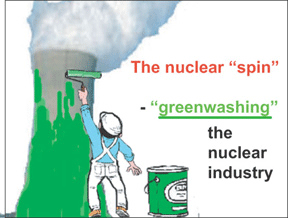
 Gas and nuclear industries fight to the end for ‘green’ EU investment label, Kate Abnett, Simon Jessop, BRUSSELS/LONDON (Reuters) 26 Aug 20 – The gas and nuclear industries have ramped up lobbying to secure last-ditch changes to European rules defining which investments are sustainable, fearing that exclusion from a new “green” list could deprive them of billions of dollars of funding. The climate section of the EU’s Sustainable Finance Taxonomy is due to be finalised this year and it could prove crucial as nuclear power and most natural gas plants and pipelines were excluded from a provisional list published in March. By forcing providers of financial products to disclose which investments meet climate criteria from the end of 2021, the new EU green finance rules are designed to channel cash towards projects that support the bloc’s climate goals. In the four months since the rules were published, gas and nuclear industry representatives held 52 meetings – in person or virtually – with EU officials, according to EU logs analysed by non-profit Reclaim Finance and shared exclusively with Reuters.
Overall, industry representatives have held a total of 310 meetings with EU policymakers since the start of 2018, according to the data based on transparency filings published by July 8. Nuclear groups in particular have stepped up their lobbying, Of the 36 meetings they’ve held over the past two-and-a-half years, 10 have taken place since March. Brussels is facing calls to use the rules to guarantee spending from its 750 billion euro ($888 billion) COVID-19 recovery fund goes to green projects. The money starts flowing in 2021, meaning any delay to the rules could thwart this plan.
NEED TO BREAK FREE’Climate campaigners urged the EU not to bow to pressure from the oil and gas industry as the stakes were too high. “If EU institutions and member states are serious about building a sustainable Europe that confronts the climate emergency, they need to break free from fossil-fuel lobbyists,” said Paul Schreiber, a campaigner at Reclaim Finance. One of the main gripes of both energy industries is that they were locked out of the group of finance experts that came up with the proposals released in March. A new EU sustainable finance platform will take over as the European Commission’s advisor on taxonomy next month – and both industries are jostling to be included on the panel. ……
Nuclear industry groups say the energy deserves a sustainable label, based on its low carbon emissions and existing secure waste disposal sites. They fear that if nuclear isn’t deemed sustainable, the cost of capital for power plants will rise – a concern for an industry where flagship projects, such as Britain’s Hinkley Point C reactor, are struggling with spiralling costs. To help get the message across, several nuclear lobby groups enlisted the help of the public, tweeting to encourage responses to an EU consultation in April on the proposed rules – and suggesting what to write. That helped generate 126 responses to the EU consultation from concerned citizens asking for nuclear power to be termed sustainable – nearly a third of all the responses received, according to InfluenceMap analysis. The expert finance group was split on how to brand nuclear power and the Commission has now asked its scientific arm to report on the issue next year. Lobby groups told Reuters they were confident nuclear power would ultimately be considered sustainable, but they want the energy section of the taxonomy delayed until the report is done…….. Reporting by Simon Jessop in London and Kate Abnett in Brussels; Editing by David Clarke https://www.reuters.com/article/us-europe-finance-lobbying-analysis/gas-and-nuclear-industries-fight-to-the-end-for-green-eu-investment-label-idUSKBN25L0GA |
|
Ohio Attorney General could seek injunction to stop nuclear plant surcharge
Ohio AG Yost considering lawsuit to halt nuclear plant surcharge, LIZ SKALKA. The Blade. lskalka@theblade.com–26 Aug 20, COLUMBUS — Ohio Attorney General Dave Yost on Wednesday said he’s prepared to seek an injunction that would stop the imposition of a ratepayer surcharge flowing to two northern Ohio nuclear power plants at the center of the $61-million statehouse corruption scandal.Mr. Yost, a Republican, indicated he’s considering moving ahead with a lawsuit as the Ohio Senate prepares to return to Columbus next week to discuss repealing or replacing the energy law, House Bill 6, at the heart of the scandal.
Pressuring lawmakers to act quickly on what will be a complex process, Mr. Yost said he could file a lawsuit as soon as September if the legislature doesn’t move swiftly to repeal the law. He declined to set a deadline or elaborate on what might trigger him to file, except to say he supports a repeal……..
 Lawmakers have debated how to handle the controversial law since former House Speaker Larry Householder (R., Glenford) and four others were charged in July with conspiring to funnel $61 million from FirstEnergy and related interests to help elect Mr. Householder’s allies who would then elevate him to speaker. The political power he gained was used to pass the energy law.
Its key feature is a new surcharge to FirstEnergy Solutions’ customers monthly bills beginning in 2021 to generate $150 million a year to support the struggling nuclear plants and $20 million a year for solar projects.
House Republicans and Democrats have introduced separate repeal bills that would block the new subsidies while restoring mandates that utilities obtain more of their power from renewable sources.
A bipartisan measure doing the same thing has been introduced in the Senate.
Mr. Yost said a lawsuit would stop a billion-dollar revenue stream from flowing to the nuclear plants while lawmakers deal with the fallout from the corruption scandal. ……
The Coalition to Restore Public Trust, a pro-repeal group, applauded Mr. Yost.
“The potential injunction sought by AG Yost should serve as further notice to Ohio’s legislature that they must move expeditiously to remove this tainted legislation from Ohio law,” executive director Michael Hartley said in a statement. https://www.toledoblade.com/business/energy/2020/08/26/ohio-ag-yost-considering-lawsuit-to-halt-nuclear-plant-charge/stories/20200826129
Local opposition to Holtec’s temporary storage for nuclear waste in New Mexico
 Public comments are due by Sept. 22, and can be made at the online meetings; by email to Holtec-CISFEIS@nrc.gov; at the federal rule-making website (www.regulations.gov, Docket ID NRC-2018-0052); or by mail (Office of Administration, Mail Stop: TWFN-7-A60M, ATTN: Program Management, Announcements and Editing Staff, U.S. NRC, Washington, DC 20555-0001).
Licensing of temporary storage for nuclear waste in New Mexico inching forward
Nuclear regulator poised to OK move of spent fuel from reactors like San Onofre to temporary storage in New Mexico, but locals are opposed, By TERI SFORZA | tsforza@scng.com | Orange County Registerl August 26, 2020
The quickest way to get nuclear waste off Southern California’s quake-prone coast? Temporary storage sites in sparsely populated corners of the nation, experts say.
After years of processing, the Nuclear Regulatory Commission’s preliminary recommendation is that Holtec International be granted a license to build and operate such an interim storage site in New Mexico — which would first accept “stranded waste” from shuttered plants like the San Onofre Nuclear Generating Station.
“Hopeful,” said David Victor, an international law professor at UC San Diego and chair of San Onofre’s volunteer Community Engagement Panel. “But the regulatory process and the political process for the New Mexico site are moving in opposite directions.”
The NRC is hosting online meetings to present the project’s draft environmental impact report and gather public comment. The next virtual meetings are slated for 3 p.m. Wednesday, Aug. 26, and 8 a.m. Tuesday, Sept. 2. Public comments must be submitted to the NRC by Sept. 22.
Holtec hopes to build the first of a 20-phase project that eventually would cover 330 acres. It would be located in southeast New Mexico, about halfway between the cities of Carlsbad and Hobbs, and would look quite familiar to Southern Californians: Waste, potentially from all over the nation, would be stored in a Holtec HI-STORM UMAX in-ground system like the one at San Onofre.
But anyone familiar with the saga of Yucca Mountain — as well as the controversy surrounding waste storage here at San Onofre — won’t be surprised to find that the underlying issues are universal: Many locals adamantly oppose storing nuclear waste in their backyards.
Though the license period for Holtec’s New Mexico proposal would be 40 years, people fear nuclear waste would remain there forever
“Establishing an interim storage facility in this region would be economic malpractice,” wrote New Mexico’s governor, Michelle Lujan Grisham, in a letter asking President Donald Trump to oppose Holtec’s project. “Accidents are possible and unacceptably detrimental to the safety of New Mexicans, our economy and our state.”
The governor argued that the site is geologically unsuitable, would place a financial burden on the state and local communities and poses a danger as spent nuclear fuel is shipped into New Mexico from around the nation.
Many New Mexicans, however, say that’s not enough. Speaking “under protest” at virtual meetings they believe may be unlawful, critics said the NRC must present its findings in state and in person. Since in-person gatherings can’t happen during the pandemic, deadlines should be postponed until after the pandemic is over, they argued.
Speakers also attacked Holtec’s crediblilty. The company is currently embroiled in conflict in New Jersey, where it sued the New Jersey Economic Development Authority in March for holding up a $26 million payment that was part of a tax incentive program to build a facility in Camden.
The authority asserts that Holtec failed to mention that it had run into hot water with the Tennessee Valley Authority on its tax credit application in 2014.
The Southern California News Group reported that the U.S. Attorney’s Office looked into bribery allegations and asserted that a subcontractor manufacturing Holtec’s casks — U.S. Tool & Die — wrote checks totaling $54,212 to the account of a TVA manager. That money, the U.S. Attorney’s Office said, originated with Holtec.
The TVA manager pleaded guilty to falsifying financial statements by not disclosing those payments. Holtec said it wasn’t privy to any of this, and was not charged. But in 2010, the company paid a $2 million “administrative fee” to the TVA and became the first contractor in TVA history to be debarred. Its contract was suspended for 60 days, and it submitted to a yearlong monitoring program of its operations, according to the TVA’s inspector general.
Holtec continued supplying waste storage casks to the TVA, as well as to other nuclear plants in America and overseas.
At San Onofre, Holtec has had other bumps, including a surprise redesign of the canisters that hold nuclear waste and a snippy war of words with members of the San Onofre Community Engagement Panel. Errors loading spent fuel into the UMAX stopped operations for nearly a year, but were laid at the feet of operator Southern California Edison.……..
Public comments are due by Sept. 22, and can be made at the online meetings; by email to Holtec-CISFEIS@nrc.gov; at the federal rule-making website (www.regulations.gov, Docket ID NRC-2018-0052); or by mail (Office of Administration, Mail Stop: TWFN-7-A60M, ATTN: Program Management, Announcements and Editing Staff, U.S. NRC, Washington, DC 20555-0001). https://www.ocregister.com/2020/08/25/licensing-of-temporary-storage-for-nuclear-waste-in-new-mexico-inching-forward/
24 million have now been infected with coronavirus, but WHO says pandemic is slowing
 WHO says pandemic is slowing – but 24 million have now been infected https://inqld.com.au/news/2020/08/26/who-says-pandemic-is-slowing-but-24-million-have-been-infected/The COVID-19 pandemic is still expanding, but the rise in cases and deaths has slowed globally, except for southeast Asia and the eastern Mediterranean regions the World Health Organisation (WHO) says. In its latest epidemiological update, issued on Monday night, it said that the Americas remains the hardest-hit region, accounting for half of newly reported cases and 62 per cent of the 39,240 deaths worldwide in the past week. More than 23.65 million people have been reported to be infected by the coronavirus globally and 811,895 have died, according to a Reuters tally on Tuesday. Over 1.7 million new COVID-19 cases and 39,000 new deaths were reported to WHO for the week ending 23 August, a 4 per cent decrease in the number of cases and a 12 per cent decrease in the number of deaths compared to the previous week, the WHO said. Over 1.7 million new COVID-19 cases and 39,000 new deaths were reported to WHO for the week ending 23 August, a 4 per cent decrease in the number of cases and a 12 per cent decrease in the number of deaths compared to the previous week, the WHO said. In WHO’s eastern Mediterranean region, the number of reported cases rose by 4 per cent, but the number of reported deaths has consistently dropped over the last six weeks, the WHO said. Lebanon, Tunisia and Jordan reported the highest increase in cases compared to the previous week. The number of cases and deaths reported across Africa decreased by 8 per cent and 11 per cent respectively in the past week, “primarily due to a decrease in cases reported in Algeria, Kenya, Ghana, Senegal and South Africa”, it said. “In the European region, the number of cases reported has consistently increased over the last three weeks,” it said. “However, only a slight decrease (1 per cent) was reported in the most recent week, and the number of deaths have continued to decrease across the region.” In WHO’s western Pacific region, the number of new cases dropped by 5 per cent, driven by less spread in Japan, Australia, Singapore, China and Vietnam. South Korea reported an 180 per cent jump in cases, “mainly due to an increase in cases associated with religious gatherings”. |
|
Two U.S.cities cut their losses, pullout of dodgy NuScam “small” nuclear reactor project
|
Lehi, Logan Back Out Of First-Of-Its-Kind Nuclear Power Plant Project Citing Financial Risk InKuer, By KATE GROETZINGER • 27 Aug 20, Two Utah cities have pulled out of a nuclear power plant investment — saying the financial risks are just too high. But 28 other towns and service districts in the state are still involved in the project, which is organized by a utility cooperative called Utah Associated Municipal Power Systems, or UAMPS. The Carbon Free Power Project involves a first-of-its-kind technology called “small modular nuclear reactors”, which would produce around 720 megawatts of nuclear energy. UAMPS and the U.S. Department of Energy have invested $3 million in the project since it began in 2017. But the reactors are still in development, and it’s unclear how much the project — and the power — will ultimately cost. That’s one reason the city of Logan cited in its decision to leave the project ahead of a Sept. 30 deadline to invest in its next phase, which is expected to cost $130 million. Logan was planning to use seven megawatts of power from the plant and has put around $250,000 into the project based on that amount so far. The city would have had to put in another $654,000 over the next three years to remain invested in the project. The cost could continue to grow, according to Mark Montgomery, director of light and power for Logan. He told the city council that Logan could end up having to pay millions into the project during the second phase of its licensing period, from 2023 to 2025……. Montgomery also cited concerns that it’s still up in the air whether the Department of Energy will invest in the project. The department pledged to fully fund the first reactor in 2018, but it went back on that deal. Now, it plans to invest $1.4 billion in the project — about a quarter of its total $6 billion price tag. That agreement is not yet final and the appropriation would need to be approved by Congress. The city of Lehi also voted to leave the project during a city council meeting this week. So far, Lehi has invested $455,000 in the project for a 21 megawatt subscription. Power Director Joel Eves said the project has struggled to find new investors, while its budget almost doubled to $6 billion from $3.4 billion since 2017. “A big piece of this is project subscription, and that does make us nervous,” Eves said. “It seems like we’re going at this alone as UAMPS members.” ……. https://www.kuer.org/post/lehi-logan-back-out-first-its-kind-nuclear-power-plant-project-citing-financial-risk#stream/0 |
|
Australia entangled in America’s military-industrial-intelligence-security complex
|
In 1961 President Eisenhower warned that a vast and permanent ‘military-industrial complex’ could produce ‘the disastrous rise of misplaced power’. Earlier, US Senators Robert La Follette and J. William Fulbright also foresaw the dangers of militarisation. Now we have a military/industrial/security/intelligence complex, and it is dangerous. Let’s start with ‘security’, which sounds harmless and desirable. Who welcomes insecurity? Our ‘safety and security’, various authorities assure us (never explaining the difference) are their prime concern, particularly after some egregious security failure on their part. Security abroad used to mean the First World remaining in control of opportunities, in its own interests. Security now additionally means controlling people euphemistically called ‘those who would do us harm’. Since 2001, national security has become an exponential, unassailable, growth area. Proliferating Australian laws criminalise knowing, revealing, or even asking anything about it. Despite some academics arguing that it includes food, health, social, economic, and environmental security, ‘hard-headed’ national security is the dominant growth area in universities and government. From there to intelligence. We lavishly fund the ‘community’ of ten security agencies which demand ever more power and resources. Several heads of ASIO, ASIS, ASD, and DFAT have followed each other in revolving door fashion. Some emerge occasionally to warn us of the new, dire, and continuing dangers we face. They can’t give details, of course, before WikiLeaks or the American media do, or until a tip-off to a Five Eyes partner inspires an ‘open source’ report. But they assure us of their best efforts – with a lot more staff – to keep us safe and secure. Their colleague from the American community, Mike Green, former Asia Director of the National Security Agency (the equivalent of ASIO), used to joke that the NSA’s job was to keep people frightened ‘so they’ll go on funding us’. From the community came the intelligence that government misused, or didn’t use, before the Bali bombing and the Lindt Café siege in Sydney. They provided intelligence that government used, or misused, to justify Australian forces’ illegal invasions of Iraq and Syria, to benefit Woodside Petroleum and disadvantage East Timor. Government is currently making an example of David McBride, a military lawyer who said what he saw Australian troops doing in Afghanistan, of Witness K, a former ASIS officer who said what he did in Dili, and of his former solicitor Bernard Collaery, who’s not allowed to say much, but who was raided in 2013 under anti-terrorism laws. The Attorney-General wants charges and court proceedings against them in the ACT to be secret, as in the Kafkaesque case of another, Witness J. The same applies in Britain, a common-law country, where a judge is likely in September to allow the extradition of Julian Assange to the US, whose CIA paid to have him spied on. Rule of law? The Australian government and opposition say nothing. To industry then. Canberra airport has become a hall of mirrors for American, British, and French arms producers. So has the Kerry Stokes-chaired Australian War Memorial, whose expansion is to cost $500 million. Less than a decade after the ‘Australia in the Asian Century’ report, Asian languages and the arts languish, and the National Library closes its Asian collection. Defence expenditure is exempt from the efficiency dividend, and much cannot be accounted for. Yet a government that criticised its predecessors for running up ‘debt and deficit’ tries to please the Americans by exceeding 2 percent of GDP, even for aircraft that are not delivered and are denied the technologies the US allows Israel, and for submarines that will lack crew and be obsolete and over budget before they hit the water. Diversification of suppliers is commendable, and local manufacture too, but value for money? Japan would have undercut the French price and delivery date for the submarines, and might not have dangled the option of nuclear power. By 1967 the US was ‘the greatest purveyor of violence in the world today’, said Martin Luther King. Now the war industry (let’s call it by its name) has proliferated in Australia, as in the US and UK. Its promises of local employment ̶ often more jobs than are delivered ̶ attract votes, particularly in South Australia. The merchants of death are to be joined by Australia as the tenth largest arms exporter. And we won’t ban nuclear weapons. So why bother searching for a vaccine to stop millions dying in the pandemic? Fourth, military. In most democracies, elected civilians debate where the armed forces should go, what they should do, what they need to do it, and when they should return. Some constitutions even require reports on progress, and independent inquiries afterwards. That worked before the undeclared, endless war. Now potential conflicts are planned years in advance, the security state identifies the priorities, the war industry gears up, and inter-operable allied forces that are not already embedded get their American orders on a given date. So the Australian military tail in effect wags the government dog. Moreover, inviting US military bases to proliferate in northern Australia, and expanding our war-games, not only makes Australia a bigger target but inevitably America’s endless wars become Australia’s. The putative enemies China, Russia, and Iran need not be Australia’s enemies. The risk grows of Australia being used as an example by China of what it could do to the US, to its real enemy. If Australia is not to be dragged into war against China or Iran by the US, our Ministers while in quarantine might reflect on the invertebrate performance they gave at the AUSMin talks in July. Bipartisan Sinophobia was recently demonstrated against NSW parliamentarian Shaoquett Moselmane. Australian security would benefit if the opposition didn’t try to outdo the government’s ‘Communist China’ McCarthyism. Trump aimed to drain the Washington swamp by filling top White House positions with ex-military people. Most have departed, but this proto-fascist tendency continues in Australia where the governor-general, governors, politicians, and even academics with military backgrounds are conspicuous. Of these former fighters, only a few have the courage, as retired General Peter Leahy did in 2016, to deplore Australia’s lack of independent military strategy and the way we go to war. If the ADF is called out to enforce the law in Australia, fascism will be next. Dr Alison Broinowski AM is a former diplomat, academic, and author, and is Vice-President of Australians for War Powers Reform. |
|

Major holes in ozone hole treaty must be addressed to avert stronger climate change
 Experts reveal major holes in international ozone treaty https://www.eurekalert.org/pub_releases/2020-08/uos-erm082520.php – 26-AUG-2020
Major holes in ozone hole treaty must be addressed to avert stronger climate change and serious risks to human health, experts warn
A new paper, co-authored by a University of Sussex scientist, has revealed major holes in an international treaty designed to help repair the ozone layer, putting human health at risk and increasing the speed of climate change.
Evidence amassed by scientists in the 1970s and 1980s showed that the depletion of the ozone layer in the stratosphere was one of the first truly global threats to humanity.
Chemicals produced through economic activity were slowly drifting to the upper atmosphere where they were destroying the ozone layer, which plays an indispensable role in protecting humanity and ecosystems by absorbing harmful ultraviolet radiation from the sun.
In 1987, countries signed up to a treaty to take reparative action, known as the ‘Montreal Protocol on Substances that Deplete the Ozone Layer, which was eventually ratified by all 197 UN member states.’
But in a paper published today in Nature Communications, experts have flagged major gaps in the treaty which must be addressed if the ozone layer is to be repaired and avert the risks posed to human health and the climate.
Professor Joseph Alcamo, Director of the Sussex Sustainability Research Programme and former Chief Scientist at UNEP, said: “The Montreal Protocol and its amendments have no doubt been an effective worldwide effort to control the toughest substances depleting the ozone. But our paper shows that the treaty has developed too many gaps to fully repair the ozone layer. It’s time to plug the holes in the ozone hole treaty.”
Professor Alcamo, along with lead author Professor Susan Solomon of Massachusetts Institute of Technology (MIT) and co-author Professor A. R. Ravishankara of Colorado State University, have identified several ‘gaps’ which consist of ozone depleting substances not covered in the treaty.
These include:
- Unaccounted for new sources of CFC and HFC emissions recently detected in the atmosphere.
- Leakages of ozone depleting substances from old air conditioners, refrigerators and insulating foams.
- Inadvertent releases of ozone-depleting gases from some manufacturing processes.
- Emissions of the ozone-depleting gas, nitrous oxide, stemming mostly from agricultural activities.
The authors have called for a range of solutions to plug the gaps including:
- A toughening of compliance with the treaty by using provisions that are already part of the Montreal Protocol.
- Boosting the effectiveness of the treaty by adding in regular environmental monitoring of ozone-depleting substances.
- Controlling the emissions of substances that have slipped through the treaty up to now, including nitrous oxide emissions from agriculture, and ozone-depleting substances leaking from old refrigerators and other equipment.
- In addition, because ozone-depleting substances and their substitutes contribute significantly to global warming, the authors urge a faster phasing out of all of these substances as a way of combatting climate change.
The ozone layer absorbs harmful ultraviolet radiation from the sun but this protective layer is slowly destroyed by industrial gases that slowly drift up from the earth’s surface including CFCs (chlorofluorocarbons) contained in refrigerants, foaming agents and, earlier, propellants in aerosol sprays.
Discovery of the ‘ozone hole’ above high latitudes in the 1980s provided final evidence of the importance of ozone depletion.
By 1985, countries had signed the Vienna Convention, which pledged to reduce CFCs and other ozone-depleting substances. Two years later, they signed the Montreal Protocol that laid out a plan of action.
During his time as the first Chief Scientist of UNEP, which hosts the Secretariat of the Montreal Protocol, Professor Alcamo coordinated groups of scientists in producing policy-oriented reports that addressed emerging ozone depletion issues.
UNEP reports that 98% of the chemicals targeted for removal in the Montreal Protocol had been phased out by 2009, avoiding hundreds of millions of cases of skin cancer and tens of millions of cases of cataracts. However, this new paper shows that some important sources were not targeted by the Protocol – and urgently need to be now.
Professor Alcamo said: “Since most ozone-depleting gases and their current substitutes are also potent greenhouse gases, it’s time to use the Montreal Protocol to draw down these gases even faster to help avoid dangerous global warming.
“We won’t be able to reach the global Sustainable Development Goals by 2030 without closing the gaps in the ozone treaty. It’s hard to imagine, for example, how the global health and climate goals could be reached without drastically drawing down all ozone-depleting gases and their substitutes. If we fail, humanity will have to face a higher risk of skin cancers and more rapid climate change.”
Strong opposition in Hokkaido to taking on nuclear waste
Hokkaido town becomes flashpoint in Japan’s nuclear waste debate, Mayor and governor clash over ethics and risks of potential disposal site, Nikkei Asian Review, TORU TAKAHASHI, Nikkei staff writer, August 27, 2020
TOKYO — An idyllic town on the northern Japanese island of Hokkaido is embroiled in a hot debate over nuclear waste, as its mayor weighs building a disposal facility there over the opposition of the governor as well as surrounding towns………
Hokkaido Gov. Naomichi Suzuki has swiftly mobilized opponents. “Hokkaido has no intention of taking on nuclear waste,” he said on Aug. 13, shortly after Kataoka’s announcement. “The national government is basically shoving wads of cash in our face,” he also said on Aug. 18, criticizing the cash offer. ……..
several local industry groups oppose the idea. Fishermen in particular worry that a local nuclear facility could tarnish the reputation of their catch.
Nearby towns and villages also feel they could face all of the risks of the nuclear waste disposal site without any payout from the national government…… https://asia.nikkei.com/Politics/Hokkaido-town-becomes-flashpoint-in-Japan-s-nuclear-waste-debate
1 This Month


Tell Congress: Prevent Nuclear Catastrophe in Iran

Tell Congress: Prevent Nuclear Catastrophe in Iran

Read the Public Inquiry Report, the Commissioners’ report, Surrendering Australia: The AUKUS Deception is available to download for free at aukuspublicinquiry.com. Or just watch the replay of the National Press Club Luncheon.
To see nuclear-related stories in greater depth and intensity – go to https://nuclearinformation.wordpress.com
Say No to NASA’s Reckless Nuclear Reactor on the Moon
-
Archives
- November 2026 (281)
- October 2026 (302)
- September 2026 (339)
- August 2026 (330)
- July 2026 (355)
- June 2026 (287)
- May 2026 (306)
- April 2026 (356)
- March 2026 (251)
- February 2026 (267)
- January 2026 (308)
- December 2025 (358)
-
Categories
- 1
- 1 NUCLEAR ISSUES
- business and costs
- climate change
- culture and arts
- ENERGY
- environment
- health
- history
- indigenous issues
- Legal
- marketing of nuclear
- media
- opposition to nuclear
- PERSONAL STORIES
- politics
- politics international
- Religion and ethics
- safety
- secrets,lies and civil liberties
- spinbuster
- technology
- Uranium
- wastes
- weapons and war
- Women
- 2 WORLD
- ACTION
- AFRICA
- Atrocities
- AUSTRALIA
- Christina's notes
- Christina's themes
- culture and arts
- Events
- Fuk 2022
- Fuk 2023
- Fukushima 2017
- Fukushima 2018
- fukushima 2019
- Fukushima 2020
- Fukushima 2021
- general
- global warming
- Humour (God we need it)
- Nuclear
- RARE EARTHS
- Reference
- resources – print
- Resources -audiovicual
- Weekly Newsletter
- World
- World Nuclear
- YouTube
-
RSS
Entries RSS
Comments RSS

