Ohio nuclear corruption: Democrats want lawmakers to take action on House Bill 6
Some lawmakers demand action on nuclear bailout bill amid corruption scandal, The Highland County Press, By Todd DeFeo, The Center Square, 30 Aug 20, https://www.thecentersquare.com/
Democrats want lawmakers to take action on House Bill 6, a ratepayer-funded bailout of nuclear power plants in Ohio, when the state House convenes next week, but one Republican says any replacement must prioritize nuclear energy.
“When corruption is revealed, it is important we as lawmakers act quickly to fix what has been broken,” Reps. Michael J. Skindell, D-Lakewood, and Michael J. O’Brien, D-Warren, said in a letter to members of the House of Representatives. Last month, the lawmakers introduced legislation, House Bill 738, to repeal the bill, but it has not yet been assigned to a committee.
“Our constituents are telling us that this issue requires our immediate attention and action, and every day that passes further erodes the public’s trust in this institution and in each of us,” they added.
The lawmakers want to use a discharge petition, “a seldom-used parliamentary maneuver.” According to House rules, “a bill can be discharged from a committee with the signatures of a majority of members (50) once the bill has sat in committee for 30 days,” they wrote.
HB6 created a new Ohio Clean Air Program to support nuclear energy plants and some solar power facilities. Electricity consumers fund the program, potentially bringing in up to $85 million in the 2021 fiscal year, with a surcharge that runs through 2027.
Lawmakers pushed the measure after Akron-based FirstEnergy Solutions said it planned to close Davis-Besse Nuclear Power Station in Oak Harbor near Toledo and Perry Nuclear Power Plant in Perry. FirstEnergy Solutions filed for bankruptcy in March 2018 and emerged earlier this year as Energy Harbor.
Several high-profile Republicans, including Gov. Mike DeWine, have called for the repeal of the legislation. Senate President Larry Obhof, R-Medina, told The Columbus Dispatch the state Senate would take up a repeal of HB6 when it meets in September.
Climate science deniers jump on to Far Right with QAnon conspiracy group
In May, a second Q-Drop riffed on climate change, with a link to a snarky tweet about science and the Swedish teen climate activist Greta Thunberg by a would-be House Republican who’d lost her primary race in March.
Both of those Q-Drops were picked up by a report commissioned by a coalition of environmental groups and conducted by the research firm Graphika, which found that a group of vocal climate science deniers began using QAnon hashtags in May — and they haven’t stopped since.
“The QAnon movement hasn’t traditionally covered climate change, but in May, when an influential QAnon account tweeted about climate denial, there was a notable and sustained increase of QAnon content shared within the climate denial group,” Michael Khoo, an advisor on disinformation for the environmental group Friends of the Earth, and Melissa Ryan, CEO of CARD Strategies and author of the Ctrl Alt-Right Delete weekly newsletters, wrote in an article published today on Medium.
Asked and Answered
The questions that Q advanced on climate change have been asked and answered — as essentially all of the burning questions on climate science still churning around in climate denial circles have been.
And today, as the impacts of a warming climate are accelerating, it is very clear that we collectively have little time to spare waiting until those who haven’t been keeping up with, or who refuse to acknowledge, the scientific consensus are convinced. The longer the world waits to slash greenhouse gas pollution, the less chance we collectively have to calm the worst impacts of a warming world, according to the world’s top climate experts, and if we don’t, climate change could make all of the calamities we’ve faced in 2020 soon pale in comparison.
Q, however, raised different concerns about climate action.
“Who audits where the money goes?” the December Q-Drop asked, linking to an article about the Green Climate Fund, which provides funding to help developing countries reduce their greenhouse gas emissions to help them meet their Paris Agreement goals.
Nevermind that if you want the audits of the Green Climate Fund alluded to in the Q-Drop, the answer is extraordinarily unmysterious and unglamorous: the audited financial statements are posted online and they’re done by accountants. Nevermind also that the Paris Agreement itself was never fundamentally about the movement of money, but instead involves countries promising to regulate pollution inside their borders — something we’re still continuing to fail to do, both in the United States and worldwide.
And nevermind that the U.S., whose politicians the Q-Drop implies are pocketing money somehow along the way, has nearly walked away from both the Paris Agreement and the Green Climate Fund. That’s despite the glaring fact that the U.S. has been the world’s worst climate polluter since 1750, meaning that this country has played the single largest role in causing the very problem that the global climate pact attempts to (somewhat) address.
To turn Q’s question around, one very basic question Q has never answered is who exactly they are — and to what extent, if any, they’ve sought to monetize the power and influence they’ve been busy amassing. “At this point, who’s behind it is speculation more than anything,” Ryan told DeSmog.
Another key part of the problem — as ever — is that climate science deniers publicly talk a lot more than others. Whereas in years past, mainstream media was faulted for giving climate science deniers a misleading amount of airtime, today, they’re using social media to achieve the same ends. Graphika’s research found that for every social media post by the vocal climate scientists and environmentalists they studied, the vocal climate science deniers they studied posted four times.
“On average, they observed that the Climate Denial group was about four times ‘louder’ (number of tweets relative to the group size) than the Climate Science group,” Khoo and Ryan, both advisors to a coalition of environmental groups that commissioned Graphika’s research, wrote.
Clutching at Q’s Coattails
Not only is QAnon taking up climate denial, but prominent climate deniers have been taking up QAnon.
“The other thing we see is that the right needs QAnon more and more to amplify their messaging,” said Ryan.
Take, for example, Naomi Seibt, a young German YouTuber who has questioned climate science and who has worked with the Heartland Institute, a U.S. think tank and notorious promoter of climate science denial………….
As in Germany, white supremacists in the U.S. have increasingly engaged in racially motivated “mass shooter” armed attacks on unarmed people. And QAnon followers have also begun committing violent acts. “I think it’s also important to remember that the FBI has declared QAnon a domestic terrorism threat,” said Ryan, “and QAnon has inspired kidnappings, it has inspired at least one murder, it has inspired arson, there is a real danger from these folks who are drawn to this and become just embroiled in it.”…………
Social Media Fail
Khoo and Ryan pointed to the ways that social media companies for years failed to conduct the most basic scrutiny of information that they publish online and allowed all sorts of demonstrably false information to be repeated in an endless rumor mill online.
“Facebook has policies that let Trump lie uninterrupted,” they wrote. “And when climate deniers get a simple fact-check on Facebook, members of Congress themselves have sent letters to company executives to complain.”
All of this can, of course, have significant policy consequences in the real world.
“The danger for environmental advocates and for the planet is that QAnon could be the energy that stops a big push for any meaningful climate action,” Khoo told DeSmog. “If a Green New Deal is the next thing, we could see QAnon followers serving as the foot soldiers in that war.”
There’s also the risk that fossil fuel companies and trade organizations might jump on the QAnon bandwagon, inspired by the conspiracy theory’s popularity. Last week, President Trump praised the movement, claiming not to know much about it except that “they like me very much.”
“If QAnon becomes more mainstream,” Ryan said, “I could see a scenario where industry groups that are invested in climate denial and fossil fuels and such will be incentivized to embrace QAnon or rely on those tactics and networks.”
The other risk is that conspiracy theorizing, when mixed with social media, can not only bring in adherents, it can also raise money.
“The new addition to this history of climate capitalism is the capitalism behind the clicks, the monetizing of disinformation that happens on all the platforms,” Khoo and Ryan wrote. “Virality is central to the profit model, as are ads. Whether or not they’re true is secondary, from a business perspective.”
And the reality is that QAnon has been growing, with NBC News reporting earlier this month that Facebook discovered QAnon accounts and pages have attracted over 3 million member and follower accounts.
Last week, Facebook removed nearly 800 QAnon groups and took some steps to restrict QAnon hashtags and other social media. That follows moves by Twitter to take down roughly 7,000 Twitter accounts and designating QAnon as “coordinated harmful activity.”
Some see that as far too little, far too late. “They’ve had three years of almost unfettered access outside of certain platforms to develop and expand,” Brian Friedberg, a senior researcher at the Harvard Shorenstein Center’s Technology and Social Change Project, told MIT Technology Review in July.
As of press time, Facebook and Heartland have not responded to questions from DeSmog. https://www.desmogblog.com/2020/08/27/qanon-conspiracy-naomi-seibt-climate-science-deniers?utm_source=DeSmog%20Weekly%20Newsletter
Canadian Public asked for views on transport of used nuclear fuel
 Public asked for views on transport of used nuclear fuel Owen Sound The Sun Times Scott Dunn 27 Aug 20 The Nuclear Waste Management Organization wants public input on its planning framework concerning shipping about 5.5 million used nuclear fuel bundles by road and possibly rail, to a permanent storage site, possibly in Bruce County.Spent nuclear fuel rods are currently stored above ground at nuclear sites and the aim is to create a long-term storage solution.
The NWMO’s draft transportation planning framework, based partly on public consultations since 2016, is the subject of a detailed online survey. The survey contains background and facts about the plan and about the management and transportation of used nuclear fuel.
There are five sections to comment on: The basic requirements of used nuclear fuel transportation planning, the plan’s objectives and principles, environmental protection, who needs to be involved in decision-making, and how should the modes and routes be decided. The survey can be found at https://ca.surveygizmo.com/s3/50081627/NWMOworkbookSMEN…....South Bruce, the local municipality near the Bruce Power nuclear station on Lake Huron, is one of two locations which remain potential sites for a $23-billion permanent storage facility buried deep underground.
So far, South Bruce has not declared itself a willing host, or even how that conclusion would be arrived at, though an opposition group has called for a community vote and the mayor has suggested that might be the solution.
The other remaining potential site is Ignace area, northwest of Lake Superior.
Approval of the local First Nations people is also required and earlier this year they turned down a separate plan to bury low- and mid-level nuclear waste in a dedicated underground vault at the Bruce nuclear site.
NWMO says it expects to select its preferred location for the used nuclear fuel vault in 2023. Operation of the deep geological repository and transportation of used nuclear fuel is planned to start in the 2040s. Transport of the bundles will take about 40 years.
The used nuclear fuel will be transported by roads and possibly rail, depending on the location of the repository.
“If an all-road approach were taken, this might involve about 620 truck shipments each year, approximately one-to-two shipments per day. If an all-rail approach were taken, this might involve about 60 train shipments each year, approximately one shipment every six days,” says the organization’s Moving Forward Together document, found on the NWMO website……….. https://www.owensoundsuntimes.com/news/local-news/public-asked-for-views-on-transport-of-used-nuclear-fuel
Cracks in UK’s Hunterston and other very old nuclear reactors
 Radio Scotland (From 1:41:33) 29th Aug 2020, Rob Edwards speaking about Hunterston. The lifetime of Hunterston has been extended 3 times. The problem is these very old reactors have developed all
these cracks.
Reactor 3 has an estimated 377 cracks. Reactor 4 has 209.
Those are only estimates based on looking at a part of the core. They have
underestimated the number of cracks that would appear in the past. If you
have too many cracks you get bits of debris breaking off so the graphite
core of these reactors start to crumble and that in some scenarios could
cause the core to overheat.
They are balancing how much money they can make
out of the plants against a leak. Climate change has been used by the
industry to try to make themselves look better. Hunterston has been closed
for most of the last two years.
The closure of Hunterston B will not cause power network outages
|
Insider Media 28th Aug 2020, The closure of Hunterston B will not cause power network outages,
Scotland’s energy minister Paul Wheelhouse has insisted. The nuclear power station is to close by January 2022, according to operator EDF Energy, almost two years earlier than expected. Last year, Scottish Gas owner
Centrica blamed interruption of electricity supply from Hunterston for loss of income. Wheelhouse reiterated the Scottish Government’s position that no new nuclear power stations should be built in Scotland, with energy generated by renewable sources instead. He said that for a two-month period
in 2018, Hunterston B was entirely offline and the Torness nuclear power station in East Lothian was operating at reduced capacity, but it caused no issues for the energy supply. Wheelhouse told the BBC: “Scotland, in the last year for which we got full statistics, exported a net 15.9 terawatt hours of energy – which dwarfs the output of Hunterston.” https://www.insider.co.uk/news/energy-minister-hunterston-closure-not-22593000 |
|
Minigrids – the clean energy revolution across Africa and Asia

The little-known clean energy revolution https://energy.economictimes.indiatimes.com/news/renewable/the-little-known-clean-energy-revolution/77742430
There are about 5,500 mini-grids in operation across 12 countries in Africa and Asia, according to The State of the Global Mini-grids Market Report 2020 published by the international non-governmental organization Sustainable Energy for All and BloombergNEF, Bloomberg, August 26, 2020,
Over the last decade, the number of people in the world without access to electricity has fallen drastically — from 1.4 billion in 2010 to about 900 million in 2018, according to the United Nations. And yet, if current trends persist, the world won’t be able to meet the UN’s sustainable development goal of universal access to electricity by 2030, with as many as 600 million still lacking basic 21st century services.
It doesn’t have to be so. A new technology has matured and become affordable that could help achieve the laudable goal, and it’s called mini-grids.
As the name suggests, mini-grids are small, isolated versions of larger power grids. They increasingly use solar power as an energy source, with support from batteries or diesel generators. Because the cost of solar power has fallen drastically , mini-grids have become much cheaper than installing long-distance transmission lines from a central electricity grid.
There are about 5,500 mini-grids in operation across 12 countries in Africa and Asia, according to The State of the Global Mini-grids Market Report 2020, published by the international non-governmental organization Sustainable Energy for All and BloombergNEF earlier this year. The report’s authors found that mini-grids could meet the needs of half the people who still need access to electricity in those regions.
As the name suggests, mini-grids are small, isolated versions of larger power grids. They increasingly use solar power as an energy source, with support from batteries or diesel generators. Because the cost of solar power has fallen drastically , mini-grids have become much cheaper than installing long-distance transmission lines from a central electricity grid.
Universal power access will require $128 billion of spending, the report found, but the world is on track to spend only about $63 billion on mini-grids over the next decade. Plugging the gap would cost less than $600 per target household reached.
The need goes beyond money. “Today the mini-grid market is nascent, despite being the least-cost option for electricity access in many areas,” the report concludes. The international Mini-Grids Partnership, which includes the World Bank and other development agencies from rich countries, has approved $2 billion in awards since 2012 but only disbursed 13% of the money, with many projects stuck because of policy uncertainties.
Africa’s most populous country struggles to provide electricity to its 200 million people. Only 55% of the country has access to electricity, and even there, people suffer from power cuts lasting between four and 15 hours every day. As a result, the country spends more than $16 billion annually to power diesel generators.
In 2017, the country passed a law to help mini-grid development, which streamlines the online application process, offers $350 in government subsidies per user once grids with more than 30 users are up and running, and provides for compensation if the main power grid eventually arrives in an area served by a mini-grid. Developers in Nigeria now have simpler processes and clearer guidelines to follow.
The upshot is that mini-grids have become a much more attractive investment. “Now you see a lot of companies flocking to Nigeria,” says Ruchi Soni, program manager at Sustainable Energy for All. “We hear from partners that they would like to replicate Nigeria’s success in their country.”
This offshoot of the clean energy revolution has three benefits: mini-grids can help provide access to electricity to those who lack it and do so in a cleaner and cheaper way. Few things in life are win-win-win.
Welcome to the ‘Pyrocene,’ an Epoch of Runaway Fire
Welcome to the ‘Pyrocene,’ an Epoch of Runaway Fire
Fire scholar Stephen J. Pyne proposes a pyrocentric view of the last 10,000 years — and warns that California’s wildfires herald a very combustible future. Bloomberg City Lab By Laura Bliss, August 27, 2020 It isn’t just California that’s burning. This summer, smoke from massive wildfires in Siberia choked skies as far as Alaska and set new pollution records, in a second consecutive year of unprecedented blazes in the Arctic Circle. Rising temperatures, a loss of precipitation, and parched vegetation are hallmarks of climate change, scientists say, as are the increasingly extreme wildfires that result, from the arid Western U.S. to some of coldest places on Earth.
We have always had what I call “living landscapes,” which are the ones we live in, with growing stuff and dead stuff on the surface. The fires burning in California right now are fires in living landscapes. Then I offer the term “lithic landscape,” which shows a continuity between us burning in one setting and then another. These are the fossil landscapes buried in the past that we’re now burning in the present, with all kinds of strange interactions that we don’t understand.
We can also certainly prevent cities from burning. There is no reason to see them burn like they are. We can shut down the nastier ignition sources like power lines by reinvesting in our grids. We can reimagine how we power our cities: If we had more solar or local power sources, then you would not need [a spread-out electrical grid].
I also think there needs to be a sense of recognition that fire is here to stay, and that we need to work with it in ways that don’t destroy us, or in ways that turn tame fires into feral fires, which is what we have done. Living with fire is an awkward phrase, but it’s true. Unlike Covid-19, there’s no vaccine possible. https://www.bloomberg.com/news/articles/2020-08-27/as-wildfires-rage-the-pyrocene-age-is-upon-us?srnd=citylab
The corrosion of radioactive waste disposal canisters based on in situ tests
 The corrosion of radioactive waste disposal canisters based on in situ tests https://www.sciencedirect.com/science/article/pii/B978012823719900010X, 30 Aug 20,
Abstract
The safe disposal of high-level waste and spent fuel requires the development of disposal canisters with lifetimes of several thousand years. Since iron and copper alloys are the primary canister materials under consideration, corrosion is the main time-dependent degradation mechanism leading to canister failure. In situ corrosion experiments conducted in various underground research laboratories during the past 30–40 years have highlighted the importance of the experimental design, as relatively small differences in design can lead to unexpected phenomena. For example, the importance of confinement in order to decrease microbial activity and achieve low corrosion rates has been shown repeatedly. Furthermore, in situ corrosion experiments have provided insight to repository design and optimization that would not have been possible if the tests were not done in the actual host rock. On the other hand, in order to maximize the usefulness of the obtained results, corrosion-specific experiments with well-defined exposure conditions are needed
Response plan for nuclear emergencies in Castilla-La Mancha
- There is now a response plan for nuclear emergencies in Castilla-La Mancha, the Regional Government in this part of Spain wants to be proactive AUGUST 30, 2020
- TZVETOZAR VINCENT IOLOV Yesterday the official website of the Government of Castilla-La Mancha informed citizens that its representatives had signed an agreement with the Nuclear Safety Council (CSN) of Spain giving the basics for an emergency response plan in the case of nuclear and radiation incidents. This agreement, which has already been published in the autonomous community’s official gazette, will have a validity of four years………… HTTPS://WWW.THEMAYOR.EU/EN/THERE-IS-NOW-A-RESPONSE-PLAN-FOR-NUCLEAR-EMERGENCIES-IN-CASTILLA-LA-MANCHA
Nuclear plant operator appointed as director of schools facilities
 Schools officials have named Christina Renaud, a licensed nuclear plant operator, to take over as director of facilities next month. 30 Aug 20 …….
Trump re-elected would mean unsafe climate for the world, democracy’s end in USA
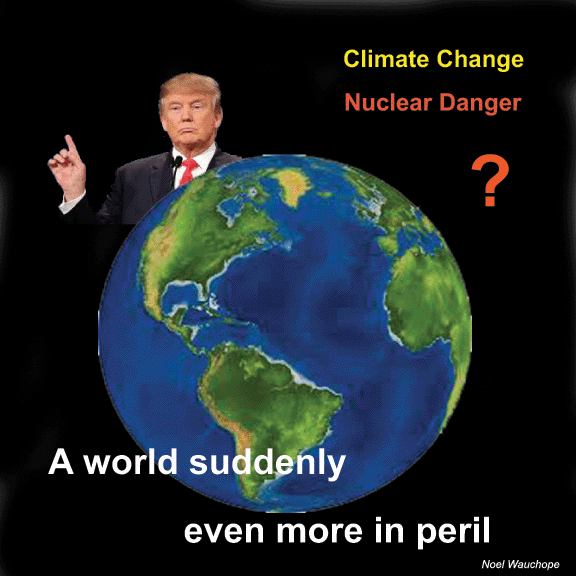
Four more years of Trump would leave democracy, and hope for a safe climate, in tatters
From the perspective of the human species as a whole, the arc of its life on this planet, it may be the most important election ever.
A second Trump term would mean severe and irreversible changes in the climate No joke: It would be disastrous on the scale of millennia. VOX, By David Roberts@drvoxdavid@vox.com Aug 27, 2020, I f Donald Trump is reelected president, the likely result will be irreversible changes to the climate that will degrade the quality of life of every subsequent generation of human beings, with millions of lives harmed or foreshortened. That’s in addition to the hundreds of thousands of lives at present that will be hurt or prematurely end.
This sounds like exaggeration, some of the “alarmism” green types are always accused of. But it is not particularly controversial among those who have followed Trump’s record on energy and climate change……..
………..a Trump victory would make any reasonable definition of “success” on climate change impossible….
More Trump will ensure the continued escalation of global temperatures
We know from the latest IPCC report that the climate target agreed to by nations — no more than a 2° Celsius rise in global average temperatures — is not a “safe” threshold at all. Going from 1.5° to 2° means many more heat waves, wildfires, crop failures, migrations, and premature deaths. We know that every fraction of a degree beyond 2° means more still, along with the increasing risk of tipping points that make further warming unstoppable. Continue reading
Sentencing date for Kings Bay Plowshares moved to October 15 and 16

The six remaining Kings Bay Plowshares defendants have had their sentencing dates moved from September to 
 October 15 and 16. They had requested a continuance because they want to appear in open court in Georgia and the virus situation there is still too out of control to safely allow it.
Steve Kelly has now served almost 29 months in county jails since the action in April, 2018 so has already met the guidelines for his likely sentence. The court may not want to grant him further extensions. (You can send a postcard to Steve to let him know you’re thinking of him. Directions on writing here.)
The other defendants are not sure if they would prefer to seek more continuances or choose virtual appearances for sentencing in solidarity with Steve on those dates in October if it appears unsafe to travel to Georgia at that time. Check the website for updates.
September 9 will be the 40thanniversary of the first plowshares action in King of Prussia, PA. Eight activists, known as the Plowshares Eight, entered the GE plant where nosecones for nuclear missile warheads were manufactured. They hammered on several and poured blood on the nosecones and documents.
There will be a virtual Commemoration of the Plowshares 8 on September 9 at 7 pm ET sponsored by Stop Banking on the Bomb and other Pittsburgh based organizations. Molly Rush, Dean Hammer and John Schuchardt (three of the four living members of the group) will participate in a discussion and reflect on the action which sparked 100 similar acts of disarmament over the years. A summary of the history can be found here: https://kingsbayplowshares7.org/plowshares-history
Email Joyce Rothermel at <rothermeljoyce@gmail.com> to get the Zoom link for Sept 9.
Emile de Antonio’s 1983 film, In the King of Prussia, is about the trial of the Plowshares Eight. The judge is played by Martin Sheen and the defendants are played by themselves. It’s available for viewing on Youtube: https://www.youtube.com/watch?v=kUph8GWFupE
Nuclear colonialism. ICAN says that France must clean up its nucleat test wastelands in Algeria

France must clean up Algerian nuclear test sites: group, https://www.france24.com/en/20200826-france-must- clean-up-algerian-nuclear-test-sites-group 28 Aug 20, France must clean up nuclear test sites in Algeria where radioactive waste remains from testing in the former colony during the 1960s, a Nobel Peace Prize-winning group said Wednesday.
France carried out 17 nuclear explosions in the Algerian part of the Sahara Desert between 1960 and 1966.
Eleven of the tests came after the 1962 Evian Accords ended the six-year war of independence and 132 years of colonial rule.
“France must give the Algerian authorities the full list of where the contaminated toxic waste was buried,” the International Campaign to Abolish Nuclear Weapons (ICAN) said in a new 60-page report.
“The ‘nuclear past’ must no longer remain deeply buried under the sand,” ICAN said, citing the concerned areas as the western Reggane region and a zone close to the In Ekker village.
The campaign group identified contaminated, radioactive elements that have either been buried, or are easily accessible.
“The majority of the waste is in the open air, without any security, and accessible by the population, creating a high level of sanitary and environmental insecurity,” ICAN said.The 2017 Nobel Peace Prize laureate group added that almost nothing has been done to clean the sites, inform the populations and evaluate the risks.
Exposure to radioactive material can cause cancer.
“This case study shows once more an asymmetry of power and an injustice that we find all through nuclear history,” Giorgio Franceschini, director of the Heinrich Boll Foundation which published the report, said in his forward.
“It is not a coincidence that France tested its first nuclear weapon in Algeria, that was still a French colony in 1960,” he added.
France refused to sign up the UN’s 2017 Treaty on the Prohibition of Nuclear Weapons, whereas Algeria signed and is in the process of ratifying the legally binding agreement.
Since Algeria’s independence, Franco-Algerian relations have been tumultuous.
Algerian President Abdelmadjid Tebboune in July called on France to fully apologise for its colonial past.
An apology could “make it possible to cool tensions and create a calmer atmosphere for economic and cultural relations”, especially for the more than six million Algerians who live in France, he said.
“Super Swarm” drones- weaponry as destructive as nuclear weapons

US, China Developing “Super Swarm” Drones With Destruction Power Equivalent To Nuclear Weapons, https://eurasiantimes.com/us-china-developing-super-swarm-drones-with-destruction-power-equivalent-to-nuclear-weapons/ August 28, 2020, EurAsian Times Global Desk
With the US and China leading the development of swarming drone capabilities, they are now looking at not just swarming techniques but also counter swarming tactics. Experts have argued that some drones that are under development are capable of sufficient destructive power to count as Weapons of Mass Destruction.
According to Isaac Kaminer, an engineering professor at the U.S. Naval Postgraduate School who is an expert in the subject of swarming and counter swarming tactics, large-scale adversarial swarms are already an imminent threat. He suggested that stopping a swarm is not simply a matter of driving enough missiles or bullets at it; instead, the swarm has to be outsmarted.
“A swarm with 10,000 or more drones must have extremely high levels of autonomy,” said consultant Zak Kallenborn talking to the Forbes. “No human being could handle the amount of information necessary to make decisions.“
Kaminer defines a ‘Super Swarm’ with large numbers and multiple modes like air, surface, and subsurface threats. The US Navy has already performed offensive swarm operations with its LOCUST drone swarm developed by Raytheon.
According to the developer of LOCUST drone swarm, dozens of small unmanned aircraft systems fly together, filling the sky. Some are collecting information. Some are identifying ground targets. Others might attack the same targets.
“They fly together like a flock of birds, tracking their positions and maintaining their relative positions in the air. Human operators are not needed for every flying drone; instead, they direct the flock as one.”
Currently, the drones are controlled remotely by humans which limits the capabilities both due to the demand for personnel and bandwidth restrictions. Only a few numbers can be used. However, if swarming algorithms are developed it would allow the drones to control itself and hence much larger number can be used increasing its lethality.
It works similar to a swarm of birds or insects. Every member adheres to the same rules to follow cohesion without colliding with each other. This will allow it to work without any central control.
David Hambling, who is also the author of ‘Swarm Troopers: How small drones will conquer the world’, wrote that such a swarm can be defeated by taking advantage of its internal rules – if these can be figured out.
“For example, an entire swarm whose members all have a collision-avoidance rule can be ‘herded’ by a few outsider drones or may be fooled into running into each other. If the members of the swarm are all programmed to attack what they see as the highest-value target in range, then they can all be decoyed into attacking the same dummy.”
The biggest challenge for the US comes from China who is also developing swarming capability as a means of asymmetric warfare, to counterpoise the US advantage in aircraft carriers. Last year, satellite images posted on the Chinese internet displayed a lineup of several drones including the Sharp Sword stealth drone and the Wing Loong Reaper.
Considering the fast pace of development of such technologies it is important to have international laws in place. “The opportunity to develop global norms and treaties around drone swarms and other autonomous weapons is now, “ says Kallenborn. “Collective limits on the number of armed drones in a swarm would reduce the risk to civilians and national security.”
Ohio Attorney General Dave Yost considers legal action over corruption tainted nuclear bailout law
 Ohio Attorney General Considering Legal Action To Stall Nuclear Bailout Rate
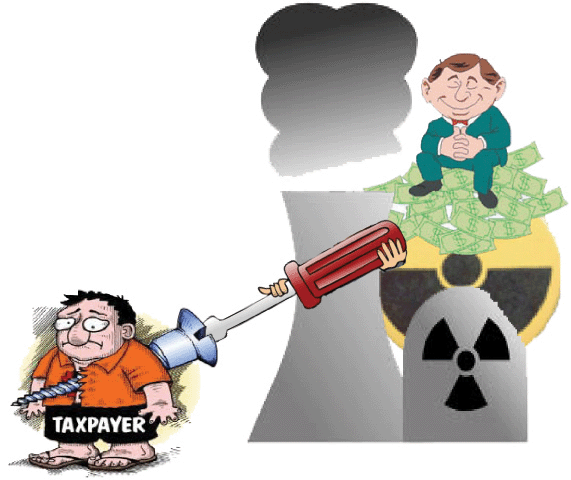 Hikes https://www.wvxu.org/post/ohio-attorney-general-considering-legal-action-stall-nuclear-bailout-rate-hikes#stream/0, By ANDY CHOW August 28, 2020
Ohio Attorney General Dave Yost says he’s considering taking legal action to stall the billion-dollar nuclear power plant bailout as legislators consider a possible repeal to the law that created the subsidies.
The Public Utilities Commission of Ohio have approved the mechanism to be used to increase nearly every ratepayer’s electric bills next year. The increase is part of HB6, a law that creates $150 million in annual subsides to two nuclear power plants.
Yost’s discussion of a possible injunction is the latest action from leaders, advocates and interest groups fighting to repeal HB6, which is said to be the catalyst for a $60 million racketeering scheme.
Michael Hartley with the Coalition to Restore Public Trust says legislators must toss out the law.
“Every single word of it is corrupt, and every single word of it is tainted. That is why, to restore the public trust in Ohio’s government and political system, that’s why the legislature needs to repeal HB6 in its entirety,” Hartley says. “The citizens of Ohio feel duped. They feel that their government duped them on this bill. And therefore, they’re mad, they’re very mad. And they want this repealed.”
Federal investigators say a utility company believed to be FirstEnergy and its subsidiaries funneled millions of dollars to personally and politically benefit former House Speaker Larry Householder (R-Glenford) in exchange for the bailout.
HB6 allowed an increase of $0.85 for everyone’s monthly electric bills. That increase would generate $170 million in annual subsidies, $150 million for nuclear power plants, and $20 million for solar farms.
The bill also created an increase of up to $1.50 a month on electric bills to subsidize two coal plants, Kyger Creek in Gallia County and Clifty Creek in Madison, Indiana.
Several measures in HB6 were priorities for FirstEnergy and its former subsidiary FirstEnergy Solutions, now called Energy Harbor. FirstEnergy CEO Chuck Jones has said he believes the company acted properly in the matter and intends to fully cooperate with investigators.
1 This Month


Tell Congress: Prevent Nuclear Catastrophe in Iran

Tell Congress: Prevent Nuclear Catastrophe in Iran

Read the Public Inquiry Report, the Commissioners’ report, Surrendering Australia: The AUKUS Deception is available to download for free at aukuspublicinquiry.com. Or just watch the replay of the National Press Club Luncheon.
To see nuclear-related stories in greater depth and intensity – go to https://nuclearinformation.wordpress.com
Say No to NASA’s Reckless Nuclear Reactor on the Moon
-
Archives
- November 2026 (281)
- October 2026 (302)
- September 2026 (339)
- August 2026 (330)
- July 2026 (355)
- June 2026 (287)
- May 2026 (306)
- April 2026 (356)
- March 2026 (251)
- February 2026 (267)
- January 2026 (308)
- December 2025 (358)
-
Categories
- 1
- 1 NUCLEAR ISSUES
- business and costs
- climate change
- culture and arts
- ENERGY
- environment
- health
- history
- indigenous issues
- Legal
- marketing of nuclear
- media
- opposition to nuclear
- PERSONAL STORIES
- politics
- politics international
- Religion and ethics
- safety
- secrets,lies and civil liberties
- spinbuster
- technology
- Uranium
- wastes
- weapons and war
- Women
- 2 WORLD
- ACTION
- AFRICA
- Atrocities
- AUSTRALIA
- Christina's notes
- Christina's themes
- culture and arts
- Events
- Fuk 2022
- Fuk 2023
- Fukushima 2017
- Fukushima 2018
- fukushima 2019
- Fukushima 2020
- Fukushima 2021
- general
- global warming
- Humour (God we need it)
- Nuclear
- RARE EARTHS
- Reference
- resources – print
- Resources -audiovicual
- Weekly Newsletter
- World
- World Nuclear
- YouTube
-
RSS
Entries RSS
Comments RSS

