Norway becomes ninth country to come under French nuclear deterrence scheme
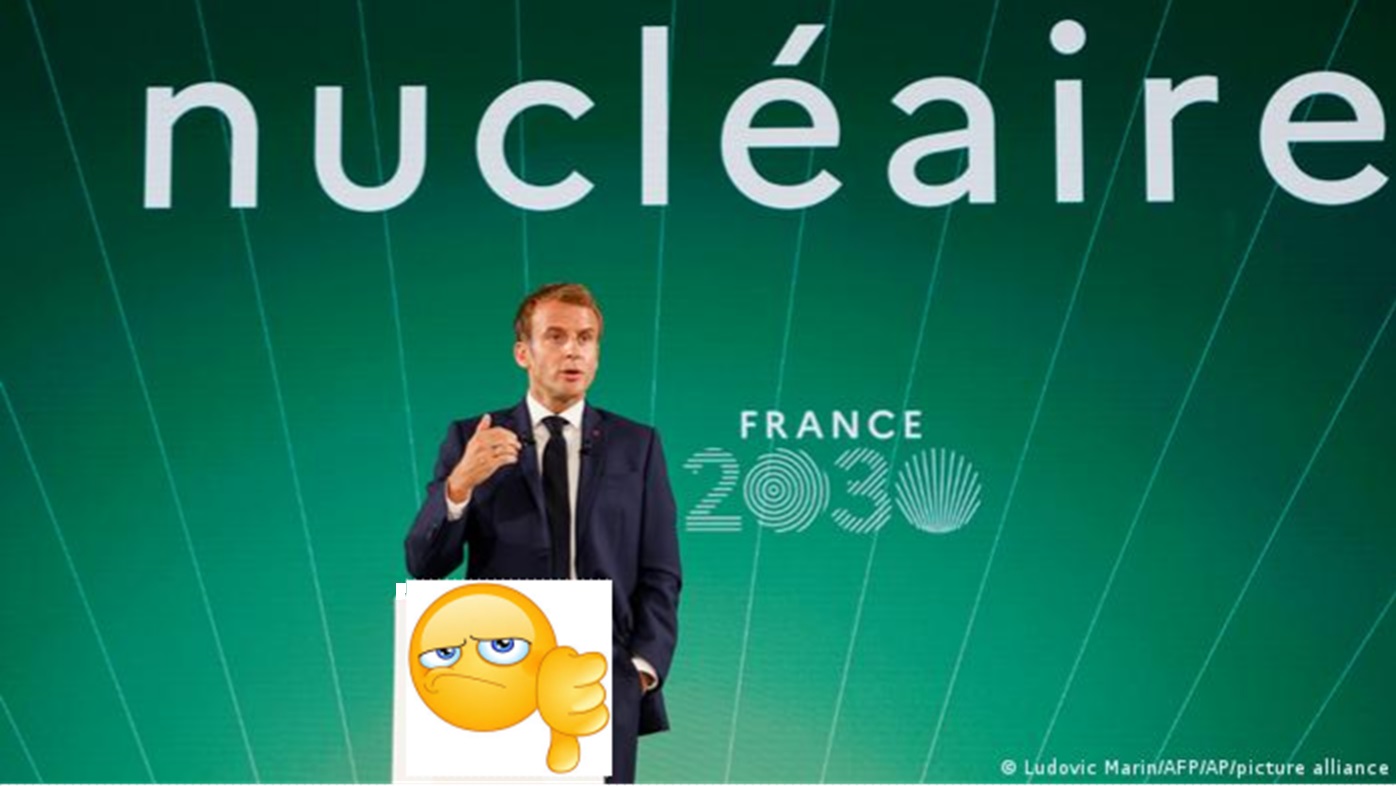
Norway on Wednesday became the ninth country to join the France-led nuclear deterrence scheme, the leaders of both countries said. President Emmanuel Macron announced in March that France – the only nuclear-armed country in the EU – would extend its nuclear deterrence scheme to willing European partners.
By: FRANCE 24, 27/05/2026
The leaders of France and Norway said on Wednesday that Oslo will join a Paris-led nuclear deterrence scheme to bolster security on the continent……………..
“In the past six months, we have entered into defence agreements with both Germany and the UK, and I am pleased that we have signed a comprehensive defence agreement with France today,” Macron said.
In March, Macron unveiled a programme under which France, the European Union‘s only nuclear-armed country, would use its atomic stockpile to boost security on the continent.
Under the so-called “forward” nuclear deterrence scheme, those who join will be able to temporarily host French “strategic air forces”, which will be able to “spread out across the European continent” to “complicate the calculations of our adversaries”, Macron said at the time…..
Prior to Norway, eight countries had joined the programme – Belgium, Denmark, Germany, Greece, the Netherlands, Poland, Sweden and fellow nuclear power the United Kingdom.
“The agreement also provides a framework for closer cooperation on hybrid warfare, maritime security, space cooperation, cybersecurity, support to Ukraine and defence industrial cooperation.”
France has an estimated 290 nuclear warheads, according to the latest figures released by the Stockholm International Peace Research Institute (SIPRI) and the Federation of American Scientists (FAS). More than 80 percent of France’s warheads are submarine-launched, according to the Bulletin of the Atomic Scientists.
That makes France the world’s fourth-largest nuclear power after Russia in the top spot (with more than 4,300 warheads) followed by the United States (with 3,700) and China (600). The United Kingdom – which is no longer an EU member but still a NATO ally – is estimated to have about 225 warheads, according to SIPRI and FAS. https://www.france24.com/en/europe/20260527-norway-becomes-ninth-country-to-come-under-french-nuclear-umbrella
Anti-nuclear group take on Sellafield for the second time in legal row

The group is concerned over the safety of toads thought to frequent local lakes.
Floyd March, Energy Voice 27th May 2026
An anti-nuclear group has successfully raised £20,000 for legal fees to take on Sellafield and the Environment Agency (EA) for a second time.
The Lakes Against Nuclear Dump (LAND) group previously failed a High Court attempt for a judicial review into the EA decision to award Sellafield a licence to extract water from the decommissioning site in Lancashire.
After the failed attempt in 2025, the new funds will look to overturn the development of a new radioactive waste storage facility.
Its leader, Marriane Birkby, fears the construction of a tunnel underground as part of the work will lead to the discharge of contaminated water into the River Ehen and River Calder, respectively.
Sellafield plans to pump water taken from the construction site to on-site storage tanks for testing prior to being discharged directly into the sea.
It has no plans to discharge into either River Ehen or Calder.
Toads, Salmon and water leaks
Birkby had previously taken issue with the length of time taken for a judge to dismiss the group’s previous attempt for a review.
If an appeal is approved, the group will argue the EA failed to conduct due diligence in assessing wildlife concerns, mainly Atlantic salmon and natterjack toads.
Natterjack toads are a protected species and reportedly inhabit a location less than a km south west of the site. Atlantic salmon, also protected, have a migration route along the River Ehen.
The group will use law firm Leigh Day to set out the grounds of appeal to overturn the original quashing of the judicial review.
High Court Judge Karen Ridge previously ruled that an assessment of the River Ehen special area of conservation wasn’t necessary “because it was considered unnecessary” as the extraction of water “was not likely to have a significant effect.”…………………..
Sellafield labelled ‘most hazardous’ UK building
Sellafield has previously been under fire from the Nuclear Decommissioning Authority (NDA). The agency had told the public accounts committee (PAC) in the House of Commons that Sellafield’s Magnox swarf storage silo (MSSS) was “the most hazardous building in the UK”.
The committee had noted there were “signs of improvement”. However, PAC chairman Sir Geoffrey Clifton-Brown said Sellafield continued to present “intolerable risks”………………………………. https://www.energyvoice.com/renewables-energy-transition/nuclear/598287/anti-nuclear-group-take-on-sellafield-for-the-second-time-in-legal-row/
Nuclear needs to build up to 8,000 SMRs just to catch up with wind and solar. By 2035, they might have 5

Giles Parkinson, May 27, 2026, https://reneweconomy.com.au/nuclear-needs-to-build-up-to-8000-smrs-just-to-catch-up-with-wind-and-solar-now-by-2035-they-might-have-5/
Australia’s almost indistinguishable far right political parties – the Liberals, Nationals and One Nation – are pushing the nuclear barrow once again, not for climate reasons but because of the “anything but wind and solar” ideology demanded by their fossil-fuelled benefactors.
So it came as a timely reminder on Wednesday, when one of the world’s leading green energy analysts, Michael Liebreich, underlined just how useless nuclear energy is for dealing with climate change, and how far the small nuclear reactors championed by many are from competing with surging wind and solar.
Liebreich is the founder of Bloomberg New Energy Finance and his address to the Energy Efficiency Council’s National Conference also touched on the perils of net zero targets (because it puts the focus on what’s really hard rather than what’s readily achievable), and the overwhelming push for electrification for “just about everything.”
But it was the nuclear hype that he was also keen to puncture, if only to underline the sheer scale and dominance of wind and solar, and its rapidly growing share of “useable” energy, as opposed to “primary energy” that ignores the massive inefficiencies of fossil fuels.
SMR are still not being built but they are championed by some of the world’s richest people, the AI and social media “tech bros” who are looking for ample energy sources to power their massive data centre needs (while contracting tens of gigawatts of wind and solar in the meantime).
“They (the tech bros) love nuclear, and they’re going to be very angry when they discover what everybody discovers, which is nuclear is kind of expensive and long and complicated,” Liebreich said.
“But even if they succeed, it’s not going to be a climate solution,” he said. And the reason is that simply to match the output of wind and solar in the 2024 calendar year, the industry would need 1,250 of the 470 MW SMRs that are being developed by Rolls Royce, or up to 8,000 of the much smaller SMRs pushed by the likes of Oklo.
“If they build five by 2035 that will be a big win,” Liebreich said. “And so, as a climate solution, by the time you did build 2000 Westinghouse SMRs, where do you think wind and solar is going to be?
“It’s obviously going to have grown. That green curve is not stopping, it is taking off, and you can see it’s taking off even in the countries that are really trying to build nuclear.”
The nuclear push is usually associated in Australia by calls to abandon net zero targets, with the main argument being – without evidence – that it is trashing the economy.
Net zero has been criticised by others supportive of strong action. Andrew Forrest, aiming for real zero at Fortescue’s giant iron ore mines by 2030, says net zero is an excuse to do not much and use offsets instead of cutting emissions, others say a 2050 target is used by an excuse to do not much anytime soon.
Liebreich’s criticism is that it makes everything sound too hard. “By focusing on zero, immediately your eye is drawn to doing the difficult bits, and the difficult bits are expensive, and we just don’t have to have those discussions right now.
“If we can’t do aviation, there’s … a smorgasbord of opportunities right in front of us that we should be doing first and quickly, because time matters. Carbon has a time value, once it’s up there, it stays up there.”
As an example of that smorgasbord, Liebreich pointed to EVs, and specifically the Nissan Leaf, which from its 2011 version to its 2026 version had trebled the size of its battery, quadrupled its range, doubled the power, and cut the cost by one third.
Simply looking at efficient technologies can also achieve so much.
“If you go from coal-fired incandescent light bulb to an LED, same energy service, you cut primary energy by 95 per cent.
“Electric cars are the same, you go from a fossil car to electric car, (you get a) 75 per cent cut in primary energy. Same for heating, you go from a boiler to a heat pump, (you get) a 75 per cent reduction in primary energy.”
Liebreich says the greater efficiency of wind ands solar – useable energy as opposed to the primary energy championed by the fossil fuel industry trying to pretend that non-hydro renewables have no impact – will accelerate that change.
“What it does is it pushes fossil off the system, it’s a transition, and if you think about it, when we went from analog to mobile and digital telephony, we didn’t measure it by how many landlines were disconnected in 1995.
“We just asked how many people have got mobile phones. Peak landline happened over 30 years after the invention of the mobile phone, in 2006. So if you had said in 2000 there’s no transition, it’s failed, it’s troubled, it’ll never happen, you look pretty stupid now.
“Peak horse in the US was 1920. The car was invented in 1886. So you measure a transition by the growth of the new, not the crushing of the old.
“And I also think … the politics of talking about how we’ve got to stop this and block this and destroy that, and so it’s very, very difficult.
“We’re telling people you’re going to stop them from using things, whether it’s coal or petrol or diesel or their boiler, or whatever, it is politically difficult. Well, it’s unacceptable. So I think we’ve got to talk about growing anew. That brings me to electrification, and electrification, I think, is the solution to all of the above.”
And for more on that, please see our recent story on Liebreich’s recently released Elecrification Staircase – From cars to coastal shipping, we can electrify almost everything, according to Electrification Staircase.
Energy Department takes steps toward allowing plutonium, historically used in weapons, in nuclear fuel

by Rachel Frazin – 05/26/26, https://thehill.com/policy/energy-environment/5896154-energy-department-plutonium-nuclear-power/
The Energy Department may allow up to five companies to use its surplus plutonium — which it has historically been used in nuclear warheads — as fuel.
The department has selected the firms for “advanced negotiations regarding the potential allocation of surplus plutonium materials,” a spokesperson for its nuclear energy office said Tuesday.
The five companies entering advanced negotiations are: Oklo, Exodys Energy, Shine Technologies, Standard Nuclear and Flibe Energy, Inc.
The Energy Department has historically used plutonium in nuclear warheads. It produced a significant amount of it during the Cold War.
In March, the White House issued an executive order directing the department to halt a prior program that sought to dilute and dispose of the plutonium. The order also directed the department to instead set up a program making surplus plutonium available to the nuclear energy industry.
In October, the Energy Department said that the available surplus for the program includes weapons-grade, fuel-grade, reactor-grade or mixed plutonium.
According to the department, the plan to give plutonium to energy companies “is anticipated to help companies unlock the next level of private funding to broaden domestic nuclear fuel supplies, spur innovation on American recycling technologies, and unlock private sector funding to fuel the nation’s nuclear renaissance.”
However, critics argue that repurposing plutonium for civilian energy could have security and other risks.
“Plutonium-based fuels and reprocessing have a poor track record when introduced in civilian nuclear energy programs,” Ernest Moniz, who was energy secretary under former President Obama, wrote last year, adding that it could lead to “the creation of additional stocks of weapons-usable materials.”
Meanwhile, Oklo cofounder and CEO Jacob DeWitte said in a written statement on Tuesday that the Energy Department program could help speed up the development of nuclear energy.
“Fuel supply constraints are a key throttle to advanced reactor development,” DeWitte said. “This program creates a pathway to use existing surplus material as bridge fuel for advanced reactors to bring more reactors online sooner.”
Bully Trump pivots from strong Iran to weak Oman – Walt Zlotow

Walt Zlotow West Suburban Peace Coalition Glen Ellyn IL, 29 May 26
Donald Trump is the classic schoolyard bully. Alas, instead of hurting, indeed terrorizing weaker school mates, he’s terrorizing the weaker on a global scale, both at home and abroad.
On the domestic front he’s demonizing the ‘other’ by abusing, sometimes killing decent, hardworking undocumented. He uses the Bully Pulpit, not in the rhetorical sense to uplift society promoting wise polices, but to dismantle most sensible domestic policies and institutions, and demonize anyone who crosses him. Nearly every critic of Trump within the Republican Party has been bullied from public office. Every Democrat is slimed as a terrible, horrible person. Classic bullying.
But it’s on the world stage where his bullying is relentlessly murderous. Over 60 bombings of imagined bad guys in Somalia without a hint of justification, much less even a mention. Swooping down into pitifully powerless Venezuela to snatch its president on trumped up charges, slaughtering hundreds in the process. Blowing up small, unarmed boats in the Caribbean then bragging his sick, murderous rampage saved a million US lives.
But on February 28th bully Trump met match. He attacked large, powerful Iran believing the lies of Israeli Prime Minister Benjamin Netanyahu and own war cabinet that Iran would collapse within days once Netanyahu assassinated Iran’s ruler. A few days turned into 39 days of bombing before Trump realized that Iran was not only surviving but winning. How? By unleashing a massive missile barrage on every US Gulf States base, Gulf States oil infrastructure, Israel, and closing the Strait of Hormuz to a fifth of the world’s oil supply.
What to do? After 91 days of humiliating defeat, bully Trump turned his bullying on tiny Oman which shares the Strait of Hormuz with Iran. Oman will be Iran’s partner in controlling traffic thru the Strait which consists of Iran and Oman territorial waters.
When asked if he’d accept a short-term deal that involved Iran and Oman jointly controlling the Strait of Hormuz, bully Trump unloaded on Oman. “No, the Strait’s got to be opened to everybody. It’s international waters. Nobody’s going to control it. We’ll watch over it, but nobody’s going to control it. Oman will behave just like everybody else, or we’ll have to blow them up. They understand that they’ll be fine,
Sorry bully Trump. Knowing Trump can no longer ‘blow up’ anybody in the region after squandering much US firepower on his lost Iran war, Oman will stand up to bully Trump just like Strait partner Iran.
Now that bully Trump has been exposed as the powerless bully he is, it’s all over for him to strut the world stage like he owns it. He’s alienated friend and foe alike with his murderous bullying, duplicitous negotiating and utter lack of credibility.
Trump’s bullying served him well in both his business career and his takeover of the r Republican Party for two presidential terms. But Karma eventually comes to bullies who believe they can bully their way thru life. It’s going to take months, years, possibly a decade to undo the damage of Trump’s bullying at home and abroad. But as Bob Dylan sang long ago…”Even the President of the United States must sometimes have to stand naked.”
7 June – WEBINAR -Get Inspired by Protests Against Military Bases!

WEBINAR – https://us06web.zoom.us/webinar/register/WN_QOJuFnibTF6eUmBt-tL8-A
As militarization pushes itself into almost every corner of our lives, as weapons become more powerful, as military bases across the world become nuclear armed, we know this is not about defense. This is about imperialism hand in hand with capitalism. It is about land grabs, resource extraction, pollution and climate change. It is about turning our communities into targets and deforming the future of our children.
Many brave women across the world have stood firm to defy this onslaught of aggression. We bring you the voices of meaningful protest from some of those standing in the front line of defiance.
Saturday – June 6, 2026 – appr. 2 hrs including Q&A
16.00 Central European time (CET) – 10.00am New York time – 23.00 Tokyo time – 24.00/midnight Australia time
Speakers
· South Korea – Sung-Hee Choi – Women Cross DMZ – “People’s protests against the naval base and militarization of Jeju”
· Philippines – Corazon Fabros – IPB – protests against US military bases.
· New Zealand – Liz Remmerswaal – active in WILPF, World BEYOND War – videoclip/protests against US military bases
· Australia – Margaret Prestorius – Wage Peace – videoclip/ protests against US military bases
· Italy – Patrizia Sterpetti – WILPF – Public Prosecutor complaint/illegal
· Japan – tba possession and transfer of nuclear bombs
· UK – Sophie Bolt – Campaign for Nuclear Disarmament/CND – protests at military bases
· Germany – Kristine Karch – Stopp Air Base Ramstein – Peace week camp and demonstration at the base, June 2026
· Spain – Juan José Ruiz – active for peace – Neither Yankees nor Spaniards, bases out!
· France – Marie Sigogneau – Sortir du nucléaire pays nantais – Nuclear Exit Nantes Region – Protests against nuclear facilities
· Ireland – Veterans for Peace, Irish Peace and Neutrality Alliance – Edward Horgan – weekly protests at Shannon airport in 2025 and 2026
· Netherlands – tba
Organised by
Global Women for Peace United Against NATO – GWUAN
Supported by
Campaign for Nuclear Disarmament (CND)
No to War – No to Nato network
Stop Airbase Ramstein
Mujeres de Negro/Women in Black Madrid
WIPLF Italy
Sortir du Nucleaire Pays Nantais, France
Women for Peace – Finland
IWA – International Women’s Alliance
World Beyond War
United National Antiwar Coalition (UNAC)
Host and moderator
Hosted by: UNAC
Moderator: Annachiara Canetta, World BEYOND War
on behalf of Global Women United for Peace against NATO
One linktree for all our media https://linktr.ee/WomenAgainstNATO
U.S. Turns Cold War Plutonium Into Nuclear Fuel
Oil Price, By Charles Kennedy – May 28, 2026,
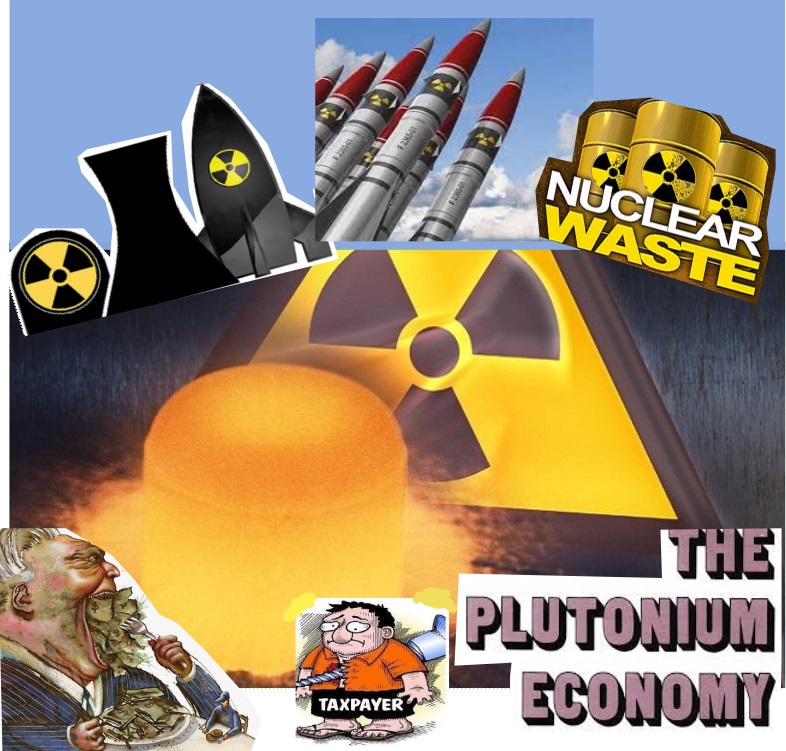
- The U.S. is exploring the use of Cold War-era plutonium from dismantled nuclear warheads as alternative fuel for advanced nuclear reactors due to uranium supply shortages and reliance on foreign enriched uranium.
- The Department of Energy has shortlisted five nuclear companies, including SMR developers.
- Critics warn the plan raises nuclear proliferation risks and could prove technically and economically difficult, as converting weapons-grade plutonium into reactor fuel remains highly expensive.
……………………………………………………………. The plutonium considered for distribution to nuclear companies is from dismantled warheads from the Cold War. The radioactive material—50 tons of surplus supply, according to the New York Times—was originally to be diluted and buried, but President Trump last year suspended that plan, per Reuters, which also recalled reports about Washington planning to make 20 tons of plutonium available to private companies.
……………………………There are, of course, opponents to the idea of using weapons-grade nuclear material for nuclear power generation by private companies. Indeed, some Democratic members of Congress have publicly protested the plan.
“The transfer of weapons-usable plutonium to private industry would increase the risk of nuclear weapons proliferation, including to rogue states or terrorists,” Massachusetts senator Ed Markey and representatives Don Beyer and John Garamendi said in a letter from last September. “The United States cannot effectively discourage other countries from using plutonium for civil purposes if we use it ourselves.”
The idea behind the move is to encourage the development of small modular nuclear reactors that could be built much more quickly than conventional ones—at least theoretically. The practical application of SMR technology, however, has stumbled after pioneer NuScale had to scrap its plans to build the first small modular reactor in the U.S. amid much higher than hoped-for costs, leading to insufficient numbers of future buyers willing to sign up for the facility’s output.
Despite these challenges in the MR segment, nuclear is back in a big way, not least thanks to Big Tech’s AI rush, which requires these companies to secure massive amounts of electricity for their facilities—and make it reliable. This is boosting the popularity of nuclear electricity outside the Big Tech community as well—higher electricity bills are making the construction costs of new nuclear power plants more palatable than they would have been a couple of years ago.
Whether plutonium would make an equivalent substitute for uranium in this nuclear renaissance remains questionable, it seems. The fact that the element could be used for the production of nuclear weapons is one problem with the idea. Another problem appears to be of a more technical nature, per the New York Times, which also cited critics as saying the cost of turning plutonium into nuclear fuel was prohibitively high. https://oilprice.com/Alternative-Energy/Nuclear-Power/US-Turns-Cold-War-Plutonium-Into-Nuclear-Fuel.html
The Israeli Knesset just voted to dissolve itself, but this won’t end the Gaza genocide

Even if Netanyahu and his right-wing allies are ousted from government, Israel’s genocide in Gaza, ethnic cleansing in the West Bank, and the wars against Lebanon and Iran enjoy broad support across the Israeli political spectrum.
By Qassam Muaddi May 27, 2026 , https://mondoweiss.net/2026/05/the-israeli-knesset-just-voted-to-dissolve-itself-but-any-new-government-will-still-pursue-genocide/
Israel might change its government sooner than expected after the Israeli Knesset voted to dissolve itself last week. The bill presented to the parliamentary body on May 20, which passed with a majority of 110 votes in favor and no opposing votes, could lead to early elections in September rather than November of this year. The vote was held in the absence of Israeli Prime Minister Benjamin Netanyahu and is set to be reconsidered at three more readings before moving toward implementation.
If passed, the current Knesset will expire, along with the government coalition based on its composition and the current cabinet led by Netanyahu. According to Israeli polls, Netanyahu’s main coalition allies, namely hardline ministers Bezalel Smotrich and Itamar Ben-Gvir, have low chances of winning. Although the two main opposition leaders, Naftali Bennet and Yair Lapid, joined forces in a new party, polls indicate that Netanyahu’s Likud Party would still win 56 out of 120 seats in the Knesset. This leaves the Likud as the main political force in Israel, but without enough of a majority to form a government on its own, forcing it to form a coalition with other opposition parties.
The vote came amid renewed controversy surrounding the military drafting of Orthodox Haredi Israelis to military service. Haredi leaders presented the bill after Netanyahu’s government failed to advance another bill to exempt the Haredis from military service.
The vote to dissolve the Knesset also comes amid mounting criticism of Netanyahu over his performance during the war on Iran and the security failure on October 7, 2023.
But what would the dissolution of the Israeli Knesset mean for Palestinians? And what does it say about the current state of Israeli politics that Netanyahu didn’t oppose the vote to move to early elections?
The short answer is: not much, or at least not for the better. Israel’s opposition parties have backed the war on Gaza, the expansion of settlements, and the war on Lebanon just as fervently as Netanyahu’s coalition, and in some cases have criticized him for not going far enough. Any new government will most likely pursue the same fundamental policies toward Palestinians. In the near term, the more pressing concern is what the current government will do to shore up its electoral standing before it leaves office. Precedent suggests that means further escalation.
Right-wing politics
Israeli politics has been dominated by its most extreme right-wing forces for almost two decades, but a common feature shared by past Israeli governments has been the lack of a simple majority by any single political party. In order to make up a majority government, any political party with the most seats in Knesset would have to form a coalition with other, smaller parties, such as Ben-Gvir’s Jewish Power and Smotrich’s Religious Zionism. When such government coalitions have formed, the junior partners have gained outsized leverage by the very fact that their presence keeps the government together.
Yet in all these varying combinations of successive government coalitions, Israeli policy toward Palestinians has remained largely the same.
Settlement expansion and the push toward the annexation of the West Bank have been constants of every right-wing Israeli government, as has the policy of siege and periodic military offensives in Gaza. So, too, has the escalating crackdown on Palestinian prisoners and the deterioration of their conditions, and the repeated attempts to alter the status quo in East Jerusalem and at Al-Aqsa Mosque — arenas where Israeli politicians have long competed to score political points, especially in the run-up to elections.
Netanyahu’s standing was already in decline before October 7, battered by his corruption trials, his attempts to overhaul the Israeli judiciary, and the Haredi draft crisis. After October 7, he faced additional backlash over his handling of the hostage negotiations and, later, over what many Israelis saw as unsatisfactory results from the war on Iran, particularly the way the U.S.-Iran ceasefire was reached without Israeli consultation. But none of this criticism has targeted the substance of Netanyahu’s policies, as reflected in the polls’ projections for the next election.
Both Lapid and Bennett, and most other opposition figures, have supported the war on Gaza, including actions that human rights organizations have characterized as genocidal. The Israeli opposition has also backed the war on Lebanon and the expansion of settlements in the West Bank — and has, in fact, harshly criticized Netanyahu for allowing the U.S. to constraint Israeli action in Lebanon and Iran. Whatever government emerges from the next election will almost certainly be composed of parties that support those same policies, with or without Netanyahu and his closest allies.
That said, the next Israeli government could bring a certain “cooling down” of some of the more aggressive policies, according to Esmat Mansour, a Palestinian journalist and specialist in Israeli politics.
Mansour believes that current regional conditions, including the reorganiztion of the region’s geopolitics in the wake of Iran’s newfound strategic advantage in its war with the U.S., might have an impact on the policy of the coming Israeli government. “The current situation pushes towards reorganizing the region geopolitically, and the ongoing wars that Israel is engaged in have taken a toll on Israel’s political credibility and on its social and military capacity, too,” Mansour told Mondoweiss. “This makes it necessary for any new government to focus on rebuilding and repairing damage.”
“This could lead the next government to ease its stranglehold on the Palestinian Authority financially, or to stop blocking its return to Gaza, and to allow aid and reconstruction materials into the Strip,” Mansour said. “It might also mean a reduction in settler violence against Palestinians in the West Bank, and some improvements to daily life, like allowing West Bank workers back into the Israeli labor market.”
More of the same
But Mansour clarified that “this doesn’t mean that the next Israeli government could be one of peace, but the internal conditions and Israel’s loss of international credibility impose new priorities.” He also stressed that “such a shift depends on Palestinians’ ability to restore their unity, and on the position Arab countries take once the war on Iran is over.”
The trajectory of any incoming Israeli government will also be shaped by the international community’s position and the pressure from global solidarity movements. In the meantime, the current Netanyahu government will do everything it can to improve its electoral prospects before the elections. At the earliest, that could be next September. Most alarmingly, this effort could include resuming the genocide in Gaza, as Israeli officials have repeatedly threatened to do in recent weeks.
As for Lebanon, the Netanyahu government already discussed expanding its war on Lebanon in a security cabinet meeting on Tuesday. Meanwhile, Smotrich has made moves to accelerate the annexation of the West Bank through a rash of legislation and unilateral orders, including the passing of the so-called “Antiquities Bill” that would transfer authority over West Bank antiquities from the Palestinian Authority to Israel, the unprecedented approval of settlement construction, and orders to erase numerous Bedouin communities around Jerusalem. All these drastic measures would stand to shore up popularity for Netanyahu’s right-wing coalition, especially among the younger right-wing voting bloc of Israeli settlers.
In other words, the way in which the Netanyahu government seeks to strengthen its electoral prospects will invariably come at the expense of Palestinians — and the other peoples of the region.
Trump’s government-wide NDA (non disclosure agreement) seeks to silence whistleblowers

May 26, 2026 / Freedom of the Press Foundation, https://freedom.press/the-classifieds/trumps-government-wide-nda-seeks-to-silence-whistleblowers/
Washington, D.C., May 26, 2026 — The Washington Post reported today that the Trump administration is planning a broad, government-wide nondisclosure agreement to combat leaks to the press.
The following can be attributed to Freedom of the Press Foundation (FPF) Daniel Ellsberg Chair on Government Secrecy Lauren Harper:
“The proposal by the ‘most transparent administration in history’ that millions of federal employees sign a blanket NDA is not just absurd, it’s unnecessary and dangerously secretive.
“This policy, from a president who has previously attempted to impose oppressive, corporate-style confidentiality and nondisclosure agreements on federal employees, would kneecap whistleblower protections, undermine the First Amendment, and wrongly inhibit the public’s right to know. It comes at a time when agency watchdogs are sidelined, FOIA officials are being fired, and leaks to the press — which are the sole reason the public knows about so much of this administration’s misconduct — are being demonized and prosecuted.
“We know exactly what kind of information the administration wants to bury. Look no further than the FOIA release to Freedom of the Press Foundation that showed the administration had no solid legal rationale for conducting mass deportations under the Alien Enemies Act, substantiating a leak the administration called ‘fake news’ and cited as false justification for loosening restrictions on subpoenas to reporters.
“Trying to force the entire federal government to adopt the Trump organization’s aggressive use of NDAs won’t make anybody safer and won’t improve agency processes. Its sole intent would be to protect the administration from the leak of embarrassing, politically damaging, or unlawful information.”
With potential Iranian deal on the horizon, MAGA media’s drawing red lines
by Jason Campbell, 26 May 26, https://www.mediamatters.org/media-matters-weekly-newsletter/media-matters-weekly-newsletter-may-29#paragraph–narrative-item–3479479
Deep divisions have emerged in right-wing media since President Donald Trump started a war with Iran three months ago. Some conservative media figures have loudly supported Trump’s war while others have been extremely and vocally opposed to new entanglements in the Middle East. Many figures fell somewhere in the middle, tepidly supporting the president while urging for a quick end to the conflict. With a potential deal (again) reportedly on the horizon, some voices on the right are starting to draw their hard lines for an end to the conflict.
The infighting between right-wing media pundits over the war has at times been deeply personal. This week, for example, Fox’s Mark Levin and podcaster Benny Johnson traded blows over the war. Johnson, who has been supporting Trump but also urging for a swift end to the fighting, said, “I don’t understand people like Mark Levin,” and then asked “How many people do you think are being paid by Israel?” Levin, a staunch supporter of the conflict, fired back at “BJ Benny Johnson,” saying, “He’s been a grifter.” Levin also said “Benny Johnson, a nobody, and his ilk. And his ilk, they’re the ones who trash the president. They give aid and comfort to the Iranian Islamic regime.”
With a potential deal coming, some right-wing figures are already laying out what would be tolerable for the Trump administration to accept. Ben Shapiro, who has consistently taken a hardline stance supporting the war, laid out some red lines for a deal, including claiming that the United States cannot give Iran money to rebuild its infrastructure. A Charlie Kirk Show producer said the proposed deal is “not a perfect deal” and “would be getting us back to the situation before the war.” Fox’s Martha MacCallum commented on the potential deal, saying, “It doesn’t feel like we’re any closer than we were before.” On Fox News, staunch war supporter Jack Keane said the U.S. can’t give Iran immediate sanctions relief. A Newsmax host said the reported deal with Iran “sounds like a pretty bad deal.”
The war with Iran has caused serious turmoil inside Trump’s MAGA base. With the disastrous effects of rising fuel prices accumulating and the war’s catastrophic unpopularity with the American people growing, the political need for a swift end to the conflict may butt up against MAGA hardliners who want to see Iran capitulate further.
President Donald Trump, amid ongoing negotiations with Iran and a new spate of U.S. military strikes against it, spent part of Tuesday morning watching Fox News and then posting thanks on social media to on-air commentators who praised his efforts in the region.
U.S. and Iranian diplomats are once again negotiating toward an agreement to end the three-month war. Against this backdrop, Trump spent his Tuesday morning watching Fox News, a typical source for both information that shapes his worldview and praise to salve his various grievances. We know this because he posted on social media about segments that captured his fancy soon after they aired, a phenomenon Media Matters’ Matt Gertz termed the Fox-Trump feedback loop.
Major domestic and international affairs can turn on what Trump sees on Fox, though whatever he ends up deciding to do, the network’s hosts will surely fall in line behind their Dear Leader.
- Excuse me?
- Newsmax host Carl Higbie responded to a hunger strike at the Delaney Hall ICE detention center, saying “If they want to not eat, that’s on them. I don’t really care. Saves us some taxpayer money, I guess.” Fox’s Greg Gutfeld also commented on the food in Delaney Hall, saying, “Maggots or not, the food is dietitian approved.”
- Heritage Foundation president Kevin Roberts argued “there ought to be certain restrictions against not just religions, but particular political implementations of religions.”
- Speaking about Iran, Fox’s Laura Ingraham admitted “All of their military sites, I guess, have not been destroyed.”
- In the 19 hours following the breaking news, Fox News failed to cover the Justice Department’s new criminal investigation into E. Jean Carroll, who previously won a civil judgment against Trump that he had sexually abused and defamed her. In contrast, all 12 CNN shows that aired after the news broke covered the story, and 7 of 8 such MS NOW programs covered it.
After New York City Mayor Zohran Mamdani unveiled his plans to make affordable housing more available in the city, Fox News personalities and guests fixated on the plan’s efforts combating negligent landlords. They declared that enforcement against negligent landlords amounted to “public theft,” said it was a “throwback to Stalin,” and ranted that legal action to turn over properties from them to more responsible stewards will lead to “mass killing” and similar atrocities.
Fox hosts have also peddled the myth of tax flight, which you can read about here.
Extreme Heat Headlines Obscure The Scale Of The Crisis
Nate Bear, May 29, 2026, https://www.donotpanic.news/p/extreme-heat-headlines-obscure-the
It’s been record hot in parts of Europe and Asia over the last week and this has provoked an outburst of three things that have become de rigeur whenever this happens:
- Climate change scepticism
- Exclusive focus on heat by legacy media
- Divorced context
The first one is baked in to the conversation, you might say, if you were reaching for an appropriate metaphor. And normally I’d not be that bothered. But I’ve been seeing more of it across my social media, especially on Twitter/X, and the explanation I think is two-fold.
Firstly, and most obviously, Musk and Nikita Bier, the guy in control of the algorithm, boost right-wing accounts by policy, which means scepticism and denial at moments of climate extremes become more visible, given these positions tend to be rightist in nature. Secondly, despite my leftist politics, my anti-Zionism and pro-Palestine writings have attracted people who approach anti-Zionism from a more right-wing, pro-sovereignty, pro-nationalist perspective. These people, my intuition tells me, put climate change and Zionism in the same bracket – as a mainstream, elite-led “narrative” to be rejected. As such I’ve been seeing some of these accounts, who I agree with on Israel, Palestine, imperialism and Zionism, in my feed posting content and takes sceptical of climate change.
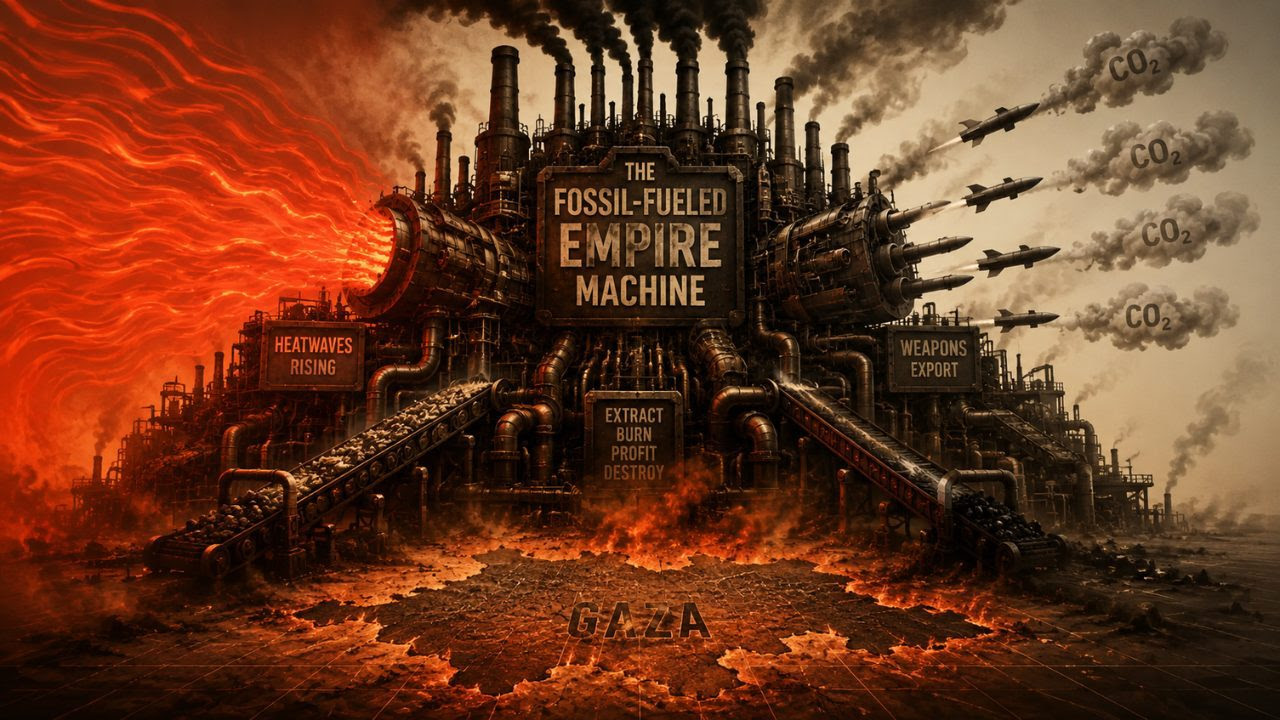
To me, this is not a coherent politics. Zionism and a heating planet grow from the same root. Imperialism is a fuel source for climate change, and anti-imperialism cannot be separated from ecological destruction. The Pentagon is the single biggest institutional emitter of greenhouse gases, burning more fossil fuels annually than entire countries like Portugal, Sweden and Denmark. An empire which projects global power and launches missiles thousands of miles from its shores to impose its violent will on the world could not survive without fossil fuels. Which is why, among many other reasons, Trump, and US empire historically, have loved oil so much.
In the first 15 months of the genocide in Gaza, Israel burnt more fossil fuels than Estonia and Costa Rica burn in a year combined.
Now it’s been more than two and a half years, the ecological cost to the atmosphere of genociding Gaza and mass murdering Palestinians will be equivalent to the pollution necessary to power the lives of tens of millions of people. But instead of using fossil fuels to provide the necessities of life, Zionism uses fossil fuels on a massive scale to end lives. Zionism kills Palestinians as a first order effect, and then boosts the heatwaves that cause death and suffering years later.
That brings me to number two.
A heating planet is just one outgrowth of the current global system, yet far too often legacy media ignores the vast scale of the ecological crisis to focus narrowly on climate change. And this is where an argument for climate as a narrative can be made, but it’s not the argument made by those who scorn it as a tool to provoke fear and impose control. If climate change is pushed as a narrative, it’s because an easy solution can be sold within the existing confines of globalised neoliberal capital. A transition to solar and wind, fuelled by mega-mining companies blasting the holes and digging up the minerals which are transported by the mega-shippers, the market lubricated by metals traders, with the profits captured by the energy giants.
Crucially, in this telling of the crisis, nothing really has to change. On the contrary in fact. In this telling, capitalist growth policies become essential to combating climate change.
The root of climate change as a mainstream narrative is better understood then as seeded in and growing out of imperialist-capitalist relations, not conspiracist adjacent globalist plots.
Which brings me to complaint number three.
If the crisis is understood not just as a climate crisis but as a whole-system ecological crisis underpinned by the existing system of globalised neoliberal capital, no easy, sellable solutions can be proffered. If our ecological predicament is understood as encompassing greenhouses gases, plastic pollution, ocean acidification, nitrogen pollution, tropical forest destruction, ozone depletion and species extinction, the story of the crisis becomes far harder to tell as a soundbite. If ecological damage is assessed not just in terms of extreme heat but in terms of an integrated system under a multi-faceted assault, the breadth and scale of the problem quite obviously defies any singular, energy source-focused solution.
Taking the crisis as a whole would require a discussion which slays sacred capitalist cows, confronts elite power structures and concludes with the necessity to completely reshape not just energy systems, but many of the systems which drive our civilisation. It would require serious policies that reject global capital and move us towards sustainable, local systems that benefit communities not oligarchic structures and corporate entities, whether that be in energy, farming, tourism or trade.
Here’s the unifying kicker: a politics of true global sustainability would require the same kind of revolutionary thinking and action that would also end imperialism and Zionism.
In conclusion, yes, the world is heating up, and that’s because of the extraordinary increase in the rate at which carbon dioxide is being released from burning fossil fuels. And yes, this heating will have to stop or lots of people will die and the system will collapse. But fossil fuels can be used usefully or badly, and the externalities of their burning (the heat trapping pollution) can be more, or less, worth the cost of burning them.
Genocide, conquest and imperialism are vile and depraved ways to use any energy resource, let alone a non-renewable one that has planetary effects long into the future.
To be honest, I may have written this article for an audience that doesn’t exist. But I have been frustrated for a long time now with how ecological collapse has been so divorced from the majority of anti-imperial thought. I think that is also partly to do with a belief that imperialists weaponise climate change to demonise, for example, China’s use of coal or Venezuela’s use of its oil revenues (now of course captured by empire).
I understand this perspective, and imperialist media definitely does this.
But that isn’t a reason to pretend basic physics is wrong or to write off climate change as a conspiracy or a globalist plot.
It’s a reason to think more deeply about how and why climate change is presented to us as a problem in the way that it is, not a reason to doubt whether it is a problem at all.
Global heating is making hajj ever more dangerous, report finds

Global heating has “fundamentally altered” the climate of Mecca and is
exposing millions of hajj pilgrims to extreme and dangerous heat even in
months outside summer, new analysis has found.
Carbon dioxide emissions
from fossil fuels means scorching temperatures of 40C (104F) are now
regularly experienced in May, the study showed. In past decades, such peaks
would only have occurred in summer. The researchers said that hajj, the
annual Islamic pilgrimage to Mecca, would take place amid dangerous heat
almost all year round by the end of the century without a rapid transition
away from fossil fuels.
Saudi Arabia, which hosts hajj, is the world’s
second biggest oil producer and a long-term obstructer of climate action.
Guardian 29th May 2026, https://www.theguardian.com/environment/2026/may/29/global-heating-hajj-muslim-pilgrimage-saudi-arabia-dangerous
An Open Letter to Chancellor Friedrich Merz – for peace in Ukraine – Jeffrey Sachs.
Economist and diplomat Jeffrey Sachs is calling on German Chancellor Merz to begin immediate talks with Russian President Vladimir Putin about peace in Europe.
Jeffrey D. Sachs | May 27, 2026 | Berliner Zeitung
When I wrote an open letter to you a half year ago, I urged Germany to pursue diplomacy with Russia rather than the normalization of war. Six months later, the situation in Europe is dramatically worse. Europe and Russia are slipping into open war. And in that drift, Chancellor, your responsibility is singular. No European leader — not in Paris, not in Warsaw, not in Rome — holds the position that Germany holds, or has the power that you personally hold, to interrupt this catastrophe. Will you try for peace?
You yourself, with Prime Minister Meloni and President Macron, called in January 2026 for Europe to restart relations with Russia and described Russia as „a European country.“ Yet you did not pursue diplomacy. With the future of Europe at stake, this is an extraordinary abdication of leadership. Have you, in your months as Chancellor, attempted one substantive dialogue with President Putin? Has your foreign minister attempted one substantive dialogue with Foreign Minister Lavrov? Real conversations, the kind that ended the Cold War. The answer, as far as the public record reveals, is no. Not once. And not for want of recognizing the urgency.
The past days have brought a dangerous acceleration that should focus every European mind. Both capitals are now under sustained attack: Ukrainian long-range drones have struck deep into Moscow, including civilian sites; Russian missile and drone strikes against Kyiv have greatly intensified. Ukrainian drones have crossed into the airspace of the Baltic states, raising the immediate prospect of an incident that could pull Europe directly into the war. A horrific Ukrainian strike on a boys’ school in Lugansk has further eroded what little remains of restraint. And on May 25, Foreign Minister Sergey Lavrov, acting on instructions from President Putin, formally notified the United States Secretary of State that the Russian Armed Forces are now launching „systematic and sustained strikes“ on facilities and decision-making centers in Kyiv, and the Russian Foreign Ministry has advised that the United States and other countries „ensure the evacuation of their diplomatic personnel and other citizens from the capital of Ukraine.“ That message is the prologue to a major escalation. Diplomacy is more urgent than ever.
The way to defend Ukraine is not continued slaughter, but peace on terms that are agreeable to all parties. Instead, we face escalation, with more deaths, more destruction, and the real prospect of a war that expands beyond Ukraine. By calling for ever more weapons, ever greater war-fighting capacity, and ever louder demonstrations of „resolve,“ and by signaling that Germany is preparing for war rather than working to end it, you have allowed Berlin to become an accelerant rather than a brake to a European-wide war.
Germany’s Responsibility: Six Particulars
Germany bears profound responsibility for the situation it now confronts. Before German policy can be reset toward peace, Germany’s record must be confronted honestly. I set out below six serious failures of German foreign policy vis-à-vis Russia since German reunification in 1990.
First — the 2+4 Treaty and NATO’s eastward expansion. On 12 September 1990, in Moscow, Germany signed the Treaty on the Final Settlement with Respect to Germany — the „2+4 Treaty“ — that completed German reunification. That treaty was secured because Mikhail Gorbachev was given solemn assurances, by Hans-Dietrich Genscher, by Helmut Kohl, by James Baker, and by other Western leaders, that NATO would not move eastward. The declassified record — including the now-public memoranda assembled by the National Security Archive of George Washington University — is unambiguous: those assurances were given and were clearly meant at the time to apply beyond the territory of the former GDR to Eastern Europe. These assurances were reaffirmed through 1990 and 1991.
The 2+4 Treaty restricts the placement of NATO troops in the former GDR, and recalls the principles of the Helsinki Final Act, which emphasizes that no nation’s security should come at the expense of another’s. Does any serious person believe that the Soviet Union cared about Western troops on the territory of the former GDR but was indifferent to NATO armies in Warsaw, Vilnius, or Kyiv? Of course not.
The matter of NATO enlargement was discussed in detail and explicit assurances of non-enlargement to the East were given by Germany to the Soviet leaders — and then were broken. Germany was the principal beneficiary of those assurances, which were the quid pro quo for Germany’s reunification. Yet as early as 1993, German leaders began to promote the violation of those assurances.
Second — Chancellor Merkel’s own testimony. In her memoirs, Angela Merkel writes with striking candor that she understood at the time of the 2008 Bucharest Summit that inviting Ukraine and Georgia into NATO would be tantamount to a declaration of war on Russia. She knew Russia’s red line. And yet she gave in to American pressure, accepting the compromise communiqué that Ukraine and Georgia „will become“ NATO members. That single sentence set in motion the catastrophes of 2014 and 2022. Merkel’s later candor is a gift to her successors: she has told you, plainly and in her own words, what was understood at the time. Germany should not now pretend otherwise.
Third — the betrayal of the February 21, 2014 agreement. On 21 February 2014, in Kyiv, Germany’s then–Foreign Minister Frank-Walter Steinmeier, together with his Polish and French counterparts, brokered an agreement between President Yanukovych and the opposition. The agreement provided for a return to the 2004 constitution, the formation of a national-unity government, and early presidential elections. President Putin was consulted; the agreement was confirmed. It was a serious diplomatic achievement under conditions of intense violence. Yet within twenty-four hours Yanukovych was forcibly overthrown by a violent coup. Germany did not insist on the agreement it had just guaranteed. Instead, following the U.S. lead, Germany backed the new government, as if there had been no agreement in place. That decision persuaded Moscow that Western signatures could not be trusted.
Fourth — Minsk II. In February 2015, Chancellor Merkel personally negotiated Minsk II in the Normandy Format and pledged Germany’s political backing through the Declaration of Support adopted in Minsk on 12 February 2015. For seven years, the key political provision — autonomy for the Donbas regions within a sovereign Ukraine — was never implemented by Kyiv. Germany did not press Kyiv to implement the autonomy provision it had championed — and Merkel later acknowledged that the agreement had been used as a holding action to allow Ukraine to rearm. President Hollande said the same. The guarantee, in other words, was not a guarantee at all. It was a stratagem — once again at Washington’s behest. Once again, the message to Moscow was that Western signatures cannot be trusted
Fifth — Nord Stream. On 7 February 2022, in the East Room of the White House, President Biden announced — with then-Chancellor Olaf Scholz standing beside him — that „if Russia invades… then there will be no longer a Nord Stream 2. We will bring an end to it.“ Asked how, he replied, „I promise you, we will be able to do that.“ The pipelines were destroyed seven months later in an act of sabotage in the Baltic Sea. The available evidence — investigative reporting in the United States and Germany, the trail followed by the German federal prosecutor, and the public statements of former officials — points overwhelmingly to a joint Ukrainian-American operation. The German government has long known this. And yet Germany has permitted the public blame to fall on Russia, against the direct evidence, while an act of industrial sabotage against the German economy has gone unprosecuted and unanswered.
Sixth — the April 2022 Istanbul agreement that was within reach. Just weeks after Russia’s invasion in February 2022, Russian and Ukrainian negotiators converged in Istanbul on the terms of a peace agreement: Ukrainian neutrality outside NATO, multilateral security guarantees, agreed troop limits, and the political resolution of the Donbas and Crimea questions over time. The agreement was within days of signature. Former Israeli Prime Minister Naftali Bennett, one of the mediators, has confirmed publicly that the deal was close and that the West — the United States and the United Kingdom in particular — moved to block it. Prime Minister Boris Johnson’s mission to Kyiv in April 2022 to instruct Ukraine not to sign is a matter of public record. Hundreds of thousands of Ukrainian and Russian lives, and the wider European order, have paid the price for that US–UK intervention. Germany has not raised its voice on this — even though Germany, more than any other European state has borne the economic consequences.
The Second Catastrophe: Germany’s Economic Self-Destruction
Your first concern must be peace. Yesterday’s message from Moscow tells us how late the hour is. But there is a second catastrophe unfolding alongside the first: the willful destruction of the German economy, with Berlin as both author and victim.
Germany’s industrial economy was built on trade with Russia. The destruction of Nord Stream and the subsequent severance of Germany’s trade relations with Russia have left Germany buying natural gas from the United States at prices several times higher than the Russian pipeline gas it replaced. This is industrial suicide. Germany’s chemical sector, its steel sector, its glass industry, its energy-intensive manufacturers — the very foundations of the Mittelstand — are losing international competitiveness day by day. Skilled jobs are draining out of the German economy. And the German taxpayer and the German consumer are making a transfer of national wealth from Germany to American gas producers at a scale unprecedented in postwar Europe.
On top of this, the German government is now pledging an enormous defence build-up — hundreds of billions of euros over the coming decade — to arm for a war that diplomacy can easily prevent. This is a profound misallocation of national resources. The fundamental challenge facing Germany in this decade is competitiveness in the digital age. Every euro spent on tanks, missiles, and artillery shells is a euro not spent on Germany’s AI capacity, its chip-design and chip-fabrication capability, its energy infrastructure, and the high-speed digital networks that Germany needs to remain a top global economy.
The hard reality, Mr. Chancellor, is that there is no security to be bought with these arms that diplomacy cannot buy at a tiny fraction of the cost, and there is no prosperity to be had without the digital and energy investments that this arms buildup will crowd out.
My Appeal
Chancellor Merz, more than any other European leader, the question of whether Europe descends into general war, or returns to negotiation, and to economic sanity, rests with you. The hour is very late. Yesterday’s formal message from Moscow to Washington says so explicitly. Please open a dialogue with President Putin. Please send your foreign minister to Moscow or invite Russia’s Foreign Minister to Berlin. Please reopen the OSCE channels that Germany has allowed to atrophy. Please tell Kyiv to cease its strikes on civilian targets.
Most importantly, please tell the German public the truth: that a negotiated peace based on Ukrainian neutrality is the realistic path out of catastrophe, and that restoring a normal economic relationship with Russia is the realistic path out of Germany’s industrial decline.
The terms of an acceptable agreement that Germany could propose are clear. The fighting would stop on an armistice line. All sides would renounce any future resort to violence on the question of borders. Ukraine would restore its neutrality, and NATO would permanently renounce further eastward enlargement.
Europe and Russia would restore economic relations and would stop the warmongering. The OSCE would once again become the central forum for European security, with the fundamental precept that European security is indivisible, not based on military blocs dividing Europe. Alongside this peace, Germany would redirect its national resources toward the digital, AI, semiconductor, and energy investments that Germany’s economic future demands.
History will record what you do in the weeks ahead, and what you fail to do. So will the German public. So will the peoples of Russia, Ukraine, and Europe generally. It’s time for diplomacy, Mr. Chancellor. The choice is yours to make.
Respectfully,Jeffrey D. SachsUniversity Professor of Columbia University
https://www.berliner-zeitung.de/article/jeffrey-sachs-an-open-letter-to-chancellor-friedrich-merz-10038768
Nuclear Power and Other People’s Money
Arnie Gundersen, https://www.counterpunch.org/2026/05/28/nuclear-power-and-other-peoples-money/
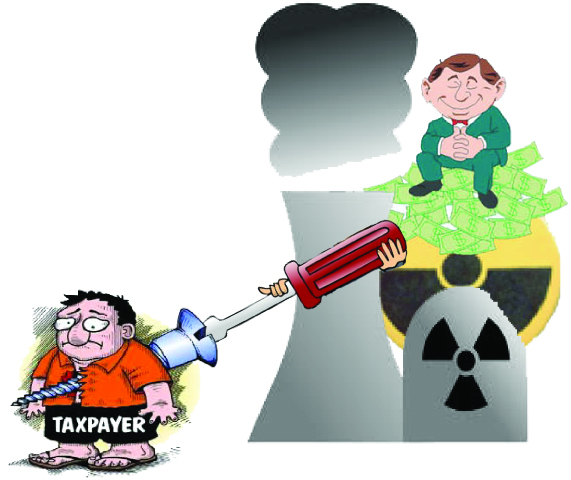
Nuclear Power would never have existed without government handouts and ratepayer subsidies. The commercial nuclear power Gordian knot, from mineral extraction to component manufacturing to reactor operation to Price-Anderson Nuclear Insurance, and ending in waste disposal, exists only because of opium, whoops, OPM, Other People’s Money, in the form of taxpayer subsidies. Intense political pressure from the DC-based Nuclear Energy Institute prevents national and state politicians from cutting that twisted knot into pieces.
The financial problems associated with constructing and operating commercial nuclear power plants and the need for federal subsidies had been identified as early as 1958 by Time Magazine.
“The program needs a strong infusion of Government aid because
commercial nuclear power is so new, complex, and costly that private
companies cannot carry that burden alone,”[1]
And again at the turn of the 21st century according to Scully Capital Services Inc, a Washington-based investment and financial services firm, when the “Nuclear Renaissance” was being hyped by NEI:
“without government participation, some risks and costs of new nuclear reactors may remain at unmanageable levels.” [2]
Just before the Fukushima meltdowns in February 2011, the Union of Concerned Scientists again identified how heavily subsidized nuclear power had been and continued to be:
Government subsidies to the nuclear power industry over the past fifty years have been so large in proportion to the value of the energy produced that in some cases it would have cost taxpayers less to simply buy kilowatts on the open market and give them away… Piling new subsidies on top of existing ones will provide the industry with little incentive to rework its business model to internalize its considerable costs and risks.[3]
In 2018, sixty years after that Time Magazine subsidy analysis, the United States Congressional Research Service issued an analysis[4] of total government energy research and development funding spanning 71 years between 1948 and 2018. The report concluded:
Energy-related research and development (R&D)—on coal-based synthetic petroleum and on atomic bombs—played an important role in the successful outcome of World War II. In the postwar era, the federal government conducted R&D on fossil and nuclear energy sources to support peacetime economic growth. … For the 71-year period from 1948 through 2018, nearly 13% went to renewables, compared with nearly 5% for electric systems, 11% for energy efficiency, 24% for fossil, and 48% for nuclear.
The graph [on original]shows that for seventy years after the secrets of the atom were unleashed on Hiroshima and Nagasaki, America plowed almost half (48%) of its research funds into more nuclear subsidies. What did those expenditures buy us? At the peak of the Atoms for Peace nuclear building spree in 1990, nuclear power provided about 20% of America’s electricity. But electricity is only a small part of the total energy America consumes; most of the US energy consumption comes from fossil fuels for transportation and heating. The nation’s overall energy consumption shows that nuclear power provides about 9 percent of the energy that our society runs on[5]. The bottom line is that half of America’s research expenditures over 70 years subsidized nuclear power’s 10% energy contribution. That is hardly a worthwhile investment unless you are the companies receiving all that cash!
I can understand that subsidizing a nascent industry in 1950 might be a reasonable policy decision, but nuclear subsidies have continued for eight decades. When your kids return from college, letting them have their bedroom back might be reasonable. But when the kids turn eighty years old, it’s long past time to end that subsidy. And ending those subsidies is exactly what the Nuclear Energy Institute was created to prevent.
It’s time to pick up the pieces from Atoms for Peace. Without subsidies, nuclear power is simply not competitive with renewable energy.
power is simply not competitive with renewable energy.
NOTES
1. February 10, 1958 Time Magazine ↑
2. July 2002 Business Case for New Nuclear Power Plants, Scully Capital Services, Inc. ↑
3. https://www.ucs.org/resources/nuclear-power-still-not-viable-without-subsidies?utm_source=SP&utm_medium=more&utm_campaign=NuclearSubsidies-02-23-11-more ↑
4. https://www.congress.gov/crs-product/RS22858, Renewable Energy R&D Funding History: A Comparison with Funding for Nuclear Energy, Fossil Energy, Energy Efficiency, and Electric Systems R&D, CRS Product Number RS22858 ↑
5. https://usafacts.org/articles/what-kinds-of-energy-does-the-us-use/ ↑
Arnie Gundersen is the Chief Engineer, board member, and resident “science guy” at the Fairewinds Energy Education NGO. Since the catastrophe at Fukushima, Arnie focuses his energy worldwide on the migration of radioactive microparticles. During his multiple trips to Japan, Arnie has met and trained community-volunteer citizen-scientists to study the migration of radioactive microparticles from Fukushima in two co-authored peer-reviewed scientific articles.
The Trump administration’s reckless attack on radiation protection will have long-term consequences for public safety

In the absence of an objective ALARA (as low as reasonably achievable) cost-benefit analysis, future decisions on limiting doses from ionizing radiation to workers and the public from nuclear power operations will be determined in significant part by the relative political strengths of industry and regulators. Under the Trump administration, the industry clearly has the upper hand.
Just as it did with air pollution rules, the Trump administration has now, in effect, set the value of American lives to zero in regulatory protections against nuclear-radiation-caused cancer.
the attacks of the Trump administration on public safety must be exposed.
By Frank von Hippel | Analysis | May 27, 2026, https://thebulletin.org/2026/05/the-trump-administrations-reckless-attack-on-radiation-protection-will-have-long-term-consequences-for-public-safety/?utm_source=ActiveCampaign&utm_medium=email&utm_content=The%20Trump%20admin%20s%20attack%20on%20radiation%20protection&utm_campaign=20260528%20Thursday%20Newsletter
Worldwide, regulations limiting doses from the radiation emitted by nuclear fissions and decays are based on the Linear No-Threshold (LNT) model. This hypothesis posits that, irrespective of whether ionizing radiation comes in a pulse or over years, the additional risk of developing cancer as a result is proportional to the cumulative amount of energy deposited per gram of tissue, with weighting risk factors for radiation type, sex, age, and specific organs.
Since 1975, the US nuclear industry has been required to limit exposures to workers and the public to “as low as reasonably achievable” (ALARA) levels. What the ALARA level should be is determined by cost-benefit analysis in which the costs of dose reductions are compared with the benefits to workers and the public, measured in terms of reduced disease and longer life expectancy.
In May 2025, four months after taking office, the Trump administration challenged this five-decade-old regulatory approach as part of an Executive Order “Ordering the Reform of the Nuclear Regulatory Commission” (NRC). The order claimed the “NRC utilizes safety models that posit there is no safe threshold of radiation exposure and that harm is directly proportional to the amount of exposure,” which corresponds to the linear hypothesis. “Those models lack sound scientific basis,” the Executive Order added, before directing the NRC to “reconsider reliance on the linear no-threshold (LNT) model for radiation exposure and the ‘as low as reasonably achievable’ [ALARA] standard, which is predicated on LNT.”
The Nuclear Regulatory Commission had reviewed exactly this question in 2021 in response to a campaign by advocates of the radiation “hormesis” theory, which posits that low doses of ionizing radiation actually protect against cancer by stimulating the body’s DNA repair mechanism—the exact opposite of ALARA. The NRC rejected that contention, concluding that “the LNT model continues to provide a sound regulatory basis for minimizing the risk of unnecessary radiation exposure to both members of the public and radiation workers.” As a result, the commission maintained the current dose limit requirements contained in its regulations.
But President Donald Trump’s decision to bring independent regulatory agencies under White House control and to fire the NRC’s chairman ended the commission’s resistance. On July 2, 2025, an anonymous NRC spokesperson enthused in a social media post that the Executive Order reforming the NRC “gives us a chance to reconsider our radiation protection framework in support of the whole-of-government effort to safely enable the nation’s use of nuclear power.”
Two weeks later, the NRC hosted a webinar for input on the issue of the LNT hypothesis. The Nuclear Energy Institute—the US nuclear industry’s lobbying organization—recommended that the commission remove ALARA and dose minimization as regulatory requirements. Instead, the institute proposed to establish a “practical threshold”—for instance, 2 rem per year (or 20 milliGray per year for gamma rays) for workers—below which further dose reduction would not be required. (The rem is a unit of effective absorbed radiation in human tissue, equivalent to one roentgen of X-rays. One millirem is one-thousandth of a rem. The Gray measures the absorbed dose, which is the physical amount of radiation energy absorbed by any material or tissue. One Gray corresponds to one Joule per kilogram.)
Radiation hormesis.
Read more: The Trump administration’s reckless attack on radiation protection will have long-term consequences for public safetyAdvocates of the theory of radiation “hormesis” do not believe the LNT hypothesis. Radiation hormesis is a fringe theory with passionate adherents who are taking advantage of the Trump administration’s skepticism about regulations of all types.
One of the most vocal hormesis advocates is Edward Calabrese, an emeritus professor of toxicology at the University of Massachusetts in Amherst. He argues that the evidence for the linear no-threshold hypothesis is based on scientific fraud and, therefore, should be replaced with a model that considers the possibility of no risk—and even possible benefits—from ionizing radiation below a certain dose.
Calabrese’s arguments persuaded some recent leaders of the Health Physics Society (HPS), an association of radiation-protection professionals, to host a 22-part, 10-hour video lecture series by Calabrese on the history of the LNT model in 2021-22. John Cardarelli, the HPS president when the videos were produced, summarizes Calabrese’s argument at the end of each video. In the final one, Cardarelli declares his conclusion that the LNT model is “based on flawed research, ideological motives, deliberate misrepresentation of the research record, and political agendas.”
Although the Health Physics Society declares that “the views expressed in these videos are not intended to represent official positions,” it also advertises that its associated credentialing organization, the American Academy of Health Physics, has “preapproved 10 continuing education credits for certified health physicists watching all 22 episodes of this video series.”
Physicist-epidemiologist Jan Beyea published a critique of Calabrese’s allegations in the HPS journal Health Physics, to which both Calabrese and Cardarelli have responded with lengthy rebuttals.
The research and reports Calabrese and his supporters are trying to discredit were done more than 50 years ago. For decades, the largest human population studied for radiation effects was the survivors of the 1945 Hiroshima and Nagasaki bombings, who, depending on their proximity to the ground zeros, were exposed to whole-body doses ranging from near zero to several Gray delivered in a single burst. But the cancer statistics for the Japanese survivors were not good enough to determine with high confidence carcinogenic effects in the dose range relevant for worker radiation protection (in the tens of milliGray per year). Hormesis advocates also argue that cellular mechanisms should be more effective in repairing the damage from low-rate radiation than from a nuclear explosion’s short pulse.
The lack of data on the effect of small low-rate doses left a gap in the epidemiological confirmation of the applicability of LNT estimates of the cancer risks from low doses to radiation workers and to civilian populations exposed to radioactive releases from nuclear accidents. That gap has been partially filled, however, in more recent studies of large populations of individuals who have received low-rate doses of ionizing radiation.
A directly relevant example is the INWORKS study done by an international consortium of researchers on the excess cancer deaths among approximately 310,000 nuclear industry workers in the United States, the United Kingdom, and France, whose radiation doses were measured and recorded throughout their decades of employment. As of 2012-16, this population had an average age of about 65, and about one third had died, with 28 percent of the deaths being due to “solid” cancers (abnormal masses of tissue arising in organs, glands, or bones), therefore excluding leukemia. Of those deaths, 5,500 to 14,000 were excess cases relative to the rate observed in a control group of 51,000 nuclear workers with near-zero occupational doses.
Figure 1 [on original]shows the rate of excess deaths from solid cancers in this population as a function of cumulative on-the-job dose 10 years before death, assuming that any solid cancer caused within the last decade of life would not have had time to become lethal. The bars show the 90-percent probability range associated with the number of deaths in each dose bin; that is, there is statistically only a 10-percent probability that, with more data, the number of excess deaths would converge outside that range (5 percent chance above and 5 percent below). The solid line is the best linear fit of the data to the LNT model.
By this measure, there are significant excess cancer deaths among nuclear workers down to cumulative doses of 30 milliGray.
Energy Department’s takeover. In addition to bringing the NRC to heel, the Energy Department’s Office of Nuclear Energy has been inviting startups promoting new-design nuclear power reactors to build prototypes on department land, including the 900-square-mile footprint of the Idaho National Laboratory, where they will not be subject to NRC safety requirements.
According to President Trump’s May 23 Executive Order, the NRC will be required “to approve reactor designs that the Defense Department or the Energy Department have tested and that have demonstrated the ability to function safely.”
At most, the startups will only be able to demonstrate that they will not have had a serious accident or a near miss within their first few years of operation before they hope to build their reactors in large numbers across the country and export them abroad. In their efforts to compete with natural gas, photovoltaic, and wind power plants, the nuclear startups are under great economic pressure to cut safety and security requirements currently required by the NRC and other regulators around the world. Costly requirements include containment buildings that prevent the release of radioactivity to the atmosphere in case of a core meltdown accident. Regulations also include requirements that it be possible for the timely evacuation of areas around the reactors where the population could be at risk of high radiation doses from an accident, and robust around-the-clock guard forces to protect nuclear plants against potential sabotage.
By putting the Energy Department, which is pouring billions of dollars into nuclear startups, first in line in safety regulation, the Trump administration has partially undone the 1974 decision of the post-Watergate Congress to separate safety regulation from nuclear power promotion by breaking up the Atomic Energy Commission to create the NRC and Energy Department.
Even before the Trump administration, under political pressure from the nuclear industry through congressional Republicans, the NRC commissioners backed off by majority vote from requiring filtered vents for a set of US reactors designed by General Electric that were clones of the Fukushima-Daiichi reactors 1–3, whose small-volume containments released large amounts of radioactivity due to overpressure after core meltdowns. The NRC also refused to end the practice of dense-packing spent fuel pools to five times their design density despite Fukushima unit 4’s near miss of a potentially much more catastrophic spent-fuel fire because of an undetected water level drop.
The end of ALARA. After it was effectively given much of the responsibility of regulating the US nuclear industry, the Energy Department commissioned a review of the LNT hypothesis by the Idaho National Laboratory, which supports the Office of Nuclear Energy’s mission to promote new types of nuclear power reactors.
INL quickly produced a report, which cited a 2013 comparison by Mohan Doss of the LNT model against the radiation hormesis, as “[p]erhaps most significant for regulatory considerations.” Dr. Doss is a radiologist, not an epidemiologist. His article was published in the journal Dose-Reponse, which was founded in 2003 with Professor Calabrese as its editor-in-chief and focuses on hormesis advocacy. Contrary to what the INL report claims, Dr. Doss’ article is not a meta-analysis but rather an argument for radiation hormesis.
Doss starts by arguing at length that the atomic bomb survivors study would have shown a hormesis effect had it been compared with a control group that had a higher incidence of cancer. Doss even replotted the atomic bomb survivor data to show the result if such a control group were used. In fact, there are appropriate zero-dose control groups for the atomic bomb survivors study, including those who were away from the cities at the time of the bombings. When those control groups have been used in studies, they showed some non-linearity with dose for male cancers, but no hormesis effect.
At the same time, INL referenced but ignored the findings of two actual meta-analyses of low-dose studies: one by the National Council on Radiation Protection and Measurements and one by an international team of 16 cancer epidemiologists led by Michael Hauptmann and published in the Journal of the National Cancer Institute and partly funded by the National Cancer Institute, National Institutes of Health, and the Energy Department.
The National Council review concluded that “no alternative dose-response relationship appears more pragmatic or prudent for radiation protection purposes than the LNT model.” Hauptmann and colleagues found that “there is evidence of cancer risks from low-dose ionizing radiation.”
INL’s “reevaluation report” was quickly cited in a memorandum by the Department’s Undersecretaries of Science and Nuclear Security recommending that the Secretary of Energy “eliminate ALARA from all Department of Energy Directives and Regulations,” which he reportedly has done.
In the absence of an objective ALARA cost-benefit analysis, future decisions on limiting doses from ionizing radiation to workers and the public from nuclear power operations will be determined in significant part by the relative political strengths of industry and regulators. Under the Trump administration, the industry clearly has the upper hand.
The Trump administration’s Environmental Protection Agency has recently made a similar decision that it will no longer take into account the health benefits from limiting air pollution. In 2024, the Biden administration announced new limits on fine particulate pollution from coal power plants and other facilities. Those regulations were justified by an estimate that, on average, 77 dollars in health benefits would result from each dollar spent by industry on emission reductions and that the regulations would save 4,500 lives per year.
A climate reporter commented in the New York Times about the Trump administration’s decision to roll back the air-pollution regulation that, for over four decades, “different administrations have used different estimates of the monetary value of a human life in cost-benefit analyses. But until now, no administration has counted it as zero.”
Just as it did with air pollution rules, the Trump administration has now, in effect, set the value of American lives to zero in regulatory protections against nuclear-radiation-caused cancer.
The damage that will result from the evisceration of the Nuclear Regulatory Commission will not be immediate and may arguably turn out to be minor on the scale of the damage the Trump administration is doing in other policy areas. But public safety analysts and decision makers must keep track of the dismantlement of regulatory structures that have been built over generations. Hopefully, it will be possible to reconstruct some of them, with improvements where possible. In the meantime, however, the attacks of the Trump administration on public safety must be exposed.
1 This Month

22 June – Virtual Event –Climate Change: New Data, New Debate
Monday, June 22, 2026 2:30 p.m. – 3:15 p.m. CT
YouTube. Register here
25 June- THE PUKE ON NUKES
Thursday, June 25, 2026
7pm Central Time (8pm ET, 6pm MT, 5pm PT) UTC – 5
From NRC & DOE Deregulation to Techno-Fascist Billionaires Going Nuclear, Plus a Few Songs from Atomic Cabaret REGISTER
26 June – Radiation Trainwreck at the NRC / Join the Protect Better Campaign – https://us02web.zoom.us/meeting/register/4ZlZ5_qLSHGiLSCg8FF6Bg#/registration
1st July – Webinar Waste of Space: The Environmental Harm of Military and Civil Space Activity st July, 7 pm

Report Launch Online: We are seeing an increasing exploitation of space for military and commercial purposes. This must change.

Protect Sazan Island from the Trump family! https://secure.avaaz.org/campaign/en/protect_sazan_island_from_the_trump_family_loc/?bqFCVab&v=174511&cl=22707147157&_checksum=5e9dde668860e8231c33699735e16a1fbf22ab2cb01da50c999fe8732b9775ef&utm_source=email&utm_medium=blast_email&utm_campaign=174511


Cuba Is Not a Failed State – It Is a Besieged State
PETITION: “Global Appeal to Endorse Palestinian Right of Return of Refugees”
To see nuclear-related stories in greater depth and intensity – go to https://nuclearinformation.wordpress.com
-
Archives
- June 2026 (227)
- May 2026 (306)
- April 2026 (356)
- March 2026 (251)
- February 2026 (268)
- January 2026 (308)
- December 2025 (358)
- November 2025 (359)
- October 2025 (376)
- September 2025 (257)
- August 2025 (319)
- July 2025 (230)
-
Categories
- 1
- 1 NUCLEAR ISSUES
- business and costs
- climate change
- culture and arts
- ENERGY
- environment
- health
- history
- indigenous issues
- Legal
- marketing of nuclear
- media
- opposition to nuclear
- PERSONAL STORIES
- politics
- politics international
- Religion and ethics
- safety
- secrets,lies and civil liberties
- spinbuster
- technology
- Uranium
- wastes
- weapons and war
- Women
- 2 WORLD
- ACTION
- AFRICA
- Atrocities
- AUSTRALIA
- Christina's notes
- Christina's themes
- culture and arts
- Events
- Fuk 2022
- Fuk 2023
- Fukushima 2017
- Fukushima 2018
- fukushima 2019
- Fukushima 2020
- Fukushima 2021
- general
- global warming
- Humour (God we need it)
- Nuclear
- RARE EARTHS
- Reference
- resources – print
- Resources -audiovicual
- Weekly Newsletter
- World
- World Nuclear
- YouTube
-
RSS
Entries RSS
Comments RSS
 nuclear-news