United States under Donald Trump formally exits Paris Agreement on climate change
|
United States under Donald Trump formally exits Paris Agreement on climate change https://www.abc.net.au/news/2020-11-05/us-formally-exits-paris-climate-change-agreement-trump/12849940
The Trump administration told the United Nations it intends to pull out of the agreement in 2017. Some 189 countries remain committed to the 2015 Paris Agreement. Moving forward the agreement aims to keep the global increase in average temperatures worldwide “well below” two degrees Celsius, ideally no more than 1.5 Celsius, compared to pre-industrial levels. A further six countries have signed, but not ratified the pact. Scientists said any rise beyond two degrees Celsius could have a devastating impact on large parts of the world, raising sea levels, stoking tropical storms and worsening droughts and floods. The only binding requirement is that nations have to accurately report on their efforts. The United States is the world’s second-largest emitter of heat-trapping gases such as carbon dioxide, with only China producing more. In recent weeks, China, Japan and South Korea have joined the European Union and several other countries in setting national deadlines to stop pumping more greenhouse gases into the atmosphere. While the Trump Administration has shunned Federal Government measures to cut emissions, some states, cities and businesses in the US have pressed ahead with their own efforts. Democratic presidential candidate Joe Biden has said he favours signing the US back up to the Paris Accord. With the United States outside the pact, it will be harder for the rest of the world to reach the agreed goals. |
|
Some problems that will handicap the development of Small Nuclear Reactors
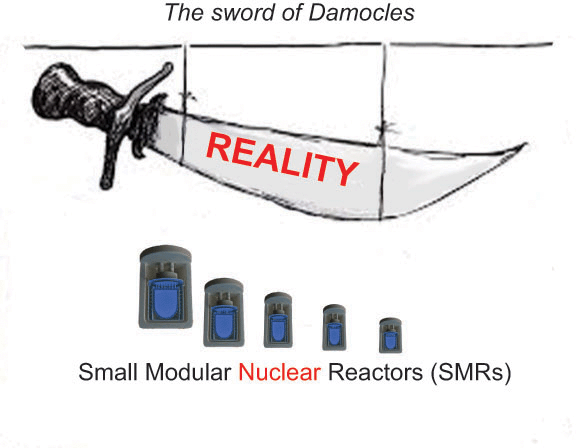 The I&C challenges for small modular reactors, Nuclear Engineering International 4 November 2020 Dr Li Li examines the instrumentation and control requirements and challenges for a new generation of small modular reactors.
REACTOR DEVELOPERS ARE DEVELOPING A wide variety of small modular reactor (SMRs)….. Many use Generation III+ pressurised water reactor (PWR) technology similar to that used in current gigawatt-scale reactors, while others are based on advanced Generation IV technologies ranging from high temperature gas-cooled reactors to molten-salt reactors.
Each design will have its own requirements for instrumentation and control (I&C) systems for the operation, monitoring and control of the reactor, turbine island and balance of plant. Even among PWRs, the design principles and I&C architectures are very different and cannot be easily replicated from one design to another.
To understand the challenges, let’s look at three competing designs: the UK SMR being developed by a consortium of companies including Rolls-Royce, Jacobs, Assystem and Atkins with support from research institutions including Nuclear AMRC; the NuScale Power Module backed by Fluor Corporation with funding from the US Department of Energy; and the Westinghouse SMR, which adapts technologies from the established AP1000 design………..
The issue of cyber security will be critical for the certification of digital I&C systems. According to the Industrial Control Systems Cyber Emergency Response Team, part of the US Department of Homeland Security, cyber-attacks and security infringement targeting control systems have increased significantly in recent years. With more digital smart devices used in nuclear power plant of any size, it must be a priority to protect the vulnerability of smart devices and digital I&C system from cyber attack and malicious sniffing from hostile individuals or organisations…….
in most cases, new codes and standards will need to be developed for advanced reactors.
The development of new codes and standards is a very lengthy process. It will take resources and time to publish a new standard for the nuclear industry, and we might not see one ready before new SMR developers file their design certification application……….
Many SMR designs, including the three considered above, have the potential to be used for co-generation of process heat, district heating or desalination. This will introduce additional complexity for regulators to approve the power plant I&C design, if the co-generation processes are located at same site for economic reasons. This brings new challenges because extra safety measures must be considered. For example, additional safety features of the control system and evacuation plan must be approved by an adequate jurisdictional authority for the orderly shutdown of both the nuclear plant and industrial processes in the event of an accident.
Author information: Dr Li Li, Head of the digital I&C group at the UK’s Nuclear Advanced Manufacturing Research Centre (Nuclear AMRC) https://www.neimagazine.com/features/featurethe-ic-challenges-for-small-modular-reactors-8345341/
Poland’s nuclear energy plans not likely to be supported by the European Commission
Nuclear power is not considered environmentally sustainable, and there is little hope this approach will change. Therefore, the possibilities for bankrolling nuclear energy are very limited.
Brussels’s impact on Poland’s nuclear project, https://biznesalert.com/brusselss-impact-on-polands-nuclear-project/ : Paweł Wróbel, @Pawrobel 4 Nov 20, Poland’s nuclear power plant constrsuction program has been riddled with ambiguity for many years. Neverthele, among the few certainties remains the necessity to abide by the EU law on granting state aid. The project cannot happen without Brussels. Investments in nuclear energy are one of the most expensive in the energy sector, which is why building a nuclear plant in Poland will not be possible without state support. Therefore, the European Commission will have to approve the selected financing model – Paweł Wróbel, CEO of Gate Brussels, writes for BiznesAlert.pl.
Sizewell C – Britain walking into a trap that benefits only the nuclear industry
 Sizewell C – Britain walking into a trap that benefits only the nuclear industry, Sizewell C: Dodgy deals and obscure decision-making https://eciu.net/blog/2020/sizewell-c-dodgy-deals-and-obscure-decision-making By Jonathan Marshall, Head of Analysis@JMarshall_ECIU, 02 November 2020 This weekend the BBC reported that the Government was close to reaching a deal with EDF to construct a new nuclear power station at Sizewell in Suffolk. Sizewell C is expected to be a carbon-copy of the plant under construction at Hinkley Point, and will help fill the gap left as Britain’s existing nukes retire.
There is little point in re-hashing the well-worn arguments about whether we need new nuclear in the UK. No changing of minds on either side looks likely, nor is there much point trying to counter the six-or-so lines from either side about why nuclear is a good or bad choice.
What is worth scrutiny, though, is how the Government appears to be making another hash of agreeing terms and penning a contract.
Just three years ago the National Audit Office delivered a stinging rebuke of the deal with EDF for Hinkley Point C, saying it has ‘locked consumers into a risky and expensive project with uncertain strategic and economic benefits’; that efforts to ensure value for money had been overlooked; and that there remained a risk that the developer would come cap-in-hand for more cash before the project was finished, at which point the Government would not be in the strongest position to say no.
Backroom dealings
And it is hard to see how the Government has let itself be backed into this corner, allowing EDF to present itself as ‘the only option’ for the new nuclear it is no doubt saying is essential to reach net zero.
Sizewell has even received public backing from those usually in favour of a small state and as little Government intervention as possible, a position miles away from what is seemingly imminent.
Endless stalling on policy decisions and lack of support for other plants has seen other proposals evaporate, changing economics have seen developers pull out globally (Japan, for example, has said it will get to net zero without new nuclear), and a constant drumroll of political support for the as-yet-to-exist Small Modular Reactors rather than traditional large plant have left EDF as the only player in town.
The Government, well aware of the benefits of pitting projects against each other, has been lauding the successes of doing exactly that in auctions for offshore wind, in the capacity market and in a host of nascent markets for flexible power. Yet, nuclear remains exempt.
And while there are some factors that would make an auction system more difficult – high project start-up costs, lengthy safety sign-offs, etc, it is surely not beyond the wit of ministers and their advisors, and the civil service, to force something into place.
The only winners from the current behind-closed-doors set-up are the nuclear industry, which is not an effective way to make policy.
Time-Limited Backstop
The desperation to bring costs down for nuclear mean British electricity users are set to be on the hook for the costs of building Sizewell before it starts generating.
This situation would raise eyebrows in many instances, but for a scheme based on projects currently running wildly over budget and embarrassingly behind schedule, this seems like madness.
There are few guarantees in British media, but stories about rising energy bills are about as close as one can get. Extra costs on households to pay back investors, rather than for actually producing energy, mean this deal could be a toxic legacy for years to come.
It remains to be seen what protections from overrunning costs are put in place for consumers, and what guarantees that the cost agreed through a Regulated Asset Base (RAB) model will not increase as the project inevitably runs over budget. Both of these are pretty essential for allaying concerns that the public is being sold another white elephant.
Going Blind
On finances, the latest BEIS assessments of generation costs didn’t include nuclear, apparently for commercial confidentiality reasons. We should now expect these to be updated, especially as the latest iteration included the associated ‘system costs’ of different technologies. Doing this for nuclear (which of course imposes other costs on the power grid due to its inflexibility) is now vital.
Where are the assessments of how new nuclear can fit into increasingly smart and flexible power grids? Churning out a constant stream of electrons is good for keeping the country running, but it would be more useful if there was some data to show how it impedes on the rest of the grid.
What thought has been given to location? The Suffolk coast is set to be the landing point for a huge amount of offshore wind capacity – is it the best place for a new nuclear plant? Or just the only place still in the running?
How could the power output from Sizewell be used most effectively? What are the economics behind building an electrolyser nearby to convert excess power into hydrogen? Can the waste heat be made use of?
Providing answers to these sort of questions (just a few of many more) would help us to have a more grown up debate around nuclear, and would help understand the reasons for signing what, at first sight, looks like another dodgy deal.
Theresa May’s decision to sign off Hinkley was met with widespread dismay, for the reasons above and for many more. Without more clarity on Government thought, it appears our current Prime Minister could be walking into the same trap.
UK nuclear weapons making to be run by the Ministry of Defence
Public Technology 3rd Nov 2020, The government has claimed that bringing the manufacturing of nuclear
warheads back in house will enable it to better “invest in technology”.
Since 1993, the Atomic Weapons Establishment – which is responsible for
developing, manufacturing, and managing the UK’s arsenal of nuclear
weapons – has operated as a private company, under contract from the
government.
Hunting-BRAE held the contract until 1999, at which point a
25-year deal was awarded to AWE Management Ltd, a joint venture led by 51%
shareholder Lockheed Martin, supported by Serco and Jacobs Engineering.
Defence secretary Ben Wallace announced in parliament this week that,
following a review, the “Ministry of Defence has concluded that AWE will
revert to a direct government ownership model”. From as early as next
summer, the nuclear agency will become an arm’s-length government body,
wholly owned by the ministry.
Basingstoke Gazette 3rd Nov 2020, THE government will take control of a nuclear weapons manufacturer in
Aldermaston. AWE, which also has a site in Burghfield, is to be taken over
by ministers to “simplify and further strengthen” the relationship between
the operator and the Ministry of Defence. It means that Lockheed Martin,
which owns 51 per cent of AWE Management Ltd, and Serco, which owns 24.5
per cent, will be stripped of their control of the base when the lucrative
25-year contract comes to an end, with Sky News reporting that it could be
as soon as next year.
https://www.basingstokegazette.co.uk/news/18842320.awe-aldermaston-taken-government/
Ohio Nuclear-Plant Owner’s Bankruptcy Plan Upheld by Appeals Court
|
Ohio Nuclear-Plant Owner’s Bankruptcy Plan Upheld by Appeals Court, Environmental groups and consumer advocates had asked court to reconsider Energy Harbor’s chapter 11 plan, WSJ, By Andrew Scurria Nov. 3, 2020
Monday’s decision by the U.S. Court of Appeals for the Sixth Circuit in Cincinnati affirmed the chapter 11 restructuring of Energy Harbor, which filed for bankruptcy in 2018 as a subsidiary of FirstEnergy and emerged in February owned by investors. Environmental… (Subscribers only) https://www.wsj.com/articles/ohio-nuclear-plant-owners-bankruptcy-plan-upheld-by-appeals-court-11604434946 |
|
Exelon may be about to split off its unprofitable nuclear generation business.
Exelon has secured zero-emissions credits for financially struggling nuclear plants in New York and New Jersey, two states seeking to eliminate their carbon emissions by midcentury, and has won similar credits as part of Illinois’ 2016 Future Energy Jobs Act that supply about $235 million per year in zero-emissions credits to its Clinton and Quad Cities nuclear plants.
But Exelon has not secured subsidies for four other Illinois nuclear power plants, including the Byron and Dresden facilities. In August it announced it will close those plants in 2021 and may also seek early retirement of its Braidwood and LaSalle power plants unless it can obtain state support to bolster their economics. ………
State support for zero-carbon nuclear scrambled by bribery scandal
But the FRR plan contained in last year’s Clean Energy Jobs Act lost lawmaker support in the wake of Exelon utility ComEd’s connection to a federal bribery investigation alleging the utility steered jobs, contracts and payments to House Speaker Michael Madigan in exchange for favorable treatment in the state capitol. Exelon agreed to pay a $200 million fine and submit to a deferred prosecution agreement this summer.
Due to shutdowns, Japan has only one nuclear reactor working
Japan left with only one nuclear reactor working due to shutdown, Asahi Shimbun, By HIROKI HASHIMOTO/ Staff Writer, November 4, 2020
Electric power companies are required to construct an anti-terrorism facility at their nuclear power plants under stringent new safety regulations imposed after the triple meltdown at the Fukushima plant.
But Kansai Electric failed to meet the deadline at the Takahama nuclear power plant in Takahama, Fukui Prefecture, forcing it to take its No. 3 and No. 4 reactors offline.
In addition, pipes need to be replaced at its Oi nuclear power plant’s No. 3 reactor.
Kansai Electric submitted repair plans to the government and expects to finish the work in January so it can restart the reactor in February at the earliest.
In January this year, the Hiroshima High Court granted a provisional disposition order to stop Shikoku Electric’s Ikata nuclear power plant’s No. 3 reactor in Ikata, Ehime Prefecture, which means it is unlikely to come back online until next March at the earliest.
Kyushu Electric’s Sendai nuclear power plant’s No. 1 and No. 2 reactors in Satsuma-Sendai, Kagoshima Prefecture, were also suspended after construction of an anti-terrorism facility fell behind schedule.
The Genkai nuclear power plant’s No. 3 reactor is undergoing regular inspections, so only the No. 4 reactor is still operating.
This situation is expected to continue until Dec. 22 when Kansai Electric plans to restart the No. 3 reactor at its Takahama nuclear power plant. http://www.asahi.com/ajw/articles/13900336
Climate Change – Hubris or Nemesis for Nuclear Power?
BANNG (accessed) 3rd Nov 2020, Climate Change – Hubris or Nemesis for Nuclear Power? By Andy Blowers.
Article for Town & Country Planning Association. Proposals for new nuclear
power installations are often presented as integral to solutions to climate
change, but the dangers of sites in low-lying coastal areas only add to a
range of threats to security and the environment posed by nuclear power
https://www.banng.info/wp/wp-content/uploads/2020/11/AB_TCP_Sept_Oct_2020.pdf
Europe still without a final disposal solution for its most dangerous nuclear waste
Le Monde 4th Nov 2020, Europe still without a final disposal solution for its most dangerous
nuclear waste. The first edition of the World Report on Nuclear Waste,
published Wednesday in its French version, provides elements of comparison
of management methods in different countries.
Warning to UK government on Sizewell nuclear power project – is it value for money?
|
New Civil Engineer 4th Nov 2020 Energy and Climate Intelligence Unit head of analysis Jonathan Marshall has urged caution as the government looks increasingly likely to approve plans for the Sizewell C nuclear power station.
According to the BBC, talks between the government and Sizewell contractor EDF have “intensified in recent weeks”. However, Marshall emphasised that renewable energy solutions offer more flexibility than nuclear. “If you look at the amount of money involved in building nuclear power stations, it’s pretty easy to come up with something renewables-based that’s as firm and moreflexible,” he said. “There are not many people saying we should have loads of nuclear apart from the nuclear industry. There’s also the risk that by the time power stations are built the grid is running in a different way because they take so long to build.”
|
Anxieties, memories of Chernobyl, as Belarus launches new nuclear power station
|
Chernobyl fears as Belarus launches new nuclear power station: Lithuania distributes iodine tablets to 500,000 close to border over safety concerns
Daily Mail, RACHAEL BUNYAN FOR MAILONLINE and AFP , 4 Nov 20, Belarus today launched its controversial Russia-built nuclear power station despite safety concerns from neighbouring Baltic states three decades after the Chernobyl nuclear disaster. Lithuania’s Foreign Minister Linas Linkevicius criticised the launch saying it had gone ahead despite unresolved safety issues The government in the Lithuanian capital, Vilnius, has also offered free iodine tablets to around half a million people living close to the Belarus border to help protect them from radiation in case of an accident The Astravets nuclear power plant, Belarus’s first nuclear station, is just 30 miles away from Vilnius. ……… Lithuania’s Foreign Minister Linas Linkevicius criticised the launch saying it had gone ahead despite unresolved safety issues and described the energy project as ‘geopolitical’. The EU and the international community ‘simply cannot stay indifferent to such cynical ignorance,’ Linkevicius wrote on Twitter. Lithuania said it had immediately stopped electricity imports from Belarus and neighbouring Latvia said it had also blocked imports of energy generated at the plant.…….. https://www.dailymail.co.uk/news/article-8909665/Chernobyl-fears-Belarus-launches-new-nuclear-power-station-despite-safety-concerns.html |
|
The world needs, and awaits, a reasonable and decent American Presidency, under Joe Biden
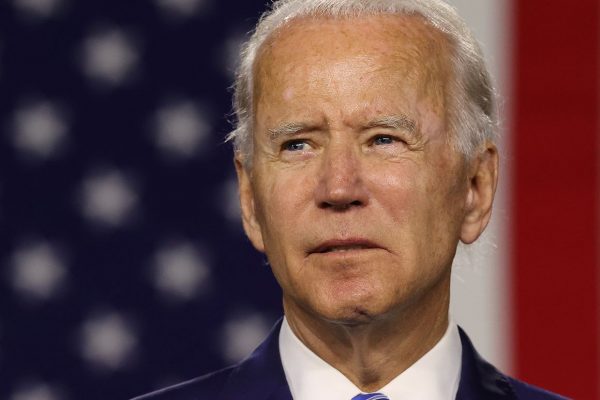
I am hopeful that Joe Biden and the Democratic Party will win this American election.

Christina Macpherson’s websites & blogs
What has this got to do with this website, which is dedicated to issues of nuclear and cimate?
Everything!
That is because the human race has got to solve these global horrors – with reasonableness, decency and fairness. That demands thoughfulness, considerateness of others, co-operation, and global effort.
The United States of America used to be a global leader – up until recently, when it has been cursed with the presidency of a narcicisstic bully, Donald Trump. Four years of a government run by this sociopath have impeded the world’s effort to slow, preferably to stop, global heating. Trump has been a willing servant of the nuclear weapons industry , indeed an investor, profiting from it. He contines to foster distrust, hatred, and division among people.
I have not been a great fan of Joe Biden. But he does bring a decency and reasonableness to politics – qualities that are essential for America and the world to face the big problems. The Democratic Party does bring a mode of co-operation, and an intelligent respect for fair and legal processes.
A historic moment of threat to American democracy
Don’t underestimate the threat to American democracy at this moment Corey Brettschneider https://www.theguardian.com/commentisfree/2020/nov/04/american-democracy-election-threat-trump–5 Nov 20
|
Even if Biden does win and the results are accepted, we will have lived through a moment that showed our democracy is less stable than we assumed. n the early morning hours after election day, the president of the United States showed his authoritarian ambitions. He launched an attack on our democratic system at a moment when it is at its most fragile in recent memory. His lies about the results of the election erode trust in the fairness of the democratic process and risk provoking violence. Now we are dependent on media, especially the outlets most popular with Donald Trump’s base, to rein in the chaos he is encouraging. This grave threat comes from the president’s false declaration of victory, despite no evidence that he had won the election, and with millions of valid votes yet to be counted. He referred to any suggestion that he had lost as “a fraud on the American public”. In one breath, he declared that “we want all voting to stop” and that “we don’t want any ballots to be found at four in the morning.” This conflation of voting after election day and counting votes after election day – a standard practice in every election – is deeply misleading and deeply dangerous. In this respect, its damage is far worse than many of the many fibs Trump has made while in office. His suggestion is a direct lie, one that comes while millions of voters look to him to understand who our legitimate president will be. In past elections, the media – specifically TV networks – served as the main gatekeepers of results, but this president communicates directly to his base through social media, avoiding the reputable news organizations that could factcheck him in real time. This means that his unsubstantiated claims of victory – and of electoral fraud perpetrated by Democrats – are being fed directly to his base. Many will believe him, undermining confidence in the ultimate legitimate results and sowing discord and potentially violence. The problem of Trump’s unfiltered reach coupled with his blatant lying is compounded by social media executives’ inadequate handling of the situation. Facebook and its irresponsible CEO, Mark Zuckerberg, refused to directly challenge the president, even while receiving credit from some observers for reminding voters that “final results” may take days. They did not call Trump’s statement a lie or take strong steps to counter it. Twitter went far enough to say that the president’s message might be “misleading”, but it too failed to take a strong and definitive stand on a statement that is not just possibly, but indisputably, incorrect. Surprisingly, Fox News might be the media outlet that holds the country together. The network called Arizona for Joe Biden around the same time as the Associated Press and has insisted on reporting real numbers, with its reputable non-partisan news anchors leading the coverage. Ultimately, a large number of Trump voters might turn to Fox to decide whether to trust official results or their president, who has told them that those disputing his victory are committing fraud. If Fox continues to say that any early declaration of victory is incorrect, viewers might be more likely to have the patience required to wait for what might be days, with twists and turns as more ballots are reported, until a winner is declared. Still, it is not only the media outlet that should be tasked with maintaining the public’s confidence in our electoral machinery. Part of Trump’s pattern of deception to his base involves invoking bizarre and completely erroneous legal claims. On Tuesday night, Trump promised to take up his concerns about ongoing ballot counting to the US supreme court. However, if ballots are received on or before election day, there is no serious legal claim to support Trump’s seeming contention that any ongoing ballot counting after the election is fraudulent. Indeed, in a decision the president disparaged on Twitter, the US supreme court refused to undo the Pennsylvania supreme court’s decision that even ballots that arrived three days after election day would count as long as they were postmarked by election day. I cannot overstate the danger of this moment. Right now, it is essential that Republican members of Congress and the vice-president make it clear that the ballots need to be counted. Both candidates and parties should be modeling respect for our democratic process, patiently waiting for the legitimate results, and encouraging all Americans to do the same. Instead, Trump’s claims risk sowing violence, confusion and an erosion of faith in the bedrock principles of American democracy. Amid this chaos, what is left for us to do? Americans who believe that every person’s ballot should count in an election must insist on truth and spread this message as widely as possible on social media, at our dinner tables and, if need be, through peaceful demonstrations. That is the only way to counteract Trump’s lies and his threat of upending our democracy. Even if Biden does win and the results are accepted, we will have lived through a moment that showed our democracy is less stable than we assumed. Strengthening it and reinforcing its protections must be a priority of a Biden presidency.
|
|
The nuclear launch authorizer’s guide to staying calm at election times
|
The nuclear launch authorizer’s guide to staying calm on election night, Bulletin of the Atomic Scientists By Matt Field | November 3, 2020 Their thumbs are calloused from refreshing Nate Silver’s twitter feed too many times. Their nerves are frayed from too much time spent figuring out what’s going on in places like Lackawanna County. (I know you know where it is.) Americans are heading into this Election Day full of anxiety and stress. For many, the stakes of today’s contest between President Donald Trump and Joe Biden couldn’t be higher. Anxiety-inducing information will be arriving in social media feeds, on TV screens, and on news websites at a furious pace later today. But it’s important for people to take a moment to breathe, a second to ease their worried minds. Perhaps they might consider a few tips from the annals of nuclear weapons history, insights from times when people, through relatively calm rationality, were able to avert the worst in the highest of high stress situations.
“The sirens sounded very loudly, and I just sat there for a few seconds staring at the screen with the word ‘launch’ displayed in bold red letters,” Petrov told the BBC in 2013. Petrov watched as his systems warned him of another four launches—for a total of five incoming Minuteman intercontinental ballistic missiles. Only minutes remained before they would reach their targets. “The computers changed their alerts from launch to missile strike.” But Petrov decided not to trust the computer. He reported a false alarm to his superiors, forestalling a possible Soviet retaliatory strike. “But I myself was not sure until the very last moment,” he said. Making an educated guess, Petrov decided that the alerts were wrong. In a real war, the United States would launch a massive attack on Soviet defenses, Petrov had been told. “When people start a war, they don’t start it with only five missiles,” he told The Washington Post. Petrov, who died in 2017, is often credited with preventing a nuclear war. The Cuban Missile Crisis and bad advice. For a little over a month in the fall of 1962, the world stood on edge as the United States and the Soviet Union engaged in a standoff over Soviet nuclear missiles in Cuba–just 90 miles from the United States. Coming a little more than a year after the ill-conceived Bay of Pigs invasion, in which US-trained Cubans made a miserably failed attempt to overthrow Cuban leader Fidel Castro, the Cuban Missile Crisis happened at a time of sky-high tensions between the Cold War enemies. When US spy plane photos showed Soviet missile installations in Cuba, President John F. Kennedy had to do something. He’d taken a tough line on Cuba and the Soviet Union as a presidential candidate, after all. Kennedy’s advisors, including his brother Robert Kennedy, had a lot of suggestions. The advisors developed proposals, including a strike on the Soviet missile facilities or a full-on invasion of the island involving tens of thousands of troops. Luckily for the world, Kennedy didn’t invade, which could have ignited a nuclear war. He didn’t go with his brother’s idea to stage a false-flag attack on a US base to justify an invasion, either. According to a review of his book in The New Yorker, historian Martin J. Sherwin believes Adlai Stevenson, the US representative to the United Nations and a two-time presidential candidate, successfully urged Kennedy to negotiate. The Soviets pulled their missiles off the island, and the United States agreed not to try and invade Cuba again and pulled its own missiles from Turkey………. Tip: The web will be flooded with election-related disinformation today. There could be false claims about voting irregularities such as ballots being thrown away, or of people voting twice. Trump himself has been making false claims about a rigged election or voter fraud for much of the election cycle. When you see something that causes you to break out in cold sweats, check another source. The presidential elections are a high stakes event. It’s understandable to be nervous. But remember that first reports can be and often are incorrect. Through it all, try to maintain the calm of a Stanislav Petrov and the wisdom of Adlai Stevenson. You may not save the world from Armageddon, but just maybe, you’ll preserve your own sanity. https://thebulletin.org/2020/11/the-nuclear-launch-authorizers-guide-to-staying-calm-on-election-night/ |
|

1 This Month

Tell Congress: Prevent Nuclear Catastrophe in Iran

Tell Congress: Prevent Nuclear Catastrophe in Iran

Read the Public Inquiry Report, the Commissioners’ report, Surrendering Australia: The AUKUS Deception is available to download for free at aukuspublicinquiry.com. Or just watch the replay of the National Press Club Luncheon.


Shut down the radiation-damaged Heysham nuclear reactors now
To see nuclear-related stories in greater depth and intensity – go to https://nuclearinformation.wordpress.com

Say No to NASA’s Reckless Nuclear Reactor on the Moon
Say No to NASA’s Reckless Nuclear Reactor on the Moon
-
Archives
- November 2026 (269)
- October 2026 (302)
- September 2026 (339)
- August 2026 (330)
- July 2026 (355)
- June 2026 (287)
- May 2026 (306)
- April 2026 (356)
- March 2026 (251)
- February 2026 (267)
- January 2026 (308)
- December 2025 (358)
-
Categories
- 1
- 1 NUCLEAR ISSUES
- business and costs
- climate change
- culture and arts
- ENERGY
- environment
- health
- history
- indigenous issues
- Legal
- marketing of nuclear
- media
- opposition to nuclear
- PERSONAL STORIES
- politics
- politics international
- Religion and ethics
- safety
- secrets,lies and civil liberties
- spinbuster
- technology
- Uranium
- wastes
- weapons and war
- Women
- 2 WORLD
- ACTION
- AFRICA
- Atrocities
- AUSTRALIA
- Christina's notes
- Christina's themes
- culture and arts
- Events
- Fuk 2022
- Fuk 2023
- Fukushima 2017
- Fukushima 2018
- fukushima 2019
- Fukushima 2020
- Fukushima 2021
- general
- global warming
- Humour (God we need it)
- Nuclear
- RARE EARTHS
- Reference
- resources – print
- Resources -audiovicual
- Weekly Newsletter
- World
- World Nuclear
- YouTube
-
RSS
Entries RSS
Comments RSS

