Canada’s Bruce County Council postpones voting on nuclear waste bunker plan
 Bruce County defers vote to support the science behind a nuclear waste bunker, By Janice MacKay, Blackburn News, November 5, 2020 Bruce County Council has agreed to defer the vote on a motion made at today’s meeting to accept the Nuclear Waste Management’s proposed Deep Geologic Repository to store used nuclear fuel as a matter of settled science.Michelle Stein of the group “no DGR South Bruce” told council via skype Thursday during their meeting that the motion was premature when the science isn’t settled on the proposed nuclear fuel Repository…….. She says moving the waste could add increased risk as it is transported through local municipalities. She worries that since there is no nuclear fuel DGR operating in the world, developing one in South Bruce would be an experiment which could put local rivers and waterways at risk. She added that the nuclear fuel waste would also still need to be stored at the surface, as “the nuclear waste needs to go into cooling pools, and then it needs to be stored above ground for approximately 30 years before it’s even cool enough to be moved.” https://blackburnnews.com/uncategorized/2020/11/05/bruce-county-defers-vote-support-science-behind-nuclear-waste-bunker/ |
|
Covid-19 divides and weakens the nuclear sector in South Africa
 Covid-19 divides and weakens the nuclear sector in South Africa, Daily Maverick, By Chris Yelland• 5 November 2020 The coronavirus crisis is undermining the business plan and turnaround strategy at the Nuclear Energy Corporation of South Africa. The resulting losses are creating debilitating divisions between labour, middle and senior management, executives and boards of Necsa and its subsidiaries – as well as wage increases Following a tumultuous operational and management period for several years, with massive financial losses, new Nuclear Energy Corporation of South Africa (Necsa) chairperson David Nicholls and acting CEO Ayanda Myoli presented a restructuring and turnaround plan to Parliament on 20 May 2020……… While many considered the turnaround plan to be hopelessly optimistic even before the Covid-19 crisis in South Africa from March 2020, the impact of the national and international lockdowns are estimated to have resulted in the Necsa group taking a massive hit, which would increase the expected loss for 2020/21 to more than R300-million. …… While many considered the turnaround plan to be hopelessly optimistic even before the Covid-19 crisis in South Africa from March 2020, the impact of the national and international lockdowns are estimated to have resulted in the Necsa group taking a massive hit, which would increase the expected loss for 2020/21 to more than R300-million. https://www.dailymaverick.co.za/article/2020-11-05-covid-19-divides-and-weakens-the-nuclear-sector-in-south-africa/ |
|
Nuclear Technology Germany Association says Small Nuclear Reactors (SMRs) will always be more expensive than large ones.
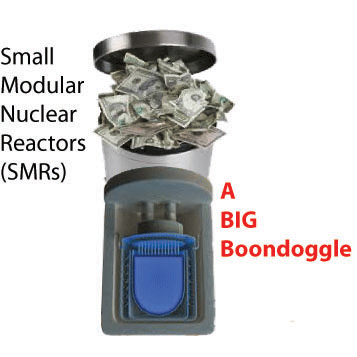 German nuclear industry cautious about usefulness of small reactors for energy transition, Nuclear phase-out Technology, Clean Energy Wire, Süddeutsche Zeitung , 6 Nov 20 Small Modular Reactors (SMR) are increasingly hailed as an effective way for using nuclear power to curb the climate crisis without the major risks associated with conventional nuclear plants, but Germany’s nuclear industry is sceptical whether the small reactors really can help boost international climate action, Christian J. Meier writes for the Süddeutsche Zeitung ……… Nicolas Wendler of industry association Nuclear Technology Germany (KernD) says SMRs are always going to be more expensive than bigger reactors due to lower power output at constant fixed costs, as safety measures and staffing requirements do not vary greatly compared to conventional reactors. In terms of levelised energy costs, SMRs will always be more expensive than big plants.” In order for SMRs to be profitable, these should run at maximum utilisation most of the time, Wendler argues, concluding that the potential on the German market would not be much greater than what is needed to adjust oscillating renewable power production…. https://www.cleanenergywire.org/news/german-nuclear-industry-cautious-about-usefulness-small-reactors-energy-transition
|
U.S. Navy to spend $billions on two Columbia-class nuclear missile submarines
|
US Navy inks $9.4B contract for two Columbia-class nuclear missile submarines, Defense News
By: David B. Larter 6 Nov 20, WASHINGTON — The U.S. Navy announced Thursday it had inked a $9.47 billion contract with builder General Dynamics Electric Boat for the full construction cost of the lead boat of the Columbia-class ballistic missile submarine, as well as advanced procurement money for the second boat, the future USS Wisconsin.
The announcement marks the end of the beginning for the Columbia class, which the Navy has for years said is its top priority. The 12-ship class will replace the retiring Ohio-class submarines. The Columbia is slated to make its first patrol in 2031, and the Navy says it must meet the timeline to maintain continuous sea-based deterrent patrols……. The Columbia program is a massively expensive undertaking, with the Navy estimating it will run about $7.5 billion per hull over the class. By 2026, when the Navy will be buying one Columbia per year, considering the FY21′s roughly $20 billion shipbuilding request as a guide, Columbia would eat up to 38 percent of the Navy’s shipbuilding money……. https://www.defensenews.com/naval/2020/11/05/navy-inks-contract-for-two-columbia-class-nuclear-missile-submarines/ |
|
Texas governor wants Trump to oppose nuclear waste dump plan
Gov. Abbott Asks Trump for Help with Nuclear Waste in West Texas, Sanangelo Live, MATT TRAMMELL, NOV 6, 2020, ANDREWS, TX – Governor Greg Abbott sent a letter to President Trump last week urging him to put a stop to storing high levels of nuclear waste in rural West Texas.
In the letter sent to President Trump, on Sep. 29, Abbott gave a number of reasons for his opposition.
The main concerns the Governor has is the risk the nuclear material will bring to the Permian Basin.
Here is the full letter: [ but extract only posted here]
Dear Mr. President: Thank you for all you do to ensure a prosperous economy and strong energy industry in the United States. I write to express my opposition to the license applications to the Nuclear Regulatory Commission (NRC) for the consolidated interim storage of spent nuclear fuel and high-level waste at proposed sites within the state of Texas and within the state of New Mexico, close to the Texas border. A stable oil and gas industry is essential to the economy, and crucial to the security of our great nation. Allowing the interim storage of spent nuclear fuel and high- level nuclear waste at sites near the largest producing oilfield in the world will compromise the safety of the region.
The proposed facilities would be sited in the Permian Basin Region, which is the largest producing oilfield in the world ……..the Permian Basin is a significant economic and natural resource for the entire country, and the proposed storage facilities would place America’s recovering economy and energy security at great risk.
The NRC is currently evaluating issuance of a 40-year license to Interim Storage Partners (ISP) for a consolidated interim storage facility in west Texas as well as issuance of a 40-year license to Holtec International for such a facility in southeastern New Mexico. As proposed, the ISP facility would store commercial spent nuclear fuel and reactor-related materials, presenting a radiological risk greater than currently authorized for storage and disposal in Texas. ISP has also indicated it may seek to renew the license for an additional 20 years, which would result in an operating life of 60 years, or until a permanent facility is established. ……..https://sanangelolive.com/news/politics/2020-11-06/gov-abbott-asks-trump-help-nuclear-waste-west-texas
UK govt’s spin to Scotland, promoting nuclear submarines – but the Scots are nae sae daft
 We cannot defeat our real enemies by using nuclear weapons, https://www.thenational.scot/news/18850915.cannot-defeat-real-enemies-using-nuclear-weapons/, Jim Taylor, Edinburgh, 6 Nov 20
At the conclusion of the programme, Rear Admiral John Weale tells us that no-one really wants nuclear weapons … but “we are planning to have them for the next 50 years”.
So it’s a done deal, whether we Scots support it or not. Our UK Union membership means we will be forced against our will to be party to this inhumane weapon system, and the increased danger it puts us in with its continued location at Faslane.
Trident’s replacement is currently reckoned to cost around £200 billion, before any expected design, construction, operational cost overruns and other usual ongoing cost increases. With the potential for a further cycle of replacement during the next 50 years, going forward, the cost to the nation will rise exponentially.
Clearly the Royal Navy took the unprecedented step to permit this programme being made at the behest of the UK Government trying to warm our feelings about nuclear weapons, recognise a “need” for them and in the hope this will drive a wedge in Scotland’s drive to call upon its Claim of Right and independence.
Isn’t the UK Government’s mistake assuredly that Scots are nae sae daft?
Nuclear now costs twice the price of renewables and the gap is growing. No need for Hinkley C, Sizewell, Bradwell etc

 North writes,
” ………The Green Party have been arguing for many years in recognition of the work by Friends of the Earth, the Centre for Alternative Technology (CAT) in Wales and many others, that we do not need ‘further expansion of nuclear and gas turbines’ but to be far more clever about our energy use, easy to do now that renewables are cheaper than nuclear and new gas.
CAT has been at the forefront of development of research on renewable technology and Green building for some 50 years.
Their latest report ‘Zero Carbon Britain (Rising to the Climate Emergency)’ clearly demonstrates that the UK has the tools and technology to efficiently power this country with 100 per cent renewable technology (read the executive summary, it’s only eight pages long).
By using energy more efficiently we can power down by 60 per cent with particularly large savings in heating buildings and transport.
There is absolutely no need for nuclear power in our energy mix and we cannot afford it, let alone pay for cleaning up the sites at the end which taxpayers always end up paying for.
Nuclear now costs twice the price of renewables and the gap is growing.
How many Herald readers know that the electricity from the Hinkley Point nuclear reactor will cost UK consumers £92.50 per Kwh (the most recent offshore wind turbine fields are half of this)?
The deal was signed by (former Prime Minister) Theresa May and supported by Labour and Lib Dems.
The profits are going to the Chinese government which will run it for 40 years. The French firm (EDF) that has been building Hinkley Point and wants to build more nuclear reactors in the UK wants to cushion the financial blow of future nuclear power stations in this country by charging electricity customers a few extra pounds every month on their bill even now.
This is referred to as a new funding model, I’d call it a rip-off. Are people really happy to put billions of pounds into the coffers of the Chinese government and EDF rather than invest, as part of a Green New Deal, in insulation and draught-proofing of UK homes to keep us warmer, take over two and a half million households out of fuel poverty and permanently reduce everyone’s fuel bills. https://www.cravenherald.co.uk/opinion/opinion_letters/18824349.letter-no-need-nuclear-power/
Nuclear power – simply unaffordable for the Philippines
|
DOE to submit ‘nuclear power plan’ to Duterte this December, Manila Bulletin, November 6, 2020, by Myrna M. Velasco” For BNPP’s repowering, Duterte previously instructed the energy department to also undertake a study on that proposal; and to assess the cost impact that will have on consumers’ pockets.
But on that particular sphere, Senate Committee on Energy Chairman Sherwin T. Gatchalian sounded off cynicism on claims that electricity rates in the Philippines will go down with the proposed repowering of the mothballed 620-megawatt BNPP project. “It’s not true that prices are lower because of the layers of technology that shall be integrated into the nuclear power facility to ensure its safe operations,” he claimed. Gatchalian noted that in Vietnam’s case, that country shelved its planned nuclear power development after determining that the resulting power price will just be comparable with other electric generating facilities — and yet there’s great degree of risk that they have to manage on the safety aspect of technology deployment. ………In the Philippines, the propounded revival of BNPP’s operations had been hurdled by concerns of ‘social acceptance’ in the many years that already passed; and there are also questions on where to source the US$1.0 billion to US$2.0 billion funding for BNPP’s rehabilitation.The other major issue is which entity shall be designated to operate the plant, since the Electric Power Industry Reform Act (EPIRA) already prohibits state-run National Power Corporation (NPC) from engaging into operation or investments in power generation… |
A new nuclear power plant at Sizewell is the wrong choice for a zero carbon Britain
|
A new nuclear power plant at Sizewell is the wrong choice for a zero carbon Britain, The climate column: The proposed Sizewell C will not produce electricity until about 2040, which it means it cannot reduce the UK’s carbon emissions with the speed necessary to avoid catastrophic tipping points The Independent , Donnachadh McCarthy@DonnachadhMc 6 Nov 20,
Just weeks ago, the Climate Assembly set up by parliament rejected nuclear power as an answer to creating a zero-carbon economy. This was due to cost, safety and difficulties with waste storage and decommissioning. Yet Boris Johnson is reported to be about to commit Britain to buying another hugely expensive nuclear power station. As this new plant would not be producing electricity until about 2040, it means it cannot reduce the UK’s carbon emissions with the speed necessary to avoid catastrophic tipping points, whereas cheaper renewables can be up and running within a couple of years of being commissioned. Consider the following analogy. Four years ago, you needed to replace your gas boiler and a company came along and offered to sell you the world’s most expensive experimental boiler ever. It’s been trying to build the first four of them for over 20 years but had not yet got any actually working. The first one it tried to build, in Finland, is already 13 years behind schedule and has more than tripled in price. The second one it tried to build, in France, is 10 years behind schedule, now costs six times the original quote and has encountered monumental safety issues. They then tell you the boiler was filled with lethal toxins, which if the boiler’s seals broke, could explode and kill everybody in your house. All your neighbours would have to be permanently evacuated immediately without being allowed to collect their lethally contaminated belongings and the area around your boiler would become an exclusion zone for generations. The sales-person added that the boiler will cost up to twice as much to run as your current boiler. They demanded you sign a 35-year inflation-proofed deal that makes it difficult to switch to a cheaper renewable energy supplier or use energy efficiency measures to reduce your need for the boiler. Every single bank refused to lend you the money to install your new boiler, as they believed it was a financially insane project to lend money to. There was another problem. The experimental boiler continuously produces highly-toxic explosive waste that the supplier, after 70 years of trying, still has no idea what to do with. You would have to store it in your cellar, until somebody miraculously comes up with a way to store it safely for millennia. The salesperson neglected to add that you had to pay for the costs of removing the boiler at the end of its life but that the process takes hundreds of years to complete. I tell you this imaginary tale to try and explain the utter insanity of what the UK government did when it signed the contract with EDF Energy to build a new Hinkley Point nuclear power plant in 2016. Hinkley is already a year behind schedule and nearly £3bn over budget.
And now imagine this. Despite all of the above and knowing that renewable energy alternatives have already fallen to less than half of the cost of this experimental boiler and that new renewable electricity storage technologies have been likewise collapsing in price, the same contractor comes back to you to persuade you to buy another of these hugely expensive boilers for your second home. Unlike almost every single government in the world, Boris Johnson’s government is reported to be planning on announcing in the next few weeks that the UK will agree to build a second new EDF nuclear power plant at Sizewell in Suffolk. Why would any supposedly sane country sign such crazy energy contracts? ……… https://www.independent.co.uk/voices/nuclear-power-plant-sizewell-boris-johnson-b1622086.html |
|
The most frightening prospect – Trump remaining still in control of nuclear weaponry
 The Guardian view on the election endgame: end Trump’s war on the truthm Editorial, 6 Nov 20 https://www.theguardian.com/commentisfree/2020/nov/06/the-guardian-view-on-the-election-endgame-end-trumps-war-on-the-truth
Around the world former democracies are slipping into autocracy. The United States is not immune
Since he took office Donald Trump has posed a grave threat to democracy. His wild, relentless post-poll fight against reality this week has shown just how dangerous he can be. Designed to give his supporters a rationale for their anger over losing the popular vote, the falsehoods raised troubling questions about when, and how, Mr Trump will leave the White House.
The bad news is that it won’t be anytime soon. Democracy in America is rare in giving a president more than 10 weeks of power after losing an election. Mr Trump is using this time to ratchet up the rhetoric to a fever pitch, seeding the idea that society is irreconcilably at odds with itself. This is profoundly damaging to America, a fact that cable networks have thankfully and belatedly woken up to after election day. Around the world former democracies are slipping into autocracy. The United States is not immune.
The fact is Mr Trump will lose the popular vote by millions of votes and only America’s outdated electoral college has saved him from a crushing defeat. The president should be preparing to leave the White House, not be instructing his lawyers. Perhaps Mr Trump cannot afford to lose. Presidential immunity from prosecution vanishes once Mr Trump leaves office, a consideration that may weigh heavily given the ongoing investigations by the New York district attorney into reported“protracted criminal conduct at the Trump Organization”. Mr Trump denies any wrongdoing.
or months it has been obvious that Mr Trump would claim victory and fraud should he lose the election. He has refused to say he would accept a peaceful transfer of power. The polls, he claimed, could not be trusted. Without a shred of shame, Mr Trump appears willing to challenge the validity of the vote in any state he loses, seeking to undermine the electoral process and ultimately invalidate it.
This is a dangerous moment. There’s no evidence of widespread illegal votes in any state. Yet a fully fledged constitutional crisis over the process of counting ballots is on the cards because Mr Trump is demanding recounts and court cases while conditioning his base to view the election in existential terms. Last year, in an influential and prescient analysis, Ohio University’s Edward B Foley wargamed how a quarrel over mail-in ballots in Pennsylvania could lead to a disputed result in the 2020 presidential election.
The most frightening scenario, said Prof Foley, was “where the dispute remains unresolved on January 20, 2021, the date for the inauguration of the new presidential term, and the military is uncertain as to who is entitled to receive the nuclear codes as commander-in-chief”. This ends with the US attorney general, William Barr, announcing that it is legally sound for Mr Trump to be recognised as re-elected for a second term while Democrats call for nationwide protests to dislodge the squatters in the White House. It would be better to avoid such a predicament rather than plan to get into it.
Republicans must not be seduced by Mr Trump into manipulating the electoral system, through political and legal battles, to defy the popular will for partisan advantage. The Grand Old Party has profited from voter suppression and gerrymandering to keep an emerging Democratic majority at bay. But these darker impulses have given rise to Mr Trump and an unhealthy reliance on a shrinking coalition of overwhelmingly white Christian voters paranoid about losing power.
Joe Biden looks to have done enough to win the White House. He will have his work cut out when he gets there, needing to rebuild the US government’s credibility after Trumpism hollowed out its institutions. That means offering hope to a country that faces a pandemic and an economic recession. He will have to reassert America’s role as the global problem-solver. Under Mr Trump the “indispensable nation” disappeared when it was needed the most. By any reasonable standard Mr Biden should not have to continue to run against Mr Trump. He must be allowed to get on with running America.
 |
ReplyForward
|
Biden inches towards presidency and overhaul of global climate action — RenewEconomy

A republican controlled senate will not be a barrier to a likely Biden presidency undertaking a massive shake-up of American and international climate action. The post Biden inches towards presidency and overhaul of global climate action appeared first on RenewEconomy.
Biden inches towards presidency and overhaul of global climate action — RenewEconomy
Several U.S. utilities back out of deal to build Small Nuclear Reactors

|
Several U.S. utilities back out of deal to build novel nuclear power plant, Science, By Adrian Cho, Nov. 4, 2020 Plans to build an innovative new nuclear power plant—and thus revitalize the struggling U.S. nuclear industry—have taken a hit as in recent weeks: Eight of the 36 public utilities that had signed on to help build the plant have backed out of the deal. The withdrawals come just months after the Utah Associated Municipal Power Systems (UAMPS), which intends to buy the plant containing 12 small modular reactors from NuScale Power, announced that completion of the project would be delayed by 3 years to 2030. It also estimates the cost would climb from $4.2 billion to $6.1 billion………. critics of the project say the developments underscore that the plant, which is designed by NuScale Power and would be built at the Department of Energy’s (DOE’s) Idaho National Laboratory, will be untenably expensive. M. V. Ramana, a physicist who works on public policy at the University of British Columbia, Vancouver, says he’s not surprised that so many utilities have opted out of the project. The question, he says, is why so many are sticking with it. “They ought to be seeing the writing on the wall and getting out by the dozens,” he says. ……… if the NuScale plant doesn’t run constantly at full output, it will be less efficient and even more expensive to operate, in terms of cost per megawatt hour (MWh) of energy, Ramana argues. Peter Bradford, a former member of the Nuclear Regulatory Commission (NRC) and former chair of the state utility commissions in Maine and New York, says renewables coupled with short-term storage in batteries would likely be a cheaper means to even out the supply……. in the 1980s, Washington Public Power Supply System agreed to build several nuclear reactors in Washington that ran far overbudget and were never completed, leading to the biggest default on municipal bonds in U.S. history. Public utilities are particularly vulnerable to such risks, Bradford says, as other than ratepayers they have few sources of revenue that could be used to cover cost overruns. “Not only are there no deep pockets, there are no pockets,” he says. On 28 October, Heber Light & Power in Utah withdrew from the project, just 1 day after utilities in the Utah communities of Bountiful and Beaver pulled out. Still, even critics doubt the UAMPS deal will fall apart immediately. In August, the NuScale design passed a key milestone in the NRC review process, receiving its safety evaluation report, and observers expect final “design certification” to come next year. In the meantime, UAMPS is moving to complete an application to construct and operate the plant, Webb says. That application should be submitted in 2023, construction of the plant should start in 2025, he says. Before construction can start, however, UAMPS still has to line up customers to buy the full 720-megawatt output of the plant, Webb says. So far, UAMPS members involved in the project have agreed to take only a relatively small fraction of that output. So UAMPS may have to convince plenty of other folks that it’s a good deal. https://www.sciencemag.org/news/2020/11/several-us-utilities-back-out-deal-build-novel-nuclear-power-plant |
|
Biden as president would pursue climate ‘cheaters’, such as Morrison’s Australia
|
Within his first 100 days, Biden has committed to convene a climate world summit to directly engage the leaders of the major carbon-emitting nations of the world to persuade them to join the United States in making more ambitious national pledges, above and beyond the commitments they have already made. From the US, we could see a new, more ambitious emission reduction target than its underwhelming 26-28% by 2025 (if that sounds familiar, it’s because Australia has the exact same underwhelming target range but for 2030, and without the desire to improve it). Importantly, Biden will pursue countries seen as “cheating” on climate action, using “America’s economic leverage and power of example”. Given the Morrison government’s insistence on using leftover carbon credits to avoid any credible emission reductions over the next decade – dubbed by the former UN climate chief Christiana Figueres as “cheating” and by numerous Australian law professors as legally baseless – Australia may be a target of that pursuit. Australia and the US might also be at odds over financial support for climate action in developing countries. Biden’s campaign promises include meeting the US climate finance pledge, of which $2bn to the Green Climate Fund is still outstanding. Prime minister Scott Morrison pulled Australia out of the Green Climate Fund in 2018 during an interview with Alan Jones and has resisted calls since from our neighbours in the Pacific to rejoin. While presidential office is key, if Democrats take a majority of Senate seats their capabilities on climate would grow fast. The president, Senate and key states could see the US move quickly – even this year. And much like the climate leadership shown by states and territories in Australia that are all signed up to net-zero by 2050 targets, a number of US state governments have already banded together to take climate action under Trump. According to the America’s Pledge report, sub-national action makes it possible for the US to cut emissions by 37% by 2030. And despite Trump’s best efforts to revive the coal industry, more coal capacity (37GW) has been retired under his presidency than during Obama’s second term (33GW). The US consumed more energy from renewables than coal in 2019, for the first time in over a century, setting the stage for Biden’s promise of a carbon pollution-free power sector by 2035. This 12 December the Paris agreement turns five. The United Kingdom, which will host the next UN climate conference, will mark the occasion with an ambition summit. And while Scott Morrison has resisted calls from the UK to do more on climate, it may be harder to resist similar calls from the US. Morrison claims, “Our policies won’t be set in the United Kingdom, they won’t be set in Brussels, they won’t be set in any part of the world other than here.” I wouldn’t be so sure. When former president Obama pressured the Abbott government to do more on climate change in 2014, it had an impact. Let’s see what happens when Washington calls again. https://www.theguardian.com/commentisfree/2020/nov/04/biden-as-president-would-pursue-climate-cheaters-and-australia-could-be-among-them |
 |

Chernobyl’s bumblebees still affected by radiation
This new data shows effects on bumblebees are happening at dose rates previously thought safe for insects, and the current international recommendations will need to be re-evaluated.
|
Chernobyl: bumblebees still at risk from radiation nearly 35 years on, https://theconversation.com/chernobyl-bumblebees-still-at-risk-from-radiation-nearly-35-years-on-149055, Katherine Raines, Fellow and Lecturer, University of Stirling, November 5, 2020 In the early hours of April 26 1986, reactor four of the Chernobyl nuclear power plant in Ukraine exploded, causing the largest nuclear disaster in history. More than 350,000 people were evacuated, and a 4,700km² exclusion zone was formed in Ukraine and Belarus. Despite the intervening 34 years, there is still uncertainty about the effects of the radiation exposure on wildlife living in the Chernobyl exclusion zone (CEZ).
|
Japanese nuclear regulator’s website hit by possible cyberattack
Japanese nuclear regulator’s website hit by possible cyberattack, Japan Times, https://www.japantimes.co.jp/news/2020/11/04/national/nuclear-regulator-website-cyberattack, KYODO, Nov 4, 2020
The Nuclear Regulation Authority said Tuesday its official website became inaccessible possibly due to cyberattacks.
The incident comes a week after the regulatory body’s intranet had an unauthorized access from outside.
According to the NRA, the government’s cybersecurity institute notified it of the website disruption on Tuesday afternoon. There was no abnormality when the NRA updated the website Monday evening, it said.
The website remained inaccessible for hours, but the problem was resolved by around 8:30 p.m., the NRA said.
In August, a fake website resembling that of the NRA was discovered by an official of the regulator.
1 This Month

Tell Congress: Prevent Nuclear Catastrophe in Iran

Tell Congress: Prevent Nuclear Catastrophe in Iran

Read the Public Inquiry Report, the Commissioners’ report, Surrendering Australia: The AUKUS Deception is available to download for free at aukuspublicinquiry.com. Or just watch the replay of the National Press Club Luncheon.


Shut down the radiation-damaged Heysham nuclear reactors now
To see nuclear-related stories in greater depth and intensity – go to https://nuclearinformation.wordpress.com

Say No to NASA’s Reckless Nuclear Reactor on the Moon
Say No to NASA’s Reckless Nuclear Reactor on the Moon
-
Archives
- November 2026 (269)
- October 2026 (302)
- September 2026 (339)
- August 2026 (330)
- July 2026 (355)
- June 2026 (287)
- May 2026 (306)
- April 2026 (356)
- March 2026 (251)
- February 2026 (267)
- January 2026 (308)
- December 2025 (358)
-
Categories
- 1
- 1 NUCLEAR ISSUES
- business and costs
- climate change
- culture and arts
- ENERGY
- environment
- health
- history
- indigenous issues
- Legal
- marketing of nuclear
- media
- opposition to nuclear
- PERSONAL STORIES
- politics
- politics international
- Religion and ethics
- safety
- secrets,lies and civil liberties
- spinbuster
- technology
- Uranium
- wastes
- weapons and war
- Women
- 2 WORLD
- ACTION
- AFRICA
- Atrocities
- AUSTRALIA
- Christina's notes
- Christina's themes
- culture and arts
- Events
- Fuk 2022
- Fuk 2023
- Fukushima 2017
- Fukushima 2018
- fukushima 2019
- Fukushima 2020
- Fukushima 2021
- general
- global warming
- Humour (God we need it)
- Nuclear
- RARE EARTHS
- Reference
- resources – print
- Resources -audiovicual
- Weekly Newsletter
- World
- World Nuclear
- YouTube
-
RSS
Entries RSS
Comments RSS

