Microwave Radiation ‘Most Plausible’ Cause Of Diplomats’ Ailments
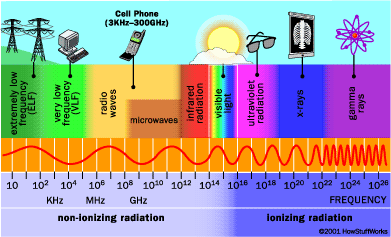
Microwave Radiation ‘Most Plausible’ Cause Of Diplomats’ Ailments, Report Says, NPR
|
December 6, 2020
Heard on Morning Edition Microwave radiation is the “most plausible” cause of migraines, dizziness, memory loss and other ailments that dozens of U.S. diplomats have complained of while serving in Cuba and China, a new report says.
Since 2016, the so-called Havana syndrome has afflicted more than 40 U.S. diplomats at the U.S. Embassy in the Cuban capital and at least a dozen more at the U.S. Consulate in Guangzhou, China. At the request of the State Department, the National Academies of Sciences, Engineering, and Medicine investigated and produced a 64-page report. “The committee [of experts] felt that many of the distinctive and acute signs, symptoms, and observations reported by the Department of State employees are consistent with the effects of directed, pulsed, radiofrequency energy,” the report said. Radiofrequency energy includes radio waves and microwaves. “What we can say is that something real and significant clinically happened to these people,” Dr. David Relman, a Stanford University professor who led the study, said in an interview with NPR. “At least some, if not many, of the signs and symptoms that were reported in these patients can be explained by this particular form of microwave radiation,” he added. The report noted that individual cases varied but that many diplomats described a common pattern: The sudden onset of a perceived loud sound, a sensation of intense pressure or vibration in the head, and pain in the ear or more diffusely in the head. Most individuals reported that the sound or these other sensations seemed to originate from a particular direction and were perceived only when the individual was in a specific physical location. Some also reported sudden onset of tinnitus, hearing loss, dizziness, unsteady gait, and visual disturbances.” Some of the diplomats have complained that the State Department has been slow or reluctant to provide sufficient support. A number of them have retired, saying their ailments were so debilitating they could no longer work. ………https://www.npr.org/2020/12/06/943531538/microwave-radiation-most-plausible-cause-of-diplomats-ailments-report-says |
Russian Ambassador to U.S. Sees Hope for Nuclear Arms Treaty Extension
He said several times during the forum that the Kremlin has been pushing the White House on an extension of its terms but has not received a formal answer.
The whole world depends on the United States-Russia relationship.”
On START, he added, “we need time to work out new security agreements” that cover a range of issues from missile defense, intermediate-range missiles, hypersonics and potential space weapons. For this reason, Russia has offered to extend the treaty’s term for up to five years “without pre-conditions.”
The United States wants China to be part of any new START negotiations, but Antonov said Beijing is “not happy with such an invitation.” The ambassador said Moscow wants the United Kingdom and France, both nuclear powers and NATO members, to be involved if the talks are broadened……. https://news.usni.org/2020/12/07/russian-ambassador-to-u-s-sees-hope-for-nuclear-arms-treaty-extension
For the first time ever, a Japanese court rules against a government approval on nuclear safety
 Japan court nixes approval of post-Fukushima nuclear safety steps, KYODO NEWS – Dec 4, 2020 ,
A Japanese court on Friday, for the first time, revoked the government’s approval of operating a nuclear plant under new safety regulations developed in the wake of the 2011 Fukushima nuclear disaster.
The Osaka District Court ruled in favor of about 130 plaintiffs who claimed that the Nos. 3 and 4 reactors of Kansai Electric Power Co.’s Oi nuclear plant in Fukui Prefecture are vulnerable to a major earthquake.
In the ruling, Presiding Judge Hajime Morikagi said the Nuclear Regulation Authority’s safety screening “has errors and flaws that should not be overlooked” as its estimates needed to factor in a potentially much larger earthquake around the plant…..
It is the first time a Japanese court has withdrawn government approval granted to a power company to operate a nuclear plant under the safety standards set in 2013 following the meltdowns at the Fukushima Daiichi power plant triggered by a major earthquake and ensuing tsunami.
While the two reactors in Oi in the central Japan prefecture have been idle due to regular inspections since earlier this year, the ruling will not take effect if the NRA appeals the decision.
But the ruling may have an impact on the operations of not only the nuclear plant on the Sea of Japan coast but also other reactors in the country that went back online under the new rules…….
The utility, meanwhile, has decided to decommission the aging Nos. 1 and 2 reactors at the Oi plant. https://english.kyodonews.net/news/2020/12/8c717cf8568d-urgent-japan-court-nullifies-approval-of-oi-nuclear-reactor-safety-steps.html
France and European Union have not yet agreed on nuclear reform
France yet to agree with EU over nuclear reform: official, By Gwénaëlle Barzic-PARIS (Reuters) 7 Dec 20, – France and the European Union are yet to reach a firm agreement over Paris’s plans for a reform of its nuclear industry, an Elysee presidential palace official said on Monday, amid talks that will entail a reorganisation of power group EDF.
The talks between France and the European Commission include the ARENH price mechanism under which competitors can get access to nuclear energy produced by EDF. Because EDF is a state-owned utility, the EU has a say on its reform on competition grounds.
The looming reform, which would see EDF’s nuclear business separated from others such as renewable energy, has already raised hackles among labour unions, fearful that a split will have consequences for jobs.
“There is not yet an agreement with the Commission on some of the key parametres,” an official with the Elysee presidential palace said, speaking ahead of President Emmanuel Macron’s visit to a nuclear equipment factory run by a EDF subsidiary Framatome on Tuesday.
The official said it was too soon to say when the new legislation on the nuclear sector could emerge.
France is due to cut its reliance on nuclear energy from 75% to 50% by 2035, but must also decide by 2023 whether to commission next generation EPR reactors.
The government will be seeking more information from EDF by the middle of next year about the cost, timeframe and feasibility of new projects, the Elysee official said.
Concerns about Holtec taking ownership of Palisades nuclear plant – public meeting this week

 Public meeting about ownership change for Palisades nuclear plant comes this week, By STEVE CARMODY • DEC 6, 2020
This week, federal regulators will hold a public meeting to discuss plans to transfer the operating license for the Palisades nuclear power plant.
Entergy Corp. agreed to sell the aging nuclear plant in southwest Michigan to Holtec Intl. in 2018. ………
If the Nuclear Regulatory Commission approves the license transfer, the Camden, New Jersey based company will oversee the decommissioning of Palisades starting in 2022.
“The problem with Holtec is they’re going to try to do as little clean up as they can get away with,” says Kevin Kamps with Beyond Nuclear, a nuclear waste watchdog, “They’re going to take as many short cuts on high level waste management as they can get away with…and then pocket all the remaining money.”
Kamp wants to see state and local officials play a greater role in decommissioning plans and potential future uses for the site on the shores of Lake Michigan.
Legislation to create a “Nuclear Decommissioning Citizens Advisory Panel” has stalled in a state House committee. …..https://www.michiganradio.org/post/public-meeting-about-ownership-change-palisades-nuclear-plant-comes-week
This week’s nuclear news

The big news worldwide continues to be about the coronavirus, which is still raging in many countries, especially in the USA. Meanwhile the race to develop and implement vaccines is already on.
Today’s Google headlines on nuclear issues – weapons and Iran dominate the stories.
The global energy revolution.
Correcting 5 wrong opinions about the Treaty on the Prohibition of Nuclear Weapons. Living with the Nuclear Prohibition Treaty: nuclear weapons states would be unwise to attack it.
Nuclear power hinders fight against climate change.
Standard nuclear reactor designs are still too costly, and safety features are only a third of nuclear costs.
Solar energy is bullish in the market; the same can’t be said for nuclear.
The creeping carbon costs of digital communication.
Book review: The Case for Degrowth.
Extradition hearing of Julian Assange – defence witnesses destroy myths, demonstrate his integrity
JAPAN. Japanese local governments depend on “nuclear money”. Destructive potential of over a million tons of radioactive water into the Pacific. Fukushima nuclear reactor no.1 – debris prevented from falling into fuel storage pool. Nuclear disaster: Fukushima schools frozen in time. Survey finds that most Fukushima evacuees do not intend to return. No. 2 reactor at Tohoku Electric Power Co’s Onagawa nuclear power plant for restart, despite problems. Surveys to identify nuclear waste disposal site begin in Hokkaido.
TAIWAN. Taiwanese protest plan to dump water from Japan nuclear plant into sea.
UK
- Depressing news for the nuclear lobby in UK, Western Europe – Boris Johnson’s government adding nuclear power to its long list of failures. UK government losing enthusiasm for new nuclear power stations, as grim financial realities set in.
- Cheap and effective, but solar energy is omitted from UK govt’s 10 point plan. Mayor of London announces solar and energy efficiency projects funded by ‘Green New Deal’.
- Large and small nuclear reactors should not be included in UK’s ‘clean, green’ 10 point plan. Inaccuracies in Boris Johnson’s document # supporting nuclear power development. [ Norton anti-virus has decided that this, by respected Dr David Lowry, is a suspicious site ] Britain’s enthusiasm for nuclear power stations is waning.
- The Irish sea – plagued by dumped munitions and radioactive trash.
- British govt’s foolhardy plan to pay up for non existent Rolls Royce small nuclear reactors. UK government wastes tax-payer money on small and large nuclear reactors that will never be cheap or safe.
- Sizewell C nuclear plant ‘not value for money’, and would sabotage the govt’s pledge for nature. Destruction of habitat, Coronation Wood to be felled, for Sizewell C nuclear project, British govt produced no evidence that nuclear plants are essential, in secret deals for the convenience of the nuclear industry.
- 30-day public consultation about UK’s Sizewell nuclear reactor project. Bankrupt AREVA, resuscitated as ‘Framatome’, joins the the Sizewell C nuclear build Consortium. £525 million pledged to build UK small nuclear reactors, no funding package yet revealed for £20 billion Sizewell plant. UK government’s plans for Sizewell and Wylfa nuclear stations are wavering, with doubts about costs.
- Hazardous plan for Peel Ports to take over the decommissioning of Britain’s dead nuclear submarines .
- Hinkley Point B nuclear reactor offline now, and will be shut down earlier than planned. Both Hinkley Point B and Hunterston B nuclear power stations will close early due to cracks in graphite cores. £132billion and counting –
- Britain’s nuclear decommissioning mess could take 120 years. British MP’s continue to botch it in the ever more costly saga of Britain’s “old” nukes and “new” nukes. UK tax-payers foot huge bill for incompetence of Nuclear Decommissioning Authority (NDA). UK’s beautiful Lake District – no “final solution” for the nuclear waste problem..
USA.
- Could a mad, unhinged US president, push the nuclear button? The Biden- Harris administration can change nuclear weapons policy, make it safer, and much cheaper. President Joe Biden will have just 16 days from Inauguration Day to rescue the new START Treaty
- Beware the “madness of militarism” – Biden likely to appoint war-loving Michèle Flournoy as Defense Secretary.
- Trump still has the awesome power to launch America’s nuclear arsenal. It is likely that Trump gove the nod for assassination of Iran nuclear scientist. European security officials fear that Trump may trigger a war against Iran. Trump’s Impact on Nuclear Proliferation, Treating Foreign Policy as a Business. Trump administration pulls out of Open Skies treaty with Russia.
- For Joe Biden – an early trial problem – the UN Treaty on the Prohibition of Nuclear Weapons. How a nuclear weapons officer came to support the Treaty Prohibiting Nuclear Weapons. A New U.S. Missile Defense Test May Have Increased the Risk of Nuclear War. Closer to nuclear war – as USA tests ICBM intercept. Resuming nuclear testing is unnecessary — and unsafe Investigative journalism – Joe Biden’s ” transition team”includes men with strong links to the weapons industry. With Joe Biden in Charge, No More Flashy Kim Jong Un Summits.
- Prison, big fines, for Catholic anti nuclear activists. Anti-Nuclear Pacifists Get Federal Prison Terms for Nonviolent Protest.
- A mock B61-12 nuclear bomb dropped for the first time. USA revives plan for fast reactor, despite terrorism risks .
- USA looks to get $18billion now, maybe $40billion later, in flogging off nuclear reactors to Poland.
- Former CEO of failed V.C. Summer nuclear project pleads guilty to fraud charges. Ohio Attorney General Dave Yost has filed a second lawsuit to stop bailout of nuclear reactors. Ohio likely to require nuclear reactor audit before renewing bailout.
- 30 more years for Wisconson’s old nuclear power station? Is this a good idea?
- Dismantling Duke Energy’s Crystal River nuclear plant.
- Unanswered questions cloud the future of NuScam’s Small Modular Nuclear Reactor project. Concerns in Utah cities about costs and safety of NuScam’s small nuclear reactor scheme.
- The intractible problem of San Onofre’s, and indeed, America’s, nuclear waste. NRC approves financially dodgy sale of Indian Point Nuclear Station to Holtec. Lack of safety documents in Los Alamos National Laboratory’s handling of radioactive wastes. Waste Isolation Pilot Plant – building of ventilation shaft is halted, due to Covid-19 and planning problems. Slowly moving lawsuit on the health impacts of a national nuclear laboratory.
- Danger to San Onofre nuclear waste, from ocean’s king tides. Why we shouldn’t be talking about nuclear waste “disposal”.
INDIA. Cybersecurity breach at Kudankulam Nuclear Power Plant (KKNPP) undetected for over 6 months.
EUROPE. The effect on Europe of the UN Treaty on the Prohibition of Nuclear Weapons.
FRANCE. Extended shutdown for work on Flamanville nuclear reactor build. Greenpeace launches legal appeal against French nuclear safety authority allowing extension of lifetime of nuclear reactors. Concern in France over lack of expert inspection of nuclear sites. Orano, formerly Areva, targeted by judicial investigation for corruption. Corruption investigation into AREVA’s sale of Nigerian uranium. New comic book investigates the dilemma about France’s nuclear wastes.
CANADA. Canada’s environmental groups join to oppose experimental Small Nuclear Reactors (SMRs). Small Modular Nuclear Reactors, the nuclear industry’s latest pipe dream. Canadian government’s misplacing funding into unviable small nuclear reactors for North West Territories. Safety dangers of small modular nuclear reactors (SMRs). In the face of public opposition, Ottawa delays small nuclear reactor plan. Ontario could get clean renewable energy from neighbouring provinces, with no need for nuclear power.
IRAN. Architect of its nuclear programme assassinated – Iran vows retaliation. Tehran’s UN ambassador says rival Saudi Arabia is looking for an excuse to build nuclear weapons and blaming Iran. Iran admits breach of nuclear deal discovered by UN inspectorate. Iran slams European criticism on expanding nuclear programme. What’s behind the assaisnation of Iran’s top nuclear scientist?
BANGLADESH. Bangladesh draws up a nuclear disaster response plan.
GERMANY. Uranprojekt –The Nazi Nuclear Program.
RUSSIA. Russia’s latest nuclear icebreaker had to abort maiden Arctic voyage. Russia claims to have successfully tested an “unstoppable” nuclear missile.
UKRAINE. First canister of used nuclear fuel loaded into Chernobyl storage facility. Comprehensive research now shows that irradiated areas near Chernobyl have fewest mammals.
SAUDI ARABIA. Saudi minister says nuclear armament against Iran ‘an option’.
NORTH KOREA. North Korea sparks new nuclear weapons fears.
ROMANIA. European Commission approves Romania’s purchase of nuclear reactors.
RWANDA.. Growing opposition to nuclear power in Rwanda
AUSTRALIA Victorian Parliament: Legislative Council Committee finds that nuclear ban should stay. Victorian Government Inquiry confirms that there is no future in nuclear power. Inquiry confirms nuclear energy’s ‘proven risks’. Victorian Inquiry finds nuclear power costly and risky.
Britain’s nuclear industry is greatly threatened by climate change
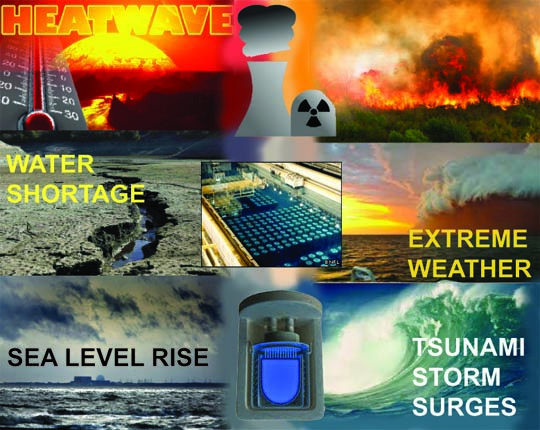
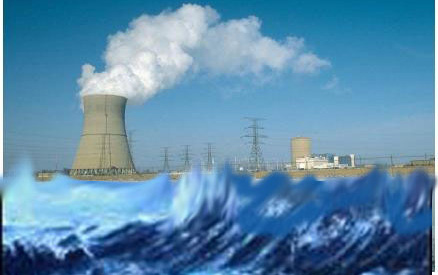 The next ‘Great Tide’, Exposed to rising tides and storm surges, Britain’s nuclear plants stand in harm’s way, Beyond Nuclear International, By Andrew Blowers, 4 Dec 20,
“……………….Apart from Hinkley Point C, which will probably struggle on through a combination of political inertia and a nuclear ideology increasingly remote from economic reality, there remain two projects – Sizewell C and Bradwell B – still in the frame, although precariously so. For both sites, climate change may prove the showstopper. These coastal, low-lying sites are highly vulnerable to the impacts of climate change, including sea level rise, flooding, storm surges, and coastal processes.
This was recognised as an issue in the rather equivocal statement that accompanied designation of the sites in 2011. Referring to Bradwell (similarly to Sizewell), it was considered ‘reasonable to conclude that any likely power station development within the site could potentially be protected against flood risk throughout its lifetime, including the potential effects of climate change, storm surge and tsunami, taking into account possible countermeasures’. …..
About a quarter of the world’s nuclear power stations are on coasts or estuaries. The sites on the east coast and Severn Estuary are especially vulnerable to flooding, tidal surges, and storms. Potential impacts include loss of cooling and problems of access and emergency response in the event of a major incident and inundation of the plant, including spent fuel storage facilities.
In areas like the east coast of England, natural protection from saltmarshes, mudflats, shingle beaches, sand dunes and sea cliffs has been rapidly declining. Recent projections indicate substantial parts of the coast below annual flood level in 2100 and a loss of between a quarter and a half of the UK’s sandy beaches, leading to extensive inland flooding. The problems of managing such coasts through adaptive measures such as managed realignment and hard defenses may be insuperable in the uncertain circumstances of climate change over the next century. It seems imprudent and irresponsible to contemplate development of new nuclear power stations in conditions which may become intolerable.
Climate predictions have focused especially on the period up to the end of the century, by which time planned new nuclear power stations starting up in the 2030s will only just have ceased operating. At the turn of the next century the legacy of today’s new build will become the decommissioning wastes of tomorrow, adding to that already piled up in coastal locations. ……
Beyond 2100 sea levels continue rising and the radioactive legacy of new nuclear power stations will remain at the sites, in reactor cores and in spent fuel and waste stores exposed to the destructive processes of climate change. It is predicted that decommissioning and clean-up of new build sites will last for most of the next century.
The logistics, let alone the cost of transplanting, decommissioning and decontaminating the redundant plant and wastes to an inland site, if one could be found, would be well beyond the range of managed adaptation. The government’s claim that it ‘is satisfied that effective arrangements will exist to manage and dispose of the wastes that will be produced from new nuclear power stations’ is an aspiration, and by no means a certainty……..https://wordpress.com/read/feeds/72759838/posts/3061243158
USA Republicans and Democrats can’t agree on funding to help Covid-9 victims, but there’s always money for war.
|
by
The annual approval of the gargantuan U.S. military budget is one of the most reliable rituals in Congress. It is so ordinary and overwhelmingly bipartisan, it’s barely considered newsworthy, and few outlets follow the details of exactly how much the government is allocating to a nuclear weapons buildup, or deployments to the Asia Pacific, or the steady creep of U.S. military bases across the continent of Africa. Even under President Trump, when the Democratic leadership claims to have struck a more confrontational posture, those same leaders have repeatedly handed him bloated military budgets, as we saw Wednesday with Congress’ bicameral approval of a roughly $740 billion military budget for 2021. ,,,,,,,,,,,,, this is no ordinary year. As Congress races to pass the NDAA for 2021, it does so in a country that is hurtling toward months that could be among “the most difficult in the public health history of this nation,” according to Dr. Robert Redfield, the director of the Centers for Disease Control and Prevention. Along with this health crisis, whose scale in the United States was entirely preventable, comes economic devastation: Lines for food banks are stretching for miles and, according to one study, one in six people is food insecure. As of September, one in six adults said they live in a house that’s behind on rent. ………. As the pandemic was raging, Congress had no problem passing legislation to continue U.S. military violence. The Senate version of the NDAA passed on July 23 in a vote of 86 – 14, while the House version was approved July 21 by 295 – 125. This defense bill was then approved December 2 by both chambers of Congress. …………
While entirely routine at this point, it’s useful to highlight on the eve of yet another massive Pentagon handout how the budget for war could instead go toward life-preserving social goods. This is useful, not to buy into austerity notions of scarcity, but simply to show the profound immorality of where our public resources go. When it comes to military spending, the sky is the limit. Space Force? Sure. Roughly $21.9 billion for nuclear weapons programs? No problem. But when it comes to keeping people alive, U.S. political imagination is significantly more constrained. Right off the bat in March, Democratic leader Rep. Nancy Pelosi (Calif.) shot down universal, robust cash payments to keep people afloat, even as high-profile figures like Sen. Bernie Sanders (I‑Vt.) and Rep. Rashida Tlaib (D‑Mich.) called for such measures. ………
we should not allow bipartisan agreement on military spending to simply fade into the background, as an unremarkable and immutable fact of U.S. politics. That we can find the money for war but not for coronavirus relief exposes the moral rot at the center of U.S. politics, a rot that must be dug out and expunged if we are to get through this crisis. https://www.commondreams.org/views/2020/12/04/congress-deadlocked-covid-relief-came-together-fund-pentagon-740-billion?utm_campaign=shareaholic&utm_medium=Social&utm_source=twitter
|
|


The next ”Great Tide” will devastate nuclear reactors and their radioactive wasies on the Suffolk and Essex coasts
The next ‘Great Tide’, Exposed to rising tides and storm surges, Britain’s nuclear plants stand in harm’s way, Beyond Nuclear International, By Andrew Blowers, 4 Dec 20,
‘It was now that wind and sea in concert leaped forward to their triumph.’
Hilda Grieve: The Great Tide: The Story of the 1953 Flood Disaster in Essex. County Council of Essex, 1959
The Great Tide of 31 January/1 February 1953 swept down the east coast of England, carrying death and destruction in its wake. Communities were unaware and unprepared as disaster struck in the middle of the night, drowning over 300 in England, in poor and vulnerable communities such as Jaywick and Canvey Island on the exposed and low-lying Essex Coast.
Although nothing quite so devastating has occurred in the 67 years since, the 1953 floods remain a portent of what the effects of climate change may bring in the years to come.
Since that largely unremembered disaster, flood defences, communications and emergency response systems have been put in place all along the east coast of England, although it will only be a matter of time before the sea reclaims some low-lying areas.
Among the most prominent infrastructure on the East Anglian coast are the nuclear power stations at Sizewell in Suffolk and Bradwell in Essex, constructed and operated in the decades following the Great Tide.
Sizewell A (capacity 0.25 gigawatts), one of the early Magnox stations, operated for over 40 years, from 1966 to 2006. Sizewell B (capacity 1.25 gigawatts), the only operating pressurised water reactor in the UK, was commissioned in 1995 and is currently expected to continue operating until 2055.
Further down the coast, Bradwell (0.25 gigawatts) was one of the first (Magnox) nuclear stations in the UK and operated for 40 years from 1962 to 2002, becoming, in 2018, the first to be decommissioned and enter into ‘care and maintenance’.
These and other nuclear stations around our coast were conceived and constructed long before climate change became a political issue. And yet the Magnox stations with their radioactive graphite cores and intermediate-level waste stores will remain on site until at least the end of the century.
Meanwhile, Sizewell B, with its highly radioactive spent fuel store, will extend well into the next. Inevitably, then, the legacy of nuclear power will be exposed on coasts highly vulnerable to the increasing sea levels and the storm surges, coastal erosion and flooding that accelerating global warming portends.
Managing this legacy will be difficult enough. Yet it is proposed to compound the problem by building two gargantuan new power stations on these sites, Sizewell C (capacity 3.3 gigawatts) and Bradwell B (2.3 gigawatts) to provide the low-carbon, ‘firm’ (i.e. consistent-supply) component of the energy mix seen as necessary to ‘keep the lights on’ and help save the planet from global warming.
But these stations will be operating until late in the century, and their wastes, including spent fuel, will have to be managed on site for decades after shutdown. It is impossible to foresee how any form of managed adaptation can be credibly sustained during the next century when conditions at these sites are unknowable.
New nuclear power is presented as an integral part of the solution to climate change. But the ‘nuclear renaissance’ is faltering on several fronts. It is unable to secure the investment, unable to achieve timely deployment, unable to compete with much cheaper renewables, and unable to allay concerns about security risks, accidents, health impacts, environmental damage, and the long-term management of its dangerous wastes.
It is these issues that will be played out in the real-world context of climate change. There is an exquisite paradox here. While nuclear power is hubristically presented as the ‘solution’ to climate change, the changing climate becomes its nemesis on the low-lying shores of eastern England. ………. https://wordpress.com/read/feeds/72759838/posts/3061243158

China’s changing aims for nuclear weapons
MYTHS OR MOVING TARGETS? CONTINUITY AND CHANGE IN CHINA’S NUCLEAR FORCES,War on the Rocks, AUSTIN LONG 6 Dec 20, The nuclear arsenal of the People’s Republic of China and its plans to use it are in the middle of an unprecedented shift. Just over a decade ago, China’s long-range nuclear force structure consisted of a handful of inaccurate, silo-based intercontinental ballistic missiles (ICBMs) that were kept at low readiness with nuclear warheads stored separately. Chinese posture was demonstrably one of retaliation, with a clearly articulated policy of “no-first-use” of nuclear weapons, while force readiness and command and control of those forces were both poorly suited for anything else.
In 2020, China’s nuclear posture and force structure has changed dramatically. Its arsenal has grown and diversified even as readiness and command and control have improved. By 2030, the country’s force structure and posture will be similar to America’s and Russia’s in many ways (albeit probably not at parity). Yet, in a recent article in these virtual pages, David Logan dismisses claims that China is reconsidering the fundamental role of nuclear weapons in its strategy as “dangerous myths.” He argues that China’s policy of no-first-use “is still intact” and dismisses as fiction the claim “that China has developed and deployed an array of nuclear war-fighting capabilities, including tactical nuclear weapons.” While the ultimate destination of China’s nuclear posture remains uncertain, the trajectory is clear. Changes to China’s nuclear war-fighting capabilities and policies are not myths. Instead, they are moving targets, evolving as Chinese leaders reflect on China’s role in the world and the requirements that role places on the country’s nuclear arsenal. In this article, I review what is publicly known about these moving targets. First, it briefly traces the post-Cold War trajectory of China’s nuclear posture. Second, it addresses the role of the DF-26 intermediate range missile in Chinese posture for “tactical” nuclear weapons. Third, it reviews China’s no-first-use policy. Fourth, it presents evidence on the last time an authoritarian state declared a policy of no-first use — the Soviet Union in the 1980s. It concludes with observations on the possible consequences of change in Chinese nuclear posture for U.S. strategy and nuclear posture…………………. https://warontherocks.com/2020/12/myths-or-moving-targets-continuity-and-change-in-chinas-nuclear-forces/ |
|
||||||||||

Three Mile Island – radiation is forever – will nuclear waste storage withstand flooding?
 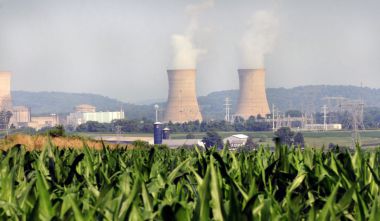 Radiation is forever’: How long will it take to clean up Three Mile Island? [Lancaster Watchdog] lancaster Online, SEAN SAURO | Staff Writer , 6 Dec 20, Traveling Route 441 across Lancaster County’s northwestern border, motorists, for decades, have been able to look out toward the Susquehanna River to see a pair of cooling towers stretching skyward from the now-defunct Three Mile Island nuclear power plant.For almost as long, Eric Epstein said he’s kept a watchful eye, worrying about safety on the island, where a 1979 partial reactor meltdown remains the worst commercial nuclear accident in U.S. history. And Epstein, a Harrisburg-based nuclear watchdog, said those concerns persist even as plant owners move forward to dismantle its reactors — a process likely to take nearly 60 years. Even after that, he said, some nuclear waste is expected to remain onsite, just north of Conoy Township in the river. Plans exist for both, separately owned reactors on the island. Unit 2, the site of the partial meltdown, has remained inactive since 1979. And Unit 1 was taken offline last year. Epstein shared his concerns last week in the days after it was announced that officials at the U.S. Nuclear Regulatory Commission approved a Unit 2 license transfer that would move ownership of the reactor and related assets from FirstEnergy to TMI-2 Solutions. The subsidiary of Utah-based EnergySolutions would lead the decommissioning. That transfer is likely to wrap up by the end of 2020, FirstEnergy spokeswoman Jennifer Young said………………. “Decommissioning work can begin after the license transfer is completed, but TMI-2 Solutions would have to provide a more specific timeline for its projected start date,” NRC spokesman Neil Sheehan said. While most of the highly radioactive fuel was removed from Unit 2 by the mid-1990s, the upcoming decommissioning work is expected to cost at least $1 billion, paid for with ratepayer funds set aside for that purpose. According to an EnergySolutions timeline, the two-phased Unit 2 decommissioning is scheduled for completion in 2037, with “a potential area set aside for waste storage facilities” on the island. All along, Epstein has remained skeptical of the plan for Unit 2, where interior conditions largely remain a mystery due to high radiation levels, which have precluded close inspection. Those fears have only been exacerbated by the idea that waste could be stored on the island, where Epstein believes natural disasters like flooding could lead to released radiation, he said. “The plant was not designed to be a high-level radioactive waste site. Everybody agrees the radioactive waste shouldn’t be on an island,” Epstein said. “This is like putting waste on an airplane with no place to land. At some point, that plane is going to crash.” EnergySolutions officials did not return messages left with them about the decommissioning by Friday afternoon. However, Unit 1 owners at Exelon provide some insight into their separate decommissioning plan, which also will require some on-site storage — likely to begin in 2022, when spent fuel is moved into casks. “Dry cask storage will require robust metal canisters placed in a massive concrete housing,” according to Exelon spokesman David Marcheski. It is storage that officials claim will be able to withstand a 100-year flood. The Unit 1 decommissioning process is expected to wrap up in 2078, costing about $1.2 billion, covered by a related trust fund. https://lancasteronline.com/news/local/radiation-is-forever-how-long-will-it-take-to-clean-up-three-mile-island-lancaster/article_643a5aea-3676-11eb-a87d-1ffabfe61953.html |
|
Good Biden-Kim Relationship Necessary to Avoid a Nuclear Crisis
Because North Korea has nuclear weapons, the Biden administration cannot unilaterally impose terms on Pyongyang. Refusal to even talk with Pyongyang until it takes steps to denuclearize is a foolish and dangerous approach. Such an approach will likely inflame tensions and return Washington to a tense nuclear standoff with Pyongyang that poses a risk of miscalculation and accidental escalation into a nuclear war. Biden may be under pressure to be “tough” on North Korea to differentiate himself from Trump’s alleged cozy relationship with the North Korean dictator. However, a hostile stance toward Pyongyang will only make North Korea feel more insecure and drive Kim to pursue further nuclear development to ensure his regime’s survival.
Texas and New Mexico reject interim nuclear waste storage
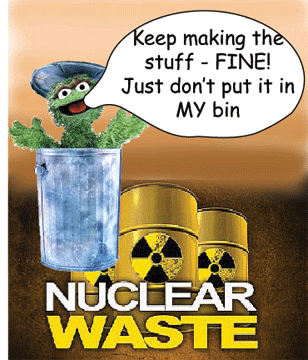 Texas, New Mexico resisting interim nuclear waste storage By Gary Martin Las Vegas Review-Journal, 6 Dec 20, WASHINGTON — President Donald Trump and Congress moved this year to develop interim nuclear waste storage sites, a temporary fix until the 30-year stalemate over Yucca Mountain is settled.But locations in New Mexico and Texas that were once embraced for their potential for jobs and economic development now face local opposition similar to that in Nevada that has resulted in the decadeslong delay in building a permanent repository. Governors in New Mexico and Texas have pleaded with the federal government to stop or delay the process that could place tons of spent nuclear fuel rods in their states. Private groups have proposed to take the spent nuclear fuel and temporarily store the waste at locations near Carlsbad, New Mexico, and west of Odessa in Andrews County, Texas. But the welcome has turned to concern by residents who fear the interim storage of nuclear waste will become permanent if the federal government fails to develop the Yucca Mountain nuclear repository north of Las Vegas, as required by law, or find and develop another suitable location. The New Mexico congressional delegation wrote a letter to the Nuclear Regulatory Commission urging the agency to delay the decision-making process and allow more time for public comment on a license sought by Holtec International to build an interim storage facility. “Any proposal to store commercial spent nuclear fuel raises a number of health, safety and environmental issues,” the delegation wrote. Those issues include “potential impacts on local agriculture and industry, issues related to the transportation of nuclear waste, and disproportionate impacts on Native American communities,” the lawmakers warned. New Mexico Gov. Michelle Lujan Grisham, a Democrat, in a letter to President Donald Trump, said she was opposed to interim storage of nuclear waste, citing the safety of residents. Target for terrorists? In Texas, the facility proposed by Interim Storage Partners has drawn opposition from oil and gas producers, the agriculture industry and Gov. Greg Abbott, a Republican, who said placing the waste near oil fields would make an inviting target for terrorists. Shipping nuclear waste also would present a hazard to public health, Abbott said in letters to Trump and the NRC earlier this year. Meanwhile, environmental groups in both states have lodged their opposition to the proposed plants and urged Lujan Grisham to create a state agency to prevent an interim site from becoming a permanent storage facility for nuclear waste…………. https://www.reviewjournal.com/news/politics-and-government/texas-new-mexico-resisting-interim-nuclear-waste-storage-2206303/
|
|
UK’s Ministry of Defence keeping seret most of the unsatisfactor report on safety of nuclear bomb sites

 REVEALED: Nuclear bomb sites hit by fire safety problems and staff shortages, The National, By Rob Edwards 5 Dec 20, NUCLEAR bomb sites across the UK have fire safety problems as well as shortages of safety regulators and engineers, according to a new report from the Ministry of Defence (MoD).
But most of the MoD’s latest internal assessment of the safety of nuclear weapons has been kept secret for “national security” reasons – prompting fury from politicians and campaigners. They have attacked the nuclear secrecy as “deeply alarming” and “completely unacceptable”. The official attitude to nuclear safety was a “disgrace”, they said.
Previous nuclear safety assessments, revealed by The Ferret, have highlighted “regulatory risks” 86 times. Many involved the Trident warheads and nuclear submarines based on the Clyde.
The new MoD report also disclosed “significant weaknesses” on safety at non-nuclear sites. These included “serious deficiencies” on fire safety and “significant risk” from old fuel facilities – particularly on the Falkland Islands in the South Atlantic.
The MoD accepted that there were “infrastructure issues”, but insisted that they were being addressed. Defence nuclear programmes were “fully accountable” to UK ministers, it said.
The MoD has posted online the 2019-20 report from the Defence Safety Authority, which brings together seven regulators, a safety team and an accident investigation unit operating within the MoD. They are overseen by the authority’s director general, air marshal Sue Gray.
But the report said that the entire section from the Defence Nuclear Safety Regulator (DNSR), which is responsible for ensuring safety of the nuclear weapons programme, has been “marked SECRET” and given only “limited distribution”.
The MoD has previously released 10 annual DNSR reports following a challenge under freedom of information law in 2010. They flagged up risks of accidents, ageing submarine reactors, spending cuts and much else.
But in 2017 the MoD abruptly ceased publishing the reports, insisting that they had to be kept under wraps to protect national security. In 2019 that decision was challenged by campaigners at a UK information tribunal, whose verdict is still awaited.
he latest safety authority report, however, does contain a few details of nuclear risks buried in its 80 pages. It doesn’t specify which bases were affected, but they are likely to include the two major nuclear weapons sites, at Faslane on the Clyde and at Aldermaston in Berkshire.
In a discussion of problems with “fire safety assurance” across all MoD sites, the report said: “Particular issues have been noted at defence nuclear sites, where discussions continue between defence and statutory regulators.”
Between April 2019 and March 2020 as many as 374 fires were reported on all MoD sites. Although there had been some improvements “there is still more to do to reinforce the capability of defence to manage fire safety,” the report said.
A section on the “maturity” of the DNSR as a nuclear safety regulator disclosed that it was facing an 11 per cent shortage of staff in 2020-21. Shortfalls had been mitigated by the secondment of two senior staff from the UK Government’s nuclear power watchdog, the Office for Nuclear Regulation, and from the nuclear weapons company, AWE.
This had been supplemented by “making full use of partial retirees, graduate placements and development posts during 2019-20,” the report said. But these stopgap measures were failing………………
The Scottish National Party expressed concern about “a pattern of failure” on MoD safety. “Worryingly, the findings of this report reflect significant non-compliance with security and safety regulations at sensitive sites, including those where there are nuclear materials,” said the party’s defence spokesperson, Stewart McDonald MP.
“Not only is nuclear power and weaponry not safe, it is expensive, and not being handled properly under this Tory Government’s watch. The UK Government needs to transition away from nuclear entirely.”
MCDONALD described the nuclear safety failures as “alarming” and accused the MoD of “a lack of regard for public safety and transparency”. He pointed out that the UK Government’s civil nuclear watchdog, the Office for Nuclear Regulation, had criticised MoD secrecy.
The Scottish Green MSP for the west of Scotland, Ross Greer, called for nuclear weapons to be completely scrapped. “It is deeply alarming that the MoD continues to shroud so much secrecy over the safety issues with Britain’s weapons of mass destruction,” he said.
“We’ve known for years of significant issues at sites like Faslane and on the submarines themselves, so continued attempts to hold information back from the public are totally out of order.”
Lynn Jamieson, chair of the Scottish Campaign for Nuclear Disarmament, said: “The MoD’s tolerance of unsafe regimes is a disgrace for an organisation supposedly overseeing our protection. This adds to the urgency of nuclear disarmament.”
According to the Ministry of Defence, the annual assurance report and recommendations were currently being reviewed. Information that “could compromise national security” would not be published, the MoD said.,,,,,,,,,,,, https://www.thenational.scot/news/18923905.revealed-nuclear-bomb-sites-hit-fire-safety-problems-staff-shortages/
1 This Month

Tell Congress: Prevent Nuclear Catastrophe in Iran

Tell Congress: Prevent Nuclear Catastrophe in Iran

Read the Public Inquiry Report, the Commissioners’ report, Surrendering Australia: The AUKUS Deception is available to download for free at aukuspublicinquiry.com. Or just watch the replay of the National Press Club Luncheon.


Shut down the radiation-damaged Heysham nuclear reactors now
To see nuclear-related stories in greater depth and intensity – go to https://nuclearinformation.wordpress.com

Say No to NASA’s Reckless Nuclear Reactor on the Moon
Say No to NASA’s Reckless Nuclear Reactor on the Moon
-
Archives
- November 2026 (269)
- October 2026 (302)
- September 2026 (339)
- August 2026 (330)
- July 2026 (355)
- June 2026 (287)
- May 2026 (306)
- April 2026 (356)
- March 2026 (251)
- February 2026 (267)
- January 2026 (308)
- December 2025 (358)
-
Categories
- 1
- 1 NUCLEAR ISSUES
- business and costs
- climate change
- culture and arts
- ENERGY
- environment
- health
- history
- indigenous issues
- Legal
- marketing of nuclear
- media
- opposition to nuclear
- PERSONAL STORIES
- politics
- politics international
- Religion and ethics
- safety
- secrets,lies and civil liberties
- spinbuster
- technology
- Uranium
- wastes
- weapons and war
- Women
- 2 WORLD
- ACTION
- AFRICA
- Atrocities
- AUSTRALIA
- Christina's notes
- Christina's themes
- culture and arts
- Events
- Fuk 2022
- Fuk 2023
- Fukushima 2017
- Fukushima 2018
- fukushima 2019
- Fukushima 2020
- Fukushima 2021
- general
- global warming
- Humour (God we need it)
- Nuclear
- RARE EARTHS
- Reference
- resources – print
- Resources -audiovicual
- Weekly Newsletter
- World
- World Nuclear
- YouTube
-
RSS
Entries RSS
Comments RSS

