Nuclear power losing out in the UK – not a good omen for the global nuclear industry
 Seeking Alpha 13th March 2021, My comments on offshore wind making other forms of energy uncompetitive in 2017 have only become more clear in the past 3 years. Now the adoption ofnoffshore wind is happening elsewhere around the world including in the US, Japan, South Korea, Taiwan, China, India.
not one, but 16 of these plants with a capacity of 440 MW at a cost of 2 billion pounds each.
The Rolls Royce strategy is that by building multiple SMRs it will get good at it and the cost might go down. The reality behind this proposal is that it seems pretty ambitious to set out to build 16 plants before one has been successfully constructed. Time seems against this concept as the UK will have largely exited nuclear power by 2030.
Safety breaches at Sellafield have raised fears of a Chernobyl-style disaster.
Fears of Chernobyl-style disaster after 25 safety breaches at Sellafield nuclear plant There have been burst pipes, unstable chemicals, radiation leaks, a cooling tower failure and two plant evacuations in less two years at the site in Cumbria. Mirror John Siddle, 13 MAR 2021
Safety breaches at Sellafield have raised fears of a Chernobyl-style disaster.
Campaigners worry that incidents at Europe’s largest nuclear plant in Cumbria could lead to a blast bigger than the 1986 Ukraine horror.
An official report logs 25 breaches in less than two years, including burst pipes, unstable chemicals, radiation leaks, a cooling tower failure and two plant evacuations.
The bomb squad was called in last August after chemicals “changed state”.
Janine Allis-Smith, of a local anti-nuke group, says campaigners “fear an explosion that would make Chernobyl look like a tea party”.
Sellafield – which now splits spent nuclear fuel into plutonium, uranium and waste – said incident reports were published to reassure the public….
https://www.mirror.co.uk/news/uk-news/fears-chernobyl-style-disaster-after-23709599
Japan’s Nuclear Clean-Up Has No End in Sight
Climbing Without a Map: Japan’s Nuclear Clean-Up Has No End in Sight, U.S. News, By Reuters, Wire Service Content March 12, 2021, BY SAKURA MURAKAMI AND Aaron Sheldrick TOKYO (Reuters) – For one minute this week, workers at the Fukushima nuclear station fell silent to mark the 10-year anniversary of a natural disaster that triggered the worst nuclear accident since Chernobyl.
Then they went back to work tearing down the reactors melted down in the days after a tsunami on March 11, 2011.
The job ranks as the most expensive and dangerous nuclear clean-up ever attempted. A decade in, an army of engineers, scientists and 5,000 workers are still mapping out a project many expect will not be completed in their lifetime.
Naoaki Okuzumi, the head of research at Japan’s lead research institute on decommissioning, compares the work ahead to climbing a mountain range – without a map.
“The feeling we have is, you think the summit’s right there, but then you reach it and can see another summit, further beyond,” Okuzumi told Reuters.
Okuzumi and others need to find a way to remove and safely store 880 tonnes of highly radioactive uranium fuel along with a larger mass of concrete and metal into which fuel melted a decade ago during the accident.
The robotic tools to do the job don’t yet exist. There is no plan for where to put the radioactive material when it is removed.
Japan’s government says the job could run 40 years. Outside experts say it could take twice as long, pushing completion near the close of the century……..
It wasn’t until 2017 that engineers understood how complicated the clean-up would become. By that point, five specially designed robots had been dispatched through the dark, contaminated waters pumped in to cool the uranium. But radiation zapped their electronics.
One robot developed by Toshiba Corp, nicknamed the “little sunfish”, a device about the size of a loaf of bread, provided an early glimpse of the chaotic damage around the cores.
Kenji Matsuzaki, a robot technician at Toshiba who led development of the “sunfish”, had assumed that they would find melted fuel at the bottom of the reactors.
But the sunfish’s first video images showed a tumult of destruction, with overturned structures inside the reactor, clumps of unrecognizable brown debris and dangerously radioactive metal.
“I expected it to be broken, but I didn’t expect it would be this bad,” Matsuzaki said.
The delivery of a robotic arm to start removing fuel, developed in a $16 million programme with the UK’s Nuclear Decommissioning Authority, has been delayed until 2022. Tepco plans to use it to grab some debris from inside reactor 2 for testing and to help plan the main operation………….
But the cleanup has been delayed by the buildup of contaminated water in tanks that crowd the site. The melted cores are kept cool by pumping water into damaged reactor vessels.
But the cleanup has been delayed by the buildup of contaminated water in tanks that crowd the site. The melted cores are kept cool by pumping water into damaged reactor vessels. https://www.usnews.com/news/world/articles/2021-03-12/climbing-without-a-map-japans-nuclear-clean-up-has-no-end-in-sight
Space radiation – harmful to astronauts, not only with cancers, but also with heart and blood vessel effects
From Vitamin C to Spinach: Researching Ways to Protect Astronaut Cardiovascular Health From Space Radiation. Review explores ways that space radiation can damage cardiovascular health, and discusses how we can protect astronauts, from vitamin C to spinach. SciTech Daily 14 Mar 21, Space: the final frontier. What’s stopping us from exploring it? Well, lots of things, but one of the major issues is space radiation, and the effects it can have on astronaut health during long voyages. A new review in the open-access journal Frontiers in Cardiovascular Medicine explores what we know about the ways that space radiation can negatively affect cardiovascular health, and discusses methods to protect astronauts. These include radioprotective drugs, and antioxidant treatments, some of which are more common than you might think.
Space is incredibly inhospitable. Outside of low earth orbit, astronauts are bombarded with radiation, including galactic cosmic rays, and ‘proton storms’ released by the sun. This radiation is harmful for the human body, damaging proteins and DNA, and is one of the major reasons that we haven’t yet been able to send anyone to Mars, or beyond.
These issues inspired Dr Jesper Hjortnaes of the Leiden University Medical Center in the Netherlands to investigate what we know about the harmful effects of space radiation. “If we want to see human long distance space travel, we need to understand the impact of space-induced disease and how to protect our bodies from it,” said Hjortnaes. However, Hjortnaes has an interest in a specific aspect of space radiation: its cardiovascular effects.
You may be surprised to learn that aside from the illnesses we typically associate with radiation, such as cancer, it can also have serious effects on the cardiovascular system. Suffering from cardiovascular illness would be catastrophic for crew members on long-haul space missions, and so it’s important to identify what the risks are, and how to reduce them.
Hjortnaes and colleagues reviewed the evidence to establish what we know about the cardiovascular risks of space radiation. Much of what we know comes from studying people who have received radiation therapy for cancer, where cardiovascular disease is a common side-effect, or from mouse studies of radiation exposure.
So, what are the effects? Radiation can cause myocardial remodeling, where the structure of the heart begins to change, and tough, fibrous tissue grows to replace healthy muscle, potentially leading to heart failure. Other effects include atherosclerosis in blood vessels, which can cause stroke or heart attack. Radiation exerts its effects by causing inflammation, oxidative stress, cell death and DNA damage.
Researchers have also investigated potential ways to protect astronauts. These include drugs that an astronaut could take to protect themselves from space radiation, and antioxidants. Interestingly, an antioxidant diet, including dairy products, green vegetables such as spinach, and antioxidant supplements such as vitamin C, has potential in protecting astronauts from the damaging reactive oxygen molecules produced during radiation exposure.
Overall, the review revealed that so far, research has only scratched the surface of space radiation and the best methods to protect astronauts from it. There is little conclusive evidence of radiation-induced cardiovascular disease in astronauts themselves, as so few of them have ever gone further than low earth orbit, and mouse studies aren’t an exact match for humans……..https://scitechdaily.com/from-vitamin-c-to-spinach-researching-ways-to-protect-astronaut-cardiovascular-health-from-space-radiation/
Low doses of radiation used in medical imaging lead to mutations in cell cultures

|
Low doses of radiation used in medical imaging lead to mutations in cell cultures Discovery that radiation creates breaks that allow in foreign DNA must be confirmed in animal studies Science Daily, January 16, 2020 Source: PLOS
|
|
Taiwan environmentalists to hold anti-nuclear rally in June
At an event commemorating the 10th anniversary of the Great East Japan Earthquake, a nationwide anti-nuclear alliance of more than 100 groups urged the public to push back against groups that support the development of nuclear power, citing the harm left by the devastating earthquake.
Independent lawmaker Freddy Lim (林昶佐), who attended the event, said the issue of nuclear energy has gone beyond politics, and people should take the responsibility to say no to it instead of leaving nuclear waste to the next generation.
The alliance urged the public to voice its opposition during a national referendum vote in August, when one of the questions will be: “Do you agree that the 4th Nuclear Power Plant be activated for commercial operations?”……… https://focustaiwan.tw/society/202103130014
China maintains only a lean nuclear weapons force – aimed at survival if attacked.
When it comes to China’s nuclear weapons, numbers aren’t everything
Threat inflation tends to lead to poor policy outcomes. When it comes to China’s nuclear arsenal, it’s important for American leaders to accurately understand the nature of the problem. Nuclear risks between the United States and China manifest differently than those of the past U.S.-Soviet nuclear competition, or that of the United States and Russia today.
Concerns regarding nuclear use in the U.S.-China context stem from, among other things, mutual mistrust and the manipulation of risk below the nuclear threshold, largely from qualitative force posture and strategy choices each country has made. Quantitative factors — most importantly the size of China’s nuclear arsenal — are less pressing.
Despite this reality, a recent exchange between Sen. Tom Cotton, R-Ark., and Adm. Philip Davidson, commander of U.S. Indo-Pacific Command, reveals how the nature of nuclear risk with China continues to be mischaracterized in Washington. Cotton expressed concern during a Senate hearing that China may attain “nuclear overmatch” against the United States if it were to triple or quadruple its nuclear stockpile. Adm. Davidson agreed.
But Cotton misstated the degree to which China may expand its nuclear warhead stockpile relative to the United States. In doing so, he suggests the United States should focus more on quantitative nuclear arms racing, stating that “it is much better to win an arms race than to lose a war.”
Cotton’s framing gets several facts wrong. First, the U.S. Defense Department’s most recent report on the Chinese military states that China’s warhead stockpile is “currently estimated to be in the low-200s.” This pales in comparison to the total U.S. inventory of 5,800 nuclear warheads.
Of these, 3,800 are available for deployment, with approximately 1,400 warheads already on alert delivery systems. Additionally, 150-200 gravity bombs sit in protected bunkers at five European air bases. Insofar as “overmatch” — a concept with little use to nuclear strategists — exists, it is squarely with the United States.
Cotton also incorrectly suggests that the U.S.-Russia New START arms control pact limits the United States to “800 deployed nuclear weapons.” In reality, New START permits 1,550 deployed warheads (including bombers counted as a single warhead apiece per treaty rules).
So why are senior officials and members of Congress so focused on numerical comparisons? Examining qualitative differences between U.S. and Chinese nuclear forces and accompanying doctrines is harder to do. These differences tell a slightly less alarmist story when it comes to the bilateral nuclear competition, but by no means present easy answers to the project of deterring China or avoiding nuclear war.
Since China’s first nuclear test in 1964, its leaders have not sought to “race to parity” with the United States and Russia. This policy originates in part from former chairman of the People’s Republic of China, Mao Zedong, whose had a dismissive view of nuclear weapons, calling them “paper tigers.” But even as China has modernized its nuclear forces and practiced more sophisticated nuclear operations, it maintains a lean nuclear force — one postured to survive an adversary’s first strike and still credibly maintain the “minimal means of reprisal.” Ongoing Chinese investments in road-mobile intercontinental ballistic missiles and better submarine-launched ballistic missiles support this goal……………
Overinflating the nature of the challenge from China’s nuclear forces would be especially unwise if it leads to U.S. overinvestment in nuclear systems, when the challenges in the Asia-Pacific region today require improved conventional deterrence. Strategy, after all, requires matching ends with means. Bipartisan support already exists for new conventional firepower, as evidenced by approval for the Pacific Deterrence Initiative…………..
Chinese leaders, meanwhile, should view the Cotton-Davidson interaction as an example of how U.S. officials may interpret China’s nuclear modernization in a vacuum of information and dialogue. Chinese officials have ducked U.S. offers for strategic dialogue in recent years; hopefully, following an upcoming ministerial meeting, U.S. and Chinese civilian and military officials can discuss — and begin to define — strategic stability. By beginning this dialogue, U.S. officials can focus on solving the qualitative challenges that actually exist, rather than getting bogged down in imagined concerns about “overmatch.” https://www.defensenews.com/opinion/commentary/2021/03/13/when-it-comes-to-chinas-nuclear-weapons-numbers-arent-everything/
Harm done to people by the Fukushima evacuation, but radiation was still the root cause of all this
 The Lancet 6th March 2021, “The evacuation was the biggest risk factor in impacting health”, said Masaharu Tsubokura, an expert in radiation health management at Fukushima Medical University. “But [the evacuation] was inevitable, so I’m not saying that it was the wrong choice”, he added. He describes the tsunami-hit region of northeast Japan as a case study in the myriad health issues arising from natural disasters—an interplay between non-communicable diseases, the effect on mental and physical health of sudden upheaval, family separation, and the struggle to provide nursing care in ageing communities that hold little appeal for younger people, including health-care staff, who are worried about radiation and lack of job opportunities.
 concludes “the radiation contamination due to the Fukushima nuclear power plant accidents is positively associated with the thyroidcancer detection rate in children and adolescents. This corroborates previous studies providing evidence for a causal relation between nuclear
accidents and the subsequent occurrence of thyroid cancer”. Burnie said, “The extent to which the current thyroid rates are due to radiation exposure is not proven. However, given the uncertainties, including dose data, it is not credible to dismiss an association between iodine exposure and the higher incidence of thyroid cancer. The authorities need to continue screening and prioritise other physical and mental health issuesarising from displacement and evacuation, as well as monitor people who have returned”.
https://www.thelancet.com/journals/lancet/article/PIIS0140-6736(21)00560-2/fulltext
In Germany, the Greens are likely to be propelled into government in the national vote
Times 14th March 2021, The national vote is expected to propel the Greens into government for the first time since 2005 — either as junior partner to the CDU/CSU or even as the leader of a so-called “traffic light coalition” with the Social Democrats (red) and the liberal Free Democrats (yellow).
The Baden-Württemberg poll — and another today in neighbouringRhineland-Palatinate — are the first key indicators of what lies ahead. Tucked in the southwest corner of Germany between France and Switzerland, Baden-Württemberg is at first sight an unlikely Green stronghold. The
state is home to Mercedes-Benz and Porsche, and hundreds of thousands of jobs in the area around Stuttgart, the state capital, depend on the car industry. But in 2011, in the wake of the Fukushima nuclear disaster in Japan, Kretschmann became Germany’s first — and so far only —Green state premier after running on a platform to shut nuclear plants, impose speed limits on the autobahn and reform an elitist school system. He was re-elected five years later after his party’s share of the vote surged to a record 30 per cent.
https://www.thetimes.co.uk/article/greens-set-to-redraw-germanys-political-landscape-b6xmvnspt
The Asahi Shimbun continues to warn against nuclear power -Japan’s rik of another “Fukushima -type” disaster
Asahi Shimbun 12th March 2021, Four months after the Fukushima nuclear disaster, The Asahi Shimbun called on Japan to pursue a future without atomic energy. An opinion piece published in July 2011 said, “Japan should build a society that does not depend on nuclear power generation as soon as possible.”
Since then, The Asahi Shimbun has repeatedly asserted the importance of phasing out nuclear
power generation in editorials and other stories. Our argument for weaning our nation from the use of atomic energy is driven by the fear that another nuclear accident would threaten the survival of Japanese society.
So-called ”cloud” computing means huge electricity use in data so-called ”farms”

Times 4th March 2021, Electricity prices could “dramatically escalate” over the next nine
years — possibly by 260 per cent — because of an increase in demand caused by data centres and the switch to renewable energy, according to research.
A study by the Economic and Social Research Institute (Esri) has found that the size of the increase will depend on public acceptance of renewable energy infrastructure, such as wind farms, and to what extent public objections are taken into account as they are built. About 37 per cent of Ireland’s electricity is from renewable sources and the government has committed to increasing this to 70 per cent by 2030.
Electricity demand is also expected to grow by about 40 per cent in that time, largely due to the requirements of data centres, which support cloud computing and the internet.
https://www.thetimes.co.uk/article/electricity-costs-may-surge-by-260-researchers-warn-w927rlc2p
UK govt set to increase Trident nuclear warheads, despite commitment to decrease nuclear weaponss stockpile
The National 13th March 2021, THE UK Government is expected to set out plans to increase the number of Trident nuclear warheads next week in what has been described as a “highly provocative” move.
In 2015 the UK’s strategic defence review committed to “reduce the overall nuclear weapon stockpile to no more than 180” by the 2020s – but Whitehall sources indicated this cap may
increase.
Webinar: Leah Bolger on the U.S. Overseas Military Base Empire — Rise Up Times

Water and air pollution, the largest fossil fuel polluter in the world, worldwide domination, the real impact and cost of these bases explained.
Webinar: Leah Bolger on the U.S. Overseas Military Base Empire — Rise Up Times
The Global Nuclear Threat – theme for April 2021
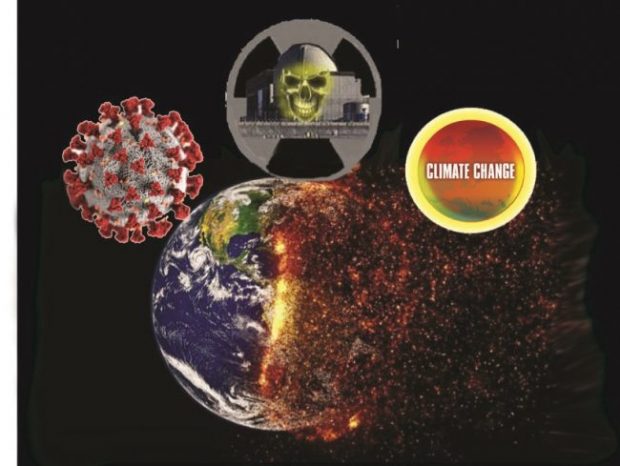
Leaders of nations are slow to wake up to what many normal people have known – we share this planet. Its big problems are global, and need to be addressed globally.
The pandemic is a telling illustration of this – squabbles over how it started, and over vaccines. But leaders are slowly realising that economic life will not really get going while Covid-19 is raging in other countries.
Climate change is an even more serious example, with its effects not all predictable. But poor countries take the brunt of what has been caused by rich countries.
Somehow, inexplicably lurking in the background is the terrible danger of the nuclear industry.
The nuclear industry is in a way more dangerous, more sinister than the other two – because it is very corrupt, and is managing to put it over governments – posing as the ”solution” to climate change.
A global cabal of toxic masculinity, this crooked industry is run by nuclear ‘cowboys’ – keen to take the safety risks, the weapons proliferation risks, the apocalyptic war risks, not only on earth but in space, and on other planets. And they manage this confidence trick at tax-payers’ expense. The nuclear nations beef up their weapons ‘ industry, with public funds that are not going to the health and well-being of their populations.
Fortunately there are international organisations that work for global action – a good example being ICAN – the International Campaign to Abolish Nuclear Weapons.
It is time for the nuclear-free organisations to work together, globally, to counteract the nuclear industry. That’s a hard call, as the nuclear industry has the money, the influence, the ruthless crookedness to impose its will on governments and media.
The nuclear free movement, with its predominantly indigenous members, lacks mopney and influence. Still, the nuclear-free movement has some powerful advantages – intelligent expertise, integrity and determination.
After 3/11, emergency import of a concrete pump vehicle from China allowed for nuclear power plant cooling

Translated from Japanese by Dennis Riches
March 13, 2021
In order to prevent further damage caused by the accident at the Fukushima Daiichi Nuclear Power Plant, caused by the Great East Japan Earthquake that occurred on March 11, 2011, it was urgent to cool the reactors. At that time, a concrete pump vehicle from China was used to perform this critical task. This is the story of how it came to be used.
At that time, TEPCO and the Japanese government searched for various ways to cool the reactors, and none of the attempts, such as dropping water from helicopters or releasing water using fire engines, were successful. Because it had to avoid radiation exposure as much as possible, the helicopter was almost completely ineffective. It had to drop water from a fairly high position and it was pushed back by the wind. The fire engine was not high enough at all, so it had no effect.
Therefore, it was understood that the sort of vehicle used for pumping concrete through a long boom would be needed. A concrete pump truck is a machine used in construction that can pump concrete to a high height through a collapsible boom. Thus TEPCO wondered if this machine could be used to pump water into the reactors. This would be more effective than using fire trucks and helicopters, but there was one big problem.
Regulations of the Road Transport Vehicle Act limited the angle and total vehicle weight to 25 tons, so the length of the boom on machines in Japan was limited to a maximum of 36 m, and there were no 60m-class pump vehicles in Japan that could be used for water-pouring work at a nuclear power plant.
As a result of searching around the world, they found a concrete pump vehicle with a boom of 62 meters in length manufactured by a construction machinery manufacturer called Sanshi Heavy Industries in China. In addition, it was a pump vehicle with very good performance, and it was possible to remotely operate it from two kilometers away. TEPCO immediately told Sanshi Heavy Industries in China that it would like to purchase it through Sanshi Heavy Industries’ Japanese subsidiary, but Mr. Liang Onkon, president of Sanshi Heavy Industries, gave a surprising response.
“Please do not sell to Japan. Don’t sell. Japan is a neighboring country. We share the ocean to our east. Now is the time to reach out to help. The pump vehicle will be donated to the disaster-stricken areas of Japan.” In other words, instead of selling a concrete pump vehicle worth 150 million yen, he replied that he wanted to provide it free of charge. And they didn’t just send vehicles. He said that three expert engineers from Sanshi Heavy Industries would also come to Japan to give lessons on how to operate the machine.
The president of WWB Co., Ltd., a Japanese agent of Sanshi Heavy Industries, looks back on the situation at that time. “When the donation was decided, soon Sanshi Heavy Industries searched for a pump truck with a 62m boom. We found that, very fortunately, there happened to be a concrete pump truck in the port of Shanghai that matched the requirements. The machine was due to be shipped to a client in Germany. I was about to leave for Germany, but the German company readily agreed and decided to send it to the disaster-stricken areas of Japan through the Red Cross Society. The concrete pump vehicle was taken from the ship heading to Germany and immediately put on the Suzhou (a ship going from Shanghai to Osaka) and headed for Japan. After arriving in Japan, I spent two days learning how to operate it in Noda City, Chiba Prefecture, and then I left for Fukushima.”
In this interview, we were able to talk in detail with Tomohiro Kawazoe, then president of Sanichi Japan, a Japanese subsidiary of Sanichi Heavy Industries. “I made a trip by myself from Osaka to Chiba to Fukushima because I had to examine the route in detail to check road width, bridges, tunnels, etc. It is a vehicle with a total weight of 55 tons.”
The police in the prefectures along the route also cooperated fully, and traffic restrictions such as 100 blockades of roads were also carried out in some areas so that they could move safely to Fukushima. Police cars in each prefecture escorted the concrete pump vehicle.
Originally, there were various regulations and it would ordinarily take time to travel on public roads in Japan with such an unusual cargo, but this time the issuance of provisional permits was done smoothly. These were extrajudicial measures because the machine was donated with the Red Cross Society as an intermediary. The project was realized in an unusually short period of about two weeks.

https://news.yahoo.co.jp/articles/75482f8d957a3609194000b3cf87145debe1ecc4
1 This Month
Tell Congress: Prevent Nuclear Catastrophe in Iran

Tell Congress: Prevent Nuclear Catastrophe in Iran

Read the Public Inquiry Report, the Commissioners’ report, Surrendering Australia: The AUKUS Deception is available to download for free at aukuspublicinquiry.com. Or just watch the replay of the National Press Club Luncheon.


Shut down the radiation-damaged Heysham nuclear reactors now
To see nuclear-related stories in greater depth and intensity – go to https://nuclearinformation.wordpress.com

Say No to NASA’s Reckless Nuclear Reactor on the Moon
Say No to NASA’s Reckless Nuclear Reactor on the Moon
-
Archives
- November 2026 (255)
- October 2026 (302)
- September 2026 (339)
- August 2026 (330)
- July 2026 (355)
- June 2026 (287)
- May 2026 (306)
- April 2026 (356)
- March 2026 (251)
- February 2026 (267)
- January 2026 (308)
- December 2025 (358)
-
Categories
- 1
- 1 NUCLEAR ISSUES
- business and costs
- climate change
- culture and arts
- ENERGY
- environment
- health
- history
- indigenous issues
- Legal
- marketing of nuclear
- media
- opposition to nuclear
- PERSONAL STORIES
- politics
- politics international
- Religion and ethics
- safety
- secrets,lies and civil liberties
- spinbuster
- technology
- Uranium
- wastes
- weapons and war
- Women
- 2 WORLD
- ACTION
- AFRICA
- Atrocities
- AUSTRALIA
- Christina's notes
- Christina's themes
- culture and arts
- Events
- Fuk 2022
- Fuk 2023
- Fukushima 2017
- Fukushima 2018
- fukushima 2019
- Fukushima 2020
- Fukushima 2021
- general
- global warming
- Humour (God we need it)
- Nuclear
- RARE EARTHS
- Reference
- resources – print
- Resources -audiovicual
- Weekly Newsletter
- World
- World Nuclear
- YouTube
-
RSS
Entries RSS
Comments RSS

