‘Toxic masculinity’ – Britain to build more nuclear weapons

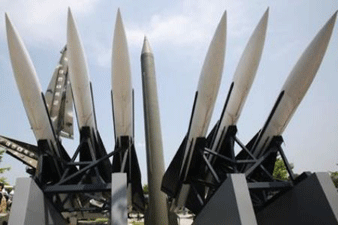
Boris Johnson ‘violating international law’ with plan to build more nuclear weapons, Defence review appears to breach Article 6 of nuclear non-proliferation treaty, Independent, Jon Stone Policy Correspondent, 16 Mar 21,
”………..Reacting to the new policy, Beatrice Fihn, executive director of the International Campaign to Abolish Nuclear Weapons (ICAN), said: “A decision by the United Kingdom to increase its stockpile of weapons of mass destruction in the middle of a pandemic is irresponsible, dangerous and violates international law.
“While the British people are struggling to cope with the pandemic, an economic crisis, violence against women, and racism, the government choses to increase insecurity and threats in the world. This is toxic masculinity on display.
“While the majority of the world’s nations are leading the way to a safer future without nuclear weapons by joining the Treaty on the Prohibition of Nuclear Weapons, the United Kingdom is pushing for a dangerous new nuclear arms race.”
In a further statement, the organisation suggested the UK would face censure at the next NPT review conference, which is due to take place in August at the United Nations.
“The United Kingdom is legally obligated under the nuclear non-proliferation treaty to pursue disarmament. States will meet soon to review the NPT’s success and when they do, the UK will have to answer for its actions,” the statement said.
ICAN won the Nobel Peace Prize in 2017 for its “ground-breaking efforts to achieve a treaty-based prohibition” of nuclear weapons.
Article 6 of the NPT, to which Britain is a signatory, commits countries to “pursue negotiations in good faith on effective measures relating to cessation of the nuclear arms race at an early date and to nuclear disarmament”.
Kate Hudson, general secretary of the UK’s Campaign for Nuclear Disarmament, said: “A decision to increase Britain’s nuclear arsenal absolutely goes against our legal obligations under the nuclear non-proliferation treaty.
“Not only is the UK failing to take the required steps towards disarmament, it is willfully and actively embarking on a new nuclear arms race – at a time when presidents Biden and Putin have renewed their bilateral nuclear reductions treaty. Britain must not be responsible for pushing the world towards nuclear war. This is a dangerous and irresponsible move, and must be reversed.”….. https://www.independent.co.uk/news/uk/politics/boris-johnson-uk-nuclear-weapons-international-law-b1817827.html
Nuclear power has become irrelevant — like it or not
 https://english.kyodonews.net/news/2021/03/1a9b07886b98-opinion-nuclear-power-has-become-irrelevant—-like-it-or-not.html, By Mycle Schneider, KYODO NEWS , 16 Mar 21,
Ten years went by since the Fukushima Daiichi accident began. What happened in the United States, historically leading the world’s nuclear power programs and still operating the largest reactor fleet in the world? What are global developments in energy policy increasingly dominated by renewable energy?
“The debate is over. Nuclear power has been eclipsed by the sun and the wind,” Dave Freeman wrote in the foreword to the World Nuclear Industry Status Report 2017.
he renowned industry thinker, called an “energy prophet” by The New York Times, passed away last year at age 94. He had seen nuclear power coming and going. President Carter appointed him as chairman of the only fully public electricity utility in the United States, the Tennessee Valley Authority in 1977.
Construction had started on two nuclear reactors in the state in 1972. It took until 1996 to complete the first one and until 2016 for the second one. Those were the last units to start up in the United States.
Construction began on four units in 2013, but in 2017, the bankruptcy of builder Westinghouse led to the abandonment of the $10 billion V.C. Summer two-unit project in South Carolina.
Construction cost estimates for the only other active construction site in the United States, the two-unit Vogtle project in Georgia, have multiplied by a factor nearing five from $6.1 billion in 2009 to $28 billion by 2018. The startup continues to be delayed.
Meanwhile, lacking newbuild, the U.S. nuclear fleet is aging and the 94 still operating reactors now exceed an average age of 40 years. Although the U.S. nuclear industry claims to have achieved decreasing operation and maintenance costs — the only nuclear country to do so — the utilities are still struggling to compete with fierce competitors from the renewable energy sector.
Solar photovoltaic plants saw their electricity-generating costs decrease by 90 percent over the past decade, and wind power is down 70 percent, while nuclear kilowatt-hour costs increased by one third.
The global nuclear industry has lost the newbuild market. Five reactors started up in 2020, while six were closed down. While there was a net nuclear capacity increase of 0.4 gigawatt, renewables added an estimated 248 gigawatt. China, the only country with a significant newbuild program, added 2 gigawatt of nuclear and 150 gigawatt of solar and wind combined.
As Freeman stated, “These renewable, free-fuel sources are no longer a dream or a projection — they are a reality that are replacing nuclear as the preferred choice for new power plants worldwide.”
No wonder despair is reigning in nuclear companies’ headquarters. Ten years after the disaster struck Japan, nuclear power has become irrelevant in the world, an industrial reality that also Japanese policymakers need to face.
(Mycle Schneider is an independent international consultant on energy and nuclear power. He is the coordinator and publisher of the annual World Nuclear Industry Status Report.)
Sudden death of defendant in Ohio nuclear corruption case
|
Lobbyist Neil Clark, Defendant In Ohio Nuclear Bailout Case, Found Dead At 67, WOSU
By ANDY CHOW-16 Mar, 21 Neil Clark, a longtime Ohio lobbyist indicted in a sweeping federal bribery investigation into the state’s nuclear bailout law, has been found dead in Florida……
The Naples, Fla. medical examiner says they are conducting an autopsy on the 67-year-old Clark, following a sheriff’s office report of a man found dead with a head wound and a gun on the premises……
Clark was one of several defendants charged with racketeering last year in connection with HB6, Ohio’s nuclear bailout law. Federal prosecutors say the $61 million bribery scheme funneled money from FirstEnergy companies to then-Ohio House Speaker Larry Householder, in exchange for securing a $1 billion bailout benefiting several plants owned by First Energy and its former subsidiaries.
Clark pleaded not guilty in August. Householder has also pleaded not guilty in the case. Two other defendants and the dark money group Generation Now, which prosecutors said was created and operated at Householder’s discretion, have entered guilty pleas….. https://radio.wosu.org/post/lobbyist-neil-clark-defendant-ohio-nuclear-bailout-case-found-dead-67#stream/0 |
Serious security lapse at a Japanese nuclear plant
|
Serious security lapse at nuclear plant in Niigata https://www3.nhk.or.jp/nhkworld/en/news/20210316_26/
Japanese nuclear regulators have assessed a security lapse at the Kashiwazaki-Kariwa nuclear plant in Niigata Prefecture as being at the most serious level in terms of anti-terror measures. The Nuclear Regulation Authority was notified by the plant’s operator, Tokyo Electric Power Company, in January that a worker accidentally damaged sensor equipment for detecting intruders. On Tuesday, the result of an investigation of the plant was reported at an NRA closed-door meeting. The probe found that other sensor equipment may have remained broken since March of last year, making the plant vulnerable to intruders for months. The NRA revealed that TEPCO employees in charge of security did nothing despite knowing that alternative measures taken were ineffective. The NRA’s provisional assessment of the security lapse was that it was the most serious on a four-level scale of risks in safeguarding nuclear material. The authority members plan to consider punishment for the utility as soon as the assessment is finalized. Last September, another problem took place at the plant. An employee entered the plant’s central control room illegally, using another employee’s ID card. |
|
United Nations nuclear watchdog says it’s possible to return to the Iran nuclear deal
 UN atomic watchdog: Return to Iran nuclear deal possible https://abcnews.go.com/International/wireStory/atomic-watchdog-return-iran-nuclear-deal-76486424The head of the United Nations’ nuclear watchdog says a U.S. return to the 2015 nuclear deal with Iran remains possible, but suggested to European Parliamentarians both sides need to be prepared to negotiate, By DAVID RISING Associated Press, 17 March 2021,
BERLIN — A U.S. return to the 2015 nuclear deal with Iran remains possible, but both sides need to be prepared to negotiate, the head of the U.N. nuclear watchdog suggested to European lawmakers on Tuesday.
Washington pulled out of the deal unilaterally in 2018 under then President Donald Trump, but President Joe Biden has indicated that the U.S. would be willing to rejoin.
But there are complications. Iran has been steadily violating the restrictions of the deal, like the amount of enriched uranium it can stockpile and the purity to which it can enrich it. Tehran’s moves have been calculated to put pressure on the other nations in the deal — Russia, China, France, Germany and Britain — to do more to offset crippling sanctions reimposed under Trump.
Iran has said that before it resumes compliance with the deal, the U.S. needs to return to its own obligations under the deal by dropping the sanctions.
Asked about Iran’s insistence that the U.S. take the first step, International Atomic Energy Agency Director General Rafael Grossi said in a video appearance before three European Parliament committees that “it takes two to tango.”
He noted that over the past two years Iran has accumulated a lot of nuclear material and new capacities, and used the time for “honing their skills in these areas.”
“Even if you had a magic wand or the hand of God and said we go back tomorrow, there will be a lot of housekeeping,” he said.
Grossi said he had been talking to both sides in his agency’s “impartial neutral role” and did think that a U.S. return to the deal, known as the Joint Comprehensive Plan of Action, or JCPOA, was possible.
“They want to come back,” he said. “But of course … there are a number of issues that still need to be clarified. So it’s not impossible. It is difficult, but not impossible.”
The ultimate goal of the deal is to prevent Iran from developing a nuclear bomb, something it insists it doesn’t want to do. Iran now has enough enriched uranium to make a bomb, but nowhere near the amount it had before the nuclear deal was signed.
As part of its ongoing violations of the JCPOA, Iran last month began restricting IAEA inspections of its nuclear facilities.
Under a last-minute deal worked out in a trip to Tehran by Grossi, however, some access was preserved.
Under that temporary agreement, Iran will no longer share surveillance footage of its nuclear facilities with the IAEA, but it has promised to preserve the tapes for three months. It will then hand them over to the IAEA if it is granted sanctions relief. Otherwise, Iran has vowed to erase the tapes, narrowing the window for a diplomatic breakthrough.
Admittedly it is limited, but it allows to maintain a record of the basic activities that are taking place,” Grossi said. “Granted it is not the same as the whole access that we used to have.”
Grossi said it was important for the JCPOA powers to use this three-month “diplomatic window of opportunity” that Iran has granted.
“In this time period, the parties involved will hopefully be able to achieve, or at least start to move back to the JCPOA,” he said.
Report alleges elevated cancer deaths in Monroe may be result of nuclear plant
Report alleges elevated cancer deaths in Monroe may be result of nuclear plant, Tyler Eagle-The Monroe News, 16 Mar 21,
A new report has found that Monroe County’s cancer mortality rate is significantly higher than that of the national average.
And the scientist behind it contends the driving force behind that statistic is DTE Energy’s Fermi 2 Nuclear Power Plant in Newport.
Epidemiologist and executive director of the Radiation and Health Project Joseph Mangano unveiled a report titled “Fermi 2 Nuclear Reactor and Rising Cancer Rates” Thursday afternoon during a virtual press conference.
Using mortality data collected by the Centers for Disease Control and Prevention, Mangano’s analysis found that cancer-related deaths in Monroe County were 14.3% higher than the national average.
“We have raised red flags — these are matters of concern,” Mangano said. “There are no other obvious reasons for such an unexpected change. …
“You wouldn’t think Monroe County is a (center) for cancer. It’s a suburban county.”
More:DTE Energy decries advocacy group’s report
The national average for cancer-related deaths nationally was about 150 deaths per 100,000, according to Mangano’s report. Monroe County’s most recent metric — which is from 2019 — was 170 per 100,000.
Prior to Fermi 2’s activation in 1985, Monroe County’s cancer death rate was 3% less the national average, according to Mangano. He said the elevated trend has continued to increase in the last ten years, resulting in the most recent and highest metric.
Mangano said elevated risk and mortality of cancer was present in all population groups, including those classified by gender, race and age.
His report shows that in Monroe County, 10 of the 11 most common cancers in the U.S. occurred at a significantly higher rate, including leukemia, brain and central nervous system and bronchus and lung cancers.
The report also indicates that cancer-related mortality among younger populations is also much higher than the national average.
According to the report, cancer-related deaths among those ages 0-24 occurred 40.2% more than the national average.
Among those ages 25-49, the rate was 49.2% above the U.S. average.
Mangano is calling for more research into the matter, saying the federal and state government have not done enough to examine nuclear plants’ impact on those who live near such sites.
“You don’t have to wait for a meltdown for nuclear reactor to harm people,” Mangano said. “Every single day, reactors release a mix of 100 or more (harmful) chemicals into the environment. It gets into people’s bodies through the food chain.”……….
Mangano also discussed a new initiative to collect donated baby teeth from Monroe County residents in an effort to investigate whether there are increased instances of in-body radioactive contamination.
Mangano said the Tooth Fairy Project will analyze collected specimens for Strontium-90, a harmful substance that is a byproduct of nuclear reaction.
The project will seek to collect 25-50 local specimens, he said………. https://www.monroenews.com/story/news/2021/03/11/study-elevated-cancer-deaths-monroe-may-result-nuclear-plant/4649665001/
Why the Fukushima disaster signalled the end of Big Nuclear.
New Statesman 15th March 2021, Why the Fukushima disaster signalled the end of Big Nuclear. Ten years after the world’s second worst nuclear disaster, large nuclear power stations have yet to regain their appeal. While for many energy experts it may not make sense to hot-headedly shut off existing nuclear for largely ideological reasons, as Germany did in 2011, the past decade has left many countries asking why they would take the economic and political risk
associated with new nuclear power stations when they can invest instead in high volumes of renewable energy.
Big Nuclear has demonstrated the mistake of looking for an easy solution, and picking one technology as a silver bullet. Without a pragmatic approach, energy debates veer away from the
facts, technological and economic, and make it harder for governments to decide on the strategies needed for the most significant challenge of all – the need to reach net zero.
UK should build foreig policy on aid, conflict resolution, not on reversing nuclear disarmament
 Tax Research UK 16th March 2021. Billions will be wasted, nuclear waste will be created, a dangerous precedent of reversing disarmament will have been set, and the world will be more unsafe, all for no gain. If the UK was wise now (and but isn’t) it would be pursuing a very different foreign policy, based on that of
Norway.
That country does punch above its weight. It has a strong foreign policy based on aid. It uses that to build strong diplomatic links around the world. And in the process it works, quietly, on conflict resolution.
That’s the way foreign policy should be done. We are just aggressively waving colonial flags. And that’s a disaster as well as being nuclear insanity.
https://www.taxresearch.org.uk/Blog/2021/03/16/nuclear-insanity/
Dilemma over plan to dump Himkley nuclear mud off Cardiff coast

Nation Cymru 15th March 2021, Proposals to dump hundreds of thousands of tonnes more mud from theconstruction of a new nuclear power plant two miles off the Cardiff coast
will be discussed in the Senedd tomorrow. Last year a petition opposing EDF
Energy’s application demanded a full Environmental Impact Assessment
(EIA) before the dump could be licensed. The petition gained almost 10,700
signatures and forced a Senedd debate. In 2018 EDF were granted permission
to dump at the Cardiff Deep Grounds inshore disposal site despite fierce
opposition and an earlier debate in the Senedd.
https://nation.cymru/news/battle-to-block-hinkley-c-mud-dump-returns-to-the-senedd/
New report on human and environmental impact of Hinkley Point C nuclear project

group, has raised concerns around its potential impact on Wales. Among the concerns of the group of expert panellists are its effects on the Severn estuary off the South Wales coast. The estuary has one of the most extensive inter-tidal wildlife habitats in the UK and is the point where several of the UK’s longest rivers meet, including the River Usk near Newport.
https://www.walesonline.co.uk/news/wales-news/hinkley-c-nuclear-severn-estuary-20165575
— limitless life

We at the Buddhist Council of Greater St. Louis held an online seminar on “Solving Global Problems.” Topics included the pandemic, global warming, nukes, and wars, which most urgently and greatly need to be solved. The global problematique, interrelated global problems, includes the mass extinction of species, mass starvation, poverty, discrimination, mal-nutrition, -welfare, and -education, […]
— limitless life
Nuclear news – week to 15th March
The Fukushima anniversary is over. A sigh of relief? We can now all forget about it? Not really. https://www.youtube.com/watch?v=K8njLkMigH4&t=10s
Numerous well-researched articles on the event conclude that Japan’s struggle with the aftermath has no end in sight. A hastily released ”comforting ” health report from The United Nations Scientific Committee on the Effects of Atomic Radiation has been criticised as unconvincing and inconsistent. The Japanese government, and the global nuclear lobby doggedly persist in planning for the ”Recovery Olympics” in Tokyo in July. But in view of the pandemic and the lingering radiation, that may not be a done deal
Fukushima: “How Japan was blinded to the predicted certainty of disaster“. 10 years after Fukushima – still nuclear regulatory capture, and poor safety culture. Whitewashing of Fukushima meltdown by United Nations Scientific Committee on the Effects of Atomic Radiation.
Nuclear power faces a wobbly future. Ten years on from Fukushima, nuclear power continues to struggle with deeper problems. Nuclear power is unpopular: promoted only by those with vested interests.
Billionaire Bill Gates’ nuclear ambitions would make climate disaster worse.
Global nuclear industry in decline since 1996, even without Fukushima disaster.
The long-term problem of ”peaceful” plutonium.
The radiation danger to astronauts– cancer, heart disease -an ethical problem. Space radiation – harmful to astronauts, not only with cancers, but also with heart and blood vessel effects. Low doses of radiation used in medical imaging lead to mutations in cell cultures.
The growing threat of space debris.
How the world came close to nuclear war catastrophe.
‘Every euro invested in nuclear power makes the climate crisis worse‘. Small modular reactors not the solution, says German nuclear authority .
Need to establish compensation schemes for future nuclear accidents.
So-called ”cloud” computing means huge electricity use in data so-called ”farms”.
JAPAN.
The truth about Fukushima today – and the cover-up – Thomas A Bass. Fukushima Nuclear Disaster Nearly ‘Ended The Japanese State’. Harm done to people by the Fukushima evacuation, but radiation was still the root cause of all this. The Asahi Shimbun continues to warn against nuclear power -Japan’s risk of another “Fukushima -type” disaster.
Japan’s Nuclear Clean-Up Has No End in Sight. 1.2 million tonnes of contaminated water and nowhere to put it – Fukushima’s continued legacy. Review of film ”Fukushima 50”. The thought of the Olympics – the only hold-up to emptying contaminated water to the ocean.
Impossible timetable set for returning Fukushima nuclear site to ‘greenfield”. Japanese government hopes that not-yet-designed robots might clean up Fukushima nuclear mess. Part of Tomioka, 6 miles from Fukushima, is still a no-go zone. Radiation from Fukushima meltdown collects in timber in affected region.
Tokyo Olypics: is it safe to promote Japan’s so-called “recovery” by sending athletes into a nuclear exclusion zone? United Nations Scientific Committee on Atomic Radiation (UNSCEAR) report on Fukushima health effects -rushed, inadequate, inconsistent.
Cash-strapped Japanese nuclear company funds road plans near idle nuclear plant.
Japan’s main opposition party -”Japanese society is viable without operating nuclear power plants”.
FRANCE. French Nuclear tests: revelations about a cancer epidemic.
PACIFIC ISLANDS. France has consistently underestimated the devastating impact of its nuclear tests in French Polynesia. 110, 000 people in French Polynesia affected by the radioactive fallout from atomic bomb tests. Time to clean up Bikini Atoll, to right the nuclear wrongs done to the Pacific islands people.
USA.
- Investigative journalism – Can the Energy Department store 50 tons of weapons-grade plutonium for 10,000 years? Biden on horns of a dilemma for Iranian nuclear deal. This is how the biggest arms manufacturers steer $millions to influence U.S,. policy. USA’s new $100billion nuclear missile – a white elephant?
- Ohio House passes its version of Bill rescinding nuclear subsidies.
- Report: Cancer death rates rising near Fermi nuclear plant .
- Problem in accepting higher level radioactive wastes in Texas.
GERMANY. Germany pledges to work towards a nuclear-free Europe. The Greens are likely to be propelled into government in the national vote.
UK. Nuclear power losing out in the UK – not a good omen for the global nuclear industry. Trident nuclear warhead numbers set to increase for first time since cold war, despite commitment to decrease nuclear weaponss stockpile. Safety breaches at Sellafield have raised fears of a Chernobyl-style disaster.
CHINA. China maintains only a lean nuclear weapons force – aimed at survival if attacked..
TURKEY. Anxieties over Turkey’s new Russian-backed nuclear plants. Turkey’s nuclear ambitions bring fears of a ”new Chernobyl” in the region. – Turkey’s nuclear power plant could prove irresistible to terrorists.
NEW ZEALAND. New Zealand groups oppose launch of U.S. military nuclear satellite.
TAIWAN. Nuclear power not an option for Taiwan. Taiwan environmentalists to hold anti-nuclear rally in June.
SLOVENIA. Slovenia’s hazardous old nuclear reactor in an earthquake zone.
AUSTRALIA. Australian uranium fuelled Fukushima . Australia must learn the lessons of Fukushima.– Time for Australia to clean up uranium mining damage, and end this toxic industry – Western Australia could lead the way. its nuclear tests in French Polynesia. 110, 000 people in French Polynesia affected by the radioactive fallout from atomic bomb tests. Time to clean up Bikini Atoll, to right the nuclear wrongs done to the Pacific islands people.
Tokyo’s ”Recovery Olympics”? But Japan has not recovered from the Fukushima meltdown
Japan Hasn’t Recovered 10 Years After Fukushima Meltdown, https://truthout.org/articles/japan-hasnt-recovered-10-years-after-fukushima-meltdown/, Arnie Gundersen, -March 11, 2021
On March 11, 2011, a devastating offshore earthquake and ensuing tsunami rocked Japan and resulted in nuclear meltdowns in three nuclear reactors at the Fukushima Daiichi nuclear site. Until the 2020 Tokyo Olympics were placed on a one-year hiatus because of concerns over  COVID-19, the Japanese government had portrayed these events as the “Recovery Olympics.” It had hoped to use the Olympics to showcase a claimed restoration of Japan since it was devastated in 2011. But has Japan really “recovered?”
1. Existing radiation maps ignore significant sources of radiological exposure.
Most of the radiation maps of northern Japan are based on external radiation detected in handheld instrument measurements by citizens and scientists, who then link the measurements to GPS coordinates while downloading that data into a massive database. This information about direct, external radiation is certainly important, but it has become the de facto criteria for decision makers in Japan to decide which cities and towns should be repopulated.
We found that this approach only provides limited policy alternatives and serves to minimize potential population exposure for two reasons. First, the Geiger counter data is for external radiation that was deposited on the ground external to human bodies and ignores radiation imbibed or inhaled as “hot particles” into the human body.
Secondly, the external radiation data frequently displayed for northern Japan is based on radiation emitted from only a single radioactive isotope, Cesium-137 (Cs-137), as measured externally. On the other hand, our papers show a wide variety of isotopes that are not detected by handheld Geiger counters or absorbed externally. We show that there is an extensive brew of various isotopes present in radioactive dust that is inhaled or imbibed. Our papers indicate that the radioactive concentration in these dust particles varies widely, by a factor of 1 million, with 5 percent (3 sigma) of these “hot particles” 10,000 times more radioactive than the mean. Our most radioactive dust particle was collected 300 miles from the site of the meltdown.
Furthermore, the data show that alpha, beta and gamma-emitting contaminants in radioactive fallout from the Daiichi meltdowns have not traveled together in lockstep. This means that measuring only beta-emitters like Cesium-137 or only total gamma (as you would with a Geiger counter) is not enough to map the full impact of the fallout. Alpha-emitters must also be measured to protect the public health. This is especially important because of the serious health impacts that can come from exposure to alpha radiation.
2. Northern Japan remains radiologically contaminated.
When a nuclear chain reaction stops, the hazardous remnants of the previously split uranium atoms, euphemistically called “fission products,” are left behind and remain radioactive for centuries. The triple meltdowns and explosions at Fukushima Daiichi Units 1, 2 and 3 in March 2011 released an enormous amount of these fission products into the environment. Wind currents pushed as much as 80 percent of this radiation over the Pacific Ocean, while 20 percent fell on northern Japan, forcing the evacuation of approximately 160,000 Japanese citizens from ancestral lands.
Absent any human intervention, short-lived fission products that originally accounted for more than half of this contamination have already decayed away during the last nine years, while even more has washed into the Pacific from storms and typhoons. Limited cleanup efforts by the Japanese government have further reduced the contamination in a fraction of the populated portion of the devastated Fukushima prefecture. Greater than 10 million tons of radioactive material have been collected and stored in 10 million individual large black bags at hundreds of locations. However, due to mountainous terrain, more than 70 percent of Fukushima prefecture will never be decontaminated.
Absent any human intervention, short-lived fission products that originally accounted for more than half of this contamination have already decayed away during the last nine years, while even more has washed into the Pacific from storms and typhoons. Limited cleanup efforts by the Japanese government have further reduced the contamination in a fraction of the populated portion of the devastated Fukushima prefecture. Greater than 10 million tons of radioactive material have been collected and stored in 10 million individual large black bags at hundreds of locations. However, due to mountainous terrain, more than 70 percent of Fukushima prefecture will never be decontaminated.
As the cost and effort to completely decontaminate the entire land mass of Fukushima prefecture would be prohibitive, the Japanese government has focused on cleaning only populated areas. It also increased the “allowable” radiation limit 20-fold, after an initial partial decontamination, from 1 milli-Sievert to 20 milli-Sieverts per year (100 millirem to 2 rem) to facilitate repopulation of abandoned villages. A 20-fold increase in radiation will create a 20-fold increase in radiation-induced cancers. A significant fraction of residents chose not to return, recognizing the increased risk that these higher approved limits present.
3. Previously “cleaned” areas are becoming radiologically contaminated yet again.
The city of Minamisoma was contaminated and evacuated at the height of the Fukushima disaster. After a period of several years, radiation in the city was remediated and citizens were allowed to return. Minamisoma City Hall was decontaminated, with a new epoxy roof applied after the meltdowns in 2011. The authors collected samples from this previously “clean” fourth-story roof in 2016 and again in 2017, finding high levels of alpha radiation in the relative absence of the normally ubiquitous Cesium isotopes. This can only imply that wind-borne contamination from uncleaned areas is recontaminating those areas determined habitable.
4. Olympic venues in Fukushima prefecture are more contaminated than in Tokyo Olympic venues.
Suburbs of Tokyo are approximately 120 miles from the reactors at Fukushima Daiichi. We found particulate radiation at Olympic venues in Tokyo to be normal compared to other cities worldwide. We found that areas in Japan beyond the Olympic venues were seven times more contaminated than the venues themselves. Contamination at the Olympic venues in Fukushima prefecture, planned to showcase the region’s recovery, were also more contaminated than the Tokyo venues. We found that on average, these northern Olympic venues were two to three times more contaminated with “hot particles” than venues in Tokyo.
We also detected small but statistically significant levels of plutonium at the J-Village national soccer camp in Fukushima prefecture. Even though the Japanese government claims to have thoroughly decontaminated these Fukushima locations, it is not surprising that these Olympic venues remain contaminated. As discussed previously, since the entirety of the prefecture’s area will never be decontaminated, these areas will continue to have wind-borne contamination for centuries.
Science on a Shoestring
As Fukushima was melting down, nuclear advocates in the U.S. were testifying to the Washington State legislature, saying that Japan’s nuclear plants would not be a problem, and that working in a nuclear plant is “safer than working in Toys R Us.” Not surprisingly, those same zealots are now claiming that there will be no increase in cancer fatalities as a result of the three Fukushima meltdowns. However, not including the hot particle contamination my colleagues and I have identified, the UN estimates that thousands of fatalities will occur. Others, including myself, believe the actual cancer increase could result in upwards of 100,000 increased deaths as a result of the radioactive microparticles strewn into the environment.
There is no doubt that radiological conditions in Japan have improved in the decade since the triple meltdowns at Fukushima Daiichi. However, our data show that Japan has not “recovered,” nor can it ever return to pre-meltdown norms. Public relations campaigns by interested parties cannot obscure the recontamination of populated areas in northern Japan that will continue to occur.
Hasegawa, the former head of Maeda Ward in Fukushima prefecture at the time of the Fukushima disaster, sums up the sentiment of most of Japanese citizens in northern Japan: “The nuclear plant took everything.… We are just in the way of the Olympics. In the end, the radiation-affected places like us are just in the way. They are going ahead just wanting to get rid of these places from Japan, to forget.”
There is an old laboratory adage that says, “The best way to clean up a spill is not to have a spill,” and this applies on a much larger scale to the entirety of northern Japan, where cleanup will remain economically unfeasible. Our future plans to further support our hypothesis that Japan remains contaminated will involve testing the shoestrings of Olympic athletes and visitors to northern Japan. Shoestrings are useful, as their woven fabric traps dust which may assist in determining the extent of contamination into populated areas in northern Japan compared to that in Tokyo.
Billionaire Bill Gates’ nuclear ambitions would make climate disaster worse

His nuclear path would lead to, not prevent, a climate disaster
Why Bill Gates is wrong — Beyond Nuclear International
Billionaire’s nuclear ambitions would make climate disaster worse, https://wordpress.com/read/feeds/72759838/posts/3231823855 By Linda Pentz Gunter, 14 Mar 21,
In an interview for the Washington Post Magazine during his current book tour, billionaire Bill Gates, whom we are now expected to accept as an authority on climate change, said: “I’ll be happy if TerraPower was a waste of money.” TerraPower is Gates’s nuclear power company pushing so-called “advanced” reactors. His book is called How to Avoid a Climate Disaster.
Well, Bill, I have some good news for you. You can start celebrating! Because, yes, TerraPower is indeed a colossal waste of money. It’s also a waste of precious time. And the idea that nuclear power could “lift billions out of poverty” as the TerraPower website boats, is on a par with any number of outlandish theories, conspiratorial or otherwise, that are making the all too frequent rounds these days.So has Gates really drunk the Kool-Aid (OK it wasn’t actually Kool-Aid but Flavor Aid that was consumed at the 1978 Jonestown massacre)? Does he really plan to throw away $1 billion of his own money, plus an equal match from investors and possibly some state funding, too, and then just shrug it off when the whole thing proves redundant? Is that really true stewardship of the climate?
You don’t need to be a mathematician to work out what $2 billion plus would buy in renewables, and how much faster that particularly delivery would arrive at the doorsteps of the world’s poor, whom Gates claims he aims to protect.
Here is what Lazard’s estimated in terms of costs comparisons for new nuclear plants and other energy options, as laid out by Amory Lovins in his landmark Forbes article:
New nuclear power would cost $118–192/MWh (of which $29 is typical operating cost) while utility-scale solar power would cost $32–42/MWh and onshore windpower $28–54/MWh.
As Lovins has consistently pointed out: “To protect the climate, we must save the most carbon at the least cost and in the least time, counting all three variables—carbon and cost and time.”
And, “costly options save less carbon per dollar than cheaper options. Slow options save less carbon per year than faster options. Thus even a low- or no-carbon option that is too costly or too slow will reduce and retard achievable climate protection.”
Right now, a so-called “advanced” TerraPower reactor is just a glimmer in Gates’s eye. Like the prevailing fantasies about life on Mars, his toy reactor won’t materialize anywhere near soon enough to ease the agonies of the climate crisis. And even if it eventually shows up, and passes the necessary safety requirements, it will demonstrate only a triumph in physics, having by then no economical or practical utility whatsoever.
As the absence of progress on small modular reactors has shown, there is simply no viable market for new reactors, “advanced” or otherwise. Even the enticing prospect of rolling hundreds of small reactors off assembly lines (a jobs killer for on-site workers), is pie-in-the-sky, given the huge upfront costs that could never be recouped unless there were hundreds, possibly thousands, of orders.
To show just how detached from nuclear reality Bill Gates has become, he is happy to throw in the towel on TerraPower if fusion triumphs instead. Fusion, he says along with fission and “a miracle in storage” are the “only” ways to “make electricity cheap and reliable.”
Yes, this is the same fusion that has been thirty years away for countless decades. And still is. This is the fusion that uses more energy to create electricity than it delivers; that is sucking billions of dollars into research that could be applied to instant fixes in the renewable energy sector.
This is the same “cheap” that saw the costs at the two still unfinished new nuclear reactors in Georgia balloon to $21 billion in 2021, more than double the original cost and counting. And it’s the same “reliable” that resulted in Texans shivering in the dark during the recent big freeze (and no, it wasn’t frozen wind turbines, and I don’t have a fire-starting space laser, either).
There is a reason we are no longer searching for gold in them thar hills. We don’t need to waste years panning for a few elusive grams, hoping eventually to build a fortune. The Gold Rush is over. So, if there ever was one, is the Nuclear Rush.
Gates wants to save lives conquering malaria. But he’s fine with exposing people to radiation and leaving a legacy of toxic waste with no known solution.
Take a look around. In addition to the Vogtle debacle, a similar project in South Carolina was abandoned unfinished with ratepayers footing the bill. In the UK, Hitachi has fled for the Welsh hills, ditching its new reactor plans in that country. Before that, a proposed three-reactor site in Cumbria in north west England saw a similar corporate exodus. The new reactor at Bradwell, UK, is on “pause.”
Meanwhile, as nuclear costs — largely due to their equally huge risks — continue to soar, renewable prices are plummeting. Solar and wind are the cheapest and fastest forms of new energy. Nuclear power is the most expensive and the slowest. So if you choose to spend your next $2 billion on trying to invent the better nuclear mousetrap, then you are not helping to avoid a climate disaster. You are enabling it.https://wordpress.com/read/feeds/72759838/posts/3231823855
Turkey’s nuclear power plant could prove irresistible to terrorists

Turkey’s nuclear power plant could prove irresistible to terrorists
A tempting target — Beyond Nuclear International
A Tempting target https://wordpress.com/read/feeds/72759838/posts/3231822640 Beyond Nuclear International
Accurate missiles and drones could knock down critical electrical supply lines to Turkey’s nuclear reactor and destroy its emergency generators, nuclear control rooms, reactor containment buildings, and spent reactor fuel buildings.By Henry Sokolski and John Spacapan
Although it got little attention from the U.S. media, an explosion late last month at a Turkish nuclear power plant construction site raised eyebrows in Turkey. It should raise eyebrows in America, too. Donald Trump pushed nuclear exports to the region when he was president. His replacement, Joe Biden, should not. The recent Turkish explosion clarifies why: nuclear plants in unstable regions are tempting targets that could explode, and not by accident.
The blast injured at least two people and caused serious damage to homes in the area. The Russian-Turkish nuclear construction firm, Akkuyu Nuclear Inc., claims the explosion took place when a subcontractor carried out “planned drilling and blasting.” So far, Ankara has kept mum on the story.
Angry local officials and opposition party leaders, though, aren’t buying the construction firm’s account. A member of the leading political opposition, the Republican People’s Party, said locals are losing sleep “thinking about the possibility of more blasts that might happen in the future when the nuclear power plant starts to function.” Meanwhile, the local governor has ordered a special police team to investigate the incident and to “hold those responsible to account.”
Whether or not the explosion was planned, the Republican People’s Party leaders, Turkish citizens, and local Akkuyu politicians worry about reactor accidents. The Akkuyu plant sits on a major plate tectonic fault line. Besides natural accidents, they should worry about another threat—terrorist and proxy missile and drone attacks. Certainly, if government officials ignore local opposition to the nuclear project, then they will have to worry that the PKK (a Kurdish terrorist group that seeks an autonomous state in southeastern Turkey) might hold the Turkish government hostage by threatening to strike the plant.
Nearby, last July, the Azerbaijani defense ministry’s spokesman did precisely that, publicly threatening to use precise Azeri missiles to strike Armenia’s Metsamor nuclear power plant. It was shortly after this threat was made that Russian president Vladimir Putin called Turkish president Recep Erdogan to restrain Azerbaijan’s military. The Iranians and their proxies also have toyed with attacking reactors. Hezbollah, armed with Iranian-made rockets, has threatened to strike Israel’s Dimona nuclear reactor.
Another Iranian proxy, the al-Houthi group in Yemen, claimed that they fired a missileat the UAE’s Barakah nuclear power plant, which it failed to hit. They claim they intend to try again.
Finally, if Iran chose to give similar missiles to militias such as the Syrian National Defense Forces, who are supportive of the Assad regime in Syria (a bitter enemy of Turkey), similar threats might be made against Akkuyu.
Then, there is the PKK, which has attacked Turkish soldiers and military bases with sophisticated explosive drones. In one attack, the PKK blew up a Turkish ammunition dump, killing seven Turkish soldiers and wounding dozens more. Security analysts contend the PKK’s newer drones can travel sixty miles at fast enough speeds to outwit Turkish military jamming technology. They are now reportedly designing a new generation. Such drones have to be considered a future threat against Turkey’s nuclear plant.
They already are in the United States. The Federal Aviation Administration is now studying how drones might harm power plants including nuclear reactors. Why? Between 2015 and 2019, at least fifty-seven drones flew illegally over United States nuclear power plants, including swarms that flew over plants in Arizona and Pennsylvania.
The Turks should pay attention. Accurate missiles and drones could knock down critical electrical supply lines to a reactor and could destroy its emergency generators, nuclear control rooms, reactor containment buildings, and spent reactor fuel buildings. The effect of such strikes range (in the case of calculated near misses) from inducing public panic (and the consequential shutdown of reactors throughout the country) to inducing spent fuel fires that could release massive amounts of radiation, mimicking Chernobyl or worse.
All of this suggests Akkuyu is a nuclear target in the making. Turkish critics of the Akkuyu project, including the Republican People’s Party, argue it would be far cheaper and safer to kill the reactor and invest instead in renewables and natural gas. The Biden administration should be on their side and quietly encourage Turkey to drop the project. Helping it with nonnuclear alternatives would make sense.
Henry Sokolski is the executive director of the Nonproliferation Policy Education Center and the author of Underestimated: Our Not So Peaceful Nuclear Future. He served as deputy for nonproliferation policy in the office of the U.S. secretary of defense from 1989 to 1993.
John Spacapan is the Wohlstetter Public Affairs Fellow at the Nonproliferation Policy Education Center and is researching the future of security arrangements in the Middle East.
1 This Month
Tell Congress: Prevent Nuclear Catastrophe in Iran

Tell Congress: Prevent Nuclear Catastrophe in Iran

Read the Public Inquiry Report, the Commissioners’ report, Surrendering Australia: The AUKUS Deception is available to download for free at aukuspublicinquiry.com. Or just watch the replay of the National Press Club Luncheon.


Shut down the radiation-damaged Heysham nuclear reactors now
To see nuclear-related stories in greater depth and intensity – go to https://nuclearinformation.wordpress.com

Say No to NASA’s Reckless Nuclear Reactor on the Moon
Say No to NASA’s Reckless Nuclear Reactor on the Moon
-
Archives
- November 2026 (255)
- October 2026 (302)
- September 2026 (339)
- August 2026 (330)
- July 2026 (355)
- June 2026 (287)
- May 2026 (306)
- April 2026 (356)
- March 2026 (251)
- February 2026 (267)
- January 2026 (308)
- December 2025 (358)
-
Categories
- 1
- 1 NUCLEAR ISSUES
- business and costs
- climate change
- culture and arts
- ENERGY
- environment
- health
- history
- indigenous issues
- Legal
- marketing of nuclear
- media
- opposition to nuclear
- PERSONAL STORIES
- politics
- politics international
- Religion and ethics
- safety
- secrets,lies and civil liberties
- spinbuster
- technology
- Uranium
- wastes
- weapons and war
- Women
- 2 WORLD
- ACTION
- AFRICA
- Atrocities
- AUSTRALIA
- Christina's notes
- Christina's themes
- culture and arts
- Events
- Fuk 2022
- Fuk 2023
- Fukushima 2017
- Fukushima 2018
- fukushima 2019
- Fukushima 2020
- Fukushima 2021
- general
- global warming
- Humour (God we need it)
- Nuclear
- RARE EARTHS
- Reference
- resources – print
- Resources -audiovicual
- Weekly Newsletter
- World
- World Nuclear
- YouTube
-
RSS
Entries RSS
Comments RSS

