New solar farm to replace Iowa’s only nuclear power plant: will supply more energy, and many jobs.
 Iowa’s only nuclear power plant will be turned into a solar farm, https://electrek.co/2021/03/22/iowas-only-nuclear-power-plant-will-be-turned-into-a-solar-farm/ Michelle Lewis, Mar. 22nd 2021
The Duane Arnold Energy Center in eastern Iowa, a now-idle nuclear power plant, will soon become a 690-megawatt solar farm. The new solar farm plus storage will produce more energy than the single-unit 615-megawatt nuclear plant generated, which powered more than 600,000 homes.
The new solar plan
Owner NextEra Energy of Florida will build the solar farm across 3,500 acres at and near Duane Arnold in Palo, Linn County. NextEra also intends to include up to 60 megawatts of AC-coupled batteries for power storage.
The project is expected to bring in a $700 million project investment, $41.6 million in tax revenue, and around 300 construction jobs.
NextEra will negotiate leases with landowners in summer 2021 and begin construction in winter 2022. The company intends to have the solar farm online by the end of 2023.
NextEra Energy Resources currently has ownership interests in 3,160 megawatts of operating solar projects representing universal-scale solar facilities in 27 US states and one in Spain, as well as multiple small-scale (distributed generation) solar projects.
Nuclear decommissioning process
The Gazette in Cedar Rapids reports on the history of the Duane Arnold site and why the nuclear power plant was shut down
In a 2019 article, a Duane Arnold plant director told the Gazette that the facility, which employed nearly 600 people, no longer fit in Iowa’s energy portfolio that increasingly consisted of wind and solar.
The facility — Iowa’s only nuclear power plant, which began operating 45 years ago — was supposed to be decommissioned at the end of October 2020.
But “extensive” damage to the facility from the August 10, 2020, derecho [a severe storm] forced NextEra to shut it down early.
The Sierra Club explains Duane Arnold’s nuclear plant decommissioning process here, but the bottom line is that it’s going to take 60 years (and nuclear waste is of course radioactive for thousands of years):
After 60 years, the plant will be torn down, the nuclear materials would be transported to a central storage facility if one is built by then, any contamination would be cleaned up, and the land will be available for re-use.
Wind is currently the largest single source of electricity in Iowa, making up more than 40% of the state’s electricity.
Alarming safety lapse at Hunterston nuclear site
|
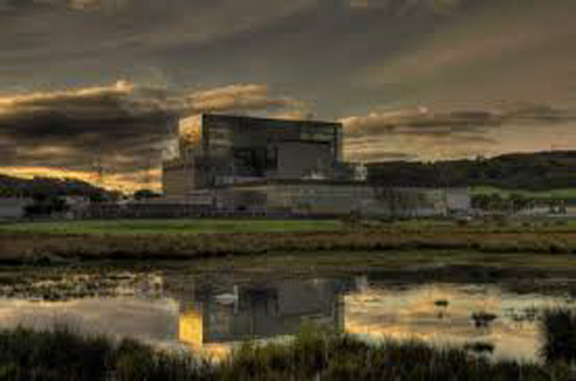
Concerns over nuclear safety ‘lapse’ at Hunterston, The Ferret , Rob Edwards-March 22, 2021
The discovery of a highly radioactive nuclear fuel element at Hunterston in North Ayrshire has sparked concerns about an “alarming safety lapse”. The site’s local stakeholder group says this is “something that should not have happened” and is demanding answers from nuclear safety regulators. Campaigners claim it’s a “dangerous situation”………. The UK Government company that runs the site promises the fuel element is “in a safe and controlled environment”. Its discovery was “completely expected” and more old fuel may be found, it says. A fuel element is a long, thin metallic tube containing pellets of uranium. When burnt — or irradiated – in a reactor, it produces dozens of different radioactive materials, including plutonium, and becomes intensely radioactive. Fuel elements burnt in the now defunct Hunterson A nuclear power station should have been sent to the Sellafield nuclear complex in Cumbria. There, they would have been processed and separated into low-level, medium-level and high-level radioactive waste, as well as plutonium. But on 3 March 2021 workers emptying an old storage vault at Hunterston discovered an entire 64-centimetre fuel element amongst other radioactive waste. The find was reported to the UK Office for Nuclear Regulation, the Scottish Environment Protection Agency, and the local site stakeholder group. Hunterston A was a first generation Magnox nuclear station with two reactors that operated from 1964 to 1990 and is currently being decommissioned. It is on the Firth of Clyde adjacent to the Hunterston B nuclear station, whose two reactors are due to close down by January 2022 after the discovery of hundreds of cracks in their graphite cores. The Hunterston site stakeholders group, which represents local community interests, said it had been informed of the find on 8 March. The fuel element was discovered in the last of five old vaults being emptied of medium-level radioactive waste, it said. “For a complete fuel rod to have found its way there, instead of into the cooling pond and on to Sellafield, is something, that should not have happened,” said a joint statement from the group’s chair, Rita Holmes, and vice-chair, Stuart McGhie. “We have contacted the Office of Nuclear Regulation and asked several questions. They have assured us that they will be in touch by the 13 April. Till then, one can only speculate.”………… The 50-strong group of UK nuclear-free authorities called for a full investigation. “This incident appears to be an alarming safety lapse that has not been resolved in the way it should have been,” said the group Scottish convenor, Glasgow SNP councillor, Feargal Dalton. “Highly radioactive spent fuel, containing the likes of plutonium, should not be dumped in a vault at Hunterston A, but rather be sent to Sellafield where the appropriate waste management processes are in place.” Dalton pointed out that The Ferret reported in 2020 that radioactive waste had been detected in a supposed empty fuel flask sent from Sellafield to the Hunterston B plant. “The Office for Nuclear Regulation needs to fully investigate this concerning safety breach,” he added. The Edinburgh based nuclear consultant and critic, Pete Roche, said: “This dangerous situation illustrates that, when it comes to dealing with nuclear waste, human error is always going to be a potential problem. “Thank goodness successive Scottish governments have decided to eschew building new reactors and make the most of our plentiful renewable resources instead. Dealing with our legacy nuclear waste is going to be difficult enough without creating yet more as the Westminster government is doing.”………… According to the UK Office for Nuclear Regulation (ONR), the fuel element was likely to date back many years and was classed as “higher activity waste”. ONR had also been notified of the find by Magnox……….. https://theferret.scot/concerns-nuclear-safety-lapse-hunterston/ |
|
Iran wants sanctions lifted first: USA wants Iran to back down first, and reverse uranium enrichment
 Iran’s Khamenei reiterates nuclear deal stance in new year speech

Supreme leader says the United States must lift all sanctions before Iran reverses its steps away from the nuclear deal. Aljazeera, By Maziar Motamedi 21 Mar 2021
In an hour-long televised address to the nation on Sunday to mark the start of the new Persian year, he said the “maximum pressure” campaign of economic sanctions – which he called a “major crime” committed by “that previous fool” President Donald Trump – has failed……….
The administration of Joe Biden has said it wants to restore the Joint Comprehensive Plan of Action (JCPOA), as the deal is formally known, but says Iran must first come back into full compliance with the accord before sanctions are lifted. Iran has gradually scaled back its adherence to the deal since 2019, one year after the US withdrawal.
Khamenei reiterated what he has called the country’s “definitive policy” on the nuclear deal: The US must first lift all sanctions, after which Iran will reverse its steps to boost uranium enrichment and install cascades of new centrifuges, among other moves………. https://www.aljazeera.com/news/2021/3/21/irans-khamenei-remains-steadfast-on-nuclear-deal-stance
Coal Mine “a Trojan Horse” for Nuclear Waste Facility reports Isle of Man Today —

Isle of Man Newspapers reporter Adrian Darbyshire wins this original cartoon. Today Radio 5 Live reported on the coal mine- they did ask for Radiation Free Lakeland’s thoughts but decided they didn’t want them after all. The BBC 5 Live reporting was confined to climate impacts, steel and jobs, important, but this narrow reporting contains […]
Coal Mine “a Trojan Horse” for Nuclear Waste Facility reports Isle of Man Today —
US Nuclear Corp signs agreements with Chinese nuclear corporation
US Nuclear Completes $256,626 Shipment to China, Signs New Agreement With CNNC Subsidiary, Intrado, March 22, 2021 LOS ANGELES, CA, (GLOBE NEWSWIRE) — via NewMediaWire – US Nuclear Corp. (OTCQB: UCLE) recently completed a shipment to China of USN’S popular tritium and carbon-14 air samplers as well as portable tritium monitors worth a total of $256,626.
Furthermore, as part of US Nuclear’s expansion into the Chinese market, US Nuclear signed a new “Cooperation Agreement” on March 1, 2021 with Dalian Zhonghe Scientific and Technological Development Co., a subsidiary of China National Nuclear Corporation (CNNC). Together, the companies will work to design the perfect instrumentation to outfit Chinese nuclear power plants. The instruments are planned to be built at a local factory in China to be cost-competitive and will be optimized for Chinese operators based on the local regulations and procedures. This can be a game changer since currently 80% of nuclear instruments purchased are imported into China at a high cost, and the functionality often does not fit local procedures, regulations, and language.
US Nuclear already has a local sales office in Beijing, China, and this new cooperation agreement with Dalian Zhonghe will help US Nuclear capture even more of the burgeoning market for nuclear power and radiation detection equipment in China.
The China National Nuclear Corporation (CNNC) controls most nuclear sector business including R&D, engineering design, uranium exploration and mining, enrichment, fuel fabrication, reprocessing, and waste disposal. It is also said to be the major investor in all nuclear plants in China.
China’s Nuclear Power Measurement Market
China is by far the world’s most active builder of nuclear power with plans to surpass the U.S. as the world’s top producer of nuclear energy by as early as 2030…………
China National Nuclear Corporation (CNNC) designs and builds nuclear power plants and oversees all aspects of China’s civilian and military nuclear programs. ……… China National Nuclear Corporation (CNNC) designs and builds nuclear power plants and oversees all aspects of China’s civilian and military nuclear programs. https://currently.att.yahoo.com/att/us-nuclear-completes-256-626-123000822.html
New research into the effects of nuclear bomb tests on Montebello islands
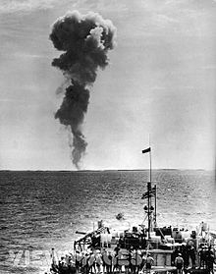 Montebello Islands the focus of new research to test nuclear impact.
By Susan Standen 22 Mar 21, A new Edith Cowan University research project hopes to collect important data on the impact of historical nuclear testing in the remote Montebello Islands area.
Key points:
- New research will look at remaining radioactive residue in Montebello Islands
- Plutonium nuclides persist in sediment of the marine environment
- The research may be used in future to track fish migrations along the WA coast
Sixty years after the British government conducted nuclear explosion testing on the islands, there is little data available to find how much residue plutonium still exists.
The project hopes to be the first study to outline how and where man-made radioactivity is still existing in the marine sediment.
Collections of sediment are being collected from remote field trips to the islands to analyse amounts of residue plutonium radionuclides.,,,,,,,,,,,,
Ms Hoffman says other island nations affected by nuclear blasts will be able to use the Montebello Islands research as a reference baseline to start their own investigations.
Will it inform health research?
Ms Hoffman says the first step is to find out what remains there as a legacy…………..
The project is a collaboration between the Edith Cowan University, the Department of Biodiversity and Conservation and the Australian Radiation Protection and Nuclear Safety Agency. https://www.abc.net.au/news/2021-03-22/montebellos-nucelar-fallout-research/13260242
Kim Jong-un wants ”arms control talks” with USA, not denuclearisation in the short term
|
North Korea’s new nuclear gambit and the fate of denuclearisation, East Asia Forum, 22 March 2021 Author: Evans JR Revere, BrookingsIn March 2012, North Korean Foreign Minister Ri Yong-ho told a group of US experts and former officials that North Korea would not denuclearise until the United States removed its ‘threat’. He defined this as the US–South Korea alliance, the presence of US troops in South Korea, and the US nuclear umbrella defending South Korea and Japan.
‘If you remove the threat’, Ri said, ‘we will feel more secure, and in 10 or 20 years we will be able to consider denuclearisation’. ‘In the meantime,’ he declared, ‘we can sit down and engage in arms control talks as one nuclear power with another’. Ri’s remarks provided valuable insight into North Korea’s strategy and goals at the time. Today, his words shed light on why North Korean leader Kim Jong-un has doubled down on nuclear and ballistic missile programs. Faced with a new US president whose North Korea policy remains unclear, Kim Jong-un has decided to pre-empt the outcome of the ongoing US policy review by ending all prospects of denuclearisation and expanding his nuclear and missile capabilities instead. In doing so, Kim hopes to compel Washington to engage in ‘arms control talks’ if it hopes to slow the North’s nuclear program. Kim’s gambit to change the main topic of US–North Korea dialogue from denuclearisation to arms control was hiding in plain sight in his January 2021 address to the Korean Workers Party Congress. He described North Korea’s nuclear weapons development as the nation’s ‘strategic and predominant goal’ and an ‘exploit of greatest significance in the history of the Korean nation’. Declaring North Korea a ‘responsible nuclear weapons state’, Kim’s message was that the regime is now a permanent nuclear power and Washington must deal with it as such. No less important was Kim’s announcement of a plan to enhance his nuclear and missile arsenals by developing ‘ultramodern tactical nuclear weapons’, multiple-warhead missiles and solid-fuel intercontinental ballistic missiles. Kim’s remarks signalled his determination to make a dangerous threat even more potent. Much has been said about the Biden administration’s ongoing North Korea policy review. But Kim Jong-un’s remarks to the Party Congress suggest Pyongyang has conducted its own review, the result of which will be a major challenge for a new US administration still finding its feet…………… https://www.eastasiaforum.org/2021/03/22/north-koreas-new-nuclear-gambit-and-the-fate-of-denuclearisation/ |
|
Delay in construction of Vogtle nuclear station – every day extra means additional costs to customers
|
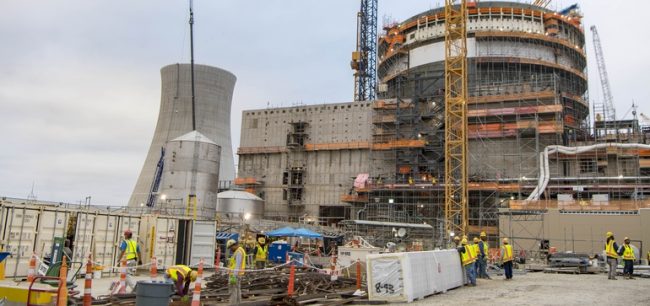
Southern Company identifies ‘likely’ nuclear construction delay on Vogtle unit, Utility Dive, 22 Mar 21, Iulia Gheorghiu @IMGheorghiu
Dive Brief:
“Every day that that unit is delayed means additional cost burdens are going to get thrust on customers,” David Rogers, Southeast deputy regional director for Sierra Club’s Beyond Coal Campaign, said. “We could find cheaper, more effective ways to meet any needs that [Unit 3] fills by using things like wind, solar, storage, [and] energy efficiency.”……. https://www.utilitydive.com/news/southern-company-identifies-likely-nuclear-construction-delay-on-vogtle-u/597095/
|
|
UK nuclear announcement ‘shocking and alarming’ warn the Elders
UK nuclear announcement ‘shocking and alarming’ warn the Elders https://theelders.org/news/uk-nuclear-announcement-shocking-and-alarming-warn-elders MARY ROBINSONNUCLEAR DISARMAMENT-22 Mar 21,
The Elders say UK proposals risk contributing to a dangerous new nuclear arms race.
Following the release by the UK government of its Integrated Review of Security, Defence, Development and Foreign Policy, Mary Robinson, Chair of The Elders, said:
“The announcement today by the UK Government of its intention to increase by over 40% the cap on its nuclear warhead numbers is surprising and deeply alarming. This would be incompatible with the UK’s international obligations to pursue disarmament under the Non-Proliferation Treaty (NPT), and risks contributing to a dangerous new nuclear arms race. It also risks undermining the NPT Review Conference due to take place in August this year.
It is particularly shocking that a permanent member of the UN Security Council should make such an announcement at a time when other countries have been taking positive steps to reverse the deterioration in nuclear arms controls, following the extension of New START between the US and Russia, and the entry into force of the Treaty on the Prohibition of Nuclear Weapons earlier this year.
While the UK cites increased security threats as justification for this move, the appropriate response to these challenges should be to work multilaterally to strengthen international arms control agreements and to reduce – not increase – the number of nuclear weapons in existence.
The Elders call on all nuclear states to demonstrate their commitment to nuclear disarmament, and to make concrete reductions to their stockpiles in line with the minimisation agenda put forward by The Elders.
As decision-makers take stock of the UK government’s announcement, we urge all world leaders to recall the spirit of Ronald Reagan and Mikhail Gorbachev’s declaration in 1985 that “a nuclear war can never be won and must never be fought”, and redouble their efforts to make progress towards achieving a world wholly free from nuclear weapons.”
For media inquiries, please contact Luke Upchurch, Director of Communications at The Elders (+44 7741 742 064) or email:media@theElders.org
David Swanson: A Cold War Re-Education in 8 Minutes — Rise Up Times

“The U.S. could have chosen hot war, but could also have chosen peace.”
David Swanson: A Cold War Re-Education in 8 Minutes — Rise Up Times
Nuclear news – week to 22 March
Not a lot of remarkable news on nuclear this week . The nuclear lobby is doubling down on its media propaganda, touting nuclear as the solution to climatev change. Also it is determinedly promoting the Tokyo Olympics – the so-called ‘recovery Olympics’, despite the fact that international visitors are banned.
Coronavirus. Incidence of new cases globally continues to rise, but death numbers are falling. Problems in distribution of vaccines.
Climate. Developments in global heating are covered each week in Radio Ecoshock, which is a jump ahead of most news media. This week, it’s been about the predicted high temperatures in the world’s cities. Also, it’s a warm\ning that climate tipping points are coming sooner than expected.
A bit of good news. March 20 was the U.N.’s International Day of Happiness. For the fourth year in a row, Finland has been named the happiest country in the world, with Iceland coming in second, followed by Denmark, Switzerland, and the Netherlands.
Investigative journalism – Advanced nuclear reactors : Assessing the Safety, Security, and Environmental Impacts of Non-Light-Water Nuclear Reactors. New science report: advanced nuclear reactors no safer than conventional nuclear plants. The economics of nuclear power plants are not favorable to future investments.
Nuclear power has become irrelevant — like it or not. Why the Fukushima disaster signalled the end of Big Nuclear.
New research to determine plutonium pollution and its sources.
Don’t believe hydrogen and nuclear hype – they can’t get us to net zero carbon by 2050
Review of Michael Shellenberger’s book on ”Why Environmental Alarmism Hurts Us All”.
JAPAN. The nuclear lobby holds too much sway over governments, particularly in Japan. Serious security lapse at a Japanese nuclear plant. Japanese regulator decides against restarting Kashiwazaki-Kariwa No. 7 nuclear reactor.
New type of large and highly radioactive particles found in Japan. Fukushima disaster 10 years on: How long will it take to clean up the nuclear waste?
UK.
- How the British government reacted to the Fukushima catastrophe – with propaganda promoting the nuclear industry.
- Boris Johnson joins Britain up to a perilous, uncontrollable, nuclear weapons race. UK should build foreign policy on aid, conflict resolution, not on reversing nuclear disarmament. UN expresses concern over UK’s move to increase nuclear weapons arsenal. UK govt – cutting costs on troops as it expands nuclear missile numbers
- New report on human and environmental impact of Hinkley Point C nuclear project. Hinkley Point C nuclear power station ‘could suck up 182 million fish a year’ from Severn Estuary. Dilemma over plan to dump Himkley radioactive mud off Cardiff coast. Hinkley Point nuclear reactors with cracks are allowed to resume limited operations.
USA.
- Production of plutonium must cease, for the Nuclear Non Proliferation Treaty to work. Plutonium used at Japanese reactor will be glassed, stored at Savannah River Site.
- With ”regulatory capture” of USA’s Nuclear Regulatory Commission, California’s got nuclear fuel buried 108 feet from the sea .
- Duane Arnold nuclear reactor, same type as Fukushima Daiichi, vulnerable to extreme weather.
- Georgia’s Vogtle nuclear station likely to yet again miss a deadline.
- Report alleges elevated cancer deaths in Monroe may be result of nuclear plant.
- Sudden death of defendant in Ohio nuclear corruption case.
- Deb Haaland -new U.S. Secretary for Interior, – first Native American in a U.S. presidential cabinet.
RUSSIA. Russia planning to dispose of highly dangerous nuclear reactor cores of submarines at bottom of Kara Sea.
IRAN. United Nations nuclear watchdog says it’s possible to return to the Iran nuclear deal.
FRANCE. France must restructure debt-laden EDF (Electricite de France) and reform nuclear sector by October. Flamanville nuclear reactor: 3 new welds do not meet safety requirements.
PACIFIC ISLANDS. Outcry in Tahiti over nuclear fallout study.
UNITED ARAB EMIRATES. Unitede Arab Emirates $32 billion Barakah nuclear plant poses environmental, safety, and security problems.
AUSTRALIA. Minerals Council of Australia trying to influence European Commission, to push for fossil fuels and nuclear.
Fukushima disaster 10 years on: How long will it take to clean up the nuclear waste?
Decontamination and living with ‘black bags’
Piles of black bags were generated by the vast, painstaking clean-up and then transported from other storage places. Those black bags have occupied more than 90 blocks ranging from 180 sq m to 6,500 sq m in the northern part of Tomioka since 2015.
According to a 2018 report from Japan’s Ministry of the Environment, the estimated total quantity of decontaminated soil will be somewhere between 16 and 22 million cubic metres after volume reduction. This is 13 to 18 times larger than the volume of the Tokyo Dome.
The Ministry says the total will likely be at the lower end of the provided range, in a latest reply to The Straits Times’ query.
Limits of decontamination
The “decontamination” only involves soil removal in flatland areas – the government has said that it is impossible to clear the soil in mountainous areas, but more than 70 per cent of the hardest-hit areas are mountainous.
Mr Nobuyoshi Ito is one of those who live in the mountainous areas where vast decontamination is hard to carry out.
Mr Ito first moved to Iitate village in Fukushima prefecture in 2010 after he retired as an IT engineer, to work as an “apprentice farmer”.
He had no ties with the village before that, but the self-professed “guinea pig” ended up staying on there, in open defiance of government orders to evacuate, and against his children’s wishes for him to live with them in Niigata prefecture on the west coast.
“When the government asked us to evacuate… I asked if there would be criminal charges if I continued to live here,” he told The Straits Times in 2016. “They said no.”
He carries a dosimeter around with him all the time, measuring anything he can lay his hands on from soil, plants to animal carcasses. He also owns a laboratory-grade radiation measuring machine at his cabin, deep in the mountains in the village.
He thinks the government’s decision to not decontaminate forested mountainous areas will backfire due to factors such as rain that may spread radioactive material, and in a study last year found that 43 out of 69 locations along the Olympic torch relay route had radiation levels above the government limits.
He told The Straits Times that he fears that Tokyo is overly eager to portray that everything was “under control”, given that this could give the impression that it is “case closed”.
Non-profit Greenpeace notes that such standards in towns neighbouring the nuclear plant would not pass in other parts of the world.
The indefinite future: Where to permanently store 16 million bags of nuclear waste
The law requires that the final disposal site of high-level nuclear waste should be outside of Fukushima by March 2045.
Two fishing villages in Hokkaido are vying to host the final storage facility of Japanese nuclear waste for half a century, splitting communities between those seeking investment to stop the towns from dying, and those haunted by the 2011 Fukushima disaster who are determined to stop the project.
I cannot give a deadline at this moment. We will consider the entire schedule based on the progress at the two new potential sites, along with nationwide public relations activities.
MS MASARU KASHIMA
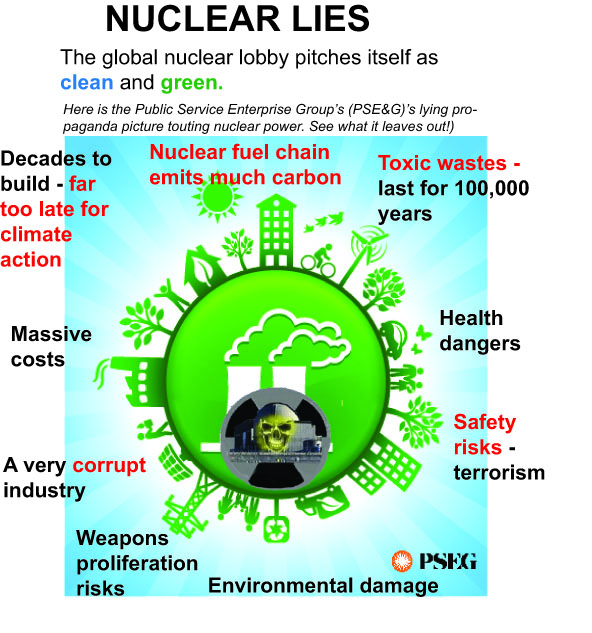
The nuclear lobby’s lying propaganda on the run up to COP Climate Conference
Ya gotta admire the global spread and relentless persistence of the nuclear industry at every level. Whether it be aimed ast schoolkids or heads of state, – the message is just such a lie – that nuclear power is ”essential to fight climate change’‘
Never mind that nuclear power is itself very vulnerable to climate change (over-heating, rising sea leveles, storm surges, water shortages……)
Anyway, today I was captivated by a charming, pretty, graphic, touted by the Public Service Enterprise Group, (PSE&G’) in an article extolling nuclear power, published by INSIDER NJ.
I just felt the need to make PSE&G’s picture honest.
The economics of nuclear power plants are not favorable to future investments
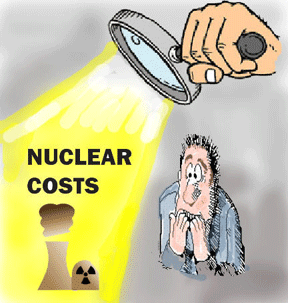 Investing into third generation nuclear power plants – Review of recent trends and analysis of future investments using Monte Carlo Simulation https://www.sciencedirect.com/science/article/abs/pii/S1364032121001301 Renewable and Sustainable Energy Reviews Volume 143, June 2021, 110836 Author links open overlay panelB.WealerabS.BauerbC.v.HirschhausenabC.KemfertacL.Göke
Highlights
- •Cost escalations in the nuclear sector observed in previous research continue until today.
- •Investing into a nuclear power plant today is not a profitable business case.
- •The net present values are mainly negative, in the range of five to ten billion USD.
- •Interest during construction is a major cost driver not to be underestimated.
- •Policy debates should consider total costs including interest and construction time.
Abstract
This paper provides a review of trends in third generation nuclear power plants, and analyzes current and future nuclear power plant investments using Monte Carlo simulations of economic indicators.
We first review global trends of nuclear power plant investments, including technical as well as economic trends. The review suggests that cost escalations in the sector observed in previous research continue until today, including the most recent investment projects in the U.S. and in Europe.
In order to extend this analysis, we carry out our own investment analysis of a representative third generation nuclear power plant, focusing on the net present value and the levelized cost of electricity. We base our analysis on a stochastic Monte Carlo simulation to nuclear power plant investments.
We define and estimate the main drivers of our model: Overnight construction costs, wholesale electricity prices, and weighted average cost of capital, and discuss reasonable ranges and distributions of those parameters.
Model runs suggest that investing in nuclear power plants is not profitable, i.e. expected net present values are highly negative, mainly driven by high construction costs, including capital costs, and uncertain and low revenues.
Even extending reactor lifetimes does not improve the results significantly. We conclude that our numerical exercise confirms the literature review, i.e. the economics of nuclear power plants are not favorable to future investments, even though additional costs (decommissioning, long-term storage) and the social costs of accidents are not even considered.
With ”regulatory capture” of USA’s Nuclear Regulatory Commission, California’s got nuclear fuel buried 108 feet from the sea

Nuclear Fuel Buried 108 Feet From the Sea https://www.counterpunch.org/2021/03/19/nuclear-fuel-buried-108-feet-from-the-sea/, BY ROBERT HUNZIKER “The most toxic substance on Earth is separated from exposure to society by ½” of steel encased in a canister.” (Blanch)
That eye-opener comes from renowned nuclear expert Paul Blanch in reference to spent fuel rods removed from San Onofre Nuclear Generation Plant buried near the sea on California’s southern coastline 50 miles north of San Diego.
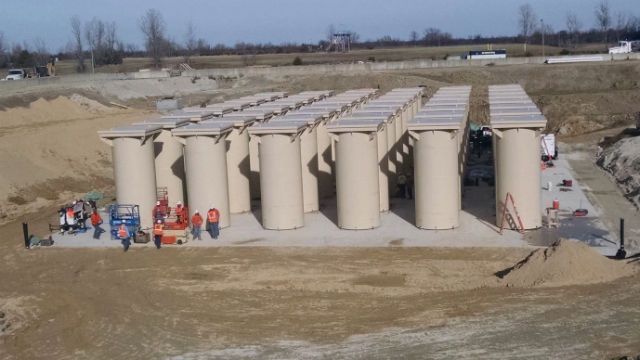
Seventy-three 20-foot tall canisters of highly toxic nuclear spent fuel rods are nestled underground within 108 feet of the Pacific Ocean and not far from Interstate 5 from which passersby catch a glimpse of 73 large rectangular lids poking above ground, thus sealing the most toxic substances on Earth ensconced in ½” dry casks. (Footnote: In contrast, German CASTOR V/19 ductile cast iron casks, with permanent integrated monitoring, are nearly two-feet thick)
What could possibly go wrong on the seashore?
At the outset of San Onofre’s plans for its 73 buried canisters, the Nuclear Regulatory Commission itself admitted: (1) the thin ½” stainless steel canisters could crack within 30 years (2) there’s no current technology to inspect, repair or replace cracked canisters (3) limited monitoring means leaks may not be detected soon enough. (Source: Sanonofresafety.org) It is not believed the foregoing has changed one iota.
Unfortunately, when it comes to nuclear risks, what can go wrong isn’t known until it actually goes wrong. Then, it’s too late. Which explains the contention of a professional group associated with publicwatchdogs.org that discussed issues of credibility and truthfulness of the US Nuclear Regulatory Commission at a public hearing on March 9th, 2021. More on that follows later.
The 73 San Onofre rectangular lids symbolize the final act of decommissioning San Onofre Nuclear Generating Station, remnants of 50 years of nuclear power. Nobody knows with any degree of certainty the consequences of highly toxic spent fuel rods buried within 108 feet of the ocean. Is it risky or not risky? Is it even possible to define the risk?
In truth, the risks of nuclear power cannot be adequately defined. Experience shows that the risk factors have no ceiling, no comparisons, no analogies, nothing similar, only disastrous results when things go wrong. More to the point, it’s a grand experiment of juggling the most potent substance on the planet. Like a hot potato, nobody knows what to do with it, other than bury it somewhere somehow that hopefully keeps it secure. Is a beachfront 108 feet off the ocean a good, secure location?
Still, given enough time, nuclear risks are defined via incidents, e.g., Fukushima, which exposed the consequences of failure of identifying nuclear risks. If it were otherwise, Fukushima would’ve been better prepared. They weren’t!
According to Prime Minister Naoto Kan /Japan, 2011: “We did not anticipate such a huge natural disaster could happen.” At the tensest moments, PM Kan was briefed on plans for complete evacuation of Tokyo, a horrific beyond belief event that came far too close for comfort! Nowadays, the former PM is an antinuke protestor.
It’s worth noting that Fukushima houses 10 nuclear reactors and 11 open pools of water containing spent fuel rods. If exposed to open air, spent fuel rods erupt into a sizzling zirconium fire followed by massive radiation bursts of the most toxic material known to humanity. It can upend an entire countryside and force evacuation of major cities, literally begging the impossible question of whether San Onofre’s remnants threaten all of Southern California?
Throughout America nuclear facilities contain open pools of spent fuel rods. According to the widely recognized nuclear expert Paul Blanch: “Continual storage in spent fuel pools is the most unsafe thing you could do.” Some spent fuel rods have been removed and stored in dry casks, but what if the dry casks are buried 108 feet from the Pacific Ocean? And, what of dry casks only ½” thick filled with radioactive spent fuel rods running a 500°F temp inside and 400°F on the canister’s exterior? By all appearances, it is an extremely lively affair!
That goes to the heart of questions posed at a recent Nuclear Regulatory Commission public hearing on March 9th. Thereupon, on behalf of the general public, three professionals drilled down into the procedures of the NRC whilst questioning its credibility. The bios of those three professionals:
Paul Blanch, registered professional engineer, US Navy Reactor Operator & Instructor with 55 years of experience with nuclear engineering and regulatory agencies, widely recognized as one of America’s leading experts on nuclear power.
Stuart H. Scott, founder and Executive Director of Facing Future, best known for bringing Greta Thunberg to the 2018 UN climate negotiations in Poland (COP-24) and for convincing Dr. James Hansen, the 32-year veteran Director of NASA’s Goddard Institute for Space Studies to COP-21, to attend Paris ’15.
Charles Langley, Executive Director of PublicWatchdogs.org, a public advocate with more than 25 years of experience in the field of energy law, energy policy, and utility rate setting.
 According to publicwatchdogs.org, the NRC is a “captive regulator” that accedes to nearly every request for regulatory relief for the nuclear power industry, as well as relaxation of safety rules and enforcement for the industry, in fact, following the command of industry insiders. But, when it comes to the general public, the NRC summarily rejects nearly every public petition aimed at strengthening the rules or following enforcement of existing rules. The petition process at the NRC is a one-sided affair that leaves the public out in the cold. From 1975- 2012 there were 387 petitions filed under provisions of the code, only two granted substantive relief, and one of those was from the nuclear industry. So, over 37 years there were, in actuality, more like a thousand petitions submitted by the public, and only one made it. It should be noted that rejections of petitions cannot be appealed.
On the other hand, when an industry player makes requests, according to Paul Blanch, working for a public utility, asking NRC for “a deviation from the rules” on a phone call got approved within one hour.
As it happens, the field of play with the NRC is lopsided. Industry players can ask any questions of NRC, but the public can only ask “process questions,” which does not lead to adequate answers, if any answers at all. Moreover, according to publicwatchdogs.org: “The NRC is providing inaccurate and false information to the public… At issue is the fact that the NRC is claiming that a flooding event at the SONGS (San Onofre Nuclear Generating Station) Independent Spent Fuel Storage Installation or ISFSI is ‘non-credible’.”
Really? Non-credible? What does that mean?
According to publicwatchdogs.org: “ISFSI is an Orwellian word used by the NRC to describe a toxic beachfront nuclear waste dump containing a spent nuclear fuel depot that is deadly radioactive for 250,000 years. The SONGS “ISFSI” is located 108 feet from the beach, in a tsunami inundation zone next to an earthquake fault line. It contains 73 thin-walled stainless steel cans weighing upwards of 100,000 pounds each. Each 20-foot high canister contains the same amount of Cesium-137 that was released into the atmosphere during the entire Chernobyl event. The cans themselves are only guaranteed to last for 25 years.”
What happens if a king tide, during full moon, or tsunami strikes and triggers a loss of cooling for the containers? Therefore, publicwatchdogs.org demanded the NRC provide a realistic flood analysis, with consequences spelled out. But, according to the petitioners, the NRC has never analyzed a loss of cooling of the 73 buried canisters. That fact alone is beyond comprehension. How could they not? Will they now?
Furthermore, nobody can explain what happens with ruptured casks. The San Onofre casks are filled with helium gas with natural conduction airflow surrounding each individual container, which are thin casks ½” thick.
In all, Public Watchdog’s research found that NRC misrepresented information. At the hearing, petitioners exposed inept Nuclear Regulatory Commission processes, responses, and a lack of credibility, claiming the NRC is merely a rubber stamp for the nuclear industry and not at all responsive to public queries.
The following is a condensed version of the issues brought forth on the virtual meeting with the Nuclear Regulatory Commission:
It should be noted that NRC rejected the group’s Oct 13th petition on the dubious grounds of the term “not credible.” Failure or leakage of the canisters, according to NRC, is “not credible.” But “not credible” is not defined anywhere in NRC documents. Of course, no answers came at the scheduled meeting.
An important pursuit at the hearing was exposure of deficiencies of the Holtec Umax spent fuel storage system at San Onofre, as well as exposing its use at other locations in the US. Not only that but a king tide could wash over the canisters, no tsunami needed. A few feet of water would be disastrous. Meanwhile, there are no contingency plans to remove flooded water from the canisters in an emergency. Which is insidiously irresponsible: “Each canister contains more radioactive cesium than released at Chernobyl, each of 73 canisters, plus there are over 3,000 in this country.” (Blanch)
The Holtec canisters provide a 1/2” to 5/8” barrier between the most toxic material in the world and a Chernobyl-size release of radiation. The canisters must be kept full of helium gas, welded shut, thus they can never be examined on the inside for cracks or leaks, and scandalously, not monitored for temperature, pressure, or radiation. But yet, the NRC says failure is “not credible.”
Was Chernobyl not credible?
Was Fukushima not credible?
Making matters worse, there’s no provision for drainage of water in the underground canisters. A king tidal wave could flood, and as water boils off, nobody would know what to do to save Southern California from some level of mass evacuation. Additionally, there are no provisions to refill the canisters with pressurized helium should pressure drop. These are obvious risks factors, plus: San Onofre is located within an inundation zone for tsunamis. It’s also close to Camp Pendleton, a legitimate enemy target.
“We regard the NRC’s preliminary decision to reject our petition as irresponsible and wrong and it places millions of people in Southern California at risk that is unquantifiable.” (Petitioners)
When NRC receives petitions, they can be rejected by an unspecified number of PRB members and the petitioner does not know if it’s only one member a minority a majority or whatever. No logical reasons are given for rejections of petitions and no supporting documentation.
The San Onofre canisters need to be removed and placed into thick-wall casks and transported to a new repository in New Mexico. “The biggest problem is the NRC failure to admit there is a problem.” (Blanch)
In the final analysis, the NRC abrogates its own mission statement, which is to license and regulate civilian use of radioactive materials to protect public health and safety to promote the common defense and security and protect the environment. Yet, by all appearances, the NRC is more akin to an emotionless Frankenstein monster that belittles detractors via evasion and disdain without any answers for credible questions. What a trip!
Robert Hunziker lives in Los Angeles and can be reached at rlhunziker@gmail.com
1 This Month
Tell Congress: Prevent Nuclear Catastrophe in Iran

Tell Congress: Prevent Nuclear Catastrophe in Iran

Read the Public Inquiry Report, the Commissioners’ report, Surrendering Australia: The AUKUS Deception is available to download for free at aukuspublicinquiry.com. Or just watch the replay of the National Press Club Luncheon.


Shut down the radiation-damaged Heysham nuclear reactors now
To see nuclear-related stories in greater depth and intensity – go to https://nuclearinformation.wordpress.com

Say No to NASA’s Reckless Nuclear Reactor on the Moon
Say No to NASA’s Reckless Nuclear Reactor on the Moon
-
Archives
- November 2026 (255)
- October 2026 (302)
- September 2026 (339)
- August 2026 (330)
- July 2026 (355)
- June 2026 (287)
- May 2026 (306)
- April 2026 (356)
- March 2026 (251)
- February 2026 (267)
- January 2026 (308)
- December 2025 (358)
-
Categories
- 1
- 1 NUCLEAR ISSUES
- business and costs
- climate change
- culture and arts
- ENERGY
- environment
- health
- history
- indigenous issues
- Legal
- marketing of nuclear
- media
- opposition to nuclear
- PERSONAL STORIES
- politics
- politics international
- Religion and ethics
- safety
- secrets,lies and civil liberties
- spinbuster
- technology
- Uranium
- wastes
- weapons and war
- Women
- 2 WORLD
- ACTION
- AFRICA
- Atrocities
- AUSTRALIA
- Christina's notes
- Christina's themes
- culture and arts
- Events
- Fuk 2022
- Fuk 2023
- Fukushima 2017
- Fukushima 2018
- fukushima 2019
- Fukushima 2020
- Fukushima 2021
- general
- global warming
- Humour (God we need it)
- Nuclear
- RARE EARTHS
- Reference
- resources – print
- Resources -audiovicual
- Weekly Newsletter
- World
- World Nuclear
- YouTube
-
RSS
Entries RSS
Comments RSS

