Need for more research into causes of increased incidence of childhood lukaemia near nuclear site
National Library of Medicine 15th March 2021, A previous investigation of the occurrence of childhood acute leukemia around the Belgian nuclear sites has shown positive associations around one nuclear site (Mol-Dessel). In the following years, the Belgian Cancer Registry has made data available at the smallest administrative unit for
which demographic information exists in Belgium, i.e. the statistical sector. This offers the advantage to reduce the potential misclassification due to large geographical scales.
Results confirm an increased incidence of acute childhood leukemia around Mol-Dessel, but the number of cases remains very small. Random variation cannot be excluded and the ecological design does not allow concluding on causality. These findings emphasize the need for more in-depth research into the risk factors of childhood leukemia, for a better understanding of the etiology of this disease.
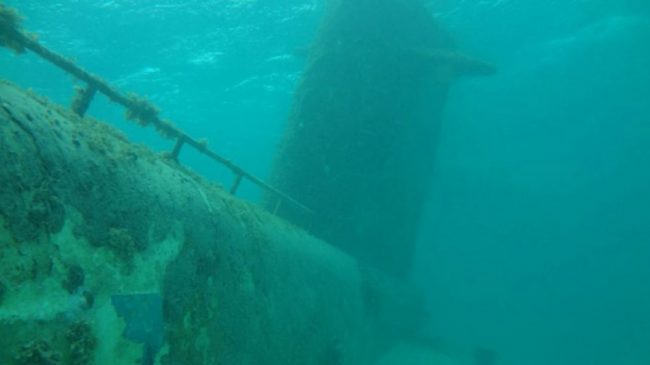
Russia planning to dispose of highly dangerous nuclear reactor cores of submarine at bottom of Kara Sea
|
Rosatom seeks contractor to dispose of sunken subs reactor cores https://bellona.org/news/nuclear-issues/2021-03-rosatom-seeks-contractor-to-dispose-of-sunken-subs-reactor-cores Rosatom, Russia’s state nuclear corporation, has announced a tender for disposing of reactor cores from the K-27 submarine, which was itself scuttled by the Soviet Navy in the Kara Sea four decades ago. March 21, 2021 by Anna Kireeva, translated by Charles Digges The tender speaks specifically of preparing for dismantlement and disassembly the spent removable cores from the reactor of the project 645 (item 64) nuclear submarine. These removable parts, which were removed in 1967, are currently located at the Gremikha storage base in Russia’s Murmansk region.
The tender also demands the preparation of cassettes of these irradiated parts in order to transport them to a federal nuclear fleet storage point, from where they will be sent for processing. The price tag for the task is 500 million rubles, about $6.7 million. Anatoly Grigoriev, head of international technical assistance projects at Rosatom, confirmed that the tender refers to the removable reactor cores from the K-27, which were extracted in 1967. After unloading, the cores were deposited at the Gremikha base. “It is worth noting that the publication of the tender has attracted a lot of attention and caused contradictory interpretations,” said Andrei Zolotkov, who heads Bellona’s offices in Murmansk. “First, it is not clear why a submerged nuclear submarine is called ‘scrapped.’ Secondly, it was not clear how it was possible to prepare for the disposal of spent removable parts of a nuclear submarine that lies at the bottom of the Kara Sea, when the decision to lift it has not yet been made. ” The K-27 was sunken intentionally in the Kara Sea’s Stepovoy Bay in 1981. It is considered by experts to be especially dangerous thanks to its liquid metal cooled reactors. At the time, the submarine was prepared for flooding by filling it with bitumen, concrete and furfural. But it’s likely that these substances left pockets of air, which would allow for the formation of condensation within the sunken hull. The submarine has been included as a priority on a federal list of sunken objects to be lifted from the seabed. The urgency owes to the high enrichment of the K-27’s nuclear fuel and the shallow 33-meter depth at which it lies. The furfural-combination filler used to seal the sub before its sinking also has a limited shelf-life, and is only guaranteed to last another few years. Some experts also fear that the nuclear fuel onboard the sub could undergo a spontaneous chain reaction should they be breached by water. Discussion among Russian officials on lifting various pieces of nuclear debris from the Arctic has heated up in recent years. In 2019, a group of Russian scientists collected, systematized and analyzed data on each of these sunken nuclear and radiation hazards and identified the most dangerous among them. The K-27 is listed as one of six such hazards requiring lifting within a federal effort called the “Strategy for the Development of the Arctic Zone of the Russian Federation until 2035.” The problem is that lifting the flooded objects is an extremely difficult task, as shown by the years-long effort to raise the Kursk nuclear submarine, which sank during a naval exercise in 2000, killing all 118 crew members. Russian scientists have weighed the options for lifting the hazards and calculated possible damages should the operations fail. The consequences could be serious, involving releases of radiation into the sea and air, with contamination possibly surpassing Russia’s borders. At the moment, engineers are designing a vessel capable of lifting these sunken radiation hazards from the sea floor, with construction of a recovery ship projected by the end of 2026. Lifting and dismantling the K-27 thereafter is expected to take from 2028 to 2013. According to Rosatom, the total activity of the sunken radiation hazards in the Kara and Barents Seas is 1 million Curie. According to preliminary estimates of Russian specialists, they can all be extracted within 12 years. |
|
New research to determine plutonium pollution and its sources
 EurekAlert 19th March 2021, Researchers looking at miniscule levels of plutonium pollution in our soils have made a breakthrough which could help inform future ‘clean up’ operations on land around nuclear power plants, saving time and money.
those responsible for environmental assessment and clean up.
https://www.eurekalert.org/pub_releases/2021-03/lu-npr031721.php
Boris Johnson joins Britain up to a perilous, uncontrollable, nuclear weapons race
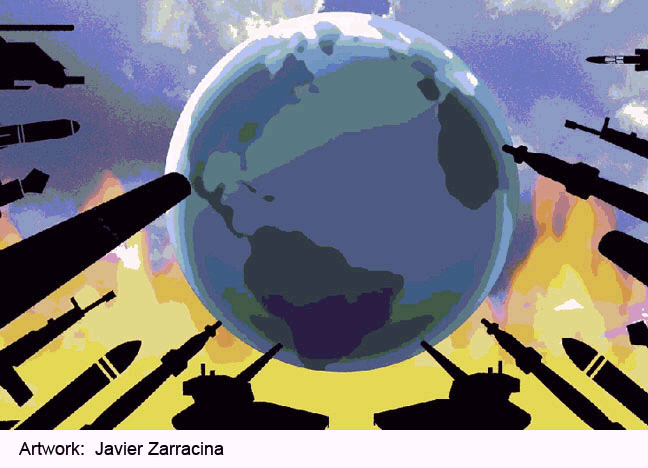  Boris Johnson is playing a dangerous nuclear game Serhii Plokhy, Guardian, 19 Mar 21,Britain has joined an uncontrolled arms race in a world more unstable and unpredictable than even during the cold war
Boris Johnson’s decision to increase the cap on British nuclear stockpiles by more than 40%, from 180 to 260 Trident nuclear warheads, might easily be interpreted as a manoeuvre inspired by domestic politics, rooted in the Conservative party’s longstanding love affair with nuclear power and the recent politics of Brexit. But the decision has broader significance. It reflects the rapidly changing international nuclear environment, and will make it significantly worse. The world entered a new and dangerous era on 2 August 2019. On that day, the planet’s strongest nuclear powers, the US and Russia, declared their withdrawal from the Intermediate-range Nuclear Forces treaty signed by Ronald Reagan and Mikhail Gorbachev in 1987. The treaty was the last cold war-era arms control agreement remaining in force. We are now officially at the start of an uncontrolled nuclear arms race. What this meant became clear on 8 August, less than a week after the Reagan-Gorbachev agreement was abandoned. The reactor of a nuclear-powered and nuclear-armed Russian cruise missile, codenamed Skyfall, exploded in the Barents Sea, killing five Russian scientists and naval officers and contaminating the atmosphere and waters in the Arkhangelsk region of Russia. The ultimate target of Skyfall, as President Putin demonstrated in a public video a year earlier, is the US. Today, we are back to a situation that resembles the period preceding the Cuban missile crisis, when there were no mutually binding arms control agreements and various countries, the UK among them, were competing to outspend one another in building nuclear arsenals. In October 1962, only luck and the fear of nuclear confrontation shared by John Kennedy and Nikita Khrushchev saved the world from nuclear war. The shock of the crisis led the two superpowers to negotiate a number of arms control deals, ranging from the Partial Nuclear Test Ban treaty to arms control and limitation agreements. MAD, or mutually assured destruction, a concept strongly associated in the public imagination with Dr Strangelove’s “Doomsday Machine”, miraculously kept the nuclear powers at bay, maintaining what Churchill called the “balance of terror”………………….. While we face new challenges, we lack the fear of nuclear war developed by previous generations of political leaders and societies. Kennedy and Khrushchev considered nuclear war unwinnable. This is now changing with the scrapping of the old arms control treaties, the renewal of the nuclear arms race, and the development of new technologies making possible the execution of extremely accurate nuclear strikes. These factors have lowered the psychological barrier for using nuclear arms and brought back the illusion of the pre-hydrogen bomb age that wars conducted with limited use of nuclear weapons can be fought and won. That in turn feeds the new nuclear arms race, which the US and Russia have already started by abandoning cold war-era limitations. Hence the true importance of Johnson’s announcement, which opens the door for the UK and other countries to join the race. Even if the government decides not to limit itself to lifting the cap on Trident nuclear warheads and in fact acquires all 80 warheads over a short period of time, the world nuclear balance will hardly change. Despite all the changes around the globe since the end of the cold war, there are still two nuclear superpowers: Russia, with approximately 4,300 warheads, and the US, with an estimated 3,800 warheads. Eighty additional Trident warheads will not make much of a difference, nor will they make the UK safer if it comes to the worst. But by deciding to increase the cap, the UK – the world’s third country to develop its own nuclear capability – is sending the wrong signal: rearm. Instead, the world should be heading to the negotiating table to breathe new life into the arms control talks that all but ceased with the end of the cold war. That is no easy task, as negotiations will now have to go beyond the two nuclear superpowers and include the rest of the nuclear “haves” – first and foremost, China. The UK could play an important role in stopping the new nuclear arms race, instead of restarting it.
|
|
The deterrence myth — Beyond Nuclear International

A lethal ideology, increasingly discredited
The deterrence myth — Beyond Nuclear International
Something worth fighting for — Beyond Nuclear International

The bees, the bulldozers, and a vision for a better future
Something worth fighting for — Beyond Nuclear International
UK govt – cutting costs on troops as it expands nuclear missile numbers?
|
Labour question ‘baffling decision’ to expand nuclear missile numbers as Defence Secretary hints at army numbers cutsLabour have questioned the “baffling decision” to expand the nuclear missile numbers and demanded answers after the UK Defence Secretary refused to rule out cuts to the armed forces. The Scotsman By Alexander BrownSunday, 21st March 2021, ”…………. The Government last week published details of its major review of foreign and defence policy, known as the Integrated Review.
It stated the UK could consider deploying its nuclear arsenal against non-nuclear countries if they possess equivalent weapons of mass destruction – including new “emerging technologies”. However, UK Defence Secretary Ben Wallace refused to deny Army Numbers will be cut by up to 10,000. Asked if he could guarantee to maintain troop numbers, Mr Wallace told Sky’s Sophie Ridge: “I am not going to reveal on the media before Parliament, the details of the numbers of men and women of our armed forces. Labour’s Shadow Defence Secretary John Healey MP called for more support for military numbers, and accused the Government of repeating it’s mistakes. He said: “After weeks of trying to hide their true intentions, the cat is out the bag – the threats Britain faces are increasing but Conservative ministers are cutting the Army yet again. “Over the last decade the Conservatives have broken their pledges on full-time Forces numbers and run down our Armed Forces……… https://www.scotsman.com/news/politics/labour-question-baffling-decision-to-expand-nuclear-missile-numbers-as-defence-secretary-hints-at-army-numbers-cuts-3173345 |
|
Georgia’s Vogtle nuclear station likely to again miss a deadline
Georgia Power now says Vogtle nuclear ‘likely’ to bust deadline, GEORGIA NEWS, March 20, 2021, By Matt Kempner, The Atlanta Journal-Constitution GEORGIA NEWS Company cites need for ‘remediation’ work to meet standards
Many other electric providers in Georgia, including municipal systems and electric co-ops, are also contractually tied to the Vogtle expansion.
The new reactors at Vogtle, located south of Augusta, have yet to generate electricity, but monthly bills for Georgia Power customers already include charges related to
If the project is further delayed, Georgia Power faces the prospect of a short-term cut in its government-allowed profits. Long term, though, higher costs on the project
New science report: advanced nuclear reactors no safer than conventional nuclear plants
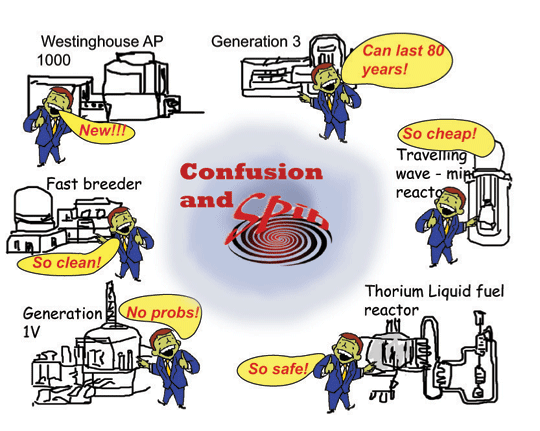
Advanced nuclear reactors no safer than conventional nuclear plants, says science group https://www.reuters.com/article/us-usa-nuclearpower/advanced-nuclear-reactors-no-safer-than-conventional-nuclear-plants-says-science-group-idUSKBN2BA0CP, By Timothy Gardner-18 Mar 21,
President Joe Biden, a Democrat, has made curbing climate change a priority and has supported research and development for advanced nuclear technologies.
The reactors are also popular with many Republicans. Last October, the month before Biden was elected, the U.S. Department of Energy, awarded $80 million each to TerraPower LLC and X-energy to build reactors it said would be operational in seven years.
Advanced reactors are generally far smaller than conventional reactors and are cooled with materials such as molten salt instead of with water. Backers say they are safer and some can use nuclear waste as fuel.
“The technologies are certainly different from current reactors, but it is not at all clear they are better,” said Edwin Lyman, director of nuclear power safety at the Union of Concerned Scientists.
“In many cases, they are worse with regard to … safety, and the potential for severe accidents and potential nuclear proliferation,” said Lyman, author of the report UCS released Thursday called “‘Advanced’ Isn’t Always Better”.
Nuclear reactors generate virtually emissions-free power [ if you ignore their total fuel chain] which means conventional ones, at least, will play a role in efforts to decarbonize the economy by 2050, a goal of the Biden administration. But several of the 94 U.S. conventional nuclear plants are shutting due to high safety costs and competition from natural gas and wind and solar energy.
That has helped spark initial funding for a new generation of reactors.
Also, nuclear waste from today’s reactors would have to be reprocessed to make fuel. That technique has not been practiced in the United States for decades because of proliferation and cost concerns. Other advanced reactors emit large amounts of radioactive gases, a potentially problematic waste stream.
Lyman said advanced nuclear development funds would be better spent on bolstering conventional nuclear plants from the risks of earthquakes and climate change, such as flooding. The report recommended that the Department of Energy suspend its advanced reactor demonstration program until the Nuclear Regulatory Commission (NRC) requires prototype testing before reactors can be licensed for commercial use.
The DOE did not immediately respond to a request for comment.
Assessing types of Non-Light-Water Nuclear Reactors
|
Assessing the Safety, Security, and Environmental Impacts of Non-Light-Water Nuclear Reactors, Union of Concerned Scientists, Edwin Lyman, Mar 18, 2021 “Advanced” Isn’t Always Better”………………..Assessments of NLWR TypesUCS has reviewed hundreds of documents in the available literature to assess the comparative risks and benefits of the three major categories of NLWR with respect to the three evaluation criteria (Table 2).
|
|
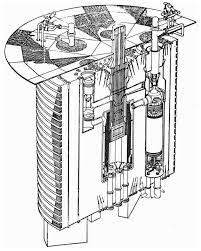

How the British government reacted to the Fukushima catastrophe – with propaganda promoting the nuclear industry
 Revealed: British government’s plan to play down Fukushima https://www.theguardian.com/environment/2011/jun/30/british-government-plan-play-down-fukushima
Internal emails seen by Guardian show PR campaign was launched to protect UK nuclear plans after tsunami in Japan Rob Edwards Fri 1 Jul 2011
British government officials approached nuclear companies to draw up a co-ordinated public relations strategy to play down the Fukushima nuclear accident just two days after the earthquake and tsunami in Japan and before the extent of the radiation leak was known.
Internal emails seen by the Guardian show how the business and energy departments worked closely behind the scenes with the multinational companies EDF Energy, Areva and Westinghouse to try to ensure the accident did not derail their plans for a new generation of nuclear stations in the UK. “This has the potential to set the nuclear industry back globally,” wrote one official at the Department for Business, Innovation and Skills (BIS), whose name has been redacted. “We need to ensure the anti-nuclear chaps and chapesses do not gain ground on this. We need to occupy the territory and hold it. We really need to show the safety of nuclear.” Officials stressed the importance of preventing the incident from undermining public support for nuclear power. The Conservative MP Zac Goldsmith, who sits on the Commons environmental audit committee, condemned the extent of co-ordination between the government and nuclear companies that the emails appear to reveal. “The government has no business doing PR for the industry and it would be appalling if its departments have played down the impact of Fukushima,” he said. Louise Hutchins, a spokeswoman for Greenpeace, said the emails looked like “scandalous collusion”. “This highlights the government’s blind obsession with nuclear power and shows neither they, nor the industry, can be trusted when it comes to nuclear,” she said. The Fukushima accident, triggered by the Japan earthquake and tsunami on 11 March, has forced 80,000 people from their homes. Opinion polls suggest it has dented public support for nuclear power in Britain and around the world, with the governments of Germany, Italy, Switzerland, Thailand and Malaysia cancelling planned nuclear power stations in the wake of the accident. The business department emailed the nuclear firms and their representative body, the Nuclear Industry Association (NIA), on 13 March, two days after the disaster knocked out nuclear plants and their backup safety systems at Fukushima. The department argued it was not as bad as the “dramatic” TV pictures made it look, even though the consequences of the accident were still unfolding and two major explosions at reactors on the site were yet to happen. “Radiation released has been controlled – the reactor has been protected,” said the BIS official, whose name has been blacked out. “It is all part of the safety systems to control and manage a situation like this.”
The official suggested that if companies sent in their comments, they could be incorporated into briefs to ministers and government statements. “We need to all be working from the same material to get the message through to the media and the public. Anti-nuclear people across Europe have wasted no time blurring this all into Chernobyl and the works,” the official told Areva. “We need to quash any stories trying to compare this to Chernobyl.” Japanese officials initially rated the Fukushima accident as level four on the international nuclear event scale, meaning it had “local consequences”. But it was raised to level seven on 11 April, officially making it a major accident” and putting it on a par with Chernobyl in 1986. The Department for Energy and Climate Change (DECC) has released more than 80 emails sent in the weeks after Fukushima in response to requests under freedom of information legislation. They also show: Westinghouse said reported remarks on the cost of new nuclear power stations by the deputy prime minister, Nick Clegg, were “unhelpful and a little premature”. The company admitted its new reactor, AP1000, “was not designed for earthquakes [of] the magnitude of the earthquake in Japan”, and would need to be modified for seismic areas such as Japan and California. The head of the DECC’s office for nuclear development, Mark Higson, asked EDF to welcome the expected announcement of a safety review by the energy secretary, Chris Huhne, and added: “Not sure if EDF unilaterally asking for a review is wise. Might set off a bidding war.” EDF promised to be “sensitive” to how remediation work at a UK nuclear site “might be seen in the light of events in Japan”. It also requested that ministers did not delay approval for a new radioactive waste store at the Sizewell nuclear site in Suffolk, but accepting there was a “potential risk of judicial review”. The BIS warned it needed “a good industry response showing the safety of nuclear – otherwise it could have adverse consequences on the market”. On 7 April, the office for nuclear development invited companies to attend a meeting at the NIA’s headquarters in London. The aim was “to discuss a joint communications and engagement strategy aimed at ensuring we maintain confidence among the British public on the safety of nuclear power stations and nuclear new-build policy in light of recent events at the Fukushima nuclear power plant”. Other documents released by the government’s safety watchdog, the office for nuclear regulation, reveal that the text of an announcement on 5 April about the impact of Fukushima on the new nuclear programme was privately cleared with nuclear industry representatives at a meeting the previous week. According to one former regulator, who preferred not to be named, the degree of collusion was “truly shocking”. A spokesman for the DECC and BIS said: “Given the unprecedented events unfolding in Japan, it was appropriate to share information with key stakeholders, particularly those involved in operating nuclear sites. The government was very clear from the outset that it was important not to rush to judgment and that a response should be based on hard evidence. This is why we called on the chief nuclear inspector, Dr Mike Weightman, to provide a robust and evidence-based report.” A DECC source played down the significance of the emails from the unnamed BIS official, saying: “The junior BIS official was not responsible for nuclear policy and his views were irrelevant to ministers’ decisions in the aftermath of the Japanese earthquake.”
“I would be much more reassured if DECC had been worrying about how the government would cope with the $200bn-$300bn of liabilities from a catastrophic nuclear accident in Britain.” The government last week confirmed plans for eight new nuclear stations in England and Wales. “If acceptable proposals come forward in appropriate places, they will not face unnecessary holdups,” said the energy minister, Charles Hendry. The NIA did not comment directly on the emails. “We are funded by our member companies to represent their commercial interests and further the compelling case for new nuclear build in the UK,” said the association’s spokesman. “We welcome the interim findings of the independent regulator, Dr Mike Weightman, who has reported back to government that UK nuclear reactors are safe.” This article is more than 9 years old
Internal emails seen by Guardian show PR campaign was launched to protect UK nuclear plans after tsunami in Japan |
|
Unitede Arab Emirates $32 billion Barakah nuclear plant poses environmental, safety, and security problems
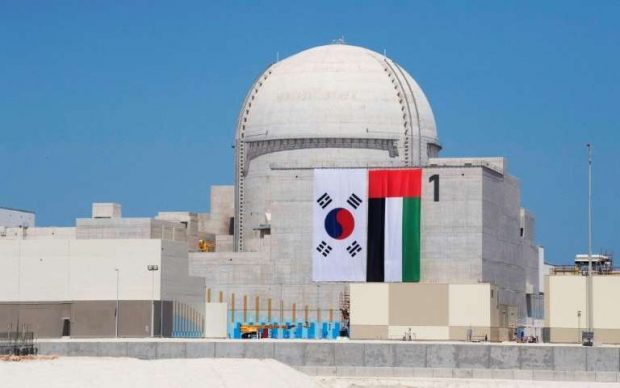
Part of Abu Dhabi’s clean energy push, the $32 billion nuclear power station risks destabilising a volatile region with detrimental consequences for the environment.
The UAE’s Barakah nuclear power plant will begin supplying electricity to the national grid at the end of this month………..
Jointly developed by ENEC and Korea Electric Power Corporation (KEPCO), construction of the $32 billion project began in July 2012 and was completed in May 2018.
Financed through a $16.2 billion direct loan from the Abu Dhabi government and a $2.5 billion loan from the Export-Import Bank of Korea, the plant’s reactors are licensed by the Korea Institute of Nuclear Safety and projected to have a lifespan of 60 years.
The first reactor at the plant started operations last year after being connected to the national grid. Fuel is being loaded into a second reactor, which is planned to begin operating later this year. In total, four reactors will eventually operate at the site.
…………. Is Barakah worth the risk?
While the UAE inaugurates the development of civilian nuclear energy, several concerns have been being raised.
The plant, which lies on the western coast of the country, is in close proximity to Qatar. Doha has called Barakah a “flagrant threat” to regional peace and the environment, warning that a radioactive plume from an accidental discharge at the station could reach the country in five to thirteen hours.
Some have questioned the logic of introducing nuclear power in the UAE, where solar power is clearly abundant. Furthermore, in a region where tensions run high, Barakah could provoke the possibility of nuclear proliferation.
“The tense Gulf strategic geopolitical situation makes new civil nuclear construction in the region even more controversial than elsewhere, as it can mean moves towards nuclear weapon capability, as experience with Iran has shown,” argued Paul Dorfman, founder and chair of the International Nuclear Consulting Group.
Saudi Arabia has already pushed ahead with plans to complete its first nuclear reactor under the auspices of the Saudi National Atomic Energy Project. But as Yemen’s Houthi drone strikes against the kingdom’s oil refineries in 2019 indicate, nuclear energy safety will have to be linked to regional security.
Similarly, the spillover effect from the UAE’s foreign policy could make nuclear plants like Barakah a target for politically motivated actors. That Houthi rebels alleged to have fired a missile at the site in 2017, which the UAE denied, could become instantly catastrophic for the Gulf were a future attack to be successful.
There are also detrimental environmental costs. The Gulf region is among the world’s most water-scarce in the world and heavily dependent on desalination, and any accidental nuclear waste spill would have disastrous maritime consequences.
Not to mention climate change itself could impact Barakah, seeing as coastal nuclear sites will be increasingly vulnerable to rising sea levels………. https://www.trtworld.com/magazine/does-the-uae-s-barakah-nuclear-plant-create-more-problems-than-it-solves-45121
Tokai nuclear plant ordered to halt for lack of evacuation plans
|
Tokai nuclear plant ordered to halt for lack of evacuation plans https://english.kyodonews.net/news/2021/03/a1683cef5f2a-breaking-news-japan-court-orders-suspension-of-tokai-nuclear-plant.html KYODO NEWS A Japanese court ordered Thursday the suspension of the Tokai No. 2 nuclear power plant, located northeast of Tokyo, citing a lack of evacuation plans despite persisting safety concerns over nuclear power generation 10 years after the Fukushima Daiichi accident.he Mito District Court’s ruling became the second case to order the suspension of a nuclear reactor in Japan after the Fukushima crisis, following a 2014 Fukui District Court decision to halt operations of the Nos. 3 to 4 units of the Oi nuclear plant.
The Tokai No. 2 plant in Ibaraki Prefecture, which started commercial operation in 1978, has remained idle as its operator Japan Atomic Power Co. is working to meet stricter regulations set after the 2011 disaster. The electricity wholesaler is seeking to restart the Tokai plant, after gaining approval for the extension of its operations beyond the preliminary 40-year limit in November 2018. Nuclear reactors are allowed to run for 40 years in Japan but can extend their operations for an additional 20-year period with approval from the nuclear watchdog. In handing down the landmark ruling, Presiding Judge Eiko Maeda said the situation is such one cannot say that “attainable evacuation plans and a disaster risk reduction system are in place.” Plaintiffs who live in Ibaraki and surrounding prefectures have expressed concerns about that point, as around 940,000 people are living within a 30-kilometer radius of the plant, the most among nuclear facilities nationwide. Maeda pointed out only five of the 14 municipalities within the radius have formulated regional evacuation plans in the event of a disaster, and such plans lack safety and need improvement. The current situation “poses a concrete danger that could infringe on personal rights” of local residents, the judge said. At the same time, however, the court did not find problems in the plant’s temblor and tsunami estimates as well as quake resistance of its building. |
|
Hinkley Point C nuclear power station ‘could suck up 182 million fish a year’ from Severn Estuary
the power station is subject to requires an acoustic fish deterrent to be installed at the site, but EDF is trying to have this part of the DCO changed so the deterrent is no longer required. The reason the deterrent was part of the original DCO is because due to the cooling operation required, the design features two vast tunnels capable of sucking up 120,000 litres of cooling water per second from the sea and circulating it through the system to cool the nuclear reactor.
Hinkley Point nuclear reactors with cracks are allowed to resume limited operations
Reuters 17th March 2021, Britain will allow two nuclear reactors at Hinkley Point where cracks were
found to resume limited operations ahead of their scheduled closure in 2022, the sector’s regulator said on Wednesday.
1 This Month
Tell Congress: Prevent Nuclear Catastrophe in Iran

Tell Congress: Prevent Nuclear Catastrophe in Iran

Read the Public Inquiry Report, the Commissioners’ report, Surrendering Australia: The AUKUS Deception is available to download for free at aukuspublicinquiry.com. Or just watch the replay of the National Press Club Luncheon.


Shut down the radiation-damaged Heysham nuclear reactors now
To see nuclear-related stories in greater depth and intensity – go to https://nuclearinformation.wordpress.com

Say No to NASA’s Reckless Nuclear Reactor on the Moon
Say No to NASA’s Reckless Nuclear Reactor on the Moon
-
Archives
- November 2026 (255)
- October 2026 (302)
- September 2026 (339)
- August 2026 (330)
- July 2026 (355)
- June 2026 (287)
- May 2026 (306)
- April 2026 (356)
- March 2026 (251)
- February 2026 (267)
- January 2026 (308)
- December 2025 (358)
-
Categories
- 1
- 1 NUCLEAR ISSUES
- business and costs
- climate change
- culture and arts
- ENERGY
- environment
- health
- history
- indigenous issues
- Legal
- marketing of nuclear
- media
- opposition to nuclear
- PERSONAL STORIES
- politics
- politics international
- Religion and ethics
- safety
- secrets,lies and civil liberties
- spinbuster
- technology
- Uranium
- wastes
- weapons and war
- Women
- 2 WORLD
- ACTION
- AFRICA
- Atrocities
- AUSTRALIA
- Christina's notes
- Christina's themes
- culture and arts
- Events
- Fuk 2022
- Fuk 2023
- Fukushima 2017
- Fukushima 2018
- fukushima 2019
- Fukushima 2020
- Fukushima 2021
- general
- global warming
- Humour (God we need it)
- Nuclear
- RARE EARTHS
- Reference
- resources – print
- Resources -audiovicual
- Weekly Newsletter
- World
- World Nuclear
- YouTube
-
RSS
Entries RSS
Comments RSS

