The week in nuclear news

NUCLEAR . Not much happening this week. Intensified push for small nuclear reactors (SMRs) in Canada and UK.
CORONAVIRUS: Coronavirus Disease (COVID-19): Weekly Epidemiological Update. No easy fix for global vaccine shortage.
CLIMATE CHANGE. Third of global food production at risk from climate crisis.A bit of good news – ‘The Manta’ Sailing Vessel is Designed to Feed on Plastic Waste for Power–While Cleaning Oceans.
Ionising radiation was scientifically proven to be bad for dogs. Does that mean it’s good for humans?
Nuclear industry survives on its false claim that it helps the fight against climate change.
How Bill Gates bankrolls the news agenda. Corruption in the pharmaceutical industry – the Bill Gates connection. Bill Gates with his GAVI (the Global Alliance for Vaccine Initative) has the power of a member State in the WorldHealth Organisation.
Fusion: Ten Times More Expensive Than Nuclear Power.
NO, nuclear lobby, a nuclear reactor is NOT the only, nor the best, way to produce medical Technetium TC99.
Energy effuciency – the most ignored form of climate action – and the most effective.
If Bitcoin is virtual, why are there environmental concerns?
Avoiding an unintentional space war: Lessons from Cold War nuclear diplomacy. Master of Space: Corporate plans for the militarization & privatization of space. https://www.youtube.com/watch?v=aJB8uHm3Nq8
ARCTIC. Radioactive gas seeping out in the Arctic, as permafrost thaws.
JAPAN. Safety and security issues at Kashiwazaki-Kariwa nuclear power station. Restarting nuclear power in Japan. Will the old ”Nuclear Village” bribery factor trump safety concerns? Japanese government and TEPCO planning release of radioactive water, via a pipeline to the Pacific Ocean.
SOUTH KOREA. South Korean fishermen sue Japanese government over Fukushima nuclear plant water.
NORTH KOREA. How to deal with a nuclear-armed Kim Jong Un.
ISRAEL. Hamas Targets Israeli Oil And Nuclear Facilities With Rocket Attacks In April, Syrian missile landed near Dimona nuclear reactor, interception failed.
RUSSIA. Tallying up Russia’s nuclear weapons.
USA.
- Cyberattacks grind Hanford nuclear energy workers’ benefit program to a halt.
- Endangered sea turtles sucked into nuclear power plant pipes.
- Biden administration promises progress on nuclear waste. US Nuclear is significantly overvalued. USA govt to delay removing plutonium nuclear waste from the decommissioned Hanford nuclear reservation. Opportunities for US-Russian collaboration on the safe disposal of nuclear waste.
CANADA. Canadian government hand in glove with the nuclear lobby for a ”NICE” nuclear future. Scepticism in Canada, about the government’s push for small nuclear reactors. Saugeen First Nation do not want Canada’s nuclear waste. Nuclear Waste Management Organization says the project will not be built without their consent. Small nuclear reactors – a way to get indigenous people to then accept nuclear waste?
INDIA. India is operating the world’s most dangerous, fastest-growing, nuclear weapons and missile programs in the world.
UKRAINE. Nuclear fission reactions are happening at Chernobyl again. Human intervention may be required at Chernobyl as radiation levels spike. Chernobyl nuclear tomb will eventually collapse. Sellafield, too, will need £132 billion, at least, to decommission.
UK .
- Glascow City Council calls on UK Government to scrap plans to replace nuclear arsenal. The possession of nuclear weapons is not about war. It’s all about power, status and money.
- Rolls-Royce rocked by a £4 billion loss . Rolls Royce desperate for investors for its £2bn Small Nuclear Reactors.
- UK’s Magnox nuclear reprocessing plant to close, leaving world’s largest stockpile of separated civil plutonium. UK’s radioactive pollution at Dalgety Bay to be cleaned up after 31 years.
- Nuclear fusion is an energy mirage, and these are the reasons why.
- Dungeness nuclear power station could be shut down earlier than planned. .
IRELAND. Sellafield’s plutonium waste has continued to circulate in the Irish Sea.
FRANCE. Will the French government break troubled nuclear company EDF up into 3 companies?
SOUTH AFRICA. The corruption surrounding the South African government’s push for nuclear power
ALGERIA. Sixty years on, Algerian desert region still struggles with effects of French nuclear tests.
Small nuclear reactors – a way to get indigenous people to then accept nuclear waste?

Gordon Edwards is president of the Canadian Coalition for Nuclear Responsibility and notes the Moltex SMR design involves dissolving spent nuclear fuel in molten salt, and there lies an issue, he believes.
“What happens when you dissolve the solid fuel in a liquid, in this molten salt – then all of these radioactive materials are released into the liquid,” says Edwards, “and it becomes more dangerous to contain them because a solid material is much easier to contain than a liquid or gaseous material.”

Peskotomuhkati chief unhappy about nuclear reactor testing on his traditional territory https://www.aptnnews.ca/national-news/peskotomuhkati-nation-nuclear-reactor-testing-new-brunswick-small-modular-reactors/—
Christopher Read cread@aptn.caMay 16, 2021,
Feds say they won’t reach zero emissions by 2050 without small nuclear reactors.
It’s a new kind of nuclear reactor that the federal government is putting up $50.5 million in development money for, but some Indigenous leaders are already speaking out against it
.Moltex Energy Canada is getting the tax-dollar investment to develop what the nuclear industry calls a “small modular reactor” or SMR – which is generally considered to be a reactor with a power output of 300 megawatts or less.The Moltex SMR design is to be developed at New Brunswick Power’s Point LePreau Nuclear Generating Station, which is on the north shore of the Bay of Fundy and in Peskotomuhkati traditional territory.
ARC Clean Energy Canada is another operation also set to develop an SMR at the Point LePreau site. It was announced in February that ARC would get $20 million from the New Brunswick government if the company can raise $30 million of its own cash.
Hugh Akagi is Chief of Peskotomuhkati Nation and has concerns about more nuclear development in the aging facility.
“Well, I don’t feel very good about it, to be honest,” says Akagi. “You paid that money if you pay tax on anything in this country, you’ve just made a donation to Moltex. If you’re not concerned about $50 million being turned over to a corporation for a technology that does not exist – I hope you heard me correctly on that.”
The federal government has taken a shine to the idea of SMRs and Minister of Natural Resources Seamus O’Regan is on the record as saying “We have not seen a model where we can get to net-zero emissions by 2050 without nuclear.”
Under the Small Modular Reactor Action Plan, the federal government is pushing for SMRs to be developed and deployed to power remote industrial operations as well as northern communities.
Three streams of government-supported SMR developments are underway at two sites in Ontario as well as at Point LePreau.
As well, the governments of New Brunswick, Ontario, Saskatchewan and Alberta have all signed a memorandum of understanding pledging their support for SMR development.
Akagi says he hasn’t been formally consulted – but has been to a presentations put on by NB Power about the SMR project.
He says he is unlikely he’ll ever give it his support.
“Until I can have an assurance that the impact on the future is zero,” says Akagi, “I don’t want to 100 years, 200 years is still seven generations. I want zero impact.”
But Moltex Energy Canada CEO Rory O’Sullivan says his company’s technology will ultimately reduce environmental impact, by recycling spent nuclear fuel from full scale reactors.
“Instead of putting it in the ground where it’ll be radioactive for very long periods, we can reuse it as fuel to create more clean energy from what was waste,” says O’Sullivan. “We can’t get rid of the waste altogether. But the aim is to get rid, to get it down to about a thousandth of volume of the original long-lived radioactivity.
O’Sullivan admits to formerly seeing nuclear as too much of a problem to be a viable solution in the climate crisis.
“When I graduated as a mechanical engineer I saw that nuclear is potentially as too expensive, has the waste issue, has a potential safety issue,” says O’Sullivan. “Well, actually, with these innovative new designs, you can potentially have nuclear power that is lower cost, cheaper than fossil fuels – you can get much safer solution using innovation and you can potentially deal with the waste.”
Gordon Edwards, one of Canada’s most prominent nuclear critics, isn’t buying that argument.
Edwards is president of the Canadian Coalition for Nuclear Responsibility and notes the Moltex SMR design involves dissolving spent nuclear fuel in molten salt, and there lies an issue, he believes.
“What happens when you dissolve the solid fuel in a liquid, in this molten salt – then all of these radioactive materials are released into the liquid,” says Edwards, “and it becomes more dangerous to contain them because a solid material is much easier to contain than a liquid or gaseous material.”
Edwards also works on a radioactive task force with the Anishinabek Nation and the Iroquois Caucus.
And as he sees it, small modular reactors could make it harder for Indigenous communities to say no to the deep geological repositories [DGRs] being pitched to Indigenous communities as a supposedly safe way for Canada’s nuclear industry to entomb highly radioactive waste for hundreds of thousands of years.
“We don’t accept the small modular reactors because we know that it’s just a way of implicating us so that we can then have less of an argument against being radioactive waste dumps,” says Edwards. “If we accept small modular reactors into our communities, how can we then turn around and say we don’t want to keep the radioactive waste? It would just put us in an impossible position.”
Edwards and other nuclear critics such as Akagi recently participated in an online webinar focused on concerns around nuclear development at Point LePreau.
And those adding their voices to the critical side of the ledger on nuclear development at Point LePreau include Jenica Atwin – the Green Party’s MP for Fredricton, and Wolastoq Grand Council Chief Ron Tremblay – who issued a Resolution calling for nuclear development to be halted.
Atwin put out a release in April calling Canadian nuclear policies “profoundly misguided.”
“My basic premise is that the government needs to be more responsible in the information that they’re sharing just in general to talk about the risks that exist alongside whatever benefits they’re kind of toting,” says Atwin. “And right now, we’re only hearing that it’s the greatest option. This is how we fight climate change. It is clean, it’s cheap energy. And I have to disagree.”
If all goes to according to the Moltex plan, its SMR could be operable by about 2030.
Rolls Royce desperate for investors for its £2bn Small Nuclear Reactors

It’s not a good look, as Rolls Royce is in a financial crisis
Consortium led by Rolls-Royce on hunt for orders for its £2bn nuclear reactors after redesign that means each will power 100,000 more homes https://www.thisismoney.co.uk/money/markets/article-9581899/Rolls-Royce-starts-hunt-buyers-nuclear-reactor-boost.html By ALEX LAWSON, FINANCIAL MAIL ON SUNDAY 16 May 2021
A consortium led by Rolls-Royce is on the hunt for orders for its £2billion nuclear reactors after a redesign that means each will power 100,000 more homes.
The Mail on Sunday can reveal that the UK Small Modular Reactor (SMR) project has revamped the proposed mini reactors to increase their output. The factory-built reactors will now generate 470 megawatts, enough to provide electricity to a million homes.
The project, launched in 2015, aims to bring ten mini nuclear reactors into use by 2035, with the first due to enter service around 2030.
Tom Samson, chief executive of the UK SMR Consortium, said negotiations had begun with potential investors to fund the creation of the mini reactors – signalling that the project may move more rapidly than previously thought.
He said it was looking for customers, which could include energy, industrial or technology companies, to operate the sites. He added: ‘We’re ready to take this technology to market. We’re going to be pursuing orders. We’re hoping to get orders soon.’
The UK’s nuclear power industry has had a chequered recent past with the future of some huge plants thrown into doubt. Rolls-Royce hopes to create a nimbler solution to complement big power stations.
Rolls-Royce is the major share holder in the venture, which has been developed through a consortium that includes Atkins, Jacobs and Laing O’Rourke. The Government has so far invested £18million to support its design and £215million has been earmarked for the SMR programme as part of a ‘Green Industrial Revolution’.
Samson said a further £300million of private capital is now being sought to develop the reactors, which it hopes will be located both in the UK and overseas.
The initial ‘two to three’ units are likely to require Government support, but Samson hopes to move to ‘traditional debt and equity’ to fund following orders. Last week, the Government updated its nuclear policy to open its Generic Design Assessment to new nuclear technologies. UK SMR hopes to be the first to submit a proposal to Government and regulators.
Samson said 220 engineering decisions had been made in the latest designs. He said the switch from an ‘armadillo’-shaped building to one with a ‘faceted’ top allowing the roof to wrap around the inner workings made it more efficient.
The Prime Minister’s former chief adviser Dominic Cummings was a champion of the UK SMR programme, but Samson said No10 remained behind the project and it chimed with current policy.
He added: ‘We unashamedly wrap ourselves in the Union Jack. This is a really proud UK innovation that we’ve developed here at low cost. And that’s what consumers need.
We’re contributing to the Government’s levelling-up agenda. We’re also contributing to its post-Brexit global Britain agenda.’
Samson is running the rule over sites for factories to build the mini reactors, and said they were most likely to be in the North of England and the East Midlands, where Rolls-Royce is based. He is also studying potential locations for the reactors, which could include former nuclear sites in West Cumbria and Anglesey, where Japanese giant Hitachi pulled the plug on plans for a £20billion plant last year.
Samson described renewable energies such as solar and wind power as ‘weather dependent’, adding: ‘We’re not intermittent. These plants will run for 60 years. They will operate 24/7.’
Rolls-Royce rocked by a £4 billion loss

Rolls-Royce rocked by a £4 billion loss: But upbeat boss says firm is in a position to ‘thrive, not just survive’ after lockdown, This is Money, By FRANCESCA WASHTELL FOR THE DAILY MAIL, 12 March 2021 Rolls-Royce plunged to a £4billion loss last year after the collapse in air travel hammered its engines business.
The UK’s premier engineering firm warned the recovery this year would be even slower than expected after a second wave of the pandemic led to more flight cancellations.
But boss Warren East was in fighting mood and said the company was in a position to ‘thrive, not just survive’ and had built up enough cash to deal with any further setbacks.,,,,,,,
The £4billion loss – which compares with a £583million profit in 2019 – was worse than analysts had expected.
In an effort to get through the crisis, Rolls kicked off a huge restructuring last May that included cutting 9,000 jobs from its 52,000-strong workforce and selling parts of the business worth £2billion.
Rolls has also raised £7.3billion – which included arranging loans and selling new shares – and has access to £9billion.
But at its lowest point last year, the Derby-headquartered company admitted it could struggle to survive if the downturn continued.
Rolls has been burning through cash, £4billion in total last year, and expects to go through another £2billion in 2021……..
Away from civil aerospace, Rolls is also trying to establish itself as a leader in building small nuclear reactors and developing green flight technology…… https://www.thisismoney.co.uk/money/markets/article-9352005/Rolls-Royce-hit-4bn-loss-Boss-says-firm-thrive-post-lockdown.html
Chernobyl nuclear tomb will eventually collapse. Sellafield, too, will need £132 billion, at least, to decommission.

LADBible 15th May 2021, A scientist has warned that Chernobyl nuclear power plant must be dismantled in the next 100 years or else it will collapse.
Professor Neil Hyatt is the Royal Academy of Engineering and Nuclear Decommissioning Authority’s research chair in radioactive waste management. Speaking to LADbible about recent developments that nuclear reactions had been detected from deep within the mummified plant – 35 years after its core exploded in what is widely viewed as history’s worst nuclear disaster – he says it’s time to act.
“If we don’t take it down, it’s going to fall down,” says Professor Hyatt, who teaches at Sheffield University. “The original shelter was built as a temporary facility to stabilise a situation and the New Safe Confinement is essentially the same thing – to buy us time. [But] it only buys us around 100 years or so.
“If you think about nuclear decommissioning, which I do all the time, look at the projects that are going on around the world. “There’s the Sellafield site in the UK – that’s one hundred years to decommission the Sellafield site at a cost of £132 billion, at least. “That probably tells you it’s going to take at least 50 years, if we started today, probably at a cost of about £900 million, to decommission Chernobyl.
“These are orders of magnitude, and the reason is because we still don’t know everything we need to know to decommission it, about the material inside.” He adds: “If we don’t take it down, it’s gonna collapse eventually. If you’ve bought yourself 100 years, you really need to start cracking on with the dismantling – probably in the next 20 years.
Sixty years on, Algerian desert region still struggles with effects of French nuclear tests
Sixty years on, Algerian desert region still struggles with effects of French nuclear tests, 13 May 21, https://www.france24.com/en/tv-shows/revisited/20210514-sixty-years-on-algerian-desert-region-still-struggles-with-effects-of-french-nuclear-testsIn February 1960, France carried out its first nuclear test in the Algerian desert, codenamed “Blue Jerboa”. Three more atmospheric tests and 13 underground tests followed, until 1966. The consequences for humans and the environment were disastrous.
More than 60 years on, the after-effects are still visible and the victims of nuclear tests are struggling to be heard. FRANCE 24 reports from both sides of the Mediterranean: with former French conscripts who performed their military service in Algeria and are trying to receive compensation, and Algerians, who feel abandoned to their fate.
US Nuclear is significantly overvalued

US Nuclear Stock Gives Every Indication Of Being Significantly Overvalued, Yahoo Finance GuruFocus.com, Sat, May 15, 2021,
The stock of US Nuclear (OTCPK:UCLE, 30-year Financials) is believed to be significantly overvalued, according to GuruFocus Value calculation. GuruFocus Value is GuruFocus’ estimate of the fair value at which the stock should be traded. It is calculated based on the historical multiples that the stock has traded at, the past business growth and analyst estimates of future business performance. If the price of a stock is significantly above the GF Value Line, it is overvalued and its future return is likely to be poor. On the other hand, if it is significantly below the GF Value Line, its future return will likely be higher. At its current price of $0.57 per share and the market cap of $13.3 million, US Nuclear stock is believed to be significantly overvalued. GF Value for US Nuclear is shown in the chart below. [on original]
Because US Nuclear is significantly overvalued, the long-term return of its stock is likely to be much lower than its future business growth, which averaged 7.8% over the past five years.
Since investing in companies with low financial strength could result in permanent capital loss, investors must carefully review a company’s financial strength before deciding whether to buy shares. Looking at the cash-to-debt ratio and interest coverage can give a good initial perspective on the company’s financial strength. US Nuclear has a cash-to-debt ratio of 0.43, which ranks worse than 79% of the companies in Hardware industry. Based on this, GuruFocus ranks US Nuclear’s financial strength as 3 out of 10, suggesting poor balance sheet. This is the debt and cash of US Nuclear over the past years:
…………In short, The stock of US Nuclear (OTCPK:UCLE, 30-year Financials) gives every indication of being significantly overvalued. The company’s financial condition is poor and its profitability is poor. Its growth ranks worse than 81% of the companies in Hardware industry. https://finance.yahoo.com/news/us-nuclear-stock-gives-every-111207593.html
Saugeen First Nation do not want Canada’s nuclear waste. Nuclear Waste Management Organization says the project will not be built without their consent.

Saugeen First Nation debates fate of Canada’s nuclear waste CTV News , Scott Miller CTV News London Videographer @ScottMillerCTV Contact Sunday, May 16, 2021 ”…… Last January, the Saugeen Ojibway Nation voted 85 per cent against plans to bury Ontario’s low and intermediate level nuclear waste along the shores of Lake Huron.
Saugeen members will have a similar decision to make on plans to bury Canada’s high-level nuclear waste under 1,500 acres of farmland, north of Teeswater, because the planned project also falls within their traditional territory.
The Nuclear Waste Management Organization says the project will not be built without SON’s consent.
“Well it’s important now because that’s what was agreed to as part of the treaties. So there’s constitutional rights that are at play,” says NWMO’s Indigenous Knowledge and Reconciliation Section Manager, Jessica Perritt.
SON leadership have said they didn’t ask for nuclear waste to be created and temporarily stored in their territory, but now, they must be part of deciding its fate.
“We’ve got to treat our people, not like the olden days where the Indian Agent didn’t even allow us to think or make decisions. We can make decisions for ourselves,” says Roote………..
Members of the Saugeen Ojibway Nation and residents of South Bruce have until 2023 to decide if they want to permanently house Canada’s first and only underground nuclear waste storage facility. https://london.ctvnews.ca/saugeen-first-nation-debates-fate-of-canada-s-nuclear-waste-1.5430208
Glascow City Council calls on UK Government to scrap plans to replace nuclear arsenal
Glasgow Evening Times 15th May 2021, GLASGOW City Council is calling on the UK Government to pursue nuclear
disarmament. Councillors have backed a motion which supports the Treaty to
Prohibit Nuclear Weapons – and urges the government to scrap plans to
replace its Trident nuclear arsenal.
It was presented by Councillor Feargal
Dalton, the convener of the Nuclear Free Local Authorities Scotland Forum
(NFLA). A letter will be sent to the UK Government to inform it of the
resolution. Cllr Dalton, who has a military background, said: “There is
no moral justification for nuclear weapons; I never heard one in all my
years in the submarine service.
https://www.glasgowtimes.co.uk/news/19304352.council-calls-trident-replacement-plans-scrapped/
UK’s radioactive pollution at Dalgety Bay to be cleaned up after 31 years
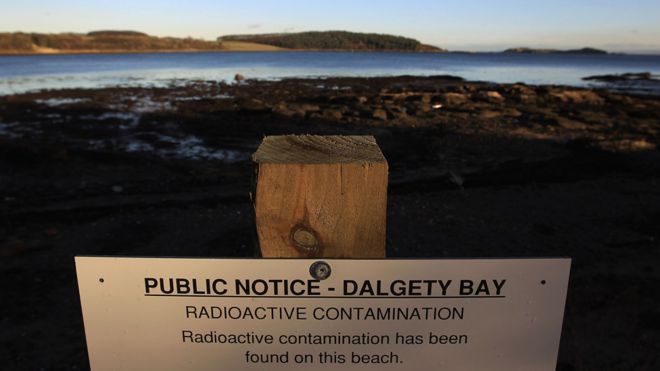
Radioactive pollution at Dalgety Bay to be cleaned up after 31 years,The Ferrret, Rob Edwards, May 14, 2021, The clean-up of radioactive pollution by the Ministry of Defence (MoD) at Dalgety Bay in Fife is to start — 31 years after it was first discovered.
The Scottish Environment Protection Agency (Sepa) has announced that work to decontaminate a stretch of foreshore on the north of the Firth of Forth near a popular sailing club will begin on 17 May. It is expected to be finished in 2022.
Sepa promised that the clean-up would provide a “permanent and positive resolution” to the decades-old pollution. It was “an important milestone for Dalgety Bay”, the agency said.
Campaigners have welcomed the news, but said that it was “utterly disgraceful” that it had taken so long to deal with the contamination. Locals and visitors had been put at risk for “many unnecessary years”, they argued
The £10m clean-up has long been the subject of fierce arguments and delays. Local politicians have repeatedly accused the MoD of refusing to take responsibility, and dragging its heels.
The contamination comes from second world war planes, and was accidentally detected during monitoring in 1990. Luminous, radioactive radium was used to make plane dials glow in the dark so they could be read at night.
After the war the planes were incinerated and dumped as landfill, on which part of the town of Dalgety Bay was built in the 1960s. Since 1990 more than 3,000 radioactive particles have been found on the beach and in local gardens.
Hundreds of particles, many of them potentially hazardous, keep being washed ashore from a headland being eroded by the sea. To protect public health, access to contaminated areas was restricted in 2011, and fishing was banne…………
According to Friends of the Earth Scotland, the area had been “blighted” by radioactive pollution that was “dangerous” to people and wildlife. “It is great news that a clean up is about to get underway but it is utterly disgraceful that it has taken more than thirty years to begin properly dealing with the problems,” said the environmental group’s director, Dr Richard Dixon.
“MoD denial and foot dragging has left locals and visitors at risk for many unnecessary years. A big part of the problem has been the MoD’s fear that if they admit they have to pay to clean up Dalgety Bay they’ll be on the hook for massive bills for similar work that needs to done throughout the UK.”……….
According to Friends of the Earth Scotland, the area had been “blighted” by radioactive pollution that was “dangerous” to people and wildlife. “It is great news that a clean up is about to get underway but it is utterly disgraceful that it has taken more than thirty years to begin properly dealing with the problems,” said the environmental group’s director, Dr Richard Dixon……..
The 50-strong group of Nuclear Free Local Authorities has been working with Fife Council to help get the Dalgety Bay foreshore decontaminated…………https://theferret.scot/radioactive-pollution-dalgety-bay-cleaned-up/
May 16 Energy News — geoharvey

Opinion: ¶ “Bringing Back Clean Air” • Indoor air pollution from burning gas is a important problem. RMI has made the clear economic case for all-electric homes in new construction, finding that they are cheaper than dual-fuel homes in every major region of the US. Throw in the safety advantages, and there is simply no […]
May 16 Energy News — geoharvey
Overcoming resistance to a nuclear weapons-free world — Beyond Nuclear International

More of us favor abolition. Why don’t our governments?
Overcoming resistance to a nuclear weapons-free world — Beyond Nuclear International
Master of Space: Corporate plans for the militarization & privatization of space
Feb 2, 2021 Sun, Jan 31, 2021: 10:30 am to 12:30 pm Master of Space: Corporate plans for the militarization & privatization of space DESCRIPTION: Bruce Gagnon will reveal the deadly connections between the corporate drive to ‘control and dominate’ space as spelled out in the US Space Command’s 1997 planning document called Vision for 2020. https://thecommunity.com/wp-content/u…
The gold rush is now underway as space technologies have matured to the point where mining the sky for precious resources becomes possible. Corporate forces intend to use the newly formed ‘Space force’ to guard the front gate on and off Earth to ensure that only ‘authorized’ companies and nations would be allowed to access space.
This vision was first spelled out before Congress in the early 1950’s when former Nazi Maj. Gen. Walter Dornberger shared his vision of orbiting battle stations in space to control the pathway on and off our planet. Dornberger had been Hitler’s liaison to V-1 & V-2 rocket scientist Wernher von Braun during WW II. After the war Dornberger, Von Braun and more than 1,000 Nazi leaders were secretly brought to the US to serve in the military industrial complex. Van Braun built the US space program and Dornberger became a V-P of Bell Aerospace in New York. http://www.space4peace.org
BIO: Bruce Gagnon is the Coordinator (and Co-Founder) of the Global Network Against Weapons & Nuclear Power in Space. He is a Vietnam war-era veteran and began his organizing work with the United Farm Workers Union. He lives in Bath, Maine.
Webinar: SPACE AND NUCLEAR WEAPONS SYSTEMS

SPACE AND NUCLEAR WEAPONS SYSTEMS (UNIDIR), May 25, 2021, virtual, ~9:00 am ET
The United Nations Institute for Disarmament Research (UNIDIR) will hold a two-day virtual conference on May 25-26, 2021 on “Nuclear Risk: Across Technologies and Domains.” The meeting is 14:00-16:20 Central European Summer Time each day (8:00-10:40 am EDT).
The second session on May 25 is a panel discussion on “Space and Nuclear Weapons Systems.” No time is specified but about halfway through is a logical estimate, so about 9:00 am EDT.
Participants are:
- Raji Rajagopalan, Director, Centre for Security, Strategy & Technology (CSST), Observer Research Foundation (ORF), New Delhi (moderator)
- Paul Meyer, Adjunct Professor of International Studies, Simon Fraser University and member Outer Space Institute
- Victoria Samson, Washington Office Director, Secure World Foundation
More information is on the event’s website.
Whom to trust on nuclear matters – just ask yourself “What’s in it for whom? – theme for June 21.
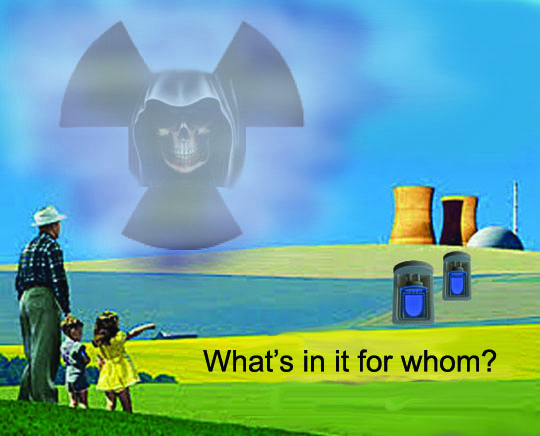
The facts on the nuclear industry are shrouded in secrecy and jargon.
What we do know is that many people and many communities rely on this industry for jobs and economic security (until they can’t anymore). But this dependence on an industry does not make it good.
So – whom to rely on for a judgment about nuclear power, [with its partner twin, nuclear weapons?]
Well, the current respected”authorities” on the nuclear industry are billionaire celebrities, officials of International Atomic Energy Agency (IAEA), government department heads, chiefs of nuclear companies. They know best [?]
There are scores of other highly qualified persons who decry the nuclear industry, on the grounds of radiation dangers, safety, health, environmental risks, climate change threats, security, weapons proliferation, terrorism, and oh – that most compelling issue – costs.
Well, the nuclear proponents have one clear way to refute all those people – ‘‘they are not nuclear physicists or engineers, and therefore cannot understand nuclear matters’‘ [only – some of them ARE nuclear physicists]
The mainstream media makes sure to (a) ignore those critics of nuclear power, or (b) depict them as cranks or unhinged leffties.
These are just a few of these often maligned critics:
Dr Helen Caldicott author, Michael E Mann, climatologist and geophysicist, Dr Paul Dorfman, science researcher. Arjun Makhijani, nuclear physicist, Dr Chris Busby, radiation expert Dr Ian Fairlea, radiation consultant. Arnold Gunderson, nuclear engineer, Beatrice Fihn -chief of ICAN. Mary OLson, expert on radiation effects on women. Dr Timothy Mousseau, ecologist Dr Jim Green, public health expert, Linda Gunter, nuclear media commentator. Dr Gordon Edwards, nuclear science consultant. Karl Grossman – Professor of journalism Bruce Gagnon – Researcher on space issues.
There are many more
Now let’s turn to the nuclear industry promoters. All too well known are the celebrity billionaires, Bill Gates, Elon Musk, Jeff Bezos. They have remarkable influence and access to media. (Example – Bill Gates’ targeted gifting to media) They also have commercial interests in nuclear technology.
Less celebrated names, but still very influential, are the voices from the industry itself, and from politicians friendly to the industry (?campaign-funded by the industry).
I have long been grateful to the scientist and Nobel Prize winner Dr George Wald for the message he gave on whom one should believe, about nuclear power. He said –
Just ask yourself – ”What’s in it for whom”
Police raid nuclear expert Dr Chris Busby’s Bideford home with absurd story he’s a bomb-maker (YOUTUBE)
1 This Month
Tell Congress: Prevent Nuclear Catastrophe in Iran

Tell Congress: Prevent Nuclear Catastrophe in Iran

Read the Public Inquiry Report, the Commissioners’ report, Surrendering Australia: The AUKUS Deception is available to download for free at aukuspublicinquiry.com. Or just watch the replay of the National Press Club Luncheon.


Shut down the radiation-damaged Heysham nuclear reactors now
To see nuclear-related stories in greater depth and intensity – go to https://nuclearinformation.wordpress.com

Say No to NASA’s Reckless Nuclear Reactor on the Moon
Say No to NASA’s Reckless Nuclear Reactor on the Moon
-
Archives
- November 2026 (246)
- October 2026 (302)
- September 2026 (339)
- August 2026 (330)
- July 2026 (355)
- June 2026 (287)
- May 2026 (306)
- April 2026 (356)
- March 2026 (251)
- February 2026 (267)
- January 2026 (308)
- December 2025 (358)
-
Categories
- 1
- 1 NUCLEAR ISSUES
- business and costs
- climate change
- culture and arts
- ENERGY
- environment
- health
- history
- indigenous issues
- Legal
- marketing of nuclear
- media
- opposition to nuclear
- PERSONAL STORIES
- politics
- politics international
- Religion and ethics
- safety
- secrets,lies and civil liberties
- spinbuster
- technology
- Uranium
- wastes
- weapons and war
- Women
- 2 WORLD
- ACTION
- AFRICA
- Atrocities
- AUSTRALIA
- Christina's notes
- Christina's themes
- culture and arts
- Events
- Fuk 2022
- Fuk 2023
- Fukushima 2017
- Fukushima 2018
- fukushima 2019
- Fukushima 2020
- Fukushima 2021
- general
- global warming
- Humour (God we need it)
- Nuclear
- RARE EARTHS
- Reference
- resources – print
- Resources -audiovicual
- Weekly Newsletter
- World
- World Nuclear
- YouTube
-
RSS
Entries RSS
Comments RSS

