Japanese municipalities are finding resistance to hosting nuclear waste dump, despite substantial government bribes.
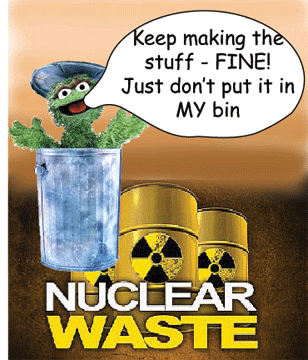
The two municipalities are meeting strong resistance from residents and nearby local governments.
Since Suttsu and Kamoenai expressed their willingness to accept the first-stage survey, the assemblies of some nearby municipalities have enacted ordinances declaring a rejection of nuclear waste and their governments have declined state grants related to the survey.
One year on, outlook for nuclear waste storage unclear Japan Times, 17 Nov 21, The outlook for the possible hosting of a final storage facility for nuclear waste in two Hokkaido municipalities remains uncertain, with Wednesday marking one year since a first-stage survey for the site’s selection started there, for the first time in Japan.
The town of Suttsu, along with the nearby village of Kamoenai, is undergoing the first-stage survey, known as literature investigation, to check whether it is suited to host a permanent underground storage site for high-level radioactive waste from nuclear power plants across the country.
The two municipalities are meeting strong resistance from residents and nearby local governments.
The government is seeking a location for the dump site, which will hold nuclear waste, or the remnants of spent nuclear fuel that has been treated, for a long period said to extend for 100,000 years.
The literature investigation, conducted by the Nuclear Waste Management Organization of Japan, or NUMO, will take about two years to confirm that there is no volcanic activity or active faults in the area by reviewing geological literature and data. The first-stage survey does not involve drilling.
Up to ¥2 billion in subsidies from the state will be paid to each location, as well as surrounding municipalities, for the first-stage investigation. The two municipalities plan to use the grants to set up regional revitalization funds.
Suttsu held a mayoral election last month in which the survey became a central topic of debate. Incumbent Mayor Haruo Kataoka, who decided to accept the first-stage research a year ago in line with what he felt was the will of the residents, won re-election.
However, his opponent, who called for a halt to the survey, gained about 80% of Kataoka’s vote count, suggesting that public opinion is still split.
The town government will decide whether to proceed to the second stage of the survey, called preliminary investigation, in a referendum.
Since Suttsu and Kamoenai expressed their willingness to accept the first-stage survey, the assemblies of some nearby municipalities have enacted ordinances declaring a rejection of nuclear waste and their governments have declined state grants related to the survey.
Suttsu and Kamoenai initially planned to have monthly opportunities for residents to exchange opinions on the issue, but the novel coronavirus crisis has limited such sessions to four each so far. The second-stage survey requires the consent of not only the municipal mayors, but also of Hokkaido Gov. Naomichi Suzuki, who is opposed to the investigation on the grounds that a prefectural ordinance rejects nuclear waste being brought to the prefecture.
X-energy, NuScale, Terra Power overselling their small nuclear reactors, which face big challenges.

| X-energy, along with Bellevue-based TerraPower, founded by Bill Gates, and Portland-based NuScale, proposes reactors that can ramp up and down their electrical output much more rapidly than the large reactors now operating. TerraPower plans to build its project at the site of a Wyoming coal plant in a partnership with a subsidiary of PacifiCorp, a private utility. NuScale is proposing a project in Idaho and has considered eventually locating a unit in Washington state. The nuclear industry, in the Pacific Northwest and elsewhere in the nation, has a history of pitching, and sometimes starting, projects that fail to come to pass. Skeptics say these next-generation projects are being oversold and face big challenges in producing competitively priced power without compromising safety and security, and in a time frame soon enough to help reduce carbon emissions by midcentury. Inside Climate News 15th Nov 2021 https://insideclimatenews.org/news/15112021/nuclear-power-washington-state |
Kenya’s $5billion nuclear power dream is delayed by 10 years
Kenya Delays $5 Billion Nuclear Power Dream by Decade on Demand, Bloomberg, By David Herbling 17 November 2021 Kenya will delay by a decade plans to build its first-ever nuclear power plant, a $5 billion facility, to ensure a match between power supply and demand, according to the Nuclear Power and Energy Agency.
The initial 1,000-megawatt plant is now projected to be connected to the grid in 2036, said Erick Ohaga, the state-owned agency’s director of nuclear energy infrastructure development. An earlier plan was to have the plant supply home and industries by 2026.
“Time-lines have changed because power supply needs to follow demand,” Ohaga said by phone on Wednesday. ….. https://www.bloomberg.com/news/articles/2021-11-17/kenya-delays-5-billion-nuclear-power-dream-by-decade-on-demand
Scottish earthquake was nuclear waste ‘wake-up call’
 | |||
Scottish earthquake was nuclear waste ‘wake-up call’, Ronnie Cowan MP says, The National, By Greg Russell 17 Nov 21 A SCOTS MP has said the 3.1 magnitude earthquake off the West of Scotland was a “wake-up call” over the “dig a hole and bury it” approach to nuclear waste.
Ronnie Cowan was speaking after Tuesday’s early-morning quake – recorded just 10km beneath its epicentre – was felt on the west coast and in Ireland.
The SNP MP for Inverclyde wrote on social media: “Hopefully too small and too far away from the nuclear waste dump and weapons storage to be concerning.”
He later told The National that when it comes to nuclear powered submarines and their payload, safety had to be paramount.
Cowan said: “Likewise our nuclear energy industry isn’t just about the crucial day to day safety, it is about the long term security of the sites and the waste.
“Currently the ‘dig a hole and bury it’ attitude to nuclear waste is concerning. It feels very much like we passing on a problem to future generations, which given the heightened awareness of environmental damage and climate change seems like a deliberate dereliction of duty.
“It therefore came as a wake-up call when I read that an earthquake had taken place just off the west coast of Scotland.”
Cowan stressed he was not claiming that the incident was a threat, but wondered if it was a warning shot given the “very unforgiving” nature of nuclear energy and waste.
“One mistake and the outcome could be catastrophic and as we see the climate change and weather patterns change, we are seeing more and more extreme weather episodes, and to future-proof our existing nuclear waste dumps we must consider the state of the planet thousands of years into the future,” he said.
Scottish earthquake was nuclear waste ‘wake-up call’, Ronnie Cowan MP says, The National,
By Greg Russell @National_GregJournalist A SCOTS MP has said the 3.1 magnitude earthquake off the West of Scotland was a “wake-up call” over the “dig a hole and bury it” approach to nuclear waste.
Ronnie Cowan was speaking after Tuesday’s early-morning quake – recorded just 10km beneath its epicentre – was felt on the west coast and in Ireland.
The SNP MP for Inverclyde wrote on social media: “Hopefully too small and too far away from the nuclear waste dump and weapons storage to be concerning.”
He later told The National that when it comes to nuclear powered submarines and their payload, safety had to be paramount.
Cowan said: “Likewise our nuclear energy industry isn’t just about the crucial day to day safety, it is about the long term security of the sites and the waste.
“Currently the ‘dig a hole and bury it’ attitude to nuclear waste is concerning. It feels very much like we passing on a problem to future generations, which given the heightened awareness of environmental damage and climate change seems like a deliberate dereliction of duty.
“It therefore came as a wake-up call when I read that an earthquake had taken place just off the west coast of Scotland.”
Cowan stressed he was not claiming that the incident was a threat, but wondered if it was a warning shot given the “very unforgiving” nature of nuclear energy and waste.
“One mistake and the outcome could be catastrophic and as we see the climate change and weather patterns change, we are seeing more and more extreme weather episodes, and to future-proof our existing nuclear waste dumps we must consider the state of the planet thousands of years into the future,” he said.
“And secondly, the earthquake bothered me because for some time now I have been concerned about the amount of unexploded ordnance (UXO) in the Clyde and beyond.
“My concerns are around the safety of those working on the river and those who enjoy it recreationally.”
The MP said he wanted to see a massive clean-up of the munitions dump in the River Clyde, but it had to be disposed of thoughtfully……… https://www.thenational.scot/news/19722624.scottish-earthquake-nuclear-waste-wake-up-call-ronnie-cowan-mp-says/
No North Korea nuclear, ICBM tests for the time being
Unification minister predicts no North Korea nuclear, ICBM test ‘for time being’South Korea’s Lee In-young also frames end-of-war declaration as starting point for denuclearization, NK news Jeongmin Kim November 17, 2021 North Korea is unlikely to test any nuclear weapons or long-range missiles in the immediate future, South Korea’s Minister of Unification Lee In-young said on Wednesday, as the country’s March 2022 presidential election fast approaches.
Speaking at an international symposium in Busan, South Korea’s second-largest city, Lee also once again pitched the idea of formally ending the Korean War, an initiative that the Moon Jae-in administration continues to push in its last months in office.
“North Korea is testing short-range missiles [these days] but it appears that there is a high possibility that it won’t test nuclear weapons or long-range missiles — as known as ‘strategic provocation’ — for the time being,” Lee said, without providing further explanation.
North Korea last tested an intercontinental ballistic missile (ICBM) in Nov. 2017, and its sixth and last nuclear test was in September that year. Leader Kim Jong Un announced a self-imposed moratorium on weapons of mass destruction (WMD) tests the following year, but he has made ambiguous remarks about whether to continue the test ban over the past two years.
Lee on Wednesday remained hopeful that inter-Korean relations will improve, alluding to “possibilities of step-by-step, simultaneous corresponding measures” by Washington should North Korea make progress in denuclearization steps……..
“Denuclearization and the completion of a peace regime [on the Korean Peninsula] will need a lot of time … but the end-of-war declaration could become a formal starting point for such a process,” he said. https://www.nknews.org/2021/11/unification-minister-predicts-no-north-korea-nuclear-icbm-test-for-time-being/
Global agreements against the dumping of nuclear waste into the world’s oceans

Did you know that there are global agreements against the dumping of
nuclear waste into the world’s oceans? They are called the London
Convention and London Protocol (LC/LP) and the latest meeting of the
government signatories and observers, including Greenpeace International,
has just finished under the auspices of the United Nations International
Maritime Organization (IMO).
It was an uncomfortable experience for
Japanese diplomats trying to defend the decision to dispose of nuclear
waste from Fukushima Daiichi into the Pacific Ocean. But it also triggered
memories of a different time and a different policy nearly three decades
ago when Japan at the IMO took on the role of protecting the marine
environment from radioactivity.
Greenpeace 17th Nov 2021
Plan for solar power to UK via cable from Morocco, as nuclear power closes
As the UK’s ageing fleet of nuclear power stations begins to close –
until recently a steady source of low-carbon baseload generation –
Utility Week speaks to Simon Morrish, chief executive at XLinks, about its
plans to transmit cheap solar power thousands of kilometres across the
Atlantic seabed from the sun-drenched deserts of Morocco to help fill the
looming gap.
Utility Week 15th Nov 2021
The degraded state of France’s nuclear fleet, and concealment of series of accidents.
French nuclear fleet: degraded condition, concealment of serial accidents
in nuclear power plants. The techno-industrial system includes major
accidents in its planning calculations – adapting to its disasters or
fighting to its end?
Ricochets 15th Nov 2021
Rolls Royce dilutes its stake in consortium for mini reactors, as Qatar makes small investment

The Gulf state of Qatar is set to invest just under £100 million in
Rolls-Royce’s plan to develop a new generation of mini nuclear reactors
that are cheaper and faster to build than traditional designs. Qatar will
join the Perrodo family, the billionaire French oil dynasty which made its
fortune from the private oil company Perenco, and Exelon Generation, the US
nuclear giant, as Roll-Royce’s partners in the project.
Rolls-Royce lastnight declined to comment. The deal will dilute Rolls-Royce’s 80 per cent
stake in the venture, according to The Daily Telegraph. A formal
announcement is expected this week.
Times 17th Nov 2021
Rolls Royce asks to govt begin 5 year process to get regulatory approval for its small modular nuclear reactor.
Rolls-Royce (RR.L) has asked Britain’s government for clearance to begin
the 4-5 year long process of seeking regulatory approval for its small
modular nuclear reactor, it said on Wednesday, the first step towards
commercializing the technology.
Britain earlier this month backed a $546
million funding round at the company to develop the country’s first small
modular nuclear reactor (SMR), in a drive to reach net zero carbon
emissions and promote new technology with export potential. “This is an
important moment for the nuclear industry, as a UK SMR reactor design
enters the initial process for regulatory approval for the first time,” Helena Perry, Regulatory and Safety Affairs Director at Rolls-Royce said ina statement.
All new nuclear power projects need approval from Britain’s
Office for Nuclear Regulation (ONR) through its Generic Design Assessment
which is expected to take 4-5 years to complete. Britain’s government must
first give companies clearance to submit their designs to the regulator, a
process that is expected to take up to four months before the formal review
process can begin.
Reuters 17th Nov 2021
“Community Partnership” yeah right! — RADIATION FREE LAKELAND

“Community Partnership” launched in areas ruled out by NIREX 20 years ago. Brainwashing Alert GDF OFF! (Gnome called ‘Sandi’ (Stop All Nuclear Developments Immediately- he is a baby made of Cold Porcelain: 2 cups of cornflour, one cup of PVA glue and a bit of lemon and oil). Back in the 90s the “best” place […]
“Community Partnership” yeah right! — RADIATION FREE LAKELAND
Community Partnership” launched in areas ruled out by NIREX 20 years ago.
Brainwashing Alert. Back in the 90s the “best” place in the UK to dump
intermediate level nuclear waste was decided upon following a long
geological screening programme which looked at the whole of the UK. That
place was Longlands Farm near Gosforth. Following the NIREX inquiry
Longlands Farm was ruled out as being unsuitable. What is new is not the
geology or the science of containment, it is the Government’s desperation
to show that they have “a plan” in order to justify new nuclear build.
Radiation Free Lakeland 16th Nov 2021
November 17 Energy News — geoharvey

Opinion: ¶ “Nuclear Power Won’t Save the World. It Won’t Even Help” • Putting money into nuclear power goes beyond being a huge waste. It detracts from the vital issue of dealing with climate change now by making money unavailable for dealing with the problem using less expensive, more flexible energy that can be built […]
November 17 Energy News — geoharvey
The only true purpose of small nuclear reactors- to promote the nuclear weapons industry, and hide its costs – theme for December 21.
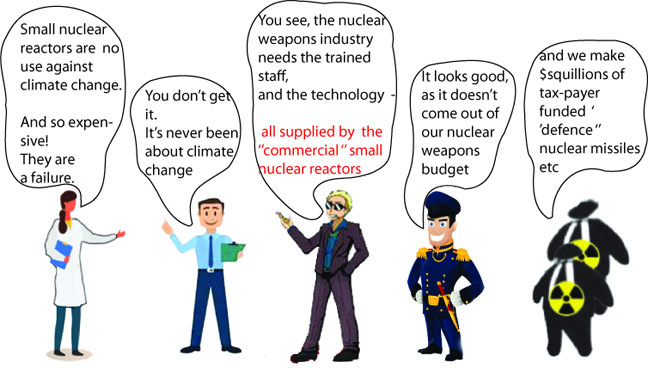
Small Nuclear Reactors – the Big New Way – to get the public to fund the nuclear weapons industry
November 28, 2020
so-called “small nuclear reactors”
Downing Street told the Financial Times, which it faithfully reported, that it was “considering” £2 billion of taxpayers’ money to support “small nuclear reactors”
They are not small
The first thing to know about these beasts is that they are not small. 440MW? The plant at Wylfa (Anglesey, north Wales) was 460MW (it’s closed now). 440MW is bigger than all the Magnox type reactors except Wylfa and comparable to an Advanced Gas-cooled Reactor.
Only if military needs are driving this decision is it explicable.
”Clearly, the military need to maintain both reactor construction and operation skills and access to fissile materials will remain. I can well see the temptation for Defence Ministers to try to transfer this cost to civilian budgets,”
Any nation’s defence budget in this day and age cannot afford a new generation of nuclear weapons. So it needs to pass the costs onto the energy sector.
How the UK’s secret defence policy is driving energy policy – with the public kept in the dark. https://www.thefifthestate.com.au/energy-lead/how-the-uks-secret-defence-policy-is-driving-energy-policy-with-the-public-kept-in-the-dark/ BY DAVID THORPE / 13 OCTOBER 2020
The consumerism that destroys life is also the cause of the environmental emergency — Hawkins Bay Dispatch — Barbara Crane Navarro

The consumerism that destroys life is also the cause of the environmental emergency, https://hawkinsbay.wordpress.com/2021/11/13/the-consumerism-that-destroys-life-is-also-the-cause-of-the-environmental-emergency/
Decades ago, corporations and governments invented the traits we now call ‘human nature.’ COP26 has shown ‘consumers’ that buying something ‘different’ is not working. 13 November 2021 | Graham Peebles | Euroasia Review The natural environment has been poisoned, vandalized and trashed in accordance with the demands and values of the all-pervasive socio-economic system, and as long as it persists it is impossible to imagine the steps required to save the natural world being taken.
The consumerism that destroys life is also the cause of the environmental emergency — Hawkins Bay Dispatch — Barbara Crane Navarro
greed, ownership of things (homes, cars, clothes etc.), and the general accumulation of stuff is insisted upon, for the simple reason that it is consumerism that feeds the monster. This very same consumerism, which is perpetuating unhappiness and fuelling ill health, is also the underlying cause of the environmental emergency.
As COP26 draws to an unimpressive close, governments haggle over emission targets, funding of fossil fuels and money for the global south, and a new poll reports that most people (in the 10 countries polled, including UK, US, Germany, France) say they are unwilling to alter their way of life to save our planet. We must once again ask, what will it take for humanity to wake up and change?
Economic considerations and short term self-interest will continue to be applied and the devastation will continue.
Continue readingOver 100 European non government organisations urge the European Commission to block nuclear power from being accepted as a clean green investment

NGOs press Germany to block nuclear, gas green status https://www.montelnews.com/news/1272742/ngos-press-germany-to-block-nuclear-gas-green-status SIOBHAN HALL, Brussels, 16 Nov 2021
Montel) More than 100 NGOs from across Europe have urged Germany to ensure nuclear and natural gas-fired power plants do not qualify as “green” investments under the EU’s sustainable finance taxonomy.
They expressed concern in a letter to future German chancellor Olaf Scholz on Monday that the European Commission was finalising the rules for nuclear and natural gas while Germany was focused on forming its new government.
The country has committed to phase out nuclear power by the end of next year and the NGOs urged Scholz to “take an equally clear stance” against nuclear power and natural gas in EU level rules.
An unofficial draft paper circulating in Brussels recently set out potential criteria for including gas-fired power plants and nuclear as green as part of new taxonomy proposals.
EU pressure
In October, 10 EU countries led by France signed a joint declaration urging the EC to recognise nuclear and natural gas as sustainable activities according to the taxonomy.
Doing so would make it cheaper to finance and build new nuclear power plants, said the Czech Republic’s deputy prime minister Karel Havlicek at the time.
The other countries involved were Bulgaria, Croatia, Finland, Hungary, Poland, Romania, Slovakia and Slovenia.
On Sunday, environmental group Greenpeace attacked the EC over potential plans to define gas and nuclear as green against the backdrop of a “weak” agreement made at the conclusion of COP26 climate talks in Glasgow.
“Over the last two weeks of climate talks, the European Commission has supported fast-track funding for new gas terminals and pipelines, and labelled gas, nuclear energy and industrial farming as sustainable and eligible for green funding,” said the group.
1 This Month
Tell Congress: Prevent Nuclear Catastrophe in Iran

Tell Congress: Prevent Nuclear Catastrophe in Iran

Read the Public Inquiry Report, the Commissioners’ report, Surrendering Australia: The AUKUS Deception is available to download for free at aukuspublicinquiry.com. Or just watch the replay of the National Press Club Luncheon.


Shut down the radiation-damaged Heysham nuclear reactors now
To see nuclear-related stories in greater depth and intensity – go to https://nuclearinformation.wordpress.com

Say No to NASA’s Reckless Nuclear Reactor on the Moon
Say No to NASA’s Reckless Nuclear Reactor on the Moon
-
Archives
- November 2026 (238)
- October 2026 (302)
- September 2026 (339)
- August 2026 (330)
- July 2026 (355)
- June 2026 (287)
- May 2026 (306)
- April 2026 (356)
- March 2026 (251)
- February 2026 (267)
- January 2026 (308)
- December 2025 (358)
-
Categories
- 1
- 1 NUCLEAR ISSUES
- business and costs
- climate change
- culture and arts
- ENERGY
- environment
- health
- history
- indigenous issues
- Legal
- marketing of nuclear
- media
- opposition to nuclear
- PERSONAL STORIES
- politics
- politics international
- Religion and ethics
- safety
- secrets,lies and civil liberties
- spinbuster
- technology
- Uranium
- wastes
- weapons and war
- Women
- 2 WORLD
- ACTION
- AFRICA
- Atrocities
- AUSTRALIA
- Christina's notes
- Christina's themes
- culture and arts
- Events
- Fuk 2022
- Fuk 2023
- Fukushima 2017
- Fukushima 2018
- fukushima 2019
- Fukushima 2020
- Fukushima 2021
- general
- global warming
- Humour (God we need it)
- Nuclear
- RARE EARTHS
- Reference
- resources – print
- Resources -audiovicual
- Weekly Newsletter
- World
- World Nuclear
- YouTube
-
RSS
Entries RSS
Comments RSS

