Japan’s nuclear regulator inspecting seismic risks at Shika nuclear power station.
NRA looking into fault risks at nuclear plant https://www3.nhk.or.jp/nhkworld/en/news/20211118_26/ Japan’s nuclear regulator is inspecting the Shika nuclear power plant on the Sea of Japan coast to determine whether a fault beneath a reactor building is active.
The two-day inspection by the Nuclear Regulation Authority began at the plant in Ishikawa Prefecture on Thursday with 14 NRA experts taking part.
They went into a ditch dug for the survey, observed cross sections of geological strata and touched soil walls to confirm the layers’ conditions near faults.
Hokuriku Electric Power Company, which operates the plant, applied for screenings of the Number 2 reactor, which has been offline since 2011.
The NRA launched the screenings in 2014 with a focus on whether 10 faults at the plant, including one beneath the building that houses the Number 2 reactor, are active. In 2016, a panel of the authority said it could not deny that some of the faults could move.
In response, the firm insisted that the faults are not active, citing new data on constituents of mineral samples collected from the faults.
New guidelines for nuclear safety do not allow operators to build important facilities such as reactor buildings above active faults that could move.
If the fault beneath the Number 2 reactor is found to be active, operation of the facility cannot resume and it may eventually be dismantled.
The experts are expected to confirm on Friday the length of an active fault that runs near the complex.
Russian diplomat calls for coordinated global efforts to enact Nuclear-Test-Ban Treaty
Russian diplomat calls for coordinated global efforts to enact Nuclear-Test-Ban Treaty
According to Maria Zakharova, the Preparatory Commission has been taking effective steps to create conditions and infrastructure facilities necessary for the treaty’s effective operation
MOSCOW, November 19. /TASS/. The international community needs to coordinate its steps to make sure that the Comprehensive Nuclear-Test-Ban Treaty becomes an effective legal tool, Russian Foreign Ministry Spokeswoman Maria Zakharova said in a statement on Friday.
“Unfortunately, despite some undeniable achievements, the Comprehensive Nuclear-Test-Ban Treaty has not yet become an effective international legal tool. Well-coordinated steps by the international community are crucial for achieving this goal. Another eight nations from the so-called list of 44 need to ratify the treaty for it to come into force,” she pointed out. “We expect that the Preparatory Commission for the Comprehensive Nuclear-Test-Ban Treaty Organization will continue large-scale activities aimed at facilitating the early achievement of this goal based on a mandate enshrined in a resolution on the commission’s establishment and the treaty itself,” she added…………….
The United Nations General Assembly adopted the Comprehensive Nuclear-Test-Ban Treaty on September 10, 1996. On September 24, 1996, the document was opened for signing, but it still hasn’t taken effect as it needs to be ratified by the 44 countries listed in the treaty’s annex. The United States, China, Egypt, Israel and Iran have signed the treaty but haven’t ratified it yet, while three new nuclear powers – India, North Korea and Pakistan – have not signed the document. https://tass.com/politics/1363719
G and E’s Humboldt Nuclear Power Plant is officially all cleaned up. Environmental groups are not so sure.
PG&E Reactor Officially Decommissioned, Nuclear Waste Not https://www.northcoastjournal.com/NewsBlog/archives/2021/11/18/pgande-reactor-officially-decommissioned-nuclear-waste-not J.A. SAVAGE ON THU, NOV 18, 2021 G&E’s Humboldt Nuclear Power Plant reactor site was deemed fully cleaned up by the Nucle ar Regulatory Commission today. While the federal government no longer has oversight over that part of the site — “none at all,” said commission spokesperson David McIntyre — the spent fuel and other radioactive waste, however, remains under federal jurisdiction.
The former reactor site has no requirement to be monitored for radiation. “There’s no need for it. There’s no accident scenario” in which a radiation release to the environment from that part of PG&E’s plant could occur, according to McIntyre. It could, according to regulators, even be used for farming.
PG&E is required to maintain the area above Buhne Point where spent fuel is stored, “until fuel is removed,” McIntyre said. That means the utility is responsible for “physical security, mostly fences and guards,” he added.
Environmental security is another story, however. When asked about responsibility to keep the site secure from the threat of a radioactive release due to a tsunami, sea level rise or some other environmental event, McIntyre said he would check and then got back to the Journal with an update.
“PG&E, the licensee, is responsible for maintaining its safety and security until the fuel is removed from the site,” he said. “I am advised that the storage casks are below grade, as an additional protection against earthquakes, and they are located on high ground above the town, so sea level rise and tsunamis are not considered a threat to the safety of the facility.”
Environmental groups, however, remain concerned sea level rise will very much be an issue at the site. Read more about the nuclear plant’s history and legacy, which some fear could stretch thousands of years into the future, in previous Journal coverage here.
France’s Court of Audit wants a debate on nuclear power decisions – in view of delays and costs in this sector.
Electricity production choices: anticipate and control technological,
technical and financial risks. COURT OF AUDIT,19 Nov 21,
The Court publishes notes that are part of a body of work carried out on several major public policies, which identify both the main challenges that public decision-makers will face in the coming years, and the levers likely to overcome them. As an extension of the report "A public finance strategy for exiting the crisis", submitted last June to the President of the Republic and the Prime Minister, this series of publications allows the Court to express itself on structural issues. With these educational notes, the Court is placing itself at the heart of its mission to inform citizens, at a key democratic moment.

Nearly 70% of French electricity production is provided by nuclear reactors, two-thirds of which will have ceased to produce before 2050. To renew this large part of our electricity production capacity, new means of production - “Carbon-free”, in accordance with France's climate commitments - will require not only a considerable financial investment, but also significant construction delays. This situation calls for urgent decisions now, aimed at securing the needs of an increasing energy supply.

 In this perspective, the Court of Auditors considers it necessary to hold a debate on the choice of electricity production, which constitutes a technological, technical and industrial challenge, and the consequences of which in terms of employment and development of the territory will reverberate over several decades. Cour des Comptes 18th Nov 2021

 https://www.ccomptes.fr/fr/publications/les-choix-de-production-electrique-anticiper-et-maitriser-les-risques-technologiques
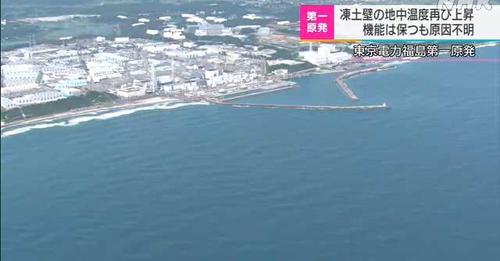
Temperature of Fukushima Daiichi’s “frozen earth wall” rises again – TEPCO: “Function is being maintained.
Nov. 16
As a measure to reduce the amount of contaminated water from the Fukushima Daiichi Nuclear Power Plant, the temperature in the ground has been rising in a part of the “frozen soil wall” that freezes the ground around the buildings to prevent the inflow of underground water.
Tokyo Electric Power Company (TEPCO) has stated that the freezing wall is still functioning, but the cause of the problem is not known at this time.
The “frozen earth wall” is one of the measures to reduce the amount of contaminated water. Pipes are embedded around the buildings of the Fukushima Daiichi Nuclear Power Plant, and liquid at 30 degrees below zero is poured into the pipes and frozen, forming an “ice wall” that prevents underground water from flowing into the buildings.
TEPCO has installed thermometers in the “frozen earth wall” to measure the underground temperature, and it has been above 0 degrees Celsius in some areas on the mountain side of the Unit 4 reactor of the Fukushima Daiichi Nuclear Power Plant since mid-September, rising to 11.29 degrees Celsius on the 12th of last month.
After that, the temperature hovered around 5 degrees and dropped to 1.13 degrees on the 11th of this month, but it rose again to 8.88 degrees on the 14th, 9.65 degrees on the 15th, and 11.03 degrees on the 16th, exceeding 10 degrees for the first time in about a month.
The Tokyo Electric Power Company (TEPCO) investigated the inside of the frozen soil wall from the 10th to the 12th of this month, digging at a depth of about 2.8 meters where the temperature was rising, but could not find the cause.
The Tokyo Electric Power Company (TEPCO) has stated that “there has been no change in the level of groundwater and the function to control the inflow of water has been maintained.
Use Less Stuff Day-Thursday November 18th

We really must understand that the lust for affluence in contemporary society is psychotic. It is psychotic because it has completely lost touch with reality. We crave things we neither need nor enjoy.Richard Foster
Use Less Stuff Day It seems like every day that passes results in us accumulating more and more useless detritus in our lives. The newest tech toys, the newest kitchen gadgets, the newest whatever, all got to be in our hands and there for us to use.
Worse, we tend to use a lot of disposable containers and paper towels and just…well… stuff. All of this adds up on the environment and the world we live in, and Use Less Stuff Day encourages us to take a critical look at these behaviors and do what we can to cut back.
History of Use Less Stuff Day
Use Less Stuff Day was established as part of a campaign working to save the environment, and to save the world. Of course, what really needs to be understood is that we’re not saving the world, we’re saving ourselves. The Earth as it sits will spin on its merry way no matter what we do to it, and life on it will just adapt to the new environment we created.
Every year we use literal tons of plastic bottles, we have microbeads from our shampoo and facial scrubs that find their way down to the ocean, we burn our way through massive amounts of resources as we continue to upgrade what we own and throw away last season’s model.
Organizations like Greenpeace have jumped on board to try to encourage us to work to save ourselves, from ourselves, and one of the best ways to handle it is by controlling our consumption of resources.
How to celebrate Use Less Stuff Day
Have you been using plastic bottled water? Get a filter for your tap and bottle it yourself in glass bottles instead. Do you usually stop and get a coffee in the mornings in a disposable cup? Brew yourself a pot at home instead and save some trees.
Check your shampoo and facial cleanser and make sure it doesn’t contain any plastic microbeads, as these wash down to the ocean and build up in massive volumes, and for Pete’s sake grab yourself a bag from home and use it at the grocery instead of using the ones they provide. That’s what Use Less Stuff Day is all about!
Despite the frantic nuclear lobbying at COP26, Rolls Royce’s small nuclear reactors will be of zero use against greenhouse emissions – Jonathon Porritt

Rolls-Royce talks of the first plant ‘coming online by 2031’ – do please do the maths yourself. So let’s say 2035, to be generous, at the earliest. And therefore of zero benefit in terms of meeting the Government’s own target of a 78% reduction in greenhouse gas emissions by 2035.
It’s all such a pathetic waste of time – and of taxpayers’ money. Whatever the timescale, SMRs will never compete with renewables plus storage.
COP6 ‘Nuclear Sidebar, http://www.jonathonporritt.com/cop26s-nuclear-sidebar/ Jonathon Porrit, 6 Nov 21, The fact that COP26 was crawling with huge numbers of delegates from Big Oil and Gas got a lot of attention from the media. Less attention was paid to the large number of pro-nuclear delegates parasitically inserting themselves into as many events as they could engineer access to – facilitated at every turn by BEIS Secretary of State Kwasi Kwarteng and Booster Boris himself..
The nuclear industry had its own short-lived moment in the sun, on 9th November. For what is now reckoned to be the fourth time, Kwasi Kwarteng went over the top to re-re-re-confirm the Government’s enthusiasm for Small Modular Reactors, re-re-re-promising (a rather miserly) £210m of Government money for Rolls-Royce, described by Kwasi Kwarteng as ‘a once in a lifetime opportunity’.
Rolls-Royce duly obliged, conjuring up another £250m of private sector investment to deliver a new fleet of at least five SMRs (and possibly as many as 16) at around £2.2bn a pop. The company’s share price duly went up by around 4%. Job done.
It doesn’t matter how many times Ministers bang this particular drum, or how many times deplorably gullible journalists in the BBC, FT, Times and the Telegraph suck it all up, moonshine is still moonshine.
In and of itself, that £460m buys practically nothing. It will allow Rolls-Royce to take whatever design they finally settle on through the Generic Design Assessment process. This will take no less than four years, and probably more than five. Even if (and it’s a big IF) regulatory approval is secured, private sector investors will still have to be found, sites identified and planning permission for each site secured – a process which can take years.
Rolls-Royce talks of the first plant ‘coming online by 2031’ – do please do the maths yourself. So let’s say 2035, to be generous, at the earliest. And therefore of zero benefit in terms of meeting the Government’s own target of a 78% reduction in greenhouse gas emissions by 2035.
It’s all such a pathetic waste of time – and of taxpayers’ money. Whatever the timescale, SMRs will never compete with renewables plus storage.
To be fair, it would be wrong to underestimate the importance here of energy security – meeting our energy needs from home-based, ‘indigenous’ capacity. Boris Johnson keeps banging on about ‘British wind and sunshine’ – mindful perhaps of a recent poll of Daily Express readers, of whom 97.5% said that Boris ‘should pledge to make Britain self-sufficient in energy production by 2050’.
On that basis, British nuclear electrons are therefore much more desirable than those unreliable French electrons, regardless of the fact that we wouldn’t have any new nuclear electrons coming on-stream were it not for Electricité de France.
COP26 was of course a global gathering. UK energy security was therefore less of an issue. But it got a bit of an airing on 12th November, when the two big tidal stream companies here in the UK (Nova Innovation and Atlantis Energy) made a big splash about the huge potential for tidal stream technology in Scotland – with a potential capacity of more than 500 MW. This is a proven technology (with turbines anchored to the sea floor to capture the power of tidal currents) – already delivering suitably ‘indigenous’ electrons – with no moonshine to be seen anywhere.
The potential for tidal stream is indeed significant – not just in the UK, but internationally.
However, for me personally, it’s still relatively small beer in comparison to tidal range – harnessing the power of the tides to generate huge amounts of electricity from either tidal lagoons or barrages, predictably, cost-effectively, over many decades.
If our Government was genuinely serious about energy security (instead of finding ways of propping up Rolls-Royce to support our nuclear weapons programme), tidal power would be top of its list.
But is it heck! So please check out my blog about tidal energy which follows shortly.
Germany’s Chancellor Merkel maintains stand against nuclear power being classified as sustainable

Merkel defends nuclear power exit despite climate challenges, Euro News, By Andreas Rinke, 17 Nov 21,
BERLIN -Chancellor Angela Merkel has defended her decision to phase out nuclear energy, even though it has made it harder for Germany to wean its economy off fossil fuels.
In an interview with Reuters, the outgoing chancellor also said she was opposed to any plans by the European Union to label nuclear power as “sustainable”.
“It’s true, of course, that we now face the very ambitious and challenging task of completing the energy transition while phasing out coal and nuclear power,” said Merkel, who will step down once a new government is sworn in following an election in September.
“But it’s also true that this will be worth it for our country if we do it right.”
Merkel, who has led her country for 16 years, pushed for Germany to abandon nuclear power after the Fukushima disaster in Japan a decade ago, a decision that most Germans agree with……..
RENEWABLES
The share of renewables in the energy mix of Europe’s largest economy has been growing steadily since the Fukushima disaster, though energy economists say it has not risen fast enough to help Germany meet its ambitious emissions targets.
Renewables accounted for 45% of Germany’s energy last year, up from 17% in 2010, data compiled by the Agora Energiewende think-tank showed. The share of electricity generated from coal fell to 23% from 42% a decade ago. Nuclear power was halved to 11%.
The EU executive, the European Commission, is drawing up a sustainable finance “taxonomy” setting out which activities meet the environmental criteria to qualify for funding under an EU sustainable investment programme.
A document viewed by Reuters in March indicated experts were preparing to label nuclear power as sustainable because it has none of the carbon dioxide emissions produced by fossil fuels.
Merkel said Germany would continue to oppose the plan but acknowledged that it would be hard to rally 19 other members behind its position to block it.
“It’s difficult to stall the procedure as such once the European Commission has presented an act,” said Merkel.
“We in Germany believe – across party lines – that nuclear energy should not be classified as being as clean as wind and solar energy.”……… https://www.euronews.com/next/2021/11/17/germany-merkel-nuclear-exclusive
The real cost of France’s reliance on nuclear energy?
France will build new nuclear reactors, announces the head of state. For
what economic cost? Is it cheaper than relying on 100% renewable energy? No
unbiased answer is possible at this point.
France Culture 13th Nov 2021
Nuclear energy: a distraction on the road to climate solutions.
Nuclear energy: a distraction on the road to climate solutions. Despite its low-carbon virtues, nuclear energy is anything but quick. In the race to net-zero emissions, nuclear energy remains at the starting line. Continuing to support nuclear energy at the expense of faster and cheaper alternatives for cutting greenhouse gas emissions is a losing strategy.
Bulletin of Atomic Scientists 15th Nov 2021
Nuclear energy: a distraction on the road to climate solutions
UK’s small nuclear reactor consortium indicates that it will be relying on tax-payer funding if it is to go ahead
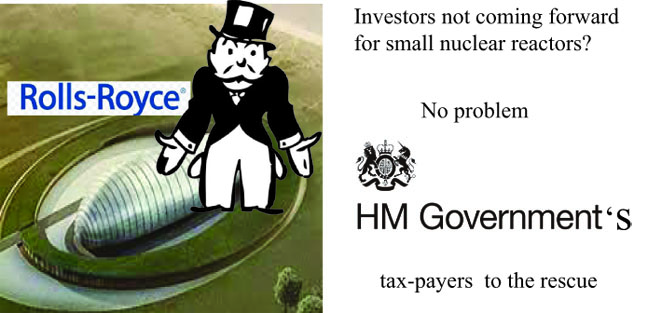
State support a fallback option for UK’s mini-nuclear plants rollout.
The head of the consortium, which is developing a £ 30 billion fleet of
mini-nuclear power stations, has indicated that it will have to rely on UK
taxpayers to help fund the construction of the first of the new designs if
there is not enough investor interest.
FT 10th Nov 2021
https://www.ft.com/content/869279aa-f771-4025-8719-c3b8bdf1f375
Australian Parliament should urgently review the potentially dangerous AUKUS deal
 | |||

Australian Federal Parliament Should Urgently Review the Potentially Dangerous AUKUS Deal https://worldbeyondwar.org/australian-federal-parliament-should-urgently-review-the-potentially-dangerous-aukus-deal/
By Australians for War Powers Reform, November 17, 2021
On September 15 2021, with no public consultation, Australia entered into a trilateral security arrangement with Britain and the United States, known as the AUKUS Partnership. This is expected to become a Treaty in 2022.
At short notice, Australia cancelled its contract with France to purchase and build 12 submarines on 16 September 2021 and replaced it with an arrangement to buy eight nuclear submarines from either Britain or the United States or both. The first of these submarines is unlikely to be available until 2040 at the earliest, with major uncertainties in relation to cost, delivery schedule and the ability of Australia to support such a capability.
Australians for War Powers Reform sees the public announcement of AUKUS as a smokescreen for other undertakings between Australia and the United States, the details of which are vague but which have major implications for Australia’s security and Independence.
Australia said the United States had requested increased use of Australian defence facilities. The US would like to base more bomber and escort aircraft in the north of Australia, presumably at Tindale. The US wants to increase the number of marines deployed in Darwin, which would see numbers rise to around 6,000. The US wants greater home porting of its vessels in Darwin and Fremantle, including nuclear-powered and armed submarines.
Pine Gap is in the process of significantly expanding its listening and war directing capabilities.
Acquiescing to these requests or demands considerably undermines Australian sovereignty.
The US is likely to want oversight, amounting to control, of northern air space and shipping lanes.
If the US deploys Cold War tactics against China, for that is what this military build-up is all about, it is likely to conduct aggressive flight missions up to the edge of Chinese air space with nuclear armed bombers, just as it did against the USSR. The US will patrol shipping lanes with greater frequency and intensity, knowing it has secure home bases only a short distance away, protected by surface-to-surface and surface-to-air missiles which are soon to be installed.
Any one of these flights or naval patrols could trigger a warlike response directed against Australian and US defence facilities and other assets of strategic value, such as oil, fresh water and infrastructure, or a cyber-attack on Australian communications and infrastructure.
Australia could be at war before most Australian politicians are aware of what is happening. In such an event, Parliament will have no say on going to war nor on the conduct of hostilities. Australia will be on a war footing as soon as these arrangements are in place.
AUKUS will be detrimental to national security. The ADF will lose its capacity to act independently.
Australians for War Power Reform believes these arrangements should not come into force, and that AUKUS should not become a Treaty.
We deplore the lack of consultation with neighbours, friends and allies, particularly relating to the storage and home porting of nuclear weapons and other US arms, ammunition and materiel.
We deplore the hostile profile adopted against our recent friend and major trading partner China.
We deplore the activities of the Australian Strategic Policy Institute (ASPI), funded by foreign arms manufacturers and the US State Department, in blind-siding the Australian people with its advocacy for such a deleterious outcome.
Non government organisations anxious about Tricastin nuclear station, and about historic law to protect whitleblowers
After Tricastin, we must “protect the whistleblowers and focus on the
alert and not on the messenger”. Three representatives of non-governmental
organizations recall, in a forum at “The World”, the importance of “the
historic law” that the National Assembly is about to vote on the protection
of whistleblowers. They are also calling for the opening of a parliamentary
inquiry into the facts relating to the Tricastin nuclear power plant.
Le Monde 15th Nov 2021
U.S. govt brings early Christmas to Bill Gates and the nuclear industry – tax-payer funding!

The U.S. Government and Bill Gates Get Behind Nuclear Power, Barrons, By Avi Salzman, Nov. 17, 2021 Nuclear power got a boost from the infrastructure bill signed into law this week by President Biden that could at the very least forestall the industry’s decline. With government support and the endorsement of major investors like Bill Gates, nuclear power looks as if it has a place in a carbon-free future. [ed. only nuclear is not carbon-free]
The legislation sets aside $6 billion to help fund nuclear plants in danger of closing. Several plants have needed help from the states where they are located in recent years because running nuclear plants has not always been profitable as other sources of electricity have become cheaper. A 2018 report from the Union of Concerned Scientists found that “more than one-third of U.S. nuclear plants are unprofitable or scheduled to close.” Having a federal financing program would ease the pressure on states and make it more likely plants could stay open……..
The new law has other goodies for the industry too, including funding for the Energy Department’s Advanced Reactor Demonstration Program.
One project that will receive funding from the bill is a new advanced reactor in Wyoming being built by TerraPower, which was founded by Bill Gates. The TerraPower reactor is expected to be smaller than most traditional nuclear plants, but to have more highly enriched uranium. Theoretically, these kinds of projects could bring power to more remote areas. The TerraPower plant is expected to open by 2028 and replace a coal plant.
Several utility companies could benefit from support for nuclear plants, including Exelon (ticker: EXC) and NextEra Energy (NEE).
Nuclear power could get an even bigger boost from the Build Back Better bill now being debated, including from special tax credits.
Those credits could be worth as much as $15 billion to the industry. Additional credits for low-carbon hydrogen production could also benefit the nuclear industry. https://www.barrons.com/articles/the-u-s-government-and-bill-gates-get-behind-nuclear-power-51637177613
The elimination of nuclear weapons a moral imperative – Vatican
Cardinal Parolin: elimination of nuclear weapons a moral imperative, Vatican NewsThe Vatican Secretary of State speaks at a conference on disarmament promoted in Assisi by the “Committee for a Civilization of Love”. He argues that the challenge is to adopt forward-looking strategies to achieve the common good and overcome the logic of deterrence. He relaunches the Pope’s idea of converting weapons resources into a fund to fight poverty and promote development.
By Michele Raviart – Vatican City Cardinal Pietro Parolin, Vatican Secretary of State, offered his thoughts via an inaugural video message to a conference on looking at ways to eliminate nuclear weapons and divert spending for humanitarian purposes. The meeting was organized by the Italian-based “Committee for a Civilization of Love” and held at the Sacro Convento in Assisi. Cardinal Parolin noted that the pandemic “is teaching us an important lesson”, namely that “it is necessary to reconsider our concept of security”, which “cannot be based on the threat of mutual destruction and fear, but must find its foundation in justice, integral human development, respect for human rights, care for creation, promotion of educational and health facilities, dialogue and solidarity”.
Real and lasting trust between Nations
The meeting brought together different realities committed to promoting disarmament, the elimination of nuclear arsenals and their conversion into peace initiatives. ……….
2022 diplomatic conferences
Next January the 10th Review Conference of the Parties to the Treaty on the Non-Proliferation of Nuclear Weapons will take place. Cardinal Parolin says this will offer “a crucial moment for the international community and in particular for the nuclear powers” to “clearly demonstrate their ability to understand today’s challenges, to face them and to resolve them.” In March the first meeting between the signatories of the recent Treaty on the Prohibition of Nuclear Weapons will take place. Nuclear powers and states militarily allied to them (with the exception of the Netherlands) are not party to this treaty which came into force last January. At the same time, Cardinal Parolin called it “a success of multilateral diplomacy,” recalling how “its negotiation and entry into force would not have been possible without the action of the many civil society associations committed to the continuous promotion of disarmament and peace.”
The Pope’s words on disarmament
In conclusion, Cardinal Parolin recalled Pope Francis’ words for the 54th World Day of Peace on January 1, which should be considered as a guide for the next steps towards disarmament. “How many resources are spent on weaponry, especially nuclear weapons?” the Pope asks in the message. The answer he says would be to designate these resources for the promotion of peace, integral human development, and health through an institution such as global fund “in order to permanently eliminate hunger and contribute to the development of the poorest countries.” https://www.vaticannews.va/en/vatican-city/news/2021-11/parolin-elimination-of-nuclear-weapons-a-moral-and-humanitarian.html
1 This Month
Tell Congress: Prevent Nuclear Catastrophe in Iran

Tell Congress: Prevent Nuclear Catastrophe in Iran

Read the Public Inquiry Report, the Commissioners’ report, Surrendering Australia: The AUKUS Deception is available to download for free at aukuspublicinquiry.com. Or just watch the replay of the National Press Club Luncheon.


Shut down the radiation-damaged Heysham nuclear reactors now
To see nuclear-related stories in greater depth and intensity – go to https://nuclearinformation.wordpress.com

Say No to NASA’s Reckless Nuclear Reactor on the Moon
Say No to NASA’s Reckless Nuclear Reactor on the Moon
-
Archives
- November 2026 (238)
- October 2026 (302)
- September 2026 (339)
- August 2026 (330)
- July 2026 (355)
- June 2026 (287)
- May 2026 (306)
- April 2026 (356)
- March 2026 (251)
- February 2026 (267)
- January 2026 (308)
- December 2025 (358)
-
Categories
- 1
- 1 NUCLEAR ISSUES
- business and costs
- climate change
- culture and arts
- ENERGY
- environment
- health
- history
- indigenous issues
- Legal
- marketing of nuclear
- media
- opposition to nuclear
- PERSONAL STORIES
- politics
- politics international
- Religion and ethics
- safety
- secrets,lies and civil liberties
- spinbuster
- technology
- Uranium
- wastes
- weapons and war
- Women
- 2 WORLD
- ACTION
- AFRICA
- Atrocities
- AUSTRALIA
- Christina's notes
- Christina's themes
- culture and arts
- Events
- Fuk 2022
- Fuk 2023
- Fukushima 2017
- Fukushima 2018
- fukushima 2019
- Fukushima 2020
- Fukushima 2021
- general
- global warming
- Humour (God we need it)
- Nuclear
- RARE EARTHS
- Reference
- resources – print
- Resources -audiovicual
- Weekly Newsletter
- World
- World Nuclear
- YouTube
-
RSS
Entries RSS
Comments RSS

