The 2015 Paris climate agreement – a weak ‘treaty’, but it is working up to a point.

In many ways, the landmark climate accord, agreed to at a U.N. summit in 2015, is a weak treaty. Despite the fanfare that accompanied its signing, the agreement has no binding limits on emissions, relies on countries to set their own goals for slashing pollution, and rests on an assumption that they can be shamed into living up to their promises.
It’s not even a real treaty: To get the U.S. on board, the architects of the accord crafted it as an “executive agreement” — no Congressional approval needed.
And yet, somehow, the Paris Agreement is working. To a point. The most recent U.N. climate conference, which wrapped last weekend in Glasgow, Scotland, showed signs of progress that would have seemed unthinkable only a few years ago. Under the Paris Agreement, nations have to submit pledges (or
promises, or wishful thinking, depending on who you ask) for how much they will reduce emissions every five years.
That’s the core of the agreement:
Voluntary pledges enacted and reviewed in a soup of international peer pressure that, ideally, will push countries to steadily do more and more.The goal is to use this system of “pledge and review” to limit global warming to “well below” 2 degrees Celsius — or, ideally, 1.5 degrees Celsius.
Grist 17th Nov 2021
https://grist.org/cop26/cop26-shows-the-paris-agreement-is-kinda-sorta-working/
The fairy tale of cheap French nuclear power.
The fairy tale of cheap French nuclear power. “Bread and Games” (Panem et circenses) were the strategies used in the Roman Empire to maintain power. “Cheap gasoline, inexpensive electricity and football” are election campaign strategies that are often propagated in a democracy.
In France, the nuclear industry is in decline and the nuclear company EDF is heavily indebted. At the same time, President Macron is once again promising cheap nuclear power and wants to have new small nuclear power plants built.
A small part of the financial problems of the French nuclear industry is to be solved with EU money. In this context, the fairy tale of cheap French nuclear power is popular in France and Germany, and the use of nuclear energy is praised as a miracle weapon in the lost war against nature and the environment.
Sonnenseite 18th Nov 2021
COP 27 in Egypt: growing concern that civil society groups will have restricted access

Concern is growing over plans to host a UN climate conference in Sharm
el-Sheikh next year, in what will be a crucial summit if the world is to
limit global heating to 1.5C. Several green experts and human rights
activists have told the Observer they fear the ability of civil society
groups to protest at the summit will be curtailed by Egypt’s
authoritarian regime, reducing the pressure that can be brought to bear on
leaders and ministers from the nearly 200 countries expected to take part.
Guardian 21st Nov 2021
German banks sceptical about nuclear and gas inclusion in green taxonomy.
German banks sceptical about nuclear and gas inclusion in green taxonomy.
Eight German banks have said there is “limited room” for nuclear and
gas power in the EU’s list of sustainable economic investments, warning
that the ‘green taxonomy’ should only include genuinely
climate-friendly activities.
ENDS Europe 19th Nov 2021
The global nuclear weapons race is back on: New Zealand needs to continue its stance for disarmament.

Nuclear weapons back ‘in’ as countries up stakes in complex global tussle, Stuff, Lucy Craymer, Nov 22 2021 China is believed to be building missile silos and accelerating its nuclear programme; the UK has increased the cap on its overall nuclear weapon stockpile; and the US is undertaking a multibillion-dollar nuclear modernisation programme. Are we seeing a new weapons race, and what is nuclear-free New Zealand doing to cool the situation? National Correspondent Lucy Craymer reports.
A worrying global trend is emerging that indicates disarmament is stalling and in some cases countries are now accumulating more weapons. In 2020, despite an overall decline in the number of nuclear warheads, more have been deployed with operational forces, according to the Stockholm International Peace Research Institute (SIPRI) year book.
Furthermore, earlier this month a US Pentagon report found China was accelerating its nuclear armament programme and is on track to have 1000 warheads by 2030. This follows the release of satellite imagery of north-central China that shows, according to analysts, the appearance of at least three vast missile silo fields under construction. China has not confirmed the facilities or increases in arsenal.
The build-up is against a backdrop of geopolitical competition. Rivalry between the US and China continues to simmer; tensions between China and India are getting worse, with skirmishes reported at their border; and the relationship between India and Pakistan remains volatile.
“The risk of nuclear warfare is as bad – if not worse – now than at any time since the Cuban Missile crisis,” says Phil Twyford, Minister for Disarmament and Arms Control.
Renewed interest in nuclear weapons heralds a shift away from a period little more than a decade ago when US President Barack Obama spoke publicly about his deep interest in reducing nuclear arms, and broadly there was an appetite for disarmament.
Maria Rost Rublee, associate professor in international relations at Monash University says in the past decade geopolitics have shifted. Now, the likes of Russia are relying more heavily on their nuclear stockpiles for military security.
“What’s different today [from during the Cold War] is that we don’t just have two countries facing off, we have a lot more countries with nuclear weapons, including countries that might be more willing to use them,” Rublee says.
Earlier this month, the Pentagon estimated China will have up to 700 deliverable nuclear warheads by 2027. It currently has around 350, according to the Pentagon estimates.
However, Russia and the US continue to own over 90 per cent of the world’s nuclear weapons.
The US and Russia had more warheads in operation in January 2021 than a year earlier, even though they had reduced the overall number of weapons they had, according to SIPRI, an independent institute that does research in disarmament.
This year, the UK reversed a policy of reducing the country’s nuclear arsenal and increased the planned cap on nuclear warheads; and there are reports that India, Pakistan and North Korea are expanding their capabilities……………..
Tanya Ogilvie-White, senior research adviser at the Asia-Pacific Leadership Network, says China’s decision to expand its nuclear arsenal is a worrying development. But, she says, it’s partly a response to the nuclear modernisation going on in the likes of the US and Russia. Beijing has refrained from fielding some of the riskiest nuclear weapons, such as nuclear-capable cruise missiles, even though it has the capability to do so.
Ogilvie-White adds there has been a shift recently in the thinking of some decision makers globally, who now think actually firing a small nuclear weapon could de-escalate a situation as it would show a willingness to use such weapons.
“It’s deeply troubling,” says Ogilvie-White, who studies nuclear deterrence. “You don’t need many nuclear weapons to cause total havoc and kill millions of people. The idea that you could use them to win wars is a dangerous fallacy.”…….
How does Aukus fit within this?
Australia, the US and the UK have announced a new strategic partnership. As part of the agreement, Australia will get the technology required to build nuclear-powered submarines.
These are not nuclear weapons. However, it does raise concerns. Accidents happen. An increase in nuclear-propelled submarines boosts the risk that something could go wrong. It also raises questions about whether other countries could reach agreements for similar types of hardware.
It’s not all bad news
In January, a United Nations treaty banning nuclear weapons came into force. The treaty has been ratified by more than 55 countries – none of the nuclear powers have signed it.
Angela Woodward, who is deputy executive director of non-profit Verification Research, Training and Information Centre (Vertic), says while the treaty applies only to those who sign it, it makes nuclear weapons less acceptable and will hopefully create pressure in the same way treaty bans on chemical weapons and cluster munitions did.
According to an ICAN report, 127 financial institutions stopped investing in nuclear weapons this year, many due to the pressure that came about as a result of the treaty.
“The power of this treaty is only just starting to be realised,” says Woodward, who specialises in arms control and disarmament………………..
But is there more New Zealand can do?
New Zealand remains globally respected on nuclear issues due to its strong, and long-standing, stance against such weapons. Analysts say that New Zealand needs to continue to add its voice to concerns about non-proliferation and to speak out against activities by all nuclear-powered countries.
Twyford says he also believes New Zealand needs to continue to call out the nuclear weapon states for what they’re doing and not allow the diplomatic niceties or friendships and alliances to mute our voice. We do this, he says, in both multinational and bilateral forums.
“We are trying to build a renewed commitment to disarm. We’ve got to get out of this downward spiral.” https://www.stuff.co.nz/national/explained/127039453/nuclear-weapons-back-in-as-countries-up-stakes-in-complex-global-tu
Voices for a World Free of Nuclear Weapons Takes a New Approach With Informative Videos for Children and Young Adults
Voices for a World Free of Nuclear Weapons Takes a New Approach With Informative Videos for Children and Young Adults, https://www.prnewswire.com/news-releases/voices-for-a-world-free-of-nuclear-weapons-takes-a-new-approach-with-informative-videos-for-children-and-young-adults-301412004.htmlNov 01, 2021,
SAN FRANCISCO, Nov. 1, 2021 /PRNewswire/ — Voices for a World Free of Nuclear Weapons, a Cooperation Circle of the United Religions Initiative, recently launched three nuclear disarmament videos for children and young adults. They are inviting educational institutions, religious communities, nuclear disarmament groups, and other grassroots organizations to post these videos on their websites and social media platforms.
“We realized there was a lack of educational videos about the threats of nuclear weapons for children and young adults. So, the Education Team at Voices decided to take it on. We produced videos that would inform children in an age-appropriate manner, as well as the general public, on this important topic.” said Carolyn MacKenzie, Voices Education Team Lead.
“Many children and young adults know nothing about nuclear weapons. Yet, they pose one of the greatest threats to all life on earth. We wanted to inform youth about nuclear weapons, and also inspire them to get involved by taking simple actions that will allow them to be the change that is needed,” said MacKenzie.
Voices’ goal is for these videos to be widely shared around the world. We recognize we cannot do this alone which is why we are inviting other nuclear disarmament and grassroots groups to give these videos a permanent home on their websites.
The Threat of Nuclear Weapons – A Call to Action Video = 10:54 minutes
Appropriate for young adults and the public.
Description: Brief summary of nuclear weapons history and why we all need to work to eliminate these weapons. Also includes a call to action and a description of what interested individuals can do help the cause.
Captain No-NukesAnimation = 3 minutes
Appropriate for children ages 8 and under.
Description: Short animation of Captain No-Nukes working to rid the world of nuclear weapons with concrete suggestions about how children can help.
The Evolution of Weapons in the World Animation = 1:15 minute
Appropriate for children of all ages.
Description: Brief animation on the history of conflicts and how to solve problems non-violently.
Voices for a World Free of Nuclear Weapons is part of United Religions Initiative (URI), the largest grassroots interfaith network in the world. URI builds bridges by encouraging members to work together on practical projects that enhance civil communities and promote understanding between people of different religious and cultural traditions.
Contact : Julie Schelling
322397@email4pr.com
P: 347.719.1518
Nearest fishing port to Fukushima nuclear plant reopens
Political decisions made irrespective of the danger to people health, mainly for financial reasons in total denial of the hard facts.
Nov. 20, 2021
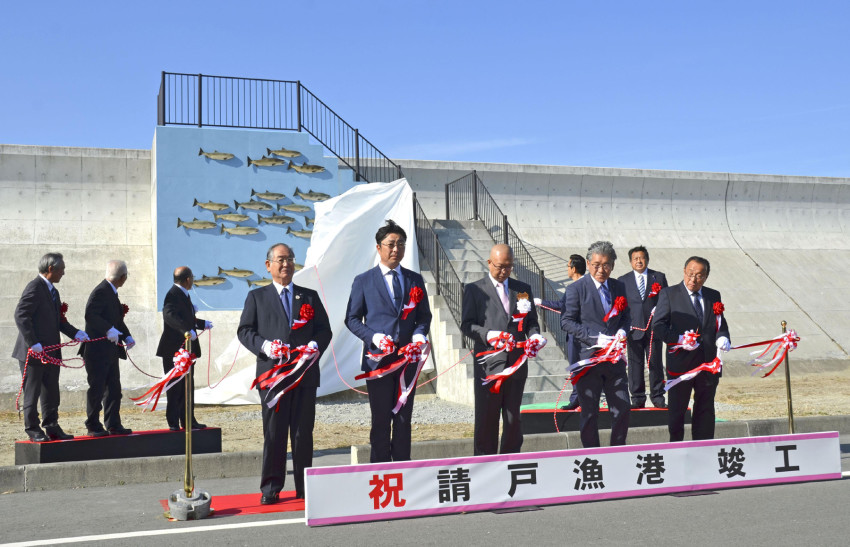
FUKUSHIMA – A ceremony was held Saturday to mark the resumption of operations at the fishing port nearest to the Fukushima Daiichi nuclear plant stricken by the 2011 quake and tsunami disaster in northeastern Japan.
With the completion of reconstruction of Ukedo Port situated around 7 kilometers north of the nuclear plant, all 10 ports in Fukushima Prefecture that suffered damage in the quake disaster have been restored.
“It is a big step forward for the town” of Namie where the port is located, Mayor Kazuhiro Yoshida said at the ceremony, which was postponed from earlier in the year due to the coronavirus pandemic.
The seawalls and quays of the port were severely damaged in the disaster, but as the area was in the no-entry zone where radiation levels remained high following the nuclear plant meltdowns no reconstruction work took place until October 2013.
Reconstruction was completed in March and the port is already in operation.
After the disaster, fishermen in Fukushima conducted trial operations off the prefecture’s coast before starting preparations earlier this year for full-fledged fishing.
Among the disaster-hit prefectures in the northeast, reconstruction of all 31 fishing ports run by Iwate Prefecture was finished in August 2019, while 18 out of 27 ports operated by Miyagi Prefecture were rebuilt by March.
While the French government promises a nuclear revival, its supreme auditing body warns of serious obstacles to this.

The Court of Auditors (Cour des comptes) is the supreme body for auditing the use of public funds in France. It is independent from the Government and Parliament. It has financial jurisdiction and is in charge of auditing, issuing rulings and certifying the State and Social Security accounts, as well as contributing to the evaluation of public policies.
Nuclear revival: the Court of Auditors highlights many obstacles https://reporterre.net/Relance-du-nucleaire-la-Cour-des-comptes-pointe-de-nombreux-obstacles 19 Nov 21,
In a report published this Thursday, November 18, the Court of Auditors questions our “ability to build a new fleet of [nuclear] reactors on time and at reasonable costs”. This, while “maintaining a 50% nuclear share in electricity production (…) beyond 2050 would require ultimately not having seven EPR or EPR2, but 25 to 30 in the assumption that the current reactors would almost all be shut down by this time, ”the text specifies. And that the composition of the new mix must be decided between 2022 and 2027, believes the institution, given the delays in the construction of new plants.
The report from the Court of Auditors
In this document entitled “The choices of electricity production: anticipating and controlling technological, technical and financial risks”, the wise men of the rue Cambon recall the slippages of cost – 19 billion euros instead of the 3 billion planned – and of deadlines – at least eleven years late – of the Flamanville EPR site. “The gaps are similar for the Olkiluoto RPE in Finland,” they said. In July 2020, the Court of Auditors detailed these troubles at length in a report dedicated to the EPR sector.
Several points of real concern are mentioned.
One is the locations of these new reactors, “as climate change can make the installation of sites along rivers more complicated”.
Management of spent fuel and waste: the construction of new reactors planned to operate until 2100 would in fact involve “either renewing the fuel reprocessing plant at La Hague (…) and creating new sites for ‘warehousing and then disposal of nuclear waste, or to propose another mode of management of spent nuclear fuel and waste which would be, in such a hypothesis, much more voluminous ”, we read in the note.
Another imperative element for the implementation of this half-nuclear mix emphasized by the Court is “the start of the Cigeo radioactive waste disposal project” – a project that is also marred by many uncertainties.
The cost, finally. “EDF will not be able to finance the construction of new nuclear reactors on its own when it has to bear the cost of extending the current fleet and of the“ post Fukushima ”safety investments, face the future costs of dismantling and the uncertain evolution regulated access to historic nuclear power since its inception in 2011, and that it is already indebted to the tune of 42 billion euros, ”warns the Court of Auditors. The project to build six new EPRs had been estimated at 46 billion euros by EDF and could be half-financed by the state, as reported by Reporterre. The cost of the investment has since been reassessed from 52-56 billion euros to 64 billion euros, according to a working document released at the end of October by the media Context.
The implementation of a 100% renewable energy mix also represents many challenges, nevertheless warns the Court of Auditors. It would thus be necessary to define modalities for storing energy (batteries, etc.) at an affordable cost and to overcome implementation difficulties linked to geography, regulations and even social acceptability.
In any case, “the holding of an informed democratic debate would encourage choices made with full knowledge of the facts and then followed up with lasting effects”, recommends the institution. This debate could take place in 2023 during the preparation of the next multiannual energy program, the roadmap for France’s energy policy.

The publication of this report comes at a time when debates rage on the definition of the electricity mix of the future. On October 25, the electricity transmission manager unveiled its six electricity scenarios for 2050: three give pride of place to the atom. Less than three weeks later, Emmanuel Macron promised the construction of new nuclear reactors in France during a televised address.
New files expose Australian govt’s betrayal of Julian Assange and detail his prison torment
The documents obtained by Tranter and provided to The Grayzone provide an unobstructed view of the Australian junior ally’s betrayal of one of its citizens to the imperial power that has hunted him for years. As Julian Assange’s rights were violated at every turn, Canberra appears to have been complicit.
New files expose Australian govt’s betrayal of Julian Assange and detail his prison torment https://thegrayzone.com/2021/11/17/files-australian-julian-assange-prison/ KIT KLARENBERG· NOVEMBER 17, 2021
Documents provided exclusively to The Grayzone detail Canberra’s abandonment of Julian Assange, an Australian citizen, and provide shocking details of his prison suffering
Was the government of Australia aware of the US Central Intelligence Agency plot to assassinate Julian Assange, an Australian citizen and journalist arrested and now imprisoned under unrelentingly bleak, harsh conditions in the UK?
Why have the country’s elected leaders refused to publicly advocate for one of its citizens, who has been held on dubious charges and subjected to torture by a foreign power, according to UN Special Rapporteur on Torture Nils Melzer? What does Canberra know about Julian’s fate and when did it know it?
The Grayzone has obtained documents revealing that the Australian government has since day one been well-aware of Julian’s cruel treatment inside London’s maximum security Belmarsh Prison, and has done little to nothing about it. It has, in fact, turned a cold shoulder to the jailed journalist despite hearing his testimony of conditions “so bad that his mind was shutting down.”
Not only has Canberra failed to effectively challenge the US and UK governments overseeing Assange’s imprisonment and prosecution; as these documents expose in stark detail, it appears to have colluded with them in the flagrant violation of an Australian citizen’s human rights, while doing its best to obscure the reality of his situation from the public.
Continue readingChinese FM asks Japan why it won’t release Fukushima water into own lakes if it’s really harmless
Nov 19, 2021
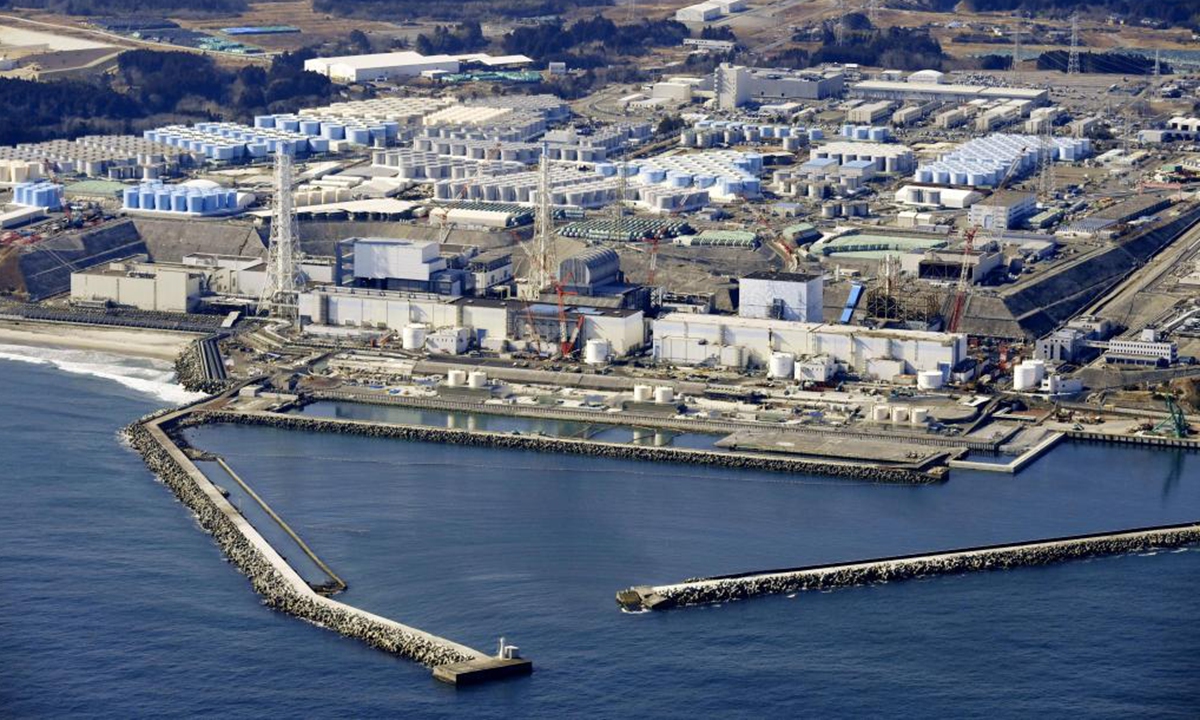
After the Nuclear Safety and Security Commission of South Korea expressed regrets over Japan’s radiological impact assessment of the release of Fukushima wastewater into the ocean, the Chinese Foreign Ministry asked Japan why it would not release the nuclear-contaminated wastewater into its own lakes if it believes the water is harmless.
“Is the discharge of contaminated water from the Fukushima nuclear plant really inevitable, or is Japan just going its own way for its selfish interests? If the nuclear-contaminated water is harmless, why wouldn’t Japan release it into its own lakes? Japan, please answer the question,” Zhao Lijian, spokesperson of the Chinese Foreign Ministry, said at Friday’s media briefing.
Zhao’s remarks came after the operator of the Fukushima nuclear power plant said Wednesday that treated radioactive water would have an extremely small impact on the environment, marine life and humans when it is released to the sea, AP reported.
Since the Japanese government unilaterally decided to release contaminated wastewater into the sea in April, public questions and opposition from Asia-Pacific countries and within Japan has not stopped, but Japan has not given a convincing explanation on the decision’s rationality, necessity, and safety, Zhao said.
He said seven months after making the decision, Japan came up with an assessment report, which further showed that the decision made back in April was not scientific or rigorous, Zhao said.
Zhao said that Japan has turned a deaf ear to the legitimate concerns and appeals of the international community over the past seven months, and what the international community has seen is that the Japanese company in charge of the disposal of contaminated water in Fukushima has repeatedly tampered with data and concealed the truth.
Zhao reiterated that the disposal of contaminated wastewater in Fukushima is by no means a private matter for Japan. We must exercise extreme caution and carry out strict supervision. Japan should earnestly respond to the voices of neighboring countries and its own people, reverse its wrong decision and fulfill its due international obligations.
Japan should not let its “black swan” of nuclear leaks turn into an overwhelming “gray rhino” of nuclear contamination, Zhao said.
TEPCO ‘claims’ Fukushima water release impact to be minimal

November 19, 2021
Tokyo, Nov 19 (EFE).- TEPCO, the operator of the Fukushima Daiichi nuclear power plant, said on Friday that the release of treated radioactive water from the plant would be carried out under international security standard and its environmental impact would be minimal.
The power company released the results of an assessment that estimated the possible impact on humans, animals and plants, along with various simulations, of the discharge spreading in the sea close the plant, where the water will be released in 2023.
“According to the assessment’s results, we believe that the impact on humans and the environment would be minimal,” a TEPCO official told EFE in an off-the-record briefing.
In April the Japanese government had approved the release of the contaminated water from the accident-hit Fukushima nuclear power plant, once it is treated through the advance liquid processing system.
TEPCO said that after being treated by ALPS, the concentration of radioactive substances in the released water would be within the security standards set by the International Atomic Energy Agency and the International Commission on Radiological Protection.
“The annual amount of tritium discharged (to the sea) will be less than 22 TBq (terabecquerel), the discharge management target for the Fukushima Daiichi Nuclear Power Station (FDNPS) before the Accident,” TEPCO said in its assessment report.
According to the study, the water diluted through the ALPS system would be discharged deep inside the sea around 1 kilometer away from the coast and it estimated that the area with “higher tritium concentrations than the current surrounding area (…) will be limited to the area 2 to 3 kms from the station.”
As per the simulations, the biggest concentration of the radioactive element would be in some areas directly above the tunnel exit, but TEPCO insisted that the even here the tritium levels would be “significantly below the national regulatory standard and the WHO Guidelines for drinking-water quality.”
At present the contaminated water remains stored in over 1,000 tanks around the power station, having been used to cool the nucleus of the damaged reactors.
The water is treated through a process that removes most of the dangerous radioactive elements except tritium, an isotope which is dangerous in high concentrations.
Scientists Warn Experimental Nuclear Plant Backed by Bill Gates Is ‘Outright Dangerous’

“fast breeder reactor” types “are proliferation nightmares.“
Continuing to support nuclear energy at the expense of faster and cheaper alternatives for cutting greenhouse gas emissions is a losing strategy.“
Scientists Warn Experimental Nuclear Plant Backed by Bill Gates Is ‘Outright Dangerous’ “Gates has continually downplayed the role of proven, safe renewable energy technology in decarbonizing our economy.” Common Dreams ANDREA GERMANOS, November 17, 2021 Officials announced Tuesday that the small city of Kemmerer, Wyoming would be the site of a new Bill Gates-backed nuclear power project—an initiative whose proponents say would provide climate-friendly and affordable energy but which some scientists warn is a dangerous diversion from true energy solutions.
The experimental Natrium nuclear power plant will be at the site of the coal-fired Naughton Power Plant, slated for retirement in 2025, though siting issues are not yet finalized. The company behind the project is TerraPower. Gates, who helped found TerraPower, is chairman of the board.
Mr. Gates,” nuclear expert Arnie Gundersen wrote in an open letter in August, Natrium “is following in the footsteps of a 70-year-long record of sodium-cooled nuclear technological failures. Your plan to recycle those failures and resurrect liquid sodium again will siphon valuable public funds and research from inexpensive and proven renewable energy alternatives.”………….
A feature of the future plant, TerraPower says, is “a molten salt-based energy storage system”—technology it claims represents “a significant advance over the light water reactor plants in use today.”
At a June press conference, Gates said Natrium was poised to “be a game-changer for the energy industry.” In a Tuesday tweet, Republican Sen. John Barrasso of Wyoming gave a similar message, saying “the Natrium reactor is the future of nuclear energy in America.”
While the company asserts the safety of Natrium’s sodium-cooled fast reactor, a report released in March by the Union of Concerned Scientists, entitled “Advanced” Isn’t Always Better, casts doubt on those claims.
UCS’s Elliott Negin highlighted the analysis in a June blog post, writing:
In fact, according to the UCS report, sodium-cooled fast reactors would likely be less uranium-efficient and would not reduce the amount of waste that requires long-term isolation. They also could experience safety problems that are not an issue for light-water reactors. Sodium coolant, for example, can burn when exposed to air or water, and the Natrium’s design could experience uncontrollable power increases that result in rapid core melting.
“When it comes to safety and security, sodium-cooled fast reactors and molten salt–fueled reactors are significantly worse than conventional light-water reactors,” says [report author Edwin] Lyman. “High-temperature gas-cooled reactors may have the potential to be safer, but that remains unproven, and problems have come up during recent fuel safety tests.”
Fast reactors have another major drawback. “Historically,” the report points out, “fast reactors have required plutonium or [highly enriched uranium]-based fuels, both of which could be readily used in nuclear weapons and therefore entail unacceptable risks of nuclear proliferation and nuclear terrorism.” Some fast reactors, including the Natrium, will initially use a lower-enriched uranium fuel, called high-assay low-enriched uranium, which poses a lower proliferation risk than highly enriched uranium, but it is more attractive to terrorists seeking nuclear weapons than the much lower-enriched fuel that current light-water reactors use.
Continue readingFinland’s nuclear power project collapsing – unprofitable and unnecessary
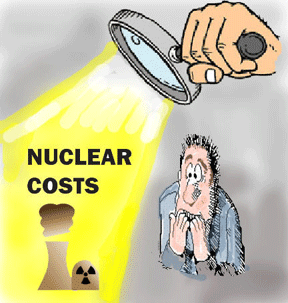
Doubts about nuclear power plant construction in Finland. The planned Hanhikivi nuclear power plant could be on the verge of collapse.
It is unclear whether there will be any need for the plant’s electricity at all.
The costs are running away, the schedule for the start of construction and commissioning has been revised and postponed several times. The planning documents are so inadequate that the project is not yet ready for approval even after a six-year approval process.
And most of the independent analyzes assume that the project can neither become profitable nor that
there is even a need for what is to be produced here. It recently revealed that there is also a huge funding gap, and now the military is raising concerns about national security.
Taz 18th Nov 2021
The growing unsolved problem of nuclear waste – becoming desperate in Sweden.

Five Swedish nuclear reactors may need to close between 2024 and 2028, simply because a temporary site for storing spent fuel will soon be full.
And the Swedish government has yet to approve a final waste repository.
The timetable is that the Forsmark 4 reactor risks closure in 2024, followed in 2025 by Forsmark 3, Ringhals 3 and 4 and finally Forsmark 1 in 2028. Ringhals is owned by a consortium comprising Vattenfall and Uniper, while Forsmark is owned by the same two companies plus Fortum and Skelleftea Kraft.
A Swedish government decision on used nuclear fuel storage must by law be made no later than September 30 this year, so as to avoid exceeding the official permit at the interim storage site at Oskarshamn.
Precisely where nuclear waste is to be stored long-term remains a dilemma which effectively faces every single government that permits nuclear power. And the more such plants are built, the more the problem grows.
Electrical Review 18th Nov 2021
Safety risks of Bill Gates’ Natrium nuclear reactor

The use of liquid sodium has many problems. It’s a very volatile material that can catch fire if it’s exposed to air or water,” Edwin Lyman, director of nuclear power safety with the Union of Concerned Scientists science advocacy nonprofit, told Fortune on Tuesday.
“Honestly I don’t understand the motivation… There are some people who are just strong advocates for it and they’ve sort of won the day here by convincing Bill Gates that this is a good technology to pursue.”
Independent 17th Nov 2021
https://www.independent.co.uk/climate-change/news/bill-gates-nuclear-reactor-wyoming-b1959777.html
1 This Month
Tell Congress: Prevent Nuclear Catastrophe in Iran

Tell Congress: Prevent Nuclear Catastrophe in Iran

Read the Public Inquiry Report, the Commissioners’ report, Surrendering Australia: The AUKUS Deception is available to download for free at aukuspublicinquiry.com. Or just watch the replay of the National Press Club Luncheon.


Shut down the radiation-damaged Heysham nuclear reactors now
To see nuclear-related stories in greater depth and intensity – go to https://nuclearinformation.wordpress.com

Say No to NASA’s Reckless Nuclear Reactor on the Moon
Say No to NASA’s Reckless Nuclear Reactor on the Moon
-
Archives
- November 2026 (238)
- October 2026 (302)
- September 2026 (339)
- August 2026 (330)
- July 2026 (355)
- June 2026 (287)
- May 2026 (306)
- April 2026 (356)
- March 2026 (251)
- February 2026 (267)
- January 2026 (308)
- December 2025 (358)
-
Categories
- 1
- 1 NUCLEAR ISSUES
- business and costs
- climate change
- culture and arts
- ENERGY
- environment
- health
- history
- indigenous issues
- Legal
- marketing of nuclear
- media
- opposition to nuclear
- PERSONAL STORIES
- politics
- politics international
- Religion and ethics
- safety
- secrets,lies and civil liberties
- spinbuster
- technology
- Uranium
- wastes
- weapons and war
- Women
- 2 WORLD
- ACTION
- AFRICA
- Atrocities
- AUSTRALIA
- Christina's notes
- Christina's themes
- culture and arts
- Events
- Fuk 2022
- Fuk 2023
- Fukushima 2017
- Fukushima 2018
- fukushima 2019
- Fukushima 2020
- Fukushima 2021
- general
- global warming
- Humour (God we need it)
- Nuclear
- RARE EARTHS
- Reference
- resources – print
- Resources -audiovicual
- Weekly Newsletter
- World
- World Nuclear
- YouTube
-
RSS
Entries RSS
Comments RSS

