Sizewell C nuclear plant will have catastrophic effects on nature, and the Minsmere nature reserve.

RSPB officials have expressed dismay at the government’s decision to back the potential Sizewell C nuclear plant with £100million of funding. The proposed twin reactor development would be built next to Sizewell B, close to the RSPB Minsmere nature reserve. The RSPB and the Suffolk Wildlife Trust have long been opposed to the development because they say it will lead to a large loss of habitat for animals and could see millions of dead fish pumped into the sea each year. EDF has always maintained that the power station would help biodiversity by helping to tackle climate change. A spokesperson for the RSPB said: “The RSPB is shocked to hear that the government will be investing £100million of tax payer’s money in Sizewell C before a decision has been made to build it. The government claim to want to be a world leader in their response to the nature crisis. That’s a great ambition, but it is utterly incompatible with throwing £100m at a development that could have catastrophic impacts on nature. East Anglian Daily Times 27th Jan 2022 https://www.eadt.co.uk/news/business/suffolk-groups-react-to-sizewell-c-100m-8649412 |
France’s far-right Marine Le Pen has pro nuclear, anti-renewables policy for the coming election.
Le Pen’s climate programme: pro-nuclear and pro-hydrogen, but anti-wind
By Nelly Moussu | EURACTIV France | translated by Daniel Eck, 27 Jan 22,
Three months before the French presidential election, far-right candidate Marine Le Pen’s Rassemblement National presented its ‘economically viable’ climate policy project, which aims to be pro-nuclear and pro-hydrogen, but anti-wind. EURACTIV France reports.
Le Pen’s spokesperson, MEP Nicolas Bay, presented Le Pen’s climate and energy programme on Tuesday (25 January), insisting on the idea of “a model that is authentically ecological but economically viable”………….
Building six EPR reactors
On nuclear power, Le Pen plans to build six new European Pressurised Reactors (EPRs) and increase the life span of existing plants. EPR is a third-generation pressurised water reactor design…………. https://www.euractiv.com/section/energy/news/le-pens-climate-programme-pro-nuclear-and-pro-hydrogen-but-anti-wind/
Sizewell C nuclear project- subsidised construction, subsidised power generation, subsidised waste management, subsidised company.

Commenting on the Business and Energy Secretary announcing £100 million
to support the continued development of the Sizewell C nuclear plant,
Greenpeace UK’s policy director Dr Doug Parr said: “This cash injection
is a tacit admission by the government that nuclear is not commercially
viable, but they are so fixated on getting 20th-century nuclear technology
delivered they’ll just keep throwing taxpayers’ money at it. Including all
the other subsidy sources,
Sizewell C will now have subsidised development,
subsidised construction, subsidised power production and subsidised waste
management, for a project by a subsidised company. The economics of this
project are all over the place, with UK taxpayers left to pick up the tab.
Instead of pursuing outdated, costly technologies, it’s time the
government got a grip on the clean technology race going on globally and
went for 100% renewables power as fast as possible.”
Greenpeace 27th Jan 2022 https://www.greenpeace.org.uk/press-centre/
Newsweek: Biden Baltic buildup could put Europe on brink of war, lead to global catastrophe — Anti-bellum

Except from a Newsweek feature of January 27 follows commentary and links. ==== Several years before events in Ukraine could be employed as the pretext for what is now unfolding: From 2009: Baltic Sea: Flash Point For NATO-Russia Conflict There is a…spot on the map…where most any spark could ignite a powder keg that would […]
Newsweek: Biden Baltic buildup could put Europe on brink of war, lead to global catastrophe — Anti-bellum
NATO conducting nuclear air sorties near Belarusian, Russian borders: Security Council chief — Anti-bellum

NATO practices nuclear missile sorties near Union State borders – Belarus’ security chief The NATO Air Force is practicing sorties with cruise missiles, including with nuclear warheads, near the borders of the Russia-Belarus Union State, State Secretary of the Belarusian Security Council Alexander Volfovich said on Friday. “The head of state drew attention to intensified […]
NATO conducting nuclear air sorties near Belarusian, Russian borders: Security Council chief — Anti-bellum
“I couldn’t tell anyone for ten years” – Six teenagers who developed thyroid cancer after the nuclear accident file lawsuit against TEPCO
“””We’re scared to be discriminated against when we say we’ve got thyroid cancer, we’ve spent the last 10 years without telling anyone.”””
“But there are approximately 300 children suffering from thyroid cancer.”
“I want to change the situation for the better by raising my voice.”
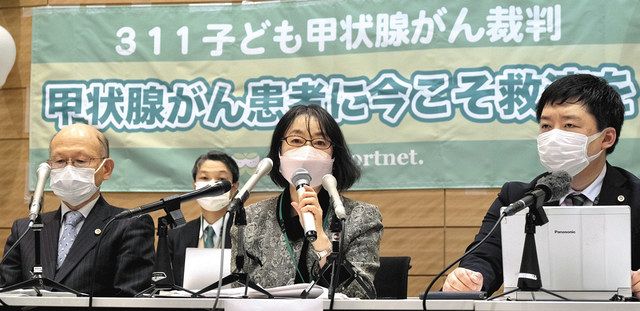
Six men and women between the ages of 17 and 27 who were living in Fukushima Prefecture at the time of the accident filed a lawsuit against TEPCO on April 27, claiming that they had thyroid cancer due to radiation exposure caused by the accident at TEPCO’s Fukushima Daiichi Nuclear Power Plant. On the 27th, six men and women between the ages of 17 and 27, who were living in Fukushima Prefecture at the time of the accident, filed a lawsuit with the Tokyo District Court demanding a total of 616 million yen in damages including compensation from TEPCO. The biggest point of contention in the lawsuit is expected to be whether or not there is a causal relationship between radiation exposure and thyroid cancer.
January 27, 2022
The six, who were between the ages of 6 and 16 at the time of the accident, are high school students, part-time workers, and office workers living in Fukushima Prefecture, Tokyo, and Kanagawa Prefecture. They were diagnosed with thyroid cancer in their teens, two had one side of their thyroid gland removed, four had it completely removed due to recurrence, and one had it spread to their lungs. They have had to quit college or work due to the surgery and treatment, and are also worried about the recurrence of the disease as their daily lives are restricted.
The complaint points out that most of the thyroid cancers found in children in Fukushima Prefecture, including the six children, are not hereditary and that no cause other than radiation exposure is possible. It argues that if there are other causes, TEPCO needs to prove them.
Normally, the number of cases of thyroid cancer in children that are diagnosed and reported is about one to two per one million people per year. After the nuclear accident, about 300 people were diagnosed with thyroid cancer or suspected of having thyroid cancer in Fukushima Prefecture through prefectural health surveys and other means, but the prefectural expert panel has stated that a causal relationship with radiation exposure is “not recognized at this time.

I want to change the situation by raising my voice.
On the afternoon of April 27, the plaintiff, 26, held a press conference in Tokyo after filing her lawsuit. In a press conference held in Tokyo after the lawsuit was filed, the plaintiff, 26, choked back tears as she made her appeal. There are still about 300 children suffering from thyroid cancer. I want to change the situation for the better by raising my voice, even if only a little.
A woman from Nakadori in central Fukushima Prefecture was diagnosed with thyroid cancer in 2015, when she was a 19-year-old sophomore in college. After an operation to remove one side of her thyroid gland the following year, her physical strength dropped drastically. Her physical condition continued to deteriorate, and she left the advertising agency where she had worked after graduating from university in Tokyo after a year and a half. She is now working as an office worker in Tokyo. She said, “I had to give up my dream job, and it’s still hard for me to work properly. I no longer have any dreams or hopes for the future.
Immediately after being informed of her cancer, she felt uncomfortable when the doctor told her that it had nothing to do with the nuclear accident.
She was moving outside that day…
When her mother heard this with her, March 14, 2011, the day of the hydrogen explosion at the Unit 3 reactor of the Fukushima Daiichi Nuclear Power Plant, came to her mind. She was outside helping her grandparents move their belongings out of their house, which was half destroyed by the disaster. When I heard about the explosion in the evening, I immediately brought the woman inside. I wish I hadn’t let her help me move at that time,” she said. I wish I hadn’t let her help me move. This was the only time she showed any regret.
The woman traveled back and forth between Fukushima and Tokyo many times for the tests before she was notified. The prefectural government provides full support for insured medical expenses, but does not include transportation costs. I took a long-distance bus, which is cheaper than the bullet train, but it became physically demanding.
Surgeries and examinations in Tokyo, a heavy burden
Because of her distrust of hospitals in Fukushima, she underwent surgeries and tests in Tokyo after she was notified. Her parents traveled to Tokyo each time, and the endoscopic surgery she underwent to reduce the scar on her neck as much as possible was not covered by the prefectural government at the time, so she had to pay for it herself.
As the treatment continued, the woman forgot to apply for a non-repayable scholarship from the university, and from her third year, she had to pay the full tuition. She said, “When I heard my parents asking for advice on reconfiguring their insurance, I felt depressed that I had caused them so much trouble.
Fear of recurrence: “I’m worried about what will happen next.
After the surgery, she caught colds frequently and developed pneumonia, bronchitis, and asthma. However, unless it is recognized as treatment for thyroid cancer, he is not eligible for support. The prefectural government’s support for medical expenses is budgeted every year with the government’s subsidies as the source, and “will continue for as long as possible,” according to the prefectural government’s Civil Health Survey Division, but there is no telling how long it will last. However, there is no way to know how long the support will last. The woman said, “I am always afraid of a recurrence, and I am very anxious about what will happen to me in the future. (Natsuko Katayama)
Can reactor fuel debris be safely removed from Fukushima Daiichi?
January 25, 2022
Source: University of Helsinki
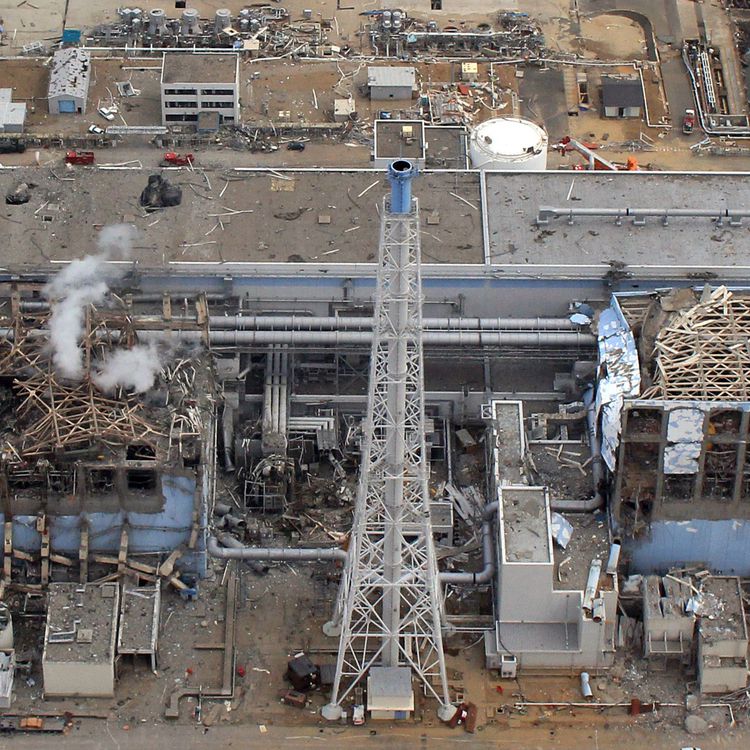
Decommissioning and clean-up are ongoing at the Fukushima Daiichi Nuclear Power Plant (FDNPP); however, many difficult problems remain unaddressed. Chief amongst these problems is the retrieval and management of fuel debris.
Decommissioning and clean-up are ongoing at the Fukushima Daiichi Nuclear Power Plant (FDNPP); however, many difficult problems remain unaddressed. Chief amongst these problems is the retrieval and management of fuel debris. Fuel debris is the name given to the solidified mixture of melted nuclear fuel and other materials that now lie at the base of each of the damaged reactors (reactor Units 1 — 3). This material is highly radioactive and it has potential to generate enough neutrons to trigger successive nuclear fission reactions (uranium-235 breaks into two elements after capturing neutrons, emitting enormous amounts of energy, radiation, and more neutrons). Successive fission reactions would present a serious safety and material management risk.
One of the materials in nuclear reactors that can lower the number of neutrons interacting with uranium-235 is boron carbide (B4C). This was used as the control rod material in the FDNPP reactors, and it may now remain within the fuel debris. If so, it may limit fission events within the fuel debris.
Can the fuel debris be safely removed?
On March 11th 2011, the control rods were inserted into the FDNPP reactors to stop the fission reactions immediately after the earthquake, but the later tsunami destroyed the reactor cooling systems. Fuel temperatures soon became high enough (>2000 °C) to cause reactor meltdowns. Currently, the fuel debris material from each reactor is cooled and stable; however, careful assessment of these materials, including not only their inventories of radioactive elements but as well their boron content, a neutron absorber, is needed to ascertain if successive fission reactions and associated neutron flux could occur in the fuel debris during its removal. Many important questions remain: was boron from the control rods lost at high temperature during the meltdown? If so, does enough boron remain in the fuel debris to limit successive fission reactions within this material? These questions must be answered to support safe decommissioning.
Study shows direct evidence of volatilization of control rods during the accident.
Despite the importance of this topic, the state and stability of the FDNPP control rod material has remained unknown until now. However, work just published in the Journal of Hazardous Materials now provides vital evidence that indicates that most of the control rod boron remains in at least two of the damaged FDNPP reactors (Units 2 and/or 3).
The study was an international effort involving scientists from Japan, Finland, France, and the USA. Dr. Satoshi Utsunomiya and graduate student Kazuki Fueda of Kyushu University led the study. Using electron microscopy and secondary ion mass spectrometry (SIMS), the team has been able to report the first-ever measurements of boron and lithium chemistry from radioactive Cs-rich microparticles (CsMPs). CsMPs formed inside FDNPP reactor units 2 and/or 3 during the meltdowns. These microscopic particles were then emitted into the environment, and the particles hold vital clues about the extent and types of meltdown processes. The team’s new results on boron-11/boron-10 isotopic ratios (~4.2) clearly indicate that most of the boron inside the CsMPs is derived from the FDNPP control rods and not from other sources (e.g., boron from the seawater that was used to cool the reactors). Dr Utsunomiya states that the presence of boron in the CsMPs “provides direct evidence of volatilization of the control rods, indicating that they were severely damaged during the meltdowns.”
Ample boron likely remains in the reactors, but more research is needed
In the study the team also combined their new data with past knowledge on CsMP emissions. From this, they have been able to estimate the total amount of boron released from the FDNPP reactors was likely very small: 0.024-62 g.
Prof. Gareth Law, a co-author from the University of Helsinki emphasized that this “is a tiny fraction of the reactor’s overall boron inventory, and this may mean that essentially all of the control rod boron remains inside the reactors.” The team hopes that this should prevent excessive fission reactions in the fuel debris. Utsunomiya stresses that “FDNPP decommissioning, and specifically fuel debris removal must be planned so that the extensive fission reactions do not occur. Our international team has successfully provided the first direct evidence of volatilization of B4C during the FDNPP meltdowns, but critically, our new data indicated that large quantities of boron, which adsorbs neutrons, likely remains within the fuel debris.”
Prof. Rod Ewing, a co-author from Stanford University acknowledged the importance of these new findings but highlighted that the team’s measurements now need to be “extended in follow-up studies, where the occurrence and distribution of boron species should be characterized across a wide range of debris fragments.”
Prof. emeritus Bernd Grambow, a study co-author from SUBATECH, Nantes, France,highlights that the work “paves the way for improving the safety assessment of debris retrieval during decommissioning at FDNPP,” with the team’s methods “providing a template for further studies.” Utsunomiya concludes that “it is nearly 11 years since the FDNPP disaster. In addition to tireless efforts from engineers at the FDNPP, scientific contributions are becoming more and more important as tools to address the major difficulties that will be faced during decommissioning.”
Journal Reference:
- Kazuki Fueda, Ryu Takami, Kenta Minomo, Kazuya Morooka, Kenji Horie, Mami Takehara, Shinya Yamasaki, Takumi Saito, Hiroyuki Shiotsu, Toshihiko Ohnuki, Gareth T.W. Law, Bernd Grambow, Rodney C. Ewing, Satoshi Utsunomiya. Volatilization of B4C control rods in Fukushima Daiichi nuclear reactors during meltdown: B–Li isotopic signatures in cesium-rich microparticles. Journal of Hazardous Materials, 2022; 428: 128214 DOI: 10.1016/j.jhazmat.2022.128214
University of Helsinki. “Can reactor fuel debris be safely removed from Fukushima Daiichi?.” ScienceDaily. ScienceDaily, 25 January 2022. www.sciencedaily.com/releases/2022/01/220125093041.htm.
Full scale war in Ukraine? With its 15 nuclear reactors – no more Ukraine, no more Europe

Ukraine diplomat sees little chance of war ‘in country with 15 nuclear reactors’ https://www.euractiv.com/section/global-europe/news/ukraine-diplomat-sees-little-chance-of-war-in-country-with-15-nuclear-reactors/
EURACTIV.com with Reuters, 26 Jan 22, Ukraine is committed to seeking a diplomatic solution to the current tension with Russia, its ambassador to Japan, Sergiy Korsunsky, said on Wednesday (26 January), adding that he saw little chance of all-out war, although there might be smaller conflicts.
nuclear reactors would bring about a devastating regional impact on Europe.
“I believe that full-scale war is very, very, very difficult to expect, but we may see more localised conflict,” Korsunsky told a news conference in the Japanese capital Tokyo.
If war is going to happen, that will be the first ever in the history of mankind, war against a country which has on its territory 15 nuclear reactors, which has 30,000 km of gas and oil pipelines, full with gas and oil,” said Korsunsky.
“If all these infrastructure is destroyed, there is no more Ukraine. But this is just one consequence. There is no more central Europe and probably western Europe would be affected, too.”
An accident at the Chernobyl reactor, located in what is now Ukraine, spewed tonnes of nuclear waste into the atmosphere in 1986, spreading radioactivity across swathes of the continent and causing a spike in cancers in the more immediate region.
Russia’s Ambassador to Australia, Alexey Pavlovsky, said on Wednesday that Russia did not plan to invade Ukraine.
We don’t intend to invade at all,” Pavlovsky told Australian Broadcasting Corporation radio.
“Our troops on the border…These troops are not a threat, they are a warning. A warning to Ukraine’s rulers not to attempt any reckless military adventure,” he said.
As to the sanctions, I think that by now everybody should understand that it is not the language which should be used when talking to Russia. The sanctions just don’t work.”
UK High Court gives very little chance for Julian Assange

UK: HIGH COURT DECISION WELCOME IN ASSANGE CASE BUT CONCERNS REMAIN OVER LIMITATIONS ON APPEAL , Amnesty UK 26 Jan 22, Following today’s High Court decision to certify one issue in the Assange appeal as of ‘general public importance’, Massimo Moratti, Amnesty International’s Deputy Research Director for Europe, said:
“While we welcome the High Court’s decision to certify one narrow issue related to the US’s assurances as being of ‘general public importance’, and so to allow the Supreme Court to consider granting an appeal on this issue, we are concerned the High Court has dodged its responsibility to ensure that matters of public importance are fully examined by the judiciary. The courts must ensure that people are not at risk of torture or other ill-treatment. This was at the heart of the two other issues the High Court has now effectively vetoed.
“Torture and other ill-treatment, including prolonged solitary confinement, are key features of life for many people in US federal prisons, including those imprisoned on charges similar to Assange’s.
“The ban on torture and other ill-treatment is absolute and cannot be upheld by simple promises from a state that it won’t abuse people.
“The Supreme Court should have had the opportunity to deliberate and rule on all of the points of law raised by Assange at this crucially important point but the High Court has limited its scope to do so. If the question of torture and other ill-treatment is not of general public importance, what is?”
“We now hope that the Supreme Court will grant leave to appeal on the certified issue concerning at what stage in extradition proceedings should such assurances be submitted and considered.”
US and British governments are effectively using “lawfare” to ensure Assange’s continued detention
Although the threat of imminent extradition has been stayed, Assange stands on thin ice. What began as a case on the most fundamental rights of journalists to expose war crimes and torturehas been whittled away by the British judiciary to the single question of how “assurances” of Assange’s safety should be given by one criminal state to another.
Whatever the outcome, the US and British governments are effectively using “lawfare” to ensure Assange’s continued detention, even though he has been convicted of no crime.
Assange granted leave to appeal to UK Supreme Court against extradition, https://www.wsws.org/en/articles/2022/01/24/assa-j24.html?pk_campaign=assange-newsletter&pk_kwd=wsws Oscar Grenfell, Thomas Scripps, 24January 2022
The UK High Court has provided WikiLeaks founder Julian Assange a route to appeal to the Supreme Court in his extradition case against the United States government.
Assange is seeking to overturn the High Court’s direction last December that he be extradited, against the earlier ruling of the lower Magistrates’ Court that to do so would be “oppressive” on health grounds.
The High Court upheld a US appeal against the Magistrates’ Court ruling despite accepting evidence of Assange’s intense physical and psychological ill-health. It also did not contest the likelihood that the conditions he would be subjected to in the US, as discussed throughout the entire preceding court process, would likely result in his death by suicide.
The December ruling was overwhelmingly based upon supposed US assurances, issued months after deadlines had elapsed, that Assange’s conditions in an American prison would not be as bad as previously accepted.
With numerous caveats and loopholes, the US assurances asserted that Assange would not be held under Special Administrative Measures (SAMs), a regime of total isolation, to which those convicted of terrorism offenses, along with drug lords and major serial killers, are sometimes subjected in federal prison.
The High Court found that the Magistrates Court should have solicited such assurances prior to its ruling.
In response to Assange’s request for leave to appeal this decision yesterday, the judges certified a single point of law of public importance, the requirement for an issue to be heard in the Supreme Court. This was: “In what circumstances can an appellate court receive assurances from a requesting state which were not before the court of first instance in extradition proceedings [in this case, the magistrates’ court].”
Assange’s lawyers had argued that “profound issues of natural justice arise where assurances are introduced by the Requesting State for the first time at the High Court stage… These issues have never been addressed by the Supreme Court.”
As his solicitors elaborated in an explanatory note, “There has long been a general approach by the courts that requires that all relevant matters are raised before the District Judge appointed to consider the case in the Magistrates’ Court,” but this has been undermined by the treating of assurances as “issues” rather than “evidence”, allowing them to be introduced at a later stage in proceedings.
“The defence argument is that despite being as demanding of close evidential scrutiny as the evidence already heard, and despite the content of the assurances being applicable to the testimony of witnesses already heard but not to be heard again, assurances have been afforded a different procedural position.”
The assurances in question, accepted in “good faith” by the High Court, are given by a state with a decades-long history of lies and dirty tricks whose record in the Assange case was exposed a month before the High Court ruling as including plans to kidnap and assassinate the heroic journalist.
Based on the statements of 30 former US officials, Yahoo! News revealed that the Trump administration and the Central Intelligence Agency (CIA) had discussed kidnapping or assassinating Assange when he was a political refugee in Ecuador’s London embassy in 2017. The US indictment was first conceived of as a pseudo-legal cover for a possible CIA rendition.
The character of that indictment, as a concoction from spies and criminals, had been proven in June 2021. Sigurdur “Siggi” Thordarson, whose testimony still forms a crucial part of the indictment, admitted that all his substantive allegations against Assange were lies proffered in exchange for immunity from US prosecution. The star US witness is reportedly facing prosecution in Iceland on fraud charges, having been convicted of child molestation and embezzlement offenses prior to his latest collaboration with the American government.
Although the threat of imminent extradition has been stayed, Assange stands on thin ice. What began as a case on the most fundamental rights of journalists to expose war crimes and torturehas been whittled away by the British judiciary to the single question of how “assurances” of Assange’s safety should be given by one criminal state to another.
The Magistrates’ Court upheld the sweeping US attacks on democratic rights contained in the attempt by a state to prosecute a journalist for publishing true information about its unlawful activities. This forced Assange to defend the US appeal on the grounds of the threat to his mental health posed by extradition and imprisonment in the US. The High Court’s acceptance of the US appeal means Assange’s defence is now limited to the question of when assurances should have been provided.
In keeping with the UK’s courts’ trashing of democratic rights throughout this case, the High Court rejected out of hand the point of appeal that the assurances are worthless because the US asserts the right to withdraw them if Assange violates, or is alleged to have violated, certain conditions.
Assange’s lawyers argued “oppressive treatment” is barred, “whether or not the requesting state justifies its imposition by reference to conduct.”The High Court replied that it did not consider these arguments to “raise certifiable points” for the Supreme Court’s consideration.
It is now technically down to the Supreme Court to agree to hear Assange’s case; it would be highly unusual, though not impossible, for it to refuse to consider an issue certified by the High Court.
If Assange’s appeal is unsuccessful and his case is sent to Home Secretary Priti Patel to rubber-stamp his extradition, then his lawyers can seek to cross appeal the Magistrates’ Court’s original decision on the substantive issues of the case—press freedom, the espionage act and the bar on extradition for political offences. But leave to do so is not assured and would mean years more incarceration as the new appeal works its way through the courts.
Whatever the outcome, the US and British governments are effectively using “lawfare” to ensure Assange’s continued detention, even though he has been convicted of no crime.
He remains in the maximum-security Belmarsh Prison, dubbed the UK’s Guantanamo Bay. With the British government allowing the mass spread of Omicron, in the latest stage of its homicidal “herd immunity” policy, the prison has reportedly been hit by COVID outbreaks. Assange, because of his fragile health, is at intense risk of succumbing to the virus. The repeated prison lockdowns intensify his isolation.
Nuclear not competitive’ and too late for energy transition: Enel Green Power CEO.
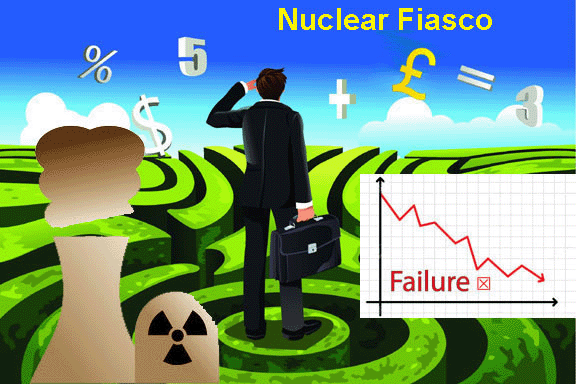
Nuclear not competitive’ and too late for energy transition: Enel Green Power CEO, Italian renewables giant ‘obviously’ won’t invest in nuclear due to long construction times and high costs, Salvatore Bernabei says https://www.rechargenews.com/energy-transition/nuclear-not-competitive-and-too-late-for-energy-transition-enel-green-power-ceo/2-1-1155407 By Bernd Radowitz 26 Jan 22,
Enel Green Power has no intention to invest in nuclear power despite the European Commission’s plan to label the technology as sustainable, the Italian renewables supermajor’s chief executive Salvatore Bernabei said.
Construction times of conventional nuclear power plants are far too long in relation to the need to get the energy transition done within the next 20 to 30 years, the CEO explained.
“If you think about the current technology and the current timing of development and construction of nuclear plants, it is much bigger than 10 years (from the moment) you take the initial investment decision,” Bernabei said at a press briefing.
You have the permitting, then you have the construction,” he said, adding that all projects currently being built have exceeded their planned construction time, and their completion takes “two to three times more than initially expected.”
“They are (also) out of budget. So, saying that nuclear could help in the transition with the current technology – I leave you to (make) the conclusion.”
His comments came after the EU Commission had proposed to include nuclear power and fossil gas under certain circumstances in its taxonomy that labels energy projects as sustainable and thus facilitates financing. The taxonomy proposal enjoys the backing by France, Finland and several Eastern European EU states that want to build or expand atomic power, but the inclusion of nuclear has been strongly opposed by Germany, Austria, Spain and Luxembourg.
Despite its stated wish to build new nuclear reactors and revamp existing ones to extend their operational life, France has suffered severe setbacks during the construction of the Flamanville 3 reactor, one of the few nuclear plants being built in Europe. The country this winter also had to switch off a series of atomic power stations, forcing it to import large volumes of electricity from neighbouring countries.
French state-owned utility EDF earlier this month has said the plant of the novel European Pressurised Reactor (EPR) type at Flamanville will cost another €300m more than forecast and fuel loading is being pushed back by up to six month, the Reuters news agency had reported. The 1.65GW reactor according to French media will then have cost French taxpayers a record €19.1bn ($21.5bn) instead of the €3.4bn originally budgeted, and have taken 15 years to build, ten years longer than originally planned.
Similar construction time and cost overruns have been experienced in Finland, where operator Teollisuuden Voima (TVO) has recently started to commission the Olkiluoto 3 reactor, also an EPR reactor.
Germany’s government last weekend issued a statement rejecting the inclusion of nuclear power into the EU’s taxonomy.
“It is risky and expensive. New reactor concepts such as mini-reactors also entail similar problems and cannot be classified as sustainable,” economics and climate minister Robert Habeck and environment minister Steffi Lemke said in a joint reaction.
It is clear to everyone that the levelised cost of electricity (LCOE) of nuclear is much bigger than €100 per megawatt hour, Bernabei agreed.
Small nuclear reactors (SMRs), which by some investors such as Bill Gates are touted to be a quick solution helping the energy transition, and supposedly are safer, may not be such a quick fix either, the EGP CEO pointed out.
“Then you talk of the next generation (of nuclear power). But in the next generation, you have this word ‘next’, (which) has to be defined yet. We are speaking about something that could be ready in 2040 – perhaps,” Bernabei said.
The first SMR reactor is slated to be built in China by 2026, “and they are the first mover,” the CEO added.
“So, whatever the taxonomy would say, the question will be ‘is there anyone available to invest in a technology that would need more than 10 years to become a reality? And perhaps when it becomes reality, the market has completely changed its dynamic with a cost that today is not competitive.”
“As Enel we don’t intend to invest in nuclear obviously.”
Italy after a referendum following the Chernobyl nuclear disaster had switched off nuclear power in the by 1990, but the far right Lega party of Matteo Salvini lobbies for it renaissance.
Former nuclear regulators say that nuclear power is not a feasible option for tackling the climate crisis.
Nuclear energy not feasible way to tackle climate crisis, former regulators say https://www.independent.co.uk/climate-change/news/nuclear-energy-climate-crisis-experts-b2001076.html
It would be unlikely to make relevant contribution quickly enough, experts say, Zoe Tidman, 26 Jan 22, Nuclear energy is not part of any feasible strategy that could be used to tackle climate change, former top officials from national regulators have said
The experts said it was too costly, risky and unlikely to have a significant impact quickly enough.
The comments were made in a joint statement by Dr Gregory Jaczko, Professor Wolfgang Renneberg, Dr Bernard Laponche and Dr Paul Dorfman, who have been involved in government nuclear regulation and radiation protection levels in the US, Germany, France and the UK respectively.
The former top officials said they felt a “collective responsibility” to comment on whether nuclear energy could play a significant role in trying to tackle the climate crisis.
Lawsuit looks to force nuclear regulator to turn over records from San Onofre ‘near-miss’ incident
Lawsuit looks to force nuclear regulator to turn over records from San Onofre ‘near-miss’ incident, August 2018 “near-miss” saw a 50-ton canister of nuclear waste left suspended for 45 minutes. San Diego Union TribuneBY ROB NIKOLEWSKIJAN. 24, 2022 A lawsuit filed in U.S. District Court seeks to force the Nuclear Regulatory Commission to hand over unredacted documents regarding an incident in August 2018 when a 50-ton canister filled with nuclear waste from the San Onofre Nuclear Generating Station was left suspended for about 45 minutes.
“The information sought will show the extent to which the NRC has colluded with the utilities it is supposed to regulate so as to prevent the disclosure of on-going safety violations and whether the NRC failed to take the necessary steps to enforce safety regulations at the nuclear site,” said the complaint filed by San Diego attorney Michael Aguirre.
An NRC spokesman said the agency does not comment on pending legalmatters.
At issue are 13 pages of records concerning what happened on Aug. 3, 2018, at the San Onofre Nuclear Generating Station, known as SONGS for short, operated by Southern California Edison……………………………..ore https://www.sandiegouniontribune.com/business/story/2022-01-24/lawsuit-looks-to-force-nuclear-regulator-to-turn-over-redactions-from-san-onofre-incident#:~:text=A%20lawsuit%20filed%20in%20U.S
Explanation of near-miss at San Onofre Nuclear Generating Station (SONGS).

NEAR-MISS AT NUCLEAR SITE AT SAN ONOFRE EXPLAINED https://www.surfer.com/environmental-news/nuclear-san-onofre-near-miss-explained/
SONGS ALMOST SUFFERED A SERIOUS ACCIDENT IN AUGUST, NEW DETAILS EMERGE, NOVEMBER 9, 2018 BY JUSTIN HOUSMAN Back in August, workers at the San Onofre Nuclear Generating Station (SONGS), were lowering a 50-ton spent nuclear fuel canister into a holding tank at the controversial nuclear storage site, not far from Old Man’s. While the workers thought they’d lowered it all the way, the massive canister containing deadly amounts of nuclear waste, was resting–barely–on a metal ring at the top of the tank, never intended to support the weight of the canister.
Canada’s state broadcaster CBC peddles lies and slanders about jailed journalist Julian Assange

Canada’s state broadcaster CBC peddles lies and slanders about jailed journalist Julian Assange, WSW, J.D. Palmer, 24 January 2022 J.D. Palmer, a freelance journalist and fiction writer from Montreal. Palmer recently submitted a formal complaint to Canada’s state broadcaster, CBC, over its coverage of last month’s UK court ruling against the acclaimed journalist Julian Assange,
Following the calamitous ruling on December 10, 2021 by a British court to extradite Julian Assange to face espionage charges in the US, the Canadian Broadcasting Corporation (CBC) aired two reports, densely packed with hideous deceptions that lend support to Washington’s efforts to persecute and silence the award-winning journalist.
I filed a complaint with the CBC Ombudsman on December 18, wondering how Canada’s public broadcaster could possibly justify its malevolent reportage.
Having laid bare the US empire as a never-ceasing conveyor belt of war crimes, Assange exposed Washington’s lies of “nation building” in Afghanistan and Iraq as a vast “money laundering” operation.
And yet, as his legal case progressed, it was clear that the Wikileaks founder’s heroism was resulting in his slow murder via multi-state judicial corruption. In response to this remarkable case, in one of many examples of journalistic malfeasance, Chris Brown, in his report for the CBC’s flagship news program “The National,” falsely asserts that Assange “leaked” the cables that contained the infamous Collateral Murder video. Brown, a long-time CBC correspondent, can presumably distinguish between publishing and leaking. Determined to confuse the viewer, Brown fails to mention the role of whistleblower Chelsea Manning (Assange’s source) and through conflation taints the journalistic credentials of the man who exposed torture at Guantanamo.
Brown knows quite well that publishing leaks is the backbone of national security journalism with the quotidian apparatus of “legacy” newspapers like the New York Times, providing potential whistleblowers with technical instructions on their websites for evading detection. That’s why, as CBC fails to inform the viewer, the Obama administration chose not to prosecute Assange (a decision later reversed by Trump’s Department of Justice or DOJ). Due to what it deemed the “ New York Times problem,” such a precedent, Obama’s DOJ concluded, could be used against fellow elites.
Now in the hands of Biden’s DOJ, this clear case of selective prosecution by the US and its colluding vassal state, the UK, has been denounced by legal experts, a swath of trade unions and activists. And while one can reliably count on Canada’s public broadcaster to ignore grassroots campaigns, what’s remarkable is that the CBC’s reporting on this historic case sinks below even the corporate media’s degraded standards.
Both CBC reports dodged press freedom groups, humanitarian organizations, politicians and the sorts of celebrity activists that would normally be made the unabashed focal point of any press coverage of a humanitarian cause. Brown’s segment, as well as Tessa Arcilla’s segment for the CBC morning news, made reference only to Assange’s partner, Stella Moris, and “supporters,” aiming to paint protestors as merely fringe and familial.
When I contacted Moris about my intention to file a complaint with the CBC’s Ombudsman, she wondered why CBC had not, at the very least, “… provided equal length to the defence arguments or arguments from press freedom groups and Amnesty [International]?”
By December 10, Nils Melzer, the United Nations Special Rapporteur on Torture, was just one of many impartial legal and humanitarian experts seeking the attention of any media organization that would listen. Melzer, along with a medical team, had adjudicated Assange as a victim of torture, after finding him in a degraded and frail state in Belmarsh Prison, “Britain’s Guantanamo Bay.”
While other networks provided at least some time for humanitarian lawyers, such as Reporters Without Borders’ Rebecca Vincent, to refute the US’s case, no legitimate expert found their way onto the screens of CBC’s viewers. Instead, viewers were presented with camouflaged shills………………….
While CBC’s upper management vociferously decries “misinformation” in self-congratulatory, tone-deaf blogs, presenting itself as brave gate-keepers “battling the growing scourge of disinformation,” their history of covering the Assange case provides a window into just how depraved its journalistic culture has become.
Blighting what an international panel of jurists at the UN adjudicated as Assange’s “arbitrary detention” in the Ecuadorian embassy, CBC Radio, from 2018 to 2019, aired a series of smear pieces in the guise of lifestyle segments, comedy and news. Often aimed at the Wikileaks founder’s alleged hygiene failures, these dehumanizing broadcasts trotted out sketch comedians, UK diplomats and other Assange enemies (such as discredited filmmaker Alex Gibney, and co-fabricator of the debunked Manafort-Assange conspiracy theory, Dan Collyns) as neutral experts. In one sickening case, CBC (in a painfully long segment) offered up a “master butler” to smugly chasten Assange, “If that’s the type of service you want, you need to go to a hotel.”
None of CBC’s hacks seemed to care that they might be willing pawns in a disinformation campaign launched by vicious technocrats, something proven years later when senior members of the UK government were revealed to have conspired to violate Assange’s asylum rights…………..
Absent any whiff of a moral ballast, the CBC fails to grasp the irony of imprisoning a journalist for publishing evidence of war crimes and not the criminals who committed them. As the US led global shop of horrors comes nearer to its goal of criminalizing substantive journalism, the CBC and its gutless class of information dilettantes can rest safely knowing they pose no threat. https://www.wsws.org/en/articles/2022/01/25/cbca-j25.html?pk_campaign=assange-newsletter&pk_kwd=wsws
1 This Month
Tell Congress: Prevent Nuclear Catastrophe in Iran

Tell Congress: Prevent Nuclear Catastrophe in Iran

Read the Public Inquiry Report, the Commissioners’ report, Surrendering Australia: The AUKUS Deception is available to download for free at aukuspublicinquiry.com. Or just watch the replay of the National Press Club Luncheon.


Shut down the radiation-damaged Heysham nuclear reactors now
To see nuclear-related stories in greater depth and intensity – go to https://nuclearinformation.wordpress.com

Say No to NASA’s Reckless Nuclear Reactor on the Moon
Say No to NASA’s Reckless Nuclear Reactor on the Moon
-
Archives
- November 2026 (238)
- October 2026 (302)
- September 2026 (339)
- August 2026 (330)
- July 2026 (355)
- June 2026 (287)
- May 2026 (306)
- April 2026 (356)
- March 2026 (251)
- February 2026 (267)
- January 2026 (308)
- December 2025 (358)
-
Categories
- 1
- 1 NUCLEAR ISSUES
- business and costs
- climate change
- culture and arts
- ENERGY
- environment
- health
- history
- indigenous issues
- Legal
- marketing of nuclear
- media
- opposition to nuclear
- PERSONAL STORIES
- politics
- politics international
- Religion and ethics
- safety
- secrets,lies and civil liberties
- spinbuster
- technology
- Uranium
- wastes
- weapons and war
- Women
- 2 WORLD
- ACTION
- AFRICA
- Atrocities
- AUSTRALIA
- Christina's notes
- Christina's themes
- culture and arts
- Events
- Fuk 2022
- Fuk 2023
- Fukushima 2017
- Fukushima 2018
- fukushima 2019
- Fukushima 2020
- Fukushima 2021
- general
- global warming
- Humour (God we need it)
- Nuclear
- RARE EARTHS
- Reference
- resources – print
- Resources -audiovicual
- Weekly Newsletter
- World
- World Nuclear
- YouTube
-
RSS
Entries RSS
Comments RSS

