Japan needs a realistic debate instead of new push for fast nuclear reactors
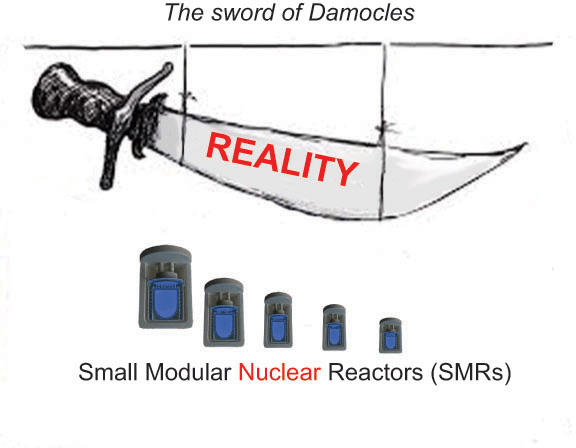
Realistic debate needed instead of new push for fast nuclear reactors https://www.asahi.com/ajw/articles/14534098
January 28, 2022 Japan has agreed to work with a U.S. company in technological cooperation to develop a sodium-cooled fast reactor.
People involved in the project stress that the new technology will contribute to the goal of a carbon-free society. But the government should not eschew reality-based debate on the future of existing nuclear power reactors.
The Japan Atomic Energy Agency, Mitsubishi Heavy Industries Ltd. and other Japanese entities will cooperate with TerraPower LLC’s project to build a fast reactor in the U.S. state of Wyoming.
Fast reactors are more resource efficient as they can burn types of nuclear fuel that cannot be used at conventional reactors.
TerraPower’s reactor will use liquid sodium as a cooling agent such as the Monju prototype fast-breeder reactor, which Japan decided to decommission after a series of accidents.
Japan can provide meaningful support to develop a new type of reactor and maintain related technology by offering what it has learned from its experiences including failures.
Japan has been promoting the concept of recycling separated plutonium back into fuel for nuclear power generation. Fast reactor technology to burn plutonium is at the core of this strategy.
But this program has suffered setbacks, including the decision to scrap Monju and a lack of progress in the government’s plan to burn so-called MOX (mixed oxide) fuel, which is usually plutonium blended with natural uranium, in conventional nuclear reactors.
The government also considered participating in France’s Advanced Sodium Technical Reactor for Industrial Demonstration (ASTRID) project to build a prototype sodium-cooled nuclear reactor.
But the idea was dropped after the French government decided to scale down the project.
The nuclear fuel recycling program, which has gone awry, should be abandoned. The participation in the TerraPower project should not allow the government to delay the decision on the program.
The technological cooperation with the United States has been touted as a way to “contribute to the achievement of carbon neutrality.”
However, it is unclear whether this will help Japan achieve its goal of net zero emissions of greenhouse gases by 2050.
TerraPower plans to start operating the new reactor in 2028. But this technology cannot be used immediately in Japan, which has been developing fast reactor technology for a different type of fuel.
The government’s road map for the development of fast reactor technology, determined in 2018, offers no clear time frame for practice use. It only said full-scale operation is expected “sometime in the late 21st century.”
The government has cited the development of next-generation reactor technology, such as small modular reactors and fast reactors, as an important factor for its clean energy and “zero carbon” policy efforts.
But it has failed to offer a clear vision for the future of existing nuclear reactors despite its massive reservoir of experience and expertise.
The government’s new Basic Energy Plan, unveiled last year, says nuclear power should account for 20 to 22 percent of the nation’s total electricity output in fiscal 2030. But the document did not refer to any specific measure to hit the target.
Neither Prime Minister Fumio Kishida nor members of his Cabinet have been eager to discuss this issue, apparently because of a reluctance to engage in debate on sticky issues concerning nuclear power.
Fast-breeder reactors, which can theoretically produce more fuel than they use, were once advertised as a source of “dream energy” for a resource-poor Japan.
Following the Monju debacle, the government started stressing that nuclear fuel recycling and fast reactor technology can help reduce high-level radioactive waste. Now, policymakers are singing the “carbon neutrality” theme.
The government should stop trying to obscure problems with its nuclear power policy by promoting a new technology without clear prospects for practical use under a new slogan.
Instead, it should launch a reality-based debate on existing nuclear reactors in line with its pledge to reduce the nation’s dependence on nuclear energy as much as possible.
Nuclear-armed North Korea tests long range missile.
Nuclear-armed North Korea tests long range missile, Canberra Weekly, January 30, 2022 Nuclear-armed North Korea has conducted what would be its largest missile test since 2017, sending a suspected intermediate-range ballistic missile soaring into space and sparking condemnation from the United States and its allies.
South Korea’s Joint Chiefs of Staff reported that a projectile believed to be a single ballistic missile was launched about 7.52am on Sunday from North Korea’s Jagang Province towards the ocean off its east coast.
South Korea’s National Security Council, which convened a rare emergency meeting presided over by President Moon Jae-in, said the test involved an intermediate-range ballistic missile (IRBM), which North Korea has not tested since 2017.
Decommissioning of the AGR nuclear power stations: National Audit Office UK
 |
The decommissioning of the AGR nuclear power stations, National Audit Office
| Published | January 28, 2022 |
|---|---|
| Full report | The decommissioning of the AGR nuclear power stations |
The government has entered into new arrangements to decommission seven AGR nuclear power stations. While the arrangements could deliver savings, their success will ultimately depend on the relevant parties working collaboratively to overcome risks, according to the National Audit Office (NAO).
The UK has eight second generation nuclear power stations, accounting for around 16% of UK electricity generation in 2020. Seven of the eight stations are Advanced Gas-cooled Reactors (AGRs), which are all due to stop generating electricity by 2028.
The Nuclear Liabilities Fund (the Fund) was established to meet the costs of decommissioning these eight stations, but significant additional taxpayer support has been required with more likely to be necessary. The UK government has provided a guarantee to underwrite the Fund in the event that its assets are insufficient to meet the total costs of decommissioning. In 2020, government contributed £5.1 billion to strengthen the Fund’s position and the Fund has recently requested a further £5.6 billion. The Fund’s assets were valued at £14.8 billion at the end of March 2021. The aim is that growth in the Fund’s investments will be sufficient to meet the long-term costs of decommissioning (£23.5 billion). However, cost estimates have doubled in real terms since 2004-05. If this upward trend is maintained and investment growth is not sufficient, there is a risk that the taxpayer will have to make further contributions.
In June 2021, the AGR stations’ owner EDF Energy (EDFE) agreed to defuel each of the stations in an arrangement that the Department for Business Energy & Industrial Strategy (the Department) estimates could save the taxpayer around £1 billion.2 Once defueling is completed, ownership of the stations will transfer to the government’s Nuclear Decommissioning Authority (NDA) for its subsidiary Magnox Ltd to complete the rest of the decommissioning process, which is likely to take several decades.
The rate at which stations can be defueled will impact on overall costs. The estimated cost of defueling could be between £3.1 billion and £8.0 billion. A bottleneck at any point between EDFE removing fuel, and the NDA transporting the fuel to safely store at Sellafield, could have repercussions across the programme. The costs to be borne by the Fund are therefore dependent on how quickly defueling begins once a station stops generating electricity, as well as the rate of defueling. Early unexpected closures of stations may increase costs……………………
“Government needs to maintain a clear view of how the nuclear decommissioning programme is performing as a whole, and given the large amounts of public money at stake it must act decisively should performance begin to lag.”
Gareth Davies, head of the NAO………………
Contact
NAO Press Office
+44 (0)20 7798 7400 or email pressoffice@nao.org.uk https://www.nao.org.uk/press-release/the-decommissioning-of-the-agr-nuclear-power-stations/
MOST of Iran’s nuclear facilities are vulnerable to devastating drone attacks
Iran Fukushima warning: Iran’s nuclear plants could be WIPED OUT https://www.express.co.uk/news/world/1558057/Iran-news-nuclear-threat-war-latest
MOST of Iran’s nuclear facilities are vulnerable to devastating drone attacks, a report has found.
By MARCO GIANNANGELI – DIPLOMATIC EDITOR11:00, Sun, Jan 30, 2022 But using unmanned vehicles (UMVs) laden with explosives could lead to a critical Fukushima-style reactor meltdown.
The revelation comes as diplomatic efforts to rein in Iran’s nuclear ambitions continue to flounder, with former Italian foreign minister Giulio Terzi last night warning: “The Iran nuclear deal is already on life-support and it is very possible that it might falter altogether due to Iran’s shameless violations.”
Detailed analysis of its 22 nuclear facilities by Dr Bahram Ghiassee, of the Henry Jackson Society think-tank, found that all except the Fordow fuel enrichment plant, near Qom – built into a mountain – are vulnerable to drone strikes which could incapacitate them.
And burying the Fordow facility under 60 metres of rock does not protect it from attacks on air shafts and other external supply systems.
While many facilities would result in little overall impact if attacked, there are glaring exceptions, the report found. These include the conversion plant at the Esfahan nuclear technology centre – a critical part of the nuclear fuel cycle – and the Bushehr nuclear power plant on the Persian Gulf.
The same applies to the Natanz enrichment facility now being rebuilt into a mountain after an explosion – believed to have been caused by Israel – destroyed the previous overland structure.
Though nuclear power plants are built to withstand light aerial attacks, Bushehr’s ancillary facilities “are highly vulnerable to aerial attacks, including drone strikes”, said the report, including by “commercially available as ‘Surface UMVs’ and ‘Submersible UMVs’, with an operating range of some 120 kilometres. “
However, Dr Ghiassee, a nuclear consultant, added: “A synchronised attack on the cooling water facilities, external electricity supply and electricity distribution systems could lead to the overheating of the reactor core and the spent fuel ponds.
“Under such circumstances, as in the Fukushima nuclear accident, the reactor core could melt down.”
Attacks against Iranian nuclear facilities are not a new phenomenon.
The Bushehr power plant was attacked by Saddam Hussein during the Iran-Iraq war in 1980, though this caused minor damage.
More recently, Iran has been the recipient of incapacitating explosions, cyber strikes and UMV attacks.
Though not confirmed by Tel Aviv, these are believed to have been carried out by Israel after it openly pledged never to allow Iran – which has threatened to blow Israel off the face of the world – to possess nuclear weapons.
We have a duty to be brave and responsible for the fate of our children and grandchildren. We have used force against our enemies in the past, and we are convinced that in extreme situations, there is a need to act using military means,” said Israeli Deputy Defence Minister Alon Schuster recently.
Actions have included the assassination of Iranian nuclear scientists, the explosion at Natanz in 2020 – said to have been caused by the provision of faulty materials following Mossad’s infiltration of the supply chain- and the cyber strike in 2010 using the Stuxnet virus, which reportedly infected more than 200,000 commuters and destroyed a fifth of Iran’s nuclear centrifuges.
What’s the situation of Bikini atoll and its people now?
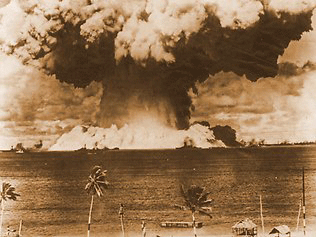
What Bikini Atoll Looks Like 60 Years Post-Nuclear Testing https://www.thetravel.com/bikini-atoll-nuclear-testing-can-you-visit-now/
Bikini Atoll sounds like a tropical paradise, but its history includes that of nuclear testing… So, what does it look like six decades following?
BY AARON SPRAYPUBLISHED 1 DAY AGO Bikini Atoll is an example of a tropical paradise-come-fire-and-brimstone apocalypse. It is a coral reef in the Marshall Islands made up of 23 islands that surround a large central lagoon. After WW2 all of the atoll’s population were forcibly relocated in 1946 to make way for a nuclear testing site for the United States.
Between 1946 and 1958 Bikini Atoll was subjected to 23 nuclear tests by the United States. And here is to be found the sunken American nuclear fleet. Another stunning lagoon to see a ship graveyard is in Truk (Chuuk) Lagoon in Micronesia.
The American authorities had promised the Bikini Atoll’s residents they would be able to return home after they were done nuking their home. Most of the islanders agreed to leave and moved to Rogerik Atoll and then Kili Island. But both of these new islands were unable to sustain them forcing the government to keep giving them aid.
After the end of the nuclear tests, three families were resettled on Bikini Island in 1970 (about 100 residents). But dangerously high levels of contamination were found in the well water and they were evacuated again in 1980.
In the end, the United States paid the islands and their descendants $125 million in compensation.
What’s plan B if the government can’t attract investors willing to fund Sizewell C?
What’s plan B if the government can’t attract investors willing to fund Sizewell C? Guardian Nils Pratley 27 Jan 22. Development money for nuclear power station is an attempt to draw in investors that could replace China’s CGN sum of £100m is peanuts in the expensive world of nuclear power stations, so regard the business secretary Kwasi Kwarteng’s funding for a round of development work on Sizewell C as a form of advertising. The cash is intended to send a message that the government is serious about getting the plant built in Suffolk. And it is an appeal for outside investors to volunteer to sit alongside developer EDF, the French state-backed group.
There was also a definition of a desirable investor: “British pension funds, insurers and other institutional investors from like-minded countries”. Note the nationality test. It is the closest we have come to official confirmation that China General Nuclear (CGN), originally slated for a 20% stake in Sizewell, will be kicked off the project. It remains to be seen how, legally, the government will rip up the 2015 deal with CGN signed by David Cameron’s government, but the intention is clear.
So, too, is the intended funding mechanism. It will be a regulated asset base (RAB) model, a version of the formula used at Heathrow Terminal 5 and the Thames Tideway giant sewer. The key point for investors is that they will see some income before Sizewell is built, unlike at Hinkley Point C where EDF and CGN earn their princely cashflows only when the electricity starts to flow.
What, though, if those British and like-minded institutions still refuse to play? Nuclear represents unknown territory for most of them. What if competition to invest, which is meant to be the other way in which RAB lowers financing costs, doesn’t materialise? What’s the government’s plan B?
The only possible solution is for the state to invest directly. If that is so, wouldn’t it be better to run an upfront benchmarking exercise at the outset to compare the numbers? Sizewell, unfortunately, is probably inevitable given the current panic over high gas prices and long-term energy security. But taxpayers, on the hook anyway via household bills, deserve to know that the odd billion or three isn’t being diverted unnecessarily to intermediaries.
By the time Sizewell’s sums become enormous, transparency will be essential…….https://www.theguardian.com/business/nils-pratley-on-finance/2022/jan/27/whats-plan-b-if-the-government-cant-attract-investors-willing-to-fund-sizewell-c
Leaders say nuclear will save Kemmerer. Residents aren’t convinced.

when TerraPower announced in November that it would build a first-of-its-kind sodium-cooled nuclear reactor at the town’s Naughton Power Plant, community leaders exhaled at last. The project promised a lifeline, not just to the town, but to similarly coal-dependent Wyoming.
The people who claimed they didn’t have much to say about the project, the ones who actually had a lot to say — a lot of them didn’t feel like trailblazers. They felt more like guinea pigs.
Many were suspicious. Why, they asked, would TerraPower stick its flagship project in such a tiny, remote town? Was it because they were too desperate to protest? Too isolated for anyone to care if things went awry?…….
Leaders say nuclear will save Kemmerer. Residents aren’t convinced. Casper Star Tribune
Nicole Pollack, Jan 29, 2022 The Star-Tribune visited Kemmerer this month to talk with the community about TerraPower’s nuclear plant. Energy reporter Nicole Pollack and photographer Lauren Miller will continue reporting from Kemmerer as the project develops.Roaming Kemmerer, asking people about the planned nuclear reactor, I expected excitement. Or trepidation. Or anger.
Apathy wasn’t on the list.
“We don’t really talk about it,” a retired miner told me as his fellow retirees — former coal miners and quarry workers and power plant operators — heckled one another around a senior center pool table.
Most of the Kemmerer residents I met said the same thing. They were familiar with the plan to replace their half-century-old coal plant with a nuclear reactor; did I know Bill Gates was behind it? Everyone, they assured me, was aware. They just didn’t have much more to say.
The energy sector is always changing, the miner said, and people in Kemmerer are used to riding out those booms and busts. Another boom isn’t anything special. So the project doesn’t come up in conversation very often.
He discusses it with his wife sometimes, though. The two of them speculate, nervously, about how a nuclear plant might change the tiny town they’ve called home for decades.
Coal’s demise hangs heavy over Kemmerer, and when TerraPower announced in November that it would build a first-of-its-kind sodium-cooled nuclear reactor at the town’s Naughton Power Plant, community leaders exhaled at last. The project promised a lifeline, not just to the town, but to similarly coal-dependent Wyoming. Gov. Mark Gordon proudly unveiled the project last summer during a celebratory press conference featuring a video message from Gates himself.
We’re absolutely ecstatic,” Mayor Bill Thek told me after Kemmerer was chosen.
The miner and his wife aren’t so sure. While they agree Kemmerer needs an economic boost of some kind, a replacement for its fading coal sector, they’re not sure whether a next-generation reactor will be the right answer. They’d rather keep burning coal.
I asked a lot of people in Kemmerer about the nuclear plant. At first, most sounded unconcerned, almost indifferent: “I don’t have much to say about it.”
But, it turned out, they usually did………………..
Maybe, another offered, the company was already starting to build the plant itself.
He hoped construction hadn’t started. There were still too many unknowns, he told me. The town wasn’t ready for nuclear; not by a long shot. He didn’t know if it would ever be.
Life after coal
Gillette, Rock Springs, Glenrock and Kemmerer — the four communities considered for TerraPower’s first nuclear reactor — are all coal towns. But in Kemmerer, the victor, founded in 1867 near the coal mine that gave the town its name, coal has always been king.
Much of the younger workforce has opted to work at the gas plant, or even at the fossil quarries, over the coal plant, in the hopes that those jobs will last even after coal is gone. And Kemmerer and Diamondville are trying to put themselves on the map — on tourists’ lucrative radar — for their fossils………………………………………
TerraPower and Rocky Mountain Power had convened roughly 40 high-profile community leaders, including elected officials, town managers, school and hospital administrators and police officers, in the Best Western conference room for a question-and-answer luncheon.
………………… they [the community] also know about the plant’s “aggressive” seven-year time limit — a condition of the company’s nearly $2 billion Department of Energy grant. And, as the meeting wrapped up, they wanted to know: How sure was TerraPower that the project would succeed?…..
Why us?
In the Best Western conference room, the descriptor of choice was “demonstration.” Outside of that room, at the senior center and the bowling alley and the booths at Place on Pine, the nuclear plant was “experimental.”
The people who claimed they didn’t have much to say about the project, the ones who actually had a lot to say — a lot of them didn’t feel like trailblazers. They felt more like guinea pigs.
Many were suspicious. Why, they asked, would TerraPower stick its flagship project in such a tiny, remote town? Was it because they were too desperate to protest? Too isolated for anyone to care if things went awry?…….
There will be protests,” I was told several times. No one who said it wanted to participate themselves — I didn’t meet anyone who did — but they were suresomeone would………………… https://trib.com/business/energy/leaders-say-nuclear-will-save-kemmerer-residents-arent-convinced/article_64d05a74-9245-5183-8366-651079ad9b12.html……………….
Map shows the horrible impact a nuclear bomb would have on Coventry
|

Map shows the horrible impact a nuclear bomb would have on Coventry
We used NUKEMAP to find out the effects nuclear bombs would have on Coventry, Coventry Live, ByJaspreet Kaur, 30 Jan 22, t’s a chilling thought – but have you ever wondered what would happen if a nuclear bomb was suddenly detonated in Coventry as part of an attack on the UK?
CoventryLive has used specialist research to find out what would happen if a nuclear bomb hit the city.
The website NUKEMAP calculates the effects of the detonation of a nuclear bomb. And although of course none has ever hit the UK before, they were used to terrible effect in Japan at the end of the Second World War.
And of course our city faced dreadful destruction in Nazi bombing raids.
The website that now looks into the horrifying impact a nuclear disaster could have was created by Alex Wellerstein, a historian of science who specialises in the history of nuclear weapons and nuclear secrecy.
He created Nukemap in February 2012, and it has been used by over 25 million people globally since its launch.
In one experiment, we looked at what happened if ‘Davy Crockett’ detonated in our city – one of the smallest nuclear bombs ever built in the United States……………
all-in-all the impact of the smallest US bomb is very bad in real terms, but relatively small for a nuclear attack. Wr then looked at a much larger bomb.
And chillingly, the ‘Gadget’ bomb was found to have a much more awful impact.
If detonated in Coventry city centre this particular bomb would cause thermal radiation to several Coventry areas, including Earlsdon , Cheylsmore , Ball Hill and Daimler Green .
It would also cause moderate blast damage to areas further afield, such as Radford , Coundon , Whitley and Styvechale .
In total, the number of estimated injuries would rise significantly to 48,060 with 23,900 estimated fatalities. Which is terrifying.
The test may seem arid – but the threat of nuclear war hung over the world for decades during the Cold War.
There are still around 3,750 active nuclear warheads and nearly 14,000 total nuclear warheads in the world today…………………………… https://www.coventrytelegraph.net/news/map-shows-horrible-impact-nuclear-22918995
West Virginia public weighs in on nuclear power plant prohibition repeal .
Public weighs in on nuclear power plant prohibition repeal The Weirton Daily Times, 30 Jan 22,
STEVEN ALLEN ADAMS STAFF WRITER, CHARLESTON —With lawmakers on the cusp of removing a more than 25-year-old ban on nuclear energy in West Virginia, members of the House of Delegates received input from the public Friday.
The House Government Organization Committee held a public hearing in the House of Delegates chamber Friday morning on Senate Bill 4, repealing sections of the state code banning the construction of nuclear power plants in West Virginia………
The bill would remove two sections of code banning the construction of new nuclear power plants except under certain circumstances. The ban has been in place since 1996.
Supporters of the bill include the West Virginia Manufacturers Association and the West Virginia Chamber of Commerce. …………………
Opposition to the bill united two sides normally fighting each other: the coal industry and environmental activists. ……….
Hannah King, a lobbyist with the West Virginia Environmental Council, read a prepared statement on behalf of Gary Zuckett, executive director of the West Virginia Citizen Action Group, due to Zuckett being quarantined for a COVID-19 infection. Zuckett, who advocated for the 1996 ban on nuclear power, said even with improvements in technology the state should take its time before repealing the ban.
“We need climate solutions now, not in 10 years,” King said on behalf of Zuckett. “The prudent thing to do would be to put these bills on hold, assemble an interim study, gather experts on both sides of this critical issue, and make a measured and informed decision. If we’re going to open up West Virginia to nuclear power, let’s do it with proper regulations and safeguards for its people, economy and environment.”……………… https://www.weirtondailytimes.com/news/local-news/2022/01/public-weighs-in-on-nuclear-power-plant-prohibition-repeal/
Montana communities have better options than nuclear power.
We have better options than nuclear, https://helenair.com/opinion/letters/we-have-better-options-than-nuclear/article_620c7b44-dfaa-5448-b4fd-f8964dded79e.html Jeff Havens, 30 Jan 22,
Voter voices were silenced last spring by legislators and the governor on the topic of whether nuclear fission reactors and their highly radioactive waste can be located within our communities. Simultaneously, a separate but related law was enacted for the state to study “small advanced nuclear reactors.”
Contrary to their myopic moves, the Union of Concerned Scientists reported “newly built reactors must be demonstrably safer and more secure …. Unfortunately, most ‘advanced’ nuclear reactors are anything but. … for any reactor concept it is critical to understand that ‘burning’ spent fuel first entails reprocessing to separate out and re-use plutonium and other weapon-usable materials. Reprocessing makes these materials more accessible for use in nuclear weapons by states or terrorists….”
I hate to think that some “recycled” material from such reactors could be diverted into manufacturing nuclear weapons to be leveraged by domestic states or terrorists during the next coup attempt on our nation. This alarming possibility is amplified when one considers federal seditious conspiracy indictment of Oath Keepers founder and leader Elmer Rhodes, who is a former Montana attorney and resident.
We have better options for jobs than hazards associated with fission reactors. Let’s try more wind and solar, first.
The rulers of the great powers are playing with fire — Labour Hub

By Gilbert Achcar It is not an exaggeration to say that what is currently happening in the heart of the European continent is the most dangerous moment in contemporary history and the closest to a third world war since the Soviet missile crisis in Cuba in 1962. True, neither Moscow nor Washington has hinted at […]
The rulers of the great powers are playing with fire — Labour Hub
NATO’s three nuclear powers to blast Russia in UNSC tomorrow — Anti-bellum
From the U.S. government’s quasi-/crypto-news agency, Associated Press. The “united voices” mentioned by Thomas-Greenfield, former senior vice president at the (Madeleine) Albright Stonebridge Group, are of course Britain and France, founding members of NATO (the world’s only nuclear military alliance), members of the NATO Quad (with Germany) and the only nuclear powers in Europe aside […]
NATO’s three nuclear powers to blast Russia in UNSC tomorrow — Anti-bellum
European Green Taxonomy and nuclear power: 5 former prime ministers of Japan have taken a public stand against its inclusion
Published on 29 January 2022 by André JACQUES
The European Commission should make its decision on February 02. The European Commission has decided to include nuclear power in the European green taxonomy (see the press release of the European Commission). Annual press conference at the Japan Foreign Correspondents Press Club (FCCJ). 27/01/2022. Via Javale Gola and Our Distant Neighbors
The last two Prime Ministers, in the presence of the General Secretary of Genjiren (Federation of associations for “zero nuclear energy” and the promotion of ENR) recall the (exorbitant) cost of nuclear power following the Fukushima Daiichi accident and then data on the development of ENR for a decade in Japan. (allocution of 35 minutes). From now on, zero nuclear power is credible, renewable energies are efficient…
According to Naoto Kan, wind power is starting little but solar power a lot, he calculated that there are 4 million hectares of cultivable land in Japan, and announced a solar power production capacity of 2 trillion Kw/h (10 to 12). He concludes with an illustration: large areas are available on the island of Hokkaido, but not elsewhere where small farmers are aging without being replaced; a good scenario according to Kan, would be to maintain the activity (on these non-constructible lands) to make them evolve into solar farms.QUESTIONS (36 minutes).South China Morning Post: in a context of climate disruption, energy needs at the global level are increasing; China is committed to the U.S. project of SMR, which is also of interest to Japan. Is stopping nuclear power a responsible position?
KOIZUMI: I am in favor of “zero nuclear power”; all industrial waste is exploding, we don’t know what to do with it; nuclear waste is even more phenomenal in volume and it is absolutely necessary to secure it because it represents a great danger but today the government wants to continue the development of nuclear power while we have no solution for the containment of the waste
KAN: to speak only about Japan, it has been victim of nuclear power twice (The bomb and then Fukushima); concerning the nuclear accident of Fukushima Daiichi, we came close to having to evacuate the population of Tokyo, so that the nuclear option does not seem to me to be tenable anymore. To decrease C02, the potential of ENR can cover the needs, as it is demonstrated and promoted also abroad.Liberation: “I am a French journalist, for the taxonomy of nuclear power, not all French people are in favor of it but the president of France is the promoter of nuclear power, can you deliver a brief and strong message to our president.(at 46′).
KAN: If I were to speak to President Macron, I would say what I just told you. That is, without nuclear, ENRs are enough to meet energy needs, that’s the first point. Secondly, we almost had to evacuate Tokyo, but France has a lot of nuclear power plants and if a similar accident happened in France, we might have to evacuate Paris, and if so, for 50 to 100 years, during which time Paris would be uninhabitable, as was the case at Chernobyl. I’m sure the president will be sensitive to both of these messages.”
KOIZUMI: France is currently aiming for 50% nuclear, so it seems difficult for the president to defend zero nuclear… But it has neighbors who also want to reduce their dependence, such as Germany, and I think these countries need to demonstrate the feasibility of zero nuclear, which will make the French president change his mind.
The end: the mediator (the gentleman on the right) asks them to intervene with the former European leaders, before February 2… for example Kan with Prodi; then he announces that it is the first time that they are gathered here for a new announcement, the creation between them of a new political party! but it is a joke, Koizumi is retired and does not want to enter politics anymore! Naoto Kan wants to devote himself to the promotion of the energy sufficiency of Japan thanks to the solar energy.
The translator, to conclude, informs the foreign correspondents that the European Parliament regrets the decision-making power of the European Commission on a subject so important for many countries and wishes it success in its opposition to this taxonomy resolution .
See opposite the trailer of the Film “The lid of the sun” that Crilan was shown in Flamanville in 2018 in the presence of Naoto Kan and then in Cherbourg in the presence of the director.
http://crilan.fr/taxonomie-verte-europeenne-et-nucleaire-5-ex-premiers-ministres-du-japon-ont-pris-publiquement-position-contre-linclusion-du-nucleaire-dans-la-taxonomie-verte-europeenne/
Father continues to suffer in court over Fukushima nuclear accident: “I exposed my son to radiation.
January 28, 2022
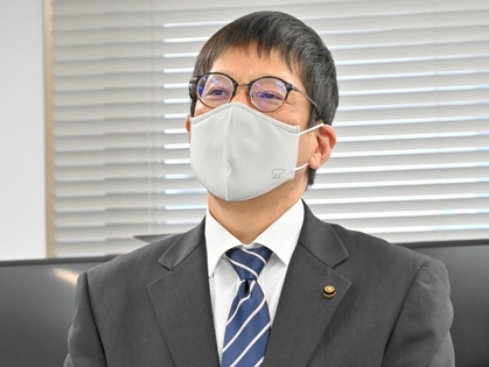
On January 28, the Sapporo High Court heard oral arguments in an appeal by evacuees from Fukushima and other prefectures who sought compensation of approximately 1.36 billion yen from the government and TEPCO in the wake of the 2011 accident at TEPCO’s Fukushima Daiichi Nuclear Power Plant. The plaintiffs, who are evacuees, gave statements and expressed their anguish that has not healed even 11 years after the accident.
If it hadn’t been for the nuclear accident, my eldest son probably wouldn’t have gotten this disease.
Akihiro Suzuki, 61, a current member of the Akahira City Council in Hokkaido, made this appeal in court. Akihiro Suzuki, 61, a current member of the Akahira City Council in Hokkaido, told the court that his eldest son, 26, was diagnosed with malignant lymphoma last March and is currently undergoing hospital treatment in Sapporo. I have been blaming myself every day for the impact on my health caused by the delay in evacuating, and I spend my days hoping that my eldest son will be released from his suffering and recover his health,” he said.
According to Mr. Suzuki, at the time of the accident, he learned about the nuclear accident on the radio from his home in Fukushima City, where the power was out. He was most concerned about the health of his sons, who were in their second year of high school and eighth year of junior high school at the time.
I thought about evacuating immediately, but gasoline was not available, so I was able to temporarily evacuate to Niigata about two weeks after the disaster. In September 2011, she and her second son evacuated to Hakodate, Hokkaido, where her eldest son had moved to school earlier.
In 2004, they moved to Akabira City. Her eldest son found a job at an IT company in Osaka, and her second son started working at a directly managed farm of a food company in Hokkaido. 19 years later, she ran for the Akadaira City Council, hoping to “bring in some fresh air,” and was elected.
Although he and his wife, who works at a high school in the Tokachi region of Hokkaido, were not expected to live together, he began to think that they had achieved a soft landing in the face of the many hardships faced by evacuees. It was just then that my eldest son became ill.
After the onset of his illness, he underwent anticancer drug treatment for six months and recovered to the point where he could be said to be in remission. However, in December, he found out that the disease had recurred. Seeing her eldest son suffer from hair loss and nausea due to the side effects of the medication “tore my heart to pieces,” she said.
I have always thought that I exposed my sons to radiation while I was still in Fukushima City. He was reluctant to stand up in court, but decided to give his opinion, saying, “Eleven years have passed since the accident, and I don’t want the world to forget the voices of the evacuees.
In an interview after the court session, Mr. Suzuki said, “Will I be stuck in the disaster of the nuclear accident forever? In a world where the memory of the accident is fading, I want people to understand that the accident is by no means over,” he said quietly.
The majority of the plaintiffs who have appealed to the court are “voluntary evacuees” who were not subject to the government’s evacuation order. As a result, only a little less than 40% of the 253 plaintiffs were eligible to receive compensation, and the amount was only about 53 million yen. (Shigeto Nakazawa)
https://www.asahi.com/articles/ASQ1X6DW7Q1XIIPE016.html?fbclid=IwAR32FJaQ6qV_mXA59wiXprtFm_ftNCHDUbQN9ujZbLyvH24tDqEmoB4Q_y0
‘We have to stop believing the nuclear hype’ , former chairman of the US Nuclear Regulatory Commission, and other leaders

We have to stop believing the hype. Nuclear has never delivered on the hype, and to somehow hinge the future of the planet on unproven design is simply, I think, irresponsible, and we have to recognize that or we’re going to be throwing money at the technologies that are simply never going to deliver.
Former Nuclear Regulatory Commission chair argues nuclear power isn’t a climate solution
‘We have to stop believing the hype’ The Verge, By Justine Calma@justcalma Jan 27, 2022, Former heads of nuclear regulatory bodies across Europe and the US put out a statement this week voicing their opposition to nuclear energy as a climate solution……….. Nuclear energy is still too costly and risky to be a viable clean energy source, the authors of the statement write. They include Gregory Jaczko, former chairman of the US Nuclear Regulatory Commission, and the former leads of similar agencies in Germany, France, and the UK.
To learn more about why some nuclear power experts oppose the energy source as a climate fix, The Verge spoke with Jaczko, who chaired the NRC from 2009 to 2012 and, since then, has been outspoken about his concerns.
This interview has been edited for length and clarity.
The debate swirling around whether nuclear energy should play a role in climate action has been going on for years. What prompted you to issue a statement this week? Why now?
I think there’s been a lot of misinformation about the role that nuclear power can play in any climate strategy. A lot of attention has been put on nuclear as somehow the technology that’s going to solve a lot of problems when it comes to dealing with climate change. I just think that’s not true. And it’s taking the debate and discussion away from the areas that can have a role and that do need focus and attention.
I’ve certainly seen nuclear power making a lot of headlines recently. There was a leaked draft of European Commission plans to label nuclear power as a green investment. And here in the US, the infrastructure law is set to funnel billions into propping up nuclear energy. What goes through your head when you see this?
I think it’s money that’s not well spent. Nuclear has shown time and time again that it cannot deliver on promises about deployment and costs. And that’s really the most important factor when it comes to climate.
What I find kind of a little bit head-scratching is why, all of the sudden, this is getting attention when in fact, what’s actually happening is really, really negative for nuclear. You’re seeing nuclear power plants that, when I was chairman of the Nuclear Regulatory Commission, were supposed to be coming online — those plants have not come online all across the world. There are some new plants that have come online at a much later time. Then you have the complete fiasco that is the new build of nuclear reactors in the United States. You had four new design reactors that were licensed when I was chairman, which were supposed to be starting production in 2016 and 2017.
Two of those reactors were canceled, and that involved federal indictments for fraud among the heads of the company running that reactor development. Then the other two reactors are in Georgia, and those reactors continue to be pushed back and now are scheduled to start in 2022 or 2023. And they’re looking at a price tag that’s over $30 billion, which is more than double the initial estimate for the cost of that reactor………………
What should be done about older reactors? Some experts argue that premature nuclear plant closures lead to natural gas and coal plants filling in the gaps
We have to get the facts right. And the premise of your question is not true. There’s no such thing as a direct one-to-one replacement, first of all.
Renewables and the amount of renewables that are in the pipeline far exceed any one closure of a nuclear power plant in the US. So nuclear is simply not being replaced by fossil fuels. We’re still seeing natural gas play too large of a role in our electricity sector. That is an issue by itself that has nothing to do with whether nuclear power plants shut down or not. So this is where I say so much of this discussion around nuclear focuses on the wrong thing. The right thing we need to focus on is what are we doing to get rid of gas?
What are your concerns with next-generation nuclear reactors, given that they’re very different than the older technology that we have?
It simply comes down to the need. I do not see a place in which these reactors will play a role because they do not meet the demands of the electricity space right now.
We have to stop believing the hype. Nuclear has never delivered on the hype, and to somehow hinge the future of the planet on unproven design is simply, I think, irresponsible, and we have to recognize that or we’re going to be throwing money at the technologies that are simply never going to deliver.
………. . None of these designs are going to be ready for deployment, even as a prototype, for 2030. You need by 2030 the decarbonization of the electricity sector, not getting some brand new technology is going to build its first at the time and then you’re going to have to wait another five to 15 years before you can deploy that technology at scale. We have to deploy at scale today. And it’s simply not going to come from these advanced reactor designs.
Your statement says that nuclear energy as a climate strategy is “[m]ilitarily hazardous since newly promoted reactor designs increase the risk of nuclear weapons proliferation.” Can you explain?
The simplest way to think about it is the difference between a nuclear weapons program and a nuclear power program is really intent. So much of the technology that is used for nuclear power production can be used to make the material that you need for nuclear weapons. For a long time, one of the promises of advanced reactors was that they would somehow be more resistant to proliferation concerns, namely that they would be harder to make that transition from strictly a power production technology to a technology that could be used for weapons production. And as technologies have developed, those issues have not really panned out again in the way that many different reactor designs were touted. So it will always be there as a concern.
And there are some interesting new players stepping into the arena — private companies looking into small modular reactors for their own operations. I think the latest I’ve seen is Rolls Royce. What do you make of that trend?
I think it comes back to the same issues, which is I am skeptical that that will ever materialize because you don’t generate electricity at prices that are well above market rates just to prove a point.
Rolls Royce is looking to develop their own design for small modular reactors. You know, I think it still suffers from the same problem, which is that those designs don’t meet the needs of the electricity market — namely price, deployment, operational flexibility, and they have the potential hazards for accidents, although small modular reactors have a lower consequence than certainly a large reactor. There’s nothing about the benefits that outweighs any of those risks. https://www.theverge.com/2022/1/27/22904943/nuclear-power-climate-change-solution-gregory-jaczko
1 This Month
Tell Congress: Prevent Nuclear Catastrophe in Iran

Tell Congress: Prevent Nuclear Catastrophe in Iran

Read the Public Inquiry Report, the Commissioners’ report, Surrendering Australia: The AUKUS Deception is available to download for free at aukuspublicinquiry.com. Or just watch the replay of the National Press Club Luncheon.


Shut down the radiation-damaged Heysham nuclear reactors now
To see nuclear-related stories in greater depth and intensity – go to https://nuclearinformation.wordpress.com

Say No to NASA’s Reckless Nuclear Reactor on the Moon
Say No to NASA’s Reckless Nuclear Reactor on the Moon
-
Archives
- November 2026 (238)
- October 2026 (302)
- September 2026 (339)
- August 2026 (330)
- July 2026 (355)
- June 2026 (287)
- May 2026 (306)
- April 2026 (356)
- March 2026 (251)
- February 2026 (267)
- January 2026 (308)
- December 2025 (358)
-
Categories
- 1
- 1 NUCLEAR ISSUES
- business and costs
- climate change
- culture and arts
- ENERGY
- environment
- health
- history
- indigenous issues
- Legal
- marketing of nuclear
- media
- opposition to nuclear
- PERSONAL STORIES
- politics
- politics international
- Religion and ethics
- safety
- secrets,lies and civil liberties
- spinbuster
- technology
- Uranium
- wastes
- weapons and war
- Women
- 2 WORLD
- ACTION
- AFRICA
- Atrocities
- AUSTRALIA
- Christina's notes
- Christina's themes
- culture and arts
- Events
- Fuk 2022
- Fuk 2023
- Fukushima 2017
- Fukushima 2018
- fukushima 2019
- Fukushima 2020
- Fukushima 2021
- general
- global warming
- Humour (God we need it)
- Nuclear
- RARE EARTHS
- Reference
- resources – print
- Resources -audiovicual
- Weekly Newsletter
- World
- World Nuclear
- YouTube
-
RSS
Entries RSS
Comments RSS

