CounterVortex Episode 110: Nuclear power? No thanks!
https://soundcloud.com/user-752167240/countervortex-episode-110-nuclear-power-is-bad
In Episode 110 of the CounterVortex podcast, Bill Weinberg rants against the current greenwashing of nuclear power, and hype about a supposedly “safe” new generation of reactors. Every stage of the nuclear cycle is ecocidal and genocidal. Uranium mining has poisoned the lands of indigenous peoples from Navajo Country to Saskatchewan to West Africa.
The ongoing functioning of nuclear plants entails routine emissions of radioactive gases, factored in by the bureaucrats in determining “acceptable” levels of cancer. Disposal of the waste, and the retired reactor sites themselves, is a problem that inherently defies solution. They will be deadly for exponentially longer into the future than biblical times stretch into the past.
The Waste Isolation Pilot Project (WIPP) in New Mexico, hyped as secure for hundreds of millennia, leaked plutonium after only 13 years. And finally there is the “sexiest” issue, the one that actually gets some media play, at least—the risk of accident. It is a mark of capitalism’s depravity that even after the nightmares of Fukushima and Chernobyl, we periodically get media capaigns about an imminent “nuclear renaissance.”
Nuclear versus fossil fuels is the false choice offered us by industry. The imperative is to get off the extraction economy and on to one based on sustainability and resource conservation.
Listen on SoundCloud or via Patreon.
French government supressed, postponed, distributing report that recommended no new EPR nuclear reactors

Nuclear: the government has postponed the dissemination of an official report contradicting Emmanuel Macron. Mediapart has obtained a report from Ademe, the public agency for ecological transition, according to which there is no need to build new EPR reactors.
But the government postponed the distribution of this report: the President of the Republic was going to
announce contrary projects.
Mediapart 11th Feb 2022
UK SPENDS OVER £80M ON MEDIA IN 20 COUNTRIES AROUND RUSSIA
The project is likely part of the ongoing information war between Russia and Nato.
The British government is spending tens of millions on media projects in Eastern Europe which are often presented as fighting “Russian disinformation”, but which may involve the UK’s own information operations. DECLASSIFIED UK , MATT KENNARD, 8 FEBRUARY 2022 The British government ploughed at least £82.7m of public money into media projects in countries bordering or near Russia in the four years to 2021.
The projects, which take place across 20 countries in Eastern Europe and Central Asia, are run through the Conflict, Stability and Security Fund (CSSF), a cross-government pot of money with the stated aim of preventing “instability and conflicts that threaten UK interests”.
The National Security Council, which is chaired by the prime minister, sets the fund’s strategic direction. But a parliamentary committee found the CSSF was “being used as a ‘slush fund’ for projects” which “do not meet the needs of UK national security.”
The findings come as tensions between Britain and Russia are high over Ukraine. The UK has accused Russia of planning to invade or launch a coup in Ukraine to install a pro-Moscow government.
Last month Britain began supplying the eastern European country with new anti-tank weapons. Some of the UK-funded media projects appear focused on Ukraine.
‘Counter-disinformation’
The project most clearly directed at Russia is the Counter Disinformation and Media Development programme. It is run around Russia’s western border, from the Baltic States to Central and Eastern Europe, although project documents do not disclose specific countries.
It cost £60.4m in the four years to 2021. …….
The project is likely part of the ongoing information war between Russia and Nato. The funds, UK documents note, aim to “understand and expose disinformation across the North Atlantic Treaty Organisation (Nato) space.”
The project was launched in 2016 and initially called the Russian Language programme. ………
,,,,,,,,, the programme may be a cover for the UK’s own information operations in the region. The UK Ministry of Defence is one of the implementing departments in the counter-disinformation programme. It is not obvious what role the UK armed forces would have in a media support project.
……….In the four years to 2021, the programme cost the UK public £140.5m, although a breakdown of the media component is not provided by the government.
The UK is also “working closely with the US on media reform” through the programme……………
Judicial review on the dumping of Hinkley Point C radioactive mud
A group campaigning against the dumping of sediment from the site of a
decommissioned nuclear power station has succeeded in securing a judicial
review challenging the legality of a licence to dump waste into the River
Severn.
The Save the Severn Estuary / Cofiwch Môr Hafren campaign involves
the Geiger Bay coalition and groups from the English side of the estuary
and is seeking to halt the dumping of sediment from the construction of the
Hinkley C power station in the Marine Protected Area (MPA) near Portishead,
Bristol.
In 2018, EDF, which is building the plant, dumped mud and sediment
off the coast of Cardiff despite fierce objections. The Campaign group says
that millions of tonnes of contaminated mud and sediment will contaminate
the waters and beaches used by local communities, and that by choosing to
ignore legal safeguards, energy giant EDF is threatening the health of
families and animal life.
Save the Severn Estuary / Cofiwch Môr Hafren say
that EDF are now trying to avoid further opposition and negative media
attention by moving the operation to Portishead, Bristol as a ‘soft
touch’ location after initially applying for a new license to dump more
waste off the Cardiff coast. At the judicial review on 8 March the campaign
group will challenge the legality of the licence granted by the Marine
Management Organisation (MMO), stating that several important procedures
haven’t been met and that an alternative to dumping at Portishead should
be adopted.
Nation Cymru
Nation Cymru 12th Feb 2022
As China tackles plastic pollution at home, it feeds the scourge globally
As China tackles plastic pollution at home, it feeds the scourge globally
Plastic waste in China, Hong Kong and the world has jumped during the Covid-19 pandemic as takeaway food in plastic containers has become the mainstay of restaurants and the only choice for many citizens subject to lockdowns.
Oceans are better at storing carbon than trees. In a warmer future, ocean carbon sinks could help stabilise our planet
Rupert Sutherland and Laia Alegret
We think of trees and soil as carbon sinks, but the world’s oceans hold far larger carbon stocks and are more effective at storing carbon permanently.
February 13 Energy News — geoharvey

Opinion: ¶ “Temporary spent nuclear fuel storage isn’t temporary” • The proposal to “store” spent nuclear fuel in New Mexico is a Trojan horse that will defeat the goal of geologically isolating this highly radioactive and chemically toxic material. The proposed interim storage facility is geologically unsuitable even for a period of decades. [Santa Fe […]
February 13 Energy News — geoharvey
The Green Bucket List
Peter Dykstra
When you’re immersed in environmental science and environmental politics, it’s sometimes hard to step back and measure progress. Here are a few gains and victories to charge your batteries.
Kenichi Hasegawa, former dairy farmer who continued to tell the truth about the nuclear accident in Fukushima, passes away.

Immediately after the accident, I pressed the village mayor to disclose information.
He also shared the voice of a dairy farmer friend who committed suicide.
Mr. Kenichi Hasegawa, a former dairy farmer who continued to appeal about the current situation in Iitate Village contaminated by radiation after the Fukushima Daiichi Nuclear Power Plant accident in 2011, died of thyroid cancer on October 22, 2011 at the age of 68. He was 68 years old. He was the co-chairman of Hidanren, a group of victims of the nuclear power plant accident, and the head of the group of Iitate villagers who filed for alternative dispute resolution (ADR). Since 2005, he has been focusing on growing buckwheat noodles in the village, while criticizing what the government and administration call “reconstruction projects” and “reconstruction Olympics. In February and March of this year, he was diagnosed with cancer and fell ill. Many people are saddened by the death of Mr. Hasegawa, who continued to communicate the issues of the nuclear accident both inside and outside Japan.

On January 13, 2012, prior to the Global Conference for a Nuclear Power Free World held in Yokohama, NGO officials and journalists from overseas visited Fukushima and Mr. Hasegawa conveyed the current situation of the Iitate villagers. He said, “I wish there were no nuclear power plants. He said, “I wish we didn’t have nuclear power plants, and I hope the remaining dairy farmers will do their best not to be defeated by nuclear power plants. He left a message that said, ‘I have lost the will to work.
Our government has been promoting nuclear power plants as a national policy, so I thought they would take proper measures when an accident occurred. But the government did not take any action. I may return to my village, but I can’t bring my grandchildren back. If we go back and end our lives, that will be the end of the village.
Paul Saoke, a Kenyan public health specialist and then secretary general of the Kenya chapter of the International Council for the Prevention of Nuclear War, recorded Hasegawa’s lecture on his iPad. Mr. Saoke said, “In Kenya, the Fukushima nuclear accident is almost unknown. When I return to Japan, I would like to have the media watch the video of my lecture and let them know what kind of damage is being done by the residents. Mr. Hasegawa’s appeal was posted on the Internet and quickly spread around the world.
In 2012, he gave a speech at the European Parliament.
The film “My Legacy: If Only There Were No Nuclear Power Plants
In 2012, Mr. Hasegawa gave a lecture at the European Parliament in Belgium on the one-year anniversary of the Fukushima nuclear accident. Mr. Hasegawa visited Europe with his wife Hanako, and together with Eisaku Sato, former Governor of Fukushima Prefecture, conveyed the current situation in Fukushima.

Our Iitate village was a beautiful village,” said Mr. Hasegawa. “Our Iitate village was a beautiful village,” Mr. Hasegawa began. While explaining how the government experts who came to the village kept saying that the village was safe, he said, “The villagers were exposed to radiation while the mayor and the people in the village administration clung to the village. We dairy farmers were told not to raise cows in the planned evacuation zone, and with no follow-up from the government, prefecture, or village, we made the decision to quit dairy farming on our own. Finally, I conveyed the regret of my friend who committed suicide, leaving behind a note saying, “If only there were no nuclear power plants.

Photo: Hideaki Takamatsu
In 2002, Naomi Toyoda’s film “The Last Will and Testament: If Only There Were No Nuclear Power Plants” was completed, and Mr. Hasegawa’s words and the events of his friend who committed suicide were further disseminated to society. Yasuhiro Abe, manager of the Forum Fukushima movie theater, said, “At the time, various debates were boiling in the local community, and despite the length of the film, it was fully booked for three days. Mr. Hasegawa’s words about Iitate were very human, and he had a different level of strength that no one else had.
Through his activities in Japan and abroad, Mr. Hasegawa has connected and interacted with a wide range of people.
Mr. Toshiyuki Takeuchi, the president of Fukushima Global Citizen’s Information Center (FUKUDEN), who has been informing people in Japan and abroad about Mr. Hasegawa’s activities, said, “Mr. Hasegawa is a person who has been affected by pollution. Mr. Hasegawa has been active as an anti-nuclear and anti-radiation activist, criticizing the government, the administration (village authorities), and TEPCO for failing to take appropriate measures that put the health of the residents of the contaminated area first. At the same time, he has a strong attachment to the Maeda area and his life there, and has returned to the area to start making soba noodles and rebuild his life. The complexity of his feelings (“irrationality”) was sometimes difficult to convey to people overseas.
As I listened to Mr. Hasegawa’s story, there were many moments when I felt that “everything was there in Iitate Village and Maeda area before the earthquake, and it was the center of the world and life. “Complex irrationality” is probably a cross-section of the tragedy of everything being taken away on its own.
Solidarity with the Nuclear Weapons Abolition Movement
Bringing together people from all walks of life
In 2007, after the International Campaign to Abolish Nuclear Weapons (ICAN) was awarded the Nobel Peace Prize, ICAN Co-Chairman Tilman Ruff (Australia) and ICAN International Steering Committee member and Peace Boat Co-Chairman Satoshi Kawasaki visited Mr. Hasegawa’s house in Iitate Village with medals.

Mr. Ruff said. He refused to be cowed or silenced, and continued to speak the truth about the nuclear disaster in Fukushima, stressing the need for rights, dignity, health, and recognition of the people and land that the government and TEPCO unreasonably put in harm’s way. I am honored to have known Kenichi and to have been able to work for a common cause.”
Mr. Kawasaki also mourns his death. Mr. Kawasaki also mourned his passing. “We were together on many occasions, including the European Parliament in Belgium in 2012, the round trip to Australia in 2013, and the Peace Boat trip. I remember the way he spoke straight from the bottom of his heart about the damage he had suffered as a dairy farmer and the anger and frustration of the people of Fukushima, strongly conveying his message to people even though they spoke different languages. I believe that Ms. Hanako, who has always accompanied us and talked about the damage caused by nuclear power plants from her own perspective, will continue to play a role as a sender.
Ms. Riko Mutoh (Funehiki), who is also a co-chair of Hidanren, said, “Ms. Hasegawa was a big presence. His words were powerful and persuasive. After returning to Iitate Village, she was busy with local activities. He was a person who brought people together, both inside and outside of the village, within and outside of the prefecture, those who had evacuated and those who were living there.
(Text and photo by Hiroko Aihara)
PCB waste treatment plan in Fukushima: “Insufficient explanation” and opposition from many people

Feb. 07, 2022
A meeting was held to check the government’s plan to dispose of highly concentrated PCB waste generated in Fukushima Prefecture after the nuclear power plant accident in Muroran City.
The Ministry of the Environment presented a plan to treat waste containing polychlorinated biphenyls (PCBs), a toxic substance, from the “contaminated waste management area” in Fukushima Prefecture at a facility in Muroran City, and the city and province approved the plan last December.
On the 7th, a meeting was held in Muroran City to check the government’s project, with representatives of citizens’ groups and academic experts attending.
At the meeting, a representative from the Ministry of the Environment explained that the decision was made based on the opinions of experts who had investigated the safety of the treatment at the site.
In response to this, a number of committee members expressed their opposition to the disposal of PCBs, arguing that the Ministry of the Environment’s explanation was too sketchy and that they had not received a reply to their questionnaire.
One of the committee members, Akiaki Kono, representative of the Association for the Safety of PCB Disposal, said, “Information on the field survey has not been properly disclosed. I felt that the administrative procedures were incomplete. The situation is not such that safety can be confirmed,” he said.
The Ministry of the Environment said, “We have not decided when we will start processing. The Ministry of the Environment says, “We have not decided when we will start the treatment, but we will answer the opinions and questions raised this time.
https://www3.nhk.or.jp/sapporo-news/20220207/7000043152.html?fbclid=IwAR3fXeQ4VwN56XNR5S05uFjTGHYCiRcQ9nk85uC9NbSG5V3FvDDQ4nFDEpY
Robot photos appear to show melted fuel at Fukushima reactor

MARI YAMAGUCHI – February 10, 2022
TOKYO (AP) — A remote-controlled robot has captured images of what appears to be mounds of nuclear fuel that melted and fell to the bottom of the most damaged reactor at Japan’s wrecked Fukushima nuclear plant, officials said Thursday.
A massive earthquake and tsunami in 2011 damaged cooling systems at the power plant, causing the meltdown of three reactor cores. Most of their highly radioactive fuel fell to the bottom of their containment vessels, making its removal extremely difficult.
A previous attempt to send a small robot with cameras into the Unit 1 reactor failed, but images captured this week by a ROV-A robot show broken structures, pipes and mounds of what appears to be melted fuel and other debris submerged in cooling water, plant operator Tokyo Electric Power Company Holdings said Thursday.
About 900 tons of melted nuclear fuel remain inside the plant’s three damaged reactors, including about 280 tons in Unit 1. Its removal is a daunting task that officials say will take 30-40 years. Critics say that’s overly optimistic.
The robot, carrying several tiny cameras, obtained the internal images of the reactor’s primary containment vessel while on a mission to establish a path for subsequent probes, TEPCO said.
TEPCO spokesperson Kenichi Takahara said the piles of debris rose from the bottom of the container, including some inside the pedestal — a structure directly beneath the core — suggesting the mounds were melted fuel that fell in the area.
Takahara said further probes will be needed to confirm the objects in the images.
At one location, the robot measured a radiation level of 2 sievert, which is fatal for humans, Takahara said. The annual exposure limit for plant workers is set at 50 millisievert.
The robot probe of the Unit 1 reactor began Tuesday and was the first since 2017, when an earlier robot failed to obtain any images of melted fuel because of the extremely high radiation and interior structural damage.
The fuel at Unit 1 is submerged in highly radioactive water as deep as 2 meters (6.5 feet).
TEPCO said it will conduct additional probes after analyzing the data and images collected by the first robot.
Five other robots, co-developed by Hitachi-GE Nuclear Energy and the International Research Institute for Nuclear Decommissioning, a government-funded consortium, will be used in the investigation over the next several months.
The investigation at Unit 1 aims to measure the melted fuel mounds, map them in three dimensions, analyze isotopes and their radioactivity, and collect samples, TEPCO officials said.
Those are key to developing equipment and a strategy for the safe and efficient removal of the melted fuel, allowing the reactor’s eventual decommissioning.
Details of how the highly radioactive material can be safely removed, stored and disposed of at the end of the cleanup have not been decided.
TEPCO hopes to use a robotic arm later this year to remove an initial scoop of melted fuel from Unit 2, where internal robotic probes have made the most progress.
https://www.yahoo.com/now/robot-photos-appear-show-melted-134212334.html
Zero Contaminated Water” and “Dismantling of Reactor Buildings” Missing from the Plan: The Final Form of Decommissioning the TEPCO’s Fukushima Daiichi Nuclear Power Plant
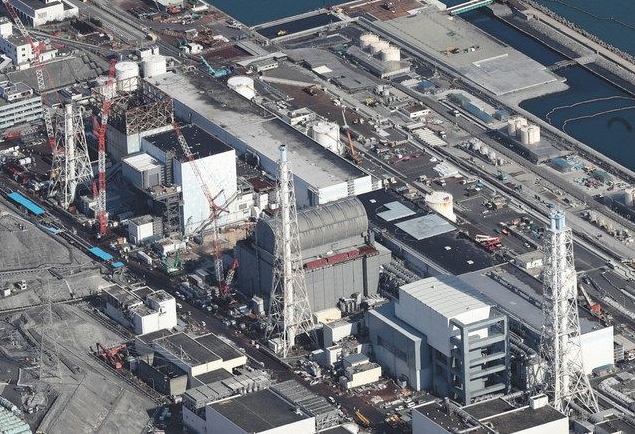
February 11, 2022
On March 11, it will be 11 years since the accident at TEPCO’s Fukushima Daiichi Nuclear Power Plant occurred. During this time, two goals have disappeared from the decommissioning plans of TEPCO and the government. During this time, two goals have disappeared from the decommissioning plans of TEPCO and the government: “zero generation of contaminated water” and “dismantling of reactor buildings. The core of decommissioning has been lost, and the goal of convergence work has yet to be drawn. (Kenta Onozawa)
Unable to stop inflow of groundwater as source of contamination
We want to proceed according to the schedule. We want to proceed as scheduled,” Akira Ono, chief executive officer of TEPCO’s Fukushima No. 1 Decommissioning Promotion Company, stressed at a press conference on January 27. The Nuclear Regulation Authority’s review of the plant’s facilities is scheduled to be conducted once a week, and is expected to be completed by the end of March.
In its initial decommissioning plan, TEPCO had set a goal of “zero generation of contaminated water. However, this goal disappeared when the plan was revised in 2019. Although the amount of contaminated water has been reduced to about one-third of what it was at the time of the accident, it is not known how the large amount of groundwater is flowing into the reactor buildings, the source of the contamination.
The frozen soil barrier, which was introduced to stop the inflow of groundwater, has not been proven to be effective. TEPCO did not respond to the request from the Regulatory Commission to show a direction to stop the water in the building, and continued to emphasize that the tanks would be full next spring, and the government decided to release the water into the ocean.
Once the release of treated water begins, there is no need for TEPCO and the government to hastily revive the goal of “zero contaminated water” because even if contaminated water continues to be generated, it can be purified and treated before being released. However, as long as contaminated water is not reduced to zero, the process of purification, storage, and release will continue endlessly.
Nuclear fuel removal technology and storage also face a difficult road.
What is even more unclear is what to do with the melted down nuclear fuel (debris) and the reactor building where it remains.
In a survey of the interior of the containment vessel of the Unit 1 reactor, a large amount of molten debris, which appeared to have solidified, was seen at the bottom of the vessel photographed by an underwater robot on August 9. It is likely to be debris, as it is close to the pressure vessel where the nuclear fuel was located.
Of the three reactors that suffered meltdowns, Unit 1 was the only one where the accumulation of debris could not be confirmed, and the detailed investigation using six different robots finally showed signs of progress.
However, the road to debris recovery is long and arduous. At the Unit 2 reactor, which will be the first to take out debris, trial collection is planned to start within 2010, but it will be limited to a few grams each by robots.
The total amount of debris, which is high-dose radioactive waste, is estimated to be 880 tons for the three reactors. The total amount of debris, or high-dose radioactive waste, is estimated to be 880 tons for the three reactors, and even if it takes 30 years to remove the debris, it will not be finished until 80 kilograms are removed each day. We do not have the technology to remove the entire amount of waste, nor do we have a concrete plan for how to store it in an environment where high radiation levels are a hindrance.
Decommissioning usually means clearing the land…
TEPCO and the government will maintain the plan to finish decommissioning the plant in 41-51 years, but the original plan to dismantle the reactor buildings disappeared in 2013. Decommissioning refers to the clearing of the land for normal nuclear power plants, but what is the status of Fukushima Daiichi?
The final decision on what to do will be made in consultation with the local government. Akira Ono, who is in charge of TEPCO’s decommissioning, once answered at a press conference. TEPCO and the government have yet to even consider the final form of decommissioning, with only the end date unchanged.
https://www.tokyo-np.co.jp/article/159484?rct=national&fbclid=IwAR2VVYtQA4iLWpvxMz_YXqCWzee3_uXLmJmR6yUaDYIrKJDdeezIIcr-lUE
Conflict resolution – the positive way out of the Ukraine crisis

According to Anatol Lieven, an academic and Ukraine specialist, this is “the most dangerous crisis in the world today; it is also in principle the most easily solved”. A solution exists, drawn up by France, Germany, Russia and Ukraine in 2015, which involves the implementation of the Minsk II agreement. This offers demilitarisation, a restoration of Ukrainian sovereignty including control of the border with Russia, and full autonomy for the Donbas region. The main objection for Kyiv is that autonomy for the Donbas would prevent Ukraine from joining Nato and the EU.
One way through this would be for Nato to declare Ukraine a neutral country and decree that it does not join Nato for at least a decade. In practice, Ukrainian membership of the EU is ruled out for at least a generation because of Ukraine’s corruption, political dysfunction and lack of economic progress.
I’m a conflict mediator. This is a way out of the Ukraine crisis https://www.theguardian.com/commentisfree/2022/feb/09/conflict-mediator-ukraine-vladimir-putin, Gabrielle Rifkind
Instead of ramping up the threats, western nations should be offering Vladimir Putin a ladder to climb down, The current western narrative on the Ukraine crisis is that Russia is a machiavellian power with an expansionist agenda. That view is shaping our response: we are matching Vladimir Putin’s aggression, meeting strength with strength and threats with threats. But what if we tried to get inside the mind of the enemy, and ask what was motivating the aggression? By doing so, could we break this cycle – and offer Putin a way out, too?
When the USSR deployed ballistic missiles to Cuba in the 1960s, their proximity to the US nearly unleashed a third world war. Sitting in Moscow today, does Putin see being encircled by Nato as an equivalent threat? After all, one of his core demands is that Nato curbs its expansion close to the Russian border, and that Ukraine must not join. Russia claims that the US repeatedly told Soviet leaders it would incorporate Russia into a cooperative European security framework. In practice, Nato emerged as a US-dominated security frame with about 75,000 US troops still on European soil. Great powers always treat with suspicion and hostility the presence of rival great powers on their borders.
Putin was always bitter about the collapse of the Soviet Union. He bided his time, and in 2014 Russia seized Crimea and sent troops into Ukraine’s mostly Russian-speaking Donbas region to support the separatist movement.
Russia today is no benign liberal democracy and President Putin has an intelligence mindset, playing poker, not chess. He is prepared to threaten war, create chaos and spread misinformation to push back Nato from Russia’s borders. Using coercive diplomacy, he has amassed more than 130,000 troops on the eastern border of Ukraine, a continued threat to its sovereignty.
Yet however provocative Russia’s behaviour, western governments have a responsibility not to escalate the threat of war. The consequences of a direct US-Russian confrontation in Ukraine would be catastrophic on all sides. A full-scale conventional war could escalate into nuclear war. Even a limited war would create a ruinous global economic crisis that could destroy for the foreseeable future any chance of serious action against climate change.
I have worked in conflict resolution for the past 20 years and seen the dangers of stumbling into wars, unable to stop or turn back. Selling weapons to a country may look like a principled act in support of an ally but it usually takes them deeper and deeper into the quagmire of conflict. The US and the UK have instigated and been involved in four failed wars this century, but we seem to have failed to have learned the lessons.
There are those who argue that sending military support to Ukraine strengthens Nato’s hand at the negotiating table. Yet there are inherent dangers in this approach – the use of deterrence could be the very thing that escalates the situation.
Washington and London have pledged to increase offensive military aid to Ukraine and have announced arms deliveries, ammunition and anti-tank weapons. The UK is seeking to put itself at the forefront of western efforts to forestall what the prime minister, Boris Johnson, has called the risk of a “lightning war” in eastern Europe.
Germany has been much more sceptical, blocking the transfer of German-made weapons from Baltic states to Ukraine. It has long argued against sending weapons to active conflict zones. Germany has declared that it is prepared to have a serious dialogue with Russia to defuse the highly dangerous situation, arguing that diplomacy is the only viable way.
Whatever western governments feel about Moscow’s behaviour, de-escalating the conflict and giving Moscow a ladder to climb down is in everyone’s interest. We should not underestimate the link between humiliation and aggression. Putin is a very proud man, and smart politics by western governments should offer face-saving gestures if we are serious about avoiding war.
According to Anatol Lieven, an academic and Ukraine specialist, this is “the most dangerous crisis in the world today; it is also in principle the most easily solved”. A solution exists, drawn up by France, Germany, Russia and Ukraine in 2015, which involves the implementation of the Minsk II agreement. This offers demilitarisation, a restoration of Ukrainian sovereignty including control of the border with Russia, and full autonomy for the Donbas region. The main objection for Kyiv is that autonomy for the Donbas would prevent Ukraine from joining Nato and the EU.
One way through this would be for Nato to declare Ukraine a neutral country and decree that it does not join Nato for at least a decade. In practice, Ukrainian membership of the EU is ruled out for at least a generation because of Ukraine’s corruption, political dysfunction and lack of economic progress.
Talks between Putin and France’s President Macron this week were more conciliatory in tone. Macron said: “There is no security for Europeans if there is no security for Russia.” A permanent forum where Russia is welcome is needed to re-examine the post-cold war security system in Europe. This approach to issues such as missile deployments, arms control and transparency around military exercises could ease this conflict. Such a dialogue could create a climate of security cooperation with Russia.
- Gabrielle Rifkind is a specialist in conflict resolution and the director of Oxford Process
Russian Congress of Intellectuals: An Open Letter to the Russian Leadership
Russian Congress of Intellectuals..An Open Letter to the Russian Leadership. https://johnmenadue.com/russian-congress-of-intellectuals-an-open-letter-to-the-russian-leadership-february-4-2022/ February 4, 2022, By John Menadue, (letter, signed by a large number of individuals)
Our position is simple: Russia does not need a war with Ukraine and the West. Such a war is devoid of legitimacy and has no moral basis.
There is an ever-increasing flow of alarming news about a possible Russian invasion of Ukraine. Reports are emerging about stepped-up recruitment of mercenaries within Russia and the transfer of fuel and military equipment to Ukraine’s Donetsk and Luhansk regions. In response, Ukraine is arming itself and NATO is sending additional forces into Eastern Europe. The tension is not abating, but rather mounting.
Russian citizens are becoming de facto hostages of a reckless adventurism that has come to typify Russia’s foreign policy. Not only must Russians live with the uncertainty of whether a large-scale war will begin, but they are also experiencing a sharp rise in prices and a devaluation of their currency. Is this the sort of policy Russians need? Do they want war—and are they ready to bear the brunt of it? Have they authorized the authorities to play with their lives in this way?
But no one asks Russian citizens for their opinion. There is no public debate. State television presents only a single viewpoint—that of the warmongers. Direct military threats, aggression and hatred are aimed at Ukraine, the US, and the West. But the most dangerous thing is that the war is being depicted not only as permissible, but as inevitable. This is an attempt to deceive the population, to impose upon them the idea of waging a crusade against the West, rather than investing in the country’s development and improving living standards. The cost of the conflict is never discussed, but the price—the huge, bloody price—will be paid by the common Russian people.
We, responsible citizens and patriots of Russia, appeal to Russia’s political leadership. We openly and publicly call out the Party of War that has been formed within the government.
We represent the viewpoint of those in Russian society who reject war, who consider unlawful the use of military threats and the deployment of a blackmailing style in foreign policy.
We reject war, whereas you, the Party of War, consider it acceptable. We stand for peace and prosperity for all Russian citizens, whereas you put our lives on the line for the sake of political games. You deceive and manipulate people, whereas we tell them the truth. You do not speak in the name of the Russian population—we do. For decades, the Russian people, who lost millions of lives in past wars, have lived by the saying: “if only there were no war.” Have you forgotten this?
Our position is quite simple. Russia does not need a war with Ukraine and the West. No one is threatening us, no one is attacking us. Policies based on the idea of such a war are immoral and irresponsible and must not be conducted in the name of the Russian people. Such a war is devoid of legitimacy and has no moral basis. Russian diplomacy should take no other position than a categorical rejection of such a war.
Not only does such a war not reflect Russia’s interests, but it also threatens the country’s very existence. The senseless actions of the country’s political leadership, which is pushing us in this direction, will inevitably lead to a mass anti-war movement in Russia. Each of us will naturally play a part in it.
We will do everything in our power to prevent this war, and if it begins, to stop it.
Signed,
Continue readingMacron goes for a new nuclear renaissance, despite the industry’s woes in France

France to build up to 14 new nuclear reactors by 2050, says Macron. French president says ‘renaissance’ of atomic energy industry will help end country’s reliance on fossil fuels, Guardian, Angelique Chrisafis in Paris 11 Feb 22, Emmanuel Macron has announced a “renaissance” for the French nuclear industry with a vast programme to build as many as 14 new reactors, arguing that it would help end the country’s reliance on fossil fuels and make France carbon neutral by 2050.
“What our country needs … is the rebirth of France’s nuclear industry,” Macron said in a speech in the eastern industrial town of Belfort, in which he lauded the country’s technological prowess.
The centrist French president, who is expected to announce his campaign for re-election this month, is conscious of a growing debate about energy ahead of this spring’s presidential vote as costs to consumers rise. Environmental issues are also a growing concern among French voters.
….. recent attempts to build new-generation reactors to replace older models have become mired in cost overruns and delays.
Presidential candidates on the right have supported more nuclear power plants saying France should have “sovereignty” over its electricity, while detractors on the left have warned of the cost and complexity of building new reactors. Environmentalists have raised safety concerns over radioactive waste that remains deadly for tens of thousands of years.
……… He also announced a major acceleration in the development of solar and offshore wind power. He said France had no choice but to rely on renewables and nuclearand that the country would also have to consume significantly less energy in the next decades.
He said he would seek to extend the lives of all existing French nuclear plants where it was safe to do so.
The announcement comes at a difficult time for debt-laden, state-controlled energy provider, EDF, which faces delays and budget overuns on new nuclear plants in France and Britain, and corrosion problems in some of its ageing reactors.
Macron announced the construction of at least six new reactors by EDF by 2050, with an option for another eight.
His recent focus on nuclear power marks a policy shift from the start of his presidency, when he had promised to reduce its share in France’s energy mix.
The French government lobbied hard and successfully to get the European Commission to label nuclear power “green” this month in a landmark review which means it can attract funding as a climate-friendly power source.
The Green presidential candidate, Yannick Jadot, said it was a moral imperative to progressively end France’s dependence on nuclear to protect the climate and French people’s safety. He said Macron’s project was backward-looking and would condemn France to a kind of “energy and industrial obsolescence”. https://www.theguardian.com/world/2022/feb/10/france-to-build-up-to-14-new-nuclear-reactors-by-2050-says-macron
1 This Month
Tell Congress: Prevent Nuclear Catastrophe in Iran

Tell Congress: Prevent Nuclear Catastrophe in Iran

Read the Public Inquiry Report, the Commissioners’ report, Surrendering Australia: The AUKUS Deception is available to download for free at aukuspublicinquiry.com. Or just watch the replay of the National Press Club Luncheon.


Shut down the radiation-damaged Heysham nuclear reactors now
To see nuclear-related stories in greater depth and intensity – go to https://nuclearinformation.wordpress.com

Say No to NASA’s Reckless Nuclear Reactor on the Moon
Say No to NASA’s Reckless Nuclear Reactor on the Moon
-
Archives
- November 2026 (224)
- October 2026 (302)
- September 2026 (339)
- August 2026 (330)
- July 2026 (355)
- June 2026 (287)
- May 2026 (306)
- April 2026 (356)
- March 2026 (251)
- February 2026 (267)
- January 2026 (308)
- December 2025 (358)
-
Categories
- 1
- 1 NUCLEAR ISSUES
- business and costs
- climate change
- culture and arts
- ENERGY
- environment
- health
- history
- indigenous issues
- Legal
- marketing of nuclear
- media
- opposition to nuclear
- PERSONAL STORIES
- politics
- politics international
- Religion and ethics
- safety
- secrets,lies and civil liberties
- spinbuster
- technology
- Uranium
- wastes
- weapons and war
- Women
- 2 WORLD
- ACTION
- AFRICA
- Atrocities
- AUSTRALIA
- Christina's notes
- Christina's themes
- culture and arts
- Events
- Fuk 2022
- Fuk 2023
- Fukushima 2017
- Fukushima 2018
- fukushima 2019
- Fukushima 2020
- Fukushima 2021
- general
- global warming
- Humour (God we need it)
- Nuclear
- RARE EARTHS
- Reference
- resources – print
- Resources -audiovicual
- Weekly Newsletter
- World
- World Nuclear
- YouTube
-
RSS
Entries RSS
Comments RSS

