NASA Is Sending Artificial Female Bodies to the Moon to Study Radiation Risks.

Gizmodo, Passant Rabie, May 3, 22, Helga and Zohar are headed for a trip around the Moon on an important mission, measuring radiation risks for female astronauts for the first time.
The inanimate pair are manikins modelled after the body of an adult woman. For the Artemis 1 mission, in which an uncrewed Orion capsule will travel to the Moon and back, one of the manikins will be outfitted with a newly developed radiation protection vest. Helga and Zohar, as they’re called, won’t be alone, as they’ll be joined by a third manikin that will collect data about flight accelerations and vibrations. Artemis 1 is scheduled to blast off later this year.
The Artemis program aims to return humans to the Moon for the first time in over 50 years, but this time the space agency has vowed to land the first woman on the dusty lunar surface.
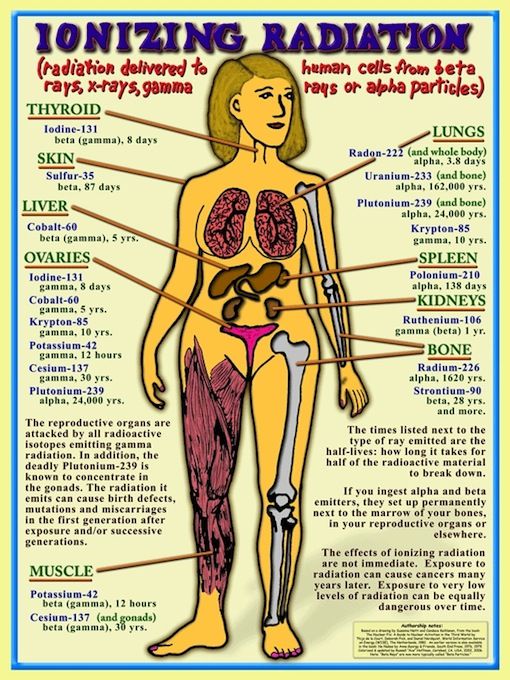
Women appear to be at a greater risk of suffering from the harmful effects of space radiation, so they have different radiation boundary levels than their male colleagues. Studies of radiation exposure for men and women indicate a higher chance of women developing cancer, while other research has found that space radiation is likely to affect female reproductive health…………………………………. https://www.gizmodo.com.au/2022/05/nasa-is-sending-artificial-female-bodies-to-the-moon-to-study-radiation-risks/
UK Greens the party on the rise – a ‘tectonic shift’ among voters.

Local elections 2022: Greens winning hearts in northeast as party eyes ‘tectonic shift’ among voters. Campaigners welcomed on doorstep in Labour stronghold South Shields as internal polls predict party will make large gains across the country.
The Greens are, by any measure, a party on the rise – both in the northeast and across the country. In a series of remarkable election results last year, they won 155 English and Welsh council seats, helping take their total to a record high of 467. They now lead two authorities, in Brighton and Hove, and Lancaster, are in a ruling coalition in another 13, including Oxfordshire, York and Sheffield, and make up the official opposition in eight more including Bristol, Norwich and Solihull.
Now, it is all but certain this growth will continue on 5 May: a realistic good night would see them smash the 500-seat barrier, party bosses suggest. In particular, they are hoping to move beyond their traditional metropolitan powerbases and establish a greater presence in the north’s old industrial heartlands. The increasing acceptance that the planet is, er, dying on its arse – that’s the climate crisis – has attracted plenty of voters in an area that will pretty quickly find itself under water if global temperatures continue rising.
But, perhaps of greater significance, is a tangible anger here at a sense of being taken for
granted by the dominant Labour Party for too long. “They’re sitting tenants,” one resident fumed. “They reckon they’ve a job for life and that’s how they treat it.”
Independent UK, 1st May 2022
South Africa: Five years after the illegal nuclear deal was nuked, we are still struggling with a broken energy system
Daily Maverick By Francesca de Gasparis and Makoma Lekalakala, 02 May 2022,
The South African government’s current approach to energy production is our biggest barrier to a just transition and it seems as though we are deliberately choosing fossil fuels and nuclear, while implementing renewables at a snail’s pace.
The month of April was not only significant to South Africa as Freedom Month, but was also the month in which Earthlife Africa Johannesburg and the Southern African Faith Communities’ Environment Institute (Safcei) commemorated the court victory that exposed the severity of the corruption within the state and halted government’s “illegal and unconstitutional” R1-trillion nuclear energy deal with Russia……….
Apart from revealing the depths of the rot within government and how far members of the state were willing to go to dupe the public, this was also the start of an intense battle which continues to rage between public interests versus those of government and corporate to protect citizens’ right to be consulted on huge capital spends, especially in energy procurement that may affect them……………..
A publication released at COP26 in December 2021, Neither Climate Nor Jobs: Nuclear Myths About the Just Transition, argues that nuclear will be detrimental to our “collective capacity to transform our energy systems in a way that leaves no one behind”.
While nuclear power operations do not have as large a carbon footprint as coal, gas and oil, there are numerous other issues with this outdated and largely failed technology that must be considered, that make nuclear power utterly unsuitable for South Africa’s energy needs in our current reality. Comparatively, the carbon footprint of nuclear power is estimated to be at least two to four times more than that of renewables.
There are a number of reasons that nuclear energy is NOT a solution to the climate emergency and why it should not be part of the just transition. First, South Africa needs development that is pro-poor, and basic services need to be provided that are affordable to all. This means that the country’s energy plans should work to reduce the gaps in inequality, with the people – not industry nor the economy nor profits – at the centre of its plans.
Sadly, the government’s current approach to energy production is our country’s biggest barrier to a just transition and it seems as though we are deliberately choosing fossil fuels and nuclear, while implementing renewables at a snail’s pace.
Investing in nuclear energy requires huge capital investment – which could have an impact on public spending on social services – while the centralised and costly nature of its production will do little to reduce the widespread energy poverty in the country. When considering the urgent need for poverty-alleviating approaches to development and energy production, the fact that renewables create more jobs (with a wider variety and in more flexible locations) and can be installed in a matter of months, provides more compelling arguments against nuclear.
Furthermore, as climate change takes root and weather conditions become more extreme, a just transition will require a flexible and decentralised electricity supply for greater stability. Without even considering nuclear power stations’ poor installation and cost performance globally, we need only look at South Africa’s only existing nuclear power station at Koeberg to know that nuclear has not proven to be particularly reliable over the past 18 months.
Ongoing issues at the nuclear power station are a significant part of the reason that citizens have been plunged into darkness once again. We must recognise Koeberg’s deteriorating performance while noting the ongoing governance issues at Eskom and the Department of Mineral Resources and Energy.
Another reason that nuclear energy is not fit for purpose for our current and future energy needs is the outdated argument of the necessity of baseload energy, which completely ignores the strides made in modern technology. This type of centralised power often takes very long to come online and will do little to alleviate the energy poverty in the country. Even in the best-case scenario, it would be at least another decade before we are likely to get any electricity from a new power plant.
Just the fact that we need to keep temperatures below 1.5°C by 2030 means that even if we did go the nuclear route, we would be far too late to mitigate carbon emissions in any meaningful way. Yet, our government insists on wasting time pursuing nuclear, while utility-scale renewable energy projects could be ready in less than half the time.
South Africa is at a crossroads. Are we really willing to continue making the mistakes of the past?……….

It is important, at this point, to remind South Africans that it was as a result of a national effort by many civil society organisations, academics and concerned citizens that we were able to stop then-President Jacob Zuma’s illegal nuclear deal five years ago, sparing us from the effects of the bankruptcy that would have ensued.
At a time when the divisions in our society were becoming decidedly evident, it was wonderful to be part of such a unifying campaign with people from all walks of life. From eco-justice NGOs to community-based organisations, right down to the ordinary person on the street, most South Africans knew we had to stand together or risk losing our country…….. https://www.dailymaverick.co.za/article/2022-05-02-five-years-after-the-illegal-nuclear-deal-was-nuked-we-are-still-struggling-with-a-broken-energy-system/
Czech state looking for place to store nuclear waste as EU deadline shortens
English Radio CZ 05/02/2022 The Ministry of Industry is looking for ways to speed up the planned construction of a nuclear waste facility in the Czech Republic, which would enable the country to fulfil the EU’s taxonomy plan for using nuclear energy as a clean source. However, the plan is running into opposition from local districts who don’t want nuclear waste stored near their homes. The Czech Republic has two nuclear power plants, but nowhere to store its nuclear waste. At least in the long term. For now, nuclear waste is being stored in barrels located inside the power plants themselves, says Jiří Bezděk, the spokesman for the Dukovany nuclear power plant, who took Czech Radio on a tour of the facility.
You can see we are now in the storage facility for used nuclear fuel. This fuel can be stored in containers for a period of up to 60 years. Thereafter, you can take it out, check the container and put the fuel back in for another six decades.”
……….. the RWRA has nowhere to store the waste.
Originally, the Czech government counted on building a deep nuclear waste storage facility by 2065, but the EUs taxonomy plan which was agreed earlier this year, has cut that deadline to the year 2050.
Both Deputy Industry Minister Tomáš Ehler and the head of the country’s Nuclear Safety Office Dana Drábová have said that fulfilling the shorter deadline is possible on paper. However, it necessitates speeding up relevant research activities as well as finally deciding on where the state wants to build the storage facility.
Founded in 2001, the state’s Radioactive Waste Repository Authority has had over 20 years’ time to find a suitable storage location. And it has. Four locations were approved by the government as suitable prospective sites for a deep storage facility.
However, local residents of each of these proposed sites are strongly against the construction. Some of them have banded into the “Platform against deep storage”, a civic organisation that lobbies for an alternative to deep nuclear waste storage and for the construction of any such facility to be subject to a local district vote. The organisation’s secretary, Edvard Sequens, says that locals have more say in the process in other countries…………….. https://english.radio.cz/czech-state-looking-place-store-nuclear-waste-eu-deadline-shortens-8749305
Finnish consortium abandons Fennovoima nuclear power project
Finnish group abandons plans for Russia-backed nuclear power plant
Contract with Rosatom terminated as war in Ukraine deals final blow to controversial energy project, Ft.com, Richard Milne, Nordic and Baltic Correspondent, 2 May 22,
A Finnish consortium has abandoned controversial plans to build a Russian nuclear power plant in the Nordic country as Moscow’s invasion of Ukraine dealt a terminal blow to the project. The Fennovoima project has been mired in controversy from the outset with Finland’s then environment minister telling the Financial Times in 2014 that it was an example of “Finlandisation”, a loaded term that refers to a smaller country adapting its policies to suit a larger, more powerful neighbour.
The Hanhikivi 1 project was particularly controversial because Rosatom, the Russian state nuclear company, was not just the supplier of the reactor but also the main shareholder and financial backer of the Fennovoima consortium. Rosatom owns 34 per cent while Finnish companies such as energy group Fortum, steelmakers SSAB and Outokumpu as well as local municipalities own the rest. Fennovoima said on Monday that it had terminated the contract with Rosatom due to “significant and growing delays during the last years”, which have been exacerbated by the war in Ukraine. ………………………………….. https://www.ft.com/content/5e7730b5-be55-48a5-8f55-f67d6fb80d77
Senate Approves Radiation Exposure Compensation Act Extension
https://nativenewsonline.net/health/senate-approves-radiation-exposure-compensation-act-extension, BY KELSEY TURNER MAY 02, 2022, The U.S. Senate on Thursday unanimously approved a two-year extension of an act giving compensation to people who were exposed to radiation from atomic weapons testing and uranium mining. The Radiation Exposure Compensation Act (RECA), which is set to expire in July, provides one-time benefit payments to those who have been diagnosed with cancer or other diseases relating to radiation exposure. The extension now awaits approval by the House.
Since its creation in 1990, RECA has given over $2.4 billion in benefits to more than 38,000 people in Nevada, Utah and other impacted areas. Compensation is available to several groups, including “onsite participants” involved in atmospheric test of an atomic weapon, “downwinders” who were present in certain areas near test sites, and uranium miners, millers and ore transporters who worked with uranium. If passed, the extension would give people more time to apply for compensation.
Navajo Nation President Jonathan Nez applauded the Senate’s approval of the extension, saying it “demonstrates strong bi-partisan support for former uranium miners, downwinders, and many others who have to live with the devastating health effects to this day.”
In March, Nez met with members of both political parties in Washington, D.C., where he voiced the concerns of Navajo people experiencing health impacts due to radioactive contamination and exposure from abandoned uranium mines.
“This is a united effort on behalf of former uranium miners and their families, to secure just compensation and benefits for the health issues and detrimental impacts of uranium mining conducted by the federal government,” Nez said in a Navajo Nation press release. “The RECA bill is an opportunity for Congress to be a part of something historic for the Navajo people, the Navajo Uranium Radiation Victims Committee, and other impacted groups.”
Nez encouraged legislators to work toward a long-term solution that would extend RECA until 2040. A bill sponsored by Idaho Sen. Mike Crapo proposes to expand and extend RECA for another 19 years following the bill’s enactment.
Navajo Nation is pushing for this expansion to include all downwinders, create additional categories of uranium workers and radiation-related illnesses, and increase the minimum compensation received by affected individuals.
Energy saving actions by European citizens could greatly reduce use of oil and gas
Energy saving actions by EU citizens could save enough oil to fill 120
super tankers and enough natural gas to heat 20 million homes.
IEA 21st April 2022
https://www.iea.org/news/energy-saving-actions-by-eu-citizens-could-save-enough-oil-to-fill-120-super-tankers-and-enough-natural-gas-to-heat-20-million-hom
They suck your electricity while you sleep. What you need to know about vampire appliances
They suck your electricity while you sleep. What you need to know about vampire appliances
Working behind the scenes while you’re sleeping, vampire appliances are consuming energy even when they’re turned off. So what exactly are they and will turning them off at the wall make any difference to your power bills? Let’s find out.
Private equity firms eyeing Toshiba buyout face nuclear dilemma

Japan Times, BY YUKI FURUKAWA AND TAKASHI MOCHIZUKI, BLOOMBERG, May 2, 2022
It’s the multibillion dollar conundrum facing private equity firms trying to snap up Toshiba Corp.: What to do about the troubled conglomerate’s sensitive nuclear power business?
Toshiba, which had originally opposed a buyout, now plans to solicit proposals from potential investors in a drastic change in stance. The nuclear unit, which is deemed important to Japan’s national security, could be the biggest obstacle to any deal.
As PE giants including Bain Capital, CVC Capital Partners and KKR & Co. consider bids for the company, one of their biggest challenges will be devising a plan that wins government approval. According to experts, they have no easy choices.
“If a foreign fund were to buy Toshiba, it would be subject to examination by the government under the Foreign Exchange and Foreign Trade Control Law,” said Mitsuhito Taki, a lawyer specializing in corporate legal affairs at Yanagida & Partners in Tokyo. “It would be difficult to allow a foreign fund to acquire the company given Toshiba’s current business profile.”
Representatives for CVC and KKR declined to comment. Bain didn’t comment.
Toshiba’s nuclear business is involved in decommissioning the wrecked Fukushima No. 1 nuclear power plant, making it hard for the government to accept a transfer of ownership to an overseas firm. The company also retrofits existing nuclear plants across the country to meet post-Fukushima safety standards and resume operations.
…………. another option would be to sell the nuclear unit, either before or shortly after a PE deal. However, finding a buyer wouldn’t be easy, according to Ryuzo Yamamoto, a professor emeritus specializing in energy policy at Tokoha University in Shizuoka prefecture.
Toshiba’s nuclear technology has fallen behind trends outside Japan, Yamamoto said. The firm lags behind overseas rivals in developing small and advanced modular reactors. And Toshiba’s boiling water reactors aren’t being considered for use in future projects……….. https://www.japantimes.co.jp/news/2022/05/02/business/corporate-business/toshiba-buyout-nuclear/
Nuclear weapons pose the greatest immediate threat to human health and welfare — IPPNW peace and health blog

Joint International Health Statement for the 1st Meeting of States Parties of the Treaty on the Prohibition of Nuclear Weapons Representing physicians, nurses, public health professionals, and medical students worldwide, we speak with a united voice on the urgent need to eliminate nuclear weapons as a matter of global health and survival. Updated evidence on the catastrophic […]
Nuclear weapons pose the greatest immediate threat to human health and welfare — IPPNW peace and health blog
Europe subjugated, NATO shifts from Atlantic to Pacific Ocean — Anti-bellum
CGTNApril 29, 2022 ‘Defensive’ NATO destabilizes Pacific for U.S. hegemony Japan – an Asian country that surrendered in World War II – will attend a summit by North Atlantic Treaty Organization – a Western military bloc established during the Cold War era – in late June, U.S. Secretary of State Antony Blinken announced this week. […]
Europe subjugated, NATO shifts from Atlantic to Pacific Ocean — Anti-bellum
This week in nuclear news

A bit of good news – We can restore the climate – getting past climate despair. Tasmania has become one of the first parts of the world to become not just carbon neutral but carbon negative .
Coronavirus. Global, new cases and deaths are declining, but still increasing in some countries.
IRussia and the West are closer to nuclear war than they were during the Cuban Missile Crisis, warns Nikita Khrushchev’s daughter – 60 years after her father backed down from Armageddon.
NATO allies marching in lockstep: U.S., Canadian defense chiefs meet twice in a week.
NATO’s national armaments directors discuss Ukraine bonanza
The 1983 Military Drill That Nearly Sparked Nuclear War With the Soviets. U.S. sees no threat of Russia using nuclear weapons despite rhetoric- official. Huge solar storm once almost triggered nuclear war between USA and Russia.
Climate change ‘already’ raising risk of virus spread between mammals.
Climate change is increasing the likelihood of another pandemic, researchers warn.
Solar beats nuclear at many potential settlement sites on Mars. Photovoltaics vs. nuclear power on Mars.
Renewables to be “the new baseload” by 2030, says McKinsey 2022 Global Energy Perspective.
UKRAINE. International Atomic Energy Agency very concerned at dangers at Ukraine’s Zaporizhzhia nuclear complex. Despite deteriorating situation, Ukrainian parliament still insisting on NATO accession. IAEA probing Ukraine report that a missile flew over a nuclear power plant. The USA has not been able to confirm the allegations that Russia used chemical weapons in Ukraine.
JAPAN. Japan prepares to dump water ignoring nuclear safety fears. Japan’s Toxic Dumping Faces Growing Protests.
CANADA. Concerns about commercial wastes destined for disposal in the Chalk River Mound.
USA.
- This Is How the United States Could Help Bring Peace to Ukraine. USA and NATO pursuing a ”winnable war’‘ to the ultimate end – World War 3. ‘A downpayment on WWIII’: Peace advocates blast Biden’s ask for more Ukraine aid.
- Effort to stop banks financing nuclear weapons industry.
- Poor outlook for Joe Biden’s $6 billion effort to keep old nuclear reactors going.
- Safety concerns about NuScam’s much touted ”small nuclear reactor”
- Where will Connecticut’s nuclear waste go?
- Girl’s Cancer Leads Mom to ‘Overwhelming’ Discovery of More Than 50 Sick Kids Near Closed Nuclear Lab.
INDIA. Severe Indian heatwave will bake a billion people and damage crops. Delhi sweltering under extreme heat, electricity shortage. https://www.youtube.com/watch?v=XDfZcXVGxSs Pakistan, India reel under intense heat wave.
UK. Britain’s very wrong turn in energy policy.
RUSSIA. ‘Balancing on the brink’: Senior Russian diplomat warns Western powers of nuclear threat. Russia’s Antiquated Nuclear Warning System Jeopardizes Us All. Russia Just Tested the World’s Largest Nuclear-Tipped Missile.
GERMANY. Germany backs a plan to put sanctions on the supply from Russia, of uranium, the fuel for Europe’s so called ”independent self-sufficient, sovereign” nuclear energy.
SWITZERLAND. NATO pulls Switzerland deeper into its meshes — Anti-bellum
FRANCE. Is France really the poster boy for nuclear power? Nearly half of its reactors are shut down for maintenance and safety reasons . The stress corrosion problem could be affecting all of France’s nuclear reactors.
N. KOREA. Kim warns North Korea would ‘pre-emptively’ use nuclear weapons.
IRAN. Europe to Make Fresh Push to Revive Iran Nuclear Deal.
AUSTRALIA. Change of government would present ‘great opportunity’ in fight to free Julian Assange. https://www.youtube.com/watch?v=V8zYQp3rrG8
New publication reveals massive errors in Radiation Protection laws and identifies the cause of the global cancer epidemic.

Green Audit UK/ Environmental Research SIA, Latvia
Low Level Radiation Campaign. Press Release 25/04/2022:
Immediate
New peer-reviewed publication reveals massive errors in Radiation Protection laws and identifies the cause of the global cancer epidemic.
In an invited article, published on 21st April in the Elsevier Open Access journal: Cancer Treatment and Research Communications, British Scientist, Christopher Busby presents comprehensive evidence that the current scientific radiation risk model was dishonestly assembled and is shown to be totally unsafe for the purposes of underpinning current legal limits for exposure to common radioactive materials released to the environment [1].
Dr Busby has spent 30 years of his life researching this issue, and the acceptance after 7 months of peer review of this article is certainly a breakthrough, one that followed his previous journal article showing that the Japanese lifespan study of the Hiroshima and Nagasaki bombing was dishonestly manipulated [2].
Busby, who was previously Visiting Professor at the University of Ulster, said: I have worked for more than 30 years on this issue, and I have been attacked on the internet; my Wikipedia entries are constantly changed by trolls in an invisible war against the idea that internal radiation is very dangerous. I have stuck to the issue and refused to back off, because it is critical for life on the planet—to the children and grandchildren.
The new paper illuminates the hidden way in which the US-influenced radiation model was constructed between 1956 and 1977: the Absorbed Dose, Linear No Threshold method. This diluted internal radioactivity into the whole body in such a way that it could be argued that its health effects were vanishingly small. In reality, radiation effects at the DNA and the cell (where cancer starts) were thousands of times higher, as was the cancer yield from exposures.
The risk model enabled the development of nuclear bombs, nuclear power and Depleted Uranium weapons. The atmospheric tests resulted in the global cancer epidemic and more than 200 million deaths in those exposed and also their children. Dr Busby, who has assisted in obtaining compensation for radiation and cancer in a significant number of US court cases presently represents Nuclear Test Veterans in the British Tribunals, and a Scots nuclear submarine cancer victim in the Scottish Tribunals.
In the paper he discusses the mistakes made by those epidemiologists studying Test Veterans, Nuclear workers and the Radium dial painter studies. The inevitable scientific acceptance of the failure of the risk model will clearly change the energy and military future landscape.
Dr Busby together with Professors Alexey Yablokov, Alice Stewart, Inge Shmitz-Feuerhake, Rosalie Bertell and Molly Scott Cato set up the independent European Committee on Radiation Risk (ECRR) in Brussels in 1998. The ECRR risk model was published in 2003 and 2010 and a new version is due this year.
[1] Christopher Busby (2022) Radiation and Cancer—The failure of the Risk Model. https://doi.org/10.1016/j.ctarc.2022.100565
[2] Christopher Busby (2021) The Hiroshima A-Bomb Black Rain and the lifespan study—Resolution of the enigma. DOI: 10.1080/07357907.2021.1977818
Contact: Chris Busby: +371-29419511 christo@greenaudit.org
Richard Bramhall (LLRC) +44-7887924043 lowradcampaign@gmail.com
Britain’s very wrong turn in energy policy

At least Rishi Sunak would appear to have recognised all this nuclear nonsense for the massive con trick it is. As far as the Treasury is concerned, a few hundred million to prop up Rolls-Royce, and a couple of billion to keep the prospect of Sizewell C alive – that’s acceptable, it would seem. Beyond that, from the Chancellor’s perspective, lies one vast funding black hole. Not least because of nuclear waste.
Courtesy of the mainstream media’s cosy relationship with the nuclear industry, we hardly ever hear about this. But the Treasury writes a cheque to the Nuclear Decommissioning Authority of around £2.5bn every year – to deal with the legacy of our earlier nuclear investments in terms of waste management and decommissioning. The price tag just for cleaning up Sellafield has now risen to an astonishing £97bn! On top of that, the anticipated cost of an underground storage facility to house the high-level waste for thousands of years has now risen to as much as £53bn – according to the Government’s own figures. That’s the cost of old nuclear. It will be no different with any new nuclear.
Why a nuclear power policy is clearly the road not to take
Wrong turn — Beyond Nuclear International The establishment’s obsession with nuclear power just won’t die,
more https://wordpress.com/read/feeds/72759838/posts/3984916370
By Jonathon Porritt 1 May 22,
This is absolutely the right time for a new Energy Strategy. Unfortunately, we’ve got absolutely the wrong politicians in charge of it. In the UK, the combination of Prime Minister Boris Johnson and Chancellor of the Exchequer Rishi Sunak all but guarantees that the new Energy Security Strategy will fail on most counts.
– In Boris Johnson, we have a careless showman, drawn unerringly to ‘big ticket’ announcements, groomed by a nuclear industry that knows exactly how to play to these personality defects.
– In Rishi Sunak, we have a man so detached from the reality of most people’s lives that the prospect of five million UK citizens finding themselves in fuel poverty by the end of the year means literally nothing.
Careless Johnson and callous Sunak is a devastating double-act – with the inconsequential figure of Kwasi Kwarteng (UK Secretary of State for Business, Energy and Industrial Strategy) lurking around to pick up the pieces.
There will, of course, be some welcome commitments in the new UK Strategy, particularly on solar and offshore wind, with a hugely encouraging pipeline of new developments in both now underpinning the UK’s decarbonisation strategy. Onshore wind may well get more encouragement than in the past, but the aesthetic sensibilities of Tory Nimbies will still matter more to Johnson and Sunak than the opportunity to ramp up the single most cost-effective source of renewable electricity – coming in at an astonishing 20% of the cost of new nuclear! Yet again, those ‘hard-working families’ Johnson constantly refers to will pay the price for this appalling policy failure.
The UK establishment’s obsession with nuclear power just won’t die. Boris Johnson is heading off down a well-worn path. Margaret Thatcher promised to build a nuclear reactor every year for ten years at the start of her time in office. In 2006, Tony Blair vowed to bring back nuclear power ‘with a vengeance’. David Cameron’s Government identified opportunities for a massive expansion of nuclear.
However, apart from Sizewell B (which came online in 1995) and EDF’s grotesquely expensive monster emerging at Hinkley Point C, there’s nothing to show for all that overblown nuclear enthusiasm. The industry blames this 40-year failure on everyone else – including a generation of anti-nuclear campaigners. In truth, the blame lies entirely with the industry itself, mendaciously promoting outdated, dangerous, increasingly expensive technologies.
Johnson’s big nuclear bets will almost certainly include big reactors at both Sizewell C and Wylfa, and as many as possible of the so-called ‘small reactors’ being pushed by Rolls-Royce. Regardless of the hype, the economic reality of all of these bets is dire:
Sizewell C – with the Chinese out of the picture, the Government will be looking to its new Regulated Asset Base funding model (with consumers having to pay up front) to persuade private investors to get on board. Backed (so far) by the promise of £1.75bn of taxpayers’ money.
Wylfa – so much effort has gone into trying to get a new reactor at Wylfa over the line over the last ten years! All to no avail – primarily for economic reasons. Any renewed ‘firm commitment’ for Wylfa will mean as little as all previous commitments.
Rolls-Royce’s Small Modular Reactors – apparently, Johnson is particularly excited by this prospect, even though they’re not even remotely small (at 470MW, they’re actually as big as the first generation of Magnox reactors here in the UK!), and no-one has ever done modular construction (offsite in factory settings) before now.
And none of these ‘exciting prospects’ will give Johnson (let alone hard-pressed UK consumers) one single electron in terms of helping to meet the Government’s target to have carbon-free electricity by 2035.
Continue readingGermany backs a plan to put sanctions on the supply from Russia, of uranium, the fuel for Europe’s so called ”independent self-sufficient, sovereign” nuclear energy.

Russia faces threat of sanctions on nuclear power industry as Germany backs uranium ban https://www.politico.eu/article/russia-nuclear-power-uranium-plants-europe-imports-germany-sanctions-ukraine-war/
Move would hit the supply of uranium to the EU’s Russian-built reactors, as well as new nuclear projects., BY BARBARA MOENS, ZIA WEISE, AMERICA HERNANDEZ AND LEONIE KIJEWSKI. April 29, 2022 Germany has thrown its weight behind demands to sanction uranium imports from Russia and other parts of Vladimir Putin’s civil nuclear industry in retaliation for his invasion of Ukraine, five EU diplomats told POLITICO.
Such a move could hit the supply of uranium that fuels the bloc’s Russian-built power reactors, as well as new nuclear projects managed by Russia’s Rosatom Western Europe subsidiary, based in Paris.
Four of the diplomats said sanctioning Russia’s nuclear industry was discussed in a meeting with EU ambassadors and the Commission earlier this week, with Poland and the Baltic countries leading the calls to act.
“Germany’s ambassador on Wednesday announced Berlin’s new position, saying they are not only OK with oil sanctions, but they actively support an oil phaseout, rather than just a price cap, and a ban on Russian uranium,” one EU diplomat said.
The fact that Germany, the EU’s economic powerhouse, is now on board makes the move significantly more likely. A wide range of MEPs have also asked for nuclear to be included in EU sanctions.
“It is important for the Germans, Austrians and others that the EU reduces its energy dependency on Russia across the board. This includes banning imports of Russian nuclear fuels as well. For them it is a bit of a no-brainer,” an EU diplomat said.
The European Commission is working on proposals for a sixth package of sanctions against Russia, including potentially measures targeting oil. Details are expected to be discussed with EU countries in the coming days as European governments seek to intensify pressure on Putin by cutting off the revenues from energy exports that finance his invasion of Ukraine.
It is not yet clear how soon sanctions on nuclear imports to the EU could be imposed.
But any move against Russia’s nuclear industry would not be pain free for Europeans. The EU imports almost all of its uranium from outside the bloc. About 20 percent comes from Russia, making it the second-biggest supplier to the EU after Niger.
1 This Month
Tell Congress: Prevent Nuclear Catastrophe in Iran

Tell Congress: Prevent Nuclear Catastrophe in Iran

Read the Public Inquiry Report, the Commissioners’ report, Surrendering Australia: The AUKUS Deception is available to download for free at aukuspublicinquiry.com. Or just watch the replay of the National Press Club Luncheon.


Shut down the radiation-damaged Heysham nuclear reactors now
To see nuclear-related stories in greater depth and intensity – go to https://nuclearinformation.wordpress.com

Say No to NASA’s Reckless Nuclear Reactor on the Moon
Say No to NASA’s Reckless Nuclear Reactor on the Moon
-
Archives
- November 2026 (214)
- October 2026 (302)
- September 2026 (339)
- August 2026 (330)
- July 2026 (355)
- June 2026 (287)
- May 2026 (306)
- April 2026 (356)
- March 2026 (251)
- February 2026 (267)
- January 2026 (308)
- December 2025 (358)
-
Categories
- 1
- 1 NUCLEAR ISSUES
- business and costs
- climate change
- culture and arts
- ENERGY
- environment
- health
- history
- indigenous issues
- Legal
- marketing of nuclear
- media
- opposition to nuclear
- PERSONAL STORIES
- politics
- politics international
- Religion and ethics
- safety
- secrets,lies and civil liberties
- spinbuster
- technology
- Uranium
- wastes
- weapons and war
- Women
- 2 WORLD
- ACTION
- AFRICA
- Atrocities
- AUSTRALIA
- Christina's notes
- Christina's themes
- culture and arts
- Events
- Fuk 2022
- Fuk 2023
- Fukushima 2017
- Fukushima 2018
- fukushima 2019
- Fukushima 2020
- Fukushima 2021
- general
- global warming
- Humour (God we need it)
- Nuclear
- RARE EARTHS
- Reference
- resources – print
- Resources -audiovicual
- Weekly Newsletter
- World
- World Nuclear
- YouTube
-
RSS
Entries RSS
Comments RSS

