New Mexico’s ’s nuclear waste dump could be open ‘forever’ despite 2024 closure date.
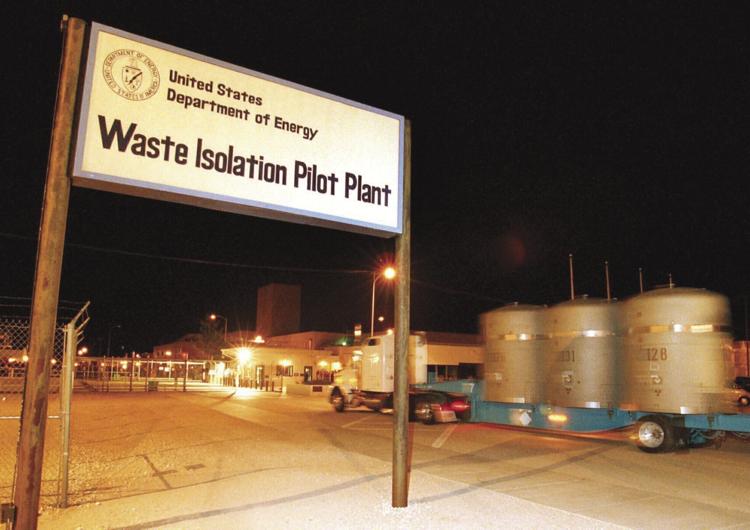
WIPP leaders also want approval for plan to increase waste storage
Source NM, BY: PATRICK LOHMANN – AUGUST 8, 2022
Shipments of nuclear waste to the nation’s only deep geological repository for the hazardous material show no signs of slowing in the coming years, despite the current permit calling for the plant to begin closing in 2024.
The future of shipments to the Waste Isolation Pilot Plant east of Carlsbad was the subject of debate and scrutiny during a meeting among a state legislative committee Friday in Clovis. The site stores waste like clothing, rags, soils and tools contaminated with radioactive elements due to nuclear weapons research and assembly in places like Los Alamos National Laboratory and Idaho National Laboratory.
WIPP leaders are seeking renewal of the 10-year permit that allows the site to continue receiving shipments, plus the state’s approval of an expansion of the plant to store more waste.
But advocates closely watching the plant for decades say such approval could open the door to an unending stream of radioactive waste transported across the country into New Mexico.
So far this fiscal year, WIPP has received 190 shipments. The material arrives from about 10 sites across the country, shipped in large drums on semi-trailers along state roads and interstates. The site has received more than 13,000 such shipments since 1999. When the waste arrives, and if it meets meets WIPP’s safety standards, the material is “emplaced” for permanent disposal in one of eight large panels a half-mile below ground that are sealed when full.
The 1990 federal law that allowed WIPP to be created and an agreement between the state of New Mexico and United States Department of Energy permits the site to permanently hold up to 175,000 cubic meters of the waste.
But WIPP needs more space to fulfill that mission, said Reinhard Knerr, manager of the DOE Carlsbad Field Office. Six of the eight panels are sealed, despite the facility having only disposed of 40% of the 175,000 cubic meters it can receive. …………………………………..
But Don Hancock, who runs the nuclear waste program at the Southwest Research and Information Center, said WIPP leaders are seeking to abandon the principles set out when WIPP began. He also fears the DOE is trying to prime the site to become the nation’s only recipient of this kind of radioactive waste for years to come.
Hancock testified Friday that WIPP was meant to be a site that would permanently dispose of waste only until new repositories would be opened up across the country. The legislation creating WIPP says it would store “up to” 175,000 cubic meters, he noted, and he said lawmakers at the time fully expected that the site could be decommissioned without being filled completely.
But instead, other potential sites across America have been identified but not opened in the intervening years, Hancock said, and an official told him recently at a public meeting that the DOE currently had “no plan” for a waste repository elsewhere.
“WIPP is the only repository. It was supposed to be the first, but not only. Other repositories are necessary for legal reasons, agreements with the state of New Mexico, technical reasons,” Hancock told lawmakers. “But now the Department of Energy is saying they have no plan for any other… waste repository.”
Hancock said the state should use its role to push the Department of Energy to open up other sites elsewhere and should push for specific closure dates when the permit comes up for renewal. He also is asking the state Legislature to push for more transparency from the DOE and more public involvement.
The state is hoping to have a revised permit for WIPP by May of 2023, a state official told the panel.
Hancock said the DOE has no longer even offered a potential closure date for WIPP in any of its recent permit applications. That’s another tell, he said, that shows the DOE no longer has any interest in finding an alternative to WIPP.
The New Mexico Environment Department recently asked the feds to provide a potential closure date. The DOE said it could take as long as 2083 for WIPP to dispose of all current and projected waste being produced across the country.
Hancock, speaking to Source New Mexico after the meeting, said the fact that DOE is being coy about the eventual closure of WIPP should concern generations of New Mexicans.
“When you’re supposed to be from 1999 to 2024 and are now say 1999 to 2083, that looks like forever,” he said. “Because if you go 60 years more, why are you not going to say again, ‘Oh, well, we don’t have any other place. So guess what?’”………………….
A 2020 analysis by the National Academies of Sciences found that all waste that has been generated or is planned to be, will exceed WIPP’s legal capacity by at least 10%. That’s another issue the DOE has not responded to publicly, Hancock said.
The bi-partisan legislative committee, made up of state senators and representatives, ultimately voted to send a letter to the Department of Energy asking questions about shipments and seeking more transparency. https://sourcenm.com/2022/08/08/nms-nuclear-waste-site-could-be-open-forever-despite-2024-closure-date-advocate-warns/
Regional security threat haunts nuclear power debate in Australia
we cannot ignore when weighing up these arguments that recent events at Zaporizhzhia help bolster the case against nuclear power. We would not want any future nuclear facilities to become hostage to the vagaries of war.
https://www.theage.com.au/national/regional-security-threat-haunts-nuclear-power-debate-20220808-p5b82t.html Editorial, August 8, 2022, The alarm sounded by the head of the International Atomic Energy Agency (IAEA), Rafael Mariano Grossi, that fighting between Russian invaders and Ukrainian forces near the Zaporizhzhia nuclear power plant carried “the very real risk of a nuclear disaster” is one with relevance far beyond the war raging within Ukraine’s borders.
The conflict has already served as a grim warning for powers such as Germany and the United States of the costs of relying on fossil fuel-producing nations with despotic leaders for energy supply. But Russia’s seizures of Zaporizhzhia and the defunct power plant at Chernobyl in the early days of the war – though Chernobyl later returned to Ukrainian control – have highlighted that a decision to increase reliance on nuclear power would carry risks even beyond the familiar ones.
As Industry and Science Minister Ed Husic pointed out during Grossi’s recent visit to this country, Australia has an exemplary record on nuclear safety. But one of the most important reasons for this is that we have a ban on using nuclear fission for power generation and have committed not to develop a nuclear arsenal under the Non-Proliferation Treaty (NPT).
In recent times both these bans have returned to the spotlight, as the Coalition in opposition has raised the possibility of domestic nuclear power plants to address our energy needs. This followed the Morrison government’s signing of the AUKUS deal with London and Washington last year. The deal envisions Royal Australian Navy submarines being fuelled with weapons-grade uranium.
Peter Hartcher reported for The Agethat the first question US President Joe Biden raised when the AUKUS proposal was put to him was whether it breached non-proliferation commitments. The key to addressing this question has been paragraph 14 of the IAEA’s safeguards agreement with Australia, which creates a loophole allowing weapons-grade material to be used without the usual safeguards in “non-proscribed military activity”. Concerns were raised earlier this month, at the latest meeting to review the treaty, that regardless of Australia’s good intentions, this would set a precedent for further transfers of highly enriched nuclear material to other nations.
Grossi has pointed out that Iran, which first informed the IAEA of its interest in naval nuclear propulsion in 2018, cited the AUKUS deal to argue for its own plans at meetings in 2021.
Some argue that this is a form of proliferation, and even our allies and neighbours, from New Zealand to Indonesia, have expressed strong reservations about the AUKUS arrangement. Australia has said that the nuclear material in its submarines will be handled only by existing nuclear states. Nevertheless, the deal could lead to a perception that nuclear “haves” will simply ignore “have-nots”.
The case for nuclear power more broadly – replacing coal and gas with another non-renewable resource in uranium – faces its own hurdles, from the cost, to the emissions involved in mining and waste management to the question of where highly radioactive waste might be stored.
As The Age has pointed out, nuclear power generation globally is declining. One major reason is the expense. A recent CSIRO report underlines that renewables are far cheaper, even after transmission and storage are taken into account.
All sides of politics agree that Australia faces an increasingly complex and challenging security environment, from talk of Chinese bases in Cambodia and Solomon Islands to cyberattacks by rogue international actors targeting key infrastructure, while general-turned-Coalition senator Jim Molan has outlined an even more apocalyptic scenario, a “second Pearl Harbour” aimed at establishing Chinese supremacy in the western Pacific.
The Age has agreed in the past that Australia should be prepared to have another look at the arguments for nuclear power. That remains our position. But we cannot ignore when weighing up these arguments that recent events at Zaporizhzhia help bolster the case against it. We would not want any future nuclear facilities to become hostage to the vagaries of war.
Fukushima water dumping plan triggers fresh anger from South Korea
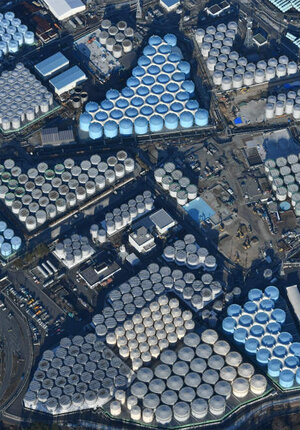
As water-dumping moves advance, S. Koreans seek firm regional stance, http://global.chinadaily.com.cn/a/202208/09/WS62f1be52a310fd2b29e7119d.html By YANG HAN in Hong Kong |2022-08-09
Japan’s plan to dump radioactive wastewater from the stricken Fukushima nuclear power plant will endanger the lives of people in the Asia-Pacific region, say experts who want to see stepped-up efforts against the ocean disposal from the countries most at risk.
South Koreans have been among those expressing their opposition to the plan, and voices have again been raised after Japan moved a step closer to implementing its planned discharge of the nuclear-contaminated water from next year, following the recent approval of the plan’s details by the nation’s nuclear regulator.
“The discharge of wastewater from Fukushima is an act of contaminating the Pacific Ocean as well as the sea area of South Korea,” said Ahn Jae-hun, energy and climate change director at the Korea Federation for Environment Movement, an advocacy group in Seoul.
“Many people in South Korea believe that Japan’s discharge of the Fukushima wastewater is a wrong policy that threatens the safety of both the sea and humans,” Ahn told China Daily.
Last month, Japan’s nuclear regulator approved the plan to discharge wastewater into the Pacific Ocean from the Fukushima Daiichi power plant, after it built up a huge amount of radiation-tainted water. The water has been collected and stored in tanks following efforts to cool down the reactors after an earthquake and tsunami struck Japan in 2011.
The dumping plan has drawn fierce opposition from government officials and civic groups in South Korea, one of the world’s major consumers of seafood.
On Aug 1, South Korea’s Minister of Oceans and Fisheries Cho Seunghwan said the government is considering whether to take the issue to the International Tribunal for the Law of the Sea, Yonhap News Agency reported. Cho said the government’s primary plan is to prevent Japan from releasing the contaminated water. “We do not accept the release plan”, he said.
Ahn said radioactive materials can generate long-term effects and it remains unclear how they will affect the marine ecosystem.
Though the South Korean government is considering taking the issue to the international tribunal, Ahn said it will be difficult to quantify the potential damage.
South Korea has said it will conduct a thorough analysis and revision of the impact of Japan’s plan, but the government has not received enough data from Japan to conduct such research, South Korea’s Hankyoreh newspaper reported in June.
After Japan’s nuclear regulator approved the Fukushima discharge plan, South Korean President Yoon Suk-yeol said Tokyo needs to transparently explain and gain consent from neighboring countries before releasing the contaminated water.
Potential impact
Shaun Burnie, a senior nuclear specialist with Greenpeace Germany, said the environmental group is concerned about the potential impact of the water’s release on the wider Asia-Pacific region.
The level of exposure depends on multiple variables including the concentration in seawater and how quickly it concentrates, disperses and dilutes, forms of life, and the type of radionuclide released and how that disperses or concentrates as it moves through the environment, Burnie said.
“The concentrations are of direct relevance to those who may consume them, including marine species like fish and, ultimately, humans,” Burnie told China Daily.
Noting that the Fukushima contaminated water issue comes under the United Nations Convention on the Law of the Sea as it is a form of pollution to international waters, Burnie said there are strong grounds for individual countries to file a legal challenge against Japan’s plan.
Ahn said joint expressions of opposition in the region could force the Japanese government to choose a safe method to deal with the wastewater instead of dumping it into the sea. China is also among the neighboring countries that have voiced opposition to the Fukushima discharge plan.
70% of Western weapons sent to Ukraine don’t reach troops – CBS
Rt.com 8 Aug 22, Report suggests US appears to be repeating the mistakes of Afghanistan, Iraq, and Syria.
With the US and its allies pledging unprecedented levels of military support to Ukraine, a recent CBS News report suggested that only around 30% of the weapons sent by the West actually make it to the front lines. The report adds to ongoing rumors of waste, corruption, and black market profiteering.
The US has approved more than $54 billion of economic and military aid to Ukraine since February, while the UK has committed nearly $3 billion in military aid alone, and the EU has spent another $2.5 billion on arms for Kiev. An entire spectrum of equipment, from rifles and grenades to anti-tank missiles and multiple launch rocket systems have left the West’s armories for Ukraine, with most entering the country through Poland.
However, this rarely goes smoothly, CBS News revealed this week.
“All of this stuff goes across the border, and then something happens, kind of like 30% of it reaches its final destination,” Jonas Ohman, the founder of a Lithuania-based organization supplying the Ukrainian military, told the American network. Ohman said that getting the weapons to the troops involves navigating a complex network of “power lords, oligarchs [and] political players.”
The new CBS Reports documentary, “Arming Ukraine,” explores why much of the billions of dollars of military aid that the U.S. is sending to Ukraine doesn’t make it to the front lines: “Like 30% of it reaches its final destination.” Stream now: https://t.co/Ob7Y3EsWknpic.twitter.com/YgVbpYZkHn
— CBS News (@CBSNews) August 5, 2022
“There is really no information as to where they’re going at all,” Donatella Rovera, a senior crisis adviser with Amnesty International, told CBS. “What is really worrying is that some countries that are sending weapons do not seem to think that it is their responsibility to put in place a very robust oversight mechanism.”
Ukraine insists that it tracks each and every weapon that crosses its borders, with Yuri Sak, an adviser to Defense Minister Alexey Reznikov, telling the Financial Times last month that reports to the contrary “could be part of Russia’s information war to discourage international partners from providing Ukraine with weaponry.”
However, some officials in the West have sounded alarm bells. A US intelligence source told CNN in April that Washington has “almost zero” idea what happens to these arms, describing the shipments as dropping “into a big black hole” once they enter Ukraine. Canadian sources said last month that they have “no idea” where their weapons deliveries actually end up.
Europol has claimed that some of these weapons have ended up in the hands of organized crime groups in the EU, while the Russian government has warned that they are showing up in the Middle East. An investigation by RT in June found online marketplaces where sophisticated Western hardware – such as Javelin and NLAW anti-tank systems or Phoenix Ghost and Switchblade explosive drones – was apparently being sold for pennies on the dollar.
Ukraine is consistently ranked as one of the most corrupt countries in the world, scoring 122/180 on Transparency International’s 2021 ‘Corruption Perceptions Index’, where 180 represents the most corrupt and 0 the least.
In Washington, drawing attention to this corruption is frowned upon by both parties in Congress. Representative Victoria Spartz, a Ukrainian-born lawmaker, has reportedly been cautioned by her colleagues and the White House for suggesting that Congress should establish “proper oversight” of its weapons shipments due to the alleged corruption within Vladimir Zelensky’s government. ………………………. more https://www.rt.com/russia/560419-ukraine-weapons-lost-cbs/
Sizewell C nuclear station approval faces legal challenge
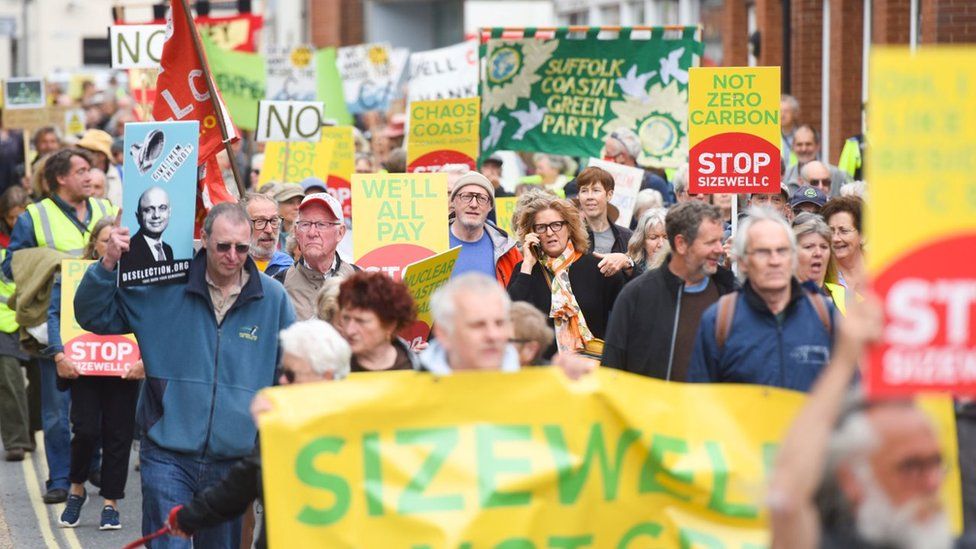
Campaigners have begun a legal challenge against the government’s decision to give the Sizewell C nuclear power station the go-ahead amid warnings that UK nuclear plants will be on the frontline of climate breakdown.

Citing the threat to water supplies in an area officially designated as seriously water stressed, the threats to coastal areas from climate change and environmental damage, the challenge is the first step in a judicial review of the planning consent.
The business secretary, Kwasi Kwarteng, overruled the independent Planning Inspectorate to grant permission for the new nuclear reactor in Suffolk in July. Kwarteng is pushing ahead with
government plans to approve one new nuclear reactor a year as part of an energy strategy that aims to bolster the UK’s nuclear capacity, with the hope that by 2050 up to 25% of projected energy demand will come from it.
But Sizewell C has faced stiff opposition from local campaigners, and environmental groups both for its cost and the environmental impact. In a letter to Kwarteng outlining their legal challenge Together Against Sizewell C (TASC) argues that the permission by the government for the plant was given unlawfully. Represented by Leigh Day solicitors and supported by Friends of the Earth, the group says there was a failure to assess the implications of the project as a whole, by ignoring the issue of whether a permanent water supply could be secured, a failure to assess the environmental impact of that project and the suggestion that the site would be clear of nuclear material by 2140, which was not upheld by evidence showing highly radioactive waste would have to be stored on site until a much later date.
The Planning Inspectorate had rejected the scheme saying “unless the outstanding water supply strategy can be resolved and sufficient information provided to enable the secretary of state to carry out his obligations under the Habitats Regulations, the case for an order granting development consent for the application is not made out”.
Pete Wilkinson, chair of TASC, said: “The case against Sizewell C is overwhelming, as has been carefully documented throughout the inquiry stage and was found by the planning inspector to have merit. “Even to consider building a £20bn-plus nuclear power plant without first securing a water supply is a measure of the fixation this government has for nuclear power and its panic in making progress towards an energy policy which is as unachievable as it is inappropriate for the 21st-century challenges we
face.”
Guardian 8th Aug 2022
UK tax-payers face £billions of costs for the indefinite future in the clean-up of closed Hinkley Point B nuclear power station
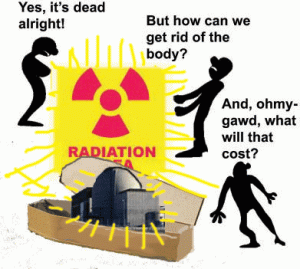
‘End of an error’, say protesters as nuclear plant is shut down. LAST
week’s closure of Hinkley Point B after 46 years was described by
anti-nuclear campaign group Stop Hinkley as ‘the end of an error’. Stop
Hinkley spokesman Roy Pumfrey said Monday (August 1) was not a day to
celebrate the life of Hinkley Point B.
He said Monday was a day to mourn
the production of radioactive waste that would need to be carefully and
expensively managed and monitored for many generations to come. Mr Pumfrey
said: “Some of these timescales for managing the legacy of waste left
over by Hinkley B are truly staggering. EDF’s jamboree on Monday
conveniently ignores the nuclear waste which has been generated over the
past 46 years.
“Under current plans it will be at least another 100 years
before all this dangerous waste is under the ground. “And the costs are
staggering, too. “EDF’s most recent £23.5 billion estimate for
decommissioning advanced gas-cooled reactors (AGRs) suggests it could cost
around £3-4 billion to decommission Hinkley B.
“The taxpayer has been
asked to top up the decommissioning fund by over £10 billion. “Past
experience suggests these costs will continue rising.” Mr Pumfrey said
the UK was left with Hinkley’s legacy of nuclear waste for thousands of
years and even after 46 years, nobody yet knew for sure what would happen
to it other than a ‘vague promise’ to bury it in a geological disposal
facility – a site for which had still not been found.
West Somerset Free Press 7th Aug 2022
Ukraine calls for demilitarised zone around the shelled Zaporizhzhia nuclear plant
International alarm over shelling attacks on Ukraine’s Zaporizhzhia nuclear complex has grown with Kyiv warning of a Chornobyl-style catastrophe and appealing for the area to be a demilitarised zone.
Key points:
- Ukraine and Russia have traded blame for attacks on the Zaporizhzhia plant
- Russia says it is ready to enable UN watchdog visit to the plant
- Twelve grain ships have left Ukrainian ports since last week
The United Nations chief called for UN nuclear inspectors to be given access to the plant as Kyiv and Moscow traded blame for the shelling.
“Any attack (on) a nuclear plant is a suicidal thing,” UN Secretary General Antonio Guterres said on Monday.
Petro Kotin, head of Ukraine’s state nuclear power company Energoatom, called for a team of peacekeepers to be deployed at the Zaporizhzhia site which is still run by Ukrainian technicians………………………………………………………. more https://www.abc.net.au/news/2022-08-09/ukraine-calls-for-demilitarised-zone-around-nuclear-plant/101313112
Nuclear Free Local Authorities Briefing to Local Councils – Energy Minister responds to NFLA concerns over Nuclear Liabilities Fund.
Richard Outram, 8 Aug 22. In response to Parliamentary concerns that the cost of decommissioning redundant nuclear power stations was out of control, and after hearing news that a further £10.7 billion of public money has been made available by the UK Government to bolster the finances of the Nuclear Liabilities Fund, the public – private sector body responsible for managing finances of approximately £15 billion to meet the long-term cost of decommissioning (https://www.nlf.uk.net/), in early June the Chair of the NFLA Cllr David Blackburn wrote to the Energy Minister Greg Hands to urge him to give the NLF Board more latitude to invest in green energy to make the fund sustainable. On 25 July, Minister Hands replied. This briefing includes our initial media release, Cllr Blackburn’s letter to Minister Greg Hands and the Minister’s response.
Risk of death rises as climate change causes nighttime temperatures to climb
Excessively hot nights caused by climate change are predicted to increase the mortality rate around the world by up to 60% by the end of the century, according to a new international study.
Risk of death rises as climate change causes nighttime temperatures to climb
Excessively hot nights caused by climate change are predicted to increase the mortality rate around the world by up to 60% by the end of the century, according to a new international study.
CND (Campaign for Nuclear Disarmament) oppose plans for a nuclear fusion plant in North Ayshire, on environmental and other grounds
Anti-nuclear campaigners have accused organisations supporting plans for a
nuclear fusion plant in North Ayrshire of having promoted the project with
“half truths” and warned it would be “dangerous” for the
environment.
A consortium, which includes Glasgow University and North
Ayrshire Council, is backing a prototype fusion energy plant at Ardeer,
capable of providing what they claim would be an environmentally-friendly
source of electricity. The plant would create an estimated 3,500 jobs
during construction and 1,000 jobs when the site begins operating,
according to the project’s backers.
However, Ayrshire CND argued that
fusion is a nuclear technology with radioactive risks since it requires
tritium – a radioactive isotope of hydrogen – during the process. The group
also claimed the plant would “create a considerable carbon footprint”.
Environmental groups are calling for the Ardeer peninsula to be given
special status to protect its diverse wildlife. Ayrshire CND has accused
North Ayrshire Council of committing to supporting the £222m project
without having a full council discussion. The campaign group’s Richard Leat
also questioned what the public has been told. “We are told that this is
not really a nuclear plant,” he claimed. “We are being sold this plant
with half truths.” Leat pointed to a poll by the Ardrossan Herald which
found the majority of 502 responses – 69 per cent – were against the plant.
“Furthermore, outwith the general risks from nuclear energy, the site
would require monitoring and tight security for many, many decades, which
will restrict public access to the peninsula and beach,” Leat continued.
The Ferret 7th Aug 2022 https://theferret.scot/public-half-truths-nuclear-fusion-anti-nuclear/
Yucca licensing a waste of money and won’t solve nuclear waste issues

What stands in the way of a solution to the high-level nuclear waste
problem in the U.S.? Answer: Yucca Mountain. For 35 years Nevadans have
fought to keep the federal government and commercial nuclear industry from
putting waste in a place that cannot safely contain it.
The only sensible action for Congress to take regarding Yucca Mountain is to end the project
officially. Once Congress does that, the nation can finally move on with a
new commitment to establish a safe and acceptable nuclear waste management
and disposal policy.
In 1987, Congress designated Yucca Mountain as the
sole site to be studied to become the nation’s high-level nuclear waste
repository. Over the strong objections of a majority of Nevadans,
investigations began. After 20 years of conflicting scientific discoveries
and opinions, opposition continued to grow.
In 2008, the Department of
Energy (DOE) submitted a license application to the Nuclear Regulatory
Commission (NRC) for a construction authorization to begin to build a
repository. The next year saw nearly 300 contentions (contentions are
specific arguments by parties opposing a license) submitted by 17 parties
— including the state of Nevada — raising red flags about the safety
and sustainability of the project. Before the project could move forward,
each contention would have to be adjudicated with evidence and witnesses
presented.
With years of litigation on the horizon and Nevada’s federal
delegation finding growing support against Yucca Mountain in Washington, in
2010, the DOE informed the NRC that it was withdrawing the license
application. There was a court challenge that concluded the application
could not be withdrawn, requiring the process to continue if there was
funding available to do so. For the past 12 years there has been no federal
money allocated for Yucca Mountain, so the project lingers.
Las Vegas Sun 7th Aug 2022
https://lasvegassun.com/news/2022/aug/07/yucca-mountain-licensing-is-a-waste-of-money-and-w/
Attacking a nuclear plant ‘suicidal,’ UN chief tells journalists in Japan

- UN News, 8 Aug 2022 Relief Web
UN Secretary-General António Guterres condemned a recent attack on a nuclear power station in southern Ukraine during a meeting in Tokyo on Monday with the Japan National Press Club.
“Any attack to nuclear plants is…suicidal,” the UN chief said, adding that he hoped that the UN International Atomic Energy Agency (IAEA) would be able to access the plant for inspection.
Both Moscow and Kyiv have denied responsibility for the strike on the Zaporizhzhia plant over the weekend.
While Europe’s largest nuclear power site has been under Russian control since the early days of the war, Ukrainian technicians are still running it…………………………….
During Monday’s news conference, the UN chief reiterated his warning over the use of nuclear weapons, saying that if used, the UN would probably be unable respond because “we might all not be here anymore”.
Against the backdrop that the world currently has 13,000 nuclear bombs while continuing to make huge investments into modernizing atomic arsenals, Mr. Guterres warned that after decades of nuclear disarmament efforts, we are “moving backwards”.
“Stop it,” he appealed, underscoring that the billions of dollars being leveraged into the arms race need to be used in “fighting climate change, fighting poverty, [and] addressing the needs of the international community”.
The Secretary-General will next be traveling to Mongolia and South Korea to discuss ways to address North Korea’s nuclear development.
‘Common sense’ restraint
When asked about China’s massive military exercises around Taiwan, Mr. Guterres said the UN “abides by a resolution of the General Assembly, the so-called One China policy”.
The dispute was sparked by a visit last week to island by US House Speaker Nancy Pelosi.
“We all want that resolution to correspond to a peaceful environment,” he said, calling for common sense and restraint to allow for an “extremely important” de-escalation. https://reliefweb.int/report/ukraine/attacking-nuclear-plant-suicidal-un-chief-tells-journalists-japan
U.S. says ready to quickly conclude Iran nuclear deal based on EU text
WASHINGTON, Aug 8 (Reuters) – The United States stands ready to “quickly conclude a deal” to revive the 2015 Iran nuclear agreement on the basis of proposals put forward by the European Union, a State Department spokesperson said on Monday.
The spokesperson, speaking on condition of anonymity, said Tehran has repeatedly said it is prepared for a return to mutual implementation of the agreement. ………. https://www.reuters.com/world/middle-east/us-says-ready-quickly-conclude-iran-nuclear-deal-based-eu-text-2022-08-08/
—
The past week in nuclear news

Some bits of good news Needles of Hope in the Ukraine War Haystack. Renewables are booming – REN21 Global Review.
The pro Trump forces are going allout to blame and damage Joe Biden and his administration. I keep getting stuff from the non-corporate media. And some of it is in colourful and extreme language. And I know that some of it is from the Trumpians. My problem is that in some of the Trumpian propaganda – the facts have a disturbing habit of sounding like they’re true. No – I do not want to support Trump’s ambitions. But yes, I do want the truth to come out. Especially about Ukraine and Taiwan. And the West is hiding it.
Why Is There More Media Talk About Using Nuclear Weapons Than About Banning Them?
The lost nuclear bombs that no one can find.
Poland rewrites or obscures the history of the Russians’ liberation of Auschwitz.
Anti-Nuclear Protest at U.S. Mission to United Nations.
Is nuclear disarmament possible? https://www.youtube.com/watch?v=Gsz5fQm00Qs World one misstep from ‘nuclear annihilation’: UN chief. Biden, Putin strike conciliatory tones as nuclear arms talks start at U.N. If we are to survive…we must change course.
Nuclear weapons will not bring peace or security, only dangers.
The Anti-China Brainwashing Is Working: Notes From The Edge Of The Narrative Matrix. Nancy Pelosi’s Taiwan Visit Stoked Tensions With China. What Comes Next?
Washington Is Making the Same Blunder Regarding Taiwan That It Did in Ukraine.
Russia’s very profitable nuclear industry – NO SANCTIONS on that!
Small nuclear reactors produce more radioactive trash than large ones do – American Academy of Sciences
Nuclear energy vs renewables: which is the best solution for the climate crisis? It’s all about public perception. Can the crooked nuclear industry convince the world?
‘Climate endgame’ warning: Scientists warn global warming could trigger nuclear war, financial crisis or an extinction-level pandemic. Climate Endgame: Risk of Human Extinction ‘Dangerously Underexplored’ .Climate breakdown is super-charging extreme weather.
UKRAINE.
- Zaporizhzhia Nuclear Power Station “completely out of control” – IAEA Parts of Zaporizhzhia nuclear plant damaged when struck by shelling. Evacuation would be almost impossible in the event of an accident at the Zaporizhzhia Nuclear Power Plant. IAEA alarmed at danger to Zaporizhzhia nuclear plant as shelling continues in Ukraine war. Russia and Ukraine accused each other of shelling Europe’s biggest nuclear power plant in the Zaporizhzhia region.
- Only 30% of the Weapons Are Even Making it to the Frontlines.
- Ukraine wants to export nuclear-generated electricity to European states – but is that safe?
- A French volunteer described how he witnessed the dramatizations in Bucha Amnesty has stuck by its report that Ukrainian forces endangered civilians.Door-to-door searches are being conducted to find pro-Russian “collaborators” in Nikolaev, a local official has said. Ukraine turns Donetsk into a minefield using banned ‘butterfly’ mines. https://www.youtube.com/watch?v=B6wJbPJv0kk
- Russia the most popular national destination for refugees from Ukraine.
- Whitewashing Ukraine’s Corruption and Authoritarianism.
POLAND. Poland’s double standard on how it treats refugees, and the prospect of exhaustion by those housing Ukrainians.
TAIWAN. Is Taiwan’s Independence Worth War?
JAPAN. Hiroshima marks 77th anniversary of atomic bombing amid nuclear threat.
Fukushima Prefecture seeks government help in preventing reputational damage to its marine products. Construction begins at Fukushima plant for water release. Fukushima Daiichi Nuclear Power Plant “Treated Water” Discharged TEPCO Announces Undersea Tunnel Construction to Begin in 4 Days “Already Started? Citizens were in a state of exasperation. Ironic for Tokyo to caution others on nuclear issue despite Fukushima plan.
USA.
- Chinese expert from Peace Centre points out America’s hypocrisy, double standards, on Nuclear Non Proliferation. USA hostility to China on yet another front – India. Joe Biden offers to negotiate a new arms control framework with Russia to replace New START.
- Senator Manchin Democrats Bill to give $30 billion lifeline to save America’s moribund nuclear industry. Why investors should be wary of NuScale’s small nuclear reactors. Nuclear energy for Colorado? The cost is one very big obstacle. US regulators approve small nuclear reactors – BUT – costs, delays, too late for climate help.
- Beatty Nevada Nuclear waste explosions, in the desert. https://www.youtube.com/watch?v=8VHylGDOvwU Prairie Island Indian Community planning to set up large renewable energy project, keen to be rid of nuclear power plant and nuclear wastes. Nuclear waste isn’t an isolated problem with nuclear power.
- “Unprecedented:” US Senate passes landmark bill to tax billionaires to fund clean energy.
CANADA. Lantern ceremony in Winnipeg calls attention to threat of nuclear weapons.
UK.
- A worsening situation of cracks in Britain’s ageing nuclear reactors.
- Hinkley Point B leaves radioactive waste to be expensively managed for many generations to come.
- Over 50,000 petition against seismic testing to find ocean nuclear dump site. Damage to marine life from seismic testing, and from dumping of radioactive waste. A fake ‘community partnership’ on ocean nuclear waste dumping. To join UK’s Nuclear Waste ‘Community Partnership’ one is required to have a ‘commitment to exploring development‘ of an ocean nuclear waste dump.
- Danger of nuclear weapons convoys on the UK’s M6.
- Peace campaigners gather in Aberdeen on anniversary of Hiroshima nuclear bombing.
FRANCE. Reduced electricity output from France’s nuclear reactors due to high temperatures. EDF cuts output at nuclear power plants as French rivers get too warm. Bad luck for the river environment – nuclear reactors allowed to release hotter water. France importing power, as nuclear stations cut output because of global heating, Drought may force nuclear power production cut. France’s problems with nuclear corporation EDF.
RUSSIA. No one can win a nuclear war: Putin.
ISRAEL. Israel, secretly having nuclear weapons, will not join the Nuclear Non Proliferation Treaty.
IRAN. Iran says ‘optimistic’ after EU proposal for nuclear deal. Eu, Iran Russia optmistic.
AUSTRALIA. Australian Prime Minister Albanese refuses to meet with Assange’s family . Hard-Wired for Corruption -The arms trade and Australia’s lax monitoring regimes. Does Australia actually need nuclear submarines?
TODAY. My Trumpian dilemma

Here’s my dilemma.
The last thing I want to do is to promote the cause of Donald Trump
BUT – on some matters -the Trumpians might be right, and telling the truth!
We are now brainwashed by the corporate media into a religious belief that Ukraine and Taiwan are good, and Russia and China are evil.
Anyone who says otherwise is a stooge of Russian and Chinese ”disinformation. Right?
The pro Trump forces are going allout to blame and damage Joe Biden and his administration. I keep getting stuff from the non-corporate media. And some of it is in colourful and extreme language. And I know that some of it is from the Trumpians.
My problem is that in some of the Trumpian propaganda – the facts have a disturbing habit of sounding like they’re true.
No – I do not want to support Trump’s ambitions. But yes, I do want the truth to come out. Especially about Ukraine and Taiwan. And the West is hiding it.
1 This Month
19 November – Webinar – The Reality of Reprocessing
Time: 11:00 AM Pacific Time (US & Canada) / 2:00 PM Eastern / 7:00 PM UK / 8:00 PM CET
Register for the Zoom Event Here

Tell Congress: Prevent Nuclear Catastrophe in Iran

Tell Congress: Prevent Nuclear Catastrophe in Iran

Read the Public Inquiry Report, the Commissioners’ report, Surrendering Australia: The AUKUS Deception is available to download for free at aukuspublicinquiry.com. Or just watch the replay of the National Press Club Luncheon.


Shut down the radiation-damaged Heysham nuclear reactors now
To see nuclear-related stories in greater depth and intensity – go to https://nuclearinformation.wordpress.com

Say No to NASA’s Reckless Nuclear Reactor on the Moon
Say No to NASA’s Reckless Nuclear Reactor on the Moon
-
Archives
- November 2026 (190)
- October 2026 (302)
- September 2026 (339)
- August 2026 (330)
- July 2026 (355)
- June 2026 (287)
- May 2026 (306)
- April 2026 (356)
- March 2026 (251)
- February 2026 (267)
- January 2026 (308)
- December 2025 (358)
-
Categories
- 1
- 1 NUCLEAR ISSUES
- business and costs
- climate change
- culture and arts
- ENERGY
- environment
- health
- history
- indigenous issues
- Legal
- marketing of nuclear
- media
- opposition to nuclear
- PERSONAL STORIES
- politics
- politics international
- Religion and ethics
- safety
- secrets,lies and civil liberties
- spinbuster
- technology
- Uranium
- wastes
- weapons and war
- Women
- 2 WORLD
- ACTION
- AFRICA
- Atrocities
- AUSTRALIA
- Christina's notes
- Christina's themes
- culture and arts
- Events
- Fuk 2022
- Fuk 2023
- Fukushima 2017
- Fukushima 2018
- fukushima 2019
- Fukushima 2020
- Fukushima 2021
- general
- global warming
- Humour (God we need it)
- Nuclear
- RARE EARTHS
- Reference
- resources – print
- Resources -audiovicual
- Weekly Newsletter
- World
- World Nuclear
- YouTube
-
RSS
Entries RSS
Comments RSS

