China’s huge top secret nuclear base now finally declassified
Top secret Chinese nuclear base opens to foreigners [good photos] , news.com.au , 6 Oct 15 IT’S A maze built to manufacture plutonium and house thousands of tonnes of explosives.
The 826 Nuclear Military Plant, a former top-secret Chinese base, is almost 20km wide, with 178 caves and more than 130 roads and tunnels.
The largest man-made cave in the world was commissioned in the 1960s, when Beijing feared an imminent nuclear attack from the Soviet Union.
More than 60,000 engineering soldiers participated in the construction, and at least 100 of them were reportedly killed during the process.
It’s hidden deep in the mountains of Fuling, in the Chongqing municipality of central China, and can reportedly withstand a magnitude 8.0 earthquake.
The largest cave is nearly 80m high, or roughly the height of a 20-storey building, and the tunnels are wide enough to drive through……..The huge undertaking took 17 years to build, and was nearly completed when it was abruptly cancelled due to changes in Cold War politics in 1984.
It’s just undergone an extensive renovation, and is now open to foreign visitors for the first time…….http://www.news.com.au/travel/world-travel/asia/top-secret-chinese-nuclear-base-opens-to-foreigners/news-story/2ab679cdfd44e04a7fdf01b1b3a1a61d
Fast nuclear reactors might be hyped up, but their future looks gloomy
Nuclear: The slow death of fast reactors Jim Green, 5 Oct 2016, RenewEconomy,http://reneweconomy.com.au/2016/nuclear-the-slow-death-of-fast-reactors-21046
Generation IV ‘fast breeder’ reactors have long been promoted by nuclear enthusiasts, writes Jim Green, but Japan’s decision to abandon the Monju fast reactor is another nail in the coffin for this failed technology.
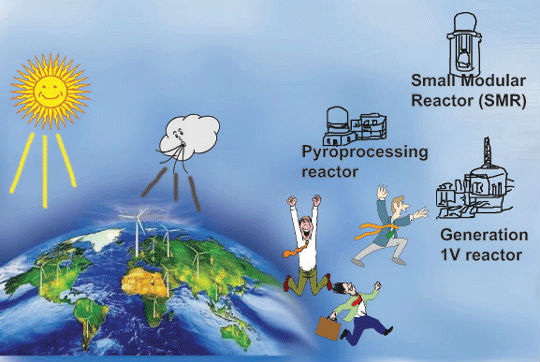
Fast neutron reactors are “poised to become mainstream” according to the World Nuclear Association. The Association lists eight “current” fast reactors although three of them are not operating. That leaves just five fast reactors ‒ three of them experimental.
Fast reactors aren’t becoming mainstream. One after another country has abandoned the technology. Nuclear physicist Thomas Cochransummarises the history: “Fast reactor development programs failed in the: 1) United States; 2) France; 3) United Kingdom; 4) Germany; 5) Japan; 6) Italy; 7) Soviet Union/Russia 8) U.S. Navy and 9) the Soviet Navy. The program in India is showing no signs of success and the program in China is only at a very early stage of development.”
The latest setback was the decision of the Japanese government at an extraordinary Cabinet meeting on September 21 to abandon plans to restart the Monju fast breeder reactor.
Monju reached criticality in 1994 but was shut down in December 1995 after a sodium coolant leak and fire. The reactor didn’t restart until May 2010, and it was shut down again three months later after a fuel handling machine was accidentally dropped in the reactor during a refuelling outage. In November 2012, it was revealed that Japan Atomic Energy Agency had failed to conduct regular inspections of almost 10,000 out of a total 39,000 pieces of equipment at Monju, including safety-critical equipment.
In November 2015, the Nuclear Regulation Authority declared that the Japan Atomic Energy Agency was “not qualified as an entity to safely operate” Monju. Education minister Hirokazu Matsuno said on 21 September 2016 that attempts to find an alternative operator have been unsuccessful.
The government has already spent 1.2 trillion yen (US$12bn) on Monju. The government calculated that it would cost another 600 billion yen (US$6bn) to restart Monju and keep it operating for another 10 years.
Decommissioning also has a hefty price-tag ‒ far more than for conventional light-water reactors. According to a 2012estimate by the Japan Atomic Energy Agency, decommissioning Monju will cost an estimated 300 billion yen (US$3bn).
India’s failed fast reactor program India’s fast reactor program has been a failure. The budget for the Fast Breeder Test Reactor (FBTR) was approved in 1971 but the reactor was delayed repeatedly, attaining first criticality in 1985. It took until 1997 for the FBTR to start supplying a small amount of electricity to the grid. The FBTR’s operations have been marred by several accidents.
Preliminary design work for a larger Prototype Fast Breeder Reactor (PFBR) began in 1985, expenditures on the reactor began in 1987/88 and construction began in 2004 ‒ but the reactor still hasn’t started up. Construction has taken more than twice the expected period. In July 2016, the Indian government announced yet another delay, and there is scepticism that the scheduled start-up in March 2017 will be realised. The PFBR’s cost estimate has gone up by 62%.
India’s Department of Atomic Energy (DAE) has for decades projected the construction of hundreds of fast reactors ‒ for example a 2004 DAE document projected 262.5 gigawatts (GW) of fast reactor capacity by 2050. But India has a track record of making absurd projections for both fast reactors and light-water reactors ‒ and failing to meet those targets by orders of magnitude.
Academic M.V. Ramana writes: “Breeder reactors have always underpinned the DAE’s claims about generating large quantities of electricity. Today, more than six decades after the grand plans for growth were first announced, that promise is yet to be fulfilled. The latest announcement about the delay in the PFBR is yet another reminder that breeder reactors in India, like elsewhere, are best regarded as a failed technology and that it is time to give up on them.”
Russia’s snail-paced program Russia’s fast reactor program is the only one that could be described as anything other than an abject failure. But it hasn’t been a roaring success either.
Three fast reactors are in operation in Russia ‒ BOR-60 (start-up in 1969), BN-600 (1980) and BN-800 (2014). There have been 27sodium leaks in the BN-600 reactor, five of them in systems with radioactive sodium, and 14 leaks were accompanied by burning of sodium.
The Russian government published a decree in August 2016 outlining plans to build 11 new reactors over the next 14 years. Of the 11 proposed new reactors, three are fast reactors: BREST-300 near Tomsk in Siberia, and two BN-1200 fast reactors near Ekaterinburg and Chelyabinsk, near the Ural mountains. However, like India, the Russian government has a track record of projecting rapid and substantial nuclear power expansion ‒ and failing miserably to meet the targets.
As Vladimir Slivyak recently noted in Nuclear Monitor: “While Russian plans looks big on paper, it’s unlikely that this program will be implemented. It’s very likely that the current economic crisis, the deepest in history since the USSR collapsed, will axe the most of new reactors.”
While the August 2016 decree signals new interest in reviving the BN-1200 reactor project, it was indefinitely suspended in 2014, with Rosatom citing the need to improve fuel for the reactor and amid speculation about the cost-effectiveness of the project.
In 2014, Rosenergoatom spokesperson Andrey Timonov said the BN-800 reactor, which started up in 2014, “must answer questions about the economic viability of potential fast reactors because at the moment ‘fast’ technology essentially loses this indicator [when compared with] commercial VVER units.”
China’s program going nowhere fast Australian nuclear lobbyist Geoff Russell cites the World Nuclear Association(WNA) in support of his claim that China expect fast reactors “to be dominating the market by about 2030 and they’ll be mass produced.”
Does the WNA paper support the claim? Not at all. China has a 20 MWe experimental fast reactor, which operated for a total of less than one month in the 63 months from criticality in July 2010 to October 2015. For every hour the reactor operated in 2015, it was offline for five hours, and there were three recorded reactor trips.
China also has plans to build a 600 MWe ‘Demonstration Fast Reactor’ and then a 1,000 MWe commercial-scale fast reactor. Whether those reactors will be built remains uncertain ‒ the projects have not been approved ‒ and it would be another giant leap from a single commercial-scale fast reactor to a fleet of them.
According to the WNA, a decision to proceed with or cancel the 1,000 MWe fast reactor will not be made until 2020, and if it proceeds, construction could begin in 2028 and operation could begin in about 2034.
So China might have one commercial-scale fast reactor by 2034 ‒ but probably won’t. Russell’s claim that fast reactors will be “dominating the market by about 2030” is unbridled jiggery-pokery.
According to the WNA, China envisages 40 GW of fast reactor capacity by 2050. A far more likely scenario is that China will have 0 GW of fast reactor capacity by 2050. And even if the 40 GW target was reached, it would still only represent aroundone-sixth of total nuclear capacity in China in 2050 ‒ fast reactors still wouldn’t be “dominating the market” even if capacity grows by orders of magnitude from 0.02 GW (the experimental reactor that is usually offline) to 40 GW.
Travelling-waves and the non-existent ‘integral fast reactor’
Perhaps the travelling-wave fast reactor popularised by Bill Gates will come to the rescue? Or perhaps not. According to theWNA, China General Nuclear Power and Xiamen University are reported to be cooperating on R&D, but the Ministry of Science and Technology, China National Nuclear Corporation, and the State Nuclear Power Technology Company are all skeptical of the travelling-wave reactor concept.
Perhaps the ‘integral fast reactor’ (IFR) championed by James Hansen will come to the rescue? Or perhaps not. The UK and US governments have been considering building IFRs (specifically GE Hitachi’s ‘PRISM’ design) for plutonium disposition ‒ but it is almost certain that both countries will choose different methods to manage plutonium stockpiles.
In South Australia, nuclear lobbyists united behind a push for IFRs/PRISMs, and they would have expected to persuade a stridently pro-nuclear Royal Commission to endorse their ideas. But the Royal Commission completely rejected the proposal, noting in its May 2016report that advanced fast reactors are unlikely to be feasible or viable in the foreseeable future; that the development of such a first-of-a-kind project would have high commercial and technical risk; that there is no licensed, commercially proven design and development to that point would require substantial capital investment; and that electricity generated from such reactors has not been demonstrated to be cost competitive with current light water reactor designs.
A future for fast reactors?
Just 400 reactor-years of worldwide experience have been gained with fast reactors. There is 42 times more experience with conventional reactors (16,850 reactor-years). And most of the experience with fast reactors suggests they are more trouble than they are worth.
Apart from the countries mentioned above, there is very little interest in pursuing fast reactor technology. Germany, the UK and the UScancelled their prototype breeder reactor programs in the 1980s and 1990s.
France is considering building a fast reactor (ASTRID) despite the country’s unhappy experience with the Phénix and Superphénix reactors. But a decision on whether to construct ASTRID will not be made until 2019/20.
The performance of the Superphénix reactor was as dismal as Monju. Superphénix was meant to be the world’s first commercial fast reactor but in the 13 years of its miserable existence it rarely operated ‒ its ‘Energy Unavailability Factor’ was 90.8% according to the IAEA. Note that the fast reactor lobbyists complain about the intermittency of wind and solar!
A 2010 article in the Bulletin of the Atomic Scientists summarised the worldwide failure of fast reactor technology: “After six decades and the expenditure of the equivalent of about $100 billion, the promise of breeder reactors remains largely unfulfilled. … The breeder reactor dream is not dead, but it has receded far into the future. In the 1970s, breeder advocates were predicting that the world would have thousands of breeder reactors operating this decade. Today, they are predicting commercialization by approximately 2050.”
Allison MacFarlane, former chair of the US Nuclear Regulatory Commission, recently made this sarcastic assessment of fast reactor technology: “These turn out to be very expensive technologies to build. Many countries have tried over and over. What is truly impressive is that these many governments continue to fund a demonstrably failed technology.”
While fast reactors face a bleak future, the rhetoric will persist. Australian academic Barry Brook wrote a puff-piece about fast reactors for the Murdoch press in 2009. On the same day he said on his website that “although it’s not made abundantly clear in the article”, he expects conventional reactors to play the major role for the next two to three decades but chose to emphasise fast reactors “to try to hook the fresh fish”.
So that’s the nuclear lobbyists’ game plan − making overblown claims about fast reactors and other Generation IV reactor concepts, pretending that they are near-term prospects, and being less than “abundantly clear” about the truth.
Dr Jim Green is the national anti-nuclear campaigner with Friends of the Earth Australia and editor of the Nuclear Monitor newsletter published by the World Information Service on Energy.
China’s graphite mining communities pay heavy health toll, to supply modern technological devices
Inhaling particulate matter can cause an array of health troubles, according to health experts, including heart attacks and respiratory ailments.
But it’s not just the air. The graphite plant discharges pollutants into local waters…

IN YOUR PHONE, IN THEIR AIR A trace of graphite is in consumer tech. In these Chinese villages, it’s everywhere.Washington Post, Story by Peter Whoriskey Photos by Michael Robinson Chavez Videos by Jorge Ribas October 2, 2016 At night, the pollution around the village has an otherworldly, almost fairy-tale quality.
“The air sparkles,” said Zhang Tuling, a farmer in a village in far northeastern China. “When any bit of light hits the particles, they shine.”
By daylight, the particles are visible as a lustrous gray dust that settles on everything. It stunts the crops it blankets, begrimes laundry hung outside to dry and leaves grit on food. The village’s well water has become undrinkable, too.
Beside the family home is a plot that once grew saplings, but the trees died once the factory began operating, said Zhang’s husband, Yu Yuan.
“This is what we live with,” Zhang said, slowly waving an arm at the stumps.
Zhang and Yu live near a factory that produces graphite, a glittery substance that, while best known for filling pencils, has become an indispensable resource in the new millennium. It is an ingredient in lithium-ion batteries.
Smaller and more powerful than their predecessors, lithium batteries power smartphones and laptop computers and appear destined to become even more essential as companies make much larger ones to power electric cars.
The companies making those products promote the bright futuristic possibilities of the “clean” technology. But virtually all such batteries use graphite, and its cheap production in China, often under lax environmental controls, produces old-fashioned industrial pollution.
At five towns in two provinces of China, Washington Post journalists heard the same story from villagers living near graphite companies: sparkling night air, damaged crops, homes and belongings covered in soot, polluted drinking water — and government officials inclined to look the other way to benefit a major employer.
After leaving these Chinese mines and refiners, much of the graphite is sold to Samsung SDI, LG Chem and Panasonic — the three largest manufacturers of lithium-ion batteries. Those companies supply batteries to major consumer companies such as Samsung, LG, General Motors and Toyota.
Apple products use batteries made by those companies, too Continue reading
Rising demand for lithium, and the pollution resulting from this
IN YOUR PHONE, IN THEIR AIR A TRACE OF GRAPHITE IS IN CONSUMER TECH. IN THESE CHINESE VILLAGES, IT’S EVERYWHERE. WASHINGTON POST, STORY BY PETER WHORISKEY PHOTOS BY MICHAEL ROBINSON CHAVEZ VIDEOS BY JORGE RIBAS OCTOBER 2, 2016 “……DEMAND RAMPS UP
While U.S. consumers may seem uninvolved in — and untouched by — the Chinese pollution, the truth is more complicated.
The U.S. demand for cheap goods helps keep the Chinese factories going. More than a quarter of the emissions of two key pollutants in China — sulfur dioxide and nitrogen oxides — arose from the production of goods for export, according to research published in 2014 in the Proceedings of the National Academy of Sciences. The largest share of exports goes to the United States.
Moreover, the same researchers found that some of the pollution in China reaches the United States — the air pollution drifts across the ocean and raises ozone levels in the western part of the country, according to the study.
“Outsourcing production to China does not always relieve consumers in the United States . . . from the environmental impacts of air pollution,” according to the authors of the study, which was conducted by a consortium of scientists from China and the United States.
Now the rise of the electric-car industry promises a huge surge in the lithium-ion battery business.
Making batteries big enough to power cars will cause a daunting leap in demand. A laptop requires just a handful of the familiar, thin, cylindrical lithium-ion batteries known as “18650s.” A smartphone requires even less. But a typical electric car requires thousands of times the battery power.
Today, the best known “gigafactory” for electric-car batteries is the one being built by Tesla in the Nevada desert — a plant the company says will produce 500,000 electric-car batteries annually. But it’s just one of many. About a dozen other battery gigafactories are being planned around the world.
This is “not just a Tesla story,” said Simon Moores, managing director of Benchmark Mineral Intelligence, a firm that tracks demand and assesses prices for raw materials in the industry. “The demand is rising everywhere, especially in China.” Todd C. Frankel and Yanan Wang in Washington and Xu Jing contributed to this report.
Tribulations of the nuclear industry, as serious safety flaws found in EDF’s nuclear reactors
As for For Hinkley Point C, it now appears inevitable that the Flamanville reactor will not be completed by its target date of the end of 2020, indeed it may very well never be completed at all. Under the terms of agreement for the plant’s construction accepted by the European Commission, this would render the UK government unable to extend promised credit guarantees to HPC’s financial backers.

for EDF, Areva, their shareholders and the entire French nuclear industry, the end really could be nigh.
 France’s Nuclear Power Stations ‘At Risk of Catastrophic
Failure’ http://www.globalresearch.ca/frances-nuclear-power-stations-at-risk-of- catastrophic-failure/5548593 Sizewell B and 27 Other EDF Nuclear Plants By Oliver Tickell Global Research, October 01, 2016 The Ecologist 29 September 2016 A new review of the safety of France’s nuclear power stations has found that at least 18 of EDF’s units are are ”operating at risk of major accident due to carbon anomalies.”
The 100 billion pound bill for decommissioning Europe’s old nuclear power stations
 Standard and Poor’s: dismantling Europe’s old nuclear power plants will run up a hundred billion pound bill for EDF EON RWE and others
 Nuclear liabilities of the largest eight nuclear plant operators in Europe totaled €100bn at the end of last year, representing around 22 per cent of their aggregate debt, according to credit rating agency Standard & Poor’s.
Operators are legally responsible for decommissioning nuclear power plants, a process which can take several decades to implement, meaning the associated costs are high. Europe’s main nuclear operators include France’s EDF, Germany’s E.ON and RWE. They are legally responsible for decommissioning nuclear power plants, a process which can take several decades to implement, meaning the associated costs are high.
While the analysis by S&P treats nuclear liabilities as debt-like obligations, it recognises that several features differentiate them from traditional debt. But given the size of the liabilities against a company’s debt, they can impact a company’s credit metrics, and their credit rating.
The report noted that a company’s nuclear provisions are difficult to quantify, as well as cross compare, because accounting methods vary between different countries.
It also foresees many operational challenges ahead, including a reality check on costs and execution capabilities.
Nuclear power in no way a cure for climate change: in fact it’s a CAUSE of climate change
How Nuclear Power Causes Global Warming, The Progressive, September 21, 2016 Harvey Wasserman
Supporters of nuclear power like to argue that nukes are the key to combatting climate change. Here’s why they are dead wrong.
 Every nuclear generating station spews about two-thirds of the energy it burns inside its reactor core into the environment. Only one-third is converted into electricity. Another tenth of that is lost in transmission. According to the Union of Concerned Scientists:
Nuclear fission is the most water intensive method of the principal thermoelectric generation options in terms of the amount of water withdrawn from sources. In 2008, nuclear power plants withdrew eight times as much freshwater as natural gas plants per unit of energy produced, and up to 11 percent more than the average coal plant.
Every day, large reactors like the two at Diablo Canyon, California, individually dump about 1.25 billion gallons of water into the ocean at temperatures up to 20 degrees Fahrenheit warmer than the natural environment.
Diablo’s “once-through cooling system” takes water out of the ocean and dumps it back superheated, irradiated and laden with toxic chemicals. Many U.S. reactors use cooling towers which emit huge quantities of steam and water vapor that also directly warm the atmosphere.
These emissions are often chemically treated to prevent algae and other growth that could clog the towers. Those chemicals can then be carried downwind, along with radiation from the reactors. In addition, hundreds of thousands of birds die annually by flying into the reactor domes and towers.
The Union of Concerned Scientists states:
The temperature increase in the bodies of water can have serious adverse effects on aquatic life. Warm water holds less oxygen than cold water, thus discharge from once-through cooling systems can create a “temperature squeeze” that elevates the metabolic rate for fish. Additionally, suction pipes that are used to intake water can draw plankton, eggs and larvae into the plant’s machinery, while larger organisms can be trapped against the protective screens of the pipes. Blocked intake screens have led to temporary shut downs and NRC fines at a number of plants.
And that’s not all.
All nuclear reactors emit Carbon 14, a radioactive isotope, invalidating the industry’s claim that reactors are “carbon free.” And the fuel that reactors burn is carbon-intensive. Themining, milling, and enrichment processes needed to produce the pellets that fill the fuel rods inside the reactor cores all involve major energy expenditures, nearly all of it based on coal, oil, or gas.
And of course there’s the problem of nuclear waste. After more than a half-century of well-funded attempts, we’ve seen no solution for the management of atomic power’s intensely radioactive waste. There’s the “low-level” waste involving enormous quantities of troublesome irradiated liquids and solid trash that must be dealt with outside the standard civilian waste stream. And that handling involves fossil fuels burned in the process of transportation, management, and disposal as well ………
There are no credible estimates of the global warming damage done by the intensely hotexplosions at the four Fukushima reactors, or at Chernobyl, or at any other past and future reactor meltdowns or blowups. …..
Overall, the idea that atomic power is “clean” or “carbon free” or “emission free” is a very expensive misconception, especially when compared to renewable energy, efficiency, and conservation. Among conservation, efficiency, solar and wind power technologies, there are no global warming analogs to the heat, carbon, and radioactive waste impacts of nuclear power. No green technology kills anywhere near the number of marine organisms that die through reactor cooling systems.
Rooftop solar panels do not lose ten percent of the power they generate to transmission, as happens with virtually all centralized power generators. S. David Freeman, former head of numerous large utilities and author of All Electric America: A Climate Solution and the Hopeful Future, says: “Renewables are cheaper and safer. That argument is winning. Let’s stick to it.”
No terrorist will ever threaten one of our cities by blowing up a solar panel. But the nuclear industry that falsely claims its dying technology doesn’t cause global warming does threaten the future of our planet.
Harvey Wasserman wrote SOLARTOPIA! OUR GREEN-POWERED EARTH. He editsnukefree.org. You can find his GREEN POWER & WELLNESS SHOW at www.prn.fm
BBC and Science Media Centre (SMC UK) are pro nuclear spruikers
the BBC Science team’s involvement in a shocking display of bad science during the commemorations of the 2011 disaster in 2016 March this year. Even though there was outrage in the scientific community at the Fukushima video, it was some months before the BBC quietly took down the video.
the public that saw the biased Fukushima video were unaware of the wrong and dangerous information that was given.
 There are many other articles out there that show the BBC defending Geraldine Thomas (BBC Expert) after the complaints came in and rebuffs for that on fissionline magazine and this was also added pressure that forced the BBC to take the Fukushima video down. (Ed note: Geraldine Thomas is currently in Australia, extolling the benefits of the nuclear industry, and downplaying the health effects of ionising radiation) )
Sellafield – Contempt of Parliament – BBC News missed  it. https://europeannewsweekly.wordpress.com/2016/09/19/sellafield-contempt-of-parliament-bbc-news-missed-it/by arclight2011part2 The nuclear industry supported press, in rebuffing the BBC Panorama teams claims of safety issues and lies to Parliament, we see some counters to the safety concerns but no response to the well documented evidence of the head of the Sellafield consortium lying to the Parliamentary committee and covering up the grave incident of plutonium release (and its cost) in November 2014.
Tony Price lies to Parliament (from Panorama Documentary) [on original]
The Spokesperson for Sellafield can be seen on the video acting a bit surprised at the questioning and revelations the Panorama reporter revealed. He just denied that any “spin” (ie lies) were said during the Parliamentary committee and that is the last word we have on this explosive revelation of criminality from the nuclear industry.
It is most surprising that the BBC News office did not pick this up as we see on the BBC web site they are fully aware of the issue of contempt of parliamentary procedure;
“….Examples of contempt include giving false evidence to a parliamentary committee, ….The Commons has the power to order anyone who has committed a contempt of Parliament to appear at the Bar of the House and to punish the offender…..”2008 BBC
Since that report was uncovered, the nuclear industry and their PR and government connections have swayed the public and eased their fears. The BBC and Science Media Centre (SMC UK) (Also called Sense About Science) was crucial to doing this and at the same time minimising the environmental and health impacts of the 2011 Fukushima disaster that had caused a huge drop in investor interest in nuclear projects.
So in the last 5 years the BBC has produced many supportive documentaries and educational materials favouring nuclear energy (Since the SMC UK started to receive large corporate funding) . In fact at the end of last year, the BBC science department was involved with promoting Sellafield and largely ignoring the many problems that existed there.
That was followed up by the BBC Science teams involvement in a shocking display of bad science during the commemorations of the 2011 disaster in 2016 March this year. Even though there was outrage in the scientific community at the Fukushima video, it was some months before the BBC quietly took down the video. Thereby, much of the public that saw the biased Fukushima video were unaware of the wrong and dangerous information that was given. Then just a couple of months ago a high profile visit to Sellafield by dignitaries was to underline the improvements and give Sellafield the all clear. Still other experts tried to combat the BBC and SMC UK PR management of all media regarding nuclear;
“The Ecologist, 12th August 2015 Dr David Lowry
Professor ‘Jim’ Al’Khalili’s ‘Inside Sellafield’ programme was a tour de force of pro-nuclear propaganda, writes David Lowry – understating the severity of accidents, concealing the role of the UK’s nuclear power stations in breeding military plutonium, and giving false reassurance over the unsolved problems of high level nuclear waste…”
The main thing for the BBC, government and nuclear industry was that the nuclear industry was still being perceived as above board and transparent. We saw a similar maneuver after the release of the Panorama Documentary on its You Tube site (Under BBC management orders?). The video was removed after just a few hours of being uploaded and after the link had been shared to an international social media audience. The video was put back up sometime later but after the interest had passed.
Although the media has largely ignored this story many experts have been commenting on the situation in Sellafield and there is a lot of well sourced data that bears the whistleblowers observations and claims (See source links below) . But it is the criminal manipulation of politicians during the Parliamentary committee process that demands our immediate attention. It undermines our Democracy.
Whilst discussing the issue of coverage, by the BBC, of the nuclear industry (with the exception of the excellent undercover investigative abilities of the BBC Panorama team) , I asked an experienced Science Media journalist and Author on how he viewed the BBC`s general coverage of nuclear matters over recent years and he had this to say;
“The BBC is guilty of a journalistic disgrace.” Karl Grossman, Professor of Journalism, State University of New York/College at Old Westbury, USA. [11th September 2016]
Meanwhile in the UK Paul Dorfman (Energy analyst spokesman for main stream UK media) said to me;
”Recent events reveal the ongoing national disgrace that is Sellafield, including the truly appalling state of the historic spent fuel ponds’….”
And Paul Dorfman was able to qualify his point through the excellent investigative work of the Panorama team. [11th September 2016]
In France an Energy systems engineer, well versed in La Hague (The French equivalent to Sellafield) and its impacts said this in response to a discussion on the Panorama revelations;
“….those plants, Sellafield and La Hague, would exterminate the whole world population in under 40 years, because there are tons of plutonium in Sellafield and tons in La Hague adding thousand times more than necessary to exterminate all animals through the world. The biggest aberration of history, the timing bomb for the global extinction, a potential aschimothusia .[“sacrifices” committed by force of a state ] …” Xavier Nast 11 September 2016
Marianne Birkby confirmed to me the ongoing “legacy” of dangerous safety practices at Sellafield;
“…The state of the Sellafield ponds is described by the BBC as an “historic legacy” but the “legacy” is ongoing with every reactor that continues to burn nuclear fuel whose waste is sent to Sellafield for reprocessing. . The now infamous photographs of the shocking state of the Sellafield ponds that were given to Radiation Free Lakeland by a brave whistleblower are not “historic.” Those shocking photographs are a graphic illustration of the continuing madness of nuclear power….” Marianne Birkby, Founder of Radiation Free Lakeland 11 September 2016
Sources for this article (Not already linked above)
The BBC Panorama You Tube documentary linkhttps://www.youtube.com/watch?v=JZ1i3HScYak
Dr Lowry http://drdavidlowry.blogspot.ie/2016/09/inside-sellafield-and-military.html?spref=tw
Dr Ian Fairlie response to the Panorama findings and historical summary on Sellafield here http://www.ianfairlie.org/news/bbc-panorama-programme-sellafield/
Critical scientific analysis of the BBC Science departments dangerous and insulting attempts of reporting on Fukushima (And the reason that the BBC had to take down the video, some months later. The comments on this video are enlightening and you can see both pro nuclear and anti nuclear people actually agreeing and making known their complaints to the BBC) – March 2016https://www.youtube.com/watch?v=qrgdAA5oiIA
Note from writer; There are many other articles out there that show the BBC defending Geraldine Thomas (BBC Expert) after the complaints came in and rebuffs for that on fissionline magazine and this was also added pressure that forced the BBC to take the Fukushima video down.. The whole story of BBC bias in Energy matters is too vast to cover here but I leave you with the above Key words and links (for the researcher) . The truth will out!! – Shaun McGee
France: Public consultation on the draft decree on protection against the dangers of ionizing radiation
Sean Arclight Hervé Courtois CRIIRAD calls to mobilize against the adoption of very high reference levels
to manage nuclear accidents and their consequences.
The French authorities are preparing to establish the zones management criteria contaminated following a nuclear accident (or after an attack affecting a nuclear installation). What level of radiation exposure, and thus risk, will be taken in reference to decide whether or not to hire a particular action to protect the population? Very concretely: to what level of risk you will be condemned to live in contaminated areas? At what level of risk can you expect to be compensated and rehoused in a healthy environment?
The French authorities have retained the levels of effective dose as high as possible: 100 mSv for the accident phase and 20 mSv / year for accidental post phase (while for the public, the maximum dose limit is typically 1 mSv / year and that this value is already at a high level of risk). More limitations are high, lower are the expenses related to the protection and compensation for damage. This choice is unfortunately consistent with the capping of compensation for victims of a major nuclear accident. Nuclear power is exempted from the application of the polluter pays principle: they are the victims who bear the health and economic consequences of the disaster.
This decision does not just happen. It is the fruit of 20 years of efforts of the nuclear lobby, and specifically the French nuclear lobby via the Trojan horse, the FNEC (1). The key idea is to convince people that can be done entirely live in contaminated areas. Just a bit of training and equipment to control their environment, food. These experts have just “forgot” the central problem of the deteriorating health status of people, especially children.
If you are shocked by the image of the Japanese children wear around their necks a dosimeter as a pendant, if it is not the future you want for your children, act!
1. Study Centre on the Protection of the evaluation in the field Nuclear: an association with 4 members (EDF, AREVA, CEA and IRSN) and has widely infiltrated the national and international decision-making and including the ICRP (Jacques Lochard, Director of the FNEC, is now vice chairman of the main committee)
The Ministry of Environment, Energy and Marine has launched a consultation on the draft decree on the Directive 2013/59. Remember that France must transpose the Directive into French law by January 2018. This consultation is an opportunity to denounce the proposals which we find unacceptable and show already our requirements. We later learned of this consultation will end on 30 September.
Take part in the public consultation
and say NO to the obligation to live in contaminated areas!
> Learn more
> How to participate in the public consultation?
The Directive covers many topics which will be discussed further. Other actions will be implemented in the coming weeks. We already rely on your help to relay! https://www.facebook.com/groups/1021186047913052/
Nuclear dangers: the 15 costliest nuclear disasters
 The 15 costliest nuclear disasters and the nuclear risks of the future,Treehugger, Christine Lepisto (@greenanswer) September 20, 2016 The names Chernobyl and Fukushima connote nuclear disaster. But do you remember Three Mile Island? Have you ever heard of Beloyarsk, Jaslovske, or Pickering? These names appear among the 15 most expensive nuclear disasters.
- Chernobyl, Ukraine (1986): $259 billion
- Fukushima, Japan (2011): $166 billion
- Tsuruga, Japan (1995): $15.5 billion
- Three Mile Island, Pennsylvania, USA (1979): $11 billion
- Beloyarsk, USSR (1977): $3.5 billion
- Sellafield, UK (1969): $2.5 billion
- Athens, Alabama, USA (1985): $2.1 billion
- Jaslovske Bohunice, Czechoslovakia (1977): $2 billion
- Sellafield, UK (1968): $1.9 billion
- Sellafield, UK (1971): $1.3 billion
- Plymouth, Massachusetts, USA (1986): $1.2 billion
- Chapelcross, UK (1967): $1.1 billion
- Chernobyl, Ukraine (1982): $1.1 billion
- Pickering, Canada (1983): $1 billion
- Sellafield, UK (1973): $1 billion
A new study of 216 nuclear energy accidents and incidents crunches twice as much data as the previously best review, predicting that
“The next nuclear accident may be much sooner or more severe than the public realizes.”
The study points to two significant issues in the current assessment of nuclear safety. First, the International Atomic Energy Agency (IAEA) serves the dual masters of overseeing the industry and promoting nuclear energy. Second, the primary tool used to assess the risk of nuclear incidents suffers from blind spots.
The conflict of interest in the first issue is clear. The second issue may not be transparent to the layperson until they understand more fully how industry conducts the probabilistic safety assessments (PSAs) which are the source of the standard predictions of the risk of nuclear accidents. …….http://www.treehugger.com/energy-disasters/15-costliest-nuclear-disasters-and-nuclear-risks-future.html
Nuclear reprocessing a failure as a method of dealing with radioactive wastes
Where will SA put lethal nuclear waste?, BD Live, BY NEIL OVERY SEPTEMBER 20 2016, “……THE UK’s Thorp reprocessing plant, built at great cost in the 1990s, is due to close in 2018, leaving a decommissioning nightmare estimated to take at least 100 years to complete, at huge cost. In Japan, the Rokkasho reprocessing plant, which was due to open in 2008 at a cost of R100bn, has yet to open and has so far cost nearly R400bn over a 26-year period.
France, the only country that reprocesses nuclear fuel on a significant scale, has only been able to do so because of a huge subsidy from the state-owned energy company, EDF.
Despite initial hopes, a large quantity of highly radioactive waste that still needs disposing remains after processing. There are also serious security considerations, because reprocessing high-level waste results in the creation of separated plutonium, which could be stolen and worked into a simple, dirty bomb. The very existence of separated plutonium eases nuclear proliferation.
Nuclear proponents often champion so-called “fast reactors” as a different form of reprocessing that could solve the waste problem. These reactors are designed to burn more plutonium than they breed.
But after 50 years of research and vast expense, not one has operated commercially due to the high costs associated with running them and the fact that they still produce significant quantities of high-level waste that needs disposal. Due to these chronic limitations, most have closed down.
The Kalkar fast reactor in Germany, which cost R100bn to build, never operated and was sold at a huge loss in 1995 and converted into an amusement park.
The US National Academy of Sciences stated in 2008 that the reprocessing of nuclear fuel makes nuclear energy “more expensive, more proliferation-prone and more controversial”……
The US has tried, and after spending the equivalent of R1.4-trillion, has given up. In 2002, Yucca Mountain in Nevada was identified as the site for an underground repository for high-level waste. Despite tens of thousands of pages of scientific research and countless investigations, no agreement has been reached about whether it is safe to store high-level nuclear waste underground. The site was closed in 2011 by the Obama administration.
In Onkalo, Finland, a R75bn underground repository is being built, despite significant opposition.
Similar options are being considered in the UK, France and Sweden.
No one knows, however, if waste can be stored safely underground for tens of thousands of years…….. http://www.bdlive.co.za/opinion/2016/09/20/where-will-sa-put-lethal-nuclear-waste
Climate Change Think Tank sets out 10 serious mistakes in Hinkley nuclear decision
 HINKLEY GREEN LIGHT A MASSIVE STRATEGIC MISTAKE, SAYS CLIMATE CHANGE
 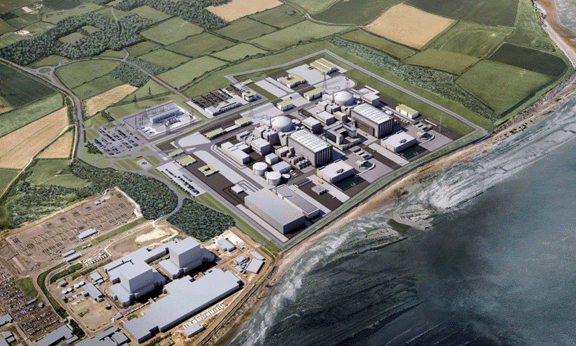 THINK TANK http://tomburke.co.uk/2016/09/15/hinkley-green-light-a-massive-strategic-mistake-says-climate-change-think-tank/ September 15, 2016 by tomburke Following reports today that the Government is about to give the green light to the Hinkley Point C nuclear power station, E3G, a leading climate change think tank said it would be a hugely expensive strategic mistake, using expensive 20th century technology that would soon be obsolete.
E3G Chairman, Tom Burke said: “It is a 20th Century solution to 21st Century problems. Bigger is no longer better. There are faster, cheaper, cleaner and smarter ways to deliver affordable, secure, low carbon electricity to Britain’s consumers.
Nothing about this deal is good for Britain’s hardworking families. They will pay the bill for decades but the jobs will go abroad. It is bad for consumers, bad for the climate and bad for the country.
The Prime Minister is missing a real opportunity to set Britain on course to a more productive and secure future. Instead she has committed us to an expensive and anachronistic energy policy that will leave Britain further behind in a rapidly changing world.”
- E3G sets out below ten reasons why this is a bad deal for British consumers and documents the range of cheaper, smarter, options for low carbon energy security that are better value for money.
HINKLEY POINT : The 10 Mistakes
The Investor Agreement that Greg Clark will sign with EDF is an irrevocable index-linked ‘take or pay’ contract to purchase 35 years’ worth of electricity from EDF at more than twice the current wholesale price. This will cost British consumers £37 billion in subsidy, four times that originally forecast[1]
- This deal binds future governments as well as the current Government. It will prevent Britain’s consumers buying cheaper electricity if it would displace that from EDF.
- It means Britain’s electricity consumers will pay more than £1 billion/year in subsidy to EDF for 35 years.
- The business case for this Agreement has never been subject to informed public scrutiny. The arguments for HPC and the rest of the nuclear programme have never been stress tested.
- The National Audit Office has already raised doubts that it represents value for money in the light of developments, including significant reductions in electricity demand forecasts, since it was first proposed[2].
- The National Infrastructure Commission has identified a package of other measures that could provide affordable, secure, low carbon electricity at lower cost.
- The National Grid has cut its forecast of the need for new centralised generation capacity in Britain by more than 50%, announcing its estimate of growth for decentralised generation was 50 times too low[3]
- EDF’s unions will argue in the French Courts that delaying a Hinkley decision until 2018 would allow for a design review to be completed that would reduce the subsidy needed from £92.50/MWh to £75/MWh[4].
- State Aids clearance for the UK subsidy is under challenge by the Austrian Government and others in the European Court. A further State Aids challenge is likely to the French Government’s re-financing of EDF. If either is successful the deal will fall.
- Hinkley will not produce electricity until 2030. There are cheaper, faster, cleaner and more reliable options available to deliver affordable, secure, low cost electricity to British consumers. These include:
- energy efficiency has reduced electricity demand by 25TWh ( 7% – the same as Hinkley will produce ) since 2010. A McKinsey report for the Government estimates that by 2030 demand could be reduced by a further 23% while reducing consumers bills;
- the National Infrastructure Commission reports that additional interconnectors could supply 2-3 Hinkleys by 2025;
- another National Infrastructure Commission report proposed investment in storage and smart grids that would provide the equivalent of 4 Hinkleys by 2030 and save £8 billion.
- Dong Energy, the world’s largest wind energy company, could replace all Hinkley’s electricity sooner and at lower cost. Offshore wind costs are continuing to fall.
- electricity from solar power is now also cheaper than Hinkley, having fallen by half in the last five years. From almost no solar panels in the UK, a third of a Hinkley has been added since 2010. Half of that was delivered in just 18 month.
- E3G is an independent global think tank, working to accelerate the transition to a low-carbon economy. E3G specializes in climate diplomacy, climate risk, energy policy and climate finance.
- In 2016, E3G was ranked the number one environmental think tank in the UK by the Go To Think Tank Index, second in Europe and sixth in the World.
Mutational signatures of ionizing radiation in second malignancies
This article is important, and should be seen by as many people as possible, as this scientific study will impact greatly the future of our anti-nuclear cause.
By establishing the genetic signatures of any cancer caused by ionizing radiation, any future denial from the nuclear lobby is now impossible. Those scientifically established signatures will also be extremely helpful in court for any future suit from radiation victims.
Abstract
Ionizing radiation is a potent carcinogen, inducing cancer through DNA damage. The signatures of mutations arising in human tissues following in vivo exposure to ionizing radiation have not been documented. Here, we searched for signatures of ionizing radiation in 12 radiation-associated second malignancies of different tumour types. Two signatures of somatic mutation characterize ionizing radiation exposure irrespective of tumour type. Compared with 319 radiation-naive tumours, radiation-associated tumours carry a median extra 201 deletions genome-wide, sized 1–100 base pairs often with microhomology at the junction. Unlike deletions of radiation-naive tumours, these show no variation in density across the genome or correlation with sequence context, replication timing or chromatin structure. Furthermore, we observe a significant increase in balanced inversions in radiation-associated tumours. Both small deletions and inversions generate driver mutations. Thus, ionizing radiation generates distinctive mutational signatures that explain its carcinogenic potential.
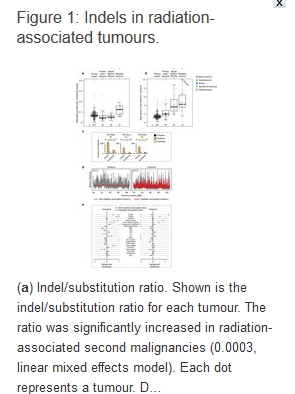
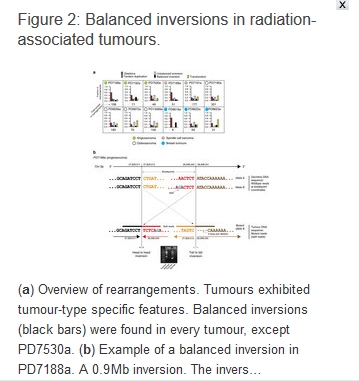
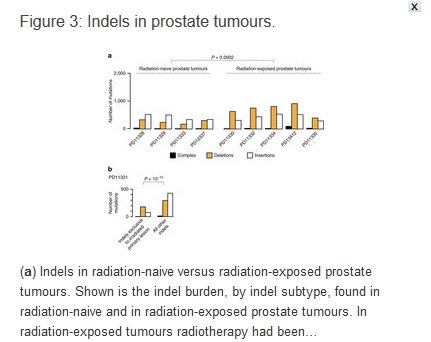
Introduction
Exposure to ionizing radiation increases the risk of subsequent cancer. This risk exhibits a strong dose–response relationship, and there appear to be no safe limits for radiation exposure1. This association was first noted by March who observed an increased incidence of leukaemia amongst radiologists2. A leading cause of radiation-induced cancers appears to be exposure to medical radiation, either in the form of radiotherapy for an unrelated malignancy3 or diagnostic radiography4, 5. These iatrogenic tumours arise as de novo neoplasms in a field of therapeutic radiation after a latency period that can span decades6, and are not recurrences of the original cancer7.
Many, but not all, environmental carcinogens induce cancer by increasing the rate of mutation in somatic cells. The physicochemical properties of a given carcinogen govern its interaction with DNA, leading to recurrent ‘signatures’ or patterns of mutations in the genome. These can be reconstructed either from experimental model systems8, 9 or from statistical analyses of cancer genomes in exposed patients10, 11, 12. Ionizing radiation directly damages DNA, and can generate lesions on single bases, single-stranded nicks in the DNA backbone, clustered lesions at several nearby sites and double-stranded DNA breaks13. In experimental systems exposed to radiation, including the murine germline and Arabidopsis thaliana cells, ionizing radiation can cause all classes of mutations, with possible enrichment of indels14, 15, 16, 17, 18, 19, 20, 21, 22. Targeted gene screens in radiation-induced sarcoma have indicated an increased burden of deletions and substitutions with frequent inactivation of TP53 and RB1 (refs 23, 24, 25). In addition, a transcriptome profile that represents a state of chronic oxidative stress has been proposed to be specific to radiation-associated sarcoma26.
We studied the genomes of 12 radiation-associated second malignancies of four different tumour types: osteosarcoma; spindle cell sarcoma; angiosarcoma; breast cancer. These were secondary tumours that arose within a field of therapeutic ionizing radiation and were not thought to be recurrences of the original malignancy treated with radiation. We chose this experimental design for several reasons: the tumours are classic radiotherapy-induced cancers with high attributable risks for the radiation exposure; the radiation exposure occurs over a short time period relative to the evolution of the cancer; and the mutational signatures of sporadic breast cancers and sarcomas have been well documented10, 27, 28, 29. It should be noted that in the absence of biomarkers, a diagnosis of a tumour being radiation-induced cannot be definitively made (see Supplementary Note 1 for clinical details and further discussion).
We subjected these 12 tumours, along with normal tissues from the same patients, to whole-genome sequencing and obtained catalogues of somatic mutations. We compared our findings to 319 radiation-naive breast cancers and sarcomas processed by the same sequencing and bioinformatics pipeline: 251 breast tumours; 33 breast tumours with pathogenic BRCA1 or BRCA2 germline mutations; 35 osteosarcomas (see Methods for cohort details). In addition, we validated our findings in a published series of radiation-naïve and radiation-exposed prostate tumours from ten patients30.
The main aim of our analyses was to search for tumour-type independent, overarching signatures of ionizing radiation. Overall we identified two such signatures in radiation-associative second malignancies, an excess of balanced inversions and of small deletions.
To read more :
http://www.nature.com/ncomms/2016/160907/ncomms12605/full/ncomms12605.html
A reminder that the World Health Organisation is subservient to International Atomic Energy Agency
Dissolving the WHO-IAEA agreement is a necessary first step to restoring the WHO’s independence to research the true health impacts of ionising radiation and publish its findings.
it is time the WHO regained the freedom to impart independent, objective advice on the health risks of radiation.
 Toxic link: the WHO and the IAEA, https://www.theguardian.com/commentisfree/2009/may/28/who-nuclear-power-chernobyl Oliver Tickell, A 50-year-old agreement with the IAEA has effectively gagged the WHO from telling the truth about the health risks of radiation. F
Fifty years ago, on 28 May 1959, the World Health Organisation‘s assembly voted into force an obscure but important agreement with theInternational Atomic Energy Agency – the United Nations “Atoms for Peace” organisation, founded just two years before in 1957. The effect of this agreement has been to give the IAEA an effective veto on any actions by the WHO that relate in any way to nuclear power – and so prevent the WHO from playing its proper role in investigating and warning of the dangers of nuclear radiation on human health.
The WHO’s objective is to promote “the attainment by all peoples of the highest possible level of health”, while the IAEA’s mission is to “accelerate and enlarge the contribution of atomic energy to peace, health and prosperity throughout the world”. Although best known for its work to restrict nuclear proliferation, the IAEA’s main role has been to promote the interests of the nuclear power industry worldwide, and it has used the agreement to suppress the growing body of scientific information on the real health risks of nuclear radiation.
Under the agreement, whenever either organisation wants to do anything in which the other may have an interest, it “shall consult the other with a view to adjusting the matter by mutual agreement”. The two agencies must “keep each other fully informed concerning all projected activities and all programs of work which may be of interest to both parties”. And in the realm of statistics – a key area in the epidemiology of nuclear risk – the two undertake “to consult with each other on the most efficient use of information, resources, and technical personnel in the field of statistics and in regard to all statistical projects dealing with matters of common interest”.
The language appears to be evenhanded, but the effect has been one-sided. For example, investigations into the health impacts of the Chernobyl nuclear accident in Ukraine on 26 April 1986 have been effectively taken over by IAEA and dissenting information has been suppressed. The health effects of the accident were the subject of two major conferences, in Geneva in 1995, and in Kiev in 2001. But the full proceedings of those conferences remain unpublished – despiteclaims to the contrary by a senior WHO spokesman reported in Le Monde Diplomatique.
Meanwhile, the 2005 report of the IAEA-dominated Chernobyl Forum, which estimates a total death toll from the accident of only several thousand, is widely regarded as a whitewash as it ignores a host of peer-reviewed epidemiological studies indicating far higher mortality and widespread genomic damage. Many of these studies were presented at the Geneva and Kiev conferences but they, and the ensuing learned discussions, have yet to see the light of day thanks to the non-publication of the proceedings.
The British radiation biologist Keith Baverstock is another casualty of the agreement, and of the mindset it has created in the WHO. He served as a radiation scientist and regional adviser at the WHO’s European Office from 1991 to 2003, when he was sacked after expressing concern to his senior managers that new epidemiological evidence from nuclear test veterans and from soldiers exposed to depleted uranium indicated that current risk models for nuclear radiation were understating the real hazards.
Now a professor at the University of Kuopio, Finland, Baverstock finally published his paper in the peer-reviewed journal Medicine, Conflict and Survival in April 2005. He concluded by calling for “reform from within the profession” and stressing “the political imperative for freely independent scientific institutions” – a clear reference to the non-independence of his former employer, the WHO, which had so long ignored his concerns.
Since the 21st anniversary of the Chernobyl disaster in April 2007, a daily “Hippocratic vigil” has taken place at the WHO’s offices in Geneva, organised byIndependent WHO to persuade the WHO to abandon its the WHO-IAEA Agreement. The protest has continued through the WHO’s 62nd World Health Assembly, which ended yesterday, and will endure through the executive board meeting that begins today. The group has struggled to win support from WHO’s member states. But the scientific case against the agreement is building up, most recently when the European Committee on Radiation Risk (ECRR) called for its abandonment at its conference earlier this month in Lesvos, Greece.
At the conference, research was presented indicating that as many as a million children across Europe and Asia may have died in the womb as a result of radiation from Chernobyl, as well as hundreds of thousands of others exposed to radiation fallout, backing up earlier findings published by the ECRR in Chernobyl 20 Years On: Health Effects of the Chernobyl Accident. Delegates heard that the standard risk models for radiation risk published by the International Committee on Radiological Protection (ICRP), and accepted by WHO, underestimate the health impacts of low levels of internal radiation by between 100 and 1,000 times – consistent with the ECRR’s own 2003 model of radiological risk (The Health Effects of Ionising Radiation Exposure at Low Doses and Low Dose Rates for Radiation Protection Purposes: Regulators’ Edition). According to Chris Busby, the ECRR’s scientific secretary and visiting professor at the University of Ulster’s school of biomedical sciences:
“The subordination of the WHO to IAEA is a key part of the systematic falsification of nuclear risk which has been under way ever since Hiroshima, the agreement creates an unacceptable conflict of interest in which the UN organisation concerned with promoting our health has been made subservient to those whose main interest is the expansion of nuclear power. Dissolving the WHO-IAEA agreement is a necessary first step to restoring the WHO’s independence to research the true health impacts of ionising radiation and publish its findings.”
Some birthdays deserve celebration – but not this one. After five decades, it is time the WHO regained the freedom to impart independent, objective advice on the health risks of radiation.
Linear No Threshold Theory (LNT) of ionising radiation is backed by new research
Gamma radiation at a human relevant low dose rate is genotoxic in mice, Anne Graupner, Dag M. Eide, Christine Instanes, Jill M. Andersen, Dag A. Brede, Stephen D. Dertinger, Ole C. Lind, Anicke Brandt-Kjelsen, Hans Bjerke, Brit Salbu, Deborah Oughton, Gunnar Brunborg & Ann K. Olsen Scientific Reports 6, Article number: 32977 September 21016
Abstract
Even today, 70 years after Hiroshima and accidents like in Chernobyl and Fukushima, we still have limited knowledge about the health effects of low dose rate (LDR) radiation. Despite their human relevance after occupational and accidental exposure, only few animal studies on the genotoxic effects of chronic LDR radiation have been performed. Selenium (Se) is involved in oxidative stress defence, protecting DNA and other biomolecules from reactive oxygen species (ROS). It is hypothesised that Se deficiency, as it occurs in several parts of the world, may aggravate harmful effects of ROS-inducing stressors such as ionising radiation.
We performed a study in the newly established LDR-facility Figaro on the combined effects of Se deprivation and LDR γ exposure in DNA repair knockout mice (Ogg1−/−) and control animals (Ogg1+/−). Genotoxic effects were seen after continuous radiation (1.4 mGy/h) for 45 days. Chromosomal damage (micronucleus), phenotypic mutations (Pig-a gene mutation of RBCCD24−) and DNA lesions (single strand breaks/alkali labile sites) were significantly increased in blood cells of irradiated animals, covering three types of genotoxic activity.
This study demonstrates that chronic LDR γ radiation is genotoxic in an exposure scenario realistic for humans, supporting the hypothesis that even LDR γ radiation may induce cancer……..

In the present study we demonstrate that exposure to a human relevant LDR γ radiation induces genotoxic effects in mouse blood cells assessed with three separate but complementary assays. These effects were expressed as increased levels of chromosomal damage (micronuclei), phenotypic mutations (RBCCD24−) and DNA lesions (ssb/als). The absolute measured changes were small, but significant. The formation of MN was observed in all irradiated groups independent of genotype or diet, and significant changes were seen in both immature and mature erythrocytes. This is an expected result given the chronic exposure and lack of splenic filtration of circulating MN-containing erythrocytes18……..In summary, exposure to chronic LDR of ionising radiation is indeed genotoxic with potential implications for cancer development, and the response is modified by the availability of Se, an element involved in the antioxidative defence report http://www.nature.com/articles/srep32977
1 This Month



26 September – International Day for the Total Elimination of Nuclear Weapons


PLEASE OPPOSE HR 8255 AND S.3639 – bills would accelerate satellite deployment, with no environmental review or safeguards – https://ncstd5li.quorum.us/campaign/169331/
To see nuclear-related stories in greater depth and intensity – go to https://nuclearinformation.wordpress.com
-
Archives
- September 2026 (233)
- August 2026 (330)
- July 2026 (355)
- June 2026 (287)
- May 2026 (306)
- April 2026 (356)
- March 2026 (251)
- February 2026 (267)
- January 2026 (308)
- December 2025 (358)
- November 2025 (359)
- October 2025 (375)
-
Categories
- 1
- 1 NUCLEAR ISSUES
- business and costs
- climate change
- culture and arts
- ENERGY
- environment
- health
- history
- indigenous issues
- Legal
- marketing of nuclear
- media
- opposition to nuclear
- PERSONAL STORIES
- politics
- politics international
- Religion and ethics
- safety
- secrets,lies and civil liberties
- spinbuster
- technology
- Uranium
- wastes
- weapons and war
- Women
- 2 WORLD
- ACTION
- AFRICA
- Atrocities
- AUSTRALIA
- Christina's notes
- Christina's themes
- culture and arts
- Events
- Fuk 2022
- Fuk 2023
- Fukushima 2017
- Fukushima 2018
- fukushima 2019
- Fukushima 2020
- Fukushima 2021
- general
- global warming
- Humour (God we need it)
- Nuclear
- RARE EARTHS
- Reference
- resources – print
- Resources -audiovicual
- Weekly Newsletter
- World
- World Nuclear
- YouTube
-
RSS
Entries RSS
Comments RSS
 nuclear-news