Nuclear reactor graphite cores cracking: Hinkley Point B and Hunterston B

 NuClear News No 90 26 Nov 16 Radio Four’s Costing the Earth has been investigating whether it is safe to keep reactors running long past their expected lifespan of about 30 years. Five of Britain’s seven AGRs are already older (Torness and Heysham 2 are only 27 years old). Hinkley Point B and Hunterston B are already 40 years old but EDF energy wants them to continue operating for at least another 7 years.
In 2005 the Nuclear Installations Inspectorate (now the Office for Nuclear Regulation -ONR) expressed concern about the structure of the reactor core. The core is made up of 6,000 graphite blocks. Around half of these are 1 metre tall with a bore or channel running through each block. Around 200 of these channels contain rods of nuclear fuel. If anything goes wrong control rods are inserted between the channels to dampen the nuclear reaction and shut down the reactor.
Nuclear Engineering consultant John Large explains that graphite is not elastic, it doesn’t bend, and it is not particularly strong. And now the graphite bricks are cracking. The core is an assembly of several thousand bricks, loosely stacked together and the expectation was that the core would never fail, so there was no facility to replace any individual blocks if they did become damaged. But now there are physical changes occurring in the core, in the individual bricks – cracking and fracturing – that must result in some loss of strength – not only of the individual bricks, but of the core as a whole.
The BBC used a Freedom of Information request to obtain a number of documents. One paper from ONR reveals that one third of the channels inspected at Hinkley B and Hunterston B contain what they describe as significant cracks. EDF says the cracks were anticipated at this stage in the reactors’ life and it is safe to operate for years to come. It says evidence suggests that its predictions about cracking are accurate.
Brian Cowell, director of nuclear operations, says: “in fact we are looking to extend life further (than 2023) if we can.” The analysis suggests that we can have more than 1,000 axial cracked bricks and still operate with massive margins of safety. 1,000 cracked bricks would exceed the current safety limit set by ONR, but the regulator is considering changing that limit.
Mark Foy – Deputy Chief Nuclear Inspector says the percentage of cracked bricks ONR is currently happy to accept is 10%, but they are considering increasing that to 20%. Foy says that the original safety case provided by EDF was on the basis of 10% cracking. As experience is gained and analysis and research is undertaken it allows EDF and ONR to gain a more informed and accurate view of what is acceptable and what isn’t.
EDF has now provided ONR with a safety case for allowing 20% cracking. This is based on the analysis EDF has undertaken; samples they’ve taken and the inspections they’ve undertaken. The focus has been to look at the likelihood of core disruption after an earthquake which could prevent the control rods being inserted. ONR is considering the new safety case.
Keyway Route Cracking
The ONR is also investigating a very specific and more concerning form of cracking. The keyway is a slot that holds each brick to the adjacent brick, the bricks underneath and the bricks on top. These keyways, which are acknowledged to be the limiting factor in the life of these reactors, are beginning to fracture. John Large points out that this will make the graphite blocks a very loose set of bricks.
Prof Paul Bowen of Birmingham University sits on the graphite technical advisory committee for ONR. He says the keyway cracks could potentially prevent the entry of the control rods. If the core distorts too much, it’s easy to see how trying to feed anything in could become very difficult
Seven of the keyways have been discovered to have cracks at Hunterston B. John Large believes the presence of keyway cracks casts doubt on the safety of the reactor in the event of an emergency like an earthquake. We have a cracked and deteriorating core that’s lost its residual strength and we don’t know by how much. Some of the design case accidents will test the core – one of these would be a seismic shake where the whole core is wobbled. If the core becomes misaligned, and the fuel modules get stuck in the core, the fuel temperature will get raised and could undergo a melt. If the radioactivity gets into the gas stream and the reactor is venting because it’s over pressurised then you have a release to the atmosphere and you have dispersion and a contamination problem.
ONR agrees keyway cracks could compromise safety. One of the documents the BBC obtained said the discovery of keyway route cracks at Hunterston invalidates the previous safety case. EDF had to consider what information to present to ONR to satisfy them that the reactor was still safe to operate. EDF brought in articulated control rods and nitrogen injection systems to address the extra risks posed by the keyway route cracking. The new rods are bendy making them easier to insert into a distorted core and an injection of nitrogen could buy several hours of invaluable time in the event of an accident.
However, concern remains because we can’t be certain how many keyway route cracks there are. John Large explains that to examine where the cracks are you have to take the fuel out of the reactor and put a camera down to inspect the inside of the bore, but these keyway cracks are on the outside of the bricks so you can’t actually see them.
It’s very hard to inspect the channels in which the fuel sits. Around 10% are inspected each time the reactor is shutdown. So there may be keyway route cracks that have never been seen at Hunterston and Hinkley. In the absence of a full visual inspection a mathematical model is used to work out the likelihood of cracks in particular parts of the reactor. The trouble is the model has already been shown to be flawed.
Paul Bowen says they haven’t been able to get the exact timing of the cracks right. The industry argued that cracks would appear first in layers 4 and 5, but they actually appeared in level 6. John Large says the model relied upon by ONR is not working, so they can’t predict the strength of the core. More to the point they can’t work out where to put their investigative probes to see where cracking is taking place. So they’re in the dark.
If the ONR gives the go-ahead for an increase in the number of cracked bricks from 10 to 20%, it might be difficult for people living near theses reactors to understand why the definition of “safe” seems to be changing. http://www.no2nuclearpower.org.uk/nuclearnews/NuClearNewsNo90.pdf
Nuclear contractors settle with USA Justice Dept over allegations of improper billing.
 United States Settles Lawsuit Against Energy Department Contractors for Knowingly Mischarging Costs on Contract at Nuclear Waste Treatment Plant https://www.justice.gov/opa/pr/united-states-settles-lawsuit-against-energy-department-contractors-knowingly-mischarging, 24 Nov 16,
The Justice Department announced today that Bechtel National Inc., Bechtel Corp., URS Corp. (predecessor in interest to AECOM Global II LLC) and URS Energy and Construction Inc. (now known as AECOM Energy and Construction Inc.) have agreed to pay $125 million to resolve allegations under the False Claims Act that they made false statements and claims to the Department of Energy (DOE) by charging DOE for deficient nuclear quality materials, services, and testing that was provided at the Waste Treatment Plant (WTP) at DOE’s Hanford Site near Richland, Washington. The settlement also resolves allegations that Bechtel National Inc. and Bechtel Corp. improperly used federal contract funds to pay for a comprehensive, multi-year lobbying campaign of Congress and other federal officials for continued funding at the WTP. Bechtel Corp. and Bechtel National Inc. are Nevada corporations. URS Corp. is headquartered in California, and URS Energy & Construction Inc. is headquartered in Colorado.
“The money allocated by Congress for the Waste Treatment Plant is intended to fund the Department of Energy’s important mission to clean up the contaminated Hanford nuclear site, and this mission is undermined if funds are wasted on goods or services that are not nuclear compliant or to further lobbying activities,” said Principal Deputy Assistant Attorney General Benjamin C. Mizer, head of the Justice Department’s Civil Division. “This settlement demonstrates that the Justice Department will work to ensure that public funds are used for the important purposes for which they are intended.”
“The DOE Office of Inspector General is committed to ensuring the integrity of Departmental contracts and financial expenditures,” said Acting Inspector General Rickey R. Hass. “We will continue to steadfastly investigate allegations of fraudulent diversion of tax dollars throughout DOE programs and appreciate the support of DOJ attorneys in these matters.”
Between 2002 and the present, DOE has paid billions of dollars to the defendants to design and build the WTP, which will be used to treat dangerous radioactive wastes that are currently stored at DOE’s Hanford Site. The contract required materials, testing and services to meet certain nuclear quality standards. The United States alleged that the defendants violated the False Claims Act by charging the government the cost of complying with these standards when they failed to do so. In particular, the United States alleged that the defendants improperly billed the government for materials and services from vendors that did not meet quality control requirements, for piping and waste vessels that did not meet quality standards and for testing from vendors who did not have compliant quality programs. The United States also alleged that Bechtel National Inc. and Bechtel Corp. improperly claimed and received government funding for lobbying activities in violation of the Byrd Amendment, and applicable contractual and regulatory requirements, all of which prohibit the use of federal funds for lobbying activities.
The allegations resolved by this settlement were initially brought in a lawsuit filed under the qui tam, or whistleblower, provisions of the False Claims Act by Gary Brunson, Donna Busche, and Walter Tamosaitis, who worked on the WTP project. The False Claims Act permits private parties to sue on behalf of the United States when they believe that a party has submitted false claims for government funds, and to receive a share of any recovery. The Act also permits the government to intervene in such a lawsuit, as it did in part in this case. The whistleblowers’ reward has not yet been determined.
This matter was handled by the Civil Division’s Commercial Litigation Branch, the U.S. Attorney’s Office for the Eastern District of Washington, the DOE Office of the Inspector General and the FBI.
The claims asserted against defendants are allegations only, and there has been no determination of liability. The case is United States ex rel. Brunson, Busche, and Tamosaitis v. Bechtel National, Inc., Bechtel Corp., URS Corp., and URS Energy & Construction, Inc., Case No. 2:13-cv-05013-EFS (E.D. Wash.).
Decentralized renewable energy – this is the future
 “……….Let me develop the real reasons why conventional renewables are likely to emerge as the dominant primary energy sources in the first half of the
21st century. The fundamental advantages of renewables, as revealed by practical experience in China as well as in industrialised countries like Germany where an energy transformation is well under way, are these.As they scale renewable energies do not present greater and greater hazards. Instead they are relatively benign technologies, without serious riskThey are clean (low to zero-carbon); they are non-polluting (important in China and India with their high levels of particulate pollution derived from coal); they tap into inexhaustibleenergy sources; and they have close-to-zero running costs since they do not need fuel. They are also diffuse, which should be viewed as an advantage, since this means that renewable sources are decentralised, and can be harvested by both large and by small operations. So they are eminently practicable.
Some advantages of renewables are not at all obvious and need to be made explicit. Fundamentally, they are scalable. They can be built in modular fashion – one solar panel, 100 solar panels, 1000 solar panels. As they are replicated in this fashion so their power ratings continue to rise, without complexity cutting back on efficiency. This cannot be said of nuclear reactors, which have an optimal operational size – below which or above which the plant under-performs.
Moreover as they scale they do not present greater and greater hazards. Instead they are relatively benign technologies, without serious risks.

When they use hazardous materials, such as the cadmium in Cd-Te solar, the solution would be to recycle materials in order to minimise the use and waste of virgin materials.
Most importantly, the superiority of conventional renewables lies in their cost reduction trends which are linked to the fact that they are always the products of manufacturing – and mass production manufacturing, where economies of scale really play a role. This means that they offer genuine energy security in so far as manufacturing can in principle be conducted anywhere. There are no geopolitical pressures stemming from accidents of chance where one country has deposits of a fossil fuel but another does not. Manufactured devices promise an end to the era in which energy security remains closely tied to geopolitics and the projection of armed force. As Hao Tan and I put it in our article published in Nature, manufacturing renewables provides the key to energy security.
Manufacturing is characterised by improving efficiencies as experience is accumulated – with consequent cost reductions captured in the learning or experience curve. Manufacturing generates increasing returns; it can be a source of rising incomes and wealth without imposing further stresses on the earth. Add to these advantages that renewables promise economic advantages of the first importance: they offer rural employment as well as urban employment in manufacturing industry; they offer an innovative and competitive energy sector; and they offer export platforms for the future.
The real driver of the renewable energy revolution is not government policy, or business risk-taking, or consumer demand. It is, quite simply, the reduction of costs
This is to list the advantages of renewables without even mentioning their low and diminishing carbon emissions. Indeed they offer the only real long-term solution to the problem of cleaning up energy systems.
With all these advantages, it is little wonder that China and now India are throwing so much effort into building renewable energy systems at scale. These are not exercises undertaken for ethical or aesthetic purposes, but as national development strategies of the highest priority.
So the real driver of the renewable energy revolution is not government policy, or business risk-taking, or consumer demand. It is, quite simply, the reduction of costs – to the point where renewables are bringing down costs of generating power to be comparable with the use of traditional fossil fuels, and with the promise of reducing these costs further still. Supergrids are also being promoted for renewables, but these are very different conceptions, based on integrating numerous fluctuating sources in IT-empowered grids, offering the same practicable, scalable and replicable energy future.
Against these advantages, the obstacles regularly cited are small indeed. There is the fluctuating nature of renewables, which can be addressed by various forms of systems integration (smart grids, demand response) and of course through energy storage, which is moving into the same kind of cost reduction learning curve that has characterised solar and wind power, promising rapid diffusion of both commercial and domestic energy storage units. With rapidly falling costs of storage providing the buffer that can even out fluctuating levels of generation, there is no further serious argument against renewables……..
by John Mathews
This article is based on a scientific paper by John A. Mathews, Competing principles driving energy futures: Fossil fuel decarbonization vs. manufacturing learning curves, which was published in Futures in November 2016 (.http://www.sciencedirect.com/science/article/pii/S0016328715300227)
John Mathews is author of the Greening of Capitalism: How Asia is Driving the Next Great Transformation”, published by Stanford University Press: http://www.sup.org/books/title/?id=24288. His latest book, “China’s Renewable Energy Revolution” (co-authored with Hao Tan) was published by Palgrave Pivot in September 2015: http://www.palgrave.com/page/detail/chinas-energy-revolution-john-a-mathews/?isb=9781137546241.
See his author’s archive on Energy Post.
Europe adopts new rules on disposal of nuclear waste
 Under the new law, export to countries outside the EU will be allowed but only under strict and binding conditions.
The third country must have a final deep geological repository in operation when the waste is shipped. [Ed note: This kind of regulation would finish off South Australia’s crazy plan to commercially import nuclear waste]
At present, such deep geological repositories do not exist anywhere in the world nor is a repository in construction outside of the EU.
Europe Adopts Long-Term Nuclear Waste Storage Law http://ens-newswire.com/2011/07/19/europe-adopts-long-term-nuclear-waste-storage-law/ BRUSSELS, Belgium, July 19, 2011 For the first time, the European Union has committed itself to the final disposal of its nuclear waste. Heads of government today adopted the radioactive waste and spent fuel management directive, “in order to avoid imposing undue burdens on future generations.”…..
The directive will enter into force at the latest in September of this year. Member States will have two years to transpose its provisions into their national laws.
By 2015, governments must submit their first national programs to the European Commission, the EU’s executive branch, which will examine them and can require changes……
Some 7,000 cubic meters of high-level nuclear waste are produced across the EU each year. Most Member States store spent fuel and other highly radioactive wastes in above-ground storage facilities that need continuous maintenance and oversight and are at risk of accidents, such as airplane crashes, fires or earthquakes. Hungary and Bulgaria currently ship nuclear waste to Russia.
In its most controversial provision, the new law allows export of nuclear waste to countries outside the EU. In its initial proposal, the Commission had advocated a complete export ban.
On June 23, 2011, the European Parliament in its plenary session voted in favor of a complete export ban as proposed by the Commission. In a close vote, MEPs backed a ban on exports of nuclear waste to non-EU countries, with 311 votes in favor, 328 against and seven abstentions.
However, the European Council today approved a version of the directive that allows export.
As the legal basis for this directive is the Euratom Treaty, the European Parliament is only consulted, an its opinion is not binding. The final decision is taken only by the Council, composed of the heads of government of every EU Member State and the president of the European Commission.
Under the new law, export to countries outside the EU will be allowed but only under strict and binding conditions.
The third country must have a final deep geological repository in operation when the waste is shipped.
At present, such deep geological repositories do not exist anywhere in the world nor is a repository in construction outside of the EU.
It takes a minimum of 40 years to develop and build a deep geological repository, the Commission said today in a statement on adoption of the new directive.
According to already existing EU laws on the shipment of spent fuels and radioactive waste, the export to African, Pacific and Caribbean countries, as well as to Antarctica, is explicitly ruled out.
Greenpeace EU nuclear policy adviser Jan Haverkamp was critical of the new law, saying shipment of nuclear waste to countries outside the EU should not have been allowed.
“Despite pressure from the European Commission to block exports, the new rules will allow Hungary and Bulgaria, countries that currently have agreements for the export of nuclear waste to Russia, to continue transferring radioactive material,” said Haverkamp.
“European governments have adopted an out of sight, out of mind approach to radioactive waste, but all they are doing is dumping the long-term problem on someone else and putting Europeans at risk by allowing dangerous waste convoys,” Haverkamp said. “Only countries that face the unsolvable problem of radioactive waste head-on by ending their reliance on nuclear power can stop the vicious circle that shifts responsibility to the next generations.”
Under the new directive, national programs have to include plans with a concrete timetable for the construction of disposal facilities, as well as a description of the activities needed for the implementation of disposal solutions, costs assessments and a description of the financing schemes. They will have to be updated regularly.
Safety standards drawn up by the International Atomic Energy Agency will become legally binding.
Information will be made available to the general public and workers, and the public will have opportunities to participate in the decision-making process.
At least every 10 years, Member States are required to invite international peer reviews to exchange experience and ensure the application of the highest standards.
Finally, two or more Member States can agree to use a disposal facility in one of them.
More than 50 years after Europe’s first nuclear power reactor became operational – the UK’s Calder Hall power plant in 1956 – there are still no final repositories for nuclear waste.
Under the Euratom Treaty, the EU has the legal competence to protect the general public from ionizing radiation. The energy mix is a national competence.
The Commission said it will “closely and carefully” monitor the implementation of the new directive, in particular progress made in building disposal facilities for radioactive waste and spent fuel and, if they occur at a later stage, possible exports of radioactive material.
Humans, wildlife threatened by Navy’s Use of Depleted Uranium in USA Coastal Waters
 The Navy’s Use of Depleted Uranium in Our Coastal Waters Threatens Humans, Wildlife Monday, 31 October 2016 By Dahr Jamail, Truthout | Report
Sheila Murray with the Navy Region Northwest’s public affairs office, when asked what the Navy was doing to mitigate environmental contamination from the large numbers of Depleted Uranium (DU) rounds it left on the seabed off the Pacific Northwest Coast claimed current research “does not suggest short- or long-term effects” from the release of DU to the environment that could result in its uptake by marine organisms.”
She also said that DU rounds “are extremely stable in sea water and pose no greater threat than any other metal.”
In response to this, Mozhgan Savabieasfahani, an environmental toxicologist and winner of the 2015 Rachel Carson Prize environmental award for her work on DU and heavy metal contamination, told Truthout, “The US Navy representative’s views exhibit an alarming level of amnesia.”
She said this because Murray’s statement has been one that has been recycled by the Navy for years. Reuters reported in January 2003 that the Navy confirmed its use of DU shells in arms tests off the Washington State coast, at which time the Navy claimed, “The DU rounds dissolve so slowly that they would not contribute to naturally occurring (radiation) levels … and do not pose a significant risk.”
Meanwhile, ample scientific reports — including Savabieasfahani’s own research — demonstrate the deleterious health impacts caused by DU.
“When those bullets and bombs explode, dangerous nanoparticles of metals, including uranium nanoparticles, are released into the environment,” she explained to Truthout. “Laboratory research has already established that exposure to environmentally relevant concentrations of uranium has negative impacts on fish embryogenesis, and on the reproductive success of fish.”
Naval documents show that as much as 34 tons of DU could be present on the seabed just 12 miles from the outer coast of Washington State.
Even more distressing, the Navy’s own documents reveal that the extent of its use of DU off the coast of the US is far more pervasive than it admits to the public.
And results of a Freedom of Information Act filing provided to Truthout show that the Navy, which claims in its environmental impact statements it has not used DU since 2008, has actually shipped it from a Puget Sound munitions area as recently as 2011.
A Bogus Study
The Navy’s public affairs officer, Murray, also told Truthout that a “recent study” of an area off the south coast of England that was used for test firing DU rounds “did not show presence of DU in sample of intertidal and ocean bottom sediments, seaweed, mussels, and locally caught lobster and scallops. (Toque, 2006).”
However, the study Murray cites — and which the Navy consistently cites when arguing that DU is not harmful — is heavily disputed.
Carol Van Strum, an Oregon-based environmental advocate who has researched DU for years, told Truthout that Murray’s statement is “an out-and-out lie.”
Van Strum, who has read the Toque study closely and knows it well, pointed out that, for starters, the study’s author works for a British military contractor. She went on to point out two very serious flaws in the study.
“While the study relied on ‘locally caught’ lobster and scallops as samples for testing for depleted uranium, the samples were never ‘caught’ but rather bought in a local market, and thus could have come from anywhere,” Van Strum explained. “Second, and most worrisome … the actual study reports depleted uranium contamination in nearly all of the samples.”
The Navy’s Environmental Impact Statement (EIS) on the matter claims “the survey results show no evidence of DU being present in any marine environmental sample collected in the year 2004.”
But Van Strum called their claim “incontrovertibly false” because the study itself stated it had found DU contamination in the soil in many areas where the military was operating cannons, in the soil where ordnance had been fired, and in the soil, sea water and marine life where the ordnance they had fired had landed.
“The study’s methodology would not pass muster for even a high school science project,” Van Strum said. Karen Sullivan, a retired endangered species biologist who co-founded the website West Coast Action Alliance that acts as a watchdog of Naval activities in the Pacific Northwest, questioned why the Navy would open itself up to accusations of bias by relying on only a single study done by someone who works for a group affiliated with the British military.
“Why would the Navy rely on such a flawed and obviously biased study to ‘prove’ that DU in seawater poses no threat greater than any other metal?” Sullivan, who worked at the US Fish and Wildlife Service for more than 15 years and who is an expert in the bureaucratic procedures the Navy is supposed to be following, asked in an interview with Truthout. “Probably because the enormous body of properly conducted and unbiased science completely refutes it.”
Van Strum went on to point out additional significant problems with the study, including the almost laughable procurement and use of the samples……..
Human Health Impacts of DU “Quite Relevant” to Naval Exercises
“Navy exercises in the waters of the Pacific Northwest will release contaminants into the marine environment, with an undeniable potential to harm human health,” Savabieasfahani said, noting that this would apply even to low-level amounts of DU being introduced into the oceans. “It is long established that explosives can contaminate soil, sediment and water and thereby impact environmental and human health.”
She explained that the human and environmental impacts of the Navy’s use of DU in past exercises is “quite relevant,” and cited a report that showed how DU exposure has been linked to lower cognitive ability in adults.
“This leads us to expect much worse impacts on growing children, newborns and infants — to say nothing of unborn babies,” Savabieasfahani added. “Furthermore, epidemiological evidence is also consistent with an increased risk of birth defects in the children of people exposed to DU.”
She also heavily emphasized the fact that the internalization of uranium in any form will result in both chemical and radiation exposure. “Once inside a living body, DU and uranium’s effects are virtually the same,” Savabieasfahani explained. “This is a point worth repeating.”
Moreover, Savabieasfahani emphasized that it’s dangerous to guesstimate “safe” levels of DU, whether or not it reaches levels determined to be “toxic.”
“Our knowledge of the human health impacts of DU is consistent with laboratory studies of other mammals,” she said. “DU exposure affects neurogenesis during prenatal and postnatal brain development by disrupting patterns of cell proliferation and cell death. Even sub-toxic levels of DU have been shown to alter brain function.”
She also took issue with Murray’s argument, which Savabieasfahani described as, essentially, “the solution to pollution is dilution.” This is the nuclear industry’s default argument about radiation and other forms of pollution, and has been for decades, despite the fact that this logic was “decisively rejected” more than 40 years ago. Savabieasfahani pointed out that even Richard Nixon’s EPA administrator, William Ruckelshaus, rejected the dilution argument in a 1972 Congressional testimony regarding the Clean Water Act.
Savabieasfahani noted that any upcoming Naval exercises that introduce heavy metals and other pollutants, regardless of whether they use DU, will increase the environmental “background burden” of DU and other pollutants.
“Increasing that burden is simply irresponsible,” Savabieasfahani said. “Seabed pollutants have already found their way into our bodies. Those pollutants will continue to impact the most vulnerable populations — infants, newborns and growing children — most profoundly, and their imprint will be found in the baby teeth of our children.”
Other Instances of DU
Problems with DU in the Pacific Northwest are not limited to the Navy……. http://www.truth-out.org/news/item/38185-the-navy-s-use-of-depleted-uranium-in-our-coastal-waters-threatens-humans-wildlife
UN again to study the effects of depleted uranium contamination
United Nations highlights cost and difficulty of tackling depleted uranium contamination http://www.bandepleteduranium.org/en/united-nations-highlights-cost-and-difficulty
The resolution is the sixth on the topic to be tabled at the General Assembly since 2007. Shortly before the last resolution was debated in 2014, Iraq called for assistance from the international community in addressing the legacy of DU use in the country in 1991 and 2003. The 2014 resolution, which was supported by 150 states, called on member states to provide such assistance. Disappointingly, assistance has not been forthcoming in the interim and the appalling security situation in Iraq has hampered efforts to assess and clear sites.
“Managing DU contamination to internationally accepted standards is complex, time-consuming and costly,” said ICBUW Coordinator Doug Weir. “Research has repeatedly shown that most countries recovering from conflict are poorly placed to implement these vital risk reduction measures, which are recommended by UN agencies, and it is civilians who all too often pay the cost of inaction.” Part of the problem lies in the fact that unlike land mines and cluster munitions, there are no formal obligations, on either those countries that use the weapons, or are affected by them, to clear them after conflicts.
Previous resolutions have passed by huge majorities, with just four states consistently voting against and, while it is unlikely that the UK, US, France and Israel will vote in favour this year, overall the number of governments abstaining has been on a downward trend since 2007. As a result, there is increasing focus on the likes of Canada, Denmark and a number of EU governments who refuse to vote yes, often on extremely dubious grounds.
However, it is Germany that many will be watching. In 2014, the German government abstained on the DU resolution for the first time, triggering a backlash from German parliamentarians and civil society. A parliamentary question urging the government to vote yes was tabled in September by the Green Party. “Germany has got to accept that the potential hazards from DU contamination are widely accepted by the UN agencies that recommend remedial measures, and by their own military, who take a precautionary approach to DU in their own guidelines,” said PAX’s Wim Zwijnenburg. “Doubtless the German authorities would take steps to prevent civilian harm if DU were dispersed in Germany, why should it be different for other countries following conflicts?”
What will the resolution achieve?
The resolutions do not seek to ban DU weapons, however they do underscore the fact that the overwhelming majority of governments object to their use. Each resolution is also helping to define soft norms around some of the most problematic issues surrounding DU. One of these, the need for DU users to share data on where they fire the weapons, has featured since 2010, and its importance was highlighted by a recent report from PAX and ICBUW over DU use in the 2003 Iraq War. The report showed that more than half the DU fired by the US is still unaccounted for, and that the refusal of the US to release data to UN agencies hampered their post-conflict assessments.
Voting on the resolution will take place in early November. A second vote will take place in early December. You can follow the debate on social media using #FirstCommittee and by following @ICBUW
Depleted uranium: USA ignored its own guidelines in weapons use in Iraq. Syria too?
US broke its own rules firing depleted uranium in Iraq http://www.bandepleteduranium.org/en/us-broke-own-rules-firing-depleted-uranium-in-iraq
The targeting data, which details the use of 30mm DU ammunition by USAF A-10 Thunderbolt II aircraft – or “Warthogs”, was released under FOIA and accounts for 54,000kg of the 118,000kg of DU ammunition that the US and UK have acknowledged firing in the conflict. Analysis by PAX and ICBUW of the 1,116 strikes, which took place during the first month of the 2003 invasion, and published in a new report Targets of Opportunity shows that DU use was widespread across Iraq.
For the first time, the data also reveal that the majority of targets attacked with the radioactive and chemically toxic weapons were not armoured. This runs counter to claims by the US that the A10’s ammunition is specifically for destroying tanks and other armoured vehicles. A significant number of the 182,000 30mm PGU-14/B rounds fired by the aircraft – each of which contains 298g of DU – were also fired in or near populated areas, increasing the likelihood that civilians would be exposed.
The need to destroy armour is central to the US’s ongoing military justification for the use of the weapons, which place civilians at risk of exposure and leave a complex and costly legacy for years after the end of conflicts. The US’s own legal guidelines, which were placed on the use of the armour-piercing incendiary weapons in 1975, restricts their use to armoured vehicles, a restriction that appears to have been ignored in the 2003 conflict.
Little transparency, even less assistance
While the UK released information to the UN on where it fired 1,900kg of DU, the US is still withholding data on where it fired 62,000kg of the weapons. This is hampering clearance work. PAX has reported that Iraq continues to struggle with the identification and remediation of DU contaminated sites, and the country has called for assistance in doing so from the international community.
“With the current burden of fighting the Islamic State, the Iraqi government’s capacity is already stretched. But people are worried about DU contamination, especially in southern Iraq,” says one of the report’s authors, PAX’s Wim Zwijnenburg. “The US did too little, too late, and now Iraq’s people are facing layer upon layer of toxic health risks as a result of the conflicts.”
“At present countries that use DU weapons, or are affected by them, are under no formal obligations to clear contamination after conflicts in order to minimise the risks it poses to civilians,” said co-author Doug Weir from ICBUW. “This is in stark contrast to land mines, cluster munitions and other explosive remnants of war. Governments must take steps to meaningfully address the legacy from DU and other toxic remnants of war that can harm civilians and their environment for years after the end of conflicts.”
New information suggests that A-10s have used DU in Syria n early 2015, the US stated – contrary to previous claims – that its A-10 aircraft had not and would not use DU in Iraq or Syria in operations against Islamic State. However information obtained by ICBUW suggests that US A-10s have used DU on at least two occasions in Syria.
ICBUW and PAX are calling for urgent clarification from the US authorities on both the incidents and its DU policy for the conflict, and for them to swiftly release the targeting data to ensure that the relevant authorities can conduct clearance and risk awareness efforts and to isolate and recover contaminated material.
A new resolution on DU weapons will be voted on by governments at the UN General Assembly this month. : https://www.irinnews.org/analysis/2016/10/06/exclusive-iraq-war-records-reignite-debate-over-us-use-depleted-uranium
The consequences of a nuclear plant meltdown – as they would apply to NewYork’s nuclear plants

 Bailing out aging nuclear power plants can impact development of renewable energy technologies, Enformable, 17 Oct 2016 “…………Beyond Dollars—It’s About Life
And this, most importantly, is beyond dollars—it’s about life.
The most comprehensive study of the consequences of a nuclear plant meltdown with loss of containment was done for the U.S. Nuclear Regulation Commission, which succeeded the Atomic Energy Commission, by Sandia National Laboratories in 1982. It’s title: Calculation of Reactor Accident Consequences or CRAC2.
The study projected “peak early fatalities,” “peak early injuries,” peak cancer deaths” and “scaled costs” in the billions of dollars for such a meltdown at every nuclear plant in the United States. In “scaled costs” the study itemizes “lost wages, relocation expenses, decontamination costs, lost property” but it is noted that “the cost of providing health care for the affected population” is not included. The nuclear industry and nuclear promoters in government were so upset with the release of this analysis that I doubt there will ever be anything like it again. I’ve distributed a breakdown of the CRAC2 numbers done by the House Subcommittee on Oversight & Investigations for your review.
The figures—and we’re speaking here of lives not mere numbers—for the four nuclear plants that would be bailed out under the Cuomo plan are:
Ginna — 2,000 fatalities, 28,000 injuries, 14,000 cancer deaths and $63 billion in costs—based on the value of the 1980 dollar. It would be three times that now.
FitzPatrick – 1,000 fatalities, 16,000 injuries, 17,000 cancer deaths and $103 billion in costs.
Nine Mile Point which consists of two nuclear power plants.
Unit 1 — 700 fatalities, 11,000 injuries, 14,000 cancer deaths, $66 billion in costs.
And Nine Mile Point 2 – 1,400 fatalities, 2,600 injuries, 20 000 cancer deaths, $134 billion in costs.
Also, as we have seen from Three Mile Island, Chernobyl and Fukishima, nuclear accidents are not rare events, like the BNL scientists told me, and not minor. With a little more than 400 nuclear power plants in the world, 100 in the U.S., disaster has occurred nearly every decade.
And if the next nuclear disaster is to strike anywhere, it could easily happen at these four old nuclear plants. Nuclear plants were only seen as operating for 40 years. After that, the metals would become embrittled from radioactivity creating unsafe conditions. So they were given 40-year operating licenses. But the Nuclear Regulatory Commission has gone ahead in recent times and given 20-year license extensions to now more than 80 of the nuclear plants in the U.S.—including the four upstate plants. This would allow them to run for 60 years. And the NRC is considering having an additional license extension program to allow nuclear plants to run for 80 years. It’s just asking for disaster. Considering taking a 60-year car on to the LIE or an Interstate and driving it at full speed—and that’s also part of the NRC program, allowing the nuclear plants given extensions to “uprate”—run hotter and harder to produce more electricity.
In terms of age, Nine Mile Point Unit 1 went online in 1969 and is one of the two oldest nuclear plants in the U.S., tied with Oyster Creek in New Jersey. Ginna started operating in 1970. FitzPatrick in 1975. These are from-the-past machines prone to mishap.
Excelon: 800 Pound Nuclear Gorilla
But there’s an 800 pound nuclear gorilla heavily involved in the bail-out plan—a company called Excelon. It’s the major owner of three of the plants—Ginna and the two Nine Mile Point plants—and Excelon has made a $110 million deal to buy FitzPatrick from Entergy with the bail-out deal in mind……….http://enformable.com/
USA’s Nuclear Regulatory Commission’s Safety Directives
 Nuclear (Information) Power, UCS, DAVE LOCHBAUM, DIRECTOR, NUCLEAR SAFETY PROJECT | OCTOBER 18, 2016 DISASTER BY DESIGN/SAFETY BY INTENT #54
Safety by Intent
Robin Morgan wrote that “Knowledge is power. Information is power.”
Among many lessons learned from the March 1979 core meltdown at Three Mile Island was the need to collect, assess, and disseminate relevant operating experience in a timely manner. In other words, nuclear information has the power to promote nuclear safety, but only when that information is shared so as to replicate good practices and eradicate bad ones. Both the Nuclear Regulatory Commission (NRC) and the nuclear industry undertook parallel efforts after Three Mile Island to improve operating experience efforts.
NRC’s Information Sharing
The centerpiece of the NRC’s operating experience efforts is its generic communications program. The NRC instituted this program before the Three Mile Island accident, but took steps following the accident to expand the program and to shorten the time between events and advisories. The NRC also lowered the threshold used to screen the information to share more operating experience with plant owners.
The NRC has issued thousands of generic communications since the Three Mile Island accident.Bulletins and Generic Letters typically alert owners to a potential problem and require them to either confirm their facilities are not vulnerable or implement measures to reduce vulnerabilities.Regulatory Issue Summaries and Information Notices typically apprise owners about operating experience but do not require that the owners take specific actions in response.
Examples illustrating these various generic communications are:
- Bulletin 2003-01, “Potential Impact of Debris Blockage on Emergency Sump Recirculation at Pressurized Water Reactors,” warned owners that a rupture inside containment of a pipe filled with steam or water could generate large amounts of debris as the high pressure fluid jetting from the broken pipe ends scoured coatings off equipment, insulation off piping, and even paint off walls…….
- Generic Letter 2007-01, “Inaccessible or Underground Power Cable Failures that Disable Accident Mitigation Systems or Cause Plant Transients,” warned owners about a rash of unexpected failures of electrical cables. Many of the electrical cables had been qualified for 40 years of service, but failed before the end of their qualified lifetimes due to submergence in water. Several of the failed cables had been routed through underground metal conduits and buried concrete trenches. Groundwater or rainwater leaked into the conduits and trenches, subjecting the cable insulation to more rapid deterioration than anticipated………
- Information Notice 2011-13, “Control Rod Blade Cracking Resulting in Reduced Design Lifetime,” warned owners of boiling water reactors about experience at a foreign nuclear plant. Workers discovered severe degradation of the control rods caused by irradiation-assisted stress-corrosion cracking. …….
- Regulatory Issue Summary 2015-11, “Protective Action Recommendations for Members of the Public on Bodies of Water,” reminded owners of their obligations under Appendix E, “Emergency Planning and Preparedness for Production and Utilization Facilities,” to 10 CFR Part 50. Specifically, the regulatory issue summary reinforced the NRC’s expectation that owners’ emergency plan measures account for all affected members of the public whether on land or on water.
- Regulatory Issue Summary 2014-12, “Decommissioning Fund Status Report Calculations—Update to Low-Level Waste Burial Charge Information,” informed owners that they could use data in Revision15 of NUREG-1307, “Report on Waste Burial Charges: Changes in Decommissioning Waste Disposal Costs at Low-Level Waste Burial Facilities,” in preparing periodic funding status reports required by 10 CFR 50.75(f). Owners are required to estimate the cost of decommissioning their facilities based on (1) labor rates, (2) energy costs, and (3) low-level waste disposal costs. The U.S. Department of Labor periodically publishes data on labor and energy costs that owners can use. The regulatory information summary identified a source of low-level waste disposal cost data acceptable to the NRC.
Nuclear Industry’s Information Sharing
The nuclear industry formed the Institute for Nuclear Power Operations (INPO) in December 1979 as part of its responses to the Three Mile Island accident. Information sharing is one of several functions performed by INPO to support the nuclear industry……..
UCS’s Disaster by Design/ Safety by Intent series of blog posts is intended to help readers understand how a seemingly unrelated assortment of minor problems can coalesce to cause disaster and how effective defense-in-depth can lessen both the number of pre-existing problems and the chances they team up.
http://allthingsnuclear.org/dlochbaum/nuclear-information-power
If they didn’t have mental problems before, Mars travellers sure will afterwards!
 Mars-goers may face permanent brain damage from cosmic radiation Oct. 12, 2016 Deep space travel could cause serious, irreversible brain damage, NBC News reports. Scientists have long known that leaving Earth’s magnetosphere—the magnetic bubble of plasma surrounding our planet—strips astronauts of their protection from radioactive particles, putting them at higher risk for health issues, including heart disease. Now, a new study out this week in Scientific Reports suggests that changes at the cellular level could also lead to worsened anxiety and even brain cancer. That could be bad news for NASA and other commercial space companies that want to send humans to the Red Planet by 2030. But NASA is working on it: The agency is researching methods to prevent exposure to radiation, which could find their way into new, improved space suits. http://www.sciencemag.org/news/sifter/mars-goers-may-face-permanent-brain-damage-cosmic-radiation
Newborn baby deaths significantly increased in areas radioactively polluted by Fukushima nuclear disaster
Increases in perinatal mortality in prefectures contaminated by the Fukushima nuclear power plant accident in Japan A spatially stratified longitudinal study
Long term safety of spent nuclear fuel storage canisters is far from assured
 Premature failure of U.S. spent nuclear fuel storage canisters, San Onofre Safety,
 “……. The dry cask systems …..may fail within 30 years or possibly sooner, based on information provided by Nuclear Regulatory Commission (NRC) technical staff.
There is no technology to adequately inspect canisters.
There is no system in place to mitigate a failed canister……..
Canisters may need to be replaced within 30-42 years or sooner.…

How three brave Chernobyl workers saved Europe from nuclear catastrophe
Despite Three Mile Island, Daiichi Power Plant in Japan and Chernobyl, the industry still poo-poos the danger. At Chernobyl, after the initial explosion, the 185 tons of melting nuclear waste was still melting down. When it reached the water a thermonuclear explosion would have occurred. It was estimated it would have wiped out half of Europe and made Europe, Ukraine and parts of Russia uninhabitable for 500,000 years. This was prevented when three workers volunteered to dive in the radioactive water and open the valves to drain the pool and prevent a second explosion, knowing it would mean death by radioactive poisoning. They succeeded in draining the pool, but died of radiation sickness within a few weeks. Their bodies remained radioactive and were buried in lead coffins.
Spent nuclear fuel canisters vulnerable to failure as they age
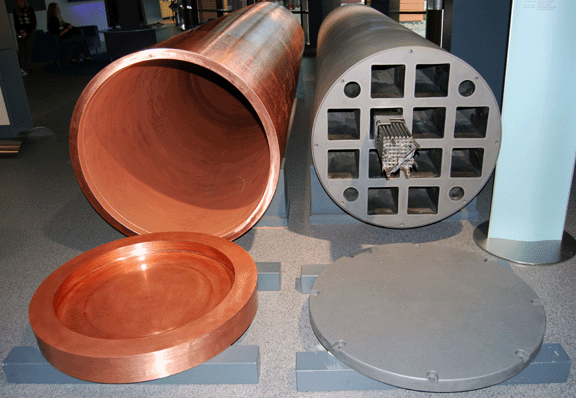
Premature failure of U.S. spent nuclear fuel storage canisters, San Onofre Safety.org, “……Stainless Steel Dry Canister Problems Darrell Dunn, an NRC materials engineer, stated stainless steel dry storage canisters are vulnerable to failure within about 25 – 42 years. If any of the fuel cladding in the canister fails, there is no protective barrier and we could have a serious radiation release.
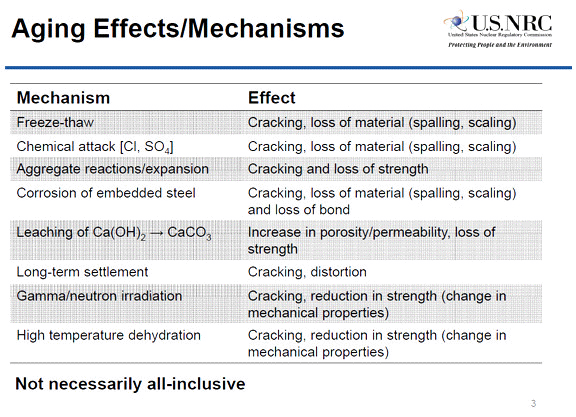
The NRC said they have no current mitigation plan for that consequence. They suggested we MIGHT be able to put the fuel back in the spent fuel pool. However, Edison plans to destroy the spent fuel and transfer pools. And there is no technology to repair the canisters. The NRC said they HOPE there will be a solution for mitigation in the future. Even an NRC May 2nd High Burnup Fuel letter admits there are mitigation problems.
No Inspections of Stainless Steel Canisters EPRI 2012 presentation To make matters worse, these stainless steel canisters are not inspected after they are loaded into the unsealed concrete overpacks (Areva NUHOMS) or concrete casks (Holtec and NAC Magnastor). The NRC proposed having each nuclear plant inspect the outside of only ONE stainless steel canister before they receive a license renewal and then do that once every 5 years. The industry balked at having to even check one canister at every plant. The problem with the stainless steel canisters is they do not protect against gamma rays; so it’s not a simple task to remove a canister from the concrete overpack/cask to examine the exterior for corrosion or other degradation. And since welded canisters do not have monitoring for helium leaks, we may not have any warning of an impending radiation release.
Concrete Overpack Corrosion Problems Darrell Dunn discussed serious corrosion problems with the concrete overpacks/casks, especially in coastal environments…….. https://sanonofresafety.org/2014/08/21/premature-failure-of-u-s-spent-nuclear-fuel-storage-canisters/
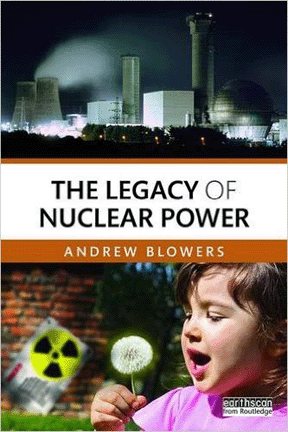
Nuclear power leaves a terrible legacy of radioactive trash – new book
The Legacy of Nuclear Power,This fascinating short article on four nuclear communities tellingly demonstrates why radioactive waste is a moral issue and explains what the priorities for its management should be. Routledge, By Andy Blowers. 7 Oct 16
1. Hanford, USA
Scattered across a vast site in Washington state in America’s North West is Hanford, one of the most contaminated places in the world. During the war Hanford was the scene of frenzied activity as the chosen location for the manufacture of the plutonium for the ‘Fat Man’ nuclear weapon that devastated Nagasaki on 9 August, 1945. In the subsequent Cold War, Hanford’s nuclear activities expanded comprising eight nuclear reactors along the banks of the Columbia River, the sinister looking reprocessing ‘canyons’ in the middle of the reservation and a variety of production and experimental facilities scattered around its fringes. Production at Hanford has ceased but a vast nuclear legacy remains especially in the tank farms containing high-level liquid waste and sludge, some leaking towards the Columbia, in the abandoned reactors and decommissioned reprocessing works and in waste management facilities and clean-up projects. Cleaning up the legacy is a long-term, costly ($2billion federal funding a year), intractable and complex task but it is an inescapable one.
2. Sellafield, UK
Sellafield, the heart of the UK’s plutonium economy, is in a stage of transition from production to clean-up. Like Hanford, Sellafield’s nuclear legacy stretches back to the early days of the military nuclear programme when little attention was paid to the wastes. Unlike Hanford, the Sellafield site is very compact, a mere 2 sq. km., but crammed on to it is around two-thirds of all the radioactivity from the UK’s nuclear programme. The legacy comprises all the country’s high level wastes, most of the spent fuel, a stockpile of around 140 tonnes of plutonium and complex streams of wastes. Hemmed in within a complex of buildings, many of them redundant, are large grey anonymous structures containing often unrecorded mixtures of fuel, skips and other highly radioactive debris tipped into the notorious ponds and silos which pose what has been called an ‘intolerable risk’ to the public and the environment. Cleaning up this legacy is a task that stretches decades ahead absorbing around £1.7 billion from the government a year.
3. La Hague, France
In France, where three-quarters of the country’s electricity is produced by its 58 reactors, the nuclear industry is mainly focused around the reprocessing facilities at La Hague at the tip of the Cotentin peninsula in Normandy. At this remote location spent fuel is reprocessed for recycling in the form of mixed oxide fuel (MOX) or vitrified and stored pending disposal. After much searching, an underground laboratory has been developed in eastern France at Bure, a nuclear no-man’s land, stealthily and steadily becoming established as the country’s nuclear disposal site, but still a long way off. Meanwhile, the French nuclear legacy continues to accumulate at power stations soon to be decommissioned, at La Hague and other sites of reprocessing and experimental reactors.
4. Gorleben, Germany
In Germany there has been fierce resistance for more than three decades to the prospect of shipping casks of highly radioactive wastes across the country to Gorleben in the middle of the country. The casks are sent to an interim store for possible burial in a neighbouring excavated salt mine. Gorleben has played both a symbolic and political role in bringing down the German nuclear industry. The symbols of protest festoon the countryside. There are the ubiquitous wooden yellow crosses on farms and villages, the bright orange sun on a green background displayed on posters and flags proclaiming the ‘Free Republic of Wendland’ and the slogan ‘Stop CASTOR’ (the soubriquet for the flasks) daubed on walls and electricity sub-stations. These gave identity to this fiercely independent land of forest, heath and waterlands close by the River Elbe. Drawing on this real and invented cultural legacy, the Gorleben movement became an inspiration for the wider German anti-nuclear protest.
Places on the Periphery
These four places, Hanford, Sellafield, La Hague/Bure and Gorleben with their different histories exemplify and explain the physical imprint and social conditions that are the continuing legacy of nuclear power. They constitute what may be defined as peripheral communities, places where hazardous activities are located and which are, as it were, physically and socially set apart from the mainstream. They tend to be geographically remote. They may be located at the edge whether of a country, as at La Hague, in relatively inaccessible sub-regions as at Sellafield or in areas of sparse population as Hanford was before the war and as Bure is today. They may be areas with a distinctive (real or invented) cultural identity or isolation like Gorleben, in the self-declared Wendland once on the border with Eastern Germany. Peripheral communities tend also to be economically marginal, monocultural and dependent on government investment and subsidy or state owned companies………..https://www.routledge.com/posts/10360?utm_source=adestra&utm_medium=email&utm_campaign=160701303
1 This Month



26 September – International Day for the Total Elimination of Nuclear Weapons


PLEASE OPPOSE HR 8255 AND S.3639 – bills would accelerate satellite deployment, with no environmental review or safeguards – https://ncstd5li.quorum.us/campaign/169331/
To see nuclear-related stories in greater depth and intensity – go to https://nuclearinformation.wordpress.com
-
Archives
- September 2026 (233)
- August 2026 (330)
- July 2026 (355)
- June 2026 (287)
- May 2026 (306)
- April 2026 (356)
- March 2026 (251)
- February 2026 (267)
- January 2026 (308)
- December 2025 (358)
- November 2025 (359)
- October 2025 (375)
-
Categories
- 1
- 1 NUCLEAR ISSUES
- business and costs
- climate change
- culture and arts
- ENERGY
- environment
- health
- history
- indigenous issues
- Legal
- marketing of nuclear
- media
- opposition to nuclear
- PERSONAL STORIES
- politics
- politics international
- Religion and ethics
- safety
- secrets,lies and civil liberties
- spinbuster
- technology
- Uranium
- wastes
- weapons and war
- Women
- 2 WORLD
- ACTION
- AFRICA
- Atrocities
- AUSTRALIA
- Christina's notes
- Christina's themes
- culture and arts
- Events
- Fuk 2022
- Fuk 2023
- Fukushima 2017
- Fukushima 2018
- fukushima 2019
- Fukushima 2020
- Fukushima 2021
- general
- global warming
- Humour (God we need it)
- Nuclear
- RARE EARTHS
- Reference
- resources – print
- Resources -audiovicual
- Weekly Newsletter
- World
- World Nuclear
- YouTube
-
RSS
Entries RSS
Comments RSS
 nuclear-news