Thomas Jones digs up Carol Barton’s research article from 2001, in which she relayed her findings that, between 1972 and 1996, the risk of child leukaemia within ten kilometres of Aldermaston and Burghfield was double the rate for the UK as a whole (LRB, 5 April). Barton was then a consultant haematologist at the Royal Berkshire Hospital. ‘Until the cause of cancer is fully understood, and what the part of radiation in the process could be,’ she wrote, ‘no firm measures can be taken to redress the balance.’
Research has moved on since then. More than sixty epidemiological studies worldwide have examined the incidence of cancer in children near nuclear power plants (NPPs): most indicate increases in leukaemia. These include the landmark 2008 KiKK study commissioned by the German government, which found relative risks of 1.6 in total cancers and 2.2 in leukaemias among infants living within five kilometres of all German NPPs.
A number of hypotheses have been proposed to explain these findings. One is that the increased cancers arise from the exposure of pregnant women near NPPs to radiation. However, any theory has to account for the greater than a thousand-fold discrepancy between official estimates of radiation doses from nuclear emissions and the observed increases in cancer risk. It may be that radiation exposures from spikes in NPP radionuclide emissions are significantly larger than the averages recorded in official estimates. In addition, the risks to embryos and foetuses from radiation exposure are much greater than to adults, and the blood-forming tissues in embryos and foetuses are even more radiosensitive.
We speak of “dumb creatures” because animal utterances are largely incomprehensible to the human ear. But animals can show us things. And if you know how to look, they might even give you warning signals. Bugs, for example, give warnings where human perception fails. But to understand those warnings, you have to learn how to read their signals.
You can find the insect drawings of the Swiss artist and scientific illustrator, Cornelia Hesse-Honegger, in museums and galleries all over the world. Most of them reflect (and praise) the breathtaking beauty of the insect realm. But their beauty can be deceptive.
In 1987, one year after the Chernobyl nuclear disaster, Hesse-Honegger came across deformed leaf bugs in areas of Sweden that had been hit hard by fallout from Ukraine. She sensed that something was seriously wrong, even though what she saw did not come as a total surprise. Hesse-Honegger had already been working for many years as a scientific illustrator for the Natural History Museum at the University of Zurich. As early as 1967 she had drawn mutations of drosophila fruit flies and houseflies that had been exposed to radiation in the lab.
In the June 19, 2014 video [below on original ] by Michael Segal for Nautilus, Hesse-Honegger explains her background and work.
After studying the bugs in Sweden she illustrated mutations in many places and documented them in her book Why I Am in Österfärnebo? She did field studies near the Krümmel nuclear power plant in Germany and the French reprocessing facility in La Hague, and she made drawings near Three Mile Island and the nuclear test site in Nevada. Logically, one of her insect illustration books is called “The Future’s Mirror.”
In October 2016, she was invited to Japan to give the opening speech at the Citizen-Scientist International Symposium on Radiation Protection in Nihonmatsu, where, at the same time, she showed her work at the Fukushima Art Biennale. But she also took the opportunity to conduct a field study around the Fukushima nuclear power plant. Her studies focus on what are called true bugs — or Heteroptera. These insects belong to the phylum Arthropoda and are a suborder of Hemiptera.
“Since the accident at the Chernobyl nuclear power plant in April 1986 I have collected 18,000 true bugs, cicada and ladybird beetles,” Hesse-Honegger says. “I have conducted epidemiological studies in areas with nuclear power plants, nuclear reprocessing plants, nuclear test areas and the nuclear factories at Hanford. After collecting the true bugs, I examine them and paint some of them with the help of my binocular microscope. With my watercolors I show the quality of disturbances. With the help of maps I can demonstrate the percentage and distribution of disturbances.”
Everywhere she encountered heteroptera bugs and drosophila flies with distinct mutations. Her comment: “While the natural proportion of mutated insects is just one percent, in the places I studied, up to one in five insects shows physical damage. The damage is likely to be caused by the ingestion of radioactive particles.”
What is really alarming, though, is that injured insects are found not only where you might expect them — near the sites of nuclear catastrophes — but also, as Hesse-Honegger discovered, in the vicinity of well-maintained Swiss nuclear power plants under normal operating conditions.
“That is the real catastrophe,” comments Hildegard Breiner, Austrian anti-nuclear activist and a fellow Nuclear-Free Future Award laureate, (in 2015, the Nuclear-Free Future Award Foundation gave its award in the category of Education to Hesse-Honegger.) Breiner shares Hesse-Honegger’s suspicion that bugs and other creatures with short reproductive cycles tell us that “normal operating conditions” at nuclear power plants are anything but normal.
Hesse-Honegger’s work has also inspired other artists, as the short cut-out animation below [on original] by Mary Pedicini illustrates. It includes Hesse-Honegger’s illustrations along with images by the photographer and early motion picture pioneer, Eadweard Muybridge.
The scientist/illustrator also raises her voice against other threats which go mostly unmentioned compared to the more obvious threat scenarios. One such example is the long-term danger of weapons equipped with depleted uranium. The reactions to “bug warnings” and the dangers of depleted uranium indicate that low-level radiation is an issue widely ignored and poorly understood.
Homeland Preparedness News 27th April 2018, A new paper from the Nuclear Threat Initiative (NTI) provided
recommendations for mitigating risks related to separated plutonium. As compared to highly enriched uranium (HEU), separated plutonium has not
received enough attention as a security risk, NTI Counselor John Carlson said in the paper, titled “Mitigating Security Risks from Separated Plutonium: Some Near-Term Steps.”
Eight countries currently hold more than 375 metric tons of separated plutonium, which is produced by reprocessing irradiated nuclear fuel. The paper recommends minimizing stocks and specific actions in production, storage and use of the material. “Even small quantities [of plutonium] could be of interest to terrorists if they see opportunities for acquiring plutonium in a number of locations or for use in a radiological dispersal device,” Carlson said. https://homelandprepnews.com/stories/28131-nuclear-threat-initiative-highlights-separated-plutonium-security-risks/
In an article published in PLOS ONE, Brazilian researchers describe the first retrospective dosimetric study by electron spin resonance spectroscopy using human tissue from nuclear attack victimsFUNDAÇÃO DE AMPARO À PESQUISA DO ESTADO DE SÃO PAULO
The bombing of the Japanese cities Hiroshima and Nagasaki by the United States in 1945 was the first and only use of nuclear weapons against civilian targets. A series of studies began in its aftermath to measure the impact of the fallout, in terms of both the radiation dose to which the victims were exposed and the effects of this exposure on DNA and health in general.
Continuing research that started in the 1980s under the leadership of physicist Sérgio Mascarenhas, Full Professor at the University of São Paulo (USP), Brazilian scientists have published an article in the journal PLOS ONE describing a method of precise measurement of the radiation dose absorbed by the bones of victims of the nuclear bombs dropped on Japan.
The investigation was conducted during the postdoctoral research of Angela Kinoshita, currently a professor at Universidade do Sagrado Coração in Bauru, São Paulo State. Her supervisor was then Oswaldo Baffa, Full Professor at the University of São Paulo’s Ribeirão Preto School of Philosophy, Science & Letters (FFCLRP-USP).
“We used a technique known as electron spin resonance spectroscopy to perform retrospective dosimetry. Currently, there’s renewed interest in this kind of methodology due to the risk of terrorist attacks in countries like the United States,” Baffa said.
“Imagine someone in New York planting an ordinary bomb with a small amount of radioactive material stuck to the explosive. Techniques like this can help identify who has been exposed to radioactive fallout and needs treatment.”
As Kinoshita explained, the study is unique insofar as it used samples of human tissue from victims of the bomb dropped on Hiroshima.
“There were serious doubts about the feasibility of using this methodology to determine the radiation dose deposited in these samples, because of the processes involved in the episode,” she said. “The results confirm its feasibility and open up various possibilities for future research that may clarify details of the nuclear attack.”
The equipment used in the investigation was purchased during a project coordinated by Baffa and supported by the São Paulo Research Foundation – FAPESP.
Origins
In the 1970s, when he was teaching at the University of São Paulo’s São Carlos Physics Institute (IFSC-USP), Mascarenhas discovered that X-ray and gamma-ray irradiation made human bones weakly magnetic. The phenomenon, known as paramagnetism, occurs because the hydroxyapatite (crystalline calcium phosphate) in the mineral portion of bone tissue absorbs carbon dioxide ions, and when the sample is irradiated, the CO2 loses electrons and becomes CO2-. This free radical serves as a marker of the radiation dose received by the material.
“I discovered that we could use this property to perform radiation dosimetry and began using the method in archeological dating,” Mascarenhas recalled.
His aim at the time was to calculate the age of bones found in sambaquis (middens created by Brazil’s original inhabitants as mounds of shellfish debris, skeletons of prehistoric animals, human bones, stone or bone utensils, and other refuse) based on the natural radiation absorbed over centuries via contact with elements such as thorium that are present in the sand on the seashore.
On the strength of this research, he was invited to teach at Harvard University in the United States. Before leaving for the US, however, he decided to go to Japan to try to obtain samples of bones from victims of the nuclear bombs and test his method on them.
“They gave me a jawbone, and I decided to measure the radiation right there, at Hiroshima University,” he said. “I needed to prove experimentally that my discovery was genuine.”
Mascarenhas succeeded in demonstrating that a dosimetric signal could be obtained from the sample even though the technology was still rudimentary and there were no computers to help process the results. The research was presented at the American Physical Society’s annual March Meeting, where it made a strong impression. Mascarenhas brought the samples to Brazil, where they remain.
“There have been major improvements in the instrumentation to make it more sensitive in the last 40 years,” Baffa said. “Now, you see digitally processed data in tables and graphs on the computer screen. Basic physics has also evolved to the extent that you can simulate and manipulate the signal from the sample using computational techniques.”
Thanks to these advances, he added, in the new study, it was possible to separate the signal corresponding to the radiation dose absorbed during the nuclear attack from the so-called background signal, a kind of noise scientists suspect may have resulted from superheating of the material during the explosion.
“The background signal is a broad line that may be produced by various different things and lacks a specific signature,” Baffa said. “The dosimetric signal is spectral. Each free radical resonates at a certain point on the spectrum when exposed to a magnetic field.”
Methodology
To make the measurements, the researchers removed millimeter-scale pieces of the jawbone used in the previous study. The samples were again irradiated in the laboratory using a technique called the additive dose method.
“We added radiation to the material and measured the rise in the dosimetric signal,” Baffa explained. “We then constructed a curve and extrapolated from that the initial dose, when the signal was presumably zero. This calibration method enabled us to measure different samples, as each bone and each part of the same bone has a different sensitivity to radiation, depending on its composition.”
Thanks to this combination of techniques, they were able to measure a dose of approximately 9.46 grays (Gy), which is high in Baffa’s view. “About half that dose, or 5 Gy, is fatal if the entire body is exposed to it,” he said.
The value was comparable with the doses obtained by other techniques applied to non-biological samples, such as measurement of the luminescence of quartz grains present in brick and roof tile fragments found at the bomb sites. According to the authors, it was also close to the results of biological measurement techniques applied in long-term studies using alterations in survivors’ DNA as a parameter.
“The measurement we obtained in this latest study is more reliable and up to date than the preliminary finding, but I’m currently evaluating a methodology that’s about a thousand times more sensitive than spin resonance. We’ll have news in a few months,” Mascarenhas predicted.
About São Paulo Research Foundation (FAPESP)
The São Paulo Research Foundation (FAPESP) is a public institution with the mission of supporting scientific research in all fields of knowledge by awarding scholarships, fellowships and grants to investigators linked with higher education and research institutions in the State of São Paulo, Brazil. FAPESP is aware that the very best research can only be done by working with the best researchers internationally. Therefore, it has established partnerships with funding agencies, higher education, private companies, and research organizations in other countries known for the quality of their research and has been encouraging scientists funded by its grants to further develop their international collaboration. For more information: http://www.fapesp.br/en.
The strategy of the desperate is to downplay and dismiss. A major nuclear disaster is more than just an inconvenient truth for an industry that doesn’t want you to know it kills people. As a result, when a serious nuclear accident happens — arguably always preventable and therefore not strictly an accident — there is a scramble to present the event as largely insignificant.
Many myths are quickly put about, usually centered on how few people immediately died, a completely misleading statistic since nuclear power plant disasters do not usually kill people instantly. But over the long-term, their legacy is indeed both considerable and often deadly.
In the newest edition of our periodic Thunderbird newsletter, we look at the facts about the Chernobyl disaster — and touch on one welcome piece of fiction in the form of a novel.
The disparities over the death count are used to downplay and even dismiss the terrible and long-lasting after effects of Chernobyl. But focusing only on fatalities also serves to diminish the disaster’s impact. It can take years before fatal illnesses triggered by a nuclear accident take hold. This creates a challenge in calculating just who eventually died due to the accident and who suffered non-fatal consequences.
Exposure to ionizing radiation released by a nuclear power plant (and not just from accidents but every day) can cause serious non-fatal illnesses as well. These should not be discounted. Arguably, neither should post accident psychological trauma.
All the populations affected by Chernobyl have been inadequately studied and monitored — whether they lived inside the former Soviet Union or elsewhere in Europe where the radioactive plume also contaminated lands and people.
The Chernobyl liquidators are a group most often cited as they were dispatched to the stricken nuclear plant in the immediate aftermath, as well as for at least the subsequent two years, to manage and endeavor to “clean up” the disaster. They included military as well as civilian personnel such as firefighters, nuclear plant workers and other skilled professionals. More information is still emerging on their fate and that of their descendants.
It is generally accepted that there were about 800,000 liquidators but only a small portion of them were subject to medical examinations. By 1992 it was estimated that 70,000 liquidators were invalids and 13,000 had died. These estimates rose to 50,000 then to 100,000 deaths among liquidators in 2006. By 2010, Yablokov et al. estimated a death toll of 112,000 to 125,000 liquidators.
Even the Russian authorities admit findings of liquidators aging prematurely, with a higher than average number having developed various forms of cancer, leukemia, somatic and neurological problems, psychiatric illnesses and cataracts. The UN Office for the Coordination of Humanitarian Affairs found a statistically significant increase in leukemia among Russian liquidators who were in service at Chernobyl in 1986 and 1987.
There are similar findings among general populations although, again, these have been hard to track. While countless numbers may have eventually died from Chernobyl-related illnesses, equal or even greater numbers likely survived and were forced to live with debilitating and chronic medical conditions as well as psychological trauma.
The widely debunked 2003-2005 Chernobyl Forum accounting is the record most often quoted, and yet it is utterly compromised. It was produced by the nuclear promoting International Atomic Energy Agency, which ignored its own data that indicated there would be 9,000 future fatal cancers in Belarus, Russia and Ukraine. The IAEA instead claimed there would be no more than 4,000. Both numbers are gross underestimations.
The report focused only on the most heavily exposed areas in making its predictions. It ignored the much larger populations in the affected countries as a whole, and in the rest of the world, who have been exposed to lower but chronic levels of radiation from Chernobyl.
The later TORCH Report exposed the flaws in the Chernobyl Forum as did IPPNW in its own report. TORCH predicts at least 30,000 and maybe as many as 60,000 excess cancer deaths worldwide due to the accident. An analysis of 5,000 Russian studies, by the late Soviet scientist, Alexey Yablokov and colleagues, puts the number of premature deaths due to Chernobyl as likely to soar as high as one million people.
In other studies, elevated rates of thyroid cancer were discovered in Belarus, Ukraine and Russia, particularly among children, where the preventive pill, potassium-iodide (KI), was not distributed. In Poland, where KI was distributed, incidences were extremely low.
Outside the former Soviet Union, impacts were also significant with about 40% of Europe’s land surface radiologically contaminated.
Dr. Wladimir Wertelecki, a physician and geneticist, discovered, alarmingly, that the negative health effects caused by Chernobyl did not stop with those exposed directly. His research, focused in Polissia, Ukraine, noted birth defects and other health disturbances among not only those who were adults at the time of the Chernobyl disaster, but their children who were in utero at the time and, most disturbingly, their later offspring.
Pierre Flor-Henry in his research, even found medical changes resulting from apparent psychological responses. He noted that schizophrenia and chronic fatigue syndrome among a high percentage of liquidators were accompanied by organic changes in the brain. This suggested that various neurological and psychological illnesses could be caused by exposure to radiation levels between 0.15 and 0.5 sieverts.
Nevertheless, the IAEA and the World Health Organization (WHO), given their supposedly august credentials, are cited as the bodies of record on post-Chernobyl fatalities and health impacts. But there is a fundamental reason why the WHO cannot be trusted.
On May 28, 1959, the WHO made an agreement with the IAEA that would effectively gag the agency on any nuclear issue from that day forth. The agreement gave the IAEA a veto on any actions by the WHO that relate in any way to nuclear power. The IAEA’s stated mission is to “accelerate and enlarge the contribution of atomic energy to peace, health and prosperity throughout the world.” So clearly, there is a major conflict of interest at work here.
Not only people but animals — both wild and domestic — have been harmed by the Chernobyl disaster. This damage is likely permanent as it has been passed down through generations via DNA. The research by Dr. Timothy Mousseau finds birds around Chernobyl with low to zero sperm counts, cataracts, diminished brain size and truncated longevity. Stray dogs continue to proliferate around the Chernobyl nuclear site. Wild boars in Europe remain too radioactive to eat. Insects have mutated and micro-organisms have disappeared.
There are some bright and hopeful signs however. Much humanitarian work has gone on over the decades to bring relief to those suffering the Chernobyl after-effects. The disaster — and the subsequent one at Fukushima — changed the minds of the leaders in power at the time, Mikhail Gorbachev and Naoto Kan. These men now advocate for an end to the use of nuclear power. Several countries renounced nuclear power in the wake of these disasters or reinforced their policies to phase out nuclear and turn to renewables.
And there is even some welcome fiction about Chernobyl, in the form of a searingly beautiful and haunting first novel by Irish writer Darragh McKeon. We encourage you to read All That Is Solid Melts Into Air for a vivid account of the very real characters he portrays living through the Chernobyl ordeal.
AMARILLO, Texas (Reuters) – In a sprawling plant near Amarillo, Texas, rows of workers perform by hand one of the most dangerous jobs in American industry. Contract workers at the U.S. Department of Energy’s Pantex facility gingerly remove the plutonium cores from retired nuclear warheads.
Although many safety rules are in place, a slip of the hand could mean disaster.
In Energy Department facilities around the country, there are 54 metric tons of surplus plutonium. Pantex, the plant near Amarillo, holds so much plutonium that it has exceeded the 20,000 cores, called “pits,” regulations allow it to hold in its temporary storage facility. There are enough cores there to cause thousands of megatons of nuclear explosions. More are added each day.
The delicate, potentially deadly dismantling of nuclear warheads at Pantex, while little noticed, has grown increasingly urgent to keep the United States from exceeding a limit of 1,550 warheads permitted under a 2010 treaty with Russia. The United States wants to dismantle older warheads so that it can substitute some of them with newer, more lethal weapons. Russia, too, is building new, dangerous weapons.
The United States has a vast amount of deadly plutonium, which terrorists would love to get their hands on. Under another agreement, Washington and Moscow each are required to render unusable for weapons 34 metric tons of plutonium. The purpose is twofold: keep the material out of the hands of bad guys, and eliminate the possibility of the two countries themselves using it again for weapons. An Energy Department website says the two countries combined have 68 metric tons designated for destruction – enough to make 17,000 nuclear weapons. But the United States has no permanent plan for what to do with its share.
Plutonium must be made permanently inaccessible because it has a radioactive half-life of 24,000 years.
“A MUCH MORE DANGEROUS SITUATION”
Edwin Lyman, a physicist at the Union of Concerned Scientists, a science advocacy group based in Washington, says solving the problem of plutonium storage is urgent. In an increasingly unstable world, with terrorism, heightened international tensions and non-nuclear countries coveting the bomb, he says, the risk is that this metal of mass annihilation will be used again. William Potter, director of the James Martin Center for Nonproliferation Studies at the Middlebury Institute of International Studies, told Reuters: “We are in a much more dangerous situation today than we were in the Cold War.”
Washington has not even begun to take the steps needed to acquire additional space for burying plutonium more than 2,000 feet below ground – the depth considered safe. Much of America’s plutonium currently is stored in a building at the Savannah River Site in South Carolina – like Pantex, an Energy Department site. Savannah River used to house a reactor. Local opponents of the storage, such as Tom Clements, director of SRS Watch, contend the facility was never built for holding plutonium and say there is a risk of leakage and accidents in which large amounts of radioactivity are released.
The Energy Department has a small experimental storage site underground in New Mexico. The department controls the radioactive materials – plutonium, uranium and tritium – used in America’s nuclear weapons and in the reactors of nuclear-powered aircraft carriers and submarines. In a Senate hearing in June 2017, Energy Secretary Rick Perry said the Energy Department has been in talks with New Mexico officials to enlarge the site. Environmental groups there have strongly opposed expansion.
Under an agreement with Russia, the United States was to convert 34 metric tons of plutonium into fuel for civilian reactors that generate electricity. The fuel is known as MOX, for “mixed oxide fuel.” Plutonium and uranium are converted into chemical compounds called oxides, and mixed together in fuel rods for civilian nuclear power plants. The two metals are converted into oxides because these can’t cause nuclear explosions. But the U.S. effort has run into severe delays and cost overruns.
The alternative method is known as dilute-and-dispose. It involves blending plutonium with an inert material and storing it in casks. The casks, however, are projected to last only 50 years before beginning to leak, and so would need to be buried permanently deep underground.
Radioactively-hot particles detected in dusts and soils from Northern Japan by combination of gamma spectrometry, autoradiography, and SEM/EDS analysis and implications in radiation risk assessment, Science Direct
News Medical Life Sciences, By Supriya Subramanian, PhD, 10 Apr 18
Solar ultraviolet radiation (UV) exposure triggers DNA damage, a preliminary step in the process of carcinogenesis.
The stability of DNA is extremely important for the proper functioning of all cellular processes. Exposure to UV radiation alters the structure of DNA, affecting the physiological processes of all living systems ranging from bacteria to humans.
Ultraviolet Radiation
Natural sunlight stimulates the production of vitamin D, an important nutrient for the formation of healthy bones. However, sunlight is also a major source of UV radiation. Individuals who get excessive UV exposure are at a great risk of developing skin cancers. There are three types of UV rays: UVA, UVB and UVC.
UVC rays (100-280 nm) are the most energetic and damaging of the three rays. Fortunately, UVC is absorbed by the ozone layer before reaching the earth’s surface.
UVA rays (315-400 nm) possess the lowest energy and is able to penetrate deep into the skin. Prolonged exposure has been linked to ageing and wrinkling of the skin. UVA is also the main cause of melanomas.
UVB rays (280-315 nm) possess higher energy than UVA rays and affect the outer layer of the skin leading to sunburns and tans. Basal cell carcinoma and squamous cell carcinoma are caused by UVB radiation.
DNA Damage by UV Radiation
DNA is composed of two complementary strands that are wound into a double helix. The hereditary message is chemically coded and made up of the four nucleotides adenine (A), thymine (T), guanine (G) and cytosine (C). UVB light interferes directly with the bonding between the nucleotides in the DNA. ……….
Energy Hogs: Can World’s Huge Data Centers Be Made More Efficient?
The gigantic data centers that power the internet consume vast amounts of electricity and emit 3 percent of global CO2 emissions. To change that, data companies need to turn to clean energy sources and dramatically improve energy efficiency. Yale Environment 360 BY FRED PEARCE•APRIL 3, 2018
The cloud is coming back to Earth with a bump. That ethereal place where we store our data, stream our movies, and email the world has a physical presence – in hundreds of giant data centers that are taking a growing toll on the planet.
Data centers are the factories of the digital age. These mostly windowless, featureless boxes are scattered across the globe – from Las Vegas to Bangalore, and Des Moines to Reykjavik. They run the planet’s digital services. Their construction alone costs around $20 billion a year worldwide.
The biggest, covering a million square feet or more, consume as much power as a city of a million people. In total, they eat up more than 2 percent of the world’s electricity and produce 3 percent of CO2 emissions, as much as the airline industry. And with global data traffic more than doubling every four years, they are growing fast.
Yet if there is a data center near you, the chances are you don’t know about it. And you still have no way of knowing which center delivers your Netflix download, nor whether it runs on renewable energy using processors cooled by Arctic air, or runs on coal power and sits in desert heat, cooled by gigantically inefficient banks of refrigerators.
We are often told that the world’s economy is dematerializing – that physical analog stuff is being replaced by digital data, and that this data has minimal ecological footprint. But not so fast. If the global IT industry were a country, only China and the United States would contribute more to climate change, according to a Greenpeace report investigating “the race to build a green internet,” published last year.
Storing, moving, processing, and analyzing data all require energy. Lots of it. The processors in the biggest data centers hum with as much energy as can be delivered by a large power station, 1,000 megawatts or more. And it can take as much energy again to keep the servers and surrounding buildings from overheating.
Almost every keystroke adds to this. Google estimates that a typical searchusing its services requires as much energy as illuminating a 60-watt light bulb for 17 seconds and typically is responsible for emitting 0.2 grams of CO2. Which doesn’t sound a lot until you begin to think about how many searches you might make in a year.
And these days, Google is data-lite. Streaming video through the internet is what really racks up the data count. IT company Cisco, which tracks these things, reckons video will make up 82 percent of internet traffic by 2021, up from 73 percent in 2016. Around a third of internet traffic in North America is already dedicated to streaming Netflix services alone.
Two things matter if we are to tame these runaway beasts: One is making them use renewable or other low-carbon energy sources; the other is ramping up their energy efficiency. On both fronts, there is some good news to report. Even Greenpeace says so. “We are seeing a significant increase in the prioritization of renewables among some of the largest internet companies,” last year’s report concluded.
More and more IT companies are boasting of their commitment to achieving 100 percent reliance on renewable energy. To fulfil such pledges, some of the biggest are building their own energy campuses. In February, cloud giant Switch, which runs three of the world’s top 10 data centers, announced plansfor a solar-powered hub in central Nevada that will be the largest anywhere outside China.
More often, the data titans sign contracts to receive dedicated supply from existing wind and solar farms. In the U.S., those can still be hard to come by. The availability of renewable energy is one reason Google and Microsoft have recently built hubs in Finland, and Facebook in Denmark and Sweden. Google last year also signed a deal to buy all the energy from the Netherlands’ largest solar energy park, to power one of its four European data centers.
Of the mainstream data crunchers for consumers, Greenpeace singled out Netflix for criticism. It does not have its own data centers. Instead, it uses contractors such as Amazon Web Services, the world’s largest cloud-computing company, which Greenpeace charged with being “almost completely non-transparent about the energy footprint of its massive operations.” Amazon Web Services contested this. A spokesperson told Yale Environment 360 that the company had a “long-term commitment to 100 percent renewable energy” and had launched a series of wind and solar farm projects now able to deliver around 40 percent of its energy. Netflix did not respond to requests for comment.
Amazon Web Services has some of its largest operations in Northern Virginia, an area just over the Potomac River from Washington D.C. that has the largest concentration of data centers in the world. Virginia gets less than 3 percent of its electricity from renewable sources, plus 33 percent from nuclear, according to Greenpeace.
Some industry insiders detect an element of smoke and mirrors in the green claims of the internet giants. “When most data center companies talk about renewable energy, they are referring to renewable energy certificates,” Phillip Sandino, vice-president of data centers at RagingWire, which has centers in Virginia, California, and Texas, claimed in an online trade journal recently. In the U.S. and some other countries, renewable energy certificates are issued to companies generating renewable energy for a grid, according to the amount generated. The certificates can then be traded and used by purchasers to claim their electricity is from a renewable source, regardless of exactly where their electricity comes from. “In fact,” Sandino said, “the energy [the data centers] buy from the power utility is not renewable.”
Others, including Microsoft, help sustain their claims to carbon neutrality through carbon offsetting projects, such as investing in forests to soak up the CO2 from their continued emissions.
All this matters because the differences in carbon emissions between data centers with different energy sources can be dramatic, says Geoff Fox, innovation chief at DigiPlex, which builds and operates centers in Scandinavia. Using data compiled by Swedish state-owned energy giant Vattenfall, he claims that in Norway, where most of the energy comes from hydroelectricity, generating a kilowatt-hour of electricity emits only 3 grams of CO2. By comparison, in France it is 100 grams, in California 300 grams, in Virginia almost 600 grams, in New Mexico more than 800 grams.
Meanwhile, there is growing concern about the carbon footprint of centers being built for Asian internet giants such as Tencent, Baidu, and Alibaba in China; Naver in South Korea; and Tulip Telecom in India. Asia is where the fastest global growth in data traffic is now taking place. These corporations have been tight-lipped about their energy performance, claims Greenpeace. But with most of the region’s energy coming from coal-fired power stations, their carbon footprint cannot be anything but large.
Vattenfall estimates the carbon emissions in Bangalore, home of Tulip’s giant Indian data center, at 900 grams per kilowatt-hour. Even more troubling, the world’s largest center is currently the Range International Information Hub, a cloud-data store at Langfang near the megacity of Tianjin in northeast China, where it takes more than 1,000 grams of CO2 for every kilowatt-hour.
Almost as important as switching data centers to low-carbon energy sources is improving their energy efficiency. Much of this comes down to the energy needed to keep the processors cool. Insanely, most of the world’s largest centers are in hot or temperate climates, where vast amounts of energy are used to keep them from overheating. Of the world’s 10 largest, two are in the desert heat of Nevada, and others are in Georgia, Virginia, and Bangalore.
Most would dramatically reduce their energy requirements if they relocated to a cool climate like Scandinavia or Iceland. One fast-emerging data hub is Iceland, where Verne Global, a London company, set up its main operation.
…….. Greenpeace says the very size of the internet business, and its exposure to criticism for its contribution to climate change, has the potential to turn it from being part of the problem to part of the solution. Data centers have the resources to change rapidly. And pressure is growing for them to do so.The hope is that they will bring many other giant corporations with them. “The leadership by major internet companies has been an important catalyst among a much broader range of corporations to adopt 100 percent renewable goals,” says Gary Cook, the lead author of the Greenpeace report. “Their actions send an important market signal.”
But the biggest signal, says Fox, will come from us, the digital consumers. Increasingly, he says, “they understand that every cloud lives inside a data center. And each has a different footprint.” We will, he believes, soon all demand to know the carbon footprint of our video streams and internet searches. The more far-sighted of the big data companies are gearing up for that day. “I fully expect we may see green labelling for digital sources as routine within five years.” https://e360.yale.edu/features/energy-hogs-can-huge-data-centers-be-made-more-efficient
During this dangerous time, women are leading the charge to eradicate weapons of mass destruction and forestall nuclear war. We saw this most recently in the 2017 U.N. Treaty to Prohibit the Use of Nuclear Weapons. Approved with 122 states voting for, and one against, it is the first legally binding global ban on nuclear weapons, with the intention of moving toward their complete elimination. The preamble to the treaty recognizes the maltreatment suffered as a result of nuclear weapons, including the disproportionate impact on women and girls, and on indigenous peoples around the world. The treaty has been predominantly championed and promoted by women.
My interest in nuclear issues began nearly 10 years ago when I first uncovered my mother’s work as an antinuclear activist with a group called Women Strike for Peace. I have been following women doing nuclear activism all over the world—writing about them, protesting with them, teaching about them in my university classes—and I often bring my daughter with me. My mother’s story is being passed down through an intergenerational maternal line, and with it, the activism that may help save the world, or at least help shift its view on disastrous weapons. Learning about my mother’s work radically changed my perception of her. It also changed my life.
Between 1945 and 1963, more than 200 atmospheric, underwater, and space nuclear bomb tests were conducted by the U.S., primarily in the Nevada desert and the Marshall Islands. Hundreds more took place around the world. In many instances citizens were not informed of the tests, nor were they warned of their effects. The negative health impacts of the testing and exposure to ionizing radiation turned out to be vast: early death, cancer, heart disease, and a range of other incurable illnesses, including neurological disabilities, weakened immune systems, infertility, and miscarriage. Ionizing radiation damages genes (it is mutagenic), so the health ramifications of exposures are passed down through the generations.
In the 1950s, scientists concerned with the health impacts of bomb testing and the spread of ionizing radiation conducted the St. Louis Baby Tooth Survey. The survey showed that radioactive fallout had traveled far and wide. Cow and breast milk contaminated with the isotope strontium 90 had entered children’s teeth. Strontium 90 metabolizes as calcium and these isotopes remain active in the body for many years. When Dagmar Wilson and Bella Abzug—who went on to become a Congresswoman and co-founder of the National Women’s Political Caucus with Gloria Steinem and Betty Friedan—learned the results of the Baby Tooth Survey, they formed Women Strike for Peace. The group brought together concerned mothers from across the U.S. The women organized. First within their communities. And then, 50,000 mothers protested across the country, and 15,000 descended on Washington, D.C. for Women’s Strike for Peace Lobbying Day on November 1, 1961. My mother was one of those 15,000 protestors. The group’s efforts brought vast political attention to the dire health consequences of radioactive fallout and led to the banning of atmospheric bomb testing by the U.S., Great Britain, and the former Soviet Union in 1963, with the signing of the Limited Nuclear Test Ban Treaty.
Women Strike for Peace reflects a cultural nuclear gender binary—with women constructed as peaceful antinuclear protectors of children and the nation, and men positioned as perpetrators of nuclear war—the designers, planners, and regulators of weapons of mass destruction.
Has this exclusion of women from nuclear decision-making led to our current crisis—a host of locations worldwide contaminated with radioactive waste, and the great potential for nuclear war? Leading anti-nuclear activists seem to think so.
Since the dawn of the nuclear age men have dominated and controlled nuclear weapons design and policy. As Benjamin A. Valentino, Associate Professor of Government, and Coordinator, War and Peace Studies Program, Dickey Center for International Understanding at Dartmouth College says, it is only recently that women have had access to positions of power in the military sphere. This is true in weapons’ sciences and engineering as well. While many women worked on the Manhattan Project, most held administrative roles. Has this exclusion of women from nuclear decision-making led to our current crisis—a host of locations worldwide contaminated with radioactive waste, and the great potential for nuclear war? Leading anti-nuclear activists seem to think so.
Carol Cohn, founding director of the Consortium on Gender, Security and Human Rights at the University of Massachusetts-Boston suggests that nuclear-weapons discourse is deeply rooted in hegemonic patriarchy. In nuclear techno-language metaphors of male sexual activity are used to describe nuclear violence. Nuclear missiles are referred to in phallic terms. The violence of nuclear war is described in abstract and impersonal terms, such as “collateral damage.” In her recent New York Times op-ed, Cohn finds it unsurprising that hypermasculine nuclear language has surfaced so blatantly today with Trump’s tweets about the size of his nuclear button and his overall muscular championing of expanding the nuclear weapons complex.
Following the Women Strike for Peace model, legions of anti-nuclear NGOs worldwide are predominantly led by women, including Women’s Action for Nuclear Disarmament, Women’s International League for Peace and Freedom, Reaching Critical Will, the German Green Party, Mothers for Peace, Just Moms (St. Louis), International Campaign to Abolish Nuclear Weapons (ICAN), Greenham Common Women’s Peace Camp, Green Action Japan, the women of Koondakulam in India, the antinuclear nuns Megan Rice, Ardeth Platte, Carol Gilbert, and many more.
At the U.N. conference to ban nuclear weapons in 2017, I asked Civil Society experts and participants about the importance of women as leaders in the antinuclear movement, and about the hegemony of masculinity in the nuclear weapons complex.
“Of course many men support disarmament and have participated in the treaty and current anti-nuclear efforts in general, but women overwhelmingly lead,” said Tim Wright, of the Australian branch of ICAN. ICAN won the 2017 Nobel Prize for their work on The Treaty to Prohibit the Use of Nuclear Weapons.
Ray Acheson, of Reaching Critical Will, said the proliferation of nuclear weapons is deeply embedded in “a misogynist and hegemonic culture of violence.” She stated this culture is oppressive to women, LGBTQ, the poor, and people of color, and, “we must smash patriarchy.” Such is the feminist cry heard around the world, but in this case, it might actually save us.
Beatrice Fihn, director of ICAN, explained that men are raised to be violent, to think it’s necessary to resolve differences through force, while “women, conversely, are socially trained to negotiate and compromise.”
According to Fihn, the problem in a patriarchal world is that peaceful negotiations are viewed as weak. The U.S. misogynist-in-chief feels we must drop nuclear bombs, expand our nuclear arsenal, and strong-arm competing nations, such as North Korea and Russia. The very act of supporting disarmament efforts in a patriarchal framework places “you in a feminine category,” Fihn stressed. “Those in favor of abolishing nuclear weapons, whether male or female, are characterized in negative, feminized terms. This characterization must be changed. It is not weak to abolish weapons of mass destruction. It is life-affirming.”
Women better understand this because they are the ones in charge of improving quality of life for all. Women most often function as caretakers of children and the elderly, they are aware of the human cost of war and radioactive disaster. When thinking about nuclear war, they wonder, if war breaks out, “How will we feed our children, how will we feed our sick? What will happen to our communities?” Fihn says she fears nuclear violence in respect to the safety of her own children. Fihn’s concern for her children echoes the concerns of my mother and her antinuclear cohort in the 1950s and ’60s. Like Fihn, they worked to save their children—all children—from radiation contamination and nuclear war. I hope I can carry on that legacy, and that my daughter chooses to pick up the cause as well.
For the 2017 UN Treaty to Prohibit the Use of Nuclear Weapons, women helped prepare key elements of the document and gave vital health testimony. Particularly poignant were tales from Australian Indigenous, Marshallese, and Hibakusha (Hiroshima and Nagasaki survivors) women. I interviewed many of these women. Abacca Anjain-Madison, a former Senator of the Republic of the Marshall Islands, told me that between 1946 and 1958, the U.S. conducted 67 nuclear bomb tests on the Atoll Islands. Many babies born during the testing period resembled jellyfish and died quickly after their births. The Marshallese developed very high rates of cancer (and other diseases) as a result of ionizing radiation exposures. Now, with climate change, the radioactive dangers persist. Rising sea levels threaten the Runit Dome—a sealed space that contains large amounts of radioactive contamination. The dome has also begun to crack, and the U.S. has no plans to assist Marshallese with this crisis. They finished the cleanup and sealed the dome in 1979. Abacca Anjain-Madison asserts the clean up was not sufficient and the dome was never meant to be permanent. The Marshallese to do not have the means to protect themselves from the impending disaster.
Mary Olson, Southeast Director of the Nuclear Information and Resource Service, gave a presentation at the UN on the unequal health impacts of radiation exposures. Women remain unaccounted for in nuclear regulatory safety standards. Based on the data set from the BEIR VII report that both Olson and Dr. Arjun Makhijani, President of the Institute for Energy and Environmental Research have studied, women are twice as likely to get cancer, and nearly twice as likely than men to die from cancer associated with ionizing radiation exposures. Children are five to 10 times more likely to develop cancer in their lifetimes from radiation exposures than adult males, and girls are most vulnerable of all. Scientists do not yet understand why there is an age and gender disparity. The standard “reference man” by which radiation safety regulations are set are based on a white adult male. Olson and Makhijani argue that safety regulations must change to account for age and gender disparities. Further studies are needed to assess how people of different races are impacted by radiation exposures. To date, no such completed studies exist.
At the closing of the conference and signing of the 2017 UN Treaty to Prohibit the Use of Nuclear Weapons, two speeches were made—one by Setsuko Thurlow, a Hiroshima survivor, Nobel Peace Prize winner, and leading campaigner for the prohibition of nuclear weapons. Abacca Anjain-Madison of the Marshall Islands also spoke.
Setsuko Thurlow told her story of beholding the bomb dropping on her city in 1945. She described how, as an 13-year-old child, she witnessed the death of her brother, and “unthinkable” violence thrust upon on her people. For Thurlow, the signing of the UN Treaty to ban nuclear weapons is a miracle, but she believes we must rid the world of weapons entirely. She will not give up her efforts until that day comes. Neither will I.
Heidi Hutner is a writer and professor at Stony Brook University in New York. She teaches and writes about ecofeminism, literature, film and environmental studies. Currently, Hutner is working on a narrative nonfiction book manuscript titled, “Accidents Can Happen: Women and Nuclear Disaster Stories From the Field.” Find her @HeidiHutner
The disaster at Unit 2 of the Three Mile Island (TMI) nuclear power plant near Harrisburg, Pennsylvania, began on March 28, 1979. Today, 39 years later, the reality, of what really happened, and how many people it harmed, remains cloaked in mystery and misinformation. Unlike the popular catchphrase, TMI is a story of too little information.
What happened?
The two unit Three Mile Island nuclear power plant sits on an island in the middle of the Susquehanna River, just ten miles southeast of Harrisburg, Pennsylvania. TMI Unit 2 was running at full power, but had been commercially operational for just 88 days when, at 4 A.M. on Wednesday, March 28, 1979, it experienced either a mechanical or electrical failure that caused the turbine-generator and the nuclear reactor to automatically shut down.
The pressure and temperature in the reactor began to increase, but when a relief valve on top of the reactor’s primary coolant pressurizer stuck open, malfunctioning instrumentation indicated that the valve had shut. While cooling water emptied out of the reactor, operators mistakenly reduced the amount of cooling water flowing into the core, leading to the partial meltdown.
Workers deliberately and repeatedly vented radioactive gas over several days to relieve pressure and save the containment structure. Then came fears of a hydrogen explosion. But by April 1, when President Jimmy Carter arrived at the site, that crisis had been averted, and by April 27 the now destroyed reactor was put into “cold shutdown.” TMI-2 was finished. But its deadly legacy was to last decades.
How much radiation got out?
Within hours of the beginning of the nuclear disaster, onsite radiation monitors went off the scale because radiation levels exceeded their measurement capacity. There were only a few offsite radiation monitors operating that day. Subsequent examination of human blood, and of anomalies in animals and plants, suggest that significant levels of radiation were released.
In the days following the TMI meltdown, hundreds of local residents reported the same acute radiation exposure symptoms as victims of the Hiroshima and Nagasaki bombings — nausea and vomiting, severe fatigue, diarrhea, hair loss and graying, and a radiation-induced reddening of the skin. For example, Marie Holowka, a dairy farmer near TMI, recalled as she left the milkhouse that morning that, outside, “it was so blue, I couldn’t see ten feet ahead of myself.” There was a “copper taste” in the air. She was later treated for thyroid problems. Given the absence of monitors and the paucity of evidence, the only real radiation meters were the people of Three Mile Island.
“No one died:” The biggest lie
Given that exposure to ionizing radiation is medically understood to cause diseases like cancer which can be fatal, there is no way to definitively state that “no one died at TMI” or later developed cancers. The opposite is far more likely to be true.
Estimates can be complicated by the long latency period for illnesses caused by exposure to radiation. Sometimes exposed populations move away and cannot be tracked. Nevertheless, long after a catastrophic radiation release, disease can still manifest, both from the initial radiation exposure and from slow environmental poisoning, as the radionuclides released by the disaster are ingested or inhaled for many generations.
The only independent study that looked at the aftermath of TMI was conducted by the late Dr. Stephen Wing and his team at the University of North Carolina, Chapel Hill. They looked at radiation-specific markers in residents’ blood, called biomarkers, to assess dose rather than relying solely on industry measured (or mis-measured as the case was) radiation emissions. The team concluded that lung cancer and leukemia rates were two to 10 times higher downwind of the Three Mile Island reactor than upwind.
Harm to animals and plants
After the radiation release from Three Mile Island, a number of plants exhibited strange mutations including extra large leaves (gigantism), double-headed blossoms and other anomalies. These plant anomalies were documented over decades by Mary Osborn, a local resident who conducted meticulous plant research and is a founder of Three Mile Island Alert. (Her deformed rose is pictured at the top of this story.)
Robert Weber, a Mechanicsburg veterinarian, reported a 10% increase in stillbirths, and a marked increase in the need for Cesarean Sections among sheep, goats and pigs in 1979, 1980, and 1981 in a 15-mile area around the TMI site. Dr. Weber also reported significant increases in the cancer rate among animals with shorter life spans such as dogs and cats. These findings are consistent with research around Chernobyl.
Evacuation failure
During the licensing phase of the construction and operation of TMI, a nuclear disaster was considered unthinkable. Consequently, emergency plans were practically non-existent when TMI began its meltdown. Emergency planning officials were repeatedly misinformed by TMI owner, Metropolitan Edison, on the disaster’s progression, and kept in the dark about the need for public protective actions in the early days at TMI.
On March 30, Pennsylvania Governor Richard Thornburgh finally “advised” that pregnant women and pre-school age children voluntarily evacuate a five-mile perimeter around TMI, an anticipated target population of 3,500 people. Instead, approximately 200,000 people spontaneously evacuated from a 25-mile perimeter.
TMI demonstrated that managing human responses during a nuclear catastrophe is not realistic and provokes unique human behavior not comparable to any other hazard.
Competing loyalties between work duty and personal family caused a significant number of staffing problems for various emergency response roles. As the crisis intensified, more emergency workers reported late or not at all.
Doctors, nurses and technicians in hospitals beyond the five-mile perimeter and out to 25 miles, spontaneously evacuated emergency rooms and their patients. Pennsylvania National Guard, nuclear power plant workers, school teachers and bus drivers assigned to accompany their students, abandoned their roles for family obligations. A similar response could be expected in the same situation today.
This second article on the unsuitability of nuclear power discusses radioactive waste. Waste disposal assumes there is a place ‘away’, where unwanted things can be discarded. This is a dualistic assumption. Holism recognizes that everything is connected: there is no ‘away’. In nature, everything is recycled, but humans have yet to learn this. Since 1945, more than 80K chemicals have been created and dispersed into our air, water, and soil, 90 percent of them untested for biological toxicity. Bacteria and fungus can break these chemicals into component parts, rendering them non-toxic and available for reintroduction into living systems.
However, radioactive waste is toxic by processes of nuclear physics (not chemistry), and only becomes safe over long periods of time. The life span of radioactive isotopes is measured by the time needed for 50 percent decay, a half-life, which can be tens of thousands of years.
The Nuclear Regulatory Commission (NRC) legislates that nuclear waste be categorized and treated based on level of radioactivity. Very Low Level Waste, twice as radioactive as natural granite, will decay to natural levels within 30 years. This material is disposed of in monitored landfills. Low Level Waste, about 20 times more radioactive than granite, contains isotopes with long half-lives. In the US, this material must be buried in one of four NRC regulated sites.
Intermediate Level Waste, generated from reprocessing spent fuel rods, is 100K to 100M times more radioactive than granite and can take more than 100 thousand years to return to natural levels. High Level Waste, spent fuel rods, is a billion times more radioactive than granite (an exposure of less than 20 seconds is lethal), and remains radioactive for millions of years. The 99 reactors currently operating in the US, have already produced 80,000 tons of High Level Waste. This will double by the time the reactors are decommissioned. These rods are stored in cooling pools, or dry cask storage, within the reactor facilities, but space is limited.
The only safe disposal of Intermediate and High Level waste requires geologic and social stability for hundreds of thousands of years. Globally, there are six research facilities studying the problem but, after 60 years of commercial nuclear power, there are no repositories that accept this type of radioactive waste. Geologic sites might exist with this kind of longevity, but human structures, social and physical, are relatively short lived. The Pandyan Empire in southern India, lasted 2,000 years, and the oldest culture, the Australian Aborigines, dates only 50,000 years. Warning signs about enduring danger are problematic, since language originated about 10,000 years ago.
Yucca Mountain, designated as the High Level depository in the US, was shut down in 2011, after decades of construction and billions in cost, because of unexpected ground water intrusion and political resistance from the State of Nevada. In any event, it is too small to store the waste now in storage, let alone future production, and would require air conditioning for a century. There are no plans for alternative sites, although the Trump administration wants to reopen Yucca for consideration.
“Spent fuel rods” contain 90 percent of the original enriched uranium and fissionable plutonium is produced within the rods, as a result of nuclear reactions. Advocates of nuclear technology and weapons, see this as a potential resource, and want consideration for future access. High Level waste must not be allowed to migrate into the environment for health reasons, and national security demands that this material be kept out of the hands of terrorists. Constructing geologic depositories with possible future access complicates an already difficult design problem.
A nuclear power plant boils water for less than half a century, and leaves a legacy lethal to life for a million years, with the added risk of it falling into the hands of terrorists to produce weapons of mass destruction. Such short-sighted thinking is typical of the dualistic mindset, which seems comfortable sacrificing future generations for the immediate gain of a few. We must be better than that.
Crispin B. Hollinshead is a retired mechanical engineer, a lifelong model maker, woodworker, and philosopher, residing in Mendocino County for over half his adult life, currently living in Ukiah.
Nuclear power is unsuited for a populated planet for three reasons; radiation, waste, and economics. Nuclear fission of a radioactive atom produces two smaller pieces (daughter products) and radiation of energetic debris consisting of gamma rays, beta and alpha particles, and neutrons. The bombs dropped on Japan were detonated at altitude to maximize the blast damage. The radiation damage was from gamma rays, which irradiate the entire body. Biologists were not involved in the development of the atom bomb, so radiation devastation was unexpected. Radiation deaths continued long after the armistice, but this information was overshadowed by the enthusiasm of using the bomb to end the war.
Three years later, a detailed study examined the health impact of radiation. Since Hiroshima and Nagasaki were obliterated and people had moved, it was difficult to track effects accurately, but damage correlated inversely with radiation dosage. One conclusion, which ignored long-term results, was the idea of a “safe” level of radiation exposure with no cause for concern.
External radiation exposure from a single blast differs in effect from long-term exposure to radiation from material ingested by breathing, drinking, or eating. Radioactive isotopes concentrate in different parts of the body and decay at different rates, some long lasting. Internal beta and alpha exposure is very damaging, increasing the likelihood of disease, cancer, and genetic mutation.
Physicians for Nuclear Responsibility have campaigned for decades against the idea of a safe level for ingesting radioactive material. However, the idea of a “safe” level is important to governments and corporations that build nuclear power plants, because all aspects of the nuclear process release radioactive material into the environment. The fiction of a safe level means that no one takes responsibility for the health problems associated with radiation.
The three worst nuclear power accidents released untold amounts of radioactive material into the environment. At Three Mile Island, the reactor experienced a partial core meltdown in 1979, which vented contamination to the surrounding area for over 12 hours. Onsite radiation instruments quickly went off scale and couldn’t measure how much radioactive material was released. To this day, the Nuclear Regulatory Commission (NRC) states that only low amounts were released, and no people were harmed. The many reports of health damage were dismissed as hysteria. Recent studies by independent investigators indicate the NRC understated the radiation exposure by a factor of 1000.
At Chernobyl, in 1986, the graphite core burned for more than a week, consuming over five percent of the nuclear fuel. As there was no containment structure, a radioactive plume spread across western Russia and much of Europe. The Chernobyl area is still contaminated, and requires constant investment to keep it contained.
The 2011 Japanese earthquake and resulting tsunami led to the core meltdown and containment breach in three of six reactors at the Fukushima complex, and an explosive release from a spent fuel pool. The contamination of air, land, and water by highly radioactive hot particles was widespread, extending to Tokyo, 150 miles away. Contaminated water continues to flow into the Pacific Ocean, but the US government has never measured radiation in the ocean or the air off the west coast.
While large contaminations due to accidents have been rare, reactors are aging and growing more vulnerable to failure. Even normal reactor operation releases radiation into the environment. The mining, refining, and enriching of uranium fuel releases radioactive material. Mountains of radioactive mine tailings sit next to the Colorado River, the source of drinking water for millions.
The efficiency of a uranium reactor core is reduced by contamination from the daughter products of nuclear decay. Within a few years, when as little as 10 percent of the uranium has been consumed, this “spent fuel” is removed to cooling pools, and fresh fuel rods are installed. Even though most of the uranium is still useful, it is expensive to reprocess the spent fuel by removing the daughter products, and reconstituting fresh fuel rods. Everywhere this has been tried, massive radioactive environmental contamination has resulted.
Every reactor has a designed life span, after which, it must be decommissioned, and the site cleaned of radioactive material. There are 449 large commercial power reactors in operation globally. Another 150 have been shut-down, but only 17 very small plants have been completely decontaminated. The decommissioning of all the rest will introduce massive amounts of radioactive material into the environment.
Dualistic economics, and the fiction of safe levels of radioactivity, guarantees that.
Seven years after the Fukushima, Japan nuclear disaster began, forcing evacuations of at least 160,000 people, research has uncovered significant health impacts affecting monkeys living in the area and exposed to the radiological contamination of their habitat.
Shin-ichi Hayama, a wild animal veterinarian, has been studying the Japanese macaque (Macaca fuscata), or snow monkey, since before the Fukushima nuclear disaster. Now, his research has shown that monkeys in Fukushima have significantly low white and red blood cell counts as well as a reduced growth rate for body weight and smaller head sizes.
Hayama, who began his macaque research in 2008, had access to monkeys culled by Fukushima City as a crop protection measure. He continued his work after the Fukushima nuclear explosions. As a result, he is uniquely positioned to discover how low, chronic radiation exposure can affect generations of monkeys.
The macaque is an old world monkey native to Japan, living in the coldest climates of all of the non-human primates. Like humans, macaques enjoy a good soak in the mountain hot springs in the region. It is even said that they have developed a “hot tub culture” and enjoy time at the pools to get warm during winter.
However, snow monkeys and humans share more than a love of hot springs. Human DNA differs from rhesus monkeys, a relative of the snow monkey, by just 7%. While that 7% can mean the difference between building vast cities to living unsheltered and outdoors, for basic processes like reproduction, these differences begin to fade. Consequently, what is happening to the macaques in Fukushima should send a warning about the implications for human health as well, and especially for evacuees now returning to a region that has been far from “cleaned up” to any satisfactory level.
Hayama’s research group has published two studies, each comparing data before and after the nuclear catastrophe began, and also between exposed and unexposed monkey populations. In a 2014 study, researchers compared monkeys from two regions of Japan, one group of monkeys from the Shimokita region, 400 Km north of Fukushima, and a second group of monkeys from contaminated land in Fukushima.
The monkeys in Fukushima had significantly low white and red blood cell counts. Other blood components were also reduced. The more a radioactive isotope called cesium was present in their muscles, the lower the white blood cell count, suggesting that the exposure to radioactive material contributed to the damaging blood changes. These blood levels have not recovered, even through 2017, meaning that this has become a chronic health issue.
Changes in blood are also found in people inhabiting contaminated areas around Chernobyl. Having a diminished number of white blood cells, which fight disease, can lead to a compromised immune system in monkeys as well as people, making both species unable to fight off all manner of disease.
Hayama followed up his 2014 study with another in 2017 examining the differences in monkey fetus growth before and after the disaster. The researchers measured fetuses collected between 2008 and 2016 from Fukushima City, approximately 70 km from the ruined reactors. Comparing the relative growth of 31 fetuses conceived prior to the disaster and 31 fetuses conceived after the disaster revealed that body weight growth rate and head size were significantly lower in fetuses conceived after the disaster. Yet, there was no significant difference in maternal nutrition, meaning that radiation could be responsible.
Smaller head size indicates that the fetal brain was developmentally retarded although researchers could not identify which part was affected. The mothers’ muscles still contained radioactive cesium as in the 2014 study, although the levels had decreased. These mothers had conceived after the initial disaster began, meaning that their fetuses’ health reflects a continuing exposure from environmental contamination. This study mirrors human studies around Chernobyl that show similar impacts as well as research from atomic bomb survivors. Studies of birds in Chernobyl contaminated areas show that they have smaller brains.
Although Hayama has approached radiation experts to aid with his research, he claims they have rejected it, saying they don’t have resources or time, preferring to focus on humans. But humans can remove themselves from contaminated areas, and many have chosen to stay away despite government policies encouraging return. Tragically, monkeys don’t know to leave, and relocating them is not under discussion, making study of radiation’s impact on their health vital to inform radiation research on humans, the environment, and any resettlement plans the government of Japan may have.
Hayama presented his work most recently as part of the University of Chicago’scommemoration of the 75th Anniversary of the first man-made controlled nuclear chain reaction. His work follows a long, important, and growing line of research demonstrating that radiation can not only damage in the obvious ways we have been told, but in subtle, yet destructive ways that were unexpected before. The implications for humans, other animals, and the environment, are stark. Cindy Folkers is the radiation and health specialist at Beyond Nuclear.
The court said no to the application because it considered that there were problems with the copper canister that had to be resolved now and not later.
the UK’s National Nuclear Laboratory (NNL) is to carry out an expert peer review of a Canadian research programme on microbiologically influenced corrosion of canisters that will be used to dispose of used nuclear fuel.
The Swedish Environmental Court has rejected the Nuclear Waste Company SKB’s license application for a final repository for spent nuclear fuel in Forsmark, Sweden. This is a huge triumph for safety and environment – and for the Swedish NGO Office for Nuclear Waste Review (MKG), the Swedish Society for Nature Conservation (SSNC), and critical scientists. Now it is up to the Swedish government to make a final decision.
The Environmental Court took into consideration viewpoints from all parties in the case, including scientists who have raised concerns about disposing spent nuclear fuel in copper canisters. During the legal proceedings, the Swedish NGO Office for Nuclear Waste Review (MKG) and the Swedish Society for Nature Conservation (SSNC) presented the shortcomings of this method of disposal. For many years, the environmental organisations have been arguing that the Nuclear Waste Company SKB need to listen to critical scientists, and investigate alternative disposal methods, especially the possibility of developing a very deep boreholes disposal system. (1) Johan Swahn, Director at MKG said:
“Several independent researchers have criticized both the applied method and the selected site. There is a solid documentation base for the Environmental Court’s decision. It is hard to believe the Swedish Government’s conclusions will be any different from the Court’s.”
MKG has made an unofficial translation into English of the Environmental Court opinion. (2)
The court said no to the application because it considered that there were problems with the copper canister that had to be resolved now and not later. The translation shows the courts judicial argumentation and why it decided not to accept the regulator – the Swedish Radiation Safety Authority’s (SSM’s) opinion that the problems with the integrity of the copper canister were not serious and could likely be solved at a later stage in the decision-making process. The court is quite clear in its statement and argumentation:
“The Land and Environmental Court finds that the environmental impact assessment meets the requirements of the Environmental Code and can therefore be approved. All in all, the investigation meets the high standards set out in the Environmental Code, except in one respect, the safety of the canister.” (Emphasis added)
“The investigation shows that there are uncertainties, or risks, regarding how much certain forms of corrosion and other processes can impair the ability of the canister to contain the nuclear waste in the long term. Overall, these uncertainties about the canister are significant and have not been fully taken into account in the conclusions of SKB’s safety analysis. The Land and Environmental Court considers that there is some leeway for accepting further uncertainties. The uncertainties surrounding certain forms of corrosion and other processes are, however, of such gravity that the Court cannot, based on SKB’s safety analysis, conclude that the risk criterion in the Radiation Safety Authority’s regulations has been met. In the context of the comprehensive risk assessment required by the Environmental Code, the documentation presented to date does not provide sufficient support for concluding that the final repository will be safe in the long term.” (Emphasis added)
The court says that the application is only permissible if the nuclear waste company SKB:
“…produces evidence that the repository in the long term will meet the requirements of the Environmental Code, despite remaining uncertainties regarding how the protective capability of the canister may be affected by: a. corrosion due to reactions in oxygen-free water; b. pit corrosion due to reaction with sulphide, including the contribution of the sauna effect to pit corrosion; c. stress corrosion due to reaction with sulphide, including the contribution of the sauna effect to stress corrosion; d. hydrogen embrittlement; e. radioactive radiation impact on pit corrosion, stress corrosion and hydrogen embrittlement.”
The main difference between the court’s and the regulator’s decision-making was that the court decided to rely on a multitude of scientific sources and information and not only on the material provided by SKB. It had also been uncovered that the main corrosion expert at SSM did not want to say yes to the application at this time that may have influenced the court’s decision-making. In fact there appear to have been many dissenting voices in the regulator despite the regulator’s claim in the court that a united SSM stood behind its opinion.
The court underlines in its opinion that the Environmental Code requires that the repository should be shown to be safe at this stage in the decision-making process, i.e. before the government has its say. The court says that some uncertainties will always remain but it sees the possible copper canister problems as so serious that it is not clear that the regulator’s limits for release of radioactivity can be met. This is a reason to say no to the project unless it can be shown that the copper canister will work as intended. The copper canister has to provide isolation from the radioactivity in the spent nuclear fuel to humans and the environment for very long time-scales.
It is still unclear how the process will proceed. The community of Östhammar has cancelled the referendum on the repository, as there will be no question from the government in the near future. The government has set up a working group of civil servants to manage the government’s handling of the opinions delivered by the court and SSM. SKB has said that it is preparing documentation for the government to show that there are no problems with the canister. Whether the government thinks this will be enough remains to be seen. This is likely not what the court had in mind. The government would be wise to make a much broader review of the issue. There is a need for a thorough judicial review on the governmental level in order to override the court’s opinion. Otherwise the government’ decision may not survive an appeal to the Supreme Administrative Court.
There are eminent corrosion experts who believe that copper is a bad choice as a canister material. There is also increasing experimental evidence that this is the case. The court’s decision shows the importance of democratic and open governance in environmental decisionmaking. It is important that the continued decision-making regarding the Swedish repository for spent nuclear is transparent and multi-faceted. (3)
Copper Canisters The canister has to enclose the nuclear waste for a very long; it is the final repository’s primary safety function. The canister has a 50 mm thick copper shell with an insert of cast iron. The canister must withstand corrosion and mechanical stress.
The investigation on the capability of the canister is extensive and involves complex technical and scientific issues. These include groundwater chemistry, corrosion processes, as well as creep and hydrogen embrittlement (this latter affects the mechanical strength of the canister). However, the parties taking part in the court proceedings disagreed on several issues crucial to the final repository’s long-term security.
The Land and Environmental Court considered the following uncertainties regarding the canister to be most important in the continued risk assessment:
1. General corrosion due to reaction in oxygen-free water. The parties have different views on scientific issues surrounding this kind of corrosion. The Court found that there is considerable uncertainty on this topic that has not been taken account of in SKB’s safety analysis
.· 2. Local corrosion in the form of pit corrosion due to reaction with sulphide. The Court found that there is significant uncertainty regarding pit-corrosion due to reaction with sulphide. This uncertainty has not been included in the safety analysis. In addition, there is uncertainty about the sauna effect, which may have an amplifying effect on pit corrosion.
· 3. Local corrosion in the form of stress corrosion due to reaction with sulphide. The Court found that there is significant uncertainty regarding stress corrosion due to reaction with sulphide. This uncertainty has not been included in the safety analysis. In addition, there is uncertainty about the sauna effect, which may have an amplifying effect on stress corrosion.
· 4. Hydrogen embrittlement is a process that affects the mechanical strength of the canister. The Court found that significant uncertainty regarding hydrogen embrittlement remains. This uncertainty has not been taken account of in the safety analysis.
· 5. The effect of ionizing radiation on pit corrosion, stress corrosion and hydrogen embrittlement. There is significant uncertainty regarding ionizing radiation impact on pit corrosion, stress corrosion and hydrogen sprays. This uncertainty has been included to a limited extent in the safety assessment.
Meanwhile, the UK’s National Nuclear Laboratory (NNL) is to carry out an expert peer review of a Canadian research programme on microbiologically influenced corrosion of canisters that will be used to dispose of used nuclear fuel. The NNL has been contracted by Canada’s National Waste Management Organisation (NWMO) to review its work on the potential for corrosion of the copper-clad canisters. The NWMO is responsible for designing and implementing the safe, long-term management of Canada’s used nuclear fuel under a plan known as Adaptive Phased Management. This requires used fuel to be contained and isolated in a deep geological repository, with a comprehensive process to select an informed and willing host for the project.
The used fuel will be isolated from the environment using a series of engineered barriers. Fuel elements comprise ceramic fuel pellets, which are themselves highly durable, contained inside corrosion-resistant zircaloy tubes to make fuel elements. Bundles of fuel elements are placed into large, durable copper-coated steel containers which are designed to contain and isolate used nuclear fuel in a deep geological repository, essentially indefinitely. The canisters will be placed in so-called “buffer boxes” containing by bentonite clay, providing a fourth barrier.
World Nuclear News reports that although copper is highly resistant to corrosion, under anoxic conditions – that is, where no oxygen is present – sulphate-reducing bacteria have the potential to produce sulphide, which can lead to microbiologically induced corrosion (MIC) of copper. Waste management organisations and regulators therefore need to understand the levels of sulphide that will be present in a geological disposal facility, to understand its potential to migrate to the canister surface and the potential for it to cause copper corrosion, the NNL said.
The NWMO has been actively developing computer models that will be used to evaluate the potential for MIC once a disposal site has been selected, and has selected the NNL to carry out a peer review of its work because of the UK laboratory’s expertise in the biogeochemical processes that could affect repository performance and in developing computer modelling techniques that simulate the effects of sulphate-reducing bacteria. The work is linked closely with NNL’s participation in the European Commission Horizon-2020 MIND (Microbiology in Nuclear waste Disposal) project. (4



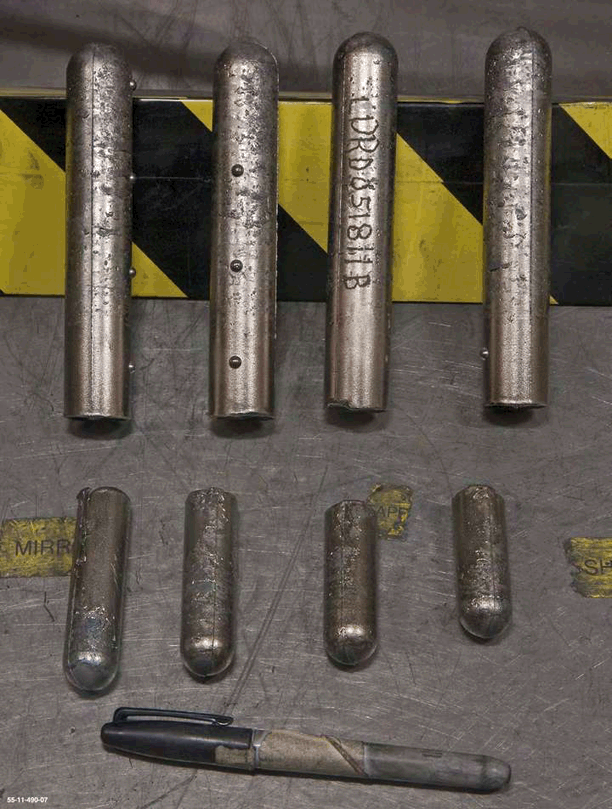










 nuclear-news