Earth’s climate would increase by 4 °C, compared to pre-industrial levels, before the end of 21st century.
 Earth’s climate to increase by 4 degrees by 2084 https://www.eurekalert.org/pub_releases/2018-05/ioap-ect052318.php INSTITUTE OF ATMOSPHERIC PHYSICS, CHINESE ACADEMY OF SCIENCES
A collaborative research team from China has published a new analysis that shows the Earth’s climate would increase by 4 °C, compared to pre-industrial levels, before the end of 21st century.
To understand the severity of this, consider the Paris Agreement (https://unfccc.int/process/the-paris-agreement/what-is-the-paris-agreement) of the United Nations. It’s a global effort to prevent an increase of 2°C. Nearly every country on the planet–the United States is the only country to withdraw–has agreed to work to prevent the catastrophic effects of two degrees of warming.
The researchers published their analysis projecting a doubling of that increase in Advances in Atmospheric Sciences (https://link.springer.com/article/10.1007/s00376-018-7160-4 ) on May 18, 2018.
“A great many record-breaking heat events, heavy floods, and extreme droughts would occur if global warming crosses the 4 °C level, with respect to the preindustrial period,” said Dabang Jiang, a senior researcher at the Institute of Atmospheric Physics of the Chinese Academy of Sciences. “The temperature increase would cause severe threats to ecosystems, human systems, and associated societies and economies.”
In the analysis, Jiang and his team used the parameters of scenario in which there was no mitigation of rising greenhouse gas emissions. They compared 39 coordinated climate model experiments from the fifth phase of the Coupled Model Intercomparison Project (https://www.wcrp-climate.org/wgcm-cmip), which develops and reviews climate models to ensure the most accurate climate simulations possible.
They found that most of the models projected an increase of 4°C as early as 2064 and as late as 2095 in the 21st century, with 2084 appearing as the median year.
This increase translates to more annual and seasonal warming over land than over the ocean, with significant warming in the Arctic. The variability of temperature throughout one year would be lower in the tropics and higher in polar regions, while precipitation would most likely increase in the Arctic and in the Pacific. These are the same effects that would occur under 1.5°C or 2°C increases, but more severe.
“Such comparisons between the three levels of global warming imply that global and regional climate will undergo greater changes if higher levels of global warming are crossed in the 21st century,” wrote Jiang.
The researchers continue to investigate the changes associated with 4°C of global warming in extreme climates.
“Our ultimate goal is to provide a comprehensive picture of the mean and extreme climate changes associated with higher levels of global warming based on state-of-the art climate models, which is of high interest to the decision-makers and the public,” said Jiang.
Researchers from the Chinese Academy of Sciences Center for Excellence in Tibetan Plateau Earth Sciences, the Collaborative Innovation Center on Forecast and Evaluation of Meteorological Disasters at the Nanjing University of Information Science & Technology, the Joint Laboratory for Climate and Environmental Change at Chengdu University of Information Technology, and the University of Chinese Academy of Sciences contributed to this study.
This work was supported by the National Basic Research Program of China and the National Natural Science Foundation of China.
New research reveals significant Fukushima radioactive particle release
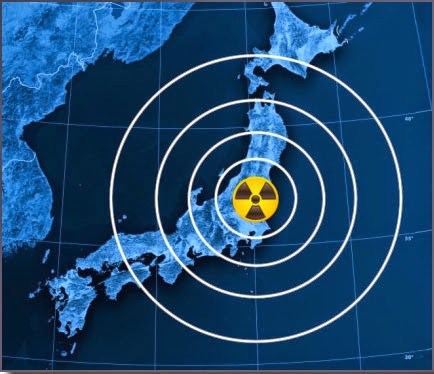 Fukushima radioactive particle release was significant says new research https://www.eurekalert.org/pub_releases/2018-05/uom-frp052418.php UNIVERSITY OF MANCHESTER
Scientists say there was a significant release of radioactive particles during the Fukushima-Daiichi nuclear accident.
The researchers identified the contamination using a new method and say if the particles are inhaled they could pose long-term health risks to humans.
The new method allows scientists to quickly count the number of caesium-rich micro-particles in Fukushima soils and quantify the amount of radioactivity associated with these particles.
The research, which was carried out by scientists from Kyushu University, Japan, and The University of Manchester, UK, was published in Environmental Science and Technology.
In the immediate aftermath of the Fukushima Daiichi nuclear accident, it was thought that only volatile, gaseous radionuclides, such as caesium and iodine, were released from the damaged reactors. However, in recent years it has become apparent that small radioactive particles, termed caesium-rich micro-particles, were also released.
Scientists have shown that these particles are mainly made of glass, and that they contain significant amounts of radioactive caesium, as well as smaller amounts of other radioisotopes, such as uranium and technetium.
The abundance of these micro-particles in Japanese soils and sediments, and their environmental impact is poorly understood. But the particles are very small and do not dissolve easily, meaning they could pose long-term health risks to humans if inhaled.
Therefore, scientists need to understand how many of the micro-particles are present in Fukushima soils and how much of the soil radioactivity can be attributed to the particles. Until recently, these measurements have proven challenging.
The new method makes use of a technique that is readily available in most Radiochemistry Laboratories called Autoradiography. In the method, an imaging plate is placed over contaminated soil samples covered with a plastic wrap, and the radioactive decay from the soil is recorded as an image on the plate. The image from plate is then read onto a computer.
The scientists say radioactive decay from the caesium-rich micro particles can be differentiated from other forms of caesium contamination in the soil.
The scientists tested the new method on rice paddy soil samples retrieved from different locations within the Fukushima prefecture. The samples were taken close to (4 km) and far away (40 km) from the damaged nuclear reactors. The new method found caesium-rich micro-particles in all of the samples and showed that the amount of caesium associated with the micro-particles in the soil was much larger than expected.
Dr Satoshi Utsunomiya, Associate Professor at Kyushu University, Japan, and the lead author of the study says “when we first started to find caesium-rich micro-particles in Fukushima soil samples, we thought they would turn out to be relatively rare. Now, using this method, we find there are lots of caesium-rich microparticles in exclusion zone soils and also in the soils collected from outside of the exclusion zone”.
Dr Gareth Law, Senior Lecturer in Analytical Radiochemistry at the University of Manchester and an author on the paper, adds: “Our research indicates that significant amounts of caesium were released from the Fukushima Daiichi reactors in particle form.
“This particle form of caesium behaves differently to the other, more soluble forms of caesium in the environment. We now need to push forward and better understand if caesium micro-particles are abundant throughout not only the exclusion zone, but also elsewhere in the Fukushima prefecture; then we can start to gauge their impact”.
The new method can be easily used by other research teams investigating the environmental impact of the Fukushima Daiichi accident.
Dr Utsunomiya adds: “we hope that our method will allow scientists to quickly measure the abundance of caesium-rich micro-particles at other locations and estimate the amount of caesium radioactivity associated with the particles. This information can then inform cost effective, safe management and clean-up of soils contaminated by the nuclear accident”.
USA’s history of accidental dropping of nuclear bombs
Remembering A Near Disaster: U.S. Accidently Drops Nuclear Bombs On Itself And Its Allies WUNC91.5, By JAY PRICE 24 May 18
In 1968, the Pentagon halted a program that kept military bombers in the air, loaded with nuclear weapons to deter a Soviet attack.
The problem was the jets kept having near-catastrophic accidents.
“If you go through some of the archival evidence publicly available, it seems like once a week or so, there was some kind of significant noteworthy accident that was being reported to the Department of Defense or the Atomic Energy Commission or members of Congress,” said Stephen Schwartz, a long-time nuclear weapons analyst.
Schwartz singled out 1958 as a particularly notorious year.
“We’re actually celebrating − celebrating is probably the wrong word − but we’re marking the 60th anniversary of no fewer than eight nuclear weapons accidents this year,” Schwartz said.
Every couple of weeks, Maurice Sanders gets a reminder of one of those 1958 accidents when a car with out-of-state tags parks in front of his house just outside Florence, South Carolina. Strangers pile out and tromp around to the scrub oak forest just behind his back yard to gaze down at an odd tourist attraction.
“It’s the hole from where the bomb had dropped, years ago,” Sanders said. “I think it’s on some kind of map or something.”
The circular pit is as big around as a small house, with a pond of tea-colored water at the bottom. A fading plywood cutout that someone put up − apparently to lure more tourists − is the size and shape of the Mark 6 nuclear bomb that was dropped there by accident.
The core containing the nuclear material was stored separately on the B-47 bomber it fell from, but the high explosives that were used to trigger the nuclear reaction exploded on impact, digging the crater estimated at 35 feet deep. The blast injured six members of a nearby family and damaged their home beyond repair.
Earlier that same year, just one state farther south, a jet fighter collided with a bomber during a training exercise, and the crew jettisoned a bomb into coastal waters near Savannah, Georgia.
Two years later, in 1961, a B-52 bomber flying out of Seymour Johnson Air Force Base near Goldsboro came apart in the sky, and the two armed nuclear bombs it was carrying fell into a farming community northeast of the base. One buried itself so deeply into a tobacco field that some of its parts were never found. The other floated down on a parachute, planting its nose in the ground beside a tree.
The parachute bomb came startlingly close to detonating. A secret government document said three of its four safety mechanisms failed, and only a simple electrical switch prevented catastrophe. It was 260 times more powerful than the bomb dropped on Hiroshima and could have instantly killed thousands of people. The radioactive fallout could have endangered millions more as far north as New York City.
Safety takes back seat to readiness
The military’s name for serious nuclear weapons mishaps is “broken arrow.” The Pentagon has only officially acknowledged 32 broken arrows, but evidence compiled by the government shows there were thousands more accidents involving nuclear weapons, Schwartz said.
“Most of which were not that as serious as the 32 we know about, but some of them were quite bad,” he said.
Schwartz said a wave of serious accidents in the late 1950s through 1968 was partly due to programs that kept the U.S. on a war footing. A few planes were kept aloft 24 hours a day, ready to drop bombs on Russia.
And then there was the sheer number of weapons being made, which created more opportunities for things to go wrong.
Schwartz said by the year after the bomb fell on South Carolina, the U.S. was making almost 20 nuclear weapons a day……..
“Everything associated with nuclear weapons the nuclear weapons delivery system, the command-and-control systems that make sure they go off when they’re supposed to and most importantly that they don’t go off when they’re not supposed to − all of these things are designed, built, operated, and maintained by human beings,” Schwartz said. “And human beings are fallible.”
Overseas accidents bring program’s end
It wasn’t the bombs the U.S. dropped on itself that finally ended the program. Rather, it was two accidents over friendly nations.
In 1966, a B-52 bomber – also flying out of Seymour Johnson – broke apart in the sky near the coast of Spain. One of its bombs dropped into the sea, and three fell on land where conventional explosives scattered radioactive material.
Then, in 1968, the burning-seat-cushion crash spread plutonium and uranium onto sea ice and into the sea off the coast of Greenland……..http://wunc.org/post/remembering-near-disaster-us-accidently-drops-nuclear-bombs-itself-and-its-allies#stream/0
Desperate nuclear lobby goes bananas over bananas
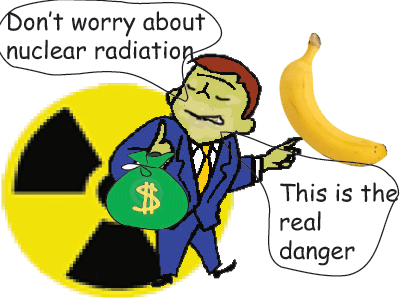
The pro-nuclear lobby goes bananas https://beyondnuclearinternational.org/2018/05/20/the-pro-nuclear-lobby-goes-bananas/
Response to ‘Burden of proof: A comprehensive review of the feasibility of 100% renewable-electricity systems’
 Science Direct 18 May 18
- https://doi.org/10.1016/j.rser.2018.
Highlights
- •We respond to a recent article that is critical of the feasibility of 100% renewable-electricity systems.
- •Based on a literature review we show that none of the issues raised in the article are critical for feasibility or viability.
- •Each issue can be addressed at low economic cost, while not affecting the main conclusions of the reviewed studies.
- •We highlight methodological problems with the choice and evaluation of the feasibility criteria.
- •We provide further evidence for the feasibility and viability of renewables-based systems.
-
Abstract
A recent article ‘Burden of proof: A comprehensive review of the feasibility of 100% renewable-electricity systems’ claims that many studies of 100% renewable electricity systems do not demonstrate sufficient technical feasibility, according to the criteria of the article’s authors (henceforth ‘the authors’). Here we analyse the authors’ methodology and find it problematic. The feasibility criteria chosen by the authors are important, but are also easily addressed at low economic cost, while not affecting the main conclusions of the reviewed studies and certainly not affecting their technical feasibility. A more thorough review reveals that all of the issues have already been addressed in the engineering and modelling literature. Nuclear power, which the authors have evaluated positively elsewhere, faces other, genuine feasibility problems, such as the finiteness of uranium resources and a reliance on unproven technologies in the medium- to long-term. Energy systems based on renewables, on the other hand, are not only feasible, but already economically viable and decreasing in cost every year
-
1. Introduction
………..https://www.sciencedirect.com/science/article/pii/S1364032118303307
Thorium nuclear power – not so great, really
Not so different
While compelling at first glance, the details reveal a somewhat more murky picture. The molten salt architecture which gives certain thorium reactors high intrinsic safety equally applies to proposed fourth-generation designs using uranium. It is also true that nuclear physics technicalities make thorium much less attractive for weapons production, but it is by no means impossible; the USA and USSR each tested a thorium-based atomic bomb in 1955.
Other perceived advantages similarly diminish under scrutiny. There is plenty of uranium ore in the world and hence the fourfold abundance advantage of thorium is a moot point. Producing less long-lived radioactive waste is certainly beneficial, but the vexed question remains of how to deal with it.
Stating that thorium is more efficiently consumed is the most mischievous of the claimed benefits. Fast-breeder uranium reactors have much the same fuel efficiency as thorium reactors. However, they weren’t economic as the price of uranium turned out to rather low.
Disadvantages of thorium reactors
High start-up costs: Huge investments are needed for thorium nuclear power reactor, as it requires significant amount of testing, analysis and licensing work. Also, there is uncertainty over returns on the investments in these reactors. For utilities, this factor can weigh on the decisions to go ahead with plans to deploy the reactors. The reactors also involve high fuel fabrication and reprocessing costs.
High melting point of thorium oxide: As melting point of thorium oxide is much higher compared to that of uranium oxide, high temperatures are needed to make high density ThO2 and ThO2–based mixed oxide fuels. The fuel in nuclear fission reactors is usually based on the metal oxide.
Emission of gamma rays: Presence of Uranium-232 in irradiated thorium or thorium based fuels in large amounts is one of the major disadvantages of thorium nuclear power reactors. It can result in significant emissions of gamma rays. http://www.compelo.com/energy/news/newsmajor-pros-and-cons-of-thorium-nuclear-power-reactor-6058445/
The uses of enriched uranium
 Times 12th May 2018 Uranium is mined and then processed as nuclear fuel for military or civilian purposes. The ore is ground up and chemically treated to yield “yellowcake”, a coarse powder of uranium oxide. Converted into purified fuel rods, it can be used in pressurised heavy water reactors.
For other uses, the uranium oxide is converted into uranium hexafluoride gas so that it can be enriched. The enrichment process increases the percentage of a particular isotope, uranium-235, which makes up 0.7 per cent of natural uranium. The rest is uranium-238. The commonest method of enrichment is isotope separation by gas centrifuge. Centrifuges rotate at high speed, separating the isotopes by weight and sending the heavier uranium-238 to the outside of the cylinder while the lighter 235 collects at the centre.
The slightly enriched stream is extracted and fed into the next centrifuge, where the process is repeated, enriching it further. Most nuclear power reactors use uranium that has been enriched to a composition of between 3 and 5 per cent uranium-235. Anything up to 20 per cent uranium-235 is called low-enriched uranium. Uranium enriched to between 12 and 19.75 per cent is used in the production of medical isotopes in research reactors.
Uranium enriched above 20 per cent is called highly enriched uranium, while 20 per cent is the lowest theoretical threshold for weapons-grade uranium. Most weapons use uranium that is 90 per cent enriched. The first stages
require more centrifuges due to the volume of uranium. The process gets easier as purity increases, making the leap from low to high-enrichment easier than the leap from natural uranium to low-enriched. Once the 20 per cent threshold is breached, weapons grade is within reach.
https://www.thetimes.co.uk/edition/world/iran-saudi-arabia-uranium-from-ore-to-weapons-grade-mf0jdqr86
¥1.13 trillion of taxpayers’ money later, Japan’s Monju nuclear reprocessing reactor a spectacular failure
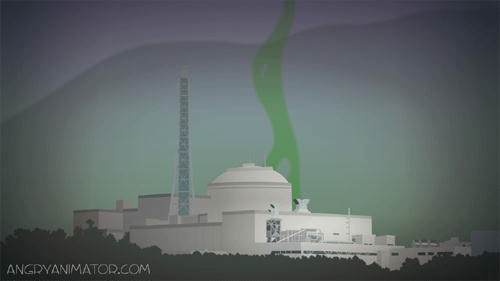
Monju reactor project failed to pay off after swallowing ¥1.13 trillion of taxpayers’ money: auditors https://www.japantimes.co.jp/news/2018/05/11/national/monju-reactor-project-failed-pay-off-swallowing-%C2%A51-13-trillion-taxpayers-money-auditors/#.WvZw_u-FPGg
The Monju fast-breeder reactor experiment yielded few sufficient results despite an investment of at least ¥1.13 trillion ($10.3 billion) worth of taxpayers money since 1994, state auditors confirmed on Friday.
The trouble-plagued prototype, which only ran for 250 days, was designed to play a key role in Japan’s quest to set up a nuclear fuel recycling program, but the project only achieved 16 percent of the intended results, the Board of Audit said.
The government finally decided to scrap Monju in December 2016 at an estimated additional cost of ¥375 billion. But the audit board noted that the 30-year decommissioning plan could cost even more.
The reactor, which started operations in 1994, was designed to produce more plutonium than it consumes while generating electricity, experienced several problems over its more than two-decade run, including a sodium coolant leak and attempted cover-up, and equipment inspection failures.
“Flawed maintenance led to the decommissioning,” the auditors concluded in their report.
But the report also spotlights the absence of a systematic evaluation system for the project. During the entire experiment, the auditors expressed their opinions on Monju’s research and development costs only once — in 2011.
Monju was only up and running for 250 days in total after repeatedly failing to complete test items, according to the report.
As for the decommissioning costs, the report said they might expand because the current estimate does not include personnel costs and taxes. It also noted that the cost of removing the radioactive sodium coolant could change.
About the International Atomic Energy Agency
The world’s nuclear energy watchdogs: 4 questions answered, The Conversation, Lecturer, Jackson School of International Studies, University of Washington, May 4, 2018
North Korea has promised to get rid of its nuclear weapons, but how will the world know if it actually follows through?
There is only one international agency in the world that could verify their compliance, the International Atomic Energy Agency. However, North Korea canceled its membership to the organization in 1994. When the IAEA demanded to inspect certain facilities in North Korea, they backed out and eventually expelled all nuclear inspectors in 2009.
Since then, North Korea has remained outside the IAEA’s jurisdiction. While it isn’t clear whether the agency will be called upon if a deal on denuclearization is reached, IAEA Director General Yukiya Amano has said the agency is prepared to send a team of inspectors should a diplomatic agreement be reached.
So, with that possibility in mind, let’s look at how the agency operates and all the other nuclear energy challenges it faces beyond North Korea.
1. What is the International Atomic Energy Agency?
The IAEA was founded in 1957, inspired by U.S. President Eisenhower’s “Atoms for Peace” speech promoting the peaceful uses of nuclear energy. From the beginning, its task has been to spread and monitor the application of nuclear technology for non-military uses and make sure that such technology is not diverted to build weapons.
…..Headquartered in Vienna, Austria, the agency is a membership organization that reports annually to the United Nations, but is independent of it. Member nations must obey its rules and requirements in order to receive the knowledge and technology it provides.
Currently, 169 countries are members.
2. What are the agency’s main responsibilities?
The agency is best known for its work in two areas. The first is nuclear safety: protecting people and the environment from harmful radiation. The second is nuclear security, which focuses on preventing the spread of nuclear weapons, including threats of nuclear terrorism.
This watchdog role requires determining whether any member country might be developing nuclear weapons – specifically nations that have signed international treaties. For example, the Treaty on the Non-Proliferation of Nuclear Weapons is the world’s most important legally binding agreement for preventing the spread of nuclear weapons. At present, a total of 191 states have joined the treaty. Three nuclear weapons states – Israel, India and Pakistan – have not signed and North Korea withdrew from it in 2003.
The IAEA evaluates compliance with other treaties including those governing nuclear free zones and important safeguard agreements with as many as 181 nations……..
3. How does the agency verify how nuclear material is being used?
Among the more than 2,500 people who staff the IAEA, only about 385 are inspectors. They come from 80 nations and mainly hold backgrounds in physics, chemistry and engineering.
Routine inspections involve verifying whether a member’s report about its nuclear facilities and material is accurate. Depending on the size of the facility, this might take a few hours for one or two people or two weeks for 10 inspectors. They do this in a number of ways, including the collecting of samples of nuclear material, measuring levels of radioactivity, checking plans and blueprints against actual construction, and interviewing officials, engineers and others involved in nuclear work.
Over time, the agency has had to make changes in its inspection processes. For example, before 1997, inspectors were limited to examining only facilities that member states had declared. After discovering that Iraq had lied about the true extent of its nuclear program, the IAEA board of governors approved a protocol to allow inspectors to access undeclared sites that might be involved in nuclear work.
Inspectors have also found themselves in the line of political fire. For example, between 2002 and 2003, the Bush administration wanted evidence that Iraqi President Saddam Hussein had an active nuclear weapons program. U.S. attempts to pressure the agency did not alter IAEA findings that such evidence could not be found.
Similarly, the agency has stood its ground in favor of the Iran nuclear deal and Iran’s compliance in the face of President Trump’s continued criticism of the agreement.
4. What are the main challenges facing the agency?
There are myriad challenges facing the IAEA.
Expanding demands on the agency have come from developing nations with growing economies such as Thailand and Chile that want to use nuclear science in medicine, agriculture and industry. Growth of nuclear power into new areas of the world is bringing concern about the development of weapons and terrorist groups acquiring nuclear material.
North Korea, whose weapons program may or may not be halted by talks with the U.S., has plutonium and uranium that could be sold without international approval or safeguards.
Then there is the Trump administration’s threat to abandon the Iran nuclear deal, a move that would dismiss years of effort by the IAEA to head off an arms race in the region. At the same time, any future need to verify that Iran is not building a weapon would almost certainly rely on IAEA inspectors. Similarly, it seems likely that a deal between the U.S. and North Korea would require the Democratic People’s Republic of Korea to rejoin the agency and have any denuclearization efforts confirmed by it as well.
Such realities only heighten the importance of the IAEA. …….https://theconversation.com/the-worlds-nuclear-energy-watchdogs-4-questions-answered-93690
The nuclear weapons that USA lost in the 1950s and 60s
The US Has Lost Six Nuclear Weapons. So Where The Hell Are They? http://www.iflscience.com/technology/the-us-has-lost-six-nuclear-weapons-so-where-the-hell-are-they/ Tom Hale, 4 May 18 Keys, phones, headphones, socks, thermonuclear weapons – some things just always seem to go missing. Believe it or not,
the US has lost at least six atomic bombs or weapons-grade nuclear material since the Cold War.
Not only that, but the US is responsible for at least 32 documented instances of a nuclear weapons accident, known as a “Broken Arrow” in military lingo. These atomic-grade mishaps can involve an accidental launching or detonation, theft, or loss – yep loss – of a nuclear weapon.
February 13, 1950
The first of these unlikely instances occurred in 1950, less than five years after the first atomic bomb was detonated. In a mock nuclear strike against the Soviet Union, a US B-36 bomber en route from Alaska to Texas began to experience engine trouble. An icy landing and stuttering engine meant the landing was going to be near-impossible, so the crew jettisoned the plane’s Mark 4 nuclear bomb over the Pacific. The crew witnessed a flash, a bang, and a sound wave.
The military claim the mock-up bomb was filled with “just” uranium and TNT but no plutonium, so it wasn’t capable of a nuclear explosion. Nevertheless, the uranium has never been recovered.
March 10, 1956
On March 10, a Boeing B-47 Stratojet set off from MacDill Air Force Base Florida for a non-stop flight to Morocco with “two nuclear capsules” onboard. The jet was scheduled for its second mid-flight refueling over the Mediterranean Sea, but it never made contact. No trace of the jet or the nuclear material was ever found again.
February 5, 1958
In the early hours of February 5, 1958, a B-47 bomber with a 3,400-kilogram (7,500-pound) Mark 15 nuclear bomb on board accidentally collided with an F-86 aircraft during a simulated combat mission. The battered and bruised bomber attempted to land numerous times, but to no avail. Eventually, they made the decision to jettison the bomb into the mouth of the Savannah River near Savannah, Georgia, to make the landing possible. Luckily for them, the plane successfully landed and the bomb did not detonate. However, it has remained “irretrievably lost” to this day.
January 24, 1961
On January 24, 1961, the wing of a B-52 bomber split apart while on an alert mission above Goldsboro, North Carolina. Onboard were two 24-megaton nuclear bombs. One of these successfully deployed its emergency parachute, while the other fell and crashed to the ground. It’s believed the unexploded bomb smashed into farmland around the town, but it has never been recovered. In 2012, North Carolina put up a sign near the supposed crash site to commemorate the incident.
December 5, 1965
An A-4E Skyhawk aircraft loaded with a nuclear weapon rolled off the back off an aircraft carrier, USS Ticonderoga, stationed in the Philippine Sea near Japan. The plane, pilot, and nuclear bomb have never been found.
In 1989, the US eventually admitted their bomb was still laying in the seabed around 128 kilometers (80 miles) from a small Japanese island. Needless to say, the Japanese government and environmental groups were pretty pissed about it.
?, 1968
At some point during the Spring of 1968, the US military lost some kind of nuclear weapon. The Pentagon still keeps information about the incident tightly under wraps. However, some have speculated that the incident refers to the nuclear-powered Scorpion submarine. In May 1968, the attack submarine went missing along with its 99-strong crew in the Atlantic Ocean after being sent on a secret mission to spy on the Soviet navy. This, however, remains conjecture.
The strategies for secrecy in America’s Manhattan nuclear bomb project

How the Manhattan Project’s Nuclear Suburb Stayed Secret, Oak Ridge, Tennessee, once home to 75,000, went up fast and under the radar. But it was built to last, too. Atlas Obscura , , MAY 03, 2018 “…… Oak Ridge isn’t like most of the country’s other suburbs. The town was conceived and built by the United States government in the early 1940s as base for uranium and plutonium work, as part of the Manhattan Project. As the nuclear effort marched along, the town grew, too. By 1945, a dense suburb had taken shape, home to roughly 75,000 people. At war’s end, Oak Ridge was the fifth-largest city in the state—and all along, it was supposed to be a secret.
Israel’s nuclear weapons
Welcome to Israeli Nuclear Weapons 101 The National Interest, Daniel R. DePetris, September 20, 2015
1. The Number is in Doubt:
While everyone believes that the Israelis possess a sizable nuclear arsenal, no one really knows how big that arsenal is. In 2008, President Jimmy Carterestimated that Israel probably had a minimum of 150 weapons in stock ready to use if the most dire circumstances warrant. Six years later, the former President revised that estimate and put the figure in the 300 range, which—based on Carter’s calculations—would mean that Israel doubled its arsenal from the 2008-2014 time-period. Iranian foreign minister Mohammad JavadZarif told reporters at the United Nations at the height of the P5+1-Iran nuclear talks that Israel is “sitting on 400 nuclear warheads.” The Bulletin of Atomic Scientists believes Zarif’s figure is far too large and unrealistic given the fact that Israel’s weapons are designed for deterrence purposes rather than actual hire-trigger use. A better figure, the board writes, is “sixty-five to eighty-five warheads” as cited in a Rand Corporation study.
To put it bluntly, the world doesn’t have a clue about how many nukes Israel possesses. And that’s precisely the point for the Israelis: the guessing game swirling over the proliferation community keeps Israel’s enemies in the region on their toes.
2. Israel Fooled the U.S. to Get Its Program Off the Ground:
The Iranian Government has been caught building enrichment facilities by western intelligence agencies twice before. In 2002, a dissident Iranian group provided information to the United States pointing to a large-scale enrichment facility at Natanz. In 2009, U.S. and European intelligence uncovered another enrichment facility at Fordow buried deep into a mountain. But Iran isn’t the only country that has deliberately deceived the United States and the international community in order to provide time for a full-on nuclear program; the Israelis, as Walter Pincus wrote in a Washington Post storyearlier this year, “blazed [the] trail decades ago.”
In the 1950s and early 1960s, the Israeli Government repeatedly stonewalled U.S. requests for information on possible weapons development and at times purposely lied to their U.S. allies in the hope of giving the nuclear program more room to breath. In 1960, Israel referred to its Dimona reactor both as a “textile plant” and as a “metallurgic research installation” to the U.S. State Department. Foreign minister Shimon Peres assured President John F. Kennedy in a 1963 meeting in the Oval Office that Israel would “not introduce nuclear weapons to the region.”
President Kennedy was so concerned about a possible Israeli nuclear weapons program that he demanded Israel admit American inspectors into Dimona to snoop around. The Israelis agreed to those requests, but made sure that those visits would not lead to anything incriminating: U.S. inspectors, according to a long-read investigative report in The Guardian, were not permitted to bring their own equipment or collect samples at the site.
3. Why Israel Wanted a Bomb in The First Place:….
4. The World Has Long Wanted Israel to Join the NPT:
Ever since 1995, when signatories of the Nuclear Non-Proliferation Treaty officially called for the “establishment by regional parties of a Middle East zone free of weapons of nuclear and all other related weapons of mass destruction,” the United Nations has attempted to convince Israel that signing the NPT and allowing IAEA inspectors into its facilities is the best way to accomplish that objective. Israel, however, has refused to grant those requests and has long argued that Israel’s nuclear weapons program (which the country continues to neither confirm nor deny) is not nearly the biggest threat to the Middle East’s security.
This hasn’t stopped parties to the NPT and the U.N. General Assembly from pressing the point and trying to force compliance. ……http://nationalinterest.org/feature/welcome-israeli-nuclear-weapons-101-13882
New Study Shows Full Extent of Radiation Damage to Hiroshima Victims
 https://www.popularmechanics.com/military/weapons/a20113160/new-study-shows-full-extent-of-radiation-damage-to-hiroshima-victims/ A study decades in the making shows victims may have absorbed double a deadly dose. By David Grossman
A weapon drastically different than any other ever used in war, the atomic bomb in Hiroshima instantly killed over 100,000 people and left thousands more dealing with radiation fallout. By the end of 1945, it is estimated that 160,000 people had been killed directly from the bombing. Several historians have argued that while the bombs effectively ended World War II, their unprecedented destructive capabilities started the next global conflict, the Cold War, at the exact same time.
Attempting to measure the damage done to Hiroshima by the atomic bomb overwhelmed science for decades. There were simply no computers or radiation-measuring devices capable of understanding the damage. Personal stories, like those of the survivors describe in John Hershey’s Hiroshima and art works of survivors, took hold as the dominant narratives.
But that didn’t mean scientists weren’t trying. When the Atomic Bomb Casualty Commission (ABCC) formed in 1947, the agency quickly realized it would need long term study to understand what had happened. Japanese scientists like E. T. Arakawa and Takenobu Higashimura were releasing studies about the effects of the bombings by the early 1960s.
In 1973, Brazilian physicist Sérgio Mascarenhas was trying to date archaeological items in his home country based on radiation absorption. Radiation occurs naturally in sand through elements like thorium, and techniques like radiocarbon dating use similar principles.
However, Mascarenhas realized that this method might have applications beyond archaeological items. He flew to Hiroshima and, with help from the Institute of Nuclear Medicine in Hiroshima, was able to obtain a jawbone from a bombing victim’s body. While he gained some understanding of what the victim’s body had endured, technical issues stood in his way. He was unable to separate background radiation levels from the bomb blast radiation.
Flash forward four decades later and Angela Kinoshita of Universidade do Sagrado Coração in São Paulo State has reexamined the jawbone using modern technology. Kinoshita’s team was able to determine that the jawbone absorbed 9.46 grays of radiation. A mere 5 grays can be fatal. That number lines up with measurements taken of bricks and other inorganic objects measured at the time. The work is published in PLOS ONE.
Beyond gaining a better understanding of what happened to the victims of Hiroshima, who ranged from prisoners of war to soldiers to civilians, the study offers insight into what might happen if a nuclear weapon was ever used again.
“Imagine someone in New York planting an ordinary bomb with a small amount of radioactive material stuck to the explosive. Techniques like this can help identify who has been exposed to radioactive fallout and needs treatment,” says study co-author Oswaldo Baffa of the University of São Paulo in a press statement. Source: Discover
1 This Month



26 September – International Day for the Total Elimination of Nuclear Weapons


PLEASE OPPOSE HR 8255 AND S.3639 – bills would accelerate satellite deployment, with no environmental review or safeguards – https://ncstd5li.quorum.us/campaign/169331/
To see nuclear-related stories in greater depth and intensity – go to https://nuclearinformation.wordpress.com
-
Archives
- September 2026 (219)
- August 2026 (330)
- July 2026 (355)
- June 2026 (287)
- May 2026 (306)
- April 2026 (356)
- March 2026 (251)
- February 2026 (267)
- January 2026 (308)
- December 2025 (358)
- November 2025 (359)
- October 2025 (375)
-
Categories
- 1
- 1 NUCLEAR ISSUES
- business and costs
- climate change
- culture and arts
- ENERGY
- environment
- health
- history
- indigenous issues
- Legal
- marketing of nuclear
- media
- opposition to nuclear
- PERSONAL STORIES
- politics
- politics international
- Religion and ethics
- safety
- secrets,lies and civil liberties
- spinbuster
- technology
- Uranium
- wastes
- weapons and war
- Women
- 2 WORLD
- ACTION
- AFRICA
- Atrocities
- AUSTRALIA
- Christina's notes
- Christina's themes
- culture and arts
- Events
- Fuk 2022
- Fuk 2023
- Fukushima 2017
- Fukushima 2018
- fukushima 2019
- Fukushima 2020
- Fukushima 2021
- general
- global warming
- Humour (God we need it)
- Nuclear
- RARE EARTHS
- Reference
- resources – print
- Resources -audiovicual
- Weekly Newsletter
- World
- World Nuclear
- YouTube
-
RSS
Entries RSS
Comments RSS
 nuclear-news