nuclear-news

The News That Matters about the Nuclear Industry Fukushima Chernobyl Mayak Three Mile Island Atomic Testing Radiation Isotope

The language of fascism and Donald Trump

Challenging Trump’s Language of Fascism TruthOut  January 09, 2018By Henry A. GirouxTruthout | News Analysis   George Orwell warns us in his dystopian novel 1984 that authoritarianism begins with language. Words now operate as “Newspeak,” in which language is twisted in order to deceive, seduce and undermine the ability of people to think critically and freely. As authoritarianism gains in strength, the formative cultures that give rise to dissent become more embattled along with the public spaces and institutions that make conscious critical thought possible.

Words that speak to the truth, reveal injustices and provide informed critical analysis begin to disappear, making it all the more difficult, if not dangerous, to hold dominant power accountable. Notions of virtue, honor, respect and compassion are policed, and those who advocate them are punished.

I think it is fair to argue that Orwell’s nightmare vision of the future is no longer fiction. Under the regime of Donald Trump, the Ministry of Truth has become the Ministry of “Fake News,” and the language of “Newspeak” has multiple platforms and has morphed into a giant disimagination machinery of propaganda, violence, bigotry, hatred and war. With the advent of the Trump presidency, language is undergoing a shift in the United States: It now treats dissent, critical media and scientific evidence as a species of “fake news.” The administration also views the critical media as the “enemy of the American people.” In fact, Trump has repeated this view of the press so often that almost a third of Americans believe it and support government-imposed restrictions on the media, according to a Poynter survey. Language has become unmoored from critical reason, informed debate and the weight of scientific evidence, and is now being reconfigured within new relations of power tied to pageantry, political theater and a deep-seated anti-intellectualism, increasingly shaped by the widespread banality of celebrity culture, the celebration of ignorance over intelligence, a culture of rancid consumerism, and a corporate-controlled media that revels in commodification, spectacles of violence, the spirit of unchecked self-interest and a “survival of the fittest” ethos.

Under such circumstances, language has been emptied of substantive meaning and functions increasingly to lull large swaths of the American public into acquiescence, if not a willingness to accommodate and support a rancid “populism” and galloping authoritarianism. he language of civic literacy and democracy has given way to the language of saviors, decline, bigotry and hatred. One consequence is that matters of moral and political responsibility disappear, injustices proliferate and language functions as a tool of state repression. The Ministry of “Fake News” works incessantly to set limits on what is thinkable, claiming that reason, standards of evidence, consistency and logic no longer serve the truth, because the latter are crooked ideological devices used by enemies of the state. “Thought crimes” are now labeled as “fake news.”

The notion of truth is viewed by this president as a corrupt tool used by the critical media to question his dismissal of legal checks on his power — particularly his attacks on judges, courts, and any other governing institutions that will not promise him complete and unchecked loyalty.  For Trump, intimidation takes the place of unquestioned loyalty when he does not get his way, revealing a view of the presidency that is more about winning than about governing. One consequence is myriad practices in which Trump gleefully humiliates and punishes his critics, willfully engages in shameful acts of self-promotion and unapologetically enriches his financial coffers. ………

With the rise of casino capitalism, a “winner-take-all” ethos has made the United States a mean-spirited and iniquitous nation that has turned its back on the poor, underserved, and those considered racially and ethnically disposable. It is worth noting that in the last 40 years, we have witnessed an increasing dictatorship of finance capital and an increasing concentration of power and ownership regarding the rise and workings of the new media and mainstream cultural apparatuses. These powerful digital and traditional pedagogical apparatuses of the 21st century have turned people into consumers, and citizenship into a neoliberal obsession with self-interest and an empty notion of freedom. ……….

Trump appropriates crassness as a weapon. In a throwback to the language of fascism, he has repeatedly positioned himself as the only one who can save the masses, reproducing the tired script of the savior model endemic to authoritarianism. In 2016 at the Republican National Convention, Trump stated without irony that he alone would save a nation in crisis, captured in his insistence that, “I am your voice, I alone can fix it. I will restore law and order.”……….

There is more at work here than an oversized, if not delusional ego. Trump’s authoritarianism is also fueled by braggadocio and misdirected rage. There is also a language that undermines the bonds of solidarity, abolishes institutions meant to protect the vulnerable, and a full-fledged assault on the environment………

Trump is the master of manufactured illiteracy, and his public relations machine aggressively engages in a boundless theater of self-promotion and distractions — both of which are designed to whitewash any version of the past that might expose the close alignment between Trump’s language and policies and the dark elements of a fascist past.

Trump revels in an unchecked mode of self-congratulation bolstered by a limited vocabulary filled with words like “historic,” “best,” “the greatest,” “tremendous” and “beautiful.”  As Wesley Pruden observes:

Nothing is ever merely “good,” or “fortunate.” No appointment is merely “outstanding.” Everything is “fantastic,” or “terrific,” and every man or woman he appoints to a government position, even if just two shades above mediocre, is “tremendous.” The Donald never met a superlative he didn’t like, himself as the ultimate superlative most of all.

Trump’s relentless exaggerations suggest more than hyperbole or the self-indulgent use of language. This is true even when he claims he “knows more about ISIS than the generals,” “knows more about renewables than any human being on Earth,” or that nobody knows the US system of government better than he does. There is also a resonance with the rhetoric of fascism. As the historian Richard J. Evans writes in The Third Reich in Power:

The German language became a language of superlatives, so that everything the regime did became the best and the greatest, its achievements unprecedented, unique, historic, and incomparable…..

Trump’s language, especially his endorsement of torture and contempt for international norms, normalizes the unthinkable, and points to a return to a past that evokes what Ariel Dorfman has called “memories of terror … parades of hate and aggression by the Ku Klux Klan in the United States and Adolf Hitler’s Freikorps in Germany…. executions, torture, imprisonment, persecution, exile, and, yes, book burnings, too.” Dorfman sees in the Trump era echoes of policies carried out under the dictator Pinochet in Chile…………

Trump’s fascistic language also fuels the rhetoric of war, toxic masculinity, white supremacy, anti-intellectualism and racism. What was once an anxious discourse about what Harvey Kaye calls the “possible triumph in America of a fascist-tinged authoritarian regime over liberal democracy” is no longer a matter of speculation, but a reality……..

Trump’s language is not his alone. It is the language of a nascent fascism that has been brewing in the US for some time. It is a language that is comfortable viewing the world as a combat zone, a world that exists to be plundered. It is a view of those deemed different as a threat to be feared, if not eliminated. Frank Rich is correct in insisting that Trump is the blunt instrument of a populist authoritarian movement whose aim is “the systemic erosion of political, ethical, and social norms” central to a substantive democracy. And Trump’s major weapon is a toxic language that functions as a form of “cultural vandalism” that promotes hate, embraces the machinery of the carceral state, makes white supremacy a central tenant of governance, and produces unthinkable degrees of inequality in wealth and power…….

The current struggle against a nascent fascism in the United States is not only a struggle over economic structures or the commanding heights of corporate power. It is also a struggle over visions, ideas, consciousness and the power to shift the culture itself.

Progressives need to formulate a new language, alternative cultural spheres and fresh narratives about freedom, the power of collective struggle, empathy, solidarity and the promise of a real socialist democracy. We need a new vision that refuses to equate capitalism and democracy, normalize greed and excessive competition, and accept self-interest as the highest form of motivation. We need a language, vision and understanding of power to enable the conditions in which education is linked to social change and the capacity to promote human agency through the registers of cooperation, compassion, care, love, equality and a respect for difference…….

In the end, there is no democracy without informed citizens and no justice without a language critical of injustice.  http://www.truth-out.org/news/item/43159-challenging-trumps-language-of-fascism

January 12, 2018 Posted by | culture and arts, politics, Reference, USA | Leave a comment

Trump’s NASA Space Plans – Potential for a Nuclear Catastrophe

Trump’s NASA Plans Are a Nuclear Disaster Waiting to Happen http://www.truth-out.org/news/item/43021-the-nuclear-disaster-of-trumps-nasa-plans December 29, 2017By Linda Pentz Gunter,   Earlier this month, President Trump announced that he wants the National Aeronautics and Space Administration (NASA) to “lead an innovative space exploration program to send American astronauts back to the moon, and eventually Mars.” But while couched in patriotic sound bites and pioneering rhetoric that “Florida and America will lead the way into the stars,” the risks such ventures would entail — and the hidden agenda they conceal — have scarcely been touched upon.

For those of us who watched Ron Howard’s nail-biter of a motion picture, Apollo 13,and for others who remember the real-life drama as it unfolded in April 1970, collective breaths were held that the three-man crew would return safely to Earth. They did.

What hardly anyone remembers now — and certainly few knew at the time — was that the greater catastrophe averted was not just the potential loss of three lives, tragic though that would have been. There was a lethal cargo on board that, if the craft had crashed or broken up, might have cost the lives of thousands and affected generations to come.

It is a piece of history so rarely told that NASA has continued to take the same risk over and over again, as well as before Apollo 13. And that risk is to send rockets into space carrying the deadliest substance ever created by humans: plutonium.

Now, with the race on to send people to Mars, NASA is at it again with its Kilopower project, which would use fission power for deep space. It would be the first fission reactor launched into space since the 1960s. Fission, commonly used in commercial nuclear reactors, is the process of splitting the atom to release energy. A by-product of fission is plutonium.

Small reactors would be used to generate electricity on Mars to power essential projects in the dark. But first, such a reactor has to get to Mars without incident or major accident. And the spacecraft carrying it would also be nuclear-powered, adding monumentally to the already enormous risk. As physicist Michio Kaku points out, “Let’s be real. One percent of the time, rockets fail, they blow up, and people die.” With plutonium on board, the only acceptable accident risk has to be 0 percent.

When Apollo 13 mission astronaut John Swigert told NASA Mission Control “Houston, we’ve had a problem,” it only touched on the most immediate crisis: the damaging of the craft after the explosion of an oxygen tank that forced the crew to abort the planned moon landing.

However, what few knew at the time — and what was entirely omitted from Howard’s 1995 film — was the even bigger crisis of what to do about the SNAP-27 Radioisotope Thermoelectric Generator (RTG) on board. The RTG was carrying plutonium-238. It was supposed to have been left on the moon to power experiments. Now that no moon landing was to occur, what would become of the RTG, especially if Apollo 13 ended up crashing back to Earth in a fireball? Such an outcome could disperse the plutonium as dust, which, if inhaled, would be deadly.

One (and possibly the only) journalist who has been consistently on the “nukes in space” beat for more than 30 years is Karl Grossman. When the Apollo 13 movie came out, he picked up the phone and called the film’s production company, Imagine Entertainment, to ask why they had not included the higher drama of the plutonium problem. “It was surprising to see Hollywood not utilizing an Armageddon theme,” he told Truthout.

Grossman said that Michael Rosenberg, then executive vice president and now co-chairman of Imagine Entertainment, told him that the omission was an “artistic decision.” However, since NASA personnel had served as advisors for the film, Grossman speculated that the agency might have been more than a disinterested party. Far better that the film confine itself to the life-threatening jeopardy of the three astronauts rather than the danger to life on Earth that would have been posed by falling plutonium.

Grossman was already well aware of the Armageddon potential of NASA missions by the time he called Howard’s production company. In 1985, he had learned that two space shuttle missions planned for 1986 would carry plutonium-powered probes to be lofted into space to orbit the Sun and Jupiter. As it turned out, the ill-fated Challenger was one of the shuttles scheduled for the May 1986 plutonium mission, in what would have been its second flight that year.

Grossman said he had been worried at the time about a rocket explosion on launch, a not unprecedented disaster. Or what if a shuttle carrying a plutonium-fueled space probe failed to attain orbit, exploded and crashed back to Earth?

The official NASA and Department of Energy (DOE) documents Grossman eventually obtained using the Freedom of Information Act, “insisted that a catastrophic shuttle accident was a 1-in-100,000 chance,” he said.

But on January 28, 1986, Challenger exploded. (Shortly thereafter, NASA changed the odds of a catastrophic shuttle accident to 1-in-76.) Grossman called The Nation and asked if they knew that Challenger’s next mission would have carried plutonium. The magazine invited Grossman to write an editorial — “The Lethal Shuttle” — which ran on the magazine’s front page.

After The Nation editorial, Grossman was invited over to the offices of “60 Minutes.” He duly appeared with armfuls of documents and alarming “what ifs” but, as he told Truthout, “there was no ignition,” and “60 Minutes” never picked up the story.

Over the years, articles about the use of nuclear power on space devices and military plans for space continued to be ignored. With the mainstream media apparently reluctant to challenge the space program — perhaps out of a misplaced sense of “patriotism” — Grossman continued his solo investigations. In 1997, he penned a book, The Wrong Stuff, which detailed NASA’s blunders with plutonium-fueled missions and its unrealistic calculations about the probability of a major accident.

There had been problems before Challenger. In 1964, an aborted mission carrying an RTG had resulted in a reentry burn-up over Madagascar. Plutonium was found in trace amounts in the area months later. Although the event was downplayed, it had serious consequences, as Grossman found in a report he cited in The Wrong Stuff. The plutonium had spread all over the world.

According to page 21 of the report, “A worldwide soil sampling program carried out in 1970 showed SNAP-9A debris to be present on all continents and at all latitudes.”

John Gofman, professor of molecular and cell biology at UC Berkeley, and involved in the isolation of plutonium in the early years of the Manhattan Project, connected the SNAP-9A accident to a worldwide spike in lung cancer, as reported on page 12 of Grossman’s The Wrong Stuff.

Similarly, in 1968, a weather satellite was aborted soon after takeoff from Vandenberg Air Force Base. The plutonium from its RTG plunged into 300 feet of water off the California coast. Fortunately, in this instance, it was retrieved. At the time, all satellites were powered by RTGs. But in the wake of these disasters, NASA had already begun to push to develop solar photovoltaic (PV) power for satellites. Today, all satellites are powered by solar PV, as is the International Space Station.

Apollo 13 jettisoned its 3.9 kg of plutonium over the South Pacific, already the setting for scores of atomic weapons tests by the US and France. Contained in a graphite fuel cask, it supposedly came to rest in the deep Tonga Trench. No one will ever bother to retrieve it, even though it is now technically feasible, because of the enormous cost. Whether it has leaked (likely) and how it has affected marine life will now never be known.

Grossman kept on writing about the dangers of nuclear materials in space as well as the possibility for space wars. He found that one of the reasons NASA and the DOE sought to use nuclear power in space was to work in tandem with the Pentagon, which was pushing Ronald Reagan’s Strategic Defense Initiative, known colloquially as “Star Wars.” Star Wars was predicated on orbiting battle platforms with nuclear reactors — or “super RTGs” — on board, providing the large amounts of energy for particle beams, hypervelocity guns and laser weapons.

Although seemingly alone on the issue as a journalist, Grossman is not without an important resource in the form of Bruce Gagnon’s Maine-based Global Network Against Weapons and Nuclear Power in Space, which has been campaigning on the issue since 1992. Gagnon has watchdogged space weaponry but also US government plans to plunder other planets and moons for minerals, as the Trump administration is hinting it expects to do. Gagnon told Grossman that such plans have never been far from the nuclear industry’s radar and that at nuclear power industry conferences, “Nuclear-powered mining colonies and nuclear-powered rockets to Mars were key themes.”

The topic was also covered by Helen Caldicott and Craig Eisendrath in their 2007 book, War in Heaven. That same year, the Cassini space probe was launched. It carried 72.3 pounds of plutonium fuel, used to generate electricity, not propulsion — 745 watts of it to run the probe’s instruments. As Grossman wrote in a recent article and drew attention to in his documentary — Nukes in Space: The Nuclearization and Weaponization of the Heavens — Cassini “was launched on a Titan IV rocket despite several Titan IV rockets having blown up on launch.”

In 1999, because “Cassini didn’t have the propulsion power to get directly from Earth to Saturn…. NASA had it hurtle back to Earth in a ‘slingshot maneuver’ or ‘flyby’ — to use Earth’s gravity to increase its velocity,” Grossman wrote. A catastrophic failure of that operation could have seen Cassini crash to Earth, dispersing its deadly plutonium load. According to NASA’s Final Environmental Impact Statement for the Cassini Mission, Section 4-5, the “approximately 7 to 8 billion world population at the time … could receive 99 percent or more of the radiation exposure.” And yet, the agency proceeded to take that chance.

The world had once again dodged a radioactive bullet. In September 2017, having completed its mission, Cassini was deliberately crashed into Saturn, contaminating that planet with plutonium. While less controversial than lethally dumping it on Earth, the event raises at least moral, if not scientific questions about humankind’s willingness to pollute other planets with abandon after already doing so to our current home.

The Trump administration’s planned new missions to the moon and Mars would seem to follow that pattern, with Trump stating ominously, “this time we will not only plant our flag and leave our footprint.” The US now intends to conduct “long-term exploration and use” on Mars and the moon.

A recent article in Roll Call suggested that while Trump has said little publicly about the militarization of space, behind-the-scenes space satellite warfare is very much on the agenda with serious money set aside to develop “weapons that can be deployed in space.”

A war in space might not involve nuclear weapons — for now. But warring satellites could knock out nuclear weapons early warning systems and set other potential disasters in motion. These cataclysmic risks play strongly into the arguments — enshrined in the recent UN nuclear weapons ban — that we should be disarming on Planet Earth, not arming in space.

December 30, 2017 Posted by | Reference, safety, technology | Leave a comment

USA nuclear tests – a hidden weapon against its own people – radioactive milk

Five men at atomic ground zero

RADIOACTIVE MILK US nuclear tests killed far more civilians than we knew, Quartz, https://qz.com/1163140/us-nuclear-tests-killed-american-civilians-on-a-scale-comparable-to-hiroshima-and-nagasaki/21 Dec 17 

Tim Fernholz When the US entered the nuclear age, it did so recklessly. New research suggests that the hidden cost of developing nuclear weapons were far larger than previous estimates, with radioactive fallout responsible for 340,000 to 690,000 American deaths from 1951 to 1973.

The study, performed by University of Arizona economist Keith Meyersuses a novel method (pdf) to trace the deadly effects of this radiation, which was often consumed by Americans drinking milk far from the site of atomic tests.

From 1951 to 1963, the US tested nuclear weapons above ground in Nevada. Weapons researchers, not understanding the risks—or simply ignoring them—exposed thousands of workers to radioactive fallout. The emissions from nuclear reactions are deadly to humans in high doses, and can cause cancer even in low doses. At one point, researchers had volunteers stand underneath an airburst nuclear weapon to prove how safe it was:

The emissions, however, did not just stay at the test site, and drifted in the atmosphere. Cancer rates spiked in nearby communities, and the US government could no longer pretend that fallout was anything but a silent killer.

The cost in dollars and lives

Congress eventually paid more than $2 billion to residents of nearby areas that were particularly exposed to radiation, as well as uranium miners. But attempts to measure the full extent of the test fallout were very uncertain, since they relied on extrapolating effects from the hardest-hit communities to the national level. One national estimate found the testing caused 49,000 cancer deaths.

Those measurements, however, did not capture the full range of effects over time and geography. Meyers created a broader picture by way of a macabre insight: When cows consumed radioactive fallout spread by atmospheric winds, their milk became a key channel to transmit radiation sickness to humans. Most milk production during this time was local, with cows eating at pasture and their milk being delivered to nearby communities, giving Meyers a way to trace radioactivity across the country.

The National Cancer Institute has records of the amount of Iodine 131—a dangerous isotope released in the Nevada tests—in milk, as well as broader data about radiation exposure. By comparing this data with county-level mortality records, Meyers came across a significant finding: “Exposure to fallout through milk leads to immediate and sustained increases in the crude death rate.” What’s more, these results were sustained over time. US nuclear testing likely killed seven to 14 times more people than we had thought, mostly in the midwest and northeast.

A weapon against its own people

When the US used nuclear weapons during World War II, bombing the Japanese cities of Hiroshima and Nagasaki, conservative estimates suggest 250,000 people died in immediate aftermath. Even those horrified by the bombing didn’t realize that the US would deploy similar weapons against its own people, accidentally, and on a comparable scale.

And the cessation of nuclear testing helped save US lives—”the Partial Nuclear Test Ban Treaty might have saved between 11.7 and 24.0 million American lives,” Meyers estimates. There was also some blind luck involved in reducing the number of poisoned people: The Nevada Test Site, compared to other potential testing facilities the US government considered at the time, produced the lowest atmospheric dispersal.

The lingering affects of these tests remain, as silent and as troublesome as the isotopes themselves. Millions of Americans who were exposed to fallout likely suffer illnesses related to these tests even today, as they retire and rely on the US government to fund their health care.

“This paper reveals that there are more casualties of the Cold War than previously thought, but the extent to which society still bears the costs of the Cold War remains an open question,” Meyers concludes.

December 22, 2017 Posted by | radiation, Reference, USA, weapons and war | 3 Comments

Uranium tailings pollution in Lake Mead and Lake Powell, Colorado

And so, the billions of tons of silt that has accumulated in Lake Mead and Lake Powell serve as archives of sorts. They hold the sedimental records of an era during which people, health, land, and water were all sacrificed in order to obtain the raw material for weapons that are capable of destroying all of humanity.
The 26,000 tons of radioactive waste under Lake Powell http://www.hcn.org/articles/pollution-a-26-000-ton-pile-of-radioactive-waste-lies-under-the-waters-and-silt-of-lake-powellThe West’s uranium boom brought dozens of mills to the banks of the Colorado River — where toxic waste was dumped irresponsibly.

In 1949, the Vanadium Corporation of America built a small mill at the confluence of White Canyon and the Colorado River to process uranium ore from the nearby Happy Jack Mine, located upstream in the White Canyon drainage (and just within the Obama-drawn Bears Ears National Monument boundaries). For the next four years, the mill went through about 20 tons of ore per day, crushing and grinding it up, then treating it with sulfuric acid, tributyl phosphate and other nastiness. One ton of ore yielded about five or six pounds of uranium, meaning that each day some 39,900 pounds of tailings were piled up outside the mill on the banks of the river.

In 1953 the mill was closed, and the tailings were left where they sat, uncovered, as was the practice of the day. Ten years later, water began backing up behind the newly built Glen Canyon Dam; federal officials decided to let the reservoir’s waters inundate the tailings. There they remain today.

If you’re one of the millions of people downstream from Lake Powell who rely on Colorado River water and this worries you, consider this: Those 26,000 tons of tailings likely make up just a fraction of the radioactive material contained in the silt of Lake Powell and Lake Mead.

 During the uranium days of the West, more than a dozen mills — all with processing capacities at least ten times larger than the one at White Canyon — sat on the banks of the Colorado River and its tributaries. Mill locations included Shiprock, New Mexico, and Mexican Hat, Utah, on the San Juan River; Rifle and Grand Junction, Colorado, and Moab on the Colorado; and in Uravan, Colorado, along the San Miguel River, just above its confluence with the Dolores. They did not exactly dispose of their tailings in a responsible way.

At the Durango mill the tailings were piled into a hill-sized mound just a stone’s throw from the Animas River. They weren’t covered or otherwise contained, so when it rained tailings simply washed into the river. Worse, the mill’s liquid waste stream poured directly into the river at a rate of some 340 gallons per minute, or half-a-million gallons per day. It was laced not only with highly toxic chemicals used to leach uranium from the ore and iron-aluminum sludge (a milling byproduct), but also radium-tainted ore solids.

 Radium is a highly radioactive “bone-seeker.” That means that when it’s ingested it makes its way to the skeleton, where it decays into other radioactive daughter elements, including radon, and bombards the surrounding tissue with alpha, beta, and gamma radiation. According to the Toxic Substances and Diseases Registry, exposure leads to “anemia, cataracts, fractured teeth, cancer (especially bone cancer), and death.”

It wasn’t any better at any of the other mills. In the early 1950s, researchers from the U.S. Public Health Service sampled Western rivers and found that “the dissolved radium content of river water below uranium mills was increased considerably by waste discharges from the milling operations” and that “radium content of river muds below the uranium mills was 1,000 to 2,000 times natural background concentrations.”

 That was just from daily operations. In 1960, one of the evaporation ponds at the Shiprock mill broke, sending at least 250,000 gallons of highly acidic raffinate, containing high levels of radium and thorium, into the river. None of the relevant officials were notified and individual users continued to drink the water, put it on their crops, and give it to their sheep and cattle. It wasn’t until five days later, after hundreds of dead fish had washed up on the river’s shores for sixty miles downstream, that the public was alerted to the disaster.

Of course, what’s dumped into the river at Shiprock doesn’t stay in Shiprock. It slowly makes its way downstream. In the early 1960s, while Glen Canyon Dam was still being constructed, the Public Health Service folks did extensive sediment sampling in the Colorado River Basin, with a special focus on Lake Mead’s growing bed of silt, which had been piling up at a rate of 175 million tons per year since Hoover Dam started impounding water in 1935. The Lake Mead samples had higher-than-background levels of radium-226. The report concludes:

 “The data have shown, among other things, that Lake Mead has been essentially the final resting place for the radium contaminated sediments of the Basin. With the closure of Glen Canyon Dam upstream, Lake Powell will then become the final resting place for future radium contaminated sediments. The data also show that a small fraction of the contaminated sediment has passed through Lake Mead to be trapped by Lakes Mohave and Havasu.”

And so, the billions of tons of silt that has accumulated in Lake Mead and Lake Powell serve as archives of sorts. They hold the sedimental records of an era during which people, health, land, and water were all sacrificed in order to obtain the raw material for weapons that are capable of destroying all of humanity.

December 22, 2017 Posted by | environment, Reference, Uranium, USA, water | 1 Comment

Jim Green exposes the nuclear lobby’s lies about bananas

“The more the nuclear industry claims eating plutonium, strontium, cesium, iodine and other fuel and fission products is OK because bananas exist and because the potassium is a needed nutrient, the more I consider them to be blatant liars.”

The Banana Equivalent Dose of catastrophic nuclear accidents, Jim Green, Online Opinion, 20 December 2017, http://onlineopinion.com.au/view.asp?article=19475&page=0

The ‘Nuclear for Climate’ lobby group recently attended the United Nations’ COP23 climate conference armed with bananas, in order to make specious comparisons between radiation exposures from eating bananas and routine emissions from nuclear power plants.

One of the reasons the comparison is specious is that some exposures are voluntary, others aren’t. Australian academic Prof. Barry Brook said in the aftermath of the Fukushima disaster: “People don’t understand that they live in an environment that is awash with radiation and they make decisions every day which affect their radiation dose ‒ they hop on an airplane or eat a banana or sit close to the TV.” True ‒ but people choose to hop on an airplane or eat a banana or sit close to the TV, whereas radiation doses from nuclear plants and nuclear accidents are usually involuntary.

Another reason why the comparison made by ‘Nuclear for Climate’ is specious is that it ignores spikes in radioactive emissions during reactor refueling. Radiation biologist Dr Ian Fairlie notes that when nuclear reactors are refueled, a 12-hour spike in radioactive emissions exposes local people to levels of radioactivity up to 500 times greater than during normal operation. The spikes may explain infant leukemia increases near nuclear plants − but operators provide no warnings and take no measures to reduce exposures.

The comparison between bananas and nuclear power plants also ignores the spike in emissions and radiation doses following catastrophic accidents. So, what’s the Banana Equivalent Dose (yes, that’s a thing) of the Chernobyl and Fukushima disasters?

According to the International Atomic Energy Agency (IAEA), the collective effective dose from Chernobyl was 600,000 person-Sieverts. The UN Scientific Committee on the Effects of Atomic Radiation estimates radiation exposure from the Fukushima disaster at 48,000 person-Sieverts.

Combined, exposure from Chernobyl and Fukushima is estimated at 648,000 person-Sieverts. Exposure from eating a banana is estimated at between 0.09-2.3 microSieverts. Let’s use a figure of 0.1 microSievert per banana. Thus, exposure from Chernobyl and Fukushima equates to 6,480,000,000,000 Banana Equivalent Doses ‒ that’s 6.48 trillion bananas or, if you prefer, 6.48 terabananas or 6,480 gigabananas.

End-to-end, that many 15-cm (6-inch) bananas would stretch 972 million kilometres ‒ far enough to reach the sun 6.5 times over, or the moon 2,529 times over.

Potassium cycle

Another reason the comparison made by ‘Nuclear for Climate’ is specious is explained by Dr Gordon Edwards from the Canadian Coalition for Nuclear Responsibility:

“[T]he body already has a lot of “natural” potassium including K-40 [which is unavoidable], and any new “natural” potassium ingested is balanced by eliminating a comparable amount of “natural” potassium to maintain the “homeostasis” of the body. In other words the body’s own mechanisms will not allow for a net increase in potassium levels – and therefore will not allow for an increase in K-40 content in the body.

“Here’s what the Oak Ridge Associated Universities has to say; (ORAU was founded in 1946 as the Oak Ridge Institute of Nuclear Studies.): ‘The human body maintains relatively tight homeostatic control over potassium levels. This means that the consumption of foods containing large amounts of potassium will not increase the body’s potassium content. As such, eating foods like bananas does not increase your annual radiation dose. If someone ingested potassium that had been enriched in K-40, that would be another story.’

“The same argument does not work for radioactive caesium, or for any of the radioactive pollutants given off by a nuclear power plant, because most of these materials do not exist in nature at all – and those that do exist in nature are not subject to the same homeostatic mechanism that the body uses to control potassium levels. Consequently any foodstuffs or beverages containing radioactive caesium or other man-made radioactive pollutants will cause an additional annual dose of ionizing radiation to the person so exposed.”

Likewise, Linda Gunter explained in a 16 November 2017 article:

“At the COP23 Climate Talks currently underway in Bonn, a group calling itself Nuclear for Climate, wants you to slip on their false banana propaganda and fall for their nonsensically unscientific notion that bananas are actually more dangerous than nuclear power plants! I am not making this up. Here is the picture.

“The oxymoronic Nuclear for Climate people are handing out bananas complete with a sticker that reads: “This normal, every-day banana is more radioactive than living near a nuclear power plant for one year.” …

“If you smell something rotten in this banana business, you are right. So let’s peel off the propaganda right now. In short, when you eat a banana, your body’s level of potassium-40 doesn’t increase. You just get rid of some excess potassium-40. The net dose of a banana is zero.

“To explain in more detail, the tiny radiation exposure due to eating a banana lasts only for a few hours after ingestion, namely the time it takes for the normal potassium content of the body to be regulated by the kidneys. Since our bodies are under homeostatic control, the body’s level of potassium-40 doesn’t increase after eating a banana. The body just gets rid of some excess potassium-40.

“The banana bashers don’t want you to know this and instead try to pretend that the potassium in bananas is the same as the genuinely dangerous man-made radionuclides ‒ such as cesium-137 and strontium-90 ‒ that are released into our environment from nuclear power facilities, from atomic bomb tests and from accidents like Fukushima and Chernobyl.

“These radioactive elements, unlike the potassium-40 in bananas, are mistaken by the human body for more familiar elements. For example, ingested radioactive strontium-90 replaces stable calcium, and ingested radioactive cesium-137 replaces stable potassium. These nuclides can lodge in bones and muscles and irradiate people from within. This is internal radiation and can lead to very serious, long-lasting and trans-generational health impacts.”

An unfortunate incident in Goiania, Brazil in September 1987 illustrates the hazards of cesium-137, a fission product. Two people stole a radiotherapy source from a disused medical clinic. A security guard did not show up to work that day; he went instead to the cinema to see ‘Herbie Goes Bananas‘. The radiotherapy source contained 93 grams of cesium-137. It was sold to a junkyard dealer. Many people were exposed to the radioactive cesium and they spread the contamination to other sites within and beyond the town. At least four people died from exposure to the radiation source and, according to the IAEA, “many others” suffered radiation injuries. Those injured included eight patients who required surgical debridments, amputation of the digital extremities and plastic skin grafts. The incident was rated Level 5 (‘Accident with Off Site Risk’) on the 7-point International Nuclear Event Scale.

Terrorists don’t arm themselves with bananas

There is a long history of nuclear power plants being used directly and indirectly in support of nuclear weapons programs. Bananas are of no interest to nuclear weapons proliferators. There’s no Treaty on the Non-Proliferation of Bananas, no Comprehensive Test Banana Treaty, no Anti-Banana Missile Treaty. Kim Jong-un and Donald Trump aren’t threatening each other with bananas; not yet, at least.

Nuclear historian Paul Langley notes that terrorists don’t arm themselves with bananas:

“The potassium cycle in humans is no excuse for nuclear authorities anywhere on the planet to claim any benefit or natural precedent for the marketing of nuclear industry emissions contaminated food.

“The fission products are not nutrients. Do not eat them. The nuclear industry promises to keep its radioactive sources sealed. When the industry invariably fails in this undertaking, it turns around and claims that the residue of its pollution is like a banana. Crap. The residue is like the residue of a rad weapon. Fact. It’s the same stuff. Terrorists do not attempt to arm themselves with bananas. They are not dangerous.

“Radio Strontium, Radio Iodine, Radio cesium have NO PLACE in food. Nuke is not clean, it is not green and it relies on lies it has concocted over decades. … The more the nuclear industry claims eating plutonium, strontium, cesium, iodine and other fuel and fission products is OK because bananas exist and because the potassium is a needed nutrient, the more I consider them to be blatant liars.”

December 20, 2017 Posted by | 2 WORLD, Reference, spinbuster | Leave a comment

Explaining Extreme Events from a Climate Perspective


American Meteorological Society, Dec 17, 

This BAMS special report presents assessments of how human-caused climate change may have affected the strength and likelihood of individual extreme events.

This sixth edition of explaining extreme events of the previous year (2016) from a climate perspective is the first of these reports to find that some extreme events were not possible in a preindustrial climate. The events were the 2016 record global heat, the heat across Asia, as well as a marine heat wave off the coast of Alaska. While these results are novel, they were not unexpected. Climate attribution scientists have been predicting that eventually the influence of human-caused climate change would become sufficiently strong as to push events beyond the bounds of natural variability alone. It was also predicted that we would first observe this phenomenon for heat events where the climate change influence is most pronounced. Additional retrospective analysis will reveal if, in fact, these are the first events of their kind or were simply some of the first to be discovered. Read More

DOWNLOAD EXPLAINING EXTREME EVENTS OF 2016
Download high resolution version (46 MB).  https://www.ametsoc.org/ams/index.cfm/publications/bulletin-of-the-american-meteorological-society-bams/explaining-extreme-events-from-a-climate-perspective/

December 16, 2017 Posted by | 2 WORLD, climate change, Reference | Leave a comment

America’s trillions of dollars militaristic economy

The US Military Is the Biggest “Big Government” Entitlement Program on the Planet , December 10, 2017, By JP Sottile, Truthout |The US economy is caught in a trap. That trap is the Department of Defense: an increasingly sticky wicket that relies on an annual, trillion-dollar redistribution of government-collected wealth. In fact, it’s the biggest “big government” program on the planet, easily beating out China’s People’s Liberation Army in both size and cost. It is not only the “nation’s largest employer,” with 2.867 million people currently on the payroll, but it also provides government benefits to 2 million retirees and their family members. And it actively picks private sector winners by targeting billions of dollars to an elite group of profit-seeking contractors.

The top five overall recipients collectively pulled in $109.5 billion in FY2016, and their cohorts consistently dominate the government’s list of top 100 contractors. They reap this yearly largesse through a Rube-Goldberg-like system of influence peddlers, revolving doors and wasteful taxpayer-funded boondoggles. Finally, it is all justified by a deadly feedback loop of perpetual warfare that is predicated on a predictable supply of blowback.

But this belligerent cash machine doesn’t just produce haphazard interventions and shady partnerships with a motley assortment of strongmen, proxies and frenemies. It also has Uncle Sam caught in a strange cycle of taxpayer-funded dependence that may ultimately be the most expensive — and least productive — jobs program in human history………

Too Big to Fail?

The US stands alone as a globe-spanning empire with 787 overseas bases, “lily pad” deployments and host country facilities in 88 nations and territories, according to the most recent accounting by scholar David Vine. At home, a Google Maps search reveals another 603 bases, depots, arsenals and assorted military facilities peppered around the 50 states. The US dominates the land, sea and skies, and is moving to dominate space…….

taxpayers’ only end product is a larger military with more bases and more weapons. However, without a serious shift toward non-defense government priorities, cutting the defense budget would mean, in the immediate term, many Americans losing their jobs. In the absence of non-military jobs programs and other forms of robust social spending, these workers depend on military tax dollars to fund their livelihoods, their health care and their kids’ educations. Tax dollars sustain the military-driven local and regional economies within which they live and work. Not coincidentally, this misallocated investment in a “war and weapons-based economy” is, as Major Gen. (Ret.) Dennis Laich and Col. (Ret.) Lawrence Wilkerson write, also reflected in the inherent “unfairness” that feeds off the “all-volunteer force.”……….

So, what are the options now that the US finds itself stuck in this paradigmatic trap? There are three possible alternatives.

One is to simply slash the budget. The downside is that it will dislocate millions of people who rely directly and indirectly on defense spending. The upside is that it will force an immediate retreat from both empire and military Keynesianism. This also could stoke some economic growth if the half to three-quarters of a trillion in annual savings was “returned” to taxpayers in the form of a rebate check. Basically, Americans would finally get the “peace dividend” almost 30 years after the Cold War ended.

The second option is the post-WWII demobilization model. That influx of manpower was met with the GI Billtax breaks for new homeowners and investments in infrastructure. This is a truly Keynesian solution. Infrastructure jobs and educational subsidies would provide relief to Americans currently reliant on military Keynesianism for their livelihoods. The original GI Bill “returned $7 to the American economy for every $1 invested in the GI Bill,” notes Jared Lyon of the Institute for Veterans and Military Families. And a study by Costs of War Project determined allocating resources to “clean energy and health care spending create 50 percent more jobs than the equivalent amount of spending on the military,” and “education spending creates more than twice as many jobs” as defense spending.

Frankly, either of these two solutions is far better than the third option, which is to continue to misallocate hundreds of billions in precious capital away from the productive economy while wreaking havoc at home and abroad. And that’s the ultimate no-win situation for a militarized economy that has manufactured its share of bloody, no-win situations since the end of World War II. http://www.truth-out.org/news/item/42829-the-us-military-is-the-biggest-big-government-entitlement-program-on-the-planet


December 11, 2017 Posted by | business and costs, politics, Reference, USA, weapons and war | Leave a comment

The fantasy of Small Modular Nuclear Reactors for outback Australia

Volunteers wanted – to house small modular nuclear reactors in Australia,Online Opinion, Noel WAuchope , 11 Dec 17, 

We knew that the Australian government was looking for volunteers in outback South Australia, to take the radioactive trash from Lucas Heights and some other sites, (and not having an easy time of it). But oh dear– we had no idea that the search for hosting new (untested) nuclear reactors was on too!

Well, The Australian newspaper has just revealed this extraordinary news, in its article “Want a nuclear reactor in your backyard? Step this way” (28/11/17). Yes, it turns out that a Sydney-based company, SMR Nuclear Technology, plans to secure volunteers and a definite site within three years. If all goes well, Australia’s Small Modular Reactors will be in operation by 2030.

Only, there are obstacles. Even this enthusiastic article does acknowledge one or two of them. One is the need to get public acceptance of these so far non-existent new nuclear reactors. SMR director Robert Pritchard is quoted as saying that interest in these reactors is widespread. He gives no evidence for this.

The other is that the construction and operation of a nuclear power plant in Australia is prohibited by both commonwealth and state laws.

But there are issues, and other obstacles that are not addressed on this article. A vital question is: does SMR Nuclear Technology intend to actually build the small reactors in Australia, or more likely, merely assemble them from imported modular parts – a sort of nuclear Lego style operation?

If it is to be the latter, there will surely be a delay of probably decades. Development of SMRs is stalled, in USA due to strict safety regulations, and in UK, due to uncertainties, especially the need for public subsidy. That leaves China, where the nuclear industry is government funded, and even there, development of SMRs is still in its infancy.

As to the former, it is highly improbable that an Australian company would have the necessary expertise, resources, and funding, to design and manufacture nuclear reactors of any size. The overseas companies now planning small reactors are basing their whole enterprise on the export market. Indeed, the whole plan for “modular” nuclear reactors is about mass production and mass marketing of SMRs -to be assembled in overseas countries. That is accepted as the only way for the SMR industry to be commercially successful. Australia looks like a desirable customer for the Chinese industry, the only one that looks as if it might go ahead, at present,

If, somehow, the SMR Technologies’ plan is to go ahead, the other obstacles remain.

The critical one is of course economics. …….

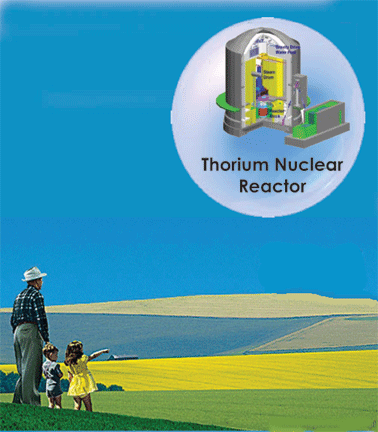
Other issues of costs and safety concern the transport of radioactive fuels to the reactors, and of radioactive waste management. The nuclear industry is very fond of proclaiming that wastes from small thorium reactors would need safe disposal and guarding for “only 300 years”. Just the bare 300!

The Australian Senate is currently debating a Bill introduced by Cory Bernardi, to remove Australia’s laws prohibiting nuclear power development. The case put by SMR Technologies, as presented in The Australian newspaper is completely inadequate. The public deserves a better examination of this plan for Small Modular Reactors SMRS. And why do they leave out the operative word “Nuclear” -because it is so on the nose with the public? http://www.onlineopinion.com.au/view.asp?article=19460&page=2

December 11, 2017 Posted by | Kenya, Reference, Small Modular Nuclear Reactors | Leave a comment

Deaths of newborns increased in areas irradiated by Fukushima nuclear disaster

Academic paper: “Increases in perinatal mortality in prefectures contaminated by the Fukushima nuclear power plant accident in Japan”  Source Institute: 医療問題研究会

エビデンスに基づく保健・医学・薬学(EBM)の実践的研究を

Institute link : http://ebm-jp.com

Link to full text pdf: http://ebm-jp.com/wp-content/uploads/media-2016002-medicine.pdf

Authors and copyright:  Hagen Heinrich Scherb, Dr rer nat Dipl-Matha,∗, Kuniyoshi Mori, MDb, Keiji Hayashi, MDcEditor: Roman Leischik.

Abstract:

Descriptive observational studies showed upward jumps in secular European perinatal mortality trends after Chernobyl.

The question arises whether the Fukushima nuclear power plant accident entailed similar phenomena in Japan. For 47 prefectures representing 15.2 million births from 2001 to 2014, the Japanese government provides monthly statistics on 69,171 cases of perinatal death of the fetus or the newborn after 22 weeks of pregnancy to 7 days after birth.

Employing change-point methodology for detecting alterations in longitudinal data, we analyzed time trends in perinatal mortality in the Japanese prefectures stratified by exposure to estimate and test potential increases in perinatal death proportions after Fukushima possibly associated with the earthquake, the tsunami, or the estimated radiation exposure.

Areas with moderate to high levels of radiation were compared with less exposed and unaffected areas, as were highly contaminated areas hit versus untroubled by the earthquake and the tsunami. Ten months after the earthquake and tsunami and the subsequent nuclear accident, perinatal mortality in 6 severely contaminated prefectures jumped up from January 2012 onward: jump odds ratio 1.156; 95% confidence interval (1.061, 1.259), P-value 0.0009.

There were slight increases in areas with moderate levels of contamination and no increases in the rest of Japan.

In severely contaminated areas, the increases of perinatal mortality 10 months after Fukushima were essentially independent of the numbers of dead and missing due to the earthquake and the tsunami. Perinatal mortality in areas contaminated with radioactive substances started to increase 10 months after the nuclear accident relative to the prevailing and stable secular downward trend. These results are consistent with findings in Europe after Chernobyl. 

Since observational studies as the one presented here may suggest but cannot prove causality because of unknown and uncontrolled factors or confounders, intensified research in various scientific disciplines is urgently needed to better qualify and quantify the association of natural and artificial environmental radiation with detrimental genetic health effects at the population level….. more https://nuclearexhaust.wordpress.com/2017/11/27/academic-paper-increases-in-perinatal-mortality-in-prefectures-contaminated-by-the-fukushima-nuclear-power-plant-accident-in-japan


November 27, 2017 Posted by | children, Fukushima continuing, Japan, Reference, women | Leave a comment

Argayash, close to Russia’s Mayak Nuclear Facility, at the centre of radiation leaking

The Russian town in the shadow of a leaking nuclear plant https://www.ft.com/content/2d853158-d064-11e7-b781-794ce08b24dc

Authorities finally admit that Argayash was at the centre of a radiation cloud.
 Henry Foy in Argayash , 24 Nov 17

Argayash is a cynical, mistrustful town. Decades of being lied to by the government about being down the road from a leaking nuclear plant does that to a place. So too does watching generations of people dying of radiation-related ailments while officials assure them nothing is amiss.

A small, two-road settlement where homes roofed with corrugated iron and Soviet-era Lada cars nod to its poverty, Argayash is one of a handful of towns surrounding the Mayak Production Facility in southern Russia, one of the world’s biggest radiation emitters where a litany of tragic accidents has made it a byword for the dangers of the atomic industry.

This week, 76 years after radiation first began seeping from Mayak into the surrounding rivers, lakes and atmosphere, Russian authorities admitted that Argayash was at the centre of a radiation cloud containing “exceptionally high” levels of radioactive isotope ruthenium-106, which spread so far west that it reached France. The radiation was detected by Russia’s meteoological agency in late September, but only revealed on Monday, after local politicians had spent weeks denying rumours of a leak and rubbishing reports from EU agencies that had tracked the cloud’s movement.

The levels of the isotope in Argayash were almost 1,000 times the normal level. Officials say it is not harmful to public health.  “Nobody tells us anything. They keep it secret,” says Lilia Galimzhanova, a cook at a café in the town. “We are afraid. We are afraid for our children and grandchildren.”  “But we know that the air, the environment is very bad here,” she says. Her 80-year-old mother suffers from radiation poisoning from Mayak. “We are not protected by anyone here . . . We are survivors.”

 The source of the leaked isotope, which does not occur naturally and is produced during the processing of nuclear fuel, has not been confirmed. Rosatom, which operates the Mayak facility, has repeatedly denied it is to blame. “[Mayak] is not a source of increased content of ruthenium-106 in the atmosphere,” Rosatom said in a statement. On Thursday, the company published a message poking fun at journalists on its Facebook page, inviting them to tour the plant, which it sarcastically dubbed “the cradle of ruthenium”. The local region’s chief oncology specialist has told concerned residents to stop worrying, advising them to instead “watch football and drink beer”.
 But local residents see little to laugh about. Many scoff at official denials, having heard similar for decades, even as they watched family and friends die from radiation-related ailments. “We are not told anything about Mayak,” says Nadia, an 18-year-old medical student living in the town, 1,700km east of Moscow. “The government should not keep things secret when people suffer.”  “People in the west know more about this than we do here,” she adds.

Ms Galimzhanova only heard of the radiation that had enveloped her town when a friend in Germany read about it in a western newspaper. Before the authorities admitted its existence, text messages had been sent to residents saying that high levels of pollution from nearby industrial factories meant people should stay indoors.  Regardless of the potential health risks, many here say the government’s initial silence, denial and obfuscation has dredged up painful memories of a past that refuses to stay buried.  Secretly constructed in the 1940s, Mayak was at the forefront of the USSR’s scramble to catch up with the US nuclear programme. As it raced to produce weapons-grade plutonium, a vast amount of nuclear waste was discharged into nearby lakes and the Techa river.  Then, in 1957, nuclear waste storage tanks at the site exploded, raining fallout over hundreds of towns — and releasing more radiation than any other nuclear accident except Chernobyl and Fukushima. Ten years later, an adjacent reservoir used for waste disposal dried out, and powdered radioactive dust was blown over the area.

Not that local people were evacuated, or even warned: Mayak’s very existence was only acknowledged in the late 1980s, as information began to circulate about the long-term contamination. An estimated 450,000 were exposed to radiation from the accidents and the discharging of waste into the water supply, Russian authorities said in 1993, making Mayak one of the world’s biggest sources of harmful radiation. But anti-nuclear campaigners say safety breaches continued: a 2005 court case revealed nuclear waste was still being dumped into rivers as late as 2004, while Rosatom only sealed off the radioactive lake that caused the 1967 disaster in 2015.
 An estimated 450,000 were exposed to radiation from the accidents and the discharging of waste into the water supply, Russian authorities said in 1993, making Mayak one of the world’s biggest sources of harmful radiation. But anti-nuclear campaigners say safety breaches continued: a 2005 court case revealed nuclear waste was still being dumped into rivers as late as 2004, while Rosatom only sealed off the radioactive lake that caused the 1967 disaster in 2015.
 “Previous experience has taught us that they lie and suppress information,” said Andrey Talevlin, co-chairman of the Russian Social-Ecological Union NGO. “We can’t trust what they say, whether they mislead the population on purpose or not.”
 Mr Talevlin, an academic and environmental activist who this week was branded a “foreign agent” by Russian state TV after he called for an investigation into the ruthenium leak, says that suppression of anti-nuclear groups in Russia has rapidly increased over the past two decades. A fellow activist, Nadezhda Kutepova, fled to France in 2015 seeking political asylum after a similar media campaign accused her of “industrial espionage”.  President Vladimir Putin’s spokesman said this week that the Kremlin has “no information” regarding any possible causes of the radiation. And some in Argayash say it is little more than an occupational hazard of living in one of Russia’s most industrialised regions.
The authorities say they do not know anything about it. And we must trust them,” says Jamshed, who runs a greengrocer on the town’s main Lenin Street. “Nobody has proven anything. And even if something is proved, I am sure our government will immediately take measures,” he says, looking over his locally-grown vegetables.

November 25, 2017 Posted by | incidents, Reference, Russia | Leave a comment

How it happens that taxpayer $trillions are spent on nuclear weapons –  Follow the money.

Who’s Really Driving Nuclear-Weapons Production? Follow the money. By William D. Hartung [This piece has been updated and adapted from William D. Hartung’s “Nuclear Politics” in Sleepwalking to Armageddon: The Threat of Nuclear Annihilation, edited by Helen Caldicott and just published by the New Press.] 14 Nov 17

“………..BUILDING A NUCLEAR COMPLEX

Why the desire for so many nukes? There is, in fact, a dirty little secret behind the massive US arsenal: It has more to do with the power and profits of this country’s major weapons makers than it does with any imaginable strategic considerations.

It may not surprise you to learn that there’s nothing new about the influence the nuclear weapons lobby has over Pentagon spending priorities. The successful machinations of the makers of strategic bombers and intercontinental ballistic missiles, intended to keep taxpayer dollars flowing their way, date back to the dawn of the nuclear age and are the primary reason President Dwight D. Eisenhower coined the term “military-industrial complex” and warned of its dangers in his 1961 farewell address.

Without the development of such weapons, that complex simply would not exist in the form it does today. The Manhattan Project, the vast scientific-industrial endeavor that produced the first such weaponry during World War II, was one of the largest government-funded research and manufacturing projects in history. Today’s nuclear warhead complex is still largely built around facilities and locations that date back to that time.

The Manhattan Project was the first building block of the permanent arms establishment that came to rule Washington. In addition, the nuclear arms race against that other superpower of the era, the Soviet Union, was crucial to the rationale for a permanent war state. In those years, it was the key to sustaining the building, funding, and institutionalizing of the arms establishment.

As Eisenhower noted in that farewell address of his, “a permanent arms industry of vast proportions” had developed for a simple enough reason. In a nuclear age, America had to be ready ahead of time. As he put it, “We can no longer risk emergency improvisation of national defense.” And that was for a simple enough reason: In an era of potential nuclear war, any society could be destroyed in a matter of hours. There would be no time, as in the past, to mobilize or prepare after the fact.

In addition, there were some very specific ways in which the quest for more nuclear weapons and delivery vehicles drove Eisenhower to give that farewell address. One of his biggest fights was over whether to build a new nuclear bomber. The Air Force and the arms industry were desperate to do so. Eisenhower thought it a waste of money, given all the other nuclear delivery vehicles the United States was building at the time. He even cancelled the bomber, only to find himself forced to revive it under immense pressure from the arms lobby. In the process, he lost the larger struggle to rein in the nation’s nuclear buildup and corral the burgeoning military-industrial complex.

At the same time, there were rumblings in the intelligence community, the military establishment, the media, and Congress about a “missile gap” with the Soviet Union. The notion was that Moscow had somehow jumped ahead of the United States in developing and building intercontinental ballistic missiles (ICBMs). There was no definitive intelligence to substantiate the claim (and it was later proved to be false). However, a wave of worst-case scenarios leaked by or promoted by intelligence analysts and eagerly backed by industry propaganda made that missile gap part of the everyday news of the time.

Such fears were then exaggerated further, thanks to hawkish journalists of the era like Joseph Alsop and prominent Democratic senators like John F. Kennedy and Lyndon Johnson, as well as Stuart Symington, who just happened to be a friend and former colleague of an executive at the aircraft manufacturing company Convair, which, in turn, just happened to make ICBMs. As a result, he lobbied hard on behalf of a Pentagon plan to build more of that corporation’s Atlas ballistic missiles, while Kennedy would famously make the nonexistent missile gap a central theme of his successful 1960 campaign for the presidency.

Eisenhower couldn’t have been more clear-eyed about all of this. He saw the missile gap for the fiction it was or, as he put it, a “useful piece of political demagoguery” for his opponents. “Munitions makers,” he insisted, “are making tremendous efforts towards getting more contracts and in fact seem to be exerting undue influence over the Senators.”

Once Kennedy took office, it became all too apparent that there was no missile gap, but by then it hardly mattered. The damage had been done. Billions of dollars more were flowing into the nuclear-industrial complex to build up an American arsenal of ICBMs already unmatched on the planet.

The techniques that the arms lobby and its allies in government used more than half a century ago to promote sky-high nuclear weapons spending continue to be wielded to this day. The twenty-first-century arms complex employs tools of influence that Kennedy and his compatriots would have found familiar indeed—including millions of dollars in campaign contributions that flow to members of Congress and the continual employmentof 700 to 1,000 lobbyists to influence them. At certain moments, in other words, there have been nearly two arms lobbyists for every member of Congress. Much of this sort of activity remains focused on ensuring that nuclear weapons of all types are amply financed and that the funding for the new generations of the bombers, submarines, and missiles that will deliver them stays on track.

When traditional lobbying methods don’t get the job done, the industry’s argument of last resort is jobs—in particular, jobs in the states and districts of key members of Congress. This process is aided by the fact that nuclear weapons facilities are spread remarkably widely across the country. There are nuclear weapons labs in California and New Mexico; a nuclear weapons testing and research site in Nevada; a nuclear warhead assembly and disassembly plant in Texas; a factory in Kansas City, Missouri, that builds nonnuclear parts for such weapons; and a plant in Oak Ridge, Tennessee, that enriches uranium for those same weapons. There are factories or bases for ICBMs, bombers, and ballistic missile submarines in Connecticut, Georgia, Washington State, California, Ohio, Massachusetts, Louisiana, North Dakota, and Wyoming. Such a nuclear geography ensures that a striking number of congressional representatives will automatically favor more spending on nuclear weapons.

In reality, the jobs argument is deeply flawed. As the experts know, virtually any other activity into which such funding flowed would create significantly more jobs than Pentagon spending. A study by economists at the University of Massachusetts, for example, found infrastructure investment would create one and one-half times as many jobs as Pentagon funding and education spending twice as many.

In most cases it hasn’t seemed to matter that the jobs claims for weapons spending are grotesquely exaggerated and better alternatives litter the landscape. The argument remains remarkably potent in states and communities that are particularly dependent on the Pentagon. Perhaps unsurprisingly, members of Congress from such areas are disproportionately represented on the committees that decide how much will be spent on nuclear and conventional weaponry…….. https://www.thenation.com/article/whos-really-driving-nuclear-weapons-production/

November 15, 2017 Posted by | business and costs, Reference, USA, weapons and war | Leave a comment

What It’s Like for Informal Labour Employed in Nuclear Power Stations in Japan

Informal Labour, Local Citizens and the Tokyo Electric Fukushima Daiichi Nuclear Crisis: Responses to Neoliberal Disaster Management, ANU, Adam Broinowski, 7 Nov 17,  

Sworn to secrecy,12 after a superficial safety education drill, they are sent into highly contaminated, hot and wet labyrinthine areas.

Irregular workers’ oral contracts with tehaishi are often illegal or dangerous, and are sometimes imposed on workers through threats or use of force.

Over the past 40 years, poor monitoring and record-keeping has meant that many former nuclear workers who develop leukaemia and other illnesses have been denied government compensation due to their lawyers’ inability to prove the etiological link between their disease and employment.

Informal Labour, Local Citizens and the Tokyo Electric Fukushima Daiichi Nuclear Crisis: Responses to Neoliberal Disaster Management, ANU, Adam Broinowski, 7 Nov 17,  “…

Conditions for Informal Labour Employed in Nuclear Power Stations  The phenomenon of assembling and recruiting a relatively unskilled labour pool at the cheapest rate possible is typical in nearly all of Japan’s large-scale modern industrial projects in the 20th century. As early as the late 19th century, however, non-criminal homeless men were recruited for such projects, whether forced, coerced or voluntarily from the major day-labourer (hiyatoi rōdōsha 日雇い労働者) sites (yoseba) established in Sanya (Tokyo), Kotobuki (Yokohama), Kamagasaki (Osaka) and Sasashima (Nagoya). In pre–World War II and wartime Japan, yakuza tehaishi (手配師 labour recruiters) operated forced labour camps known as takobeya (たこ部屋 octopus rooms) for Korean and Chinese labourers who had been transported to work mainly in coal mines and on construction sites.6………

The rapid build of nuclear power stations was planned in the 1960s by a consortium of major investment banks, electric utilities and construction companies and/or industry manufacturers (Mitsubishi, Tōshiba, Hitachi, Sumitomo, etc.), and was carried out in the 1970s, with increased momentum in response to the oil crisis of 1974–76. Through an intensive ‘regional development’ program of rural industrialisation from the early 1970s, politically disempowered communities were targeted as potential cheap labour as their environs were designated as sites for nuclear projects by investment capital. In a combination of regulatory capture and economic dependency, utilities moved in to provide employment opportunities to communities while the same communities steadily lost control over their resources and subsistence economies. In the process, they lost political agency as their political representatives often received corporate and state inducements for these projects. As TEPCO owns the electricity distribution system in Fukushima Prefecture, which includes hydroelectric and thermal power stations as well as nuclear, and is a major employer and investor in Fukushima Prefecture,10 it has considerable sway in the political process as well as over electricity bills.

By the early 1980s, irregular workers came to comprise nearly 90 per cent of all nuclear workers.11 As nuclear reactors grow increasingly contaminated and corroded by radiation over time, informal labour became fodder for regular maintenance, cleaning, repairing and/or venting and refuelling of these nuclear reactors to reduce exposures to permanent company employees such as scientists and engineers. As the power station must be halted during the maintenance period, this period equates to a lack of production and profitability and is kept to a bare minimum by the operators, an approach that led to a litany of safety oversights and accidents.

Although provided less training, informal nuclear workers are paid higher over a shorter employment period than regular workers, whose insurance is taken out of their wage. Sworn to secrecy,12 after a superficial safety education drill, they are sent into highly contaminated, hot and wet labyrinthine areas. Their work includes scrubbing contaminated areas, installing shields to reduce exposure for skilled workers, decontaminating and repairing pipes and tanks, welding, transporting contaminated materials and waste, washing contaminated uniforms and tools, removing filters and clearing garbage, inspecting gauges in high-level areas, dispersing chemicals over nuclear waste piles, pouring high-level liquid waste into drums and mopping up waste water. Although radioprotection regulations have been tightened in the last decade, working conditions for irregular workers have not necessarily improved and, without sufficient information about radiation danger, they can still be exposed to over 1 millisievert (mSv) of external radiation within minutes in high concentration areas and accumulate large amounts of internal radiation.13

Since 3.11, invoking the International Commission on Radiological Protection’s (ICRPs) often-used ALARA (as low as reasonably allowable) principle to justify this regulatory contingency, the state also raised nuclear workers’ limits from no more than 50 mSv per year (mSv/y) and 100 mSv/5 years to 250 mSv/y to deal with emergency conditions, and determined that there would be no follow-up health treatment for those exposed to doses below 50 mSv/y, while TEPCO decided to not record radiation levels below 2 mSv/y in the misplaced justification that the effects would be negligible. In December 2011, ‘cold shutdown’ was (erroneously) declared and the workers’ limit was returned to 100 mSv/5 years. It will likely be raised again as the government expedites decommissioning to meet its estimated completion by 2030–2050.14 Although very few regular workers’ cumulative doses exceeded 20 mSv/y in any year prior to 3.11, by June 2015 the official number rose to 6,64215 with doses of irregular nuclear workers often un(der)counted.

In a fast-track 40-year plan to decommission Fukushima Daiichi (i.e. removing the cores and dismantling the plant), as of August 2015 roughly 45,000 irregular workers (‘front-line’ workers, or ‘nuclear gypsies’) had been assembled at the J-Village Iwaki-Naraha soccer stadium before entering the sites. As well as jobs at the power stations, they work on decontamination and construction sites throughout the prefecture, which include those designated for the 2020 Olympics, a new school in Futaba (the town nearest to FDNPS), a large centre for radiation monitoring, a large research and training institute for reactor decommissioning, and a giant sea wall for tsunami prevention (see also Chapter Five). Yakuza-linked labour brokers (tehaishi/ninpu-dashi), eager to profit from the post-3.11 decommissioning budget (conservatively estimated at $150 billion), use social media and oral contracts to recruit these workers from the most vulnerable populations for ‘clean up’ work.16 In this customary cascade of diluted responsibility, their original wage and conditions are skimmed or cut away (pinhane sareta ピンハネされた) by contractors (roughly 733 companies) so that some irregular workers receive as little as 6,000 yen per day and only a very small fraction of the 10,000 yen per day in danger money promised by the Ministry of the Environment (MoE) and TEPCO.17

Irregular workers’ oral contracts with tehaishi are often illegal or dangerous, and are sometimes imposed on workers through threats or use of force.18 In addition, the day labourer may become indebted to tehaishi for housing and/or loans for lifestyle dependencies (i.e. gambling, drugs, prostitution). As products of structural discrimination, itinerant and/or irregular workers who are already socially isolated may find it difficult to build support networks, whether through marriage, family or solid friendships. Obligated within a semi-legal economy and stripped of rights and protections, each worker is pitted against the other, young and old, stronger and weaker, individual and family man, for basic survival.

Over the past 40 years, poor monitoring and record-keeping has meant that many former nuclear workers who develop leukaemia and other illnesses have been denied government compensation due to their lawyers’ inability to prove the etiological link between their disease and employment. For example, the death of Yoshida Masao (58), the Fukushima Daiichi manager who was among the ‘Fukushima 50’ who remained at the plant to manage the nuclear meltdowns in their critical phase and who developed oesophagal cancer in 2013, was not recognised by TEPCO as related to radiation exposure from Fukushima Daiichi as the cancer was deemed to have developed too quickly after the initial accident.

Irregular nuclear workers have commonly relied on permanent employees to monitor, record and calibrate their doses. Denied sufficient information about radiation exposure risks, and preferring not to jeopardise their contracts and provoke physical intimidation if they complain about their conditions, many collude with company officers (who record their accumulated doses) to camouflage and underestimate their dose rates (particularly for internal doses). This allows them to extend their time and contracts at nuclear plants before they are deemed to have reached (or exceeded) the maximum annual dose limit (50 mSv/y).19 When a nuclear worker is diagnosed with abnormalities in a routine check-up, some subcontractors may falsify nuclear workers’ passbooks.20 Despite the long lives of internalised radionuclides, it has been customary either not to measure this properly and/or to simply reset the dose record at the end of each financial year.

While protective clothing and procedures have grown more stringent for nuclear workers, especially after some workers died and fell ill from heat-related causes, irregular workers remain far less protected.22 At Fukushima Daiichi, where crews are overworked and understaffed, irregular workers often commit errors leading to cases of serious injury and large leaks of radioactive materials into the environment. This is further compounded by the lack of understanding or recognition of chronic illnesses in either permanent or irregular nuclear workers. This has sometimes led to poorly explained deaths of nuclear workers.23

In October 2015, a welder in his late 30s and father of three from Kita-Kyushu became the first worker in four years to be awarded workers’ insurance payments (medical costs and loss of income for temporary disability) while three more cases remained undecided. He was diagnosed with acute myelogenous leukaemia after having accumulated 19.8 mSv/y from exposure to a radiation leak and one year’s work at Fukushima Daiichi (Reactors 3 and 4) and the Genkai nuclear plant (Kyushu) (both of which use MOX fuel).24 While compensation was recognised under nuclear workers’ compensation insurance legislation (1976), the Health Ministry maintained that a causal link between illness and employment remains to be scientifically proven. After the delayed report by TEPCO of 1,973 workers exposed to over 100 mSv/y by mid-2013, by August 2015 21,000 of the 45,000 irregular workers had been exposed to over 5 mSv/y and 9,000 workers to over 20 mSv/y.25 TEPCO and the central government would certainly be worried about a spike in compensation claims.

Without a proper health regime, the permanent damage incurred by irregular nuclear workers far outweighs the value of their cheap labour power. With their use as filters as they move to each plant, as nuclear workers grow older and sicker they become less able to commodify their labour and are unlikely to receive proper treatment and/or compensation (due to insufficient data and high radiation safety limits among other things). Although the endless production of labour willing to take on this dangerous work and the devolution of responsibility and ambiguity around radiation health effects are used to justify the continuation of these practices, if workers are knowingly placed in harmful conditions the employer is in breach of a duty of care under the Labour Standards Law. As byproducts of a discriminatory industrial labour system, these irregular nuclear workers and their families, like many elsewhere, are deprived of basic rights to health and well-being. As one labourer stated in relation to Fukushima Daiichi: ‘TEPCO is God. The main contractors are kings, and we are slaves’.26 In short, Fukushima Daiichi clearly illustrates the social reproduction, exploitation and disposability of informal labour, in the state protection of capital, corporations and their assets….http://press-files.anu.edu.au/downloads/press/n2335/html/ch06.xhtml?referer=2335&page=11

November 11, 2017 Posted by | employment, Japan, Reference | Leave a comment

Official Medicine: The (Il)logic of Radiation Dosimetry – disguising the true health effects of Fukushima radiation

it is not surprising that the overwhelming emphasis in scientific studies and public reports has been placed on psychological impacts rather than disease and deaths

Informal Labour, Local Citizens and the Tokyo Electric Fukushima Daiichi Nuclear Crisis: Responses to Neoliberal Disaster Management, Adam Broinowski , ANU 7 Nov 17 

“….Official Medicine: The (Il)logic of Radiation Dosimetry

On what basis have these policies on radiation from Fukushima Daiichi been made? Instead of containing contamination, the authorities have mounted a concerted campaign to convince the public that it is safe to live with radiation in areas that should be considered uninhabitable and unusable according to internationally accepted standards. To do so, they have concealed from public knowledge the material conditions of radiation contamination so as to facilitate the return of the evacuee population to ‘normalcy’, or life as it was before 3.11. This position has been further supported by the International Atomic Energy Agency (IAEA), which stated annual doses of up to 20 mSv/y are safe for the total population including women and children.43 The World Health Organisation (WHO) and United Nations Scientific Commission on the Effects of Atomic Radiation (UNSCEAR) also asserted that there were no ‘immediate’ radiation related illnesses or deaths (genpatsu kanren shi 原発関連死) and declared the major health impact to be psychological.

While the central and prefectural governments have repeatedly reassured the public since the beginning of the disaster that there is no immediate health risk, in May 2011 access to official statistics for cancer-related illnesses (including leukaemia) in Fukushima and southern Miyagi prefectures was shut down. On 6 December 2013, the Special Secrets Protection Law (Tokutei Himitsu Hogo Hō 特定秘密保護法) aimed at restricting government employees and experts from giving journalists access to information deemed sensitive to national security was passed (effective December 2014). Passed at the same time was the Cancer Registration Law (Gan Tōroku Hō 癌登録法), which made it illegal to share medical data or information on radiation-related issues including evaluation of medical data obtained through screenings, and denied public access to certain medical records, with violations punishable with a 2 million yen fine or 5–10 years’ imprisonment. In January 2014, the IAEA, UNSCEAR and Fukushima Prefecture and Fukushima Medical University (FMU) signed a confidentiality agreement to control medical data on radiation. All medical personnel (hospitals) must submit data (mortality, morbidity, general illnesses from radiation exposures) to a central repository run by the FMU and IAEA.44 It is likely this data has been collected in the large Fukushima Centre for Environmental Creation, which opened in Minami-Sōma in late 2015 to communicate ‘accurate information on radiation to the public and dispel anxiety’.

This official position contrasts with the results of the first round of the Fukushima Health Management Survey (October 2011 – April 2015) of 370,000 young people (under 18 at the time of the disaster) in Fukushima prefecture since 3.11, as mandated in the Children and Disaster Victims Support Act (June 2012).45 The survey report admitted that paediatric thyroid cancers were ‘several tens of times larger’ (suitei sareru yūbyōsū ni kurabete sūjūbai no ōdā de ōi 推定される有病数に比べて数十倍のオーダーで多い) than the amount estimated.46 By 30 September 2015, as part of the second-round screening (April 2014–March 2016) to be conducted once every two years until the age of 20 and once every five years after 20, there were 15 additional confirmed thyroid cancers coming to a total of 152 malignant or suspected paediatric thyroid cancer cases with 115 surgically confirmed and 37 awaiting surgical confirmation. Almost all have been papillary thyroid cancer with only three as poorly differentiated thyroid cancer (these are no less dangerous). By June 2016, this had increased to 173 confirmed (131) or suspected (42) paediatric thyroid cancer cases.47

The National Cancer Research Center also estimated an increase of childhood thyroid cancer by 61 times, from the 2010 national average of 1–3 per million to 1 in 3,000 children. Other estimates of exposure to radiation, obtained from direct thyroid measurements in Namie town in April 2011, although discontinued under government pressure, also returned much higher results than official estimates (i.e. 80 per cent positive, 1 at 89 mSv, 5 over 50 mSv, 10 at 10mSv or under).48 In April 2014, Dr Tsuda Toshihide, an epidemiologist at Okayama University, declared this a ‘thyroid cancer epidemic’ (kōjōsen densenbyō 甲状腺伝染病), and predicted multiple illnesses from long-term internal radiation below 100 mSv/y and advocated for a program of outbreak (emergency or rapid) epidemiology in and outside Fukushima.49Similarly, a Tokyo-based physician, Dr Mita Shigeru, circulated a public statement notifying his colleagues of his intention to relocate his practice to Okayama due to overwhelming evidence of unusual symptoms in his patients (roughly 2,000). Given that soil in Tokyo post-Fukushima returned between 1,000 and 4,000 Bq/kg, as compared to an average of 500 Bq/kg (Cs 137 only) in Kiev soil, Mita pointed to a correlation between these symptoms and the significant radiation contamination in Tōhoku and metropolitan Tokyo.50

While results from the Fukushima Health Survey demonstrate flaws in the official dosimetry model and public safety campaign, the survey itself also has clear limitations. It is limited to subjects in a specific age bracket in one prefecture and one non-fatal illness (thyroid cancer, which can be treated with surgery but has lifelong side effects) from the ingestion of one radionuclide (Iodine 131) with a relatively short half-life (eight days) that comprised only 9.1 per cent of the total releases. Its dosimetry is based on the National Institute of Radiological Sciences (NIRS) model,51 which is for external exposure only, does not account for exposures in the initial days of the disaster and uses Japanese Government data that has been criticised for underestimating releases and exposures.52 Further, the survey ignores the damage from the bulk of the total inventory including longer-lived radionuclides (such as Plutonium 239, Caesium 137, Strontium 90, Americium 241, among others), some of which are more difficult to measure on ordinary and less sensitive Geiger counters and which have been distributed and continue to circulate across a wide area. It also ignores other organ diseases, unusual chronic illnesses and premature births and stillbirths, voluntary terminations and birth deformities occurring in and beyond Fukushima prefecture.

In addition to the control of relevant data, the government has used other methods to encourage residents to stay in radiation-contaminated areas. In May 2011, Dr Yamashita Shunichi, then co-director of Fukushima Medical University and the Fukushima Health Management Survey and a specialist from Nagasaki on radiation illness in Chernobyl, declared there was a 1 in 1 million chance of children getting any kind of cancer from radiation and there would be negligible health damage from radiation below 100 microSv/h, and prescribed smiling as an aid to living with radiation to a public audience in Fukushima.53

Dr Yamashita is only one among a host of politicians, bureaucrats, experts and advertising and media consultants who support the post-3.11 safety mantra of anshin (secure 安心), anzen (safe 安全), fukkō (recovery 復興). Through public meetings, media channels, education manuals and workshops,54 local citizens in Fukushima Prefecture were inundated with optimistic and reassuring messages, also known as ‘risk communication discourse’, and central and prefectural government-sponsored ‘health seminars’ encouraging a ‘practical radiation protection culture’ in which they have been urged to take responsibility (jiko sekinin 自己責任) for their own health (e.g. wearing glass badges, self-monitoring, avoiding hotspots), form bonds of solidarity (kizuna 絆) with their community and participate in the great reconstruction (fukkatsu 復活) for the revitalisation of a resilient nation (kyōjinka kokka 強靭化国家) as a whole. To counteract baseless rumours (ryūgen higo 流言蜚語) and the negative impact of gossip (fūhyō higai 風評被害) of radiation in contaminated Fukushima produce, citizens in and beyond Fukushima Prefecture, and even non-citizens, have been encouraged to buy and consume Fukushima produce as an expression of moral and economic support (through slogans such as ‘Ganbare Fukushima!’ がんばれ福島!). At the same time, to reduce ‘radiophobia’ and anxiety, while focusing on the psychological impact from stress, health risks from radiation exposures have been trivialised and/or normalised for the general public.55

This approach is backed up by international nuclear-related agencies. As stipulated on 28 May 1959 in the ‘WHA12-40’ agreement, the WHO is mandated to report all data on health effects from radiation exposures to the IAEA, which controls publication. On no other medical health issue is the WHO required to defer publication responsibilities to another institution. Scientific expertise at the IAEA primarily lies in nuclear physics (radiology and dosimetry) as opposed to epidemiology and medical expertise on radiation effects to living tissue. The IAEA and its related UN bodies are informed by the International Commission of Radiation Protection (ICRP) recommendations on radiation dose assessments derived from the Atomic Bomb Casualty Commission/Radiation Exposure Research Foundation (ABCC/RERF) lifetime studies of hibakusha (被爆者) in Hiroshima and Nagasaki. This dosimetry is primarily based on an average exposure of a 20–30-year-old ‘reference man’ (originally modelled on a US Army soldier) mainly to short-term one-off acute gamma radiation exposure. While it recommends caution, the ICRP continues to maintain that anything below 100 mSv/y is a ‘low dose’ and that the risk of ‘stochastic effects’ are yet to be scientifically proven beyond doubt. Within this framework, it would seem reasonable to raise the level from 1 to 20 mSv/y.

The ABCC/RERF studies ignored, however, biological contingencies of sex, age, constitution, other health conditions and the variegated effects (including complicating chemical and metabolic dynamics) from both internal and external exposures to different radionuclides of all types (‘low level’ internal radiation is at least 20 times greater). After Chernobyl, the WHO and IAEA used the ICRP dose model to conclude that there were up to 56 deaths of ‘liquidators’ (clean-up workers) from acute radiation sickness and 4,000 additional cancers;56 and that environmental effects such as lifestyle (i.e. parental alcoholism, smoking) and ‘radiophobia’ (stress and depression) contributed to excess illnesses in 80 per cent of adult cases. It also concluded that no harm would be received by the 2 million farmers and more than 500,000 children who continued living in radioactive areas in Belarus.

Nevertheless, it is no longer possible to ignore a significant body of research, including 20 years of scientific studies compiled in Belarus and Ukraine that show serious depopulation, ongoing illnesses and state decline.57 These studies have found genetic effects within a radius of 250–300 km from Chernobyl, while children’s health in Belarus has declined from a situation where 80 per cent of the child population was healthy prior to the Chernobyl disaster to a situation post-Chernobyl where only 20 per cent are healthy.58 In 1995, Professor Nechaev from the Ministry of Health and Medical Industry (Moscow) stated that 2.5 million people were irradiated from Chernobyl in the Russian Federation, the Ukrainian Prime Minister Marchuk stated that 3.1 million had been exposed to Chernobyl radiation and Professor Okeanov from Belarus observed a spike in leukaemia and cancers among liquidators in Gomel relative to duration of exposure.59 By 2001, of 800,000 healthy Russian and Ukrainian liquidators (with an average age of 33 years) sent to decontaminate, isolate and stabilise the reactor, 10 per cent had died and 30 per cent were disabled. By 2009, 120,000 liquidators had died, and an epidemic of chronic illness and genetic and perigenetic damage in nuclear workers’ descendants appeared (this is predicted to increase over subsequent generations).60 The full extent of the damage will not be understood until the fifth generation of descendants. By the mid-2000s, 985,000 additional deaths between 1986 and 2004 across Europe were estimated as a direct result from radiation exposure from Chernobyl.61

Given this background of regulatory capture and radical discrepancies in methods and estimates prior to the Fukushima disaster, it is less surprising that there may be a process of regulatory capture and cover up underway in response to Fukushima Daiichi. In December 2011, a Cabinet Office Working Group chaired by RERF chairman Nagataki Shigenobu consisted of 18 Japanese ICRP members (including Niwa Otsura and Yamashita Shunichi). The experts invited Mr Jacques Lochard to provide external expertise. Lochard is an economist, ICRP member, Director of the Center of Studies on the Evaluation of Protection in the Nuclear Field (CEPN) (funded by Electricité de France EDF), and co-director of the CORE-ETHOS Programme in Chernobyl (1996–1998).

The CORE (Cooperation and Rehabilitation in the Belarusian territories contaminated by Chernobyl) Programme organised a takeover of radioprotection health centres in Ukraine and Belarus, and delayed a health audit beyond five years while it produced the ETHOS report outlining a ‘sustainable system of post-radiological accident management for France and the European Union’.62 While local scientists (led by Yuri Bandazhevsky and Vassili Nesterenko) recommended whole body counts (WBC) for each child (in which 50,000 children would be tested with spectrometers), food measurement, dietary radioprotection (prophylaxis through adsorbents) and resettlement of those exposed to radiation over 1 mSv/y,63 the ETHOS manual concluded that in a similar radiological event in western Europe, resettlement would be restricted to those exposed to more than 100 mSv/y. By factoring in ‘social, economic and political’ costs, ETHOS proposed ways for populations to live with radiation, and identified psychosomatic illnesses derived from ‘stress’ based on unfounded fears (i.e. ‘radiophobia’) of radiation as the greatest health risk. After a prolonged delay, in 1996 the IAEA and WHO finally settled on 5 mSv/y as the mandatory evacuation limit in a compromise between the Soviet (1 mSv/y) and western European (100 mSv/y) recommendations after Chernobyl.64These agencies targeted ‘alarmist’ reports (including social protests) as encouraging ‘radiophobia’, stressing the psychological impacts of radiological events.

In post-3.11 Japan, the Japanese Cabinet Office Working Group65 reinforced the IAEA dosimetry regime by reiterating that cancers only emerge four to five years after exposure, that increases in cancers within this period could not be attributable to the accident,66 and that illnesses in people exposed to radiation below 100 mSv/y could be concealed by other carcinogenic effects and other factors (rendering them statistically negligible), and thus could not be proven to be radiation related. In fact, in July 2014, Nagataki Shigenobu declared that it would be ‘disastrous to conclude [from the survey findings] an increase in thyroid cancer’ was due to radiation exposure.67 Consequently, privileging a government study of the thyroid glands of 1,080 children in late March 2011 (a very small sample), Nagataki claimed that almost none had exceeded 50 mSv for internal exposure and that 99.8 per cent of the population in Fukushima Prefecture could be estimated to have received an external dose below 5 mSv. Nagataki dismissed the need for further medical screenings, regular check-ups or internal radiation tests (whole body counter, urine and blood tests) at hospitals and clinics in Fukushima Prefecture or elsewhere.

Instead, the government appears to have adopted the ETHOS model: ‘improving’ community life in radiation-contaminated areas through local education and support groups; encouraging proactive self-responsibility (i.e. self-monitoring with government monitors) for children and parents (including pregnant women); stamping out ‘stigma’ attached to ‘Fukushima’ residents, the area and its produce while stigmatising ‘radiophobia’; and encouraging evacuees’ return after and even prior to ‘decontamination’.68

By September 2015, an officially estimated 3,407 people (up from 3,194 the previous year) had died from ‘effects related to the great east Japan earthquake’ (Daishinsai kanren shi 大震災関連死).69 In March 2015, about 1,870 deaths of those who had evacuated due to the overall disaster were deemed to have been from ill-health and suicide. By March 2016, this had increased to 2,208 deaths, while 1,386 deaths were estimated to have been caused by effects related specifically to the nuclear disaster (genpatsu kanren shi).70 Further, a statistically significant 15 per cent drop in live births in Fukushima Prefecture in December 2011, and a 20 per cent spike in infant mortality were found to have been caused mainly by internal radiation from the consumption of contaminated food.71 Nor do statistics on abortions seem to have been factored into official accounts. As the statistics are so temporally specific, anxiety (disruption, evacuation) is unlikely to have been the major factor as the spikes would be more prolonged. It has also been extrapolated from the conservative UNSCEAR 2013 estimate of a 48,000 person Sv collective dose, that another 5,000 are expected to die from future cancers in Japan (and larger numbers to become ill).72 Using the Tondel model, however, the European Commission on Radiation Risk (ECRR), in contrast to the ICRP dose model, which estimates 2,838 excess cancers within 100 km radius over 50 years excluding internal radiation, estimated that 103,000 excess cancers within 100 km would be diagnosed within 10 years and 200,000 in the next 50 years.73

As with informal and formal nuclear workers, if these deaths were officially recognised as being tied to radiation from Fukushima Daiichi, then the family of the deceased as main income earner would be eligible for a 5 million yen ‘consolation’ payment (half for others). Further, it would also imply the need for stricter radiological protection standards and a greater number of permanent evacuations and official health treatment program that would effectively limit the so-called ‘benefits’ associated with nuclear power generation.74 In short, it is not surprising that the overwhelming emphasis in scientific studies and public reports has been placed on psychological impacts rather than disease and deaths (particularly but not limited to nuclear workers and children) and the argumentation over the significance of thyroid cancers. The same pattern occurred after Chernobyl and Three Mile Island……http://press-files.anu.edu.au/downloads/press/n2335/html/ch06.xhtml?referer=2335&page=11

November 11, 2017 Posted by | health, Japan, Reference, secrets,lies and civil liberties | Leave a comment

Information control, and denial of health and environmental effects of Fukushima nuclear catastrophe

the majority of people seem to have adopted denial as a way to excise the present danger from their consciousness.

In March 2015, Asami reported that doctors undertook paediatric thyroid operations while denying any correlation (inga kankei 因果関係) with radiation exposures. They also urged their patients to keep their thyroid cancer a secret to enhance their employment or marriage prospects, although it would be difficult to conceal the post-operation scar

While radiation contamination is clearly a health and environmental issue, state-corporate methods deployed by executives to protect (transnational) financial, industry and security interests and assets also make it a political issue.

information and communication control appears to be widespread. After 3.11, the central government hired advertising companies Dentsū and Hakuhōdō (formerly McCann Ericson Hakuhodo) to run a ‘public acceptance’ campaign.

Informal Labour, Local Citizens and the Tokyo Electric Fukushima Daiichi Nuclear Crisis: Responses to Neoliberal Disaster Management, ANU, Adam Broinowski, 7 Nov 17

“…..Local Responses to State–Corporate Suppression and Lack of Public Health Protection

Faced with the post-3.11 reality of government (and corporate) policy that protects economic and security interests over public health and well-being, the majority of the 2 million inhabitants of Fukushima Prefecture are either unconscious of or have been encouraged to accept living with radioactive contamination. People dry their clothes outside, drink local tap water and consume local food, swim in outdoor pools and the ocean, consume and sell their own produce or catches. Financial pressure after 3.11 as well as the persistent danger of social marginalisation has made it more difficult to take precautionary measures (i.e. permanent relocation, dual accommodation, importing food and water) and develop and share counter-narratives to the official message. Nevertheless, some continue to conceal their anxiety beneath a mask of superficial calm.

As Fukushima city resident Shiina Chieko observed, the majority of people seem to have adopted denial as a way to excise the present danger from their consciousness. Her sister-in-law, for example, ignored her son’s ‘continuous nosebleeds’, while her mother had decided that the community must endure by pretending that things were no different from pre-3.11 conditions.75 Unlike the claim that risk is evenly distributed, it is likely that greater risk is borne by those who eat processed foods from family restaurants and convenience stores, as well as infants, children and young women who are disproportionately vulnerable to internal radiation exposures. Most mothers, then, have an added burden to shield their children while maintaining a positive front in their family and community.

Some, such as Yokota Asami (40 years old), a small business owner and mother from Kōriyama (60 km from FDNPS), demonstrated initiative in voluntarily evacuating her family. She decided to return (wearing goggles and a mask, she joked) in September 2011 when her son’s regular and continuous nosebleeds (in 30-minute spells) subsided. The Yokotas found themselves the victims of bullying when they called attention to radiation dangers, and were labelled non-nationals (hikokumin 非国民) who had betrayed reconstruction efforts. Her son was the only one to put up his hand when he was asked along with 300 fellow junior high school students if he objected to eating locally produced school lunches. He also chose not to participate in outdoor exercise classes and to go on respite trips instead. When it came time to take the high school entrance exam, he was told by the school principal that those who took breaks could not pass. He took the exam and failed. When he asked to see his results he found that he had, in fact, enough points to pass (the cut-off was 156 while he received 198 out of 250 points). The Yokotas decided that it was better to be a ‘non-national’ and protect one’s health. Their son moved to live in Sapporo.76

In March 2015, Asami reported that doctors undertook paediatric thyroid operations while denying any correlation (inga kankei 因果関係) with radiation exposures. They also urged their patients to keep their thyroid cancer a secret to enhance their employment or marriage prospects, although it would be difficult to conceal the post-operation scar.77Yokota also indicated she knew of students having sudden heart attacks and developing leukaemia and other illnesses.78

This seems to be supported by Mr Ōkoshi, a Fukushima city resident, whose two daughters experienced stillbirths after 3.11. While Ōkoshi found that doctors have regularly advised women in the area to abort after 3.11, presumably to avoid miscarriages and defects, they do not discuss direct causes. He also observed regular illnesses experienced by many of his friends, and some sudden deaths. After a friend (62 years old) started saying strange things, he was diagnosed with brain dysfunction. He died quickly. Another friend (53 years old) was advised by a doctor to monitor a polyp in her breast. When she sought second opinions, she discovered she had accumulated an internal dose of 22 mSv and had a rapidly developing liver cancer. She also died quickly.79 There are many more such stories that are being actively ignored by the authorities. As Shiina put it, ‘we’re getting leukaemia and cataracts and we die suddenly. The TEPCO registrar has been inundated with complaints’.80

While radiation contamination is clearly a health and environmental issue, state-corporate methods deployed by executives to protect (transnational) financial, industry and security interests and assets also make it a political issue.81As things do not change by themselves, rather than turning one’s frustration inward in self-blame, turning to prayer or deceiving oneself into returning to pre-3.11 lifeways in contaminated areas, Shiina states that people, particularly those most affected, must develop political consciousness.

To achieve this ambitious objective is not as complicated as it might sound. Nishiyama Chikako (60 years old), for example, returned to Kawauchi village to run for the local assembly after the mandatory order was lifted in December 2011. She found, as she commented in her blog, a link between TEPCO and the tripling of the Kawauchi budget post-3.11. Subsequently, she reported that her blog was shut down by unknown hackers on several occasions.82

This sort of information and communication control appears to be widespread. After 3.11, the central government hired advertising companies Dentsū and Hakuhōdō (formerly McCann Ericson Hakuhodo) to run a ‘public acceptance’ campaign. Young teams were dispatched nationwide to conduct ‘public opinion guidance’ (yoron yūdō 世論誘導). The teams consisted of casual labour (earning 2,000–4,000 yen per hour) hired under a confidentiality clause (shuhi gimu 守秘義務) to manipulate information (jōhō kōsaku 情報工作) and harass internet users.83

Media professionals have been subjected to similar tactics. The Asahi TV journalist Iwaji Masaki (Hōdō Station), one of the few mainstream journalists covering the Fukushima Daiichi nuclear accident in depth, for example, was intimidated by police for interviewing (December 2012) informal nuclear workers who showed shoddy decontamination practices that entailed contaminated waste disposal rather than removal and the mother of a child with thyroid cancer. Airing the program was delayed until August 2013. Before he could complete his planned segments on the US$1 billion class action for compensation for unusual and serious illnesses filed against TEPCO, General Electric, Hitachi and Tōshiba in 2015 by sailors from the USS Ronald Reagan (which provided assistance quickly after the disaster, and among whose crew 250 were ill and three had died),84 on 29 September 2013, Iwaji was reportedly found dead in his apartment (having suffered carbon monoxide poisoning in a sealed room as he slept). Much speculation followed on social media, including both plausible reasons for suicide and testimonies from friends that knew him well that Iwaji himself stated he would never commit suicide, but the story was conspicuously ignored by major news channels.85

The former mayor of Futaba village Idogawa Katsuichi was harassed on social media for calling attention to illnesses and for the resettlement of pregnant women and children. When Kariya Tetsu characterised Idogawa in his popular manga series (Oishinbo 美味しんぼ), and depicted the manga’s main character as suffering from nosebleeds after visiting Fukushima, Kariya’s editors shut the series down following accusations of ‘spreading rumours’ from some readers, media commentators and high-level politicians. Similarly, Takenouchi Mari, a freelance journalist and mother who evacuated from Fukushima in 2011, received thousands of slanderous messages and threats to her two-year-old son and her property after criticising the co-founder of Fukushima ETHOS on her blog in mid-2012. She too reported that her internet account was suspended and her request for a police investigation ignored. She was counter-sued for harassment and subjected to a criminal investigation and civil law suit.86

Among the activists who have been arrested for anti-nuclear protests, the academic Shimoji Masaki of Hannan University (9 December 2012) was arrested by Osaka Prefectural Police and charged with ‘violating the Railway Operation Act’ for walking through an Osaka station concourse while participating in a demonstration against radioactive waste incineration (17 October 2012). Shimoji had reiterated that residents, due to radioactive incineration (which was due to commence in Osaka in February 2013), would be forced to bear the burden of air, food and water contamination.87

Despite such obstacles to developing a political consciousness as well as the obvious difficulties in permanently resettling large populations, it has been not only evacuees who have had to think about their fundamental life priorities after the Fukushima Daiichi nuclear distaster. Some have adopted real (not only psychological) self-protection mechanisms. The voluntary Fukushima Collective Health Clinic (Fukushima Kyōdō Shinryōjo 福島共同診療所), for example, is founded on three principles: respite (hoyō 保養), treatment (shinryō 診療) and healing (iryō 医療). Co-founder Dr Sugii, advocates a return to the 1 mSv/y limit, and seeks to inform those who for whatever reason cannot move from contaminated areas in Fukushima Prefecture.88 This is modelled on Belrad, the independent health clinic in Belarus run by Alexey Nesterenko, which prioritises knowledge, safety and open information on radiation and its health impacts.

To counteract the misinformation residents were exposed to post-Chernobyl, over time and with limited resources, Belrad and other organisations have disseminated information and organised respite trips for children in affected areas. In 2015, for example, subsidised respite trips were organised for 50,000 children, and results have shown that over two continuous years of respite those who accumulated 25–35 Bq/kg had reduced the amount to 0 Bq/kg. Unlike the flat limit of 100 Bq/kg of Caesium in food in Japan (50 Bq/kg for milk and infant foods, 10 Bq/kg for drinking water), Belrad recommends an internal radiation limit of 10–30 Bq/kg in the body (although it advises below 10 Bq for infants to avoid lesions and heart irregularities).89 It should be noted that these limits do not guarantee safety against the effects of repeating internal radiation exposure from consuming contaminated foods, which is relative to the length of time the radiation remains and its location in the body.

While some communities, such as the town of Aketo in Tanohama, Iwate Prefecture, have struggled to block the siting of nuclear waste storage facilities,90 others are also organising to reduce radio-accumulation in their children through respite trips,91 as well as concentrating on indoor activities, measuring hotspots and decontaminating public areas and pathways, pooling funds for expensive spectrometers to monitor internal exposure and food and water, incorporating dietary radioprotection, as well as finding ways to reduce anxiety.

Many local farmers cannot admit the already near-permanent damage to their land (which may continue for hundreds of years) because it would imply the devaluation of their property and produce as well as threatening their ancestral ties to the land, commitments and future plans. While many are keenly aware of their responsibilities, the push by the Fukushima and central governments to identify and gain access to markets for produce from irradiated areas would make it easier to overlook uncomfortable factors. Some have argued that given the reassurances of safety from the highest authorities, these offical figures should therefore relocate to contaminated areas and consume these products regularly. Despite the fairness of this statement, a more utilitarian logic has prevailed. In the name of reconstruction and revitalisation of Fukushima and the nation, the dilution of Fukushima produce with unirradiated produce to return measurements just under the required limits, radiation spikes in soil and food or the mutation of plants as Caesium replaces potassium (K40), for example, tend to be minimised. In this climate, the distribution and relabelling of Fukushima produce for urban and international markets (i.e. in a black market of cut-price bulk produce picked up by yakuza and other brokers) is likely to continue.

To date, the majority of evacuees have refused to return to (de)contaminated areas. Some claim they are yet to receive accurate information to justify it. Independent specialists such as Hosokawa Kōmei (Citizens’ Commission on Nuclear Energy), who develops models for transition to renewable alternatives, anticipate an increase in evacuee populations as they predict increased resettlement of Fukushima residents over 20–30 years.92 As some evacuees recognise the potential for second or third Fukushimas, they have sought to strengthen their collective identities and rights. Through local organisation and alternative life practices, whether in micro-scale ecovillages and transition towns93 with communal occupancies and squats, parallel currencies and local exchange systems (roughly 70 substantive projects), organic food co-ops, self-sufficient energy systems, local production and recycling, carpools and free kindergartens, such groups are seeking to reconstruct and model core social priorities, focusing on clean food, health and community cooperation rather than the internalised and dreary competition for material accumulation.

Although the accountability of authorities with prior knowledge has yet to be properly investigated, one of the largest groups of collective legal actions to be mounted in Japanese history includes some 20 lawsuits by 10,000 plaintiffs. The Fukushima genpatsu kokuso-dan (Group of Plaintiffs for Criminal Prosecution 福島原発告訴団), formed on 20 April 2012, filed a criminal case (lodged 3 September 2013, Fukushima District Court) against 33 previous and present officers of TEPCO, government officials and medical experts for ‘group irresponsibility’ and the neglect of duty of care, environmental damage and harm to human health. Mutō Ruiko, one of the key plaintiffs, declared the main aim to be symbolic: to publicly record injury, reclaim the victims’ sense of agency and protect the next generation. In short, they were seeking recognition of wrong and harm done rather than primarily financial redress. This moderate aim was undoubtedly tempered by recognition of regulatory capture: those who were cavalier with safety procedures ‘were now in charge of restarts; those responsible for the “safety” campaign were now in charge of the Health Survey; [there has been] no responsibility for the SPEEDI cover-up; and TEPCO is not being held responsible for [faulty] decontamination’.94

The judgement of this case was handed down at the Tokyo District Court on the same day as the announcement of Tokyo’s successful Olympics bid (9 September 2013). The case was dismissed on the grounds that the disaster was beyond predictability (sōteigai 想定外), which made negligence hypothetical.95 A citizens’ panel (Committee for inquest of Prosecution) overturned the dismissal and renewed the claim against three TEPCO executives on 18 December 2013. They demanded, alongside a ruling of negligence against three former TEPCO executives, the inclusion of physical, economic, social and psychological harms: illness, paediatric underdevelopment (radiation exposures, excessive isolation indoors), financial losses (unemployment, loss in property value, rental costs of two homes, relocation, travel, etc.), family and community division, ijime (bullying いじめ) and stress. Many plaintiffs also claimed that their disrupted reliance upon nature,96 as inviolable and precious,97 should be recognised as harm. This too was dismissed and again a citizen’s panel found against the three TEPCO executives.98 In May 2015, 10 groups of plaintiffs formed a network named Hidanren (被弾連, Genpatsu Jiko Higaisha Dantai Renrakukai) comprising 20,000 people. The Fukushima kokuso-dan again made a claim to another citizens’ panel, which found in July 2015 in favour of indicting the three TEPCO executives for trial.99 In addition, a civil case filed in June 2015 by 4,000 plaintiffs from Iwaki seeking to prove negligence and not just harm sought to use previously withheld evidence to show fair warning of a 3.11-type scenario was given. This case focused the court on the operator’s calculation of risk probability of a tsunami of that size and, rather than aiming at financial compensation, it sought to deter nuclear operators from future negligent practices if ruled in favour. In anticipation of out-of-court settlements, the Japanese Government increased the budget for compensation payments to 7 trillion yen (US$56 billion)….http://press-files.anu.edu.au/downloads/press/n2335/html/ch06.xhtml?referer=2335&page=11

November 11, 2017 Posted by | Japan, politics, Reference, secrets,lies and civil liberties | Leave a comment

Conditions for Residents of Post-3.11 Radiation-Affected Areas Japan

Informal Labour, Local Citizens and the Tokyo Electric Fukushima Daiichi Nuclear Crisis: Responses to Neoliberal Disaster Management. ANU, Adam Broinowski, 7 Nov 17, “…..Conditions for Residents of Post-3.11 Radiation-Affected Areas

For roughly 30 years, the exclusion zone around Chernobyl has been set at 30 kilometres. Between 1 and 5 mSv/y is the assisted evacuation level and mandatory evacuation is 5 mSv/y and above. Unlike the approach adopted for Chernobyl, which was to achieve containment (a sarcophagus was built in eight months) and permanent resettlement of 350,000 people, the government and TEPCO have adopted a ‘dilution’ approach—to widely disperse and redistribute (‘share’) radioactive materials and waste and decontaminate residential areas. To date, this has permitted the permanent release through venting, dumping and incinerating of radioactive materials into the air, land, water and sea, and circulation in the food chain and recycled materials on a daily basis since March 2011.

Over the first few days at Fukushima Daiichi nuclear power station, severity (International Nuclear Event Scale) levels were steadily raised from level 3 to level 5 to level 7, and the mandatory evacuation zone was gradually expanded from 10 to 30 kilometres. On 16 March 2011, readings in Aizu-Wakamatsu Middle School (100 kilometres from FDNPS) in Fukushima Prefecture returned 2.57 microSv/h (microsieverts per hour),27 and Kōriyama (60 kilometres) recordings returned 3.6–3.9 microSv/h. Inside people’s homes in Kōriyama, levels were between 1.5 and 2.0 microSv/h and 8.2 microSv/h in the downpipes.28 This data was made public only three months later. On 6 April, schools in Fukushima Prefecture were reopened. As the boundaries, legal limits and information were gradually altered, populations were urged to return to work. At the same time the legal safety level for mandatory evacuation for the public (radiation safety level 1972) was raised from 1 to 20 mSv/y,29 based on a cumulative 100 mSv dose averaged over five years, suddenly shifting the parameters for ‘low-level’ radiation and designating the general public with the level previously designated to nuclear workers.

The US Government advised a mandatory evacuation zone of 50 miles (80 kilometres). Several nations’ embassies in Tokyo evacuated their staff. Of roughly 2 million in Fukushima Prefecture, about 80,000 people from 11 municipalities were ordered to evacuate while another 80,000 evacuated voluntarily. By late 2015, about 118,862 remained evacuated.30 Sixty thousand of these people live in temporary housing and many lacked basic needs. There were many evacuees who sought public housing who have been turned away.31 There are additional evacuees affected by the earthquakes and tsunami who come from other prefectures (including parts of Miyagi and Ibaraki), some of whom were also affected by radiation exposure.

The situation in many villages within contaminated areas signifies how government policies have further exposed a wide range of people—farmers, shopkeepers, taxi drivers, factory workers, mothers (as reproductive workers), school students, local public servants—to conditions informal workers have long had to endure. In several cases (i.e. Iitate, Minami Soma, Namie), the notification of residents of radiation danger was delayed and potassium iodide pills were not distributed. Similarly, data on weather patterns and distribution gathered by the SPEEDI monitoring system32 was suppressed. These populations were not adequately informed of what the dose readings meant in terms of health risk. When people did seek measurement and treatment for their likely exposures, hospitals and other institutions with the requisite measuring technologies refused to measure them, as it was deemed ‘there was no reason for internal contamination and so there was no reason to measure’.33 These people unwittingly became hibakusha (被曝者), broadly defined as victims of radiation exposure.

Even though the Fukushima Daiichi nuclear disaster has caused near-permanent pollution, the conflation of the radiation problem with tsunami and earthquake destruction to be managed as a single large-scale ‘clean-up’, reconstruction and revitalisation operation as instituted by the National Resilience Council 2013 has occluded the materiality of radiation.

Informal workers on ‘decontamination projects’ washed down public buildings and homes and scraped up and replaced soil and sludge contaminated at levels found for example at between 84,000–446,000 Becquerels per kilogram (Bq/kg) in Kōriyama (60 km from Fukushima Daiichi).34 They also collected waste that included radioactive debris, uniforms and tools. The organic waste is stored on government-purchased land in black industrial bags piled in large walls and mounds to create a sort of buffer zone on town margins and in areas determined as long-term irradiated zones.35 Other contaminated waste is burned in newly constructed incinerators in towns nearest the plant (such as Futaba, Okuma, Naraha, Tamura, Tomioka, with more planned) in addition to the incineration already underway in major cities since 3.11, even while evacuees are being compelled to return to some of them (Tamura, Kawauchi, Naraha) where evacuation orders have been lifted. In addition, in June 2016 the Ministry of the Environment approved radioactive soil of up to 8,000 Bq/kg to be reused in national public works. Although stipulated to be used for roads and barriers (such as sea walls) under a layer of non-contaminated materials, there is concern that these will corrode over time leading to recirculation in the environment.

As compensation schemes are contingent upon where evacuees come from (whether these are areas where there are plans to lift evacuation orders, areas pending decontamination in the shorter term, or those deemed difficult to return to), those mandatory evacuees without property have received on average 100,000 yen per month while voluntary evacuees have received 60,000 yen per month, even if radiation levels in their residential areas were high.

The return to towns that received over 50 mSv/y (Futaba, Namie, Okuma) remains unlikely for decades, but if evacuees do return to other villages, they risk lifetime re-exposures of up to 20 mSv/y. In late 2015, Iitate village, for example, was divided into Areas 1 and 2, which are being prepared for repopulation (54,000 people), and Area 3, which so far remains out of bounds. Although the topsoil contaminated with Caesium was stripped and replaced (i.e. returning 0.6 microSv/h) and its houses and roads were washed down, 96 per cent of Iitate remained at 1 microSv/h. As Iitate is 75 per cent forest, which trapped a large stock of contamination, the land re-concentrates through radiation circulation (hence, quickly returned to 2.6 microSv/h).36 If the majority in Iitate, who are primarily agricultural workers, can no longer harvest vegetables, rice, wild mushrooms and vegetables (sansai 山菜) or burn wood for heat, and their houses are re-irradiated, then only the semi-autonomous elderly are likely to return. By August 2015, less than 10 per cent of roughly 14,000 eligible had applied for temporary return.37

So-called ‘decontamination’ and ‘remediation’ has been deployed to justify redefining evacuation boundaries and lifting evacuation orders so as to cut compensation payments. Following the 37th National Emergency Response Headquarters meeting held at the Prime Minister’s Office in June 2015 in which the Prime Minister decreed that ‘evacuees must return to their hometowns as quickly as possible and start new lives’,38 in late August 2015 evacuees were told if they chose to return home they would receive a one-off payment of 100,000 yen per household. If they did not, once evacuation orders had been lifted, ‘free rent’ (yachin hojo 家賃補助) for voluntary evacuees would be cut by March 2017 at the very latest.39 Further, the government announced its intention to partially lift the restriction on the ‘difficult-to-return zone’ by 2022 so as to counteract the negative image of the area and its produce.40 Without alternative income, and with a significant housing shortage due to the restriction of new public housing, many have been and will be forced to return to contaminated areas, to endure radiation exposure without compensation. If only the elderly return, there will be few prospects for young families in such towns where there is little local business and infrastructure, and public facilities and housing are in disrepair.

In Naraha, between May and August 2015, ambient readings in populated areas officially determined as ‘low or moderate’ returned 0.3–0.7 microSv/h and soil samples returned 26,480–52,500 Bq/kg of Caesium 137 and 134 combined (and 18,700 Bq/kg in the town’s water reservoir).41 While the majority of former residents are more likely to either pull down their houses and sell the land or maintain their homes as vacationers, there is additional private and state pressure to industrialise these former idylls as ‘reconstruction hubs’. As part of the ‘Innovation Coast’ plan, for example, 1,000 irregular workers have resided on the town’s outskirts as they built a giant research facility (estimated cost: 85 billion yen) to train hundreds of workers in reactor simulations and use of specialised robots. As industry colonises and transforms such towns, the pressing concern of unmitigated radiation levels in soil, forests and water, whether from distribution or recirculation, remains due to the long-lived decay and harmful effects of these radionuclides.

Similarly, in the effort to stimulate business, highways (Route 6) and train lines (Jōban line) passing directly through the (former) evacuation zone were reopened in 2015, although traffic must still travel with closed windows at the time of writing. Regular users of these corridors such as railway and transport workers and irregular nuclear workers accumulate higher doses from regular exposure while radioactive particles attached to vehicles are dispersed beyond contaminated areas. Clearly, a containment and permanent resettlement approach has been deemed untenable in the belief it would disrupt economic productivity levels. As one high school student insightfully observed, ‘Sensei … If they [really wanted to turn] Fukushima into an evacuation zone they’d have to block the Route 4 highway, Tōhoku expressway and Shinkansen’.42 Nevertheless, in lieu of overall reconstruction costs less conservatively estimated at half a trillion dollars, it may have been cheaper in the longer term to adopt permanent resettlement, education, health treatment and work creation strategies……http://press-files.anu.edu.au/downloads/press/n2335/html/ch06.xhtml?referer=2335&page=11

November 10, 2017 Posted by | environment, Fukushima continuing, Reference | Leave a comment