Low dose radiation has its medical benefits, but has harmful effects on the immune system
Low dose ionizing radiation effects on the immune system, Science Direct, Environment International Volume 149, April 2021, 106212KatalinLumniczkya NathalieImpensb GemmaArmengolc SergeCandéiasd Alexandros G.Georgakilase SabineHornhardtf Olga A.Marting FranzRödelh DörtheSchaue
Abstract
Ionizing radiation interacts with the immune system in many ways with a multiplicity that mirrors the complexity of the immune system itself: namely the need to maintain a delicate balance between different compartments, cells and soluble factors that work collectively to protect, maintain, and restore tissue function in the face of severe challenges including radiation damage. The cytotoxic effects of high dose radiation are less relevant after low dose exposure, where subtle quantitative and functional effects predominate that may go unnoticed until late after exposure or after a second challenge reveals or exacerbates the effects.
For example, low doses may permanently alter immune fitness and therefore accelerate immune senescence and pave the way for a wide spectrum of possible pathophysiological events, including early-onset of age-related degenerative disorders and cancer.
By contrast, the so called low dose radiation therapy displays beneficial, anti-inflammatory and pain relieving properties in chronic inflammatory and degenerative diseases
In this review, epidemiological, clinical and experimental data regarding the effects of low-dose radiation on the homeostasis and functional integrity of immune cells will be discussed, as will be the role of immune-mediated mechanisms in the systemic manifestation of localized exposures such as inflammatory reactions.
The central conclusion is that ionizing radiation fundamentally and durably reshapes the immune system. Further, the importance of discovery of immunological pathways for modifying radiation resilience amongst other research directions in this field is implied………….. https://www.sciencedirect.com/science/article/pii/S016041202032167X
How Bodega Head almost ended up with a nuclear power plant – but a resistant commmunity won.
How Bodega Head almost ended up with a nuclear power plant, https://www.sonomacountygazette.com/sonoma-county-news/how-bodega-head-almost-ended-up-with-a-nuclear-power-plant/. TOM AUSTIN. November 8, 2021 Bodega Bay, and nearby Bodega, have deeper histories than most Sonoma County towns. Being a pristine, protected natural harbor will do that for you. Bodega Bay was nearly the landing spot for Sir Francis Drake, although recent finds have pretty conclusively held that Drake’s Bay in nearby Pt. Reyes is properly named. Bodega Bay was named after Juan Francisco de la Bodega y Quadra, an explorer for the Spanish Navy –except where HE landed was nearby Tomales Bay. And of course both seaside hamlets are famous for being the locale for the classic Hitchcock thriller “The Birds.”
However, the most significant happening in Bodega Bay is of much more modern vintage. In 1958, four full years before Rachel Carson’s “Silent Spring” ignited the modern environmental movement, PG&E was planning the world’s first commercially viable nuclear power plant. In an absolutely characteristic example of Big Power’s public instincts, they had chosen scenic Bodega Head as the location for this Atomic Age wonder. “What could go wrong?” they chirped. “Nuclear power is clean, safe and limitless!”
Of course, it wasn’t just scenic wonder at stake here. Bodega Head, as most people know, is within spitting distance of the San Andreas Fault (running along the shoreward side of the bay), and even closer to two smaller faults straddling Bodega Head itself.
The full story of the fight over the Bodega Head nuclear plant would be book-length, so please pardon my brevity here. The cast of characters are timeless: on the “pro” side: PG&E itself, the Sonoma County Board of Supervisors, and nuclear advocates across political spectra (at the time, nuclear was considered by many environmentalists to be less damaging than, for example, hydroelectric power from dams). On the “con” side was the whole spectrum: The Sierra Club (or at least factions within it) was concerned about the loss of a wild and scenic place: the local ranchers and fishermen were concerned about the dangers to their livelihood; the nascent New Left that started gaining steam in the early ‘60s were concerned about the antidemocratic nature of the pro-business, pro-development organizations pushing for the plant.
The fight was long, protracted and dirty. From 1958 to 1962, as opposition was just coalescing, PG&E continued planning and started building, getting a series of approvals and permits from apparently compliant state and local governments. The building for the main reactor, located on the harbor side of the Head, included a 70-foot-deep circular pit. As construction continued, the opponents were educating far and wide about the dangers of nuclear power, the earthquake danger, the thermal effects on local fisheries and more. In 1962, “Silent Spring” was published, and the environmental movement grew ever faster: musicians were performing at benefits and writing anti-nuclear songs. However, it was the earthquake danger that eventually served as the deal-breaker: UC Berkeley Conservation Editor David Pesonen, one of the leaders of the opposition, hired Geologist Pierre Saint-Amand to consult on the suitability of the proposed plant site. Saint-Amand found a “spectacular” earthquake fault slicing directly through the deep pit. His testimony that “a worse foundation condition… would be difficult to envision.” His argument was the tipping point, as political supporters started peeling away from PG&E, who at length threw in the towel and suspended construction in October 1963.
What remains at the site today is a quiet spot favored by songbirds. Rainwater filled the pit and turned it into a pond. The rest, you know: when you spot whales at the Head, or walk the trails nearby. If you venture a little bit north, you find the Kortum trail, named after local environmentalist Bill Kortum (1927-2014), one of many citizen leaders of the fight. The reverberations are still being felt today.
International Thermonuclear Experimental (fusion) Reactor (ITER) will consume as much power as it will generate
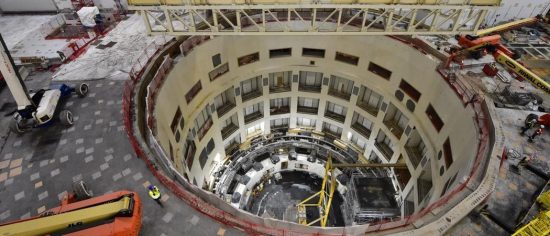
The ITER organization has confirmed that the International Thermonuclear Experimental Reactor is not designed to produce net power. This disclosure comes four years after articles in New Energy Times revealed that the ITER design is equivalent to a zero-net-power reactor.
In an article in the French newspaper Le Canard Enchainé last week, Michel Claessens, the former ITER organization spokesman, explained the ITER power discrepancy.
“For many years, it was claimed that the reactor will generate ten times the power injected. It is completely wrong. Thanks to a patient investigation, the American journalist Steven Krivit showed that ITER will consume as much [power] as it will generate,” Claessens said. “We know now that the net [power] balance will be close to zero.”
New Energy Times 3rd Nov 2021
”Cocooning” Hanford nuclear reactors conveniently leaves the $600 billion clean-up to future generations
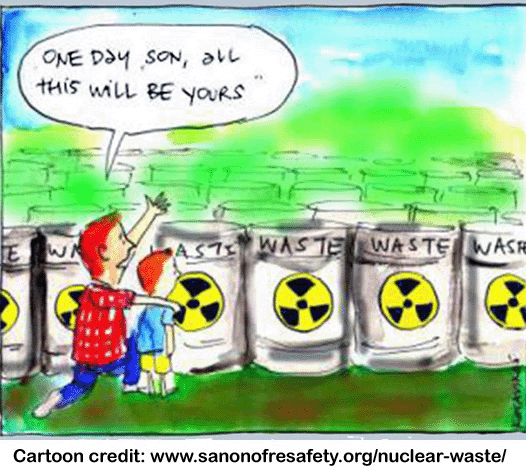
Future generations will decide the final disposition of the eight Hanford reactors.
The bigger question is whether future generations will be willing to pay the massive costs of Hanford cleanup, he said.
Carpenter said the estimated cost to completely clean up just the tank wastes at the Hanford site is around $660 billion.
“It’s rather grim. It’s multigenerational,” he said.
“This will cost more than anyone thought possible,” Carpenter said of the tank wastes and other wastes that were dumped into the ground at Hanford. “It’s a hidden cost of the (nuclear) buildup.
US government works to ‘cocoon’ old nuclear reactors https://abcnews.go.com/Technology/wireStory/us-government-works-cocoon-nuclear-reactors-80964651
Costs to clean up a massive nuclear weapons complex in Washington state are usually expressed in the hundreds of billions of dollars and involve decades of work, By NICHOLAS K. GERANIOS Associated Press5 November 2021 SPOKANE, Wash. — Costs to clean up a massive nuclear weapons complex in Washington state are usually expressed in the hundreds of billions of dollars and involve decades of work.
usually expressed in the hundreds of billions of dollars and involve decades of work.
But one project on the Hanford Nuclear Reservation is progressing at a much lower price.
The federal government is moving forward with the “cocooning” of eight plutonium production reactors at Hanford that will place them in a state of long-term storage to allow radiation inside to dissipate over a period of decades, until they can be dismantled and buried.
“It’s relatively non-expensive,” Mark French, a manager for the U.S. Department of Energy, said of cocooning. “The cost of trying to dismantle the reactor and demolish the reactor core would be extremely expensive and put workers at risk.”
The federal government built nine nuclear reactors at Hanford to make plutonium for atomic bombs during World War II and the Cold War. The site along the Columbia River contains America’s largest quantity of radioactive waste.
The reactors are now shut down and sit like cement fortresses near the southeastern Washington city of Richland. Six have already been cocooned for long-term storage, and two more are headed in that direction. The ninth reactor was turned into a museum as part of the Manhattan Project National Historical Park.
While World War II ended in 1945 and the Cold War ended in 1989, the United States is still paying billions of dollars per year for the disposal of the nuclear waste produced by the atomic weapons that played a big role in ending those conflicts. The biggest expense is dealing with a massive volume of liquid wastes left over from the production of plutonium, a key ingredient in nuclear weapons.
While the liquid wastes stored in 177 underground tanks will take decades of work and hundreds of billions of dollars to clean, efforts to secure the nine plutonium reactors are much closer to completion.
The last two reactors, shut down in 1970 and 1971, are about to enter the cocooning stage, when they are covered with steel and cement to prevent radioactivity from escaping into the environment, French said.
The cocoons are expected to last about 75 years, by which time the radioactivity inside will have dramatically decreased and there presumably will be a plan for final disposition of the remaining parts, French said.
Every five years, workers enter the reactor building to make sure there are no leaks or rodent or bird infestations, he said.
Cleanup of Hanford, which has about 11,000 employees and is half the size of Rhode Island, started in the late 1980s, and now costs about $2.5 billion per year. The work has been slowed by technical issues, lack of funding, lawsuits from state regulators, worker exposure to radiation and turnover of contractors on the complex job.
But the handling of the old reactors is a bright spot.
The nine reactors — called B Reactor, C Reactor, D Reactor, DR Reactor, F Reactor, H Reactor, K-East Reactor, K-West Reactor, and N Reactor — were built from 1943 through 1965.
They were constructed next to the Columbia River because of the abundance of hydropower and cooling water needed by the reactors during operation.
All have been cocooned except K-East and K-West. Work on cocooning the K-East reactor has already started and should be finished by 2023, French said. Work on the K-West reactor is scheduled for completion in 2026.
The cocoon plan for K-East and K-West is to basically construct steel buildings around them. Each building is 158 feet (48.2 meters) long, 151 feet (46 meters) wide and 123 feet (37.5 meters) tall, French said. The two steel buildings will cost less than $10 million each.
The government also operated five plutonium production reactors at the Savannah River Site in South Carolina during the Cold War. All of those are also shut down, although three of the reactor buildings are being used to store radioactive materials Two of the reactors at Savannah River are closed but under a different procedure than the Hanford reactors, said Amy Boyette, a spokeswoman for Savannah River.
Future generations will decide the final disposition of the eight Hanford reactors, French said. They will likely be dismantled and buried in the central area of the Hanford site, away from the river.
Robots may be deployed in the future” for that work, French said.
Hanford watchdogs generally agree with this process, said Tom Carpenter, director of the Seattle-based watchdog group Hanford Challenge.
“Nobody is raising any concerns about cocooning,” Carpenter
said. “We’re all worried about the tank waste that needs immediate and urgent attention.”
The bigger question is whether future generations will be willing to pay the massive costs of Hanford cleanup, he said.
Carpenter said the estimated cost to completely clean up just the tank wastes at the Hanford site is around $660 billion.
“It’s rather grim. It’s multigenerational,” he said.
“This will cost more than anyone thought possible,” Carpenter said of the tank wastes and other wastes that were dumped into the ground at Hanford. “It’s a hidden cost of the (nuclear) buildup.
By then, there might be bigger budget concerns such as dealing with the effects of climate change, Carpenter said.
The most intriguing of the old reactors is the B Reactor, the first one built during World War II. It will not be cocooned, and can be visited by tourists at the national historical park. B Reactor, which shut down in 1968, was cleaned up enough to allow some 10,000 tourists to visit each year and learn the history of Hanford. It has been designated a National Historic Landmark.
Plutonium from Hanford’s B Reactor was used in the testing of the world’s first atomic bomb in July 1945. Called the Trinity Test, the bomb was blown up in the New Mexico desert. Hanford plutonium was also used for the bomb that was dropped over Nagasaki, Japan, on Aug. 9, 1945.
Health impacts of nuclear accidents

Too expensive, too slow: Even the baseload argument doesn’t work for nuclear. ReNeweconomy, Mark Diesendorf 29 October 2021
”’………………………………………Health impacts of nuclear accidents
Another misleading pro-nuclear statement revived following the Fukushima Daiichi disaster in 2011 is that no excess cancer incidence has been observed around Fukushima, implying that no cancers will be induced. The logical error is to assume that the absence of evidence implies no impact.
It is still too early for most types of cancer, which have latent periods of 20–60 years, to appear around Fukushima. The only cancers likely to appear within a decade after exposure are thyroid cancer and leukemia.
A large increase in thyroid cancers has been observed in the region, but their cause is debated by some on the grounds that the increase could be the result of better screening. Leukemia is an uncommon disease and so even a large percentage increase would be impossible to verify statistically with high confidence (see UNSCEAR 2020).
Fortunately for the citizens of Tokyo, the wind was mostly blowing offshore during the meltdowns of three of the six Fukushima reactors, sending about 80 per cent of the emitted radioactive material out over the Pacific.
Soon after the disaster an exclusion zone was established around the power station and more than 100,000 people evacuated. For these reasons, Fukushima tells us very little about radiation-induced cancers.
The Chernobyl Forum, a group dominated by the International Atomic Energy Agency, estimated that the Chernobyl disaster in 1986 could be responsible for “up to 4000 cancer deaths” in Ukraine, Belarus and Russia. However, the disaster also sprayed radionuclides over large areas of Europe outside those countries.
The International Agency for Research on Cancer (Cardis et al. 2006) estimated that the disaster would be responsible for 16,000 cancer deaths in Europe by 2065.
Another estimate, by a team of medical researchers and practitioners in Ukraine, Belarus and Russia (Yablokov et al. 2006), found that the total number of deaths in their countries could be an order of magnitude higher, but a quantitative estimate was probably impossible due to uncertainties in the total quantities of radionuclides emitted, geographic distribution of radioactivity, and limitations in medical diagnosis and monitoring.
Most of the evidence that low-level radiation is carcinogenic comes from detailed studies of the survivors of Hiroshima and Nagasaki, medical professionals who worked with radiation, uranium miners, children who received CT scans, children living near nuclear power stations, and children who were exposed in utero in the bad old days when pregnant women were routinely x-rayed.
This is the basis of the linear-no-threshold model, the scientific understanding that the number of cancers induced by ionising radiation is proportional to the dose received and that there’s no threshold.
Was the Fukushima disaster “natural”?
Pro-nuclear campaigners claim that the disaster at Fukushima Daiichi was entirely the fault of the tsunami, that it was all just “a natural event”.
Yet the choice of technology cannot be exonerated, because it resulted in mass evacuation, compensation payments (huge in total but inadequate for individuals), destruction of the local agriculture and fishing industries, temporary loss of national tourism, temporary collapse of the electricity grid, massive removal of radioactive soil and vegetation, a multi-decades-long continuing process to decommission the reactors, and the need to import vast quantities of fossil fuels. (The latter would have been greatly reduced if the government’s prior commitment to nuclear energy hadn’t resulted in its neglect of renewables.)
Total costs have been estimated at over US$500 billion, while the nuclear power station was insured for only US$1.5 billion. …………………. https://reneweconomy.com.au/too-expensive-too-slow-even-the-baseload-argument-doesnt-work-for-nuclear/
Countering the nuclear lobby’s deceptive spin about ionising radiation
The video below is several years old. Children in Ukraine and Belarus are still suffering with cancers and other serious health effects of the nuclear disaster. The ABC ‘s ”Foreign Correspondent” recently covered their plight, which is still terrible, but the video of that seems to be unavailable.
Extract from The nuclear industry’s updated songsheet remains outdated, Pearls and Irritations, By Mark Diesendorf, 22 Oct 21
”…………. Another misleading pro-nuclear statement revived following the Fukushima Daiichi disaster in 2011 is that no excess cancer incidence has been observed around Fukushima, implying that no cancers will be induced. The logical error is to assume that the absence of evidence implies no impact.
For a start, it is still too early for most types of cancer, which have latent periods of 20–60 years, to appear around Fukushima. The only cancers likely to appear within a decade after exposure are thyroid cancer and leukemia. A large increase in thyroid cancers has been observed in the region, but their cause is debated by some on the grounds that the increase could be the result of better screening. Leukemia is an uncommon disease and so even a large percentage increase would be impossible to verify statistically with high confidence. (See UNSCEAR 2020b)
Fortunately for the citizens of Tokyo, the wind was mostly blowing offshore during the meltdowns of three Fukushima reactors, sending about 80 per cent of the emitted radioactive material out over the Pacific. Soon after the disaster an exclusion zone was established around the power station and more than 100,000 people evacuated. For these reasons, Fukushima tells us very little about radiation-induced cancers.
Most of the evidence that low-level radiation is carcinogenic comes from detailed studies of the survivors of Hiroshima and Nagasaki, medical professionals who worked with radiation, uranium miners, children living near nuclear power stations, and children who were exposed in utero in the bad old days when pregnant women were routinely x-rayed. This is the basis of the linear-no-threshold model, the scientific understanding that the number of cancers induced by ionising radiation is proportional to the dose received and that there’s no threshold. Therefore, even natural background radiation, to which we are all exposed, and medical x-rays contribute very small fractions of cancer prevalence…………https://johnmenadue.com/the-nuclear-industrys-updated-songsheet-remains-outdated/
Radioactive contamination from the partially-burned former Santa Susanna nuclear research facility

Radioactive microparticles related to the Woolsey Fire in Simi Valley, CA SCience Direct, MarcoKaltofenaMaggieGundersenbArnieGundersenb Worcester Polytechnic Institute, Dept. of Physics, Fairewinds Energy Education, 8 October 2021.
Highlights
Wildfire in radiologically contaminated zones is a global concern; contaminated areas around Chernobyl, Fukushima, Los Alamos, and the Nevada Nuclear Test Site have all experienced wildfires.
Three hundred sixty samples of soil, dust and ash were collected in the immediate aftermath of the Los Angeles (CA, USA) Woolsey fire in 2018.
Radioactive contamination from the partially-burned former Santa Susanna nuclear research facility was found in the fire zone.
A limited number of widely scattered locations had evidence of radioactive microparticles originating at the research facility.
X-ray data showed that ashes from the fire could spread site contaminants to distant, but widely spaced, locations.
Abstract
In November 2018, the Woolsey Fire burned north of Los Angeles, CA, USA, potentially remobilizing radioactive contaminants at the former Santa Susana Field Laboratory, a shuttered nuclear research facility contaminated by chemical and radiochemical releases. Wildfire in radiologically contaminated zones is a global concern; contaminated areas around Chernobyl, Fukushima, Los Alamos, and the Nevada Nuclear Test Site have all experienced wildfires. Three weeks after the Woolsey Fire was controlled, sampling of dusts, ashes, and surface soils (n = 360) began and were analyzed by alpha- and beta-radiation counting. Samples were collected up to a 16 km radius from the perimeter of the laboratory. Controls and samples with activities 1σ greater than background were also examined by alpha and/or gamma spectroscopy or Scanning Electron Microscopy with Energy Dispersive X-ray analysis. Of the 360 samples collected, 97% showed activities at or close to site-specific background levels. However, offsite samples collected in publicly-accessible areas nearest to the SSFL site perimeter had the highest alpha-emitting radionuclides radium, thorium, and uranium activities, indicating site-related radioactive material has escaped the confines of the laboratory.
In two geographically-separated locations, one as far away as 15 km, radioactive microparticles containing percent-concentrations of thorium were detected in ashes and dusts that were likely related to deposition from the Woolsey fire. These offsite radioactive microparticles were colocated with alpha and beta activity maxima. Data did not support a finding of widespread deposition of radioactive particles. However, two radioactive deposition hotspots and significant offsite contamination were detected near the site perimeter……………………………

4. Conclusions
A significant majority of samples (97% of 360 samples) collected in the study zone registered radioactivity levels that matched existing area background levels. Nevertheless, some ashes and dusts collected from the Woolsey Fire zone in the fire’s immediate aftermath contained high activities of radioactive isotopes associated with the Santa Susana Field Laboratory (SSFL). The data show that Woolsey Fire ash did, in fact, spread SSFL-related radioactive microparticles, and the impacts were confined to areas closest to SSFL and at least three other scattered locations in the greater Simi Valley area. Alpha and beta counting, high-resolution alpha and gamma spectroscopy, and X-ray microanalysis using SEM/EDS confirmed the presence of radioactive microparticles in the Woolsey Fire-related ashes and dusts.
Most of the fire-impacted samples found near the SSFL site’s perimeter were on lands accessible to the public. There were, however, scattered localized areas of increased radioactivity due to the presence of radioactive microparticles in ash and recently-settled dusts collected just after the Woolsey fire. These radioactive outliers were found in Thousand Oaks, CA, and Simi Valley, CA, about 15 and 5 km distant from SSFL, respectively. The Thousand Oaks samples had alpha count rates up to 19 times background, and X-ray spectroscopy (SEM) identified alpha-emitting thorium as the source of this excess radioactivity. Excessive alpha radiation in small particles is of particular interest because of the relatively high risk of inhalation-related long-term biological damage from internal alpha emitters compared to external radiation.
The nuclides identified as the sources of excess radioactivity in impacted samples were predominately isotopes of radium, uranium, and thorium. These have naturally-occurring sources, but these isotopes are also contaminants of concern at SSFL and were detected at generally increasing activities as the distance from SSFL decreased. In addition, the number of radioactive microparticles per gram of particulate matter also increased strongly with decreasing distance from SSFL. These data demonstrate that fire and/or other processes have spread SSFL contamination beyond the facility boundary………..
……https://www.sciencedirect.com/science/article/pii/S0265931X21002277?dgcid=coauthor
Terra Power’s Natrium nuclear reactor will be an economic lemon

This host of factors makes it reasonably certain that the Natrium will not be economically competitive.
In other words, even if has no technical problems, it will be an economic lemon.
Ramana, Makhijani: Look before you leap on nuclear https://trib.com/opinion/columns/ramana-makhijani-look-before-you-leap-on-nuclear/article_4508639b-d7e6-50df-b305-07c929de40ed.html, Oct 16, 2021
The Cowboy State is weighing plans to host a multi-billion dollar “demonstration” nuclear power plant — TerraPower’s Natrium reactor. The long history of similar nuclear reactors, dating back to 1951, indicates that Wyoming is likely to be left with a nuclear lemon on its hands.

The Natrium reactor design, which uses molten sodium as a coolant (water is used in most existing commercial nuclear reactors), is likely to be problematic. Sodium reacts violently with water and burns if exposed to air, a serious vulnerability. A sodium fire, within a few months of the reactor starting to generate power, led to Japan’s Monju [at left] demonstration reactor being shut down.

At 1,200 megawatts, the French Superphénix was the largest sodium-cooled reactor, designed to demonstrate commercial feasibility. Plagued by operational problems, including a major sodium leak, it was shut down in 1998 after 14 years, having operated at an average capacity of under 7 percent compared to the 80 to 90 percent required for commercial operation. Other sodium-cooled reactors have also experienced leaks, which are very difficult to prevent because of chemical interactions between sodium and the stainless steel used in various reactor components. Finally, sodium, being opaque, makes reactor maintenance and repairs notoriously difficult.
Sodium-cooled reactors can experience rapid and hard-to-control power surges. Under severe conditions, a runaway chain reaction can even result in an explosion. Such a runaway reaction was the central cause of the 1986 Chernobyl reactor explosion, though that was a reactor of a different design. Following Chernobyl, Germany’s Kalkar sodium-cooled reactor, about the same size as the proposed Natrium, was abandoned without ever being commissioned, though it was complete.
All these technical and safety challenges naturally drive up the costs of sodium-cooled reactors, making them significantly more expensive than conventional nuclear reactors. More than $100 billion, in today’s dollars, has been spent worldwide in the attempt to commercialize essentially this design and associated technologies, to no avail.
The Natrium design, being even more expensive than present-day reactors, will therefore be more expensive than practically every other form of electricity generation. The Wall Street firm, Lazard, estimates that electricity from new nuclear plants is several times more than the costs at utility-scale solar and wind power plants. Further, the difference has been increasing.
To this bleak picture, Terrapower has added another economically problematic feature: molten salt storage to allow its electric output to vary. Terrapower hopes this feature will help it integrate better into an electricity grid that has more variable electricity sources, notably wind and solar.
Molten salt storage would be novel in a nuclear reactor, but it is used in concentrating solar power projects, where it can cost an additional $2,000 per kilowatt of capacity. At that rate, it could add a billion dollars to the Natrium project.
This host of factors makes it reasonably certain that the Natrium will not be economically competitive. In other words, even if has no technical problems, it will be an economic lemon.
To top it all off, the proposed Wyoming TerraPower demonstration project depends on government funds. Last year, the Department of Energy awarded TerraPower $80 million in initial taxpayer funding; this may increase $1.6 billion over seven years, “subject to the availability of future appropriations” and Terrapower coming up with matching funds.
Despite government support, private capital has recently abandoned a more traditional project, the mPower small modular reactor, resulting in its termination in 2017. And it was Congress that refused to appropriate more money for the sodium-cooled reactor proposed for Clinch River, Tennessee when its costs skyrocketed, thereby ending the project in 1983.
A much harder look at the facts is in order, lest Wyoming add to the total of many cancelled nuclear projects and abandoned construction sites. Of course, the Natrium lemon might be made into lemonade by converting it to an amusement park if it is never switched on, like the Kalkar reactor, now refashioned into Wunderland Kalkar, an amusement park in Germany, near the border with the Netherlands. For energy, the state might look to its natural heritage – its wind power potential is greater than the combined generation of all 94 operating U.S. nuclear reactors put together, which are on average, about three times the size of Natrium.
M. V. Ramana is Professor and Simons Chair in Disarmament, Global and Human Security and the Director of the Liu Institute for Global Issues at the School of Public Policy and Global Affairs, University of British Columbia. Dr. Ramana holds a Ph.D. in Physics from Boston University.
Arjun Makhijani, President of the Institute for Energy and Environmental Research, holds a Ph.D. in engineering (nuclear fusion) from the University of California at Berkeley.
‘Profiteers of Armageddon’: Report Reveals Who Benefits From US ‘Nuclear Modernization’ Plan
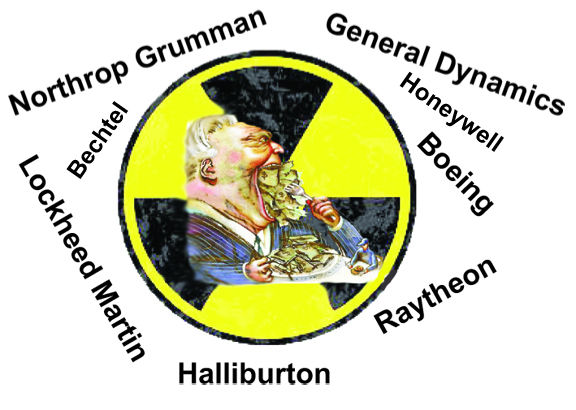
While “a handful of prime contractors” are the initial recipients and main beneficiaries of public money spent on bombers, missiles, and submarines, “the funds trickle down to subcontractors” that often include other prominent companies. The report names firms such as Bechtel, General Dynamics, Honeywell, Lockheed Martin, Northrop Grumman, and Raytheon.
Hartung directs attention to the millions of dollars in political activities by key contractors, writing that “while not all of this spending is devoted to lobbying on nuclear weapons programs, these expenditures are indicative of the political clout they can bring to bear on Congress as needed to sustain and expand the budgets for their nuclear weapons-related programs.”

They also spent $57.9 million on lobbying last year, employing 380 lobbyists, over two-thirds of whom “passed through the ‘revolving door’ from top positions in Congress, the Pentagon, and the Department of Energy to work for nuclear weapons contractors as executives or board members.”
And it should be noted that the revolving door swings both ways,” the report adds, noting that “three of the past five secretaries of defense worked as lobbyists or board members of major nuclear weapons contractors before taking up their positions in the Pentagon: James Mattis (General Dynamics); Mark Esper (Raytheon); and Lloyd Austin (Raytheon).”
‘Profiteers of Armageddon’: Report Reveals Who Benefits From US ‘Nuclear Modernization’ Plan, While taking aim at special interest lobbying and corporate profits that impede “sensible” policy, the author argues the “only way to be truly safe from nuclear weapons is to eliminate them altogether.” https://www.commondreams.org/news/2021/10/12/profiteers-armageddon-report-reveals-who-benefits-us-nuclear-modernization-plan
JESSICA CORBETT A short list of contractors that pour large sums of money into campaign contributions, lobbying, and industry-friendly think tanks benefits from the U.S. government’s ongoing, decadeslong “nuclear modernization” plan worth up to $2 trillion, according to a report out Tuesday.

The issue brief—entitled Profiteers of Armageddon: Producers of the next generation of nuclear weapons—was authored by William Hartung, director of the Arms and Security Program at the Center for International Policy, who also outlined his report in Inkstick.
Hartung details how the U.S. departments of Defense (DOD) and Energy (DOE) are ramping up a plan to build the next generation of nuclear-armed bombers, missiles, and submarines as well as warheads, and the beneficiaries are major contractors along with operators of the National Nuclear Security Administration’s (NNSA) nuclear weapons complex.
The brief notes the U.S. nuclear weapons budget has climbed in recent years to over $43 billion in the Biden administration’s proposed budget for fiscal year 2022, and warns that “this figure will grow dramatically,” pointing to a Congressional Budget Office (CBO) estimate that parts of the Pentagon’s plan “will cost tens of billions each over the next decade, including $145 billion for ballistic missile submarines, $82 billion for the new Intercontinental Ballistic Missile (ICBM), and $53 billion for the new nuclear-armed bomber.”
“And the costs will not end there,” the report continues, noting that “the estimated lifetime cost of building and operating the new ICBM is $264 billion.”
While “a handful of prime contractors” are the initial recipients and main beneficiaries of public money spent on bombers, missiles, and submarines, “the funds trickle down to subcontractors” that often include other prominent companies. The report names firms such as Bechtel, General Dynamics, Honeywell, Lockheed Martin, Northrop Grumman, and Raytheon.
Hartung directs attention to the millions of dollars in political activities by key contractors, writing that “while not all of this spending is devoted to lobbying on nuclear weapons programs, these expenditures are indicative of the political clout they can bring to bear on Congress as needed to sustain and expand the budgets for their nuclear weapons-related programs.”
From 2012 to 2020, campaign contributions from contractors mentioned in the brief topped $119 million, more than a quarter of which was in the 2020 cycle alone. They also spent $57.9 million on lobbying last year, employing 380 lobbyists, over two-thirds of whom “passed through the ‘revolving door’ from top positions in Congress, the Pentagon, and the Department of Energy to work for nuclear weapons contractors as executives or board members.”
And it should be noted that the revolving door swings both ways,” the report adds, noting that “three of the past five secretaries of defense worked as lobbyists or board members of major nuclear weapons contractors before taking up their positions in the Pentagon: James Mattis (General Dynamics); Mark Esper (Raytheon); and Lloyd Austin (Raytheon).”
The brief also pushes back against “routinely exaggerated” claims about job creation that both companies and lawmakers use to promote nuclear weapons programs, and points out that contractors pump millions into supporting think tanks that opine on relevant policy.
Continued lobbying for the modernization plan “ignores the fact that building a new generation of nuclear weapons at this time will make the world a more dangerous place and increase the risk of nuclear war while fueling the new arms race,” Hartung argues. “It’s long past time that we stopped allowing special interest lobbying and corporate profits stand in the way of a more sensible nuclear policy.”
While asserting that “the only way to be truly safe from nuclear weapons is to eliminate them altogether,” in line with a global treaty that states with such weapons continue to oppose, Hartung also highlights that “the organization Global Zero has outlined an alternative nuclear posture that would eliminate ICBMs, reduce the numbers of bombers and ballistic missile submarines, and implement a policy of no first use of nuclear weapons as part of a ‘deterrence-only’ strategy that would reduce the danger of a nuclear conflict.”
Global Zero CEO Derek Johnson welcomed Hartung’s brief in a tweet Tuesday.
Earlier this year, Sen. Elizabeth Warren (D-Mass.) and Rep. Adam Smith (D-Calif.) led the reintroduction of legislation (S.1219/H.R. 2603) to establish that “it is the policy of the United States to not use nuclear weapons first,” but the bill has not advanced in Congress, despite pressure from progressive lawmakers and campaigners.
Peace Action of Wisconsin’s Pamela Richard said in August that while activists encourage the passage of Warren and Smith’s bill as well as a related one (S. 1148/H.R. 669) from Sen. Ed Markey (D-Mass.) and Rep. Ted Lieu (D-Calif.), “our long-term goal is total nuclear disarmament.”
Smoke from nuclear war would devastate ozone layer, alter climate

SMOKE FROM NUCLEAR WAR WOULD DEVASTATE OZONE LAYER, ALTER CLIMATE Atmospheric impacts of global nuclear war would be more severe than previously thought https://news.ucar.edu/132813/smoke-nuclear-war-would-devastate-ozone-layer-alter-climate
OCT 13, 2021 – BY DAVID HOSANSKY The massive columns of smoke generated by a nuclear war would alter the world’s climate for years and devastate the ozone layer, endangering both human health and food supplies, new research shows.
The international study paints an even grimmer picture of a global nuclear war’s aftermath than previous analyses. The research team used newly developed computer climate modeling techniques to learn more about the effects of a hypothetical nuclear exchange, including complex chemistry interactions in the stratosphere that influence the amounts of ultraviolet (UV) radiation that reach the planet’s surface.
Since the ozone layer protects Earth’s surface from harmful UV radiation, such impacts would be devastating to humans and the environment. High levels of UV radiation have been linked to certain types of skin cancer, cataracts, and immunological disorders. The ozone layer also protects terrestrial and aquatic ecosystems, as well as agriculture.
“Although we suspected that ozone would be destroyed after nuclear war and that would result in enhanced ultraviolet light at the Earth’s surface, if there was too much smoke, it would block out the ultraviolet light,” said study co-author Alan Robock, a professor of climate science at Rutgers University. “Now, for the first time, we have calculated how this would work and quantified how it would depend on the amount of smoke.”
Continue readingChris Busby on the truth about black rain, radiation and cancer

the major cause of cancer in the low and medium dose groups (0-100mSv) in the Hiroshima lifespan study was not the immediate radiation from the detonation, the external gamma radiation and neutrons, but was in fact exposure to Uranium 234 particles from the bomb itself which rained out over the city in the black rain. Torrential black rain fell over the city and surrounding areas from 30 minutes to several hours after the atomic explosion.
Hiroshima Black Rain and the Test Veterans, https://www.labrats.international/post/hiroshima-black-rain-and-the-test-veterans Chris Busby, 13th Sept 2021
The absolute key study of the effects of radiation on cancer risk is the Lifespan Study (LSS) of the survivors of the Hiroshima bomb. It provides the evidence used by the Secretary of State for Defence (the MoD) to refuse pensions in all the UK Test Vet cases. Groups were assembled in 1952 some 7 years after the bomb and divided into high, medium and low doses on the basis of their distance from Ground Zero, with a No Dose group consisting of those who were outside the City and came in later. They were thrown out in 1973 as using them as a control gave too many cancers. This study continues today and the risks of different cancers after exposures are obtained from the excess risk of any type of cancer in each dose group. The risk factors for cancer which are currently the basis for all laws relating to exposure are based on this study. You have to get a Dose of about 1000mSv to get a 40% excess risk of cancer on the basis of the LSS results. Naturally, since no Test veteran got anywhere near this dose, all the pension applications (and appeals) are refused.
But on Sept 9th a scientific report I wrote was published in the peer-reviewed Journal Cancer Investigations. My paper The Hiroshima A-Bomb black rain and the lifespan study—a resolution of the Enigma shows that the LSS was dishonestly manipulated and that its results are totally unsafe. It spells the end of the radiation risk model and the beginning of justice for the test veterans. How?
What it shows, is that the major cause of cancer in the low and medium dose groups (0-100mSv) in the Hiroshima lifespan study was not the immediate radiation from the detonation, the external gamma radiation and neutrons, but was in fact exposure to Uranium 234 particles from the bomb itself which rained out over the city in the black rain. Torrential black rain fell over the city and surrounding areas from 30 minutes to several hours after the atomic explosion. Doses from the inhalation and ingestion of the Uranium particles in the black rain were very low. Since the Christmas Island vets were also exposed to rainout after the bombs, they are in the same category of victims as the Hiroshima low dose LSS victims (<5mSv). The Japanese government lost a court case in July on this issue, one which it will not appeal. Those living in the black rain areas who developed cancer will get compensation and attention in the same way as those who received an external dose from the detonation, even though the black rain victims’ dose was zero. The separation of external radiation from internal in terms of risk also shows that the types of cancers believed in the model to result from radiation must also be reassessed.
Of course, the MoD knew all this. It is the biggest secret of all, since it supports everything nuclear: bombs, energy, naval propulsion, Depleted Uranium, winnable nuclear war and raises the issue of enormous amounts of compensation. It had to be kept out. In 2013, during the run-up to the big test veteran appeal in the Royal Courts of Justice, I obtained from the late Major Alan Batchelor in Australia an official British document which was submitted to the Australian National Commission test vet hearings. It listed the quantity of Uranium isotopes in the Enriched Uranium used by the British in their bombs. I also had obtained a copy (when I was advising Rosenblatts in 2009 in the Foskett case) of a memo from 1953 on the dangers of Uranium 234 at the test sites. But these documents were suddenly made subject to the Official Secrets Act.
In 2013 after Rosenblatts had pulled out, Hogan Lovells removed all my 4 years of evidence and reports, 12 documents, and also removed me from the case without consulting any of the veterans they represented. In 2014 Judge Charles in the Upper Tier ruled that I could not act as an expert witness (I was biased) and anything I had written or argued previously had to be ignored. I neatly reverted from expert to representative and argued in 2016 before Judge Blake in the RCJ that the exposure of interest at Christmas Island was to Uranium from the material of the bomb. We flew in Professor Shoji Sawada all the way from Japan to make the same point. But Blake either ignored him or pretended to. In Blake’s final judgement he wrote:
14. . .it is submitted that prolonged exposure to radiation by inhalation or ingestion of radioactive particles deposited on the land or in the sea off CI is a real possibility. . .
15. In the appeals relating to Messrs Battersby and Smith Dr Busby, on their behalf, advances a more radical submission that the guidance issued by the International Commission on Radiological Protection in the UK and EU is flawed and underestimates the risk to health from internal exposure to radiation, and in particular radiation from Uranium.
What the new paper shows, is that we were exactly right and Blakes judgement exactly wrong; he listened to the experts brought in by the MoD, who did not (or they say they were told by MoD lawyer Adam Heppinstall) not to address our experts or their evidence; to keep the evidence out. The Scots Upper Tier has now reversed the Charles decision on my expertise, Judge DJ May QC calling it “Unlawful”. The British Tribunals, however, ignore the Scottish UT decision and persist in keeping my evidence out.
The Lifespan Study was dishonestly manipulated to provide support for the continued radioactive contamination of the environment by atmospheric bomb testing. The evidence is that this stitch-up has resulted in the biggest public health scandal in human history. The internal radiation effects on the children born at the peak period, 1959-63 caused genetic damage, infant deaths and the cancer epidemic which began in 1980. The effect is also in the children and grandchildren as new data clearly show. My study of the BNTVA also found a 10-fold congenital malformation rate in the children and 9-fold in the grandchildren. The Black Rain paper proves that the risk model that permitted this is wildly wrong. For those who are interested, read the paper: it is easy to understand. Then get angry and do something.
Meanwhile, I do what I can: I have two test vet cases ongoing: Trevor Butler and Christopher Donne, and also a Nuclear submarine sailor in Scotland who died from lymphoma. Here I am up against twisty Adam Heppinstall once more. He has begun, in true style, by removing all our evidence from the Bundle.
Independent scientists speak the truth about ionising radiation.


How monolithic institutions decide what is safe for the rest of us, Beyond Nuclear, By Christine Fassert and Tatiana Kasperski, 12 Sept 21,
”………………..The condemnation of this [ Fukushima area radiation] threshold came first of all from within: the special adviser on radiation protection of the Prime Minister’s Office, Professor Toshiso Kosako, resigned in tears on April 30, 2011:
“I cannot accept such a threshold, being applied to babies, children, and elementary school students, not only from an academic point of view, but also because of my humanistic values,” he said.
Many critiques
At the international level, the decision to raise the threshold was also criticized by the two successive UN Special Rapporteurs, Anand Grover and Baskut Tuncak. Moreover, the two experts question the very foundations of radiation protection, which rely on the ALARA principle: As Low as Reasonably Achievable.
This “reasonably” indicates that criteria other than health are taken into account, which Grover criticizes, referring to the “right to health”. Indeed, the rapporteur points out that “the ICRP recommendations are based on the principle of optimization and justification, according to which all government actions should maximize the benefits over the detriments. Such a risk-benefit analysis is not in line with the framework of the right to health, because it gives priority to collective interests over individual rights”.
Tuncak echoes Grover’s criticism in his October 2018 report, stating that “the Japanese government’s decision to increase what is considered the acceptable level of radiation exposure by a factor of 20 is deeply troubling.”
Better protecting individuals
Similar arguments were also used by Belarusian and Ukrainian scientists who, in the late 1980s, opposed the lifetime dose limit of 35 rem (350msv) over a maximum period of 70 years from the time of the accident — a limit that Soviet experts in Moscow, with the support of ICRP representatives, including the head of the French Central Service for Protection against Ionizing Radiation, Pierre Pellerin, were trying to impose as the basis for all post-accident response measures.
The Belarusian and Ukrainian researchers considered the 35 rem criterion to be unacceptable not only from a scientific point of view but also, and above all, from an ethical point of view.
They pointed out that under the conditions of scientific uncertainty about the effects of ionizing radiation, it was dangerous to underestimate the risks that radioactivity represented for the inhabitants of the affected territories, and they considered that the country’s authorities had a moral obligation to devote all the necessary means to greater protection of the inhabitants of the affected regions, especially the most vulnerable individuals.
The danger of low doses
The protagonists of the optimization of radiation protection in the post-accident context insist on the absence of studies proving significant health effects below these thresholds.
For a long time, the arguments for and against these thresholds have been discussed in the public arena and by social scientists in terms of scientific and medical “controversies” — opposing scientists connected to the nuclear sphere who have long denied the harmfulness of low doses, to scientists outside this sphere who consider that the risks were underestimated.
The question of the level of danger of low doses of radioactivity is one of the best known examples of such controversies, which regularly resurface despite the development of scientific knowledge about these risks.
This debate did not arise at the time of the Fukushima accident, but has been going on for a long time and is part of the “motives” also found in the debates about Chernobyl as well as other nuclear accidents such as Kyshtym, in Russia, in 1957………………… https://beyondnuclearinternational.org/2021/09/12/vested-interests/
The sunken nuclear submarines: Russia’s ‘slow-motion Chernobyl’ at sea

One of them is the K-27, once known as the “golden fish” because of its high cost. The 360ft-long (118m) attack submarine (a submarine designed to hunt other submarines) was plagued with problems since its 1962 launch with its experimental liquid-metal-cooled reactors, one of which ruptured six years later and exposed nine sailors to fatal doses of radiation. In 1981 and 1982, the navy filled the reactor with asphalt and scuttled it east of Novaya Zemlya island in a mere 108ft (33m) of water. A tugboat had to ram the bow after a hole blown in the ballast tanks only sank the aft end.
The K-27 was sunk after some safety measures were installed that should keep the wreck safe until 2032. But another incident is more alarming. The K-159, a 350ft (107m) November-class attack submarine, was in service from 1963 to 1989. The K-159 sank with no warning, sending 800kg (1,760lb) of spent uranium fuel to the seafloor beneath busy fishing and shipping lanes just north of Murmansk. Thomas Nilsen, editor of The Barents Observer online newspaper, describes the submarines as a “Chernobyl in slow motion on the seabed”.

While the vast size of the oceans quickly dilutes radiation, even very small levels can become concentrated in animals at the top of the food chain through “bioaccumulation” – and then be ingested by humans. But economic consequences for the Barents Sea fishing industry, which provides the vast majority of cod and haddock at British fish and chip shops, “may perhaps be worse than the environmental consequences”, says Hilde Elise Heldal, a scientist at Norway’s Institute of Marine Research.
But an accident while raising the submarine, on the other hand, could suddenly jar the reactor, potentially mixing fuel elements and starting an uncontrolled chain reaction and explosion. That could boost radiation levels in fish 1,000 times normal or, if it occurred on the surface, irradiate terrestrial animals and humans, another Norwegian study found.
Russia’s ‘slow-motion Chernobyl’ at sea https://www.bbc.com/future/article/20200901-the-radioactive-risk-of-sunken-nuclear-soviet-submarines, By Alec Luhn, 2nd September 2020
Beneath some of the world’s busiest fisheries, radioactive submarines from the Soviet era lie disintegrating on the seafloor. Decades later, Russia is preparing to retrieve them.
By tradition, Russians always bring an odd number of flowers to a living person and an even number to a grave or memorial. But every other day, 83-year-old Raisa Lappa places three roses or gladiolas by the plaque to her son Sergei in their hometown Rubtsovsk, as if he hadn’t gone down with his submarine during an ill-fated towing operation in the Arctic Ocean in 2003.
Continue readingPlutonium: How Nuclear Power’s Dream Fuel Became a Nightmare.

The history of nuclear power’s imagined future: Plutonium’s journey from asset to waste, Bulletin of the Atomic Scientists, By William Walker, September 7, 2021

Bill Gates is deluded in believing that the plutonium-fuelled, sodium-cooled, “Versatile Power Reactor” in which his company Terrapower is involved, has a commercial future.[18] His support is also unwelcome insofar as it helps to perpetuate the myth that plutonium is a valuable fuel, posing acceptable risks to public safety and international security. Reprocessing is a waste-producing, not an asset-creating, technology. It adds cost rather than value. It merits no future when seen in this way.
‘ ………..Plutonium’s history and its legacies are the subject of a recent book by Frank von Hippel, Masafumi Takubo and Jungmin Kang.[1] Plutonium: How Nuclear Power’s Dream Fuel Became a Nightmare. It is an impressive study of technological struggle and ultimate failure, and of plutonium’s journey from regard as a vital energy asset to an eternally troublesome waste
Toward heaven or hell? The conflict over plutonium’s future…………..
From creation of a future to preservation of the present
Construction of the British and French reprocessing plants at Sellafield and Cap de la Hague proceeded throughout the 1980s.[6] Their primary justification—preparing for the introduction of fast breeder reactors—had lost all credibility by the time of their completion. The German, British and French breeder programs had been cut back, soon to be abandoned, and in 1988 Germany cancelled plans to build its own bulk reprocessing plant at Wackersorf. Although Japan’s confidence in its fast breeder reactor program also waned, it was kept alive to avoid disrupting construction of the reprocessing plant at Rokkasho-mura.
Faced by the plutonium economy’s demise, reprocessing was re-purposed by its supporters to provide the industry and its governmental backers with reason not to do the obvious—abandon ship. Creating an essential future was replaced by a rationale designed to preserve and activate the newly established reprocessing infrastructures. ……. plutonium’s energy value could be realised through its replacement of fissile uranium in “mixed-oxide fuels” for use in existing thermal reactors………
Thirty years after the Euro-Japanese reprocessing/recycling system’s launch, the experiment can only be judged a failure. The reasons are set out in persuasive detail in von Hippel, Takubo and Kang’s book. It is a system undergoing irreversible contraction after a long struggle, involving heavy expenditure and many troubles. Germany and the UK have already exited, the UK shutting its THORP reprocessing plant in 2018 and delaying its Magnox reprocessing plant’s closure only because of the coronavirus pandemic.[9] Instead, its Nuclear Decommissioning Authority has been given the costly (more than $138 billion) and long-lasting (more than 100 years) task of returning Sellafield and Dounreay to “green-field sites.”
Japan’s engagement with reprocessing and plutonium recycling was already deeply troubled before the Fukushima accident closed reactors: The Rokkasho-mura reprocessing plant was operating only fitfully, MOX recycling was not happening, and plutonium separated from Japanese spent fuels in France and the UK was marooned there, probably indefinitely, by inability to manage its return in MOX fuel (cutting a very long story short).[10] The declared intention to soldier on with bulk reprocessing seems increasingly bizarre and is surely unsustainable. ……….
France’s national utility EDF, saddled with enormous debts, is striving to reduce its exposure to reprocessing. It is symptomatic that no spent fuel discharged from EDF-owned and -operated reactors in the UK, including those under construction at Hinkley Point, will be reprocessed………
The move away from reprocessing is being accompanied by a transition towards dry-cask storage of spent fuels. It entails their removal from water pools at reactors after a few years’ cooling and their insertion in large concrete or stainless steel containers, ………
Reprocessing continues in India and Russia, if fitfully, where fast reactor programmes are still being funded. Japan’s commitment remains. ………
There is particular concern about China’s engagement with reprocessing and its dual civil and military purposes…………
……………. Separated plutonium is a waste
The authors remind readers of the persistent dangers that reprocessing poses to public safety and international security: the risks of accident and exposure to radiation, the proliferation of weapons, the possibility of diversion into nuclear terrorism, and the undesirable complication of radioactive waste disposal. “In our view, it is time to ban the separation of plutonium for any purpose” (their italics) is their concluding sentence. This may be the case, but the US and other governments are unlikely to respond to their call. They have so much else to contend with—climate change, pandemics, economic distress, arms racing on a long list—leaving a ban on plutonium separation low in their priorities. They are also all too aware of past failures to institute such bans, whether in commercial or military domains, from the Carter Policy in the 1970s to the stalled Fissile Material Cutoff Treaty in the 1990s and subsequently.
Another conclusion cries out to be drawn from this book. Plutonium’s separation and usage for energy purposes was an experiment that can now decisively be pronounced a failure. Experience has shown that separated civil plutonium is a waste. The book’s first of many figures, reproduced below, is the most telling. Up to the mid-1980s, the global stock of separated plutonium was predominately military and held in warheads, peaking at around 200 tons. It now exceeds 500 tons. The increase is due to the ballooning of civil stocks as plutonium’s separation has outstripped consumption. The global stock of separated plutonium now includes material extracted from the post-Cold War dismantlement of Russian and US nuclear warheads that is also effectively a waste.[16]

Civil plutonium is therefore not an asset, it is not “surplus to requirement;” it is a waste. This is the message that needs to be proclaimed and acknowledged, especially by governments, utilities, and industries desiring that nuclear power have a solid future and make a contribution to the avoidance of global warming. For reasons set out in von Hippel’s recent article in the Bulletin, Bill Gates is deluded in believing that the plutonium-fuelled, sodium-cooled, “Versatile Power Reactor” in which his company Terrapower is involved, has a commercial future.[18] His support is also unwelcome insofar as it helps to perpetuate the myth that plutonium is a valuable fuel, posing acceptable risks to public safety and international security. Reprocessing is a waste-producing, not an asset-creating, technology. It adds cost rather than value. It merits no future when seen in this way.
Even if all civil reprocessing ceased tomorrow, the experiment would have bequeathed the onerous task of guarding and disposing of over 300 tons of plutonium waste, and considerably more when US and Russia’s military excess is added in. Proposals come and go. Burn it in specially designed reactors? Blend it with other radioactive wastes? Bury it underground after some form of immobilization? Send it into space? All options are costly and hard to implement. Lacking ready solutions, most plutonium waste will probably remain in store above ground for decades to come, risking neglect. How to render this dangerous waste eternally safe and secure is now the question. Extensive References . https://thebulletin.org/premium/2021-09/the-history-of-nuclear-powers-imagined-future-plutoniums-journey-from-asset-to-waste/?utm_source=Newsletter&utm_medium=Email&utm_campaign=ThursdayNewsletter09272021&utm_content=NuclearRisk_HistoryOfNuclearPowersImagined_09102021
The Record-Breaking Failures and Costs of Nuclear Power
Let’s look at the track record as a whole. According to Wikipedia’s article, List of cancelled nuclear reactors in the United States: “Of the 253 nuclear power reactors originally ordered in the United States from 1953 to 2008, 48 percent were cancelled, 11 percent were prematurely shut down, 14 percent experienced at least a one-year-or-more outage, and 27 percent are operating without having a year-plus outage. Thus, only about one fourth of those ordered, or about half of those completed, are still operating and have proved relatively reliable.”
Wikipedia’s stunning list on the same page details 157 reactors that were either canceled before or during construction.
The Record-Breaking Failures of Nuclear Power, https://www.counterpunch.org/2021/09/24/the-record-breaking-failures-of-nuclear-power/ BY LINDA GUNTER SEPTEMBER 24, 2021The Tennessee Valley Authority could likely rightfully claim a place in the Guinness Book of World Records, but it’s not an achievement for which the federally-owned electric utility corporation would welcome notoriety.
After taking a whopping 42 years to build and finally bring on line its Watts Bar Unit 2 nuclear power reactor in Tennessee, TVA just broke its own record for longest nuclear plant construction time. However, this time, the company failed to deliver a completed nuclear plant.
Watts Bar 2 achieved criticality in May 2016, then promptly came off line due to a transformer fire three months later. It finally achieved full operational status on October 19, 2016, making it the first United States reactor to enter commercial operation since 1996.
Now, almost five years later, TVA has announced it has abandoned its unfinished two-reactor Bellefonte nuclear plant in Alabama, a breathtaking 47 years after construction began.
TVA was apparently happy to get out of the nuclear construction business, because, as the Chattanooga Times Free Press reported, the company “did not see the need for such a large and expensive capacity generation source.” No kidding!
Ironically, this is precisely the argument used to advance renewables, in an energy environment that cannot and will no longer support inflexible, large, thermo-electric generators that are completely impractical under the coming smart grids as well as climate change-induced conditions.
Accordingly, TVA was more than happy to accept overtures from a purchaser for Bellefonte — the Haney real estate company— whose director, Frank Haney, gained his own notoriety by lavishing $1 million on former President Trump and courting Trump’s lawyer, Michael Cohen, possibly, suggested media reports, to curry regulatory favors for his new nuclear toy.
But when TVA announced last month that it had withdrawn its construction permit for Bellefonte, Haney got his down payment back — to the tune of $22.9 million plus interest. TVA had itself spent at least $5.8 billion on Bellefonte over the 47 years, which included long stoppages, before finally pulling the plug.
This kind of colossal waste of time and money on failed nuclear power projects is, of course, the more typical story than the myths spun in the press about the need for “low carbon” nuclear energy, a misleading representation used to argue for nuclear power’s inclusion in climate change mitigation.
In reality, the story of nuclear power development in the US over the last 50 years is beyond pitiful and would not pass muster under any “normal” business plan. How the nuclear industry gets away with it remains baffling.
As Beyond Nuclear’s Paul Gunter told the Chattanooga Times Free Press, “Bellefonte is just the most recent failure for this industry,” noting that “of the 30 reactors the industry planned to build 15 years ago with the so-called nuclear renaissance, only two are still being built. (Those two, at Plant Vogtle in Georgia, are years behind schedule with a budget that has more than doubled to $27 billion.)
As Gunter noted in the same article, “TVA has had major problems meeting projected costs and timetables for new nuclear plants, as the entire industry has had over the past 50 years. The inability to meet any budgets for these plants is what has repeatedly been the demise of nuclear energy.
“Nuclear energy is the most expensive way ever conceived to boil water and Bellefonte just shows once again how unreliable this technology really is in terms of projecting what it will cost and how long it will take to build these power plants,” Gunter told the newspaper.
That was certainly true for Westinghouse Electric Company and SCANA, still embroiled in the ever unraveling scandal around the failure to complete two new reactors at the V.C. Summer nuclear power plant in South Carolina. As executives of the bankrupt Westinghouse and SCANA, who retained them, continue to face criminal charges, Westinghouse has already had to shell out $2.168 billion in settlement payments related to the Summer debacle.
In August, news reports said Westinghouse would also be required to reimburse low-income ratepayers to the tune of $21.25 million. That’s because the new reactors got funded in part through electricity rates, even though they never delivered a single watt of electricity. The cost of the project itself eventually ballooned to more than $9 billion before collapsing.
Let’s look at the track record as a whole. According to Wikipedia’s article, List of cancelled nuclear reactors in the United States: “Of the 253 nuclear power reactors originally ordered in the United States from 1953 to 2008, 48 percent were cancelled, 11 percent were prematurely shut down, 14 percent experienced at least a one-year-or-more outage, and 27 percent are operating without having a year-plus outage. Thus, only about one fourth of those ordered, or about half of those completed, are still operating and have proved relatively reliable.”
Wikipedia’s stunning list on the same page details 157 reactors that were either canceled before or during construction.
The massive costs, of course, send most corporations running scared, the Haney family notwithstanding. Even when meaty subsidies have been dangled — as they were for the Calvert Cliffs 3 EPR project in Maryland — utility companies balk and bail. In the case of Calvert Cliffs, Constellation Energy was the US partner with the French government utility EDF. But even when offered a $7.5 billion loan guarantee by the Obama administration, Constellation viewed those terms as “too expensive and burdensome” and quit.
This left EDF, a foreign company, as sole owner, a violation of the Atomic Energy Act. The project duly collapsed, one of many referred to earlier by Paul Gunter as the fantasy of a nuclear renaissance that first sputtered, then went out.
President Obama, of course, was no friend to the anti-nuclear movement. So eager was he to boost new nuclear construction in the US that he called for the inclusion of $55 billion for nuclear loan guarantees in his $3.8 trillion 2011 budget. In his State of the Union address that year, Obama talked of “building a new generation of safe, clean nuclear power plants in this country.” Kool-Aid thoroughly drunk, then.
All of this should send an obvious message to the deaf ears of Ben Cardin (D-MD), Sheldon Whitehouse (D-RI) and Cory Booker (D-NJ), the leading pro-nuclear evangelists in the U.S. Senate. Cardin’s power production credit bill actually has the gall to describe nuclear power as “zero-emission”, a lie that even Cardin’s own staffer was forced to concede in a recent meeting attended by Paul Gunter who called him out on it.
Not that any of this will stop the bill going forward and almost certainly passing. Like the three not-so-wise monkeys, those Senators and their colleagues will acknowledge no negatives about nuclear power, even as the industry’s appalling litany of financial fiascoes and failures stares them in the face. They will forge right ahead, thus dooming to its own failure the very progress on climate change they claim to champion.
1 This Month


of the week– Nuclear Reactor Information Task Force

14 May – online event From Bombs to Data Centres: the Face of Nuclear Colonialism
To see nuclear-related stories in greater depth and intensity – go to https://nuclearinformation.wordpress.com
-
Archives
- May 2026 (173)
- April 2026 (356)
- March 2026 (251)
- February 2026 (268)
- January 2026 (308)
- December 2025 (358)
- November 2025 (359)
- October 2025 (376)
- September 2025 (257)
- August 2025 (319)
- July 2025 (230)
- June 2025 (348)
-
Categories
- 1
- 1 NUCLEAR ISSUES
- business and costs
- climate change
- culture and arts
- ENERGY
- environment
- health
- history
- indigenous issues
- Legal
- marketing of nuclear
- media
- opposition to nuclear
- PERSONAL STORIES
- politics
- politics international
- Religion and ethics
- safety
- secrets,lies and civil liberties
- spinbuster
- technology
- Uranium
- wastes
- weapons and war
- Women
- 2 WORLD
- ACTION
- AFRICA
- Atrocities
- AUSTRALIA
- Christina's notes
- Christina's themes
- culture and arts
- Events
- Fuk 2022
- Fuk 2023
- Fukushima 2017
- Fukushima 2018
- fukushima 2019
- Fukushima 2020
- Fukushima 2021
- general
- global warming
- Humour (God we need it)
- Nuclear
- RARE EARTHS
- Reference
- resources – print
- Resources -audiovicual
- Weekly Newsletter
- World
- World Nuclear
- YouTube
-
RSS
Entries RSS
Comments RSS
 nuclear-news