“Blown to Hell: America’s Deadly Betrayal of the Marshall Islanders”

Biggest US nuclear bomb test destroyed an island—and this man’s life, https://nypost.com/2021/11/20/biggest-us-nuclear-bomb-test-destroyed-an-island-and-lives/ By Eric Spitznagel The US bomb tested near John Anjain’s (right) home in the Marshall Islands in 1954 was 1,000 times stronger than at Hiroshima, and left his wife and kids with debilitating and deadly health problems, as detailed in a new book. November 20, 2021
Just before dawn on March 1, 1954, John Anjain was enjoying coffee on the beach in the South Pacific when he heard a thunderous blast, and saw something in the sky that he said “looked like a second sun was rising in the west.”
Later that day, “something began falling upon our island,” said Anjain, who at the time was 32 and chief magistrate of the Rongelap atoll, part of the Marshall Islands. “It looked like ash from a fire. It fell on me, it fell on my wife, it fell on our infant son.”
It wasn’t a paranormal experience. Anjain and his five young sons, along with the 82 other inhabitants of Rongelap, were collateral damage from a “deadly radioactive fallout from a hydrogen bomb test… detonated by American scientists and military personnel,” writes Walter Pincus in his new book, “Blown to Hell: America’s Deadly Betrayal of the Marshall Islanders” (Diversion Books), out now.
In 1946, the US started testing atomic weapons began in Bikini Atoll, 125 miles west of Rongelap. Known as Operation Crossroads, the tests were moved to the islands from the US because officials feared “radioactive fallout could not be safely contained at
any site in the United States,” writes Pincus.
During those early tests, the Rongelapians were relocated to another island a safe distance away.
But the 1954 test was different. Not only were there no evacuations, but “Castle
Bravo,” as it was dubbed, was also the largest of the thermonuclear devices detonated during the military’s 67 tests, “a thousand times as large as the bomb that destroyed Hiroshima,” writes Pincus.
It took just hours for fallout to reach the shores of Rongelap, where it blanketed the island with radioactive material, covering houses and coconut palm trees. On some parts of the isle, the white radioactive ash was “an inch and a half deep on the ground,” writes Pincus.
The natives, who often went barefoot and shirtless, were covered in the toxic debris. It stuck to their hair and bodies and even between their toes.
“Some people put it in their mouths and tasted it,” Anjain recalled at a Washington DC hearing run by the Senate Energy and Natural Resources Committee to investigate the incident in 1977. “One man rubbed it into his eye to see if it would cure an old ailment. People walked in it, and children played with it.”
Rain followed, which dissolved the ash and carried it “down drains and into the barrels that provided water for each household,” writes Pincus.
It took three days before American officials finally evacuated the island, taking the natives to nearby Kwajalein for medical tests. Many Rongelapians were already suffering health effects, like vomiting, hair loss, and all-over body burns and blisters. Tests showed their white blood cell counts plummeting, and high levels of radioactive strontium in their systems. No one died, at least not immediately. That would come later.
After three years, the Rongelapians were allowed to return home, assured by officials that conditions were safe. But by 1957, the rate of miscarriages and stillbirths on the island doubled, and by 1963 the first residents began to develop thyroid tumors.
Though they continued to conduct annual medical tests, the US military admitted no culpability, other than awarding each islander $10,800 in 1964 as compensation for the inconvenience.
In fact, some — including the islanders — have speculated that the US government had used the Rongelapians as “convenient guinea pigs” to study the effects of high-level radiation.
For Anjain and his family, the effects were devastating. His wife and four of his children developed cancer. A sixth child, born after the fallout, developed poliomyelitis and had to use a crutch after one of his legs became paralyzed.
But the biggest tragedy befell his fifth child Lekoj, who was just one year old when Castle Bravo covered their island in nuclear dust. As a child, he was mostly healthy, other than the occasional mysterious bruise. Soon after his 18th birthday, Lekoj was flown to an American hospital, where doctors discovered he had acute myelogenous leukemia.
Anjain stayed at his son’s bedside for weeks as he underwent chemo, holding his dying son’s hand and watching him disappear.
He recounted Lekoj’s final days in a letter to the Friends of Micronesia newsletter in 1973. “Bleeding started in his ears, mouth and nose and he seemed to be losing his mind,” Anjain wrote of his son. “When I would ask him questions he gave me no
answer except ‘Bad Luck.’”
Lekoj passed away on November 15, 1972, at just 19. Newsweek called him “the first, and so far only leukemia victim of an H-bomb,” and said his death was proof that nuclear fallout “could be even more lethal to human life than the great fireball itself.”
After burying his son at a spot overlooking Rongelap Lagoon, Anjain continued to battle for financial restitution for his family and other Rongelapian survivors. In 2004, just months before his death (of undisclosed causes) at 81, he marched with 2,000 people in Japan to commemorate the 50th anniversary of the 1954 hydrogen bomb test that slowly killed his son.
In 2007, a Nuclear Claims Tribunal awarded Rongelap more than $1 billion in damages, but not a penny of it has yet been paid. And according to a 2019 Columbia University study, radiation levels on Rongelap are still higher than Chernobyl or Fukushima.
For Anjain, it was never really about the money. “I know that money cannot bring back my son,” he once said. “It cannot give me back 23 years of my life. It cannot take the poison from the coconut crabs. It cannot make us stop being afraid.”
Humboldt nuclear reactor is dead and gone, but its highly radioactive wastes live on.
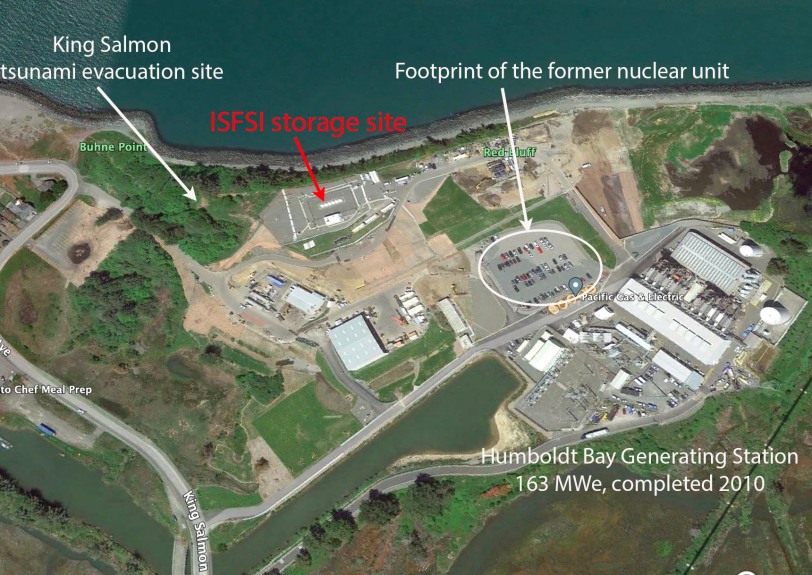
Is this the final chapter? The NRC will soon revoke the operating license for PG&E Unit #3, formally ending its official existence. But the waste is still on-site. The NRC considers cask storage a temporary solution and suggests a 40-year life span. Some hope the casks can last up to 100 years but even this is far shorter than the time needed to safely store high-level waste.
Lori Dengler | Decommissioning a nuclear power plant is a long slow process, https://www.times-standard.com/2021/11/20/lori-dengler-decommissioning-a-nuclear-power-plant-is-a-long-slow-process/By LORI DENGLER |November 20, Nothing happens quickly with a nuclear plant. Power is generated through fission, a process of splitting atoms in a controlled way. Once fission begins, it can be slowed or increased, but there’s no on-off switch and a controlled shutdown takes 6-12 hours. The radioactive byproducts last for millennia.
The fuel at PG&E’s former nuclear facility at King Salmon was small ceramic uranium oxide pellets compressed into fuel rods. A single new rod is only mildly radioactive, but when groups of rods (assemblies) are brought closely together in a reactor core, fission commences. PG&E’s Unit #3 was a boiling water reactor (BWR), where water pumped into the core was brought to a boil and steam produced electricity.
All first-generation nuclear reactors were BWRs. Built in the late 1950s to mid-1960s, seven became operational in the US and none are operating today. In the late 1960s, the second generation BWRs came online with improved efficiency, lifespan, containment, and safety features. The Fukushima-Daichi Nuclear Power Plant that failed during the 2011 Japan tsunami was this type. Of the 93 operating reactors in the US today, 31 are BWRs.
During its 13-year operational history, the Humboldt nuclear facility generated most of the county’s electricity. It was shut down yearly for refueling and maintenance and the spent fuel rods were placed in a cooling pool on the site. The pool was within the containment structure and made of steel-lined reinforced concrete several feet thick.
Spent fuel and reactor waste has been and continues to be the Achilles heel of the nuclear industry. In the early decades of the nuclear era, it was often glossed over as something that science and technology could solve. The Nuclear Regulatory Commission (NRC) classifies nuclear waste as high level or low level depending upon how long-lived the radioactive material is.
Low-level waste is produced by medical facilities, research labs, commercial facilities and in reactor operations. Often short-lived, it has radioactivity levels only slightly above background and can be safely handled with simple precautions. Small amounts can be disposed as ordinary trash and larger amounts moved on highways to approved low-level waste repositories.
It’s the high-level waste that is the big problem. High-level waste is predominately spent nuclear fuel rods. “Spent” is a misnomer as it still contains a substantial amount of energy. Unlike the new, unused fuel rods, they are now highly radioactive and very hot. That’s because once fission starts, can’t be totally stopped. Not all the uranium has been used up; it’s just no longer concentrated enough to be economically worthwhile. Fission is a complex process and creates toxic daughters such as cesium-137 and strontium-90. Fission releases neutrons which may be captured by other uranium atoms to form heavier elements such as plutonium. They aren’t as hot as the daughters but take much longer to decay. Plutonium-239 has a half-life (the time for half to be used up) of 24,100 years.
I admit to much ignorance when it comes to nuclear reactors. In talking about the Humboldt plant, I used to remark how silly it seemed that new fuel rods could be transported on highways and used ones could not. Now I understand why. There is no fission going on in the new ones and emissions are very low.
PG&E announced intentions to decommission Unit #3 in 1983. Three years later, the company requested a SAFTOR license amendment from the NRC. SAFSTOR means “possess-but-not-operate” so that the plant is maintained and monitored and much of the waste can decay before dismantling begins. In 2003, PG&E submitted an application to the NRC to begin transferring the spent fuel rods into dry cask storage.
The Humboldt plant produced 390 spent fuel assemblies in its lifetime. After several years in a storage pool, the NRC considers the waste cool enough to be moved into a dry cask storage facility on site. High-level waste repositories are known as ISFSIs (independent spent fuel storage installation). Finding an ISFSI spot on Buhne Point was problematic in many ways.
The biggest problem was that the ISFSI had to be on the PG&E site. Buhne Point site is exposed to earthquake and tsunami threats, erosion, and sea-level rise. Many people were involved with environmental and hazards studies over the years including a number of HSU geology grads. A site was selected at an elevation of 44 feet just to the west of Unit #3 with the capacity to store 37 tons of high-level waste in six casks.
I attended a community meeting about the ISFSI plan in the early 2000s. It was well attended with scientists, environmental organizations, and other community representatives. What surprised me most was that everyone agreed it was the best solution to a problem all of us wish we never had. Oh, if only time travel were possible – PG&E would be the first in line to reverse the decision to build the Humboldt nuclear facility. But given the legal realities, this was the best option.
NRC issued the Humboldt SAFSTOR license to PG&E in November 2005. By 2008, all of the spent fuel had been moved to the dry casks. The active decommissioning of the site began in 2009 and included removal of the reactor vessel, nuclear systems, containment structure, and other infrastructure. Even the soils at the site were removed. The final step was site restoration and soil remediation. It’s unclear what the footprint of the former nuclear facility may eventually become; at present, it is a parking lot.
Is this the final chapter? The NRC will soon revoke the operating license for PG&E Unit #3, formally ending its official existence. But the waste is still on-site. The NRC considers cask storage a temporary solution and suggests a 40-year life span. Some hope the casks can last up to 100 years but even this is far shorter than the time needed to safely store high-level waste.
Note: The Humboldt ISFSI is covered at http://archive.wmsym.org/2010/pdfs/10217.pdf. If anyone wants to get into the weeds with nuclear reactor technology, see https://www.amacad.org/sites/default/files/academy/pdfs/nuclearReactors.pdf.
Lori Dengler is an emeritus professor of geology at Humboldt State University, an expert in tsunami and earthquake hazards. Questions or comments about this column, or want a free copy of the preparedness magazine “Living on Shaky Ground”? Leave a message at 707-826-6019 or email Kamome@humboldt.edu. https://www.times-standard.com/2021/11/20/lori-dengler-decommissioning-a-nuclear-power-plant-is-a-long-slow-process/
Heritage Foundation – murky think tank funded by the nuclear weapons industry, wants weapons-makers to be exempt from climate and pandemic regulations

“Defense industrial base” is a buzzword that has picked up steam during the pandemic: It sends the message that, whatever happens with the economy and pandemic, we need to make sure we are in “fighting shape” — by keeping military contractors afloat. This concept was invoked to explain why, at the beginning of the pandemic, factories that produce bombs and tankers should be allowed to stay open, even amid the outbreak risk to workers. And it was also used to justify subsidies to contractors during the hardship of the pandemic.
Lockheed Martin is just one of numerous weapons manufacturers that has directly funded the Heritage Foundation. According to a report by the think tank Center for International Policy (CIP), the Heritage Foundation ranks ninth among the top think tanks that received funding from military contractors and the U.S. government from 2014 to 2019. Lockheed Martin and Raytheon were two of those major funders, both of which are among the largest weapons companies in the world and would be impacted by the new regulation.
This case provides a window into the murky world of think tanks, which are often viewed as academic and above-the-fray institutions but operate more as lobbying outfits.
Think Tank Funded by the Weapons Industry Pressures Biden Not to Regulate Military Contractors’ Emissions https://www.rsn.org/001/think-tank-funded-by-the-weapons-industry-pressures-biden-not-to-regulate-military-contractors-emissions.html
Sarah Lazare/In These Times 19 November 21The Heritage Foundation has received considerable donations from the arms industry. And now it’s trying to shield that industry from climate regulations targeting military contractors.
The Heritage Foundation, a prominent conservative think tank, is publicly opposing a new Biden administration regulation that would force the weapons industry to report its greenhouse gas emissions related to federal contracts. It turns out the Heritage Foundation also receives significant funding from the weapons industry, which makes the case worth examining — because it reveals how the arms industry pays supposedly respectable institutions to do its policy bidding at the expense of a planet careening toward large-scale climate disaster.
The regulation in question was first proposed in an executive order in May. It would require federal contractors to disclose their greenhouse gas emissions and their “climate-related financial risk,” and to set “science-based reduction targets.” In other words, companies like Lockheed Martin would have to disclose how much carbon pollution its F‑35 aircraft and cluster bombs actually cause.
In October, the Biden administration started the process to amend federal procurement rules to reflect these changes. “Today’s action sends a strong signal that in order to do business with the federal government, companies must protect consumers by beginning to mitigate the impact of climate change on their operations and supply chains,” Shalanda Young, acting director of the White House Office of Management and Budget, said at the time.The Department of Defense is the world’s biggest institutional consumer of fossil fuels and a bigger carbon polluter than 140 countries. Yet its emissions (and those of other armed forces) are excluded from UN climate negotiations, including the recent COP26 talks. The Biden administration itself supports a massive military budget, initially requesting $753 billion for the 2022 National Defense Authorization Act, a number that has since ballooned, with the Senate set to vote on a $778 billion plan. Organizers and researchers argue that, to curb the climate crisis, it is necessary to roll back U.S. militarism and dismantle the military budget.
But according to the Heritage Foundation, even this modest proposal is a bridge too far.
Continue readingNew film: The ‘Mothers of the Revolution’ Who Stared Down Nuclear Weapons
The ‘Mothers of the Revolution’ Who Stared Down Nuclear Weapons, The doc ‘Mothers of the Revolution’ chronicles the women who spent years protesting the nukes at RAF Greenham Common. One of those brave women, Rebecca Johnson, tells their story. Daily Beast, Rebecca Johnson Nov. 21, 2021 In September 1981, a ten-day walk from Wales under the banner of Women for Life on Earth arrived at the main gate of RAF Greenham Common, sixty miles west of London. Home to the 501st Tactical Missile Wing of the U.S. Air Force, this nuclear base was designated by NATO to deploy nuclear-armed cruise missiles in Europe. We called for this decision to be publicly debated.
When ignored, Women for Life on Earth grew into the Greenham Common Women’s Peace Camp. I began living there in 1982 and stayed until the 1987 U.S.-Soviet Intermediate-Range Nuclear Forces (INF) Treaty banned and eliminated all land-based medium-range nuclear weapons from Europe, including Cruise, Pershing and SS20s.
After years of being airbrushed out of histories of the Cold War, Greenham’s actions, struggles and legacy are being spotlighted in a new film, Mothers of the Revolution, from acclaimed New Zealand director Briar March. Showing contemporaneous news footage from the 1980s along with dramatized vignettes and reflections from women who got involved with the Greenham Women’s Peace Camp in the 1980s, the film weaves an illustrative narrative from the experiences of a small cross section of activists—not only from Britain, but Russia, East and West Europe, the United States, and the Pacific.
Though it’s taken a long time for our contribution to the INF Treaty to be publicly recognized, other treaties have been influenced by Greenham’s feminist-humanitarian activism and strategies, most notably the U.N. Treaty on the Prohibition of Nuclear Weapons, which entered into international law in January 2021.
While living at Greenham for five years I came to understand what we really need: Not weapons and power over others, but communities that are empowered to love, question and create. We took forward new theories and practices of nonviolence that were feminist and assertive. We didn’t suppress deep human emotions like fear, love and anger, but channelled them into power for change. We needed to be activist and analytical, passionate and diplomatic, stubborn and flexible, courageous and truthful—no matter who tried to silence us.
The cruise missiles arrived in November 1983, which felt like a bitter defeat at first. Yet we refused to give up. …………….
Were we mothers of a revolution? If anything, I think we were part of a long continuum of struggles for women’s rights and safety, following in the footsteps of the women who fought so hard to vote and live free from oppression, slavery, and misogyny. Not mothers but daughters—of all those brave feminist revolutionaries.
I’m so glad Mothers of the Revolution ends with such an inspiring call to action showing the faces and voices of a new generation of fierce Daughters who are campaigning for girls’ education, climate justice, peace, and women’s rights to live free of patriarchal perpetrators and their greedy, oppressive systems of violence. Together we can stop the destroyers and strengthen the naturally diverse, interdependent lives that share and protect our beautiful Mother Earth. That’s our revolution, and we are not finished yet. https://www.thedailybeast.com/the-mothers-of-the-revolution-who-stared-down-nuclear-weapons?ref=scroll
While the French government promises a nuclear revival, its supreme auditing body warns of serious obstacles to this.

The Court of Auditors (Cour des comptes) is the supreme body for auditing the use of public funds in France. It is independent from the Government and Parliament. It has financial jurisdiction and is in charge of auditing, issuing rulings and certifying the State and Social Security accounts, as well as contributing to the evaluation of public policies.
Nuclear revival: the Court of Auditors highlights many obstacles https://reporterre.net/Relance-du-nucleaire-la-Cour-des-comptes-pointe-de-nombreux-obstacles 19 Nov 21,
In a report published this Thursday, November 18, the Court of Auditors questions our “ability to build a new fleet of [nuclear] reactors on time and at reasonable costs”. This, while “maintaining a 50% nuclear share in electricity production (…) beyond 2050 would require ultimately not having seven EPR or EPR2, but 25 to 30 in the assumption that the current reactors would almost all be shut down by this time, ”the text specifies. And that the composition of the new mix must be decided between 2022 and 2027, believes the institution, given the delays in the construction of new plants.
The report from the Court of Auditors
In this document entitled “The choices of electricity production: anticipating and controlling technological, technical and financial risks”, the wise men of the rue Cambon recall the slippages of cost – 19 billion euros instead of the 3 billion planned – and of deadlines – at least eleven years late – of the Flamanville EPR site. “The gaps are similar for the Olkiluoto RPE in Finland,” they said. In July 2020, the Court of Auditors detailed these troubles at length in a report dedicated to the EPR sector.
Several points of real concern are mentioned.
One is the locations of these new reactors, “as climate change can make the installation of sites along rivers more complicated”.
Management of spent fuel and waste: the construction of new reactors planned to operate until 2100 would in fact involve “either renewing the fuel reprocessing plant at La Hague (…) and creating new sites for ‘warehousing and then disposal of nuclear waste, or to propose another mode of management of spent nuclear fuel and waste which would be, in such a hypothesis, much more voluminous ”, we read in the note.
Another imperative element for the implementation of this half-nuclear mix emphasized by the Court is “the start of the Cigeo radioactive waste disposal project” – a project that is also marred by many uncertainties.
The cost, finally. “EDF will not be able to finance the construction of new nuclear reactors on its own when it has to bear the cost of extending the current fleet and of the“ post Fukushima ”safety investments, face the future costs of dismantling and the uncertain evolution regulated access to historic nuclear power since its inception in 2011, and that it is already indebted to the tune of 42 billion euros, ”warns the Court of Auditors. The project to build six new EPRs had been estimated at 46 billion euros by EDF and could be half-financed by the state, as reported by Reporterre. The cost of the investment has since been reassessed from 52-56 billion euros to 64 billion euros, according to a working document released at the end of October by the media Context.
The implementation of a 100% renewable energy mix also represents many challenges, nevertheless warns the Court of Auditors. It would thus be necessary to define modalities for storing energy (batteries, etc.) at an affordable cost and to overcome implementation difficulties linked to geography, regulations and even social acceptability.
In any case, “the holding of an informed democratic debate would encourage choices made with full knowledge of the facts and then followed up with lasting effects”, recommends the institution. This debate could take place in 2023 during the preparation of the next multiannual energy program, the roadmap for France’s energy policy.

The publication of this report comes at a time when debates rage on the definition of the electricity mix of the future. On October 25, the electricity transmission manager unveiled its six electricity scenarios for 2050: three give pride of place to the atom. Less than three weeks later, Emmanuel Macron promised the construction of new nuclear reactors in France during a televised address.
Low dose radiation has its medical benefits, but has harmful effects on the immune system
Low dose ionizing radiation effects on the immune system, Science Direct, Environment International Volume 149, April 2021, 106212KatalinLumniczkya NathalieImpensb GemmaArmengolc SergeCandéiasd Alexandros G.Georgakilase SabineHornhardtf Olga A.Marting FranzRödelh DörtheSchaue
Abstract
Ionizing radiation interacts with the immune system in many ways with a multiplicity that mirrors the complexity of the immune system itself: namely the need to maintain a delicate balance between different compartments, cells and soluble factors that work collectively to protect, maintain, and restore tissue function in the face of severe challenges including radiation damage. The cytotoxic effects of high dose radiation are less relevant after low dose exposure, where subtle quantitative and functional effects predominate that may go unnoticed until late after exposure or after a second challenge reveals or exacerbates the effects.
For example, low doses may permanently alter immune fitness and therefore accelerate immune senescence and pave the way for a wide spectrum of possible pathophysiological events, including early-onset of age-related degenerative disorders and cancer.
By contrast, the so called low dose radiation therapy displays beneficial, anti-inflammatory and pain relieving properties in chronic inflammatory and degenerative diseases
In this review, epidemiological, clinical and experimental data regarding the effects of low-dose radiation on the homeostasis and functional integrity of immune cells will be discussed, as will be the role of immune-mediated mechanisms in the systemic manifestation of localized exposures such as inflammatory reactions.
The central conclusion is that ionizing radiation fundamentally and durably reshapes the immune system. Further, the importance of discovery of immunological pathways for modifying radiation resilience amongst other research directions in this field is implied………….. https://www.sciencedirect.com/science/article/pii/S016041202032167X
How Bodega Head almost ended up with a nuclear power plant – but a resistant commmunity won.
How Bodega Head almost ended up with a nuclear power plant, https://www.sonomacountygazette.com/sonoma-county-news/how-bodega-head-almost-ended-up-with-a-nuclear-power-plant/. TOM AUSTIN. November 8, 2021 Bodega Bay, and nearby Bodega, have deeper histories than most Sonoma County towns. Being a pristine, protected natural harbor will do that for you. Bodega Bay was nearly the landing spot for Sir Francis Drake, although recent finds have pretty conclusively held that Drake’s Bay in nearby Pt. Reyes is properly named. Bodega Bay was named after Juan Francisco de la Bodega y Quadra, an explorer for the Spanish Navy –except where HE landed was nearby Tomales Bay. And of course both seaside hamlets are famous for being the locale for the classic Hitchcock thriller “The Birds.”
However, the most significant happening in Bodega Bay is of much more modern vintage. In 1958, four full years before Rachel Carson’s “Silent Spring” ignited the modern environmental movement, PG&E was planning the world’s first commercially viable nuclear power plant. In an absolutely characteristic example of Big Power’s public instincts, they had chosen scenic Bodega Head as the location for this Atomic Age wonder. “What could go wrong?” they chirped. “Nuclear power is clean, safe and limitless!”
Of course, it wasn’t just scenic wonder at stake here. Bodega Head, as most people know, is within spitting distance of the San Andreas Fault (running along the shoreward side of the bay), and even closer to two smaller faults straddling Bodega Head itself.
The full story of the fight over the Bodega Head nuclear plant would be book-length, so please pardon my brevity here. The cast of characters are timeless: on the “pro” side: PG&E itself, the Sonoma County Board of Supervisors, and nuclear advocates across political spectra (at the time, nuclear was considered by many environmentalists to be less damaging than, for example, hydroelectric power from dams). On the “con” side was the whole spectrum: The Sierra Club (or at least factions within it) was concerned about the loss of a wild and scenic place: the local ranchers and fishermen were concerned about the dangers to their livelihood; the nascent New Left that started gaining steam in the early ‘60s were concerned about the antidemocratic nature of the pro-business, pro-development organizations pushing for the plant.
The fight was long, protracted and dirty. From 1958 to 1962, as opposition was just coalescing, PG&E continued planning and started building, getting a series of approvals and permits from apparently compliant state and local governments. The building for the main reactor, located on the harbor side of the Head, included a 70-foot-deep circular pit. As construction continued, the opponents were educating far and wide about the dangers of nuclear power, the earthquake danger, the thermal effects on local fisheries and more. In 1962, “Silent Spring” was published, and the environmental movement grew ever faster: musicians were performing at benefits and writing anti-nuclear songs. However, it was the earthquake danger that eventually served as the deal-breaker: UC Berkeley Conservation Editor David Pesonen, one of the leaders of the opposition, hired Geologist Pierre Saint-Amand to consult on the suitability of the proposed plant site. Saint-Amand found a “spectacular” earthquake fault slicing directly through the deep pit. His testimony that “a worse foundation condition… would be difficult to envision.” His argument was the tipping point, as political supporters started peeling away from PG&E, who at length threw in the towel and suspended construction in October 1963.
What remains at the site today is a quiet spot favored by songbirds. Rainwater filled the pit and turned it into a pond. The rest, you know: when you spot whales at the Head, or walk the trails nearby. If you venture a little bit north, you find the Kortum trail, named after local environmentalist Bill Kortum (1927-2014), one of many citizen leaders of the fight. The reverberations are still being felt today.
International Thermonuclear Experimental (fusion) Reactor (ITER) will consume as much power as it will generate
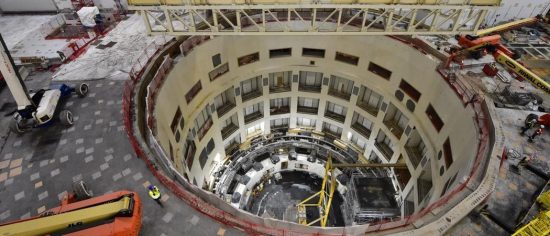
The ITER organization has confirmed that the International Thermonuclear Experimental Reactor is not designed to produce net power. This disclosure comes four years after articles in New Energy Times revealed that the ITER design is equivalent to a zero-net-power reactor.
In an article in the French newspaper Le Canard Enchainé last week, Michel Claessens, the former ITER organization spokesman, explained the ITER power discrepancy.
“For many years, it was claimed that the reactor will generate ten times the power injected. It is completely wrong. Thanks to a patient investigation, the American journalist Steven Krivit showed that ITER will consume as much [power] as it will generate,” Claessens said. “We know now that the net [power] balance will be close to zero.”
New Energy Times 3rd Nov 2021
”Cocooning” Hanford nuclear reactors conveniently leaves the $600 billion clean-up to future generations
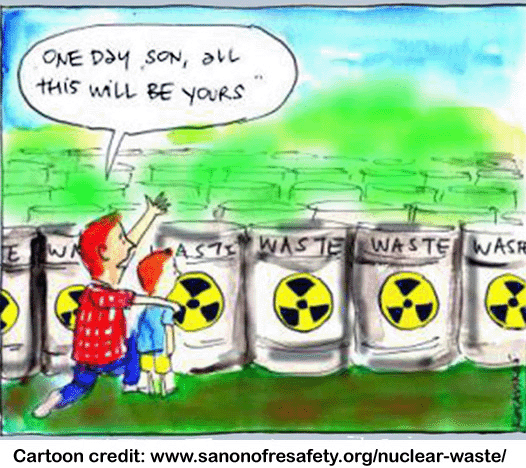
Future generations will decide the final disposition of the eight Hanford reactors.
The bigger question is whether future generations will be willing to pay the massive costs of Hanford cleanup, he said.
Carpenter said the estimated cost to completely clean up just the tank wastes at the Hanford site is around $660 billion.
“It’s rather grim. It’s multigenerational,” he said.
“This will cost more than anyone thought possible,” Carpenter said of the tank wastes and other wastes that were dumped into the ground at Hanford. “It’s a hidden cost of the (nuclear) buildup.
US government works to ‘cocoon’ old nuclear reactors https://abcnews.go.com/Technology/wireStory/us-government-works-cocoon-nuclear-reactors-80964651
Costs to clean up a massive nuclear weapons complex in Washington state are usually expressed in the hundreds of billions of dollars and involve decades of work, By NICHOLAS K. GERANIOS Associated Press5 November 2021 SPOKANE, Wash. — Costs to clean up a massive nuclear weapons complex in Washington state are usually expressed in the hundreds of billions of dollars and involve decades of work.
usually expressed in the hundreds of billions of dollars and involve decades of work.
But one project on the Hanford Nuclear Reservation is progressing at a much lower price.
The federal government is moving forward with the “cocooning” of eight plutonium production reactors at Hanford that will place them in a state of long-term storage to allow radiation inside to dissipate over a period of decades, until they can be dismantled and buried.
“It’s relatively non-expensive,” Mark French, a manager for the U.S. Department of Energy, said of cocooning. “The cost of trying to dismantle the reactor and demolish the reactor core would be extremely expensive and put workers at risk.”
The federal government built nine nuclear reactors at Hanford to make plutonium for atomic bombs during World War II and the Cold War. The site along the Columbia River contains America’s largest quantity of radioactive waste.
The reactors are now shut down and sit like cement fortresses near the southeastern Washington city of Richland. Six have already been cocooned for long-term storage, and two more are headed in that direction. The ninth reactor was turned into a museum as part of the Manhattan Project National Historical Park.
While World War II ended in 1945 and the Cold War ended in 1989, the United States is still paying billions of dollars per year for the disposal of the nuclear waste produced by the atomic weapons that played a big role in ending those conflicts. The biggest expense is dealing with a massive volume of liquid wastes left over from the production of plutonium, a key ingredient in nuclear weapons.
While the liquid wastes stored in 177 underground tanks will take decades of work and hundreds of billions of dollars to clean, efforts to secure the nine plutonium reactors are much closer to completion.
The last two reactors, shut down in 1970 and 1971, are about to enter the cocooning stage, when they are covered with steel and cement to prevent radioactivity from escaping into the environment, French said.
The cocoons are expected to last about 75 years, by which time the radioactivity inside will have dramatically decreased and there presumably will be a plan for final disposition of the remaining parts, French said.
Every five years, workers enter the reactor building to make sure there are no leaks or rodent or bird infestations, he said.
Cleanup of Hanford, which has about 11,000 employees and is half the size of Rhode Island, started in the late 1980s, and now costs about $2.5 billion per year. The work has been slowed by technical issues, lack of funding, lawsuits from state regulators, worker exposure to radiation and turnover of contractors on the complex job.
But the handling of the old reactors is a bright spot.
The nine reactors — called B Reactor, C Reactor, D Reactor, DR Reactor, F Reactor, H Reactor, K-East Reactor, K-West Reactor, and N Reactor — were built from 1943 through 1965.
They were constructed next to the Columbia River because of the abundance of hydropower and cooling water needed by the reactors during operation.
All have been cocooned except K-East and K-West. Work on cocooning the K-East reactor has already started and should be finished by 2023, French said. Work on the K-West reactor is scheduled for completion in 2026.
The cocoon plan for K-East and K-West is to basically construct steel buildings around them. Each building is 158 feet (48.2 meters) long, 151 feet (46 meters) wide and 123 feet (37.5 meters) tall, French said. The two steel buildings will cost less than $10 million each.
The government also operated five plutonium production reactors at the Savannah River Site in South Carolina during the Cold War. All of those are also shut down, although three of the reactor buildings are being used to store radioactive materials Two of the reactors at Savannah River are closed but under a different procedure than the Hanford reactors, said Amy Boyette, a spokeswoman for Savannah River.
Future generations will decide the final disposition of the eight Hanford reactors, French said. They will likely be dismantled and buried in the central area of the Hanford site, away from the river.
Robots may be deployed in the future” for that work, French said.
Hanford watchdogs generally agree with this process, said Tom Carpenter, director of the Seattle-based watchdog group Hanford Challenge.
“Nobody is raising any concerns about cocooning,” Carpenter
said. “We’re all worried about the tank waste that needs immediate and urgent attention.”
The bigger question is whether future generations will be willing to pay the massive costs of Hanford cleanup, he said.
Carpenter said the estimated cost to completely clean up just the tank wastes at the Hanford site is around $660 billion.
“It’s rather grim. It’s multigenerational,” he said.
“This will cost more than anyone thought possible,” Carpenter said of the tank wastes and other wastes that were dumped into the ground at Hanford. “It’s a hidden cost of the (nuclear) buildup.
By then, there might be bigger budget concerns such as dealing with the effects of climate change, Carpenter said.
The most intriguing of the old reactors is the B Reactor, the first one built during World War II. It will not be cocooned, and can be visited by tourists at the national historical park. B Reactor, which shut down in 1968, was cleaned up enough to allow some 10,000 tourists to visit each year and learn the history of Hanford. It has been designated a National Historic Landmark.
Plutonium from Hanford’s B Reactor was used in the testing of the world’s first atomic bomb in July 1945. Called the Trinity Test, the bomb was blown up in the New Mexico desert. Hanford plutonium was also used for the bomb that was dropped over Nagasaki, Japan, on Aug. 9, 1945.
Health impacts of nuclear accidents

Too expensive, too slow: Even the baseload argument doesn’t work for nuclear. ReNeweconomy, Mark Diesendorf 29 October 2021
”’………………………………………Health impacts of nuclear accidents
Another misleading pro-nuclear statement revived following the Fukushima Daiichi disaster in 2011 is that no excess cancer incidence has been observed around Fukushima, implying that no cancers will be induced. The logical error is to assume that the absence of evidence implies no impact.
It is still too early for most types of cancer, which have latent periods of 20–60 years, to appear around Fukushima. The only cancers likely to appear within a decade after exposure are thyroid cancer and leukemia.
A large increase in thyroid cancers has been observed in the region, but their cause is debated by some on the grounds that the increase could be the result of better screening. Leukemia is an uncommon disease and so even a large percentage increase would be impossible to verify statistically with high confidence (see UNSCEAR 2020).
Fortunately for the citizens of Tokyo, the wind was mostly blowing offshore during the meltdowns of three of the six Fukushima reactors, sending about 80 per cent of the emitted radioactive material out over the Pacific.
Soon after the disaster an exclusion zone was established around the power station and more than 100,000 people evacuated. For these reasons, Fukushima tells us very little about radiation-induced cancers.
The Chernobyl Forum, a group dominated by the International Atomic Energy Agency, estimated that the Chernobyl disaster in 1986 could be responsible for “up to 4000 cancer deaths” in Ukraine, Belarus and Russia. However, the disaster also sprayed radionuclides over large areas of Europe outside those countries.
The International Agency for Research on Cancer (Cardis et al. 2006) estimated that the disaster would be responsible for 16,000 cancer deaths in Europe by 2065.
Another estimate, by a team of medical researchers and practitioners in Ukraine, Belarus and Russia (Yablokov et al. 2006), found that the total number of deaths in their countries could be an order of magnitude higher, but a quantitative estimate was probably impossible due to uncertainties in the total quantities of radionuclides emitted, geographic distribution of radioactivity, and limitations in medical diagnosis and monitoring.
Most of the evidence that low-level radiation is carcinogenic comes from detailed studies of the survivors of Hiroshima and Nagasaki, medical professionals who worked with radiation, uranium miners, children who received CT scans, children living near nuclear power stations, and children who were exposed in utero in the bad old days when pregnant women were routinely x-rayed.
This is the basis of the linear-no-threshold model, the scientific understanding that the number of cancers induced by ionising radiation is proportional to the dose received and that there’s no threshold.
Was the Fukushima disaster “natural”?
Pro-nuclear campaigners claim that the disaster at Fukushima Daiichi was entirely the fault of the tsunami, that it was all just “a natural event”.
Yet the choice of technology cannot be exonerated, because it resulted in mass evacuation, compensation payments (huge in total but inadequate for individuals), destruction of the local agriculture and fishing industries, temporary loss of national tourism, temporary collapse of the electricity grid, massive removal of radioactive soil and vegetation, a multi-decades-long continuing process to decommission the reactors, and the need to import vast quantities of fossil fuels. (The latter would have been greatly reduced if the government’s prior commitment to nuclear energy hadn’t resulted in its neglect of renewables.)
Total costs have been estimated at over US$500 billion, while the nuclear power station was insured for only US$1.5 billion. …………………. https://reneweconomy.com.au/too-expensive-too-slow-even-the-baseload-argument-doesnt-work-for-nuclear/
Countering the nuclear lobby’s deceptive spin about ionising radiation
The video below is several years old. Children in Ukraine and Belarus are still suffering with cancers and other serious health effects of the nuclear disaster. The ABC ‘s ”Foreign Correspondent” recently covered their plight, which is still terrible, but the video of that seems to be unavailable.
Extract from The nuclear industry’s updated songsheet remains outdated, Pearls and Irritations, By Mark Diesendorf, 22 Oct 21
”…………. Another misleading pro-nuclear statement revived following the Fukushima Daiichi disaster in 2011 is that no excess cancer incidence has been observed around Fukushima, implying that no cancers will be induced. The logical error is to assume that the absence of evidence implies no impact.
For a start, it is still too early for most types of cancer, which have latent periods of 20–60 years, to appear around Fukushima. The only cancers likely to appear within a decade after exposure are thyroid cancer and leukemia. A large increase in thyroid cancers has been observed in the region, but their cause is debated by some on the grounds that the increase could be the result of better screening. Leukemia is an uncommon disease and so even a large percentage increase would be impossible to verify statistically with high confidence. (See UNSCEAR 2020b)
Fortunately for the citizens of Tokyo, the wind was mostly blowing offshore during the meltdowns of three Fukushima reactors, sending about 80 per cent of the emitted radioactive material out over the Pacific. Soon after the disaster an exclusion zone was established around the power station and more than 100,000 people evacuated. For these reasons, Fukushima tells us very little about radiation-induced cancers.
Most of the evidence that low-level radiation is carcinogenic comes from detailed studies of the survivors of Hiroshima and Nagasaki, medical professionals who worked with radiation, uranium miners, children living near nuclear power stations, and children who were exposed in utero in the bad old days when pregnant women were routinely x-rayed. This is the basis of the linear-no-threshold model, the scientific understanding that the number of cancers induced by ionising radiation is proportional to the dose received and that there’s no threshold. Therefore, even natural background radiation, to which we are all exposed, and medical x-rays contribute very small fractions of cancer prevalence…………https://johnmenadue.com/the-nuclear-industrys-updated-songsheet-remains-outdated/
Radioactive contamination from the partially-burned former Santa Susanna nuclear research facility

Radioactive microparticles related to the Woolsey Fire in Simi Valley, CA SCience Direct, MarcoKaltofenaMaggieGundersenbArnieGundersenb Worcester Polytechnic Institute, Dept. of Physics, Fairewinds Energy Education, 8 October 2021.
Highlights
Wildfire in radiologically contaminated zones is a global concern; contaminated areas around Chernobyl, Fukushima, Los Alamos, and the Nevada Nuclear Test Site have all experienced wildfires.
Three hundred sixty samples of soil, dust and ash were collected in the immediate aftermath of the Los Angeles (CA, USA) Woolsey fire in 2018.
Radioactive contamination from the partially-burned former Santa Susanna nuclear research facility was found in the fire zone.
A limited number of widely scattered locations had evidence of radioactive microparticles originating at the research facility.
X-ray data showed that ashes from the fire could spread site contaminants to distant, but widely spaced, locations.
Abstract
In November 2018, the Woolsey Fire burned north of Los Angeles, CA, USA, potentially remobilizing radioactive contaminants at the former Santa Susana Field Laboratory, a shuttered nuclear research facility contaminated by chemical and radiochemical releases. Wildfire in radiologically contaminated zones is a global concern; contaminated areas around Chernobyl, Fukushima, Los Alamos, and the Nevada Nuclear Test Site have all experienced wildfires. Three weeks after the Woolsey Fire was controlled, sampling of dusts, ashes, and surface soils (n = 360) began and were analyzed by alpha- and beta-radiation counting. Samples were collected up to a 16 km radius from the perimeter of the laboratory. Controls and samples with activities 1σ greater than background were also examined by alpha and/or gamma spectroscopy or Scanning Electron Microscopy with Energy Dispersive X-ray analysis. Of the 360 samples collected, 97% showed activities at or close to site-specific background levels. However, offsite samples collected in publicly-accessible areas nearest to the SSFL site perimeter had the highest alpha-emitting radionuclides radium, thorium, and uranium activities, indicating site-related radioactive material has escaped the confines of the laboratory.
In two geographically-separated locations, one as far away as 15 km, radioactive microparticles containing percent-concentrations of thorium were detected in ashes and dusts that were likely related to deposition from the Woolsey fire. These offsite radioactive microparticles were colocated with alpha and beta activity maxima. Data did not support a finding of widespread deposition of radioactive particles. However, two radioactive deposition hotspots and significant offsite contamination were detected near the site perimeter……………………………

4. Conclusions
A significant majority of samples (97% of 360 samples) collected in the study zone registered radioactivity levels that matched existing area background levels. Nevertheless, some ashes and dusts collected from the Woolsey Fire zone in the fire’s immediate aftermath contained high activities of radioactive isotopes associated with the Santa Susana Field Laboratory (SSFL). The data show that Woolsey Fire ash did, in fact, spread SSFL-related radioactive microparticles, and the impacts were confined to areas closest to SSFL and at least three other scattered locations in the greater Simi Valley area. Alpha and beta counting, high-resolution alpha and gamma spectroscopy, and X-ray microanalysis using SEM/EDS confirmed the presence of radioactive microparticles in the Woolsey Fire-related ashes and dusts.
Most of the fire-impacted samples found near the SSFL site’s perimeter were on lands accessible to the public. There were, however, scattered localized areas of increased radioactivity due to the presence of radioactive microparticles in ash and recently-settled dusts collected just after the Woolsey fire. These radioactive outliers were found in Thousand Oaks, CA, and Simi Valley, CA, about 15 and 5 km distant from SSFL, respectively. The Thousand Oaks samples had alpha count rates up to 19 times background, and X-ray spectroscopy (SEM) identified alpha-emitting thorium as the source of this excess radioactivity. Excessive alpha radiation in small particles is of particular interest because of the relatively high risk of inhalation-related long-term biological damage from internal alpha emitters compared to external radiation.
The nuclides identified as the sources of excess radioactivity in impacted samples were predominately isotopes of radium, uranium, and thorium. These have naturally-occurring sources, but these isotopes are also contaminants of concern at SSFL and were detected at generally increasing activities as the distance from SSFL decreased. In addition, the number of radioactive microparticles per gram of particulate matter also increased strongly with decreasing distance from SSFL. These data demonstrate that fire and/or other processes have spread SSFL contamination beyond the facility boundary………..
……https://www.sciencedirect.com/science/article/pii/S0265931X21002277?dgcid=coauthor
Terra Power’s Natrium nuclear reactor will be an economic lemon

This host of factors makes it reasonably certain that the Natrium will not be economically competitive.
In other words, even if has no technical problems, it will be an economic lemon.
Ramana, Makhijani: Look before you leap on nuclear https://trib.com/opinion/columns/ramana-makhijani-look-before-you-leap-on-nuclear/article_4508639b-d7e6-50df-b305-07c929de40ed.html, Oct 16, 2021
The Cowboy State is weighing plans to host a multi-billion dollar “demonstration” nuclear power plant — TerraPower’s Natrium reactor. The long history of similar nuclear reactors, dating back to 1951, indicates that Wyoming is likely to be left with a nuclear lemon on its hands.

The Natrium reactor design, which uses molten sodium as a coolant (water is used in most existing commercial nuclear reactors), is likely to be problematic. Sodium reacts violently with water and burns if exposed to air, a serious vulnerability. A sodium fire, within a few months of the reactor starting to generate power, led to Japan’s Monju [at left] demonstration reactor being shut down.

At 1,200 megawatts, the French Superphénix was the largest sodium-cooled reactor, designed to demonstrate commercial feasibility. Plagued by operational problems, including a major sodium leak, it was shut down in 1998 after 14 years, having operated at an average capacity of under 7 percent compared to the 80 to 90 percent required for commercial operation. Other sodium-cooled reactors have also experienced leaks, which are very difficult to prevent because of chemical interactions between sodium and the stainless steel used in various reactor components. Finally, sodium, being opaque, makes reactor maintenance and repairs notoriously difficult.
Sodium-cooled reactors can experience rapid and hard-to-control power surges. Under severe conditions, a runaway chain reaction can even result in an explosion. Such a runaway reaction was the central cause of the 1986 Chernobyl reactor explosion, though that was a reactor of a different design. Following Chernobyl, Germany’s Kalkar sodium-cooled reactor, about the same size as the proposed Natrium, was abandoned without ever being commissioned, though it was complete.
All these technical and safety challenges naturally drive up the costs of sodium-cooled reactors, making them significantly more expensive than conventional nuclear reactors. More than $100 billion, in today’s dollars, has been spent worldwide in the attempt to commercialize essentially this design and associated technologies, to no avail.
The Natrium design, being even more expensive than present-day reactors, will therefore be more expensive than practically every other form of electricity generation. The Wall Street firm, Lazard, estimates that electricity from new nuclear plants is several times more than the costs at utility-scale solar and wind power plants. Further, the difference has been increasing.
To this bleak picture, Terrapower has added another economically problematic feature: molten salt storage to allow its electric output to vary. Terrapower hopes this feature will help it integrate better into an electricity grid that has more variable electricity sources, notably wind and solar.
Molten salt storage would be novel in a nuclear reactor, but it is used in concentrating solar power projects, where it can cost an additional $2,000 per kilowatt of capacity. At that rate, it could add a billion dollars to the Natrium project.
This host of factors makes it reasonably certain that the Natrium will not be economically competitive. In other words, even if has no technical problems, it will be an economic lemon.
To top it all off, the proposed Wyoming TerraPower demonstration project depends on government funds. Last year, the Department of Energy awarded TerraPower $80 million in initial taxpayer funding; this may increase $1.6 billion over seven years, “subject to the availability of future appropriations” and Terrapower coming up with matching funds.
Despite government support, private capital has recently abandoned a more traditional project, the mPower small modular reactor, resulting in its termination in 2017. And it was Congress that refused to appropriate more money for the sodium-cooled reactor proposed for Clinch River, Tennessee when its costs skyrocketed, thereby ending the project in 1983.
A much harder look at the facts is in order, lest Wyoming add to the total of many cancelled nuclear projects and abandoned construction sites. Of course, the Natrium lemon might be made into lemonade by converting it to an amusement park if it is never switched on, like the Kalkar reactor, now refashioned into Wunderland Kalkar, an amusement park in Germany, near the border with the Netherlands. For energy, the state might look to its natural heritage – its wind power potential is greater than the combined generation of all 94 operating U.S. nuclear reactors put together, which are on average, about three times the size of Natrium.
M. V. Ramana is Professor and Simons Chair in Disarmament, Global and Human Security and the Director of the Liu Institute for Global Issues at the School of Public Policy and Global Affairs, University of British Columbia. Dr. Ramana holds a Ph.D. in Physics from Boston University.
Arjun Makhijani, President of the Institute for Energy and Environmental Research, holds a Ph.D. in engineering (nuclear fusion) from the University of California at Berkeley.
‘Profiteers of Armageddon’: Report Reveals Who Benefits From US ‘Nuclear Modernization’ Plan
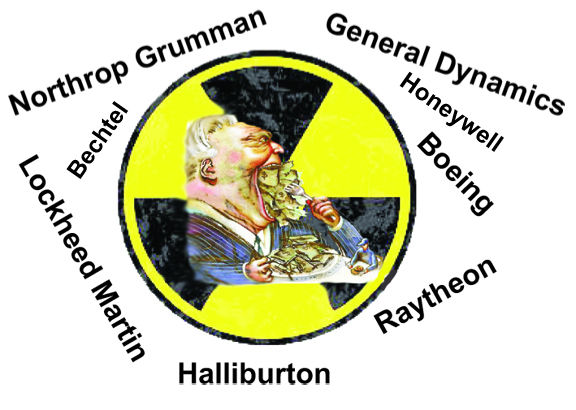
While “a handful of prime contractors” are the initial recipients and main beneficiaries of public money spent on bombers, missiles, and submarines, “the funds trickle down to subcontractors” that often include other prominent companies. The report names firms such as Bechtel, General Dynamics, Honeywell, Lockheed Martin, Northrop Grumman, and Raytheon.
Hartung directs attention to the millions of dollars in political activities by key contractors, writing that “while not all of this spending is devoted to lobbying on nuclear weapons programs, these expenditures are indicative of the political clout they can bring to bear on Congress as needed to sustain and expand the budgets for their nuclear weapons-related programs.”

They also spent $57.9 million on lobbying last year, employing 380 lobbyists, over two-thirds of whom “passed through the ‘revolving door’ from top positions in Congress, the Pentagon, and the Department of Energy to work for nuclear weapons contractors as executives or board members.”
And it should be noted that the revolving door swings both ways,” the report adds, noting that “three of the past five secretaries of defense worked as lobbyists or board members of major nuclear weapons contractors before taking up their positions in the Pentagon: James Mattis (General Dynamics); Mark Esper (Raytheon); and Lloyd Austin (Raytheon).”
‘Profiteers of Armageddon’: Report Reveals Who Benefits From US ‘Nuclear Modernization’ Plan, While taking aim at special interest lobbying and corporate profits that impede “sensible” policy, the author argues the “only way to be truly safe from nuclear weapons is to eliminate them altogether.” https://www.commondreams.org/news/2021/10/12/profiteers-armageddon-report-reveals-who-benefits-us-nuclear-modernization-plan
JESSICA CORBETT A short list of contractors that pour large sums of money into campaign contributions, lobbying, and industry-friendly think tanks benefits from the U.S. government’s ongoing, decadeslong “nuclear modernization” plan worth up to $2 trillion, according to a report out Tuesday.

The issue brief—entitled Profiteers of Armageddon: Producers of the next generation of nuclear weapons—was authored by William Hartung, director of the Arms and Security Program at the Center for International Policy, who also outlined his report in Inkstick.
Hartung details how the U.S. departments of Defense (DOD) and Energy (DOE) are ramping up a plan to build the next generation of nuclear-armed bombers, missiles, and submarines as well as warheads, and the beneficiaries are major contractors along with operators of the National Nuclear Security Administration’s (NNSA) nuclear weapons complex.
The brief notes the U.S. nuclear weapons budget has climbed in recent years to over $43 billion in the Biden administration’s proposed budget for fiscal year 2022, and warns that “this figure will grow dramatically,” pointing to a Congressional Budget Office (CBO) estimate that parts of the Pentagon’s plan “will cost tens of billions each over the next decade, including $145 billion for ballistic missile submarines, $82 billion for the new Intercontinental Ballistic Missile (ICBM), and $53 billion for the new nuclear-armed bomber.”
“And the costs will not end there,” the report continues, noting that “the estimated lifetime cost of building and operating the new ICBM is $264 billion.”
While “a handful of prime contractors” are the initial recipients and main beneficiaries of public money spent on bombers, missiles, and submarines, “the funds trickle down to subcontractors” that often include other prominent companies. The report names firms such as Bechtel, General Dynamics, Honeywell, Lockheed Martin, Northrop Grumman, and Raytheon.
Hartung directs attention to the millions of dollars in political activities by key contractors, writing that “while not all of this spending is devoted to lobbying on nuclear weapons programs, these expenditures are indicative of the political clout they can bring to bear on Congress as needed to sustain and expand the budgets for their nuclear weapons-related programs.”
From 2012 to 2020, campaign contributions from contractors mentioned in the brief topped $119 million, more than a quarter of which was in the 2020 cycle alone. They also spent $57.9 million on lobbying last year, employing 380 lobbyists, over two-thirds of whom “passed through the ‘revolving door’ from top positions in Congress, the Pentagon, and the Department of Energy to work for nuclear weapons contractors as executives or board members.”
And it should be noted that the revolving door swings both ways,” the report adds, noting that “three of the past five secretaries of defense worked as lobbyists or board members of major nuclear weapons contractors before taking up their positions in the Pentagon: James Mattis (General Dynamics); Mark Esper (Raytheon); and Lloyd Austin (Raytheon).”
The brief also pushes back against “routinely exaggerated” claims about job creation that both companies and lawmakers use to promote nuclear weapons programs, and points out that contractors pump millions into supporting think tanks that opine on relevant policy.
Continued lobbying for the modernization plan “ignores the fact that building a new generation of nuclear weapons at this time will make the world a more dangerous place and increase the risk of nuclear war while fueling the new arms race,” Hartung argues. “It’s long past time that we stopped allowing special interest lobbying and corporate profits stand in the way of a more sensible nuclear policy.”
While asserting that “the only way to be truly safe from nuclear weapons is to eliminate them altogether,” in line with a global treaty that states with such weapons continue to oppose, Hartung also highlights that “the organization Global Zero has outlined an alternative nuclear posture that would eliminate ICBMs, reduce the numbers of bombers and ballistic missile submarines, and implement a policy of no first use of nuclear weapons as part of a ‘deterrence-only’ strategy that would reduce the danger of a nuclear conflict.”
Global Zero CEO Derek Johnson welcomed Hartung’s brief in a tweet Tuesday.
Earlier this year, Sen. Elizabeth Warren (D-Mass.) and Rep. Adam Smith (D-Calif.) led the reintroduction of legislation (S.1219/H.R. 2603) to establish that “it is the policy of the United States to not use nuclear weapons first,” but the bill has not advanced in Congress, despite pressure from progressive lawmakers and campaigners.
Peace Action of Wisconsin’s Pamela Richard said in August that while activists encourage the passage of Warren and Smith’s bill as well as a related one (S. 1148/H.R. 669) from Sen. Ed Markey (D-Mass.) and Rep. Ted Lieu (D-Calif.), “our long-term goal is total nuclear disarmament.”
Smoke from nuclear war would devastate ozone layer, alter climate

SMOKE FROM NUCLEAR WAR WOULD DEVASTATE OZONE LAYER, ALTER CLIMATE Atmospheric impacts of global nuclear war would be more severe than previously thought https://news.ucar.edu/132813/smoke-nuclear-war-would-devastate-ozone-layer-alter-climate
OCT 13, 2021 – BY DAVID HOSANSKY The massive columns of smoke generated by a nuclear war would alter the world’s climate for years and devastate the ozone layer, endangering both human health and food supplies, new research shows.
The international study paints an even grimmer picture of a global nuclear war’s aftermath than previous analyses. The research team used newly developed computer climate modeling techniques to learn more about the effects of a hypothetical nuclear exchange, including complex chemistry interactions in the stratosphere that influence the amounts of ultraviolet (UV) radiation that reach the planet’s surface.
Since the ozone layer protects Earth’s surface from harmful UV radiation, such impacts would be devastating to humans and the environment. High levels of UV radiation have been linked to certain types of skin cancer, cataracts, and immunological disorders. The ozone layer also protects terrestrial and aquatic ecosystems, as well as agriculture.
“Although we suspected that ozone would be destroyed after nuclear war and that would result in enhanced ultraviolet light at the Earth’s surface, if there was too much smoke, it would block out the ultraviolet light,” said study co-author Alan Robock, a professor of climate science at Rutgers University. “Now, for the first time, we have calculated how this would work and quantified how it would depend on the amount of smoke.”
Continue reading1 This Month



Shut down the radiation-damaged Heysham nuclear reactors now
To see nuclear-related stories in greater depth and intensity – go to https://nuclearinformation.wordpress.com

Say No to NASA’s Reckless Nuclear Reactor on the Moon
Say No to NASA’s Reckless Nuclear Reactor on the Moon
-
Archives
- October 2026 (256)
- September 2026 (339)
- August 2026 (330)
- July 2026 (355)
- June 2026 (287)
- May 2026 (306)
- April 2026 (356)
- March 2026 (251)
- February 2026 (267)
- January 2026 (308)
- December 2025 (358)
- November 2025 (359)
-
Categories
- 1
- 1 NUCLEAR ISSUES
- business and costs
- climate change
- culture and arts
- ENERGY
- environment
- health
- history
- indigenous issues
- Legal
- marketing of nuclear
- media
- opposition to nuclear
- PERSONAL STORIES
- politics
- politics international
- Religion and ethics
- safety
- secrets,lies and civil liberties
- spinbuster
- technology
- Uranium
- wastes
- weapons and war
- Women
- 2 WORLD
- ACTION
- AFRICA
- Atrocities
- AUSTRALIA
- Christina's notes
- Christina's themes
- culture and arts
- Events
- Fuk 2022
- Fuk 2023
- Fukushima 2017
- Fukushima 2018
- fukushima 2019
- Fukushima 2020
- Fukushima 2021
- general
- global warming
- Humour (God we need it)
- Nuclear
- RARE EARTHS
- Reference
- resources – print
- Resources -audiovicual
- Weekly Newsletter
- World
- World Nuclear
- YouTube
-
RSS
Entries RSS
Comments RSS

