Freezing wall to be used for longer period than expected, “trump card” of countermeasure against contaminated water at Fukushima Daiichi Nuclear Power Plant, without sufficient verification
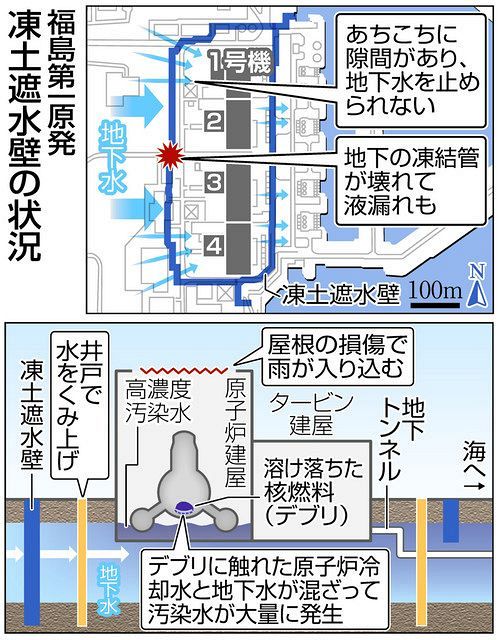
The frozen soil barrier wall at the Fukushima No. 1 Nuclear Power Plant of the Tokyo Electric Power Company (TEPCO) was built at a cost of 34.5 billion yen. Initially, TEPCO had planned to finish the work by 2021, but five years have passed since the freeze, and a large amount of contaminated water continues to be generated, with no prospect of even reaching zero. The ice wall, which will cost hundreds of millions of dollars to maintain every year, will enter long-term operation without sufficient verification. (Kenta Onozawa)
Freezing soil with cooling liquid, annual maintenance cost of billions of yen
The freezing wall was built to prevent groundwater from the mountains from entering the buildings where highly radioactive materials such as melted nuclear fuel (debris) remain after the accident. Freezing began in March 2004, and the entire area was frozen in nearly two years. The annual maintenance costs, including electricity for freezing, cost more than one billion yen when the system was first introduced, and TEPCO is bearing the cost.
From December 2007 to January 2009, there were a series of problems with cooling liquid leaking from a total of five frozen pipes. According to TEPCO, all of them are located under the road near the reactor building, and it is highly likely that the vibration of passing vehicles caused fatigue damage to the metal parts.
TEPCO, which had not envisioned long-term operation of the plant, had been repairing problems only after they occurred, but from this year, it has set a frequency for replacement of parts and will prepare replacement parts in advance. A spokesperson said, “The frozen earth wall is effective and will be used continuously. However, from this year, the frequency of replacement will be set and replacement parts will be prepared in advance.
Groundwater through gaps, limited effect
”In March 2006, TEPCO announced that it would build a freeze-earth wall at the Fukushima Daiichi Nuclear Power Plant.
In March 2006, TEPCO announced an estimate that the frozen soil wall prevented about 95 tons of groundwater per day from entering the buildings. Without the wall, the amount would have been 189 tons per day, and the company stressed that the amount had been halved.
However, there is a lack of evidence for the estimate, as it was based on an evaluation of the period when there was little rainfall, and it does not distinguish between the effects of other measures, such as the pumping up of groundwater by sub-drainage wells around the building. Toyoshi Sarada, chairman of the Nuclear Regulation Authority (NRA), has declared that “the main role of groundwater countermeasures is to pump up the sub-drainage.
At the press conference when the calculations were released, Naohiro Masuda, who was the chief decommissioning officer of TEPCO (now president of JNFL), stated clearly that “we will continue to verify” the effectiveness of the frost wall. However, the spokesman now avoids explaining, saying, “It is difficult to show the effects of individual measures.
Calls from the Regulatory Commission for an alternative plan
Initially, the government and TEPCO had set a goal of stopping the generation of contaminated water by around 2009. However, they still do not know where the groundwater is coming from.
The amount of contaminated water, which was 490 tons per day in FY2003, was reduced to about 140 tons in FY2008, but zero was not achieved, and the goal was set back to 100 tons in 2013. TEPCO said, “We will continue with the current measures until 2013. After that, we are still studying.
The cost of maintaining the frost wall will be covered by the electricity bills paid by consumers to TEPCO. In the regulatory commission’s study group, there is a strong opinion among experts that “from the viewpoint of cost-effectiveness, the frozen soil wall should be abandoned and steel plates or concrete walls should be embedded. In response to this opinion, TEPCO simply replied, “We are considering it,” and even 10 years after the accident, there is no end in sight to the contaminated water measures.
Tochigi prefecture: waste below 8,000 becquerels to be mixed with general waste and incinerated
How to incinerate without further radioactive particles dispersion? Incinerators multiple screening filters are never 100% successful…
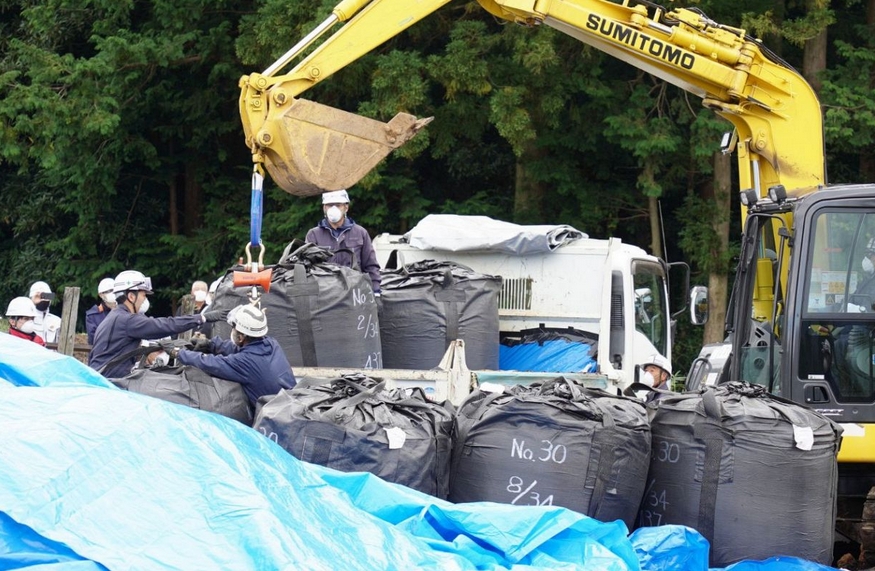
On April 22, farmers in six cities and towns in Tochigi Prefecture began removing “designated waste” containing radioactive materials generated by the accident at the Fukushima Daiichi Nuclear Power Plant of the Tokyo Electric Power Company. The waste will be temporarily consolidated at a waste treatment facility in the city. It has been decided that each of the six cities and towns will tentatively consolidate the waste to reduce the burden on the farmers, but Nasushiobara is the first city to take concrete steps.
Fifty-three farmers in the city have stored a total of 1,216 tons of waste, and on this day, one farmer took out about 1.5 tons.
According to the Ministry of the Environment, the removal of radioactive materials from all the farms in the city is expected to be completed by next December. About 20% of the waste with a radioactive content of more than 8,000 becquerels per kilogram will be stored at a waste treatment facility, while the waste below 8,000 becquerels will be mixed with general waste and incinerated.
S. Korea to raise need for int’l discussions on Japan’s Fukushima plan in IMO meeting
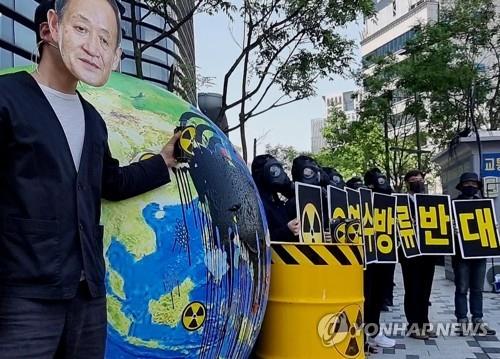
SEOUL, Oct. 25 (Yonhap) — South Korea will once again call for international discussions on Japan’s plan to discharge radioactive water from its crippled Fukushima nuclear power plant into the ocean at this week’s international maritime gathering, the oceans ministry said Monday.
During the London Convention and Protocol meeting set to begin on the day, the ministry will raise the need to discuss Japan’s planned disposal within the Protocol framework, and urge Japan to disclose related information in a full and transparent manner.
The meeting will be held via teleconferencing and continue through Friday.
“We will continue to bring up the issue to raise the awareness of the international community about its potential negative impacts on the maritime environment, and to seek ways to deal with the waste water safely,” a ministry official said.
Earlier this month, Japan finalized plans to start discharging the radioactive waste water stored in tanks at the Fukushima Daiichi Nuclear Power Plant into the Pacific Ocean in 2023. More than 1.2 million tons of tritium-laced water is expected to be disposed.
South Korea has urged Japan to have in-depth discussions with neighboring countries before pushing ahead with the plan, and has been working to garner international support for seeking alternatives.
In August, the Seoul government submitted a document to the London Protocol secretariat that suggests the formation of a task force in charge of the Fukushima issue.
Japan has insisted that the matter is not subject to discussions under the Protocol. But many nations and international organizations have voiced concerns.
The London Convention is meant to promote the effective control of all sources of marine pollution and to take steps to prevent marine pollution by human activities. South Korea joined the Convention in 1993, and a total of 87 nations are currently its members.
The London Protocol calls for banning all dumping, with some exceptions. It has 53 signatories, including South Korea which joined it in 2009.
China and 8 Asia-Pacific island countries raise joint objection against Fukushima wastewater disposal
22 oct. 2021
China and eight Asia Pacific island countries have raised a collective objection… against the disposal of wastewater from the Japan’s Fukushima nuclear power plant. China’s Foreign Affairs Ministry says the nine countries adopted a joint declaration,… following a meeting led by Beijing. The declaration urges for the country which governs the issue, to make a decision regarding the disposal carefully… and to cooperate with the international community. The declaration did not directly mention Japan,… but is largely seen a move to protest against Tokyo’s plan to release the contaminated water. Among the eight island countries are Kiribati, Fiji, and Papua New Guinea.
Fukushima: Japan’s new PM won’t delay release of contaminated water into ocean
Lying by omission. In that accumulated radioactive water on Fukushima Daiichi nuclear plant site, tritium is only one of the 64 radionuclides present, as the ALPS filtering system did not work fully to remove ALL radionuclides from that water.

Fumio Kishida said every effort would be made to reassure local people that disposing of the water in the Pacific was safe
Japan’s new prime minister, Fumio Kishida, has said that there can be no delay to plans to release contaminated water from the wrecked Fukushima Daiichi nuclear power plant into the sea, despite opposition from fishers and neighbouring countries.
Kishida, who made his first trip to the plant at the weekend since becoming prime minister last month, said every effort would be made to reassure local people that disposing of the water in the Pacific Ocean was safe.
The wastewater, which is pumped up from reactor basements and treated to remove all but one radioactive material, has built up at the site since the plant suffered a triple meltdown in March 2011.
“I felt strongly that the water issue is a crucial one that should not be pushed back,” Kishida told reporters after being shown around by the plant’s operator, Tokyo Electric Power.
More than one million tonnes of water are being stored in 1,000 tanks at the site, and Tepco has warned that space will run out late next year.
The government and Tepco said in April that work to release the heavily diluted water would begin in the spring of 2023 and take decades to complete.
The move is opposed by nearby fishing communities which say it will undo years of hard work rebuilding their industry’s reputation since the plant was struck by a huge tsunami in March 2011, soon after Japan’s north-east coast was rocked by a magnitude-9 earthquake.
The decision ended years of debate over what to do with the water, with other options including evaporation or the construction of more storage tanks at other sites.
Neighbouring South Korea, which still bans seafood imports from the region, has repeatedly voiced concern, claiming that discharging the water represented a “grave threat” to the marine environment.
The South Korean Olympic committee made separate catering arrangements for the country’s athletes during the Tokyo Olympics amid concern they could be served food from Fukushima, even though produce from the region undergoes rigorous safety checks.
Japan’s government says releasing the water is the most realistic option and will enable workers at the site to proceed with decommissioning the plant – a costly operation that is expected to take about 40 years.
“We will provide explanations about safety from a scientific viewpoint and transparency in order to address people’s concerns,” Kishida said.
Japan has requested help from the International Atomic Energy Agency to ensure the discharge meets global safety standards, including treating the wastewater so its radioactivity levels are below legal limits.
Tepco’s Advanced Liquid Processing System reduces radioactive substances in the water to safe levels, but the system is unable to filter out tritium, a radioactive isotope of hydrogen.
Experts say tritium, a radioactive isotope of hydrogen, is only harmful to humans in very large doses, while government and Tepco officials have pointed out that working nuclear plants routinely dilute and release tritium into the ocean.
Kishida, who supports the restart of nuclear reactors that were idled after the Fukushima meltdown, offered flowers and prayed at a monument to the disaster in Namie, one of several communities near the plant that were declared no-go zones after the disaster. Some residents have since returned to their homes after evacuation orders were lifted.
Kishida has said that nuclear power must be part of Japan’s energy mix if it is to become carbon neutral by 2050. But he has yet to confirm if he will attend the Cop26 climate summit in Glasgow early next month, with Japanese media reports suggesting he won’t decide until after lower house elections are held at the end of this month.
Boris Johnson encouraged Kishida to attend the summit during a phone call last week, adding that Britain was considering lifting import restrictions on Fukushima produce that were introduced while it was a member of the European Union, according to the Kyodo news agency.
Prime Minister Kishida makes first inspection of Fukushima Daiichi Nuclear Power Plant after taking office

October 17, 2021
Prime Minister Fumio Kishida made his first inspection tour of the Fukushima Daiichi Nuclear Power Plant (Okuma and Futaba towns, Fukushima Prefecture) after assuming office on March 17. The Tokyo Shimbun’s nuclear power coverage team flew over the nuclear power plants by the Oozuru helicopter on March 11, and found that even a decade and a half after the accident, the reality is far from being “under control.
On the south side of the site, around the reactor buildings of Units 1-4, there are many cylindrical tanks for storing water that has been purified from contaminated water. On the north side of the site, containers filled with rubble and debris were piled up. Since the accident, the amount of waste contaminated by radiation at the Fukushima Daiichi Nuclear Power Plant has only increased. There is no way to even begin full-fledged containment work, such as removing the nuclear fuel (debris) that has melted down inside the reactor.
No progress in cutting high-dose vent pipes
The only progress that can be seen from the outside is that the exhaust pipes between the No. 1 and No. 2 reactors, which were 120 meters high, will be cut in half in 2020, reducing the risk of collapse. According to TEPCO’s plan, the removal of the pipes connecting the exhaust stack to the reactor buildings should have started, but the area around the pipes was quiet.
This pipe was highly contaminated during the accident by the venting process to reduce the pressure inside the reactor. Since it was dangerous for people to get close to the pipes, TEPCO planned to remove the pipes by remote control and was scheduled to start in early October. However, the mock-up test has been prolonged and there is still no way to start it. The fact that the process is not proceeding as planned has become the norm.
The construction site of a shaft for storing treated water for discharge into the ocean
Looking at Units 5 and 6, which did not have serious accidents, there were cranes and other heavy equipment along the sea. In this area, a shaft will be dug to release the treated water into the ocean. From there, an underground tunnel will be dug about one kilometer to the sea floor, and the treated water mixed with seawater will be released offshore. TEPCO is aiming to start releasing the treated water around spring 2011, and will continue to explain the plan to the local community, but there is strong opposition, especially from the fishing industry.
Some tanks under construction
At the southern end of the site, new tanks were being constructed in preparation for the oceanic release. Four tanks were visible before their lids were attached. TEPCO says it will secure a total of 23 tanks (about 30,000 tons) by November 2010.
A gaping hole in the underground drainage channel.
A gaping hole was found near the building of the ALPS (Advanced Radionuclide Purging System), which purifies and treats contaminated water. They were working on the construction of an underground drainage channel to drain rainwater when it rains heavily. Beside the heavy machinery, we could see a circular tube that appeared to be a tunnel member. The underground tunnel will be connected to the sea by next year’s typhoon season.
Unplanned debris “temporary accumulation” drastically increases in 9 months
In the northern part of the site, many containers were piled up. This is a “temporary accumulation site” where debris from the work was placed in an unplanned location. Because the planned debris storage area did not take into account slopes and other factors, there were fewer places to place containers than initially expected, and we were forced to rearrange the way we arranged the containers. In January of this year, they stopped the delivery of containers to the planned site and started to organize them, but in March, water containing radioactive materials leaked from one of the containers. However, in March, water containing radioactive materials leaked from one of the containers, and the number of temporary accumulations has been increasing rapidly due to delays in inspections.
The number of inadequately managed temporary accumulation sites is scattered at about 150 locations, and the total amount of debris is unknown. The Nuclear Regulation Authority (NRA) has pointed out the inadequate management of these sites, and TEPCO has been on the back foot in its response.
In January, there were only a few containers at this site in the northern part of the city, but over the past nine months, it has become densely packed. TEPCO has explained that they will minimize the number of temporary storage areas, but it is doubtful that they will be able to move such a large amount to the planned site.
Even from the air, it is obvious that the situation has gone astray, and there is still much work to be done to bring the accident under control. The Liberal Democratic Party has pledged to restart nuclear power plants in the House of Representatives election, but we must not turn our backs on the reality that once an accident occurs, even after a decade and a half, it is impossible to control.
https://www.tokyo-np.co.jp/article/136565?fbclid=IwAR1ExIyeyHbEi8CdZshXWhEoZMBorNbuYDnpZV1hLdnm2XYr5grar6-iEuA
Industry minister vows to promote scrapping of Fukushima plant as top priority
Japanese government’s hard-headed obstinacy toward unsafe release of radioactive water, in complete denial of the consequences on the environment and on the health of the people, and totally ignoring the majority of the Japanese people against such sea dumping….
Oct 11, 2021
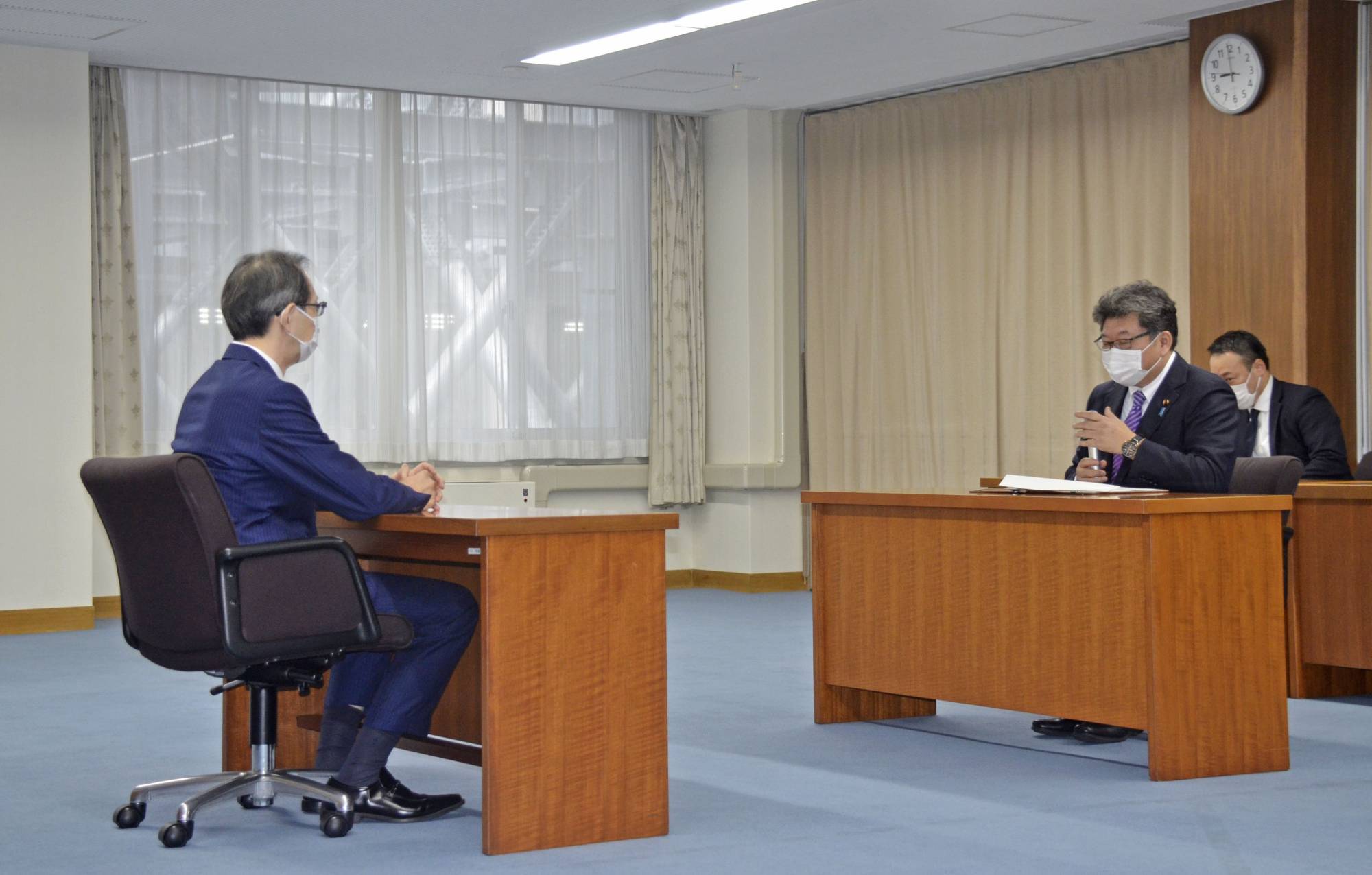
Fukushima – Industry minister Koichi Hagiuda pledged Sunday to promote the decommissioning of the crippled Fukushima nuclear plant and recovery of the area as a top priority during his first visit to the prefecture since assuming office.
Hagiuda also told Fukushima Gov. Masao Uchibori and the mayors of municipalities hosting the Fukushima No. 1 nuclear power plant that his ministry will make its “best efforts” to release treated radioactive water from the facility hit by a massive earthquake and tsunami in March 2011.
Prime Minister Fumio Kishida is also arranging a trip to the Fukushima No. 1 complex over the next weekend as part of his first visit to the Tohoku region as leader of the country, government sources said.
Uchibori requested in his meeting with Hagiuda at the prefectural government office that the central government tackle issues such as the lifting of an evacuation order for residents near the crippled power plant.
Futaba Mayor Shiro Izawa and Okuma Mayor Jun Yoshida later jointly asked the minister that the state take effective measures against the reputational damage associated with the planned discharge of treated water.
The mayors also warned Tokyo Electric Power Company Holdings Inc. (Tepco), the operator of the plant, against sloppy management of radioactive waste at the power facility.
“The state, instead of Tepco, will lead the decommissioning of (Fukushima No. 1) reactors,” Hagiuda told reporters after the meetings.
Japan is planning to begin discharging treated water into the sea from around the spring of 2023.
Water pumped into the ruined reactors at the Fukushima plant to cool the melted fuel, mixed with rain and groundwater that has also been contaminated, is treated using an advanced liquid processing system, while a low level of tritium remains in the water.
Tepco Chairman Yoshimitsu Kobayashi, who accompanied Hagiuda on his tour of the power plant, met with Uchibori on Monday as part of his first visit to Fukushima since assuming his post in June.
Local fishermen remain opposed to the planned discharge of treated water as it could harm the reputation of Fukushima seafood, and Kobayashi told reporters after the meeting that he will “hold further dialogue (with locals) to enhance their understanding toward the safety steps.”
https://www.japantimes.co.jp/news/2021/10/11/national/fukushima-plant-decommissioning/
Nuke disaster radiation continues to threaten traditional ways of life in northeast Japan
October 8, 2021
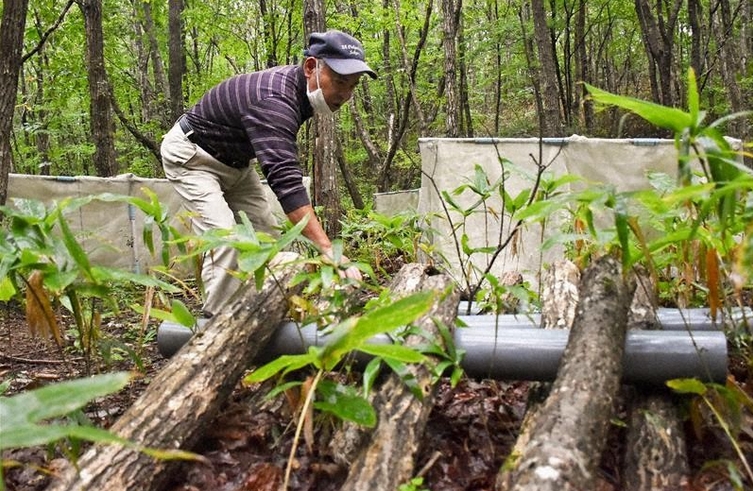
FUKUSHIMA — When the Fukushima Daiichi Nuclear Power Station was struck with a triple-meltdown in March 2011, it spewed radioactive material across a wide swathe of northeastern Japan’s forests. Even now, more than a decade after the catastrophe, the impact of the cesium still found in the region’s trees is enormous.
One area to feel the brunt of the fallout’s effects is eastern Fukushima Prefecture’s Abukuma mountains, once one of Japan’s leading sources of logs for shiitake mushroom cultivation, and now at a virtual standstill. Ten years into this continuing disaster, locals and experts have been working hard to find ways to revive the traditional industry, in hopes of being able to pass on the mountains’ rich natural resources, and the life connected to this landscape, to the next generation.
“Once a tree trunk gets this thick, it’s not really good as a log.” We are in the woods in the Miyakoji district of Tamura, Fukushima Prefecture, about 20 kilometers west of the Fukushima Daiichi plant. Kazuo Watanabe, the 59-year-old head of the Miyakoji office of the Fukushima central forestry union, is standing by a copse of konara oaks for shiitake cultivation, sighing as he speaks.
Watanabe says that the oaks are harvested for the shiitake business when they are about 15 centimeters across. And it takes about 20 years to get that big. If the trunks are too thick, it becomes difficult for new growth to sprout from the stump. But konara logging has stagnated severely because of the nuclear disaster, leading to a halt in shipments.
Radioactive cesium exceeding the government-set maximum of 50 becquerels per kilogram has been detected in logs from Miyakoji and other parts of the Abukuma region. Even 10 years after the Fukushima Daiichi reactor meltdowns, testing has turned up cesium levels in the logs of between 100 and 540 becquerels per kilogram.
To grow shiitake, mushroom mycelia are put into holes drilled into sawtooth oak, konara oak and other types of logs. In 2010, Fukushima Prefecture was Japan’s third-largest producer of these logs, shipping some 4.78 million of them. But the nuclear disaster changed all that, and even now the prefecture produces only about 140,000 of the cultivation logs annually.
According to the Forestry Agency, as of the end of 2020, log-grown shiitake shipments were restricted in 93 municipalities across Fukushima, Iwate, Miyagi, Ibaraki, Tochigi and Chiba prefectures due to cesium contamination. Along with Fukushima Prefecture, Miyagi Prefecture and other jurisdictions are voluntarily limiting shipments of the logs as well.
Cesium 134 has a radioactive half-life of about two years, meaning it has almost disappeared over the past 10. However, cesium 137’s half-life is approximately 30 years, meaning it will retain 30% of its original radioactivity 50 years on from the disaster, and 10% after a century.
The problem is the cesium inside the trees, which absorbed disaster fallout though their bark soon after the meltdowns, and through their roots. If plants have scant supplies of potassium, an essential element for growth, then they will absorb cesium, which has similar chemical properties. This has led to farmers sprinkling their fields with potassium fertilizer as a countermeasure. However, this is difficult to do in the vastness of the forest.
About 70% of Fukushima Prefecture is covered in forest. But in principle, only certain areas are eligible for nuclear disaster decontamination, such as residential districts and their immediate surroundings. The government and researchers believe that decontamination has limited the effectiveness in reducing the external exposure of the residents and that it is very costly, plus there is a risk of a spillover of soil due to the scraping of topsoil. And while cesium 137 indeed becomes less radioactive over time, it will take 150 years for the emanations to fall to a few percent of its current level.
And so the shiitake cultivation log production is essentially frozen, as are local traditions of sharing out edible wild plants, mushrooms and the like. To preserve these natural resources and this way of life for future generations, in January 2020 local forestry workers and experts created the “Abukumayama no kurashi kenkyujo,” or the Abukuma mountain way of life research center. Its purpose: to create a vision for the Abukuma region for the next 150 years. Participants study woodland culture at former industrial sites connected to the mushroom cultivation log business. Research center head Kazunori Aoki, 60, told the Mainichi Shimbun, “The nuclear accident changed the mountains’ value, and our connection to them has become quite tenuous.”
Aoki once raised “wagyu” beef cattle and farmed vegetables in Miyakoji, but he closed his business after the nuclear disaster. Watching growing tracts of farmland go wild, Aoki said he decided he “wanted to change the landscape a little at a time and return it to the mountains.” Since 2012, he has been planting 100 to 300 maples and other trees every year, a project that helped lead to the Abukuma research center’s creation.
In April this year, the center brought together 40 people from both inside and outside the city of Tamura to plant 90 mountain cherries, Kobushi magnolias and other trees in Miyakoji. But some elderly residents of the district worry that there is no one to take over the community, and that there is no hope for a future connected to the mountains.
“We want to work with the local community to consider how the next generation can live with the natural wealth of the mountains,” commented center administrative head Yumeko Arai, 35.
https://mainichi.jp/english/articles/20211007/p2a/00m/0bu/023000c
Gov’t to strengthen inspection of products from Fukushima
October 8, 2021
By Kim Hyun-bin
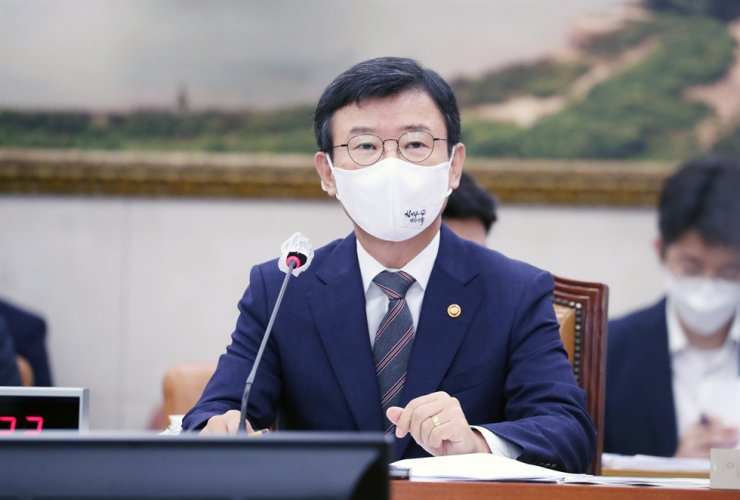
Oceans and Fisheries Minister Moon Seong-hyeok vowed to strengthen monitoring of water and marine products for possible radioactivity from Japan’s Fukushima Daiichi Nuclear Power Plant.
“We will thoroughly establish a safety net to better secure the safety of marine products and prevent accidents,” Minister Moon during the National Assembly’s annual inspection of the ministry, Thursday. “We will expand radioactivity monitoring at our shores to prevent contaminated water coming from the Fukushima plant and strengthen inspections of marine safety tests and check the origin of country products are imported from.”
The International Atomic Energy Agency (IAEA) also plans to strengthen related measures. This month, the agency will inspect the contamination being released at unit 1 of Fukushima Daiichi Nuclear Power Plant and its effects on the ocean.
One of the most anticipated issues was the possible revision of the country’s Marine Transportation Act, aimed to prevent the Fair Trade Commission (KFTC) from investigating issues regarding collective actions taken by domestic shipping companies.
However, this plan was postponed due to growing opposition from importers and exporters.
According to a survey the Korea Federation of SMEs conducted of 174 mid-size companies related to exports and imports, 85.1 percent were against the revision to the Marine Transportation Act, with 14.9 percent in support.
Since 2018, the KFTC has been investigating allegations that HMM and others colluded to boost freight rates for a Southeast Asian sea route.
After expanding its investigations of foreign firms in May, the regulator informed 23 local and foreign shippers that they may face fines totaling 800 billion won if they are found in violation of the Fair Trade Act.
Local shippers have protested fiercely against the regulator’s move. They claimed they had no choice but to take collective action to compete with global shipping powerhouses, and that their collective actions on freight costs and other contract conditions were permissible under the country’s Maritime Shipping Act.
Late last month, the Agriculture, Food, Rural Affairs, Oceans and Fisheries Committee passed a revised bill stating that collective actions by shippers will not be subject to the antitrust act.
“We are trying to clarify that the collective actions taken by marine shipping companies is under the jurisdiction of the Ministry of Oceans and Fisheries,” Minister Moon said during a press conference, Tuesday. “We are not giving the shipping companies a break. We are pushing for stricter consequences.”
The ministry said it is focusing on reconstructing the domestic marine shipping industry by providing more support and creating helpful policies in import and export logistics.
Marine shipping sales are expected to reach 40 trillion won, and major freight rate indexes have recovered to levels prior to the bankruptcy of Hanjin Shipping, the ministry said.
“We are planning to provide effective support measures including operating mega container ships, expanding national flag carriers and providing around 6 trillion won in liquidity to stabilize shippers’ management to better reconstruct the marine shipping industry,” Moon said. “Late last year, we deployed 74 temporary vessels for 17,000 TEU freight transportation support and worked hard to reduce import- and export-related difficulties for local firms.”
https://www.koreatimes.co.kr/www/tech/2021/10/768_316656.html
More evacuation orders to be lifted in Fukushima for some areas
September 24, 2021
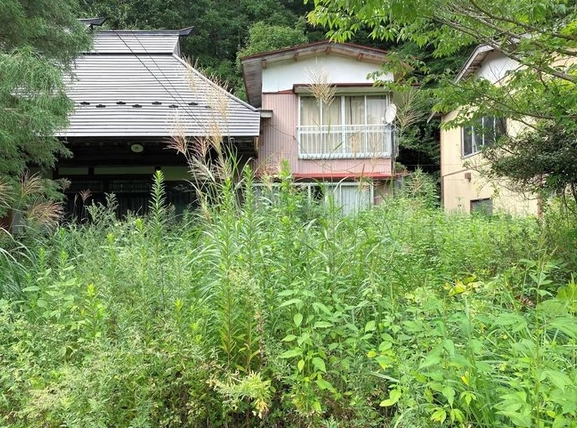
Shrouded in trees and weeds as tall as people, his old house rests quietly in a difficult-to-return zone in the Tsushima district of Namie, Fukushima Prefecture, only some 30 kilometers from the hobbled nuclear plant.
“I can finally see light at the end of the tunnel, although there will likely be a race against the clock of my lifetime,” said Yoshito Konno, 77. “I wish to be comfortably back in my hometown while I am still healthy enough to be moving around.”
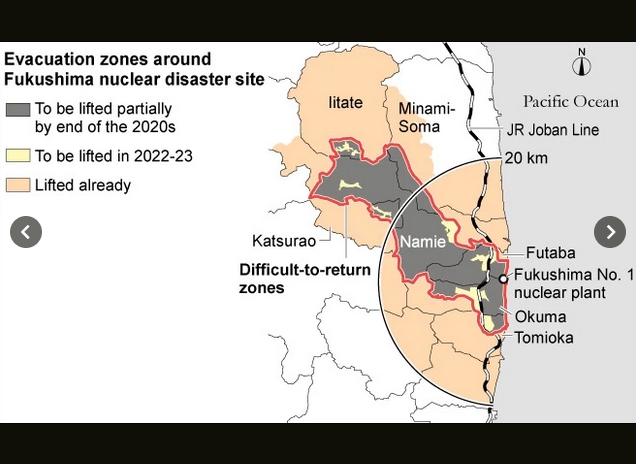
The central government announced it will lift evacuation orders by the end of the decade for residents who wish to return to their homes in the last remaining difficult-to-return zones around the Fukushima No. 1 nuclear power plant.
The new policy was approved at a joint meeting at the end of August by the Reconstruction Promotion Council and the Nuclear Emergency Response Headquarters.
But the government has no prospect of totally lifting evacuation orders for all the difficult-to-return areas as the new policy is expected to cover only limited areas.
Konno’s home community had 262 residents from 80 households prior to the 2011 nuclear disaster.
About 45 of them, mostly advanced in age, have since died.
“Those who died while separated from their hometown must have felt so frustrated and let down,” he said. “The central government and the town government should take action as soon as possible in line with the newly approved plan.”
Currently, areas where about 22,000 residents used to live remain designated as difficult-to-return zones.
This latest decision covers sparsely populated areas which are outside the areas designated for earlier lifting and once home to some 8,000 people, who previously had little hope of ever returning given the absence of a plan for them.
Some of the more populated areas had been designated as reconstruction bases where evacuation orders will be lifted by spring 2023.
Local communities had been pressing the central government to come up with a plan for lifting the evacuation orders in those undesignated areas. The government has committed to fund cleanups and lift evacuation orders on a limited basis, when requested by the locals.
For people like Konno, the news came as a relief.
But more than a decade since the disaster, others have mixed feelings about the prospect of one day returning after finding new lives and livelihoods in the communities to which they have evacuated to.
MOST WON’T RETURN
A survey taken by the Reconstruction Agency in fiscal 2020 showed that in the four towns that contain part of the difficult-to-return zones, only about 10 percent said they wished to return.
About 50 to 60 percent of respondents from each of those towns said they did not want to return.
Kazuharu Fukuda, 50, president of a local construction company and evacuee from the town of Futaba, said he will not be returning home any time soon because he now resides and works in another town.
The central government’s plan to decontaminate areas where cleanup is necessary to allow people to return has not impressed Fukuda.
“Even if I were to return, the land plots next to mine would remain contaminated with high radiation levels and with everything left in a dilapidated state,” he said. “How could I take up residence in such a place? I want the central government to clean up all the areas and restore them to their original state before letting us decide whether to return.”
Under the new plan, which was presented by Prime Minister Yoshihide Suga during the joint meeting, residents of the areas in question will be surveyed.
After that, the surroundings of the homes of those who wish to return will be decontaminated, and the government will develop key infrastructure to facilitate their return.
There is no prospect for evacuation orders to be completely lifted in those areas because the decontamination work will be done only in limited areas at the request of those who wish to return.
The decontamination process will be funded by two special central government accounts: one designated for rebuilding from the Great East Japan Earthquake, tsunami and Fukushima nuclear disaster of 2011; and another designated for energy policy measures, financed by revenues from electricity rates.
The difficult-to-return zones straddle six towns and villages in Fukushima Prefecture.
Some areas in those zones, including the surroundings of town halls, village offices and residential districts, have been designated “Specified Reconstruction and Revitalization Bases” by the central government.
The goal is to lift the evacuation orders in those places sometime between 2022 and the spring of 2023.
The central government is funding cleanup, construction of public housing complexes for disaster survivors and other work currently under way in these locations.
The areas outside the “specified bases” account for more than 90 percent of all the landmass of the difficult-to-return zones and slightly less than 40 percent of the population. Cleanup and other related work will only be conducted in those outside areas after considering whether the residents are expected to return.
Local governments had called on the central government to set a date to lift all the difficult-to-return zones so residents outside the designated reconstruction bases will not be left behind.
The central government has so far lifted evacuation orders for areas home to about 45,000 people. Only about 14,000 of those residents–about 30 percent–have returned to their home communities, although the government has spent some 3 trillion yen ($27 billion) on cleaning up those areas alone.
The government remains skeptical that large-scale decontamination will be effective for post-disaster rebuilding, so it has decided to clean up only limited areas based on requests.
US lifts post-Fukushima import restrictions on Japan farm products
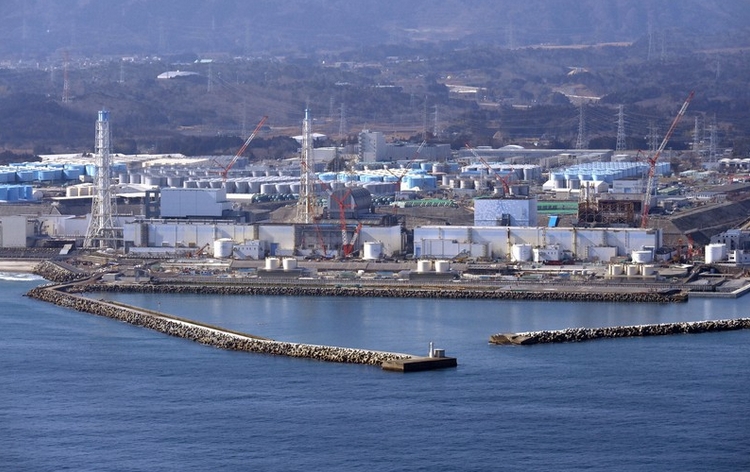
Suga further tweeted that he had asked for an early removal of the restrictions when he met with U.S. President Joe Biden in Washington in April and said the government “needs to continue its efforts in order to have similar import restrictions lifted in other countries and regions as well.” Japanese farm products now cleared for shipping to the United States include rice harvested in Fukushima, bamboo shoots from Iwate and shiitake mushrooms.
September 22, 2021
TOKYO (Kyodo) — The United States has lifted all of its restrictions on imports of food products from Japan established in the wake of the 2011 Fukushima nuclear disaster, Japan’s farm ministry said Wednesday.
Under the restrictions, U.S. imports of a total of 100 agricultural products produced in 14 Japanese prefectures including Fukushima had been suspended.
The other 13 prefectures were Aomori, Iwate, Miyagi, Yamagata, Ibaraki, Tochigi, Gunma, Saitama, Chiba, Niigata, Yamanashi, Nagano and Shizuoka.
Welcoming the U.S. decision, Prime Minister Yoshihide Suga said Wednesday on Twitter, “It is a move that people in the disaster-hit areas have been waiting for, and something that will greatly contribute to the recovery of those places. Japan welcomes this step very much.”
Suga further tweeted that he had asked for an early removal of the restrictions when he met with U.S. President Joe Biden in Washington in April and said the government “needs to continue its efforts in order to have similar import restrictions lifted in other countries and regions as well.”
Japanese farm products now cleared for shipping to the United States include rice harvested in Fukushima, bamboo shoots from Iwate and shiitake mushrooms.
“The abolition of U.S. import restrictions will have a great impact on other countries and regions,” a ministry official said.
The European Union also plans to ease import restrictions on Japanese farm and food products on Oct. 10, the Ministry of Agriculture, Forest and Fisheries said Tuesday.
According to the ministry, the United States is the third-largest importer of Japanese farm and food products after Hong Kong and China.
Japanese exports of farm products and food to the United States totaled 118.8 billion yen ($1.09 billion) in 2020.
With the United States’ lifting of import restrictions, effective on Tuesday local time, the number of countries and regions imposing such measures on Japanese farm and food products decreased to 14.
In the wake of the meltdown at the Fukushima Daiichi nuclear power plant following a massive tsunami caused by a magnitude-9.0 earthquake on March 11, 2011, 55 countries and regions placed restrictions on imports of Japanese farm and food products amid fear of potential contamination with radioactive materials.
Japanese farmers, particularly those in the region close to the Fukushima nuclear plant, have gone to great lengths to regain consumer trust in their products at home and abroad, including compliance with strict safety inspections. Nonetheless, concerns over the quality of such products still linger.
The farm ministry plans to urge the 14 countries and regions including Hong Kong and China to abolish the remaining import restrictions on Japanese products.
Meanwhile, despite the latest U.S. measure, some food products subject to Japan’s own export restrictions cannot be shipped overseas.
U.S. lifts post-Fukushima import restrictions on Japan farm products
September 22, 2021
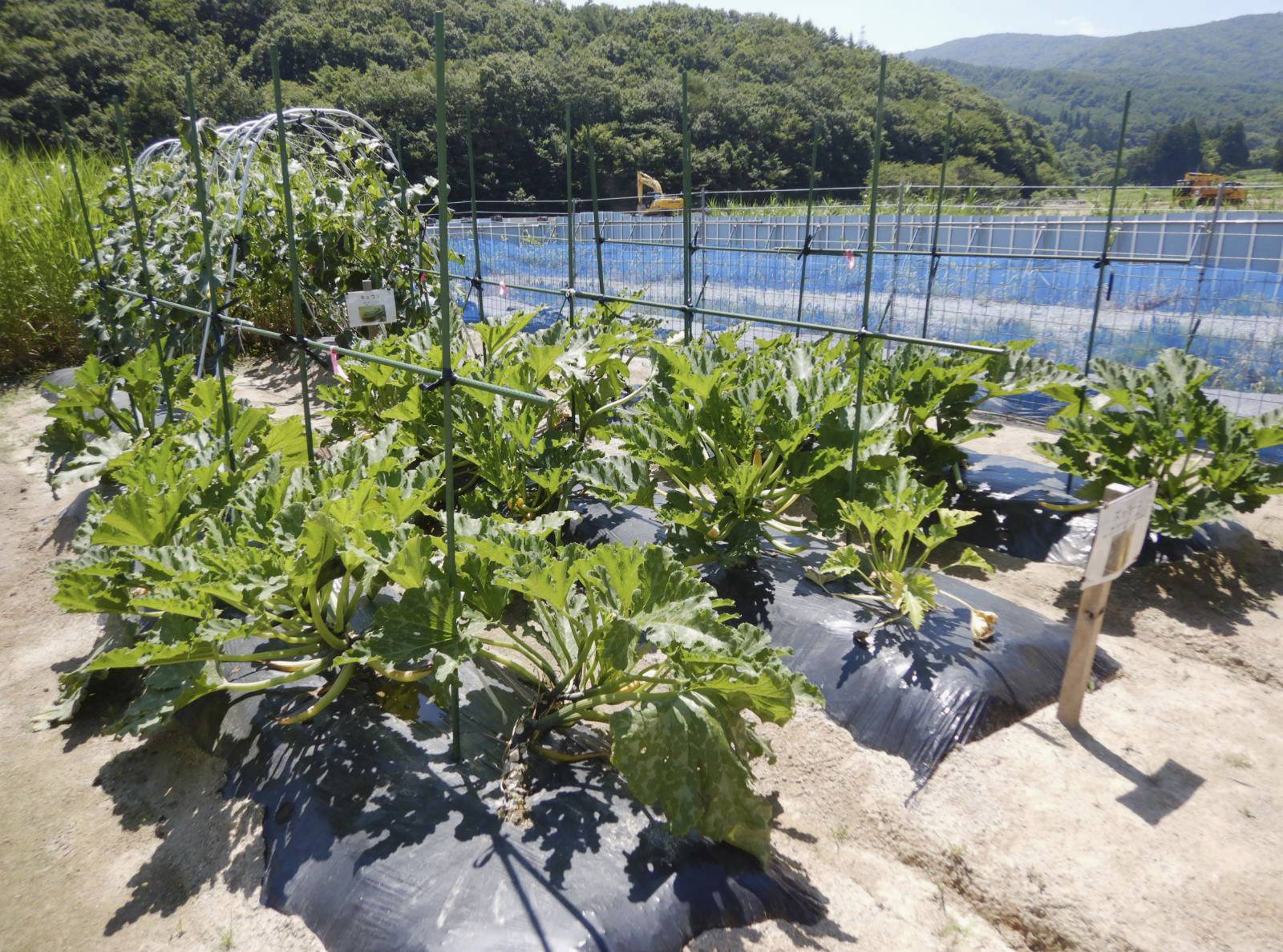
Citing ‘robust control measures,’ the United States on Wednesday lifted an import ban on food products from prefectures hit by the earthquake, tsunami and triple meltdown disaster that struck northeastern Japan in 2011.
The ban, which was put in place following the tsunami-triggered meltdowns at the Fukushima No. 1 nuclear power plant, affected 100 agricultural, forestry, fishery and food products from 14 prefectures, including rice and shiitake mushrooms produced in Fukushima.
The other 13 prefectures were Aomori, Iwate, Miyagi, Yamagata, Ibaraki, Tochigi, Gunma, Saitama, Chiba, Niigata, Yamanashi, Nagano and Shizuoka.
Ten years after the accident, the number of countries and regions that have imposed import restrictions now totals 14, down from the initial 55.
The news was immediately welcomed in Japan, where officials have long insisted that products from the disaster-hit regions are safe to consume.
“This decision has been long-awaited by people in the disaster-stricken areas, and it will be of great help in their recovery efforts.” Prime Minister Yoshihide Suga tweeted on Wednesday. “Japan greatly welcomes this decision.”
Suga added that he was “deeply moved” by the U.S. policy change.
“I personally lobbied President (Joe) Biden for the early elimination of the ban during my visit to the United States in April,” Suga added. “The government must continue to work together to eliminate import restrictions in each country and region.”
In announcing the move, the U.S. Food and Drug Administration cited “extensive analysis of Japan’s robust control measures,” and pointed to 10 years of sampling of food products from Japan.
The decision came after the FDA determined “a very low risk to American consumers from radioactive contaminated foods imported from Japan,” the agency said a statement.
The EU has also decided to relax its related import restrictions next month.
The export value of Japanese agricultural products and food items to the U.S. was ¥118.8 billion in 2020, making it Japan’s third largest export destination after Hong Kong and China, according to the ministry.
“The impact of (the United States’ move) is huge,” an agriculture ministry official said, expressing hope that countries still imposing restrictions will be encouraged to ease or lift them.
https://www.japantimes.co.jp/news/2021/09/22/business/us-lifts-fukushima-import-ban/
Footage reveals highly radioactive area in crippled Fukushima Daiichi
21 sept. 2021
The Nuclear Regulation Authority reveals footage of a highly radioactive area in Fukushima Daiichi, which may affect decommissioning plans.
“Having a meeting is not necessarily the same as dialogue, and if it is a one-way explanation meeting, it is no different from an online video or television”
September 21, 2021
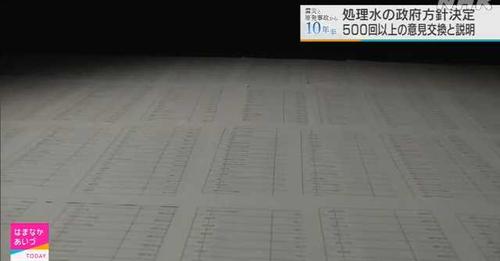
The release of treated water into the ocean was explained 532 times in advance…
A request for information disclosure made by NHK has revealed that the government claimed to have held a total of 532 “opinion exchanges” and “briefing sessions” regarding the increasing amount of treated water at the TEPCO’s Fukushima Daiichi Nuclear Power Plant in the year leading up to April 2012, when it decided to release the water into the ocean.
On the other hand, even after the decision was made, there are still strong opposition to the release of radioactive materials from fishermen in the prefecture, raising questions about the nature of the discussions.
The government says that the decision to release treated water from the Fukushima Daiichi Nuclear Power Plant into the sea was made after listening to the opinions of related parties, based on the report of a national sub-committee which said that “release into the sea or the atmosphere is realistic.
However, even after the decision was made, a series of resolutions and opinion letters opposing the policy were issued by fishery groups and parliamentary assemblies in Fukushima Prefecture, claiming that there was not enough discussion.
Therefore, NHK requested the Ministry of Economy, Trade and Industry (METI), which is in charge of the policy, to disclose the documents showing what discussions the government had with the relevant parties before the decision was made.
In response, the Ministry of Economy, Trade and Industry (METI) disclosed a list of the subjects and dates of “opinion exchanges” and “briefing sessions” held between January 31, 2011, when the national subcommittee compiled its draft report, and April 13, 2011, when the government decided on the policy of oceanic release.
According to the list, a total of 532 “opinion exchanges” and “briefing sessions” were held in and outside of Fukushima Prefecture over a period of more than one year and two months.
The average number of times per day is two per point, with the highest number of times per day being 14.
The breakdown of the targets, in descending order of frequency, is as follows: heads of local governments in the prefecture 83 times, fishery-related organizations 74 times, and local government councils 72 times.
On the other hand, consumers were interviewed 18 times, the tourism industry 12 times, the head of a local government outside the prefecture 23 times, and the assembly of a local government outside the prefecture 15 times.
Masahiro Matsuura, a professor at Meiji University’s Graduate School of Public Policy who is an expert on science and technology policy and consensus building, said, “It is possible that there was a lack of dialogue in the sense of gaining understanding,” and added, “Having a meeting is not necessarily the same as dialogue, and if it is a one-way explanation meeting, it is no different from an online video or television. Dialogue is only possible when the participating fishermen and the general public speak out and the explanation is given in the form of a catch-all game. Even if an opinion is received, if the bureaucrat without authority continues to say, ‘We will take it back to Tokyo for consideration,’ it is not dialogue. If the prime minister, ministers, and other people who can make substantive decisions came to the meeting and answered specific questions on the spot, it might not have been necessary to hold the meeting as many times. It will be important to evaluate the state of the debate over treated water over time,” he said.
Fishermen: “There was no discussion.
The government has held more than 70 “opinion exchanges” and “briefing sessions” with fishermen, but after the policy was decided, fishermen in Fukushima Prefecture said that the decision was unilateral.
In July 2020, the Soma Futaba Fishermen’s Cooperative Association in the northern part of the prefecture held a total of four briefing sessions for fishermen belonging to the cooperative, divided into four districts.
However, according to the fishermen who participated in the briefings, most of the briefings were about the report compiled by the subcommittee, and they rarely exchanged opinions with each other about the disposal method or reputational measures.
Mr. Masahiro Kikuchi, the vice president of the association, said, “At the time of the briefing, we hadn’t decided whether to release the waste into the ocean or into the air, and there were no concrete explanations about measures against harmful rumors. There were no further meetings, and I feel that the decision was made unilaterally. I think that if they had held monthly meetings with young fishermen, including those who will be responsible for the future of the fishery, and listened to their opinions, they would have come up with an answer that would have satisfied some, if not all, of them.
Co-op: “Not enough explanation to consumers”
More than 70 “opinion exchanges” and “briefing sessions” were held for fishermen, heads of local governments and assemblies in the prefecture, but only 18 briefings were given to consumers.
At Fukushima Prefecture’s Co-op Fukushima, where about 200,000 households in the prefecture are members, no briefing was held by the government before the policy was decided.
Shunkichi Nonaka, the general manager of the co-op, said that he feels that there was an overwhelming lack of opportunities to hear the opinions of consumers, some of whom are opposed to the release of radioactive materials into the ocean due to safety concerns.
Mr. Nonaka said, “All citizens are consumers, and I thought it was necessary to give a broad explanation to consumers, but I think the government and TEPCO did not give enough consideration to this. I think the government and TEPCO should have consulted with us before deciding on the policy of releasing radioactive materials into the ocean and asked us what we thought about it.
The government official said, “We discussed it to a great extent.
Regarding the fact that the government and related parties held more than 500 opinion exchanges and briefing sessions over a period of about one year and two months, Mr. Masato Kino, Counselor of the Agency for Natural Resources and Energy of the Ministry of Economy, Trade and Industry, said, “We have been visiting related parties who are likely to be affected by the rumors due to the disposal of the treated water, and our staff members have been working together to make a list of them. We believe that we have exchanged opinions with all kinds of people to a considerable extent. There were people who opposed the release of treated water into the ocean, but I believe we have incorporated the opinions we have heard into our decision-making process.
As for the fact that we have not gained the understanding of fishermen and others regarding our policy on the release of radioactive materials, he said, “We are doing our best to prevent rumors. I think we are still at the stage where people don’t feel safe, so our mission is to do our best.
https://www3.nhk.or.jp/lnews/fukushima/20210921/6050015878.html?fbclid=IwAR22Y7RVJ8eTn7_tON6pDmtV6PdnMZU1BAULMXLY-JseTew3 glnFBLeKhvs
Fukushima aims to attract new residents
September 20, 2021
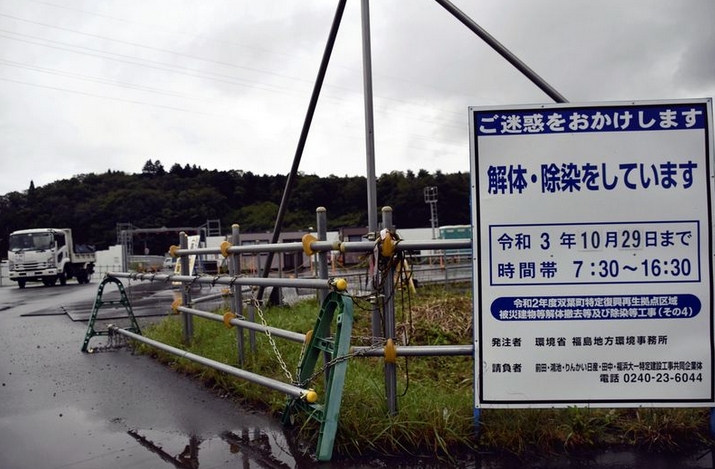
FUKUSHIMA – The central and local governments have begun encouraging people from outside Fukushima Prefecture to move into areas surrounding Tokyo Electric Power Company Holdings, Inc.’s Fukushima No. 1 nuclear power plant, hoping that new residents will revive the areas.
The central government plans to lift evacuation orders in all areas categorized as difficult-to-return zones so that residents wishing to return to their homes can do so within the 2020s. However, in areas where such an order has already been lifted, residents have been slow to return.
300 newcomers sought
I’ve long wanted to contribute to the reconstruction of Fukushima, said Daisuke Yamamoto, 49, an engineer who moved from Sapporo to the city of Tamura, Fukushima Prefecture, in August.
Yamamoto said he aimed to set up his own business there.
The central government’s financial support system, which began in July, encouraged him to move in. The system grants up to 2 million Yen to those who move into 12 municipalities near the nuclear plant from outside the prefecture. Additional funds of up to 4 million Yen will be paid if they launch a business there. The government’s goal is to bring in 300 new people this fiscal year alone.
Local municipalities are preparing for new residents. In July, the Fukushima prefectural government set up a joint support center with the 12 municipalities. In Minami-Soma, vacant houses will be renovated into rental housing. In the village of Katsurao, eight units of municipal apartment housing will be constructed.
10% want to return
Behind the move is the slow return of residents to areas where the evacuation orders were lifted. The Reconstruction Agency and others surveyed the residents of five towns, including Futaba and Okuma, and found that only about 10% wanted to return.
The town of Namie, where the evacuation order was partially lifted in 2017, now has a population of 1,717. In fiscal 2019, 70 people in 49 households moved into the town from outside the prefecture, thanks in part to the presence of factories opened by 10 companies, but the population is still only about a tenth of its pre-disaster size.
The only way to keep the town going is to further increase the number of new arrivals, a town official said.
Commuting, restoring
Over 10 years after the nuclear accident, people who have rebuilt their lives in areas to which they evacuated will have the option of having residences in two locations, commuting to Fukushima Prefecture while carrying on with their present lives elsewhere.
A 66-year-old man who moved his family to Hitachi, Ibaraki Prefecture, has a home in an area categorized as a difficult-to-return zone in Namie. In order to return to that home, he would need to repair the now dilapidated house. His children have found jobs in Ibaraki. The man’s life in Ibaraki, where he grows vegetables in rented fields, has become settled.
I have no choice but to spend two hours each way to get to and from Fukushima, he said.
In a survey conducted last fiscal year by the towns of Futaba, Okuma and Tomioka on their residents, about 60% said they wanted to maintain ties with their hometowns.
The evacuation order for Naraha was lifted in 2015, but the number of residents in the town now has leveled off at 50% of the population before the accident. The town aims to raise the figure to 60% by 2030, or 5,130 people, by subsidizing JR train fares for residents who live in two locations.
The town of Tomioka supports residents who have been evacuated outside the town in the hope of bringing about reconstruction by commuting. It opened social center and support office facilities in Iwaki, Fukushima Prefecture, and Saitama City, which are two places where many evacuated Tomioka residents now live. In those facilities, staff check up on the health of the evacuees or give counseling.
Those who want to go home someday will become important people for the progress of reconstruction, said Yusuke Yamashita, a sociology professor at Tokyo Metropolitan University. The central and local governments should continue to provide assistance from the perspective of reconstruction by commuting.
1 This Month

of the week – Shut Down Drone Warfare!


Tell the Ukrainian Government to Drop Prosecution of Peace Activist Yurii Sheliazhenko

Petition to revoke the licensing of the Near Surface Nuclear Disposal Facility (NSDF) at Chalk River. https://www.ourcommons.ca/petitions/en/Petition/Details?Petition=e-7247
To see nuclear-related stories in greater depth and intensity – go to https://nuclearinformation.wordpress.com
-
Archives
- April 2026 (57)
- March 2026 (251)
- February 2026 (268)
- January 2026 (308)
- December 2025 (358)
- November 2025 (359)
- October 2025 (376)
- September 2025 (257)
- August 2025 (319)
- July 2025 (230)
- June 2025 (348)
- May 2025 (261)
-
Categories
- 1
- 1 NUCLEAR ISSUES
- business and costs
- climate change
- culture and arts
- ENERGY
- environment
- health
- history
- indigenous issues
- Legal
- marketing of nuclear
- media
- opposition to nuclear
- PERSONAL STORIES
- politics
- politics international
- Religion and ethics
- safety
- secrets,lies and civil liberties
- spinbuster
- technology
- Uranium
- wastes
- weapons and war
- Women
- 2 WORLD
- ACTION
- AFRICA
- Atrocities
- AUSTRALIA
- Christina's notes
- Christina's themes
- culture and arts
- Events
- Fuk 2022
- Fuk 2023
- Fukushima 2017
- Fukushima 2018
- fukushima 2019
- Fukushima 2020
- Fukushima 2021
- general
- global warming
- Humour (God we need it)
- Nuclear
- RARE EARTHS
- Reference
- resources – print
- Resources -audiovicual
- Weekly Newsletter
- World
- World Nuclear
- YouTube
-
RSS
Entries RSS
Comments RSS
 nuclear-news