Fukushima Daiichi contaminated exhaust stack disassembled

Fukushima Nuclear Power Plant Contaminated Exhaust Chimney Disassembled
April 30, 2020
The disassembly work on the radioactively contaminated exhaust chimney of the Fukushima nuclear power plant is finally complete after 9 months of work. But the complete decontamination of the plant is expected to take decades.
Contaminated exhaust stack at Fukushima plant finally cut in half
 A contaminated exhaust stack at the Fukushima No. 1 nuclear power plant in Okuma, Fukushima Prefecture, is dismantled on April 29.
April 30, 2020
OKUMA, Fukushima Prefecture–Work to dismantle the upper half of an exhaust stack at the crippled Fukushima No. 1 nuclear power plant finished on April 29, the first time a structure highly contaminated by radiation was dismantled at the plant.
The chimney, which is 120 meters tall and about 3 meters in diameter, was used for the No. 1 and No. 2 reactors of the plant, operated by Tokyo Electric Power Co.
On the morning of April 29, workers spent an hour to lower sliced parts of the stack to the ground from a height of about 60 meters. With its upper half removed, the chimney now stands 59 meters high.
“I think there are still many things left that local companies can do,” said Isamu Okai, 52, a board member of local construction company Able Co., which carried out the work. “We want to continue our involvement in the decommissioning of the plant by making use of the expertise we gained from the dismantling work.”
When the nuclear disaster occurred at the plant in March 2011, vapor containing highly radioactive substances was released through the stack. But it raised concerns that the unstable chimney could collapse.
During the dismantling project, which started in August, workers remotely operated cutting equipment hoisted by a huge crane to reduce their exposure to radiation. They carried out the operation at a remote control room set up in a large remodeled bus on a hill about 200 meters from the site.
They faced many problems during the project. Rotary blades attached to the equipment wore out faster than expected, and telecommunications between the equipment and the control room frequently disconnected. The work had to be suspended every time a problem occurred.
As a result, it took a month to slice the uppermost part of the stack, which is about 2 meters high and weighs around 4 tons. That work was initially planned to be completed in a day.
In December, the rotary blades stopped working, forcing workers to be lifted on a gondola to slice the stack with an electric power tool at about 110 meters above the ground.
The work, however, went smoothly from the middle stage of the project. Workers replaced the blades with more durable ones and improved the way they sliced the stack as well as the stability of telecommunications.
Chairman of Tepco, owner of Fukushima nuclear plant, to resign
 Future of utility uncertain as Takashi Kawamura, 80, steps aside
Takashi Kawamura, the chairman of Tepco has held the post since 2017. However, he has expressed his intention to step down, partly due to age.
April 28, 2020
TOKYO — The chairman of Tokyo Electric Power Co. Holdings will resign, Nikkei learned on Tuesday.
Takashi Kawamura, 80, has held the post since 2017. However, he has expressed his intention to step down partly due to age. Indications at this point are that a successor will not immediately be named.
The Japanese government has asked a number of industry leaders to assume the post, but no one has so far accepted. Without a chairman, the outlook for the company in the continuing aftermath of the Fukushima nuclear accident appears challenging.
Tepco will soon hold a board of directors’ meeting and officially approve Kawamura’s resignation. A new management arrangement will start in June.
Kawamura also held the position of chairman of the board. Shoei Utsuda, ex-chairman of Mitsui & Co., and unaffiliated director at Tepco, will take over that post.
Kawamura succeeded Fumio Sudo, former president of JFE Holdings. Before assuming Tepco’s chairmanship, Kawamura worked for Hitachi for most of his career, contributing to the industrial conglomerate’s recovery as president following the 2008 financial crisis. At Tepco, Kawamura worked to raise employees’ awareness of the company’s difficulties in the wake of the Fukushima meltdown.
The chairman plays an important role in overseeing Tepco, especially because the power company has effectively been under government supervision since the nuclear disaster. With the chairmanship vacant, it is uncertain how much control the company will be able to exercise over its own governance.
Fukushima Daiichi buildings pose safety risks

April 27, 2020
Tokyo Electric Power Company plans to draw up safety measures for workers after finding that some of the buildings at the Fukushima Daiichi nuclear plant are in bad condition due to the 2011 accident.
TEPCO on Monday reported to the Nuclear Regulation Authority the results of its survey of about 580 buildings in the compound.
The company says the condition of around 10 buildings, including the one that houses the No.4 reactor, have deteriorated due to the tsunami that triggered the accident and subsequent hydrogen explosions.
The NRA argues that the walls or other structures of these buildings could collapse in the event of an earthquake and injure people engaged in decommissioning work.
TEPCO says it will announce by the end of May how and when it will address the problem.
The utility also says it has inspected 340,000 pieces of equipment at the plant, and found that 36,000 of them lack devices that prevent leaks of radioactive materials as well as leak detectors.
GE Avoids Japanese Plaintiffs’ Suit Over Fukushima Damages
 General Electric Co. logos are displayed on the outside of enclosed jet engine test tunnels at the GE Aviation Test Operations facility in Peebles, Ohio, on April 14, 2015.
April 24, 2020
General Electric Co. won’t have to face Japanese plaintiffs’ suit stemming from the 2011 tsunami and Fukushima nuclear meltdown, the First Circuit said in affirming dismissal Friday.
A district court in Massachusetts properly found the plaintiffs have an adequate alternative forum in Japan, even though GE can’t be sued there because of a Japanese law that makes plant operator Tokyo Electric Power Co. solely liable, the U.S. Court of Appeals for the First Circuit said.
Tsunami could overtake Fukushima Daiichi’s seawall

April 21, 2020
An estimate by a Japanese government panel suggests that tsunami could overwhelm a new seawall at the Fukushima Daiichi nuclear power plant, if a mega-quake occurs in a deep-sea trench off northeastern Japan.
The panel of experts on Tuesday released its projection of the scale of tsunami that could be triggered by a massive quake along the Japan Trench.
The panel expects that waves as high as 13.7 meters could hit Futaba Town, Fukushima Prefecture, where the plant is located.
That is higher than the 11-meter-high seawall being built on the ocean side of the compound. The wall is one of the anti-tsunami measures taken by Tokyo Electric Power Company as it decommissions the plant.
Other measures include blocking the openings of the reactor buildings and deploying power supply vehicles on higher ground to continue cooling spent nuclear fuel.
TEPCO says it will examine the estimate and consider what measures to take.
Nearly 1,000 tanks of radioactive wastewater are stored in the compound. The operator says the projected tsunami won’t reach the higher ground where they are located.
Fukushima decommissioning work to be downsized

April 17, 2020
Tokyo Electric Power Company Holdings, Inc. said Thursday that it is preparing to reduce the number of workers involved in decommissioning the Fukushima No. 1 nuclear power plant, in response to the state of emergency being expanded to all 47 prefectures.
About 3,000 employees and staff from partner companies are currently working at the plant to decommission the reactors and other tasks. The reduction in personnel is a measure to reduce the risk of the coronavirus spreading, however, the decommissioning process may be delayed if there is a prolonged reduction in staff.
TEPCO will maintain operations necessary for the stable management of the plant, including the cooling of melted fuel and nuclear fuel pools and the purification of contaminated water.
https://www.lmtonline.com/news/article/Fukushima-decommissioning-work-to-be-downsized-15207355.php
Fukushima fish market in former no-go zone reopens in Namie
 Women handle fish at the Ukedo wholesale fish market on Wednesday in the town of Namie, Fukushima Prefecture.
April 10, 2020
Namie, Fukushima Pref. – A fish market in the Pacific coastal town of Namie, Fukushima Prefecture, has reopened for the first time since it was devastated by the massive tsunami and nuclear disaster in March 2011.
The Ukedo regional wholesale market, which reopened Wednesday, was the first market to resume operations in an area formerly designated as a no-go zone following the unprecedented triple meltdowns at Tokyo Electric Power Company Holdings Inc.’s Fukushima No. 1 nuclear power plant.
The market was filled with the energetic voices of fishermen and middlemen as it hosted its first auction in about nine years.
“Nine years were long, and I’m so happy I’m in tears,” said Ichiro Takano, director of the local fishermen’s cooperative.
“Sales are lower than usual due to the effects of the novel coronavirus, but I’ve been waiting for the market to reopen,” said Keiji Sato, a 73-year-old fisherman from the nearby city of Minamisoma.
Flounders and anglerfish brought to the market were quickly delivered to large-scale local supermarkets.
“I hope that having people in the town eat fresh fish will contribute to revitalizing the region,” a market official said.
Prior to the reopening, fishermen operating in the region brought their catches to a market in Soma, also in the prefecture.
Some 20 small fishing boats affiliated with Namie and nearby ports are expected to bring their catches to the Ukedo market from now on, raising hopes of a boost in catch volumes and an increase in fish consumption in areas struck by the 2011 disasters.
Facilities in the Ukedo fishing port and market were swept away by the tsunami, and residents were forced to evacuate due to the nuclear accident.
The evacuation order was lifted in spring 2017 and construction of renewed port and market buildings was completed in October last year.
https://www.japantimes.co.jp/news/2020/04/10/national/fukushima-fish-market-namie/#.XpCN55ngqUk
Fukushima mothers record radiation for future generations
 A member of Mothers’ Radiation Lab Fukushima cuts green tops off of turnips to measure their radiation level in a lab in Iwaki
April 10, 2020
Iwaki, Fukushima Pref. – A group of more than 10 mothers set up a citizen-led laboratory to monitor radiation levels in Fukushima communities only months after a massive earthquake and tsunami caused meltdowns at a nuclear power plant in the prefecture nine years ago.
Since the foundation of the institute on Nov. 13, 2011, it has been recording and disclosing radiation data on foodstuffs and soil it collected or were brought in by people from different parts of the prefecture, as well as seawater off the Fukushima No. 1 nuclear power plant.
“If the risks of nuclear power had been thoroughly verified by the previous generations, I think the disaster would not have happened,” Kaori Suzuki, 54, an executive of Mothers’ Radiation Lab Fukushima, based in Iwaki, said in a recent interview.
“But since it did occur, what we must do now is record our measurements and changes in the environment so we won’t make the same mistake,” said Suzuki, one of the founding members. “Passing down something that will be useful when major decisions must be made is the only thing we can do.”
The laboratory of 18 staff members, many of them mothers who mostly had no prior experience in measuring radiation, have trained themselves with support from scientists, and they now gauge levels of cesium 134, cesium 137, tritium and strontium 90 with five types of machines.
Samples they have measured include dust in vacuum cleaners, vegetables grown in home gardens, seasonal mushrooms picked in mountains and soil gathered in parks.
They have occasionally detected radiation above safety levels, and reports the lab releases every month on its website have specified which machine is used and other details for each outcome to make their activities as transparent as possible.
Their efforts have made academic contributions as well, with their measuring methods and results published in scientific journals such as Applied Radiation and Isotopes in 2016.
Suzuki said they started the initiative out of desperation to protect their children.
“We had to measure and eat. It was a matter of life and death,” the mother of two said.
As of April 6, 468 people in Iwaki, about 50 kilometers south of the crippled Fukushima plant, had died as a result of the events of March 2011, while more than 20,000 remained evacuated in and outside the city.
Noriko Tanaka, 40, who joined the group in May 2018, said studying radiation levels has changed how she perceives the environment around her.
“You don’t need to fear everything, randomly. Rather than worrying about everything and being stressed out by that, measuring and seeing the data make you relieved to find that some things are safer than you presumed,” Tanaka said.
“On the other hand, if you find a highly contaminated spot, for example, in a park where you thought it was safe to play, you can take precautionary measures,” she said.
Tanaka, who after the disaster temporarily fled from Iwaki to her husband’s home in Saitama Prefecture, found out during the evacuation that the couple were expecting their first child.
She had hoped to stay there or relocate elsewhere for safety, but with some family members not recognizing risks, her family eventually returned to Iwaki. Her husband was working at her family’s electrical construction firm, expecting orders for reconstruction in areas devastated by the March 11, 2011, triple disaster.
“At that time, the common atmosphere was like, ‘Do we need to go that far?’ I was pregnant and couldn’t live on my own. I couldn’t choose that. I had no choice but to be in Iwaki,” she said.
As time goes by, Tanaka has found that fewer people are discussing radiation effects.
The number of samples brought in by citizens last year was 1,573, up 131 from the year before, but it is showing a decreasing trend overall compared to years before, according to the lab.
“The Olympic Games are coming, and there are fewer media reports on radiation levels than before,” she said.
Officials have dubbed the Tokyo Summer Games the “Reconstruction Olympics,” with the hope of showcasing the country’s recovery from the 2011 catastrophe.
Because of that concept, the starting point of the Japan leg of the torch relay for the Olympics, which were recently put off for a year to the summer of 2021 due to the global coronavirus pandemic, was a soccer training center in Fukushima Prefecture that served as a front-line base in the battle against the nuclear disaster.
Tanaka said logging accurate data and keeping them publicly available are all the more important. “To protect children, having information is essential in deciding what to eat or where to go,” she said, adding that judgments based on correct data will also prevent any discrimination.
Recalling that she lined up outside a supermarket for an hour with her children on March 13, 2011, Ai Kimura, who has two daughters, said, “Even now, sometimes I’m hit by remorse about my ignorance on radiation at that time.”
A couple of years later, Kimura, a member of the lab since March 2014, said she became even more insensitive to possible health risks after seeing her neighbors begin drying clothes and blankets outside, or having their children not wear masks.
“But when I joined the lab and started taking measurements, I was stunned that some showed high levels of radioactive contamination,” the 40-year-old said. “I was depressed. What have I done to my children because of my ignorance? … I think there are many mothers (who blame themselves) like me.”
Kimura said she feels that the fears people have toward the new coronavirus are similar to those toward radiation, as they are both invisible.
“Everyone forgets about (radiation) because its effects in 10 or 20 years are uncertain, unlike the new coronavirus that shows pneumonia-like symptoms in a couple of weeks,” she said. “I realized again that people in affected areas like us have been living every day with the same feelings toward the coronavirus pandemic.”
“It’s exhausting,” she said, adding her daughters must have had a hard time as she made them do things differently from their friends, such as wearing masks. “But I felt I was not wrong when my daughter said to me recently, ‘I was being protected by you, mom.’”
In addition to conducting surveys on radiation readings in the environment and food items, the lab in May 2017 opened a clinic with a full-time doctor to provide free medical checkups on internal exposure.
“I think it’s necessary to keep checking children’s health as they grow up, rather than drawing a conclusion saying there won’t be any problem with this level of radiation exposure,” said Misao Fujita, 58, a doctor who is a native of Tochigi Prefecture.
Fujita said the amount of radiation exposure dosage and risks of health damage differ among children even if they live in the same area, depending on such factors as their location and behavior in the days after the nuclear disaster, whether they evacuated and what they eat now.
Those who underwent Fujita’s medical checkups when they were children include a woman who now takes her own child to the clinic, in addition to a number of young decontamination workers.
“The nuclear disaster is something that’s carried on to coming generations. That’s what we have left,” Fujita said. “We must also not forget that about 30,000 people are still unable to return to their hometowns in the prefecture. The disaster isn’t over yet.”
Improved input needed from locals over nuke water disposal
 Storage tanks filled with radioactive water at the Fukushima No. 1 nuclear power plant in Okuma, Fukushima Prefecture, in 2019
April 9, 2020
The government recently heard the opinions of local communities in Fukushima on tackling the urgent challenge of disposing of radiation-contaminated water being generated by the crippled Fukushima No. 1 nuclear power plant.
The water still contains tritium, a radioactive form of hydrogen, even after being treated with a filtering system.
Local residents who attended the meeting, held in the city of Fukushima, the capital of Fukushima Prefecture, were divided over the government’s proposal to dilute the tritium-laced water to safe levels and release it into the ocean or vaporize the water and release the steam into the atmosphere.
But they clearly shared deep concerns about damaging rumors such a step could generate.
Many participants also said the government has not provided the public with sufficient information about tritium, a radioactive isotope of hydrogen with a half-life of slightly more than 12 years.
The government should seek a longer and more informed conversation on this issue with local communities without rushing to a conclusion.
The No. 1 to No. 3 reactors at the plant are still generating tons of polluted water each day as these reactors are being flooded to cool melted nuclear fuel and underground water keeps pouring in.
Since the filtering system is unable to eliminate tritium from the water, the treated water is stored in an increasing number of on-site tanks. The number of tanks has already topped 1,000 and Tokyo Electric Power Co., the operator of the ruined plant, says there will be no space for new tanks around the summer of 2022.
In February, the ministry of trade and industry’s expert panel proposed two options–gradually releasing polluted water into the sea and allowing the polluted water to evaporate into the air–as realistic approaches. The subcommittee suggested that releases in the ocean would be the less troublesome of the two options for several technical reasons.
The meeting, held to discuss the panel’s recommendations, were attended by 10 people representing the prefectural and municipal governments and local industries.
If the water is released into the sea, it will be treated again with the filtering system and then diluted with seawater. But the Fukushima prefectural federation of fisheries cooperatives voiced opposition to this approach out of concerns about “the future of young people working in the industry.”
Given that the local fisheries catches have plunged and still remain at about 14 percent of the levels before the nuclear disaster, it is hardly surprising that the fishing industry refuses to accept this method.
But the local association of inns, hotels, restaurants and other businesses related to environmental health expressed its support for the proposal to release the water into the sea.
But the association demanded compensation for the losses the tourist industry could suffer until the end of the process, arguing that the damage will be due to a deliberate action instead of harmful rumors.
While the local communities and industries are apparently divided and uncertain with regard to the proposed release of the polluted water into the environment and its repercussions, it should be noted that many of the event participants expressed concerns about harmful rumors.
The debate will not be really constructive unless the government and the utility show the entire picture of the plan to deal with the situation. This must include clear answers to such questions as what specific measures will be taken to prevent a fresh wave of harmful rumors that could be triggered by the release and how to compensate for any damage that might result.
During the meeting, local representatives spoke most of the time, with few exchanges with government officials taking place.
Representatives of citizens or consumers were not invited to attend the meeting.
Another similar meeting is scheduled in Fukushima Prefecture next week. But these events should not be regarded simply as part of the formalities for proceeding with the plan to release the water rather than as means for meaningful dialogue with local communities.
Some participants called for expanding the scope of the debate on the issue to involve other parts of the nation. One participant said the opinions of the fisheries industries of other prefectures should also be heard since there are no prefectural borders in the sea.
Another said if the step is really safe, its implementation in other prefectures should also be considered.
It should be kept in mind that disposal of the treated water is not a challenge facing only Fukushima.
Dump N-Plant Water outside Fukushima: Local Mayor

April 9, 2020
Fukushima, April 9 (Jiji Press)–The mayor of the northeastern Japan city of Fukushima on Thursday called for treated radioactive water at the disaster-crippled Fukushima No. 1 nuclear power plant to be dumped outside Fukushima Prefecture.
“I want the water to be released into the ocean at a location that does not include ‘Fukushima’ in its name,” Hiroshi Kohata said at a press conference in the capital city of the prefecture. “If it’s released near the prefecture, it will certainly cause it to suffer harmful rumors,” he said.
The treated water at the Tokyo Electric Power Company Holdings Inc. <9501> plant, which suffered a triple meltdown following the 9.0-magnitude earthquake and monster tsunami in March 2011, still contains radioactive tritium.
“The water should be carried in a giant tanker and dumped in a place where it will cause as small an effect as possible,” the mayor said.
If this cannot be done, the water should be dumped near the Tokyo metropolitan area, Kohata suggested. “It makes sense to dispose of it at a place that has benefited from the power generation at the Fukushima No. 1 plant,” he said. Before the nuclear accident, the electricity produced at the plant in Fukushima Prefecture was sent to and consumed in the metropolitan area.
TEPCO simulates release of Fukushima wastewater

April 6, 2020
Tokyo Electric Power Company has made public a simulation showing the flow of radioactive wastewater released into the ocean from the damaged Fukushima Daiichi nuclear plant. TEPCO says winds and tides will spread the wastewater in an elongated shape along the coastline.
The Japanese government has been looking into ways to dispose of the roughly 1.2 million tons of wastewater accumulated at the plant, which contains approximately 860 trillion becquerels of tritium.
TEPCO’s simulation estimated the area of ocean that would contain more than 1 becquerel of radioactive materials per liter.
The simulation shows that when water containing 100 trillion becquerels of radioactive materials is released each year, the area would be 2 kilometers offshore from the plant and stretch 30 kilometers from north to south.
When wastewater with 22 trillion becquerels of radioactive materials is released per year, it would spread 700 meters from shore and stretch 3 kilometers from north to south.
A government panel said in a report released in February that releasing diluted radioactive water into the sea or air are realistic options. The head of the International Atomic Energy Agency expressed some understanding for the plan. But the proposal drew opposition from local fishermen and others.
TEPCO has yet to show its simulation of wastewater released into the air.
The wrong crisis stopped the Olympics
Excellent article from Linda Pentz Gunter of Beyond Nuclear
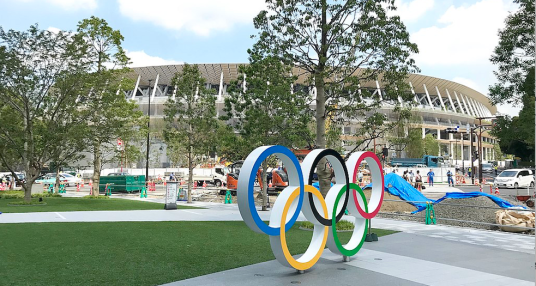
Radiation risks couldn’t kill the Games, but Covid-19 has
The Japanese government allowed 50,000 people to cluster around the Olympic flame, then hesitated to postpone the Games, until the IOC (and a reluctant Abe) called them off until 2021. Now those concerned about the persistent radiological contamination, which could harm athletes and spectators, have one more year to organize to stop the Tokyo Olympics altogether.
By Linda Pentz Gunter
On Saturday, March 21, 50,000 people queued up at Sendai station to see the Olympic flame displayed in a cauldron there. Packed together, not all of them wearing masks, the eager spectators waited as long as three hours to glimpse a flame that should have been extinguished in Japan months ago.
Sendai is just 112 kilometers up the Japanese coast from the stricken Fukushima-Daiichi nuclear reactors that exploded and melted down on March 11, 2011.
Around the same time that those 50,000 people, and the authorities who govern them, failed to take the novel coronavirus pandemic seriously, Japan’s prime minister, Shinzo Abe, was making lukewarm noises about maybe possibly postponing the Olympic Games.
After some skillful negotiating designed to spare Japan embarrassment, that decision was finally made on March 24, when the International Olympic Committee, and the Abe government, each announced that the Games would be postponed until the summer of 2021.
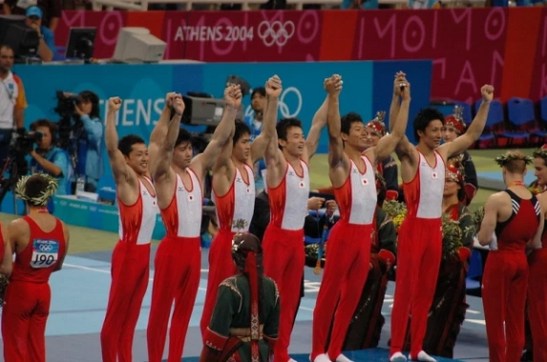 The 50,000 who queued to see the Olympic torch in Fukushima will not see Japanese Olympians or any others this summer.
Yes, it was beyond stupidity to have continued contemplating an event that would have brought tens of thousands of corona-carrying athletes and spectators to Tokyo and beyond. But it was worse that the persistent radiological contamination of Japan in the now 9-year long aftermath of the Fukushima nuclear disaster didn’t cancel the Games months ago. Or better still, disqualify Japan’s bid in the first place. Things in Japan won’t be significantly better in that regard one year from now. But radiation remains untouchable as a topic.
Japan needed the Games for one compelling reason; to cover-up and sanitize the world’s worst, or second worst, nuclear disaster — arguments still abound as to whether Fukushima will end up being worse than the 1986 Chernobyl nuclear accident in Ukraine, whose long-term health effects now pass down generations.
That’s why Japan gave the Games, the “Recovery Olympics” moniker, to prove that Fukushima wasn’t all that bad after all and that everything is back to normal. Which is, of course, a big and unforgivable lie.
Just to press their point, the Japanese Olympic committee had the torch relay start in Fukushima Prefecture, and the opening event of the Games was to have been a women’s softball match between Japan and Australia, also played in Fukushima. (Australia, along with Canada, announced it would boycott the Games, before the postponement announcement was made).
Wrote Shaun Burnie of Greenpeace International in early February, before the added coronavirus threat became apparent: “The route of the Olympic Torch relay in all the municipalities of Fukushima prefecture includes the districts of Iitate, Namie, and Okuma where Greenpeace Japan’s Nuclear Monitoring & Radiation Protection Team has discovered radioactive hotspots, both in the open areas as well as in the remaining radiation exclusion zones, that remain too high even by revised governmental standards.”
Burnie was featured in an HBO documentary on the topic in January.
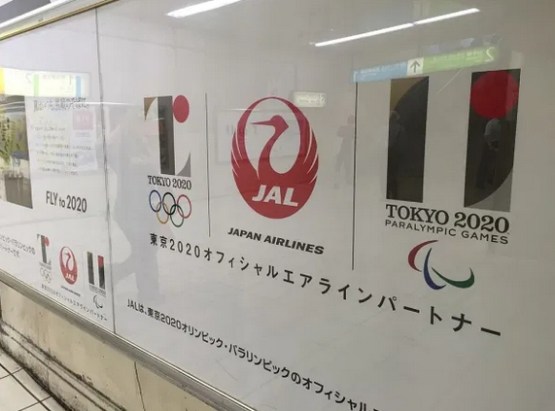 No one will be flying to the Tokyo Olympics in 2020, but the Games are still scheduled in radiologically contaminated Japan for 2021.
The refusal to cancel the Games because of the radiation risks prompted a group in Japan called Citizens’ Group for Appealing against Danger of Tokyo Olympics, to produce a book warning against going forward. What Endangers Tokyo Olympics — Clear and Present Radioactivity and Health Damage, details a host of reasons to have called off the event long before the cancelation was forced on the Japanese government by the covid-19 pandemic. (The book is in Japanese but there is an introductory summary in English.)
The book is edited by Etsuji Watanabe, a member of ACSIR (Association for Citizens and Scientists Concerned about Internal Radiation Exposure) who also relates that activists opposing the Olympics have faced harassment by police.
The book urges athletes, visitors and spectators planning to attend the Tokyo Olympics not to trust any Japanese government propaganda “claiming that Fukushima and Tokyo ‘are 100% safe now’, ‘have no risk of radiation exposure’, or ‘radiation exposure won’t cause any health effects’.”
The authors ask that people “recognize the real risks of radiation exposure from visiting the Fukushima and Kanto regions including Tokyo, even for short stays, and to reconsider their plans of attending the Tokyo Olympics by applying the precautionary principle.”
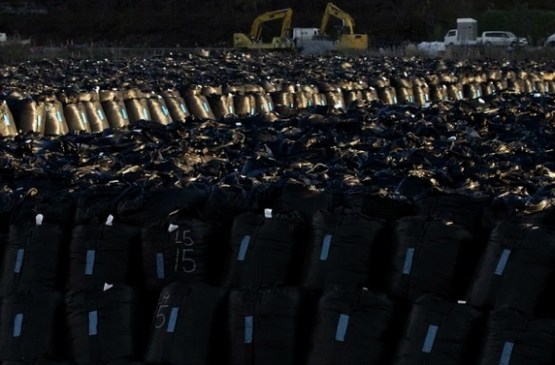 Things are by no means all cleaned up and back to normal in Fukushima.
The authors hoped that by drawing attention to these risks, many people, especially the international community, would start to pay attention to the heartless actions of the Japanese government who are masking the termination of all financial support for Fukushima evacuees behind a large scale mass-media propaganda smokescreen. The financially forced return of Fukushima evacuees to still contaminated areas where they face radiation exposures as high as 20mSv/ year is, the authors say, tantamount to ”a crime against humanity”.
And they add: “Based on the Japanese government risk factors, though greatly underestimated, the early-death rate for returnees in lifetime is estimated at 5-15%.”
“The coronavirus death rate is about 4% world average, some lower, some higher,” observed Beyond Nuclear’s radiation and health specialist, Cindy Folkers. “Compare that to the 5-15% death rate Japan is demanding its citizens endure.”
Despite this, Japanese authorities and others have routinely downplayed the risks of radiation exposure, never wavering from their claim that the levels are “low”. But beyond the persistent radiological contamination, there is the additional risk of exposure to errant “hot particles” — such as those detailed in Folkers’s earlier story on Beyond Nuclear International.
These could, Watanabe says, “entail so serious a biological danger or 4,500 times that of the external exposure, that only one small particle, say with 1Bq in each, breathed and deposited in one’s lung, could cause a lifetime threat to one’s health.”
It is now even emerging that authorities covered up Japan’s own covid-19 epidemic in an effort to keep the Olympic Games on track. This has effectively sacrificed yet more innocent lives in the name of secrecy and reputation.
These ever-present dangers — far worse of course for the permanent residents of Japan than the temporarily visiting Olympic fans and competitors — were never enough to prompt any kind of rethink from any country about sending their athletes or spectators to the Tokyo Olympics.
Now the coronavirus has given activists one more year to organize around stopping the Tokyo Games altogether.
https://beyondnuclearinternational.org/2020/04/05/the-wrong-crisis-stopped-the-olympics/#like-7820
New School Opens in Nuclear Crisis-Hit Fukushima Village
Sacrificing the youth in the simulacre of a return to normalty…
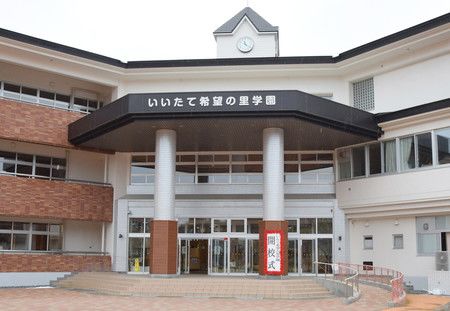
Iitate, Fukushima Pref., April 5 (Jiji Press)–A new school offering nine-year compulsory education opened on Sunday in a northeastern Japan village affected by the country’s worst nuclear accident nine years ago.
Iitate Hope Village Academy is the first facility for compulsory schooling launched in a former no-go zone set up after the unprecedented triple meltdown at Tokyo Electric Power Company Holdings Inc.’s Fukushima No. 1 nuclear power plant, which was damaged by the March 2011 earthquake and tsunami.
The institution in the village of Iitate in Fukushima Prefecture aims to improve the quality of education by integrating school functions after the number of students fell sharply due to an exodus of residents following the nuclear accident. The academy, run by the government of the village, will provide education programs for elementary and junior high schools.
An opening ceremony, held on Sunday, was attended by 50 of the 65 students and some 150 guardians and guests. While taking measures, such as wearing face masks, to prevent infection with the novel coronavirus that is raging across the country, participants sang the school song written by poet Madoka Mayuzumi and composed by singer Kosetsu Minami.
“As a top-grade student, I’m ready to lead younger students,” Ryosuke Watanabe, 14, said, receiving the new school flag at the ceremony.
IAEA supports discharge of Fukushima Daiichi water
Yes it is technically feasible but also totally unsafe for our health and our living environment!!!
03 April 2020
A review of the management of treated water stored at the damaged Fukushima Daiichi nuclear power plant in Japan has been carried out by the International Atomic Energy Agency (IAEA). It says the two options under consideration for disposing of this water – discharge into the sea and via vapour release – are both technically feasible.
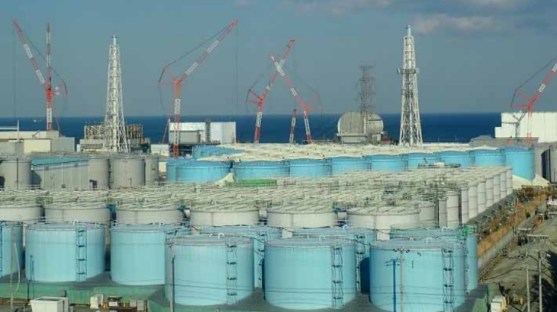 Tanks of treated water at the Fukushima Daiichi site
At the Fukushima Daiichi site, contaminated water is treated by the Advanced Liquid Processing System (ALPS), which removes most of the radioactive contamination, with the exception of tritium. This treated water is currently stored on site. As of 12 March, some 1.19 million cubic metres of treated water are stored within 979 tanks on the plant site. The total tank storage capacity will amount to approximately 1.37 million cubic metres by the end of 2020 and all the tanks are expected to be full around the summer of 2022.
The Japanese government had requested an IAEA review of the management of the stored water, including of the report by the Subcommittee on Handling ALPS Treated Water issued on 10 February.
In a review published yesterday, the IAEA said the two options for controlled disposal outlined by the advisory subcommittee – vapour release and discharges to the sea – were both technically feasible. These methods, it noted, are routinely used by operating nuclear power plants worldwide under specific regulatory authorisations based on safety and environmental impact assessments. The IAEA experts said the subcommittee’s recommendations to the Japanese government were based on “a comprehensive and scientifically sound analysis addressing the necessary technical, non-technical and safety aspects”.
The IAEA team said water management, including the treated water disposal, was “critical to the sustainability of the Fukushima Daiichi decommissioning activities”. Reiterating advice from an IAEA decommissioning review mission to the plant in 2018, the experts said a decision on the disposition path for the stored treated water – after further treatment as needed – should be taken urgently, considering safety aspects and engaging all stakeholders. “Once the Government of Japan has decided on its preferred disposition option, the IAEA is ready to work with Japan to provide radiation safety assistance before, during and after the disposition,” it said.
“The safe and effective implementation of the disposition of ALPS treated water is a unique and complex case,” said team leader Christophe Xerri, director of the IAEA’s Division of Nuclear Fuel Cycle and Waste Technology. “Solutions are available. They will require sustained attention, safety reviews, regulatory supervision, a comprehensive monitoring programme supported by a robust communication plan, and proper engagement with all stakeholders.”
https://www.world-nuclear-news.org/Articles/IAEA-supports-discharge-of-Fukushima-Daiichi-water
Protective gear shortage hits Fukushima workers
April 2, 2020
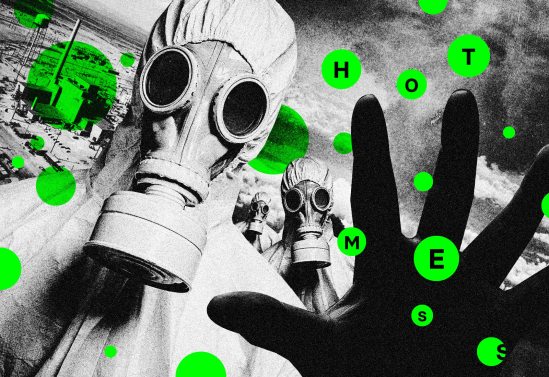
The shortage of protective gear caused by the coronavirus pandemic has hit the workers at the meltdown-hit Fukushima No. 1 nuclear power plant, where they’ve needed them daily for years to guard against radiation.
Shipments temporarily stopped coming in, although an alternative supplier was later found, according to Tokyo Electric Power Co., the utility that runs the Fukushima plant. The 4,000 workers at the plant cannot always practice social distancing as they must come close to each other to carry out cleanup work, spokesman Joji Hara said Thursday.
To reduce the possibility of infection, workers have been forbidden from riding on public transportation, such as trains, and must either drive to work or take the special company buses. When eating at the cafeteria, they can’t sit facing each other, and their temperatures are checked daily, he said.
“We are involved in decommissioning work that can’t ever stop and so we are taking every precaution we can,” said Hara.
The workers with special skills, who would be hard to replace, have reduced contact with people to minimize risks of infection. There is no lockdown in Japan and so all such efforts outside work are voluntary.
In March 2011, a tsunami swallowed the plant and sent three reactors into meltdowns, causing the worst nuclear disaster since Chernobyl. The reactors must be chilled constantly, producing tons of contaminated water every day.
http://www.asahi.com/ajw/articles/13266255
1 This Month

of the week – Shut Down Drone Warfare!


Tell the Ukrainian Government to Drop Prosecution of Peace Activist Yurii Sheliazhenko

Petition to revoke the licensing of the Near Surface Nuclear Disposal Facility (NSDF) at Chalk River. https://www.ourcommons.ca/petitions/en/Petition/Details?Petition=e-7247
To see nuclear-related stories in greater depth and intensity – go to https://nuclearinformation.wordpress.com
-
Archives
- March 2026 (251)
- February 2026 (268)
- January 2026 (308)
- December 2025 (358)
- November 2025 (359)
- October 2025 (376)
- September 2025 (257)
- August 2025 (319)
- July 2025 (230)
- June 2025 (348)
- May 2025 (261)
- April 2025 (305)
-
Categories
- 1
- 1 NUCLEAR ISSUES
- business and costs
- climate change
- culture and arts
- ENERGY
- environment
- health
- history
- indigenous issues
- Legal
- marketing of nuclear
- media
- opposition to nuclear
- PERSONAL STORIES
- politics
- politics international
- Religion and ethics
- safety
- secrets,lies and civil liberties
- spinbuster
- technology
- Uranium
- wastes
- weapons and war
- Women
- 2 WORLD
- ACTION
- AFRICA
- Atrocities
- AUSTRALIA
- Christina's notes
- Christina's themes
- culture and arts
- Events
- Fuk 2022
- Fuk 2023
- Fukushima 2017
- Fukushima 2018
- fukushima 2019
- Fukushima 2020
- Fukushima 2021
- general
- global warming
- Humour (God we need it)
- Nuclear
- RARE EARTHS
- Reference
- resources – print
- Resources -audiovicual
- Weekly Newsletter
- World
- World Nuclear
- YouTube
-
RSS
Entries RSS
Comments RSS
 nuclear-news