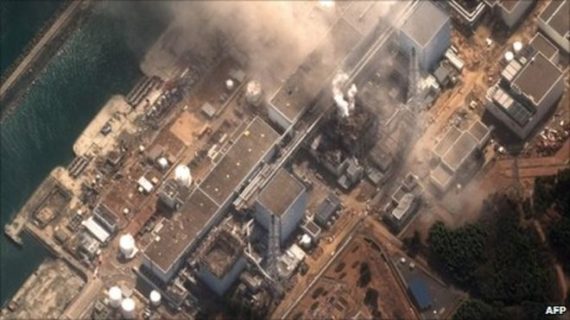
We are approaching the Fukushima Daiichi’s anniversary, as the many news reports testify.
My brief “thematic” analysis of this year’s crop of Fukushima anniversary news stories indicates “returning home” as the dominant theme.
Fukushima’s refugees – both official and non-official – are inclined to be suspicious of the government’s assurances that they face no additional health risk by returning to officially de-contaminated areas.
Here is a particularly detailed article describing competing claims about safety:
…The upper limit of the stated safe range in an emergency is 100 mSv/year, but some experts contend that exposure to even 20 mSv/year is too high. Former World Health Organisation regional adviser (Radiation and Public Health) Keith Baverstock said: “It could be, living in your house, the dose rate is 20 mSv/year. The dose rate outside that area that has been cleaned up can be a lot higher. So no, it isn’t safe.”
Cancer specialist Misao Fujita, 55, contrasted the situation in Fukushima with medical X-ray rooms, where the typical maximum amount of radiation allowed is five mSv/year – a level that hospital staff “rarely” get exposed to, he said.
The article describes efforts by 70 Fukushima families to seek justice using the court system, alleging that the government did not release Speedi information (which I’ve documented in my published books), leading to chaotic evacuations and increasing radiation exposure.
A Mr. Konno, a resident of Tsushima, said that his child has had “cold-like symptoms for over two years.”
Japan’s radiation authorities are themselves divided, with some seeing evidence of exposure in people, while others hotly denying that any relationship between disease and radiation exposure can be proven in the absence of definitive evidence of exposure level.
The Channel News Asia article also addresses ongoing contamination of the Pacific Ocean, which I’ve discussed frequently at this blog (most recently here: http://majiasblog.blogspot.com/2018/03/fukushima-daiichis-ongoing-assault.html). Japan’s former prime minister is quoted as saying he is confident contaminated water is flowing into the ocean:
Japanese Prime Minister Naoto Kan, who was the premier when the nuclear accident happened, told Insight there is no doubt “some of the water is flowing into the (Pacific) ocean”.
Japan is not the only nation to have produced radiation refugees and to be contaminating the pacific and other large bodies of water.
In a recent chapter I wrote on radiation refugees I note that Pacific Islanders, whose lives and livelihoods were catastrophically changed by US atmospheric testing during the early Cold War, are still seeking redress. Here is a brief excerpt from this chapter:
For decades after WWII, legal recourse and compensation were denied to entire communities living in landscapes of risk after being exposed to atmospheric testing.
For example, indigenous people exposed to atmospheric testing in the South Pacific Marshall Islands (1946-1955) were studied as experimental subjects by the US military, but to this day are still seeking full compensation for ongoing claims of acute health problems and property lost due to contamination.
In 2012, Calin Georgescu, then-United Nations Special Rapporteur on human rights and toxic waste, concluded after a visit to the Marshall Islands that many communities reported feeling like “nomads” in their own country.
Nomads in their own country. I wonder if that is what Fukushima refugees feel like. I wonder how long it will be before the US has its own newly-made batch of radiation refugees.
Trump’s promise to extend the operating license of nuclear reactors by decades ensures future US radiation refugees:
Radiation refugees are among the dispossessed. Their lives have been discounted.
We see the discounting of the lives of the exposed when we evaluate the assumptions of the new policy toward “ADAPTATION” of people in radioactive zones being promoted by organizations such as the Organization for Economic Co-operation and Development.
Adaptation is occurring as governments, including the US and Japan, raise the allowable exposure level after radiological emergencies. By raising the exposure levels, governments discount the lost years of the exposed and reduce the costs and publicity damage caused by evacuation.
Exposures levels go up while environmental health protections are lifted.
Fukushima Daiichi’s Ongoing Assault Against the Ocean
The Asahi Shimbun has a very interesting article today about Fukushima Daiichi’s very expensive ice wall that was designed as a barrier preventing contaminated ground water from flowing into the sea:
This is a very interesting article worth reading carefully.
What it says is that the ice wall reduced the amount of contaminated water reaching the ocean by approximately 95 tons a day.
That is a significant amount but raises the question of how many tons of contaminated water continue to penetrate the ice wall. This is what the article reports:
“Contaminated groundwater was cut in half due to the wall,” a TEPCO official said.
TEPCO estimated that the volume of polluted groundwater would have amounted to about 189 tons if the ice wall had not been in place during that period.
The utility also said the amount of polluted groundwater was reduced by about 400 tons a day now due to combined measures, such as the wall and wells pumping up water, compared with before such measures were taken.http://www.asahi.com/ajw/articles/AJ201803020042.html
This is getting confusing. TEPCO reduced the ground water by 400 tons a day, using wells and pumping, and is able to filter out 95 tons of what would be 189 tons a day of radioactive water.
But it gets more confusing because the 189 tons of radioactive water produced daily aren’t actually representative of the tons of radioactive water produced when it rains hard, as reported in the article:
The water volume rose to 1,000 tons or so a day in late October when two typhoons struck the area.
So, when it rains hard, which it often does in Fukushima I’ve noted in my nearly daily webcam checks for 7 years, up to a thousand tons of radioactive water can be produced, with the ice wall filtering out approximately 95 tons a day.
That is a lot of very contaminated water that is flowing into the ocean.
The problems with the ice wall were well anticipated, as this article in the Mainichi reported in August 2017 when the wall neared completion:
But while 34.5 billion yen from government coffers has already been invested in the wall, doubts remain about its effectiveness. Meanwhile, the issue of water contamination looms over decommissioning work….. during screening by the NRA, which had approved the project, experts raised doubts about how effective the ice wall would be in blocking groundwater. The ironic reason for approving its full-scale operation, in the words of NRA acting head Toyoshi Fuketa, was that, “It has not been effective in blocking water, so we can go ahead with freezing with peace of mind” — without worrying that the level of groundwater surrounding the reactor buildings will decrease, causing the contaminated water inside to flow out.
At that time, TEPCO reports success in reducing the volume of contaminated water produced everyday from 400 tons to approximately 130 tons.
All these numbers don’t seem to add up cleanly. The one thing clearly concluded is that quite a lot of contaminated water is flowing from the plant directly into the ocean.
This is water contaminated from direct contract with melted nuclear reactor fuel.
What impact will this have on the Pacific Ocean?
I’ve posted on this subject but the truth is that no one really knows what this unprecedented radiological assault will do to an eco-system already imperiled by human degradation.
Recently a friend – Douglas – sent me a link describing decimation of California’s kelp forests.
I’m sure that both these factors may play a role but what is completely marginalized from conversation is the Fukushima Daiichi disaster.
There were plenty of research studies that projected and detected empirically radiological contamination off of North America’s coast as marine currents bring Fukushima Daiichi’s contaminated water across the Pacific and back again, forever adding new contaminants.
We must find a way to prevent the death of life in our oceans or we will soon follow.
Officials Insist Fish Imported From Fukushima is Safe
March 6, 2018
BANGKOK — Health and fishery officials said Tuesday a recent batch of fish imported from a Japanese coastal city struck by nuclear radiation leak seven years ago is perfectly safe for consumption.
The batch, about 100 kilograms of flounder and 10 kilograms of little mouth flounder, is allegedly the first exported from Fukushima since the 2011 earthquake and subsequent nuclear disaster. While an environmental activist raised alarm of possible contamination, officials said the fear is unfounded.
Fishery department deputy director Umaporn Pimolbutr said Thailand has been monitoring levels of contamination in fish caught off the coast of Fukushima since the 2011 earthquake, and has gradually decreased to near non existent level by 2015.
“In 2017, we coordinated with Japan and sampled 4,708 samples of fish,” Umaporn said in an interview. “Only eight samples were found to be contaminated, and secondly, none of them is the type of fish we imported.”
Nearly 16,000 people died when a powerful earthquake and tsunamis struck eastern Japan in 2011. The quake also triggered nuclear reactors at Fukushima to malfunction, causing a triple meltdown that leaked out hazardous radiation. The disaster led to fears of radioactive contamination in sea creatures caught off the coast of the Sendai region.
The Asahi Shimbun reported Thursday the city’s fishing cooperative exported the flounder and little mouth flounder to 12 restaurants in Thailand, the first overseas sales since the earthquake. The newspaper quoted a local cooperative manager as saying the fish was safe to eat.
The Thai Food and Drug Administration, or FDA, also released a statement Tuesday saying the imported fish is safe for human consumption.
But environment and transparency activist Srisuwan Janya disputed the assertion. He said even if there’s a possibility of less than 1 percent that imported fish were to be contaminated, it would cause cancer risks to consumers.
“This means eating Japanese fish is like buying a lottery. If it turns out you have the winning number, you’re at risk of cancer,” Srisuwan told reporters Tuesday.
He demanded that the fishery department reveal the names of 12 restaurants that imported the Fukushima fish. Srisuwan also said he may sue the agency in court if it’s proven that the fish were contaminated.
Umaporn, the fishery official, said her agency does not know which restaurants got the fish because the foodstuff was immediately distributed to the stores after it passed a health inspection.
Marine life veterinarian Weerapong Laovetchprasit said concerns for health hazards in fish caught off Fukushima are valid, because humans are also affected by any residue left in the meat they eat. He added the danger is particularly high among “stationary” creatures such as clams.
However, he believes Thailand has adequate equipment to detect any radioactive substance.
AUTHORITIES HAVE defended Thailand’s importation of fish from Fukushima, the scene of a major nuclear accident and radioactive leak in 2011.
“The imported fish have passed radioactive standards of the [Thai] Food and Drug Administration [FDA],” the Fisheries Department’s deputy director-general Umaporn Pimolbutr said yesterday. She spoke after concern was raised about the imports.
FDA secretary-general Wanchai Sattayawuthipong, who later in the day appeared with Umaporn at a press conference, urged Thais not to panic.
“You can have confidence in the FDA and relevant organisations,” Wanchai said. “If we detect any contaminated fish, we will destroy or immediately return the item.”
A report by Japan Times revealed on March 1 that Fukushima prefecture’s first shipment of fish since the March 2011 accident had been exported to Thailand.
The crisis in Fukushima is often described as the worst nuclear accident since the Chernobyl incident in 1986.
Last month, a report by The Independent also revealed that lethal levels of radiation were still being detected at Japan’s Fukushima nuclear power plant, seven years after it was destroyed by an earthquake and tsunami.
“I cannot confirm as to whether we are the first to import fish from Fukushima [since 2011]. But I can tell you that we have checked the imported fish,” Umaporn said.
Thailand bans the importation of food that has more than 100 becquerel of iodine 131 per kilogram/litre or combined concentrations of caesium 137 and 134 more than 500bq/kg/litre.
Importers must produce certificates specifying the amount of radioactive substances and the origin of the food.
“The certificate must be issued by a government agency from the country of origin or any institute recognised by the relevant government agency of the country of origin,” Umaporn said.
She added that Thailand had never tried to block seafood exported from Japan.
“If it passes radioactive standards set by the Public Health Ministry, then it can enter Thailand,” she said.
She added that 130kg of flatfish and sole had arrived in Thailand on February 28.
The Japan Times reported that the fish would be served at 12 Japanese restaurants in Thailand.
Public opposition to the importation was expressed by one consumer in Thailand who wrote online: “Is the only thing the Fisheries Department will do is just check certificates? There is no other responsibility here?”
Another netizen sarcastically compared Thais to guinea pigs in labs to test the impact of fish that might have been contaminated.
Wanchai downplayed public concerns by emphasising that the FDA had worked closely with Japan’s Public Health Ministry to uphold the standards of imported food.
He said Japan’s Public Health Ministry had collected 7,408 seafood samples in Fukushima. Of them, only eight had a higher concentrations of radioactive substances than allowed. Of these eight samples, four were whitespotted chars and four others were cherry salmon.
“Thailand has not imported these types of fish,” Wanchai said.
He added that his agency had also conducted tests on various fish and other seafood samples in Thailand to determine if any had been contaminated with radioactive substances.
“There has not been a single case of contamination,” he said.
Wanchai said the Medical Sciences Department also conducted random tests between March and April, 2016 and found no contamination.
“In the event you suspect that any food product may be harmful to health, alert us via Hotline 1556 or the Oryor Smart Application,” he said.
A group campaigning to help prevent global warming has demanded the Food and Drug Administration disclose the name of the importer of fish from Fukushima and of the Japanese restaurants in Bangkok serving…
According to the Yomiuri Shimbun, a media very close to the Japanese government, the produce exports from Fukushima Prefecture are making a strong recovery. No wonder as they are promoted non-stop by the Japanese government pushing then down into the throat of its Asian neigbors….
Few days ago I even learned from an Australian friend that in his town Fukushima rice was being sold…..
7 years after 3/11 / Produce exports from Fukushima Pref. making strong recovery
March 06, 2018
FUKUSHIMA — Exports of peaches and rice produced in Fukushima Prefecture have been brisk. Peach exports approached 50 tons in fiscal 2017, a 70 percent increase from before the accident at Tokyo Electric Power Company Holdings Inc.’s Fukushima No. 1 nuclear power plant, while rice exports exceeded 100 tons and are expected to reach their pre-accident level.
For a while after the accident, Fukushima farmers saw their business grind to a halt under a trade embargo imposed by importing countries and regions. However, the Fukushima prefectural government and other entities have cultivated new markets, and their efforts have gradually borne fruit.
“I want to ship sweet peaches again this year to convey our region’s reconstruction to the world,” said farmer Susumu Suzuki, 67, who was busy pruning branches on his peach farm in Fukushima. The work involves keeping only a certain number of fruits on the tree so that nutrition will be concentrated in them before being harvested in summer.
While Suzuki’s farm is located about 65 kilometers away from the nuclear plant, radioactive substances were detected on the peaches right after the accident. Although the amount detected was within national limits, Suzuki repeatedly washed the substances from the trees using a high-pressure washer. Since the following year, voluntary safety checks done by the local Japan Agricultural Cooperatives (JA) branch where his peaches are shipped have hardly detected any radioactive substances.
Top-level promotion
Exports of Fukushima-grown peaches in fiscal 2010, before the Great East Japan Earthquake, were 28.8 tons, most of which were shipped to Taiwan and Hong Kong. However, the regions restricted imports after the accident, and Fukushima farmers were unable to export peaches in fiscal 2011.
In addition to the local JA’s voluntary safety checks, the Fukushima prefectural government conducted another inspection based on national guidelines. The government also had overseas buyers observe cultivation and inspection methods while holding a number of food tasting events. As a result, the prefecture was able to ship peaches to Thailand in fiscal 2012. It was only one ton, but it was Fukushima’s first export since the accident.
The prefectural government also compiled a pamphlet written in languages such as English and Chinese to advertise the safety of its fruits, and then expanded sales into Malaysia, Indonesia and Singapore. Peach exports in fiscal 2016 exceeded the volume shipped before the accident, and fiscal 2017 exports are expected to reach 48 tons.
As for rice, the prefecture was unable to find an export destination in fiscal 2012 and 2013. But in fiscal 2014, the prefecture began shipping to Singapore, starting with 0.3 tons. It also succeeded in finding a new channel for sales in Britain and achieved a total export volume of 22.3 tons in fiscal 2016.
Fukushima Gov. Masao Uchibori visited Malaysia to conduct top-level promotion, and rice exports to that country alone in fiscal 2017 are expected to reach 100 tons. Total exports are likely to exceed the 108 tons shipped in fiscal 2010.
Some still suffering
Even so, a negative image of farm produce grown in Fukushima Prefecture still exists abroad. Taiwan and Hong Kong have continued their embargo on peaches grown in the prefecture. Before the accident, the Fukushima prefectural government shipped fruit to those regions as a luxury product aimed at wealthier consumers. It has now lowered the price so that the middle class in other countries can afford its fruit. To reduce the price, cost-saving measures have been undertaken, including halting shipments by air.
The prefecture is struggling to boost rice exports to former customer Hong Kong. Though Hong Kong has not set an embargo on Fukushima rice, the prefectural government has yet to resume rice exports there because consumer unease has been deeply rooted.
“Rice grown in other prefectures has taken the place of our rice at supermarkets there. We need to keep advertising the safety of produce grown in our prefecture,” a Fukushima prefectural official said.
FUKUSHIMA — The total number of children at the time of the 2011 nuclear disaster here who have since been diagnosed with thyroid cancer has reached 160, a prefectural investigative commission announced at a March 5 meeting.
One more local person, who was aged 18 or under at the time of the meltdowns at the Fukushima No.1 Nuclear Power Plant, had been found to have thyroid cancer following health examinations as of the end of December. However, the commission has stated that “it is difficult to think that the cases are related to radiation exposure” from the disaster.
The first round of thyroid examinations started after the accident in 2011 for people who were 18 and under living in the prefecture at the time of the disaster. The second round covered about 380,000 people, including children who were born in the year following the meltdowns. The fourth round will begin next fiscal year starting April 1.
NHK has learned that only 35 percent of workers who responded to the March 2011 nuclear accident at Fukushima Daiichi plant have been checked for long-term effects of radiation.
A Japanese government-affiliated research organization began conducting the radiation-exposure screenings 4 years ago. Some 20,000 workers who entered the plant within 9 months of the accident are to undergo life-long monitoring that includes blood tests and thyroid exams.
During the nuclear crisis, many plant workers were exposed to radiation beyond the government limit of 100 millisieverts. The government then temporarily raised the limit to 250 millisieverts so that work could continue.
The Radiation Effects Research Foundation aims to conduct regular screenings on at least 80 percent of those workers. But it says that as of January this year, it has only been able to check about 7,000 people.
Of the workers who remain untested, 35 percent have ignored calls to take a screening, 17 percent have refused to comply, and 8.5 percent cannot be reached.
Several non-participants have told NHK they cannot take days off from work, or that there are too few clinics where they can be tested.
Some were skeptical about the screenings, saying they doubt a checkup would help keep them healthy.
Tomotaka Sobue, a professor at Osaka University, was a member of a government panel that assessed the screening program.
He says the government has a responsibility to confirm whether people who took part in emergency work are facing any health risks.
He says efforts must be made to inform workers about the program, and to make it easier for them to take the tests.
The Fukushima tragedy, seven years later, is still flooding the Pacific with tons of intensely radioactive water daily. Not to mention this report re disbursed radioactive airborne particles, some lasting billions of years.
March 5th, 2018
A new study by a team of international researchers has for the first time “explicitly revealed” uranium and other radioactive materials in the surrounding environment of the damaged Fukushima Daiichi nuclear reactors following the nuclear accident at the site in 2011.
In a study published in the journal Environmental Science & Technology last month based on research conducted by an international team of scientists, explicit evidence of uranium and other radioactive materials — such as caesium and technetium — have been found in the surrounding environment of the Fukushima Daiichi nuclear reactors after being released from the damaged reactor.
We have to turn our attention all the way back to March of 2011 when the magnitude 9 Tōhoku earthquake unleashed a tsunami on the east coast of Japan which, unfortunately, caused an accident at the Fukushima Daiichi Nuclear Power Plant. A cascade of issues resulted in three nuclear meltdowns, hydrogen-air explosions, and the release of radioactive materials from Units 1, 2, and 3.
Ever since, scientists have been keenly observing the site and its surrounding environment for signs of nuclear radiation, and it was almost a year ago that we received our first direct images of the damaged nuclear fuel rods.
The new study published last month, however, focuses further afield from the Fukushima Daiichi Nuclear Power Plant in the search for nuclear materials. While there have been various discoveries in the immediate vicinity of the nuclear meltdown, this is the first time that nuclear reactor fuel debris has been “explicitly revealed” in the surrounding environment, which means that the impact from the fallout might last much longer than had previously been expected.
Among the international team of scientists were experts from The University of Manchester, who explained their research late last month:
“The scientists have been looking at extremely small pieces of debris, known as micro-particles, which were released into the environment during the initial disaster in 2011. The researchers discovered uranium from nuclear fuel embedded in or associated with caesium-rich micro particles that were emitted from the plant’s reactors during the meltdowns. The particles found measure just five micrometres or less; approximately 20 times smaller than the width of a human hair. The size of the particles means humans could inhale them.”
“Our research strongly suggests there is a need for further detailed investigation on Fukushima fuel debris, inside, and potentially outside the nuclear exclusion zone,” further explained Dr Gareth Law, Senior Lecturer in Analytical Radiochemistry at The University of Manchester, and an author on the paper. “Whilst it is extremely difficult to get samples from such an inhospitable environment, further work will enhance our understanding of the long-term behaviour of the fuel debris nano-particles and their impact.”
Prior to this most recent research, it had been assumed that only volatile, gaseous radionuclides such as caesium and iodine were released from the damaged reactors. However, the new research is clarifying that small, solid particles were also emitted from the fallout and that some of these particles contain long-lived radionuclides.
How long lived is “long lived”? Uranium, for example, has a half-life of billions of years.
(The following is an excerpt from a longer article on the subject of evacuations after severe nuclear accidents. While this section focuses on Fukushima, there are lessons here for all nuclear sites and the likely failure of “on paper” evacuation plans.)
If another severe nuclear accident, such as Windscale (in 1957), Chernobyl (1986) or Fukushima (2011) were to occur, then the most important response, in terms of preventing future cancer epidemics, is evacuation. The other main responses are shelter and stable iodine prophylaxis. Adverse health effects would primarily depend on wind direction and on the nature of the accident. This article looks primarily at the Fukushima evacuation and its after-effects.
When the Fukushima-Daiichi, Japan nuclear disaster began on March 11, 2011, evacuations were not immediate and some were hampered by the destructive after-effects of the Tsunami and earthquake that precipitated the nuclear crisis.
Once people were evacuated, little, if any, consideration seems to have been given to how long such evacuations would last. For example, the large majority of the 160,000 people who left or were evacuated from Fukushima Prefecture are still living outside the Prefecture. Many are living in makeshift shelters such as shipping containers or prefabricated houses.
Deserted town of Futaba, with ironic welcome banner: “nuclear, a bright and future energy source.”
At present, the Japanese Government is attempting to force evacuees (by withdrawing state compensation) to return to less contaminated areas, with little success. Currently, seven years after the accident, an area of about 1,000 square kilometers is still subject to evacuation and no entry orders. This compares with the area of 2,700 square kilometers still evacuated and subject to no or restricted entry at Chernobyl, almost 32 years after the accident.
Experience of the Fukushima Evacuation
In 2015 and 2016, I visited Fukushima Prefecture in Japan with international study teams. These study tours were informative as they revealed information about the evacuations that differed from official accounts by TEPCO and the Japanese Government. From many discussions with local mayors, councillors, local health groups and small community groups, the following information was revealed.
An evacuation shelter used by Fukushima refugees.
The most common figure cited for evacuees is 160,000, of which 80,000 were evacuated by the authorities and the rest left to evacuate on their own, often on foot, cycles and carts. It took about two weeks to evacuate all parts of the initial 20 km (later 30 km) radius evacuation areas around the Fukushima reactors.
The main reason for the delays was that many roads in the Prefecture were jammed with gridlocks which sometimes lasted 24 hours a day, for several days on end on some roads. These traffic jams were partly due to the poor existing road infrastructure and partly due to many road accidents. These jams were of such severity that safety crews for the Fukushima nuclear station had to be moved in and out mostly by helicopter. All public transport by trains and buses ceased. Mobile telephone networks and the internet crashed due to massive demand.
Thousands of people either refused to leave their homelands or returned later. Older farmers often refused to leave their animals behind or be moved from their ancestral lands. In at least a dozen recorded cases, older farmers slaughtered their cow herds rather than leave them behind (dairy cows need to be milked daily): they then committed suicide themselves in several instances.
A cow wanders down a deserted street in Namie. (Herman, VOA).
According to Hachiya et al (2014), the disaster adversely affected the telecommunications system, water supplies, and electricity supplies including radiation monitoring systems. The local hospital system was dysfunctional; hospitals designated as radiation-emergency facilities were unable to operate because of damage from the earthquake and tsunami, and some were located within designated evacuation zones. Emergency personnel, including fire department personnel, were often asked to leave the area.
At hospitals, evacuations were sometimes carried out hurriedly with the unfortunate result that patients died due to intravenous drips being ripped out, medicaments being left behind, the absence of doctors and nurses who had left, and ambulance road accidents. Many hastily-allocated reception centres (often primary schools) were either unable or ill-equipped to deal with seriously ill patients.
Much confusion resulted when school children were being bussed home, while their parents were trying to reach schools to collect their children. Government officials, doctors, nurses, care workers, police, firepersons, ambulance drivers, emergency crews, teachers, and others faced the dilemma of whether to stay at their posts or return to look after their families. In the event, many emergency crews refused to enter evacuation zones for fear of radiation exposure.
Stable iodine was not issued to most people. Official evacuation plans were either non-existent or inadequate and, in the event, next to useless. In many cases, local mayors took the lead and ordered and supervised evacuations in their villages without waiting for orders or in defiance of them. Apparently, the higher up the administrative level, the greater the levels of indecision and lack of responsibility.
In the years after the accident, the longer-lasting effects of the evacuations have become apparent. These include family separations, marital break-ups, widespread depression, and further suicides. These are discussed in a recent publication (Morimatsu et al, 2017) which relates the sad, often eloquent, stories of the Fukushima people. They differ sharply from the accounts disseminated by TEPCO.
Deaths from evacuations at Fukushima
Official Japanese Government data reveal that nearly 2,000 people died from the effects of evacuations necessary to avoid high radiation exposures from the Fukushima disaster, including from suicides.
The uprooting to unfamiliar areas, cutting of family ties, loss of social support networks, disruption, exhaustion, poor physical conditions and disorientation resulted in many people, in particular older people, apparently losing their will to live.
The evacuations also resulted in increased levels of illnesses among evacuees such as hypertension, diabetes mellitus and dyslipidaemia, psychiatric and mental health problems, polycythaemia — a slow growing blood cancer — cardiovascular disease, liver dysfunction, and severe psychological distress.
Radiation dosimeter, Japan.
Increased suicide rates occurred among younger and older people following the Fukushima evacuations, but the trends are unclear. A 2014 Japanese Cabinet Office report stated that, between March 2011 and July 2014, 56 suicides in Fukushima Prefecture were linked to the nuclear accident.
Should evacuations be ordered?
The above account should not be taken as arguments against evacuations as they constitute an important dose-saving and life-saving strategy during emergencies. Instead, the toll from evacuations should be considered part of the overall toll from nuclear accidents.
In future, deaths from evacuation-related ill-heath and suicides should be included in assessments of the fatality numbers from nuclear disasters.
For example, although about 2,000 deaths occurred during and immediately after the evacuations, it can be calculated from UNSCEAR (2013) collective dose estimates that about 5,000 fatal cancers will arise from the radiation exposures at Fukushima, i.e. taking into account the evacuations. Many more fatal cancers would have occurred if the evacuations had not been carried out.
There is an acute planning dilemma here: if evacuations are carried out (even with good planning) then illnesses and deaths will undoubtedly occur. But if they are not carried out, even more people could die. In such situations, it is necessary to identify the real cause of the problem. And here it is the existence of nuclear power plants near large population centres. In such cases, consideration should be given to the early closure of the nuclear power plants, and switching to safer means of electricity generation.
Conclusions
The experiences of Japanese evacuees after Fukushima are distressing to read. Their experiences were terrible, so much so that it requires Governments of large cities with nearby nuclear power plants to reconsider their own situations and to address the question…. what would happen if radioactive fallout heavily contaminated large areas of their city and required millions of residents to leave for long periods of time, for example several decades?
And how long would evacuations need to continue…. weeks, months, years, or decades? The time length of evacuations is usually avoided in the evacuation plans seen so far. In reality, the answer would depend on cesium-137 concentrations in surface soils. The time period could be decades, as the half-life of the principal radionuclide, Cs-137, is 30 years. This raises the possibility of large cities becoming uninhabited ‘ghost’ towns like Tomioka, Okuma, Namie, Futaba, etc in Japan and Pripyat in Ukraine.
This bleak reality is hard to accept or even comprehend. However it is a matter that some governments need to address after Fukushima. It is unsurprising therefore, that after Fukushima, several major European states including Germany and Switzerland have decided to phase out their nuclear reactors.
Trace U was released from the Fukushima Daiichi Nuclear Power Plant (FDNPP) during the meltdowns, but the speciation of the released components of the nuclear fuel remains unknown.
We report, for the first time, the atomic-scale characteristics of nanofragments of the nuclear fuels that were released from the FDNPP into the environment.
Nanofragments of an intrinsic U-phase were discovered to be closely associated with radioactive cesium-rich microparticles (CsMPs) in paddy soils collected ∼4 km from the FDNPP. The nanoscale fuel fragments were either encapsulated by or attached to CsMPs and occurred in two different forms: (i) UO2+X nanocrystals of ∼70 nm size, which are embedded into magnetite associated with Tc and Mo on the surface and (ii) Isometric (U,Zr)O2+X nanocrystals of ∼200 nm size, with the U/(U+Zr) molar ratio ranging from 0.14 to 0.91, with intrinsic pores (∼6 nm), indicating the entrapment of vapors or fission-product gases during crystallization.
These results document the heterogeneous physical and chemical properties of debris at the nanoscale, which is a mixture of melted fuel and reactor materials, reflecting the complex thermal processes within the FDNPP reactor during meltdown.
Still CsMPs are an important medium for the transport of debris fragments into the environment in a respirable form.
Japan appears to have won the latest World Trade Organization (WTO) battle over South Korea’s post-Fukushima disaster food import ban and restrictions, but the trade spat between the East Asian giants looks set to continue.
A gradual lessening of fears about the effects of radiation from the 2011 nuclear disaster reversed itself slightly as the seventh anniversary of the accident looms.
A joint survey by The Asahi Shimbun and Fukushima Broadcasting Co. found that 66 percent of Fukushima Prefecture residents still feel anxiety over radioactive substances spewed out of the Fukushima No. 1 nuclear power plant after it went into triple meltdown.
The figure, which had been on a downward trend in recent years, was up from 63 percent in the previous survey in 2017.
The Feb. 24-25 survey canvassed the views of 1,888 eligible voters living in the prefecture, excluding some areas that remained off-limits due to high levels of radiation. Respondents were randomly chosen by computer and contacted by landline. Valid responses were given by 1,004 voters, or 53 percent.
It was the eighth such survey since the nuclear disaster triggered by the Great East Japan Earthquake that unleashed devastating tsunami on March 11, 2011.
Twenty-one percent of respondents said they are “very much” anxious about the effects of radiation, and 45 percent replied that they are feeling anxiety “to some degree.”
Against that total of 66 percent, 33 percent replied “not very much” or “not at all” with regard to anxiety.
To a question about the course of recovery from the disaster, 45 percent of respondents agreed that it has been set. The breakdown was 3 percent saying “very much” and the remaining 42 percent answering “to some degree.”
On the other hand, 52 percent said the course has not been set yet. The figure included the categories of “not very much” and “not at all.”
Asked when residents will be able to live as they did before the disaster, 54 percent replied “more than 20 years later,” followed by 19 percent with “about 20 years,” 16 percent with “about 10 years” and 4 percent with “about five years.”
Even among those who replied that the course of recovery has been set, 47 percent answered “more than 20 years later.”
On the issue of whether to back the restart of idled nuclear reactors, 11 percent said they support it while 75 percent replied that they are opposed.
The percentage figure of those opposed to restarts was much higher than in a nationwide survey in February, in which 61 percent expressed that sentiment against 27 percent who were in favor.
Another question focused on plant operator Tokyo Electric Power Co.’s on-site storage of water containing difficult-to-remove tritium. As the number of storage tanks continues to pile up, TEPCO wants to discharge the water into the sea, a plan that won the support of the nation’s nuclear watchdog body.
Sixty-seven percent of respondents were opposed to diluting the water and discharging it into the sea, while 19 percent supported it.
Besides, 87 percent said they felt anxiety “very much” or “to some degree” about contamination of the sea caused by the discharge.
In addition, 52 percent said they felt anxiety “very much” over damages from rumors without substance about the safety of local seafood.
While 64 percent of respondents did not rate TEPCO’s handling of the nuclear accident highly, 17 percent rated it highly.
Another question centered on moves by Fukushima prefectural authorities to switch from blanket testing for radiation of all bags of harvested rice to random checks.
Forty-nine percent were in favor of switching to a new system, while 44 percent were opposed.
The ratio of opposition was higher than in a nationwide survey in February in which 35 percent expressed opposition against 54 percent who supported it.
Eighty-six percent of the respondents answered that blanket testing had eased consumer concerns. The categories for this were “very much” and “to some degree.”
Proving that covering up, disinformation and censorship are working very well. Those tourists are certainly unaware that they might bring back from Fukushima more than just wrapped souvenirs….wrapped inside their body.
5 March, 2018
Nearly seven years after the triple disasters of earthquake, tsunami and nuclear meltdown virtually crippled Fukushima’s tourism industry, the number of foreign overnight travellers has recovered to levels last seen before the disaster.
In the first 10 months of calendar 2017, a total of 78,680 foreign visitors spent at least one night in the prefecture, surpassing the 77,890 visitors in the same period in 2010. Final statistics for the full year are not available, but prefectural authorities expect the 2017 figure to eclipse 2010’s figure of 87,170 foreigners who stayed in the prefecture.
Tourist visiting Ouchijuku Village, a former post town along the Aizu-Nishi Kaido trade route in Fukushima
Visitor numbers collapsed in the months after the March 11 earthquake and a mere 23,990 foreigners stayed in calendar 2011.
“We have been working with the Fukushima government to promote the prefecture at international events, focusing on events in countries where we have already seen visitor numbers recover, such as Taiwan, Thailand and Australia,” said Kazuhiko Yoshioka, director of overseas promotion for the Fukushima Prefecture Tourism and Local Products Association.
Yoshioka shared that the organisation plugs the prefecture’s samurai history, onsen, fruit, scenery and seasonal highlights as part of overseas promotion. Information on the destination is also shared online.
“Getting the message across can be difficult,” he admitted. “We have found that the best way to overcome worries about safety is to ensure that up-to-date and accurate information is accessible and then to share that information as widely as possible.”
Travel operators concur that visitor numbers have bounced back strongly.
Paul Christie, CEO of Walk Japan, said the company’s walking tour in the footsteps of famous poet Basho in Tohoku are “selling very well – so well, in fact, that they are sold out months in advance.”
“We have found that whatever problems happened in Fukushima seven years ago are no longer in the forefront of people’s minds,” he said. “I have been quite surprised, but it is really not an issue for the vast majority of people.”
At Nippon Travel Agency, Kaho Mori, assistant manager of the inbound division, observed: “There is interest in Fukushima Prefecture as part of our tours of the Tohoku region. We are getting a lot of interest in that part of the country from visitors from North America, although less from European countries.”
Almost one year has passed since the evacuation order for four municipalities around the ruined Fukushima No. 1 nuclear power plant was lifted to make it possible for local residents to return home.
But the harsh reality of life in towns and villages devastated by the 2011 Great East Japan Earthquake and tsunami and the consequences are clearly visible to anyone who visits these areas.
These towns and villages lack many of the functions and facilities to meet the essential needs of people such as housing, shopping, health and nursing care, jobs and communities. This is the reason why many of the local residents have not returned home despite an end to forced evacuation. A survey of evacuees by one local government found nearly 50 percent of the residents have no plan to return.
But it is also true that many of the people who left their towns and villages in the wake of the catastrophic accident want to eventually return home or are of two minds.
It is the government’s important role to make things easier for evacuees to return to their former communities if they want to do so while supporting their current lives.
The government needs to review the measures that have been taken so far and, if necessary, adjust them to better suit the actual circumstances.
A myriad of challenges are threatening to thwart the efforts to rebuild towns and villages ravaged by the disaster. But progress is only possible through hard, tenacious work and constant adjustments for the better.
REALITIES DETER RETURN OF EVACUEES
In Namie, a town located north of the nuclear plant, the newly built Namie Sosei elementary and junior high school, which is to open this spring, held a school enrollment briefing at the end of January.
“Each child receives more sufficient attention at a school with a small number of students, I believe,” says a father of two in his 30s who left Namie with his family following the disaster and now lives in Iwaki, a city in the prefecture farther from the nuclear plant. He has decided to return to Namie so that his children can attend the new school.
The opening of the school will be “an important step forward in the efforts to rebuild Namie back into a normal town where we can hear the voices of children,” says Kiichiro Hatakeyama, head of the municipal board of education.
But the number of such families is still small. Only about 10 students are expected to enter the elementary and junior high school in the first year.
Before the 2011 disaster, more than 20,000 people lived in the town. Only about 500 of them had returned by the end of January since the evacuation order was lifted.
Many evacuated residents have been discouraged from returning to the town by the slow progress in the restoration of the living environment.
There are convenience stores in the town but not a supermarket. Local residents have to drive dozens of minutes to shop at the nearest supermarket.
The municipal government is courting supermarket operators to open a store in the town, but the population is still too small to support this kind of business.
There are only clinics for surgery and internal medicine in Namie. Many of the residents who have returned are elderly people, and they are asking for dentists and eye doctors.
NEW APPROACH NEEDED TO ESCAPE FROM SITUATION
The situation is more or less similar in Tomioka and Iitate, two other municipalities where the evacuation order was called off at the same time with Namie. The government’s strategy aimed at encouraging evacuated residents of these communities to return home by stepping up the decontamination efforts has failed to work as expected.
As the living circumstances remain poor, evacuated residents don’t go back to their homes. As the population thus remains small, services necessary for daily life remain unavailable.
To break this never-ending cycle, the central and local governments need to come up with better ideas to improve the living environment.
As for medical and nursing care services, the Fukushima prefectural government and the administration need to work together with organizations involved to provide active support for the efforts to secure service providers instead of leaving the task entirely to the municipalities.
A system should be created to provide policy support for retailers, not just for their preparations to restart their businesses, but also for their actual operations for a certain period of time.
There are obviously limits to what individual municipal governments can do independently to regenerate their cities, towns and villages.
Cooperation among areas, such as joint efforts by multiple municipalities to restore necessary functions and facilities, is essential.
There have been troubling signs that the government’s policy to support the reconstruction of disaster-hit areas tends to focus on the building of new facilities.
Costly projects to build various facilities, such as research and development institutions in the areas of energy and robotics and large sports facilities, are under way in the region.
“Some local government chiefs are forging ahead with public works projects to build facilities in a rush to take advantage of the central government budget for post-disaster reconstruction while the money is available, but they are failing to think about the ongoing costs,” says a senior official at the municipal government of one affected town. “The central government is also acting in a somewhat senseless manner.”
The administration stresses the importance of helping rebuild the lives of local residents. But its priorities in allocating the financial and human resources seem to be messed up.
SUPPORT FROM ENTIRE SOCIETY
In disaster-stricken areas, the vital bonds between people have been totally destroyed by the effects of prolonged periods of living as evacuees. Local communities have also been hurt by conflict and division over such issues as the status of evacuees as to whether they can return home or how much compensation they have received.
Rebuilding the broken human ties is no easy task. But there are some encouraging signs as well.
In Naraha, where about 30 percent of the residents have returned since the evacuation order was lifted two and a half years ago, a small and casual Japanese restaurant named Yui no Hajimari, which opened in September last year, is thriving. At night, it is thronged with residents in the neighborhood and nuclear workers.
Kaori Furuya, the 33-year-old woman who runs the restaurant, used to work in the Tokyo metropolitan area but decided to start the business in the town after she became involved in a project to help people acquire the skills and abilities needed for the reconstruction of affected communities.
“I want to keep operating the restaurant as a place where local residents and people from outside the town develop contacts and enjoy spending time together naturally,” Furuya says.
Iitate will soon launch a program to expand ties and communication with other parts of the nation. The program, dubbed “Furusato Juminhyo” (hometown certificate of residence), will involve various attempts to convey information about Iitate to people outside who want to support the town and provide them with opportunities to mix with local residents, according to the municipal government.
“We will test various ideas designed to build a new village instead of trying to restore the village to its former state,” says Iitate Mayor Norio Kanno.
Seven years since the calamitous nuclear accident, people in Fukushima are still facing a grim reality and fighting an uphill battle to find a way to regain an environment that enables them to enjoy a peaceful and quiet daily life.
What must not be forgotten is the grave fact that the accident occurred in connection with the government’s long-running policy of promoting nuclear power generation.
Our society is facing a serious test of whether it can keep this in mind and commit itself as a whole to supporting the affected communities’ struggles to rebuild themselves.
Bags containing radioactive soil and other waste are piled up high at an interim storage facility in Futaba, Fukushima Prefecture, on Feb. 17.
FUTABA, Fukushima Prefecture–Stacks of soil and other waste contaminated by the Fukushima nuclear disaster continue to grow at an interim storage facility here.
Black bags filled with radioactive debris collected during decontamination work in various locations in the prefecture have been brought to the facility since October, when operations started.
Heavy machinery is used to stack the bags, and green sheets now cover some of the piles.
The town of Futaba co-hosts the crippled Fukushima No. 1 nuclear plant. The interim facility is expected to eventually cover about 1,600 hectares of land in Futaba and Okuma, the other co-host of the plant.
The government has acquired 801 hectares as of Jan. 29, and 70 percent of that space is already covered with contaminated debris.
Negotiations between the government and landowners are continuing for the remaining hectares.
The government plans to move the contaminated debris to a final disposal site outside the prefecture by March 2045. However, it has had difficulties finding local governments willing to accept the waste.
Yuki Kokatsu, left, smiles as she finds her Japanese dictionary in Ono Elementary School in Okuma, Fukushima Prefecture, on March 2. She was a second-grader of the school at the time of the 2011 Fukushima nuclear disaster.
OKUMA, Fukushima Prefecture–Seven years after being forced to leave her belongings behind, Yuki Kokatsu returned to her second-grade elementary school classroom here for the first time.
Yuki, now 15, spotted her melodica instrument on the floor, and said, “I found it.”
The third-year junior high school student also found 30 other items she had left when her family was forced to evacuate due to the Fukushima nuclear disaster, including a Japanese dictionary and a jump rope. She put them all into her cloth bag to take home.
“I feel that I was able to recover my lost possessions. I will keep and treasure them,” said Yuki, who had evacuated to Tsukuba, Ibaraki Prefecture.
Yuki and other former Ono Elementary School students at the time of the disaster returned to their school on March 2 to retrieve their belongings.
After the accident at the Fukushima No. 1 nuclear power plant in March 2011, which was triggered by the Great East Japan Earthquake and tsunami, all the residents of Okuma town evacuated to other areas.
Ono Elementary School is located in an area that remains designated as a difficult-to-return zone. However, the radiation level around the school has been lowered due to decontamination work. Because of that, former students and related people have asked the Okuma town government to allow them to enter the school building.
According to the Okuma town government, six groups visited Ono Elementary School on March 2. A total of 39 groups are expected to do so through March 4.








 nuclear-news