TEPCO to delay emptying fuel storage pools at Fukushima plant
 The No. 1 reactor building, left, and the No. 2 reactor building at the crippled Fukushima No. 1 nuclear plant
Plans to remove fuel rods from two spent fuel pools at the Fukushima No. 1 nuclear plant will be delayed by up to three years because of difficulties in clearing debris and reducing radiation levels.
The government and plant operator Tokyo Electric Power Co. originally expected to start emptying the storage pools at the No. 1 and No. 2 reactor buildings in fiscal 2020.
But they plan to move the starting time to fiscal 2023 in their first review in two years of the roadmap for decommissioning the stricken nuclear plant, sources said Sept. 20.
They are expected to announce the revised roadmap later this month.
A survey of the upper levels of the two reactor buildings, where the storage pools are located, found debris piled up in a much more complicated way than initially envisaged.
That will lengthen the time needed to clear the debris, thus delaying the removal of the fuel rods, the sources said.
In addition, radiation levels remain extremely high inside the buildings.
The No. 1 reactor’s storage pool holds 392 nuclear fuel assemblies, while the No. 2 reactor’s pool has 615 assemblies.
Work to remove the 566 assemblies from the No. 3 reactor’s pool is scheduled to begin in the middle of fiscal 2018 as originally planned.
The three reactors melted down in the 2011 disaster, triggered by the magnitude-9.0 Great East Japan Earthquake and tsunami.
The review of the decommissioning roadmap is also expected to revise the target of “starting the removal” of melted nuclear fuel and debris in the three reactors in 2021 to “aiming to start the removal” in 2021.
But the government and TEPCO will maintain the goal of completing the decommissioning in “30 to 40 years,” the sources said.
Travel ban lifted on route leading to town near Fukushima plant
 A worker reopens a section of National Route 114 that runs through a “difficult-to-return” zone in Namie, Fukushima Prefecture, on Sept. 20.
NAMIE, Fukushima Prefecture–Motorists lined up early in the morning on Sept. 20 in front of a barrier on National Route 114 here, anticipating an event they had waited nearly six-and-a-half years to see.
And then it happened at 6 a.m. The barrier was removed, and a 27-kilometer section was finally reopened to the public, giving evacuated residents direct access to the eastern part of Namie, a town that lies just north of the crippled Fukushima No. 1 nuclear power plant.
Hisashi Suzuki, an 85-year-old Namie resident who now lives in Nihonmatsu, an inland city in Fukushima Prefecture, used the section to check on his home and family grave.
“Until now, we had to arrange for a thoroughfare pass beforehand, and we sometimes had to wait at checkpoints,” Suzuki said. “This is much more convenient.”
National Route 114, one of main arteries that connects the center of the prefecture with the Pacific coast, runs through much of Namie.
The 27-km section is still within the “difficult-to-return” zone because of high radiation levels, meaning the evacuees can visit their homes in the zone but not return on a permanent basis.
Houses along the road in the no-go zone are now covered in weeds and tangled in vines.
Access to the road section is limited to automobiles. Bicycles, motorcycles and pedestrians are not allowed to enter.
But with the road now reopened, municipalities in the area are hoping for an increasing flow in people, including evacuees visiting their homes and workers involved in reconstruction projects.
All 21,000 or so residents of Namie were ordered to evacuate the town after the nuclear disaster unfolded in March 2011. Many of those living on the coast fled west on National Route 114.
The route was closed in April 2011 because it lies within a 20-km radius of the nuclear plant.
Residents seeking to visit eastern Namie needed to obtain permission from the town government or had to take a cumbersome detour.
The evacuation order was lifted in March this year for the eastern part of the town, which was less contaminated because of the wind direction at the time of the triple meltdown at the plant.
Much of the mountainous western part of Namie is still designated as a difficult-to-return zone.
After receiving requests from the public and municipalities, authorities conditionally lifted the travel ban on the road to allow for convenient access from central Fukushima to eastern Namie.
The central government has set up barriers at 88 intersections on Route 114 to prevent thieves and other unapproved people from using side roads.
In August, a survey showed the radiation dosage on the surface of Route 114 was a maximum 5.53 microsieverts per hour, more than 20 times higher than the threshold level of 0.23 microsievert per hour that many municipalities consider would require decontamination work.
Nuclear Fuel Retrieval Delayed

A step in the decommissioning of Japan’s crippled Fukushima Daiichi nuclear plant could be delayed by 3 years.
Japan’s government and the plant operator say they need more time before they remove spent nuclear fuel rods in 2 of the reactors. The rods are in storage pools and now won’t be removed until fiscal 2023. They say they first need to remove rubble and radioactive substances.
The plan to remove molten fuel debris has not changed. This step is considered the biggest hurdle to decommissioning the plant.
The plant went into triple meltdown following the 2011 earthquake and tsunami. It’s expected to take 40 years to scrap the plant.
https://www3.nhk.or.jp/nhkworld/nhknewsline/nuclearwatch/nuclearfuelretrievaldelayed/
Stand in solidarity: Defend the human rights of Fukushima survivors

Disasters like Chernobyl and Fukushima remind the world how dangerous nuclear power is. But right now, the nuclear industry is trying to downplay the risks of a nuclear disaster. In Fukushima radiation exposure is still a very real threat despite failed “decontamination”.
The Japanese government is set to lift evacuation orders in heavily contaminated areas around Fukushima. It will cut compensation and housing support to survivors, who are still struggling six years later.
Their basic rights to health, housing, and environment are being violated. The government is desperately trying to minimize the disaster at the expense of survivors in an attempt to revive the dying nuclear industry and suffocate other cleaner energy sources. We must say no!
Sign now to demand the government provides fair compensation, housing support, and is fully transparent about the radiation risks.
We’ll deliver your signature to the Prime Minister so he hears the global wave of resistance against nuclear!
Nuclear Lessons Learned: US & Japan NONE!
From Majia’s blog
Japan’s Nuclear Regulatory Authority has bowed to pressure and is allowing TEPCO, a company with a culture that has been berated by this same agency, to re-start reactors:
EDITORIAL: NRA too hasty in giving green light to TEPCO to restart reactors (2017, September 14). The Asahi Shimbun, http://www.asahi.com/ajw/articles/AJ201709140030.html
Although the Nuclear Regulation Authority has decided to give the green light to Tokyo Electric Power Co. to restart nuclear reactors, we question the fitness of the utility, which is responsible for the accident at the Fukushima No. 1 nuclear power plant, to manage nuclear facilities. The NRA has been screening TEPCO’s application to resume operations of the No. 6 and No. 7 boiling-water reactors at its Kashiwazaki-Kariwa nuclear plant in Niigata Prefecture. The NRA on Sept. 13 acknowledged with conditions that TEPCO is eligible for operating nuclear plants after examining the company’s safety culture and other issues.
Meanwhile, Japan’s nuclear commission is calling not only for a return to nuclear (with at least 20% of its fuel mix targeted for nuclear), but has also endorsed MOX fuel in a move that defies reason, especially given the conditions of Fukushima reactor 3 (which was running MOX at the time of the accident):
Mari MARI YAMAGUCHI (2017, September 14 ) Japan commission supports nuclear power despite Fukushima. The Seattle Times, http://www.seattletimes.com/business/japan-commission-supports-nuclear-power-despite-fukushima/
TOKYO (AP) — Japan’s nuclear-policy-setting Atomic Energy Commission issued a report Thursday calling for nuclear energy to remain a key component of the country’s energy mix despite broad public support for a less nuclear-reliant society. The report approved by the commission calls for nuclear energy to make up at least 20 percent of Japan’s supply in 2030, citing the government energy plan. It says rising utility costs from expensive fossil fuel imports and slow reactor restarts have affected Japan’s economy. The resumption of the nuclear policy report is a sign Japan’s accelerating effort to restart more reactors. “The government should make clear the long-term benefit of nuclear power generation …
The report also endorsed Japan’s ambitious pursuit of a nuclear fuel cycle program using plutonium, despite a decision last year to scrap the Monju reactor, a centerpiece of the plutonium fuel program, following decades of poor safety records and technical problems. Japan faces growing international scrutiny over its plutonium stockpile because the element can be used to make atomic weapons.
And to top it all off, Japan is now setting up its first “restoration hub” in Futaba:
Noriyoshi Otsuki (2017, September 15). First ‘hub’ set up in Fukushima no-entry zone to speed rebuilding. The Asahi Shimbun, http://www.asahi.com/ajw/articles/AJ201709150058.html
An area in the no-entry zone of Futaba, a town that co-hosts the crippled Fukushima No. 1 nuclear power plant, became the first government-designated “rebuilding hub” after the 3/11 disaster. The designation on Sept. 15 means decontamination will speed up and infrastructure restored so the evacuation order in the town center can be lifted by spring 2022. Most of Futaba is currently located in a difficult-to-return zone because of high radiation levels. Rebuilding efforts have not started there yet, even six-and-a-half years since the nuclear accident unfolded.
As noted in the article, Futaba is located in the difficult to return zone. Here is a screenshot from TEPCO’s 2016 report on air monitoring in the Futaba evacuation zone:


The air dose in Futaba is very high, with the highest reading reported at 9.6 microsieverts an hour.
Locating the first restoration hub in Futaba, located in close proximity to the still-unstable plant, seems like a propaganda move, rather than a thoughtful risk decision.
Fukushima is still belching radioactivity (especially from unit 3), as illustrated in this screenshot from yesterday:

The plant is still at risk from earthquakes and lifequefaction.
I must conclude from this series of news reports that neither Japan nor the US are capable of learning when it comes to nuclear policy making.
http://majiasblog.blogspot.fr/2017/09/nuclear-lessons-learned-us-japan-none.html
Low 134Cs/137Cs ratio anomaly in the north-northwest direction from the Fukushima Dai-ichi Nuclear Power Station

Highlights
- • We present new data of 134Cs/137Cs around Fukushima Daiichi Nuclear Power Station.
- • The entire area of the low 134Cs/137Cs ratio anomaly around the FDNPS is revealed.
- • The low 134Cs/137Cs ratio anomaly is coincident with a plume trace.
- • The anomaly occurs in the area which had been contaminated before March 13, 2011.
Abstract
A low 134Cs/137Cs ratio anomaly in the north-northwest (NNW) direction from the Fukushima Dai-ichi Nuclear Power Station (FDNPS) is identified by a new analysis of the 134Cs/137Cs ratio dataset which we had obtained in 2011–2015 by a series of car-borne surveys that employed a germanium gamma-ray spectrometer.
We found that the 134Cs/137Cs ratio is slightly lower (0.95, decay-corrected to March 11, 2011) in an area with a length of about 15 km and a width of about 3 km in the NNW direction from the FDNPS than in other directions from the station.
Furthermore, the area of this lower 134Cs/137Cs ratio anomaly corresponds to a narrow contamination band that runs NNW from the FDNPS and it is nearly parallel with the major and heaviest contamination band in the west-northwest.
The plume trace with a low 134Cs/137Cs ratio previously found by other researchers within the 3-km radius of the FDNPS is in a part of the area with the lower 134Cs/137Cs ratio anomaly that we found.
Our result suggests that this lower 134Cs/137Cs ratio anomaly is the area which was contaminated before March 13, 2011 (UTC) in association with the hydrogen explosion of Unit 1 on March 12, 2011 at 06:36 (UTC) and it was less influenced by later subsequent plumes.
http://www.sciencedirect.com/science/article/pii/S0265931X17301947
First ‘hub’ set up in Fukushima no-entry zone to speed rebuilding
 Bags of contaminated soil are stored near JR Futaba Station in Futaba, Fukushima Prefecture. The area has become part of the government-designated rebuilding hub.
An area in the no-entry zone of Futaba, a town that co-hosts the crippled Fukushima No. 1 nuclear power plant, became the first government-designated “rebuilding hub” after the 3/11 disaster.
The designation on Sept. 15 means decontamination will speed up and infrastructure restored so the evacuation order in the town center can be lifted by spring 2022.
Most of Futaba is currently located in a difficult-to-return zone because of high radiation levels. Rebuilding efforts have not started there yet, even six-and-a-half years since the nuclear accident unfolded.
The rebuilding hub covers about 560 hectares of land around Futaba Station, accounting for about 10 percent of the town’s total area. It is almost the same size as an interim storage facility for contaminated soil and other waste that will be built within the town.
The central government will start full-scale decontamination efforts in the hub zone, and plans to initially lift the evacuation order for the area around the station by the end of fiscal 2019 to allow an open thoroughfare and short stays by members of the public.
By spring 2022, the government plans to lift the evacuation order for the entire hub zone. It hopes to bring back 1,400 former residents to the zone by 2027, and also provide homes for about 600 people from outside the town, such as workers at the Fukushima plant.
In the difficult-to-return zone, radiation readings surpassed 50 millisieverts per annum right after the triple meltdown occurred at the plant in 2011. An evacuation order was issued to about 25,000 people in seven municipalities in Fukushima Prefecture, covering 33,700 hectares in total.
The difficult-to-return zones have been excluded from the government’s rebuilding efforts. But a related law was amended in May, and the government is now responsible for rebuilding areas that could be made habitable in the near future after decontamination, meaning a radiation reading of 20 millisieverts per year or less.
In late August, Futaba applied to the government to host a designated rebuilding hub. Other municipalities with difficult-to-return zones are now preparing applications for the program.
EU parliament opposes bid to reduce testing of Fukushima food imports

STRASBOURG, FRANCE – The European Parliament on Wednesday warned against easing health controls imposed on food products imported from the Fukushima region in the wake of the nuclear meltdowns of 2011.
The checks were imposed on food from the area around the Fukushima No. 1 nuclear plant, which went into meltdown after being hit by massive tsunami, spewing radiation over a wide area in the world’s most serious nuclear disaster since Chernobyl in 1986.
The European Commission, the EU’s executive arm, wants to reduce the list of foods subject to radiation tests before they can be imported into the bloc, which currently includes rice, mushrooms, fish and other seafood.
A resolution passed by a large majority of MEPs called on the commission to withdraw its proposal, saying it was “very difficult to verify whether the measures proposed are sufficient” to protect European consumers and there was reason to think it “could lead to an increase in exposure to radioactive contaminated food.
French Green MEP Michele Rivasi said extra vigilance was needed as the EU negotiates a trade deal with Japan.
MEPs criticized the Commission for not providing them with the data used to decide it was acceptable to relax the restrictions.
The matter will be reviewed in the coming weeks by experts appointed by EU member states, ahead of a vote expected in October, a parliament spokesman told AFP.

Drone to Measure Radiation inside Fukushima Daiichi Reactor and Turbine Buildings
 This drone will be used to measure radiation inside the reactor and turbine buildings at the meltdown-hit Fukushima No. 1 power plant.
Drone to measure radiation in tainted Fukushima No. 1 buildings
Tokyo Electric plans to measure radiation in heavily contaminated buildings at the Fukushima No. 1 power plant as it prepares to decommission its damaged reactors, officials at the utility said.
The data from the drone is expected to help Tokyo Electric Power Company Holdings Inc. create 3-D maps and identify areas of high radiation that workers should avoid.
The drone, 93 cm wide and 83 cm long, has four propellers and can fly for around 15 minutes. Tepco, as the struggling utility is known, expects to use it in the reactor buildings and the turbine buildings.
In February, Tepco tested a drone in the turbine building for the No. 3 reactor, one of three that experienced meltdowns after the March 2011 earthquake and tsunami.
After improving its performance, it decided to use the drone to gauge radiation but it is still deciding where to start, the officials said.
The government and Tepco want to start debris extraction work in 2021 and are in the process of determining a specific approach for removing the molten fuel from each reactor and updating the decommissioning road map.
Drone to measure radiation inside tainted Fukushima plant buildings
TOKYO (Kyodo) — The operator of the crippled Fukushima Daiichi nuclear power plant is planning to use a drone to measure radiation inside heavily contaminated structures as it prepares to decommission damaged reactors there, according to officials of the operator.
Data obtained from its use is expected to help the operator, Tokyo Electric Power Company Holdings Inc., create 3-D maps and identify areas with high-level radiation inside buildings where workers cannot stay safely.
The drone envisioned for the task is 93 centimeters wide and 83 cm long, and, equipped with four propellers, can fly for around 15 minutes. The operator envisions its use inside buildings that house damaged reactors and inside those housing turbines.
In February Tepco, as it is known, tested a drone inside the turbine building for the No. 3 reactor, one of three reactors that experienced meltdowns in the March 2011 earthquake and tsunami.
After improving its performance, the plant operator has decided to put the drone into use for radiation measurement. But it is still considering where it should begin using the machine, according to the officials.
The government and Tepco are aiming to start debris extraction work from 2021, and are currently in the process of determining a specific approach to removing melted fuel from each damaged reactor and of updating their decommissioning road map.
http://mainichi.jp/english/articles/20170910/p2g/00m/0dm/008000c

49% of Fukushima nuke disaster evacuees returning home to live are elderly: survey

Nearly half of people currently living in nuclear disaster-hit areas in Fukushima Prefecture where evacuation orders have been lifted are aged 65 or over, a survey conducted by the Mainichi Shimbun has found.
The population aging rate — the ratio of people in this age group to the population — in these areas is nearly twice the figure before the outbreak of the Fukushima No. 1 nuclear power plant disaster in March 2011, as many younger evacuees have not come back to their hometowns for fear of being exposed to radiation or have settled down in areas where they took shelter.
The regional communities in these areas could be endangered because their current population is less than 10 percent of the pre-disaster figure and households in these areas consist of smaller member numbers.
The Mainichi Shimbun surveyed nine cities, towns and villages in Fukushima Prefecture about the situations of areas where evacuation orders had been lifted by this past spring
As of July and August, 5,951 people in 2,970 households have returned to or newly moved into these areas. Of these people, 2,929, or 49.2 percent, are aged at least 65.
According to a national census conducted in 2010 — before the March 2011 disaster — the rate was 27.4 percent in all areas of these nine municipalities.
The latest figure is above the anticipated population aging rate in Japan for 2065, which the National Institute of Population and Social Security Research put at 38.4 percent.
Of all the nine municipalities, the population aging rate in the village of Kawauchi is the highest at 71.3 percent. The town of Naraha has the lowest figure, but it still stands at 37 percent.
The figures in Kawauchi and two other municipalities among these nine are higher than the 60.5 percent in the village of Nanmoku, Gunma Prefecture, which had the highest population aging rate of all municipalities in Japan in the 2015 census.
The number of people who currently live in the areas where evacuation orders have been lifted is less than 10 percent the number of people registered as residents just before the disaster, which was slightly above 60,000.
Members of a growing number of households in these areas are living separately. The average number of members per household is two, almost equal to the figure in Tokyo at 2.02 in the 2015 census, which is the smallest number among all 47 prefectures. In the 2010 pre-disaster census, the average figure in the nine municipalities had been 3.04.
An official of the city of Minamisoma, one of the nine municipalities, expressed concerns about the aging of its population. “There’ll be a growing number of cases where people living by themselves die alone and where an elderly family member has to look after another elderly member,” the official said.
In Minamisoma, only a limited number of medical institutions and nursing care facilities have reopened. “There’s a serious workforce shortage,” the official lamented.
Only about five of 94 members of volunteer firefighters in the village of Katsurao have returned home since the evacuation order was lifted.
An official of the Katsurao Municipal Government voiced fears about the shortage of volunteer firefighters. “We are worried that it will be difficult to mobilize these volunteers if a fire breaks out in the village. As long as there are not enough young people, it’ll be difficult to maintain the fire brigade in the village,” the official said.
Ritsumeikan University associate professor Fuminori Tanba, who was involved in the compilation of restoration plans in municipalities where evacuation orders were issued, noted, “The situation of areas affected by the nuclear crisis heralds the future situation of Japan where the birthrate is declining and the population is aging. Local governments need to join hands across broad areas in addressing challenges that cannot be tackled by a single municipality, such as nursing care and disaster management,” he said.
https://mainichi.jp/english/articles/20170909/p2a/00m/0na/004000c
Radiation Detected in Fukushima Daiichi Worker’s Nasal Cavities

The Fukushima No. 1 nuclear power plant is shown on Feb. 22, 2016. A worker at the plant was found to have been exposed to a small amount of radiation during a routine safety check on Friday.
TEPCO: Worker exposed to small radiation dose at Fukushima
A worker dismantling tanks at Japan’s wrecked Fukushima No. 1 nuclear power plant was found to have been exposed to a small amount of radiation during a routine safety check on Friday, plant operator Tokyo Electric Power Co. (TEPCO) said.
Radiation was detected in nasal cavities of the worker, an unidentified man in his 30s, a TEPCO spokesman said on Friday. The company estimated the amount of radiation at up to 0.010 millisieverts–less than a typical chest X-ray of 0.05 millisieverts–and said it did not pose an immediate health risk.
Reported radiation exposure incidents have been rare during work to clean up the plant, devastated by the March 11, 2011, magnitude 9 earthquake and tsunami that left nearly 16,000 people confirmed dead, with more than 2,000 officially unaccounted for.
The TEPCO spokesman said the last Fukushima No. 1 radiation exposure incident in official records was for a worker exposed to at least 2 millisieverts in January 2012.
http://www.asahi.com/ajw/articles/AJ201709080046.html
Fukushima worker exposed to small amount of radiation, Tepco says
A worker dismantling tanks at the wrecked Fukushima No. 1 nuclear plant was found to have been exposed to a small amount of radiation during a routine safety check on Friday, plant operator Tokyo Electric said.
Radiation was detected in the nasal cavities of the worker, an unidentified man in his 30s, a spokesman for Tokyo Electric Power Company Holdings Inc. said on Friday.
The company estimated the amount of radiation at up to 0.010 millisieverts — less than a typical 0.05-millisievert chest X-ray — and said it did not pose an immediate health risk.
Reported radiation exposure incidents have been rare during work to clean up the plant, which was devastated by a magnitude-9 earthquake and tsunami on March 11, 2011, that left nearly 16,000 people confirmed dead and more than 2,000 officially unaccounted for.
The Tepco spokesman said the last Fukushima No. 1 radiation exposure incident in official records was for a worker who was exposed to at least 2 millisieverts in January 2012.
Thyroid Cancer Detection by Ultrasound Among Residents Ages 18 Years and Younger in Fukushima, Japan: 2011 to 2014
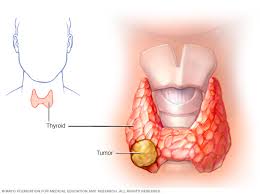
Background: After the Great East Japan Earthquake and Tsunami in March 2011, radioactive elements were released from the Fukushima Daiichi Nuclear Power Plant. Based on prior knowledge, concern emerged about whether an increased incidence of thyroid cancer among exposed residents would occur as a result.
Methods: After the release, Fukushima Prefecture performed ultrasound thyroid screening on all residents ages ≤18 years. The first round of screening included 298,577 examinees, and a second round began in April 2014. We analyzed the prefecture results from the first and second round up to December 31, 2014, in comparison with the Japanese annual incidence and the incidence within a reference area in Fukushima Prefecture.
Results: The highest incidence rate ratio, using a latency period of 4 years, was observed in the central middle district of the prefecture compared with the Japanese annual incidence (incidence rate ratio = 50; 95% confidence interval [CI] = 25, 90). The prevalence of thyroid cancer was 605 per million examinees (95% CI = 302, 1,082) and the prevalence odds ratio compared with the reference district in Fukushima Prefecture was 2.6 (95% CI = 0.99, 7.0). In the second screening round, even under the assumption that the rest of examinees were disease free, an incidence rate ratio of 12 has already been observed (95% CI = 5.1, 23).
Conclusions: An excess of thyroid cancer has been detected by ultrasound among children and adolescents in Fukushima Prefecture within 4 years of the release, and is unlikely to be explained by a screening surge.
High Risk of Inhaling Cesium Contained in Shower Near Tokyo
Via Kurumi Sugita

The result of analysis of a cartridge filter of shower water using essentially zeolite. The user lives in Funabashi city in Chiba (near Tokyo).
The period of use is from Feb 2017 to August 2017.
The volume of water used is about 52500L.
Cesium fixed in cartridge is 1128.96 Bq/kg
While taking a shower, one is exposed to a high risk of inhaling cesium contained in the steam.

1 This Month

of the week – Shut Down Drone Warfare!


Tell the Ukrainian Government to Drop Prosecution of Peace Activist Yurii Sheliazhenko

Petition to revoke the licensing of the Near Surface Nuclear Disposal Facility (NSDF) at Chalk River. https://www.ourcommons.ca/petitions/en/Petition/Details?Petition=e-7247
To see nuclear-related stories in greater depth and intensity – go to https://nuclearinformation.wordpress.com
-
Archives
- March 2026 (244)
- February 2026 (268)
- January 2026 (308)
- December 2025 (358)
- November 2025 (359)
- October 2025 (376)
- September 2025 (257)
- August 2025 (319)
- July 2025 (230)
- June 2025 (348)
- May 2025 (261)
- April 2025 (305)
-
Categories
- 1
- 1 NUCLEAR ISSUES
- business and costs
- climate change
- culture and arts
- ENERGY
- environment
- health
- history
- indigenous issues
- Legal
- marketing of nuclear
- media
- opposition to nuclear
- PERSONAL STORIES
- politics
- politics international
- Religion and ethics
- safety
- secrets,lies and civil liberties
- spinbuster
- technology
- Uranium
- wastes
- weapons and war
- Women
- 2 WORLD
- ACTION
- AFRICA
- Atrocities
- AUSTRALIA
- Christina's notes
- Christina's themes
- culture and arts
- Events
- Fuk 2022
- Fuk 2023
- Fukushima 2017
- Fukushima 2018
- fukushima 2019
- Fukushima 2020
- Fukushima 2021
- general
- global warming
- Humour (God we need it)
- Nuclear
- RARE EARTHS
- Reference
- resources – print
- Resources -audiovicual
- Weekly Newsletter
- World
- World Nuclear
- YouTube
-
RSS
Entries RSS
Comments RSS
 nuclear-news