Convenient Acccounts of Fukushima Radiation Exposure Ignore Glaring Issue

Every time I read something about the Fukushima disaster my blood pressure rises.
For example, recent efforts to represent (hypothesized) remnants of melted fuel rods in unit 2 as evidence of containment is revealed as misleading when one considers the size of the reactor (larger than a bus) and the amount of fuel contained within unit 2’s:
Justin McCurry January 30, 2017, Possible nuclear fuel find raises hopes of Fukushima plant breakthrough. The Guardian, https://www.theguardian.com/environment/2017/jan/31/possible-nuclear-fuel-find-fukushima-plant
Operator says it has seen what may be fuel debris beneath badly damaged No 2 reactor, destroyed six years ago in triple meltdown
Hopes have been raised for a breakthrough in the decommissioning of the wrecked Fukushima Daiichi nuclear plant after its operator said it may have discovered melted fuel beneath a reactor, almost six years after the plant suffered a triple meltdown.
Tokyo Electric Power (Tepco) said on Monday that a remote camera appeared to have found the debris beneath the badly damaged No 2 reactor, where radiation levels remain dangerously high. Locating the fuel is the first step towards removing it. The operator said more analysis would be needed before it could confirm that the images were of melted uranium fuel rods, but confirmed that the lumps were not there before Fukushima Daiichi was hit by a powerful earthquake and tsunami on 11 March 2011.
The amount of fuel contained of fuel in those reactors was substantial. If TEPCO had found all, or most, of the melted reactor fuel they would know it.
According to a November 16 report by Tepco titled, ‘Integrity Inspection of Dry Storage Casks and Spent Fuel at Fukushima Daiichi Nuclear Power Station,’[i] as of March 2010 the Daini site held 1,060 tons of spent uranium fuel. The total spent uranium fuel inventory at Daiichi in March 2010 was reported as 1,760 tons. The 2010 report asserts that approximately 700 spent fuel assemblies are generated every year.[ii] The report specifies that Daiichi’s 3,450 assemblies are stored in each of the six reactor’s spent fuel pools. The common spent fuel pool contains 6291 assemblies. The amount of MOX fuel stored at the plant has not been reported.
I suspect that TEPCO knows that most of the fuel is gone from unit 2’s reactor containment and that what remains is a fraction of the total load, which was either dispersed in the explosions or has left the building.
But what bothers me even more than obfuscation around missing fuel are misleading accounts of radiation exposure.
Case in point: The article published in CNBC below last week alleges that Fukushima radiation exposure was “far lower” than previously found:
Robert Ferris. Jan 24, 2017. Fukushima radiation levels far lower than previously thought, study finds. CNBC.Com, http://www.cnbc.com/2017/01/24/fukushima-radiation-levels-far-lower-than-previously-thought-study-finds.html
Radiation levels remaining from the 2011 disaster at Japan’s Fukushima Daiichi nuclear plant appear to be a small fraction of what previous measurements suggested, according to a recently published study that followed levels in tens of thousands of people living near the site of the accident.
Science magazine highlighted the research Monday, calling it the first study to measure individual radiation levels in locals following a major nuclear disaster. The study was published in the peer reviewed Journal of Radiological Protection in December.
I’ve seen this type of headline before so I was immediately suspicious. I pulled up the journal article and found a glaring issue that problematizes the validity of this conclusion that radiation levels were lower than previously calculated.
Here is the glaring issue ignored in the CNBC’s optimistic headline: The radiation monitoring badges were provided to residents in August of 2011. The disaster and radiation exposure began March 11, 2011.
Consequently, RESIDENTS WERE NOT GIVEN BADGES TO MEASURE EXPOSURE UNTIL FULLY 5 MONTHS AFTER exposure, a fact that is acknowledged in the title of the research article but ignored in the news coverage:
Makoto Miyazaki and Ryugo Hayano. 2017. Individual external dose monitoring of alltizens of Date City by passive dosimeter 5 to 51 months after the FukushimaNPP accident (series): 1. Comparison of individual dose with ambient dose rate monitored by aircraft surveys. J. Radiol. Prot. 37 1(http://iopscience.iop.org/0952-4746/37/1/1) http://iopscience.iop.org/article/10.1088/1361-6498/37/1/1/pdf
For the measurement of individual external doses, Date City distributed individual dosim-eters (radio-photoluminescence (RPL) glass dosimeters: Glass Badge) to kindergarten-, elementary- and junior high school-children in August 2011. The target group was subsequently enlarged as the production capacity of the supplier increased, and the measurements are still ongoing
How is it possible to conclude that exposure was lower than previously thought when the evidence for that claim is generated from a study that excludes the first 5 months of exposure?
Truth has an especially slippery feel when it comes to Fukushima….
????????????????????????????????????????????????????????????
REFERENCES
[i] It is worth noting that although this report was produced on 10/26/2010, the file properties indicate the document was modified on 3/13/2011: Integrity Inspection of Dry Storage Casks and Spent Fuels at Fukushima Daiichi Nuclear Power Station (16 November 2010), http://www.nirs.org/reactorwatch/accidents/6-1_powerpoint.pdf
[ii] Integrity Inspection of Dry Storage Cask.
http://majiasblog.blogspot.fr/2017/02/convenient-acccounts-of-fukushima.html
Images indicate bigger challenge for TEPCO at Fukushima plant
A video taken on Jan. 30 shows the bottom of the No. 2 reactor’s pressure vessel at the Fukushima No. 1 nuclear power plant. Water used to cool the nuclear fuel is dripping, and possible melted fuel is seen strewn on grating for maintenance work. (Provided by Tokyo Electric Power Co.)
If confirmed, the first images of melted nuclear fuel at the Fukushima No. 1 nuclear plant show that Tokyo Electric Power Co. will have a much more difficult time decommissioning the battered facility.
The condition of what is believed to be melted fuel inside the No. 2 reactor at the plant appears far worse than previously thought.
Before the pictures were taken by a remote-controlled video camera on Jan. 30, TEPCO presumed that most of the nuclear fuel at the No. 2 reactor had remained within the reactor’s pressure vessel. That presumption was based on findings of a study conducted last year involving cosmic rays.
As a result, TEPCO did not expect the camera to detect possible nuclear fuel debris below the pressure vessel.

But the images showed black lumps scattered on a wire-mesh grating in the lower part of the containment vessel, which encloses the pressure vessel. This indicates that the fuel melted through bottom of the pressure vessel, spilled through the grating and fell on the floor of the containment vessel.

This image of the area below the No. 2 reactor’s pressure vessel at the Fukushima No. 1 nuclear power plant was taken on Jan. 30. Experts believe nuclear fuel melted the paint and components of equipment nearby and has hardened. (Provided by Tokyo Electric Power Co.)
The grating, which was used by maintenance workers before the disaster, was partially bent.
The images could show only part of the melted fuel in the No. 2 reactor. And there is still no indication on how widespread the black lumps were strewn, their volume and state.
TEPCO and government authorities in fiscal 2018 plan to decide on a method to retrieve the melted fuel from each of the three crippled reactors and start the removal work in 2021.
But a number questions remain unanswered, such as how to reduce workers’ radiation exposure, where the removed fuel will be kept, and when it will be disposed of.
The pictures raise another question: How will workers cut out the wire-mesh grating embedded with lumps of melted fuel?
The images were the first of possible nuclear fuel debris at the nuclear plant since the Great East Japan Earthquake and tsunami caused the triple meltdown there in March 2011.

Sasori (Scorpion), an investigative robot, is expected to be sent in the containment vessel of the No. 2 reactor of the Fukushima No. 1 nuclear power plant in February.
High radiation levels have prevented workers from entering the No. 2 reactor, as well as the No. 1 and No. 3 reactors at the plant.
A number of problems have hampered investigations by robots into the location of melted fuel at the No. 1 and No. 3 reactors.
http://www.asahi.com/ajw/articles/AJ201701310073.html
Fukushima Daiichi: Why It’s So Hard To Clean Up
From December 20, 2013, but this video made by Arnie Gundersen and his Fairwinds team gives us useful info for decades to come.
I completely agree with my friend Kitty, I could not have said it better that in her own words:
“I remember when Arnie started publishing and appearing on TV about Fukushima. Arnie Gundersen quickly won me over with his objective and detailed description of the situation. We would be very in the dark if it were not for Arnie Gundersen, Maggie Gundersen and others.
Many nuclear power plants are shutting down because of their and others, primary reporting of the ongoing Fukushima Catastrophe. Many nuclear projects discontinued. More time on earth for us and our children. Maybe some help and solace to nuclear victims and refugees everywhere.
What Arnie said in the video about why Fukushima is so hard to cleanup, is because of the groundwater. there must be enough of the groundwater and debris out of reactor two, to get a good picture now. Tepco should be doing everything it can to keep groundwater put. this includes building a dike and wall as Arnie says.”
Thank you Arnie Gundersen, thank you Maggie Gundersen, thank you Fairwinds for all the good work you did over the past years and still are doing, very much appreciated by many people in many countries.
In this, the fourth installment in their short film series, from December 2013, Fairewinds Energy Education’s Arnie Gundersen responds to questions they have received about cleanup at Fukushima Daiichi. Please consider supporting their work, so they can continue to bring us the truth about nuclear power.
http://www.fairewinds.org/nuclear-energy-education/fukushima-daiichi-hard-clean?rq=elephant
Footage points to difficulty in removing possible melted fuel at Fukushima plant

The footage released on Jan. 30 by Tokyo Electric Power Co. (TEPCO) showing what could be melted fuel inside the No. 2 reactor at the disaster-stricken Fukushima No. 1 Nuclear Power Plant has highlighted the difficulty of salvaging the object, which is apparently stuck to footholds and other equipment at the facility.
TEPCO took the footage as part of its in-house probe into the No. 2 reactor and found that black and brown sediments — possible melted fuel — are stuck inside the reactor’s containment vessel over an extensive area.
“If what was captured in the footage was melted fuel, that would provide a major step forward toward trying our hand at unprecedented decommissioning work,” said Yoshiyuki Ishizaki, head of TEPCO’s Fukushima Revitalization Headquarters, during a press conference in the city of Fukushima on Jan. 30. “The finding may provide a major clue to future work to retrieve the object,” he added.
At the time of the March 2011 meltdowns at the plant, there were 548 nuclear fuel rods totaling some 164 metric tons inside the No. 2 reactor, but they apparently melted down after the loss of power sources for the core cooling system, with part of the melted fuel penetrating through the pressure vessel before cooling down at the bottom of the containment vessel. The temperature of the reactor core topped 2,000 degrees Celsius at the time of the accident, melting metals including nuclear fuel inside the reactor.
The melted fuel has since come in contact with underground water flowing from the mountain side, generating radioactively contaminated water every day. In order to dismantle the reactor, it is necessary to take out the melted fuel, but high radiation levels inside the reactor had hampered work to locate the melted debris.
On Jan. 30, apart from the footage, TEPCO also released 11 pictures taken inside the No. 2 reactor. The images show the sediments in question stuck to metal grate footholds and water is dripping from the ceiling. Further analysis of those images may provide information on the current status of the disaster and positional clues to decommissioning work.
The in-house probe, however, has only focused on the No. 2 reactor, and there is no prospect of similar probes into the No. 1 and No. 3 reactors starting anytime soon as they were severely damaged by hydrogen explosions following the 2011 meltdowns.
In April 2015, TEPCO introduced a remote-controlled robot into the No. 1 reactor by way of a through hole in its containment vessel, but the device failed to locate melted fuel inside due to high radiation levels. While the utility is planning to send a different type of robot into the No. 1 reactor this coming spring, it would be difficult to carry out a survey similar to that conducted at the No. 2 reactor, as radiation levels are high around the through hole in the No. 1 reactor’s containment vessel, from which a device could access to right below the No. 1 reactor.
The No. 3 reactor, meanwhile, holds roughly 6.5-meter-deep contaminated water inside its containment vessel, a far larger volume than that accumulated at the No. 1 and No. 2 reactors. TEPCO has thus been developing a robot that can wade through water.
http://mainichi.jp/english/articles/20170131/p2a/00m/0na/007000c
Possible nuclear fuel find raises hopes of Fukushima plant breakthrough

Material found below the damaged No 2 reactor at Fukushima nuclear plant, believed to be melted fuel, from footage taken on 30 January.
Operator says it has seen what may be fuel debris beneath badly damaged No 2 reactor, destroyed six years ago in triple meltdown
Hopes have been raised for a breakthrough in the decommissioning of the wrecked Fukushima Daiichi nuclear plant after its operator said it may have discovered melted fuel beneath a reactor, almost six years after the plant suffered a triple meltdown.
Tokyo Electric Power (Tepco) said on Monday that a remote camera appeared to have found the debris beneath the badly damaged No 2 reactor, where radiation levels remain dangerously high. Locating the fuel is the first step towards removing it.
The operator said more analysis would be needed before it could confirm that the images were of melted uranium fuel rods, but confirmed that the lumps were not there before Fukushima Daiichi was hit by a powerful earthquake and tsunami on 11 March 2011.
The tsunami, triggered by a 9.0-magnitude quake, killed more than 18,500 people along the coast of north-east Japan and destroyed the backup power supply at Fukushima Daiichi, triggering the world’s worst nuclear accident since Chernobyl 25 years earlier.
Meltdowns in three of the plant’s six reactors forced about 160,000 people to evacuate and sent plumes of radiation across the Fukushima region. Many of the evacuees are unlikely to return home.
If Tepco can confirm that the black mass comprises melted fuel, it would represent a significant breakthrough in a recovery effort that has been hit by mishaps, the buildup of huge quantities of contaminated water, and soaring costs.
“This is a big step forward as we have got some precious data for the decommissioning process, including removing the fuel debris,” a Tepco official said.
Using a remotely controlled camera attached to the end of a 10.5-metre-long telescopic arm, Tepco technicians located black lumps on wire-mesh grating just below the reactor’s pressure vessel, local media reported.
The company plans to send a scorpion-like robot equipped with cameras, radiation measuring equipment and a temperature gauge into the No 2 reactor containment vessel next month, according to the Asahi Shimbun.
Three previous attempts to use robots to locate melted fuel inside the same reactor ended in failure when the devices were rendered useless by radiation.
Developing the means to remove the fuel – a task Tepco has said will become easier once it can gauge its condition – would be the biggest step forward in the mission to clean up Fukushima Daiichi since the removal of hundreds of spent fuel rods from a damaged reactor building in late 2013.
The delicate, potentially dangerous task of decommissioning the plant has barely begun, however.
Japanese media said last week that plans to remove spent fuel from the No 3 reactor building had been delayed, while decommissioning the entire plant was expected to take at least 40 years.
In December, the government said the estimated cost of decommissioning the plant and decontaminating the surrounding area, as well as paying compensation and storing radioactive waste, had risen to 21.5 trillion yen ($187bn), nearly double an estimate released in 2013.
A government committee estimated that 2.4 trillion yen of the total cost would be passed on to consumers through higher electricity bills.
https://www.theguardian.com/environment/2017/jan/31/possible-nuclear-fuel-find-fukushima-plant
Thousands Who Left Fukushima Face Hardship

Noriko Matsumoto who fled with her children from Japan’s Fukushima prefecture after the nuclear disaster, cries during a news conference in Tokyo, Jan. 17, 2017.
Nearly six years after Noriko Matsumoto and her children fled Japan’s Fukushima area, they face a new possible hardship: cuts to government assistance for housing.
People who lived near the Fukushima Dai-ichi nuclear center feared for their health after a powerful earthquake and tsunami hit Japan on March 11, 2011.
The nuclear center’s reactors released high levels of radiation. It was the worst nuclear accident since the Chernobyl nuclear disaster in the Soviet republic of Ukraine in 1986.
Matsumoto is among nearly 27,000 people who left areas that the government did not identify as required evacuation zones.
Now, the Fukushima local government is preparing to cut unconditional housing assistance at the end of March. Many people will face the choice of returning to places they fear are still unsafe or learning to deal with financial hardship.
“Because both the national and the local governments say we evacuated ‘selfishly,’ we’re being abandoned. They say it’s our own responsibility,” Matsumoto, who is 55, told reporters, her voice shaking.
“I feel deep anger at their throwing us away.”
A local official noted that while the housing assistance ends on March 31, smaller amounts of aid will still be provided, if needed. The official spoke on the condition that media not identify the official by name.
At the time of the earthquake, Matsumoto lived with her husband and two daughters in Koriyama city, about 55 kilometers west of the Fukushima Dai-ichi nuclear plant.
Japanese officials declared a ‘no-go’ zone 30 kilometers around the plant, but Koriyama was outside of that area.
When her younger daughter, then 12, began suffering nosebleeds and diarrhea, Matsumoto and her children moved to Kanagawa, near Tokyo.
Her husband, who operates a restaurant, stayed behind in Koriyama to ensure they could make payments on their home loan and other bills. But, because of travel costs, the family can only meet every one or two months, and they face social pressure.
“People like us, who have evacuated voluntarily to escape radiation, have been judged by our peers as if we selfishly evacuated for personal reasons,” said Matsumoto.
She feels her only support is housing aid that the Fukushima government gives to voluntary evacuees, who numbered 26,601 by October 2016.
The payment is generally about 90,000 yen, or $795, for a family of two or more in Matsumoto’s area, a Fukushima official said. He added that full rental payments on housing are covered until March 31.
“Things here now are safe, but there are people who are still worried about safety and we understand that,” he said.
The housing assistance will no longer be given to all families. Instead, officials will consider the needs of individual families.
A city official said radiation levels in Koriyama are now safe, that they have decreased by time and clean-up efforts.
But areas where radiation is high remain, say activists, and Matsumoto still worries.
“I’m a parent, and so I’ll protect my daughter,” she said. “Even if I have to go into debt, I’ll keep her safe from radiation.”
http://learningenglish.voanews.com/a/thousands-who-left-fukushima-face-hardship/3690289.html
TEPCO may have located melted fuel for 1st time at Fukushima plant

Tokyo Electric Power Co. said Jan. 30 it may have finally pinpointed the location of melted fuel at the Fukushima No. 1 nuclear plant, nearly six years after the triple meltdown unfolded there.
If confirmation is made, it would represent a breakthrough in the daunting task of decommissioning the stricken nuclear plant.

A remote-controlled camera fitted on a long pipe detected black lumps on grating in the lower part of the containment vessel of the No. 2 reactor at the plant early on Jan. 30, TEPCO said.
The wire-mesh grating is located below the pressure vessel of the reactor. The lumps were not there before the Great East Japan Earthquake and tsunami on March 11, 2011, caused the nuclear disaster, according to TEPCO.

The utility plans to determine whether the lump is melted fuel based on images and radiation levels taken by an investigative robot and other data. The robot, called “Sasori” (scorpion) and fitted with two cameras, a dosimeter and a temperature gauge, will be sent into the No. 2 reactor containment vessel next month.

High radiation levels have hampered efforts at the nuclear plant to determine the condition and location of melted nuclear fuel.
TEPCO tried–and failed–three times to locate melted fuel using an industrial endoscope at the No. 2 reactor.
The latest investigation inside the No. 2 reactor began on Jan. 26 to locate the melted fuel.
The company is preparing to devise a method to retrieve the melted fuel in fiscal 2018 as part of the decommissioning work.
http://www.asahi.com/ajw/articles/AJ201701300058.html
The image shows what is believed to be the remains of melted nuclear fuel that seeped through the grating below the pressure vessel of the No. 2 reactor at the Fukushima No. 1 nuclear power plant. (Provided by Tokyo Electric Power Co.)
Fukushima ice cream sales “immune” to fears of radiation
“If you tell a lie big enough and keep repeating it, people will eventually come to believe it. The lie can be maintained only for such time as the State can shield the people from the political, economic and/or military consequences of the lie. It thus becomes vitally important for the State to use all of its powers to repress dissent, for the truth is the mortal enemy of the lie, and thus by extension, the truth is the greatest enemy of the State.” Paul Joseph Goebbels (29 October 1897 – 1 May 1945) was Adolf Hitler‘s Propaganda Minister in Nazi Germany.
The town of Koriyama in Fukushima Prefecture was one of the towns most severely hit by the Fukushima Daiichi March 2011 plume. Though not evacuated as it is located outside of the 30km radius evacuation zone decided by the Japanese government, it remains quite contaminated and has many radioactive hotspots.
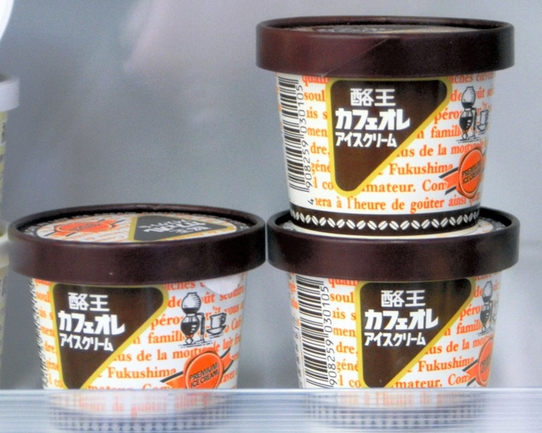
Winter sales have been strong for Rakuou Cafe au Lait Ice Cream produced in Fukushima Prefecture.
KORIYAMA, Fukushima Prefecture–A dairy company here that has withstood fears and rumors about radiation has produced a hot-selling item in the middle of winter.
Within two weeks in November, the initial 6,000 cups of Rakuou Cafe au Lait Ice Cream, produced by Rakuounyugyou Co. in Koriyama, were nearly sold out.
The company, founded in 1975, shipped out an additional lot of around 18,000 cups in December, but this supply has also run short.
Rakuounyugyou shipped 25,000 more cups, mostly to outlets in Fukushima Prefecture, in mid-January, and plans to ship an additional 24,000 within this month.
“Perhaps our ice cream is being seen as more of a premium product,” a sales official at the company said.
Rakuounyugyou’s Rakuou Cafe au Lait, a mild-flavored lactic drink containing at least 50 percent raw milk from Fukushima Prefecture, has an entrenched fan base both in and outside the prefecture.
The company maintained its sales levels in the aftermath of the 2011 Fukushima nuclear disaster, while its competitors suffered losses due to radiation fears and rumors among the public.
Rakuounyugyou developed the ice cream product to commemorate the 40th anniversary of the release of Rakuou Cafe au Lait. The ice cream contains at least 10 percent Rakuou Cafe au Lait and at least 10 percent milk.
“We exercised trial and error because we absolutely didn’t want to disappoint fans of our Cafe au Lait,” the sales official said.
The ice cream was initially sold mainly at sightseeing facilities and expressway service areas in Fukushima Prefecture. Demand was high even though the company did little in the way of a sales campaign.
The spreading popularity of the product can be attributed to Twitter.
Tweets about the ice cream can sound like a hunt for a rare Pokemon on the “Pokemon Go” game app.
“Where could I get one?” one post said. “I got one!” said another.
It is not the first time the social networking service has helped the dairy company; tweets of encouragement spread in the aftermath of the nuclear disaster.
“Be what may, the Rakuou Cafe au Lait tastes so good,” said one particularly popular tweet at that time.
Cafe au Lait is being shipped to a growing number of retailers, most of them in the greater Tokyo area. Sales of the product are up 10 percent from pre-disaster levels.
“Word of our ice cream has also been spread by our fans,” the sales official said. “We are so grateful that we are reduced to tears.”
http://www.asahi.com/ajw/articles/AJ201701290010.html
Only 13% of evacuees in 5 Fukushima municipalities have returned home as of Jan.
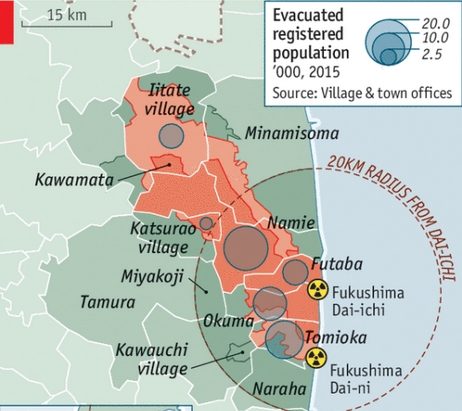
FUKUSHIMA (Kyodo) — Only 13 percent of the evacuees from the 2011 Fukushima nuclear disaster in five municipalities in Fukushima Prefecture have returned home after evacuation orders were lifted, local authorities said Saturday.
Some residents who used to live in the cities of Tamura and Minamisoma, villages of Kawauchi and Katsurao, and the town of Naraha may be reluctant to return to their homes due to fear of exposing children to radiation, the authorities said.
The evacuation orders to residents in those municipalities were lifted partly or entirely from April 2014 through July 2016. As of January, about 2,500 people out of a combined population of around 19,460 registered as residents of those areas were living there.
Evacuation orders for four more towns and villages in Fukushima Prefecture are scheduled to be lifted this spring, but it is uncertain how many residents will return to those areas as well.
In the prefecture, eight municipalities are still subject to evacuation orders around the Fukushima Daiichi nuclear power plant due to high radiation levels. Three nuclear reactors at the plant melted down and the structures housing them were severely damaged by hydrogen gas explosions days after a massive earthquake and ensuing tsunami on March 11, 2011 knocked out electric power needed to run critical reactor cooling equipment.
http://mainichi.jp/english/articles/20170129/p2g/00m/0dm/047000c

Fukushima prefecture
Radiocesium Transfer in Forest Insect Communities after the Fukushima Dai-ichi Nuclear Power Plant Accident
Abstract
To understand radiocesium transfer in the forest insect food web, we investigated the activity concentrations of radiocesium in forest insects in the Fukushima and Ibaraki Prefectures approximately 1.5–2.5 years after the Fukushima Dai-ichi Nuclear Power Plant. We analyzed 34 species of insects sampled from 4 orders and 4 feeding functional groups (herbivore, carnivore, omnivore, and detritivore) from three sites in each prefecture. 137Cs activity concentrations were lowest in herbivorous species and were especially high in detritivorous and omnivorous species that feed on forest litter and fungi. Radiocesium activity concentrations in any given species reflected the degree of contamination of that species’ primary food sources since radiocesium activity concentrations were found to be the lowest in leaves and grass and the highest in litter, bark, and fungi. This study confirmed that litter and other highly contaminated forest components such as fungi, decaying wood, bryophytes, and lichens serve as sources of 137Cs transfer into the forest insect community.
Introduction
The forest ecosystems of Fukushima and its adjacent prefectures were severely contaminated with radionuclides after the Fukushima Dai-ichi Nuclear Power Plant (FDNPP) accident on 11 March 2011 [1,2]. For decades to come, the most biologically important radionuclide will be radiocesium because of its long half-life (30.1 years for 137Cs, 2.1 years for 134Cs) [2,3]. Many studies have reported that most of the Chernobyl radiocesium fallout still resides in surface layers in bioavailable form and continues to be a major potential source for transfer into living organisms even several decades after deposition [4,5]. Similarly, in Fukushima, radiocesium is expected to remain in the litter and upper soil layers of the forest floor for the long term [3].
Entry of radiocesium into forest ecosystems can potentially occur through two different pathways: the plant-based food chain and the detritus-based food chain. In the plant-based food chain, radiocesium in living plants moves into grazing herbivores and then into carnivores. In the detritus-based food chain, radiocesium enters the ecosystem via organisms feeding on litter and detritus (detritivores) and carnivores. Previous studies have reported highly contaminated litter to be the primary source of radiocesium in the forest ecosystem [6–8]. A survey of the forest invertebrate communities in the United Kingdom found the highest activity concentrations of 137Cs in invertebrate detritivores, such as earthworms (Oligochaetes) and woodlice (Isopoda) [8]. By broadly sampling organisms in forests and adjacent streams, including both vertebrates and invertebrates (fish, amphibian, reptile, arthropod, earthworms, etc.), Murakami et al. [6] found that detritivores are more contaminated with 137Cs than herbivores and carnivores at Fukushima.
The forest insect community constitutes a major route of radiocesium transfer to higher trophic organisms such as small mammals and birds. The highly varied feeding habits, life histories, and habitats of insects permit investigation of how radiocesium transfer from forest components into higher organisms occurs. There is particular concern for the effects of radiation on wildlife, including insects, as a result of the FDNPP accident [9–11]. However, compared with the numerous studies examining radioactive contamination of organisms used for human consumption, such as fish and game, only a few studies have been published about radionuclide accumulation in insects after the accident [12]. Previous studies conducted in European countries have reported on radionuclide transfer and accumulation of insects and other invertebrates [8,13–17], but it remains unclear how 137Cs uptake occurs in the entire insect food web and in relation to insect feeding habits.
In this study, we focused on radiocesium transfer in insect communities by investigating 137Cs activity concentrationsg in forest insects in the Fukushima and Ibaraki Prefectures over a period of 1.5–2.5 years after the Fukushima Dai-ichi reactor accident. To assess the distribution of radiocesium across insect communities and the influence of feeding ecology on radiocesium uptake, we collected insect samples from a wide range of insect species: We sampled species from four taxonomic orders (Coleoptera, Hemiptera, Lepidoptera, Orthoptera) and four feeding functional groups within those orders (herbivore, omnivore, carnivore, detritivore). To assess 137Cs uptake across different levels of contamination, we collected samples from a high-contamination area in Fukushima and from a low-contamination area in Ibaraki (137Cs deposition was 130–270 kBq m−2 at the Fukushima area and 13 kBq m−2 at the Ibaraki area according to the 4th Airborne Radiation Monitoring by Ministry of Education, Culture, Sports, Science and Technology in 2011) [18]. To assess the distribution of radiocesium in insect food sources, we also sampled forest floor litter, tree leaves, grasses, bark, fungi, and bryophytes in both study areas.
Materials and Methods
Study area and sampling locations
Fig 1 shows the locations of the two forest study areas in the Ibaraki Prefecture (sites A–C) and in the Fukushima Prefecture (sites D–F). The Ibaraki study area was located approximately 160 km southwest of the FDNPP, close to Mt. Tsukuba. Two sites were located in secondary forest dominated by deciduous trees (sites A, B) and the third was located in a Japanese cedar (Cryptomeria japonica) plantation (site C). The Fukushima study sites were located 39 km northwest of the FDNPP, near Lake Udagawa. Sites D and F were secondary forest dominated by deciduous trees. Site E was a small open area surrounded by both deciduous and Japanese cedar forests. Light traps were used in the open area, and pitfall traps were set on the floor of the Japanese cedar forest. These traps are described in greater detail below. Permission was granted for the field study by the Kanto regional forest office and the Tohoku regional forest office of the Forest Agency.

Fig 1. Locations of Study Sites in the Fukushima and Ibaraki Prefectures.
Left panel shows 137Cs deposition (Bq m−2) in eastern Japan (The map was generated from the Distribution Map of Radiation Dose by MEXT, Japan, http://ramap.jaea.go.jp/map/). Right panels are the aerial photographs provided by the Geographical Survey Institute (http://maps.gsi.go.jp/development/ichiran.html), with red squares showing locations of study sites in the Ibaraki Prefecture (A, B, C) and Fukushima Prefecture (D, E, F). http://dx.doi.org/10.1371/journal.pone.0171133.g001
Sampling and specimen processing
Insect sampling was conducted during the summers of 2012 and 2013. Pitfall traps were used for ground-dwelling beetles, and light traps were used for moths and other flying insects. Grasshoppers were collected using a sweep net. For pitfall traps, circular 180-mL plastic drinking cups (7.5-cm diameter) containing acetic acid as bait were used. For each site, 60–150 traps were placed on the forest floor, and sampling took place for 2–28 days from June to September (see Table 1 for collection dates). Light trapping was conducted in the open area of site E in the Fukushima study area. For light traps, a white sheet (1.5 × 1.5 m) was hung behind two light sources (160-W mercury vapor and 20-W fluorescent UV), and insects were captured by hand. Light trapping was conducted for approximately 2 h between 18:00–21:00 h. Light trapping was conducted only at the Fukushima sites because we were unable to collect sufficient biomass for analysis in the Ibaraki sites because of the low 137Cs activity concentrations in samples in the preliminary test results. Sweep net sampling was conducted in an open area close to site D in 2013.

137Cs activity concentrations and counting errors in Litter Samples are shown for each study site. http://dx.doi.org/10.1371/journal.pone.0171133.t001
Insect samples were sorted and identified to the species level. Several samples were identified only to the family level because of difficulties in species identification and because insufficient biomass was available for 137Cs determination if sorted to the species level. After measurement of fresh weight, samples were dried for >48 h at 60°C, then dry weights were determined. Individual samples of each species were combined and homogenized intact using a food processor. 137Cs concentration is reported for dry weight rather than wet because samples collected from pitfall traps vary greatly in fresh weight because of variations in acetic acid absorption.
Forest components, such as litter, tree leaves, grasses, barks, fungi, bryophytes were also sampled in 2012. Because fungi and bryophytes show a sporadic distribution, we sampled them only in the Fukushima sites in 2012. Leaf and grass samples were washed with water, dried at 70°C, weighed, and powdered using a food processor (see [19] for details). Litter, bark, fungi, and bryophytes were not washed but were dried and powdered similarly to leaves and grass.
Radiocesium measurements
All samples were stored in plastic containers (U8 container, diameter = 50 mm, height = 62 mm). 137Cs activity concentrations were measured using germanium coaxial detectors (GC2518Canberra Japan, Tokyo, Japan; SEG-EMS GEM 35–70, Seiko EG&G Co. Ltd., Tokyo, Japan). Most samples were measured for <10% of the error counts per net area counts, and samples containing only a few becquerels of activity were measured for <15% of the error counts per net area counts. Standardized sources for calibrating the detectors were MX033U8PP (Japan Radioisotope Association, Tokyo, Japan) and EG-ML (Eckert & Ziegler Isotope Products, Valencia, CA, USA). The software Gamma Studio (SEIKO EG&G, Tokyo, Japan) was used to analyze γ-ray spectra. Activities of samples were corrected for radioactive decay to the date of sample collection and were expressed as Bq/kg. S1 and S2 Tables show the 137Cs activity concentrations (Bq kg−1 dry weight) in sampled insect species and forest components, respectively.
Data analysis
After excluding values that fell below the detection limit of the instrumentation, data from 68 insect samples consisting of 34 species were used for the analysis of insect 137Cs activity concentrations. 137Cs activity concentrations tend to be lognormally distributed [20], so the 137Cs activity concentrations in insect and litter samples were log-transformed to fulfill requirements of normal distribution and homogeneity of variance. Whether 137Cs activity concentrations differed across feeding functional groups was assessed using a generalized linear mixed-effects model (GLMM). GLMM is an extension of the generalized linear model that takes into account both fixed and random effects [21]. In this study, the dependent variable was the 137Cs activity concentration in a given insect species. Fixed effects were functional feeding group, the 137Cs activity concentration in litter, sampling year (2012, 2013), and forest type (cedar vs. deciduous forest). Random effects were sampling site (A–F) and insect species. The functional feeding group to which a particular species was assigned (herbivore, carnivore, omnivore, detritivore) was based on its predominant food source. To determine the best model, we used likelihood ratio tests to compare the full model with nested models in which one of the predictor variables was omitted. If the omitted variable had no significant effect on the model, then that variable was removed from the model. This model was also selected as the best model using AIC (Akaike’s Information Criterion) from models using all combinations of variables. Because we were interested in the differences between functional feeding groups, Tukey–Kramer post hoc tests were conducted to test multiple pairwise comparisons [22].
To compare the transfer of 137Cs into insects across different contamination levels in Fukushima and Ibaraki Prefecture, a concentration ratio (CR) was calculated for each species as Bq kg−1 dry weight of insect/Bq kg−1 dry weight of litter. Although different definitions of transfer have been developed for different purposes, we standardized 137Cs transfer into insect species to 137Cs activity concentrations in forest litter because litter is the most basal food resource in forest ecosystems.
All statistical analyses were performed with the software R, ver. 3.1.1 [23], using the optional package lme4 for GLMM analysis and the multcomp package for multiple comparisons.
Results and Discussion
137Cs distribution in forest components
137Cs activity concentrations in the various forest components are shown in Fig 2. As expected, 137Cs mostly accumulated in the litter layer. Living leaves and grass had much lower 137Cs activity concentrations than litter in both study areas, and this was the case for both cedar and deciduous forests. 137Cs activity concentrations were higher in the litter and leaves of cedar forests than in those of deciduous forests. The reported higher 137Cs activity concentrations in evergreen species than in deciduous species have been attributed to the expansion of the foliar parts of the former, but not of those of the latter, at the time of fallout [24]. The finding that litter has a higher activity concentrations of 137Cs than leaves is also consistent with previous studies, which reported that most of the radioactive cesium deposited in Fukushima forests was rapidly transported to the forest floor within 1–2 years after deposition [25,26]. Although the samples from Fukushima had an order of magnitude higher activity of 137Cs than those from Ibaraki, the pattern of distribution of 137Cs among forest components was similar in both areas. The relatively lower levels in leaves and grass reflects a low rate of uptake from the soil by living plants.

Fig 2. 137Cs activity concentrations in Forest Components and Insects.
137Cs activity concentrations are shown for study sites in Fukushima (upper panel) and Ibaraki (lower panel) in 2012. Litter and leaf samples are shown separately for Japanese cedar forests (Litter_e and Leaf_e) and deciduous forests (Litter_d and Leaf_d). Dark horizontal lines represent the mean, with the box representing the 25th and 75th percentiles, the whiskers the 5th and 95th percentiles, and dots indicating outliers. http://dx.doi.org/10.1371/journal.pone.0171133.g002
In contrast to leaves and grass, bark, bryophytes, and fungi were highly contaminated. Previous investigators have found that fungi strongly accumulate radiocesium and play an important role in the uptake and retention of radiocesium in the organic layers of forest ecosystems [5,27]. Bryophytes and lichens are also known to passively accumulate high levels of radiocesium and retain radionuclides for long time periods because of their long life spans [28–30]. Thus, these forest components provide insect species not only a highly contaminated diet but also a contaminated habitat causing external radiation exposure.
The 137Cs activity concentrations in detritivorous insects were 1–2 orders of magnitude lower than the activity concentrations in litter in both the Ibaraki and Fukushima areas. Activity concentrations of 137Cs in herbivorous insects were similar to those in tree leaves and grass at Fukushima (no herbivorous insect samples were collected at Ibaraki.)
Effect of insect feeding habit on 137Cs uptake
Fig 3 presents a scatterplot of 137Cs activity concentrations in various insect species within the four functional feeding groups in relation to the 137Cs activity concentrations in litter contamination at the site where they were collected.

Fig 3. 137Cs Activity Concentrations in Insect Feeding Functional Groups.
137Cs activity concentrations of insect species are shown in relation to the 137Cs activity concentrations in litter at the site. Colors indicate the functional feeding group to which species belongs: green, herbivore; yellow, omnivore; gray, carnivore; red, detritivore. Symbols indicate the sampling area: circle, Fukushima; triangle, Ibaraki. http://dx.doi.org/10.1371/journal.pone.0171133.g003
The GLMM analysis of the contribution of each variable to insect 137Cs contaminations indicated a significant effect of litter 137Cs activity concentration and functional feeding group, whereas no significant effect was found for both sampling year and forest type (Table 2). In the final model (Table 3), 137Cs activity concentrations in insect samples were positively correlated with those in litter (P < .001). Thus, the 137Cs activity concentrations in insects reflected the degree of contamination of litter at the study sites. 137Cs activity concentrations of litter are heterogeneous and are known to redistribute with time on the forest floor [31]. On average, 137Cs concentrations in both the litter and the ground beetle Carabus albrecht were lower in 2013 than in 2012 (Table 1, S2 Table). However, at site F, the 137Cs activity concentration of litter was higher in 2013 than in 2012 (Table 1). Although the mechanism is not entirely clear, the lateral transport of heterogeneously contaminated litter might have caused an increase in 137Cs activity concentrations because site F was located near the bottom of a hillslope [31]. In association with the increase in 137Cs activity concentration in the litter, 137Cs activity concentrations in C. albrecht also increased from 242.5 Bq kg−1 to 459.3 Bq kg−1 and 473.0 Bq kg−1 at site F (S2 Table). This confirms that 137Cs activity concentrations in insects reflected the degree of contamination of litter; therefore, CR values calculated from 137Cs activity concentrations in litter are appropriate to compare the transfer of 137Cs into insects despite heterogeneous distribution of 137Cs on the forest floor.

Table 2. Model selectionof GLMM for the 137Cs activity concentrations in insects.
The effect of separately omitting each variable from the full model showing both AIC and chi-square test statistics. http://dx.doi.org/10.1371/journal.pone.0171133.t002

Table 3. The final model of GLMM for the 137Cs activity concentrations in insectsshowing estimates, standard errors, and P-values.
Coefficients in bold indicate significant effects (P < .05). http://dx.doi.org/10.1371/journal.pone.0171133.t003
GLMM analysis also revealed the significant effect of functional feeding groups on insect 137Cs activity concentrations. Multiple comparison analysis showed that herbivores had significantly lower 137Cs activity concentrations than detritivores (P = .004), carnivores (P = .03), and omnivores (P = .05), but no significant differences were observed in its activity concentrations when the latter three functional groups were compared with one another (Table 3).
Fig 4 shows the CR for each insect species/order collected. Values ranged from 0.003 to 0.89.

Fig 4. Concentration Ratio of 137Cs in Sampled Insect Species.
CRs were calculated as Bq kg−1 insect dry weight/(Bq kg−1 litter dry weight. Species are grouped by the orders to which they belong (Coleoptera, Hemiptera, Lepdoptera, Orthoptera) with lines separating the orders. Colors indicate the functional feeding group to which species belongs: green, herbivore; yellow, omnivore, gray, carnivore; red, detritivore. Symbols indicate the sampling area: circle, Fukushima; triangle, Ibaraki. http://dx.doi.org/10.1371/journal.pone.0171133.g004
Although we have data on 137Cs activity concentrations for only carnivores and detritivores in Ibaraki sites, the CR values for the collected insect species were similar between Ibaraki and Fukushima sites. For example, CRs of the samples of C. albrechti, which were collected in large quantities at all sites, were similar between the Ibaraki and Fukushima sites (t-test, t = 0.01, df = 16, P = .99). These results suggest that uptake rate of 137Cs can be consistent regardless of amount of 137Cs depositions.
Comparing CRs across functional groups, herbivores showed the lowest values. Sampled herbivores included moths (Lepidoptera), herbivorous flying beetles (Coleoptera), stinging bugs (Hemiptera), and grasshoppers (Orthoptera). The low CRs for herbivorous insects reflect their diet of living plant tissues, which were found to contain relatively low activity concentrations of 137Cs compared to litter (Fig 2). The three herbivores with slightly higher CRs (Lithosia quadra, Eilema deplana, E. vestusa) are members lichen moth family Arctiidae. The CRs were likely higher because the larvae of these moth species feed on highly contaminated lichen and algae growing on trees or stones.
The CRs in carnivore species were overall higher than those in herbivores. Predominant carnivore species in the sample were ground-dwelling beetles of the family Carabidae. Ground beetles capture and consume a wide range of other soil-dwelling organisms, including detritivorous invertebrates and earthworms.
The higher CR values for carnivore species relative to herbivore species reflect the high contamination levels of the organisms in their diets. We did not investigate 137Cs activity concentrations in earthworms and soil invertebrates, but earthworms and detritivorous soil invertebrates such as springtails (Collembola) and woodlice (Isopoda) were consistently found to have higher 137Cs activity concentrations than other invertebrate groups [8,15]. Copplestone et al. [15] also standardized the activity concentration of 137Cs in living organisms to those in litter, reported ratios of 0.9–1.33 for earthworms showing relatively high CR value compared with carnivores in Fig 4. The snail-feeding Carabidae beetle, Damaster blaptoides, had the highest CR of all carnivore species collected, which also likely resulted from the contamination of terrestrial snails. Some species of terrestrial snails whose diet contain algae, lichens and fungi have been reported to accumulate relatively high amount of radiocesium than other herbivorous species [8,32].
Among detritivores and omnivores, high CR values were found for species that feed on fungi or litter, and relatively low values were found for carrion feeders. In this study, four species of Coleopteran beetles were classified as detritivores. Nicrophorus quadripunctatus and N. concolor are both carrion beetles of the family Silphidae, which feeds on vertebrate carcasses. Their 137Cs activity concentrations were similar to carnivore Carabidae beetles. On the other hand, the dung beetle, Geotrupes laevistriatus, and the giant weevil, Sipalinus gigas, showed high 137Cs activity concentrations. The larvae of these species and adult dung beetles feed on the dung of mammals, and adults are also attracted to decaying carrion and fungi. In study of radioactive contamination in insect species in Poland, Mietelski et al. [13,33] suggested the forest dung beetle as a suitable species for biomonitoring of radioactive contamination because it has high 137Cs concentrations compared to herbivores. The larvae of giant weevils feed on dead or decaying wood. It is possible that giant weevils have high levels 137Cs because decaying wood accumulates 137Cs because of the presence of wood-decaying fungi.
Among omnivorous insects, the camel cricket, Diestrammena ssp. had especially large CR values. This species is eats a wide variety of organic materials on the forest floor, including litter, fungi, and other invertebrate species. The CR values of detritivores and omnivores varied highly across sampling sites, likely indicating the nonuniform nature of 137Cs accumulation in fungi and decaying organic materials, as well as the varied diet of individual insect species [12,15].
137Cs transfer in the forest insect food web
In this study, litter and other forest components that were highly contaminated with 137Cs, such as fungi, decaying wood, bryophytes, and lichens were considered to be primary sources of 137Cs transfer into the forest insect community. Detritivores showed higher 137Cs accumulation than herbivores, confirming that uptake of 137Cs into insect ecosystems occurs through the detritus-based food chain and not through the plant-based food chain as previous studies have suggested [6,7].
With regard to 137Cs transfer through trophic levels, 137Cs activity concentrations of carnivorous insects were higher than those of herbivores but not higher than those of detritivores. Because carnivorous insects were represented by ground-dwelling beetles in this study, a significant proportion of their diet might have comprised detritivorous organisms. Therefore, this result might indicate a decrease in 137Cs activity concentrations in carnivores compared with that in detritivores. Rudge et al. [8] reported similar findings in a study of grassland invertebrate communities in the United Kingdom after the Chernobyl accident and suggested that 137Cs activity concentrations decrease up the food chain. Using stable carbon and nitrogen isotope ratio analysis of organisms in a terrestrial and stream ecosystem, Sakai et al. (2016) likewise observed dilution of 137Cs as it moved from lower to higher trophic levels [7]. These findings are the opposite of what has been observed regarding the bioaccumulation of 137C in fish species. In general, fish species at higher trophic levels will have higher activity concentrations of radiocesium than those farther down the food chain [34,35].
Our results do not provide clear evidence to support the idea of dilution of radiocesium as it moves up the food chain because we did not collect insect species that had a direct predator–prey relationship and because our measurements possibly overestimated the 137Cs activity concentrations in detritivores. We measured insect whole-body 137Cs activity concentrations similar to the reported insect 137Cs activity concentrations in previous studies because of the difficulty in collecting sufficient biomass for 137Cs measurements from dissected individual tissue types [8,12–17]. Thus, the high 137Cs concentrations measured in detritivorous insects may have been partly due to the presence of highly contaminated organic matter and soils in the digestive systems of sampled insects. Mietelski et al. (2003) found that measurement of 137Cs in dung beetles could be influenced by food remains in the digestive system. In addition, studies on the assimilation of radiocesium by earthworms have shown that little absorption occurs from contaminated gut contents [36], with radioactivity concentrations in earthworm tissues being far lower than those in the gut [8,37]. However, 137Cs activity concentrations of fish typically have been measured in dissected muscular tissues, so there was no contamination by gut contents. Therefore, the overestimation of 137Cs activity concentrations of whole-body samples should be taken into account when evaluating the 137Cs transfer through the detritus-based food chain and accumulation/dilution of 137Cs. Future studies that focus on137Cs activity concentrations in predator–prey relationships and on the bioavailability of soil-associated and litter-associated 137Cs for tissue incorporation will lead to better understanding of the transfer of 137Cs through the food web.
137Cs contaminations of arthropods are expected to gradually decrease as 137Cs decline activity concentrations in forest litter [3]. Because most herbivorous insect species have a reproductive cycle of 1 year or less, their 137Cs activity concentrations should reflect the level of contamination of their diet of the year in which they reproduced. In other functional feeding groups, members of some species may live for several years; for example, the life expectancy of Carabidae adults is 1 to 4 years. However, in the invertebrates that constitute their diet, the biological half-life of 137Cs is typically several days to a month [32]. Thus, the radiocesium concentration in insects of this species would also reflect the current contamination levels of the organisms that constitute their diet.
Conclusions
Understanding the movement of 137Cs through ecosystems is essential for the management of radiation contamination and risk assessment in forest environments. This study investigated 137Cs transfer in forest insect communities in areas contaminated by the Fukushima Dai-ichi Nuclear Power Plant Accident. The results showed that 137Cs activity concentrations were lowest in herbivores and highest in carnivores, detritivores, and omnivores. The level of contamination in each of the four functional feeding groups of insects reflected the level of contamination of the materials and organisms that constitute their diets. Detritorivorous species had the highest levels of contamination, confirming findings of previous studies that these species play a significant role in 137Cs transfer into the forest ecosystem via consumption of highly contaminated forest litter. The nonuniform distribution of 137Cs in the forest environment is not only because of litter but also because of other forest components that may have high levels of 137Cs contamination, including fungi, decaying wood, bryophytes, and lichens. Insect species that have high CR values or that live in highly contaminated substrates, such as dung beetles, camel crickets, and lichen moths, would be appropriate species for monitoring radiocesium activity concentrations or for studies of radiation effects on wildlife.
Supporting Information
S1 Table. Details of samples of forest components.
137Cs values and counting errors are shown.
doi:10.1371/journal.pone.0171133.s001
(XLSX)
S2 Table. Details of samples of insect components.
137Cs values and counting errors are shown.
doi:10.1371/journal.pone.0171133.s002
(XLSX)
Acknowledgments
We thank M Takeda for insect sampling, identification, and technical advice about their ecology and Dr. K Hosaka and Dr. A Takenaka for identifying samples of fungi and plants, respectively.
Author Contributions
- Conceptualization: YI SH NT.
- Formal analysis: YI.
- Investigation: YI.
- Writing – original draft: YI.
- Writing – review & editing: SH NT.
References
1. Kinoshita N, Sueki K, Sasa K, Kitagawa J, Ikarashi S, Nishimura T, et al. Assessment of individual radionuclide distributions from the Fukushima nuclear accident covering central-east Japan. Proc Natl Acad Sci. 2011;108: 19526–19529. doi: 10.1073/pnas.1111724108. pmid:22084070
2. Yoshida N, Kanda J. Tracking the Fukushima radionuclides. Science (80-). 2012;336: 1115–1116.
3. Hashimoto S, Matsuura T, Nanko K, Linkov I, Shaw G, Kaneko S. Predicted spatio-temporal dynamics of radiocesium deposited onto forests following the Fukushima nuclear accident. Sci Rep. 2013;3: 2564. doi: 10.1038/srep02564. pmid:23995073
4. Shaw G, Venter A, Avila R, Bergman R, Bulgakov A, Calmon P, et al. Radionuclide migration in forest ecosystems—results of a model validation study. J Environ Radioact. 2005;84: 285–96. doi: 10.1016/j.jenvrad.2003.09.006. pmid:15970363
5. Smith J, Beresford N, Shaw G, Moberg L. Radioactivity in terrestrial ecosystems. Chelnobyl—Catastrophe and consequences. Berlin: Springer; 2005. pp. 81–128.
6. Murakami M, Ohte N, Suzuki T, Ishii N, Igarashi Y, Tanoi K. Biological proliferation of cesium-137 through the detrital food chain in a forest ecosystem in Japan. Sci Rep. 2014;4: 3599. doi: 10.1038/srep03599. pmid:24398571
7. Sakai M, Gomi T, Negishi JN, Iwamoto A, Okada K. Different cesium-137 transfers to forest and stream ecosystems. Environ Pollut. Elsevier Ltd; 2016;209: 46–52.
8. Rudge SA, Johnson MS, Leah RT, Jones SR. Biological transport of radiocaesium in a semi-natural grassland ecosystem. 2. Small mammals. J Environ Radioact. 1993;19: 199–212.
9. Akimoto S. Morphological abnormalities in gall-forming aphids in a radiation-contaminated area near Fukushima Daiichi: selective impact of fallout? Ecol Evol. 2014;4: 355–69. doi: 10.1002/ece3.949. pmid:24634721
10. Hiyama A, Nohara C, Kinjo S, Taira W, Gima S, Tanahara A, et al. The biological impacts of the Fukushima nuclear accident on the pale grass blue butterfly. Sci Rep. 2012;2: 570. doi: 10.1038/srep00570. pmid:22880161
11. Møller AP, Hagiwara A, Matsui S, Kasahara S, Kawatsu K, Nishiumi I, et al. Abundance of birds in Fukushima as judged from Chernobyl. Environ Pollut. Elsevier Ltd; 2012;164: 36–9.
12. Ayabe Y, Kanasashi T, Hijii N, Takenaka C. Radiocesium contamination of the web spider Nephila clavata (Nephilidae: Arachnida) 1.5 years after the Fukushima Dai-ichi Nuclear Power Plant accident. J Environ Radioact. Elsevier Ltd; 2014;127: 105–10.
13. Mietelski JW, Szwałko P, Tomankiewicz E, Gaca P, Grabowska S. Geotrupine beetles (Coleoptera: Scarabaeoidea) as bio-monitors of man-made radioactivity. J Environ Monit. 2003;5: 296–301. pmid:12729271
14. Mietelski JW, Maksimova S, Szwałko P, Wnuk K, Zagrodzki P, Błazej S, et al. Plutonium, 137Cs and 90Sr in selected invertebrates from some areas around Chernobyl nuclear power plant. J Environ Radioact. 2010;101: 488–93. doi: 10.1016/j.jenvrad.2008.04.009. pmid:18502547
15. Copplestone D, Johnson MS, Jones SR, Toal ME, Jackson D. Radionuclide behaviour and transport in a coniferous woodland ecosystem: vegetation, invertebrates and wood mice, Apodemus sylvaticus. Sci Total Environ. 1999;239: 95–109. Available: http://www.ncbi.nlm.nih.gov/pubmed/10570837 pmid:10570837
16. Dragović S, Howard BJ, Caborn J a, Barnett CL, Mihailović N. Transfer of natural and anthropogenic radionuclides to ants, bryophytes and lichen in a semi-natural ecosystem. Environ Monit Assess. 2010;166: 677–86. doi: 10.1007/s10661-009-1032-4. pmid:19543994
17. Toal ME, Copplestone D, Johnson MS, Jackson D, Jones SR. Quantifying 137Cs aggregated transfer coefficients in a semi-natural woodland ecosystem adjacent to a nuclear reprocessing facility. J Environ Radioact. 2002;63: 85–103. pmid:12230138
18. Ministry of Education, Culture, Sports S and T (MEXT). Results of the Fourth Airborne Monitoring Survey [Internet]. 2011. http://radioactivity.nsr.go.jp/en/list/307/list-1.html
19. Nishikiori T, Watanabe M, Koshikawa MK, Takamatsu T, Ishii Y, Ito S, et al. Uptake and translocation of radiocesium in cedar leaves following the Fukushima nuclear accident. Sci Total Environ. Elsevier B.V.; 2015;502: 611–616.
20. Beresford N a, Yankovich TL, Wood MD, Fesenko S, Andersson P, Muikku M, et al. A new approach to predicting environmental transfer of radionuclides to wildlife: a demonstration for freshwater fish and caesium. Sci Total Environ. Elsevier B.V.; 2013;463–464: 284–92.
21. Bolker BM, Brooks ME, Clark CJ, Geange SW, Poulsen JR, Stevens MHH, et al. Generalized linear mixed models: a practical guide for ecology and evolution. Trends Ecol Evol. 2009;24: 127–135. doi: 10.1016/j.tree.2008.10.008. pmid:19185386
22. Bretz F, Torsten H, Peter W. Multiple comparisons using R. Chapman & Hall; 2011.
23. R Core Team. R: A Language and Environment for Statistical Computing [Internet]. Vienna, Austria; 2015.https://www.r-project.org/
24. Yoshihara T, Matsumura H, Hashida S, Nagaoka T. Radiocesium contaminations of 20 wood species and the corresponding gamma-ray dose rates around the canopies at 5 months after the Fukushima nuclear power plant accident. J Environ Radioact. Elsevier Ltd; 2013;115: 60–8.
25. Forest and Forest Product Research Institute. Preliminary Results of Surveys of Distributions of Radioactive Elements in Forest Ecosystems [In Japanese]. 2012. http://www.rinya.maff.go.jp/j/press/kaihatu/pdf/150327-01.pdf
26. Endo I, Ohte N, Iseda K, Tanoi K, Hirose A, Kobayashi NI, et al. Estimation of radioactive 137-cesium transportation by litterfall, stemflow and throughfall in the forests of Fukushima. J Environ Radioact. Elsevier Ltd; 2015;149: 176–185.
27. Steiner M, Linkov I, Yoshida S. The role of fungi in the transfer and cycling of radionuclides in forest ecosystems. J Environ Radioact. 2002;58: 217–241. pmid:11814167
28. Giovani C, Nimis PL, Bolognini G, Padovani R, Usco A. Bryophytes as indicators of radiocesium deposition in northeastern Italy. Sci Total Environ. 1994;157: 35–43.
29. Dohi T, Ohmura Y, Kashiwadani H, Fujiwara K, Sakamoto Y, Iijima K. Radiocaesium activity concentrations in parmelioid lichens within a 60 km radius of the Fukushima Dai-ichi Nuclear Power Plant. J Environ Radioact. Elsevier Ltd; 2015;146: 125–133.
30. Ohmura Y, Matsukura K, Abe JP, Hosaka K, Tamaoki M, Dohi T, et al. 137Cs concentrations in foliose lichens within Tsukuba-city as a reflection of radioactive fallout from the Fukushima Dai-ichi Nuclear Power Plant accident. J Environ Radioact. Elsevier Ltd; 2015;141: 38–43.
31. Koarashi J, Atarashi-Andoh M, Takeuchi E, Nishimura S. Topographic heterogeneity effect on the accumulation of Fukushima-derived radiocesium on forest floor driven by biologically mediated processes. Sci Rep. 2014;4: 6853. doi: 10.1038/srep06853. pmid:25358420
32. Gaso MI, Cervantes ML, Segovia N, Abascal F, Salazar S. Cs and Ra determination in soil and land snails from a radioactive waste site. Sci Total Environ. 1995;173: 41–45.
33. Mietelski JW, Szwa P, Tomankiewicz E, Gaca P, Ma S, Barszcz J, et al. 137Cs, 40K, 90Sr, 238, 239+240Pu, 241Am and 243 + 244 Cm in forest litter and their transfer to some species of insects and plants in boreal forests: Three case studies. 2004;262: 645–660.
34. Rowan DJ, Rasmussen JB. Bioaccumulation of Radiocesium by fish: the influence of physicochemical factors and trophic structure. Can J Fish Aquat Sci. 1994;51: 2388–2410.
35. Sundbom M, Meili M, Andersson E, Ostlund M, Broberg a. Long-term dynamics of Chernobyl Cs-137 in freshwater fish: quantifying the effect of body size and trophic level. J Appl Ecol. 2003;40: 228–240.
36. Brown SL, Bell JNB. Earthworms and radionuclides, with experimental investigations on the uptake and exchangeability of radiocaesium. Environ Pollut. 1995;88: 27–39. pmid:15091566
37. Hasegawa M, Ito MT, Kaneko S, Kiyono Y, Ikeda S, Makino S. Radiocesium concentrations in epigeic earthworms at various distances from the Fukushima Nuclear Power Plant 6 months after the 2011 accident. J Environ Radioact. Elsevier Ltd; 2013;126: 8–13.
Source :
Citation: Ishii Y, Hayashi S, Takamura N (2017) Radiocesium Transfer in Forest Insect Communities after the Fukushima Dai-ichi Nuclear Power Plant Accident. PLoS ONE 12(1): e0171133. doi:10.1371/journal.pone.0171133
Editor: Hideyuki Doi, University of Hyogo, JAPAN
http://journals.plos.org/plosone/article?id=10.1371/journal.pone.0171133
TEPCO reinserts camera in Fukushima reactor 2

What appears to be rust is seen on a foothold inside the containment vessel of the No. 2 reactor at the Fukushima No. 1 nuclear plant in this image provided by Tokyo Electric Power Co.
TEPCO reinserts camera in Fukushima reactor
TEPCO, the operator of the damaged Fukushima Daiichi nuclear plant, has again begun using a camera probe inside the containment vessel of the No. 2 reactor.
Taking pictures of the molten fuel inside is regarded as an important step towards decommissioning the reactors that melted down.
On Tuesday, workers at the plant tried to insert a camera into a pipe leading into the containment vessel.
But the camera got stuck in the pipe’s opening. The rubber, which had shrunk due to cold, blocked it.
In a second attempt on Thursday, workers tried to push the camera into the pipe while warming the rubber with thermal material. They were successful.
Footage from the camera shows a black substance adhering to the surface of metal rails in the vessel. The rails will be used as tracks for a robot to do a survey in February.
TEPCO expects the camera may capture footage of molten fuel for the first time since the 2011 meltdown
https://www3.nhk.or.jp/nhkworld/en/news/20170126_31/
TEPCO begins taking video inside Fukushima No. 1 nuke plant reactor
Tokyo Electric Power Co. (TEPCO) began work on Jan. 26 to take video inside the No. 2 reactor at its tsunami-hit Fukushima No. 1 nuclear plant, company officials said.
A camera attached to the tip of a pipe was inserted into the reactor containment vessel to shoot video inside of the vessel to check the condition of the melted fuel within. It was also done in preparation for sending in a camera-equipped robot to get a closer look at conditions. The robot will follow 7.2-meter-long rails leading to an area just below the reactor’s pressure vessel.
Video released by TEPCO on Jan. 26 shows dripping liquid and what appears to be steam drifting inside the containment vessel. What looks like rust is seen on a foothold and the rails, but nothing that could block the robot has been found.
TEPCO is poised to use a longer pipe to check if there is any obstacle inside the reactor next week and beyond. Company officials said the firm may be able to photograph the melted fuel.
http://mainichi.jp/english/articles/20170127/p2a/00m/0na/002000c
Plans to remove nuclear fuel at Fukushima N° 3 reactor delayed again

A member of the media, wearing a protective suit and a mask, looks at the No. 3 reactor building at Tokyo Electric Power Co’s (TEPCO) tsunami-crippled Fukushima Daiichi nuclear power plant in Okuma town, Fukushima prefecture, Japan February 10, 2016.
A plan to remove spent nuclear fuel from Tokyo Electric Power Co Holdings Inc’s Fukushima Daiichi nuclear plant hit by the March 2011 tsunami has been postponed again due to delays in preparation, the Nikkei business daily reported on Thursday.
Work is now set to begin in fiscal 2018 at the earliest, the Nikkei said.
Removal of the spent fuel from the No. 3 reactor was originally scheduled in the first half of fiscal 2015, and later revised to fiscal 2017 due to high levels of radioactivity around the facilities, the Japanese business daily reported.
The timeline has been changed again as it was taking longer than expected to decontaminate buildings and clean up debris, the news agency reported.
The report comes a few months after the Japanese government said in October the cost of cleaning up the Fukushima plant may rise to several billion dollars a year, adding that it would look into a possible separation of the nuclear business from the utility.
http://uk.reuters.com/article/uk-japan-fukushima-idUKKBN1592WI
Project Ethos Works with the Japanese Government on all Public Relations Propaganda
I am sharing here with you a sample of Japanese Government propaganda, a video about Fukushima, claiming that everything is now fine.
By watching this propaganda video, you can imagine, you will get an idea of the intensity of propaganda that the Japanese government is subjecting its people with, thru all the government controlled mainstream media, claiming that all is very safely and controlled for everyone’s safety by a safety conscious government absolutely caring for its people safety. Nice, isn’t it?
Propaganda from PM Abe’s government forcefully pushing innocent victims back to live in highly contaminated areas, trying to make believe all is ok just in time for the coming 2020 Olympics. Like when they previously sent children to clean off radiation off route 6 just for propaganda’s sake !
Amazing, Chernobyl is still horribly contaminated after over 30 years, but Fukushima radiation is the new self cleaning kind that just vanishes after 5 years? And that while there are ongoing reactions that are still completely uncontained.
Well isn’t that special. What a load of crap ! How stupid do they think we are to buy this crap?
From what I’ve seen, people should not even be living in certain parts of Tokyo and its vicinity.
I despise with much passion all the ETHOS scoundrels and all those Japanese government criminals. Shame on you. Your pride and your denial will be your downfall.
Long live Fukushima , Long live the Children of Fukushima!

Japan’s Fukushima Prefecture has been making tremendous progress in its revitalization since the 2011 Great East Japan Earthquake.
The area continues to undergo recovery efforts, residents are returning to their everyday lives, and food from Fukushima is being enjoyed all over Japan under strict safety regulations.

The March 2011Great East Japan Earthquake caused an enormous tsunami that overwhelmed the Fukushima Daiichi Nuclear Power Station.
A continuous water injection cooling system has now stabilized the plant’s reactors and reduced radiation emissions dramatically.

Food grown in Fukushima…

… is widely available and popular across Japan.

All food produced in Fukushima must first pass a test for radiation to be sold on the market.

The standards set by the Japanese government are much stricter than the international standards.

Thanks to these rigorous safety standards, Fukushima rice is enjoyed throughout Japan.

A joint research project was conducted in 2014 by high school students in Fukushima and overseas under the supervision of experts.

The survey found that the radiation exposure levels of students in Fukushima were almost the same as in Europe.

The total area of Fukushima prefecture subject to evacuation orders has been progressively reduced since 2014, as decontamination efforts have lowered radiation to safe levels,

allowing people to return to their homes.

A lot of work still has to be done before the area fully recovers,

but every day we are making progress toward a brighter future.
Watch this new video to learn more:
Japan – The Government of Japan Facebook page
https://www.facebook.com/JapanGov/videos/1262473720476424/?hc_ref=PAGES_TIMELINE
Radiation Measured 16μSv/h at Ground Level in Namie-cho, Fukushima

A residential area of namie-Cho, Namie-Cho, radiation measured 1.3μSv/h at 1 meter above ground and 16μSv/h at ground level
As Japan is trying desperately to use any tactics and resources such as “the cult like” ETHOS to incite refugees to return to their radioactive land, just in time to display the reconstruction of Fukushima to dumb tourists who will visit the prefecture during the next Tokyo Olympics, the reality of things with a Geiger counter and willing citizens paints a total different picture.
This is in Namie cho, a residential district in Fukushima.
What tourist won’t see while traveling Fukushima:
– Tons of highly radioactive waste buried hastily under the grounds of school grounds or abandonned at random on forests or radioactive ash poured into rivers.
– Tons of radioactive waste being burned across incinerators in Japan, spraying dangerous isotopes all over – continuously for the past 4 years.
– Children cleaning up roads of radiation so close to Daiichi – most with no real protection.
– Daiichi sinking, leaking, spewing radiation for 5 years into the ground, the air, rivers and the ocean.
– Contaminated food cleverly being distributed, mislabeled, mixed with non contaminated produces to lower the amount of bequerels and served to children in Japan.
– The discrimination within the prefecture between victims over beliefs or aid money (which no one will soon be able to have access to) and non victims.
– The fear of mothers over their children’s health and future.
Enjoy your Olympics !
Special credits to Oz Yo and Nelson Surjon
January 21 Fukushima Radiation Measures
On January 21, 21, those radiation measures were all taken from one meter above the ground.

At the bottom right one is 6.54μSv/h (underlined red on the map)

The highest radiation measure taken is 7.48μSv/h (underlined red on the map)
Special credits to Oz Yo
These measures are not coming from government radiation monitors but from Oz Yo, a citizen himself taking measures with his own device.
http://www.gyoroman.com/product6.html
Adopted model for him and his team monitoring project. https://www.facebook.com/fukuichi.mp/?hc_location=ufi
1 This Month


10 March A LIVE WEBINAR THE REAL EFFECTS OF NUCLEAR POWER
What the Industry Isn’t Telling Us
1:00 PM Mountain, 2 pm Central, 3 pm Eastern. Live on the Keepers of the Water Facebook page


18 March Webinar @ 1 PM EST: An Assessment of SMR Projects: The Case of Canada
register for the zoom:
https://us02web.zoom.us/webinar/register/WN_o8BIIOUvQ2ONJR1nta65DQ#/registration


of the week – STOP SMALL MODULAR REACTORS IN CANADA
To see nuclear-related stories in greater depth and intensity – go to https://nuclearinformation.wordpress.com
-
Archives
- March 2026 (76)
- February 2026 (268)
- January 2026 (308)
- December 2025 (358)
- November 2025 (359)
- October 2025 (376)
- September 2025 (258)
- August 2025 (319)
- July 2025 (230)
- June 2025 (348)
- May 2025 (261)
- April 2025 (305)
-
Categories
- 1
- 1 NUCLEAR ISSUES
- business and costs
- climate change
- culture and arts
- ENERGY
- environment
- health
- history
- indigenous issues
- Legal
- marketing of nuclear
- media
- opposition to nuclear
- PERSONAL STORIES
- politics
- politics international
- Religion and ethics
- safety
- secrets,lies and civil liberties
- spinbuster
- technology
- Uranium
- wastes
- weapons and war
- Women
- 2 WORLD
- ACTION
- AFRICA
- Atrocities
- AUSTRALIA
- Christina's notes
- Christina's themes
- culture and arts
- Events
- Fuk 2022
- Fuk 2023
- Fukushima 2017
- Fukushima 2018
- fukushima 2019
- Fukushima 2020
- Fukushima 2021
- general
- global warming
- Humour (God we need it)
- Nuclear
- RARE EARTHS
- Reference
- resources – print
- Resources -audiovicual
- Weekly Newsletter
- World
- World Nuclear
- YouTube
-
RSS
Entries RSS
Comments RSS
 nuclear-news