Dumps and Museums, the Legacy of a Nuclear Disaster
by Citizens’ Nuclear Information Center · August 4, 2022
Sayonara Nukes Fukushima Study Tour Report
By Takano Satoshi (CNIC)
On June 17–18, 2022, I participated in the overnight fieldwork tour to Fukushima organized by the Sayonara Nukes 10 Million People’s Action. Twenty-one participants visited facilities associated with the Fukushima Daiichi Nuclear Power Station (FDNPS) disaster by bus and listened to the voices of people affected by the disaster. I would like to report on the tour in this article.
Landfill site of government-specified wastes and TEPCO Decommissioning Archive Center in Tomioka Town
Departing Tokyo on the morning of June 17, the bus carried us to our first destination, the landfill site of government-specified wastes, located in the suburbs of Tomioka Town, Futaba District, Fukushima Prefecture. This site, which used to be a waste dump site named Fukushima Eco Tech Clean Center, was nationalized by the Ministry of the Environment Japan in 2016 and began to accept government-specified wastes in 2017. Delivered to the site among the specified wastes are the ashes generated by the incineration of sewage sludge, pasture grass and rice straw, as well as daily wastes from the eight municipalities in Futaba District. The radioactive contamination of the ashes is required to be between 8 and 100 kilobequerels per kilogram (kBq/kg). Contaminated soil gathered by decontamination work is not delivered here. This landfill site is scheduled to be used for six years for the specified wastes and ten years for the daily wastes from the municipalities. Radioactive air dose monitoring is planned to be continued after the landfilling at this site is completed. As of May 2022, the site has accepted 230,000 flexible container bags of wastes.
This landfill site was equipped with measures against water leakage, such as impermeable sheets laid on the ground before the landfilling, and a leachate control tank and treatment facility. Radioactive air dose monitoring was also installed. This type of landfill site is called a controlled disposal site. Another type of landfill site, a shielded site, has a concrete pit to prevent contact between water and wastes and is thus superior in radioactive substance shielding performance. The specified waste landfill sites outside Fukushima Prefecture are planned to be shielded sites. I wondered why these controlled disposal sites are only built in Fukushima Prefecture.

Our next destination was the TEPCO Decommissioning Archive Center, located in downtown Tomioka. The Archive Center exhibited not only information about the decommissioning of FDNPS; the cause of the disaster, damage compensation issues, and the operator’s responsibilities for the restoration of the local area were also explained. The exhibits were superficially apologetic, skipping all the information that could be disadvantageous to TEPCO. The cause of the disaster was explained as the failure of the company to predict such huge tsunamis and to provide preventive measures. The exhibits did not tell the truth — the governmental Long-term Assessment in 2002 estimated such tsunamis and earthquakes, and litigations against the company are ongoing over the assessment. To emphasize how TEPCO acted immediately after the occurrence of the disaster, a video was being screened, in which Ishikawa Masumi, director and assistant to Yoshida Masao, who was then the Fukushima Daiichi plant manager, was being interviewed. Mr. Ishikawa stressed that plant staff, having a strong sense of responsibility, made their best efforts to deal with the disaster, referring to the film Fukushima 50. However, if they had followed TEPCO in-house manuals, they could have announced the occurrence of meltdowns three days after the disaster, but they did not. The meltdowns were hidden for five years. The “worst-case scenario” by the Japan Atomic Energy Commission, which suggested that 30 million people living within a 250 km radius around the plant would need to evacuate if the disaster went out of control, was not mentioned. Exhibits about decommissioning did no more than justify the existing roadmap, in which the completion of decommissioning is scheduled for thirty to forty years in the future. For fuel debris retrieval, the submersion method turned out to be unpractical and the dry method has been employed, but it was not explained in detail just how technically difficult it might be to retrieve the debris. For the problem of contaminated water, exhibits took it for granted that the water would be discharged into the sea. It was not mentioned that the company is breaking the agreement with local fishermen in Fukushima; the operator simply declared that they would be ready to pay compensation if losses occur due to possible rumors about the contamination of seafood. There was no sign of remorse on TEPCO’s part found in these expedient exhibits.

After the visit to the TEPCO Decommissioning Archive Center, we moved to the Japanese-style hotel in Soma City, where we lodged. The hotel owned rice paddies, and we were served rice that had been harvested there. It was delicious.

On the next morning, I woke up early and had a walk around the hotel. The morning sunlight was beautifully reflected in the paddies, and I found pretty frogs and dragonflies living there. The dose rate was 0.048 μSv/h, which was no higher than the dose rate before the disaster.

The Great East Japan Earthquake and the Nuclear Disaster Memorial Museum in Futaba Town; the Shunzan kiln, Obori Soma pottery area, Namie Town
After leaving the hotel in the morning, we joined Watanabe Hiroyuki, a guide from the Obori Soma pottery, a traditional craft industry in Namie Town. Firstly, the group visited the Great East Japan Earthquake and Nuclear Disaster Memorial Museum in Futaba Town.

This museum is run by Fukushima Prefecture. The museum placed stress on local efforts to restore the area, rather than the tragedy of the disaster or the seriousness of the damage. As an example, a video showed a schoolteacher, who said: “After the disaster our children became strong and kind.” A research paper says more than 30% of the evacuees suffer from post-traumatic stress disorder. We were not able to hear any of the voices of such sufferers who might enable visitors to imagine the severe experiences they had. Concerning the increase in the number of thyroid cancer cases, only the researchers who deny the relationship between cancer development and radioactive exposure were introduced. The exhibit describing the Fukushima Innovation Coast project emphasized only positive-sounding aspects, and the voices of locals who remain unconvinced of the advantages of the planned facilities were not introduced. The exhibit indicated that the number of temporary dwellings for evacuees is rapidly decreasing, while voices criticizing the cessation of housing subsidies for evacuees outside officially-specified areas was not mentioned. People’s voices asserting evacuation as a human right, the voices pursuing TEPCO’s responsibilities, the sorrow of losing their hometowns, and the voices demanding compensation for the loss of their hometowns were almost totally ignored. Only the voices that suited the narrative of the restoration planned by the national and prefectural governments were presented. Not only we but also Mr. Watanabe, the guide, lamented the exhibits. Shouldn’t the museum present “memories” in such a manner that the tragedies of the nuclear disaster can be understood, that the memories can be handed on to the future, and that visitors will be encouraged to create a society independent of nuclear power generation?
The evacuation order was only lifted from the area that hosts the museum in 2020, but the dose rate on the premises was 0.03 microSieverts per hour (μSv/h), which suggested that decontamination work had been thoroughly carried out.

fter the museum, we visited the Obori Soma pottery area in Namie Town. All the residents in this area evacuated after the disaster. We visited a building where the Shunzan Kiln brand potter of the Obori Soma ware used to live and work. It was miserable. The place remained as it was when hit by the earthquake. The clock had stopped, indicating the time of the earthquake, pottery ware had fallen down and broken, and cracks ran along the floor. I spontaneously felt anger about the nuclear disaster welling up inside me, as I realized that the lifestyle that had been passed down for hundreds of years had been completely shattered. Air dose rates at the site were between 1.5 and 1.8 μSv/h, higher than at any other sites we visited during the tour.
According to Mr. Watanabe, there had been 21 kilns here before the disaster, but all of them were ruined. Fourteen potters rebuilt their kilns in the areas to which they migrated. Although the soil in the Obori area can no longer be used, they carry on the Obori Soma pottery craft, procuring soil from other areas. While the damage remains unrestored, the people who evacuated continue to make efforts to maintain their traditions.

Pilot soil recycling project in Iitate Village
Our final destination was Nagadoro in Iitate Village, where the soil collected by decontamination work is being used in a pilot recycling project. The evacuation order used to be applied to the entire Iitate Village, but it was lifted at the end of March 2017, with the exception of the Nagadoro district, which remains a difficult-to-return zone due to high air dose rates. In April 2018, the governmental “reconstruction and restoration plan” was approved for “specified reconstruction and restoration bases,” which included Nagadoro. In November of the same year, the Ministry of the Environment launched a pilot soil recycling project in Nagadoro, which consists mainly of two projects: a soil recycling yard and farmland development, and pilot agricultural produce farming. The upper radioactive concentration limit established by the government is 8 kBq/kg for the soil used for recycling, but when the soil is used for a mound to build farmland, the upper limit is 5 kBq/kg. Accordingly, the radioactive concentration of the soil in flexible container bags sent to the recycling yard development here was under 5 kBg/kg. The soil in the bags was firstly tested for radioactive concentration by means of an instrument called a Truckscan®. Soil that passed the test was unbagged by water jetting. It was then cleared of large objects and metal strips, mixed with property changing material as appropriate, sifted, and used as recycled material to produce a mound on which to build farmland.

In the pilot agricultural produce farming project, the radioactive soil that has been gathered from decontamination work and has been through the recycling yard is used to build a mound. The mound is covered with a layer of soil no thinner than 50 cm to further reduce radioactive exposure. When we visited the project site, only flowers, such as eustoma, hydrangeas and roses, were cultivated and no produce was seen. According to data, the radioactive cesium concentration of the produce harvested in the fiscal 2020 and 2021 years was between 0.1 and 2.5 Bq/kg. The area for flower cultivation was small, but mound construction was underway in a remaining large area of ground, and I expected that flowers would be cultivated on a greater scale in the future. It is unknown whether people in Fukushima or Japan want such soil recycling. The project is proceeding without any kind of social discussion. I find such a situation highly problematic.
Fukushima Daiichi NPS Accident Compensation: Citizens are paying more while NPP operators have had their share reduced!
by Citizens’ Nuclear Information Center · August 4, 2022
By Matsukubo Hajime (CNIC)
Research by CNIC has discovered that the FY2021 share of the general contribution paid each year by the major power companies, including TEPCO, along with the Japan Atomic Power Company and the Japan Nuclear Fuel Limited (a total of 11 companies) to the Nuclear Damage Compensation and Decommissioning Facilitation Corporation (hereafter “Corporation”) in order to defray compensation and other costs related to the 2011 Tokyo Electric Power Company (TEPCO) Fukushima Daiichi Nuclear Power Station (FDNPS) accident, has been reduced by 29.3 billion yen by the Corporation and the Ministry of Economy, Trade and Industry (METI), with no explanation to Japanese citizens.
Japan’s nuclear power damage compensation system imposes a no-fault, unlimited liability on nuclear operators for accident compensations. As funds for this, the Japanese government mandates that the nuclear power operators take out insurance and so on against incidents in which they may be liable for compensation (Fig.1). However, the amount covered by this system is 120 billion yen, a figure far too small to pay out the compensations arising from the 2011 TEPCO FDNPS nuclear accident.

The government therefore established the new Corporation as a mechanism for the government to lend the costs necessary for the decommissioning of the crippled reactors and compensations (Fig.2).

The accident cleanup and compensation costs originally estimated at 11 trillion yen rose to 21.5 trillion yen in FY2016 (Fig.3).

The government bonds issued and allotted to the Corporation by the government to cover the costs of compensations, decontamination and interim storage of radioactive materials amounted to 13.5 trillion yen, the breakdown of which is as follows:
– 7.9 trillion yen (originally 5.5 trillion yen) in compensation costs to be assigned to reinforcing repayments to the government from the general contribution and TEPCO’s special contribution
– Decontamination costs of 4 trillion yen (thought to be the profits gained from the sale of TEPCO stocks transferred from TEPCO to the government in exchange for one trillion yen)
– 1.6 trillion yen in interim storage costs (paid by the government).
The amount of the general contribution and the contribution ratio are determined each year by the Corporation’s operating committee and approved by the METI Minister. Each year up to FY2019, however, the 163 billion yen total contribution, determined on the basis of the profit levels of the major power companies prior to the nuclear accident, was allocated according to the capacity of the facilities held by each of the companies (Fig.4).

Compensation costs, as noted above, have risen by 2.4 trillion yen from 5.4 trillion yen to 7.9 trillion yen. To accommodate this increase, the general contribution up to the time of the nuclear accident was added onto the consignment fee (a power line user fee included in the power rates for each household, etc.) as a mechanism to recoup the costs (contribution for compensation) over 40 years (approximately 60 billion yen per year) for the purpose of having customers of power companies other than the major power companies also bear the costs, the logic for this being that the general contribution originally “had to be levied from the time commercial NPPs began operating in FY1966.” Recouping costs that were not, for some reason, included in the cost price in the past, regardless of whether or not there was any consumption, is totally unthinkable as a normal commercial act. While the retailing of electrical power has been liberalized, it has only been possible to introduce this system due to the recognition of a monopoly on power transmission and distribution.
The addition to the consignment fee began from the second half of FY2020. The sum recouped in FY2020 was 30.5 billion yen, half of the annual 61 billion yen, and the total general contribution was 193.5 billion yen (163 + 30.5 billion yen). As the annual 61 billion yen was recouped as consignment fees in FY2021, the total should have been 224 billion yen in a normal year. However, the approved total general contribution was 194.7 billion yen – a reduction of the contribution from major power companies of 29.3 billion yen.
A written question was submitted by Lower House Representative Yamazaki Makoto (Constitutional Democratic Party of Japan) to confirm this fact. The reply from the government stated that the contribution received from the major power companies was “163 billion yen in 2020 and 133.7 billion yen in 2021, the difference in the sums being 29.3 billion yen.” Moreover, a summary of the minutes of the Corporation’s operating committee contains a comment from the major power companies to the effect that the business situation is difficult due to an intensification of competition, etc.
This reduction in the amount of the contribution has broadly the following four issues. 1. While imposing on the citizens of the country a “past contribution” that would be unthinkable in normal commercial acts, the ones who should be footing the bills, the major power companies, are having their share of the contribution reduced behind the scenes. 2. Estimating the degree of the reduction for each of the 11 companies, it seems that, overall, each of them is now paying about 80% of what they did prior to the reduction. Nevertheless, the Chubu Power Company’s contribution has risen to 102.8% of what it was before. As Chubu Power Company decommissioned Units 1 and 2 of their Hamaoka NPP before the nuclear accident, their contribution was lightened at the time of the determination of the contributions in 2011. If this reduction has been cancelled, one could say that a penalty has been imposed on them for decommissioning their reactors. 3. With the exception of Hokuriku Power Company and Chugoku Power Company, the other seven major power companies have included the general contribution prior to the reduction in the cost price of their power. That is, the customers of these power companies have had the general contribution added onto their power rates. The total reduction for the remaining six companies who have had their contributions reduced this time amounts to 25.8 billion yen. These six companies are treating the reduced amounts as company profits while billing their customers for the general contribution. 4. The issued government bonds are non-interest bonds, but when they are redeemed, the government will borrow the funds from banks and others to hand over to the Corporation. The interest and other costs payable at that time will come from the national treasury, which means from taxes. The auditor’s report for 2017 estimated the burden on the government of the interest payments to be somewhere in the order of 131.8 to 218.2 billion yen. If the general contributions are reduced, the repayment period will be longer, causing the burden of interest payments and other costs to rise.
When the legal amendment adding past contributions to the consignment fee was carried out, the House of Representatives Committee on Economy, Trade and Industry attached an ancillary resolution stating, “Steps shall be taken to enable third-party checks, such as full information disclosure, etc.” It is unacceptable that the Corporation and METI are making these kinds of deceptive reductions in contributions.
source: https://cnic.jp/english/?p=6193
Respite for Japan as radioactive Fukushima water accumulation slows
Aug 12, 2022
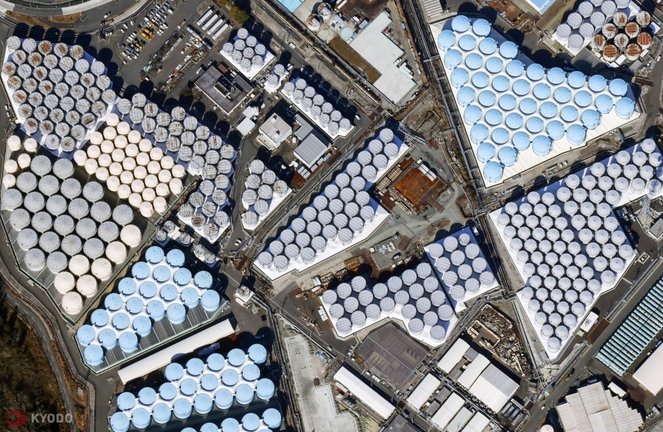
Tanks containing treated water at the crippled Fukushima nuclear power plant are likely to reach capacity around the fall of 2023, later than the initially predicted spring of next year, as the pace of the accumulation of radioactive water slowed in fiscal 2021.
The slowdown, based on an estimate by operator Tokyo Electric Power Company Holdings Inc., gives some breathing space to Prime Minister Fumio Kishida’s government if any roadblocks are thrown up in the plan to discharge the treated water into the sea starting around spring next year.
China and South Korea as well as local fishing communities that fear reputational damage to their products remain concerned and have expressed opposition to the plan.
About 1.30 million tons of treated water has accumulated at the Fukushima Daiichi plant following the 2011 nuclear disaster, and it is inching closer to the capacity of 1.37 million tons.
The water became contaminated after being pumped in to cool melted reactor fuel at the plant and has been accumulating at the complex, also mixing with rainwater and groundwater.
According to the plan, the water — treated through an advanced liquid processing system, or ALPS, that removes radionuclides except for tritium — will be released 1-kilometer off the Pacific coast of the plant through an underwater pipe.
The International Atomic Energy Agency has been conducting safety reviews of the discharge plan and Director General Rafael Grossi says the U.N. nuclear watchdog will support Japan before, during and after the release of the water, based on science.
An IAEA task force, established last year, is made up of independent and highly regarded experts with diverse technical backgrounds from various countries including China and South Korea.
Japan’s new industry minister Yasutoshi Nishimura says the government and TEPCO will go ahead with the discharge plan around the spring of 2023 and stresses the two parties will strengthen communication with local residents and fishermen, as well as neighboring countries, to win their understanding.
Beijing and Seoul are among the 12 countries and regions that still have restrictions on food imports from Japan imposed in the wake of the massive earthquake and tsunami triggered nuclear meltdowns at the Fukushima plant in March 2011.
“We will improve our communication methods so we can convey information backed by scientific evidence to people both at home and abroad more effectively,” Nishimura said after taking up the current post in a Cabinet reshuffle Wednesday.
Kishida instructed Nishimura to focus on the planned discharge of ALPS-treated water that will be diluted with seawater to one-40th of the maximum concentration of tritium permitted under Japanese regulations, according to the chief of the Ministry of Economy, Trade and Industry.
The level is lower than the World Health Organization’s recommended maximum tritium limit for drinking water.
TEPCO will cap the total amount of tritium to be released into the sea as well.
Meanwhile, the Kishida government has decided to set up a 30 billion yen ($227 million) fund to support the fisheries industry and said it will buy seafood if demand dries up due to harmful rumors.
Fishing along the coast of Fukushima Prefecture, known for high-quality seafood, has been recovering from the reputational damage caused by the nuclear accident but the catch volume in 2021 was only about 5,000 tons, or about 20 percent of 2010 levels.
Construction of discharge facilities at the Fukushima plant started in August, while work to slow the infiltration of rain and groundwater was also conducted.
TEPCO said it was able to reduce the pace of accumulation of contaminated water by fixing the roof of a reactor building and cementing soil slopes around the facilities, among other measures, to prevent rainwater penetration.
The volume of radioactive water decreased some 20 tons a day from a year earlier to about 130 tons per day in fiscal 2021, according to the ministry.
The projected timeline to reach the tank capacity has been calculated based on the assumption that about 140 tons of contaminated water will be generated per day, according to METI.
However, storage tanks could still reach their capacity around the summer of next year if heavy precipitation or some unexpected events occur, the ministry said.
As part of preparations for the planned discharge, the Environment Ministry has started measuring tritium concentration at 30 locations on the surface of the sea and seabed around the Fukushima plant, four times a year.
Similarly, the Nuclear Regulation Authority has increased the number of locations it monitors tritium levels by eight to 20. The Fisheries Agency has started measuring tritium concentration in marine products caught along the Pacific coast stretching from Hokkaido to Chiba Prefecture.
Given that it is expected to take several decades to complete the release of treated water, NRA and METI officials urged TEPCO to further curb the generation of contaminated water at the plant.
“We want TEPCO to step up efforts so as to lower the volume of the daily generation of contaminated water to about 100 tons or lower by the end of 2025,” a METI official said.
More Cases of Stomach Cancer in Fukushima Prefecture.
Stomach cancer, which has been confirmed in Fukushima Prefecture for eight consecutive years, was also found to be more common among A-bomb survivors in Hiroshima and Nagasaki
August 10, 2022
Stomach Cancer Incidence Rate Rises among Women in Fukushima Prefecture

On May 27, 2019 national cancer registry data was released on the government statistics website e-Stat.
Following up on my article that appeared on this website on August 26, 2011 (“Stomach Cancer in Fukushima Prefecture”: Confirmation of the 7th consecutive year of “high incidence of stomach cancer” — Should the Fukushima Daiichi Nuclear Power Plant accident no longer be regarded as a “major pollution incident”? (–) (https://level7online.jp/?p=4608), we compared the “National Incidence Rate of Stomach Cancer by Age Group” with the same rate in Fukushima Prefecture, based on the published data for 19 years.
Table 1 shows the results. Various age groups for both men and women exceeded the national average. In particular, in 2007, there were many age groups among women that exceeded the national average. Some of the age groups are double the national average (40-44 years).

On the other hand, only three age groups (0-4, 20-24, and 25-29) were below the national average. Therefore, it is necessary to pay attention to the “increase in the incidence rate of stomach cancer among women in Fukushima Prefecture” over the past few years.
Next, we conducted a comparison with the actual number of cases of gastric cancer in Fukushima Prefecture, assuming that the same rate of gastric cancer is occurring in Fukushima Prefecture as in the rest of Japan. This is a method to calculate the “standardized incidence ratio” (SIR) using epidemiological methods. The national average is set at 100, and if it is higher than the national average, it means above the national average, and if it is lower than the national average, it means below the national average.
The following is the result of the calculation of SIR for the period from 2008 to 2007 for stomach cancer in Fukushima Prefecture.
Stomach cancer] Number of cases in Fukushima Prefecture SIR
Male: 1279 88.3 in 2008
Male in 2009: 1366 94.1
10-year male: 1500 101.1
11-year male: 1391 92.2
12-year male: 1672 110.6
13-year male, 1659 110.9
14-year male, 1711 119.3
15-year male, 1654 116.6
16-year male, 1758 116.3
17-year man 1737 120.0
18years male, 1685 120.0
19-year man 1743 126.9
2008 female 602 86.6
2009 female 640 94.2
10-year female 700 100.9
11year female 736 100.9
12-year woman 774 109.2
13-year girl 767 109.9
14-year girl 729 109.0
15-year girl 769 120.3
16-year girl 957 139.4
17-year girl 778 119.6
18-year girl 744 118.4
19-year female: 817 131.8
The National Cancer Center considers a prefecture to have a “high cancer incidence rate” when the SIR exceeds 110. The SIR for stomach cancer in Fukushima Prefecture has been higher than the national average for both men and women since 2000, and the latest data for 2007 shows that the SIR for men was 12.6.9 and for women 131.8. The latest data from 2007 shows an abnormally high SIR of 12.6.9 for men and 131.8 for women.
We then tried to find the “95% confidence interval” for this SIR. This is one of the validation tasks in epidemiology, where the upper limit (or more precisely, the “upper limit of the estimate”) and the lower limit (or the “lower limit of the estimate”) of each SIR are calculated, and if the lower limit is 10 If the lower limit exceeds 0, it means that the increase is not merely increasing, but is a “statistically significant multiple occurrence” that cannot be considered as a coincidence in terms of probability.
The results are shown in [Table 2]. In Fukushima Prefecture, the incidence of stomach cancer in both men and women has been “significantly high” for eight consecutive years since 2000, and SIR has also been on the rise, showing no sign that the incidence of stomach cancer is slowing down. As is clear from the number of cases in Table 2, while the number of stomach cancer cases nationwide has continued to decline in recent years, the number of cases in Fukushima Prefecture, on the contrary, has increased.

Incidentally, the Centers for Disease Control and Prevention (CDC) in the U.S. published a report on the minimum incubation period for cancer, Minimum The CDC (Centers for Disease Control and Prevention) has published a report on the minimum latency of cancer, Minimum Latency & Types or Categories of Cancer (hereinafter referred to as the “CDC Report”). The CDC report on the “Minimum Latency & Types or Categories of Cancer” (hereinafter referred to as “CDC Report”) lists, in order from shortest to longest, the following
Leukemia, malignant lymphoma: 0.4 years (146 days)
Childhood cancer (including pediatric thyroid cancer): 1 year
Adult thyroid cancer: 2.5 years
All solid cancers including lung cancer: 4 years
Mesothelioma] 11 years
and so on [Table 3]. According to this CDC report, the shortest latency period for stomach cancer is “4 years.

In other words, 12,642 Fukushima Prefecture residents who have contracted stomach cancer since 2015, four years after the occurrence of the TEPCO Fukushima Daiichi nuclear power plant accident, include 12,642 people from the same nuclear power plant. It is possible that some of the 12,642 Fukushima residents who have developed stomach cancer since 2015, four years after the accident at TEPCO’s Fukushima Daiichi nuclear power plant, developed the disease as a result of exposure to toxic substances released by the accident.
Prior to the Fukushima Daiichi nuclear accident, until 2010, stomach cancer SIRs among Fukushima residents were equal to or lower than the national average. The “excess” of the SIRs was the “excess” of the national average. It is eagerly awaited that the correlation and causal relationship between the accident and carcinogenesis will be verified from the viewpoint that the “excess” number of stomach cancer patients may include victims of the nuclear power plant accident.
Both the number of thyroid cancer cases and the incidence rate of thyroid cancer in males have increased.
Next, we will examine thyroid cancer, which is a concern because of its high incidence among young people, and the CDC report indicates that the minimum incubation period is 2.5 years for adults and 1 year for children. 1 year for children.
The incidence rates of thyroid cancer by age group and the number of cases by age group calculated from these rates are shown in Tables 4 and 5. In 2019, eight years after the Fukushima Daiichi Nuclear Power Plant accident, thyroid cancer was still confirmed in young people.


Among females, 2 were confirmed in the 10-14 age group, 8 in the 15-19 age group, 5 in the 20-24 age group, and 6 in the 25-29 age group. The total for all age groups was 199, meaning that patients who were under the age of 20 at the time of the accident in 2011 accounted for about 8% of the total at the lowest estimate and about 11% at the highest estimate [Table 5].
On the other hand, 4 males were identified in the 10-14 age group, 6 in the 15-19 age group, 1 in the 20-24 age group, and 2 in the 25-29 age group. The total number of patients in all age groups is 76, which means that patients who were under the age of 20 at the time of the accident in 2011 accounted for about 14% of the total at the lowest estimate and about 17% at the highest estimate [Table 5].
The SIR and its “95% confidence interval” for thyroid cancer are shown in Table 6. In both cases, the minimum incubation period for thyroid cancer, 2.5 years, had elapsed since the accident at the Fukushima Daiichi Nuclear Power Plant in 2011.

In the latest 19-year period, the number of cases and incidence rate of thyroid cancer in Fukushima Prefecture increased for males. Both the number of cases and incidence rate decreased for females.
Significant “high incidence” continues for gall bladder and bile duct cancer.
No trend of increased incidence was observed for malignant lymphoma and leukemia ([Table 7] and Table 8]).


The most recent 2019 data also showed a continued abnormality in gall bladder and bile duct cancer, which is classified as a “solid cancer” according to the CDC report, with a minimum latency period of “4 years” (Table 8). The minimum latency period is 4 years.
Significant incidence” of gall bladder and bile duct cancer was observed in men in 2010 and in women in 2009, before the nuclear accident. After 2016, when the minimum incubation period of “4 years” has passed, “significantly high incidence” was confirmed in both men and women. The incidence was “high” for four consecutive years for males and six consecutive years for females ([Table 9]).

Prostate cancer, which was found to be “significantly more frequent” for three consecutive years from 2004 to 2006, had its “more frequent” status eliminated in the latest 2019 data. Nevertheless, the SIR remains above the national average, so continued attention should be paid to this issue ([Table 10]).

Finally, regarding ovarian cancer. The minimum incubation period is “4 years” (Table 11). Although “significantly more cases” were observed in 2013 and 2014 before the minimum incubation period, the SIR has been below the national average since then. However, the latest data for 2019 shows that SIR exceeded the national average for the first time in five years, and the number of cases in the prefecture continues to increase slightly, so it is important to pay attention to the data.

Stomach cancer was also on the rise among A-bomb survivors in Hiroshima and Nagasaki
Toshihide Tsuda, a professor at the Graduate School of Okayama University who specializes in epidemiology and causal inference, took a look at these data. Professor Tsuda said.
The situation is more severe than we had expected, and it has exceeded our projections by quite a bit. Not only thyroid cancer, which has already shown a clear increase, but also other cancers that are now on the rise are cancers that are also noticeably on the rise in the data on A-bomb survivors in Hiroshima and Nagasaki. I feel that it is necessary to make appropriate preparations, quickly formulate countermeasures and enhanced risk communication, and discuss how to respond to the situation. I suspect that the actual radiation exposure was considerably higher than what has been publicized.”
The Ministry of the Environment’s “Uniform Basic Data on Radiation Health Effects, etc.” (FY 2008 edition) states
The Ministry of the Environment’s “Uniform Basic Data on Radiation Health Effects” (FY 2008 edition) states, “In adults, the organs most likely to develop cancer due to radiation exposure are the bone marrow, colon, breast, lung, and stomach.
(Figure below). In other words, an increase in stomach cancer has been observed among A-bomb survivors.

To be sure, we also examined breast cancer and lung cancer, which are considered to be more common among A-bomb survivors, and found no “significant increase” in the Fukushima Prefecture data through 2007. However, a slight upward trend was observed for breast cancer in males, a rare cancer, since 2004 (5 cases in 2002, 7 cases in 2003, 10 cases in 2004, 11 cases in 2005, 10 cases in 2006, and 7 cases in 2007). The number of cases of breast cancer in the United States is also reported.
The number of people who have been living in the area since the last year (October 2021) is still very high.
Kenichi Hasegawa (68 years old), a former dairy farmer in Iitate Village, who passed away from thyroid cancer last October (2021), revealed in February 2008 that “a number of people in the village have contracted stomach cancer and died one after another,” and said the following.
People in their late fifties and sixties, younger than me, are dying. Most of them have cancer. This was not the case in Iitate Village before the nuclear accident.
They died at the same age as us, so it is even more memorable. And it is not long after the cancer is found that it gets worse and worse and they pass away.
If you get cancer when you are 80 or 90 years old, you may think that it can’t be helped and that you have fulfilled your destiny, but that is not the case if you are in your 60s,” he said.
Mr. Hasegawa himself had less than a year from the time he found out he had cancer to the time of his death.
In November 2002, Mr. Hasegawa and about 2,800 other Iitate villagers filed a claim for compensation from TEPCO for health concerns caused by high initial radiation exposure due to the delay in evacuation. In November 2002, they filed an application for alternative dispute resolution (ADR) with the Center for the Resolution of Nuclear Damage Disputes. The “fears” of that time are now beginning to become a reality.
Some scientists and journalists, by the way, have been reporting on the UN Scientific Committee on the Effects of Atomic Radiation (UNSCEAR) without any check of the data from the National Cancer Registry. (UNSCEAR).
“It is unlikely that there are any future health effects directly attributable to radiation exposure.
There are those who stubbornly try to deny the occurrence of cancer due to the nuclear accident, waving the UNSCEAR report as if it were a “banner”. However, the UNSCEAR report is not based on actual measurements due to the fact that Fukushima and other prefectures prevented the survey of radiation doses immediately after the accident. The UNSCEAR report, however, is not a fact in itself.
If you call yourself a scientist or a journalist and really want to deny the occurrence of cancer due to the nuclear accident, you should verify it with your own hands using the National Cancer Registry data, which is the “facts themselves,” instead of relying only on the estimated reports made by others. The national cancer registry data is also data for this purpose.
Source in Japanese: Level 7 News
Japan extremely selfish to insist on discharging nuclear wastewater into sea

August 8, 2022
TOKYO, Aug. 10 (Xinhua) — Japan’s Tokyo Electric Power Company Holdings Inc. (TEPCO) has recently started construction of facilities that will discharge radioactive wastewater from the crippled Fukushima Daiichi nuclear power plant into the sea, taking another step in its plan to release nuclear-contaminated water.
The Japanese government’s drive to push through a long-term plan to release wastewater into the Pacific Ocean starting in the spring of 2023, despite domestic and international opposition, is extremely selfish, analysts say.
SELFISHNESS
Struck by a magnitude-9.0 earthquake and ensuing tsunami that hit Japan’s northeast on March 11, 2011, the No. 1-3 reactors at the Fukushima Daiichi nuclear plant suffered core meltdowns, resulting in a level-7 nuclear accident, the highest on the International Nuclear and Radiological Event Scale.
The plant has been generating a massive amount of radiation-tainted water since the accident happened as it needs water to cool the reactors. With groundwater and rainwater also flowing in, about 1.3 million tons of contaminated water are now stored at the nuclear plant and are still increasing at a rate of 140 tons a day.
TEPCO claimed that the water storage tank’s current storage capacity of 1.37 million tons will run out this autumn and the plant has no more space for new water storage tanks to be constructed, so it has to release the contaminated water into the sea after filtering, purifying and diluting it.
In response to TEPCO’s claims, Japanese environmental groups pointed out that much of the land near the plant has been left idle due to nuclear leakage and could be used to construct additional water storage tanks.
However, the Japanese government and TEPCO rejected the idea, citing the need for a large amount of time for communication and coordination as well as a lot more work.
Environmentalists say it is not that the option is infeasible, it is because the Japanese government and TEPCO do not want to do it, as they put their own interests first.
A panel of experts organized by Japan’s Ministry of Economy, Trade and Industry had proposed five options when considering how to deal with the contaminated water.
Among them, the Japanese government said the options of discharging the water into the sea and vapor release were two “most practical solutions” and it finally chose the former one, which “takes the shortest time and costs the least,” passing on the risk to the whole world.
BROKEN CREDIT
Contaminated water generated at TEPCO’s Fukushima Daiichi nuclear power plant contains tritium, cesium, strontium and other radioactive materials. The Japanese government and TEPCO said they would use the Advanced Liquid Processing System (ALPS), a multi-nuclide removal equipment, to reduce the concentrations of 62 types of radioactive substances, with the exception of tritium, which is hard to remove by purification and will remain in the treated water.
TEPCO believes that tritium normally remains in the wastewater at ordinary nuclear power stations, therefore it is safe to discharge tritium-contaminated water.
Experts say TEPCO is trying to confuse the concept of the wastewater that meets international standards during normal operation of nuclear power plants with that of the complex nuclear-contaminated water produced after the core meltdowns at the wrecked Fukushima power plant.
The actual results of ALPS are not as ideal as TEPCO claims. Japanese media have found that in addition to tritium, there are a variety of radioactive substances in the Fukushima nuclear wastewater that exceed the standard. TEPCO has also admitted that about 70 percent of the water treated by ALPS contains radionuclides other than tritium at the concentration which exceeds legally required standards and requires filtration again.
Also the reliability of ALPS itself is questionable. According to a report by Japan’s Asahi Shimbun in September 2021, 24 of the 25 filters used by ALPS to absorb radioactive substances were damaged, and the damage occurred two years ago, but TEPCO did not deal with it in time.
The Korean Federation for Environmental Movements, a South Korean civic environmental organization, said that TEPCO claimed to have the ability to reduce the concentration of 62 radioactive substances excluding tritium before the discharge of the contaminated water, but this is by no means the truth. The organization warned that it is hard to clean the sea water once it is polluted.
From the cover-up of the meltdown at the beginning of the Fukushima disaster to the bowing and apologizing for underreporting for more than a decade, TEPCO has left so many stains on its credibility that its nuclear credit has long since gone busted.
OPPOSITION FROM ALL SIDES
The willful push by the Japanese government and TEPCO to release wastewater into the sea has triggered strong opposition from both within Japan and its neighboring countries. Last Wednesday, a local civic group organized a protest outside the government house of Fukushima Prefecture to show their opposition to the plan.
After TEPCO announced last Thursday the start of the construction of facilities for releasing radioactive wastewater into the sea, a Japanese environmental organization issued a statement on the same day, pointing out that the Japanese government and TEPCO had made written commitments on the matter saying “without the understanding of relevant personnel, no actions will be taken.” However, the government still decided in April last year to release the nuclear-contaminated water into the sea without seeking advice from relevant parties to make it a fait accompli.
On July 22, the Nuclear Regulation Authority of Japan officially endorsed TEPCO’s nuclear-contaminated water discharge plan.
Responding to this, Masanobu Sakamoto, president of the National Fisheries Cooperative Federation of Japan, said the plan has not gained the understanding of the public and the fishery industry and that the federation’s firm opposition to the discharge had not changed at all.
Greenpeace Seoul Office said that the danger of discharging nuclear-contaminated water into the sea is obvious. The Japanese government’s decision to discharge the contaminated water into the sea when there are alternatives such as long-term storage violates the precautionary principle recognized by the international community.
https://english.news.cn/20220810/97096f0719604e19879e398798bd0b59/c.html
Japan’s unilateral decision of dumping nuclear-contaminated water into ocean not responsible: Chinese ambassador for disarmament affairs

Aug 09, 2022
Japan’s dumping of Fukushima nuclear-contaminated water into the ocean will have influence on the ocean environment, security of food and people’s health, and Japan made such unilateral decision without having full negotiation with neighboring countries or international organizations, which is irresponsible and immoral, Li Song, Chinese ambassador for disarmament affairs, said Monday at the Tenth Review Conference of the Parties to the Treaty on the Non-Proliferation of Nuclear Weapons, expressing strong concerns over the related issues.
Japan’s unilateral decision to dump Fukushima nuclear-contaminated water into the ocean is made purely out of concerns for its own economic cost, and it has neither resorted to all possible ways to handle it, nor had full negotiations with neighboring countries. Such selfish move is to transfer the risk to the international community. People in Japan, China, South Korea, Russia and Pacific island countries all expressed their concerns, Li said.
Japanese regulators have approved the plan of dumping Fukushima’s nuclear-contaminated water into the sea, which has caused safety concerns in the international community and neighboring countries.
Li pointed out that the international community has paid great attention on issues of the legitimacy of Japan’s plan of dumping the water, the credibility over the data, efficiency of the decontamination equipment, and the influence on the environment.
The International Atomic Energy Agency has not reached a final conclusion on the assessment on Japan’s plan, but has given Japan many improvement suggestions. But regrettably, Japan has purposely neglected it and kept pushing its plans. Such moves are not what a responsible country should take, Li said.
Dumping Fukushima’s nuclear-contaminated water into the ocean is not Japan’s own business and Japan should respond to the global concerns and go back to the track of communicating with parties of shared concerns. And it should stop forcibly pushing the dumping plan, Li said.
Japan should make sure handling the water in an open, transparent, scientific and safe manner, and take alternative plans and accept supervision of the International Atomic Energy Agency, said Li, noting that this is the touchstone to test whether Japan can effectively fulfill its responsibility.
Legal Battles Continue over TEPCO and Fukushima Nuclear Disaster Cause.
PRESS CONFERENCE: Yuichi Kaido and Hiroyuki Kawai, Co-chairs of the National Association of Lawyers for a Nuclear Power Free Japan Yui Kimura, Secretary-General, TEPCO Shareholder Derivative Suit (The speech and Q & A will be in Japanese with English interpretation.) 11:00–12:00 Monday, August 8, 2022
Construction begins at Fukushima plant for water release

August 4, 2022
TOKYO (AP) — The construction of facilities needed for a planned release of treated radioactive wastewater into the sea next year from the damaged Fukushima nuclear power plant began Thursday despite opposition from the local fishing community.
Plant workers started construction of a pipeline to transport the wastewater from hillside storage tanks to a coastal facility before its planned release next year, according to the plant operator, Tokyo Electric Power Company Holdings.
The digging of an undersea tunnel was also to begin later Thursday.
Construction at the Fukushima Daiichi plant follows the Nuclear Regulation Authority’s formal approval last month of a detailed wastewater discharge plan that TEPCO submitted in December.
The government announced last year a decision to release the wastewater as a necessary step for the plant’s ongoing decommissioning.
A massive earthquake and tsunami in 2011 destroyed the Fukushima Daiichi plant’s cooling systems, causing triple meltdowns and the release of large amounts of radiation. Water that was used to cool the three damaged and highly radioactive reactor cores has since leaked into basements of the reactor buildings but was collected and stored in tanks.
TEPCO and government officials say the water will be further treated to levels far below releasable standards and that the environmental and health impacts will be negligible. Of more than 60 isotopes selected for treatment, all but one — tritium — will be reduced to meet safety standards, they say.
Local fishing communities and neighboring countries have raised concerns about potential health hazards from the radioactive wastewater and the reputation damage to local produce, and oppose the release.
Scientists say the impact of long-term, low-dose exposure to not only tritium but also other isotopes on the environment and humans are still unknown and that a release is premature.
The contaminated water is being stored in about 1,000 tanks that require much space in the plant complex. Officials say they must be removed so that facilities can be built for its decommissioning. The tanks are expected to reach their capacity of 1.37 million tons in autumn of 2023.
TEPCO said it plans to transport treated and releasable water through a pipeline from the tanks to a coastal pool, where it will be diluted with seawater and then sent through an undersea tunnel with an outlet about 1 kilometer (0.6 miles) away to minimize the impact on local fishing and the environment.
TEPCO and the government have obtained approval from the heads of the plant’s host towns, Futaba and Okuma, for the construction, but local residents and the fishing community remain opposed and could still delay the process. The current plan calls for a gradual release of treated water to begin next spring in a process that will take decades.
TEPCO said Wednesday that weather and sea conditions could delay a completion of the facility until summer 2023.
Japan has sought help from the International Atomic Energy Agency to ensure the water release meets international safety standards and reassure local fishing and other communities and neighboring countries, including China and South Korea, that have opposed the plan.
IAEA experts who visited the plant earlier this year said Japan was taking appropriate steps for the planned discharge.
https://mainichi.jp/english/articles/20220804/p2g/00m/0na/016000c
Facility construction begins for Japan’s Fukushima nuclear wastewater release amid opposition

TOKYO, Aug. 5 (Xinhua) — The construction of facilities to release radioactive wastewater into the sea from the crippled Fukushima Daiichi nuclear power plant in northeastern Japan began Thursday despite opposition from the local community and neighboring countries.
Plant workers started construction of a pipeline to transport the wastewater from hillside storage tanks to a coastal facility before its planned release next year, according to the plant’s operator, Tokyo Electric Power Company Holdings Inc. (TEPCO).
On Tuesday, TEPCO has gained approval from Fukushima Governor Masao Uchibori and the mayors of Okuma and Futaba, which host the crisis-hit power plant, to start the construction, but serious concerns remain.
Local residents and the fishing community concerned about the impact on their fish catches and livelihoods and remain opposed to the plan, which calls for a gradual release of tons of treated water into the Pacific Ocean to begin next spring.

China has expressed its firm opposition to the plan as China’s Foreign Ministry Spokesperson Wang Wenbin said previously that it is extremely irresponsible for Japan to ignore the concerns and strong opposition from all parties.
“If Japan insists on putting its own interests above the public interest of the international community and insists on taking the dangerous step, it will surely pay the price for its irresponsible behavior and leave a stain in history,” Wang said.
The South Korean government has stated that it would take “best responsive measures internally and externally” under the principle that people’s health and security are of utmost importance.
A massive tsunami, triggered by an earthquake of 9.0 magnitude off Japan’s northeastern coast, struck TEPCO’s Fukushima Daiichi power plant in March 2011. TEPCO said that it is running out of storage tanks to hold water used to cool the melted-down cores.
The Japanese government decided in April 2021 that the contaminated water had to be released into the sea as the facility is fast running out of space to set up more storage tanks, which already number in the hundreds.
https://english.news.cn/20220805/e5c88eb3134f4786b3070af31f364b48/c.html
Fukushima Daiichi Nuclear Power Plant “Treated Water” Discharged TEPCO Announces Undersea Tunnel Construction to Begin in 4 Days “Already Started? Citizens were in a state of exasperation

August 3, 2022
TEPCO announced on August 3 that it will begin construction of an undersea tunnel and other facilities on August 4 to discharge contaminated water from the Fukushima Daiichi Nuclear Power Plant (Okuma and Futaba, Fukushima Prefecture) after purification and treatment. The company aims to begin discharging the water next spring, but if the offshore construction is delayed by weather conditions or other factors, the completion of the facilities may be delayed until next summer. However, there is strong opposition to the project, especially from those involved in the fishing industry, and it is unclear whether the facilities will actually be able to discharge the radioactive waste. (Nozomi Masui)
On the 2nd, the prefectural government and both towns in the area agreed to the construction work, and on the 4th, they will begin digging undersea tunnels and laying pipes to transfer treated water from the storage tanks. TEPCO is proceeding with some of the work outside the scope of the consent, and has finished digging the hole that will house the water storage tank that will lead to the undersea tunnel.
At the press conference, Junichi Matsumoto of TEPCO’s Fukushima Daiichi Decommissioning Promotion Company made it clear that “there is no doubt that we will comply with the document with fishermen,” regarding the written promise with the Fukushima Prefectural Fisheries Federation that no ocean discharge would take place unless understanding is obtained. However, he simply reiterated that he would “do his best to explain” how to gain their understanding.
When asked if TEPCO executives would brief fishermen before construction began, he replied, “We have no plans to do so. Meanwhile, Prime Minister Fumio Kishida met with Masanobu Sakamoto, chairman of the National Federation of Fishermen’s Cooperative Associations, on the same day. Regarding a large fund for the continuation of the fishing industry, he said, “We would like to obtain the fishermen’s understanding on how to use the fund after hearing their opinions.
According to TEPCO’s plan, the treated water, which is mainly tritium, will be diluted with a large amount of seawater to less than 1/40th of the national discharge standard, and then discharged through an undersea tunnel about 1 km offshore.
◆”Voices not being heard by the government,” citizens’ group protests.
On March 3, when TEPCO announced the start of construction of facilities to discharge treated water from the Fukushima Daiichi Nuclear Power Plant into the ocean, citizens’ groups in Fukushima Prefecture staged a protest in front of the prefectural government office, and the leaders of local governments where the plant is located asked the government to take thorough measures against harmful rumors.
On the afternoon of the 3rd, the co-chairman of the “Citizens’ Council” Oda, who heard about the plan to start construction on the following day, said, “What, it has already started? Chiyo Oda, 67, co-chairperson of the “Citizens’ Council” in Iwaki City, Fukushima Prefecture, was absolutely stunned. Construction began just two days after Fukushima Prefecture and the towns of Okuma and Futaba agreed to the work. She was concerned that the situation would become so dire that there would be no turning back.

In the morning of that day, the association held a banner in front of the prefectural office to protest. At a press conference held afterward, Mr. Oda said, “The plan is proceeding with the release of the waste. There are so many voices of opposition and concern, but the government is not receiving our voices? Kaoru Watanabe, 66, a resident of Date City in Fukushima Prefecture, expressed his concern, “I’m worried that they will push ahead with the construction work, create a fait accompli, and then push through with the discharge into the ocean.
Fukushima Governor Masao Uchibori, Okuma Mayor Jun Yoshida, and Futaba Mayor Shiro Izawa visited the Ministry of Economy, Trade and Industry and submitted a written request to METI Minister Koichi Hagiuda. Governor Uchibori told the press, “I hope that the government will work together to take the necessary measures (against harmful rumors, etc.) so that the efforts of the people of Fukushima Prefecture will not be undone by the release of the radioactive materials. (Natsuko Katayama, Nozomi Masui)
https://www.tokyo-np.co.jp/article/193622?fbclid=IwAR0TJASuRCsIfHc-zmKUqE7ERgUF3pJNe_vGHn8bYmkFdMTiS5Hn9RYhN5M
TEPCO Starts Construction of Fukushima Water Release Facilities
Get ready for a new wave… of radioactive wastewater!
ineptco’s tunnel will carry the enriched water a whole kilometer from the coast

August 4, 2022
Tokyo Electric Power Company Holdings Inc. on Thursday started the construction of facilities to release treated radioactive water into the ocean from its disaster-crippled nuclear plant in the northeastern Japan prefecture of Fukushima.
TEPCO aims to complete the construction work around next spring, although the company said the completion might be pushed back to around summer next year if the work at sea is delayed due to bad weather or other factors.
There are lingering concerns about negative rumors related to the planned release of the water, which contains tritium, a radioactive substance, into the ocean. Understanding from related local people would be essential for TEPCO to start the water release after the completion of the facilities.
TEPCO will construct an undersea tunnel necessary for releasing the treated water at a point 1 kilometer off the coast. Tanks and pipes will also be set up for stirring the treated water and checking whether radioactive substances other than tritium are below safety standards.

Also, the company will build a facility to dilute the treated water, after its levels of radioactive substances are measured, with seawater to lower the tritium concentration to less than one-40th of the level permitted under Japanese safety standards.
Ministry of the Environment – Draft Demonstration Plan for Reclamation of Removed Soil, Seeking Use as Road Fill

August 4, 2022
The Ministry of the Environment has compiled a draft plan for a demonstration project to recycle removed soil in order to reduce the final disposal volume of waste generated by the decontamination project for the Fukushima Daiichi Nuclear Power Plant accident. The project aims to expand the use of recycled materials based on removed soil at intermediate storage facilities in Fukushima Prefecture (in the towns of Okuma and Futaba), and is exploring the use of the materials for road fill. The design and construction methods and procedures will be studied until October, and construction will be carried out between October and January 2023. The project will be implemented from October to January 2023. After January, various tests and monitoring will be conducted. The project will also conduct demonstrations outside of the prefecture to demonstrate the use of recycled materials for parking lot construction and other purposes.
On March 3, the first meeting of the “Working Group to Study the Recycling of Soil Removal at Interim Storage Facilities” (WG, chaired by Professor Takeshi Katsumi, Graduate School of Global Environmental Studies, Kyoto University) was held in Tokyo, where the draft plan was presented. The WG will organize and evaluate the findings from the demonstration project, and study measures to safely use the removed soil as recycled materials. A practical guide for recycling will also be prepared.
According to the draft plan, recycled materials will be used for roadway fill in the interim storage facility. The road to be used for the general road standards is assumed to be a structure with sidewalks and a daily traffic volume of 4,000 to 20,000 vehicles (Class 3 and Class 2). The road is assumed to be a structure with sidewalks. Evaluation will be conducted after actual construction. The results of the project will be reflected in the guide.
A demonstration project will be conducted outside of Fukushima Prefecture with the aim of realizing final disposal outside of Fukushima Prefecture. Recycled materials will be used for the roadbed of parking lots, and different reclamation patterns will be demonstrated, including differences in pavement and roadbed materials. Cases in which recycled materials are used to create flowerbeds and plazas will also be investigated. During the construction and use of the reclaimed materials, air dose rates in and around the reclaimed areas and radioactive concentrations in seepage water will be measured to confirm safety. Construction will be conducted this year, and monitoring will begin after completion.
TEPCO gets the go-ahead for first phase of plan to discharge water

August 3, 2022
FUKUSHIMA–Local officials here gave the go-ahead to Tokyo Electric Power Co. to begin preparations to discharge tons of treated but still contaminated water from its stricken Fukushima No. 1 nuclear power plant into the Pacific Ocean.
Approval was given Aug. 2 by Fukushima Governor Masao Uchibori and the mayors of Okuma and Futaba, where the TEPCO plant is located, for the utility to begin work to dig a tunnel from the site and install the necessary equipment.
However, TEPCO still needs to gain the understanding of “interested parties” before any water can be released.
The plan has angered local fishermen concerned about their livelihoods and triggered alarm overseas as the water will still contain a radioactive element, tritium, which is a radioactive isotope of hydrogen, that cannot be removed with current technology.
Thousands of tons of contaminated water have accumulated at the plant that went into triple meltdown in the aftermath of the 2011 earthquake and tsunami disaster, and the facility is fast running out of space to set up more storage tanks.
Tetsu Nozaki, who heads the Fukushima prefectural federation of fisheries cooperatives, told reporters in late July that his organization remains steadfastly opposed to the release of the water into the ocean. Fishermen also are up in arms, fearing the move would only fuel further negative publicity over their fish hauls.
Uchibori and the mayors met Aug. 2 with Tomoaki Kobayakawa, the TEPCO president, and told him they had no issue with the safety of the equipment to be used.
Prior approval of any new equipment TEPCO plans to install at the Fukushima plant is required under a safety agreement the local governments signed with the utility.
Uchibori again pressed TEPCO officials to make an all-out effort to gain the understanding of interested parties so the water release plan can go ahead.
The Nuclear Regulation Authority in July approved TEPCO’s water release plan. Prior to that, Uchibori stated that any decision on approving the new equipment to be installed at the Fukushima plant would be made regardless of opposition among interested parties to the plan.
In August 2015, the government and TEPCO submitted a document to the prefectural fisheries cooperatives federation stating that no water would be treated and released into the ocean without the understanding of the interested parties.
Ironic for Tokyo to caution others on nuclear issue despite Fukushima plan

Aug 03, 2022
Japanese Prime Minister Fumio Kishida urged all nuclear countries to conduct themselves “responsibly” in non-proliferation efforts on Monday when he spoke at the Review Conference of the Parties to the Treaty on the Non-Proliferation of Nuclear Weapons (NPT) at the United Nations in New York.
The NPT Review Conference is held regularly to have discussions focused on the three pillars of nuclear disarmament, nuclear non-proliferation and peaceful uses of nuclear energy.
The issue of releasing nuclear contaminated water from the crippled Fukushima Daiichi nuclear power station is also on the agenda. In his speech, Kishida, who already foresaw related discussion unfavorable to Japan, was giving the runaround to avoid being criticized due to Japan’s extremely irresponsible plan to release contaminated water. In fact, the review conference will be between August 1-26, but Kishida is scheduled to return to Japan on August 2 after delivering his speech on the first day of the conference, at a time when specific discussion of issues on the agenda have not yet begun. No one will be able to find Kishida when the issue of releasing nuclear contaminated water is on the table.
Since its entry into force, the NPT as an international framework has guided various countries to use nuclear science and technology for peace and development. Peaceful use of nuclear energy is allowed, but it’s appalling that Japan decided to discharge nuclear contaminated water into the ocean. But how serious the consequences will be after the actual dump? It will be unpredictable and irreversible.
It’s ridiculous that Japan’s actions, which may have far-reaching impact on the world, have been “approved” and tolerated by the US. In contrast, the leakage of the Chernobyl nuclear power plant in the former Soviet Union is still strongly criticized by the US. This is undoubtedly a double standard. Wang Guangtao, an associated research fellow at the Center for Japanese Studies, Fudan University, believes that geographically speaking, although the US is also a Pacific country, judging from the flow direction and diffusion trajectory of ocean currents, nuclear contaminated water discharged by Japan will first affect Japan’s neighboring countries, not the US on the other side of the Pacific Ocean.
Japan is the only country that experienced the nuclear attack. The US has been reluctant to criticize Japan over the release of nuclear contaminated water because of the sense of guilt and its own dark history in terms of nuclear radiation.
Japan and the US maintain close communication based on the alliance, and the US is bound to side with its Asian ally, rather than listen to the opposition of neighboring countries such as China and South Korea. The possibility that the US and Japan may have reached a deal under the table cannot be ruled out, as Japan, an East Asian country, first informed the US when it decided to release the nuclear contaminated water into the sea. The report released by Japanese expert panel which calculated anticipated radiation dose to the locals after discharging all the water to the sea was soon endorsed by the International Atomic Energy Agency, in which the US is quite influential. This undoubtedly mirrors the hypocrisy of “rules-based international order” the US has vaunted.
Covered up by the US, Japan has been brazenly manipulating the nuclear issue. On the issue of nuclear safety, it is ultimately Japan that should be responsible for the health and safety of all humankind, rather than urging others to act “responsibly” when it’s on the verge of discharging nuclear contaminated water into the ocean.
Fukushima OKs facility construction for treated water release plan

August 2, 2022
Local authorities have approved the construction of an underwater tunnel and other facilities to release treated water from the crippled Fukushima Daiichi nuclear power plant into the ocean.
Officials from Fukushima Prefecture and the towns of Okuma and Futaba, which host the plant, conveyed their decision to the president of Tokyo Electric Power Company on Tuesday.
TEPCO, the operator of the plant, had sought the approval of those authorities based on a safety agreement.
Reactors at the Fukushima Daiichi plant suffered meltdowns in the March 2011 earthquake and tsunami disaster.
Water used to cool molten fuel mixes with rain and groundwater. The accumulated water is treated to remove most of the radioactive materials and stored in tanks on the plant’s premises.
The filtered water still contains tritium. The government plans to dilute the water, so that the percentage of tritium is well below the percentage permitted by national regulations. The amount of tritium in the diluted water is also expected to be below the guidance levels for drinking water quality established by the World Health Organization.
The utility is now set to start full-fledged construction of the underwater tunnel and other facilities. It hopes to complete the work around spring of next year.
In July, the Nuclear Regulation Authority gave its final approval for the plan that TEPCO drew up.
One focal point had been whether the local authorities would approve the plan.
Locals, including fishers, are concerned about potential reputational damage to the region.
1 This Month
To see nuclear-related stories in greater depth and intensity – go to https://nuclearinformation.wordpress.com/
12 February – Webinar The Big Push: New Nuclear Projects in Canada
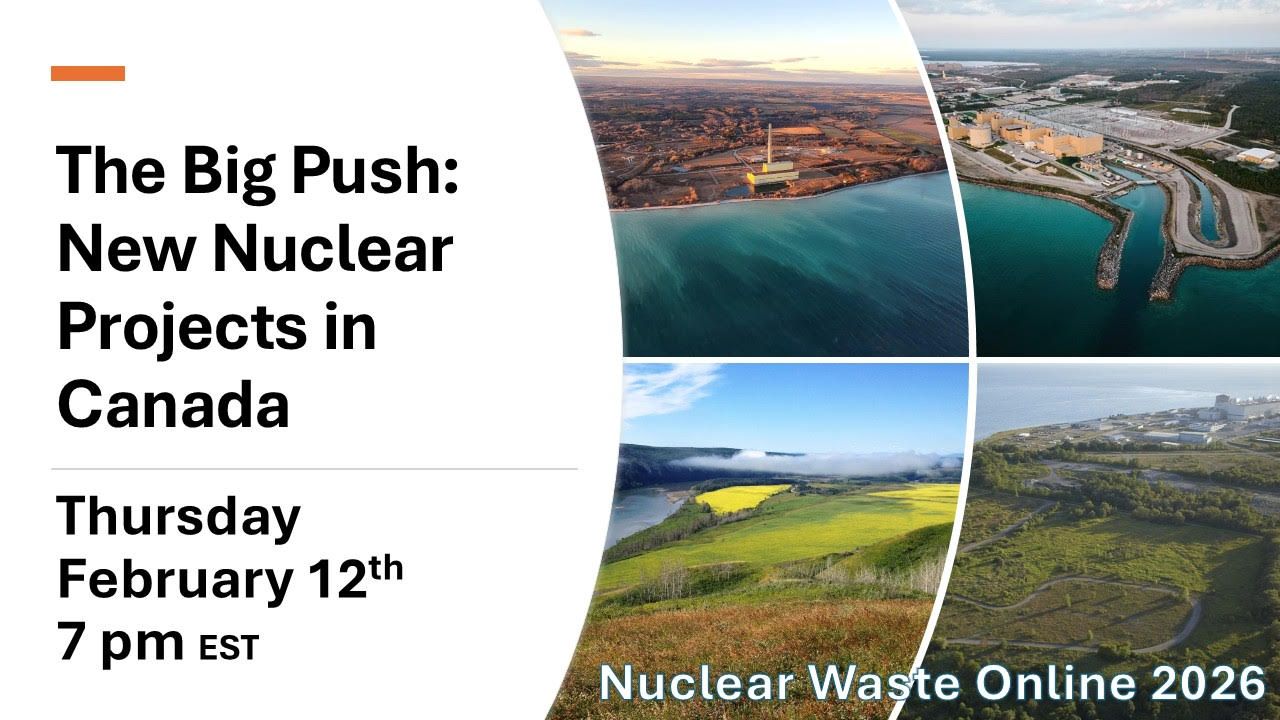
Thursday, February 12, 7 pm Eastern | 2nd of 4 sessions in the 2026 Nuclear Waste Online webinar series
Join a webinar on the push for new nuclear generation in Canada. Go to Northwatch.org to register or use the registration link https://us02web.zoom.us/webinar/register/WN_ZfWOf1GITqSRIZX8CB-A9w
-
Archives
- February 2026 (115)
- January 2026 (308)
- December 2025 (358)
- November 2025 (359)
- October 2025 (376)
- September 2025 (258)
- August 2025 (319)
- July 2025 (230)
- June 2025 (348)
- May 2025 (261)
- April 2025 (305)
- March 2025 (319)
-
Categories
- 1
- 1 NUCLEAR ISSUES
- business and costs
- climate change
- culture and arts
- ENERGY
- environment
- health
- history
- indigenous issues
- Legal
- marketing of nuclear
- media
- opposition to nuclear
- PERSONAL STORIES
- politics
- politics international
- Religion and ethics
- safety
- secrets,lies and civil liberties
- spinbuster
- technology
- Uranium
- wastes
- weapons and war
- Women
- 2 WORLD
- ACTION
- AFRICA
- Atrocities
- AUSTRALIA
- Christina's notes
- Christina's themes
- culture and arts
- Events
- Fuk 2022
- Fuk 2023
- Fukushima 2017
- Fukushima 2018
- fukushima 2019
- Fukushima 2020
- Fukushima 2021
- general
- global warming
- Humour (God we need it)
- Nuclear
- RARE EARTHS
- Reference
- resources – print
- Resources -audiovicual
- Weekly Newsletter
- World
- World Nuclear
- YouTube
-
RSS
Entries RSS
Comments RSS
 nuclear-news