Japan: Support for those displaced by Fukushima nuclear disaster must be unconditional, says UN expert

GENEVA (10 October 2022) – A UN expert has urged the Japanese government to give unqualified, human rights and needs-based support to the more than 30,000 people still displaced 11 years after the Fukushima Daiichi nuclear disaster.That approach must also apply to reconstruction in affected areas.
“Many displaced persons are unable or unwilling to return to their areas of origin due to lingering fears regarding radiation levels, or concerns about access to basic services including education, healthcare, and jobs in these areas,” said Cecilia Jiménez-Damary, UN Special Rapporteur on the human rights of internally displaced persons (IDPs).
The expert emphasised there could be no distinction made between IDPs – also known as “evacuees” in Japan – on the basis of whether their displacement was motivated by fear of the effects of the disaster or due to a mandatory evacuation order.
“Protection and assistance to IDPs must be provided on the basis of their human rights and their needs, and not on the basis of status-based categorisations, which have no justification under international human rights law,” Jiménez-Damary said in a statement presenting her preliminary observations from a 10-day visit to Japan.
“All IDPs have the same rights and entitlements as citizens of Japan, and the practice of allocating support based on whether IDPs are categorised as ‘mandatory’ or ‘voluntary’ must end.”
Since the 2011 disaster, IDPs have faced challenges in accessing basic rights, including housing, health, livelihood, participation, and education for children. “To enable durable solutions, conditions must be in place to ensure their right to an adequate standard of living including housing, access to employment and livelihoods, and effective remedy for displacement-related rights violations, including in places of origin to which they are being asked to return,” the Special Rapporteur said.
Accurate information was essential for the evacuees to make informed decisions on whether to return or settle elsewhere. It was also critical to ensure their right to freely choose the most appropriate durable solution is not impeded by policies that make assistance conditional on return.
“For IDPs who remain in evacuation, there should be continued basic support, especially provision of housing assistance to the most vulnerable households and support for all IDPs achieve sustainable livelihoods,” the Special Rapporteur said.
She urged authorities to adopt an area-based approach to the reconstruction of Fukushima Prefecture covering the needs and rights of both IDPs and remaining residents. “To rebuild social cohesion, it is essential that both IDPs and the current residents of Fukushima Prefecture engage in dialogue and are provided with full information and are able to freely participate in decisions related to reconstruction,” the expert said.
The Special Rapporteur visited Tokyo and the prefectures of Fukushima, Kyoto, and Hiroshima and met with executive and legislative officials, civil society organisations, lawyers, and academic researchers. She also heard from internally displaced persons and communities affected by the nuclear disaster.
A comprehensive report on the Special Rapporteur’s visit will be presented to the Human Rights Council in June 2023.
ENDS
Ms. Cecilia Jimenez-Damary was appointed Special Rapporteur on the human rights of internally displaced persons by the United Nations Human Rights Council in September 2016. A human rights lawyer specialized in forced displacement and migration, she has over three decades of experience in NGO human rights advocacy. Her mandate, which covers all countries, has been recently renewed by resolution 50/6 of the Human Rights Council.
As a Special Rapporteur, she is part of what is known as the Special Procedures of the Human Rights Council. Special Procedures, the largest body of independent experts in the UN Human Rights system, is the general name of the Council’s independent fact-finding and monitoring mechanisms that address either specific country situations or thematic issues in all parts of the world. Special Procedures’ experts work on a voluntary basis; they are not UN staff and do not receive a salary for their work. They are independent from any government or organization and serve in their individual capacity.
Read the UN Guiding Principles on Internal Displacement
UN Human Rights country page: Japan
Japan’s TEPCO ‘exaggerates’ nuclear wastewater safety with faulty dosimeter

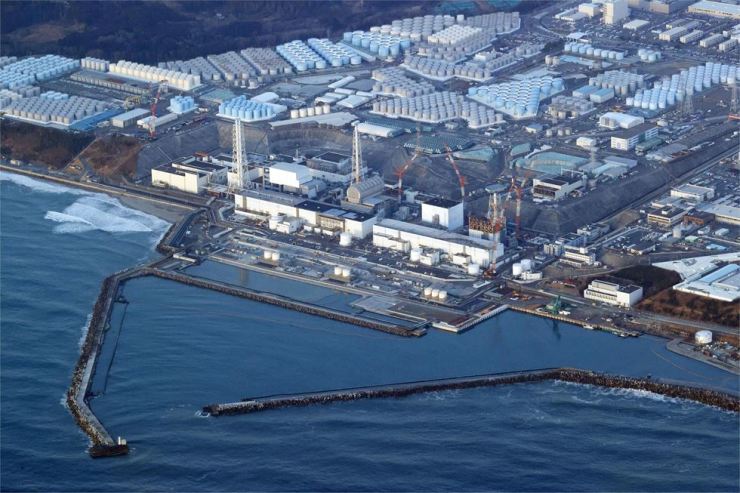
The Fukushima Daiichi nuclear power plant run by TEPCO, Okuma town, northeastern Japan, March 3, 2022
October 9, 2022
The Tokyo Electric Power Company Holdings Inc. (TEPCO) has been exaggerating the safety of treated nuclear wastewater with a dosimeter that fails to detect certain radioactive substances at Japan’s Fukushima Daiichi nuclear power plant, local media has reported.
When demonstrating the safety of treated nuclear wastewater, the company uses a dosimeter that fails to detect radioactive tritium, but only responds to high-concentration cesium emitted by gamma rays, the Tokyo Shimbun reported.
During tours at the plant, TEPCO staff put a dosimeter that detects only gamma rays near a bottle containing treated water, as a demonstration that the treated water is safe, according to the newspaper.
However, the water contained tritium which is about 15 times the amount of the release standard, it reported.
The gamma rays, which may affect the human body due to external exposure, are generated by the radioactive cesium contained in the radiation-tainted water.
Katsumi Shozugawa, assistant professor at the University of Tokyo, said the demonstration was “meaningless scientifically,” noting that even when the amount of cesium in the sample water is dozens of times higher than the release standard, it can not be detected, as the equipment would only respond to gamma rays emitted by highly concentrated cesium.
According to a plan released by TEPCO, nuclear wastewater from cooling core meltdowns of reactors at the Fukushima Daiichi nuclear plant should be treated at least twice before it is discharged into the sea, with the treated water containing tritium that emits weak beta rays. Tritium can not be removed by TEPCO’s treatment facilities.
TEPCO said the demonstration had been shown to about 1,300 organizations and 15,000 visitors since July 2020.
The company claimed that the purpose of the demonstration is to explain that the gamma rays emitted by the treated wastewater are reduced, and admitted that the tritium emitting beta rays exceeds the standard amount, said the newspaper.
Struck by a magnitude-9.0 earthquake and ensuing tsunami that hit Japan’s northeast on March 11, 2011, the No. 1-3 reactors at the Fukushima Daiichi nuclear plant suffered core meltdowns, resulting in a level-7 nuclear accident, the highest on the International Nuclear and Radiological Event Scale.
The plant has been generating a massive amount of radiation-tainted water since the accident happened. TEPCO started construction of facilities that will dump nuclear wastewater into the sea.
Korea urges int’l discussions on Japan’s Fukushima plan at London Convention
October 8, 2022
Korea urged the international community to discuss Japan’s plan to discharge radioactive water from its crippled Fukushima nuclear power plant into the ocean at this week’s international maritime gathering, the oceans ministry said Saturday.
The Fukushima nuclear power plant meltdown in 2011 has spread heavy safety concerns among nearby countries.
The Korean Ministry of Oceans and Fisheries said Tokyo’s disposal of radioactive water may have a serious impact on the health, safety and ecosystem of neighboring nations, during the weeklong 44th London Convention and the 17th London Protocol that ended Friday.
The Korean government has brought the Fukushima discharge agenda to London since 2019.
Japan has refuted Seoul’s call, claiming the discharge of radioactive water from nuclear power plants should not be seen as an act of marine dumping.
The London Convention promotes the effective control of all sources of marine pollution and takes steps to prevent marine pollution by human activities. Korea joined the convention in 1993.
The London Protocol calls for banning all dumping, with some exceptions. It has 53 signatories, including Korea which joined it in 2009.
Earlier in August, the United Nations-specialized International Marine Organization (IMO) decided that the Fukushima discharge agenda is appropriate to be discussed in London, with mutual agreement of the members involved.
At the IMO convention, the Korean oceans ministry said the members should discuss ways to safely dispose the contaminated water from the Fukushima power plant, actively exchange information and monitor the situation. (Yonhap)
https://www.koreatimes.co.kr/www/nation/2022/10/120_337530.html
UN expert says Japan should do more for Fukushima evacuees

October 8, 2022
TOKYO (AP) — A United Nations human rights expert urged Japan’s government on Friday to provide evacuees from the Fukushima nuclear plant disaster with more support, including housing, jobs and other needs, regardless of whether they fled forcibly or not.
Wrapping up an investigation of the evacuees’ human rights conditions, Cecilia Jimenez-Damary said Japan has adequate laws to protect internally displaced people. They include a nuclear disaster compensation law that requires the plant operator, Tokyo Electric Power Company Holdings, to cover damages, and other government-led revitalization and reconstruction programs. But she said they have not been effectively used to address the vulnerability of the evacuees.
“Those laws should not remain just laws on the books, but they should be implemented,” she said. “Unfortunately, because they are not fully implemented, to a certain extent, this explains the proliferation of litigation against TEPCO and the government.”
Three reactors at the Fukushima Daiichi nuclear plant melted after a massive earthquake and tsunami on March 11, 2011, knocked out cooling systems, releasing large amounts of radiation and displacing more than 160,000 people at one point. About 30,000 people remain displaced in and outside of Fukushima.
Thousands of people have filed about 30 lawsuits demanding compensation from both the government and TEPCO for the loss of livelihoods and communities because of the disaster. The Supreme Court in July dismissed four lawsuits, saying the government cannot be held liable because the damage from the tsunami that hit the plant could not have been prevented even if measures had been taken.
Jimenez-Damary said the evacuees have received unequal treatment depending on whether they were forced to leave no-go zones or left voluntarily. Voluntary evacuees are seen as having left unnecessarily and are excluded from TEPCO compensation and many other government support measures.
“The categorization of forced evacuees and voluntary evacuees, especially when it comes to receiving support and assistance, should therefore be dropped in practice,” she said, adding that the discrimination has “no justification under international law.”
She said she was very concerned about the termination in 2017 of housing support for voluntary evacuees in Fukushima that led to the prefectural government filing a lawsuit against people who remained in dorms for government employees despite an order to leave.
Jimenez-Damary, the U.N. special rapporteur on human rights of internally displaced persons, met with Japanese officials, experts, human rights organizations and evacuees in Tokyo, Fukushima, Kyoto and Hiroshima during her Sept. 26-Oct. 7 visit to Japan. Her preliminary report is expected early next week, followed by a full report to be issued in June 2023.
She acknowledged efforts by the central and local governments to address the vulnerabilities of evacuees, but said, “I would like to stress that there has to be an improvement.”
Jobless rates among working-age evacuees exceed 20%, substantially higher than the national average of 3%, she said.
Evacuations also broke up one-third of the families that often maintain two households. Mothers who evacuated with their children often became unemployed and separated from their husbands, who stayed behind and secured their jobs, Jimenez-Damary said in a statement released later Friday. Children are often stigmatized and bullied by their classmates, who consider them as unjust recipients of large sums of compensation or spreaders of radioactivity.
She raised concern about the government’s recent shift away from supporting evacuees toward coaxing them into returning to their hometowns after they reopen, or face the loss of their support.
Jimenez-Damary also noted “considerable concern about the continuing effect of radiation exposure, especially to children who are now young adults,” as well as other anxieties suffered by evacuees. She called for continuation of the prefecture-sponsored free thyroid screening to “enable continued monitoring of the issue and provide much needed data to see evolution of health risks over time, with a view to ensure focused treatment programs to those who are suffering.”
Seven people from Fukushima who were children at the time of the disaster and later developed thyroid cancer have filed a suit seeking a total of more than 600 million yen ($4 million) in compensation from TEPCO and the government.
More than 290 people have been diagnosed with or are suspected of having thyroid cancer from a survey of about 380,000 residents aged 18 or younger at the time of the disaster. The occurrence rate of 77 per 100,000 people is significantly higher than the usual 1-2 per million, their lawyers say.
Government officials and experts have said the high rate in Fukushima is due in many cases to overdiagnosis, which might have led to unnecessary treatment. Some even suggest scaling down of the checks.
U.N. expert urges Japan to aid the voluntarily displaced in Fukushima

October 8, 2022
The Japanese government should scrap distinctions between “mandatory” and “voluntary” evacuees from the 2011 Fukushima nuclear disaster and take a rights-based approach to ongoing support for those still displaced by its effects, a U.N. human rights expert said Friday.
Cecilia Jimenez-Damary, the U.N. special rapporteur on the human rights of internally displaced persons, made the calls as the government and Tokyo Electric Power Company Holdings Inc., the operator of the crippled Fukushima nuclear power plant, have been exposed to numerous lawsuits from voluntary evacuees and those who returned to their former communities.
The distinctions have had “particularly severe impacts on those in poverty, those with no livelihoods, the elderly and persons with disabilities,” Jimenez-Damary said at a press conference to announce the preliminary findings from her Sept. 26 to Oct. 7 official visit to Japan.
Japan distinguishes between evacuees depending on whether they are registered as residents in areas subject to evacuation directives due to being uninhabitable and people who chose to leave over radiation concerns.
Individuals from outside the specified zones and relocated following the disaster became ineligible for Fukushima prefectural government support from March 2017, a decision that met with protest.
A human rights lawyer with decades of experience, Jimenez-Damary told reporters that a desire to return did not define evacuees and described conversations she had with displaced people on her visit to Japan and elsewhere, saying, “When I ask if they want to return, they say yes, but when I ask can you return, they say we cannot.”
Since the disaster, the government has raised the safe annual limit of radiation exposure from 1 millisievert per year to 20, an amount said to especially present risks to vulnerable people, such as children and women of reproductive age.
In 2018, the United Nation’s then special rapporteur on hazardous substances, Baskut Tuncak, said it was “disappointing” that Japan had not returned the levels to what they consider acceptable despite recommendations by the organization in 2017. Jimenez-Damary renewed calls for its review in her preliminary statement.
Data from the Reconstruction Agency states that as of Aug. 1, around 32,000 internally displaced people are living in 878 municipalities across Japan’s 47 prefectures, down 2,841 people from the totals recorded on April 8 this year. At its peak, around 470,000 were displaced in the wake of the disaster.
Jimenez-Damary said the issue “needs to be resolved because it is not clear how many are in evacuation” when asked whether the government’s estimate of the number of internally displaced people reflects the reality. The human rights expert added that she is “definitely recommending” that evacuees be heard by the government.
The findings from Jimenez-Damary’s visit to Japan, which brought her into contact with governments, support organizations and displaced people, will be presented to the U.N. Human Rights Council in Geneva in June 2023.
Extending legal life of nuclear reactors places safety at risk

October 7, 2022
The industry ministry’s plan to allow extending the operational life span of nuclear reactors beyond 40 years raises concerns about ensuring the safety of aging reactors.
The cap was a rule established under a bipartisan agreement reached through Diet debate that focused on the bitter lessons learned from the accident at the Fukushima No. 1 nuclear power plant in 2011. It must not be casually changed after only 10 years.
The Ministry of Economy, Trade and Industry has started considering revisions to related laws to stretch the life span of reactors, which is set at 40 years, in principle.
Prime Minister Fumio Kishida, who is keen to expand the use of nuclear power, instructed the ministry in August to consider necessary steps for extending the life span, along with other measures, such as restarting more idled reactors and building new types of reactors.
The 40-year rule is one of the key elements of the new stricter safety standards introduced after the Fukushima disaster. This has also played an important role for gradually lowering the nation’s dependence on atomic energy by requiring older reactors to be mothballed.
The METI and the power industry claim extending reactor operations would help ensure stable energy supplies. They stress that the 40-year cap is not strictly a question of the technical life of the plant based on hard science.
Their arguments are deeply flawed and flimsy. They raise many questions from the standpoints of both the nation’s energy strategy and safety regulations.
To be sure, Russia’s invasion of Ukraine has caused fossil fuel prices to soar, provoking anxiety about short-term power supplies. But changing the 40-year rule would not lead to an immediate increase in the number of operational reactors.
However, the step would put the nation on course to remain heavily dependent on nuclear power for the long term.
That is not the way for a nation that has yet to have a viable plan for the final disposal of radioactive waste from nuclear plants and is highly prone to natural disasters to try to secure the long-term stability of energy supplies.
The proposed extension could also lead to a radical change in a basic safety principle. The core guiding principle for nuclear power policy established after the Fukushima triple meltdowns requires a separation between promotion and regulation.
The actions of the METI, a champion of nuclear power promotion, to lead a policy initiative to change nuclear safety rules is tantamount to bringing the safety regime back to the pre-Fukushima era.
The stance of the Nuclear Regulation Authority (NRA), the nuclear safety watchdog, is also baffling.
The NRA did not take exception to the METI’s plan. It said it is not in a position to comment on whether an extension of the life span of reactors should be allowed because it is a policy decision concerning the way nuclear power is used.
Although the NRA insists that it will rigorously scrutinize and assess the safety of aging reactors individually, it is doubtful whether the regulator will be able to confirm their safety.
Limiting the life of reactors is closely linked to ensuring safety.
During the 2012 Diet deliberations on the legal revisions to set the 40-year rule, the minister in charge of nuclear power policy cited the estimated useful life of equipment used as a key factor behind the 40-year limit.
If the NRA fails to discuss the validity of the 40-year rule based on technical evaluations and simply endorses the proposal as a policy decision concerning the use of nuclear power, it is neglecting its duty as an independent regulatory entity.
Such a sneaky change in the rules will chip away at the effectiveness of the nuclear safety regulations. Both the METI and the NRA should change their stances toward the issue.
Japanese rally against Fukushima nuclear wastewater discharge
6 oct. 2022
Many #japanese gathered at the offices of #tokyo Electric Power Company to protest the plan to discharge nuclear wastewater into the Pacific Ocean on Wednesday. More than 11 years after the #fukushima nuclear disaster, radioactive waste processing and nuclear-contaminated wastewater treatment are almost at a standstill. In April 2021, the Japanese government decided to discharge the nuclear-contaminated wastewater into the Pacific Ocean, beginning in the spring of 2023.
Rival parties call for govt. response to Japan’s Fukushima water release plan

Oct 6, 2022
Rival parties on Thursday called on the government to come up with measures to respond to Japan’s plan to discharge radioactive water from its crippled Fukushima nuclear power plant into the sea starting next year.
The ruling People Power Party (PPP) and the main opposition Democratic Party (DP) voiced concerns over the plan in unison during an annual parliamentary audit session on the Ministry of Oceans and Fisheries, calling it a “matter of people’s safety.”
In July, Japan’s nuclear regulator, the Nuclear Regulation Authority, formally approved the plan to discharge the radioactive waste water stored in tanks at the Fukushima Daiichi Nuclear Power Plant into the Pacific Ocean. More than 1.2 million tons of tritium-laced water is expected to be released starting in spring next year.
“The government should work to resolve the Fukushima water release issue with all possible measures,” Rep. So Byung-hoon, head of the parliamentary oceans committee, said, adding “the golden time is almost over.”
DP Rep. Wi Seong-gon urged the government to have a clearer position on the matter, saying “uncertain” and “unsafe” substances from the polluted water can be contained in food South Korean people eat and damage the country’s marine environment.
PPP Rep. Choi Chun-sik pointed out the oceans ministry lacks data and reports on Japan’s plan.
Oceans Minister Cho Seung-hwan told the lawmakers his ministry is considering whether to petition an international court over Tokyo’s decision, and the foreign ministry is also looking into the expected damage from the water release with international law experts and scientists. (Ypnhap)
Scientific or Unscientific: Divided Views on the Effects of Radiation Exposure from the Nuclear Power Plant Accident


October 6, 2022
Last March, the United Nations Scientific Committee on the Effects of Atomic Radiation, a group of scientists from Europe, the United States, Japan, and other countries, released a report stating that the high incidence of thyroid cancer among young people in Fukushima Prefecture was not caused by exposure to radiation from the nuclear accident, but by highly sensitive testing. Researchers in Japan disagree with this report. They say that the report, which is supposed to be scientific, is based on “unscientific” analysis. What are the contents of the report?
In July, the Scientific Committee held a dialogue meeting in Iwaki City, Fukushima Prefecture, regarding the “2020/21 Report,” which was released last March. Gillian Haas, former chairperson of the committee, proudly stated, “This report is a reliable, independent, and up-to-date assessment.
The report aims to “provide a more realistic assessment of radiation doses” than the 13th edition, which was released in 2002. The report took into account Japan’s unique dietary habits and other factors, and revised the estimates of radiation doses from eating contaminated food and other factors.
For example, the coefficient for estimating radiation doses has been reduced to half that used in the 2001 edition, based on the assumption that kelp, which is traditionally consumed by Japanese people, contains high levels of stable iodine and is therefore unlikely to contain radioactive iodine, which can cause thyroid cancer. The radiation dose from food during the evacuation was revised to be “negligible,” and the effect of the evacuation of people indoors on reducing radiation exposure was estimated to be higher than in the 13th edition.
As a result, the average radiation doses to the thyroid gland during the first year after the accident ranged from 1.2 to 30 millisieverts for one-year-olds in the prefecture and from 1 to 22 millisieverts for ten-year-olds, with the lowest values being about one-tenth of those in the 13th edition. Mr. Haas said at the dialogue meeting, “Overall, the radiation doses are extremely low. The possibility of an increase in cancer incidence in susceptible infants and children is not discernible,” he stressed.
Since the nuclear accident, more than 300 people in the prefecture have been diagnosed with thyroid cancer or suspected cancer. This is a high incidence compared to the usual rate of 1 to 2 per million people. The report concluded that it is highly likely that the thyroid cancer was detected by highly sensitive ultrasound screening.
◇ ◇A group of researchers in Japan
A group of researchers in Japan has voiced doubts about the contents of the report.
At an online press conference held at the end of August, Tadashi Motoyuki, professor emeritus of radiobiology at Osaka University, criticized the report, saying that it “drastically underestimates [radiation doses] by using the minimum or lower values that can be estimated for various factors related to radiation exposure.
Motoyuki first pointed out the problem of the “kelp effect,” which led to the lowering of radiation doses in the 2008/21 edition.
The report cited as supporting data a study of only 15 people 55 years ago, which “is not helpful at all,” Motoyuki said. Due to changes in dietary habits, the most recent iodine intake of Japanese people cannot be said to be higher than the world standard, and the assessment is not based on facts, he said.
As for exposure to radiation from food during the evacuation, it is clear that contaminated vegetables and other products were on the market immediately after the accident, and Motoyuki points out that this goes against the precautionary principle of adopting maximum values for uncertain items.
The overdiagnosis theory, which was cited in the report as the cause of the high incidence of cancer, is also viewed with suspicion, as it “has not been scientifically verified at all” (Professor Toshihide Tsuda of Okayama University).
At a press conference in early August, Dr. Yasuyuki Taneichi, a physician, explained that in Fukushima Prefecture, the size of thyroid cancer tumors is inspected based on strict standards to prevent overdiagnosis. In particular, he said that nodules smaller than 5 mm are not scrutinized closely, and that this does not constitute overdiagnosis, which he said detects small, non-life-threatening cancers.
He also introduced a report that the use of highly sensitive equipment has reduced the number of cases that lead to surgery, as the detailed morphology of the cancer can now be determined. The report criticized the use of highly sensitive instruments, saying that they prevent overdiagnosis and that the report says the opposite.
The Scientific Committee refrained from giving a detailed response to these points. Former Chairman Haas said during the interactive meeting that the report is a robust document and that its findings will not change in the future. (Tetsuya Kasai, Keitaro Fukuchi)
◇ ◇ ◇
The United Nations Scientific Committee on the Effects of Atomic Radiation (UNSCEAR) was established in 1955, and as of June of this year, 31 countries, including Europe, the United States, and Japan, are members. UNSCEAR’s role is to review papers and other information and compile scientific evidence on the effects of radiation exposure on human health. After the accident at the Fukushima Daiichi Nuclear Power Plant, the Japanese government supported the preparation of the report to “dispel excessive anxiety about the effects of radiation,” contributing 71 million yen in FY13 and 70 million yen in FY17. The government has also used the report and other documents to deny any health damage caused by exposure to radiation in Fukushima.
https://www.asahi.com/articles/ASQB57VYKQ9GUGTB005.html?fbclid=IwAR3BN6Y8JaPJNlyIUPGeOub7OwQvaW9kPy6evxYvVV2ZX58fweZpoabGVZ4
Japanese activists protest the discharge of nuclear waste water

October 6, 2022
Activists gathered outside the Tokyo Electric Power Company Holdings (TEPCO), protesting the decision to proceed with the plan of discharging nuclear wastewater from the wrecked Fukushima Daiichi nuclear power plant into the sea.
The Japanese government said on April 23 last year that they would discharge over one million tons of contaminated water into the Pacific Ocean starting in the spring of 2023.
Protesters of the decision held banners demanding TEPCO to take responsibility for the core meltdown accident at the Fukushima Daiichi nuclear plant in 2011 and compensate victims. The activists also called on withdrawing the nuclear water dumping plan.
Activists say that tritium is easily soluble in water and will enter the human body once discharged into the sea, expressing their concerns over contamination of fish and seaweed, causing harm to citizens.
Waves of public anger and serious concerns over sea pollution have been triggered in and outside Japan. TEPCO’s statement that declares nuclear-contaminated water safe after dilution is met with large-scale skepticism.
Although the Japanese government lifted evacuation orders for all areas in Fukushima Prefecture in August, very few people have applied to return home. The citizens from the area expressed their distrust in TEPCO and the government for modifying safety standards with what they felt to be arbitrary.
Struck by a magnitude 9.0 earthquake and ensuing tsunami that hit Japan’s northeast on March 11, 2011, the No. 1-3 reactors at the Fukushima Daiichi nuclear plant suffered core meltdowns, resulting in a level-7 nuclear accident, the highest on the International Nuclear and Radiological Event Scale.
The nuclear-contaminated waste water accumulated in the plant had exceeded 1.3 million tons so far, while the government and TEPCO’s solution is deeply disturbing to residents.
https://tvpworld.com/63763346/japanese-activists-protest-the-discharge-of-nuclear-waste-water
TEPCO overstates safety of treated water with dosimeter that cannot detect tritium during inspection tour of Fukushima Daiichi Nuclear Power Plant

October 3, 2022
The treated water is highly contaminated water from the cooling of nuclear fuel melted down in the reactor that has been decontaminated at least twice to basically contain only tritium, which emits weak beta radiation. Tritium cannot be removed even by decontamination equipment.
During the inspection tour, a dosimeter that detects only gamma rays was applied to a bottle containing treated water, which contains about 15 times the standard level of tritium for release, to show that there was no reaction. According to TEPCO, it has been shown to about 1,300 groups and 15,000 people since July 2020. This paper received an explanation during an interview on March 14, 2008.
The person in charge explained that, among the radioactive materials contained in the highly contaminated water in the buildings, cesium and other materials that emit gamma rays have been removed, and that the treated water is equivalent to the radiation level of the surrounding area. However, as long as they did not use a measuring instrument for beta radiation, it can only be said that “cesium is not contained in high enough concentration to react with dosimeters.
Tetsuji Imanaka, a former researcher at the Compound Nuclear Science Institute of Kyoto University, said, “The energy of tritium is weak. Even if you soak tritium in filter paper and apply a beta-ray detector to it, it will not react unless the concentration is much higher,” said Tetsuji Imanaka, a former researcher at the Kyoto Combined Research Institute for Nuclear Science. Katsumi Azukawa, assistant professor of environmental analytical chemistry in the graduate school of the University of Tokyo, said, “Scientifically, it is completely meaningless. Gamma rays of cesium must be several thousand becquerels per liter for the dosimeter to react. Even if the cesium content is several dozen times the emission standard (90 becquerels per liter), it still gives the impression that there is no cesium.
TEPCO told us, “The purpose of the demonstration is to explain that gamma rays that affect the human body due to external exposure have been reduced. The demonstration also explains that tritium, which emits beta rays, exceeds the emission threshold. As for how the demonstration should be, he only stated, “We will work on it while devising various ways.
◆Commentary: Are they really willing to gain understanding of treated water?
TEPCO used a dosimeter that cannot detect tritium, a radioactive substance, in a demonstration to promote the safety of treated water at the Fukushima Daiichi Nuclear Power Plant. TEPCO had previously caused problems by giving unscientific demonstrations for the mass media. TEPCO’s attitude of continuing to show the same demonstration to many observers makes one wonder if they are really interested in gaining understanding of treated water.
As experts have pointed out, TEPCO’s demonstration does not provide any verification of beta or gamma radiation. To confirm this, the reporter applied a dosimeter of the same model as that used in the demonstration to water containing about 19 times the level of radioactive cesium that is the standard for emissions, but there was no reaction.
Nevertheless, if the safety of the treated water was emphasized in this manner, it could be perceived as “manipulation of impressions” or “lies. A woman from Minamisoma City, Fukushima Prefecture, who was shown the demonstration during a recent public inspection tour, told this newspaper, “My distrust of TEPCO has grown stronger again.
TEPCO has made efforts to reduce the risk of contaminated water at the Fukushima Daiichi Nuclear Power Plant by building durable welded tanks to prevent a recurrence of leakage accidents and by storing water using current technology. The shortest way to gain the public’s understanding of the treated water is to show that they are continuing their efforts in an honest manner at the site. (Takeshi Yamakawa)
https://www.tokyo-np.co.jp/article/206024?fbclid=IwAR2ZO9iKCa2vg_g9UCQSaPawnq9P_pZsnt6pOCuM–Bh7qMbD_rl_OqwFNk
Fukushima: Novel Fixes Fail, Waste Dumping Threatens Pacific Ocean

September 30, 2022
by John Laforge
During the 11-year-long, estimated $57.4 billion (partial) decontamination efforts at the destroyed Fukushima-Daiichi reactor site in Japan, almost every novel program invented to deal with the complex, unprecedented triple catastrophe has initially failed and then needed to be re-invented. Unworkable schemes instigated to repair, decontaminate, plug-up, or prevent ongoing radioactive contamination, along with cover-ups and corruption by the Tokyo Electric Power Co. which runs the operation, have left the Japanese public wary of the company’s plans and of safety assurances from the government.
Japan’s extensive bull-dozing and mass collection of contaminated topsoil and debris, poisoned by the meltdowns’ radioactive fallout, has filled approximately 20 million one-ton bags. These millions of tons of cesium-contaminated waste are standing outdoors in mountainous stacks scattered across seven states. Some of the heavy bags have been jostled and broken open by torrential rains during typhoons.
Attempts to locate and examine the total of 900 tons of melted reactor fuel (which possibly burned through the wrecked “containments” and foundations of the three units) have failed, because robotic cameras have repeatedly been destroyed by the ferociously hot and radioactive melted wastes. Eleven years after the catastrophe, the condition and location of the melted fuel masses, known as “corium,” is still uncertain because Tepco has yet to develop a robust enough camera.
The reactors’ concrete foundations were so severely broken up by the record 9.0 magnitude earthquake, that groundwater rushes through cracks and broken pipes, pours over the three huge masses of corium and becomes highly contaminated with a mix of at least 62 radioactive materials. Tepco’s installation of an expensive “ice wall” that was dug into the ground behind the wrecked reactors, was intended to divert the groundwater keeping it away from the foundations. This fix has also failed.
Tepco has slowed the direct flow of the contaminated water into the Pacific by filtering it and then collecting it in giant tanks. But the tank farm is plagued by leaks and by the discovery that the filter system has failed. In 2018, Tepco admitted that its “Advanced Liquid Processing System” or ALPS had not removed iodine-129, ruthenium-106 and technetium-99, as well as carbon-14, and 60 other long-lived poisons, putting the lie to its repeated assurances that ALPS would remove everything but tritium. The company then promised that it would re-treat the collected water, before dumping all 1.3 million tons of the waste water into the Pacific.
In July, Japan’s nuclear regulator formally approved Tepco’s plan to dump the water into the ocean beginning in spring 2023 and continuing for 30 years. The reactors produce 140 cubic meters of contaminated water every day, a combination of ground- and rainwater that seeps into the wreckage, and cooling water mechanically poured over the three corium piles. While independent scientists and environmental historians have charged that dumping would constitute the worst premeditated maritime pollution in recorded history, Tepco’s ocean pollution solution has already been okayed by the government in Tokyo and by the International Atomic Energy Agency.
Ocean dumping would violate international law
In August, Tepco announced that it would begin constructing a tunnel to the sea for releasing the waste water. Complaints from scientists, environmental groups and Pacific Rim countries, particularly South Korea and China, have not forced Japan to reconsider the plan.
Certain international treaties forbid such deliberate pollution of the global commons. The “Convention on the Prevention of Marine Pollution by Dumping of Wastes and Other Matter,” or London Convention, prohibits any intentional release of radioactive wastes into the sea. Writing in The Korea Times, environmental attorney Duncan Currie and nuclear specialist Shaun Burnie of Greenpeace Germany noted that ocean dumping would also violate the UN Convention on the Law of the Sea by posing a direct threat to the marine environment and the jurisdictional waters of the Korean peninsula.
Tepco says the tritium concentration in the wastewater will be lowered before dumping by diluting it with seawater. However, dilution is basically a public relations scheme since the total amount of radioactive tritium will remain the same. Greenpeace’s Burnie and Currie and others have warned about tritium’s ability to form organically-bound tritium, and that — if ingested with seafood —the biological power of tritium’s beta radiation can damage human DNA.
John LaForge is a Co-director of Nukewatch, a peace and environmental justice group in Wisconsin, and edits its newsletter.
Inside the Primary Containment Vessel of Fukushima Daiichi Nuclear Power Station Unit 1.
by Citizens’ Nuclear Information Center · Published September 30, 2022 · Updated September 30, 2022
Pedestal with Exposed Reinforcing Steel
By Kamisawa Chihiro (CNIC)
Survey of the pedestal exterior in the Unit 1 primary containment vessel
On February 9, 2022, Tokyo Electric Power Company Holdings, Inc. (TEPCO) and the International Research Institute for Nuclear Decommissioning (IRID) conducted a survey into the underground level of the primary containment vessel (PCV) of Fukushima Daiichi Nuclear Power Station (FDNPS) Unit 1, using an underwater remotely operated vehicle (ROV). The survey was intended to be a preliminary to investigating the conditions inside the vessel. The survey revealed that there were vast amounts of deposits, which were attributed to melted nuclear fuel, and exposed reinforcing steel, which appeared to be the skeletons of damaged concrete structures.
On March 14, the two parties started a close visual inspection along the periphery of the pedestal (reinforced concrete base on which the reactor pressure vessel was installed) with an ROV. However, on March 16, a serious earthquake of magnitude 7.4 occurred off the coast of Fukushima Prefecture. The water level in the PCV of Unit 1 declined due to the earthquake, and the inspection was suspended.
The two parties thereafter adjusted the water level by increasing the rate of water feed to the reactor, realizing the required water level in the PCV. On May 17, close inspection of the PCV interior was resumed using the ROV. The visual inspection was continued until May 21. The thickness of the deposits were also measured and thermal neutron flux measurements were conducted to learn whether the deposits were from nuclear fuel. It was confirmed that a major part of the deposits was from the fuel.
Fuel debris deposits and damaged wall concrete on the pedestal periphery
In the survey, the outside of the pedestal was visually inspected in detail with the underwater ROV camera along more than half the cylindrical surface of the pedestal (Figure 1).
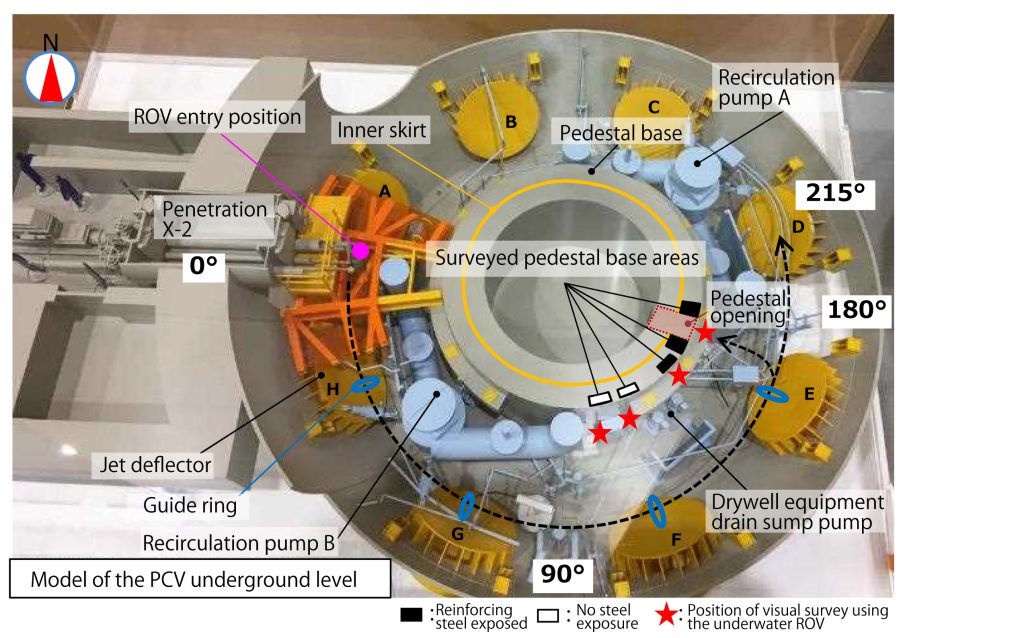

The videos and photographs taken from the pedestal periphery show there are deposits that have accumulated deep on the PCV floor (Photograph 1).
The lower periphery of the drywell has eight vent pipes that connect to the suppression chamber. Each vent pipe is provided with a jet deflector to protect the pipe inlet. About one-third of the length of the jet deflectors are buried in the deposits from below (especially deflectors C through F). It was confirmed that deposits also exist behind the jet deflectors. This shows that fuel debris is likely to have entered the suppression chamber.
TEPCO says that the piping and valves of the reactor auxiliary cooling system and the piping of the reactor recirculation system are not seriously damaged.

However, as those photographs show, the piping and valves of the reactor auxiliary cooling system are covered with deposits, while keeping their original shape. Especially, the greater part of the piping looks to be buried under the deposits, and it is unknown whether the piping is damaged or not (Photograph 2).
The valves and piping of recirculation system B do not look seriously damaged as far as the released videos and photographs show. The valves and piping of system A on the opposite side look vague, and it is unknown whether they are damaged or not. It seems possible that there is an anomaly in the proximity of the piping elbow near the pedestal opening.
The pedestal opening lies nearly halfway around from the underwater ROV entry position. Before the 2011 accident, operators entered the space below the reactor through this opening to inspect and maintain the control rod drive and neutron instrumentation.
Currently there is no concrete on either side of the pedestal opening, which must have been there before the accident. As the photographs show, the reinforcing steel skeletons are exposed, and deposits have settled on them (Photographs 3 and 4). The sheet-steel cylindrical structure called the inner skirt, built inside the pedestal, is also exposed.

This means that, on both the sides of the opening, the originally 120-centimeter-thick concrete wall of the pedestal has completely vanished down to the height of about 100 centimeters from the base floor of the PCV. The data by TEPCO and IRID, as shown in Figure 1, indicates the approximate positions of the exposed reinforced steel, but we believe that these are not the only positions where steel is exposed.

The Unit 1 pedestal and lower part of the PCV have the construction shown in Figure 2. The wall of the pedestal base is about 120 centimeters thick. According to the report of the Nuclear Regulation Authority’s investigative hearing with TEPCO, the inner skirt was originally buried in the pedestal base down to about the height of about 100 centimeters.
This means that, on both the sides of the opening, the originally 120-centimeter-thick concrete wall of the pedestal has completely vanished down to the height of about 100 centimeters from the base floor of the PCV. The data by TEPCO and IRID, as shown in Figure 1, indicates the approximate positions of the exposed reinforced steel, but we believe that these are not the only positions where steel is exposed.
How did the concrete vanish?
Concrete is produced from cement and aggregates such as sand and crushed stones, which are mixed with water and then solidified. Concrete and cement are known to have the following characteristics under elevated temperature (Kasami and Ohno, “Solid-state Properties of Concrete in High-temperature Ranges”).
- When placed in a high-temperature range for a brief period, such as when exposed to a fire, concrete may flake off or explosively crack.
The characteristics of concrete and cement under more moderate temperature changes can be explained as follows:
- When a hydration reaction has continued sufficiently in the hardened cement body, free water and gel water are lost at about 105°C.
- When the body is further heated, part of the chemically bound water starts to be given off, and in the temperature range from approximately 250°C to 350°C, calcium silicate hydrates in the cement lose about 20% of their retained moisture.
- Between 400°C and 700°C, the moisture remaining in the calcium silicate hydrates is mostly lost. Calcium hydroxides are dehydrated and decomposed.
Melted nuclear fuel that consists mostly of uranium dioxide may reach 2,800°C. The melting temperature for concrete is about 1,200°C (which may differ depending on the amount of aggregates).
The core and concrete reaction analysis conducted by TEPCO in 2011 assumed that concrete erosion started when the temperature was at 1,500 K (approximately 1,227°C), concluding that the pedestal concrete floor was eroded down to a depth of sixty-five centimeters.
Did the melted nuclear fuel blow out from the bottom of the Unit 1 RPV, drop down to the floor inside the pedestal, spread over the floor, and attack the concrete wall of the pedestal, causing concrete flaking or explosive cracking? It is also possible that while such a process went ahead, the concrete, heated to 400°C through 700°C, became progressively weaker and fell apart little by little.
The reinforcing steel and inner skirt are not significantly deformed or melted as far as the videos and photographs show. However, the condition of other structures and to what extent the reinforcing concrete fell apart are also unknown at present.
Can the RPV tolerate a massive earthquake?
The loss of the concrete of the pedestal base presents a concern: The RPV, standing on the pedestal, may collapse or fall.
TEPCO, referring to the results of the RPV and PCV seismic assessment conducted by IRID in 2016, is extremely optimistic, stating that, even if a part of the pedestal is deteriorated or damaged, the pedestal can retain the function of supporting the RPV against an assumed earthquake, using the criteria at the time, of a ground motion Ss of 600 Gal.
However, a close examination of IRID’s assessment and TEPCO’s perspective show that their assumptions are overly optimistic. As an example, the model used for the seismic assessment is incorporated into the function of the containment vessel stabilizer and pressure vessel stabilizer, which control the lateral movement of the containment vessel and pressure vessel respectively, but the integrity of those stabilizers is unknown at present.
The TEPCO and IRID analysis concludes, based only on the observed ranges, that the reinforcing steel of the pedestal base does not show damage such as buckling, and that the function of the inner skirt has not deteriorated. The conditions used for the analysis lack discreteness. These conditions may change as the survey is continued in the future. As an example, greater damage in the concrete walls and floor may be discovered. In that case, completely different results may be derived from the seismic assessment.
References (all in Japanese)
- 東京電力, 福島第一原子力発電所1~3号機の炉心状態について, 2011年11月30日
TEPCO. “Fukushima Daiichi Nuclear Power Station Units 1, 2 and 3 Reactor Core Conditions,” Nov. 30, 2011.
www.tepco.co.jp/nu/fukushima-np/images/handouts_111130_09-j.pdf
- IRID, 2014年度補正予算廃炉・汚染水対策事業費補助金, 圧力容器/格納容器の耐震性・影響評価手法の開発 (2016年度成果報告), 2017年7月
IRID. “Fiscal 2014 Supplementary Budget Grant for Decommissioning and Contaminated Water Countermeasures — Development of RPV and PCV Earthquake Resistance and Impact Evaluation Methods (Fiscal 2016 Achievement Report),” July 2017.
irid.or.jp/wp-content/uploads/2017/06/20160000_11.pdf
- 東京電力・IRID・日立GEニュークリアエナジー, 福島第一原子力発電所1号機原子炉格納容器内部調査の実施状況 (2月9日調査分) について, 2022/2/10
TEPCO, IRID and Hitachi-GE Nuclear Energy. “Updates on Fukushima Daiichi Nuclear Power Station Unit 1 Reactor PCV Interior Survey (of Feb. 9)” [Video], Feb. 10, 2022.
www.tepco.co.jp/library/movie/detail-j.html?catid=107299&video_uuid=k593g02e
- 東京電力・IRID・日立GEニュークリアエナジー, 福島第一原子力発電所1号機原子炉格納容器内部調査(ROV-A2) の実施状況 (3月14~16日の作業状況), 2022/3/24
TEPCO, IRID and Hitachi-GE Nuclear Energy. “Updates on Fukushima Daiichi Nuclear Power Station Unit 1 Reactor PCV Interior Survey (ROV-A2) (Mar. 14–16)” [Video], Mar. 24, 2022.
www.tepco.co.jp/library/movie/detail-j.html?catid=107299&video_uuid=s19dq021
- 東京電力・IRID・日立GEニュークリアエナジー, 福島第一原子力発電所1号機原子炉格納容器内部調査(ROV-A2)の実施状況 (2022年5月17~19日の作業状況), 2022/5/23
TEPCO, IRID and Hitachi-GE Nuclear Energy. “Updates on Fukushima Daiichi Nuclear Power Station Unit 1 Reactor PCV Interior Survey (ROV-A2) (May 17–19)” [Video], May 23, 2022.
www.tepco.co.jp/library/movie/detail-j.html?catid=107299&video_uuid=og07od6u
- 東京電力・IRID, 廃炉・汚染水・処理水対策チーム会合/事務局会議 (第102回), 1号機 PCV内部調査の状況について, 2022年5月26日
TEPCO and IRID. “Updates on Unit 1 PCV Interior Survey,” Decommissioning, Contaminated Water and Treated Water Team Secretariat Meeting (102nd), May 26, 2022.
www.meti.go.jp/earthquake/nuclear/decommissioning/committee/osensuitaisakuteam/2022/05/3-3-2.pdf
- 東京電力・IRID, 第100回特定原子力施設監視・評価検討会, 資料3: 1号機原子炉格納容器内部調査の状況 [東京電力], 2022年6月20日
TEPCO and IRID. “Document No. 3: Updates on Unit 1 Reactor PCV Interior Survey,” 100th Meeting of Specific Nuclear Facility Monitoring and Evaluation Study Group, June 20, 2022.
www.nra.go.jp/data/000393949.pdf
- 東京電力・IRID, 第30回東京電力福島第一原子力発電所における事故の分析に係る検討会, 資料1-1: 1号機PCV内部調査の状況について, 2022年6月30日
TEPCO and IRID. “Document 1-1: Updates on Unit 1 PCV Interior Survey,” 30th Meeting of TEPCO FDNPS Accident Analysis Study Group, June 30, 2022.
www.nra.go.jp/data/000395861.pdf
- 東京電力・IRID, 第30回東京電力福島第一原子力発電所における事故の分析に係る検討会, ・補足説明資料1: 1号機PCV内部調査の状況について, 2022年6月30日
TEPCO and IRID. “Supplement 1: Updates on Unit 1 PCV Interior Survey,” 30th Meeting of TEPCO FDNPS Accident Analysis Study Group, June 30, 2022.
www.nra.go.jp/data/000395885.pdf
- 原子力規制委員会, 第30回東京電力福島第一原子力発電所における事故の分析に係る検討会, 追加説明資料, 2022年6月30日
NRA. “Additional Explanatory Document,” 30th Meeting of TEPCO FDNPS Accident Analysis Study Group, June 30, 2022.
www.nra.go.jp/data/000395866.pdf
- 嵩英雄, 大野定俊, 高温下コンクリートの物性、 コンクリート工学 Concrete Journal, 1984年22巻3号, p. 13–20
Kasami, H. and Ohno S. (1984). Solid-state Properties of Concrete in High-temperature Ranges, Concrete Journal, 22 (3), pp. 13–20.
www.jstage.jst.go.jp/article/coj1975/22/3/22_13/_article/-char/ja/
Source: https://cnic.jp/english/?p=6276
The TEPCO Shareholders’ Lawsuit: Why TEPCO Executives Have Been Ordered to Pay 13 Trillion Yen in Compensation
by Citizens’ Nuclear Information Center · September 30, 2022
By Kaido Yuichi (Attorney representing TEPCO Shareholders)

A Nuclear Accident that Could Have Led to Collapse of the Nation Itself
We succeeded in winning a ruling in favor of the plaintiffs on July 13 in the Tokyo Electric Power Co. (TEPCO) shareholders’ derivative lawsuit* that I began working on immediately after the Fukushima Daiichi Nuclear Power Station (NPS) accident. During the 10 years since we filed this lawsuit in March 2012, 62 sessions were held in Tokyo District Court. Judge Asakura Yoshihide of Tokyo District Court Commercial Division, who presided over the trial, took about 40 minutes to read the summary, with joyful applause filling the courtroom.
The ruling recognized damages in excess of the amounts paid for decommissioning, compensation for damages to the victims, and the costs of interim storage measures for decontamination resulting from the Fukushima Daiichi NPS accident, which had occurred due to breach of duties by the four TEPCO executives (Katsumata Tsunehisa (former Chairman), Shimizu Masataka (former President), Takekuro Ichiro and Muto Sakae (both former Vice-Presidents)).
The ruling thus ordered the four defendants to pay damages of 13.321 trillion yen ($97 billion) to TEPCO.
The ruling says first, that a nuclear power plant (NPP) operator has the obligation to prevent any chance of a serious accident, and that it was the executives’ responsibility to order the company to take measures to prevent a serious accident from occurring as a result of a tsunami. It also says that serious accidents at NPPs, such as reactor core damage, result not only in broken communities, but “could lead the nation itself to collapse.” The ruling determined that there was a duty to society in the public interest to prevent even the remote chance of such serious accidents from occurring. Here, the Supreme Court’s 1992 decision on Ikata NPP was cited.**
I think this ruling, in mentioning “collapse of the nation itself,” strongly reflects the judge’s experience in visiting a “difficult-to-return zone” and entering one of the reactors involved in the accident for on-site consultation.
Long-term Assessment by Suihon Reliable as Basis for Tsunami Countermeasures
In addition, this ruling recognized the reliability of the long-term assessment published in July 2002 by the Headquarters for Earthquake Research Promotion (a government agency abbreviated as Suihon) as a basis for implementing tsunami countermeasures. The assessment in question had indicated that tsunami-generating earthquakes had occurred offshore along Japan’s Pacific coast along the Sanriku (northernmost Honshu) area down to the Boso (Chiba) area three times in the past 400 years, and that there was a 6 percent chance of such a tsunami-generating earthquake occurring during the subsequent 30 years off the coast of Fukushima.
In particular, the long-term assessment was judged as having high reliability that was recognized as follows:
“In light of the facts that Suihon is an institution established as a state organ for the purpose of centralized earthquake evaluation; that the nature of long-term assessment is the objective evaluation of seismic activity, mainly through scientific knowledge, for the purpose of promoting earthquake disaster countermeasures; that the long-term assessment was compiled over the course of three stages of discussions by the Subduction Zone Subcommittee, the Long-term Assessment Committee, and the Earthquake Investigation Committee; and that many of our nation’s top-level earthquake and tsunami researchers were brought together to produce it, it is clear that the views in this long-term assessment cannot be regarded as if they were merely a prediction presented in one researcher’s paper or such. These points by themselves provide the scientific reliability that corresponds to definitive authority.”
Various views had been expressed, including that there were differences between localities from north to south, such as the presence of accretionary complexes (wedges) along the Japan Trench, but none of them had amounted to anything more than hypothetical conjecture and could not form a basis for tsunami countermeasures. Regarding the tsunami evaluation technology employed by the Japan Society of Civil Engineers in 2002, on which TEPCO’s executives based their assertion that there were no wave-generating sources located off the coast of Fukushima, it was judged as having been put together without actual consideration of such wave-generating sources.
The initial decision by Tokyo District Court on September 19, 2019 in the TEPCO criminal trial held that the Suihon’s long-term assessment lacked reliability as a basis for halting nuclear reactors. It found the defendants innocent while making no judgement regarding measures aside from halting reactors for avoiding that outcome. Thus the current ruling is the exact opposite.
Whether the national government bears any responsibility with regard to the Fukushima nuclear accident is disputed. The majority opinion expressed in the Supreme Court’s ruling last June 16 mysteriously evaded a decision on this burning issue. Furthermore, in the elaborate Miura minority opinion included in that ruling for appearances’ sake, the reliability of basing tsunami countermeasures on the long-term assessment was recognized, just as it has been in the current ruling.
The clear judgement indicated in the current ruling is likely the result of influence from testimonies during the criminal trial from Long-term Assessment Committee Chairman Shimazaki Kunihiko, Maeda Kenji of the Suihon Secretariat and Tsuji Yoshinobu, a leading expert in earthquake research, who were adopted as witnesses along with Hamada Nobuo, director of Japan Meteorological Agency’s seismology and volcano division, who was also a subcommittee member. Not one of these experts challenged the conclusion of the long-term assessment; rather, they testified that the opinions summarized in the consensus should have been respected by both the national government and the electric power industry.
Moreover, this ruling held that reliability as a basis for tsunami countermeasures was recognized even for the knowledge revealed in Satake Kenji’s thesis, in which he modeled the wave source that produced the tsunami in the 869 Jogan earthquake based on a survey of tsunami sediments. This ruling did not limit its judgement to the reliability of public institutions’ views only.
Defendants’ Liability Owing to Unsatisfactory Professional Conduct
In addition, regarding the fact that defendant Muto Sakae rejected proposals from TEPCO’s civil engineering group, who suggested taking tsunami countermeasures in June and July 2008, and took no countermeasures whatsoever over a period of several years until their assessment was compiled (inaction in this case), Muto was suspected of delaying countermeasures. However, even if the rationality of his actions could be acknowledged somehow, the inaction by the civil engineering group resulted in continuation of conditions under which the nuclear reactors would have been unable to handle a natural disaster, and he was found guilty because there was no latitude for allowing that.
Regarding the plaintiff’s claim that postponement of the measures could be seen as unreasonable, the ruling recognized that, “Given facts such as that in his consultations with other NPS operators, Sakai Toshiaki of TEPCO’s civil engineering group said that, regarding the policies behind Muto’s decisions, it was a matter of how TEPCO would manage if the Fukushima Daiichi and Fukushima Daini reactors were shut down while those at the Kashiwazaki-Kariwa were idled; the fact that after giving his opinion on the long-term assessment in an e-mail to Takao Makoto and Kaneto Toshimichi of the same engineering group, Sakai also pointed out regarding the Jogan tsunami that the Electric Technology Research Association was asking if it would be too much trouble to ask for more time, and he took it to mean that with regard to Muto’s decision he should play for time and not implement tsunami countermeasures; and that there were critical reactions to Muto’s decision policies among councils within Japan’s nuclear power industry, such as ‘Are such delays okay? and ‘Why has such a decision been made?’ Suspicions that Muto’s decision may have been a deliberate ploy to put off measures for the sake of TEPCO’s management cannot be dispelled. However, even based on these points, a certain rationality to Muto’s decision has been deemed as undeniable, but I think this is because the ruling has been written in such a way that it will not be overturned by the high court.
First, with this kind of judgement assumed, this ruling acknowledges facts such as that TEPCO’s civil engineering group had established a policy of taking tsunami countermeasures, explained this to others in the company including the president at a “Gozen Kaigi” (literally “Imperial Council”) in February 2008, and also explained its policy for taking tsunami countermeasures in response to Suihon’s long-term assessment in a Q&A it compiled for handling inquiries at the time of the interim quake-resistance back-check in March. In the Q&A, it states that Muto’s decision in itself was “Not based on the engineering group’s explanations and opinions, but his own judgement in opposition to those.”
The first ruling by the criminal court mentioned above held that the information revealed at the ‘Imperial Council’ with the president was unacceptable, misinterpreting the evidence, but it did recognize the reliability of the prosecutor’s statement from Yamashita Kazuhiko, director of the Countermeasure Center for the Niigata Chuetsu Offshore Earthquake, who testified on this point.
Also, given that consideration by the civil engineering group would take at least several years and construction of seawalls would take at least several years more, in the event of a tsunami, there was a high likelihood of it resulting directly in a serious accident with enormous damage, and thus the current ruling holds that these countermeasures had a high priority, that it was an urgently important issue and that it indicates problems regarding the very basis of TEPCO’s management. Moreover, if this way of thinking is “hindsight” after the accident, it notes, “In the final analysis, there was a common perception at TEPCO that such a tsunami would not be brought up until measures such as a seawall could be completed” and “It shows a lack of ability to envisage severe accidents, a lack of awareness regarding safety, and laxity in perceptions, which should have been considered fundamental for TEPCO as an NPS operator to have had prior to the accident. This is unacceptable.” Thus the defendants were found guilty.
Defendant Takekuro, who was the executive in charge of nuclear power, also heard defendant Muto’s explanation in a similar way in August of that year, so his responsibility was recognized in the same way as Muto’s.
Also, even regarding then President Shimizu and then Chairman Katsumata, at the February 2009 Imperial Council, views were recognized from persons with reasonable credibility that took a large-scale tsunami into account, so indeed it was affirmed that they had the duty of due care because they could have made an appropriate decision by investigating and discussing tsunami countermeasures. The defendants claimed that the Imperial Council served simply as a venue for sharing information, but the ruling did not recognize the defendants’ excuse, because “An Imperial Council should be considered an important meeting regarding the conduct of affairs at TEPCO, and that the president, chairman and other executives attend it and express their opinions means that these are not just private words and deeds, but actions in the execution of business by the directors.”
A Fundamental Lack of Safety Awareness and Sense of Responsibility Required from NPS Operators
In the section of the ruling summing up judgments that recognized unsatisfactory professional conduct by the defendants, the ruling pointed out the responsibility of TEPCO’s executives in the following harsh terms.
“Looking at the circumstances of this case, TEPCO did not take action based on safety awareness, which is a matter of course and very rigorously demanded from a nuclear power plant operator, with consideration of all possible countermeasures before accidents happen, and in accordance with the degree of risk, how such countermeasures may be implemented quickly based on the latest scientific knowledge so that even unlikely severe accidents do not have a chance to occur. Instead, almost consistently, they failed to reveal information they had obtained themselves in their relations with NISA (Nuclear and Industrial Safety Agency) and other regulating authorities…and what stands out is that they took great pains to figure how they could use the most convenient parts of experts’ opinions while ignoring inconvenient parts and keeping them from coming to light so that they could maintain the status quo to the utmost.
“Even when the division in charge of tsunami countermeasures, which was negotiating with NISA and others, found the situation no longer sustainable and declared that they would take genuine measures against tsunamis, the defendants did not accept the opinions of that division. To the contrary, they decided to continue examining matters such as wave sources using external organizations (citation note: this refers to the Japan Society of Civil Engineers) through which they could effectively involve themselves in discussions. Moreover, during that time, they implemented no tsunami countermeasures whatsoever.
“Within TEPCO at that time, the judgement and responses of the defendants may have been actions that could have been viewed as reasonable and a matter of course, so to speak, but it must be said that the safety awareness and sense of responsibility required from nuclear power plant operators and their executives whether before or after the accident in this case were fundamentally lacking.”
The above words can be viewed in the context of comprehensive recognition of facts on such matters as results of tsunami height calculations and behind-the-scenes negotiations with experts, which TEPCO could not bring itself to submit even to NISA, or if it did, it presented them in a misleading way.
Then, what the defendants chose as their tsunami countermeasures were items like large-scale seawalls, which were expected to take a certain amount of time to implement—measured in multiple years—while continuing to operate the reactors as these countermeasures were being completed, but it would have been possible for them to have thought of and implemented emergency measures against tsunamis such as waterproofing the main buildings and rooms with important equipment. Those countermeasures could have been completed before the accident, and in fact, examples of those are acknowledged to have been implemented at the Hamaoka NPS, Tokai Daini NPS and JAEA (Japan Atomic Energy Agency) prior to the time the accident occurred. Judge Asakura Yoshihide and his team conducted an on-site investigation of the Fukushima Daiichi NPS in October 2021 and confirmed conditions at the site and specific places where waterproofing work should have been implemented.
The majority opinion of the Supreme Court mentioned above, which denied the government’s liability, overlooked this point, but the Miura minority opinion in the Supreme Court’s ruling indicated a similar judgement as in the current ruling.
Against the Denial of Responsibility and Disavowal of Damage by TEPCO and the Government
The only trials looking into the individual responsibility of former management figures in the nuclear accident and TEPCO’s Fukushima Daiichi NPS have been the TEPCO criminal trial and the current shareholder derivative lawsuit.
The excellent ruling we achieved this time made it clear to the entire nation that the Fukushima nuclear accident occurred due to a fundamental lack of safety awareness and sense of responsibility among TEPCO’s executives. We can say that we have gained an extremely valuable bridgehead against the denial of responsibility and disavowal of damage by TEPCO and the Japanese government. Requests were made at the hearing of immediate appeal of the TEPCO criminal trial by the designated lawyers and plaintiffs’ representatives to look into the evidence for the ruling and to reopen the case. If we are able to reopen that case and have the documented facts associated with this ruling examined as evidence, there is a tremendously strong possibility of having the verdict of innocent reconsidered.
The four defendants have appealed the ruling. The plaintiffs are appealing former Managing Executive Officer Komori Akio’s exclusion from the demand for compensation on the grounds that his term as an executive at TEPCO had been too short. The stage for the case will move on to Tokyo High Court, and I invite you to keep an interested eye on it in the future.
*A shareholders’ derivative lawsuit can be launched by shareholders against company executives whose actions have caused the company damages. If the plaintiffs win the lawsuit, damages are paid by the executives to the company, not to the shareholders.
**The Supreme Court’s judgement on the annulment of the Ikata NPP Unit 1 operating license, even though it rejected the annulment, stated that it was the duty of NPP operators to ensure that the safety of their NPPs was based on the most recent information available.
Source: https://cnic.jp/english/?p=6288
Current State of Post-Accident Operations at Fukushima Daiichi Nuclear Power Station (Jan. to Jun. 2022)
by Citizens’ Nuclear Information Center · September 30, 2022
By Matsukubo Hajime (CNIC)
State of the Plant
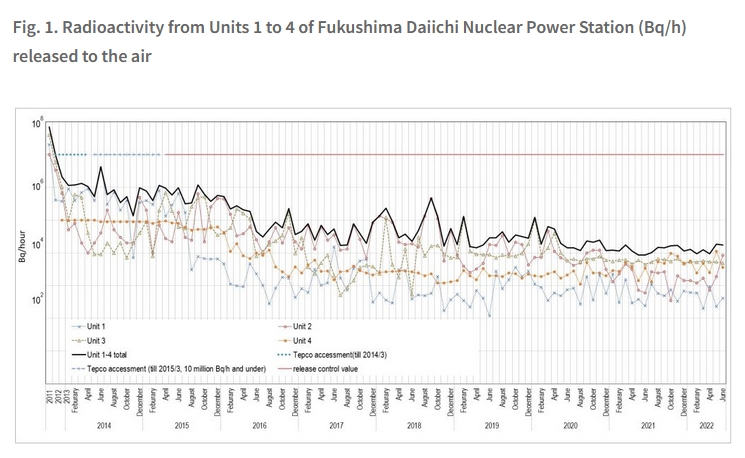
The water temperature in the containment vessels and the spent fuel pools (SFPs) varies mostly around less than 35oC and no great changes have been seen. The state of releases of Xenon-135 (half-life roughly nine hours), released when uranium fuel undergoes fission is also unchanged and it can therefore be estimated that the state of the reactors is stable. Further, according to an assessment by TEPCO in June 2022, around 17,000 becquerels per hour (Bq/h) of radioactive materials were being released to the atmosphere from the buildings (Fig.1).
At the same time, decay heat has fallen greatly with the passage of time, and thus the volume of cooling water injected into the reactors has been reduced (falling from 7-10m3 per hour in May 2011 to 1.5-2.1m3 per hour as of June 2022).

The state of removal of spent nuclear fuel from the SFPs is summarized in Table 1. Spent nuclear fuel removal from Units 4 and 3 has been completed. However, as it has not been possible to remove control rods and other high-dose equipment stored in the SFPs, preparatory work is underway for removal of this equipment from Unit 3 in the second half of FY2022 and from Unit 4 in the second half of FY2024. Units 1 and 2 are being prepared for spent nuclear fuel removal.
Preparations for the removal of fuel debris are also under way. The arrival of the device for removing debris from Unit 2, developed in the UK, was delayed due to the spread of the coronavirus and finally arrived at the Naraha mockup facility in Japan in February. Removal tests are scheduled to be conducted during 2022. Plans are underway for an internal investigation device to be inserted into Unit 1 reactor pressure containment vessel (PCV), and also to withdraw water in two stages from the Unit 3 PCV and suppression chamber due to a water level drop.

The changes in the average number of workers onsite per day is shown in Fig. 2. As of June 2022, the number of workers was 4,100, about half the number it was at its peak. Changes in the number of cases of work non-conformance (work states that differ from the states originally intended or acts or judgments that differ from those that should have been taken) up to March 2022 are shown in Fig.3, as reported on the TEPCO website. As ever, problems appear to occur frequently, and this attests to the severe conditions under which work is being carried out at the site.
State of Contaminated Water
Contaminated water countermeasures at FDNPS can be broadly divided into three areas: 1) Reduction of groundwater flowing into buildings, 2) Reduction of contaminated water flowing into the sea, and 3) Reduction of the toxicity of contaminated water. The main countermeasures to reduce water inflow into the buildings are, from higher elevations downward, (A) Pumping up groundwater at the groundwater bypass and releasing it into the sea (754,521m3 up to August 22, 2022), B) Installation of a frozen earth barrier (on-land water barrier, total length roughly 1,500m) surrounding FDNPS Units 1-4. C) Pumping up water at the subdrains and releasing it into the sea (1,365,094m3 up to August 22), and D) Paving of the site with asphalt to suppress permeation of rainwater into the soil. Measures to prevent the discharge of contaminated water into the ocean include A) Groundwater leakage prevention by a steel water barrier on the sea side, B) Pumping up of groundwater dammed up behind the sea-side water barrier from the well points and groundwater drains (roughly 278,000m3 up to August 3; highly contaminated groundwater is being transferred to the turbine building), and other measures.
To reduce the toxicity of contaminated water, after removal of cesium and strontium, and removal of impurities using a reverse osmosis (RO) membrane, radionuclides other than tritium are removed by the multi-radionuclide removal equipment (ALPS – Advanced Liquid Processing System) and then stored in tanks (containing 1,310,518m3 as of August 4. However, due to past equipment malfunctions and operational policies, in many cases radionuclides other than tritium are also present, resulting in only around 32% of the stored water being below the notification concentration). Besides this, roughly 12,660m3 water remain in buildings, as well as 10,634m3 strontium-treated water, etc., 7,605m3 water treated by RO, 100m3 concentrated brine, and 9,280m3 concentrated wastewater etc. also existing onsite.
The frozen earth barrier consists of about 1600 freeze pipes buried in the ground. The freeze pipes are each 30 meters long and -30°C coolant is circulated through them to freeze the surrounding soil. The effectiveness of the frozen earth barrier has been questioned since it was first installed, but since 2019 there have been several coolant leakage incidents. This is due not to the technology but to aging of the equipment, which was originally not intended for long-term operation.
Concerning TEPCO’s policy of releasing contaminated water into the ocean after ALPS treatment, the policy to release the water was authorized at the 25th Meeting of the Nuclear Regulatory Authority on July 22, and the construction was approved by the governor of Fukushima Prefecture and the mayors of both Okuma Town and Futaba Town in August. TEPCO is aiming to begin.

Source: https://cnic.jp/english/?p=6292
1 This Month
To see nuclear-related stories in greater depth and intensity – go to https://nuclearinformation.wordpress.com/
12 February – Webinar The Big Push: New Nuclear Projects in Canada
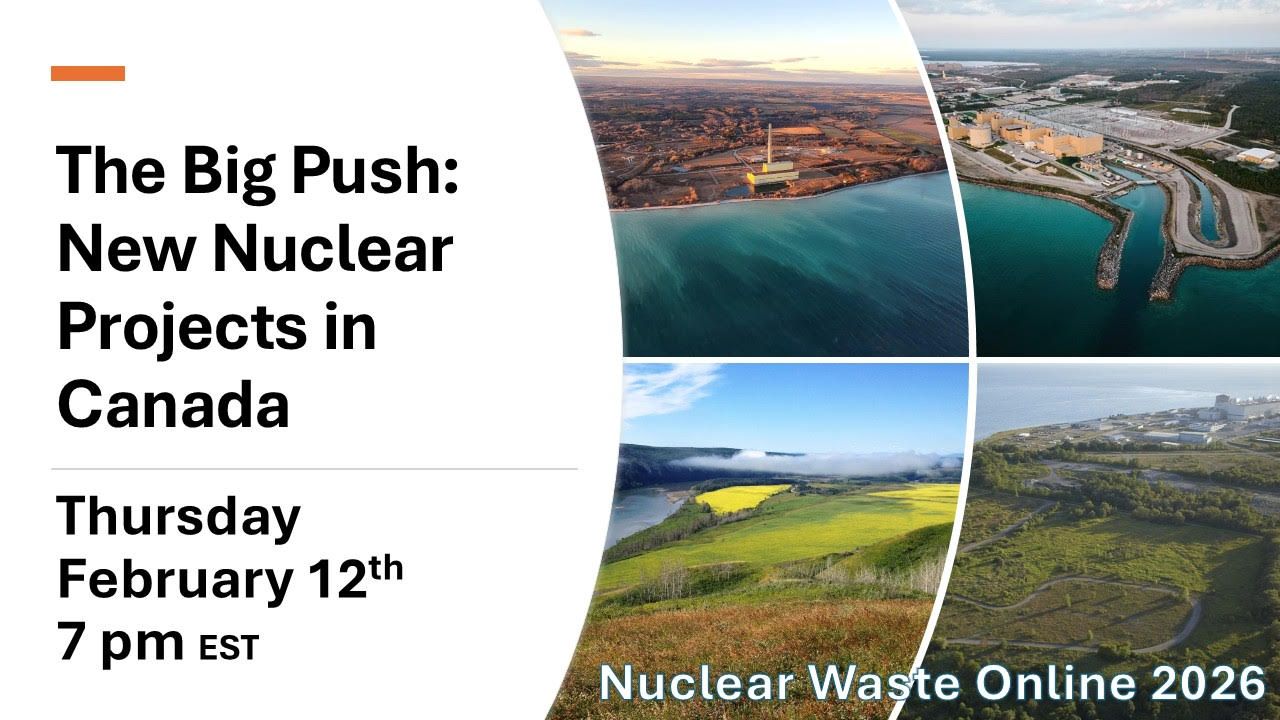
Thursday, February 12, 7 pm Eastern | 2nd of 4 sessions in the 2026 Nuclear Waste Online webinar series
Join a webinar on the push for new nuclear generation in Canada. Go to Northwatch.org to register or use the registration link https://us02web.zoom.us/webinar/register/WN_ZfWOf1GITqSRIZX8CB-A9w
-
Archives
- February 2026 (115)
- January 2026 (308)
- December 2025 (358)
- November 2025 (359)
- October 2025 (376)
- September 2025 (258)
- August 2025 (319)
- July 2025 (230)
- June 2025 (348)
- May 2025 (261)
- April 2025 (305)
- March 2025 (319)
-
Categories
- 1
- 1 NUCLEAR ISSUES
- business and costs
- climate change
- culture and arts
- ENERGY
- environment
- health
- history
- indigenous issues
- Legal
- marketing of nuclear
- media
- opposition to nuclear
- PERSONAL STORIES
- politics
- politics international
- Religion and ethics
- safety
- secrets,lies and civil liberties
- spinbuster
- technology
- Uranium
- wastes
- weapons and war
- Women
- 2 WORLD
- ACTION
- AFRICA
- Atrocities
- AUSTRALIA
- Christina's notes
- Christina's themes
- culture and arts
- Events
- Fuk 2022
- Fuk 2023
- Fukushima 2017
- Fukushima 2018
- fukushima 2019
- Fukushima 2020
- Fukushima 2021
- general
- global warming
- Humour (God we need it)
- Nuclear
- RARE EARTHS
- Reference
- resources – print
- Resources -audiovicual
- Weekly Newsletter
- World
- World Nuclear
- YouTube
-
RSS
Entries RSS
Comments RSS
 nuclear-news