Survey at Fukushima No. 1 reactor container halted.
Jan 12, 2022
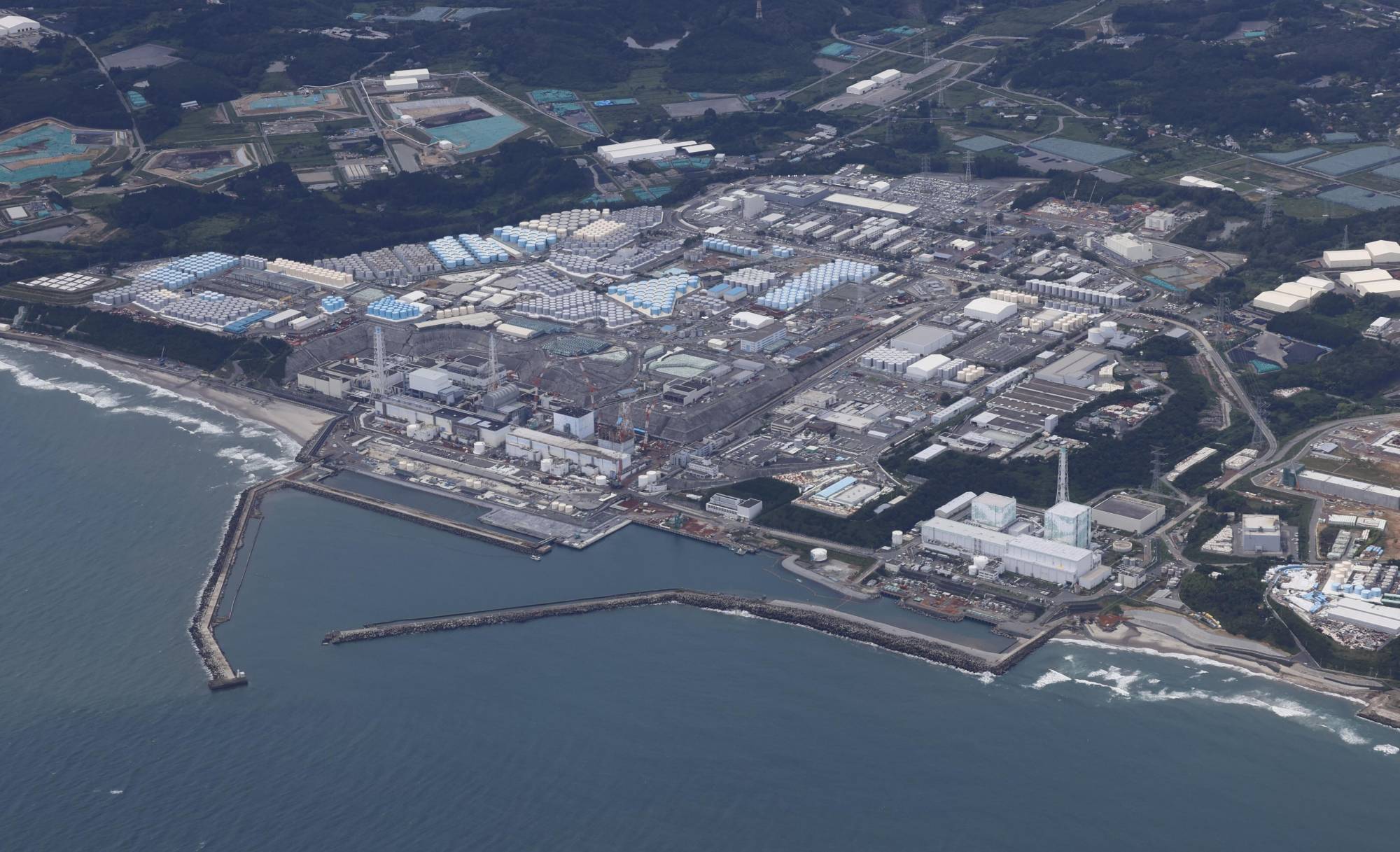
Tokyo Electric Power Company Holdings Inc. halted its investigation of the inside of the containment vessel of the No. 1 reactor at its stricken Fukushima No. 1 nuclear power plant on Wednesday.
The move came after an issue was found during preparation work for the display of data such as radiation levels from dosimeters inside underwater robots to be used in the survey. The preparations began at noon the same day and were halted around two hours later.
Tepco said that it will resume the survey once measures to resolve the issue are taken.
In the survey, which will continue until around August, Tepco aims to take pictures of melted nuclear fuel debris and other deposits using six types of underwater robots to record their locations and thickness in water that has accumulated at the bottom of the containment vessel.
It will also try to collect deposit samples and take pictures of the inside of the base that supports the reactor pressure vessel. The information obtained in the survey will be used for studies on ways to remove the debris.
The nuclear fuel at the No. 1 reactor’s core is believed to have melted and mostly fallen inside the containment vessel during the triple meltdown disaster at the plant, which was hit by a huge earthquake and tsunami on March 11, 2011.
In its survey of March 2017, Tepco failed to find nuclear fuel debris at the No. 1 reactor, leaving the reactor’s detailed situation unknown, in contrast to the No. 2 and No. 3 reactors, where melted fuel debris was successfully photographed.
https://www.japantimes.co.jp/news/2022/01/12/national/tepco-fukushima-survey-halted/
Fukushima Takes a Turn for the Worse.

January 10, 2022by Robert Hunziker
Tokyo Electric Power Company-TEPCO- has been attempting to decommission three nuclear meltdowns in reactors No. 1 No. 2, and No. 3 for 11 years now. Over time, impossible issues grow and glow, putting one assertion after another into the anti-nuke coffers.
The problems, issues, enormous danger, and ill timing of deconstruction of a nuclear disaster is always unexpectedly complicated by something new. That’s the nature of nuclear meltdowns, aka: China Syndrome debacles.
As of today, TEPCO is suffering some very serious setbacks that have “impossible to deal with” written all over the issues.
Making all matters nuclear even worse, which applies to the current mess at Fukushima’s highly toxic scenario, Gordon Edwards’ following statement becomes more and more embedded in nuclear lore: “It’s impossible to dispose of nuclear waste.” (Gordon Edwards in The Age of Nuclear Waste From Fukushima to Indian Point)
Disposing of nuclear waste is like “running in place” to complete a marathon. There’s no end in sight.
As a quickie aside from the horrendous details of the current TEPCO debacle, news from Europe brings forth the issue of nuclear power emboldened as somehow suitable to help the EU transition to “cleaner power,” as described by EU sources. France supports the crazed nuke proposal but Germany is holding its nose. According to German Environment Minister Steffi Lemke: “Nuclear energy could lead to environmental disasters and large amounts of nuclear waste. (Source: EU Plans to Label Gas and Nuclear Energy ‘Green’ Prompts Row, BBC News, Jan. 2, 2022) Duh!
Minister Lemke nailed it. And, TEPCO is living proof (barely) of the unthinkable becoming thinkable and disastrous for humanity. Of course, meltdowns are never supposed to happen, but they do.
One meltdown is like thousands of industrial accidents in succession over generations of lifetimes. What a mess to leave for children’s children’s children over several generations. They’ll hate you for this!
In Fukushima’s case, regarding three nuclear power plants that melted all-the-way (China Syndrome), TEPCO still does not know how to handle the enormously radioactive nuclear fuel debris, or corium, sizzling hot radioactive lumps of melted fuel rods and container material in No. 1, No 2 and No.3, They’re not even 100% sure where all of the corium is and whether it’s getting into underground water resources. What a disaster that would be… what if it is already… Never mind.
The newest wrinkle at TEPCO involves the continuous flow of water necessary to keep the destroyed reactors’ hot stuff from exposure to air, thus spreading explosively red-hot radioactivity across the countryside. That constant flow of water is an absolute necessity to prevent an explosion of all explosions, likely emptying the streets of Tokyo in a mass of screaming, kicking, and trampling event to “get out of town” ASAP, commonly known as “mass evacuation.”
The cooling water continuously poured over the creakily dilapidated ruins itself turns radioactive, almost instantaneously, and must be processed via an Advanced Liquid Processing System (ALPS) to remove most radioactive materials (???) housed in a 17-meter (56 feet) tall building on the grounds of the disaster zone.
Here’s the new big danger, as it processes radioactive contaminated water, it flushes out “slurry” of highly concentrated radioactive material that has to go somewhere. But where to put it?
How to handle and dispose of the radioactive slurry from the ALPS is almost, and in fact may be, an impossible quagmire. It’s a big one as the storage containers for the tainted slurry quickly degrade because of the high concentration of radioactive slurry. These storage containers of highly radioactive slurry, in turn, have to be constantly replaced as the radioactivity slurry eats away at the containers’ liners.
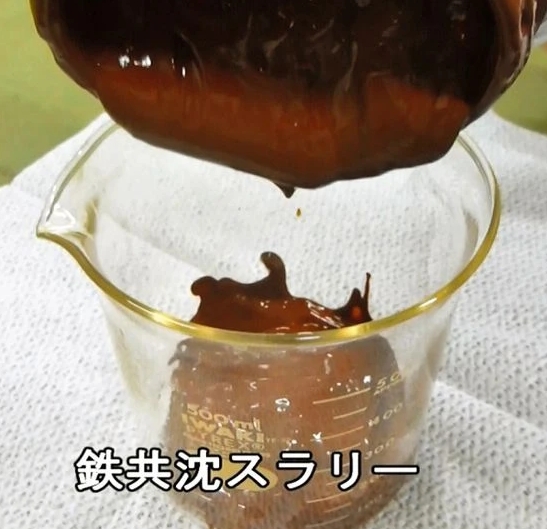
Radioactive slurry is muddy and resembles a shampoo in appearance, and it contains highly radioactive Strontium readings that reach tens of millions of Becquerel’s per cubic centimeter. Whereas, according to the EPA, 148 Becquerel’s per cubic meter, not centimeter, is the safe level for human exposure. Thus, tens of millions per cubic centimeter is “off the charts” dangerous! Instant death, as one cubic meter equals one million cubic centimeters. Ahem!
Since March 2013, TEPCO has accumulated 3,373 special vessels that hold these highly toxic radioactive slurry concentrations. But, because the integrity of the vessels deteriorates so quickly, the durability of the containers reaches a limit, meaning the vessels will need replacement by mid-2025.
Making matters ever worse, if that is possible, the NRA has actually accused TEPCO of “underestimating the impact issue of the radioactivity on the containers linings,” claiming TEPCO improperly measured the slurry density when conducting dose evaluations. Whereas, the density level is always highest at the bottom, not the top where TEPCO did the evaluations, thus failing to measure and report the most radioactive of the slurry. Not a small error.
As of June 2021, NRA’s own assessment of the containers concluded that 31 radioactive super hot containers had already reached the end of operating life. And, another 56 would need replacement within the next 2 years.
Transferring slurry is a time-consuming highly dangerous horrific job, which exposes yet a second issue of unacceptable risks of radioactive substances released into the air during transfer of slurry. TEPCO expects to open and close the transfers remotely (no surprise there). But, TEPCO, as of January 2, 2022, has not yet revealed acceptable plans for dealing with the necessary transfer of slurry from weakening, almost deteriorated containers, into fresh, new containers. (Source: TEPCO Slow to Respond to Growing Crisis at Fukushima Plant, The Asahi Shimbun, January 2, 2022)
Meanwhile, additional batches of a massive succession of containers that must be transferred to new containers will be reaching the end of shelf life, shortly.
Another nightmarish problem has surfaced for TEPCO. Yes, another one. In the aftermath of the 2011 blowup, TEPCO stored radioactive water in underground spaces below two buildings near reactor No.4. Bags of a mineral known as zeolite were placed to absorb cesium. Twenty-six tons (52,000 lbs.) of bags are still immersed with radiation readings of 4 Sieverts per hour, enough to kill half of all workers in the immediate vicinity within one hour. The bags need to be removed.
TEPCO intends to robotically start removing the highly radioactive bags, starting in 2023, but does not know where the bags should be stored. Where do you store radioactive bags containing enough radioactive power to kill someone within one hour of exposure?
Additionally (there’s more) the amount of radioactive rubble, soil, and felled trees at the plant site totals 480,000 cubic meters, as of 2021. TEPCO is setting up a special incinerator to dispose of this. Where to dispose of the incinerated waste is unknown. This is one more add-on to the horrors of what to do with radioactive material that stays hot for centuries upon centuries. Where to put it?
Where to put it? Which is the bane of the nuclear power industry. For example, America’s nuke plants are full of huge open pools of water containing tons of spent nuclear fuel rods. If exposed to open air, spent fuel rods erupt into a sizzling zirconium fire followed by massive radiation bursts of the most toxic material known to humanity. It can upend an entire countryside and force evacuation of major cities.
According to the widely recognized nuclear expert Paul Blanch: “Continual storage in spent fuel pools is the most unsafe thing you could do.” (see- Nuclear Fuel Buried 108 Feet from the Sea, March 19, 2021)
It’s not just Fukushima that rattles the nerves of people who understand the high-risk game of nuclear power. America is loaded with nuclear power plants with open pools of water that hold highly radioactive spent fuel rods.
What to do with it?
Candidates, tell us your stances on Fukushima water release

Jan.7,2022
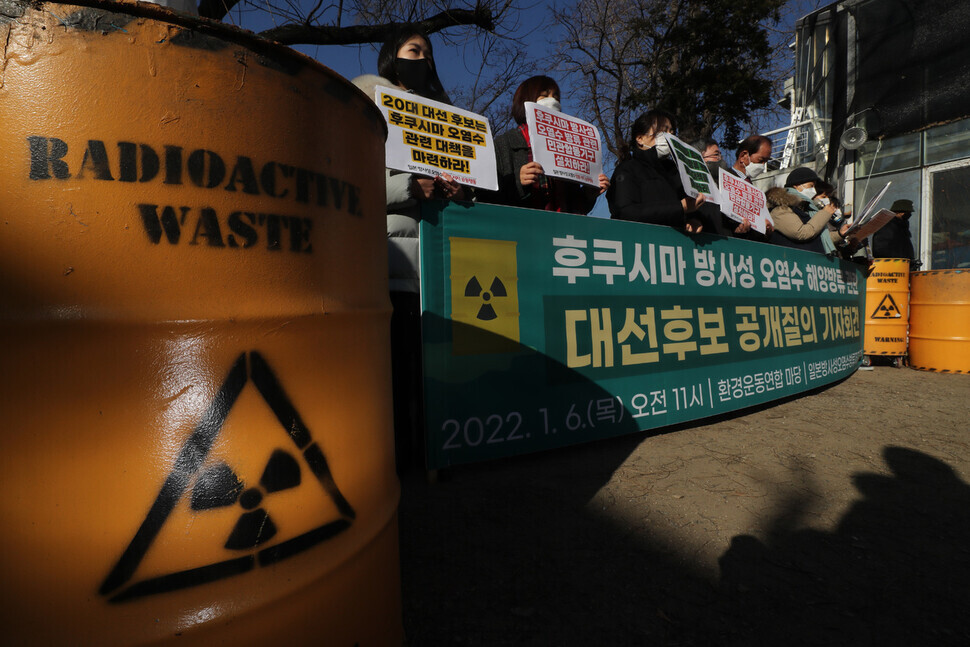
Environmental groups in South Korea are calling on presidential candidates to make public their stances on Japan’s plans to dump contaminated water from the Fukushima nuclear site, and to come up with courses of action. Groups including the Korean Federation for Environmental Movement (KFEM), Nuclear Safety and Future, and Korea Radiation Watch convened for a press conference on Thursday morning in front of KFEM’s offices in Jongno District, Seoul. The groups criticized the government’s response thus far as “timid,” saying that since Japan had announced its intentions to release the radioactive water in April of last year, the government had only gone so far as to express protest to the Japanese Embassy and send a letter of protest to Japan. The groups called on presidential candidates to come up with concrete, practical plans for dealing with the issue.


TEPCO to begin robot probe of Fukushima reactor
Jan. 6, 2022
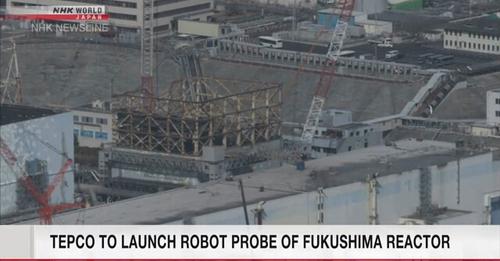
The operator of the crippled Fukushima Daiichi Nuclear Power Station says it will launch a probe of the inside of the No.1 reactor on Wednesday using robots. The firm is seeking to clear debris from the reactor interior as part of the decommissioning process.
Tokyo Electric Power Company, or TEPCO, says the probe will involve six types of robots, each with a different function.
It says the survey will continue for more than six months. It will use ultrasonic devices to locate and measure the thickness of debris believed to be submerged under water inside the reactor containment vessel.
The utility says it also hopes to collect small samples of the debris.
TEPCO says it will use a robot to install a cover on a path for the survey machines to move smoothly under water.
The No.1, 2 and 3 reactors of the plant suffered meltdowns in the massive earthquake and tsunami of 2011.
TEPCO confirmed the existence of what is believed to be solid fuel debris inside the No.2 and 3 reactors, but not inside the No.1 reactor. The debris consists of molten nuclear fuel and metal parts.
Fukushima Daiichi Decontamination & Decommissioning Engineering Company, which was established by TEPCO, said on Thursday it will use the robots to gather information before considering how to remove the debris.
Fukushima town prepares for return of residents
Jan. 4, 2022
Tuesday marked the first business day of 2022 in Japan. Officials in Fukushima Prefecture’s Futaba Town are planning to welcome residents back later this year.
The town’s residents have not returned since an accident at Fukushima Daiichi nuclear power plant forced them to evacuate. Part of the plant is located in the town. The accident occurred in March 2011. Futaba is the only municipality that evacuees have not returned to. The town had a population of about 7,000 before the disaster.
After years of decontamination efforts, the residents are expected to be allowed to return to some areas, starting in June.
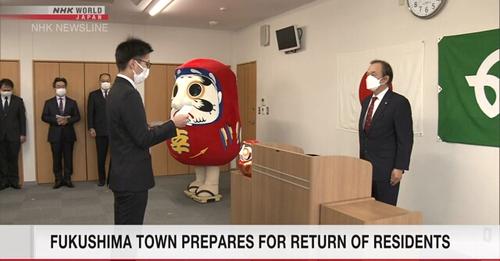
Futaba Town officials held a ceremony on Tuesday to mark the first day of the year. The event took place at a town office in Iwaki City. Iwaki is located about 60 kilometers south of the center of Futaba Town.
Futaba Town Mayor Izawa Shiro told about 40 officials that this is going to be a very busy year, as the residents are expected to return.
Izawa said he will be on the frontlines of the town’s reconstruction efforts. He also asked the officials to join him.
Beginning on January 20, residents will be permitted to stay overnight in the town, in order to start preparing for their return. The evacuation order is expected to be lifted in June.
Interim storage facility completed by March, no prospects for final disposal

January 3, 2022
At the interim storage facility for the waste from the decontamination of Fukushima Prefecture, about 90% of the planned amount of waste has been delivered, and the Ministry of the Environment has said that it will be mostly completed by March of this year.
On the other hand, there is no prospect for the final disposal of the waste, which is required by law to be done outside Fukushima Prefecture by 2045.
At the interim storage facility being built around the TEPCO’s Fukushima Daiichi Nuclear Power Plant, about 14 million cubic meters of waste, including soil, plants and trees from decontamination in Fukushima Prefecture, is planned to be brought in.
According to the Ministry of the Environment, 12.45 million cubic meters, or 89% of the planned amount, had been brought in by December 23, and the ministry plans to complete the delivery of the remaining 1.55 million cubic meters by March of this year.
On the other hand, these wastes are required by law to be disposed of outside of Fukushima Prefecture by March 2045, and the Ministry of the Environment has said that it will present options for the structure and area of the final disposal site by fiscal 2024, but there is no prospect for the location or method.
In addition, in order to reduce the amount of final disposal, a demonstration project is underway to recycle soil from the decontamination process for use in public works nationwide, but there has been no significant movement outside of Fukushima Prefecture.
TEPCO slow to respond to growing crisis at Fukushima plant

January 2, 2022
Radioactive waste generated from treating highly contaminated water used to cool crippled reactors at the Fukushima No. 1 nuclear power plant has thrown up yet new nightmarish challenges in decommissioning the facility, a project that is supposed to be completed in 30 years but which looks increasingly doubtful.
The continuous accumulation of radioactive slurry and other nasty substances, coupled with the problem of finding a safe way to dispose of melted nuclear fuel debris at reactors No. 1, No. 2 and No. 3, has plant operator Tokyo Electric Power Co. frantically scratching around for ideas.
One problem is that storage containers for the tainted slurry degrade quickly, meaning that they constantly have to be replaced. Despite the urgency of the situation, little has been done to resolve the matter.
Fuel debris, a solidified mixture of nuclear fuel and structures inside the reactors melted as a consequence of the triple meltdown triggered by the 2011 earthquake and tsunami disaster has to be constantly cooled with water, which mixes with groundwater and rainwater rainwater that seep into the reactor buildings, producing more new radioactive water.
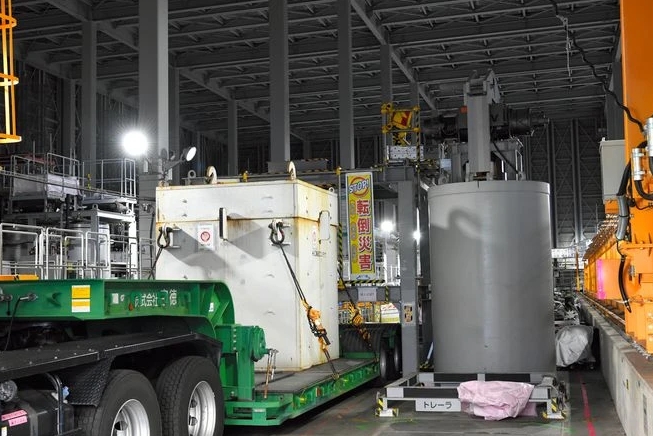
The contaminated water that accumulates is processed via an Advanced Liquid Processing System to remove most of radioactive materials. The ALPS is housed in a 17-meter-tall building situated close to the center of the plant site.
Reporters from the Japan National Press Club were granted a rare opportunity in late November to visit the crippled facility to observe the process.
The building houses a large grayish drum-like container designed especially to store radioactive slurry. The interior of each vessel is lined with polyethylene, while its double-walled exterior is reinforced with stainless steel.
ALARMING DEVELOPMENTS
The use of chemical agents to reduce radioactive substances from the contaminated water in the sedimentation process produces a muddy material resembling shampoo. Strontium readings of the generated slurry sometimes reach tens of millions of becquerels per cubic centimeter.
TEPCO started keeping slurry in special vessels in March 2013. As of November, it had 3,373 of the containers.
Because the integrity of the vessels deteriorates quickly due to exposure to radiation from slurry, TEPCO and the Nuclear Regulation Authority (NRA) predict that durability of the containers will reach the limit after exposure to an accumulated total of 5,000 kilograys of radiation–a level equivalent to 5 million sieverts.
Based on that grim forecast, TEPCO speculated the vessels will need replacement from July 2025.
But the NRA accused TEPCO of underestimating the impact of the radiation problem. It blasted the operator for measuring slurry density 20 centimeters above the base of the container when making its dose evaluation.
“As slurry forms deposits, the density level is always highest at the bottom,” a representative of the nuclear watchdog body pointed out.
The NRA carried out its own assessment in June 2021 and told TEPCO that 31 containers had already reached the end of their operating lives. Its findings also showed an additional 56 would need replacing within two years.
The NRA told TEPCO to wake up and “understand how urgent the issue is since transferring slurry will take time.”
In August, TEPCO conducted a test where slurry with relatively low radiation readings was moved from one container to another. The work took more than a month to complete due to mechanical troubles and other reasons.
An analysis of the radioactive materials’ density data collected during the transfer procedure also turned up another challenge to be overcome. The NRA in October said there was an unacceptable risk of radioactive substances being released into the air during the process and insisted that the refilling method be radically reviewed and changed.
TEPCO is currently considering what steps to take, including covering the workspace with plastic sheets.
Slurry in some containers in need of replacement have strontium levels of more than 1,000 times that of the one in the August test.
TEPCO says that the “container covers will be opened and closed remotely.” But it has not revealed how it plans to safely deal with such readings to carry out the vital work.
It was envisioned that equipment to dehydrate hazardous materials to prevent radiation leakage could be built, but as yet there is no finished design for the device.
With no drastic solutions in sight, a succession of containers will reach the end of their shelf lives shortly.
ANOTHER NIGHTMARE PROBLEM
Radioactive slurry is not the only stumbling block for decommissioning.
In the immediate aftermath of the 2011 disaster, TEPCO stored contaminated water in the underground spaces below two buildings near the No. 4 reactor. In doing so, bags full of a mineral known as zeolite were placed in the temporary storage pools to absorb cesium so as to reduce the amount of radioactive substances.
Twenty-six tons of the stuff are still immersed in the dirty water on the floors under the buildings. Radiation readings of 4 sieverts per hour were detected on their surfaces in fiscal 2019, enough to kill half of all the people in the immediate vicinity within an hour.
TEPCO plans to introduce a remotely controlled underwater robot to recover the bags, starting no earlier than from fiscal 2023, However, it has not determined how long this will take or where to store the bags once they are retrieved.
In addition, radioactive rubble, soil and felled trees at the plant site totaled 480,000 cubic meters as of March 2021, leading TEPCO to set up a special incinerator. The total volume is expected to top 790,000 cubic meters in 10 years, but where to dispose of the incinerated waste remains unclear.
TEPCO is in a race against time. That’s the view of Satoshi Yanagihara, a specially appointed professor of nuclear engineering at the University of Fukui who has specialist knowledge on processes to abandon reactors.
“Now, only 30 years remain before the target date of the end of decommissioning set by the government and TEPCO,” said Yanagihara.
As decommissioning work is due to shortly enter a crucial stage, such as recovering nuclear fuel debris on a trial basis from as early as 2022, Yanagihara noted the need for careful arrangements before forging ahead with important procedures.
“The government and TEPCO need to grasp an overall picture of the massive task ahead and discuss how to treat, keep and discard collected nuclear debris and the leftover radioactive waste with local residents and other relevant parties,” he said.
(This article was written by Yu Fujinami and Tsuyoshi Kawamura.)
Robots to probe inside Fukushima reactor
Jan. 2, 2022
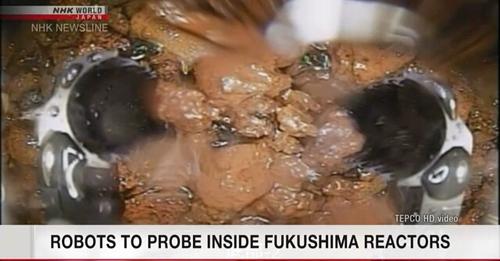
The operator of the crippled Fukushima Daiichi nuclear power plant is planning to conduct robotic probes and collect samples from damaged reactors this year.
The work will be a key step in the effort to decommission the plant.
The No.1, 2 and 3 reactors suffered meltdowns following a major earthquake and tsunami in 2011.
Nuclear fuel melted and collapsed into the reactors’ containment vessels. It mixed with surrounding metal parts and formed solid fuel debris.
Tokyo Electric Power Company plans to begin a robotic survey of the No.1 reactor in mid-January. The survey is expected to take about six months.
The robots will use ultrasonic devices to locate and measure the thickness of the deposits.
Utility officials say they also hope to collect samples.
Preparation to retrieve fuel debris from the No.2 reactor is underway with a robotic device that was developed in the UK.
It is now undergoing performance tests in Japan.
Tokyo Electric Power Company is planning to collect a few grams of debris with the robot by the end of this year. It hopes to gradually increase the amount to be retrieved.
Removal and safe storage of the extremely radioactive debris is thought to be one of the biggest challenges in the decommissioning process.
1 This Month
19 February – VIRTUAL EVENT-Decision Time: AI and Our Nuclear Arsenal
12:45 p.m. Central / 1:45 p.m. Eastern
To see nuclear-related stories in greater depth and intensity – go to https://nuclearinformation.wordpress.com
-
Archives
- February 2026 (141)
- January 2026 (308)
- December 2025 (358)
- November 2025 (359)
- October 2025 (376)
- September 2025 (258)
- August 2025 (319)
- July 2025 (230)
- June 2025 (348)
- May 2025 (261)
- April 2025 (305)
- March 2025 (319)
-
Categories
- 1
- 1 NUCLEAR ISSUES
- business and costs
- climate change
- culture and arts
- ENERGY
- environment
- health
- history
- indigenous issues
- Legal
- marketing of nuclear
- media
- opposition to nuclear
- PERSONAL STORIES
- politics
- politics international
- Religion and ethics
- safety
- secrets,lies and civil liberties
- spinbuster
- technology
- Uranium
- wastes
- weapons and war
- Women
- 2 WORLD
- ACTION
- AFRICA
- Atrocities
- AUSTRALIA
- Christina's notes
- Christina's themes
- culture and arts
- Events
- Fuk 2022
- Fuk 2023
- Fukushima 2017
- Fukushima 2018
- fukushima 2019
- Fukushima 2020
- Fukushima 2021
- general
- global warming
- Humour (God we need it)
- Nuclear
- RARE EARTHS
- Reference
- resources – print
- Resources -audiovicual
- Weekly Newsletter
- World
- World Nuclear
- YouTube
-
RSS
Entries RSS
Comments RSS
 nuclear-news