Will Port Adelaide, Fremantle or Port Kembla be the Australian Chernobyl?
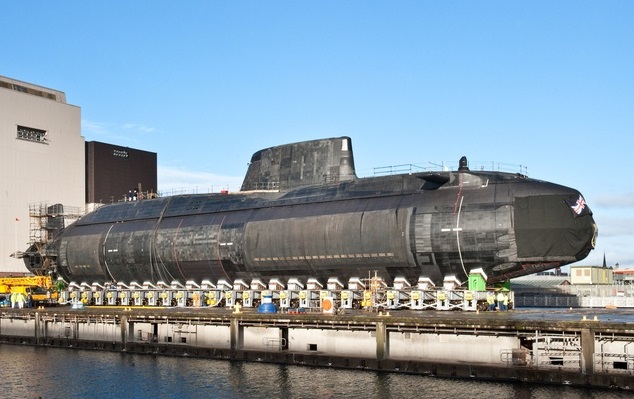
By Douglas McCartyJul 21, 2023 https://johnmenadue.com/aukus-will-adelaide-fremantle-or-port-kembla-be-the-australian-chernobyl/
While most discussion of the AUKUS Agreement has focussed on the geopolitical implications for Australia’s standing in the world, the escalation of the risk of war and the crippling cost of the nuclear submarine purchases when less expensive and more sensible non-nuclear options are available, little has been said of the risk to the civilian population posed by these nuclear-powered submarines (or other nuclear-powered naval vessels) in Australia’s home ports.
Perhaps we citizens only enter the calculations as ‘collateral damage’. Any such necessarily technical discussion is hampered by military secrecy. Some information has been released officially, but most is from generalised inference, or conjecture, and so subject to uncertainty. However, in this important matter, it is worth attempting to join the dots….
News from the war in Ukraine includes, almost every other night, a report on the situation around the Zaporizhzhia Nuclear Power Plant, the largest in Europe. Though no longer continuing to generate power for Ukraine, it is always at risk of being shelled or bombed by one side or the other, and regularly just avoiding reactor cooling water pump failure from damaged power transmission lines or lack of diesel fuel for their backup generators for the pumps. How long this situation will continue remains to be seen. And now, after the breaching of the Kakhovka Dam, it is estimated just three months of water for cooling remains.
The consequences of the catastrophic failure of a nuclear reactor are well known to both the Ukrainians and the Russians. To the Northwest of Zaporizhzhia, and just 100 kilometres North of Kyiv, lies the Chernobyl Reactor No. 4, which, on 26 April 1986, underwent meltdown after a coolant and moderator failure, exploded, and caught fire. Radioactive material and fission products were ejected into the air, spreading across the immediate countryside and into Northern Europe. Radioactive rain was reported on the mountains of Wales and Scotland, in the Alps, and contamination in reindeer herds in Northern Sweden. The principal radiological contaminant of concern across this vast area was Caesium-137, one of many fission products and representing some 6% of fission reactor spent fuel. Just 27 kg of Caesium-137, it is calculated, caused this contamination. Some 150,000 square kilometres of Ukraine, Belarus and Russia were initially contaminated. Of course, at the time of the accident, all this was part of the Soviet Union. To this day, 2600 square kilometres around the plant are considered unsafe for human habitation, or agriculture, and will remain so for between 300 and 3000 years! The Reactor used 2% enriched Uranium fuel.
Although the loss of life at Chernobyl was a small fraction of the 100,000 deaths from one of the only two uses of nuclear weapons in war, on Hiroshima in 1945, Chernobyl created 400 times more radioactive pollution. The Hiroshima bomb, “Little Boy”, contained 64 kg of enriched Uranium, though less than 2% actually underwent nuclear fission. The bomb was detonated 500 metres above ground (‘airburst’), and the fatalities were the result of blast, heat, and irradiation, in a city centre. Chernobyl occurred at ground level and so ejected debris upwards initially, followed by smoke columns from subsequent fires. . The 31 deaths at Chernobyl were plant operators and, of course, firemen. The G7, the AUKUS Partners and the Quad just met at ‘ground zero’ in a rebuilt Hiroshima City, 78 years after the bombing.
The US Navy nuclear powered warships, including the ‘Virginia’ Class submarines that Australia would buy under the AUKUS Agreement, principally use Highly Enriched Uranium (HEU) reactors. The Uranium is enriched to above 93% fissionable Uranium-235. It is weapons grade material and has in part been sourced from decommissioned nuclear weapons. The submarine reactors are intended to last for the ‘Life of Ship’ (LOS), up to 33 years, without needing refuelling. Low Enriched Uranium reactors need fuel replacement every 5 to 10 years, when, importantly, the containment pressure vessel around the reactor is physically inspected for flaws and deterioration. This is not done for the HEU, LOS reactors.
The US Navy nuclear powered warships, including the ‘Virginia’ Class submarines that Australia would buy under the AUKUS Agreement, principally use Highly Enriched Uranium (HEU) reactors. The Uranium is enriched to above 93% fissionable Uranium-235. It is weapons grade material and has in part been sourced from decommissioned nuclear weapons. The submarine reactors are intended to last for the ‘Life of Ship’ (LOS), up to 33 years, without needing refuelling. Low Enriched Uranium reactors need fuel replacement every 5 to 10 years, when, importantly, the containment pressure vessel around the reactor is physically inspected for flaws and deterioration. This is not done for the HEU, LOS reactors. In one year, at full power, (210 x 365 ÷ 940 =) 81.5 kg of U-235 would be required. Along with other decay products from the U-235 (Strontium-90, Iodine-131, Xenon-133 etc.), as noted earlier some 6% (or 4.9 kg) would be Caesium-137. The ‘neutron poisons’ also created are balanced out by ‘burnable’ neutron poisons incorporated into the core when new, to maintain reactor function over the years. So far, simple nuclear physics and thermodynamics.
Operationally, one surmises, the submarine reactor will infrequently run at full power. Actual annual production of Caesium-137 may lie between, say, 0.8 kg for 1/6th capacity operation on average for the whole year, and 2.45 kg at half capacity for the year. As the reactor is designed to not need refuelling for the ‘Life of the Ship’, the Cs-137 would continuously accumulate inside the reactor fuel elements. At the lower bound of 1/6th operation, there would be approaching 27 kg of Cs-137 in the core after 33 years, allowing for the decay of some of the Caesiun-137, given its half-life of 30.05 years. At the upper bound, it would take about 13 years for 27 kg of Caesium-137 to accumulate.
Visiting nuclear-powered submarines, from the US or UK, would be similar. Visiting US nuclear-powered aircraft carriers, each with two A1B reactors each of 700MWt, may have 27 kg of Cs-137 in their reactor cores after just two years of operation.
Visiting ships may stay in Australian ports for days or even weeks. Australian submarines will be in port not only between deployments, but also for maintenance, for months and years. The US Navy appears to have about 40 Virginia Class Subs, with some 18 undergoing long-stay maintenance, or about half. We might expect the same. So, at any one time, the AUKUS plan would see naval nuclear reactors, US, or UK, or Australian, or all, in Adelaide, and/or Fremantle, and/or Port Kembla. While peacetime only presents the risk of a nuclear accident, wartime would see these important military assets easily detectable – and targetable – while in port. In the event of a nuclear war, this may be just one of our worries.
In a conventional, non-nuclear conflict, the story may be very different. The situation of the Zaporizhzhia civilian reactors in Ukraine is most instructive. However, as legitimate military targets, would such restraint be shown towards the reactors in the submarines? What would be the impact of a conventional cruise or hypersonic or ballistic missile warhead on the pressure hull and reactor containment vessel (and plumbing) of a nuclear-powered submarine?
Should just 27 kg of the Caesium-137 in the naval reactor cores be released into the air through an explosion (as at Chernobyl) in an accident or deliberate attack, what would be the outcome? In Fremantle, especially if the ‘Fremantle Doctor’ was blowing, would sections of Fremantle and Perth become unsafe for human habitation? In Port Kembla, especially if a ‘Southery Buster’ came through, the Illawarra and, depending on the particular weather conditions, would parts of the South of Sydney become unsuitable for human habitation? For Port Adelaide, especially if a NW change came through, would the Adelaide coastal strip from Gawler to Aldinga become unsuitable for human habitation?
Imagine the number of “single mums doing it tough” who would have to be relocated to emergency accommodation – somewhere! Imagine all that social housing rendered uninhabitable! Even if we ‘won’ the war.
This is a real possibility if we have nuclear reactors in surface ships or submarines in our ports, or in our ship building and maintenance facilities.
A Detectable Subservience – Australia’s ill-fated nuclear submarine deal?

All of this leaves one wondering about just what due diligence was done before Morrison, and the 24-hour copycat decision-maker Albanese, committed us to the folly of paying $A368 billion to purchase a subservient position embedded within the US war machine by means of a soon-to-be fully detectable and therefore likely to be destroyed fleet of nuclear-powered submarines.
June 6, 2024 by: The AIM Network, By Michael Willis, https://theaimn.com/a-detectable-subservience/
The first operational outcome of the Pillar 2 AUKUS arrangement between the US, UK and Australia has just been announced.
The three countries will share data from their submarine-hunting PA-8 Poseidon aircraft, manufactured by the troubled Boeing Corporation.
This was announced on May 29 in an “exclusive interview” given to US online website Breaking Defense by Michael Horowitz, whose office serves as the Pentagon’s day-to-day lead on AUKUS issues.
(In a deliciously ironic slip, the website referred to the United Kingdom as the “Untied Kingdom”, true of the political cohesion of both the UK and the US at this time.)
All three AUKUS nations:
“… operate the Boeing-made maritime surveillance aircraft; the US operates 120, Australia 12, and the United Kingdom nine. A key part of the P-8 is its collection of sonobuoys, which are dropped into the water to hunt down submarines. (“Sonobuoys” is the preferred US-spelling of the English language “sonar buoys”.)
According to Horowitz, the Pentagon’s Deputy Assistant Secretary of Defense for Force Development and Emerging Capabilities, a new “trilateral algorithm” will allow them to share information from P-8 sonar buoys between each other.
According to Breaking Defense, the trilateral algorithm requires a high level of trust between the three countries.
“Even among Five Eyes partners,” it says, “sonobuoy information is highly sensitive, as sharing that data not only makes clear what each country has the ability to gather and where those buoys are deployed, but because it clearly reveals what and where each country is tracking.”
Pillar 2 arrangements build on those of Pillar 1 which are solely concerned with Australia’s acquisition of the hugely expensive nuclear-powered submarines.
At a cost averaged out at $A33 million a day over 35 years, we are promised a fleet of 8 submarines with the apparent advantages of extended range and endurance, higher speed, increased payload capacity, and reduced refuelling needs.
But given our own use of sonar buoys and knowing that our own all-but-at-war with “enemy”, China, has the same or superior detection technologies, it is the claim that SSNs (nuclear-powered submarines) have greater stealth and reduced detectability that is the major sales pitch justifying our $368 billion spend.
SSNs are claimed to have reduced noise and to be able to operate at greater depths, thus making them harder to detect.
Reduced noise will affect passive sonar buoys which listen for sounds generated by submarines. These sounds can include engine noise, propeller cavitation, or other mechanical noises.
Greater depth will affect active sonar buoys, those that send out a sound wave which then bounces off the submarine, allowing the buoy to detect the “ping” that travels back to the buoy. That ping is weaker the greater distance it has to travel.
Former Senator and submariner Rex Patrick was critical of the AUKUS decision for Australia to begin its SSN acquisition with the purchase of three second-hand Virginia Class SSNs from the US.
“The first highly noticeable issue with the Virginia class is a problem that has surfaced with the submarine’s acoustic coating that’s designed to reduce the ‘target strength’ of the submarine (how much sound energy from an enemy active sonar bounces off the submarine, back to the enemy),” he said.
“The coating is prone to peeling off at high-speed leaving loose cladding that slaps against the hull, making dangerous noise, and causes turbulent water flow, which also causes dangerous hull resonance (where the hull sings at its resonant frequency, like a tuning fork) and extra propulsion noise. I know a bit about this as a former underwater acoustics specialist.”
Magnetic Anomaly Detection (MAD) is another method of detection. MAD detects disturbances in the Earth’s magnetic field caused by the metal hull of a submarine. MAD sensors are typically deployed on aircraft and can detect submarines at relatively close ranges. The signals weaken with distance.
However, the Chinese are developing the ability to detect extremely low frequency (ELF) electromagnetic signal produced by speeding subs.
Researchers from the Chinese Academy of Sciences’ Fujian Institute of Research on the Structure of Matter found an ultra-sensitive magnetic detector could pick up traces of the most advanced submarine from long distances away.
The researchers calculated that the extremely low frequency (ELF) signal produced by a submarine’s bubbles could be stronger than the sensitivities of advanced magnetic anomaly detectors by three to six orders of magnitude.
The bubbles are an inevitable consequence of the submarine’s cruising speed, which causes the water flowing around the hull to move faster as its kinetic energy increases and its potential energy – expressed as pressure – decreases. When the pressure decreases sufficiently, small bubbles form on the surface of the hull as some of the water vaporises. This process causes turbulence and can produce an electromagnetic signature, in a phenomenon known as the magnetohydrodynamic (MHD) effect.
Though faint, ELF signals can travel great distances, thanks to their ability to penetrate the water and reach the ionosphere, where they are reflected back to the Earth’s surface.
Detection by ELF turns the advantage of an SSNs higher speed into its opposite, namely the disadvantage of higher detectability.
This ability of science to increase the detection of SSNs led even the pro-US Australian Strategic Policy Institute (ASPI) to publish a warning that “the oceans of tomorrow may become ‘transparent’. The submarine era could follow the battleship era and fade into history.”
It titled its article on a study of submarine detection by Australian scientists and academics “Advances in detection technology could render AUKUS submarines useless by 2050.”
According to the authors:
“The results should ring alarm bells for the AUKUS program to equip Australia with nuclear-powered submarines. Our assessment suggests that there will only be a brief window of time between the deployment of the first SSN AUKUS boats and the onset of transparent oceans.”
However, it is the expanding frontier of quantum computing that may be the ultimate nail in the AUKUS submarines coffin.
Quantum computing is the sexy new kid on the block – witness the Australian government’s investment of almost a billion dollars in a bid to build the world’s first commercially useful quantum computer in Brisbane. It’s bound to make the shareholders of US company PsiQuantum very happy, including notorious corporate investors such as Black Rock.
In July 2016, the Australia government awarded a contract to local company Q-CTRL to develop a quantum navigation system can use the motions of a single atom to precisely determine the course and position of a submarine and maintain accuracy to a remarkable degree. This overcomes two disadvantages of navigation by GPS: GPS is vulnerable to jamming by an adversary, and its signals cannot penetrate sea water to any appreciable depth.
That’s the good news story.
The bad news is that China has already funded its multi-billion-dollar National Quantum Laboratories to develop quantum-based technology applications for “immediate use to the Chinese armed forces”, possibly including targeting stealthy submarines.
According to Zhu Jin in The Conversation:
“New quantum sensing systems offer more sensitive detection and measurement of the physical environment. Existing stealth systems, including the latest generation of warplanes and ultra-quiet nuclear submarines, may no longer be so hard to spot.”
Using devices that measure and analyse the gravitational pull exercised by the mass of a submarine on the movement of sub-atomic particles in a sensor would overcome the disadvantages of sonar buoys and magnetometers, rendering any otherwise undetectable object with mass detectable.
The other area in which China is more advanced than its competitors is the use of quantum computing for encryption and decryption of communications.
In a 2022 paper on Quantum Computing and Cryptography, the authors that:
“China has set the pace for creating secure quantum communications that cannot be intercepted or manipulated. Further advances in Chinese quantum communication networks, especially networks designed for military use, will put the Navy at increased risk when deployed to the Indo-Pacific. If Chinese communications are virtually unbreakable and U.S. Navy communications can be exploited by Chinese quantum code-breaking technology, it will quickly lose its ability to safely operate among PLAN forces.”
All of this leaves one wondering about just what due diligence was done before Morrison, and the 24-hour copycat decision-maker Albanese, committed us to the folly of paying $A368 billion to purchase a subservient position embedded within the US war machine by means of a soon-to-be fully detectable and therefore likely to be destroyed fleet of nuclear-powered submarines.
Michael Williss is a member of the Australian Anti-AUKUS Coalition (AAAC) and the Independent and Peaceful Australia Network (IPAN).
Summary of Australian federal and state/territory nuclear/uranium laws and prohibitions

Current prohibitions on nuclear activities in Australia: a quick guide
From Jim Green, 30 May 2024
https://www.aph.gov.au/About_Parliament/Parliamentary_departments/Parliamentary_Library/pubs/rp/rp2324/Quick_Guides/NuclearActivitiesProhibitions
PDF Version [564KB]
Dr Emily Gibson
Science, Technology, Environment and Resources; Law and Bills Digest Sections
This quick guide provides an overview of current prohibitions on nuclear activities under Commonwealth, state and territory laws. It considers the primary legislation most relevant to current policy debates about domestic nuclear energy only and consequently does not consider recent changes to Commonwealth law to facilitate Australia’s acquisition of conventionally-armed, nuclear-powered submarines under the AUKUS partnership.[1] It also does not include consideration of Australia’s international obligations in respect of nuclear activities, including the safeguarding of nuclear materials and the non-proliferation of nuclear weapons.
If a domestic nuclear energy industry were to progress, it is expected that a comprehensive framework for the safety, security and safeguarding of the related nuclear material would need to be legislated to accommodate such an industry.[2] Consideration of these issues is beyond the scope of this paper.
What are nuclear activities?
A nuclear activity is any process or step in the utilisation of material capable of undergoing nuclear fission; that is, any activities in the nuclear fuel cycle.[3] Nuclear activities therefore include:
- mining of nuclear or radioactive materials such as uranium and thorium milling, refining, treatment, processing, reprocessing, fabrication or enrichment of nuclear material
- the production of nuclear energy
- the construction, operation or decommissioning of a mine, plant, facility, structure, apparatus or equipment used in the above activities
- the use, storage, handling, transportation, possession, acquisition, abandonment or disposal of nuclear materials, apparatus or equipment.
Prohibitions on nuclear activities
Commonwealth
Nuclear activities are regulated under the Australian Radiation Protection and Nuclear Safety Act 1998 (ARPANS Act) and the Environment Protection and Biodiversity Conservation Act 1999 (EPBC Act).
Australian Radiation Protection and Nuclear Safety Act 1998
The ARPANS Act establishes a licensing framework for controlled persons (including a Commonwealth entity or a Commonwealth contractor) in relation to controlled facilities (a nuclear installation, a prescribed radiation facility, or a prescribed legacy site).[4] A nuclear installation includes a nuclear reactor for research or the production of radioactive materials for industrial or medical use, and a radioactive waste storage or disposal facility with an activity that is greater than the activity level prescribed by the Australian Radiation Protection and Nuclear Safety Regulations 2018.[5]
The ARPANS Act allows the CEO of the Australian Radiation Protection and Nuclear Safety Agency (ARPANSA) to issue licences for controlled facilities.[6] In issuing a facility licence, the CEO ‘must take into account the matters (if any) specified in the regulations, and must also take into account international best practice in relation to radiation protection and nuclear safety’.[7]
However, subsection 10(2) of the Act expressly prohibits the CEO from granting a licence for the construction or operation of any of the following nuclear installations: a nuclear fuel fabrication plant; a nuclear power plant; an enrichment plant; or a reprocessing facility.[8] This prohibition does not appear to apply to a radioactive waste storage or disposal facility.
Environment Protection and Biodiversity Conservation Act 1999
The EPBC Act establishes 9 matters of national environmental significance (MNES) and provides for the assessment and approval of these actions if the action has, will have, or is likely to have a significant impact on the MNES.[9] ‘Nuclear actions’ are one of the MNES.[10] Where a nuclear action is determined to be a controlled action (that is, one likely to have a significant impact and requiring assessment and approval under the Act), the assessment considers the impact of a nuclear action on the environment generally (including people and communities).[11]
The Act establishes offences for the taking of nuclear actions in those circumstances.[14]
Similarly, the Act provides that a relevant entity (as set out below) must not take an action (including a nuclear action) unless a requisite approval has been obtained under Part 9 of the Act or a relevant exception applies:
- a person must not take a relevant action on Commonwealth land that has, will have or is likely to have a significant impact on the environment[15]
- a person must not take a relevant action outside Commonwealth land if the action has, will have or is likely to have a significant impact on the environment on Commonwealth land[16]
- the Commonwealth or a Commonwealth agency must not take inside or outside the Australian jurisdiction an action that has, will have or is likely to have a significant impact on the environment inside or outside the Australian jurisdiction.[17]
The Act establishes offences and civil penalty provisions for the taking of an action in those circumstances.[18]
Subsection 140A(1) prohibits the Minister for the Environment from granting an approval for a nuclear action relating to specified nuclear installations. These installations are a nuclear fuel fabrication plant, a nuclear power plant, an enrichment plant, and a reprocessing facility.
Potential reform of the nuclear action trigger
The second independent review of the EPBC Act, completed in October 2020 by Professor Graeme Samuel (Samuel Review), recommended that the nuclear actions MNES be retained.[19] The review recommended that ‘the EPBC Act and the regulatory arrangements of [ARPANSA] should be aligned, to support the implementation of best-practice international approaches based on risk of harm to the environment, including the community’.[20]
In 2022, the Government’s Nature Positive Plan adopted this approach and stated, ‘[a] uniform national approach to regulation of radiation will be delivered through the new National Environmental Standards’.
In February 2024, a policy draft of the National Environmental Standard for Matters of National Environmental Significance indicates that ‘nuclear actions’ will be renamed ‘radiological exposure actions’ and states:
Relevant decisions must:
Not be inconsistent with the ARPANSA national codesfor protection from radiological exposure actions including in relation to:
- human health and environmental risks and outcomes; and. radiological impacts on biological diversity,
- the conservation of species and the natural health of ecosystems.[22]
States and territories
States and territories generally regulate nuclear and radiation activities through either the health or the environmental protection portfolios. The relevant legislation provides for the protection of health and safety of people, and the protection of property and the environment, from the harmful effects of radiation by establishing licensing regimes to regulate the possession, use, and transportation of radiation sources and substances.[23] Mining of radioactive materials is regulated through the resources portfolio.
In addition, as outlined below, the states and territories have legislation prohibiting certain nuclear activities or the construction and operation of certain nuclear facilities. Importantly, where permitted, nuclear activities (including mining) would also be subject to assessment and approvals under a range of other legislation, including planning and environmental impact assessment, native title and cultural heritage, and radiation licensing laws at the state or territory and Commonwealth level.
New South Wales
Exploration for uranium has been permitted under the Mining Act 1992 since 2012.[24] However, the mining of uranium is prohibited by the Uranium Mining and Nuclear Facilities (Prohibitions) Act 1986 (NSW Prohibitions Act).[25]
The NSW Prohibitions Act also prohibits the construction and operation of certain nuclear facilities, including uranium enrichment facilities, fabrication and reprocessing plants, nuclear power plants, and storage and waste disposal facilities (other than for the storage and disposal of waste from research or medical purposes, or the relevant radiological licensing Act).[26]
Northern Territory
The Atomic Energy Act 1953 (Cth) provides that the Commonwealth owns all uranium found in the territories.[27] Uranium exploration and mining in the Northern Territory (NT) is regulated under both NT mining laws (the Mineral Titles Act 2010 and the Mining Management Act 2001) and the Atomic Energy Act.[28] The Ranger Uranium Mine operated until 2021 and is now undergoing rehabilitation.[29]
The Nuclear Waste Transport, Storage and Disposal (Prohibition) Act 2004 (NT) prohibits the construction and operation of nuclear waste storage facilities, as well as the transportation of nuclear waste for storage at a nuclear waste storage facility in the NT.[30] Nuclear waste is defined as including waste material from nuclear plants or the conditioning or reprocessing of spent nuclear fuel.[31]
This Act also:
- prohibits public funds from being expended, granted or advanced to any person for, or for encouraging or financing any activity associated with the development, construction or operation of a nuclear waste storage facility
- would require the NT Parliament to hold an inquiry into the likely impact of a nuclear waste storage facility proposed by the Commonwealth on the cultural, environmental and socio‑economic wellbeing of the territory.[32]
Queensland
Exploration for and mining of uranium are permitted under the Mineral Resources Act 1989. However, it has been government policy to not grant mining leases for uranium since 2015.[33] The government policy ban extends to the treatment or processing of uranium within the state.[34]
The Nuclear Facilities Prohibition Act 2007, in similar terms to the NSW Prohibitions Act, prohibits the construction and operation of nuclear reactors and other nuclear facilities in the nuclear fuel cycle.[35]
Unlike other state and territory prohibition legislation, the Nuclear Facilities Prohibition Act would require the responsible Queensland Minister to hold a plebiscite to gain the views of the Queensland population if the Minister was satisfied that the Commonwealth Government has taken, or is likely to take, steps to amend a Commonwealth law or exercise a power under a Commonwealth law to facilitate the construction of a prohibited nuclear facility, or if the Commonwealth Government adopts a policy position of supporting or allowing the construction of a prohibited nuclear facility in Queensland.[36]
South Australia
The exploration and mining of radioactive material (including uranium) is permitted in South Australia (SA), subject to approvals under the Mining Act 1971 and the Radiation Protection and Control Act 2021 (RP&C Act).[37] For example, uranium is mined at Olympic Dam, Four Mile and Honeymoon. However, conversion and enrichment activities are prohibited by the RP&C Act.[38]
The Nuclear Waste Storage Facility (Prohibition) Act 2000 prohibits the construction or operation of a nuclear waste storage facility, and the import to SA or transport within SA of nuclear waste for delivery to a nuclear waste storage facility.[39]
The Nuclear Waste Storage Facility (Prohibition) Act prohibits the SA Government from expending public funds to encourage or finance the construction or operation of nuclear waste storage facilities.[40] The Act would also require the SA Parliament to hold an inquiry into the proposed construction or operation of a nuclear waste storage facility in SA authorised under a Commonwealth law.[41]
Tasmania
The exploration and mining of atomic substances (which includes uranium and thorium) is permitted under the Mineral Resources Development Act 1995 (Tas), subject to approval.
Victoria
The Nuclear Activities (Prohibitions) Act 1983 prohibits a range of activities associated with the nuclear fuel cycle, including the exploration and mining of uranium and thorium, and the construction or operation of facilities for the conversion or enrichment of any nuclear material, nuclear reactors and facilities for the storage and disposal of nuclear waste from those prohibited activities.[42]
Western Australia
Exploration for and mining of uranium is permitted under the Mining Act 1978. A state policy ban on mining approvals was overturned in November 2008;[43] however, this was reinstated in June 2017, with a ‘no uranium’ condition on future mining leases.[44] The ban does not apply to 4 projects that had already been approved by the previous government.
The Nuclear Activities Regulation Act 1978 aims to protect the health and safety of people and the environment from possible harmful effects of nuclear activities, including by regulating the mining and processing of uranium and the equipment used in those processes. The Nuclear Waste Storage and Transportation (Prohibition) Act 1999 also prohibits the storage, disposal or transportation in Western Australia of certain nuclear waste (including waste from a nuclear plant or nuclear weapons).[45]
Can the Commonwealth override a state ban on nuclear activities?
The Commonwealth Parliament only has the power to make laws in relation to matters specified in the Constitution of Australia, including in sections 51, 52 and 122. Assuming the Commonwealth has a sufficient head of power to legislate, section 109 of the Constitution specifically provides for circumstances in which there might be an inconsistency between Commonwealth and state laws:
When a law of a State is inconsistent with a law of the Commonwealth, the latter shall prevail, and the former shall, to the extent of the inconsistency, be invalid.
Therefore, even though some states have enacted prohibitions on certain nuclear activities within their jurisdictions, the Commonwealth Parliament could enact specific legislation in relation to nuclear activities so that such activities can take place within those jurisdictions. One such example is the National Radioactive Waste Management Act 2012 (Cth), which provides for the establishment of a national radioactive waste management facility at a site to be declared by the responsible Commonwealth Minister. Section 12 of that Act provides that state and territory laws have no effect in regulating, hindering, or preventing such a facility
Further information
- ‘Who we regulate’, ARPANSA
- ‘State & territory regulators’, ARPANSA
- ‘Uranium and thorium’, in Geoscience Australia, Australia’s Energy Commodity Resources, 2023 Edition, (Canberra: Geoscience Australia, 2023).
Damning scientific report condemns the Australian Opposition’s push for nuclear power
Coalition’s brave nuke world a much harder sell after new CSIRO report
Graham Readfearn, https://www.theguardian.com/australia-news/article/2024/may/26/coalitions-brave-nuke-world-a-much-harder-sell-after-new-csiro-report?CMP=soc_568
The agency’s GenCost analysis says a first nuclear plant for Australia would deliver power ‘no sooner than 2040’ and could cost more than $17bn
The Coalition’s pitch on nuclear energy for Australia has had two recurring themes: the electricity will be cheap and it could be deployed within a decade.
CSIRO’s latest GenCost report – a document that analyses the costs of a range of electricity generation technologies – contradicts both of these points. It makes the Coalition’s job of selling nuclear power plants to Australians ever more challenging.
For the first time, the national science agency has calculated the potential costs of large-scale nuclear electricity in a country that banned the generation technology more than a quarter of a century ago.
Even using a set of generous assumptions, the CSIRO says a first nuclear plant would deliver power “no sooner than 2040” and could cost more than $17bn.
It is likely to spark an attack on the credibility of the report from nuclear advocates and those opposed to the rollout of renewable energy. Opposition leader, Peter Dutton, has already attacked the report.
In the meantime, Australia waits for the Coalition to say what kind of reactors it would deploy, where it would put them and how much it thinks they would cost.
Now that CSIRO has released its report, here’s what we know about the viability of a nuclear industry in Australia.
What’s new on nuclear costs?
CSIRO’s GenCost report says a 1,000 megawatt nuclear plant would cost about $8.6bn to build, but that comes with some large caveats. The main one is that this was the theoretical cost of a reactor in an Australia that already had an established and continuous program of building reactors.
The $8.6bn is based on costs in South Korea, which does have a continuous reactor building program and is one country the least beset by cost blowouts.
To make the cost more relevant, CSIRO compared the Australian and South Korean costs of building modern coal plants. Costs were more than double in Australia.
But CSIRO warns the first nuclear plants in Australia would be subject to a “first of a kind” premium that could easily double the $8.6bn build cost.
In the UK, a country that has been building reactors intermittently, costs for its under-construction Hinkley C reactor (more than three times the size of a theoretical 1,000MW reactor in Australia) started at $34bn and could now be as high as $89bn.
In the United States, the country’s largest nuclear plant has just turned on its final unit seven years behind schedule and at double the initial cost. There are no more nuclear plants under construction in the country.
What about the cost of the electricity?
CSIRO also offers cost estimates for the electricity produced by large-scale reactors, but those too assume a continuous nuclear building program in Australia.
Electricity from large-scale reactors would cost between $141 per megawatt hour and $233/MWh if they were running in 2030, according to GenCost.
Combining solar and wind would provide power at between $73 and $128/MWh – figures that include the costs of integrating renewables, such as building transmission lines and energy storage.
What about those small modular reactors?
The Coalition has also advocated for so-called “small modular reactors” which are not commercially available and, CSIRO says, are unlikely to be available to build in Australia until 2040.
One United States SMR project lauded by the Coalition collapsed in late 2023 because the cost of the power was too high.
That project, CSIRO says, was significant because its design had nuclear commission approval and was “the only recent estimate from a real project that was preparing to raise finance for the construction stage. As such, its costs are considered more reliable than theoretical projects.”
GenCost reports that power from a theoretical SMR in 2030 would cost between $230 and $382/MWh – much higher than solar and wind or large-scale nuclear.
How quickly could Australia build a nuclear plant?
Nuclear advocates tend to point to low nuclear power costs in countries that have long-established nuclear industries.
Australia has no expertise in building nuclear power, no infrastructure, no regulatory agency, no nuclear workforce and a public that is yet to have a serious proposition put in front of it.
Australia’s electricity grid is fast evolving from one dominated by large coal-fired power plants to one engineered for and dominated by solar, wind, batteries and pumped hydro with gas-fired power working as a rarely used backup.
This creates a major problem for the Coalition, because CSIRO estimates “if a decision to pursue nuclear in Australia were made in 2025, with political support for the required legislative changes, then the first full operation would be no sooner than 2040.”
Tony Wood, head of the Grattan Institute’s energy program, says: “By 2040, the coal-fired power stations will be in their graves. What do you do in the meantime?”
“You could keep the coal running, but that would become very expensive,” he says, pointing to the ageing coal fleet that is increasingly beset by outages.
Wood says the GenCost report is only a part of the story when it comes to understanding nuclear.
The Coalition, he says, would need to explain how much it would cost to build an electricity system to accommodate nuclear.
Could you just drop nuclear into the grid?
The biggest piece of generation kit on Australia’s electricity grid is a single 750 megawatt coal-fired unit at Kogan Creek in Queensland. Other power stations are larger but they are made up of a series of smaller units.
But the smallest of the “large-scale” nuclear reactors are about 1,000MW and most are 1,400MW.
Electricity system engineers have to build-in contingency plans if large units either trip or have to be pulled offline for maintenance. That contingency costs money.
In Australia’s current electricity system, the GenCost report says larger nuclear plants would probably “require the deployment of more generation units in reserve than the existing system consisting of units of 750MW or less.”
But by the time a theoretical nuclear plant could be deployed, most if not all the larger coal-fired units will be gone.
Who might build Australian nukes?
Some energy experts have questioned whether any company would be willing to take up a contract to build a reactor in Australia when there are existing nuclear nations looking to expand their fleets.
Right now, nuclear reactors are banned federally and in several states.
The GenCost report also points to another potential cost-raiser for nuclear – a lack of political bipartisanship.
The report says: “Without bipartisan support, given the historical context of nuclear power in Australia, investors may have to consider the risk that development expenses become stranded by future governments.”
Australian opposition leader Dutton’s devoid-of-details nuclear plan an atomic failure
By Belinda Jones | 25 May 2024 https://independentaustralia.net/politics/politics-display/duttons-devoid-of-details-nuclear-plan-an-atomic-failure,18632
Given the absence of substance in Peter Dutton’s nuclear policy so far, his ‘lack-of-details’ cry over The Voice must surely come back to haunt him, writes Belinda Jones.
TWO YEARS AGO, Nationals Leader David Littleproud called for a national discussion on nuclear energy.
Said Littleproud:
‘Peak business groups and unions are calling for the moratorium on nuclear power to be lifted, amid a push to ensure Australia is “technology agnostic” during its transition to cut emissions. It’s time to have the discussion.’
Almost two years later, neither Littleproud nor Dutton has yet produced anything of substance on the issue for the Australian public to consider — just broken promises and delays over when details on the Coalition’s nuclear energy policy will be delivered.
Prime Minister Anthony Albanese has called on the Coalition to release details on its nuclear energy policy.
Dutton’s level of preparedness for a discussion on nuclear energy appears only to have extended to a tweet at this stage.
Since taking over the nuclear conversation, Dutton has incurred the ire of the Commonwealth Scientific and Industrial Research Organisation (CSIRO), which was forced to defend its reporting in a “rare intervention”
In March 2024, Dutton made incorrect claims about Australia’s national science agency’s costings and slammed its GenCost 2023/24 report, prompting a warning from CSIRO chief executive Douglas Hilton that public trust requires our political leaders refrain from disparaging science.
In a telling statement this week, Member for Wannon Dan Tehan pledged his support for the Coalition’s nuclear energy policy — just not in his electorate. This may be the reason for Dutton’s delay in releasing the policy details: a divided party room.
To be fair, mainstream media has attempted to elicit answers from Dutton for months now, to no avail. The public’s desire for detail on the Coalition’s nuclear policy is becoming more pressing as both the 2024 Queensland State and 2025 Federal Elections loom.
IA contacted Peter Dutton to try to get some direct answers for our readers, asking the following questions:
In terms of transmission of nuclear energy, what changes to existing power grids and transmission systems will have to be made to accommodate nuclear reactors or SMRs? What will be the cost and timeframe of those changes?
How many nuclear reactors or small nuclear reactors (SMRs) does the Liberal/National Coalition want to build?
What will be the average cost per nuclear reactor and SMR?
What is the estimated date of nuclear reactors or SMRs being operational?
Where will the proposed nuclear reactors or SMRs be located?
In proposed nuclear reactor or SMR locations, what steps has the Coalition taken to consult with the local community, environmental agencies and other levels of government about the impacts of the proposed nuclear reactor or SMR, and are any details of those consultations available to the public?
Does the Coalition plan for nuclear include significant taxpayer investment? If so, how much?
What budget measures will have to be taken to free up funding for nuclear reactors or SMRs, that is, what cuts in other areas of the budget will have to be made?
How many short-term jobs will be created during the construction phase of each proposed nuclear reactor or SMR? Will those jobs be mainly local jobs or FIFO?
Traditionally, government support of a new enterprise/industry is conditional on the creation of secure, new, ongoing jobs. Given the fact nuclear reactors and SMRs will likely be fully automated requiring very few jobs when operational, what is the quid pro quo for government funding? Will taxpayer funding secure an equity stake in nuclear businesses in return for government support in lieu of a significant number of jobs?
How will the nuclear reactors or SMRs be cooled? Do the proposed locations have enough water to support a nuclear reactor or SMR, especially during drought? Please provide evidence to support your answer.
Will the Coalition’s proposed nuclear reactors or SMRs draw water from the Great Artesian Basin at any time? If so, how much and what will be the impact?
What is the Coalition’s plan for the nuclear waste generated by nuclear reactors and SMRs and the long-term site repatriation costs and timeframe of any proposed nuclear reactor or SMR site?
What business groups, individual persons or businesses, or private investors have expressed interest to the Coalition in building nuclear reactors or SMRs? And what is the current estimate in dollar terms of that interest?
Are any of those business groups, individual persons or businesses, or private investors already invested in other industries associated with nuclear energy, such as mining and resources?
Two hours later we received a curt reply stating, ‘… we will announce further detail regarding our energy policy in due course’.
The email also suggested IA “continues its own research”.
This reply from Dutton’s office is wholly unsatisfactory, so IA will continue seeking answers from the Coalition to these important questions — answers that our readers have a right to know – until we get a more informative response. After all, it was the Coalition that called for a conversation on nuclear energy in the first place and its “plan” is to implement a nuclear policy if it wins office in less than 12 months.
Time is running out for Dutton to present his nuclear energy policy — important electoral dates approach.
But, clearly, the Coalition’s behaviour around the much-awaited policy details indicates how totally unprepared it is to hold government. It wants to lead the conversation and the country, yet it hasn’t put in the work. After almost two years of “discussion”, the Opposition still comes to the table empty-handed — no information, no plan, just a series of thought bubbles and meaningless L-NP talking points.
Dutton’s words –“When you deliberately keep the detail back, people become suspicious” – will no doubt come back to haunt him. Because when it comes to the Coalition’s nuclear energy policy — if Australians don’t know, they’ll vote no.
Australia can learn from the American experience with nuclear power

Amory B Lovins, May 21, 2024, https://reneweconomy.com.au/australia-can-learn-from-the-american-experience-with-nuclear-power/#google_vignette
During my current visit to Australia I’ve been surprised to see nuclear power promoted by the federal Coalition and by certain media.
Rather than fact-check the questionable claims of nuclear proponents, let me here outline the recent experience with nuclear power in my home country, the United States, and then discuss how that experience could inform the energy debate in Australia.
Nuclear power in the US is in decline. A dozen reactors have been shut down over the past decade — 41 in all. The decline will continue because US reactors average 42 years old, beyond their original design life. Of 259 US power reactors ordered since 1955, 94 are still in service; by 2017, only 28 remained competitive and hadn’t suffered at least one outage of at least a year. That’s an 11 percent success rate.
Only two nuclear power construction projects have commenced this century, and Australians should take careful note of those projects’ failure despite massive government support.

The V.C. Summer project in South Carolina, comprising two Westinghouse AP1000 reactors, began construction for an estimated US$11.5bn total in 2013. It was abandoned in 2017 after costs rose to US$25bn, wasting US$9bn. Westinghouse soon filed for bankruptcy protection.
In addition to a $US9 billion hole in the ground, the V.C. Summer fiasco gave rise to the ‘nukegate’ scandal, a web of corruption that has already seen some culprits jailed with others likely to follow.
The other US reactor construction project was the Vogtle project in Georgia, also comprising two AP1000 reactors. It was recently completed but many years behind schedule and at extravagant cost, echoing similar experience in Finland, France, and the UK.

Westinghouse said in 2006 that it could build an AP1000 reactor for as little as US$1.4 billion. The Vogtle project’s final cost was over 10 times greater at US$17.5 billion per reactor. That money that would have been far better spent on renewables and energy efficiency programs. Buying nuclear power instead displaced less fossil fuel per year and per dollar, worsening climate change.
Small modular reactors
The failure of large reactor construction projects has led the industry to pivot to so-called small modular reactors (SMRs). But SMRs don’t exist, unless you count two demonstration plants in Russia and China. SMRs are unlikely to improve the safety, security or waste problems of large reactors, and SMRs’ economics are even more unattractive than large reactors’.

NuScale Power, leading America’s most advanced SMR project, recently abandoned its flagship project in Idaho due to soaring costs despite about US$4bn in US government subsidies. With no other credible customers, the firm seems more likely to go bankrupt than to build any SMRs.
NuScale’s most recent cost estimate was an astronomical US$9.3 billion for a 462 megawatt (MW) plant with six 77-MW reactors. That’s US$20,100 per kilowatt (kW). Compare the actual 2023 market prices per kW found by leading US investment firm Lazard: US$700-1400 for utility scale solar PV and US$1025-1700 for onshore wind.
Nuclear’s higher capital cost per kW far outweighs its greater output per kW, leaving it several-fold out of the money before counting its substantial operating costs. And including grid integration costs would actually widen nuclear’s disadvantage because its outages tend to be bigger, longer, sharper, and less predictable than solar and wind power’s variations, requiring more and costlier backup.
Other companies hoping to develop SMRs or so-called ‘advanced’ reactors are faring no better. Indeed a pro-nuclear lobby group noted late last year that efforts to commercialize a new generation of ‘advanced’ nuclear reactors “are simply not on track” and it warned nuclear enthusiasts not to “whistle past this graveyard”.
Coal-to-nuclear
The Coalition’s energy spokesperson Ted O’Brien claims that “evidence keeps mounting that a coal-to-nuclear strategy is good for host communities, and especially workers as zero-emissions nuclear plants offer more jobs and higher paying ones.”

Mr. O’Brien has promoted Terrapower’s plan to replace coal with nuclear in Wyoming but the company is at the early stages of a licensing process and it is unclear whether finance can be secured or whether the adventurous new technology can ever get built and compete on the grid despite about US$2bn of government subsidy.
In 2009, applications for 31 new reactors were pending in the US. Nothing eventuated other than the abandoned South Carolina project and the recently completed Georgia project. No reactors — large or small — are currently under construction in the US. For the time being at least, we’re being spared the economic and climate costs of further disastrous nuclear projects.
Lessons for Australia
What lessons can Australia learn from the US experience?
Industry claims should be treated with skepticism. Early cost estimates for the Vogtle project were out by a factor of 10. Westinghouse’s claim that it could build an AP1000 reactor in “approximately 36 months” also proved to be wildly inaccurate: the Vogtle reactors took 10 and 11 years to build; closer to 20 years if you include the planning and licensing process.
Proponents claiming that Australia could have reactors operating by the mid-2030s are sadly mistaken. Most or all of Australia’s remaining coal power plants will have closed long before nuclear reactors could take their place in the energy market.
It’s vital that Australians consider the fact that you would be starting a nuclear power industry with none of the United States’ 70-plus years’ experience – despite which 42 reactor projects were abandoned, 41 built but closed, and scores now operate only thanks to government rescues. It would be folly to imagine that Australia can do better.
The point was made sharply by NSW Chief Scientist Hugh Durrant-Whyte in a 2020 report prepared for the NSW Cabinet. A former Chief Scientific Adviser at the UK Ministry of Defence, Dr Durrant-Whyte said: “The hard reality is Australia has no skills or experience in nuclear power plant building, operation or maintenance – let alone in managing the fuel cycle. Realistically, Australia will be starting from scratch in developing skills in the whole nuclear power supply chain.”
Likewise, former Australian Chief Scientist Dr Alan Finkel states: “Any call to go directly from coal to nuclear is effectively a call to delay decarbonisation of our electricity system by 20 years.”
I’m pleased to learn that the Australian government aims to double renewable supply to the National Energy Market to reach 82 percent by 2030. It’s especially impressive to witness the world-class renewable energy revolution in South Australia, where renewables provide 74 percent of electricity on average and the state government aims to reach 100 percent net renewables as soon as 2027.
Nuclear power is a minor distraction, adding each year at best only as much electricity supply as renewables add every few days. It has no business case or operational need anywhere. Especially it has no place in Australia’s energy future. No one who understands energy markets would claim otherwise.
Amory Lovins has been an energy advisor to major firms and governments in 70+ countries for 50+ years; has authored 31 books and about 900 papers; is an integrative designer of superefficient buildings, factories, and vehicles; and has won many of the world’s top energy and environmental awards. He is Adjunct Professor of Civil and Environmental Engineering at Stanford University.
Renewables and storage still cheapest option, nuclear too slow and costly in Australia – CSIRO

Giles Parkinson, May 22, 2024, https://reneweconomy.com.au/renewables-and-storage-still-cheapest-option-nuclear-too-slow-and-costly-in-australia-csiro/
Australia’s main scientific body, the CSIRO, has reaffirmed its assessment that integrated renewable energy is by far the cheapest option for Australia, and that nuclear – be it large scale or small modular reactors – is too slow and too costly.
The CSIRO’s findings have been consistent since the first of its now annual GenCost reports was released under the then Coalition government in 2018. In fact the gap between renewables and nuclear has widened, despite the addition of integration and transmission costs to wind and solar, even with up to a 90 per cent renewable share.
Its draft report released late last year re-affirmed that nuclear – the chosen technology of new Coalition leader Peter Dutton and his energy spokesman Ted O’Brien, remained by far the costliest energy choice for Australia.
Dutton is digging in on nuclear, and amid furious attacks from right wing media and so-called think tanks, the Coalition has tried to discredit the CSIRO GenCost report, which is produced in conjunction with energy experts at the Australian Energy Market Operator.
The nuclear boosters were particularly frustrated by the CSIRO’s costings on SMR (small modular reactors), which was based on the NuScale project in the US, the only SMR in the western world to get close to construction, but which was abandoned because of soaring costs that caused its customers to withdraw their support.
The nuclear boosters, and the federal Coalition, want the CSIRO and AEMO to accept the cost forecasts from salesmen for SMR technologies that remain largely on the drawing board and which – unlike the failed NuScale project – have no real world verification.
The CSIRO has now released its final GenCost report, prepared in conjunction with AEMO, and which it describes as the most comprehensive assessment of generation costs ever produced in this country.
The CSIRO has bent over backwards to respond to the criticism from the nuclear lobby, and added an estimated cost in Australia for large scale nuclear. It says is not as pricy as SMR technology, but is still at least double the cost of integrated renewables, and wouldn’t be possible before 2040 even if a commitment was made now.
That’s important, because Australia is the midst of a renewable energy transition that aims for an 82 per cent renewable energy share by 2030. Climate science dictates that speed of emissions cuts is now critically important, and by 2040 the country should be at or close to 100 per cent renewables.
The addition of large scale nuclear was one of a number of changes to the GenCost report from its 2023 edition, including a return to calculations for solar thermal, a technology hoping for its own renaissance, the inclusion of spilled energy from wind and solar, and – in response to more feedback – including integration costs incurred before 2030.
It doesn’t change the picture that much. Wind and solar are still by far the cheapest, in 2023 and in 2030, even though an expected cost reduction for wind energy – whose prices spiked after the Covid pandemic and energy crisis – is now not expected to take much longer until the mid 2030s.
Solar costs, however, are still falling, and it’s important to note that renewable integration costs for 80 per cent renewables in 2030 are less than $100/MWh. Even assuming the money is spent now, before expected cost reductions, the cost for an 80 per cent wind and solar grid in 2023 is put at $120/MWh.
Compare that to the estimated costs for nuclear, which in terms of the political and public debate, are the most revealing, and just a little inconvenient for the Coalition, whose attacks on the CSIRO and AEMO ignore the fact that the same conclusions were reached under its own governance.
The final GenCost report highlights how the favoured technologies of the conservatives – be they nuclear, gas, gas with CCS and coal with CCS – are so much higher than solar and wind with firming. SMRs are four to six times the cost of integrated renewables, and the first projects are likely to be significantly higher.
Large scale nuclear is twice as expensive, again without considering the first of its kind costs which would be necessary in Australia, and without considering the considerable costs of added reserve capacity needed because the plants are so big.
It also does not take into account how nuclear, with its “always on” business model could fit into a future grid already dominated by renewables and needing flexible capacity to support it, not redundant baseload.
Even with the full integrated costs itemised for both the 2023 and the 2030 assessments, the difference is clear.
CSIRO says that its draft GenCost received more submissions than any previous edition, with most of the 45 submissions coming from individuals who support nuclear.
This is not surprising given that no one in the Australian energy industry is the slightest bit interested in the technology, because of its costs and the timelines. As US energy expert Amory Lovins wrote for Renew Economy this week, nuclear “has no place in Australia’s energy future. No one who understands energy markets would claim otherwise.”
Indeed, two of the most prominent public faces of the pro-nuclear campaign in Australia have been a school student and an emergency doctor from Ontario, who have both received remarkable amounts of publicity in mainstream media despite their lack of industry knowledge.
The CSIRO points out that the large scale nuclear costs are at best estimates, because there is no nuclear industry in Australia, and no regulatory framework. First of its kind developments are likely to be exorbitant, but even basing its estimates on the South Korea experience puts the costs of large scale nuclear at a multiple of renewables.
The nuclear lobby has been insistent that wind and solar costs need to factor in the integration costs of the technologies in the grid, including storage and transmission, so no doubt they will insist that the CSIRO now does the same with large scale nuclear.
It is not likely to be cheap. As CSIRO notes, large scale nuclear units normally ranges in size from 1 GW to 1.4 GW or more, far bigger than the biggest coal unit in Australia, which is 750 MW. That will require added reserve capacity of equivalent size in case of an unexpected outage or unplanned maintenance.
In the UK, the regulator estimated that the additional reserve capacity of the Hinkley C nuclear plant would be in the order of $12 billion, on top of the now blown out costs of up to $92 billion for that reactor.
The project that had promised to be “cooking turkeys” by 2017, looks to be a cooked turkey itself by the time it gets switched on in 2031.
Federal energy minister Chris Bowen said the GenCost report validated the Labor government’s focus on renewables, and underlined the risky nature of the Coalition’s “half-baked” goal of keeping ageing coal fired power plants operating until nuclear can be delivered in the 2040s.
“Were small modular nuclear reactors able to be up and running in Australia by 2030, which they aren’t, the ‘first of a kind’ scenario is a cost of between $294/MWh and $764/MWh,” Bowen said. “Meaning small modular nuclear reactors would be up to more than nine times more expensive than firmed large-scale wind and solar.
“We know that Australia has the best solar resources in the world, and today’s report shows large-scale solar alone is 8 per cent cheaper to build than a year ago,” he said.
“We know Australia doesn’t have that time (to wait for nuclear) – 24 coal plants announced their closure dates under the previous government, and 90% of Australia’s coal-fired power is forecast to close by 2035.”
Giles Parkinson is founder and editor of Renew Economy, and is also the founder of One Step Off The Grid and founder/editor of the EV-focused The Driven. He is the co-host of the weekly Energy Insiders Podcast. Giles has been a journalist for more than 40 years and is a former business and deputy editor of the Australian Financial Review. You can find him on LinkedIn and on Twitter.
Indigenous Senator warns new laws will turn Australia into “the world’s nuclear waste dump”

Giovanni Torre – May 13, 2024, https://nit.com.au/13-05-2024/11377/lidia-thorpe-warns-new-laws-will-turn-australia-into-the-worlds-nuclear-waste-dump?mc_cid=a41a81cd8c&mc_eid=261607298d
Senator Lidia Thorpe has warned new legislation to regulate nuclear safety of activities relating to AUKUS submarines has left Australia open to becoming “the world’s nuclear waste dump”.
Under the AUKUS deal, the federal government agreed to manage nuclear waste from Australian submarines, but under legislation to be introduced in June, Australia could be set to take nuclear waste from UK and US submarines also, Senator Thorpe warned.
The Gunnai, Gunditjmara and Djab Wurrung independent senator for Victoria called on the government to urgently amend the bill to prohibit high-level nuclear waste from being stored in Australia, a call she said is backed by experts in the field and addresses one of the major concerns raised during the inquiry into the bill.
“This legislation should be setting off alarm bells, it could mean that Australia becomes the world’s nuclear waste dump,” Senator Thorpe said on Monday.
“The government claims it has no intention to take AUKUS nuclear waste beyond that of Australian submarines, so they should have no reason not to close this loophole.
“Unless they amend this bill, how can we know they’re being honest? They also need to stop future governments from deciding otherwise. We can’t risk our future generations with this.”
In March, Senator Thorpe questioned Foreign Affairs Minister Penny Wong about the long-term cost from storage of nuclear waste, and whether Australia would take on foreign nuclear waste under the AUKUS deal. The minister responded that this cost is not included in the current $368 billion estimated for AUKUS, and she could not confirm that foreign waste would not be stored in Australia.
Senator Thorpe noted that the US Environmental Protection Agency warns high-level nuclear waste remains dangerous for at least 10,000 years; managing the risk posed by the decommissioned fuel rods from the AUKUS submarines would require storage and management that is future-proof, something that has proven challenging even in countries with advanced nuclear industries.
She also pointed out on Monday that the bill has also been criticised for lack of transparency and accountability; and allows the Minister of Defense to bypass public consultation and override federal and state laws to determine sites for the construction and operation of nuclear submarines, and the disposal of submarine nuclear waste.
Senator Thorpe said there are serious concerns about a lack of community consultation and the risk of violating First Peoples right to Free, Prior and Informed Consent.
Historically, governments have tried to push the storage of radioactive waste on remote First Nations communities, with successful campaigns in Coober Pedy, Woomera, Muckaty, Yappala in the Flinders Ranges and Kimba fighting off these attempts.
“We’ve seen how far the major parties will go to ingratiate themselves with the US. Labor must amend this bill to prove they’re putting the interests of our country first,” Senator Thorpe said.
“And they need to change the powers that allow the Minister and the Department to choose any place they like for nuclear waste facilities with no oversight or community consultation.
“That’s complete overreach and will undermine First Peoples rights for Free, Prior and Informed Consent under the United Declaration on the Rights of Indigenous Peoples.”
The senator said “time and again” governments have attempted to turn remote communities into nuclear waste dumps, with the risks from nuclear waste always being put on First Peoples.
“I’m concerned that this time it will be no different,” she said.
“The Bill allows the government to contract out liability for nuclear safety compliance, includes no emergency preparedness or response mechanisms, no consideration of nuclear safety guidelines from the Australian Radiation Protection and Nuclear Safety Agency and leaves many other questions on nuclear safety unanswered.”
“This Bill fails to set out a nuclear safety framework for the AUKUS submarines and instead focuses on defence objectives, while sidestepping safety, transparency and accountability. It’s a negligent and reckless bill that should not pass the Senate.”
‘Bring Julian home’: the Australian campaign to free Assange
Assange’s supporters say what Wikileaks revealed about power and access to information is as relevant today as ever.
Aljazeera, By Lyndal Rowlands 19 May 2024
Melbourne, Australia – At home in Australia, Julian Assange’s family and friends are preparing for his possible extradition to the United States, ahead of what could be his final hearing in the United Kingdom on Monday.
Assange’s half-brother Gabriel Shipton, who spoke to Al Jazeera from Melbourne before flying to London, said he had already booked a flight to the US.
A filmmaker who worked on blockbusters like Mad Max before producing a documentary on his brother, Shipton has travelled the world advocating for Assange’s release, from Mexico City to London and Washington, DC.
Earlier this year, he was a guest of cross-bench supporters of Assange at US President Joe Biden’s State of the Union address.
The invitation reflected interest in his brother’s case both in Washington, DC and back home in Australia. Biden told journalists last month he was “considering” a request from Australia to drop the US prosecution.
Assange rose to prominence with the launch of Wikileaks in 2006, creating an online whistleblower platform for people to submit classified material such as documents and videos anonymously. Footage of a US Apache helicopter attack in Baghdad, which killed a dozen people, including two journalists, raised the platform’s profile, while the 2010 release of thousands of classified US documents on the wars in Afghanistan and Iraq, as well as a trove of diplomatic cables, cemented its reputation.
Shipton told Al Jazeera the recent attention from Washington, DC had been notable, even as his brother’s options to fight extradition in the UK appeared close to running out.
“To get attention there on a case of a single person is very significant, particularly after Julian’s been fighting this extradition for five years,” Shipton told Al Jazeera, adding that he hoped the Australian prime minister was following up with Biden.
We’re always trying to encourage the Australian government to do more.”
A test for US democracy
Assange’s possible extradition to the US could see freedom of expression thrown into the spotlight during an election year that has already seen mass arrests at student antiwar protests.
Shipton told Al Jazeera the pro-Palestinian protests had helped bring “freedom of speech, freedom to assembly, particularly in the United States, front of mind again”, issues he notes have parallels with his brother’s story.
While Wikileaks published material about many countries, it was the administration of former US President Donald Trump that charged Assange in 2019 with 17 counts of violating the Espionage Act.
US lawyers argue Assange is guilty of conspiring with Chelsea Manning, a former army intelligence analyst, who spent seven years in prison for leaking material to WikiLeaks before former US President Barack Obama commuted her sentence.
“It’s an invaluable resource that remains utterly essential to understand how power works, not just US power, but global power,” Antony Loewenstein, an independent Australian journalist and author, said of the Wikileaks archive.
“I always quote and detail [Wikileaks’s] work on a range of issues from the drug war, to Israel/Palestine, to the US war on terror, to Afghanistan,” Loewenstein said, noting that Wikileaks also published materials on Bashar al-Assad’s Syria and Vladimir Putin’s Russia.
“It’s just an incredible historical resource,” he said.
Loewenstein’s most recent book, the Palestine Laboratory, explores Israel’s role in spreading mass surveillance around the world, another issue Loewenstein notes, that Assange often spoke about.
“One thing that Julian has often said, and he’s correct, is that the internet is on the one hand an incredibly powerful information tool… but it’s also the biggest mass surveillance tool ever designed in history,” said Loewenstein……………………………………………. more https://www.aljazeera.com/features/2024/5/19/bring-julian-home-the-australian-campaign-to-free-assange
The Heroism of David McBride
By John Kiriakou https://consortiumnews.com/2024/05/16/john-kiriakou-the-heroism-of-david-mcbride/
By 2014 McBride had compiled a dossier into profound command failings that saw examples of potential war crimes in Afghanistan overlooked and other soldiers wrongly accused. On Tuesday he was sentenced to nearly six years in jail.
Sometimes a whistleblower does everything right. He or she makes a revelation that is clearly in the public interest. The revelation is clearly a violation of the law. And then he or she is even more clearly abused by the government. It would be great if these stories always had happy endings. Unfortunately, they don’t.
In this case, the whistleblower, the hero, Australian David McBride has been sentenced to five years and eight months in prison for telling the truth. He will not be eligible for parole for 27 months.
David McBride is former British Army officer and a lawyer with the Australian Special Forces who blew the whistle on war crimes committed by Australian soldiers in Afghanistan, specifically the killing of 39 unarmed Afghan prisoners, farmers, and civilians in 2012.
After failing to raise a response through official channels, McBride shared the information with the Australian Broadcasting Corporation (ABC), which published a series of major reports based on the material.
The ABC broadcasts in 2017 led to a major inquiry that upheld many of the allegations. Despite this, the ABC and its journalists themselves came under threat of prosecution for their work on the story.
The ABC offices in Sydney were raided by the national police, but in the end the government did not prosecute an ABC journalist because it was not in the public interest. McBride himself, however, was prosecuted for dissemination of official information.
Two Tours in Afghanistan
Let’s go back a few years. McBride at the time already was a seasoned attorney. After studying for a second law degree at Oxford University, he joined the British military and eventually moved back to Australia where he became a lawyer in the Australian Defence Forces (ADF). In that role he had two tours in Afghanistan in 2011 and 2013.
While on deployment, McBride became critical of the terms of engagement and other regulations that soldiers were working under, which he felt were endangering military personnel for the sake of political imperatives determined elsewhere.
By 2014 McBride had compiled a dossier into profound command failings that saw examples of potential war crimes in Afghanistan overlooked and other soldiers wrongly accused. His internal complaints were suppressed and ignored.
McBride’s reports also looked at other matters, including the military’s handling of sexual abuse allegations. After his use of internal channels had proven ineffective, McBride gave his report to the police. And eventually, he contacted journalists at ABC.
ABC’s Afghan Files documented several incidents of Australian soldiers killing unarmed civilians, including children, and questioned the prevalent “warrior culture” in the special forces. Subsequent to McBride’s disclosures, the behavior of other Coalition Special Forces in Afghanistan also came under sustained investigation.
In many ways, McBride’s reports went further than the issues identified by ABC. Amid prevalent rumors that Australian troops were responsible for war crimes, questionable deaths in Afghanistan had led to calls for investigations.
Report Vindicated McBride & ABC
In November 2020, the Brereton report (formally called the Inspector General of the Australian Defence Force Afghan Inquiry report) was published, utterly vindicating McBride and the ABC. Judge Paul Brereton found evidence of multiple incidents involving Australian personnel that had led to 39 deaths. Among his recommendations were the investigation of these incidents for possible future criminal charges.
There would be almost no criminal charges, however. At least, there would be only one eventual criminal charge against one single soldier in the murder of Afghan civilians. There have been no charges against the officers who covered up the war crimes.
Instead, though, there would be serious charges against McBride for “theft of government property” (the information) and for “sharing with members of the press documents classified as secret.” He faced life in prison.
McBride’s sentence illustrates the challenges that Australian whistleblowers face when reporting evidence of waste, fraud, abuse, illegality, or threats to the public health or public safety.
First, just like in the United States, there are no protections for national security whistleblowers. McBride took his career — indeed, his life — into his hands when he decided to go public with his revelations. But what else could he do?
Second, as in the United States, there is no affirmative defense. McBride, like Edward Snowden, Jeffrey Sterling, Daniel Hale and like me, was forbidden from standing up in court and saying, “Yes, I gave the information to the media because I witnessed a war crime or a crime against humanity. What I did was in the public interest.”
Those words are never permitted to be spoken in a court in the United States or Australia.
Recalling Nuremberg
Third, Australia is in dire need of some legal reforms. The judge in McBride’s case said at sentencing that McBride, “had no duty as an army officer beyond following orders.” That defense was attempted at Nuremberg and it failed. It’s time for the Australian judiciary to get into the 21st century.
There are a couple points of light in this whole fiasco. The Brereton Commission did indeed recommend that 19 members of the Australian Special Forces be prosecuted for war crimes. So far, one has been charged with a crime. He is accused of shooting and killing a civilian in a wheat field in Uruzgan Province in 2012.
Indeed, Andrew Wilkie, a former Australian government intelligence analyst-turned-whistleblower, and now member of Parliament, says that “the Australian government hates whistleblowers” and that it wanted to punish David McBride and to send a signal to other government insiders to remain silent, even in the face of witnessing horrible crimes. I would say exactly the same thing about the United States.
I’m proud to call David McBride a friend. I know exactly what he’s going through right now. But his sacrifice will not be in vain. History will smile on him. Yes, the next several years will be tough. He’ll be a prisoner. He’ll be separated from his family. And when he gets out of prison, well into his 60s, he’ll have to begin rebuilding his life. But he is right and his government is wrong. And future generations will understand and appreciate what he did for them.
John Kiriakou is a former C.I.A. counterterrorism officer and a former senior investigator with the Senate Foreign Relations Committee. John became the sixth whistleblower indicted by the Obama administration under the Espionage Act — a law designed to punish spies. He served 23 months in prison as a result of his attempts to oppose the Bush administration’s torture program.
And McBride will be allowed to appeal his conviction. Still any other light at the end of the tunnel is likely an oncoming train, rather than relief for the whistleblower.
But the bottom line is this. There is a war against whistleblowers in Australia just like there is in the United States.
“Picking losers:” Choosing nuclear over renewables and efficiency will make climate crisis worse

Giles Parkinson, May 15, 2024, https://reneweconomy.com.au/picking-losers-choosing-nuclear-over-renewables-and-efficiency-will-make-climate-crisis-worse/
One of the world’s leading energy experts, and the man dubbed the “Einstein of energy efficiency” has debunked the claims that nuclear energy is essential to meet climate goals, saying that choosing nuclear over renewables and energy efficiency will make the climate crisis worse.
“Carbon-free power is necessary but not sufficient; we also need cheap and fast,” says Lovins, the co-founder of the Rocky Mountain Institute, now known as RMI, and who has been advising governments and companies on energy efficiency for half a century.
“We therefore need to count carbon and cost and speed. At actual market prices and deployment speeds, new nuclear plants would save manyfold less carbon per dollar and per year than cheaper, faster efficiency or modern renewables, thus making climate change worse
“The more urgent you think climate change is, the more vital it is to buy cheap, fast, proven solutions—not costly, slow, speculative ones.”
The comments by Lovins, made in a keynote presentation at the annual Energy Efficiency Summit in Sydney on Wednesday, are particularly relevant in Australia, where one side of politics is threatening to stop wind, solar and storage, and tear up Commonwealth contracts, and keep coal generators open until such time that nuclear can be built.
The federal Coalition, and its conservative boosters in the media and so called think tanks, argue that nuclear is the best way to get to net zero by 2050, ignoring the pleas and warnings from climate scientists who say that unless emissions cuts are accelerated, then the planet has little chance of keeping average global warming below 2.0° or even 2.5°c.
A common refrain from the Coalition, and conservative parties across the world for that matter, is that nuclear should be included as part of an “all of the above” strategy. To be fair, it is also used by Labor when justifying their infatuation with fossil gas and its proposed future beyond 2050.
“When someone says climate change is so urgent that we need “all of the above,” remember Peter Bradford’s reply: “We’re not picking and backing winners. They don’t need it. We’re picking and backing losers.”
“That makes climate change worse,” Lovins says,. No proposed changes in size, technology, or fuel cycle would change these conclusions: they’re intrinsic to all nuclear technologies.”
He noted that renewables add as much capacity every few days as global nuclear power adds in a whole year. “Nuclear is a climate non-solution (that) isn’t worth paying for, let alone extra.
“Nuclear power has no business case or operational need. It offers no benefits for grid reliability or resilience justifying special treatment. In fact, its inflexibility and ungraceful failures complicate modern grid operations, and it hogs grid and market space that cheaper renewables are barred from contesting.”
Lovins says that grids in Europe have shown that renewable dominated grids can be run with great reliability “like a conductor with a symphony orchestra” with comparatively little storage, and little is needed if politicians and grid operators embraced the full potential of energy efficient and demand site incentives.
Giles Parkinson Giles Parkinson is founder and editor of Renew Economy, and is also the founder of One Step Off The Grid and founder/editor of the EV-focused The Driven. He is the co-host of the weekly Energy Insiders Podcast. Giles has been a journalist for 40 years and is a former business and deputy editor of the Australian Financial Review.
Australian Greens’ dissenting report on The Australian Naval Nuclear Power Safety Bill

1.1The Australian Naval Nuclear Power Safety Bill 2023 (the Bill or ANNPS) is deeply flawed legislation that is only being progressed because of the deeply flawed trilateral agreement that is AUKUS.
1.2The Bill proposes a seriously flawed regulatory model for the dangers of naval nuclear reactors and associated waste.
1.3 The proposed regulator lacks genuine independence, the process for dealing with nuclear waste is recklessly indifferent to community or First Nations interests and the level of secrecy is a threat to both the environment and the public interest.
1.4 Any amendments proposed to improve the many deficiencies of this legislation should not be interpreted as support for the Bill itself or for the AUKUS deal.
1.5 This Bill establishes a new defence naval nuclear regulator that will oversee all aspects of the nuclear production and waste cycle associated with Australian nuclear-powered submarines (and with regard to waste but not the operational activities of UK and US submarines) that operate, are constructed or decommissioned in Australia and Australian territorial waters.
1.6 This regulator will be entirely separate from the existing and long-standing nuclear regulation framework in Australia, which currently sits under the Australian Radiation Protection and Nuclear Safety Act 1998 (ARPANS Act).
Independence
1.7This Bill fails to meet the fundamental international principles of regulatory independence for safely addressing the inherent risks of nuclear power and nuclear waste.
1.8In this Bill, the proposed Australian Naval Nuclear Power Safety Regulator reports directly to the Minister of Defence. The Defence Minister is also responsible, through the Australian Defence Force, for the operation of those same nuclear submarines.
1.9 This is widely out of step with international standards of legal and functional independence for nuclear safety and is contrary to current practice on civil nuclear regulation in Australia.
1.10This is also in direct opposition to the International Atomic Energy Agency in its Fundamental Safety Principles that state: An effective legal and governmental framework for safety, including an independent regulatory body, must be established and sustained.[1]
1.11It is also not in line with the current regulation of nuclear waste in Australia. The regulator, called the Australian Radiation Protection and Nuclear Safety Agency (ARPANSA) sits in the Ministry of Health whereas the Australian Nuclear Science and Technology Organisation (ANSTO) (which operates the Lucas Heights reactor) sits in the Ministry of Industry and Science. This is to ensure the regulator is independent of the industry it oversees.
1.12As the majority report notes in some detail, the proposed model under this Bill is distinct from either the UK or US naval nuclear regulators.
1.13 In the UK, while the main naval nuclear regulator does report through the Ministry of Defence, there is a significant ongoing role for the independent civilian Office for Nuclear Regulation (ONR) in overseeing defence nuclear activities. This is formalised in the General Agreement between the Ministry of Defence and the Office for Nuclear Regulation. This agreement clearly delineates the relationship between the Ministry of Defence and the ONR in discharging their respective roles and responsibilities for the UK’s defence nuclear operations. There is no equivalent role for ARPANSA in this Bill.
In the US, the regulator is known as the Naval Nuclear Propulsion Program (NNPP). This is not run solely by Defense but rather is jointly managed and self-regulated by the civilian National Nuclear Security Administration (NNSA) that reports to the Department of Energy, and the Department of the Navy. By contrast, under this Bill the regulator will be entirely within the Department of Defence and the Defence Minister will have sole ministerial responsibility.
1.15The importance of regulatory independence was outlined in a letter to the CEO of ARPANSA from the Radiation Health and Safety Advisory Council in October 2022 that stated:
Independence of the regulator is a critical part of its effectiveness. The regulator should be independent of the operators and departments overseeing any aspect of purchase, manufacture, maintenance, and operation of the program. It is noted that some of the more significant global nuclear and radiation incidents have arisen from inadequate separation of responsibilities from regulatory capture. More than functional separation, it is important that the independent regulator can operate without influence, and with a strong voice. If a regulatory body cannot provide information on safety and incidents at licensed facilities without the approval of another organisation, issues of independence and transparency will arise. Reporting arrangements should therefore enable the regulatory body to be able to provide safety related information to the Government and the public with the maximum amount of transparency.[2]
1.16During a committee hearing, these concerns were put to the Royal Institution of Naval Architects (RINA), concerning the importance of independence in ‘social licence’:
Senator SHOEBRIDGE: We have good examples, though, of independence. ANSTO is an operator. The regulator of ANSTO reports to a different minister, and that is part of how ANSTO gets social licence. That’s a good example, isn’t it, of structural independence?……………………………………………………
ARPANSA also acknowledged that the key to their social licences was independence through reporting to a minister not associated with the industry they are regulating
1.18In further questioning concerning how this independence can be achieved with the Defence Minister having both the regulator and the body it’s regulating reporting to them, ARPANSA stated:
Senator SHOEBRIDGE: Do you agree it’s a weakness in this bill to have the operator and the regulator both report to the same minister? Or if you don’t want to adopt my phrase, tell me how you would respond to the fact that the regulator and the operator both report to the same minister, given the fundamental importance of independence?
Dr Hirth: I think it’s important to go back to the IAEA, and I think the comments made by RINA in your questions to them this morning around undue influence. Establishing reporting arrangements in order that there isn’t undue influence of interested parties does present a challenge for the Minister for Defence…………………………….
1.19Furthermore, there were concerns raised about the development of a new regulatory body, with all the concerns of independence with the ANNPS Bill, which may also lack the expertise needed……………..
The ability of the Minister through proposed section 105 to issue directions to the regulator further blurs the independence of the new regulator. This was a concern for the Australian Shipbuilding Federation of Unions (ASFU),……………………………………………
1.21Another aspect of the lack of independence concerns the staffing and leadership of the new regulator. It is true that neither the Director-General nor Deputy Director-General can be an active member of the ADF (Australian Defence Force) as specified in proposed section 109.
1.22 However, there is nothing stopping someone from immediately stepping out of the ADF and the next day becoming the Director-General or Deputy Director-General, as this exchange with Defence made clear:……………………………………………………..
1.23 Furthermore, there are no such restrictions on the staff of the regulator, which may all be drawn from active ADF personnel.
1.24 This means the supposed independent regulator of Defence can be run by someone who, the day before was in the Defence, staffed by the Defence and report to the Minister of Defence.
Recommendation 1
1.25 It is recommended that the Bill be amended to ensure a genuinely independent regulator and that the regulator reports to the Minister of Health rather than the Minister of Defence.
1.26 Alternatively, that the regulator more closely reflects the arrangements in the United States and jointly reports to both the Minister of Health and the Minister for Defence, with these Ministers jointly holding Ministerial responsibility under the Bill.
Recommendation 2
1.27 It is recommended that for transparency any direction issued under section 105 be tabled in Parliament within three days where the direction may, or will, negatively impact public health or safety.
Recommendation 3
1.28 It is recommended that section 109 be amended to:
prohibit the Director General from being a current or former member of the ADF or Department of Defence, and;
that the Deputy Director General not be a current member of the ADF or Department of Defence or have been a member of the ADF or Department of Defence for at least two years prior to any appointment.
No public or First Nations consultation
1.29This Bill allows the Minister of Defence to establish ‘designated zones’ for the storage, management and disposal of low, medium and high-level nuclear waste in any part of Australia the Minister chooses by regulation.
1.30This Bill establishes an initial two zones, one at HMAS Stirling at Garden Island in Western Australia and another at the Osborne Naval Shipyard in South Australia. Both zones are close to major metropolitan centres.
1.31Concerning future nuclear waste dumps, the Minister for Defence has indicated that they will only be on Defence land, however, that includes large parcels of land within every major population centre in the country. The Minister also said this can include ‘future’ Defence land.[9]
1.32However, the Bill does not provide even this limitation on where nuclear waste can be located. In fact, the Bill says in bold terms the waste can be on defence land or ‘any other area in Australia’ identified in the regulations. This means, with the flick of the Minister’s pen, any location in Australia can be made into a high-level nuclear waste dump.
1.33This completely excludes any consultation with the local impacted community or with First Nations people whose land and water will be targeted by Defence. With this Bill, neighbours to large defence sites like Holsworthy in Sydney or Greenbank in Brisbane are right to be concerned that they may wake up one morning, with no notice, to find they back onto a high-level nuclear waste dump.
1.34 We have seen from decades of failed attempts to set up nuclear waste sites across the country, most recently at Kimba, that Federal governments have routinely sought to override First Nations people’s claims to the land on this issue. The United Nations Declaration on the Rights of Indigenous Peoples (UNDRIP) specifies the importance of free, prior and informed consent before any such action is taken. This Bill does not even pretend to engage with these principles.
1.35 As the submission from Friends of the Earth stated:
First Nations communities have repeatedly defeated thuggish, racist governments in relation to radioactive waste facilities but that has come at a huge cost in terms of physical and mental health.[10]
1.36The few protections that the law currently gives to First Nations people over their land are removed by this Bill. The Independent and Peaceful Australia Network raised this during a hearing, stating:
There doesn’t seem to have been any notice taken of the United Nations Declaration on the Rights of Indigenous Peoples. They should have the right to prior informed consent on this issue and have full consultation before any designations are made for nuclear waste.[11]
1.37Multiple submissions also raised the comments by Dr Marcos Orellana, UN Special Rapporteur on Toxics and Human Rights, in 2023 on this issue, saying:
It is instructive that all siting initiatives by the Government for a radioactive waste repository have failed, leaving a legacy of division and acrimony in the communities. The loss of lives and songlines resulting from exposure of Indigenous peoples to hazardous pesticides in the Kimberley region, from asbestos exposure in Wittenoom in Western Australia, and from the radioactive contamination following nuclear weapons testing in South Australia, are all open wounds. Alignment of regulations with the UN Declaration on the Rights of Indigenous Peoples is a critical step in the path towards healing open wounds of past environmental injustices.[12]
1.38Concerning the proposed nuclear ‘designated zone’ in Perth, Nuclear Free WA and Stop AUKUS WA noted the importance of the areas around HMAS Stirling, stating in their submission:
Cockburn Sound and Garden Island have significant cultural value for First Nations Peoples … The ecological values of Garden Island, the proximity to Cockburn Sound make radioactive waste disposal here incompatible.[13]
1.39 It is remarkable that on an issue so vital to communities, the potential location of a nuclear waste dump, there is zero public consultation required under this Bill. Compare this to existing laws such as the National Radioactive Waste Management Act 2012, where a site must be voluntarily nominated, evaluated against technical, economic, social and environmental criteria, and offered for public consultation.
1.40 This, together with the express inclusion of the UNDRIP principles, is the minimum standard that should be expected under this Bill for public and First Nations consultation.
Recommendation 4
1.41 It is recommended that the Bill must ensure that there is free, prior and informed consent from First Nations people and the communities impacted before any designated zone is established for low, medium or high-level naval nuclear waste.
Recommendation 5
1.42 It is recommended that the Bill should expressly include reference to, and compliance with, Australia’s international obligations including the United Nations Declaration on the Rights of Indigenous Peoples.
Recommendation 6
1.43 It is recommended that the Bill should adopt the requirements for public consultation and site identification for designated nuclear zones found in the National Radioactive Waste Management Act 2012.
Transparency and collaboration
1.44 The ARPANS Act has key elements to ensure the management of nuclear waste is done in collaboration with other experts and bodies, as well as openly with the public. This Bill fails on both of these fronts……………………………………………………………………………………………
1.47 By creating a legally and functionally separate naval nuclear regulator this Bill ignores decades of experience in both the UK and the US where there is a co-regulatory civil and defence regime. This not only ignores international experience, it also ignores the decades of experience held in Australia’s civilian nuclear regulators and advisers. This is a reckless proposal that will leave Defence to be both the nuclear operator and the nuclear regulator without having ongoing advice from an independent body.
Recommendation 7
1.48 It is recommended that the Bill should require close co-operation and consultation between the proposed naval nuclear regulator and the civilian regulator ARPANSA.
Recommendation 8
1.49 It is recommended that the Bill should be amended to ensure that the Director General receives advice from the relevant nuclear safety advisory groups including the Radiation Health and Safety Advisory Council, Radiation Health Committee and the Nuclear Safety Committee.
UK and US nuclear waste dumping ground
1.50 As noted above the Bill is drafted to allow the UK and US to dump nuclear waste, including high-level nuclear waste, from their existing and decommissioned nuclear submarines in Australia.
1.51 Despite Minister Marles rejecting this as ‘fear-mongering’ when first raised, this fact was admitted by multiple witnesses, including Defence officials and BAE Systems Australia. It also flows from any even moderately close reading of the Bill.[16]
1.52 It turned out to be significantly more than this with numerous organisations confirming that this Bill indeed does allow for the dumpling of nuclear waste in Australia from UK and US submarines.
1.53 Mr Peter Quinlivian, Senior Legal Counsel, BAE Systems Australia admitted the law would permit the dumping of nuclear waste from UK nuclear submarines in the following exchange:…………………………………………………………………………………………………………………….
1.54 Mr Adam Beeson, General Counsel, Australian Conservation Foundation, further corroborated this information said:………………………………………………………………………….
1.55 Mr Kim Moy, Assistant Director-General of the Domestic Nuclear Policy Branch, Department of Defence also admitted that this Bill would allow for the dumping of foreign nuclear waste:……………………………………………………
1.56 Question on Notice 1 from Defence during this hearing also made clear that the current definition is not just limited to low-level nuclear waste, but high-level nuclear waste too.[20]
1.57 This is particularly disturbing given the UK currently has no plan to dispose of the nuclear waste from their nuclear submarines. In the UK there are now six decades of decommissioned rusting nuclear submarines that are filled with high and medium-level nuclear waste for which they have no solution.
1.58 To be clear, under this Bill, there is a real and present danger that either this government or a future government will allow UK nuclear waste to be brought to Australia. This is an extraordinary proposal and is so clearly not in Australia’s interests, let alone the interests of communities and First Nations peoples on whose land this toxic waste will be dumped.
1,59 Mr Dave Sweeny, Nuclear Policy Analyst, Australian Conservation Foundation addressed these concerns ………………………………………………………..
1.60If the AUKUS nuclear submarine deal is to splutter on, then it must not be allowed to become a back door entry for the world’s most toxic nuclear waste.
Recommendation 9
1.61 The Bill must be amended to ensure that no UK or US nuclear waste can be stored or disposed of in Australia.
Overrides other laws
1.62 This Bill also seeks to override or disregard other laws and international obligations.
1.63 For example, the Bill allows for the Minister to override State and Territory laws that might limit where the Federal Government proposes nuclear waste will be stored through proposed section 135 which reads:
If a law of a State or Territory, or one or more provisions of such a law, is prescribed by the regulations, that law or provision does not apply in relation to a regulated activity.
1.64 This issue has been noted by local communities and environmental groups including David J Noonan who stated in his submission:
The Bill is undemocratic and disrespectful to the people of SA in a proposed power under Section 135 “Operation of State and Territory laws” to over-ride any SA Laws or provisions of our Laws effectively by decree, a fiat of unaccountable federal agents to annul our Laws by naming then in Regulations.[22]
Recommendation 10
1.68 It is recommended that section 135 of the Bill should be removed to retain existing State and Territory protections for the safe treatment of nuclear materials.
Recommendation 11
1.69 It is recommended, to ensure the Bill meets the existing requirements for Australia’s nuclear safety regime to be consistent with international standards, that section 136 be amended to require functions performed to be in accordance with, rather than simply to have regard to, prescribed international agreements.
1.70 Each of the above amendments are intended to strengthen a dangerously undercooked bill. Taken together they would significantly strengthen the proposed regulatory regime to make it more independent and to ensure the public interest, public consultation and First Nations’ rights are respected.
1 .71 However, even if all were adopted, the Bill’s express purpose is to facilitate Australia spending some $368 billion to obtain a handful of nuclear submarines. This entire project comes at an eye-watering cost that strips vital public resources from addressing the climate challenge, the housing crisis and rising economic inequality in our country.
1.72 For all these reasons the Bill should be rejected by the Parliament in its entirety.
Recommendation 12
1.73 It is recommended that the Bill be rejected in full.
Senator David Shoebridge, Substitute member, Greens Senator for New South Wales
Footnotes ………………………………………………………………………………………………………………………….. https://www.aph.gov.au/Parliamentary_Business/Committees/Senate/Foreign_Affairs_Defence_and_Trade/ANNPSBills23/Report/Australian_Greens_dissenting_report?fbclid=IwZXh0bgNhZW0CMTAAAR05CTHduGYDKKcA97g2CvxUE5GZijeBqCITeyjzP0E6YtRmwA_t1EDhwE0_aem_AfsyqQjkM1ez6NUjpa-gSqQ_S_XuhvR6d41rhpWq5VIanWmfHvNRjs3Fqrq_uzaOhVymvSX39Jdbj-LRRbQGamPl
Australia risks being ‘world’s nuclear waste dump’ unless Aukus laws changed, critics say

Labor-chaired inquiry calls for legislation to rule out accepting high-level nuclear waste from US and UK submarines among other recommendations
Daniel Hurst Foreign affairs and defence correspondent, https://www.theguardian.com/world/article/2024/may/13/australia-aukus-deal-submarines-critics-nuclear-waste
Australia risks becoming the “world’s nuclear waste dump” unless the Albanese government moves to rewrite its proposed Aukus laws, critics say.
A Labor-chaired inquiry has called for the legislative safeguard to specifically rule out accepting high-level nuclear waste from the US and the UK. One of the members of a Senate committee that reviewed the draft laws, independent senator Lidia Thorpe, said the legislation “should be setting off alarm bells” because “it could mean that Australia becomes the world’s nuclear waste dump”.
The government’s bill for regulating nuclear safety talks about “managing, storing or disposing of radioactive waste from an Aukus submarine”, which it defines broadly as Australia, UK or US submarines.
In a report published on Monday, the Senate’s foreign affairs, defence and trade legislation committee said this wording did not reflect the government’s promise not to accept high-level nuclear waste.
It recommended that the government consider “amending the bill so that a distinction is made between Australia’s acceptance of low-level nuclear waste from Aukus partners, but non-acceptance of high-level nuclear waste”.
The government has left the door open to accepting low-level waste from US and UK nuclear-powered submarines when they conduct rotational visits to Western Australia in the first phase of the Aukus plan. Low-level waste contains small amounts of radioactivity and include items such as personal protective equipment, gloves and wipes.
“According to the Australian Submarine Agency, nuclear-powered submarines only generate around a ‘small skip bin’ of low-level naval nuclear waste per submarine per year and that intermediate- and high-level waste will not become a concern until the first naval nuclear reactor requires disposal in the mid-2050s,” the Senate committee report said.
The government has yet to decide on the location for the disposal of radioactive waste from the submarines.
But infrastructure works proposed for HMAS Stirling – the naval base in Western Australia – to support the increased rotational visits are expected to include an operational waste storage facility for low-level radioactive waste.
The Department of Defence has argued any changes to the definitions should not prevent “regulatory control of the management of low-level radioactive waste from UK or US submarines” as part of those rotational visits.
Thorpe, an independent senator, said the call to prohibit high-level nuclear waste from being stored in Australia was “backed by experts in the field and was one of the major concerns raised during the inquiry into the bill”.
“The government claims it has no intention to take Aukus nuclear waste beyond that of Australian submarines, so they should have no reason not to close this loophole,” Thorpe said.
“They also need to stop future governments from deciding otherwise. We can’t risk our future generations with this.”
The government’s proposed legislation would set up an Australian naval nuclear power safety regulator to oversee the safety of the nuclear-powered submarines.
The committee made eight recommendations, including setting “a suitable minimum period of separation” to prevent a revolving door from the Australian Defence Force or Department of Defence to the new regulator.
The main committee report acknowledged concerns in the community that Australia might become a “dumping ground” for the Aukus countries, but it said the term was “not helpful in discussing the very serious question of national responsibility for nuclear waste”.
It also said the bill should be amended to ensure the regulator was transparent about “any accidents or incidents” with the soon-to-be-established parliamentary oversight committee on defence.
The Labor chair of the committee, Raff Ciccone, said the recommendations would “further strengthen the bill” and help “ensure Australia maintains the highest standards of nuclear safety”.
In a dissenting report, the Greens senator David Shoebridge said the legislation was “deeply flawed”, including because the regulator would report to the defence minister.
“The proposed regulator lacks genuine independence, the process for dealing with nuclear waste is recklessly indifferent to community or First Nations interests and the level of secrecy is a threat to both the environment and the public interest,” Shoebridge said.
The defence minister, Richard Marles, was contacted for comment.
How long does it take to build a nuclear reactor? We ask France

Sophie Vorrath, May 8, 2024, https://reneweconomy.com.au/how-long-does-it-take-to-build-a-nuclear-reactor-we-ask-france/

A short answer to this question might be, it depends who you ask. Ask Australia’s Opposition leader Peter Dutton, for instance, and he will tell you a federal Coalition government under his leadership could have a nuclear power plant up and running in Australia within a decade.
Ask the highly experienced French state-owned nuclear power giant EDF, which manages 56 reactors in the world’s most nuclear dependent country, and you would get rather a different answer.
Bloomberg reports that EDF this week got regulatory approval to start up its newest nuclear reactor, the 1.6GW Flamanville plant in France’s north west – a milestone that is 12 years behind schedule and more than four times over budget, thanks to a range of construction problems including concrete weakness and faulty pipe welds.
The green light allows EDF to load the fuel in the reactor, proceed with trials, then begin operations, the Autorite de Surete Nucleaire said in a statement on Tuesday. Further approvals will be needed upon reaching key milestones during the trial phase, the regulator said.
According to other reports, EDF said last month it hoped to connect the Flamanville pressurised reactor to the national grid by the European summer and reach full power by the end of the year.
But it will not be smooth sailing from there. A faulty vessel cover still needs replacing at the plant, with reports suggesting this has been pushed out to 2026, when the plant would be shut down for up to a year.
Meanwhile, EDF in March raised its cost estimate for the construction of six new nuclear reactors to €67.4 billion ($A102.5 billion), Reuters has reported, up from the company’s first estimated their cost of €51.7 billion.
So, how long does it take to build a nuclear reactor?
Kobad Bhavnagri, Bloomberg New Energy Finance’s energy expert and global head of strategy says the long delay and cost blowout at Flamanville 3 is not an isolated incident.
“Very similar delays and multifold cost blowouts have occurred with recent reactor builds in the UK, Finland and USA,” Bhavnagri writes on LinkedIn.
“Countries with well established nuclear industries.
“The lesson here? Don’t believe anyone who says they know how much it will cost and how long it will take to build a new nuclear plant (unless they are in China).”
Bill before Australian Parliament would allow UK and USA to dump decades of high-level nuclear waste in Australia.

Dave Sweeney, 6 May 24
Minister Marles has a Bill before Parliament to establish a dedicated regulator for military radioactive waste arising from AUKUS – it is deeply flawed legislation but a particular concern is that it would permit Australia hosting UK and US naval nuclear waste – including waste from six decades of their nuclear submarine programs.
Media attention to this has been limited apart from https://www.theguardian.com/world/2024/apr/02/poison-portal-us-and-uk-could-send-nuclear-waste-to-australia-under-aukus-inquiry-told and a story from today’s Australian.
ACF has put in a submission and a supplementary and presented to a current inquiry by the Senates Foreign Affairs, Defence and Trade Committee.
This Committee – https://www.aph.gov.au/Parliamentary_Business/Committees/Senate/Foreign_Affairs_Defence_and_Trade/ANNPSBills23 – is due to report on May 13 and is likely to be supportive of the plan and there are concerns that Marles may look to do a deal with Dutton and steam this legislation through under the cover of the Budget week.
Marles states that the government ‘has no intention’ to do this but we have clear confirmation that the legislation would allow for the import and hosting of AUKUS partners military waste.
On 13 March 2024, the Chair of the Senate Committee investigating the bill asked Government officials: “could you also clarify whether there is scope in the legislation for Australia to take high-level waste from the US and UK submarines? Mr Kim Moy from the Department of Defence confirmed that this was the case. In a subsequent hearing on April 22, Senator David Shoebridge sought to establish whether other stakeholders were aware of this fact. Mr Peter Quinlivian, Senior Legal Counsel for weapons manufacturer BAE Systems Australia, admitted that “the legislation, as drafted, is in language that would accommodate that scenario”.
This loophole must be closed
1 This Month

of the week – Shut Down Drone Warfare!


Tell the Ukrainian Government to Drop Prosecution of Peace Activist Yurii Sheliazhenko

Petition to revoke the licensing of the Near Surface Nuclear Disposal Facility (NSDF) at Chalk River. https://www.ourcommons.ca/petitions/en/Petition/Details?Petition=e-7247
To see nuclear-related stories in greater depth and intensity – go to https://nuclearinformation.wordpress.com
-
Archives
- March 2026 (244)
- February 2026 (268)
- January 2026 (308)
- December 2025 (358)
- November 2025 (359)
- October 2025 (376)
- September 2025 (257)
- August 2025 (319)
- July 2025 (230)
- June 2025 (348)
- May 2025 (261)
- April 2025 (305)
-
Categories
- 1
- 1 NUCLEAR ISSUES
- business and costs
- climate change
- culture and arts
- ENERGY
- environment
- health
- history
- indigenous issues
- Legal
- marketing of nuclear
- media
- opposition to nuclear
- PERSONAL STORIES
- politics
- politics international
- Religion and ethics
- safety
- secrets,lies and civil liberties
- spinbuster
- technology
- Uranium
- wastes
- weapons and war
- Women
- 2 WORLD
- ACTION
- AFRICA
- Atrocities
- AUSTRALIA
- Christina's notes
- Christina's themes
- culture and arts
- Events
- Fuk 2022
- Fuk 2023
- Fukushima 2017
- Fukushima 2018
- fukushima 2019
- Fukushima 2020
- Fukushima 2021
- general
- global warming
- Humour (God we need it)
- Nuclear
- RARE EARTHS
- Reference
- resources – print
- Resources -audiovicual
- Weekly Newsletter
- World
- World Nuclear
- YouTube
-
RSS
Entries RSS
Comments RSS
 nuclear-news