Niger uranium mine struck by suicide bombers
 Suicide bombers strike African uranium mine http://www.miningaustralia.com.au/news/suicide-bombers-strike-african-uranium-mine 24 May, 2013 Alex Heber Suicide bombers have killed at least 20 people in a French-run uranium mine in northern Niger.
About 50 people were injured at the mine when a suicide bomber drove into the front of the plant and blew up his vehicle, ABC reports.
The mine, located in the remote town of Arlit, has also reported key infrastructure has been badly damaged.
Islamist militants MUJWA are claiming responsibility for the attack.
The group which is also known as Movement for Unity and Jihad in West Africa is an offshoot of terrorist group Al Qaeda. MUJWA says the attack was at act of revenge for Niger’s involvement in the French-led intervention in Mali.
Niger’s president, Mahamadou Issoufou, has also confirmed French Special Forces have now moved in to protect the plant.
The heavy footprint of uranium company AREVA, in impoverished Niger
 Areva, world’s 2nd uranium company heavily present in Niger, Expatica.comm 23 May 13 French nuclear group Areva, the world’s second-largest uranium producer whose mine in northern Niger was hit by a car bomb on Thursday, extracts more than a third of its mineral in the impoverished west African country.
Areva has been present in Niger for more than 40 years, operating two big mines near the northern town of Arlit through two affiliated companies — Somair and Cominak — which represent 37 percent of its total uranium production. Continue reading
Exploitation in Malawi: Paladin’s Kayelekera Uranium Project
THE CASE OF PALADIN’S KAYELEKERA URANIUM MINE: REPORT RELEASED ON THE REVENUE COSTS AND BENEFITS TO MALAWI, Mining in Malawi, 23 May 13 The Australian mining company Paladin Energy and its subsidiaries along with the Malawi-based Kayelekera Uranium Project, in which it has an 85% stake, were the subject of much discussion this evening in Lilongwe at the launch of the report The Revenue Costs and Benefits of Foreign Direct Investment in the Extractive Industry in Malawi: The Case of Kayelekera Uranium Mine. The report explores what it describes as Malawi’s largest Foreign Direct Investment* and the extent to which Malawi is benefiting. It concludes that ”Malawi is getting a raw deal from the mining and exploitation of uranium by Kayelekera Mine”…….
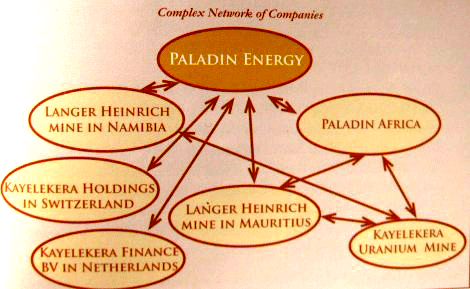
At the launch of the report, Dalitso Kubalasa and Collins Magalasi, the executive directors of MEJN and AFRODAD respectively, spoke briefly before AFRODAD’s Tafadzwa Chikumbu presented the research findings. This paved the way for a lively question and answer session with questions raised about whether or not parliament is ready to renegotiate the terms of the agreement with Paladin, what has happened to the man who lost his sight due to “kayelekera radiation” and if mining revenue in Malawi therefore “dirty money”.
This discussion was followed by the official launch of the report by the Second Deputy Speaker of Parliament Juliana Mphande who exclaimed that she was “appalled to note that incentives offered to Paladin have severe implication to Government revenue and require attention of parliament”. She outlined the areas requiring parliamentary investigation and debate…..
Below is a summary of the main findings: Continue reading
Is there any proper regulation of radioactivity in Malawi’s uranium mines?
 Comment on article Man loses sight due to Kayelekera radiation rshaba , 20 May 13, Does this mean that Paladin does not offer protective clothing including protective glasses to its employees? This is a no-brainer for someone dealing with radioactive substance business. I am shocked! It seems Paladin is taking advantage in people’s ignorance by not investing in appropriate protection especially for its front-line employees doing the “dirty” work. I could understand if it were a Chinese or Indian based company,
BUT Australian & Canadian based, my foot! Where are the government regulators? This should be a basic issue on their “checklist”: no protection and insurance cover for front-line staff, no business, simple and straight forward. The problem is that once someone has been exposed to radioactivity then whoever or whatever they come into contact with, will indirectly be exposed to radioactivity. Does the Government run regular radioactive on water, foods etc around the area? http://www.bnltimes.com/index.php/sunday-times/headlines/national/15108-man-loses-sight-due-to-kayelekera-radiation
Radiation exposure led to blindness in Kayelekera uranium mine worker
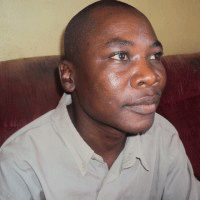
Man loses sight due to Kayelekera radiation, SUNDAY TIMES, 19 MAY 2013 KAREN MSISKA It is all doom and gloom for a Kayelekera Uranium Mine ex-employee who has lost his sight, his job and any means of eking out a leaving to fend for his extended family.
On July 7, 2010, Abraham Siliwonde started working as a labourer at [Australian] Paladin Africa’s Kayelekera Mine in Karonga bubbling with hope that he would use the remuneration to improve living standards in his household.
But less than three years later, the 31-year-old, along with his six children and five wards from his deceased relatives, is a mere dependent on a small banana business his wife conducts at Karonga town market.
He lost sight in July 2012 and medical examinations have linked his condition, uveitis or inflammation of the uvea – the part of the eye that contains the iris and ciliary body and choroid – to exposure to radioactive chemicals.
Uranium ore is known to be highly radioactive.”In February 2012, I was moved to spotting. This is where one stands and guides the dumpers on where to drop the uranium ore from the pit as it is set to get into the crusher, the first point in uranium processing,” said Siliwonde on Friday.
“I was guiding dumpers carrying high grade uranium ore; the other grades are low and medium. I could feel intense heat from lumps of uranium ore and the next day I would be passing yellowish urine and feeling malarial symptoms.” He said regardless of the gear one puts on while at spotting, they feel the heat being emitted by the uranium ore, stressing “the situation is worsened by supervisors who keep people there longer than more productive.”
He said he was drafted into driving dumpers in January 2012 but by July, he had lost his vision and instead of working, he was a continuous visitor to health facilities seeking to restore his vision. ”After a series of visits to the mine clinic at Kayelekera, I was referred to Karonga district hospital where I was further referred to Mzuzu central hospital on 30 November 2012,” he added.
“At Mzuzu Central Hospital, they asked whether I had an eye operation before because they said my eyes had cracks. I underwent strenuous tests but after telling them the environment I was working in, they identified exposure to radiation as the possible cause and referred me to Kamuzu Central Hospital.”
According to medical documents The Sunday Times has seen, Siliwonde’s reference to Kamuzu Central Hospital’s Lions Sight First Eye Hospital was “to determine if patient’s condition may indeed be due to uranium dust exposure.” His situation was not improving even with spectacles. A reference report dated April 15, 2013 indicates that Siliwonde’s acuity (sharpness of vision) for both eyes had slightly improved to 6/36 from 6/60.
A report signed by Dr J Msosa, Chief Ophthalmologist at Lions Sight First Eye hospital, confirms exposure to radiation as the possible cause.
Part of the report reads: “The vitritis (posterior uveitis) may indeed be due to exposure to radiation. It is well known that all radioactive substances can cause radiation retinopathy which appears like posterior uveitis………
“The only source of income is a small banana business my wife conducts. It’s a pity that the situation at Kayelekera is not closely monitored. A lot of people are suffering because they are exposed to radioactive dust blowing from the pit area since the surface is not kept wet as per agreement.”
However, Paladin officials pushed the bucket to one of their contractors. In response to an emailed questionnaire, Paladin Energy Limited’s General Manager – International Affairs, Greg Walker, said Siliwonde was employed by one of their contractors at the mine. He added that the issue has not been brought to Paladin’s attention……http://www.bnltimes.com/index.php/sunday-times/headlines/national/15108-man-loses-sight-due-to-kayelekera-radiation
Foreign uranium companies rip off impoverished Niger
the grievances expressed by representatives of local populations in the mining zones and pastoral peoples as well as government representatives. Concerns relate to radioactive pollution, water resource depletion, work-related diseases for mine workers, and the appropriation of land and water resources, including legally enshrined common property regimes and pastoral territories, without required compensation.
It is widely acknowledged among government staff that the Nigerien government is not able to properly implement its environmental legislation and monitor the uranium mining industry.
Niger: Development Cooperation Must Support the Environmental Governance of Uranium Mining THE ISN BLOG, Rasmus K Larsen 2 May 2013 Niger’s new development strategy, the Economic and Social Development Plan, is also intended to guide international development cooperation. Environmental governance of uranium mining, the country’s by far largest single economic activity, appears hitherto to have constituted a ‘blind spot’ for environmentally oriented development cooperation. It is now time to remove the blinkers and include support to strengthen environmental governance of the mining sector in new programmes to assist Niger in meeting its development challenges
Niger is well known in international media as one of the world’s poorest countries, struggling with chronic structural hunger and malnutrition. UNDP ranks Niger 186 out of 187 countries in the Human Development Index, and in 2011, five million people (33% of Niger’s population) were at ‘high risk’ to food insecurity.
What is less well known is that Niger also hosts the fourth largest uranium production in the world. Export values totalled over EUR 348 million in 2010, representing more than twice the total development assistance finance received during the same year. However, the state retains less than one fifth of the value of the uranium ore that is exported. The exploitation of the mineral wealth by international investors is expanding, with granted and requested mining concessions comprising close to 10% of the national territory…….
Attention to environmental impacts or risks associated with the mining sector goes seemingly without mention in the guiding documents of the principal development partners, including the EU, the World Bank, the UNDP, and the African Development Bank.
Severe environmental governance issues
This is in stark contrast to the grievances expressed by representatives of local populations in the mining zones and pastoral peoples as well as government representatives. Concerns relate to radioactive pollution, water resource depletion, work-related diseases for mine workers, and the appropriation of land and water resources, including legally enshrined common property regimes and pastoral territories, without required compensation.
It is widely acknowledged among government staff that the Nigerien government is not able to properly implement its environmental legislation and monitor the uranium mining industry. The Environmental Impact Assessment Bureau has only one person in place to verify all mining project applications in the country and, although legally required, not all verification missions are undertaken. The same applies to the National Centre for Radioprotection, which lacks the necessary capacity e.g. to undertake surprise inspections. The impacts and risks highlighted by civil society must be taken seriously. Due to deficiencies in the public administration, there are considerable constraints in enforcing and implementing the legislative and administrative framework – the very same framework, which development cooperation has helped to put in place……
Any mining activity will carry with it an environmental toll. The decision to sacrifice natural resources and human health, and ultimately lives of citizens, for economic gain will be the executive decision of the mandated political authority – in this case the Nigerien government……..
The Nigerien uranium mining sector is also intricately linked to the geopolitical energy security interests of some donor countries. The mines are operated by foreign companies (the French AREVA Group and Chinese investors). EU countries such as France, which has been involved in uranium mining since Niger gained independence, remain some of the largest buyers of the uranium ore – thus directly stimulating the mining activities and their detrimental impacts. This raises the question how donor countries could better supervise the behaviour of corporations incorporated within their own territories, thus implementing the recent UN guidelines for the supervision of multinational corporations (in “Protect, Respect and Remedy: a Framework for Business and Human Rights”). Indeed, when transparent and comprehensive problem identification is missing as the basis for donor support, then it opens for speculation that the ignorance of mining-related environmental issues and the crisis discourse on desertification and food insecurity are mobilized as instruments to divert attention from geopolitical interests in the country’s mineral wealth.
With its new development strategy, the Nigerien government emphasises the urgency of increasing mining fees and extraction tariffs to raise the state revenue and strengthen oversight with mining corporations. Importantly, specific attention is also directed at the need to improve the coordination between the mining and environmental sectors and their limited human and institutional capacities. This should be interpreted as an invitation from the Nigerien government to its development partners to proactively support enforcement of the existing environmental regulations of the mining sector……
Hopefully, the concerns expressed by people experiencing the impacts of the uranium mining industry first hand will be included in the list of priorities for the on-going negotiation between the Nigerien government and its development partners, among them the European Commission and Danida, on how to spend the EUR 3.7 billions. http://isnblog.ethz.ch/isn-security-watch/niger-development-cooperation-must-support-the-environmental-governance-of-uranium-mining
Safe and clean – solar-powered mosquito traps
Solar Power Helps In The Battle Against Malaria http://www.energymatters.com.au/index.php?main_page=news_article&article_id=3711 29 April 13, The Netherland’s Wageningen University is leading a project to install 4,000 solar powered mosquito traps on the Kenyan island of Rusinga. Continue reading
South Africa’s National Planning Commission warns against nuclear energy
 Energy: Nuclear warning sparks meltdown, Mail and Guardian (Africa) 26 APR 2013 00:00 – LIONEL FAULL A major policy clash over the biggest spending plan in SA’s history has erupted between the national planning commission and the energy department. The trillion-rand plan to build a fleet of new nuclear power stations is not only costlier than expected, but may be entirely unnecessary, according to the research initiated by the commission.
It also warned that the department’s commitment to a massive nuclear push could ratchet electricity prices up by as much as 12% compared with alternative scenarios Continue reading
Rotten nuclear colonialism – example, Paladin uranium in Malawi
Of the profits made, Paladin, for instance rakes in about 80% and has a paltry 1.5% for the Malawi nation
Paladin says in one breath it paid over U$5.6 million in taxes to the Malawi government, and in its other breath through its published annual report, indicates it paid about U$9.3 million in taxes.
the British silently stole our uranium and left when their projections did not add up to their whims, and now we have the Aussies who are refusing to deal fairly.
Killing Malawians through the rotten extractives deals: The case of Paladin’s uranium mining http://www.nyasatimes.com/2013/04/24/killing-malawians-through-the-rotten-extractives-deals-the-case-of-paladins-uranium-mining/ Patricia Masinga, April 24, 2013 Malawi has in the few weeks been engaged by a plethora of stakeholders discussing strategies to revive, or more on the ground, reclaim the benefits that Malawians are been milked of by the so-called extractive industry multi-national corporations.
They call themselves investors, and government believes that the Malawi Development Goals (MDGs – who cares if it’s the second phase) will be boosted, particularly that mining alone through Kayerekera of Paladin Energy Limited group of companies (trading as Paladin (Africa) Ltd in Malawi?) could provide a large economic base.
But that is all a fat lie. Paladin and many other foreign multinational mining countries are least interested to contributing to the Malawi economic growth. They are here to milk the country – exploiting all that it has rich in minerals and dump us when the time is right even poorer.
Imagine, to screw Malawians of their rightful economic gains, the company, incorporated in Australia first listed on the Australian Stock Exchange (ASX) on March 29, 1994 under code ‘PDN’, and quickly changed its name from Paladin Resources NL to Paladin Resources Ltd in 2000 and listed under the Toronto Stock Exchnage (TSX) in Canada April 29, 2005, and again changed its name to Paladin Energy Ltd in November 2007 and listed on the Namibian Stock Exchnage on February 2008.
By such trends, one is compeled to question the motive, Continue reading
Nuclear energy now looks like a dud for South Africa
 Study pours cold water on South Africa’s nuclear build plan BUSNESS DAY LIVE, BY CAROL PATON, 19 APRIL 2013, NEW National Planning Commission (NPC) modelling of South Africa’s energy demands says nuclear power should be delayed by years, and an immediate commissioning of new gas-generation capacity should take place to avoid rolling blackouts in the near future.
The remodelling commissioned by the NPC signals the start in earnest of what will be a highly contested policy debate: whether South Africa needs and can afford nuclear power or not, and by when.
The implication of the modelling is that no new nuclear power would be required before at least 2029, but more likely as far away as 2040 if demand grows as expected. Continue reading
Australian uranium company Paladin will now have to give Malawi a fair deal
Malawi to renogotiate with Paladin on the Kayerekera uranium deal http://www.malawitoday.com/news/128733-malawi-renogotiate-paladin-kayerekera-uranium-deal 14 April 2013 ZODIAK RADIO Malawi has finally succumbed to pressure from activists to start re-negotiating with Paladin Africa Limited on the Kayerekera Uranium deal in a last ditch attempt to create a win-win situation.
First on the proposal is to remove the confidentiality clause on the agreement such that it be made public before rectifying other strings within the deal.
Minister of Mines Mr John Bande confirmed that discussions are underway with Paladin Africa Limited on the matter.
“We are working out on modalities to discuss in public the agreement between Kayerekera and the Malawi Government,” said Bande.
Bande blamed the previous regime for putting a confidentiality clause on the license. “Now government is working to remove that clause so that the deal can be discussed in public,” said Bande.
Critics have continuously called on government to re-negotiate the license, saying Malawi is getting a raw deal from it.
Issued in 2009 the Kayerekera uranium mine license is for a period of 15 years and is subject to renewal.
The license among others also allowed the miner to open an off-shore account.
According to the deal, Malawi was meant to be collecting a meager US$ 100 million in taxes annually from the deal.
USA military in Niger to establish control over uranium resources
Obama’s Military Presence in Niger: US Control over Uranium under the Disguise of Counter-terrorism Global Research, By Wayne Madsen, 3 Mar 13, President Obama’s military incursion into Niger, ostensibly to establish a drone base to counter «Al Qaeda» and other Islamist guerrilla activity in neighboring Mali, has little to do with counter-insurgency and everything to do with establishing U.S. control over Niger’s uranium and other natural resources output and suppressing its native Tuareg population from seeking autonomy with their kin in northern Mali and Algeria. Continue reading
In dismal uranium market, Rio Tinto cuts back, slashes jobs
 Namibia’s Roessing uranium mine to slash jobs Global Post, 1 Mar 13, The Roessing uranium mine in Namibia, a unit of British mining giant Rio Tinto, said Friday it plans to cut 17 percent of its workforce due to slowing demand for nuclear fuel…. As with many other uranium producers, Roessing is buckling under low metal prices and reduced demand, the company’s managing director Chris Salisbury told reporters.
“Since the Japanese tsunami in 2011, uranium demand has remained depressed and the uranium price has fallen by more than 36 percent,” he said.
Japan shut down its nuclear power plants after the tsunami destroyed the Fukushima nuclear plant, and a number of other countries including Germany have also signalled they plan to reduce or phase out their facilities.
“With the utility sector in Japan essentially shutdown, there is little prospect of a turnaround in the near term,” he added.
At the same time electricity and water costs have gone up…. Roessing Uranium Limited is owned 68.6 percent by British mining giant Rio Tinto and is one of two operating uranium mines in Namibia. .http://www.globalpost.com/dispatch/news/afp/130301/namibia-s-roessing-uranium-mine-slash-jobs
Big obstacles to South Africa’s ambitious nuclear power plan
No clear path to ambitious nuclear goal. Mail & Guardian, Africa 01 MAR 2013 LYNLEY DONNELLY,,,,,,,Eskom, which the state named as owner and operator for the proposed nuclear programme, is being hampered by labour strife at the construction site of the new Medupi coal-fired power station. Strikes are threatening the delivery time of Medupi, which was expected to bring its first unit online later this year.
Guenon also expressed misgivings about the government’s ambitious localisation plans for the nuclear programme. It would be very difficult to meet high localisation levels, if government opted to build one nuclear plant given the stringent certification and regulatory requirements vendors, suppliers and other companies involved in the nuclear industry were required to meet; as well as the need for qualified labour, particularly technicians and artisans……
It is estimated that the procurement and construction of the six new power stations envisaged will cost between R400-billion and R1-trillion. …..
the very high capital costs of nuclear procurement is a concern for policymakers. The national planning commission has called for the nuclear programme to be reviewed to ensure its financial feasibility……
key to the success of a nuclear programme, particularly one that ensured successful localisation, was the issue of affordability. The minister of finance would not sign off on something that the country’s balance sheet could not sustain,..http://mg.co.za/article/2013-03-01-00-no-clear-path-to-ambitious-nuclear-goal
Military pressure for USA to increase drones, spying etc, in Africa
US general urges Pentagon to boost its African spying missions by 15-fold, Press Tv, 15 Feb 13, A US general nominated to lead American military’s Africa Command has called for a 15-fold surge in US spying missions in Africa amid reports of Pentagon’s plans to further expand its growing military presence in the continent.Army General David Rodriguez estimated in a written statement submitted to the US Senate Arms Services Committee during his confirmation hearing on Thursday that the American military needs to boost its “intelligence-gathering and spying missions in Africa by nearly 15-fold,” The Washington Post reports Friday. ….”necessary to protect American interests and assist our close allies and partners,” said the four-star general ..
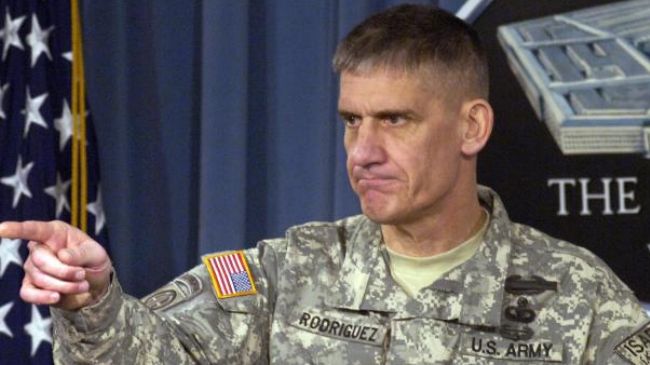
… Rodrigues further emphasized during the hearing that Africa Command requires additional drones, other spying aircraft and more satellite imagery…. The development comes as the American military has intervened over the past two years in internal conflicts in African nations of Somalia, Libya and Mali, as well as central Africa.
This is while the US Air Force is building its fourth assassination and spying drone base in the poor African state of Niger as American Navy warships are expanding their missions along the coastlines of East and West Africa, according to the report….. there is a growing pressure to add even more bases in North and West Africa as the US military is set to build an assassination drone base in the West African country of Niger, which borders Mali, Libya and Nigeria,
1 This Month

26 September – International Day for the Total Elimination of Nuclear Weapons


PLEASE OPPOSE HR 8255 AND S.3639 – bills would accelerate satellite deployment, with no environmental review or safeguards – https://ncstd5li.quorum.us/campaign/169331/
To see nuclear-related stories in greater depth and intensity – go to https://nuclearinformation.wordpress.com
-
Archives
- September 2026 (206)
- August 2026 (330)
- July 2026 (355)
- June 2026 (287)
- May 2026 (306)
- April 2026 (356)
- March 2026 (251)
- February 2026 (267)
- January 2026 (308)
- December 2025 (358)
- November 2025 (359)
- October 2025 (375)
-
Categories
- 1
- 1 NUCLEAR ISSUES
- business and costs
- climate change
- culture and arts
- ENERGY
- environment
- health
- history
- indigenous issues
- Legal
- marketing of nuclear
- media
- opposition to nuclear
- PERSONAL STORIES
- politics
- politics international
- Religion and ethics
- safety
- secrets,lies and civil liberties
- spinbuster
- technology
- Uranium
- wastes
- weapons and war
- Women
- 2 WORLD
- ACTION
- AFRICA
- Atrocities
- AUSTRALIA
- Christina's notes
- Christina's themes
- culture and arts
- Events
- Fuk 2022
- Fuk 2023
- Fukushima 2017
- Fukushima 2018
- fukushima 2019
- Fukushima 2020
- Fukushima 2021
- general
- global warming
- Humour (God we need it)
- Nuclear
- RARE EARTHS
- Reference
- resources – print
- Resources -audiovicual
- Weekly Newsletter
- World
- World Nuclear
- YouTube
-
RSS
Entries RSS
Comments RSS
 nuclear-news