Far from being the solution to climate change, nuclear power will be a victim of global heating
Rae Street: Given the discussion at TUC Congress of a new generation of
nuclear plants, it is worth looking at the case against nuclear energy.
First, the question of climate change, where the proponents of nuclear
power say nuclear energy is “vital.”
According to Andrew Blowers, emeritus professor of social sciences at the Open University: “Far from
being a solution to the problem of climate change, new nuclear power
stations like Sizewell C and Bradwell B on the fragile and vulnerable east
coast, are likely to become victims of the inevitable, imminent and
irreversible consequences of global warming.” He continued:
“Put simply, there is little justification for these huge structures in terms of
need. But, regardless of need, given the threat to the integrity of the
sites and the risks to present and future generations and environments, the
proposals should be scrapped forthwith.”
Morning Star 23rd Sept 2021
https://www.morningstaronline.co.uk/article/f/the-fallacy-of-trusting-in-nuclear-power
‘Humanity remains unacceptably close to nuclear annihilation, says UN chief on International Day

‘Humanity remains unacceptably close to nuclear annihilation, says UN chief on International Day https://news.un.org/en/story/2021/09/1101242 26 September 2021Peace and Security
“Now is the time to eliminate nuclear weapons from our world , and usher in a new era of dialogue, trust and peace”, declared UN Secretary-General António Guterres on Sunday, marking the International Day for the Total Elimination of Nuclear Weapons.
Addressing the threat of nuclear weapons, said Mr, Guterres, has been central to the work of the United Nations since its inception; the first General Assembly resolution in 1946 sought “the elimination from national armaments of atomic weapons and of all other major weapons adaptable to mass destruction.”
The UN chief pointed out that, although the total number of nuclear weapons has been decreasing for decades, some 14,000 are stockpiled around the world, which is facing the highest level of nuclear risk in almost four decades: “States are qualitatively improving their arsenals, and we are seeing worrying signs of a new arms race.” Humanity, continued the UN chief, remains unacceptably close to nuclear annihilation.
Comprehensive ban in ‘state of limbo’
On Thursday, the UN chief called for all countries holding nuclear technology to sign the Comprehensive Nuclear-Test-Ban Treaty (CTBT), which was adopted in 1996, and has been signed by 185 countries.
However, for the CTBT to enter into force, it must be signed and ratified by 44 specific nuclear technology holder countries, eight of which have yet to ratify the Treaty: China, Egypt, India, Iran, Israel, the Democratic People’s Republic of Korea, Pakistan and the United States.
“We have remained in this state of limbo for too long,” he said.
Signs of hope
However, Mr. Guterres said that he sees the decision by Russia and the United States to extend the New START (Strategic Arms Reduction Treaty) and engage in dialogue, as a sign of hope. He added that the Treaty on the Prohibition of Nuclear Weapons, which entered into force in January, also constitutes a welcome step.
The responsibility to build on these developments, said the Secretary-General, falls on Member States. He described the Review Conference of the Parties to the Treaty on the Non-Proliferation of Nuclear Weapons, scheduled to take place in January 2022, as a window of opportunity for all countries to take practical steps to comprehensiely prevent the use of, and eliminate, nuclear weapons.
“Now is the time to lift this cloud for good, eliminate nuclear weapons from our world”, exhorted Mr. Guterres, “and usher in a new era of dialogue, trust and peace for all people”.
Will Fukushima’s Water Dump Set a Risky Precedent?
Will Fukushima’s Water Dump Set a Risky Precedent? IEEE Spectrum
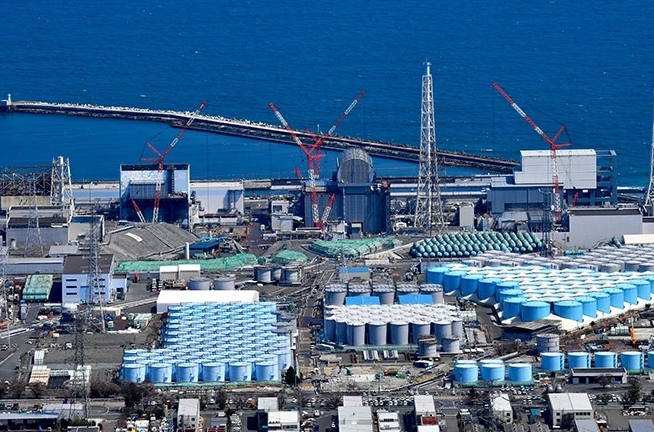
Questions raised over new norms the disaster’s radioactive wastewater cleanup efforts may foster, RAHUL RAO 24 SEP 2021 Since the Japanese earthquake and tsunami in March 2011, groundwater has been trickling through the damaged facilities at the Fukushima Daiichi nuclear power plant, filtering through the melted cores and fuel rods and becoming irradiated with a whole medley of radioisotopes. Japanese authorities have been pumping that water into a vast array of tanks on-site: currently over a thousand tanks, and adding around one new tank per week.
Now, Japanese authorities are preparing to release that water into the Pacific Ocean. Even though they’re treating and diluting the water first, the plan is meeting with vocal protests. From that opposition and from scientists’ critiques of the process, the ongoing events at Fukushima leave an unprecedented example that other nuclear power facilities can watch and learn from.
The release is slated to start in 2023, and potentially last for decades. This month, observers from the International Atomic Energy Agency have arrived in the country to inspect the process. And efforts are also underway to build an undersea tunnel that will discharge the water a kilometer away from the shore.
Before they do that, they’ll treat the water to cleanse it of radioactive contaminants. According to the authorities’ account of the situation, there’s one major contaminant that their system cannot cleanse: tritium.
It’s actually normal for nuclear power plants to release tritium into the air and water in their normal operations. In fact, pre-disaster, Fukushima Daiichi held boiling-water reactors, the lowest-tritium type of nuclear reactors. The Japanese government’s solution is to dilute the tritium-contaminated water down to comparable levels. That’s part of the reason the discharge will likely last several decades.
“While one can argue whether such release limits are appropriate in general for normally operating facilities, the planned release, if carried out correctly, does not appear to be outside of the norm,” says Edwin Lyman, director of nuclear power safety at the Union of Concerned Scientists.
Even so, the plan has—perhaps expectedly—encountered some rather vocal opposition. Some of the loudest cries have come from within Japan, particularly from the fishing industry. Radiation levels in seafood from that coast are well within safety limits, but fishing cooperatives are concerned the plan is (once again) putting their reputations at stake………….
can the events at Fukushima offer other energy facilities around the world any lessons at all?
For one, they’re a good show of the need for emergency planning. “Every nuclear plant should be required to analyze the potential for such long-term consequences,” says Lyman. “New nuclear plants, if built, should incorporate such evaluations into their siting decisions.”
But there’s other things experts say that facilities could learn. For example, something that hasn’t always been present in the Fukushima matter—working against it—has been transparency.
Authorities at the plant haven’t fully addressed the matter of non-tritium contaminants, according to Ken Buesseler, a marine radiochemist at Woods Hole Oceanographic Institution who has studied radioactivity in the ocean off Fukushima. Some contaminants—like caesium-137 and strontium-90—were present in the initial disaster in 2011. Others—like cobalt-60 and cerium-144—entered the water later.
It isn’t something the authorities have completely ignored. “Japan plans to run the water again through the decontamination process before release, and the dilution will further reduce the concentrations of the remaining isotopes,” says Lyman.
But Buesseler isn’t convinced that it will be enough. “Theoretically, it’s possible to improve the situation a lot,” he says. “In practice, they haven’t done that.” Japanese authorities insist they can do so, but their ability, he says, hasn’t been independently verified and peer-reviewed……….
“I’d hate to see every country that has radioactive waste start dumping waste into the ocean,” he says. “It’s a transboundary issue, in a way. It’s something bigger than Japan, and something different from regular operation. I think they need to be at least open about that, getting international approval.”
Here, Lyman agrees. “This situation is unique and the decision to release the water into the sea should not set a precedent for any other project.”
But even taking all of that into account, some believe that, if anything, this is an example of a time when there simply is no choice but to take drastic action.
“I believe that this action is necessary to avoid potentially worse consequences,” says Lyman. https://spectrum.ieee.org/fukushima-wastewater-cleanup-questions
Nuclear submarine for Japan? Kono says yes, Kishida says no
Nuclear submarine for Japan? Kono says yes, Kishida says no Nikkei Asia Poll leader believes capability is ‘extremely important’ for country. YUSUKE TAKEUCHI, Nikkei staff writer, September 26, 2021
TOKYO — Following a recent deal by the U.S. and the U.K. to offer Australia classified technology to build nuclear-powered submarines, should fellow Quad member Japan also seek such a capability? The four candidates running for the Liberal Democratic Party presidential race to succeed Prime Minister Yoshihide Suga were asked the question Sunday on Fuji TV.
Poll leader Taro Kono, minister for administrative reform and also in charge of vaccine distribution, gave a thumbs-up. “As a capability, it is very important for Japan to have nuclear submarines,” he said……..
Sanae Takaichi, the former internal affairs minister, also looked favorably upon the idea. “If we think of the worst-case risks in the international environment ahead, I do believe we could have [submarines] that can travel a little longer,” she said, referring to the advantage of nuclear propulsion in that they can stay submerged longer without refueling.
Japan’s Atomic Energy Basic Law stipulates that the use of nuclear power will be limited to peaceful purposes. Takaichi said there was “a need to sort things out” but added she did not believe nuclear-powered submarines to be unconstitutional.
Former LDP policy chief Fumio Kishida, meanwhile, was less receptive to the idea. “When I think about Japan’s national security arrangements, to what extent do we need it?” he asked.
Nuclear-powered submarines are faster and can travel longer compared to the diesel-electric submarines that Japan currently has. But Kishida was alluding to the fact that the Self-Defense Forces’ operations are primarily in areas close to Japan.
To maintain stealth, it will require long hours of work,” he said. “We have to prioritize improving working conditions [of sailors] and secure the personnel.”…….
Seiko Noda, the LDP’s executive acting secretary-general, said: “I have no intention to hold such a capability. I want to make clear that we are a nation with three non-nuclear principles,” she said, pointing to Japan’s long-held position of neither possessing nor manufacturing nuclear weapons, nor permitting their introduction into Japanese territory.
“This is not a situation where we can immediately buy and start to use the submarines,” she said. “We must properly establish a national consensus.” ……. https://asia.nikkei.com/Politics/Nuclear-submarine-for-Japan-Kono-says-yes-Kishida-says-no
Nuclear power for UK – slow, dangerous, exorbitantly expensive and useless to counter climate change.
An anti-nuclear group has blasted the UK Government for having talks on building another large-scale multi-billion pound nuclear power plant in Wales. Dylan Morgan, Co-ordinator for PAWB, has reacted furiously to the discussions with US reactor manufacturer Westinghouse to build a new
facility on Anglesey.
The UK Government say that the move is part of an effort to reduce the UK’s carbon emissions to net zero by 2050, but according to Morgan it isn’t an effective way to “counter climate change”. He argues that nuclear power is “slow, dangerous and extortionately expensive”.
According to the UK Government, a new nuclear power plant at the decommissioned Wylfa site could become operational in the mid-2030s and generate power for six million homes. Dylan Morgan said:
“We have an immediate crisis now. Building huge reactors at a nuclear power station take at least 15 years. “For example, EdF are involved in building their EPR at Olkiluoto in Finland. Comstruction started in 2005 with the boast it would be completed by 2009. “It still hasn’t been completed in 2021. Nuclear power is slow, dangerous and extortionately expensive. It will do nothing to address the current energy crisis, neither will it be effective to counter climate change.
Nation Cymru 24th Sept 2021
UK should think twice before ousting Chinese company from its nuclear project
 |
UK should think twice before ousting Chinese company from its nuclear project By Global Times Published: Sep 26, 2021 The UK government is reportedly closing in on a deal that could kick China’s nuclear power giant General Nuclear Power Group (CGN) out of the £20 billion ($27 billion) Sizewell C nuclear power project on so-called security grounds.
London may announce a decision ahead of next month’s spending review and the UN climate change conference in Glasgow in November, but it remains unclear how the Chinese company will be frozen out of Sizewell C, according to UK media outlet Daily Mail.
Whether related reports are complete and accurately reflect the position of the UK government is not known yet. There was similar speculation by the UK media in July, but, if the alleged decision is confirmed by Johnson’s government, it will have adverse impact on the UK. For starters, it will leave the UK a huge financial gap which has to be plugged by pension funds. CGN has a 20 percent stake in the Sizewell C project and an option to retain that share of the nuclear project once it is built. If CGN is forced to pull out from the project, the UK side needs to figure out options to fill up the multi-billion pound funding hole. The Daily Mail reported that the Treasury Department is examining plans to use pension funds to plug the gap for Sizewell C.
Second, it risks further ratcheting up geopolitical tensions, which are already running high after London’s decision to join the AUKUS pact with the US and Australia. ………
Third, it will delay construction of the UK nuclear power stations, ………. British companies will face Chinese company’s demand for economic compensation. …………… https://www.globaltimes.cn/page/202109/1235101.shtml
Bitcoin miners strike deals with nuclear industry [on the ”clean energy” lie]
Bitcoin Miners Eye Nuclear Power as Environmental Criticism Mounts
Some cryptocurrency miners are striking deals with operators of struggling nuclear plants, which are carbon-free and have excess power capacity to spare WSJ, By Jennifer Hiller Sept. 26, 2021 Bitcoin miners, under fire for their sizable environmental footprint, are forging partnerships with owners of struggling nuclear-power plants with electricity to spare.
The matchups have the potential to solve key issues facing each industry, executives and analysts say: Electricity-hungry bitcoin miners want stable and carbon-free [ Ed. that’s a lie] power, while nuclear plants facing competition from cheaper power sources need new customers……… (subscribers only) https://www.wsj.com/articles/bitcoin-miners-eye-nuclear-power-as-environmental-criticism-mounts-11632654002
25 September Protest against UK university’s Nuclear Futures Institute, as nuclear suffers a new setback

DANGER – NUCLEAR COLLEGE! News / By Stop Wylfa 23 Sep 21,
Members and supporters will meet at Bangor Town Clock on the High Street at 1.45 Saturday afternoon, September 25 before moving ahead to Pontio to hold an artistic and symbolic protest against Bangor University’s Nuclear Futures Institute.
Nuclear power’s crebibility has suffered another setback this week from the direction of the first chairman of the Climate Change Committee, Lord Turner. A prominent businessman and ex-chairman of the Financial Services Authority and the Pensions Commission, Lord Turner said he has changed his mind about nuclear power, saying it is no longer needed.
Today, Thursday Serptember 23, the Ser Cymru professor for Nuclear Policy and Regulation at Bangor University, Laurence Williams OBE will present evidence to the Welsh Affairs Committee at Westminster regarding the Wylfa site alongside a number of other individuals who are members of the “nuclear village”. This is a totally onesided and undemocratic session which does not consider any anti-nuclear views. The Committee should convene another session to include campaigning movements such as PAWB, CND Cymru and Greenpeace. it would also be a simple matter to invite Lord Turner to explain his new position on nuclear power.
LDP candidates debate on nuke power must be based on realities
September 24, 2021
Japan’s nuclear power policy has emerged as one of the main issues for the ruling Liberal Democratic Party’s leadership race.
The four candidates for the party presidential election on Sept. 29 should face up to the lessons from the disaster that unfolded at Tokyo Electric Power Co.’s Fukushima No. 1 nuclear power plant a decade ago and offer specific policy proposals for ensuring in-depth debate on key questions.
Taro Kono, the minister of administrative reform who also served as foreign and defense minister in the past, is the only one among the contenders who has clearly argued for phasing out nuclear power generation.
Kono has stated that Japan should pull the plug on its nuclear fuel recycling program “as soon as possible” while promising to allow offline reactors to be restarted when they are officially endorsed as safe, for the time being.
The other three politicians seeking to succeed outgoing Prime Minister Yoshihide Suga have committed themselves to maintaining the current policy of keeping nuclear reactors running. During a recent debate, they voiced skepticism about Kono’s vow to end the fuel recycling program.
Fumio Kishida, a former foreign minister and LDP policy chief, questioned the consistency between Kono’s position on fuel recycling and his policy of allowing reactors to be brought on stream.
Seiko Noda, executive acting secretary-general of the LDP, ruled out any energy policy change that could cause a disruption in the stable supply of power. Sanae Takaichi, a former communications minister, stressed she would promote the development of small reactors and nuclear fusion reactor technology.
The nuclear fuel recycling process involves recovering plutonium from spent nuclear fuel for recycling back into new fuel.
But Japan’s original plan to reprocess spent nuclear fuel to obtain start-up plutonium for a new generation of plutonium “fast breeder” reactors fell through when its Monju prototype fast breeder reactor, which was supposed to be the core technology for the program, was shut down after a sodium leak and fire.
The government then shifted to a strategy of converting spent plutonium, formed in nuclear reactors as a by-product of burning uranium fuel, and uranium into a “mixed oxide” (MOX) that can be reused in existing reactors to produce more electricity.
But this approach has also hit a snag as the number of operating reactors has declined sharply since the Fukushima meltdowns.
Asahi Shimbun editorials have argued that the government should concede that the fuel recycling program is no longer viable and declare an end to it. To be sure, withdrawing from the program would mean spent nuclear fuel must be disposed of as waste. But Japan would only make the world uneasy if it keeps a massive stockpile of weapons-usable plutonium without any plan to use it.
Arguments concerning nuclear policy issues in general, not just fuel recycling, tend to overlook reality. The most important fact about the catastrophic accident at the Fukushima plant is that it caused tremendous damage to society.
Not much is known about the current conditions of the reactors whose cores melted down during the accident. There is no predicting when and how the process of decommissioning the plant will come to an end.
The LDP presidential candidates are divided over whether to build new nuclear plants or expand current ones. But it is obvious that winning the support of the public in general and the local communities involved for such plans would be next to impossible.
It is also unclear when the small reactor and the nuclear fusion reactor that are under development will enter commercial use.
A new estimate by the industry ministry on the future costs of power generation published in August predicts that solar power will eclipse nuclear energy in terms of costs as of 2030. It is hardly surprising that the government’s draft new Basic Energy Plan, unveiled in July, says promoting renewable energy sources should be the top energy policy priority.
Since the Fukushima disaster, the government has been seeking to restart offline reactors one by one while leaving the decisions up to the Nuclear Regulation Authority. But the government should not shy away from a sweeping review of its broken nuclear energy policy.
There are many sticky questions the LDP presidential hopefuls need to address. How would they try to change the country’s current energy mix in what ways and in what kind of time frames while maintaining a steady power supply? What would they do with the growing amount of spent nuclear fuel?
The LDP election requires them to clarify their approaches to tackling these tough challenges.
The Record-Breaking Failures and Costs of Nuclear Power
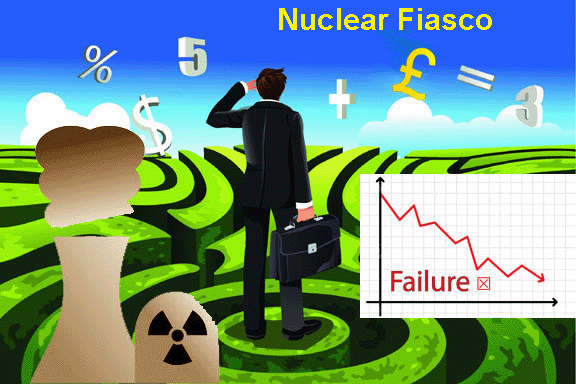
Let’s look at the track record as a whole. According to Wikipedia’s article, List of cancelled nuclear reactors in the United States: “Of the 253 nuclear power reactors originally ordered in the United States from 1953 to 2008, 48 percent were cancelled, 11 percent were prematurely shut down, 14 percent experienced at least a one-year-or-more outage, and 27 percent are operating without having a year-plus outage. Thus, only about one fourth of those ordered, or about half of those completed, are still operating and have proved relatively reliable.”
Wikipedia’s stunning list on the same page details 157 reactors that were either canceled before or during construction.
The Record-Breaking Failures of Nuclear Power, https://www.counterpunch.org/2021/09/24/the-record-breaking-failures-of-nuclear-power/ BY LINDA GUNTER SEPTEMBER 24, 2021The Tennessee Valley Authority could likely rightfully claim a place in the Guinness Book of World Records, but it’s not an achievement for which the federally-owned electric utility corporation would welcome notoriety.
After taking a whopping 42 years to build and finally bring on line its Watts Bar Unit 2 nuclear power reactor in Tennessee, TVA just broke its own record for longest nuclear plant construction time. However, this time, the company failed to deliver a completed nuclear plant.
Watts Bar 2 achieved criticality in May 2016, then promptly came off line due to a transformer fire three months later. It finally achieved full operational status on October 19, 2016, making it the first United States reactor to enter commercial operation since 1996.
Now, almost five years later, TVA has announced it has abandoned its unfinished two-reactor Bellefonte nuclear plant in Alabama, a breathtaking 47 years after construction began.
TVA was apparently happy to get out of the nuclear construction business, because, as the Chattanooga Times Free Press reported, the company “did not see the need for such a large and expensive capacity generation source.” No kidding!
Ironically, this is precisely the argument used to advance renewables, in an energy environment that cannot and will no longer support inflexible, large, thermo-electric generators that are completely impractical under the coming smart grids as well as climate change-induced conditions.
Accordingly, TVA was more than happy to accept overtures from a purchaser for Bellefonte — the Haney real estate company— whose director, Frank Haney, gained his own notoriety by lavishing $1 million on former President Trump and courting Trump’s lawyer, Michael Cohen, possibly, suggested media reports, to curry regulatory favors for his new nuclear toy.
But when TVA announced last month that it had withdrawn its construction permit for Bellefonte, Haney got his down payment back — to the tune of $22.9 million plus interest. TVA had itself spent at least $5.8 billion on Bellefonte over the 47 years, which included long stoppages, before finally pulling the plug.
This kind of colossal waste of time and money on failed nuclear power projects is, of course, the more typical story than the myths spun in the press about the need for “low carbon” nuclear energy, a misleading representation used to argue for nuclear power’s inclusion in climate change mitigation.
In reality, the story of nuclear power development in the US over the last 50 years is beyond pitiful and would not pass muster under any “normal” business plan. How the nuclear industry gets away with it remains baffling.
As Beyond Nuclear’s Paul Gunter told the Chattanooga Times Free Press, “Bellefonte is just the most recent failure for this industry,” noting that “of the 30 reactors the industry planned to build 15 years ago with the so-called nuclear renaissance, only two are still being built. (Those two, at Plant Vogtle in Georgia, are years behind schedule with a budget that has more than doubled to $27 billion.)
As Gunter noted in the same article, “TVA has had major problems meeting projected costs and timetables for new nuclear plants, as the entire industry has had over the past 50 years. The inability to meet any budgets for these plants is what has repeatedly been the demise of nuclear energy.
“Nuclear energy is the most expensive way ever conceived to boil water and Bellefonte just shows once again how unreliable this technology really is in terms of projecting what it will cost and how long it will take to build these power plants,” Gunter told the newspaper.
That was certainly true for Westinghouse Electric Company and SCANA, still embroiled in the ever unraveling scandal around the failure to complete two new reactors at the V.C. Summer nuclear power plant in South Carolina. As executives of the bankrupt Westinghouse and SCANA, who retained them, continue to face criminal charges, Westinghouse has already had to shell out $2.168 billion in settlement payments related to the Summer debacle.
In August, news reports said Westinghouse would also be required to reimburse low-income ratepayers to the tune of $21.25 million. That’s because the new reactors got funded in part through electricity rates, even though they never delivered a single watt of electricity. The cost of the project itself eventually ballooned to more than $9 billion before collapsing.
Let’s look at the track record as a whole. According to Wikipedia’s article, List of cancelled nuclear reactors in the United States: “Of the 253 nuclear power reactors originally ordered in the United States from 1953 to 2008, 48 percent were cancelled, 11 percent were prematurely shut down, 14 percent experienced at least a one-year-or-more outage, and 27 percent are operating without having a year-plus outage. Thus, only about one fourth of those ordered, or about half of those completed, are still operating and have proved relatively reliable.”
Wikipedia’s stunning list on the same page details 157 reactors that were either canceled before or during construction.
The massive costs, of course, send most corporations running scared, the Haney family notwithstanding. Even when meaty subsidies have been dangled — as they were for the Calvert Cliffs 3 EPR project in Maryland — utility companies balk and bail. In the case of Calvert Cliffs, Constellation Energy was the US partner with the French government utility EDF. But even when offered a $7.5 billion loan guarantee by the Obama administration, Constellation viewed those terms as “too expensive and burdensome” and quit.
This left EDF, a foreign company, as sole owner, a violation of the Atomic Energy Act. The project duly collapsed, one of many referred to earlier by Paul Gunter as the fantasy of a nuclear renaissance that first sputtered, then went out.
President Obama, of course, was no friend to the anti-nuclear movement. So eager was he to boost new nuclear construction in the US that he called for the inclusion of $55 billion for nuclear loan guarantees in his $3.8 trillion 2011 budget. In his State of the Union address that year, Obama talked of “building a new generation of safe, clean nuclear power plants in this country.” Kool-Aid thoroughly drunk, then.
All of this should send an obvious message to the deaf ears of Ben Cardin (D-MD), Sheldon Whitehouse (D-RI) and Cory Booker (D-NJ), the leading pro-nuclear evangelists in the U.S. Senate. Cardin’s power production credit bill actually has the gall to describe nuclear power as “zero-emission”, a lie that even Cardin’s own staffer was forced to concede in a recent meeting attended by Paul Gunter who called him out on it.
Not that any of this will stop the bill going forward and almost certainly passing. Like the three not-so-wise monkeys, those Senators and their colleagues will acknowledge no negatives about nuclear power, even as the industry’s appalling litany of financial fiascoes and failures stares them in the face. They will forge right ahead, thus dooming to its own failure the very progress on climate change they claim to champion.
Nuclear lobby stooge Jennifer Granholm wants ”unusual partnerships” in order to save the nuclear industry
Top U.S. Energy Official Sees ‘Unusual Partnerships’ for Nuclear, From reactors at coal plants to hydrogen production and potential cross-border collaboration, Secretary of Energy Jennifer Granholm is seeking new roles for U.S. nuclear power.
Bloomberg Green, By Jonathan Tirone, 21 September 2021, The Biden administration’s top energy official said the nuclear industry should broaden its business case beyond power markets in order to ensure its place in a carbon-free economy.
U.S. nuclear energy has come under relentless pressure in recent years from cheap natural gas, solar and wind power. More reactors are being taken offline permanently than built, risking the long-term future of the country’s biggest clean energy source. resident Joe Biden has pledged financial support to keep aging atomic plants online. Secretary of Energy Jennifer Granholm said “building back better” for nuclear might mean more than just generating electricity as it competes with emerging renewable energy and storage technologies.

“We need to pursue a silver buckshot rather than a silver bullet approach,” Granholm said in an interview with Bloomberg News in Vienna. The former governor of Michigan said some “unusual partnerships” between nations and industries might be needed for U.S. nuclear operators to tap the $23 trillion global clean [nuclear is NOT clean] energy market over the next decade. Granholm urged more cross-border collaboration in developing a new generation of small modular reactors, as well as using nuclear plants for the production of emissions-free hydrogen…….
Granholm spoke at a meeting of senior officials at the International Atomic Energy Agency, where Chinese and Russian envoys called for more research-and-development collaboration to accelerate the deployment of new generations of miniature reactors.
The Department of Energy curtailed some joint projects with China during the Trump administration, including work on a test reactor backed by billionaire Bill Gates. Granholm suggested the urgency of the climate crisis might require re-evaluating prohibitions on some technology transfers and cooperation. She did not signal any new near-term partnerships with Russia or China. The issue could be revisited during two weeks of international climate talks — known as COP26 — beginning Oct. 31 in Glasgow, Scotland…..

Granholm reserved special praise for the Gates-led company, TerraPower LLC, which in June announced it would build its first test plant at a shuttered coal site in Wyoming rather than in China. …. https://www.bloomberg.com/news/articles/2021-09-21/top-u-s-energy-official-sees-unusual-partnerships-for-nuclear
Pentagon forces out Leonor Tomero, a top official with moderate views (they can’t have that!)
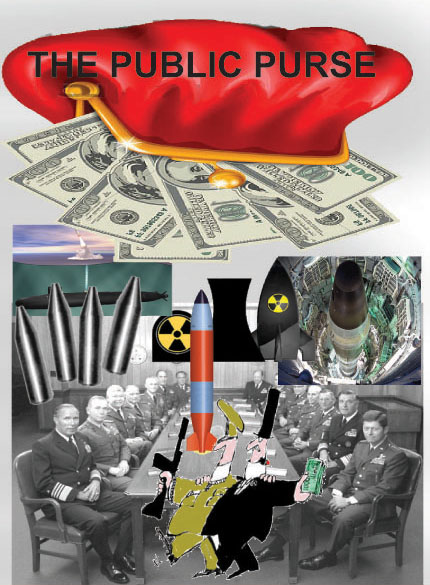
Pentagon hawks circle Biden’s nuclear policy, Politico, By ALEXANDER WARD 09/23/2021 With help from Daniel Lippman The forced dismissal of a top Pentagon nuclear official could mean curtains for President JOE BIDEN’s nuclear agenda.
Biden installed national security officials intent on negotiating new arms control treaties and curtailing nuclear weapons spending. One of them was LEONOR TOMERO, a leading voice for nuclear restraint on Capitol Hill and in the think tank community, who was appointed to oversee the Nuclear Posture Review that will set the administration’s nuclear weapons policy and strategy.
But officials with more traditional views on nuclear weapons, who promote a more hawkish nuclear agenda to include modernizing the land, sea and airborne legs of America’s nuclear arsenal, did not take kindly to Tomero’s progressive ideology, 11 current and former defense officials, as well as others with insight into the debate, told our own LARA SELIGMAN and BRYAN BENDER (with an assist from your host).
“Her appointment was something that people were immediately resistant to,” JEFFREY LEWIS, a professor and nuclear weapons expert at the Middlebury Institute for International Studies and host of the podcast Arms Control Wonk, told POLITICO. “People with very traditional views of nuclear weapons policy did not want someone in charge of the Nuclear Posture Review who might think differently about those issues.”
The Defense Department insists Tomero was nothing more than a casualty of a reorganization, leaving no space for her as her duties were moving to another office……….
Experts now worry that her removal signals the Nuclear Posture Review, or NPR, will not fully consider alternative options for maintaining the U.S. nuclear deterrent that might be less costly or evaluate new ways to carry out nuclear strategy.
“The decision to fire Leonor suggests to me that the first draft of NPR is going to be a continuation of the line of thinking we saw in the Trump administration’s NPR,” Lewis said. “They have put themselves on the course that is a first draft that is 180 degrees to what Biden said on the campaign trail.”
If that’s the case, one staffing change over at DoD might be the death knell for Biden’s hopes of changing U.S. nuclear policy for the foreseeable future.
The United States is currently planning to upgrade the nuclear force to the tune of $634 billion over the next decade, according to a recent analysis by the nonpartisan Congressional Budget Office.
Read Seligman and Bender’s full story here. https://www.politico.com/newsletters/national-security-daily/2021/09/23/pentagon-hawks-circle-bidens-nuclear-policy-494450
Jennifer Granholm and Westinghouse enthusiastic to sell ”clean” nuclear power to Poland

You really have to wonder just who Jennifer Granholm works for. Is it the American people, or is it the nuclear industry? She’s great at regurgitating nuclear lies about ”clean” nuclear
US lures Eastern Europe with nuclear power, $23t in clean [nuclear is NOT clean]energy market
By Frédéric Simon | EURACTIV.com 24 Sept 21, The climate crisis presents “a market opportunity for carbon-reducing technologies” such as nuclear power, said US energy Secretary Jennifer Granholm, teasing a $23 trillion market to countries in Central and Eastern Europe by 2030.
Low-carbon technologies “will be a 23 trillion-dollar market by the end of this decade,” which offers “an enormous potential to countries on both sides of the Atlantic,” Granholm said on Wednesday (22 September).
Speaking from Poland during an online press briefing, Granholm said the transatlantic market “will give us a chance to launch new business, new industries, to attract billions of dollars of new investment, and certainly to create millions of new jobs”………
In the US, President Biden’s ‘build back better‘ agenda includes an objective to have 100% of US electricity produced from “clean sources” by 2035, [nuclear is NOT clean] she explained, saying this involves reducing CO2 emissions by more than 50% by 2030 and cutting them down to net-zero by 2050……
Nuclear: ‘The reason we’re here.’
And nuclear power features highly among the US objectives.
“The reason we’re here in Poland is because we have been talking about a partnership in the area of nuclear,” Granholm said. “We’re really excited that we may have this partnership here with Poland”.
In October last year, Warsaw and Washington signed a 30-year intergovernmental agreement on future cooperation in the development of the Polish civil nuclear energy programme.
And the US is in pole position to win those contracts.
“Our collaboration to develop Poland’s civil nuclear programme is vital to Poland achieving EU carbon reduction targets and to guarantee its energy security,” Granholm said. “That dispatchable, clean [nuclear is NOT clean] , uninterruptable power is the gold standard of what every nation is looking for” in their quest to reduce CO2, she explained.
In July, US nuclear power firm Westinghouse announced the launch of a front-end engineering and design study – or FEED – under a grant from the US Trade Development Agency to advance Poland’s nuclear energy programme.
“It’s an opportunity to give American technology to help meet Poland’s clean-energy needs, [nuclear is NOT clean] and Westinghouse is going to offer its AP1000 nuclear reactor for the project,” Granholm said. https://www.euractiv.com/section/energy/news/us-lures-eastern-europe-with-nuclear-power-23tln-clean-energy-market/
Senator Markey calls on Biden administration for answers on removal of top Defense official Ms. Tomero
SENATOR MARKEY ASKS BIDEN ADMINISTRATION FOR ANSWERS ON ELIMINATION OF KEY NUCLEAR POLICY POSITION AS PART OF DEPARTMENT REORGANIZATION https://www.markey.senate.gov/news/press-releases/senator-markey-asks-biden-administration-for-answers-on-elimination-of-key-nuclear-policy-position-as-part-of-department-reorganizationLead civilian official within the Office of the Secretary of Defense (OSD) was responsible for drafting the Nuclear Posture Review Washington (September 24, 2021) – Senator Edward J. Markey (D-Mass.) today wrote to President Joseph R. Biden to express concern about organizational changes at the Department of Defense in the midst of drafting the administration’s Nuclear Posture Review. On September 21, 2021 the Department of Defense announced that it removed the lead civilian official within the Office of the Secretary of Defense (OSD) responsible for drafting the Nuclear Posture Review, part of the Administration’s Integrated National Security Strategy.
“The Department of Defense stated that it eliminated the position of the Deputy Assistant Secretary for Nuclear and Missile Defense Policy, held by Leonor Tomero, as part of a reorganization within the Department. But according to press reports, Department officials may have driven Ms. Tomero from her position for challenging traditional views on the role of U.S. nuclear weapons.
“Congress needs to understand whether ideology played any role in Ms. Tomero’s dismissal. I am also concerned that the sudden departure of a top appointee, charged with presenting you options on the future of the U.S. nuclear weapons enterprise, will result in a draft Nuclear Posture Review that reflects the Cold War era’s overreliance on nuclear weapons, rather than your lifetime of work championing policies that reduce nuclear weapons risks.” A copy of this letter can be found HERE.
In his letter, Senator Markey requests responses to the following questions:
1. Why did the Defense Department eliminate the top civilian position in OSD responsible for the Nuclear Posture Review? Why was the position eliminated in the midst of that Review, as opposed to before it began or when it is completed?
2. Ms. Tomero’s demonstrated expertise in nuclear deterrence policy, arms control, and missile defense made her well-suited to lead and contribute substantively to the Nuclear Posture Review process. Why, given Ms. Tomero’s specific expertise on nuclear policy, was she removed from the Nuclear Posture Review process or why was she not reassigned to a position under the Assistant Secretary of Defense for Space Policy, who will be taking over responsibility for nuclear policy?
3. When did the Department of Defense inform Ms. Tomero that it had eliminated her position as a result of a reorganization? Which Department officials communicated with Ms. Tomero about her dismissal and when? I am particularly interested in any communications that occurred between or among Ms. Tomero, her then-boss Acting Assistant Secretary of Defense for Strategy, Plans, and Capabilities, Melissa Dalton, and Undersecretary of Defense for Policy Colin Kahl. After Ms. Tomero’s dismissal, did any senior Department leader communicate with her about the reason(s) for her dismissal?4. The Defense Department stated that the decision to eliminate the Deputy Assistant Secretary of Defense for Nuclear and Missile Defense Policy was part of a reorganization within OSD Policy. How will the reorganization change the current OSD Policy office structure? Which officials will take over the duties previously performed by the former Deputy Assistant Secretary position?
5. On September 22, 2021, Defense Department Spokesperson John Kirby said that “we have a wide-ranging team of experts working” on the Nuclear Posture Review. Please identify the individuals and organizations consulting on the Nuclear Posture Review, including paid contractors.
6. Mr. Kirby also said: “We’re going to continue to consider and include a wide range of viewpoints in the Nuclear Posture Review, including those from Administration Officials, of military leaders, academics and all others.” How will the Department ensure that the advice of individuals who do not support the default military reliance on nuclear weapons is included in this process?
7. The President’s 2021 Interim National Security Guidance stated that the Administration will “re-establish [its] credibility as a leader in arms control” and “take steps to reduce the role of nuclear weapons in [U.S.] national security strategy. How will you ensure that your guidance is reflected in the options the Department of Defense puts forth?
8. I understand that the Department of Defense expects that by 2022 an independent review will be completed to evaluate the technical feasibility of extending the life of the Minuteman III intercontinental ballistic missile (ICBM). To what extent will that independent review impact the options presented to you in connection with the Nuclear Posture Review and your Fiscal Year 2023 budget request
In July, Senators Edward J. Markey (D-Mass.), Jeffrey A. Merkley (D-Ore.) and Representatives Don Beyer (VA-08) and John Garamendi (CA-03), co-chairs of the Nuclear Weapons and Arms Control Working Group, led 18 of their colleagues in aletter calling on President Biden to actively guide the formation of the Department of Defense-led Nuclear Posture Review. The lawmakers urged the Administration to consider a series of bold actions that would fulfill the President’s pledge to reduce the role of “nuclear weapons in our national security strategy”.
Women to bring a wake-up call to a world facing nuclear annihilation
Women To Claim Their Seat at the Nuclear Table
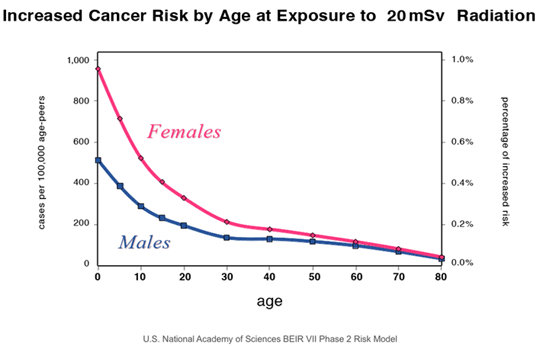
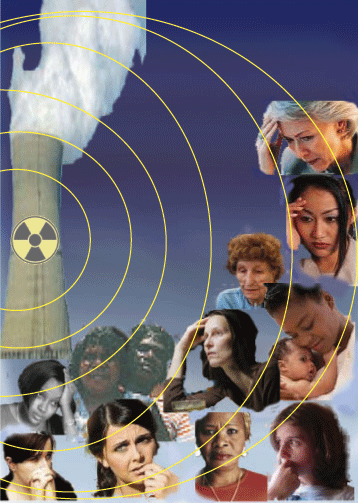
With women still underrepresented in nuclear policymaking and national security planning while being disproportionately impacted by nuclear weapons due to ionizing radiation from their use, testing, manufacturing, storage, and transport, Lazaroff reimagines and redefines national security with her Women Transforming Our Nuclear Legacy (WTONL) global online mentoring program.
Convinced that strong leadership demands “new thinking, not new weapons,” WTONL’s gathering of minds–with U.S. and Russian women experts and citizen diplomats reimagining security–has engaged 400 women from 40 countries including eight of the nine nuclear-armed states.
Excluding women–half of the human race–for much of the nuclear age has brought us to the brink of possible extinction,” Lazaroff advocates for a feminist foreign policy. “We need dialogue over silence, engagement over isolation, cooperation and diplomacy over conflict and war.”
After Her Nuclear Disaster Dress Rehearsal, Cynthia Lazaroff Has A Wake-Up Call For Our World As We Sleepwalk Into Nuclear Extinction Jackie Abramian ForbesWomen, 22 Sept 21, “There are nearly 13,500 nuclear warheads in current arsenals of nine nuclear-armed states. That the U.S. has more nuclear warheads than hospitals should be a wake-up call,” says award-winning documentary filmmaker, environmentalist, nuclear weapons abolition activist, Cynthia Lazaroff who having lived through a 38-minute nuclear cataclysm dress rehearsal in January 2018, hopes to wake up our world to the looming threat of sleepwalking into a nuclear disaster.
Lazaroff’s wake-up call came on the morning of January 13, 2018, when, along with all Hawaiian residents, she received a text: “Emergency Alert: Ballistic Missile Threat Inbound to Hawaii. Seek Immediate Shelter. This is not a drill.” As the reality of the moment unfolded, she scurried about her home, as a nuclear age refugee, hastily deciding which objects to take to the security of a nearby cave–while desperately trying to reach her daughter’s cellphone to let her know, perhaps for the last time to say “goodbye and I love you.” She detailed the harrowing 38-minutes–later confirmed as a false alarm–in her Dawn of a New Armageddon, published on August 6, (Hiroshima Day) in The Bulletin of the Atomic Scientists.
The experience led Lazaroff to found NuclearWakeUpCall.Earth a nonprofit, nonpartisan organization committed to abolishing nuclear weapons with a focus on the U.S. and Russia–which combined have over 90% of the world’s nuclear weapons. She is also on the Board of American Committee for U.S.-Russia Accord, which issued an open letter calling for a new era of diplomacy and engagement between the U.S. and Russia prior to the Biden-Putin summit. She applauds the resumed Biden-Putin dialogue and the “signs of hope”–the New START treaty extension for another five years, Secretary John Kerry’s Moscow visit and meetings with Minister of Foreign Affairs Lavrov as “realizing our shared interest to address the existential threat of climate change,” and the late July U.S.-Russia strategic stability talks in Geneva following the Summit.
“Our demonization of Russia, N. Korea, Iran, and China is justifying the continued military buildup. In 2020, during the global pandemic, the nine nuclear-armed states spent nearly $73 billion on nuclear weapons–over $137,000 per minute, with the U.S. spending over half of this total–$37.4 billion, $70,881 per minute,” Citing Elisabeth Eaves’ article on the newly commissioned $100 billion ground based strategic deterrent (GBSD), Lazaroff underscores the “insane” might of the military industrial complex amidst layers of existential threats of climate change, the pandemic, and racial and socio-economic injustices of our world.
Another sign of hope is 122 countries adopting the Treaty on the Prohibition of Nuclear Weapons (TPNW) with 86 signatory states, while 55 countries have ratified the treaty which entered into force this January. The first treaty Lazaroff says, that is “based not on military law but on humanitarian law” addressing “nuclear colonialism and radioactive racism, the disproportionate impact of nuclear weapons on indigenous peoples, and on women and girls due to ionizing radiation. It is also the first providing assistance to victims of nuclear use and testing and for the remediation of contaminated environments.”
Even with everything I knew about nuclear weapons, nuclear war was unimaginable to me until I lived through those 38 minutes. Now this experience lives inside of me as a mother, as a human being, with a responsibility to wake up and transform our nuclear legacy. It’s never going to go away until we eliminate the risk 100%–I know eliminating nuclear weapons is a tall order. I have no illusions about the formidable obstacles, but we must act. We still have a chance to get this right,” Lazaroff offers a Nuclear Playbook–a 10-step action program with critical recommendations for averting a nuclear catastrophe put forth by Congressional leaders, arms control and security experts, and NGOs such as the Nuclear Threat Initiative (NTI), William J. Perry Project, Ploughshares Fund, Global Zero, Bulletin of the Atomic Scientists, Nuclear Age Peace Foundation, Back from the Brink, among others…………..
Decriminalizing Diplomacy of Peace
“Part of my work is to decriminalize diplomacy with Russia, North Korea, Iran and China. It’s omnicidal behavior not to talk to your nuclear adversary. You can’t just obtain denuclearization on the Korean Peninsula without changing the relationship, without creating the conditions for peace,” says Lazaroff.
The “commercially driven millisecond news cycles,” harboring the “us vs. them” mentality fuels greater divides, “deterring alliance around shared global threats, while lacking introspection,” Lazaroff believes. She commends JFK’s 1963 American University speech, ‘Strategy of Peace’ following the Cuban Missile Crisis when JFK courageously called for ‘introspection’, not to be ‘blind to our differences,’ and addressed our common and ‘mutually deep interests’ with the Soviet Union ‘in a just and genuine peace and in halting the arms race.’
Continue reading1 This Month

Read the Public Inquiry Report, the Commissioners’ report, Surrendering Australia: The AUKUS Deception is available to download for free at aukuspublicinquiry.com. Or just watch the replay of the National Press Club Luncheon.


19 November – Webinar – The Reality of Reprocessing
Time: 11:00 AM Pacific Time (US & Canada) / 2:00 PM Eastern / 7:00 PM UK / 8:00 PM CET
Register for the Zoom Event Here



Shut down the radiation-damaged Heysham nuclear reactors now
To see nuclear-related stories in greater depth and intensity – go to https://nuclearinformation.wordpress.com

Say No to NASA’s Reckless Nuclear Reactor on the Moon
Say No to NASA’s Reckless Nuclear Reactor on the Moon
-
Archives
- November 2026 (94)
- October 2026 (302)
- September 2026 (339)
- August 2026 (330)
- July 2026 (355)
- June 2026 (287)
- May 2026 (306)
- April 2026 (356)
- March 2026 (251)
- February 2026 (267)
- January 2026 (308)
- December 2025 (358)
-
Categories
- 1
- 1 NUCLEAR ISSUES
- business and costs
- climate change
- culture and arts
- ENERGY
- environment
- health
- history
- indigenous issues
- Legal
- marketing of nuclear
- media
- opposition to nuclear
- PERSONAL STORIES
- politics
- politics international
- Religion and ethics
- safety
- secrets,lies and civil liberties
- spinbuster
- technology
- Uranium
- wastes
- weapons and war
- Women
- 2 WORLD
- ACTION
- AFRICA
- Atrocities
- AUSTRALIA
- Christina's notes
- Christina's themes
- culture and arts
- Events
- Fuk 2022
- Fuk 2023
- Fukushima 2017
- Fukushima 2018
- fukushima 2019
- Fukushima 2020
- Fukushima 2021
- general
- global warming
- Humour (God we need it)
- Nuclear
- RARE EARTHS
- Reference
- resources – print
- Resources -audiovicual
- Weekly Newsletter
- World
- World Nuclear
- YouTube
-
RSS
Entries RSS
Comments RSS

