Keep space for peace – opposition to New Zealand’s space industry and its military connections
NZ’s $1.7 billion space industry rockets away, but a law review sparks more debate about controversial military payloads, Stuff Amanda Cropp, Oct 17 2021 ”……………….. how far and how fast the New Zealand space industry has come since Rocket Lab’s first test launch blasted off in 2017 from its Māhia Peninsula launch site, with millions being invested by the Government and the private sector.A review of the Outer Space and High-Altitude Activities Act that regulates launches and payloads received only 17 responses last month, but consultation on the “peaceful, sustainable and responsible” use of space, delayed until next year because of Covid-19, is likely to get a much more heated reception.
Peace groups, the Green Party and members of the Māhia community have already been vocal about their opposition to Rocket Lab’s military work in the wake of the controversial Gunsmoke-J satellite it launched for the United States Army Space and Missile Defence Co………….
…… The Outer Space and High-Altitude Activities Act outlaws payloads that contribute to nuclear weapons programmes or capabilities, harm, interfere with or destroy other spacecraft or systems on earth; support or enable specific defence, security or intelligence operations that are contrary to government policy, or are likely to cause serious or irreversible harm to the environment…………….
Space for Peace
In March, 17 peace groups wrote an open letter to Prime Minister Jacinda Ardern saying the Gunsmoke-J launch appeared to breach both the New Zealand Nuclear Free Zone, Disarmament and Arms Control Act and the Cabinet-approved to payload assessments.
They argued that because US military strategy was increasingly using satellite systems to control and direct nuclear, as well as non-nuclear, weapons, it was extremely difficult to determine whether any given satellite was contributing to supporting this weapons system.
……… In mid-September the Anti-Bases Campaign had about 100 attendees at a Keep Space for Peace webinar, and organiser Murray Horton says they were primarily concerned Rocket Lab’s Auckland and Māhia operations effectively constituted a US base in New Zealand, albeit a privately owned one.
Sonya Smith of the Māhia’s Rocket Lab Monitoring Group says they want future regulations to include a clause outlawing payloads that will “assist in the operation of a weapon”.
Professor Kevin Clements is a member of the Peace Foundation International Affairs and Disarmament Committee, which was a signatory to the letter to the prime minister, and he does not believe MBIE is the appropriate agency to vet payloads.
“They have a vested interest in seeing [space] is a thriving industry bringing dollars into the New Zealand economy. This needs to be handled by the prime minister’s department.”…….. https://www.stuff.co.nz/business/126560061/nzs-17-billion-space-industry-rockets-away-but-a-law-review-sparks-more-debate-about-controversial-military-payloads
Catholic Archbishop at UN urges immorality of nuclear weapons, and of militarising space
UN nuncio denounces nuclear weapons, other weapons of mass destruction, Oct 15, 2021by Catholic News Service, UNITED NATIONS — The world’s leaders “cannot allow” themselves to be “spectators to violence and war, to brothers killing brothers, as if we were watching games from a safe distance,” Archbishop Gabriele Caccia told a U.N. committee session discussing nuclear weapons and other weapons of mass destruction Oct. 13.
“The lives of peoples are not playthings. We cannot be indifferent onlookers,” the Vatican’s permanent observer to the United Nations added.
The archbishop, quoting Pope Francis’ encyclical “Fratelli Tutti, on Fraternity and Social Friendship,” also stressed that world leaders should never forget the people who “who have suffered the effects of atomic radiation or chemical attack
He also reiterated the pope’s assessment about the immorality not only of using, but also of possessing nuclear weapons, “since the intrinsic intentionality of having nuclear weapons is the threat to use them.”
It is time for nuclear weapon stockpiles to “be definitively capped,” he emphasized.
“Our world is so interconnected that all nuclear weapons, wherever they may be, must be eliminated in the shortest feasible time, lest accident or miscalculation lead to catastrophic humanitarian and environmental consequences,” he said. ……………
He also stressed the need to not lose sight of the threat of “dirty bombs” or radiological weapons and the need for measures to prohibit the use of radiological materials as weapons.
In his final remarks, he emphasized that “the Holy See wishes to state its conviction that outer space should remain the peaceful domain that it has been thus far in human history. While certain military uses of that environment have been deployed, such as communications, navigation and monitoring, these are also critical for peaceful purposes.”
He said that to weaponize space, “either by deploying weapons, or by attacking space objects from the ground, would be extremely dangerous” and urged the negotiation of measures “so that the outer space environment remains safe for all of us.”………..
The archbishop also noted the needs of island countries for help — and the urgency of listening to their appeal — in protecting their environment and ecosystems from the effects of climate change. https://www.ncronline.org/news/justice/un-nuncio-denounces-nuclear-weapons-other-weapons-mass-destruction
European Commission urges member states to speed up solar energy deployment
The European Commission (EC) has urged member states to accelerate solar
deployment in order to tackle Europe’s rising electricity prices and has
released a ‘toolbox’ to address the short-term impact of prices and
strengthen resilience against future shocks.
Speaking at a press conference
earlier this week (13 October), the EC Energy Commissioner, Kadri Simson,
called the current situation in Europe, which has pushed energy prices up
to record levels, “exceptional” but urged member states to future proof
their countries from further shocks.
PV Tech 15th Oct 2021
Opposition to UK’s plans for nuclear fusion
ANTI-NUCLEAR campaigners have hit out at the UK Government’s plan to
create a prototype nuclear fusion power plant that is being developed with
hopes to sustain moves away from fossil fuels.
The Scottish Campaign for Nuclear Disarmament (CND) has said that this latest effort to extol the
virtues of nuclear fusion as a “low carbon” source of energy is to keep the
industry “alive” due to the UK being a “nuclear weapon state”.
The National 15th Oct 2021
UK to push for nuclear power: households to pay up long before the reactors are built
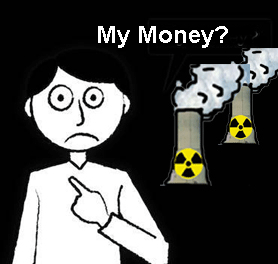
UK to put nuclear power at heart of net zero emissions strategy. British
ministers will put nuclear energy at the heart of Britain’s strategy to
reach net zero carbon emissions by 2050 in government documents due as
early as next week, along with new details on its funding model.
Kwasi Kwarteng, business secretary, is due to unveil the “Net Zero Strategy”,
as well as a “Heating and construction strategy” and an assessment of
the Treasury of the cost to reach the 2050 target. The main strategy will
be heavily focused on the long overdue and slow British nuclear program.
The country’s existing reactors are expected to be phased out by 2035,
with construction of a single large plant, Hinkley Point C, already
underway.
The creation of a “regulated asset base” (RAB) model will be
the key to the delivery of a future fleet of large nuclear power plants.
Under this program, households will be billed for the cost of the plant via an energy
tax long before it starts producing electricity, which could take a decade
or more from the time. where the final investment decision is made.
FT 16th Oct 2021
https://www.ft.com/content/e6426194-21e6-49c4-9520-97c337b350fd
Japan’s new pro nuclear push – and for small nuclear reactors
Japan’s Carbon Goal Is Based on Restarting 30 Nuclear Reactors, Bloomberg, By Isabel Reynolds 17 October 2021, Japan’s goal of reducing carbon emissions by 46% by 2030 is based on the assumption it will restart 30 of its nuclear reactors, a top ruling party executive said.
Akira Amari, secretary general of the Liberal Democratic Party, made the remarks Sunday in a televised debate broadcast by NHK ahead of the Oct. 31 general election.
Much of Japan’s nuclear capacity has been offline since the 2011 Fukushima disaster and Amari said only nine reactors are currently in service. Surveys generally show the electorate is against restarting the plants.
The LDP has also been promoting the idea of building small modular reactors, saying they are safer than Japan’s existing atomic plants……..https://www.bloomberg.com/news/articles/2021-10-17/amari-says-japan-s-carbon-goal-based-on-restarting-30-reactors
French President Macron now goes for small nuclear reactors – with vision of an exporting bonanza
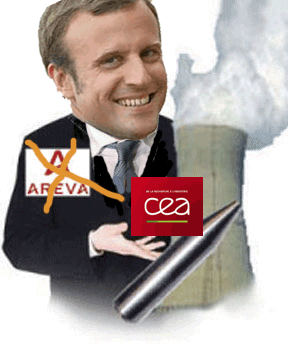
France unveils nuclear power overhaul – with an eye on China, French President Emmanuel Macron announced a shift to small modular nuclear reactors on Tuesday as he unveiled his €30 billion, five-year strategy to bolster France’s high-tech sectors, building on the country’s history as a pioneer of nuclear energy. France 24, 17 Oct 21,
Macron announced that the “number one priority” for his industrial strategy was for France to develop “innovative small-scale nuclear reactors” by 2030.
This marks a sea change in France’s approach to nuclear energy……………“The small modular reactors each generate less than 300 megawatts (MW) of energy; far less than most reactors currently in service, which tend to produce between 950 and 1300 MW, with some of them including the Flamanville plant [on the English Channel] capable of as much as 1600 MW,” said Giorgio Locatelli, an expert on the engineering of nuclear power stations at Milan Polytechnic.
……… In the grand sweep of the history of French nuclear power, the shift towards smaller reactors looks like a step back, Locatelli suggested, because France “started with small reactors in the 1960s before switching to larger ones to develop economies of scale”.However, this trend has now reached its limited, he continued. “Reactors like the one at Flamanville are not only very expensive, but also it’s a long and complex process to build them.” It takes billions to create such plants, and often it is difficult for governments to find investors willing to wait up to a decade before their returns start coming in.
Competition with China
Most countries lack the means to pull of these massive reactors, noted Nicolas Mazzucchi, an energy specialist at France’s Foundation for Strategic Research: “The financing models they require – not to mention the capacity to really mobilise a country’s savoir-faire in this domain – are increasingly rare, except in nations like Russia and China where energy companies have total state backing.”
Consequently, switching to small modular reactors is a strategic pivot to allow France to deal with competition from countries like China, which has increasingly big ambitions when it comes to nuclear power.
France’s change of approach could also allow it to win lucrative new markets. “By 2025, nearly a quarter of the world’s existing nuclear capacity will be exhausted because the reactors will have become too old,” Mazzucchi continued……………..
‘Lack of experience’………. The people in charge of reactors using cutting-edge technology “will have to justify their safety”, Herviou said. So far, the theoretical advantages of small modular reactors have not been confirmed in practice. Some 70 such reactors are currently in development throughout the world – and the vast majority of these projects are still in the early stages. “The main concern with this technology is the lack of a track record,” said Locatelli. What is more, he continued, nuclear power’s “chicken-and-egg problem is still there: Is it better to start building reactors first to win over buyers or is it best to find the investors first?” …………. https://www.france24.com/en/france/20211013-france-unveils-nuclear-power-overhaul-with-eye-on-china
Lethal radiation levels detected in Fukushima nuclear plant reactor lid

Lethal radiation levels detected in Fukushima nuke plant reactor lid https://www.asahi.com/ajw/articles/14440765
By TSUYOSHI KAWAMURA/ Staff Writer
September 15, 2021 The operator of the crippled Fukushima No. 1 nuclear plant could be forced to reconsider the plant’s decommissioning process after lethal radiation levels equivalent to those of melted nuclear fuel were detected near one of the lids covering a reactor.
The Nuclear Regulation Authority said Sept. 14 that a radiation reading near the surface of the lid of the No. 2 reactor’s containment vessel was 1.2 sieverts per hour, higher than the level previously assumed.
The discovery came on Sept. 9 during a study by the NRA and Tokyo Electric Power Co., the operator of the plant.
TEPCO plans to insert a robotic arm into the No. 2 reactor’s containment vessel from its side in a trial planned for the second half of 2022 to retrieve pieces of melted nuclear fuel.
“We will consider what we can do during the trial on the basis of the detection of the concentration of contamination” in the upper area of the containment vessel, a TEPCO official said.
The round concrete lid, called the shield plug, is 12 meters in diameter and about 60 centimeters thick.
The shield plug consists of three lids placed on top of each other to block extremely high radiation emanating from the reactor core.
Each lid weighs 150 tons.
When operators work on the decommissioning, the shield plug will be removed to allow for the entry into the containment vessel.
The NRA said a huge amount of radioactive cesium that was released during the meltdown of the No. 2 reactor in March 2011 remained between the uppermost lid and middle lid.
In the Sept. 9 study, workers bored two holes measuring 7 cm deep each on the surface of the uppermost lid to measure radiation doses there by deploying remotely controlled robots.
One radiation reading was 1.2 sieverts per hour at a location 4 cm down from the surface in a hole near the center of the lid.Prior to the study, the NRA estimated that the dose from a contamination source that existed beneath the lid was more than 10 sieverts per hour, a level lethal to humans if exposed to it for about an hour.
But the finding suggested that the actual dose would likely be dozens of sieverts per hour, thus far more dangerous.
While it is expected to be a huge challenge to dismantle the lids, TEPCO has yet to decide what to do with them during the decades-long cleanup work.
The NRA also mentioned the possibility that radioactive cesium is also concentrated between the middle lid and the lowermost lid.
But there is no way at the moment to confirm whether that is the case, according to NRA officials
There are Much More Powerful Greenhouse Gases than CO2 and EDF’s Nuclear Reactors are Spewing Them Out (Apart from Toxic Radioactive Emissions!!)

EdF finally admit that operational nuclear power station discharges of Sulfur hexafluoride gas make massive contributions to Global warming/Climate change Flamanville nuclear power plant has exceeded the threshold for discharging SF6. In nine months, the quantity of SF6, the most powerful greenhouse gas, released by the Flamanville nuclear power plant in La Manche, has already […]
There are Much More Powerful Greenhouse Gases than CO2 and EDF’s Nuclear Reactors are Spewing Them Out (Apart from Toxic Radioactive Emissions!!) — RADIATION FREE LAKELAND
There are Much More Powerful Greenhouse Gases than CO2 and EDF’s Nuclear Reactors are Spewing Them Out (Apart from Toxic Radioactive Emissions!!) https://mariannewildart.wordpress.com/2021/10/15/there-are-much-more-powerful-greenhouse-gases-than-co2-and-edfs-nuclear-reactors-are-spewing-them-out-apart-from-toxic-radioactive-emissions/
ON OCTOBER 15, 2021 BY MARIANNEWILDARTEdF finally admit that operational nuclear power station discharges of Sulfur hexafluoride gas make massive contributions to Global warming/Climate change
Flamanville nuclear power plant has exceeded the threshold for discharging SF6. In nine months, the quantity of SF6, the most powerful greenhouse gas, released by the Flamanville nuclear power plant in La Manche, has already exceeded the annual declaration threshold. This threshold was reached on September 27, 2021, as confirmed by EDF on Thursday, October 14, 2021.
The Flamanville nuclear power plant (Manche) declared a “significant environmental event” after having emitted a cumulative quantity of SF6, the most powerful greenhouse gas, above the declaration threshold, we learned from EdF on Thursday October 14th.
“On September 27, 2021, the cumulative annual quantity of SF6 gas emissions reached 100.37 kg, exceeding the declaration threshold of 100 kg,” said EDF in a press release posted on the plant’s website. SF6, targeted as early as 1997 by the Kyoto Protocol on the climate, has a warming potential 23,000 times that of CO2 and remains in the atmosphere for up to 3,000 years. It is the most potent of greenhouse gases, even though it represents a small part of it.
The campaign group Sortir du Nuclear criticized EdFs pollution, saying : “Letting 100 kg of this gas escape is like emitting more than 2 million kg of C02 into the atmosphere. In just nine months, the Flamanville site has already exceeded (the 100 kg threshold). And the year is not over. Each year, each of the 18 nuclear power plants in France has this right to pollution and thus actively contributes to global warming, not to mention refrigerant leaks.”
Sortir de Nuclear further states that until 2018, EDF did not report any of these emissions. Sulfur Hexafluoride (SF6) gas “is used to ensure the electrical isolation of high voltage equipment. On the Flamanville site, SF6 gas is used as insulation for the energy evacuation stations and the supply stations for auxiliary transformers “, stated EDF.
Ouest France 14th Oct 2021
https://www.ouest-france.fr/normandie/flamanville-50340/la-centrale-nucleaire-de-flamanville-a-depasse-le-seuil-de-rejet-d-un-puissant-gaz-a-effet-de-serre-4ef83064-2cdc-11ec-9285-f388b2ea32b0
Exposed: French nuclear companies dumping radioactive waste in Siberia. Activists call on EU not to count nuclear energy as sustainable .

“For the French nuclear industry to resume this kind of irresponsible overseas dumping is proof that there is no sustainable solution to the ever-growing problem of radioactive waste. Giving dangerous nuclear energy a green label in the EU taxonomy will make the waste problem worse, and actively divert investments away from real solutions like energy savings, energy storage and renewables.”
A key principle of the taxonomy is that any activity must “do no significant harm” to the environment in order to be included as “sustainable”. The European Commission will open a public consultation in the coming weeks on the issue of whether nuclear energy should be included in the taxonomy.
 |
|

Exposed: French nuclear companies dumping radioactive waste in Siberia https://www.greenpeace.org/eu-unit/issues/climate-energy/45879/french-nuclear-companies-exposed-dumping-radioactive-waste-siberia/?fbclid=IwAR0FmZuQKuuQgWaAPthDXShxwc1s7_3Q4zwARV0xR2yfZL2EnvGj0nU5xX4Greenpeace European Unit 12/10/2021 Activists call on EU not to count nuclear energy as sustainable
Paris / Brussels, 12 October 2021 – Greenpeace activists today laid fifteen metal drums featuring a radioactive symbol in front of the headquarters of Orano, a French nuclear fuel company, in protest against the dumping of French nuclear waste at an unsafe site in Seversk, Siberia. The protest comes as a new investigation by Greenpeace France has revealed that exports of nuclear waste to Russia have restarted after an eleven-year hiatus. [1]
New satellite images from Seversk show thousands of barrels lying outdoors exposed to the elements. The practice of exporting radioactive waste from the EU to a third country is subject to strict conditions, including the safety and proper management of the destination facility. [2]
The revelations that exports of French nuclear waste to Russia have restarted come shortly after ministers from ten EU countries, including France, wrote an op-ed in several European newspapers calling for the inclusion of nuclear energy in the EU’s guidelines for green investments, the “EU taxonomy”. [3]
Roger Spautz, nuclear campaigner at Greenpeace France and Luxembourg , said: “For the French nuclear industry to resume this kind of irresponsible overseas dumping is proof that there is no sustainable solution to the ever-growing problem of radioactive waste. Giving dangerous nuclear energy a green label in the EU taxonomy will make the waste problem worse, and actively divert investments away from real solutions like energy savings, energy storage and renewables.”
A key principle of the taxonomy is that any activity must “do no significant harm” to the environment in order to be included as “sustainable”. The European Commission will open a public consultation in the coming weeks on the issue of whether nuclear energy should be included in the taxonomy.
President Emmanuel Macron is also expected to announce funding today for so-called “small modular nuclear reactors” as part of his “France 2030” investment package.
Investigation
The investigation by Greenpeace France reveals that, in January and February 2021, the nuclear fuel company Orano shipped hundreds of tonnes of spent uranium to Rosatom, Russia’s state-owned nuclear energy firm.
Activists in the port of Le Havre, Normandy, witnessed the loading of radioactive material onto a ship bound for St. Petersburg. From there, the waste continued by train to a dumping facility in the city of Seversk, Siberia, formerly known as Tomsk-7. Greenpeace has seen no evidence that the management of the Seversk site has improved since 2010, when Orano (then named Areva) admitted that environmental concerns were a factor in its decision to cease exporting uranium there. [4]
Orano confirmed the new shipments in an email to Greenpeace France. EDF, France’s largest nuclear energy provider, also signed a similar deal with Rosatom in 2018, but does not appear to have carried out any such shipments yet. Both companies are largely owned by the French state.
Nuclear hawks under Kishida threaten Suga’s renewables push
THE ASAHI SHIMBUN, October 14, 2021 Pro-nuclear lawmakers now hold key positions under Prime Minister Fumio Kishida, sparking concern that he will stray from the prior administration’s focus on renewables to help achieve “net zero” greenhouse gas emissions by 2050.
New ministers in charge of Japan’s efforts to fight climate change and energy issues under the Kishida administration have vowed to stick with the net zero target………
The new Basic Energy Plan drafted by the Suga administration made no mention of such nuclear power-related projects despite pressure from pro-nuclear lawmakers within the LDP and the nuclear industry.
LDP lawmakers who support nuclear energy are unhappy about the Basic Energy Plan, which said Japan will “reduce its dependence on nuclear energy as much as possible.”
……………concerns have been raised over a possible return to reliance on more nuclear power following pro-nuclear lawmakers assuming key posts in the government and the ruling Liberal Democratic Party.
Koizumi, who as environment minister pushed for renewable energy, and Taro Kono, who served as minister in charge of administrative reform and is a staunch opponent of nuclear energy, were replaced when Kishida formed his Cabinet.
….. Despite his vow against new reactor projects, Hagiuda is a close ally of former Prime Minister Shinzo Abe, who serves as the most senior adviser to a group of lawmakers advocating construction of new reactors to replace aged units.
Akira Amari, the new secretary-general of the LDP, the second most powerful post after the party president, Kishida, is the most senior adviser to the group.
Sanae Takaichi, who proposed bolstering development of new technology to build a nuclear fusion reactor during the LDP
leadership race last month, landed the position of the party’s policy chief.
…Not surprisingly, the nuclear industry hailed the government and the new party lineup…….. https://www.asahi.com/ajw/articles/14460623
Prince William: Saving Earth should come before space tourism
William told Newscast’s Adam Fleming he had “absolutely no interest” in going as high as space, adding there was a “fundamental question” over the carbon cost of space flights.
Prince William: Saving Earth should come before space tourism https://www.bbc.com/news/uk-5890307816
By George Bowden, 15 Oct 21,
BBC News Prince William has suggested entrepreneurs should focus on saving Earth rather than engaging in space tourism.
The Duke of Cambridge said great brains and minds should be “trying to repair this planet, not trying to find the next place to go and live”.
He also warned about a rise in “climate anxiety” among younger generations.
William spoke to the BBC’s Newscast ahead of the first Earthshot Prize to reward those trying to save the planet.
The prize’s name is a reference to the “moonshot” ambition of 1960s America, which saw then-President John F Kennedy pledge to get a man on the moon within a decade.
Speaking about the current space race and the drive to promote space tourism, William said: “We need some of the world’s greatest brains and minds fixed on trying to repair this planet, not trying to find the next place to go and live.”I think that ultimately is what sold it for me – that really is quite crucial to be focusing on this [planet] rather than giving up and heading out into space to try and think of solutions for the future.”
On Wednesday, Hollywood actor William Shatner became the oldest person to go to space as he blasted off aboard the Blue Origin sub-orbital capsule developed by billionaire Amazon founder Jeff Bezos.
Sir Richard Branson and Elon Musk are also building up space businesses.
He warned there was “a rise in climate anxiety” among young people who whose “futures are basically threatened the whole time”.
“It’s very unnerving and it’s very, you know, anxiety making,” he said.
The father-of-three challenged adults to channel their inner child to “remember how much it meant to be outdoors and what we’re robbing those future generations of”.
William also said his father, Prince Charles, had a “rough ride” when warning about climate change, adding: “It’s been a hard road for him.”
He said Charles, inspired by his father, the late Duke of Edinburgh, “talked about climate change a lot more, very early on, before anyone else thought it was a topic”.
The duke added that “it would be an absolute disaster if [Prince] George is sat here talking” about saving the planet in 30 year’s time.
Five winners of the Earthshot Prize, each receiving £1m, will be announced in a ceremony later this month.
William told Newscast’s Adam Fleming he had “absolutely no interest” in going as high as space, adding there was a “fundamental question” over the carbon cost of space flights.
Belgium’s Energy Minister calls for the government to speed up plan to shut down nuclear reactors
Another government crisis looms in Belgium — this time over nuclear
power. The government is set to decide next month whether to go ahead with
a plan to shut down all nuclear reactors by 2025 or prolong the lifespan of
the two newest reactors.
But the seven-party coalition is deeply divided on
the issue, with some warning the government could implode if the fight
escalates. It’s also a make-or-break moment for the Greens, who are in
charge of the energy file and in government for the first time since 2003.
Tinne Van der Straeten, the Green energy minister, is calling on the
government to move ahead with its plan to shut down Belgium’s remaining
reactors — a position that’s in line with the party’s anti-nuclear agenda
and that she has defended as consistent with the country’s long-term
climate goals. But her suggestion to build new gas-fired plants to replace
part of the nuclear capacity before relying fully on renewables isn’t going
down well with other parties, especially as natural gas prices soar across
Europe.
Politico 11th Oct 2021
https://www.politico.eu/article/belgium-nuclear-power-government-climate-greens/
Residents near Perry Nuclear Station to get potassium iodide, in case of a nuclear accident

Potassium iodide to be distributed to people near Perry Nuclear Power Plant in case of nuclear accident. By Nicole Meyer19 News Oct. 16, 2021 at 5:36 AM GMT+11|Updated: 3 hours ago
PERRY, Ohio (WOIO) – Plans are in place for the distribution of potassium iodide (KI) to people living or working within the 10-mile emergency planning zone of the Perry Nuclear Power Plant, Lake County Health Commissioner Ron Graham announced.
“KI is not a substitute for emergency procedures, such as evacuation and in-place sheltering during a nuclear emergency,” Graham said. “It is, however, one more protective measure we can provide to help safeguard Lake County residents.”
Potassium iodide is a non-prescription medication that can protect the thyroid from radioactive iodine if taken within a certain time frame, according to a press release from Lake County.
It must be taken within three to four hours of the start of exposure, according to the press release………….. https://www.cleveland19.com/2021/10/15/lake-county-health-commissioner-announces-distribution-potassium-iodide-residents-near-nuclear-power-plant/
India, China and the new missile silos
CHINA’S MISSILE SILOS AND THE SINO-INDIAN NUCLEAR COMPETITION, War on the Rocks, DEBAK DAS 15 Oct 21, This summer, U.S. analysts using commercial satellite imagery discovered that China was significantly expanding its nuclear forces and building hundreds of new missile silos. With the new silos, China could potentially double the size of its arsenal of intercontinental ballistic missiles. The news sent shockwaves through Washington. The head of Strategic Command called the developments “breathtaking,” and the news is sure to embolden efforts to fund U.S. nuclear modernization efforts on Capitol Hill. While the United States has a much larger nuclear force than China — with 3,750 nuclear warheads in its nuclear weapons stockpile compared to China’s 350 warheads — it will still likely take a forceful response to China’s latest nuclear developments.
But how will India — China’s other nuclear armed adversary — react to Beijing’s new missile silos? India has a nuclear triad and is reported to have 150 nuclear warheads deployed on different air-, sea-, and land-based platforms. China, meanwhile, is estimated to have its nuclear weapons stockpile of 350 nuclear warheads deployed across different platforms. However, with the new missile silos and fears of an increase in Chinese nuclear warheads, the strategic asymmetry in the Sino-Indian nuclear relationship may become more stark.
Moreover, China and India continue to engage in hostilities in the Himalayas. In August 2021, over a hundred soldiers from the Chinese People’s Liberation Army crossed over to the Indian side of the border and damaged a bridge and other infrastructure before retreating. In June 2020, in the deadliest clash between the two countries in 45 years, more than 20 soldiers were killed in the Galwan Valley in Ladakh. This led to a heightened state of tensions and a war scare between the two countries. High-level military talks between the two nuclear states remain deadlocked, with regular hostilities at different points along the 3,488-kilometer Line of Actual Control. An increase in Chinese nuclear capabilities in this context has the potential to destabilize the region and spark a nuclear arms race. But will it?
India has been cautious in its nuclear relationship with China and is unlikely to have a dramatic response to the new missile silos at the moment. It has two nuclear-armed adversaries to consider, and its focus will remain on Pakistan. India will continue to modernize its nuclear arsenal with new counterforce nuclear delivery systems and to test multiple independently targeted re-entry ballistic missiles, which will allow it to manage its nuclear relationship with both nations. While the counterforce missiles and short-range nuclear delivery systems are aimed at Pakistan, India’s nuclear relationship with China will continue to be based on ensuring a secure second-strike capability.
No First Use, Second-Strike, and Caution
Despite the continuing military engagements along the Line of Actual Control, the Sino-Indian nuclear relationship remains stable. This is because India’s nuclear relationship with China rests on its survivable second-strike nuclear doctrine. It has pledged not to use its nuclear weapons first as a part of a no first use policy. This doctrine means that as long as India has a secure-second-strike capability — that is, the capability to absorb a nuclear first strike on its soil and then retaliate using its remaining nuclear forces — it will not need to build a large arsenal of nuclear weapons. It just needs to make sure that its nuclear weapons systems are well dispersed and survivable……….
Manageable Historical Asymmetry
China’s additional nuclear silos do not represent a new strategic problem for India………………….
Border Conflict Remains at Low Escalation Level ………..
……… https://warontherocks.com/2021/10/chinas-missile-silos-and-the-sino-indian-nuclear-competition/
1 This Month

Read the Public Inquiry Report, the Commissioners’ report, Surrendering Australia: The AUKUS Deception is available to download for free at aukuspublicinquiry.com. Or just watch the replay of the National Press Club Luncheon.


19 November – Webinar – The Reality of Reprocessing
Time: 11:00 AM Pacific Time (US & Canada) / 2:00 PM Eastern / 7:00 PM UK / 8:00 PM CET
Register for the Zoom Event Here



Shut down the radiation-damaged Heysham nuclear reactors now
To see nuclear-related stories in greater depth and intensity – go to https://nuclearinformation.wordpress.com

Say No to NASA’s Reckless Nuclear Reactor on the Moon
Say No to NASA’s Reckless Nuclear Reactor on the Moon
-
Archives
- November 2026 (94)
- October 2026 (302)
- September 2026 (339)
- August 2026 (330)
- July 2026 (355)
- June 2026 (287)
- May 2026 (306)
- April 2026 (356)
- March 2026 (251)
- February 2026 (267)
- January 2026 (308)
- December 2025 (358)
-
Categories
- 1
- 1 NUCLEAR ISSUES
- business and costs
- climate change
- culture and arts
- ENERGY
- environment
- health
- history
- indigenous issues
- Legal
- marketing of nuclear
- media
- opposition to nuclear
- PERSONAL STORIES
- politics
- politics international
- Religion and ethics
- safety
- secrets,lies and civil liberties
- spinbuster
- technology
- Uranium
- wastes
- weapons and war
- Women
- 2 WORLD
- ACTION
- AFRICA
- Atrocities
- AUSTRALIA
- Christina's notes
- Christina's themes
- culture and arts
- Events
- Fuk 2022
- Fuk 2023
- Fukushima 2017
- Fukushima 2018
- fukushima 2019
- Fukushima 2020
- Fukushima 2021
- general
- global warming
- Humour (God we need it)
- Nuclear
- RARE EARTHS
- Reference
- resources – print
- Resources -audiovicual
- Weekly Newsletter
- World
- World Nuclear
- YouTube
-
RSS
Entries RSS
Comments RSS

