Prime Minister Fumio Kishida confirms release of Fukushima wastewater to start in 2023
Release of Fukushima wastewater to proceed: Kishida, The Guardian, TOKYO, 18 Oct 21,
New Japanese Prime Minister Fumio Kishida has said that there can be no delay to plans to release contaminated water from the wrecked Fukushima Dai-ichi nuclear power plant into the sea, despite opposition from fishers and neighboring countries.
Kishida, who made his first trip to the plant on Sunday since becoming prime minister last month, said every effort would be made to reassure local people that disposing of the water in the Pacific Ocean was safe……
Researchers have used snakes fitted with tracking devices and dosimeters to measure radiation levels in the area around the Fukushima Dai-ichi Nuclear Power Plant, which suffered triple meltdowns in March 2011……
More than 1 million tonnes of water are being stored in 1,000 tanks at the site, and TEPCO has said that space would run out late next year.
The government and TEPCO in April said that work to release the heavily diluted water would begin in the spring of 2023 and take decades to complete.
The move is opposed by nearby fishing communities, which say it would undo years of hard work rebuilding their industry’s reputation since the plant was struck by a huge tsunami in March 2011, soon after Japan’s northeast coast was rocked by a magnitude 9 earthquake.
The decision ended years of debate over what to do with the water, with other options including evaporation or the construction of more storage tanks at other sites. More than 1 million tonnes of water are being stored in 1,000 tanks at the site, and TEPCO has said that space would run out late next year.
The government and TEPCO in April said that work to release the heavily diluted water would begin in the spring of 2023 and take decades to complete.
The move is opposed by nearby fishing communities, which say it would undo years of hard work rebuilding their industry’s reputation since the plant was struck by a huge tsunami in March 2011, soon after Japan’s northeast coast was rocked by a magnitude 9 earthquake.
The decision ended years of debate over what to do with the water, with other options including evaporation or the construction of more storage tanks at other sites.More than 1 million tonnes of water are being stored in 1,000 tanks at the site, and TEPCO has said that space would run out late next year.
Japan has requested help from the International Atomic Energy Agency to ensure that the discharge meets global safety standards, including treating the wastewater so its radioactivity levels are below legal limits. https://www.taipeitimes.com/News/front/archives/2021/10/19/2003766372
Why the U.S. let Pakistan nuclear scientist A.Q. Khan off the hook
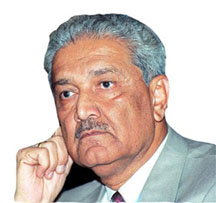
Former Netherlands Prime Minister Ruud Lubbers revealed in 2005 that Dutch authorities wanted to arrest Khan in 1975 and again in 1986 but that on each occasion the Central Intelligence Agency advised against taking such action. According to Lubbers, the CIA conveyed the message: “Give us all the information, but don’t arrest him.”
After Khan was tried in absentia and sentenced to four years in prison in 1983 for stealing uranium enrichment secrets from the Netherlands, files held by an Amsterdam court were mysteriously lost, with the main judge suspecting the CIA’s hand in their disappearance.
When an appeals court overturned Khan’s conviction on a technicality, the Netherlands — a key U.S. ally during the Cold War — declined to seek a retrial, effectively letting Khan off the hook. As the Financial Times put it, the Dutch “abandoned prosecution of the most consequential crime committed on their territory since the second world war.
Why the U.S. let Pakistan nuclear scientist A.Q. Khan off the hook https://asia.nikkei.com/Opinion/Why-the-U.S.-let-Pakistan-nuclear-scientist-A.Q.-Khan-off-the-hook
Decision could still come back to haunt Washington
Brahma Chellaney, October 18, 2021 Brahma Chellaney Is A Geostrategist And Author Of Nine Books, Including “Asian Juggernaut: The Rise Of China, India And Japan.”
The incredible story of Abdul Qadeer Khan, the Netherlands-trained Pakistani metallurgist who — with impunity — ran an illicit global nuclear-smuggling network for a quarter-century would make for a captivating thriller.
A key plotline would surely be the mystery of why Khan, who died on Oct. 10 from complications caused by COVID-19, was never indicted by the U.S. for stealing nuclear secrets from the West. Khan played a pivotal role in helping Pakistan develop nuclear weapons and then selling crucial know-how to three U.S.-labeled “rogue states” — Iran, North Korea and Libya.
Former Netherlands Prime Minister Ruud Lubbers revealed in 2005 that Dutch authorities wanted to arrest Khan in 1975 and again in 1986 but that on each occasion the Central Intelligence Agency advised against taking such action. According to Lubbers, the CIA conveyed the message: “Give us all the information, but don’t arrest him.”
After Khan was tried in absentia and sentenced to four years in prison in 1983 for stealing uranium enrichment secrets from the Netherlands, files held by an Amsterdam court were mysteriously lost, with the main judge suspecting the CIA’s hand in their disappearance.
When an appeals court overturned Khan’s conviction on a technicality, the Netherlands — a key U.S. ally during the Cold War — declined to seek a retrial, effectively letting Khan off the hook. As the Financial Times put it, the Dutch “abandoned prosecution of the most consequential crime committed on their territory since the second world war.”
Geopolitics partly explains why the CIA wanted to protect Khan.
While the U.S. and India are close partners today, at the time Dutch authorities were seeking to arrest Khan, the U.S. was not averse to the idea of Pakistan developing a nuclear-weapons capability to balance India, which had conducted its first nuclear test in 1974. For years, the U.S. simply turned a blind eye to Pakistan’s covert nuclear-weapons development.
American concerns, however, were stirred when Khan began selling nuclear items to other renegade states. U.S. pressure compelled Pakistan to open investigations into Khan’s activities in 2003 after Iran and Libya admitted to the International Atomic Energy Agency (IAEA) that Pakistan-linked black marketeers supplied them with the components they needed to advance their nuclear research.
In 2004, Khan appeared on national television asking for forgiveness, saying he had acted entirely on his own in passing on nuclear secrets to other countries. “I take full responsibility for my actions,” Khan said, “and seek your pardon.”
After this orchestrated confession, Pakistani dictator General Pervez Musharraf, citing Khan’s status as a national hero, pardoned him. Musharraf also barred U.S. or IAEA investigators from questioning Khan. Oddly, Washington went along with this charade, which extended to Khan’s ostensible house detention.
Investigative journalists Adrian Levy and Catherine Scott-Clark, in their acclaimed 2007 book Deception: Pakistan, the United States, and the Secret Trade in Nuclear Weapons, concluded that Khan was the fall guy. “The covert trade in doomsday technology was not the work of one man, but the foreign policy of a nation and supervised by Pakistan’s ruling military clique,” Levy and Scott-Clark wrote, adding that Pakistan’s generals have long maintained a nexus with terrorist groups.
The military’s collusion with Khan was underscored by the use of an army plane in 2000 to transport centrifuges to Pyongyang. In return, Pakistan received North Korean ballistic missile technology, helping it to build its first intermediate-range, nuclear-capable missile, Ghauri.
While most technology transfers appeared to be state-sanctioned, Khan likely sold some nuclear items for personal profit.
Still, despite exaggerated Western media reports then, no evidence has surfaced to indicate that the Pakistani transfers significantly contributed to advancing the Iranian, North Korean and Libyan nuclear programs. North Korea, the only recipient to cross the nuclear threshold, has long relied on plutonium, which the Khan network did not traffic.
Pakistan’s own nuclear weaponization benefited decisively from clandestine transfers from China, another archrival of India. Such transfers began in 1982, when, as Khan admitted, China supplied the blueprint for one of the nuclear bombs it had tested, as well as enough weapons-grade uranium for two atomic weapons.
Yet the U.S., just as it has not penalized China for its continuing nuclear and missile transfers to Pakistan, chose not to indict the rogue Pakistani scientist that spearheaded an international smuggling enterprise. Washington, however, has indicted a number of other individuals — including as recently as last year — for conspiring to smuggle nuclear goods to Pakistan.
America’s shielding of Khan, a nuclear jihadist committed to payback for real and imagined injustices against Muslims, was doubly ironic because it set the stage for Pakistan’s emergence as an epicenter for terrorism, with its own nuclear weapons acting as enough of a deterrent to retaliation by another state.
Indeed, through its humiliating Afghanistan defeat at the hands of the Taliban, America has tasted the bitter fruits of the Pakistani generals’ cross-border use of jihadist proxies from behind their protective nuclear shield.
The U.S. maintains contingency plans to seize Pakistan’s nuclear weapons if they risk falling into terrorist hands. But if a 9/11 style terrorist attack with a crude nuclear device were to occur anywhere in the world, the trail of devastation would likely lead back to Pakistan.
Clyde nuclear base emergency staff to strike from tomorrow over safety fears
Clyde nuclear base emergency staff to strike from tomorrow over safety fears, Herald Scotland, By Martin Williams @Martin1Williams, Senior News Reporter 18 Oct 21, EMERGENCY workers at the home of Britain’s nuclear weapons on the Clyde are set to strike over “major safety concerns” after managers slashed firefighter numbers.
Action has been previously been given the go-ahead following a ballot of workers after managers proceeded with cuts to eight posts from the specialist fire safety crew at HM Naval Base Clyde, a reduction in strength of 15 per cent, with the a union describing it as an “an accident waiting to happen”.
Unite members working for outsourcing services firm Capita Business Services will now start strike action from Tuesday in a dispute over cuts to fire and rescue crew levels, and a lack of consultation………………
Workers believe the cuts impair the abilities of the onsite fire crews to do their jobs properly, particularly, in relation to incidents that would involve wearing breathing apparatus.
Capita has previously stated that they intend to mitigate safety risks due to the cuts through an investment in new technology to reduce fire risk”.
But workers have said they are not aware of any new technology which would address ongoing safety concerns…………………………… https://www.heraldscotland.com/news/homenews/19655524.clyde-nuclear-base-emergency-staff-strike-tomorrow-safety-fears/
Radioactive contamination from the partially-burned former Santa Susanna nuclear research facility

Radioactive microparticles related to the Woolsey Fire in Simi Valley, CA SCience Direct, MarcoKaltofenaMaggieGundersenbArnieGundersenb Worcester Polytechnic Institute, Dept. of Physics, Fairewinds Energy Education, 8 October 2021.
Highlights
Wildfire in radiologically contaminated zones is a global concern; contaminated areas around Chernobyl, Fukushima, Los Alamos, and the Nevada Nuclear Test Site have all experienced wildfires.
Three hundred sixty samples of soil, dust and ash were collected in the immediate aftermath of the Los Angeles (CA, USA) Woolsey fire in 2018.
Radioactive contamination from the partially-burned former Santa Susanna nuclear research facility was found in the fire zone.
A limited number of widely scattered locations had evidence of radioactive microparticles originating at the research facility.
X-ray data showed that ashes from the fire could spread site contaminants to distant, but widely spaced, locations.
Abstract
In November 2018, the Woolsey Fire burned north of Los Angeles, CA, USA, potentially remobilizing radioactive contaminants at the former Santa Susana Field Laboratory, a shuttered nuclear research facility contaminated by chemical and radiochemical releases. Wildfire in radiologically contaminated zones is a global concern; contaminated areas around Chernobyl, Fukushima, Los Alamos, and the Nevada Nuclear Test Site have all experienced wildfires. Three weeks after the Woolsey Fire was controlled, sampling of dusts, ashes, and surface soils (n = 360) began and were analyzed by alpha- and beta-radiation counting. Samples were collected up to a 16 km radius from the perimeter of the laboratory. Controls and samples with activities 1σ greater than background were also examined by alpha and/or gamma spectroscopy or Scanning Electron Microscopy with Energy Dispersive X-ray analysis. Of the 360 samples collected, 97% showed activities at or close to site-specific background levels. However, offsite samples collected in publicly-accessible areas nearest to the SSFL site perimeter had the highest alpha-emitting radionuclides radium, thorium, and uranium activities, indicating site-related radioactive material has escaped the confines of the laboratory.
In two geographically-separated locations, one as far away as 15 km, radioactive microparticles containing percent-concentrations of thorium were detected in ashes and dusts that were likely related to deposition from the Woolsey fire. These offsite radioactive microparticles were colocated with alpha and beta activity maxima. Data did not support a finding of widespread deposition of radioactive particles. However, two radioactive deposition hotspots and significant offsite contamination were detected near the site perimeter……………………………

4. Conclusions
A significant majority of samples (97% of 360 samples) collected in the study zone registered radioactivity levels that matched existing area background levels. Nevertheless, some ashes and dusts collected from the Woolsey Fire zone in the fire’s immediate aftermath contained high activities of radioactive isotopes associated with the Santa Susana Field Laboratory (SSFL). The data show that Woolsey Fire ash did, in fact, spread SSFL-related radioactive microparticles, and the impacts were confined to areas closest to SSFL and at least three other scattered locations in the greater Simi Valley area. Alpha and beta counting, high-resolution alpha and gamma spectroscopy, and X-ray microanalysis using SEM/EDS confirmed the presence of radioactive microparticles in the Woolsey Fire-related ashes and dusts.
Most of the fire-impacted samples found near the SSFL site’s perimeter were on lands accessible to the public. There were, however, scattered localized areas of increased radioactivity due to the presence of radioactive microparticles in ash and recently-settled dusts collected just after the Woolsey fire. These radioactive outliers were found in Thousand Oaks, CA, and Simi Valley, CA, about 15 and 5 km distant from SSFL, respectively. The Thousand Oaks samples had alpha count rates up to 19 times background, and X-ray spectroscopy (SEM) identified alpha-emitting thorium as the source of this excess radioactivity. Excessive alpha radiation in small particles is of particular interest because of the relatively high risk of inhalation-related long-term biological damage from internal alpha emitters compared to external radiation.
The nuclides identified as the sources of excess radioactivity in impacted samples were predominately isotopes of radium, uranium, and thorium. These have naturally-occurring sources, but these isotopes are also contaminants of concern at SSFL and were detected at generally increasing activities as the distance from SSFL decreased. In addition, the number of radioactive microparticles per gram of particulate matter also increased strongly with decreasing distance from SSFL. These data demonstrate that fire and/or other processes have spread SSFL contamination beyond the facility boundary………..
……https://www.sciencedirect.com/science/article/pii/S0265931X21002277?dgcid=coauthor
Bizarre twists in USA’s war on Julian Assange and Wikileaks
Britain’s Guantanamo: is Julian Assange a terrorist? https://www.michaelwest.com.au/britains-guantanamo-is-julian-assange-a-terrorist/ By Gary Lord|October 18, 2021
As Julian Assange prepares to face a British court for possibly the last time, threatened with up to 175 years detention in a US supermax prison, journalist Gary Lord, explores the latest bizarre twists in the US effort to extradite the Wikileaks founder and the silence of global media.
Julian Assange likes to say that censorship is “always an opportunity” that should be welcomed because it indicates that “there is something worth looking at”. He also says that it is a sign of weakness because it “reveals a fear of reform”.
So it’s interesting that recent bombshell stories about Assange himself are being censored by global media giants. As the WikiLeaks founder prepares to face a British court for possibly the last time on October 27, threatened with up to 175 years detention in a US supermax prison, perhaps this media censorship is something worth looking at?
wo major stories have emerged since a UK judge ruled against Assange’s extradition to the United States (on health grounds only) at the start of this year.
Firstly, Icelandic media revealed in June that the US prosecution’s prize witness, a convicted pedophile and fraudster who has since been jailed, had withdrawn his testimony against Assange.
Sigurdur Thordarson, who worked for Wikileaks in 2010 but embezzled over $50,000 from the organization, admitted to fabricating key accusations in the US indictment. This important story was almost totally ignored by global media.
Secondly, some 30 anonymous US officials recently confirmed that CIA boss Mike Pompeo, US President Donald Trump, and other staff “at the highest levels” of the Trump administration actively discussed assassinating Julian Assange, and even enlisted UK government support to shoot out airplane tyres if required.
The US government officially designated WikiLeaks a “non-state hostile intelligence service” in order to provide legal cover for any violent action, with “sketches” including possible shootouts with Russian agents on the streets of inner London.
The USA’s FAIR media watch group investigated the extraordinary lack of media coverage this astonishing revelation received, noting that “BBC News, one of the most-read news outlets in the world, appears to have covered the story just once — in the Somali-language section of the BBC website”.
The New York Times, the Washington Post, and many other major media outlets totally ignored it. The Guardian published just two articles about it; by comparison, they devoted 16 articles to alleged Russian government attempts to murder Alexei Navalny.
Sadly, this media censorship of Assange is not new, even if it does appear to be reaching new heights of absurdity. Another widely ignored story is the relentless and invasive spying on Assange and his visitors – including lawyers, family and journalists – while he was in the Ecuadorian embassy.
A Spanish court is currently investigating allegations that UC Global, the company that supposedly provided “security” at the behest of the Ecuadorian government, was secretly working for the CIA as a client of former Las Vegas casino mogul Sheldon Adelson, a major supporter of Donald Trump.
Max Blumenthal first reported back in May 2020 that these spies also discussed plots to kidnap or poison Assange.
A “fix” or media apathy?
How to explain the widespread lack of mainstream media interest in such shocking news stories which could easily be given front page importance?
Are we to assume that “the fix is in”? Is this part of a deliberate effort to suppress public support for Assange, ahead of his inevitable extradition? If so, who is behind it, and what does it say about the politicisation of the British court system, never mind global media organisations? If not, how else can we understand it?
It’s well known that Assange fell out with many of his old media partners following the 2010 Cablegate publications, but most of those journalists still argue that the Australian should not be extradited for the “crime” of journalism.
Editorials in the Guardian, New York Times, the Sydney Morning Herald and other newspapers have called for the US extradition case to be dropped. But the media fraternity’s “support” for Assange has never extended to a full-blown campaign, such as we saw when (for example) Peter Greste was jailed.
In fact, there has been a remarkable lack of Western media interest in Assange’s court case – coupled with smears, lies and poor reporting – for over a decade.
Italian journalist Sefania Maurizi, who has worked closely with WikiLeaks for many years, appears to be the only journalist who bothered to lodge Freedom of Information requests about the Assange case with the British and Swedish governments.
A “non-state hostile intelligence service”
She discovered that the Crown Prosecuting Service, which was then controlled by Sir Keir Starmer (now UK Labour Party leader), advised Swedish prosecutors not to come and question Assange in London, and not to “get cold feet” and close the case. “Please do not think this case is being dealt with as just another extradition,” they wrote – then they deleted all their emails!
In Australia, lawyer Kellie Tranter has been putting Aussie journos to shame by lodging her own FOI applications and sharing the results. Maurizi also has FOI applications lodged with the Australian and US governments, but they have been stalled for years with no explanation.
Assange and WikiLeaks still enjoy huge public support around the world. So why don’t big media organisations want more online clicks from readers digging into these amazing stories?
A clue may come from the CIA’s determination to get WikiLeaks officially designated a “non-state hostile intelligence service”. This legal designation would surely make media reporting on WikiLeaks the subject of increased government attention and maybe even censorship.
All the AUKUS countries have now adopted extreme new “anti-terror” laws that include Orwellian restrictions on the media. Maybe it’s time for AUKUS journalists to ask whether WikiLeaks is also officially designated a “non-state hostile intelligence service” in Canberra and London?
Is it possible that Julian Assange – who has been held in “Britain’s Guantanamo Bay” since 11 April 2019 – has been secretly defined as some new form of “information terrorist“? And if so, would our media today even be allowed to report it? Gary Lord is the author of Julian Assange biography “Wikileaks: a True History“
America’s paralysis on nuclear waste, as radioactive trash continues to accumulate.

GAO urges Congress to tackle nuclear waste storage impasse
‘The ghost of Yucca still stalks the policy debate and … there hasn’t been enough sustained pressure to find solutions’ By TERI SFORZA | tsforza@scng.com | Orange County Register, October 17, 2021 Who’s to blame for the paralysis that strands millions of pounds of radioactive waste at reactor sites all over the nation, and will cost taxpayers some $40 billion — and perhaps a lot more?
Congress, the U.S. Government Accountability Office says. And Congress must fix it.
In a dispassionate but merciless examination of the string of follies that has put the federal government nearly a quarter-century behind accepting waste from commercial reactors like the San Onofre Nuclear Generating Station — where 3.6 million pounds of waste must sit for years or possibly decades — the GAO chronicled the weeds that have choked the effort, then hacked through them to clear a path forward.
“Commercial spent nuclear fuel is extremely dangerous if not managed properly,” the report said. “About 86,000 metric tons of this fuel is stored on-site at 75 operating or shutdown nuclear power plants in 33 states, an amount that grows by about 2,000 metric tons each year.”
The radioisotopes produced in a reactor can remain hazardous from a few days to many thousands of years, the GAO said.
“The longer it takes the federal government to resolve the current impasse and develop a solution for the permanent disposal of commercial spent nuclear fuel, the greater the potential risk to the environment and public health, or of security incidents associated with temporary on-site storage,” the report said. “(T)he safety of long-term dry cask storage is unknown, and the risks, such as environmental and health risks, of on-site storage increase the longer the fuel is stored there.”
Attempted sabotage and theft of radioactive material are also potential security risks, the report said…………….
How to fix
Obama assembled a Blue Ribbon Commission that laid out a path forward in 2012, and it’s largely the path that the GAO urges lawmakers to embrace now. It recommends that Congress:
- Amend the Nuclear Waste Policy Act to allow the DOE to implement a new, consent-based process for siting temporary storage and permanent geologic disposal facilities.
- Restructure the Nuclear Waste Fund, which has about $43 billion in it to ensure reliable and sufficient funding.
- Create an independent board or similar mechanism to provide political insulation for a nuclear waste disposal program, as well as continuity of leadership.
- Direct DOE to develop a temporary waste management strategy that includes plans for the transportation, interim storage and permanent disposal of spent nuclear fuel.
- It’s not as if officials don’t know what to do with nuclear waste. In 1957, the National Academy of Sciences concluded that disposal in a geologic formation was the safest way to isolate nuclear waste. Myriad studies in the decades since have reached the same conclusion………………………….. https://www.ocregister.com/2021/10/17/gao-urges-congress-to-tackle-nuclear-waste-storage-impasse/
Terra Power’s Natrium nuclear reactor will be an economic lemon

This host of factors makes it reasonably certain that the Natrium will not be economically competitive.
In other words, even if has no technical problems, it will be an economic lemon.
Ramana, Makhijani: Look before you leap on nuclear https://trib.com/opinion/columns/ramana-makhijani-look-before-you-leap-on-nuclear/article_4508639b-d7e6-50df-b305-07c929de40ed.html, Oct 16, 2021
The Cowboy State is weighing plans to host a multi-billion dollar “demonstration” nuclear power plant — TerraPower’s Natrium reactor. The long history of similar nuclear reactors, dating back to 1951, indicates that Wyoming is likely to be left with a nuclear lemon on its hands.

The Natrium reactor design, which uses molten sodium as a coolant (water is used in most existing commercial nuclear reactors), is likely to be problematic. Sodium reacts violently with water and burns if exposed to air, a serious vulnerability. A sodium fire, within a few months of the reactor starting to generate power, led to Japan’s Monju [at left] demonstration reactor being shut down.

At 1,200 megawatts, the French Superphénix was the largest sodium-cooled reactor, designed to demonstrate commercial feasibility. Plagued by operational problems, including a major sodium leak, it was shut down in 1998 after 14 years, having operated at an average capacity of under 7 percent compared to the 80 to 90 percent required for commercial operation. Other sodium-cooled reactors have also experienced leaks, which are very difficult to prevent because of chemical interactions between sodium and the stainless steel used in various reactor components. Finally, sodium, being opaque, makes reactor maintenance and repairs notoriously difficult.
Sodium-cooled reactors can experience rapid and hard-to-control power surges. Under severe conditions, a runaway chain reaction can even result in an explosion. Such a runaway reaction was the central cause of the 1986 Chernobyl reactor explosion, though that was a reactor of a different design. Following Chernobyl, Germany’s Kalkar sodium-cooled reactor, about the same size as the proposed Natrium, was abandoned without ever being commissioned, though it was complete.
All these technical and safety challenges naturally drive up the costs of sodium-cooled reactors, making them significantly more expensive than conventional nuclear reactors. More than $100 billion, in today’s dollars, has been spent worldwide in the attempt to commercialize essentially this design and associated technologies, to no avail.
The Natrium design, being even more expensive than present-day reactors, will therefore be more expensive than practically every other form of electricity generation. The Wall Street firm, Lazard, estimates that electricity from new nuclear plants is several times more than the costs at utility-scale solar and wind power plants. Further, the difference has been increasing.
To this bleak picture, Terrapower has added another economically problematic feature: molten salt storage to allow its electric output to vary. Terrapower hopes this feature will help it integrate better into an electricity grid that has more variable electricity sources, notably wind and solar.
Molten salt storage would be novel in a nuclear reactor, but it is used in concentrating solar power projects, where it can cost an additional $2,000 per kilowatt of capacity. At that rate, it could add a billion dollars to the Natrium project.
This host of factors makes it reasonably certain that the Natrium will not be economically competitive. In other words, even if has no technical problems, it will be an economic lemon.
To top it all off, the proposed Wyoming TerraPower demonstration project depends on government funds. Last year, the Department of Energy awarded TerraPower $80 million in initial taxpayer funding; this may increase $1.6 billion over seven years, “subject to the availability of future appropriations” and Terrapower coming up with matching funds.
Despite government support, private capital has recently abandoned a more traditional project, the mPower small modular reactor, resulting in its termination in 2017. And it was Congress that refused to appropriate more money for the sodium-cooled reactor proposed for Clinch River, Tennessee when its costs skyrocketed, thereby ending the project in 1983.
A much harder look at the facts is in order, lest Wyoming add to the total of many cancelled nuclear projects and abandoned construction sites. Of course, the Natrium lemon might be made into lemonade by converting it to an amusement park if it is never switched on, like the Kalkar reactor, now refashioned into Wunderland Kalkar, an amusement park in Germany, near the border with the Netherlands. For energy, the state might look to its natural heritage – its wind power potential is greater than the combined generation of all 94 operating U.S. nuclear reactors put together, which are on average, about three times the size of Natrium.
M. V. Ramana is Professor and Simons Chair in Disarmament, Global and Human Security and the Director of the Liu Institute for Global Issues at the School of Public Policy and Global Affairs, University of British Columbia. Dr. Ramana holds a Ph.D. in Physics from Boston University.
Arjun Makhijani, President of the Institute for Energy and Environmental Research, holds a Ph.D. in engineering (nuclear fusion) from the University of California at Berkeley.
Flamanville nuclear power plant has exceeded the threshold for discharging a powerful greenhouse gas.
Flamanville nuclear power plant has exceeded the threshold for discharging
a powerful greenhouse gas. In nine months, the quantity of SF6, the most
powerful greenhouse gas, released by the Flamanville nuclear power plant in
La Manche, has already exceeded the annual declaration threshold. This
threshold was reached on September 27, 2021, as confirmed by EDF on
Thursday, October 14, 2021.
Ouest France 14th Oct 2021
UK government’s grand energy plan – focus is on saving the nuclear industry
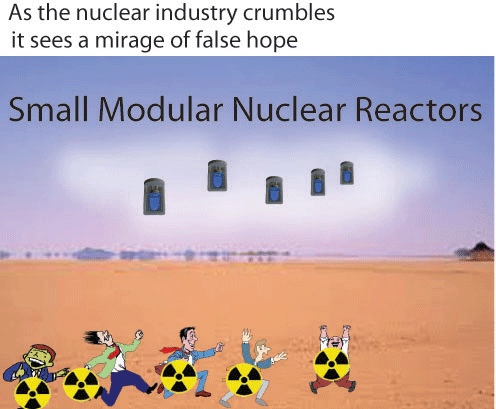
”Nuclear power is slow, dangerous and extortionately expensive. It will do nothing to address the current energy crisis, neither will it be effective to counter climate change”
Reviving nuclear power station projects such as Wylfa B on Anglesey and Trawsfynydd in Gwynedd is at the heart of the UK Government’s ambitions to attain net zero carbon emissions by 2035, government sources have said.
The UK Government is expected to reveal its new nuclear strategy in documents to be published next week, alongside a plan for how to pay for the new array of nuclear plants. US nuclear company Westinghouse is planning to revive plans for a nuclear power plant at Wylfa that was abandoned by Japan’s Hitachi in 2019, and the UK Government has indicated that it is keen to see the plan come to fruition.

Ministers are also expected to back smaller modular reactors which are being developed by a consortium led by Rolls-Royce. One of these is planned for installation in the now-decommissioned Trawsfynydd nuclear plant. Kwasi Kwarteng, the business secretary who has been under fire from industry this week due to
the rising cost of energy prices, is to unveil the overarching ‘Net Zero Strategy’ paper on Monday.
According to the Financial Times, the strategy will have a “heavy focus” on Britain’s languishing nuclear power
programme. Under the plans, an energy levy on consumers by the UK Government finance the cost of producing the power before the nuclear energy plants are built. Kwasi Kwarteng has set a target of 2035 to reach
‘net zero’ based on nuclear power, renewables and carbon capture and storage.
Anti-nuclear groups have already criticised the plans, saying that the emphasis should be placed on green renewable energy instead. Dylan Morgan of PAWB (People Against Wylfa B) said: “We have an immediate crisis now. Building huge reactors at a nuclear power station take at least 15 years. “Nuclear power is slow, dangerous and extortionately expensive. It will do nothing to address the current energy crisis, neither will it be effective to counter climate change”
Nation Cymru 16th Oct 2021
US nuclear submarine accident sparks safety fears in South China Sea
US nuclear submarine accident sparks safety fears in South China Sea https://www.scmp.com/news/china/military/article/3152181/us-nuclear-submarine-accident-sparks-safety-fears-south-china?module=perpetual_scroll&pgtype=article&campaign=3152181Busy waterway’s complex underwater terrain and shipping litter make it a challenging environment for the giant vessels
Collision has also highlighted the difficulties in safely disposing of the reactors from decommissioned subs, with no agreed guidelines, experts say. Minnie Chan 16 Oct, 2021
The damage to a US nuclear attack submarine which collided with a mystery object in the South China Sea earlier this month has raised concerns about their operational safety, as well as what happens to damaged and decommissioned nuclear reactors.
Defence experts have warned that nuclear submarines – among the world’s deadliest weapons – are also vulnerable in the event of an underwater accident causing a nuclear leak, regardless of whether they are general-purpose attack subs (SSN) or platforms for the launch of ballistic missiles (SSBN).
Orano’s nuclear reprocessing problems at La Hague
Nuclear: the CGT denounces “a congestion” of rejects from Mox in Orano La
Hague. Due to recycling problems at the Marcoule plant, Orano La Hague has
to deal with scraps from Mox. A situation denounced by Greenpeace, but
under control according to Orano.
La Presse de la Manche 15th Oct 2021
Sizewell C nuclear station – a white elephant that will irreversibly damage the environment
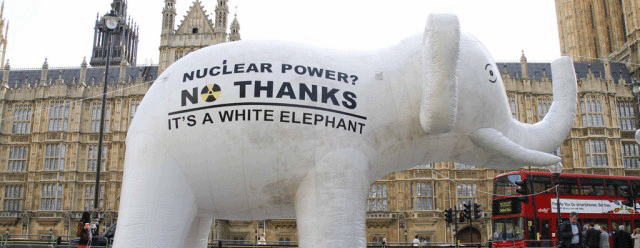
Campaigners protesting the building of Sizewell C have responded with
frustration to EDF’s £250 million package of funding to mitigate the
impacts of the proposed site. The biggest concern for those against the
project was the money put towards environmental causes – £78 million for
an independent environmental body to enhance the landscape of the area and
£22 million for investment in landscape impact mitigation and creation of
wildlife and habitat areas.
“It’s notable that by far the biggest sum –
£100 million – is for environmental projects,” said Alison Downes from
Stop Sizewell C. “This work will have to be ongoing for decades – through
the life of the station and potentially decommissioning – to make any
significant difference.”
“The environmental funding is simply a
recognition of the long term and irreversible damage they will do to the
environment,” said Pete Wilkinson of Together Against Sizewell C. “The
rest is a measure of the damage to this community EDF intends to inflict
for what will be a huge white elephant on our eroding, heritage coast.”
East Anglian Daily Times 15th Oct 2021
https://www.eadt.co.uk/news/sizewell-c-campaigners-react-to-money-plans-8415128
Demonising China is unhelpful while encouraging China to participate in Cop26
As Britain prepares to host the Cop26 climate conference in Glasgow next month, it is pursuing two contradictory policies that undermine its chances of success. On the one hand, it is seeking a unified global response to the climate crisis with nations agreeing to targets for the reduction of their coal and petroleum emissions.
But at the same time, it has joined the US in escalating a new cold war directed at confronting China and Russia at every turn. The two policies have polar opposite objectives in trying to persuade China, responsible for 27 per cent of global carbon emissions, to cut back on building new coal-fuelled power stations, but at the same time demonising China as a pariah state with whom political, commercial and intellectual contacts should be as limited as possible.
Independent 15th Oct 2021
https://www.independent.co.uk/climate-change/opinion/china-russia-climate-cop26-b1939164.html
AUKUS and the Philippines – sleepwalking into military-nuclear entanglements

From peaceful, nuclear-free Asean to battle-ready Indo-Pacific? Manila Times, By Dan Steinbock, October 18, 2021As the Duterte era is gradually ending, new arms races and nuclear proliferation cast a dark shadow over Southeast Asia. The Philippines may be sleepwalking into military-nuclear entanglements.
ACCORDING to the new trilateral security pact between the United States, the United Kingdom and Australia (Aukus), Washington and London will “help” Canberra to develop and deploy nuclear-powered submarines.
The highly controversial $66-billion deal is expected to trigger arms races and nuclear proliferation in Asia. It violates the Southeast Asian Nuclear-Weapon-Free Zone Treaty (SEANWFZ, 1995), effective since 1997. It would seem to violate the Philippine Constitution. And it is strongly opposed by China.
Yet, right after the Aukus, when Asean began to build consensus on the nuclear pact, Philippine Foreign Affairs Secretary Teodoro Locsin Jr. welcomed the pact.
PH policies, Asean concerns
According to Locsin, the Philippines “welcomes Australia’s decision to establish” the Aukus. And he added: “Asean member states, singly and collectively, do not possess the military wherewithal to maintain peace and security in Southeast Asia.”
According to this logic, Asean is irrelevant in matters of regional peace and security and therefore each Asean should align with one or another major military power, irrespective of collective consequences.
Such logic shuns and could derail, inadvertently or purposefully, the ongoing work by the Asean and China on the Code of Conduct for the South China Sea by 2022. Most importantly, the logic opens the door to the nuclearization of the region at the expense of the SEANWFZ treaty and the aspirations of the Asean community. That’s why Malaysia’s veteran statesman Mahathir Mohamad blasted the Aukus statement: “You have escalated the threat.”
The first reaction of both Malaysia and Indonesia was to warn of an impending arms race unleashed by such a pact. Australia’s nuclear decision prompted the Indonesian foreign ministry’s official note that it was “deeply concerned over the continuing arms race and power projection in the region.” So, why did Locsin choose to break ranks with the Asean?
ADRi: China the issue of 2022
The plan to drag the Philippines into the Indo-Pacific containment front against China seems to have evolved in the mid-2010s, but fell apart with the Duterte election triumph and the meltdown of the Liberal Party.
To avoid a déjà vu, former Foreign Affairs secretary Albert del Rosario recently called on the Philippines to choose a leader who will reverse President Rodrigo Duterte‘s policy of “loving and embracing” China after the “’22 polls.”
In this quest, a key supportive role belongs to the Stratbase Albert del Rosario Institute (ADRi), embedded with US business and national security interests. Through its board members and executives, Rosario’s ADRi is joined with its parent, Stratbase, an “advisory and research consultancy,” and Bower Group Asia led by Ernest Z. Bower 4th. Stratbase is the Philippine partner of Bower Group Asia.
Until the 2000s, Bower led the US-Asean Business Council. He is an ADRi board member and Southeast Asia advisor at the Center for Strategic and International Studies (CSIS), a leading US think-tank close to the State Department, Pentagon, defense contractors and Wall Street.
The maritime dispute with China, said ADRi’s president Victor Manhit, is what “we will make an issue in the 2022 elections.” Due to interlocking leaderships, Manhit himself heads Stratbase and Bower Asia Group‘s Philippine branch.
The goals go back to the Benigno “Noynoy” Aquino 3rd government (2010 to 2016).
As the Duterte era is gradually ending, new arms races and nuclear proliferation cast a dark shadow over Southeast Asia. The Philippines may be sleepwalking into military-nuclear entanglements.
ACCORDING to the new trilateral security pact between the United States, the United Kingdom and Australia (Aukus), Washington and London will “help” Canberra to develop and deploy nuclear-powered submarines.
The highly controversial $66-billion deal is expected to trigger arms races and nuclear proliferation in Asia. It violates the Southeast Asian Nuclear-Weapon-Free Zone Treaty (SEANWFZ, 1995), effective since 1997. It would seem to violate the Philippine Constitution. And it is strongly opposed by China.
Yet, right after the Aukus, when Asean began to build consensus on the nuclear pact, Philippine Foreign Affairs Secretary Teodoro Locsin Jr. welcomed the pact.
Such logic shuns and could derail, inadvertently or purposefully, the ongoing work by the Asean and China on the Code of Conduct for the South China Sea by 2022. Most importantly, the logic opens the door to the nuclearization of the region at the expense of the SEANWFZ treaty and the aspirations of the Asean community. That’s why Malaysia’s veteran statesman Mahathir Mohamad blasted the Aukus statement: “You have escalated the threat.”
The first reaction of both Malaysia and Indonesia was to warn of an impending arms race unleashed by such a pact. Australia’s nuclear decision prompted the Indonesian foreign ministry’s official note that it was “deeply concerned over the continuing arms race and power projection in the region.” So, why did Locsin choose to break ranks with the Asean?…………..
Conflicts of interest, military entanglements…………..
…….. the Aukus pact does contribute to the ongoing arms races in Southeast Asia. It will foster nuclear proliferation in the region. It violates the goals of the nuclear-free Southeast Asia treaty. It is not in line with the Philippine Constitution.
President Duterte has pledged to end the bilateral military deal with Washington if US nuclear weapons are found in the Philippines. But his term will end by next summer.
Obviously, Australia, the US and UK seek to calm Asean members, arguing that nuclear weapons are not really for military purposes. But since 1945, assurances have not been reliable in nuclear matters. During the Cold War, US nuclear warheads were secretly stockpiled in the Philippines. Moreover, in the 1965 Philippine Sea A-4 crash, a US Skyhawk attack aircraft fell into the sea off Japan. Coming from the US Naval Base in Subic Bay, it was carrying a nuclear weapon with 80 times the blast power of the Hiroshima explosion.
It wasn’t until 1989 that the Pentagon disclosed the loss of the 1-megaton hydrogen bomb.
New policy? Two policies? No policy?
Today, the destructive power of these weapons is far greater, as stressed by the International Campaign to Abolish Nuclear Weapons (ICAN). In January, the Philippines ratified the ICAN’s legally binding Treaty on the Prohibition of Nuclear Weapons (TPNW). On May 19, Locsin stated that the Philippines welcomes the Aukus nuclear pact.
Only two days later, Locsin reaffirmed the Philippines’ “principled policy and commitment toward the complete prohibition of nuclear weapons as enshrined in the relevant provisions of the Philippine Constitution and the Treaty.”
The Philippines’ principled policy is crystal clear: The country definitely welcomes nuclear proliferation in Southeast Asia. And the country is absolutely committed against nuclear-free Southeast Asia. Where will that “principled policy and commitment” take us after the 2022 election?
 |
Keep space for peace – opposition to New Zealand’s space industry and its military connections
NZ’s $1.7 billion space industry rockets away, but a law review sparks more debate about controversial military payloads, Stuff Amanda Cropp, Oct 17 2021 ”……………….. how far and how fast the New Zealand space industry has come since Rocket Lab’s first test launch blasted off in 2017 from its Māhia Peninsula launch site, with millions being invested by the Government and the private sector.A review of the Outer Space and High-Altitude Activities Act that regulates launches and payloads received only 17 responses last month, but consultation on the “peaceful, sustainable and responsible” use of space, delayed until next year because of Covid-19, is likely to get a much more heated reception.
Peace groups, the Green Party and members of the Māhia community have already been vocal about their opposition to Rocket Lab’s military work in the wake of the controversial Gunsmoke-J satellite it launched for the United States Army Space and Missile Defence Co………….
…… The Outer Space and High-Altitude Activities Act outlaws payloads that contribute to nuclear weapons programmes or capabilities, harm, interfere with or destroy other spacecraft or systems on earth; support or enable specific defence, security or intelligence operations that are contrary to government policy, or are likely to cause serious or irreversible harm to the environment…………….
Space for Peace
In March, 17 peace groups wrote an open letter to Prime Minister Jacinda Ardern saying the Gunsmoke-J launch appeared to breach both the New Zealand Nuclear Free Zone, Disarmament and Arms Control Act and the Cabinet-approved to payload assessments.
They argued that because US military strategy was increasingly using satellite systems to control and direct nuclear, as well as non-nuclear, weapons, it was extremely difficult to determine whether any given satellite was contributing to supporting this weapons system.
……… In mid-September the Anti-Bases Campaign had about 100 attendees at a Keep Space for Peace webinar, and organiser Murray Horton says they were primarily concerned Rocket Lab’s Auckland and Māhia operations effectively constituted a US base in New Zealand, albeit a privately owned one.
Sonya Smith of the Māhia’s Rocket Lab Monitoring Group says they want future regulations to include a clause outlawing payloads that will “assist in the operation of a weapon”.
Professor Kevin Clements is a member of the Peace Foundation International Affairs and Disarmament Committee, which was a signatory to the letter to the prime minister, and he does not believe MBIE is the appropriate agency to vet payloads.
“They have a vested interest in seeing [space] is a thriving industry bringing dollars into the New Zealand economy. This needs to be handled by the prime minister’s department.”…….. https://www.stuff.co.nz/business/126560061/nzs-17-billion-space-industry-rockets-away-but-a-law-review-sparks-more-debate-about-controversial-military-payloads
1 This Month

Read the Public Inquiry Report, the Commissioners’ report, Surrendering Australia: The AUKUS Deception is available to download for free at aukuspublicinquiry.com. Or just watch the replay of the National Press Club Luncheon.


19 November – Webinar – The Reality of Reprocessing
Time: 11:00 AM Pacific Time (US & Canada) / 2:00 PM Eastern / 7:00 PM UK / 8:00 PM CET
Register for the Zoom Event Here



Shut down the radiation-damaged Heysham nuclear reactors now
To see nuclear-related stories in greater depth and intensity – go to https://nuclearinformation.wordpress.com

Say No to NASA’s Reckless Nuclear Reactor on the Moon
Say No to NASA’s Reckless Nuclear Reactor on the Moon
-
Archives
- November 2026 (93)
- October 2026 (302)
- September 2026 (339)
- August 2026 (330)
- July 2026 (355)
- June 2026 (287)
- May 2026 (306)
- April 2026 (356)
- March 2026 (251)
- February 2026 (267)
- January 2026 (308)
- December 2025 (358)
-
Categories
- 1
- 1 NUCLEAR ISSUES
- business and costs
- climate change
- culture and arts
- ENERGY
- environment
- health
- history
- indigenous issues
- Legal
- marketing of nuclear
- media
- opposition to nuclear
- PERSONAL STORIES
- politics
- politics international
- Religion and ethics
- safety
- secrets,lies and civil liberties
- spinbuster
- technology
- Uranium
- wastes
- weapons and war
- Women
- 2 WORLD
- ACTION
- AFRICA
- Atrocities
- AUSTRALIA
- Christina's notes
- Christina's themes
- culture and arts
- Events
- Fuk 2022
- Fuk 2023
- Fukushima 2017
- Fukushima 2018
- fukushima 2019
- Fukushima 2020
- Fukushima 2021
- general
- global warming
- Humour (God we need it)
- Nuclear
- RARE EARTHS
- Reference
- resources – print
- Resources -audiovicual
- Weekly Newsletter
- World
- World Nuclear
- YouTube
-
RSS
Entries RSS
Comments RSS

