Insurance industry not convinced that nuclear power is ”green”, and is wary of nuclear as an investment risk.
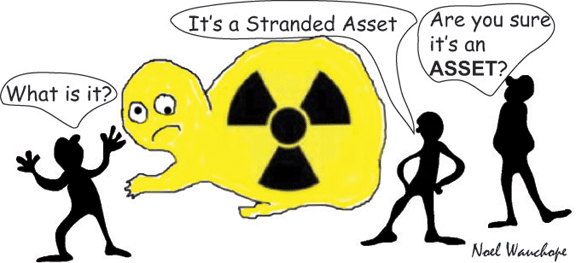
INSURANCE ASSET RISK
IAR 2021 EMEA conference: highlights from day 2
”…………what constitutes a ‘green’ asset is not yet universally accepted, and this became apparent during a panel on infrastructure investing. The question of nuclear financing crept in the debate, and although politicians may have their ideas on the topic, the jury is still out for investors.….. https://www.insuranceassetrisk.com/content/news/iar-2021-emea-conference-highlights-form-day-2.html
The nuclear industry might get taxpayers money by calling itself ”amber”, if it’s too hard to appear ”green”
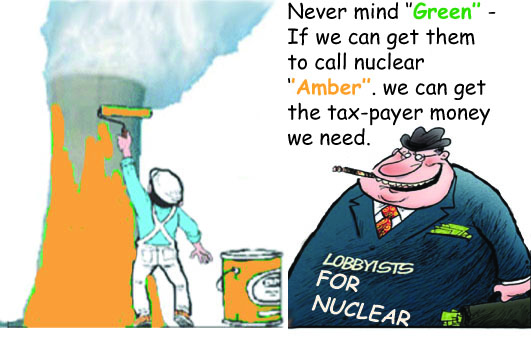
possible compromises included creating an “amber” label for activity that did not win the green label but would still secure a place in the bloc’s transition and not discourage private sector investment. ………..
Brussels to delay decision on how to classify nuclear power for green finance. Debate over energy has been supercharged by surging electricity costs, Ft.com Mehreen Khan and Sam Fleming in Brussels, 20 Oct 21
Brussels will delay long-awaited proposals on how to classify nuclear power and natural gas under the EU’s landmark labelling system for green finance, as member states demand looser rules to help counteract the continent’s energy crisis. EU financial services commissioner Mairead McGuinness told the Financial Times that Brussels would take more time before deciding how to deal with the controversial energy sources under the so-called “taxonomy on sustainable finance” that had been due this autumn.
The debate about how to classify low carbon natural gas and nuclear energy, which produces no CO2 [ ed.except in its long complex fuel and waste chains] but whose waste byproducts are toxic for the environment, has been supercharged by surging electricity costs that have prompted EU governments into emergency financial action to protect households. European leaders are due to debate the taxonomy and how to mitigate soaring prices at a summit in Brussels on Thursday.
“As we come to the end of the year there will be more pressure to resolve this,” said McGuinness. “We don’t have a ready-made solution because this is, both technically but politically . . . one of those issues where you have very divided views.” Europe’s pro-nuclear countries, led by France, and pro-gas member states in the south and east, are demanding the taxonomy rules do not penalise technologies they say are vital in securing the transition to net zero emissions. Environmental groups, however, want the system to abide by scientific criteria to ensure the rules stamp out, rather than encourage, so-called “greenwashing” in the investment industry. ………..
Europe’s energy crisis is the latest challenge to the credibility of the EU’s green labelling system which was designed to be a “gold standard” for investors to know what counts as truly sustainable economic activity. But the rules have been mired in controversy as Brussels struggles to balance science with sensitive political decisions about whether to award some activities the highest green label — penalising those that do not. Ten countries, including France, Finland, Poland and Hungary this week said it is “absolutely necessary that nuclear power was included in the taxonomy framework”.
McGuinness said it remained an “open question” as to whether the green label would be expanded to “accommodate nuclear and gas”. She said possible compromises included creating an “amber” label for activity that did not win the green label but would still secure a place in the bloc’s transition and not discourage private sector investment. ………..
The rules are being closely watched by investors and regulators in the US and UK, who have also said they will come up with their own classification systems. Within the EU, the taxonomy will be used to judge whether investments made by member states are truly green and will form the basis for an EU “green bond standard” that will be used to issue €250bn in sustainable debt under the bloc’s recovery fund. https://www.ft.com/content/898e6c53-8e85-4cfc-b00b-16a09d50b462
UK’s ”Net Zero” climate strategy fails to give concrete commits to reduce energy use, promote renewables.

| In reaction to the government’s Net Zero Strategy, Rebecca Newsom, Greenpeace UK’s head of politics, said “This document is more like a pick and mix than the substantial meal that we need to reach net zero. Extra cash for tree planting and progress on electric vehicles doesn’t make up for the lack of concrete plans to deliver renewables at scale, extra investment in public transport, or a firm commitment to end new oil and gas licences. There are only half-hearted policies and funding commitments to decarbonise our draughty homes at the speed necessary, and it fundamentally fails to grapple with the need to reduce our meat and dairy consumption to stop global deforestation. With just eight years left to halve global emissions, the government can’t just keep dining out on its ‘ambitious targets’. Until the policy and funding gaps are closed, Boris Johnson’s plea to other countries to deliver on their promises at the global climate conference next month will be easy to ignore.” Greenpeace 19th Oct 2021 https://www.greenpeace.org.uk/latest-updates/?news_type=press-release |
Tamil Nadu leaders call for a nuclear-free zone, and stopping of development of Kudankulam project

—TAMIL NADU Declare T.N. a nuclear free zone, say leaders https://www.thehindu.com/news/national/tamil-nadu/declare-tn-a-nuclear-free-zone-say-leaders/article37100662.ece 20 Oct 21, They express concern over KKNPP
Leaders of political parties, led by VCK chief Thol. Thirumavalavan, on Wednesday sought to declare Tamil Nadu a “nuclear-free zone”.
At a press conference here, he said the unscientific disposal of radioactive waste from the nuclear reactor at Kudankulam was likely to increase the risk to public health. “Experts have said some of the reasons for the disaster in Chernobyl and Fukushima were similar to the existing conditions at Kudankulam,” he said.
Pointing to the issues in the disposal of radioactive waste from the Kudankulam reactor, Mr. Thirumavalavan said the Union Government had continued such activities which were dangerous to people. “The Union Government should suspend the operations pertaining to the third and fourth reactors. It should announce the location of the deep geological repository before conducting the public consultations on the development of the facility away from reactor.”
The government should not develop the fifth and sixth reactors too, he added.
The group of leaders called for a White Paper on the Kudankulam project and the withdrawal of cases against the residents who protested against the project.
The first reactor was stopped for maintenance from June 22 and resumed operations on September 2. After 35 days, it was stopped again. The frequent disruption of operations and snags had increased the risk of disaster, a release said.
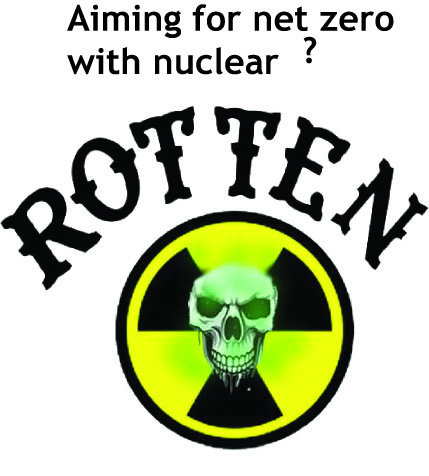
If nuclear is at the heart of our trip to net-zero, then it is a rotten heart.
A substantial step forward, or huge letdown? The green economy reacts to the Net-Zero Strategy. The UK’s Net-Zero Strategy is finally here, but the reaction to the nation’s blueprint to decarbonisation ranges from those believing it provides much-needed clarity for business to others claiming it does nowhere near enough to drive all parts of the economy to net-zero by 2050.
Tom Burke, chair, E3G said “New nuclear power can do nothing to help the UK achieve a net-zero power system by 2035. It will, however, take away a huge amount of public investment from things that could get us to net-zero cheaper and faster. If nuclear is at the heart of our trip to net-zero, then it is a rotten heart.”
Edie 19th Oct 2021
Nuclear power is itself vulnerable to climate change, and there are better ways to tackle global heating

As Michael E Mann, another giant of climate science activism, points out in his book, The New Climate War, nuclear support has long seemed a “shibboleth” for US conservatives; its opposition more a feature of the left. Nuclear energy comes with a lot of politically-toned symbolism here in the UK too. For some it represents security (all the more potent in the face of a gas crisis), for others, including the Scottish Greens who criticised possible UK plans recently, a terrifying threat to public and environmental safety.
But it’s worth noting that Mann, unlike Hansen, is sceptical about nuclear, citing not only the dangers and problems of waste, but also the fact that climate change itself, floods and drought, could make reactors more vulnerable.
“If we are forced into a choice between one risk or the other,” he writes, “a reasonable argument could be made that there’s a significant role to be played by nuclear energy.
The problem with this argument is that it buys into the fallacy that nuclear power is necessary for us to decarbonise our economy.” We can do it, he says, with renewables – and it would be cheaper. “The average nuclear power generating cost is about $100 per megawatt-hour, compared with $50 for solar and $30 to $40 for onshore winds,”he notes.
James Hansen says nuclear power is answer to climate. Is he right? https://www.heraldscotland.com/opinion/19653021.james-hansen-says-nuclear-power-answer-climate-right/ By Vicky Allan, Senior features writer 18th October
Last week, James Hansen, prominent climate scientist and a keen advocate of nuclear power, gave his verdict on the current path of the UK. “Regarding Boris Johnson: it’s possible he will put the UK on a path to 100 percent clean electricity (renewables + nuclear, no gas or coal), in which case the UK, which led us into the fossil fuel era, could lead us out.”
Just a few days ago it was announced that the UK government was poised to approve funding for a fleet of Rolls-Royce mini nuclear reactors. And with that, the way is paved for modern nuclear. The fears provoked by the memories of Fukushima, Three Mile Island and Chernobyl are dismissed, passed over, or countered.
We have a climate guru like Hansen saying that the only answer can be the “development and deployment of modern nuclear power”.“Otherwise,” he says, “gas will be the required complement to intermittent renewable energy for electricity generation…Modern nuclear power, in contrast, has the smallest environmental footprint of the potential energies because of its high energy density and the small volume of its waste, which is well-contained, unlike wastes of other energy sources.”
How did we come to this? How did the search for an answer to a climate crisis caused by an excess of an everyday, non-toxic gas, land on a technology which, though now vastly improved in terms of safety, still comes with a risk of terrifying toxicity?
I don’t want to plunge into any kneejerk anti-nuclear tirade. I realise how politically tribal our responses on this can be. As Michael E Mann, another giant of climate science activism, points out in his book, The New Climate War, nuclear support has long seemed a “shibboleth” for US conservatives; its opposition more a feature of the left. Nuclear energy comes with a lot of politically-toned symbolism here in the UK too. For some it represents security (all the more potent in the face of a gas crisis), for others, including the Scottish Greens who criticised possible UK plans recently, a terrifying threat to public and environmental safety.
But it’s worth noting that Mann, unlike Hansen, is sceptical about nuclear, citing not only the dangers and problems of waste, but also the fact that climate change itself, floods and drought, could make reactors more vulnerable. “If we are forced into a choice between one risk or the other,” he writes, “a reasonable argument could be made that there’s a significant role to be played by nuclear energy. The problem with this argument is that it buys into the fallacy that nuclear power is necessary for us to decarbonise our economy.” We can do it, he says, with renewables – and it would be cheaper. “The average nuclear power generating cost is about $100 per megawatt-hour, compared with $50 for solar and $30 to $40 for onshore winds,”he notes.
That chimes with a recent report issued by INET Oxford, which looked at progress on renewables according to Wright’s Learning Curve, which predicts how costs and efficiency change with investment. It found that “a major, accelerated push to deploy renewables and drive out carbon emitting fossil fuels is likely to lower energy costs by trillions of dollars”.
Even the National Grid’s recently published Future Energy Scenarios report did not rely on new nuclear. The most ambitious of its three different plans for progress towards net zero focussed on renewables, storage and “only very limited new nuclear development after Hinckley Point C”.
It strikes me that nuclear is the “clean energy” we turn to in pessimism, when we think that all the other changes aren’t going to happen – the societal change, the development of storage, the advance in renewables. It’s not surprising Hansen feels that pessimism;it’s what experience tells him. Since he started calling out anthropogenic climate change in 1988 our yearly emissions have only grown.
Still, my hope, though it may be naïve, is that we are nearing a paradigm shift. Nuclear is what we look to when we feel cornered into embracing its risks. But we can reach for more.
Rolls Royce ”small” nuclear reactors – not really small, not useful against climate change, but useful for military purposes

Answers to the energy and climate crises are needed NOW. These answers are available based on a comprehensive programme of developing renewable energy and energy conservation technologies.
Every pound wasted on nuclear power will be a pound taken away from faster and more effectivesolutions offered by renewable energy and energy conservation.
It is reported that the Tory government will restate its support on Monday, 18 October to buiding a fleet of modular nuclear reactors. The favoured reactor is the Rolls Royce SMR, namely ‘Small ModularReactor’. This term is very misleading as the Rolls Royce reactor would produce 450MW of electricity, which is more than the output of the old Magnox station at Trawsfynydd, and the same size as one of old big Magnox reactors at Wylfa.

It is known that Rolls Royce are asking for huge public subsidies to realise their nuclear ambitions. This movement towardsbuilding reactors to produce electricity is closely related to their wish to safeguard skills in the reactors they provide for submarines carrying nuclear weapons. Civil and military nuclear are two sides of the same coin. Rolls Royce claim they would like to build 18 SMRs.
How far will the government be prepared to go to fund a far from new technology and like larger nuclear reactors, is open to accidents and radioactive leaks, and produces poisonous and lethal radioactive waste.
Also mentioned is the possibility of Bechtel/Westinghouse trying to push the Westinghouse AP1000 reactor on the Johnson government to be developed at the Wylfa site. This is the very reactor on the V.C.Summer site in South Carolina that
bankrupted Toshiba Westinghouse in 2017. That happened due to huge overspending and the project was abandoned 40% of the way into construction. It was therefore no surprise that the NUGen Consortium project to build three AP1000s at Moorside near Sellafield collapsed in 2018. Nobody was prepared to invest in it. Exactly the same fate as the Hitachi/Horizon plan at Wylfa. Johnson and his ministers in the Treasury and the Business,
Energy and Industrial Stratregy Department are missing the point entirely as they cling on to past imperial grandeur by blindly
promoting nuclear power. Nuclear power is dirty, dangerous, extortionately expensive, and a threat to environmental and human health. Nuclear power will do nothing to tackle the present energy crisis, nor will it effectively counteract the effects of climate change., and we certainly cannot afford to waste the fifteen years needed to build large new nuclear stations
Answers to the energy and climate crises are needed NOW. These answers are available based on a comprehensive programme of developing renewable energy and energy conservation technologies. Every pound wasted on nuclear power will be a pound taken away from faster and more effectivesolutions offered by renewable energy and energy conservation.
People Against Wylfa B 18th Oct 2021
British government’s enthusiasm for mini nuclear reactors, led by Rolls Royce and 8 other organisations

Brexit Britain strikes historic £210m deal with Rolls-Royce to create nuclear reactors
BREXIT Britain is set to see its emissions slashed as the Government is poised to make a landmark deal with Rolls-Royce to fund a fleet of nuclear mini-reactors.
Express UK, By JACOB PAUL, Mon, Oct 18, 2021 The move is set to help Prime Minister Boris Johnson race to his target of zero-carbon electricity by 2035 in a move set to impress ahead of the COP26 climate summit in Glasgow in less than two weeks time. Mr Johnson visited Rolls-Royce’s Bristol factory on Friday, where he was shown their state-of -the-art facility by their CEO, Warren East. A consortium led by Rolls-Royce had already secured £210million in backing from private investors for the small modular reactor (SMR) project, a sum that the Government is expected to match and even surpass.
Confirmation is expected before the spending review on October 27.
The consortium called UK SMR, is set to rebrand British engineering firm Rolls-Royce SMR under a request from the Government. Tom Greatrex, chief executive of the Nuclear Industry Association (NIA), said: “Match-funding for Rolls-Royce would be a huge signal to private investors that the government wants SMRs alongside new large-scale stations to hit net zero.
It would also show investors that the Government believes in nuclear as a green technology.”
Government support will help with the consortium’s multi-billion pound plans to build 16 SMRs up and down the country……………… Rolls-Royce is also being advised by HSBC, which has helped it secure £210million from private investors, which was a condition set by the government for them to hand out at least the same amount of funding.
This move could also signal a possible U-turn from the Government on their scheduled phasing out of nuclear power in the UK.
13 nuclear reactors capable of producing 7.8GW of power currently produce around 20 percent of the nation’s electricity.
But over half of that capacity comes from reactors that are scheduled to be replaced or halted by 2025. https://www.express.co.uk/news/science/1507881/brexit-britain-rolls-royce-nuclear-power-boris-johnson-cop26-climate-change
Backlash against Japanese Prime Minister’s haste to dump Fukushima nuclear water into the ocean

Kishida triggers backlash by saying dumping Fukushima nuclear water can’t be delayed, Global Times, By Xu Keyue: Oct 19, 2021 Only two weeks after taking office, Japan’s new prime minister Fumio Kishida pressed two hot buttons on the same day on Sunday – sending a ritual offering to the war-linked Yasukuni Shrine, and claiming the Fukushima wastewater release cannot be delayed, despite opposition from home and abroad.
Instead of taking full advantage of its own science and technology to process the Fukushima wastewater and deliver a qualified answer to the world over the water treatment, Japan has opted for its irresponsible plan to dump the wastewater as soon as possible and provided self-contradictory explanations for the decision, said Chinese experts.Speaking at his first visit to the tsunami-wrecked Fukushima nuclear plant since taking office, Kishida said the planned mass disposal of wastewater stored at the facility cannot be delayed, claiming his government would work to reassure residents nearby the plant about the technical safety of the wastewater disposal project, Asahi Shimbun reported Monday.
South Korea has expressed concern over Kishida’s plan to release the radioactive wastewater, according to South Korean media on Monday.
“Japan’s decision [to discharge the wastewater] was made without enough consultations with neighboring nations,” a senior South Korean foreign ministry official said. “We have expressed serious concerns and opposition to its plan, which could affect our people’s health and security as well as the ocean environment.”
The Tokyo Electric Power Company Holdings Inc. (TEPCO) has planned to build a one-kilometer undersea tunnel to release contaminated radioactive water out to sea, amid condemnation from fishermen, media reported in late August.
The plan again showed that Japan’s “explanation” over the safety of the water is “self-contradicting,” Liu Jiangyong, vice dean of the Institute of Modern International Relations at Tsinghua University, told the Global Times on Monday.
Assuming the wastewater has been processed without any side effects or pollution as the Japanese government claimed, and that people can even drink it, why does the Japanese government not simply discharge the water into the sea but plan to dump the water 1 kilometer away from the local residents? asked Liu. He also questioned the claim that it will have no impact on the marine environment and life chain, and asked why the water could not be recycled on land if the wastewater can be processed so cleanly and safely.
Japan can’t answer any of these questions, said Liu, noting that dumping the nuclear water shows that the water is “unusual.”…………. https://mail.google.com/mail/u/0/?tab=rm&ogbl#inbox?compose=DmwnWsTJtkLTcgrqMkBKSqBpmgbKhMHpzMMgttqhvJHgDJrfsKrtFCCwkflZJkjjhwgvJbPrQhFV
Concern in Association of Southeast Asian Nations (ASEAN) about Australia’s nuclear submarines
Indonesia, Malaysia concerned about Australia’s nuclear subs. By NINIEK KARMINI , 18 Oct 21,
JAKARTA, Indonesia (AP) — The foreign ministers of Malaysia and Indonesia expressed concern Monday that Australia’s plan to obtain nuclear-powered submarines may increase the rivalry of major powers in Southeast Asia.
The U.S., Britain and Australia announced last month that they have formed a security alliance that will help equip Australia with nuclear-powered submarines. The alliance will reshape relations in the Indo-Pacific region and beyond……..
“This situation will certainly not benefit anyone,” Indonesian Foreign Minister Retno Marsudi said after meeting with her Malaysian counterpart, Saifuddin Abdullah, in Jakarta. “We both agreed that efforts to maintain a peaceful and stable region must continue and don’t want the current dynamics to cause tension in the arms race and also in power projection.”
The two ministers said at a joint news conference that they agreed to strengthen the unity and centrality of the Association of Southeast Asian Nations and urged all members of the bloc to contribute to the stability, security, peace and prosperity of the region and respect international law.
Saifuddin said having a near-neighbor build new nuclear-powered submarines could encourage other countries to come more frequently into Southeast Asian territory………………………..
ASEAN’s members are Brunei, Cambodia, Indonesia, Laos, Malaysia, Myanmar, the Philippines, Singapore, Thailand and Vietnam. Brunei is chair of the bloc this year.
ASEAN has formal partnerships with several countries including Australia, China, Canada, New Zealand, South Korea and Pakistan as well as the European Union.
Malaysia and Indonesia share many similarities in religion, language and culture. https://apnews.com/article/business-asia-australia-indonesia-global-trade-fbbf5b52e6822d01cdc11c8a5870ebb4
China did not test hypersonic nuclear missile, foreign ministry says.
China did not test hypersonic nuclear missile, foreign ministry says
China tested a space vehicle for possible reuse, not a nuclear-capable hypersonic missile as reported by the Financial Times, ministry saysAnalysts blame speculation over the ‘China threat’ on a lack of transparency, while playing down chances Beijing will launch nuclear weapons into space SCMP
Minnie Chan 18 Oct 21 China has denied reports that it recently tested a nuclear-capable hypersonic missile, saying it was only carrying out routine test flights in a bid to recycle spacecraft to reduce exploration costs.
“This was a routine test of a space vehicle to verify the technology of their reusability,” Chinese foreign ministry spokesman Zhao Lijian told a regular briefing in Beijing on Monday.
The launched object “was not a missile” with a military purpose, but “a space vehicle” for civilian aims, he emphasised….. https://www.scmp.com/news/china/military/article/3152791/china-did-not-test-hypersonic-nuclear-missile-foreign-ministry
The U.S. doesn’t need more nuclear weapons to counter China’s new missile silos
The U.S. doesn’t need more nuclear weapons to counter China’s new missile silos
Our current nuclear arsenal is more than enough for whatever Beijing is building. WP, 18 Oct 21, By Edward GeistEdward Geist is a policy researcher at the nonprofit, nonpartisan RAND Corporation.
The discovery of what appear to be hundreds of new missile silos under construction in China has inspired arguments that imply the United States needs more nuclear weapons. Matthew Kroenig, a Defense Department adviser during the Trump administration, suggested in a recent Wall Street Journal op-ed that “the Pentagon should study whether it can meet its deterrence requirements with existing stockpile numbers” in case “an increase … is necessary.”……….
But there’s little reason for the United States to worry much about whatever the Chinese military is building in these silos — and plenty of alternatives to building more nuclear weapons for dealing with it. The current U.S. nuclear arsenal was designed to guarantee deterrence even in the case of surprises such as this one. The nuclear weapons the United States already has should be adequate to counter the threat posed by new Chinese missiles even under very pessimistic assumptions. And if U.S. officials eventually decide they have to target the Chinese silos, nonnuclear weapons and sensors would provide a more credible deterrent than building additional nuclear weapons would……………………………………………….
| deploying more nuclear weapons might not be necessary. If a “shell game” is China’s aim, the United States could use remote sensing or other intelligence means to ascertain where the actual missiles are located. This could enable planners to avoid targeting empty silos and minimize the needed weapons.A real game-changer, however, would be a conventional weapon that could kill a silo without using a nuclear warhead. Such weapons were researched extensively during the late Cold War. They weren’t achieved with 20th-century technology, but progress in fields such as machine vision, terminal guidance and geospatial mapping may make them feasible in the not-distant future.A nonnuclear option would give a U.S. president a much easier choice for countering the silos. Such weapons would not violate the nuclear taboo or risk the hard-to-predict collateral damage of nuclear detonations………. https://www.washingtonpost.com/outlook/2021/10/18/china-silos-missiles-nuclear |
From Nuclear Regulatory Commission to nuclear energy company – another example of the revolving door
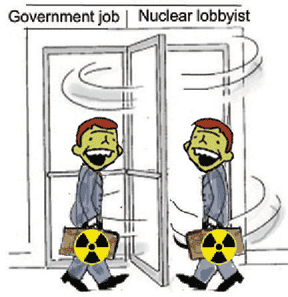
Former U.S. Nuclear Regulatory Commission Chairman Kristine L. Svinicki to Join Southern Company Board of Directors, Yahoo Finance , October 18, 2021,
ATLANTA, PRNewswire/ — The Board of Directors of Southern Company today announced the election of Kristine L. Svinicki as an independent director, effective Oct. 17, 2021.
As the longest serving member in the history of the U.S. Nuclear Regulatory Commission, Kristine brings to Southern Company a wealth of experience advising energy policy at the federal and state levels,” said Southern Company chairman, president and CEO Thomas A. Fanning. “Kristine’s knowledge of and expertise in nuclear technologies will be invaluable as we pursue the full range of energy resources………..https://finance.yahoo.com/news/former-u-nuclear-regulatory-commission-124500695.html
Prime Minister Fumio Kishida confirms release of Fukushima wastewater to start in 2023
Release of Fukushima wastewater to proceed: Kishida, The Guardian, TOKYO, 18 Oct 21,
New Japanese Prime Minister Fumio Kishida has said that there can be no delay to plans to release contaminated water from the wrecked Fukushima Dai-ichi nuclear power plant into the sea, despite opposition from fishers and neighboring countries.
Kishida, who made his first trip to the plant on Sunday since becoming prime minister last month, said every effort would be made to reassure local people that disposing of the water in the Pacific Ocean was safe……
Researchers have used snakes fitted with tracking devices and dosimeters to measure radiation levels in the area around the Fukushima Dai-ichi Nuclear Power Plant, which suffered triple meltdowns in March 2011……
More than 1 million tonnes of water are being stored in 1,000 tanks at the site, and TEPCO has said that space would run out late next year.
The government and TEPCO in April said that work to release the heavily diluted water would begin in the spring of 2023 and take decades to complete.
The move is opposed by nearby fishing communities, which say it would undo years of hard work rebuilding their industry’s reputation since the plant was struck by a huge tsunami in March 2011, soon after Japan’s northeast coast was rocked by a magnitude 9 earthquake.
The decision ended years of debate over what to do with the water, with other options including evaporation or the construction of more storage tanks at other sites. More than 1 million tonnes of water are being stored in 1,000 tanks at the site, and TEPCO has said that space would run out late next year.
The government and TEPCO in April said that work to release the heavily diluted water would begin in the spring of 2023 and take decades to complete.
The move is opposed by nearby fishing communities, which say it would undo years of hard work rebuilding their industry’s reputation since the plant was struck by a huge tsunami in March 2011, soon after Japan’s northeast coast was rocked by a magnitude 9 earthquake.
The decision ended years of debate over what to do with the water, with other options including evaporation or the construction of more storage tanks at other sites.More than 1 million tonnes of water are being stored in 1,000 tanks at the site, and TEPCO has said that space would run out late next year.
Japan has requested help from the International Atomic Energy Agency to ensure that the discharge meets global safety standards, including treating the wastewater so its radioactivity levels are below legal limits. https://www.taipeitimes.com/News/front/archives/2021/10/19/2003766372
Why the U.S. let Pakistan nuclear scientist A.Q. Khan off the hook

Former Netherlands Prime Minister Ruud Lubbers revealed in 2005 that Dutch authorities wanted to arrest Khan in 1975 and again in 1986 but that on each occasion the Central Intelligence Agency advised against taking such action. According to Lubbers, the CIA conveyed the message: “Give us all the information, but don’t arrest him.”
After Khan was tried in absentia and sentenced to four years in prison in 1983 for stealing uranium enrichment secrets from the Netherlands, files held by an Amsterdam court were mysteriously lost, with the main judge suspecting the CIA’s hand in their disappearance.
When an appeals court overturned Khan’s conviction on a technicality, the Netherlands — a key U.S. ally during the Cold War — declined to seek a retrial, effectively letting Khan off the hook. As the Financial Times put it, the Dutch “abandoned prosecution of the most consequential crime committed on their territory since the second world war.
Why the U.S. let Pakistan nuclear scientist A.Q. Khan off the hook https://asia.nikkei.com/Opinion/Why-the-U.S.-let-Pakistan-nuclear-scientist-A.Q.-Khan-off-the-hook
Decision could still come back to haunt Washington
Brahma Chellaney, October 18, 2021 Brahma Chellaney Is A Geostrategist And Author Of Nine Books, Including “Asian Juggernaut: The Rise Of China, India And Japan.”
The incredible story of Abdul Qadeer Khan, the Netherlands-trained Pakistani metallurgist who — with impunity — ran an illicit global nuclear-smuggling network for a quarter-century would make for a captivating thriller.
A key plotline would surely be the mystery of why Khan, who died on Oct. 10 from complications caused by COVID-19, was never indicted by the U.S. for stealing nuclear secrets from the West. Khan played a pivotal role in helping Pakistan develop nuclear weapons and then selling crucial know-how to three U.S.-labeled “rogue states” — Iran, North Korea and Libya.
Former Netherlands Prime Minister Ruud Lubbers revealed in 2005 that Dutch authorities wanted to arrest Khan in 1975 and again in 1986 but that on each occasion the Central Intelligence Agency advised against taking such action. According to Lubbers, the CIA conveyed the message: “Give us all the information, but don’t arrest him.”
After Khan was tried in absentia and sentenced to four years in prison in 1983 for stealing uranium enrichment secrets from the Netherlands, files held by an Amsterdam court were mysteriously lost, with the main judge suspecting the CIA’s hand in their disappearance.
When an appeals court overturned Khan’s conviction on a technicality, the Netherlands — a key U.S. ally during the Cold War — declined to seek a retrial, effectively letting Khan off the hook. As the Financial Times put it, the Dutch “abandoned prosecution of the most consequential crime committed on their territory since the second world war.”
Geopolitics partly explains why the CIA wanted to protect Khan.
While the U.S. and India are close partners today, at the time Dutch authorities were seeking to arrest Khan, the U.S. was not averse to the idea of Pakistan developing a nuclear-weapons capability to balance India, which had conducted its first nuclear test in 1974. For years, the U.S. simply turned a blind eye to Pakistan’s covert nuclear-weapons development.
American concerns, however, were stirred when Khan began selling nuclear items to other renegade states. U.S. pressure compelled Pakistan to open investigations into Khan’s activities in 2003 after Iran and Libya admitted to the International Atomic Energy Agency (IAEA) that Pakistan-linked black marketeers supplied them with the components they needed to advance their nuclear research.
In 2004, Khan appeared on national television asking for forgiveness, saying he had acted entirely on his own in passing on nuclear secrets to other countries. “I take full responsibility for my actions,” Khan said, “and seek your pardon.”
After this orchestrated confession, Pakistani dictator General Pervez Musharraf, citing Khan’s status as a national hero, pardoned him. Musharraf also barred U.S. or IAEA investigators from questioning Khan. Oddly, Washington went along with this charade, which extended to Khan’s ostensible house detention.
Investigative journalists Adrian Levy and Catherine Scott-Clark, in their acclaimed 2007 book Deception: Pakistan, the United States, and the Secret Trade in Nuclear Weapons, concluded that Khan was the fall guy. “The covert trade in doomsday technology was not the work of one man, but the foreign policy of a nation and supervised by Pakistan’s ruling military clique,” Levy and Scott-Clark wrote, adding that Pakistan’s generals have long maintained a nexus with terrorist groups.
The military’s collusion with Khan was underscored by the use of an army plane in 2000 to transport centrifuges to Pyongyang. In return, Pakistan received North Korean ballistic missile technology, helping it to build its first intermediate-range, nuclear-capable missile, Ghauri.
While most technology transfers appeared to be state-sanctioned, Khan likely sold some nuclear items for personal profit.
Still, despite exaggerated Western media reports then, no evidence has surfaced to indicate that the Pakistani transfers significantly contributed to advancing the Iranian, North Korean and Libyan nuclear programs. North Korea, the only recipient to cross the nuclear threshold, has long relied on plutonium, which the Khan network did not traffic.
Pakistan’s own nuclear weaponization benefited decisively from clandestine transfers from China, another archrival of India. Such transfers began in 1982, when, as Khan admitted, China supplied the blueprint for one of the nuclear bombs it had tested, as well as enough weapons-grade uranium for two atomic weapons.
Yet the U.S., just as it has not penalized China for its continuing nuclear and missile transfers to Pakistan, chose not to indict the rogue Pakistani scientist that spearheaded an international smuggling enterprise. Washington, however, has indicted a number of other individuals — including as recently as last year — for conspiring to smuggle nuclear goods to Pakistan.
America’s shielding of Khan, a nuclear jihadist committed to payback for real and imagined injustices against Muslims, was doubly ironic because it set the stage for Pakistan’s emergence as an epicenter for terrorism, with its own nuclear weapons acting as enough of a deterrent to retaliation by another state.
Indeed, through its humiliating Afghanistan defeat at the hands of the Taliban, America has tasted the bitter fruits of the Pakistani generals’ cross-border use of jihadist proxies from behind their protective nuclear shield.
The U.S. maintains contingency plans to seize Pakistan’s nuclear weapons if they risk falling into terrorist hands. But if a 9/11 style terrorist attack with a crude nuclear device were to occur anywhere in the world, the trail of devastation would likely lead back to Pakistan.
1 This Month

Read the Public Inquiry Report, the Commissioners’ report, Surrendering Australia: The AUKUS Deception is available to download for free at aukuspublicinquiry.com. Or just watch the replay of the National Press Club Luncheon.


19 November – Webinar – The Reality of Reprocessing
Time: 11:00 AM Pacific Time (US & Canada) / 2:00 PM Eastern / 7:00 PM UK / 8:00 PM CET
Register for the Zoom Event Here



Shut down the radiation-damaged Heysham nuclear reactors now
To see nuclear-related stories in greater depth and intensity – go to https://nuclearinformation.wordpress.com

Say No to NASA’s Reckless Nuclear Reactor on the Moon
Say No to NASA’s Reckless Nuclear Reactor on the Moon
-
Archives
- November 2026 (88)
- October 2026 (302)
- September 2026 (339)
- August 2026 (330)
- July 2026 (355)
- June 2026 (287)
- May 2026 (306)
- April 2026 (356)
- March 2026 (251)
- February 2026 (267)
- January 2026 (308)
- December 2025 (358)
-
Categories
- 1
- 1 NUCLEAR ISSUES
- business and costs
- climate change
- culture and arts
- ENERGY
- environment
- health
- history
- indigenous issues
- Legal
- marketing of nuclear
- media
- opposition to nuclear
- PERSONAL STORIES
- politics
- politics international
- Religion and ethics
- safety
- secrets,lies and civil liberties
- spinbuster
- technology
- Uranium
- wastes
- weapons and war
- Women
- 2 WORLD
- ACTION
- AFRICA
- Atrocities
- AUSTRALIA
- Christina's notes
- Christina's themes
- culture and arts
- Events
- Fuk 2022
- Fuk 2023
- Fukushima 2017
- Fukushima 2018
- fukushima 2019
- Fukushima 2020
- Fukushima 2021
- general
- global warming
- Humour (God we need it)
- Nuclear
- RARE EARTHS
- Reference
- resources – print
- Resources -audiovicual
- Weekly Newsletter
- World
- World Nuclear
- YouTube
-
RSS
Entries RSS
Comments RSS

