Russian deputy UN envoy supports China’s concern on AUKUS’ nuclear threat
Russian deputy UN envoy supports China’s concern on AUKUS’ nuclear threat
By Global Times Russia supported the concerns voiced by China on AUKUS, the new tripartite defense alliance formed with the intention of intimidating China, at a recent meeting of the UN General Assembly’s First Committee, saying that they are legitimate concerns as this kind of cooperation is related to the nuclear field and clearly has a military dimension.
More time and information are needed in order to respond properly to the trilateral nuclear cooperation, Russian Deputy Permanent Representative to the UN Office and Other International Organizations in Geneva Andrei Belousov, who represented Russia at recent meetings of the UN General Assembly’s First Committee in New York, was quoted as saying in Russian media reports. …………
He noted that ASEAN countries also expressed serious concerns at the First Committee’s session as they viewed AUKUS as a threat to regional security. In particular, the delegations of Indonesia and Malaysia said that the implementation of the initiative might trigger an arms race in the region.
The trilateral partnership announced in September will allow Australia to build at least eight nuclear-powered submarines using US technology. Russian President Vladimir Putin accused AUKUS of undermining regional stability and hoped the nuclear submarine cooperation will not develop in an unprecedented way and create additional problems in the region. Chinese Foreign Ministry spokesperson Zhao Lijian said on October 14 that the AUKUS nuclear submarine cooperation has created serious nuclear proliferation risks, and clearly violated the spirit of the Treaty on Non-Proliferation of Nuclear Weapons.
He noted that it would not only have a far-reaching impact on the international non-proliferation system, but also bring real threats to regional peace and stability. …….. https://www.globaltimes.cn/page/202111/1238296.shtml
UN ”Code of Conduct” towards preventing arms race in space, but no treaty banning weapons in space
Alice Slater, 7 Nov 21, The arms controllers have advanced their proposal for a Code of Conduct in space instead of a treaty to ban weapons in space. The country’s who have repeatedly been denied an opportunity to negotiate a space ban treaty in the consensus bound Disarmament Committee in Geneva, like Russia and China, have opposed this proposal, because it won’t create binding law and is an end run and distraction around negotiating a treaty to ban weapons in space. It will look like we’re doing something when we aren’t willing to be legally bound by it! The new American Empire way!!
Outer Space: UN Committee Advances Proposal on Rules Governing Behavior in Space
A United Nations panel overwhelmingly approved a resolution Nov. 1 to create a working group aimed at preventing an arms race in outer space, setting up the measure to pass in the General Assembly. The resolution, introduced by the United Kingdom with the support of more than 30 other nations, including the U.S., would establish an open-ended working group that would “ make recommendations on possible norms, rules and principles of responsible behaviors relating to threats by States to space systems.” The measure was approved by the U.N.’s First Committee, which deals with disarmament and international security threats, in a landslide 163-8 vote, with nine abstentions. Those opposed included Russia, China, North Korea, Iran, Cuba, Nicaragua, Venezuela, and Syria. (Air Force Magazine)
See also: UN Committee says yes to establishing space rules group (Space Watch)
See also: UN Committee Votes ‘Yes’ On UK-US-Backed Space Rules Group (Breaking Defense)
See also: The United Nations Could Finally Create New Rules for Space (Wired)
Positive announcements at COP26 do give some hope
Lang Banks, director of WWF Scotland, compared the start of COP26 to the
weather in Glasgow. He said: “During the opening days, it was overcast
and dreich with too few commitments from countries and too little money on
the table to address the climate crisis. “But as the week progressed, and
the weather improved, so did the signals coming out of COP. “There were
positive announcements from India to ramp up the use of renewables by 2030,
agreements by nations to cut methane emissions by 30% by the same date and
moves by some to phase out use of coal. “Coming in to COP, the UN
estimated the emissions reductions pledges on the table were leading us
to 2.7 degrees of warming.
The National 7th Nov 2021
Nation after nation at Glasgow pledges to abandon use of coal

The floodgates have broken. In shock after shock, diehard coal nations across the developing world have been lining up in Glasgow to forswear use of the dirtiest of fossil fuels. Four of the biggest coal emitters in East Asia have signed the pledge, promising to abandon new projects and shut down existing plants far earlier than almost anybody expected. “It’s a
massive deal.
The whole region is turning around and this really puts the screws on China to do more,” said Dave Jones from the anti-coal group Ember. “The really big surprises for all of us are Indonesia, Vietnam and the Philippines. These were countries that were planning an aggressive expansion of coal and now they are on the list. So is South Korea, which is the fifth biggest coal user in the world. We never thought we’d see this in Glasgow,” he said. Malaysia, Pakistan, Sri Lanka, Bangladesh, Egypt, Morocco, Ukraine, Poland, Chile, Zambia, and Cote d’Ivoire, among others, have signed the global ‘coal to clean power’ statement, vowing never again to issue new coal permits.
Telegraph 5th Nov 2021
https://www.telegraph.co.uk/business/2021/11/05/coal-power-consigned-history-glasgow/
Cop26 week one: the impression of progress – but not nearly enough
Cop26 week one: the impression of progress – but not nearly enough.
Analysis: the ‘significant outcomes’ came thick and fast but there are
question marks about credibility
Guardian 6th Nov 2021
Despite all the criticism, the COP climate process has made historic steps forward
The tidal wave of broadly positive announcements at the COP26 Climate
Summit this week has been met by a storm surge of molten hot media takes,
far too many of which have singularly failed to engage with the historic
significance of what might be happening in Glasgow.
For every potentially transformational net zero pledge, there have been naïve assessments of
whether or not any given announcement represents a ‘win’ for the UK hosts.
For each multi-billion dollar coal phase out plan, there have been
accusations of hypocritical virtue signalling, as if governments and
financiers seek to overhaul entire economies on a whim.
For all the evidence the Paris Agreement has catalysed an era-defining array of clean
tech innovations and a remarkable shift in public opinion, there have been
baseless arguments that the entire COP process is an exercise in futility.
We do not yet know how the denouement to the Glasgow Summit will play out.
But if the media allows the response to COP26 next week to be stripped of
context, shorn of nuance, and shaped by climate sceptic talking points,
then the efforts of thousands of people to deliver an historic step forward
in the global mission to avert climate disaster will have been done a grave
disservice.
Business Green 5th Nov 2021
https://www.businessgreen.com/blog-post/4039877/cop26-taking-takes
Prospects of limiting global heating to 1.8C on the basis of commitmentsmade at the Cop26 climate summit are, though good, only “a hypothesis”
Prospects of limiting global heating to 1.8C on the basis of commitments
made at the Cop26 climate summit are only “a hypothesis”, the godfather
of the Paris climate agreement has warned.
Laurent Fabius, the former
French prime minister who was president of the 2015 Paris summit, said he
was “very impressed” by the commitments made in the first week of the
Cop26 conference, including a deal to reduce the potent greenhouse gas
methane, a net zero target from India, plans from China to reduce emissions
and commitments on coal.
If those plans are fulfilled, according to the
International Energy Agency, global temperature increases could be limited
to 1.8C, which is below the Paris agreement’s upper goal of limiting
rises to 2C but well below its tougher aspiration of capping heating at
1.5C above pre-industrial levels.
Guardian 5th Nov 2021
Austria Backs Result-Oriented Nuclear Talk, re Iran
Austria Backs Result-Oriented Nuclear Talks, Financial Tribune , 7 Nov 21,
ustrian Foreign Minister Michael Linhart said that as an active host to negotiations on the revival of the 2015 nuclear deal, Vienna would do its utmost to support a successful outcome of the talks.
“We strongly hope that all sides return to full and effective implementation of the agreement,” he told IRNA ahead of the resumption of the talks that have been at pause for nearly five months.
The Vienna negotiations started in April to work out how the United States and Iran can return to full compliance with the nuclear deal, formally called the Joint Comprehensive Plan of Action……………….
Iran’s position is that all US sanctions must be removed before it reverses its countermeasures.
US State Department spokesperson Ned Price said Washington believes it remains possible to reach and implement an understanding in relatively short order if the Iranians are serious, but this window of opportunity will not be open forever.
Iranian President Ebrahim Raeisi stressed that the negotiations that Tehran is considering are result-oriented ones.
“We will not leave the negotiating table … but we will not retreat from the interests of our nation in any way,” he said.
Iran also demands a guarantee that the US would not abandon the deal once again, saying the talks would fail otherwise. https://financialtribune.com/articles/national/111022/austria-backs-result-oriented-nuclear-talks
UK govt calls for submissions on Nuclear Energy Financing Bill
Do you have relevant expertise and experience or a special interest in the
Nuclear Energy (Financing) Bill 2021-22, which is currently passing through
Parliament? If so, you can submit your views in writing to the House of
Commons Public Bill Committee which is going to consider this Bill. The
first sitting of the Public Bill Committee is expected to be on Tuesday 16
November. Written evidence can now be sent in to the Public Bill Committee.
The Committee is scheduled to report by Tuesday 30 November. However,
please note that when the Committee concludes its consideration of the Bill
it is no longer able to receive written evidence and it can conclude
earlier than the expected deadline of 5.00pm on Tuesday 30 November. You
are strongly advised to submit your written evidence as soon as possible.
The sooner you send in your submission, the more time the Committee will
have to take it into consideration.
House of Commons 4th Nov 2021
The EU Taxonomy is designed to identify which activities are green: it’s about science, not promoting business
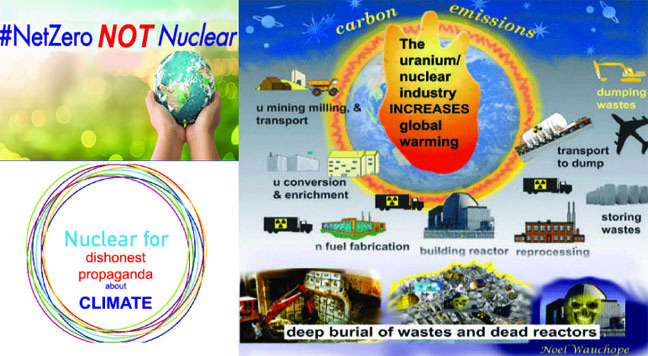
the EU Sustainable Taxonomy’s design is aimed at defining which economic activities are green – not which economic sectors are needed for the transition to a net-zero by 2050 economy
Decision-makers cannot let economic questions on energy security and cost thwart the scientific integrity of the EU Sustainable Taxonomy and still have an opportunity to save the credibility of the EU’s sustainable finance policy framework. It is now up to them to take responsibility
How to save the scientific integrity of the EU’s green finance taxonomy, By Elise Attal and Jan Vandermosten, 29 Oct 21 Decision-makers cannot let economic questions on energy security and cost thwart the scientific integrity of the EU Sustainable Taxonomy, write Elise Attal and Jan Vandermosten.
Elise Attal is Head of EU Policy at the Principles for Responsible Investment (PRI), a United Nations-supported international network of investors. Jan Vandermosten is a Senior Policy Analyst at PRI
It is crunch time for the EU Sustainable Taxonomy; a classification framework developed to help investors direct capital towards sustainable economic activities.
Member states and industry are heavily lobbying to include gas-fired electricity and nuclear energy within the definition of sustainable activities for climate mitigation.
While these sectors may be needed in the short-term to secure energy supply, their inclusion would fundamentally undermine the scientific integrity of the EU Sustainable Taxonomy – the bedrock on which the entire credibility of the EU sustainable finance framework relies.
Policymakers and industry should consider the risks of tarnishing investor confidence in this carefully designed and sophisticated framework aimed at providing long-term certainty.
The EU Sustainable Taxonomy regulation delineates an economic activity as sustainable if it “substantially contributes” to one out of six environmental objectives while at the same time “doing no significant harm” to any of the other five objectives. Screening criteria, based on best performance thresholds and life-cycle analysis, for instance, are under development for each environmental objective by an independent expert group, the Sustainable Finance Platform.
The Platform’s assessment relies on conclusive scientific evidence and – in the case of the climate change objective under the EU Taxonomy – whether the economic activities contribute to the long-term temperature goal of the Paris Agreement. First screening criteria for climate change mitigation and adaptation were adopted by the European Commission in April. Still, a decision on gas-fired power and nuclear was postponed at that time.
The inclusion of gas-fired electricity would seriously compromise the EU Sustainable Taxonomy’s ability to act as an independently and scientifically designed tool for guiding investment into environmentally sustainable activities in line with the EU’s goal of reducing emissions by 55% by 2030.
Research on net-zero by 2050 pathways for the energy sector, including the recent IEA World Energy Outlook, stresses that there is no remaining carbon budget for new gas investments and that existing gas-fired power plants will have to be phased out by 2035 in the OECD and 2040 globally.
The current EU Sustainable Taxonomy screening criteria for climate mitigation state that power generation from different technology sources can only make a substantial contribution to climate change mitigation within an emissions threshold of 100g CO2e/ kWh. Most existing gas production today would even fall above the ‘significant harm’ threshold for climate change mitigation, which has been set at 270g CO2e/kWh.
The merits of including nuclear energy in the EU Sustainable Taxonomy are also debatable.
Nuclear energy’s potential substantial contribution to climate mitigation objectives is clear, but important questions remain over its ability to meet the “do no significant harm” criteria with regards to other environmental objectives. A report by the Joint Research Centre that was commissioned to inform a decision on this matter has been criticised (e.g. SCHEER, Heinrich Böll Stiftung, Austrian Institute of Ecology) for not sufficiently addressing risks related to the storage of nuclear waste, severe incidents and nuclear proliferation.
Proponents of the inclusion of gas-fired electricity and nuclear energy in the EU Sustainable Taxonomy will argue that these economic activities have a role to play in the energy transition.
This argument is beside the point: the EU Sustainable Taxonomy’s design is aimed at defining which economic activities are green – not which economic sectors are needed for the transition to a net-zero by 2050 economy……..
Decision-makers cannot let economic questions on energy security and cost thwart the scientific integrity of the EU Sustainable Taxonomy and still have an opportunity to save the credibility of the EU’s sustainable finance policy framework. It is now up to them to take responsibility. https://www.euractiv.com/section/energy-environment/opinion/how-to-save-the-scientific-integrity-of-the-eus-green-finance-taxonomy/
The role of efficiency and smart grids in conserving energy

Australia, Indonesia, Japan and Nigeria have joined a collaborativeinitiative steered by the UK Government and the International Energy Agency (IEA) aimed at drastically improving the energy efficiency of appliances such as lighting, refrigerators and air conditioners.
“IEA analysisclearly shows the importance of energy efficiency for reaching net zero emissions globally,” Fatih Birol, the IEA Executive Director said. “Policies to improve the efficiency of products have already helped halve the energy consumption of major appliances in many markets, allowing consumers to benefit from significant savings while also loweringgreenhouse gas emissions.
Smart grids
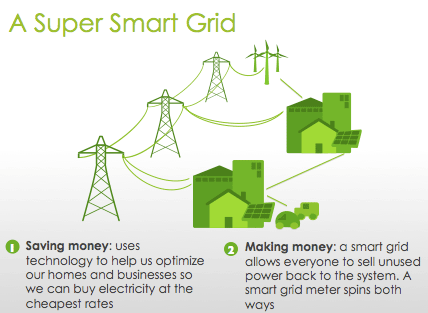
What Is a Smart Grid, and How Might One Protect Our Energy Future? Our electric grid is old and fraying, but new technology could insulate us from the possibility of widespread blackouts and cyberattacks. In February 2021, an electric grid failure in Texas caused more than 4.5 million homes and businesses to lose power. Months later, wide-scale droughts and wildfires threatened the western US with rolling blackouts. With new energy sources such as wind and solar power, maintaining a steady balance gets even more complicated. This is because power from these sources is inconsistent.
“Smart grids” sense small imbalances faster, making adjustments so problems don’t get larger. They use sensors to constantly measure the status of different parts of the grid, and a series of devices that control the current flowing through different points. The sensors and controllersare run by computers that make automatic adjustments to maximize efficiency.
Scientific American 4th Nov 2021
Nuclear industry pushing its spin and doing deals on the sidelines at COP26

Nuclear Power Is COP26’s Quiet Controversy, TIME BY ALEJANDRO DE LA GARZA NOVEMBER 5, 2021 In the midst of the COP26 climate talks yesterday, U.S. and Romanian officials stepped aside for a session in the conference’s Blue Zone, establishing an agreement for U.S. company NuScale to build a new kind of modular nuclear power plant in the southeastern European country. …….
NuScale CEO John Hopkins sees the agreement as part of a broader recognition that nuclear power has a big role to play as the world decarbonizes. ……
But others at COP26 aren’t convinced that NuScale’s small reactors can help avoid climate catastrophe. Some point to the fact that NuScale has yet to build a single commercial plant as evidence that the company is already too late to the party. “We have to get everything done in the next 25 years,” says Tom Burke, co-founder of climate think tank E3G. “The idea that you’re going to scale up a technology you don’t even have yet, and it’s going to be commercially viable [in that time], just seems to me like la la land.”
( More broadly, the NuScale controversy underscores larger disagreements about nuclear power’s role in bringing the world to a post-carbon future. On one side, institutions like the International Energy Agency say that the nuclear industry, which has been shrinking for years, will need to nearly double in size over the next two decades in order for the world to meet net-zero emissions targets.)
Meanwhile, the U.S. has embraced the power source as a solution for developing countries, announcing yesterday that it will spend $25 million to help build reactors in Kenya, Brazil and Indonesia. Russia’s environment minister told Reuters last month that the country planned to push for other nations at COP26 to acknowledge its nuclear power plants as environmentally friendly, while the Czech Republic, France and a slew of other European nations announced an “alliance” to promote nuclear energy (as well as natural gas) as sustainable investments under the E.U.’s upcoming climate finance rules.
But opposition to the idea of including nuclear power in a green energy roadmap is equally fierce. Germany and Belgium have long been drawing down their nuclear sectors, while nations like New Zealand and Austria have opposed classifying nuclear as a clean power source alongside renewables like wind and solar.
Lukas Ross, Climate and Energy Justice Program Manager at Friends of the Earth U.S., points to ballooning costs for nuclear projects in the U.S. and the U.K., and calls the energy source a “distraction” and a waste of scarce resources compared with renewables like wind and solar. “[Nuclear] is too expensive and too slow to be relevant to the climate crisis,” says Ross.
Still, Sergey Paltsev, deputy director of the MIT Joint Program on the Science and Policy of Global Change and a senior research scientist at the MIT Energy Initiative, says the economics of nuclear energy are improving thanks to new technology like NuScale’s modular reactors, and that fission energy can help the world’s electricity systems meet crucial “baseload” needs, providing a steady current of power even when the sun doesn’t shine and the wind doesn’t blow.
But other experts say that the whole notion of baseload power is an outmoded concept, predicated on old assumptions about the ways that grids work. And Paltsev admits that, despite nuclear’s apparent promise, the industry still must prove that the technology is safe and cost effective. https://time.com/6114156/nuclear-power-is-cop26s-quiet-controversy/
‘No One Died From Radiation At Fukushima’: IAEA Boss Statement Met With Laughter At COP26

‘No One Died From Radiation At Fukushima’: IAEA Boss Statement Met With Laughter At COP26, Forbes, Sofia Lotto Persio Forbes Staff Sustainability I oversee sustainability coverage and curate the Daily Dozen. Nov 21, The tsunami-triggered destruction of the Fukushima nuclear power plant in 2011 provoked a rethink of nuclear power across the world—and remains a sore spot for the industry even as it tries to champion its low-carbon energy source status to gain prominence in the fight against climate change.
On Thursday, the day dedicated to discussing energy at the COP26 UN Climate Conference in Glasgow, Scotland, the International Atomic Energy Agency (IAEA) was given a prominent spot, with director general Rafael Mariano Grossi being interviewed on stage by Financial Times journalist Gillian Tett.
It was an opportunity for Grossi to highlight the benefits of nuclear power, its appeal as part of a country’s energy mix, and dispel concerns about nuclear waste and safety, but his assertion that the multiple nuclear meltdowns at the Fukushima Daiichi Nuclear Power Plant in the town of Okuma—which forced the evacuation of more than 160,000 residents—resulted in no deaths from exposure to radiation was met with skepticism from the audience………
For years since the disaster, Grossi’s statement held true. But in 2018, the Japanese government recognized the death of one Fukushima plant worker to be attributable to radiation exposure, disbursing compensation to his family. The worker, a man in his 50s who had spent nearly 29 years working at nuclear stations in Japan until September 2015, was in charge of measuring radiation at the Fukushima plant. In the period of December 2011 and September 2015, the amount of radiation he was exposed to more than doubled from roughly 34 millisieverts to around 74 millisieverts, as the Japanese newspaper Mainichi reported. The maximum level of radiation exposure workers should be exposed to is 100 millisieverts every five years—an annual exposure to that level of radiation is linked to an increase in cancer risk. The worker was diagnosed with lung cancer in 2016 and died of the disease.
| Fukushima nuclear plant operator Tokyo Electric Power Company Holdings Inc. (Tepco) is still facing lawsuits for its failure to safeguard the nuclear complex. In February, the company and the Japanese government were ordered to pay $2.6 million in compensation to 43 evacuees for failing to enact preemptive measures against the disaster. Establishing a clear link between exposure radiation and cancer in a court of law can be more difficult. Tepco won one case in May because the plaintiff, who had worked on removing debris from the Fukushima complex between July and October 2011, developed three cancers between 2012 and 2013, whereas government guidelines stipulate the minimum latency period for a disease to develop following radiation exposure is five years…. https://www.forbes.com/sites/sofialottopersio/2021/11/04/no-one-died-from-radiation-at-fukushima-iaea-boss-statement-met-with-laughter-at-cop26/?sh=241acac17a47 |
Other owners of Georgia Power’s Vogtle nuclear power project are balking at the billowing costs.

Nuclear plant price doubles to $28.5B as other owners balk. https://www.news4jax.com/business/2021/11/05/nuclear-plant-price-doubles-to-285b-as-other-owners-balk/ Jeff Amy, Associated Press.
ATLANTA – The cost of two nuclear reactors being built in Georgia is now $28.5 billion, more than twice the original price tag, and the other owners of Plant Vogtle argue Georgia Power Co. has triggered an agreement requiring Georgia Power to shoulder a larger share of the financial burden.
Atlanta-based Southern Co. announced in its quarterly earnings statement Thursday that Georgia Power’s share of the third and fourth nuclear reactors at Plant Vogtle has risen to a total of $12.7 billion, an increase of $264 million. Along with what cooperatives and municipal utilities project, the total cost of Vogtle has now more than doubled the original projection of $14 billion.
Opponents have long warned that overruns would be sky-high. Liz Coyle, executive director of consumer advocacy group Georgia Watch, said the price tag is “outrageous” but predictable.
“We said you can’t build it for what you’re saying you can,” she said of Georgia Watch’s opposition to the project when the Georgia Public Service Commission originally authorized the new reactors.
Total costs are actually higher than $28.5 billion, because that doesn’t count the $3.68 billion that contractor Westinghouse paid back to owners after going bankrupt. When approved in 2012, the first electricity was supposed to be generated in 2016…..
Southern Co. also disclosed Thursday that the other owners of Vogtle are saying Georgia Power has tripped an agreement to pay a larger share of the ongoing overruns, a cost the company estimates at up to $350 million. Southern Co. said it disagrees that Georgia Power has crossed the cost threshold but has signed an agreement to extend talks with the other owners on the issue.
Georgia Power owns 45.7% of the new reactors, while cooperative-owned Oglethorpe Power Corp. owns 30%. The Municipal Electric Authority of Georgia owns 22.7% and the city of Dalton’s municipal utility owns 1.6%. Florida’s Jacksonville Electric Authority is obligated to cover some of MEAG’s costs. Some cooperatives and municipal utilities in Alabama and northwest Florida have agreed to buy power as well.
The higher costs stem from more construction delays. Georgia Power announced last month that it doesn’t expect Unit 3 to start generating electricity until the third quarter of 2022. It was the third delay announced since May. Unit 4 is now projected to enter service sometime between April and June of 2023.
The company says it is redoing substandard construction work and contractors aren’t meeting deadlines. Experts hired by the Georgia Public Service Commission to monitor construction have long said Southern Co. has set an unrealistic schedule. In August, the U.S. Nuclear Regulatory Commission found two sets of electrical cables meant to provide redundancy in Unit 3 weren’t properly separated. Earlier, Georgia Power had to repair a leak in Unit 3′s spent fuel pool.
Georgia Power shareholders have been paying the cost of recent overruns, but the company could ask regulators to require customers to pay some or all of those bills.
Billionaires Not Morally Qualified to Shape Civilization

Billionaires Not Morally Qualified to Shape Civilization, Consortium News, November 3, 2021 We’re talking about a class which could easily put a complete halt to human beings dying of starvation, writes Caitlin Johnstone. But they don’t. By Caitlin JohnstoneCaitlinJohnstone.comHuman civilization is being engineered in myriad ways by an unfathomably wealthy class who are so emotionally and psychologically stunted that they refuse to end world hunger despite having the ability to easily do so.
The United Nations has estimated that world hunger could be ended for an additional expenditure of $30 billion a year, with other estimates considerably lower. The other day Elon Musk became the first person to attain a net worth of over $300 billion. A year ago his net worth was $115 billion. According to Inequality.org, America’s billionaires have a combined net worth of $5.1 trillion, which is a 70 percent increase from their combined net worth of under $3 trillion at the beginning of the Covid-19 pandemic.
So, we’re talking about a class which could easily put a complete halt to human beings dying of starvation on this planet by simply putting some of their vast fortunes toward making sure everyone gets enough to eat. But they don’t. This same class influences the policies, laws, and large-scale behavior of our species more than any other.
……….how absolutely insane it is that we allow this class to shape our civilization.
And we most certainly do allow them to shape our civilization.
Take Bill Gates. He spends a fortune on narrative control ranging from immense contributions to The Guardian to tens of billions of dollars in grants and he’s committed hundreds of millions of dollars to shady political influence groups as well. He’s been influencing Covid policies around the world, from intervening against the waiving of vaccine patent restrictions to facilitating the worldwide rollout of digital vaccine passports; he’s been giving countless media interviews about Covid-19 and vaccines despite having no medical degree or indeed any qualifications at all apart from a net worth of $136 billion. This is after falsely pledging to give his immense fortune away over a decade ago; his net worth has more than doubled in that time.
Jeff Bezos has been a contractor with the Pentagon, the CIA and the NSA, and experts have claimed that Amazon is trying to control the underlying infrastructure of the economy. As sole owner of The Washington Post he ensures that a hugely influential news outlet will always be staffed by people who will help manufacture consent for the status quo upon which his empire is built, and his grand vision for humanity involves shipping us offworld to breed in giant rotating space cylinders………
The World Economic Forum has laid out an agenda for giant corporations to move beyond their unofficial and unacknowledged role as unelected rulers of our world and become open partners in the governance of world affairs alongside our official elected governments, with more power than ever before.
There are almost infinite examples I could highlight, but I think my point is clear. Billionaires and billionaire corporations own our media, influence our thinking, manipulate our economies, interfere in our politics, determine the fate of our ecosystem and shape our world. And they are the very least qualified among us to be doing so……… https://consortiumnews.com/2021/11/03/billionaires-not-morally-qualified-to-shape-civilization/
1 This Month



19 November – Webinar – The Reality of Reprocessing
Time: 11:00 AM Pacific Time (US & Canada) / 2:00 PM Eastern / 7:00 PM UK / 8:00 PM CET
Register for the Zoom Event Here



Shut down the radiation-damaged Heysham nuclear reactors now
To see nuclear-related stories in greater depth and intensity – go to https://nuclearinformation.wordpress.com

Say No to NASA’s Reckless Nuclear Reactor on the Moon
Say No to NASA’s Reckless Nuclear Reactor on the Moon
-
Archives
- November 2026 (84)
- October 2026 (302)
- September 2026 (339)
- August 2026 (330)
- July 2026 (355)
- June 2026 (287)
- May 2026 (306)
- April 2026 (356)
- March 2026 (251)
- February 2026 (267)
- January 2026 (308)
- December 2025 (358)
-
Categories
- 1
- 1 NUCLEAR ISSUES
- business and costs
- climate change
- culture and arts
- ENERGY
- environment
- health
- history
- indigenous issues
- Legal
- marketing of nuclear
- media
- opposition to nuclear
- PERSONAL STORIES
- politics
- politics international
- Religion and ethics
- safety
- secrets,lies and civil liberties
- spinbuster
- technology
- Uranium
- wastes
- weapons and war
- Women
- 2 WORLD
- ACTION
- AFRICA
- Atrocities
- AUSTRALIA
- Christina's notes
- Christina's themes
- culture and arts
- Events
- Fuk 2022
- Fuk 2023
- Fukushima 2017
- Fukushima 2018
- fukushima 2019
- Fukushima 2020
- Fukushima 2021
- general
- global warming
- Humour (God we need it)
- Nuclear
- RARE EARTHS
- Reference
- resources – print
- Resources -audiovicual
- Weekly Newsletter
- World
- World Nuclear
- YouTube
-
RSS
Entries RSS
Comments RSS

