Report: Nuclear Plant Failed to Prevent Flooding During Ida
Report: Nuclear Plant Failed to Prevent Flooding During Ida, Claims Journal, By Dave Collins | November 15, 2021 Operators of the Millstone nuclear power complex in Connecticut were too late in activating storm protection protocols when the remnants of Hurricane Ida hit the East Coast in September, resulting in minor flooding at the plant, federal regulators said Friday.
The Nuclear Regulatory Commission report said Dominion Energy, which runs the Millstone plant in Waterford along Long Island Sound, violated federal requirements, but deemed the violations of “very low safety significance” and did not issue penalties. The flooding did not affect any nuclear or safety equipment, the report said.
The commission, however, said Dominion’s “performance deficiency was more than minor” and that “required steps to protect risk significant structures, systems, and components from external flooding were not taken until after the consequential rainfall event was in progress.”…………………
The Nuclear Regulatory Commission report said the plant’s operators should have activated flood prevention measures before the storm hit, including closing flood gates, based on forecasts made earlier in the day. But they did not do so until after 8 p.m., when heavy rains already were falling. Two flood gates were not closed at all during the storm, resulting in minor flooding in an area near the Unit 2 reactor, the report said.
The commission said Dominion “did not take timely actions to place the plant in a safe condition prior to the arrival of a major storm.”…………. https://www.claimsjournal.com/news/east/2021/11/15/307069.htm
U. N. nuclear agency team to review plans for release of Fukushima water
U. N. nuclear agency team to review plans for release of Fukushima water, The Hindu, AP TOKYO:, NOVEMBER 15, 2021
The experts from IAEA are to meet with Japanese officials and visit the Fukushima Daiichi plant to discuss technical details of the planned release, Japanese officials said.
A team from the U.N. nuclear agency arrived in Japan on Monday to assess preparations for the release into the ocean of treated radioactive water from the wrecked Fukushima nuclear plant.
The experts on the team from the International Atomic Energy Agency (IAEA) are to meet with Japanese officials and visit the Fukushima Daiichi plant to discuss technical details of the planned release, Japanese officials said.
The government and the plant’s operator, Tokyo Electric Power Company (TEPCO) Holdings, announced plans in April to start gradually releasing the treated radioactive water in the spring of 2023 to allow the removal of hundreds of storage tanks to make room for facilities needed for the destroyed plant’s decommissioning.
The plan has been fiercely opposed by fishermen, local residents and Japan’s neighbours, including China and South Korea.
Japan has requested assistance from the IAEA to ensure the discharge meets international safety standards and to gain the understanding of the international community. A larger 11-member IAEA mission is expected next month.
Japanese Economy and Industry Minister Koichi Hagiuda pledged last week that Japan will explain the outcome of the IAEA reviews to the international community “in a courteous and transparent manner.” A separate IAEA taskforce on water testing earlier collected fish samples from the Fukushima coast as part of a routine review along with technical assistance for the plant’s decommissioning. The team included an expert from South Korea…………https://www.thehindu.com/news/international/u-n-nuclear-agency-team-to-review-plans-for-release-of-fukushima-water/article37498602.ece
Japan’s PM Kishida resolved to achieve nuclear-free world
Kishida resolved to achieve nuclear-free world, https://www.japantimes.co.jp/news/2021/11/15/national/kishida-un-disarmament-chief/ Prime Minister Fumio Kishida on Monday voiced his commitment to leading efforts to realize a world free of nuclear weapons in a meeting with the U.N. disarmament chief, ahead of next year’s U.N. conference on nuclear nonproliferation.
In a 15-minute meeting in Tokyo with Izumi Nakamitsu, U.N. undersecretary general and high representative for disarmament affairs, the two agreed on the importance of meaningful results at the review conference on the Nuclear Non-Proliferation Treaty, to be held in New York from Jan. 4 to 28, according to the Foreign Ministry.
As the leader of the only country to have suffered atomic bombings, in Hiroshima and Nagasaki in 1945, Kishida voiced his “determination to lead international efforts to realize a world without nuclear weapons” during the meeting, the ministry said. The prime minister’s family hails from Hiroshima Prefecture and he represents a constituency in the prefecture.
Nakamitsu expressed hope Japan will play a proactive role as a bridge between nations with differing stances.
Nakamitsu also met with Foreign Minister Yoshimasa Hayashi later in the day and invited him to attend the NPT review conference. Hayashi told her that “as the only country in the world to have suffered wartime atomic bombings, Japan has a very important responsibility” to push forward nuclear disarmament.
Industrial action from Tuesday could ‘cripple’ Clyde nuclear base.
Industrial action from Tuesday could ‘cripple’ Clyde nuclear base, The Herald, By Martin Williams @Martin1Williams, Senior News Reporter, 15 Nov 21, SPECIALIST staff are to down tools on Tuesday in an industrial dispute a union says is expected to “cripple” the effective running of UK’s nuclear submarine base on the Clyde.
The Unite Scotland union has confirmed that around 70 of its members who provide specialist services for the UK’s nuclear deterrent submarines will start an overtime at the Royal Naval Armaments Depot (RNAD) Coulport.
The union has severely criticised the “delay tactics” employed by the ABL Alliance after the workers voted to take industrial action in September in what was then described as a “final warning shot” to ABL Alliance, a joint venture which won a 15-year contract from the Ministry of Defence in 2013 to maintain the weapons systems at Coulport.
Unite Scotland said the specialist staff who provide care and maintenance services for the weapons systems on the Royal Navy nuclear armed submarine fleet took the “historic” decision in a dispute over pay that it says will leave the base severely debilitated.
Since then, the union say the ABL Alliance refused to meet over what it called an RPI inflation annual pay claim of 3.8%.
Some 90.5% of Unite members at RNAD Coulport voted in support of strike action, and 95.3% supporting action short of a strike.
The ABL Alliance, made up of AWE plc, Babcock Marine (Clyde) Ltd, and Lockheed Martin UK Strategic Systems Ltd, previously state it was “disappointed” at the industrial action vote………………….
The union is concerned that all the companies could afford the pay rise as they were profitable. AWE Plc had an after tax profit of £17.7m in the year to December, 2020, Babcock Marine (Clyde) Ltd turned a £7.3m profit in 2019/20, while Lockheed Martin UK Strategic Systems Ltd was £41m in the black in 2019.
Babcock have been approached for comment. https://www.heraldscotland.com/news/homenews/19716968.industrial-action-tuesday-cripple-clyde-nuclear-base/
Gorbachev: claims that nuclear weapons guarantee peace are a delusion
Gorbachev: claims that nuclear weapons guarantee peace are a delusion https://tass.com/world/1361675Mikhail Gorbachev expressed the hope for “real results” of the Geneva talks, where the Russian and US presidents discussed nuclear affairs
MOSCOW, November 15. /TASS/. The Soviet Union’s first president, Mikhail Gorbachev, has called for demilitarization of world politics. He dismissed as a myth all speculations to the effect nuclear weapons are a safeguard of peace and security. Gorbachev reiterated his opinion in a message of greeting to Kazakhstan’s first president, Nursultan Nazarbayev and participants in the conference of the Global Alliance of Leaders for Nuclear Security and a Nuclear Weapons Free World, uploaded to the website of the Gorbachev Foundation on Monday.
The Global Alliance’s conference opened in Kazakhstan’s capital on Monday. Nazarbayev’s initiative has received wide support from political leaders in many countries.
As he dwelt on the global threats (pandemic, poverty, water shortages and global warming) Gorbachev suggested fundamentally reconsidering the understanding of security, which has so far been confined to the military aspect. He said that all efforts to give people better security would be doomed, if governments continue to “throw mammoth amounts of cash into the furnace of the arms race, in the first place, nuclear arms race.”
“The proponents of nuclear deterrence argue that it is a safeguard of peace and security. I reply to them: to say that nuclear weapons saved peace is tantamount to repeating a dangerous myth in a dangerous world,” Gorbachev said. He recalled that nuclear weapons were the root cause of the Caribbean crisis in 1962.
In his message Gorbachev expressed the certainty that “there should be demilitarization of world politics, international relations and political thinking in order to save them from the nuclear sword of Damocles.”
Also, Gorbachev expressed the hope for “real results” of the Geneva talks, where the Russian and US presidents discussed nuclear affairs.
EU Council stresses the need to fully implement and universalise the NPT treaty
Non-proliferation of nuclear weapons: Council stresses the need to fully implement and universalise the NPT treaty
European Council, The Council today approved conclusions welcoming the upcoming tenth review conference of the parties to the Treaty on the Non-Proliferation of Nuclear Weapons (NPT), that will take place in New York on 4 – 28 January 2022.
The conclusions reaffirm the EU’s unequivocal support for the NPT as the cornerstone of the global nuclear non-proliferation regime, the essential foundation for the pursuit of nuclear disarmament, and an important element in the development of nuclear energy applications for peaceful purposes. The conclusions also stress the importance of universalising the NPT, and call on all states that have not yet done so to join the treaty as non-nuclear-weapon states and, pending their accession, to adhere to its terms.
The Council strongly supports all three pillars of the NPT and will continue to promote comprehensive, balanced and substantive full implementation of the 2010 Review Conference Action Plan. The Council underlines the importance of securing a positive and substantive outcome from the Tenth NPT Review Conference. https://www.consilium.europa.eu/en/press/press-releases/2021/11/15/non-proliferation-of-nuclear-weapons-council-stresses-the-need-to-fully-implement-and-universalise-the-npt-treaty/
French unions complicit with EDF in harrassments and other scandals
EDF, the grinding machine: “EDF holds the unions in its hands”. Number 2
in Force Ouvrière at EDF, Rémy Casabielhe has been one of the main
negotiators of the agreements in recent years within the company.
In his
interview with Blast, after the first stages of our investigation, the
union representative bluntly denounces the inaction of management, but also
of the unions, in the face of the problems of harassment, discrimination
and suicide.
And calls into question the agreements concluded for twenty
years, responsible for this phenomenon. Words that detonate and lift the
veil on a complicity that does not speak its name.
Blast 13th Nov 2021
The greenest energy is the energy we don’t use

The fact that Bill Gates’ .. book does not focus on energy efficiency – while giving nuclear energy a large and not very imaginative role – slightly annoys me. [ed. only slightly?] Because decision makers, young people, and many others will read the book and draw the wrong conclusions. But also, because it feels like a symptom of a broader issue: intellectually it is evident for most people that energy efficiency is a central, cost-effective and economically smart way to contribute to the green transition. Yet energy efficiency does not play a central role in many countries’ efforts to secure a green transition. It is as if they overlook the fact that the greenest and cheapest energy is the energy we don’t use at all
The greenest energy is the energy we don’t use, energypost.eu
November 12, 2021 by Martin Rossen As COP26 comes to a close, Martin Rossen, Senior Vice President, Head of Group Communication and Sustainability at Danfoss reminds us in a powerfully persuasive way why the most direct route to net-zero is managing consumption. Inspired by a glaring omission by Bill Gates in his recent book, Rossen draws our attention to the futility of developing new tech if we don’t prioritise making use of readily available energy efficiency solutions. According to IEA figures almost half of emissions reductions must come from efficiency and the solutions are already at hand. Article promoted by Danfoss.
The Glaring Omission
The summer of 2021 was the first time in a while that I not only felt the urge but also had time to read a book. No more government files and committees. I read Microsoft founder Bill Gates’ newest book “How to Avoid A Climate Disaster: The Solutions We Have and the Breakthroughs We Need.” …………

However ……. Bill Gates basically ignores that the greenest and cheapest energy is the energy we don’t use. I will get back to that, but let’s first look into climate action according to Bill Gates:
Primary Energy Consumption virtually unchanged through 26 years of COPs……. According to the British economist Helen Thompson, fossil fuels constituted 86% of the world’s primary energy consumption when COP1 was held in Berlin in 1995. What is the progress today, 26 years later? The answer is almost nothing. According to the latest numbers, fossil fuels now constitute 84% of the world’s primary energy consumption.
………Reversing the Energy Density Trend
Czech-Canadian environmental researcher Vaclav Smil, of whom Bill Gates is big fan, says the underlying challenge is the fact that humanity historically has moved in the direction of more and more energy-intense energy sources……….
Bill Gates encourages decision makers around the world to make big investments in new technologies. …….
IEA’s “Green Equation”
So, what’s the plan, I’m tempted to ask? To a large degree, I agree with Bill Gates’ conclusions – but I can’t help being a bit disappointed by the fact that he essentially ignores the importance of energy efficiency to the green transition. Bill Gates briefly mentions that energy efficiency could make the green transition easier, but after that, it is left out of his analysis.
Yet the International Energy Agency (IEA), a central source in the book, mapped out the cheapest and most effective path to reach the goals of the Paris agreement – let’s call it the green equation – like this: 36% of carbon reductions must come from renewable energy, 2% from switching fuels, 6% from nuclear power, 9% from carbon capture ands, 3% from other sources – and the biggest chunk, with a total of 44% reductions, has to come from energy efficiency. In other words, we can’t merely build windmills.
The world’s energy consumption has risen dramatically since 1945. For each day that passes, the green transition challenge we face is growing ………… it is important we become better at creating more societal value by using less energy, for example, by recycling it.
Now to the good news
Solutions already exist. In Denmark, we know that. We often live in an energy efficient manner – in bright, well-isolated homes with a secure water supply. This didn’t come by coincidence, but out of necessity.
During WWII, the Danes rationed. This included use of energy, so the living room temperature was to be kept at about 18 degrees Celsius. On a farm on the island of Als in the corner of Denmark, Danfoss’ founder Mads Clausen had the idea to develop a thermostatic expansion valve, which automatically keeps a constant temperature. The result? An improved indoor climate in millions of homes all over the world, as well as energy bills and emissions that have dropped. It was a green breakthrough before we knew we needed it. Today, the island of Als is one of the global centers of energy efficiency.
The solutions vary, but at their core, they are the same – they provide energy efficiency. According to the IEA, these are the solutions to be put into play if we are to overcome the many barriers on the road to climate neutrality………..
even in buildings with thermostats, heat pumps and other energy efficient solutions, we must take action. We need to equip our buildings with ‘intelligent’ systems – a ‘brain’ that links the buildings’ thermostats, heat pumps and air conditioning – as well as any other cooling and heating appliances– to big data that constantly optimizes energy consumption. The modern thermostat includes all factors in the equation – including the weather, showering habits of the inhabitants and expensive peak hours – and adjusts the consumption of energy accordingly. With solutions like this, according to the consultants ECOFYS, we can reduce CO2 emissions in Europe by 156 million tons – equaling the emissions of 82 million cars.
Industry, Transport and Food distribution
The industrial sector consumes a lot of energy and is responsible for one-fourth of the world’s emissions, so this sector demands our focus, too. Electric motors are a good place to start. In Europe alone, there are eight billion in use at the time of writing this. However, most of them only have two functions: they are either on or off. If electric motors were fitted with AC drives that enabled them to have adjustable speeds, the world’s demand for electricity could be reduced by 8%, according to the IEA – corresponding to the combined demand for electricity of India and France.
And then we have the transport sector that accounts for 24% of the world’s energy-related CO2-emissions. If cars are to be powered by electricity instead of gasoline, batteries and drives need to replace the combustion engine. This means that the gearbox of the future is a power module that converts power so the car can drive at various speeds. That movement is already on the way. What few people know is that Danfoss’ power modules already are installed in about 40 million cars, but there is still quite a way to go to replace the world’s 1.5 billion cars……….
Massive amounts of the world’s resources go into the production of food that is lost or wasted in areas without proper cooling facilities. In India, more than a third of food is lost on the journey from fields to the hungry population. It isn’t hard to imagine farmers’ disbelief and frustration in the face of this inconceivable loss of value. In many developing countries, proper cooling facilities in the supply chain can reduce the blatant waste of food (and associated emissions) by up to 40%, according to estimates.
The Solutions are already at hand
These are big numbers, and I could go on, because it is the same in practically the entire economy. We are not using our energy wisely. This results in a massive waste of energy. It costs fortunes on the energy bills of families and companies all over the world. It results in the emission of many billion tons of greenhouse gasses. And it makes the renewable energy infrastructure bill much bigger than it has to be.
We need to take this in hand, particularly in the Western World. It is necessary if we are to reach net zero. But also, because net zero is a zero-sum game, imposing a certain responsibility on us. We need to make an extra effort in the green transition so developing countries are not held back in their efforts to reach the same level of prosperity that we are privileged with.
Luckily, there are various energy-efficient solutions from many competent companies, that have a payback time of only a few years. That’s good because there is plenty of work to be done.
According to the IEA, the steam has gone off investments in energy-efficient buildings, equipment and vehicles. Both literally and figuratively speaking, we are wasting our energy at the same time we should be doing the exact opposite. It is a huge challenge many seem to forget: the green transition, in a lot ways, neither requires technological breakthroughs nor revolutions. It simply requires that we apply readily available cost-efficient solutions – not the least within energy efficiency.
The fact that Bill Gates’ .. book does not focus on energy efficiency – while giving nuclear energy a large and not very imaginative role – slightly annoys me. Because decision makers, young people, and many others will read the book and draw the wrong conclusions. But also, because it feels like a symptom of a broader issue: intellectually it is evident for most people that energy efficiency is a central, cost-effective and economically smart way to contribute to the green transition. Yet energy efficiency does not play a central role in many countries’ efforts to secure a green transition. It is as if they overlook the fact that the greenest and cheapest energy is the energy we don’t use at all. https://energypost.eu/the-greenest-energy-is-the-energy-we-dont-use/
A cross-continental electricity interconnector grid system may be a practical option for renewable energy .
One of the key discussions at the COP26 summit in Glasgow has been the practicalities of building a cross-continental electricity interconnector system, and this may be rather more practical than some of the commentators have implied. It could, indeed, eventually turn into a global energy system where solar pv as well as wind power and other renewables, could supply power 24/7 with a much-reduced need for storage for systems dominated by renewable energy. Talking about supplying Europe with solar pv from North Africa, eg via the putative Desertec scheme, has often been a source of debate amongst renewables afficianados.
Some greens have decried the notionas a centralised vision of renewable energy that is little more desirable than centralised nuclear power plant. The traditional preference among greens has been on locally owned plant either on rooftops or at least, in
the case of ground-mounted solar pv, owned by community renewable energy organizations. But in a world where the overall prize is the achievement of net zero carbon energy systems, then two key factors come into play: cost and resource availability (which of course are related to each other).
If solar and wind resources in some countries, especially some of the most landlocked states, are difficult to access at reasonable cost, then international, even intercontinental, supplies could come into play. If it is cost-effective to build plant and build the interconnectors to trade in electricity, then it is quite likely to happen.
100% Renewables 13th Nov 2021
Is nuclear power the way forward to combat the climate crisis? – Allison Macfarlane cautions.
 | |||
|

Is nuclear power the way forward to combat the climate crisis?
Nuclear power can go horribly wrong and is notorious for cost overruns, but it is gaining high-profile champions. Aljazeera, By Patricia Sabga 12 Nov 2021 ”’ ………………………
Allison Macfarlane is a professor and the director of the School of Public Policy and Global Affairs at the University of British Columbia. Before that, she was chair of the US Nuclear Regulatory Commission.
She wrote an article for Foreign Affairs (paywall) this summer on the subject of nuclear energy and climate goals. Her arguments generated some pointed pushback (paywall) as world leaders descended on Glasgow, Scotland for COP26.
Macfarlane describes herself as neither a proponent nor a detractor of nuclear power, but an analyst who prefers to give a “measured analytical response” to questions surrounding nuclear energy.
She recently shared her views with Al Jazeera Digital’s Managing Business Editor Patricia Sabga about nations building more nuclear power plants to battle the climate crisis.
Allison Macfarlane: ……………… But I live in a pragmatic, realistic world. And I don’t think, at least in the next 10 or 20 years, that nuclear power will be able to have a big impact on reducing carbon emissions because we can’t build new plants fast enough.
PS: And why is that? Why can’t we build new plants fast enough?
AM: It’s complicated. These are mega projects, and they require a level of quality control and programme management that doesn’t exist in a lot of other industries. And though people may promote some of the newer reactor designs as being easy to produce in factories, if we look at the existing reactors that have been produced in factories – for instance, the ones that are under construction in Georgia, the Vogtle plant [where two additional reactor units are under construction] – the experience in factories has not been good.
The factory that built the modules for the Georgia plant built them incorrectly for years. They welded them incorrectly and they had to be rewelded at the reactor site. That factory led in large part to the bankruptcy of Westinghouse.
PS: You mentioned newer reactor designs. What are these designs and what challenges do they face?
AM: First of all, a lot of them aren’t new. A lot of these designs are 70 years old or older. But given that, there are new sorts of twists to some of these designs.

Many of them exist only on paper, or as small-scale models. And the way engineering works is that you design something – these days, it’s computer-assisted – and then you build a scale model. When you build the scale model, you see where you are wrong in your computer design, and so you fix that. Then you have to build the full-scale design. And when you scale up again, there will be things that you’ve gotten wrong in the scale model, and you’re going to have to fix that.
And so, for many of these designs, we’re still at the computer model stage. We haven’t done the other steps. And those steps take years. And when you get to the full-scale model, that’s really expensive. Where’s that money coming from?
PS: Let’s talk about expense then. In terms of just cost, how does nuclear stack up to say wind or solar?
AM: It’s significantly more expensive. Of course, it depends on what solar you’re talking about. But if you look at Lazard’s recent analysis of levelized costs of energy [an analysis that takes into account how much it costs to finance and build a power plant and to keep it running throughout its lifetime and then divides that cost by how much energy it kicks out each year] and you look at solar PV [photovoltaic] utility scale, and wind, they are significantly cheaper than nuclear.
AM: Expenses are dominated by the capital costs of plant construction. These plants are very expensive to build. I think we’re up to at least $14bn a plant for the Vogtle plants in Georgia. That’s for a thousand gigawatts generation capacity. They’re just really expensive to build and they take a long time to build. And so not only do you have the cost of the capital of building the plant, but you have the cost of the interest on the capital, which becomes a big cost.
That’s really what hurts nuclear. Now there are claims made about the small modular reactors that they’ll be cheaper. But because nobody’s ever built one, and nobody’s established the supply chains to build them and to operate them, we really have no idea what those will cost……………..
[on intermittency] Ten years ago, it was a really big deal. It’s becoming less of a deal, I think. What’s interesting to note is that when you talk to utility companies, they are really interested in having plants be load following [responding to surges and ebbs in power demand]. They’re really orienting themselves towards dealing with intermittency. But that means they need a plant that can ramp up and down quickly. Nuclear can’t do that. The existing nuclear fleet can’t do that. They’re either on or they’re off, and it takes a long time for them to ramp up to full scale on………….. https://www.aljazeera.com/economy/2021/11/12/is-nuclear-power-the-way-forward-to-combat-the-climate-crisis
Anniversary of the mysterious death of Karen Silkwood

Massimo Greco https://www.facebook.com/groups/361888987167863/ 13 Nov 21, Museum of the Gulf Coast
This Day In History.…..On November 13, 1974, 28-year-old Karen Silkwood, who is from Nederland, is killed in a car accident near Crescent, Oklahoma, north of Oklahoma City. Silkwood worked as a technician at a plutonium plant operated by the Kerr-McGee Corporation, and she had been critical of the plant’s health and safety procedures.
Silkwood had an appointment with a union staff representative and a New York Times investigative reporter. At this meeting, she was to provide documentation to the reporter, showing charges that Kerr-McGee had been negligent in quality control and had falsified records were justified.
Police were summoned to the scene of an accident along Oklahoma’s State Highway 74: Silkwood had somehow crashed into a concrete culvert. She was dead by the time help arrived. An autopsy revealed that she had taken a large dose of Quaaludes before she died, which would likely have made her doze off at the wheel; however, an accident investigator found skid marks and a suspicious dent in the Honda’s rear bumper, indicating that a second car had forced Silkwood off the road.
The documents she was to have turned over to the reporter were never found.Silkwood’s father sued Kerr-McGee, and the company eventually settled for $1.3 million, minus legal fees. Kerr-McGee closed its Crescent plant in 1979.
UK’s Regulated Asset Base (RAB) “a very bad deal for consumers” – like the USA’s disastrous system in South Carolina
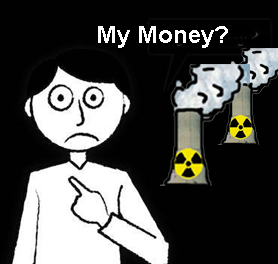
Reaction to the Bill from stakeholders has been mixed. Some environmental bodies have questioned whether the RAB model set out in the Bill offers value for money for consumers and whether it transfers the risk of cost overruns to consumers. Tom Burke, the co-founder of E3G, a climate think-tank, told the Financial Times that the model risked being “a very bad deal for consumers” on the grounds that electricity generated from nuclear power would be more expensive than that from ‘homegrown’ renewables and would simultaneously “inhibit the market in wind, [an] area where we have the opportunity to create a global competitive industry in the UK”.145 The same article included comment from Steve Thomas, Professor of Energy Policy at the University of Greenwich, who questioned whether people would want their pension funds exposed to construction risk cost and whether that meant the consumer would take on all the risk. In an article in the i on the day the legislation was published, Doug Parr, Chief Scientist at Greenpeace, noted that the RAB model had already been used to finance nuclear power in the United States, adding that the “results were disastrous”: “It transfers huge financial risk from the builders to bill payers. In South Carolina, 18 per cent of residents’ energy bills went to pay for a half-built reactor which has been abandoned and will never produce electricity.” House of Commons Library 1st Nov 2021 https://researchbriefings.files.parliament.uk/documents/CBP-9356/CBP-9356.pdf |
Opposition Leader Keresztes accuses Hungarian government of secrecy and errors in approval of Paks Nuclear Power Plant Upgrade

LMP Accuses Govt of Secrecy on Paks Nuclear Power Plant Upgrade https://hungarytoday.hu/lmp-accuses-govt-of-secrecy-on-paks-nuclear-power-plant-upgrade/MTI-Hungary Today 2021.11.13. Publicity, professionalism, and security are the most important principles in the use of nuclear energy, yet the government has chosen secrecy, outsourcing, and political control, the leader of the opposition LMP party’s parliamentary group said on Saturday.
Speaking at an online press conference, László Lóránt Keresztes said the government is unwilling to admit that it has made seriously wrong decisions and it is ready to take further ones.
In addition, “substantive information (.) has been classified in connection with the failure to secure permission for the Paks II [upgrade] project,” he said.
They make wrong decisions such as licensing excavation work in the absence of key permissions, Keresztes said.
The government has reached a dead-end over the final disposal of spent nuclear fuel rods. The decisions made in the recent period are especially detrimental to the city of Pécs and Baranya County, he said.
If the government keeps hiding information, LMP will resort to legal means to finally inform the Hungarian public about the state of the Paks nuclear power plant expansion. The opposition party is convinced that the project should not be negotiated in Moscow, behind closed doors, he added.
LMP is of the view that the deeply flawed project should be stopped, Keresztes said.
József Kóbor, LMP’s municipal councilor of Pécs, said the disposal of radioactive waste is a huge problem throughout Europe.
Action on global heating? Inadequate COP26 kept this possibility alive, by just a thread

The best that can be said about Cop26 is that it has kept the possibility of limiting global heating to 1.5C alive, if only by a thread. The worst outcome of this conference would have been if countries had agreed to next reopen their commitments to reduce emissions only in five years’ time, as was agreed in Paris in 2015. This would have been nothing short of a disaster. It would have firmly put the world on the path to catastrophic and irreversible overheating – involving the deaths of tens of millions of people and the total obliteration of some countries as a result of rising sea levels. It would have thrown away humanity’s last chance of
avoiding this fate.
Instead, countries have agreed to come back to revisit their commitments in a year’s time, and every year after that. Something
radical will need to shift in the next year or two in order to achieve the commitments that are urgently needed to limit warming to 1.5C. Take the UK’s net zero strategy, for example, which falls far short of what is needed in order for it to achieve its stated goal of net zero emissions by 2050. It has been estimated we need to be investing about 1% of GDP to meet this; but the government has committed just a fraction of that, and the strategy is further undermined by the government reneging on its own policy
commitments, including its recent scrapping of the green homes schemes and the delay in the phase-out of gas boilers.
Observer Editorial 13th Nov 2021
COP 26 waters down the prospects of world action to stop coal pollution

Cop26: Alok Sharma in tears as India and China dilute pledge to phase out coal. A historic United Nations deal to end the use of coal power was watered down last night after a dramatic last-minute intervention from China and India.
Alok Sharma, the president of Cop26, was reduced to tears as he apologised to delegates for the way the late change was made. The deal, dubbed the Glasgow climate pact, had been set to include a pledge to accelerate the “phase-out” of coal power but this was switched late on to “phase-down”. The change in wording lessens the urgency with which countries are required to reduce the use of coal, the world’s strongest driver of climate change. Chris Stark, chief executive of the Climate Change Committee, an independent adviser to the government, said: “The writing is on the wall for fossil fuels now. We are in a new period of
action and if that is the legacy of Glasgow, I will be delighted.”
Times 14th Nov 2021
1 This Month



19 November – Webinar – The Reality of Reprocessing
Time: 11:00 AM Pacific Time (US & Canada) / 2:00 PM Eastern / 7:00 PM UK / 8:00 PM CET
Register for the Zoom Event Here



Shut down the radiation-damaged Heysham nuclear reactors now
To see nuclear-related stories in greater depth and intensity – go to https://nuclearinformation.wordpress.com

Say No to NASA’s Reckless Nuclear Reactor on the Moon
Say No to NASA’s Reckless Nuclear Reactor on the Moon
-
Archives
- November 2026 (84)
- October 2026 (302)
- September 2026 (339)
- August 2026 (330)
- July 2026 (355)
- June 2026 (287)
- May 2026 (306)
- April 2026 (356)
- March 2026 (251)
- February 2026 (267)
- January 2026 (308)
- December 2025 (358)
-
Categories
- 1
- 1 NUCLEAR ISSUES
- business and costs
- climate change
- culture and arts
- ENERGY
- environment
- health
- history
- indigenous issues
- Legal
- marketing of nuclear
- media
- opposition to nuclear
- PERSONAL STORIES
- politics
- politics international
- Religion and ethics
- safety
- secrets,lies and civil liberties
- spinbuster
- technology
- Uranium
- wastes
- weapons and war
- Women
- 2 WORLD
- ACTION
- AFRICA
- Atrocities
- AUSTRALIA
- Christina's notes
- Christina's themes
- culture and arts
- Events
- Fuk 2022
- Fuk 2023
- Fukushima 2017
- Fukushima 2018
- fukushima 2019
- Fukushima 2020
- Fukushima 2021
- general
- global warming
- Humour (God we need it)
- Nuclear
- RARE EARTHS
- Reference
- resources – print
- Resources -audiovicual
- Weekly Newsletter
- World
- World Nuclear
- YouTube
-
RSS
Entries RSS
Comments RSS

