Japanese municipalities are finding resistance to hosting nuclear waste dump, despite substantial government bribes.
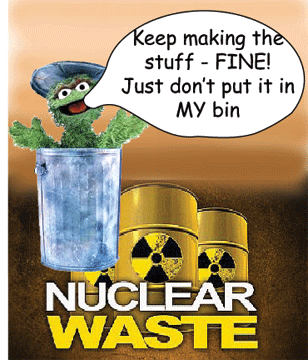
The two municipalities are meeting strong resistance from residents and nearby local governments.
Since Suttsu and Kamoenai expressed their willingness to accept the first-stage survey, the assemblies of some nearby municipalities have enacted ordinances declaring a rejection of nuclear waste and their governments have declined state grants related to the survey.
One year on, outlook for nuclear waste storage unclear Japan Times, 17 Nov 21, The outlook for the possible hosting of a final storage facility for nuclear waste in two Hokkaido municipalities remains uncertain, with Wednesday marking one year since a first-stage survey for the site’s selection started there, for the first time in Japan.
The town of Suttsu, along with the nearby village of Kamoenai, is undergoing the first-stage survey, known as literature investigation, to check whether it is suited to host a permanent underground storage site for high-level radioactive waste from nuclear power plants across the country.
The two municipalities are meeting strong resistance from residents and nearby local governments.
The government is seeking a location for the dump site, which will hold nuclear waste, or the remnants of spent nuclear fuel that has been treated, for a long period said to extend for 100,000 years.
The literature investigation, conducted by the Nuclear Waste Management Organization of Japan, or NUMO, will take about two years to confirm that there is no volcanic activity or active faults in the area by reviewing geological literature and data. The first-stage survey does not involve drilling.
Up to ¥2 billion in subsidies from the state will be paid to each location, as well as surrounding municipalities, for the first-stage investigation. The two municipalities plan to use the grants to set up regional revitalization funds.
Suttsu held a mayoral election last month in which the survey became a central topic of debate. Incumbent Mayor Haruo Kataoka, who decided to accept the first-stage research a year ago in line with what he felt was the will of the residents, won re-election.
However, his opponent, who called for a halt to the survey, gained about 80% of Kataoka’s vote count, suggesting that public opinion is still split.
The town government will decide whether to proceed to the second stage of the survey, called preliminary investigation, in a referendum.
Since Suttsu and Kamoenai expressed their willingness to accept the first-stage survey, the assemblies of some nearby municipalities have enacted ordinances declaring a rejection of nuclear waste and their governments have declined state grants related to the survey.
Suttsu and Kamoenai initially planned to have monthly opportunities for residents to exchange opinions on the issue, but the novel coronavirus crisis has limited such sessions to four each so far. The second-stage survey requires the consent of not only the municipal mayors, but also of Hokkaido Gov. Naomichi Suzuki, who is opposed to the investigation on the grounds that a prefectural ordinance rejects nuclear waste being brought to the prefecture.
X-energy, NuScale, Terra Power overselling their small nuclear reactors, which face big challenges.

| X-energy, along with Bellevue-based TerraPower, founded by Bill Gates, and Portland-based NuScale, proposes reactors that can ramp up and down their electrical output much more rapidly than the large reactors now operating. TerraPower plans to build its project at the site of a Wyoming coal plant in a partnership with a subsidiary of PacifiCorp, a private utility. NuScale is proposing a project in Idaho and has considered eventually locating a unit in Washington state. The nuclear industry, in the Pacific Northwest and elsewhere in the nation, has a history of pitching, and sometimes starting, projects that fail to come to pass. Skeptics say these next-generation projects are being oversold and face big challenges in producing competitively priced power without compromising safety and security, and in a time frame soon enough to help reduce carbon emissions by midcentury. Inside Climate News 15th Nov 2021 https://insideclimatenews.org/news/15112021/nuclear-power-washington-state |
Scottish earthquake was nuclear waste ‘wake-up call’
 | |||
Scottish earthquake was nuclear waste ‘wake-up call’, Ronnie Cowan MP says, The National, By Greg Russell 17 Nov 21 A SCOTS MP has said the 3.1 magnitude earthquake off the West of Scotland was a “wake-up call” over the “dig a hole and bury it” approach to nuclear waste.
Ronnie Cowan was speaking after Tuesday’s early-morning quake – recorded just 10km beneath its epicentre – was felt on the west coast and in Ireland.
The SNP MP for Inverclyde wrote on social media: “Hopefully too small and too far away from the nuclear waste dump and weapons storage to be concerning.”
He later told The National that when it comes to nuclear powered submarines and their payload, safety had to be paramount.
Cowan said: “Likewise our nuclear energy industry isn’t just about the crucial day to day safety, it is about the long term security of the sites and the waste.
“Currently the ‘dig a hole and bury it’ attitude to nuclear waste is concerning. It feels very much like we passing on a problem to future generations, which given the heightened awareness of environmental damage and climate change seems like a deliberate dereliction of duty.
“It therefore came as a wake-up call when I read that an earthquake had taken place just off the west coast of Scotland.”
Cowan stressed he was not claiming that the incident was a threat, but wondered if it was a warning shot given the “very unforgiving” nature of nuclear energy and waste.
“One mistake and the outcome could be catastrophic and as we see the climate change and weather patterns change, we are seeing more and more extreme weather episodes, and to future-proof our existing nuclear waste dumps we must consider the state of the planet thousands of years into the future,” he said.
Scottish earthquake was nuclear waste ‘wake-up call’, Ronnie Cowan MP says, The National,
By Greg Russell @National_GregJournalist A SCOTS MP has said the 3.1 magnitude earthquake off the West of Scotland was a “wake-up call” over the “dig a hole and bury it” approach to nuclear waste.
Ronnie Cowan was speaking after Tuesday’s early-morning quake – recorded just 10km beneath its epicentre – was felt on the west coast and in Ireland.
The SNP MP for Inverclyde wrote on social media: “Hopefully too small and too far away from the nuclear waste dump and weapons storage to be concerning.”
He later told The National that when it comes to nuclear powered submarines and their payload, safety had to be paramount.
Cowan said: “Likewise our nuclear energy industry isn’t just about the crucial day to day safety, it is about the long term security of the sites and the waste.
“Currently the ‘dig a hole and bury it’ attitude to nuclear waste is concerning. It feels very much like we passing on a problem to future generations, which given the heightened awareness of environmental damage and climate change seems like a deliberate dereliction of duty.
“It therefore came as a wake-up call when I read that an earthquake had taken place just off the west coast of Scotland.”
Cowan stressed he was not claiming that the incident was a threat, but wondered if it was a warning shot given the “very unforgiving” nature of nuclear energy and waste.
“One mistake and the outcome could be catastrophic and as we see the climate change and weather patterns change, we are seeing more and more extreme weather episodes, and to future-proof our existing nuclear waste dumps we must consider the state of the planet thousands of years into the future,” he said.
“And secondly, the earthquake bothered me because for some time now I have been concerned about the amount of unexploded ordnance (UXO) in the Clyde and beyond.
“My concerns are around the safety of those working on the river and those who enjoy it recreationally.”
The MP said he wanted to see a massive clean-up of the munitions dump in the River Clyde, but it had to be disposed of thoughtfully……… https://www.thenational.scot/news/19722624.scottish-earthquake-nuclear-waste-wake-up-call-ronnie-cowan-mp-says/
No North Korea nuclear, ICBM tests for the time being
Unification minister predicts no North Korea nuclear, ICBM test ‘for time being’South Korea’s Lee In-young also frames end-of-war declaration as starting point for denuclearization, NK news Jeongmin Kim November 17, 2021 North Korea is unlikely to test any nuclear weapons or long-range missiles in the immediate future, South Korea’s Minister of Unification Lee In-young said on Wednesday, as the country’s March 2022 presidential election fast approaches.
Speaking at an international symposium in Busan, South Korea’s second-largest city, Lee also once again pitched the idea of formally ending the Korean War, an initiative that the Moon Jae-in administration continues to push in its last months in office.
“North Korea is testing short-range missiles [these days] but it appears that there is a high possibility that it won’t test nuclear weapons or long-range missiles — as known as ‘strategic provocation’ — for the time being,” Lee said, without providing further explanation.
North Korea last tested an intercontinental ballistic missile (ICBM) in Nov. 2017, and its sixth and last nuclear test was in September that year. Leader Kim Jong Un announced a self-imposed moratorium on weapons of mass destruction (WMD) tests the following year, but he has made ambiguous remarks about whether to continue the test ban over the past two years.
Lee on Wednesday remained hopeful that inter-Korean relations will improve, alluding to “possibilities of step-by-step, simultaneous corresponding measures” by Washington should North Korea make progress in denuclearization steps……..
“Denuclearization and the completion of a peace regime [on the Korean Peninsula] will need a lot of time … but the end-of-war declaration could become a formal starting point for such a process,” he said. https://www.nknews.org/2021/11/unification-minister-predicts-no-north-korea-nuclear-icbm-test-for-time-being/
Global agreements against the dumping of nuclear waste into the world’s oceans

Did you know that there are global agreements against the dumping of
nuclear waste into the world’s oceans? They are called the London
Convention and London Protocol (LC/LP) and the latest meeting of the
government signatories and observers, including Greenpeace International,
has just finished under the auspices of the United Nations International
Maritime Organization (IMO).
It was an uncomfortable experience for
Japanese diplomats trying to defend the decision to dispose of nuclear
waste from Fukushima Daiichi into the Pacific Ocean. But it also triggered
memories of a different time and a different policy nearly three decades
ago when Japan at the IMO took on the role of protecting the marine
environment from radioactivity.
Greenpeace 17th Nov 2021
Plan for solar power to UK via cable from Morocco, as nuclear power closes
As the UK’s ageing fleet of nuclear power stations begins to close –
until recently a steady source of low-carbon baseload generation –
Utility Week speaks to Simon Morrish, chief executive at XLinks, about its
plans to transmit cheap solar power thousands of kilometres across the
Atlantic seabed from the sun-drenched deserts of Morocco to help fill the
looming gap.
Utility Week 15th Nov 2021
The degraded state of France’s nuclear fleet, and concealment of series of accidents.
French nuclear fleet: degraded condition, concealment of serial accidents
in nuclear power plants. The techno-industrial system includes major
accidents in its planning calculations – adapting to its disasters or
fighting to its end?
Ricochets 15th Nov 2021
The consumerism that destroys life is also the cause of the environmental emergency — Hawkins Bay Dispatch — Barbara Crane Navarro

The consumerism that destroys life is also the cause of the environmental emergency, https://hawkinsbay.wordpress.com/2021/11/13/the-consumerism-that-destroys-life-is-also-the-cause-of-the-environmental-emergency/
Decades ago, corporations and governments invented the traits we now call ‘human nature.’ COP26 has shown ‘consumers’ that buying something ‘different’ is not working. 13 November 2021 | Graham Peebles | Euroasia Review The natural environment has been poisoned, vandalized and trashed in accordance with the demands and values of the all-pervasive socio-economic system, and as long as it persists it is impossible to imagine the steps required to save the natural world being taken.
The consumerism that destroys life is also the cause of the environmental emergency — Hawkins Bay Dispatch — Barbara Crane Navarro
greed, ownership of things (homes, cars, clothes etc.), and the general accumulation of stuff is insisted upon, for the simple reason that it is consumerism that feeds the monster. This very same consumerism, which is perpetuating unhappiness and fuelling ill health, is also the underlying cause of the environmental emergency.
As COP26 draws to an unimpressive close, governments haggle over emission targets, funding of fossil fuels and money for the global south, and a new poll reports that most people (in the 10 countries polled, including UK, US, Germany, France) say they are unwilling to alter their way of life to save our planet. We must once again ask, what will it take for humanity to wake up and change?
Economic considerations and short term self-interest will continue to be applied and the devastation will continue.
Continue readingOver 100 European non government organisations urge the European Commission to block nuclear power from being accepted as a clean green investment

NGOs press Germany to block nuclear, gas green status https://www.montelnews.com/news/1272742/ngos-press-germany-to-block-nuclear-gas-green-status SIOBHAN HALL, Brussels, 16 Nov 2021
Montel) More than 100 NGOs from across Europe have urged Germany to ensure nuclear and natural gas-fired power plants do not qualify as “green” investments under the EU’s sustainable finance taxonomy.
They expressed concern in a letter to future German chancellor Olaf Scholz on Monday that the European Commission was finalising the rules for nuclear and natural gas while Germany was focused on forming its new government.
The country has committed to phase out nuclear power by the end of next year and the NGOs urged Scholz to “take an equally clear stance” against nuclear power and natural gas in EU level rules.
An unofficial draft paper circulating in Brussels recently set out potential criteria for including gas-fired power plants and nuclear as green as part of new taxonomy proposals.
EU pressure
In October, 10 EU countries led by France signed a joint declaration urging the EC to recognise nuclear and natural gas as sustainable activities according to the taxonomy.
Doing so would make it cheaper to finance and build new nuclear power plants, said the Czech Republic’s deputy prime minister Karel Havlicek at the time.
The other countries involved were Bulgaria, Croatia, Finland, Hungary, Poland, Romania, Slovakia and Slovenia.
On Sunday, environmental group Greenpeace attacked the EC over potential plans to define gas and nuclear as green against the backdrop of a “weak” agreement made at the conclusion of COP26 climate talks in Glasgow.
“Over the last two weeks of climate talks, the European Commission has supported fast-track funding for new gas terminals and pipelines, and labelled gas, nuclear energy and industrial farming as sustainable and eligible for green funding,” said the group.
America’s relentless pursuit of Australian Julian Assange is a threat to any journalist who might expose a USA massacre of civilians
Julian Assange currently sits in Belmarsh Prison waiting to find out if British judges will overturn a lower court’s ruling against his extradition to the United States to be prosecuted under the Espionage Act for journalistic activity which exposed U.S. war crimes. War crimes not unlike those that were just exposed by The New York Times in its reporting on the Baghuz massacre.
The precedent the U.S. government is trying to set with its persecution of Assange will, if successful, cast a chilling effect over journalism which scrutinizes the U.S. war machine, not just in the United States but around the world.
Syria Massacre Coverup Shows Danger of Assange Precedent, https://consortiumnews.com/2021/11/15/syria-massacre-coverup-shows-danger-of-assange-precedent/ November 15, 2021 The precedent the U.S. government is trying to set with its persecution of Assange will, if successful, cast a chilling effect over journalism which scrutinizes the U.S. war machine, writes Caity Johnstone. By Caitlin Johnstone
CaitlinJohnstone.com The New York Times has published a very solid investigative report on a U.S. military coverup of a 2019 massacre in Baghuz, Syria which killed scores of civilians. This would be the second investigative report on civilian-slaughtering U.S. airstrikes by The New York Times in a matter of weeks, and if I were a more conspiracy-minded person I’d say the paper of record appears to have been infiltrated by journalists.
The report contains many significant revelations, including that the U.S. military has been grossly undercounting the numbers of civilians killed in its airstrikes and lying about it to Congress, that special ops forces in Syria have been consistently ordering airstrikes which kill noncombatants with no accountability by exploiting loopholes to get around rules meant to protect civilians, that units which call in such airstrikes are allowed to do their own assessments grading whether the strikes were justified, that the U.S. war machine attempted to obstruct scrutiny of the massacre “at nearly every step” of the way, and that the Air Force’s Office of Special Investigations only investigates such incidents when there is “potential for high media attention, concern with outcry from local community/government, concern sensitive images may get out.”
“But at nearly every step, the military made moves that concealed the catastrophic strike,” The New York Times reports. “The death toll was downplayed. Reports were delayed, sanitized and classified. United States-led coalition forces bulldozed the blast site. And top leaders were not notified.”
Journalist Aaron Maté has called the incident “one of the U.S. military’s worst massacres and cover-up scandals since My Lai in Vietnam.”
Asked by the Times for a statement, Central Command gave the laughable justification that maybe those dozens of women and children killed in repeated bomb blasts were actually armed enemy combatants:
“This week, after The New York Times sent its findings to U.S. Central Command, which oversaw the air war in Syria, the command acknowledged the strikes for the first time, saying 80 people were killed but the airstrikes were justified. It said the bombs killed 16 fighters and four civilians. As for the other 60 people killed, the statement said it was not clear that they were civilians, in part because women and children in the Islamic State sometimes took up arms.“
I mean, how do you even address a defense like that? How do you get around the “Maybe those babies were ISIS fighters” defense?
Reading the report it becomes apparent how much inertia was thrown on attempts to bring the massacre to light and how easy it would have been for those attempts to succumb to the pressure and just give up, which naturally leads one to wonder how many other such incidents never see the light of day because attempts to expose them are successfully ground to a halt.
The Times says the Baghuz massacre “would rank third on the military’s worst civilian casualty events in Syria if 64 civilian deaths were acknowledged,” but it’s clear that that “acknowledged” bit is doing a lot of heavy lifting there.
And it really makes you appreciate how much work goes into getting information like this in front of the public eye, and how important it is to do so, and how tenuous the ability to do so currently is.
Julian Assange currently sits in Belmarsh Prison waiting to find out if British judges will overturn a lower court’s ruling against his extradition to the United States to be prosecuted under the Espionage Act for journalistic activity which exposed U.S. war crimes. War crimes not unlike those that were just exposed by The New York Times in its reporting on the Baghuz massacre.
The precedent the U.S. government is trying to set with its persecution of Assange will, if successful, cast a chilling effect over journalism which scrutinizes the U.S. war machine, not just in the United States but around the world.
If it can succeed in legally establishing that it can extradite an Australian journalist for publishing information in the public interest about U.S. war crimes, it will have succeeded in legally establishing that it can do that to any journalist anywhere. And you can kiss investigative reporting like this goodbye.
This is what’s at stake in the Assange case. Our right to know what the most deadly elements of the most powerful government on our planet are doing. The fact that the drivers of empire think it is legitimate to deprive us of such information by threatening to imprison anyone who tries to show it to us makes them an enemy of all humanity.
Low dose radiation has its medical benefits, but has harmful effects on the immune system
Low dose ionizing radiation effects on the immune system, Science Direct, Environment International Volume 149, April 2021, 106212KatalinLumniczkya NathalieImpensb GemmaArmengolc SergeCandéiasd Alexandros G.Georgakilase SabineHornhardtf Olga A.Marting FranzRödelh DörtheSchaue
Abstract
Ionizing radiation interacts with the immune system in many ways with a multiplicity that mirrors the complexity of the immune system itself: namely the need to maintain a delicate balance between different compartments, cells and soluble factors that work collectively to protect, maintain, and restore tissue function in the face of severe challenges including radiation damage. The cytotoxic effects of high dose radiation are less relevant after low dose exposure, where subtle quantitative and functional effects predominate that may go unnoticed until late after exposure or after a second challenge reveals or exacerbates the effects.
For example, low doses may permanently alter immune fitness and therefore accelerate immune senescence and pave the way for a wide spectrum of possible pathophysiological events, including early-onset of age-related degenerative disorders and cancer.
By contrast, the so called low dose radiation therapy displays beneficial, anti-inflammatory and pain relieving properties in chronic inflammatory and degenerative diseases
In this review, epidemiological, clinical and experimental data regarding the effects of low-dose radiation on the homeostasis and functional integrity of immune cells will be discussed, as will be the role of immune-mediated mechanisms in the systemic manifestation of localized exposures such as inflammatory reactions.
The central conclusion is that ionizing radiation fundamentally and durably reshapes the immune system. Further, the importance of discovery of immunological pathways for modifying radiation resilience amongst other research directions in this field is implied………….. https://www.sciencedirect.com/science/article/pii/S016041202032167X
Nuclear power company First Energy prosecuted for corruption, but still finds it worthwhile to bribe politicians

It is the largest fine ever imposed by the U.S. Attorney’s Office for the Southern District of Ohio.
But it is a pittance when compared to the earnings it brought in last year: $1.1 billion. For that reason, the company’s stock has a 52-week range of between $26 and its current high of $39 a share.
Paying Bribes Got FirstEnergy In Trouble, But It Is Still Making Political Donations , Forbes, 15 Nov 21,
Has FirstEnergy Corp. learned anything from its nuclear energy scandal and criminal probe? Prosecutors say that if the company fully cooperates then it will drop the charges against it in three years. But the utility is still giving millions to lobby lawmakers — a bit cringeworthy, given the events.
It’s legal. But the company’s chief executive since March, Steven Strah, has said that FirstEnergy FE +1.2% will play a more subtle political role. The protocol now is strict oversight of its lobbying activities — the kind of thing that would avoid, for example, bribing public officials to keep open struggling nuclear plants. For sure, FirstEnergy’s campaign spending is already at $1.5 million this year. That is in line with the contributions it has been making for the last decade.
FirstEnergy is sticking to “the way they did business 50 years ago,“ said Ashley Brown, a former Ohio public utilities commissioner, who now leads the Harvard Electricity Policy Group. “That’s part of why they’re just a lobbying firm with a utility sideline.”
Brown’s comments appeared in a story by Eye on Ohio, which joined with Energy News Network in the endeavor. Eye on Ohio is a division of the Ohio Center for Journalism.
In a deferred prosecution agreement reached over the summer between FirstEnergy and federal prosecutors, the utility admitted that it conspired with and subsequently bribed public officials: $60 million, which was used to secure a $1.3 billion bailout package for its nuclear units and to also help defeat a voter initiative that would have thrown out that law.
The company was penalized $230 million — money to be split equally between the federal and state government. In Ohio, it will be used to help low-income citizens pay their utility bills. It is the largest fine ever imposed by the U.S. Attorney’s Office for the Southern District of Ohio. But it is a pittance when compared to the earnings it brought in last year: $1.1 billion. For that reason, the company’s stock has a 52-week range of between $26 and its current high of $39 a share.
Prosecutors said that they wanted the penalty to “sting” but they did not want to disrupt the company’s business. They filed one charge: conspiracy to commit honest services and wire fraud, which will be dismissed if FirstEnergy continues to cooperate.
“Our activity in this space will be much more limited than it has been in the past, with closer alignment to our strategic goals and with additional oversight and significantly more robust disclosure,” says CEO Strah, before investors. “These efforts, together with enhanced policies and procedures, will help to bring additional clarity around appropriate behaviors at FirstEnergy.”
The bargain between prosecutors and the utility examines how FirstEnergy took monies from its regulated units and then paid off public officials. Former Ohio House Speaker Larry Householder has already been charged. Former Ohio Public Utilities Commission Chairman Sam Randazzo has resigned his position. The power company used a dark money group called Generation Now to hide its efforts. A lobbyist has pleaded guilty along with a staffer for Householder, who set up the shady organization to receive the dirty money.
A New Track
Subsequent to this criminal settlement, Ohio’s Attorney General Dave Yost added FirstEnergy’s former CEO Charles Jones to a list of defendants his office is suing. (Prosecutors would not comment on whether Jones is also in criminal trouble.) The civil complaint also includes ex-FirstEnergy senior vice president Michael Dowling and Sam Randazzo.
The “corruption was more cancerous than previously thought––necessitating adding additional defendants and giving rise to additional claims,” the lawsuit says. Ohio’s legislature, meantime, has revoked the $1.3 billion bailout. …… https://www.forbes.com/sites/kensilverstein/2021/11/15/paying-bribes-got-firstenergy-in-trouble-but-it-is-still-making-political-donations—and-amends/?sh=1e29ece1150a
UK’s planned Sizewell nuclear reactor at risk – same design as Taishan reactor which has been shut down since July for safety reasons
Chinese nuclear reactor shutdown hangs over future of Sizewell C. Developers behind Taishan plant, where radiation was found in cooling waters, are also building UK’s Hinkley Point C and planning Sizewell C.
Reports of cracked fuel rods from a Chinese nuclear power station will be examined for any implications for new plants in Britain. Mark Foy, chief nuclear inspector at the Office for Nuclear Regulation, told civil society groups he was in touch with Chinese and other regulators over the plant in Taishan, southeastern China, where a reactor has been shut since July after radiation was found in its cooling waters. The plant is owned by Chinese state nuclear developer CGN along with its French equivalent EDF.
The two companies are also building the Hinkley Point C plant in Somerset and areplanning a second plant, Sizewell C in Suffolk, using the same reactor design as at Taishan. he problems at Taishan emerged in June after CNN reported that Framatome, the part-EDF owned company which helps run the plant, had written to US officials on June 8 asking for permission to share American technical assistance. Experts have said cracked fuel rods are “not uncommon”, albeit undesirable. An Office for Nuclear Regulation spokesman said: “We held one of our regular meetings with the NGO community last week where we reiterated that we remain in contact with the Chinese, French and Finnish regulators on this matter and are likely to be in dialogue again with them before the end of this year. “We will take the opportunity to gain any knowledge from this issue in China to help inform our regulation of nuclear plants in the UK, like Hinkley Point C, where the EPR reactor will be installed.”
Telegraph 14th Nov 2021
Targeting Trident: how divestment is impacting the nuclear weapons industry

investors are adhering to the international norm against nuclear weapons that was established by the Treaty on the Prohibition of Nuclear Weapons, despite that the fact that the UK is not party to the treaty.
More than 100 financial institutions have divested from the nuclear weapon industry since the treaty entered into force in January this year.
Targeting Trident: how divestment is impacting the nuclear weapons industry, https://bellacaledonia.org.uk/2021/11/15/targeting-trident-how-divestment-is-impacting-the-nuclear-weapons-industry/ Every year, the Don’t Bank on the Bomb report profiles the world’s largest nuclear weapons producers and reveals the financial institutions that invest in them. The latest report, published on Thursday, shows that investors around the world made a total of £510 billion available to nuclear weapons companies between January 2019 and July 2021.
UK-headquartered financial institutions account for £23 billion of this total. Scotland’s largest bank, NatWest Group (RBS), provided financing worth £2.2 billion to eight major nuclear arms manufacturers during the period, including BAE Systems, General Dynamics and Raytheon.
The DBOTB report is published by PAX, a Netherlands-based organisation that works to persuade financial institutions to divest from the nuclear weapons industry. Here, the campaign is led by Don’t Bank on the Bomb Scotland. The group focus on Scottish local authority pension funds and universities, as well as financial institutions.
Every year, the Don’t Bank on the Bomb report profiles the world’s largest nuclear weapons producers and reveals the financial institutions that invest in them. The latest report, published on Thursday, shows that investors around the world made a total of £510 billion available to nuclear weapons companies between January 2019 and July 2021.
UK-headquartered financial institutions account for £23 billion of this total. Scotland’s largest bank, NatWest Group (RBS), provided financing worth £2.2 billion to eight major nuclear arms manufacturers during the period, including BAE Systems, General Dynamics and Raytheon.
The DBOTB report is published by PAX, a Netherlands-based organisation that works to persuade financial institutions to divest from the nuclear weapons industry. Here, the campaign is led by Don’t Bank on the Bomb Scotland. The group focus on Scottish local authority pension funds and universities, as well as financial institutions.
Fund managers warned Serco that “working with nuclear weapons might force them to dump Serco shares as a result of non-compliance with Environmental, Social and Governance (ESG) Standards”, the Telegraph says. The fund managers are not named, but Serco has increasingly appeared on investor blacklists in recent years due to its role in the consortium.
Impact of the nuclear ban treaty
The article reports that fund managers rejected Serco’s argument that investing in a Trident contractor is “ethically no different to owning UK sovereign debt, as both are functions of a democratically elected government”. This detail is significant, as it suggests that investors are adhering to the international norm against nuclear weapons that was established by the Treaty on the Prohibition of Nuclear Weapons, despite that the fact that the UK is not party to the treaty.
The ban treaty has made investors increasingly wary of nuclear weapons producers, as the new Don’t Bank on the Bomb Report explains: “[nuclear weapons] are now comprehensively outlawed, as is any assistance with producing, manufacturing or developing them. Financial institutions that continue investing in companies building nuclear weapons face regulatory risks as more countries join the treaty. They also face an increased reputational risk as clients learn of their support for weapons of mass destruction and terminate their relationships.”
More than 100 financial institutions have divested from the nuclear weapon industry since the treaty entered into force in January this year. This includes Bank of Ireland and AIB (Ireland), and South African firm, Investec. The total amount of financing made available to nuclear weapons producing companies has dropped by £47 billion since 2019.
More trouble for Trident
It appears that the prospect of losing investors was enough to persuade Serco – which previously held long-term nuclear weapons contracts as part of AWE Management Ltd – to pull out of the competition for future nuclear-weapons related work. This provides a clear example of how divestment, or the threat of divestment, can change company behaviour.
Furthermore, the story shows how investor action has the potential to undermine the viability of Britain’s nuclear weapons programme. The Telegraph notes that Serco’s decision “leaves defences chiefs with fewer options as they seek to restructure the management of Britain’s nuclear stockpile”. This could hinder the MoD’s ability to complete the Trident renewal project, which is already in serious trouble.
Join the movement
As the Serco story illustrates, divestment is a powerful tool that we can use to advance the goal of a nuclear-weapons-free world. Don’t Bank on the Bomb Scotland is encouraging individuals to contact NatWest Group about its investment policy, as well as their own bank and pension fund. The group has also created a model resolution targeting local authority pension funds that can be sent to local councillors.
The more financial institutions that divest, the more companies will be forced to withdraw from nuclear weapons work like Serco. This will make it harder for nuclear-armed nations to maintain their nuclear arsenals in the long-run.
N. Korea replaces, punishes 14 cadres and technicians working on nuclear-powered submarine programThe Central Committee criticized the technicians for failing to follow party policy to “localize” production
N. Korea replaces, punishes 14 cadres and technicians working on nuclear-powered submarine program
The Central Committee criticized the technicians for failing to follow party policy to “localize” production https://www.dailynk.com/english/north-korea-replaces-punishes-14-cadres-and-technicians-working-on-nuclear-powered-submarine-program/ By Jeong Tae Joo – 2021.11.15
North Korea recently replaced or punished 14 cadres and technicians tasked with designing small nuclear reactors for nuclear-powered submarines, apparently for failing to meet party criterion. The authorities will likely now face difficulties in their plan to acquire the capability of stealthily striking enemies.
According to multiple Daily NK sources in North Korea on Thursday, the Central Committee’s Military Industries Department began screening designs for nuclear-powered submarines on Nov. 5.
Work on the designs has been ongoing since October of last year.
North Korean leader Kim Jong Un said during the Eighth Party Congress in January that “new planning research for a nuclear-powered submarine has been completed and is to enter the final examination process.”
Nuclear-powered submarines are highly stealthy as they need not surface for long periods of time, making them the most likely weapon to survive an enemy’s preemptive strike.
Focusing on advancing the country’s arsenal of asymmetrical strategic weapons, North Korea has assigned its top researchers to the project.
In particular, the authorities reportedly put experts on the task of producing small nuclear reactors, the key to building the submarines, imploring them to “exercise their top abilities, given their rich experience built up over six nuclear tests.”
However, the Central Committee apparently criticized the screening report, which included analysis of design flaws.
Firstly, the Central Committee reportedly said it would “take 10 more years” to build nuclear-powered submarines according to current designs, even though the goal is to complete them by 2025.
The Central Committee also criticized the designs for failing to meet three criteria put forth by the party to achieve its goals.
Though party leadership had stressed 1) improving the capabilities of conventionally powered mini-submarines that are currently deployed, 2) building a new class of submarines capable of carrying North Korea’s existing SLBMs and 3) building nuclear-powered submarines capable of carrying several nuclear launch systems, the Central Committee reportedly judged that these criteria had not been met on the ground.
The Central Committee also criticized technicians for failing to follow party policy to “localize” production. That is to say, the committee took serious issue with designers handing over for final screening a complete comprehensive blueprint that called for large-scale imports of foreign technology and parts during the entire shipbuilding process.
Several basic errors were discovered as well, including a failure by designers to make the technical descriptions in the partial plans and assembly plans match when they drew the blueprints for the small nuclear reactors.
The Central Committee responded by excluding from the research team 14 cadres, researchers and technicians who took part in drawing up the plan. Six of them were kicked out of the party or disciplined.
One of the sources said the six who took responsibility for the failure were exiled with their families to remote areas. He added that the authorities now face snags in their plans, including the need to completely revise the designs for nuclear-powered submarines.
1 This Month



19 November – Webinar – The Reality of Reprocessing
Time: 11:00 AM Pacific Time (US & Canada) / 2:00 PM Eastern / 7:00 PM UK / 8:00 PM CET
Register for the Zoom Event Here



Shut down the radiation-damaged Heysham nuclear reactors now
To see nuclear-related stories in greater depth and intensity – go to https://nuclearinformation.wordpress.com

Say No to NASA’s Reckless Nuclear Reactor on the Moon
Say No to NASA’s Reckless Nuclear Reactor on the Moon
-
Archives
- November 2026 (84)
- October 2026 (302)
- September 2026 (339)
- August 2026 (330)
- July 2026 (355)
- June 2026 (287)
- May 2026 (306)
- April 2026 (356)
- March 2026 (251)
- February 2026 (267)
- January 2026 (308)
- December 2025 (358)
-
Categories
- 1
- 1 NUCLEAR ISSUES
- business and costs
- climate change
- culture and arts
- ENERGY
- environment
- health
- history
- indigenous issues
- Legal
- marketing of nuclear
- media
- opposition to nuclear
- PERSONAL STORIES
- politics
- politics international
- Religion and ethics
- safety
- secrets,lies and civil liberties
- spinbuster
- technology
- Uranium
- wastes
- weapons and war
- Women
- 2 WORLD
- ACTION
- AFRICA
- Atrocities
- AUSTRALIA
- Christina's notes
- Christina's themes
- culture and arts
- Events
- Fuk 2022
- Fuk 2023
- Fukushima 2017
- Fukushima 2018
- fukushima 2019
- Fukushima 2020
- Fukushima 2021
- general
- global warming
- Humour (God we need it)
- Nuclear
- RARE EARTHS
- Reference
- resources – print
- Resources -audiovicual
- Weekly Newsletter
- World
- World Nuclear
- YouTube
-
RSS
Entries RSS
Comments RSS

